Articles by admin

No Image

Live Tweets: Cavs-Warriors Are Back For NBA Game One

Golden State Warriors guard Stephen Curry shoots against Cleveland Cavaliers forward LeBron James during last year’s NBA finals. The two meet up again this year.

Bob Donnan/AP

hide caption

toggle caption

Bob Donnan/AP

The wait for the finals is finally over. Well, at least for game one. Follow along with with NPR reporters and fans before and during tonight’s game here or on Twitter:

  • Tom Goldman, Sports Reporter at NPR
  • Mike Urycki, Reporter at Ideastream/WCPN Cleveland
  • Laura Roman, Social Media Editor at NPR, LeBron James/Cavs Fan
  • Christianna Silva, Digital Intern at NPR, Warriors Fan

Let’s block ads! (Why?)


No Image

Crude Oil Begins To Flow Through Controversial Dakota Access Pipeline

Police move through the camp of protesters against the Dakota Access Pipeline near Cannon Ball, N.D., in February. Despite months of protests by Native American tribes and environmental groups, crude oil is now flowing through the pipeline.

Angus Mordant for NPR

hide caption

toggle caption

Angus Mordant for NPR

Crude oil is now flowing through the Dakota Access Pipeline, despite months of protests against it by Native American tribes and environmental groups.

The pipeline spans more than 1,000 miles from North Dakota to Illinois and cost some $3.8 billion to construct. It is expected to transport approximately 520,000 barrels of oil daily.

“Construction on the project was supposed to wrap up late last year,” as Prairie Public Broadcasting’s Amy Sisk reported. “But protests led to delays in permitting the final stretch of the pipeline under the Missouri River in North Dakota.” At least 761 people were arrested during the standoff, according to The Associated Press.

Members of the Standing Rock Sioux tribe, whose reservation lies just downstream from the place where the pipeline crosses the Missouri River, vow to continue fighting. They fear that a pipeline leak could contaminate their drinking water and sacred lands.

“Just because the oil is flowing now doesn’t mean that it can’t be stopped,” Standing Rock Sioux Chairman Dave Archambault II said in a statement.

A lawsuit from the tribe is still pending in federal court. “The tribe wants a judge to shut the pipeline down and says a thorough environmental review of the project must be completed,” Sisk added.

During President Trump’s first month in office, he reversed a decision by the Obama administration and called on the Army to expedite the approval process for the section of the pipeline that had not yet been built.

As The Two-Way reported, a federal judge in March denied a motion for a preliminary injunction to stop construction, clearing the way for the completion of the pipeline.

The pipeline company, Energy Transfer Partners, argues that the pipeline represents a “more environmentally responsible manner than other modes of transportation, including rail or truck.”

The tribe has pointed out three separate incidents of pipeline leaks recently in the area. The Associated Press described what happened:

“The Dakota Access pipeline and a feeder line leaked more than 100 gallons of oil in western North Dakota in separate incidents in March, and the Dakota Access line leaked 84 gallons of oil in northern South Dakota in April. No waterways were affected.”

If you’re catching up on the Dakota Access Pipeline issue, check out our timeline of key events here.

Let’s block ads! (Why?)


No Image

Today in Movie Culture: 'Hulk vs. Wolverine,' David Fincher's Invisible Details and More

Here are a bunch of little bites to satisfy your hunger for movie culture:

Dream Movie of the Day:

One day, if we’re lucky, we’ll get a Hulk vs. Wolverine movie and it might look something like Alex Luthor imagines here:

[embedded content]

Reworked Movie Scene of the Day:

Darren Wallace reimagines a meeting from Batman v Superman: Dawn of Justice with a drunk Man of Steel:

[embedded content]

Movie Trivia of the Day:

In honor of the release of Wonder Woman this weekend, here’s more trivia about the movie, this time from CineFix:

[embedded content]

Custom Made Prop Replica of the Day:

Also in honor of Wonder Woman, for AWE Me, the guys at Baltimore Knife and Sword show how to make a steel replica of the superhero’s shield:

[embedded content]

Vintage Image of the Day:

Clint Eastwood, who turns 87 today, with director Don Siegel and others on the set of The Beguiled in 1970:

Filmmaker in Focus:

Kaptain Kristian looks at the invisible details, achieved through CG effects, in the movies of David Fincher in his latest video essay:

[embedded content]

Special Effects Showcase of the Day:

For CineFix, Art of the Scene looks at the work of Phil Tippett for the T-rex attack from Jurassic Park:

[embedded content]

Movie Takedown of the Day:

Red Letter Media hilariously asks questions unanswered by Alien: Covenant in this goofy video:

[embedded content]

Supercut of the Day:

100 movie characters count down from 100 in this video that’s 100 seconds long (via Geek Tyrant):

[embedded content]

Classic Trailer of the Day:

Today is the 15th anniversary of the release of The Sum of All Fears. Watch the original trailer for the Tom Clancy adaptation below.

[embedded content]

Let’s block ads! (Why?)


No Image

Amazon Offers Refunds For Children's Unauthorized In-App Purchases

In accordance with a court ruling, Amazon has begun offering refunds for certain unauthorized, in-app purchases made by children.

LEON NEAL/AFP/Getty Images

hide caption

toggle caption

LEON NEAL/AFP/Getty Images

Amazon is offering customers refunds for unauthorized charges their children have incurred playing games from the company’s Appstore.

The move comes nearly three years after the Federal Trade Commission sued Amazon in federal court over in-game charges that shocked unsuspecting parents.

“Amazon’s in-app system allowed children to incur unlimited charges on their parents’ accounts without permission,” the FTC’s then-Chairwoman Edith Ramirez said when the lawsuit was filed.

A judge concurred and the FTC says the company has agreed to refund up to $70 million in unintended charges.

Amazon spokesman Jonathan Richardson said in a statement to NPR: “We have contacted all eligible customers who have not already received a refund for unauthorized charges to help ensure their refunds are confirmed quickly.”

If you believe your child made an in-app purchase without your permission between November 2011 and May 2016, you may be eligible for a refund. The FTC says you can visit this Amazon webpage or log into your Amazon account and look in the Message Center under “Important Messages.” Or you can call Amazon at 866-216-1072. Refund requests are due by May 28, 2018.

Julie Comeaux is one of many parents who had no idea her daughter was continually spending money inside a game on her new Amazon Kindle. Comeaux described on Morning Edition last month how she typed in her password once to approve a $5 in-app purchase—then left the Kindle with her daughter.

“When we checked the account and we saw hundreds of charges from Amazon, it totaled near $10,000,” Comeaux said.

“She cried. I had to calm her down,” Comeaux recalled. “She was very upset, didn’t know she was spending real money.”

According to the FTC complaint, games often blur the lines between what kids can buy with virtual currency and what they’re buying with actual money. It cited the app Ice Age Village, in which players can use virtual coins and acorns to buy items — and can also pay real money to buy more of the virtual currencies, on a screen that looks very similar.

But Amazon’s Richardson said Wednesday, “Since the launch of the Appstore in 2011, Amazon has helped parents prevent purchases made without their permission by offering access to parental controls, clear notice of in-app purchasing, real-time notification for every in-app purchase and refund assistance for unauthorized purchases.”

The FTC asked the court to require that Amazon refund unauthorized charges and to prevent it from billing account holders for future in-app charges without their consent.

A year ago, federal district court Judge John Coughenour agreed to the refunds. He wrote: “The Court determines that the scope of Amazon’s unfair billing practices pertains to all in-app charges made by account users without express, informed authorization.” But he denied the FTC’s request for the future billing ban.

Richardson noted, “The Court here affirmed our commitment to customers when it ruled no changes to current Appstore practices were required. To continue ensuring a great customer experience, we are happy to provide our customers what we have always provided: refunds for purchases they did not approve.”

The FTC appealed the judge’s decision in hopes of securing a future ban, and Amazon appealed the refund order. Last month, both sides agreed to drop their appeals so the refund process could begin.

According to the FTC, when Amazon introduced in-app charges in its Appstore in November 2011, it didn’t require any password to spend real money inside an app. In March 2012, the FTC said, the company updated its system to require the account owner to enter a password for single purchases over $20. That meant children could still make an unlimited number of purchases under $20 each.

Then in early 2013, Amazon began requiring a password for some charges, the FTC said. But even when a parent authorized a single charge, that permission sometimes lasted for up to an hour, allowing children to make more purchases without new authorization.

“Not until June 2014, roughly two and a half years after the problem first surfaced,” did Amazon begin to require account holders’ consent for in-app charges on its newer mobile devices,” the FTC explained in a statement.

The judge’s ruling noted that, “By December 2011, (Amazon Appstore Director) Aaron Rubenson referred to the amount of customer complaints as ‘near house on fire.’… Rubenson also referred to ‘accidental purchasing by kids’ as one of two issues the company needed to solve.”

Amazon was the holdout in the FTC’s crackdown on unwitting in-app purchases. It made similar claims against Google and Apple and those companies both settled. Google agreed to refund $19 million and Apple agreed to refund $32 million to eligible customers.

Let’s block ads! (Why?)


No Image

Ohio Sues 5 Major Drug Companies For 'Fueling Opioid Epidemic'

Purdue Pharma, which makes OxyContin, defended its efforts to combat opioid abuse after it was named in the Ohio suit.

Toby Talbot/AP

hide caption

toggle caption

Toby Talbot/AP

The state of Ohio has sued five major drug manufacturers for their role in the opioid epidemic. In the lawsuit filed Wednesday, state Attorney General Mike DeWine alleges these five companies “helped unleash a health care crisis that has had far-reaching financial, social, and deadly consequences in the State of Ohio.”

Named in the suit are:

  • Purdue Pharma
  • Endo Health Solutions
  • Teva Pharmaceutical Industries and subsidiary Cephalon
  • Johnson & Johnson and subsidiary Janssen Pharmaceuticals
  • Allergan

The lawsuit — only the second such suit filed by a state, after Mississippi did so earlier this year — accuses the companies of engaging in a sustained marketing campaign to downplay the addiction risks of the prescription opioid drugs they sell and to exaggerate the benefits of their use for health problems such as chronic pain.

Or, as DeWine’s office put it in a press release Wednesday, the “lawsuit alleges that the drug companies engaged in fraudulent marketing regarding the risks and benefits of prescription opioids which fueled Ohio’s opioid epidemic.”

“We believe that the evidence will show that these pharmaceutical companies purposely misled doctors about the dangers connected with pain meds that they produced, and that they did so for the purpose of increasing sales,” DeWine tells NPR’s All Things Considered. “And boy, did they increase sales.”

By the late 1990s, DeWine’s suit says, each of the five companies had embarked on a persuasion scheme targeting doctors, whom the state positions as victims of systematic misinformation:

“Defendants persuaded doctors and patients that what they had long known — that opioids are addictive drugs, unsafe in most circumstances for long-term use — was untrue, and quite the opposite, that the compassionate treatment of pain required opioids.”

Asked by NPR’s Robert Siegel whether doctors had a role of their own in overprescribing potentially dangerous medication, DeWine says more fault rests with a culture created by these companies.

“This was not something that the pharmaceutical companies just woke up some day and just started to do a little bit of it,” he says.

“I mean, there was a concerted effort for an extended number of years to really pound this into the heads of doctors. And when you’re told something time and time and time again and there’s a lot of advertising that is being spent, yeah, it takes a while to turn that around.”

In a statement provided to the Cleveland Plain Dealer, a spokeswoman for Janssen, one of the defendants, called the lawsuit “legally and factually unfounded”:

“Janssen has acted appropriately, responsibly and in the best interests of patients regarding our opioid pain medications, which are FDA-approved and carry FDA-mandated warnings about the known risks of the medications on every product label.”

Purdue Pharma, another defendant, told The Plain Dealer that it has been involved in seeking to combat widespread opioid addiction:

“OxyContin accounts for less than 2 percent of the opioid analgesic prescription market nationally, but we are an industry leader in the development of abuse-deterrent technology, advocating for the use of prescription drug monitoring programs and supporting access to Naloxone — all important components for combating the opioid crisis.”

And that crisis shows few signs of ebbing soon.

As All Things Considered notes, the state of Ohio estimates some 200,000 people within its borders are addicted to opioids — a number roughly the same as Akron’s entire population.

In his release Wednesday, DeWine says he filed the suit in Ross County for a reason: “Southern Ohio was likely the hardest hit area in the nation by the opioid epidemic.”

Let’s block ads! (Why?)


No Image

A Preview Of The NBA Finals

David Greene talks with Bay Area sports reporter Marcus Thompson, who previews the NBA Finals. It’s a historic third consecutive meeting of the Golden State Warriors and Cleveland Cavaliers.

STEVE INSKEEP, HOST:

The NBA Finals start tomorrow, the Golden State Warriors against the Cleveland Cavaliers – for a third consecutive year, the same two teams. Not to embarrass our friend David Greene, but when he spoke with Bay Area sports reporter Marcus Thompson the other day, Marcus correctly predicted the Warriors-Cavaliers rematch, and then he asked David his prediction.

(SOUNDBITE OF ARCHIVED BROADCAST)

DAVID GREENE, BYLINE: I’m going to go with the Warriors. But I’m going to say this – it’s not going to be against the Cavs.

INSKEEP: OK, 50 percent right, 50 percent. We called Marcus back to preview the NBA Finals matchup and hear David fall on his sword.

GREENE: Marcus Thompson, I got that wrong. You were right.

MARCUS THOMPSON: Wow, I forgot you said that.

GREENE: Is this getting a little boring, having the same teams in the finals for the third year in a row?

THOMPSON: The lead-up was boring. Like, getting to this moment that we all knew would happened – well, all of us except for you…

GREENE: Right.

THOMPSON: …Was boring.

GREENE: Thank you.

THOMPSON: But now that we’re here, it’s great. Like, it’s the rivalries and the back and forth. And – this is what I grew up on. Whether it was Lakers-Celtics or Bulls-Pistons, that’s what I remember. So I’m glad that I get to see this in my adulthood.

GREENE: Is it getting to that point, like, where you can – it’s almost like you have two dynasties that we’re looking at?

THOMPSON: I mean, without question. One of the things that I think can get lost is that we are watching one of the greatest players of all time, maybe even three of them. Like, if you’re watching LeBron James, you are watching a living legend. And Kevin Durant and Steph Curry are also Hall of Fame players. Throw in Draymond Green, maybe Kyrie Irving – I mean, this is the epitome of star-studded basketball. And here’s the crazy part – it might be like this for another two or three years.

GREENE: Which would not be bad for basketball fans, as you’ve said. But – so what would this mean – this championship, this year – for LeBron’s legacy and his place in history and his place in conversations with, you know, names like Michael Jordan?

THOMPSON: I think that’s all that’s left for LeBron is he’s chasing the ghost of Michael Jordan. I think if he beats these Warriors – this loaded Warriors team now, it’s like – OK, Jordan’s never done that before. He’s never taken down a team with two MVPs and four All-Stars and been a major underdog and somehow willed his way to victory. So I think this legitimizes LeBron’s legacy as probably the best of all time if he can pull this off.

GREENE: All right. Marcus Thompson covers sports for the Bay Area News Group, and he’s the author of Golden: The Miraculous Rise Of Steph Curry.

I’ll talk to you on the other side of the finals. Thanks, Marcus.

THOMPSON: Hey – keep the predictions coming, though. We all miss them here and there. You’ll be all right. You just keep doing it.

GREENE: I appreciate that. Got to take risks if you’re in this business, right?

THOMPSON: That’s correct.

INSKEEP: (Laughter).

GREENE: Thanks a lot.

INSKEEP: The whole point is just to forget the prediction after you make it. That’s David Greene.

Copyright © 2017 NPR. All rights reserved. Visit our website terms of use and permissions pages at www.npr.org for further information.

NPR transcripts are created on a rush deadline by Verb8tm, Inc., an NPR contractor, and produced using a proprietary transcription process developed with NPR. This text may not be in its final form and may be updated or revised in the future. Accuracy and availability may vary. The authoritative record of NPR’s programming is the audio record.

Let’s block ads! (Why?)


No Image

Today In Movie Culture: ‘Wonder Woman’ Trivia, ‘Alien’ as a Comedy and More

Here are a bunch of little bites to satisfy your hunger for movie culture.

Movie Trivia of the Day:

In anticipation of the release of Wonder Woman this week, here’s ScreenCrush with a bunch of trivia about the new superhero movie:

[embedded content]

Cosplay of the Day:

We’re going to be seeing a lot of Wonder Woman cosplay this week and beyond, but none will be as adorable as this meeting between one cosplayer and the miniature version (via Fashionably Geek):

#WonderWoman mini-me @MegaConvention#MegaCon2017pic.twitter.com/Qtt9ResRwE

— DisneyLifestylers (@DLifestylers) May 27, 2017

?

Custom Prop of the Day:

For AWE Me, the blacksmiths at Baltimore Knife and Sword show how to forge a replica of Wonder Woman’s God Killer sword:

[embedded content]

?Movie Recap of the Day:

The last time (and first time) we saw the new Wonder Woman on the big screen was in Batman v Superman: Dawn of Justice so to remind us what happened in that here’s a Recap Rap:

[embedded content]

?

Movie Takedown of the Day:

In honor of the positive reviews of Wonder Woman, here’s a deservedly brutal Honest Trailer for the last female-led DC Comics movie, Catwoman:

[embedded content]

?

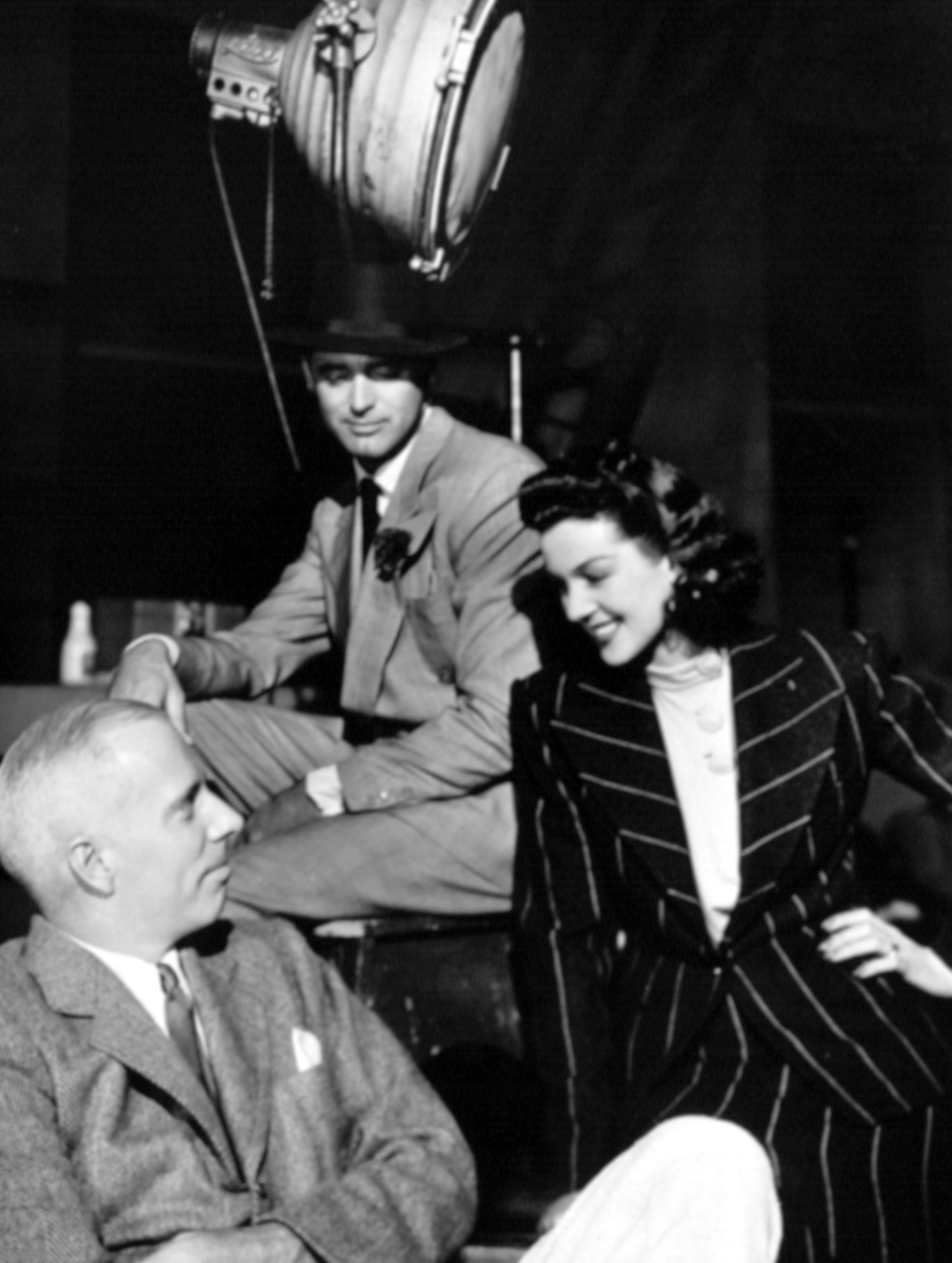
Vintage Image of the Day:

Howard Hawks, who was born on this day in 1896, with stars Cary Grant and Rosalind Russell on the set of His Girl Friday in 1939:

Actor in the Spotlight:

With Baywatch now in theaters, the character actor showcase No Small Parts profiles the career of Alexandra Daddario:

[embedded content]

?

Movie Score Cover of the Day:

With Pirates of the Caribbean: Dead Men Tell No Tales now in theaters, here’s an a capella performance of the franchise’s theme:

[embedded content]

?

Reworked Movie of the Day:

With Alien: Covenant in theaters, here’s a reworking of the original Alien so it’s a comedy about a cat from outer space:

[embedded content]

?

Classic Trailer of the Day;

This week is the 60th anniversary of the release of Elia Kazan’s A Face in the Crowd. Watch the original trailer for the classic film below.

[embedded content]

Let’s block ads! (Why?)


No Image

College Access Index Shows Shrinking Levels Of Economic Diversity

NPR’s Robert Siegel speaks with New York Times columnist David Leonhardt about how this year’s college access index shows that economic diversity is shrinking at American colleges.

ROBERT SIEGEL, HOST:

How economically diverse are America’s colleges? That’s a question The New York Times has been asking in an annual survey the paper’s been doing for the past couple of years. The big takeaway this year, according to Times columnist David Leonhardt, is that economic diversity at the nation’s public, four-year colleges is on the decline. And David Leonhardt joins us.

Welcome to the program.

DAVID LEONHARDT: Thank you.

SIEGEL: First, tell us how you measure economic diversity in colleges.

LEONHARDT: There is a scholarship called the Pell Grant. It’s the largest federal scholarship. And colleges have to report how many of their students receive Pell Grants. That means their students come from roughly the bottom 50 percent or bottom 40 percent of the income distribution.

SIEGEL: And what are the colleges that you’re measuring?

LEONHARDT: We restricted this to colleges with a five-year graduation rate of at least 75 percent. And it’s actually depressing how few colleges fit that category – only about 170.

SIEGEL: Public colleges and universities have historically provided a crucial step up in the economic and social scale for young Americans of modest means. How big a decline are you seeing in economic diversity?

LEONHARDT: At some schools, it’s actually fairly shocking. At the University of California in San Diego, the Pell share of the freshmen class fell from 46 percent to 26 percent. And the reason is pretty clear – budget cuts from state governments.

SIEGEL: Meaning that more applicants just can’t attend or the colleges can’t help them pay for it? What is the mechanism there?

LEONHARDT: It’s sort of all of the above. With less money, colleges have less money to enroll lower-income kids. So some of them are going out and recruiting more affluent kids actively. Others are probably not admitting the lower-income kids. But I find this really worrisome because investments in education, historically, have really paid for themselves. And the idea that we’re making it harder for lower and middle-income Americans to go to flagship public universities strikes me as really short-sighted and self-defeating.

SIEGEL: This is the third annual New York Times survey. You’re seeing this trend just over three surveys, or has it been going on longer than that?

LEONHARDT: It’s been going on longer than that. So what happened with public colleges is that when the financial crisis hit in the 2009, 2010 window, a lot of states cut their budgets. They have stopped cutting them, but state support for higher education is still down 18 percent since 2008.

SIEGEL: Now, you’ve written about some increases in the share of students with Pell Grants at several private colleges and universities. And you say that successes don’t necessarily track with the size of a university or a college’s endowment. But despite some exceptions, from what I could see, all of the top 10 Pell Grant enrollments in private colleges are the predictable elite colleges. They were all Ivy’s or Amherst, Williams, elite women’s colleges.

LEONHARDT: Well, there are two different things that go into our ranking. One is the share of kids getting Pell Grants; the other is the cost. And you’re absolutely right. The colleges with the biggest endowments, places like Harvard and Stanford and Princeton, they charge the least for low-income kids, once you take financial aid into account. But when you look at how many Pell students they actually enroll, there’s more variation there. There are schools without huge endowments that are actually doing a better job enrolling poor kids than schools with bigger endowments. Vassar, Franklin and Marshall – these are schools that are not nearly as wealthy and yet they’re actually more economically diverse. And I think they really deserve praise for doing that.

SIEGEL: You’re measuring economic diversity. For years, we were more accustomed to seeing people measure racial, minority diversity. Do you think that such measures would track very closely to the rate of Pell Grants, or might the rate of African-American and Latino students be different from these measures of economic diversity?

LEONHARDT: I do think there would be real differences there. So if you look at the history of higher education, for a long time, these elite institutions excluded women, African-Americans, Latinos, Jews, just huge parts of the population. Starting in the late 1960s, into the ’70s and ’80s, they did much better on that score. The reason we started this is that the data suggests they haven’t done as well making progress on economic diversity as they have on racial diversity. And so while they enroll kids of every religion, every race, every region, often those kids are diverse in every way except economically. And we wanted to capture this other aspect of it.

SIEGEL: David Leonhardt of The New York Times, thanks for talking with us.

LEONHARDT: Thank you.

Copyright © 2017 NPR. All rights reserved. Visit our website terms of use and permissions pages at www.npr.org for further information.

NPR transcripts are created on a rush deadline by Verb8tm, Inc., an NPR contractor, and produced using a proprietary transcription process developed with NPR. This text may not be in its final form and may be updated or revised in the future. Accuracy and availability may vary. The authoritative record of NPR’s programming is the audio record.

Let’s block ads! (Why?)


No Image

The 'Best Of' Frank Deford, According To Frank Deford

Frank Deford in 1991, holding a dummy copy of the final edition of The National Sports Daily, which he edited and published. It’s hard to distill 37 years of Deford’s sports commentaries down to a few “best of” pieces. But, before he retired, he shared some of his favorites with us.

Susan Ragan/AP

hide caption

toggle caption

Susan Ragan/AP

Renowned sports writer and commentator Frank Deford, 78, died on Sunday, just a few weeks after his last piece aired on Morning Edition. He had recorded 1,656 commentaries for NPR over nearly 40 years.

Deford left everything on the field when choosing topics for his commentaries. One of his early 1980 pieces argued that losing teams didn’t deserve support, and later that year he opined that the Heisman Trophy was “the second stupidest award given in sports.” In 1992, he told us “television coverage of football is abysmal. It stinks.” A few years later, he weighed in on then-rookie NBA player Jason Williams’ nickname, “White Chocolate.”

But Deford wasn’t always the sports curmudgeon, as Jon Wertheim, executive editor for SportsIllustrated, told Morning Edition.

“I think there was a real versatility to him,” said Wertheim, who knew Deford for more than 20 years. Many sports writers, Wertheim said, got into the business because of Deford.

“He could write with empathy, compassion, and sweetness. He could take stands — as NPR listeners know there were certainly, there were dimensions to sport that bothered him. There was a level of moral outrage,” Wertheim said. “And then he could come back the next week and write about something with real sweetness and tenderness. And he did the same thing in his prose. And he is just an absolute giant in the field.”

For Wertheim, what made Deford’s writing so good, was his reporting and analysis.

“And I think something that gets lost with Frank Deford — you hear what a brilliant writer he was, and all of that is true — but I think his writing in some ways was really shaped by his ability to report, and his ability to analyze. Analyze situations, analyze people, analyze games,” Wertheim said. “And too often we talk about brilliant writers and we lose sight of the fact that they were brilliant reporters as well. Which made the writing easy. And I think Frank is a classic example of that.”

It’s hard to distill 37 years of Deford’s Sweetness and Light commentaries down to a few “best of” pieces. But, before he retired, he shared some of his favorites with us and, here, we share them with you.

Plays, Monet, Faure and football?

Deford came to the defense of Gary Walters, the athletic director at Princeton University, who compared sports to art, in his Oct. 17, 2007, commentary:

What we accepted as great art — whether the book, the script, the painting, the symphony — is that which could be saved and savored. But the performances of the athletic artists who ran and jumped and wrestled were gone with the wind.

Now, however, that we can study the grace of the athlete on film, a double play can be viewed as pretty as any pas de deux. Or, please: Is not what we saw Michael Jordan do every bit as artistic as what we saw Mikhail Baryshnikov do?

Toss the ball to Shakespeare

There are plays on the field and court, and, well, plays. Deford put the ball in The Bard’s hands for his Jan. 30, 2008, commentary:

Methinks the crunch upon his presence is so great,
And the paparazzi do shine forth such a spangled glare
That the great golden orb above must be dimmed
And the sounds of Niagara itself seem noiseless
Before the din of questions that confront our great Brady.

Hey, you guys!

Deford observed that there was a new “linguistic phenomenon” in his Sept. 27, 2011, commentary — the “guy-ification of America”:

How did females become guys? How did everyone become guys? Remember, too, that a male guy was something of a scoundrel. And a wise guy was a fresh kid, a whippersnapper. In its most other famous evocation, men in Brooklyn said “youse guys.” Damon Runyon referred to hustlers, gamblers and other nefarious types as guys.

Now every mother’s son is a guy and every mother’s daughter, too. If they wrote the musical now, it wouldn’t be called Guys and Dolls –– just Guys and Guys.

Our indecent joy

Deford revisited the topic of concussions and football over and over again, and in his Jan. 16, 2013, commentary he reflected on Americans’ love of the game despite what he called, its “violent nature”:

Football teams represent cities and colleges and schools. The people have built great stadiums, and the game is culturally intertwined with our calendar. We don’t go back to college for the college. We go back for a football game, and, yes, we even call that “homecoming.” It would take some unimagined cataclysmic event to take football from us. Concussions for young men are the price of our love for football, as broken hearts are what we pay for young love.

Put down the ball, pick up a book

In his Sept. 4, 2013, commentary, Deford weighed in on the whistleblower who called attention to fake classes for athletes at UNC-Chapel Hill:

So much about big-time college sports is criticized. But the worst scandal is almost never mentioned: the academic fraud wherein the student-athletes, so-called, are admitted without even remotely adequate credentials and then aren’t educated so much as they are just kept eligible.

Let’s block ads! (Why?)


No Image

Are State Rules For Treating Sepsis Really Saving Lives?

A 4-year-old regulation in New York state requires doctors and hospitals to treat sepsis using a protocol that some researchers now question.

Getty Images/iStockphoto

hide caption

toggle caption

Getty Images/iStockphoto

Doctors can save thousands of lives a year if they act promptly to identify sepsis, an often lethal reaction to infection. Sometimes called blood poisoning, sepsis is the leading cause of death in hospitals.

A 4-year-old regulation in New York state compels doctors and hospitals to follow a certain protocol, involving a big dose of antibiotics and intravenous fluids. It’s far from perfect — about a quarter of patients still die from sepsis. But early intervention is helping.

“Intervention has to be quick,” says Dr. Howard Zucker, commissioner of the New York State Health Department.

He knows what happens when it isn’t. In fact, he says, he has a cousin in the hospital right now who has been struggling to recover from a severe bout of sepsis — hospitalized in another state, he adds.

Doctors didn’t immediately realize that he was developing sepsis, and by the time they did, Zucker says it was much more difficult to treat. “That’s what we’re trying to do. We want people to intervene quickly. That’s the regulation, to intervene fast in a situation of this nature.”

Indeed, sepsis death rates in hospitals have declined where these rules are in place.

But Dr. Jeremy Kahn at the University of Pittsburgh has mixed feelings about these regulations.

“If we [doctors] were great at doing the right thing — the thing that most people agree on — then we wouldn’t need regulation,” he says. But in reality, doctors don’t all keep up with the latest best practices and follow them, Kahn says, so regulations save lives.

“The downside is that a regulatory approach lacks flexibility,” he adds. “It essentially is saying we can take a one-size-fits-all approach to treating a complex disease like sepsis.”

That’s problematic, because doctors haven’t found the best way to treat this condition. The scientific evidence is evolving rapidly, Kahn says. “Almost every day another study is released that shows what we thought to be best practice might not be best practice.”

Kahn wrote a commentary about the rapid changes earlier this month for the New England Journal of Medicine.

For a while, medical practice guidelines distributed to doctors called on them to use one particular drug to treat sepsis. It turned out that drug did more harm than good. Another heavily promoted strategy, called goal-directed therapy, also turned out to be ineffective.

And a study presented last week at the American Thoracic Society and published electronically in the New England Journal of Medicine finds that one of the steps required in New York may not be beneficial, either.

The regulations call for a rapid and substantial infusion of intravenous fluids, but that didn’t improve survival in New York state hospitals.

Many doctors consider fluids helpful, but “what we haven’t learned is the specific type of fluid to give patients, how much and how fast of a rate,” says Dr. Christopher Seymour, a critical care researcher at the University of Pittsburgh who co-authored the analysis. “It’s been quite controversial.”

“There are consequences and adverse effects that can come from too much fluid,” Seymour says.

In fact, some doctors believe that most patients are better off without this aggressive fluid treatment. There’s a study getting underway to answer that question. Dr. Nathan Shapiro at Harvard’s Beth Israel Deaconess Medical Center hopes to enlist more than 2,000 patients at about 50 hospitals to answer this life-or-death question.

But that study will take years, and in the meantime doctors have to make a judgment call.

“It is possible that at present they are requiring hospitals to adopt protocols for fluid resuscitation that might not be entirely appropriate,” Kahn says.

There could also be other big changes on the horizon for treating sepsis.

Doctors scattered coast to coast are trying a new protocol that, in addition to limiting fluids, uses high doses of intravenous vitamin C, steroids and vitamin B1. That has generated a great deal of enthusiasm and some startling claims of success, though it remains to be seen whether it is indeed an exciting advance or will become another disappointment in treating sepsis.

Dr. Zucker at the New York Health Department says the current regulations would not stand in the way of advances to treatment.

“If there is a disruptive technology that comes out, or a therapy that comes out, we would adjust accordingly.”

You can reach Richard Harris at rharris@npr.org.

Let’s block ads! (Why?)