Articles by admin

No Image

Alex Honnold Scales El Capitan Without Ropes, And The Climbing World Reels

A post shared by National Geographic (@natgeo) on Jun 3, 2017 at 12:18pm PDT

Alex Honnold has shocked the sport of climbing by reaching the peak of El Capitan without using ropes, climbing one of the world’s largest monoliths in less than four hours with little gear other than a bag of chalk.

“So stoked to realize a life dream today,” Honnold wrote on Facebook on Saturday. He shared a photo of himself on the Yosemite National Park landmark taken by Jimmy Chin of National Geographic, which is basing a new documentary on Saturday’s climb.

“Speechless,” wrote the American Alpine Journal in its response to the news that Honnold had tackled the imposing 3,000-foot granite wall in a “free-solo,” ascent, climbing alone and without safety gear.

Honnold raced up the wall in 3 hours and 56 minutes, prompting Alpinist magazine to say, “This is indisputably the greatest free solo of all time. Congratulations, Alex!”

“This man,” Honnold’s friend and fellow climbing star Conrad Anker wrote on Facebook. “Respect. Life goal realized.”

After his climb, Honnold told National Geographic that the first challenge was simply to walk up to the California monolith, sit next to the base and put his climbing shoes on.

“Because you look up and go, ‘that’s a f****** big wall,’ ” he said. “It’s like, pretty crazy.”

Alex Honnold smiles after scaling El Capitan in Yosemite National Park, in a photo provided by National Geographic. Honnold became the first person to climb alone to the top of the massive granite wall without ropes or safety gear.

Jimmy Chin/National Geographic via AP

hide caption

toggle caption

Jimmy Chin/National Geographic via AP

A lighter moment came later, Honnold said, when he passed some climbers who had spent the night on a ledge. He did his best not to wake them.

“I woke up one guy and he sort of said, ‘Oh, hey.’ Then when I went by, I think he discreetly woke up his buddies because when I looked down they were all three standing there like ‘What the f***?’ “

By conquering El Capitan, Honnold fulfilled a goal he had worked toward for years. He first wrote about the potential record-setting climb in his journal in 2009 — but he repeatedly found reasons to set it aside, as he said last year on the Basecamp podcast with Gripped editor Brandon Pullan.

“Obviously, that’s like, the thing to do,” Honnold said when discussing El Capitan with Pullan in 2016, adding, “it’s always seemed really scary.”

Honnold, 31, has become famous for eye-popping ascents that rely on his unique blend of athleticism and mental focus, ascending Yosemite’s Half Dome and Zion National Park’s Moonlight Buttress. But Gripped says of Honnold’s El Capitan free-solo climb, “this is by far the most groundbreaking.”

While Honnold said in the podcast that he found the idea of free-soloing the monolith “out of the question,” he also told Pullan that he’d been studying it for years and “El Cap is definitely doable.”

“I mean, there are two routes that you could potentially do, like Freeride or Golden Gate — they’re the two easiest free routes,” Honnold said, in a statement that only makes sense coming from someone who’s often called one of the greatest rock climbers the world has ever seen.

The challenges on El Capitan, he said, start early, no matter which route you take.

“They all start with Freeblast, which is like a 10-pitch slab,” Honnold said, adding that large sections of the granite slab are “basically like walking on a sheet of glass.”

The crux of one pitch, he said, is “like this no-hands, foot traverse thing, where you’re just like, shuffling across a blank wall.”

Honnold added, “That’s before the [main] wall even starts, that’s just like getting up there.”

Let’s block ads! (Why?)


No Image

The Millennial Obsession With Self-Care

When it comes to millennials, it’s likely no surprise that the generation that takes advantage of the Internet the most is also the generation that devotes the most time and money to the $10 billion self-care industry.

Malte Mueller/Getty Images

hide caption

toggle caption

Malte Mueller/Getty Images

There is one generation that has been consistently defined by its obsessions: avocado toast, memes, Harry Potter … and self-care. They are often perceived as entitled snowflakes, but millennials might be the generation of emotional intelligence.

Self-care existed long before millennials did. Ancient Greeks saw it as a way to make people more honest citizens who were more likely to care for others. In her 1988 book, A Burst of Light, Audre Lorde wrote that “caring for myself is not self-indulgence, it is self-preservation and that is an act of political warfare.”

Today, self-care, as it’s defined by Gracy Obuchowicz, a facilitator and self-care mentor and coach in Washington, D.C., “assumes that we’re OK as we are and we just need to take care of ourselves … Self-care alone is not enough. You need to have self-awareness too. Self-care plus self-awareness equals self-love.”

While self-care has been around for centuries, it has only recently been co-opted by stars such as Solange and consumerized into self-care kits.

[embedded content]
YouTube

In 2015, according to the Pew Research Center, more millennials reported making personal improvement commitments than any generation before them. They spend twice as much as boomers on self-care essentials such as workout regimens, diet plans, life coaching, therapy and apps to improve their personal well-being. They’ve even created self-care Twitterbots.

But why is there a generational divide in taking care of yourself?

One study showed that this might have all sprouted out of the Internet. It found that students reported using the Web to identify self-care strategies, alternative therapies and other information related to nutrition and fitness.

Do a quick Google search and you’ll find hundreds of articles about self-care, occasionally accompanied with lists of advice such as “go to a farmers market” or “buy a new candle” or “drive with the windows down.” So it comes as no surprise that the generation that takes advantage of the Internet the most is also the generation that devotes the most time and money to the $10 billion self-care industry.

Hyepin Im, the president and CEO of Korean Churches for Community Development and an expert on mental health and digital literacy, also found that the Internet was likely the cause.

“In a way of having that affordable free access to information increases awareness to these areas we didn’t know from schooling or families,” Im said. “Once you’re aware, these new tools and apps equip us … to actually make that investment.”

Then again, Im points out, we might have created a solution for a problem of our own making.

“Increased awareness is very powerful,” Im said. “The other piece, in some ways we’re constantly bombarded in self-absorption.”

Im said we might find ourselves comparing our lives to the perfection we see on the Internet, which leads us to utilizing online tools for self-care — and the cycle continues.

“There is this point where you do also have this time for self-reflection and you start seeking substance and meaning beyond a whole selfie. You start searching. Those are also things that push our generation,” Im said.

Furthermore, Im said the introduction of social media throughout the millennial generation has increased understanding of mental illnesses and decreased the stigma.

“Maybe in the past, you thought someone was crazy or lazy, but now we’ve learned more,” Im said. “It’s a continuum. A lot of those things [like increased Internet access] allow you to become more sensitive to others.”

Beyond social media, Obuchowicz said she has noticed an uptick in the interest in self-care lately, particularly since the election. It’s true: Google searches for the term reached a five-year high after the election.

But Obuchowicz says it’s more than just social media that has pushed millennials to the forefront of the self-care discussion.

“Our generation has seen enough,” she said. “People are really hungry for knowledge. It’s a relatively new idea in our culture that we would be paying attention to how we feel and using that as a kind of intelligence. It’s something that’s really waking up in our culture and our generation.”

Obuchowicz said millennials look at their parents and grandparents and are grateful for what they’ve done but aren’t willing to go about life in the same way.

And they are not the first generation to do so.

“What our mothers did in comparison to our grandmothers was epic,” Obuchowicz said. “This is our revolution.”

Let’s block ads! (Why?)


No Image

Our Last Year Together: What My Camera Captured As My Parents Died Of Cancer

Dad called these “his and hers chairs.” He would sit beside Mom, his partner and wife of 34 years, as they got their weekly chemotherapy treatments. Howie Borowick had just been diagnosed with pancreatic cancer, and wife Laurel was in treatment for breast cancer for the third time. For him, it was new and unknown. For her, it was business as usual, another appointment on her calendar.

Nancy Borowick

hide caption

toggle caption

Nancy Borowick

There is a whole range of feelings that happen with the delivery of bad news. In my case, like many others, knees lock, the heart speeds up and the hairs on my arms get a funny little tingle. My circumstances, however, were a little less expected.

When my dad told my husband and me that he and my mom wanted to come into Manhattan for dinner, I was excited to see them and quickly made a plan for an 8 p.m. dinner at Café Orlin — my favorite for Middle Eastern food. As soon as we sat down, I knew something was very wrong.

No matter how many times her cancer returned, Mom found a way to live her life and not take it too seriously.

Nancy Borowick

hide caption

toggle caption

Nancy Borowick

My mom had been in and out of breast cancer treatment for 15 years and had been managing and treating the disease like it was no big deal, even though she was just in her 50s. Were they about to tell us that the other shoe had dropped and she was dying? No, this time it was about my dad. He had stage 4 pancreatic cancer. My 28-year-old world shook. We all knew what this meant.

In the kitchen, Dad breaks into a bouncing dance to try to get a smile out of Mom. They often turned to humor to lighten the heavy mood in the home.

Nancy Borowick

hide caption

toggle caption

Nancy Borowick

As a photojournalist, I did the only thing I knew: I picked up my camera and documented my parents’ dual cancer treatments for the next 24 months and our lives as they unfolded. From the seven-hour chemotherapy infusions to running errands with Mom according to her to-do lists, I was there with my camera slung across my shoulder.

Late one evening, Dad cut Mom’s hair, knowing that it would start falling out on its own in the coming weeks as a side effect from the chemotherapy. Mom turned the shorn locks into eyebrows.

Nancy Borowick

hide caption

toggle caption

Nancy Borowick

When I look back on the time I spent documenting these complicated months, I don’t immediately remember feeling scared. I remember the pee-your-pants laughter, high-calorie dinners (as per the doctor’s request, of course), the late-night dance parties in my parents’ kitchen and the never-ending conversations over a cup of Chappaqua roast from Susan Lawrence Gourmet Foods and Bea’s Bakery blueberry pie.

Dad and Mom embrace in the bedroom of their home. They never could have imagined both being in treatment for cancer at the same time. Together, they faced the daily struggles of illness in their own lives while also caring for each other.

Nancy Borowick

hide caption

toggle caption

Nancy Borowick

Everyone deals with their fears, especially death, in their own way. My family leaned on humor to carry us through this difficult time. I remember one night sitting on my parents’ bathroom floor as my father began to cut off my mother’s hair, which had become flat dreadlocks tightly knotted against her scalp. The chemo had stopped its growth, but she hadn’t been ready to part with her hair for the third time — once with each cancer diagnosis. I remember cursing the universe, asking it to give my mom a break just this once. The next thing I knew, my mother jumped in front of me and my lens, discarded hair held to her face like eyebrows. A fashion show followed suit, as we all wore her hair as costume, including the dog! That she found the lightness and ability to find joy in this moment speaks to the tremendous woman she was.

By confronting what I feared most, using my camera as my shield, I was able to move past the trauma that I anticipated and truly enjoy the time we had left together. Had I hidden away from the reality, I wouldn’t have the beautiful photo of my parents holding hands across the chemo chairs as they received their respective treatments. They were the definition of strength and courage, and seeing these images reinforces to me the importance of not letting fear hold me back. It also reminds me to appreciate each day and not lose perspective. As Mom once told me, “There’s also life going on here. I am having marshmallows, you know!”

Although illness struck the Borowicks’ home twice, they managed to find strength and courage through humor.

Nancy Borowick

hide caption

toggle caption

Nancy Borowick

Dad always dealt with hiring and talking with the gardeners each spring. After he passed away, that responsibility fell to Mom. Upon hearing of his death, the owner of the company sent over flowers, genuinely heartbroken at the news. Mom found a perfect place to hang them on the back patio.

Nancy Borowick

hide caption

toggle caption

Nancy Borowick

Mom’s to-do lists represented the simultaneity of life: Order Howie’s headstone, decide whether to begin radiation, join the gym and actually start going, and most importantly: “What happened to our Girl Scout Cookies?”

Nancy Borowick

hide caption

toggle caption

Nancy Borowick

Mom eats dinner with us kids, featuring her famous eggplant parmigiana recipe prepared by her son Matthew. This would be the last meal she would eat.

Nancy Borowick

hide caption

toggle caption

Nancy Borowick

Managing her pain, Laurel Borowick often did not have energy; her fatigue and exhaustion were caused by medication.

Nancy Borowick

hide caption

toggle caption

Nancy Borowick

Was it scary? Of course. When he died in 2013, my dad, Howie, was 58. My mom, Laurel, was 59 when she died one day shy of the anniversary of my dad’s death. But what was most notable was how those final months were filled with love and life.

Howie and Laurel Borowick attend photographer Nancy Borowick’s wedding in 2013. Howie called it the family’s last hurrah.

Courtesy of Matthew Borowick

hide caption

toggle caption

Courtesy of Matthew Borowick

Although my parents are gone, my siblings and I continue to feel their love and guidance, as we sift through decades of found letters and notes, including one small stack of Post-it notes from our mother, exemplifying the importance of leaning into fear and taking chances: Courage isn’t the absence of fear — it’s knowing that you are afraid and doing it anyway. Don’t spend your days avoiding risk, being fearful. Act. Live your life on your own terms. Life is precious; spend it without regrets in your own precious voice. For my three angels: If you want to talk or feel my love, look up at the night sky — I am always watching over you.


Nancy Borowick is a photojournalist based on the island of Guam. She has covered humanitarian stories for many organizations including The New York Times, The Washington Post and CNN. Her book documenting her parents’ life with cancer, The Family Imprint: A Daughter’s Portrait of Love and Loss, is now available, and the work will be on exhibit beginning Friday in Brooklyn, N.Y.

Let’s block ads! (Why?)


No Image

There May Not Be Flying, But Quidditch Still Creates Magic

The Washington Admirals quidditch team practices at Thomas Jefferson Community and Fitness Center in Arlington, Va. The real-life sport was inspired by the magical one described in J.K. Rowling’s Harry Potter books, in which players fly about on broomsticks.

Jared Soares for NPR

hide caption

toggle caption

Jared Soares for NPR

When Colby Palmer started his freshman year at Virginia Commonwealth University, some students approached him in his dorm and asked whether he wanted to play quidditch.

Palmer had read all of the Harry Potter books and knew about the sport but said he felt reluctant to try it out.

“My impressions of quidditch was just that it’s for nerds by nerds — that they wouldn’t be like people who I would find things in common with,” Palmer says.

Despite his hesitations, Palmer did give it a try and found he loved it and the community. Now, he’s heading into his senior year at VCU and is spending the summer playing for the Washington Admirals, one of 16 Major League Quidditch teams. The season starts this weekend.

Colby Palmer (right) started playing quidditch in college. “My impressions of quidditch was just that it’s for nerds by nerds — that they wouldn’t be like people who I would find things in common with,” Palmer says. Now he’s heading into his senior year at Virginia Commonwealth University and is spending the summer playing for the Washington Admirals.

Jared Soares for NPR

hide caption

toggle caption

Jared Soares for NPR

Maybe you’ve never heard of quidditch. And you might have missed the images of actor Daniel Radcliffe as the boy wizard Harry Potter plunging toward the ground on a flying broomstick in the screen adaptation of J.K. Rowling’s series. If that is the case, you have a lot to learn. But then again, so does everyone who comes to the sport.

“There’s such a dichotomy within the community because there are people who got into it because of Harry Potter and became athletic through friendship and playing, and then there are people like me who are looking for something to really stay in shape,” Palmer says.

Quidditch 101

Unlike the majority of large spectator sports, quidditch is more complex — partly because it is rooted in magic. Teams may have only seven players on the field, or pitch, at a time: three chasers, two beaters, one keeper and one seeker. All of the players wear headbands, and each color designates their position. Chasers wear white, beaters wear black, keepers wear green, and seekers wear yellow.

There are three hoops mounted on each side of the pitch, and each player has a broom or stick. And, unlike basketball, baseball and football, in quidditch, up to five balls can be moving around the pitch at all times.

First, there is the quaffle. In the real-life version of the game, it’s a volleyball handled by the chasers and is the only ball that results in a score when it goes through the hoops. Each goal is 10 points.

A chaser handles a quaffle during practice. In the real-life version of the game, it’s a volleyball and is the only ball that results in a score when it goes through the hoops. Each goal is 10 points.

Jared Soares for NPR

hide caption

toggle caption

Jared Soares for NPR

Then there are the bludgers. Those familiar with Harry Potter might remember that these balls have a mind of their own and are sent speeding toward other players to knock them off brooms. In real life, these balls don’t fly, but they can still knock players off their brooms. There are three bludgers on the field at a time. The bludgers are dodgeballs and are used by the beaters like they would a regular dodgeball. If players are hit by a bludger, they dismount from their brooms and run back to their hoops and tag up. On both defense and offense, the bludgers are used to clear paths for a team’s chasers as players run toward the opposing team’s hoops and help the keepers — or goalies — protect their own hoops. Bludgers also used to keep the opposing team’s seeker away from the snitch, the last of the balls.

Quidditch’s requisite sticks lie on a field, or pitch, next to a bludger, or a dodgeball in the real-life game. One of the scoring hoops — there are three — are set up on the pitch.

Jared Soares for NPR

hide caption

toggle caption

Jared Soares for NPR

Like in the fictional sport quidditch is based on, the snitch is vastly smaller than the other balls — about the size of a tennis ball — and it’s worth 30 points if caught. But the snitch is also a position in the game, though this person is not a member of either team on the field, to keep things fair. The ball is secured in a cloth strip, which is Velcroed to the back of the person’s shorts, similar to flag football. The person who is the snitch can do just about anything, including running, dodging and grappling, to make sure the seekers — whose sole focus is to catch the snitch — don’t get the ball. Once a seeker catches the snitch, the match is over.

The snitch is not just a ball, it’s also a position in the game. Ricky Nelson — the snitch in this match — prevents someone from grabbing the ball, which is attached to his uniform.

Jared Soares for NPR

hide caption

toggle caption

Jared Soares for NPR

With all of that going on at once on the field, it can seem a little chaotic to first-time viewers, but that complex strategy is what a lot of players enjoy about the game.

“If you don’t have the snitch, you have the quaffle and three bludgers active at all time on the field. It creates such a more dynamic sport, and it can kind of play out in crazy ways,” says Ethan Sturm, a co-commissioner of Major League Quidditch. “There’s so many things you can do strategically because there’s so much more variety … you have to worry about a bludger taking you out of the play and allowing the quaffle to be easily scored.”

The gender rule

Additionally, quidditch has proven itself to be one of the most progressive sports in terms of gender equality. The game isn’t divided based on sex, and anyone, regardless of their gender identity, is welcome to play.

The rule was established in US Quidditch, which serves as the governing body for the sport and has a league and season that takes place during the school year.

“It’s not strictly the gender binary by either male or female, so it creates a really unique way for people to identify outside of that binary to have a way that they can play sports and be accepted for who they are and really be able to have an atmosphere and a community that fully accepts them and be themselves,” says Sarah Woolsey, executive director of US Quidditch.

The Washington Admirals quidditch team prepares for the Major League Quidditch season, which begins this weekend.

Jared Soares for NPR

hide caption

toggle caption

Jared Soares for NPR

The main rule regarding gender on the field only allows a maximum of four members of a team who identify the same way to be playing at a time. This is something that many players, such as Augie Monroe of the Texas Cavalry team, like about the sport. Monroe played football in high school but says the locker room culture turned him off. That is not a problem with quidditch, he says.

“I wasn’t all that big on the [football] culture, and I love co-ed teams because there’s a balance of opinions and perspectives just in communicating with people on your team,” Monroe says. “I think it’s a more fun group to be a part of.”

And Monroe has been a part of the quidditch community for a while. He started his career in 2011 at the University of Texas, where he played with theLonghorns as they won three straight national titles from 2013 to 2015. After graduating, he knew he wasn’t done playing and founded the Texas Cavalry team, which plays in the US Quidditch league and won the championship cup in April.

Quidditch isn’t divided by sex, and anyone, regardless of their gender identity, is welcome to play. The main rule regarding gender allows a maximum of four people from each team who identify the same way to play at a time.

Jared Soares for NPR

hide caption

toggle caption

Jared Soares for NPR

Although he has been on four championship teams, Monroe was far from the best player on the pitch when he started out. It was the people that made him come back. Once he found his place on the pitch, Monroe just had to work on the skills.

“The thing that proved the most difficult was running around with a broom and getting used to that,” Monroe says. “I kept like tripping over myself and didn’t have a clue what was going on with the team, but then again at the same time, it wasn’t the most competitive at that point.”

Quidditch through the ages

The level of competition has quickly changed despite the sport’s young age.

The first quidditch match took place at Middlebury College in Vermont in 2005. Initially, the sport spread slowly, with the concentration of teams located in the Northeast.

As time went on, teams from the across the country started to compete in the annual championship tournament, but they weren’t limited to colleges and universities. Community teams started to form and are also part of the US Quidditch league.

The Washington Admirals roster for this season includes Cody Nardone (clockwise from top left), Julia Rankin, Paige Bellamy and Patrick Rardin, who also serves as head coach.

Jared Soares for NPR

hide caption

toggle caption

Jared Soares for NPR

By 2012, more than 110 teams had registered with US Quidditch, and along with that growth came rule changes. One of the major shifts involved the snitch. Back in 2005, the snitch wasn’t limited to just running around the pitch and could often run off to completely different areas of a campus where a match was taking place. While that was great for keeping with the spirit of how the snitch is in the magical world, it turned out to not be the best implementation for consistent play.

“Some of those changes are a lot bigger than others, and you know we’re just always kind of looking at what we can do to make this sport as safe as possible and as effective as possible for quality competition and fair opportunity for all players,” Woolsey says.

And significant changes are on the horizon. One of the biggest issues facing US Quidditch right now is the debate surrounding the mixture of collegiate and community teams. Community teams are largely made up of previous collegiate players who, after graduating, didn’t want to stop playing. These players often have more experience than those on college teams who just joined the sport, and when community teams form, they are usually made up of many strong players, so issues of fairness arise.

Quidditch matches can get rough, which is why when US Quidditch adapted rules for high school and middle school teams, it banned tackling.

Jared Soares for NPR

hide caption

toggle caption

Jared Soares for NPR

“I think it’s a whole lot easier to get people involved and excited about quidditch when school teams are competing against other school teams and having that as something that’s kind of reassuring and something that is familiar and makes sense to people in the general public who are college sports fans,” says Jack McGovern, media outreach coordinator for Major League Quidditch.

US Quidditch is working on changing how the collegiate and community teams compete against one another, but as that is taking place, a new league has emerged.

Playing in the majors

Major League Quidditch started when co-commissioner Sturm saw the potential for the sport to draw more fans and become more established. Sturm played quidditch throughout his undergraduate and graduate years at Tufts University and watched as his teammates graduated and got involved with community teams.

“While I could tell, and people who knew the sport well could see how far it was coming, it was just in the format which was a really helter skelter regular season and then a giant tournament at the end,” Sturm says. “It was just really hard to kind of reach out using that format to a wider audience to get them to perceive it as a sport.”

Unlike US Quidditch, MLQ’s season is much shorter and takes place over the summer. The 16 teams are divided into four regions, with four teams in each region. Like any other major league, the teams travel and compete against one another in series and then all the teams converge for a championship at the end of the summer.

“I knew that if we wanted quidditch to succeed and kind of pop into the public eye, we needed to do it in a more consumable form,” he says.

Before the season started, each team held tryouts for collegiate and noncollegiate players. Once the rosters were formed, each team had 30 players. The players and teams are self-funded but hold fundraisers to pay for their equipment and travel.

The Washington Admirals is one of 16 teams divided into four regions that compete in Major League Quidditch. The season runs over the summer.

Jared Soares for NPR

hide caption

toggle caption

Jared Soares for NPR

Sturm says that in addition to being consumable, the sport also has to be sustainable, which prompted MLQ to create practice teams in each of the 16 cities for players who may not have made the roster but are still working on developing their skills.

In addition to players having room for improvement, Sturm says the sport does as well.

“I think we’ve still barely scratched the surface on what can be done in the sport. I think it’s easy to be lazy and do what’s been working,” he says. “We definitely want to get into more people’s eyes and have a larger following.”

The next generation

Growth of the sport is something many in the sport want to make happen.

“We’re kind of getting to a point where some of the older players are starting to retire,” Sturm says. “Is there going to be a kind of a second generation of great players or is it kind of dissipated out because of this stagnation at the top?”

The way the structure is now, and because quidditch was founded on a college campus, the majority of the players and teams are at a college level. And while there are community teams, many of the players are graduates of college teams.

There are some high school teams, but there is not a solid structure for them. That doesn’t mean there isn’t interest though. US Quidditch has adapted rules for high school and middle school teams. One big difference is that tackling is not allowed, because quidditch can get rough and sometimes players get concussions and broken bones.

Rardin sports a Deathly Hollows tattoo, a reference to the Harry Potter books. Many quidditch players are fans of the books.

Jared Soares for NPR

hide caption

toggle caption

Jared Soares for NPR

Sturm admits that a lot of people who play or who come to the sport eagerly are fans of the Harry Potter series and says that is something that will always be a factor. But he says that people who aren’t fans learn to love the game, but the key to getting recruits isn’t asking them whether they want to play.

“You can’t talk to them about quidditch — you’ll never change their mind on it and you’re not going to get past any preconceived notions they have,” Sturm says. “You really need to show them … because if people watching quidditch can see the technicalities and see the athleticism, it 9 times out of 10 gets rid of all those preconceived notions, and then you have somebody who can potentially get into the sport.”

Though he was at first hesitant to join the game, this is Colby Palmer’s second season with the Washington Admirals. Once he joined the game, he found it was more than a way to stay in shape.

“The people on this pitch right here are some of my lifelong friends,” Palmer says. “These are the people that I’ll be friends with for the rest of my life and that’s something that other sports really don’t afford you in the same way that quidditch does. It gives you a sense of community as well as a sense of competition, and to me, nothing binds people more than being on a team and working towards a goal. And it just so happens they’re some of the coolest people on the planet.”

Let’s block ads! (Why?)


No Image

Unemployment Data Are Often Colored By Politics

The Labor Department has issued its monthly jobs report. In these hyper-partisan times, even seemingly objective facts about the economy are viewed through the lens of party politics.

SCOTT SIMON, HOST:

The pace of hiring in the United States slowed last month, but the unemployment rate dropped to 4.3 percent, the lowest it’s been in 16 years. The monthly employment snapshot from the Labor Department is one of the most closely watched indicators of the health of the economy. NPR’s Scott Horsley reports, no matter what the numbers say, how we feel about them is often colored by politics.

SCOTT HORSLEY, BYLINE: For the first time in a decade, most Americans feel good about the U.S. economy. A survey this spring by the Pew Research Center found nearly 6 in 10 think the economy is in good shape. That’s up 14 points from a year ago.

Nearly all of the gain has come from Republicans who are now twice as likely to say the economy’s doing well as they were last year, even though chief economist Nariman Behravesh of the IHS Markit says actual conditions haven’t budged much.

NARIMAN BEHRAVESH: There’s no big change in the economy. Clearly, the change is the election and the politics. And obviously there’s some people who like what happened and some who don’t. The politics is sort of outweighing the economics.

HORSLEY: You see a dramatic display of that in Wisconsin where surveys before and after the November election found a stark partisan flip-flop in economic expectations. Charles Franklin, who conducts the poll for Marquette Law School, says Democrats are now much more pessimistic about the economy than they were before the election, while Republicans are more than three times as likely to think the economy’s going to get better.

CHARLES FRANKLIN: There’s nothing irrational in partisans believing that a change of government will dramatically improve the outlook of the economy.

HORSLEY: But the election didn’t just change people’s expectations for the future. It also changed their feelings about the recent past. President Trump had been in office less than two months when Franklin conducted his most recent survey, and already four times as many Republicans said the economy had gotten better in the last year than said so last October.

FRANKLIN: It’s really hard to see how people change their views of the past except that our perceptions of the economy are filtered through partisan lenses.

HORSLEY: When he was running for president, Trump often dismissed encouraging economic indicators as phony. Now he celebrates every positive bit of news.

(SOUNDBITE OF ARCHIVED RECORDING)

PRESIDENT DONALD TRUMP: Absolutely tremendous economic progress since Election Day on November 8. The economy is starting to come back and very, very rapidly.

HORSLEY: Franklin says it’s long been the case that Americans are more satisfied when their party controls the White House. But the trend lines for both Democrats and Republicans used to go up and down together in response to real-world conditions. Over the last dozen years or so, though, those lines have come untethered from one another. Partisan differences now seem to carry more weight than our shared national experience.

FRANKLIN: How do you have responsive politics if in fact the public is seeing two such different worlds?

HORSLEY: And, Franklin says, much of this partisan filtering is not even conscious.

FRANKLIN: It’d be one thing if we put on rose-colored glasses and we knew we were doing it. But I’m afraid with a lot of political perceptions, the color of our glasses is something we don’t even think about. And when the party in control switches, we switch the shade of our glasses without really much consideration of that.

HORSLEY: Those partisan lenses probably wouldn’t blind people to another deep recession nor a genuine boom. But so long as the economy is chugging along in fits and starts, there’s lots of room for partisan interpretation. Scott Horsley, NPR News, the White House.

(SOUNDBITE OF MYLAB’S “POP CLIENT”)

Copyright © 2017 NPR. All rights reserved. Visit our website terms of use and permissions pages at www.npr.org for further information.

NPR transcripts are created on a rush deadline by Verb8tm, Inc., an NPR contractor, and produced using a proprietary transcription process developed with NPR. This text may not be in its final form and may be updated or revised in the future. Accuracy and availability may vary. The authoritative record of NPR’s programming is the audio record.

Let’s block ads! (Why?)


No Image

The Week in Movie News: Here's What You Need to Know

Need a quick recap on the past week in movie news? Here are the highlights:

BIG NEWS

Godzilla vs. Kong Welcomes a Guest Director: Both 2014’s Godzilla and this year’s Kong: Skull Island were helmed by directors who’d previously been known for small indie films. Now their crossover, Godzilla vs. Kong, due in 2020, is going a similar route with Adam Wingard, who made last year’s Blair Witch but is best known for lower-scale films like The Guest. Read more here.

GREAT NEWS

Hailee Steinfeld Joins the Transformers Franchise: Oscar-nominated actress Hailee Steinfeld is in talks to star in the upcoming Transformers spin-off Bumblebee, making her the first woman protagonist of the franchise previously led by Shia LaBeouf and Mark Wahlberg. Read more here.

SUPERHERO MOVIE CASTING

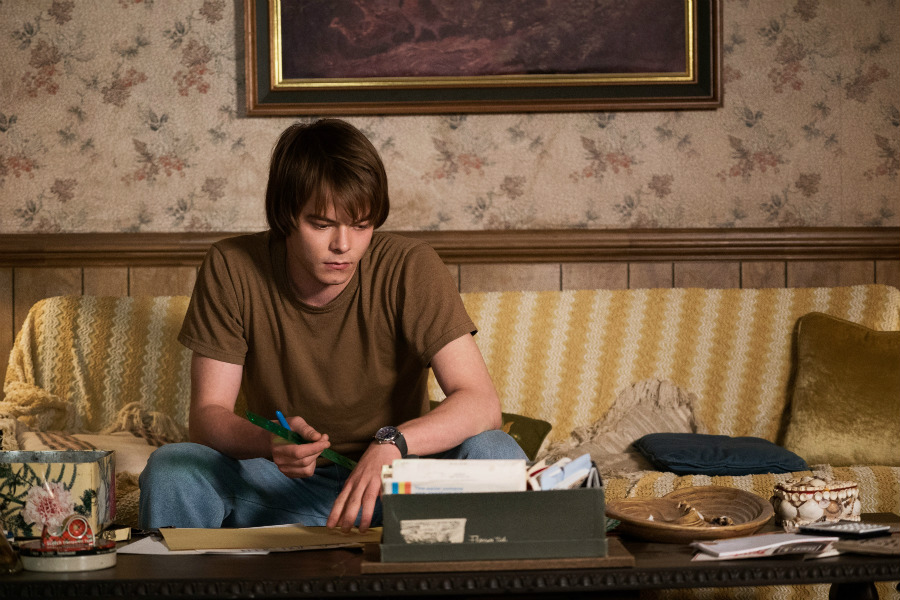
Charlie Heaton and Henry Zaga Join the X-Universe: Two more young rising stars, both of them Netflix series veterans, have joined the ensemble cast of New Mutants, the X-Men spin-off about a group of teenage heroes. Charlie Heaton (Stranger Things) was cast as Cannonball and Henry Zaga (13 Reasons Why) will be Sunspot. Read more here.

COOL CULTURE

Wonder Woman History: In anticipation of the release of Wonder Woman, the first theatrical movie starring DC’s iconic superheroine, many videomakers have been recapping the character’s history and other trivia. Watch her evolution in TV and movies below and see more here, here and here.

[embedded content]

EXCLUSIVE SCOOP

Patty Jenkins on the Most Important Scene in Wonder Woman: We talked to Patty Jenkins, director of Wonder Woman, about what’s sure to be the movie’s most iconic scene and how it took some convincing for why it was so essential. Read more here.

MUST-WATCH TRAILERS

Murder on the Orient Express Promises an Amazing Ride: The first spot for the latest adaptation of Agatha Christie’s locomotive mystery showcases its star-studded cast and their roles. We’re all aboard for this one, are you? Watch it here:

[embedded content]

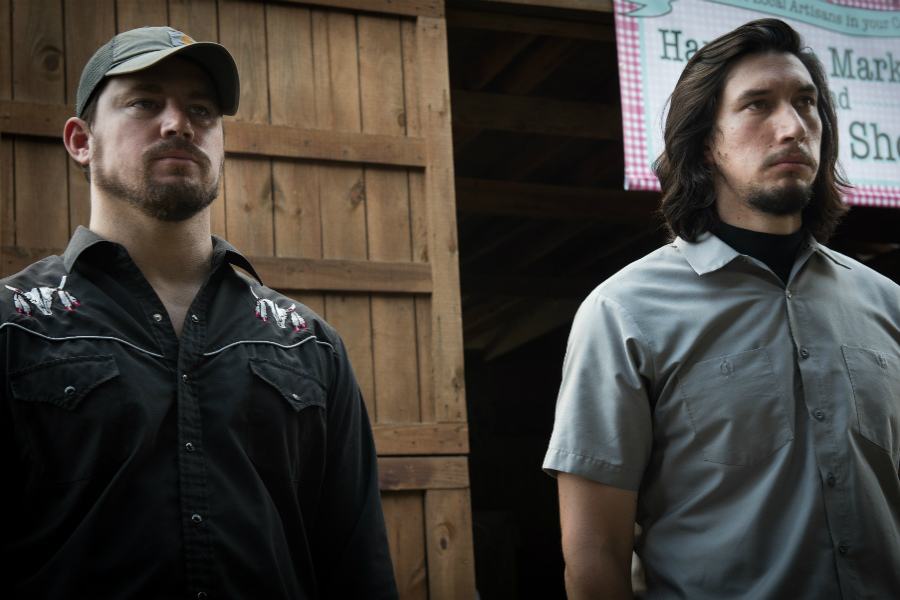
Logan Lucky Looks Like a Comedy Jackpot: We are very fortunate that Steven Soderbergh is not retired, because his new movie looks like a hoot and a half. The heist comedy stars Channing Tatum, Daniel Craig, Adam Driver, Hilary Swank and more favorites, and it’s sure to be a runaway hit. Watch the first trailer below.

[embedded content]

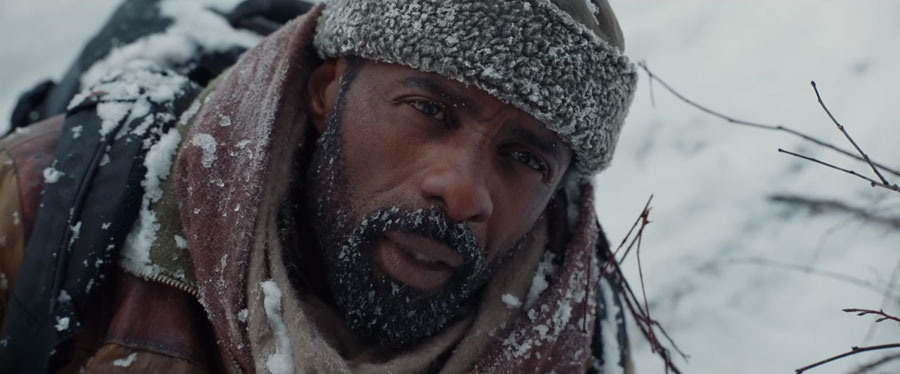
The Mountain Between Us is Intense: Idris Elba and Kate Winslet are a pair we’ll be rooting for in the latest thrilling survival movie, about strangers stranded in the mountains after a plane crash. Check out the intense first trailer:

[embedded content]

Let’s block ads! (Why?)


No Image

Episode 775: The Pigweed Killer

The road.

Marianne McCune/NPR

The border of Arkansas and Missouri is a land of open skies and long stretches of farmland. It’s also the scene for a fight against a weed – specifically the pigweed, which will overwhelm a crop in a season.

Farmers are in constant conflict with the weed. Some have turned to a powerful pesticide called Dicamba. Dicamba kills the pigweed, but it also kills the neighbors’ plants, including farmer Mike Wallace’s crops. The conflict was no longer farmer versus weed, but also farmer versus farmer. When his neighbors illegally sprayed the pesticide, Wallace reported it. After harvest, Wallace was shot and killed.

On today’s show, a murder mystery – about how a weed divided neighbors and led to Mike Wallace’s death.

Music: “Devil Ridge” and “Bootstrap Blues.” Find us: Twitter/ Facebook.

Subscribe to our show on Apple Podcasts or PocketCast.

Let’s block ads! (Why?)


No Image

Many COPD Patients Struggle To Pay For Each Breath

Juanita Milton, who suffers from COPD, uses her nebulizer with albuterol sulfate at her home in Live Oak, Texas.

Carolyn Van Houten for Kaiser Health News

hide caption

toggle caption

Carolyn Van Houten for Kaiser Health News

After a lifetime of smoking, Juanita Milton needs help breathing.

She’s tethered to an oxygen tank 24/7 and uses two drug inhalers a day, including Spiriva, which she calls “the really expensive one.”

“If I can’t afford it, I won’t take it,” Milton says.

The 67-year-old’s chest was heaving one recent morning from the effort of walking down the hallway into the kitchen. Her voice was constricted as she loaded medication into a device about the size of her palm.

“Capsule in. You close it and you push this blue button,” Milton says, demonstrating how the device punctures the pill. She then takes two labored breaths to inhale the powder inside the capsule. “And that’s it.”

Milton, like many Medicare enrollees, is on a fixed income. She has $2,000 a month to pay for a mortgage, car payment, Medicare premiums and other expenses.

“I got to stretch out that, plus I have the less costly medicines that I have to pay for and also my oxygen,” Milton says. “You can only stretch it so far.”

An estimated 1 in 9 Medicare beneficiaries are diagnosed with chronic obstructive pulmonary disease, or COPD. And, in 2014, COPD was the third-leading cause of death in the country, according to the U.S. Centers for Disease Control and Prevention. Inhalers like Spiriva and Advair account for billions in Medicare spending each year.

Yet, even if they are only responsible for monthly copays, many enrollees like Milton can’t afford their inhalers. Milton depends on free samples provided by her doctor for her prescription of one inhaler, Breo Ellipta, but the supply is limited, so she regularly skips one of the two daily doses. And, in order to afford her Spiriva, she applied for drugmaker Boehringer Ingelheim’s financial assistance program and received one year’s worth of free samples.

But, on a recent morning, Milton was down to two doses of Spiriva. Holding up a silver sleeve of medication, Milton says “This is all I have left. So, if [the drugmaker doesn’t] approve me for this year, I’m going to have to ask Dr. Stigall if there’s something else I can take.”

Dr. Brian Stigall of Hill Country Medical Associates in New Braunfels, Texas, keeps a closet full of free drug samples for patients like Milton.

Dr. Brian Stigall of Hill Country Medical Associates saves inhaler samples for his Medicare patients.

Sarah Jane Tribble/Kaiser Health News

hide caption

toggle caption

Sarah Jane Tribble/Kaiser Health News

“Thank goodness, the drug reps are good. They bring us lots of samples,” Stigall says. “I save those samples back for those Medicare patients.”

Without the inhalers, patients suffer, he says. “They are going to end up back in the hospital and they’re going to end up seeing me much more often.”

Patients who suffer a full-blown attack, due to low oxygen intake, could need three to seven days of emergency treatment, Stigall says.

Retiree Ken Wagar, who lives in Winter Haven, Fla., buys his inhalers overseas. Instead of paying Medicare copays of more than $500 for three-month supplies of Advair and Spiriva, Wagar pays $248 for the same amount of Advair and $73 for Spiriva.

“It’s common and easy,” says Wagar, 68. “You have to order in advance because it takes a while to ship. … You do what you have to do.”

Across the country, doctors who treat COPD say costs are a common problem for patients. Dr. David Mannino at the University of Kentucky College of Public Health says some patients cut pills in half or take a prescription once a day instead of twice, just to save money.

Dr. Momen Wahidi, a pulmonologist at Duke University School of Medicine, says many patients “weren’t able to use [an inhaler because they] couldn’t get it, couldn’t afford it.” And, when Dr. Peter Castaldi of Brigham and Women’s Hospital in Boston surveyed thousands of Medicare patients in 2006, up to a third said they couldn’t take their medication because of cost.

“Even at a relatively, seemingly, low amount of $20 per month out-of-pocket costs, you could see the effects of cost on people being able to take their medications,” Castaldi says.

And prices have only increased since 2006. Spiriva’s list price has jumped 31 percent the past five years to $368 for a 30-day supply, according to drugmaker Boehringer Ingelheim. And Breo Ellipta’s price has risen 20 percent since 2013 to $321.74 a month, according to drugmaker GlaxoSmithKline.

Spokespeople for both drug companies say insured patients would not pay those prices because of discounts, rebates and other price concessions negotiated with insurers and pharmacy benefit managers. For example, GlaxoSmithKline estimated that the average out-of-pocket cost for patients with Medicare’s drug coverage, Medicare Part D, was $33 in 2015 when the drug’s list price was $281 for a month’s supply.

Inhaler samples provided by pharmaceutical representatives who visit the Hill Country Medical Associates in New Braunfels, Texas.

Sarah Jane Tribble/Kaiser Health News

hide caption

toggle caption

Sarah Jane Tribble/Kaiser Health News

But it’s “not unusual [for patients] to be on more than one inhaler” and those costs add up, says Dr. Chien-Wen Tseng, with the University of Hawaii John A. Burns School of Medicine and the Pacific Health Research and Education Institute.

In a recent letter published in JAMA, Tseng analyzed Medicare’s prescription drug formularies in 2015 and the projected cost of deductibles and copays. She found that Medicare Part D beneficiaries with multiple inhalers could spend more than $2,800 in out-of-pocket costs annually.

The high price of inhalers is expensive for the Medicare program and “drives people into the doughnut hole,” she says. The dreaded doughnut hole is a coverage gap for Medicare Part D patients. Enrollees pay more for drugs out-of-pocket once the coverage gap is reached.

“Medicare Part D was really designed in 2006 with 2006 prices,” Tseng says. In 2017, with much higher drug prices, “does Medicare Part D really still work?”

For Milton, the answer seems obvious: It doesn’t.Most mornings after taking her Spiriva, Milton sits on her back patio. There, she talks with God.

“I don’t pray,” she says. “I talk. I carry on a conversation.”

And that conversation often turns to her struggles with COPD.

“I understand and I have to accept it. I know that it was my doing,” Milton says, adding, “everything is in his hands.”

Sarah Jane Tribbleis a senior correspondent atKaiser Health News, an editorially independent newsroom that is part of the nonpartisan Henry J. Kaiser Family Foundation.

Let’s block ads! (Why?)


No Image

Golden State Buries Cleveland In Game 1 Of NBA Finals, 113-91

Golden State Warriors forward Kevin Durant (35) dunks against the Cleveland Cavaliers during the first half of Game 1 of basketball’s NBA Finals in Oakland, Calif.

Ezra Shaw/AP

hide caption

toggle caption

Ezra Shaw/AP

There’s good news and bad news for the Cleveland Cavaliers following their 113-91 loss last night to the Golden State Warriors in Game 1 of the NBA Finals.

Their bad news first.

They lost.

Their good news? The reasons they lost were pretty clear. Meaning they don’t have to dig too deeply to understand what they have to correct for Game 2. Or try to correct.

Cleveland turned the ball over 20 times. Compared to four for the Warriors.

“Twenty turnovers in the Finals definitely is not going to get it done,” said Cleveland point guard Kyrie Irving.

Perhaps the Cavs should listen to Golden State point guard Steph Curry explain his team’s lowturnover rate.

“Keepin’ it simple man,” Curry said. “Making the pass that’s in front of you. Turnovers happen when you get away from the simple play. [When you] try to do too much or rush.”

Cleveland gave up 56 points in the paint. Meaning the Warriors scored half their points near the basket, where, in theory, it’s easier to score. Cleveland has to defend near the basket better.

Cleveland Cavaliers guard Kyrie Irving (2) drives against Golden State Warriors guard Klay Thompson (11) during the first half of Game 1 of basketball’s NBA Finals in Oakland, Calif.

Marcio Jose Sanchez/AP

hide caption

toggle caption

Marcio Jose Sanchez/AP

Part of the problem is Cleveland also has to defend against Golden State’s superlative long-range, three-point shooters as well. That draws defenders away from the basket.

No one said it’s easy to guard Golden State.

And then this – Cleveland had nine fast-break points. Golden State had 27.

Cavaliers knew what was coming

Go back and look at any Finals preview, and you’ll hear the Cavs talk about the need to limit Golden State’s ability to run with the basketball. That’s where the Warriors are deadliest, on the run, and in Game 1 Cleveland couldn’t slow down the express.

The Cavs gave the Warriors running opportunities by turning the ball over and by missing a lot of shots, which can ignite a fast break the other way.

So Cleveland’s Game 2 mission is clear – on offense, don’t turn the ball over and make shots. On defense, stop the Warriors from scoring close in and don’t forget to defend them closely at the three-point line and stop them from running.

Oh and while they’re at it, maybe figure out what to do about Kevin Durant.

Asked after the game if there was one thing that stood out for the Warriors — their speed or anything else — Cavs star Lebron James answered with two letters.

Cleveland Cavaliers head coach Tyronn Lue gestures during the first half of Game 1 of basketball’s NBA Finals between the Golden State Warriors and the Cavaliers in Oakland, Calif.

Marcio Jose Sanchez/AP

hide caption

toggle caption

Marcio Jose Sanchez/AP

“K.D.”

Durant, one of the NBA’s most versatile scoring machines, had quite the coming-out party in his first Finals game with his new team (he signed with them last July). He scored 38 points, 23 in the first half, and a number of those points came on wide-open, unguarded slam dunks.

How many times did we look up and see Durant’s 6′ 11″ body looking more like 20 feet as he flew to the hoop for a thunderous finish?

When asked why Durant was so open so often in the first half, Cavs head coach Tyronn Lue implied there were mistakes on defense.

“When Kevin Durant has the ball you don’t want to leave him for [other] shooters. You can’t give a great scorer like Durant easy baskets.”

Sang-froid from the defending champions

So in the action/reaction world of playoff series basketball, it’s Cleveland’s turn to react. But know this – there’s not even a hint of panic with the Cavaliers.

First, it’s a best four-out-of-seven game series. And the Cavaliers have a special bit of history on their side. Last year, they became the first team ever to come back from a 3-1 deficit to win the Finals. Against these Warriors.

Well OK, not exactlythese Warriors. Last year Golden State didn’t have Kevin Durant. But still, the 3-1 comeback is the Cavs’ ultimate comfort card.

And it works both ways.

Golden State knows never to get complacent. Steph Curry gave a nod to that last night.

“The goal is to lock in,” he said, “every 48 minutes. It should be very easy for us to do, all things considered.”

It’s the Warriors’ biggest challenge. Not to marvel at themselves the way the outside world does. After the game, the Cavs’ Lue was asked to weigh-in on how good the Warriors are right now.

“They’re the best I’ve ever seen,” he said.

There were titters at the press conference. Was he joking?

He was asked to elaborate.

“No other team has done this, right?” He was referring to Golden State’s 13-0 record in these playoffs.

“They constantly break records – last year being 73-9 [a regular season record]; this year starting the playoffs 13-0. So, they’re playing good basketball. But we can play better.”

Yes, Cleveland can. And believe it or not, Golden State can, too. Or so Kevin Durant and Steph Curry said after last night’s game.

Anything to stay locked in. Said Durant, “That’s all this is about.”

Let’s block ads! (Why?)


No Image

Today in Movie Culture: History of 'Wonder Woman' in TV and Movies, the Best Pixar Scene Stealers and More

Here are a bunch of little bites to satisfy your hunger for movie culture:

Reworked Trailer of the Day:

ScreenCrush redid the opening of the 1970s Wonder Woman TV show with footage from the new movie:

[embedded content]

Character History of the Day:

Speaking of Wonder Woman in TV and movies, here’s Burger Fiction with an evolution of the character on screen:

[embedded content]

Movie Science of the Day:

Also speaking of Wonder Woman, this week Kyle Hill explains why the superhero’s sword is the most powerful in the universe:

[embedded content]

Movie Trivia of the Day:

With Wonder Woman director Patty Jenkins citing Superman as a major influeince, here’s ScreenCrush with a bunch of trivia about the 1978 superhero movie classic:

[embedded content]

Vintage Image of the Day:

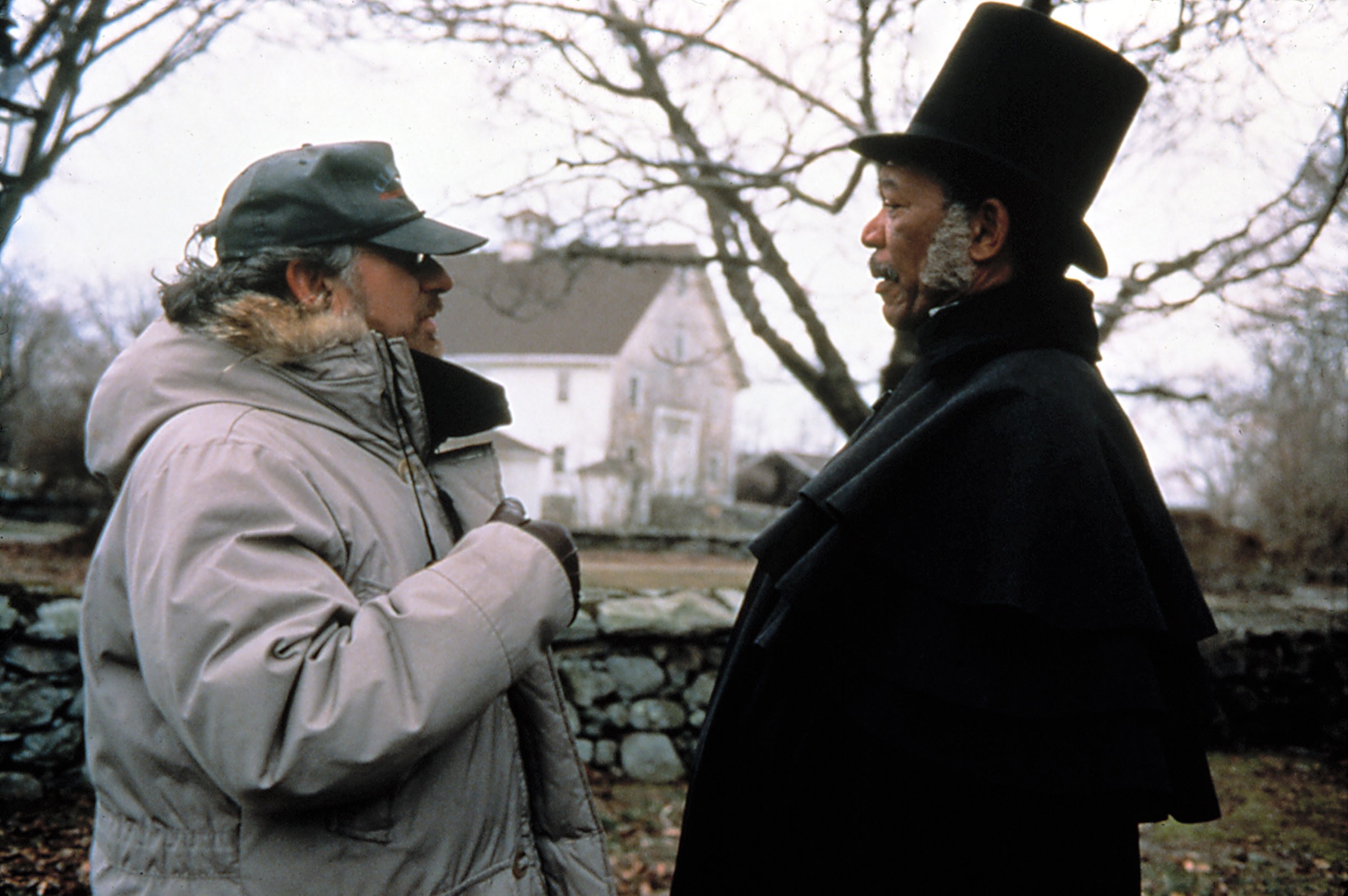
Morgan Freeman, who turns 80 today, receives direction from Steven Spielberg on the set of Amistad in 1997:

Filmmaker in Focus:

If you’re not already familiar with the great Aki Kaurismaki, let Channel Criswell’s new video essay turn you into a fan:

[embedded content]

Actor in the Spotlight:

Speaking of underrated talents, Fandor celebrates rising star Riz Ahmed in this short video profile:

[embedded content]

Video List of the Day:

IMDb showcases the nine greatest Pixar scene stealers, including Rex from Toy Story and Edna from The Incredibles:

[embedded content]

Cosplay of the Day:

Speaking of great minor movie characters, here’s some Miss Argentina cosplay from Beetlejuice. See more photos at Fashionably Geek.

Classic Trailer of the Day:

Today is the 10th anniversary of Judd Apatow’s Knocked Up. Watch the original trailer for the classic comedy below.

[embedded content]

and

Let’s block ads! (Why?)