Articles by admin

No Image

Solar Firms Plan To Return To Nevada After New Law Restores Incentives

Nevada Gov. Brian Sandoval plans to sign a bill will let homeowners with solar panels sell excess electricity to their utility at retail rates, his office says.

Drew Angerer/Getty Images

hide caption

toggle caption

Drew Angerer/Getty Images

Some of Nevada’s largest solar installation companies plan to resume doing business in the state. For the past year-and-a-half Tesla (formerly SolarCity) and Sunrun stopped seeking new customers in this sunny part of the country because the state’s Public Utilities Commission chose to phase out incentives for homeowners who install rooftop solar panels.

Now, Republican Gov. Brian Sandoval plans to sign into law a bill that brings back “net metering.”

Net metering has been a key reason for the rapid growth of the residential solar power business across the U.S. It allows homeowners with solar panels to sell excess electricity to their utility at retail instead of wholesale rates. This appeals to many homeowners because they can do something good for the environment and save money on their energy bill.

Utilities are not fans of net metering. That’s because every kilowatt generated on a home roof is one less that the local utility sells. And some of that money utilities collect is used to maintain the electric grid.

In arguing against Nevada’s net metering system last year, the state’s largest utility, NV Energy, echoed an argument that utilities across the country make. Berkshire Hathaway owns the utility and CEO Warren Buffet said on CNBC that when solar customers don’t pay to maintain the grid, non-solar customers are left to pick up the tab.

Utilities like NV Energy argue that amounts to a subsidy for homeowners with solar panels. Solar advocates say the utilities are just trying to protect their monopolies.

The new legislation in Nevada strikes a compromise. Homeowners with solar panels on their roof will be able to sell any excess electricity their household doesn’t use to the utility, but at a reduced rate. Currently that’s 95 percent of the retail rate. That number will go down as more rooftop solar systems are installed in the state. The Nevada law also creates new protections for homeowners, such as a guaranteed net metering rate for 20 years.

“Nevada is one step closer to a policy that will allow it to get back thousands of solar jobs that were lost,” says Sean Gallagher, vice president of state affairs for the Solar Energy Industries Association. The SEIA estimates more than 2,600 jobs were lost when the large solar companies stopped doing business in Nevada.

Sandoval’s office tells NPR the governor plans to sign the new bill into law next week.

Let’s block ads! (Why?)


No Image

If The Individual Insurance Market Crashes, Can People Still Get Coverage?

People who buy their own health insurance and make too much to get subsidies are most likely to feel the pain of an unstable market.

PhotoAlto/Frederic Cirou/Getty Images

hide caption

toggle caption

PhotoAlto/Frederic Cirou/Getty Images

In his high-stakes strategy to overhaul the federal health law, President Donald Trump is threatening to upend the individual health insurance market. But if the market actually breaks, could anyone put it back together again?

The question is more than theoretical. Since Jan. 20, the Trump administration has already acted to depress enrollment in Affordable Care Act plans, has instructed the IRS to back off enforcement of the requirement that most people have health insurance or pay a penalty and threatened to withhold billions of dollars owed to insurance companies. All of those actions make it more difficult for insurers to enroll the healthy people needed to offset the costs of the sick, who make it a priority to have coverage.

The Democrats will make a deal with me on healthcare as soon as ObamaCare folds – not long. Do not worry, we are in very good shape!

— Donald J. Trump (@realDonaldTrump) March 28, 2017

The president himself has made his strategy clear in interviews and tweets. “The Democrats will make a deal with me on healthcare as soon as ObamaCare folds — not long,” Trump tweeted March 28. “Do not worry, we are in very good shape!”

But the individual insurance market is not in such good shape.

A growing number of insurers are asking for double-digit premium increases or deciding to leave the market altogether. In the latest announcement, Anthem said Tuesday that it was pulling out of the Ohio marketplace, where it serves more than 10,000 customers, next year. And while most analysts say the market probably would eventually rebound, in the short term things could get messy.

“Is the administration doing what it needs to do to stabilize the market? No, they’re doing the opposite,” says Kevin Counihan, CEO of the insurance exchange program during the Obama administration.

Trump’s biggest weapon by far is refusing to reimburse insurance companies for billions of dollars in payments the law requires them to make to help policyholders with incomes up to 250 percent of the federal poverty level, about $30,015 for an individual and $61,500 for a family of four, afford their deductibles and other out-of-pocket payments. These “cost-sharing subsidies” are being challenged in an ongoing lawsuit filed by Republican House members against Health and Human Services in 2014, and Trump can effectively end them at any time by dropping the suit.

Meanwhile, major insurance companies like Aetna and Humana have already announced that they won’t participate in the health exchange market for 2018.

Other insurance companies have said they would like to stay in, but only if they are granted huge rate hikes, citing the uncertainty of whether the Trump administration will repay them for the cost-sharing discounts and whether it will enforce the health law’s “individual mandate” that requires most people to have coverage or pay a fine.

In Pennsylvania, for example, insurers are seeking premium increases of less than 10 percent for 2018 – but warn that if the mandate to have insurance is not enforced or cost-sharing reductions are not paid, those increases could balloon to 36 percent or more.

Those who follow the market closely say the exits and requests for large premium increases are no surprise. “It’s just been one thing after another in this market,” says Kurt Giesa, an actuarial expert at the consulting firm Oliver Wyman. He said if the administration follows through on its threat not to fund the cost-sharing subsidies for the rest of the year, “that could be the straw that breaks the camel’s back.”

Giesa pointed out that it’s not just insurance companies that would suffer if the individual insurance market is crippled. “That strategy of crashing the market has real human consequences,” he says. “There are 15 million-plus people relying on that.”

That group includes not only people who purchase insurance through the “health exchange” state marketplaces, but also those who purchase insurance on their own, usually because they earn too much to get federal assistance paying their premiums. Premium subsidies are available to those who earn less than 400 percent of the poverty level, about $48,240 for an individual and $98,400 for a family of four.

People who pay their own way are the ones getting hit hardest, says insurance industry consultant Robert Laszewski. “There is a horrific death spiral going on with the [non-subsidized] part of the market right now,” he says, because rate hikes are limited for those getting help from the government, but not for those paying the full premiums.

A major question is how hard would it be for the government to regain the trust of insurers as a reliable business partner, regardless of what changes are eventually made.

Counihan acknowledges that insurers felt they were treated unfairly even before the Trump administration took office, when Republicans in Congress prevented full payment of “risk corridor” funds that the law promised to insurers who enrolled more than their expected share of sick people. Insurers are still owed millions of those dollars, and many have sued the federal government to try to get the money.

Counihan said the first words out of the mouths of most insurance CEOs he met with were “we don’t trust you guys.”

Giesa says the government’s misbehavior goes back even further – to the fall of 2013, when the Obama administration allowed some consumers to keep their old plans. That effectively kept healthy people out of the new markets, “after companies had set their prices,” Giesa says, resulting in some big losses for insurance companies.

Despite the woes, insurance analysts say they doubt the individual market would stay down for long.

One reason, says Laszewski, is that for many nonprofit insurers serving the individual market as the insurer of last resort is part of their mission, unlike with big commercial insurers. Boards of Blue Cross Blue Shield plans and other nonprofits, he says, tend to be made up of representatives of “labor, the local hospitals, big employers. … They have community connections. So it’s going to take a lot to drive them off.”

Another reason insurers will likely return or work to remain in the individual market is that it’s part of the future of health care, says Counihan. With so many people now working for themselves in the “gig economy,” he says, selling insurance “is going to be more business-to-consumer than business-to-business.”

“This market could grow,” agrees Giesa. “And I don’t think [insurance companies] want to be left out completely from this market if there’s an opportunity to break even, or make a little money.”

In the end, says Counihan, regardless of what he considers the Trump administration’s “disorganized neglect, I think this market is here to stay.”

Kaiser Health News, a nonprofit health newsroom whose stories appear in news outlets nationwide, is an editorially independent part of the Kaiser Family Foundation.

Let’s block ads! (Why?)


No Image

Today in Movie Culture: 'Logan' VFX Breakdown, Homemade 'Transformers: The Last Knight' Trailer' and More

Here are a bunch of little bites to satisfy your hunger for movie culture:

VFX Breakdown of the Day:

Rising Sun Pictures shares an effects reel showcasing their very bloody work on Logan:

[embedded content]

Video Essay of the Day:

Speaking of Logan, Wisecrack explores the philosophy of the new Wolverine movie in this video essay:

[embedded content]

Cosplay of the Day:

We’re still celebrating the release and success of Wonder Woman, so here’s a cosplayer so authentic you’d think she was the real thing.

DC Wonder Woman Diana Prince by kilory on DeviantArt

Redone Trailer of the Day:

Get ready for the upcoming Transformers: The Last Knight with this homemade sweded version of the trailer from CineFix:

[embedded content]

Supercut of the Day:

Roman Holiday compiled 150 instances of movie characters saying the title of the movie they’re in:

[embedded content]

Vintage Image of the Day:

Robert Englund, who turns 70 today, looks dapper in this publicity image for the original A Nightmare on Elm Street in 1984:

Genre History of the Day:

Speaking of slasher movies, here’s a video essay explaining the trope of “the final girl”:

[embedded content]

Movie Trivia of the Day:

With the latest The Mummy reboot out this week, ScreenCrush has a bunch of trivia about the previous versions:

[embedded content]

Movie Takedown of the Day:

And with Cars 3 out soon, Honest Trailers runs over the first two, especially the one they call the worst Pixar movie of all time by a longshot:

[embedded content]

Classic Trailer of the Day:

Today is the 20th anniversary of the release of Con Air. Watch the original trailer for the classic action movie below.

[embedded content]

and

Let’s block ads! (Why?)


No Image

Uber Fires 20 Employees After Sexual Harassment Claim Investigation

Uber’s San Francisco headquarters earlier this year. The company fired 20 employees after an investigation of sexual harassment and other complaints.

Eric Risberg/AP

hide caption

toggle caption

Eric Risberg/AP

Ride-hailing firm Uber has fired about 20 of its employees, including some senior executives, after an investigation into more than 200 sexual harassment and other workplace-misconduct claims.

The company is not commenting on the findings of the report from Perkins Coie, which was hired after former Uber engineer Susan Fowler last year alleged that she was sexually harassed, and her complaints disregarded by the company’s human resources department.

On Tuesday, the San Francisco company held an all-hands meeting for its 12,000 employees, where it discussed those findings and, according to a source familiar with the meeting, 40 additional employees were reprimanded or referred to counseling and training. Uber set up a hotline where employees and former employees could file complaints.

The findings from the investigation will feed into a second, broader report from former Attorney General Eric Holder due out next Tuesday, which will include more detailed recommendations for how Uber should address and remediate its workplace culture.

The case has has gotten attention in part because Silicon Valley already has a reputation for attracting and catering to male tech talent, but not to women. So, in a way, Uber is a test case for how serious the tech industry is about fixing its gender-diversity problems.

Uber has rapidly become a household name. It’s hugely successful with investors. But it is also a consumer brand, and consumer brands have to care very much about their public image. And that’s an area where Uber has struggled recently.

Let’s block ads! (Why?)


No Image

Hospitals Are Partnering With Lawyers To Treat Patients' Legal Needs

Legal issues — evictions, domestic violence, or insurance claim denials, for example — all too often can cascade into problems with bad medical outcomes.

Sam Edwards/Caiaimage/Getty Images

hide caption

toggle caption

Sam Edwards/Caiaimage/Getty Images

Every Friday, Christine Crawford has a counseling session at a clinic at New York City’s Mount Sinai Health System as she moves ahead with plans for gender transition surgery later this year. In addition to the many medical and psychosocial issues, there are practical ones as well. So, Crawford was thrilled when a Mount Sinai representative told her they would assign a lawyer to help her legally change her name to Christine.

The lawyer filed her name-change petition with the court and helped Crawford with other steps, such as notifying her former spouse and publishing the name change in the newspaper. She gave Crawford information about what she needed to do to make the change official with organizations such as the Social Security Administration and the Department of Motor Vehicles.

Perhaps best of all, when Crawford graduated with a master’s degree in social work last month, her diploma had her new name on it.

“[The lawyer] was able to expedite the petition and the court date,” Crawford says. “She was a godsend.”

As health care systems continue to shift toward becoming comprehensive medical homes for patients, health care providers are increasingly incorporating lawyers into the team of professionals who are on hand to help with legal issues at no additional charge to patients.

Roughly 300 health care systems, children’s hospitals and federally qualified health centers have set up these programs, says Ellen Lawton, co-director of the National Center for Medical-Legal Partnership at George Washington University in Washington, D.C.

The pairing makes sense in many ways. Legal issues all too often can cascade into problems with bad medical outcomes. Lawyers might file for an order of protection from a violent spouse, help appeal an insurance claim denial or get involved in child custody, guardianship or power of attorney issues.

For Care Connections at Lancaster General Health/Penn Medicine in Lancaster, Pa., housing problems are a key area that requires legal expertise. The four-year-old program provides comprehensive primary care services for people with complex health and social needs, especially patients who are frequently hospitalized, says Dr. Jeffrey Martin, managing physician for the program.

For someone with severe asthma and other chronic medical conditions, “it’s hard to use inhalers and take 16 other medications if you’re living in the back of a car or on someone’s couch,” Martin says.

When someone is fighting eviction, has problems with federal housing subsidies, suffers a utility shut-off or has poor housing conditions, the staff members of Care Connections call on Catherine Schultz. She is a legal aid attorney with MidPenn Legal Services, which has a contract to work on such cases for Lancaster General Hospital.

Martin describes the case of one patient, a licensed practical nurse in her mid-30s who was diagnosed with multiple sclerosis. The woman lost her job because she could no longer work, and then her car was repossessed. She stopped taking her medications and couldn’t make it to her medical appointments.

Schultz worked to get this patient a federal housing subsidy and helped her apply for Social Security disability benefits, and then appeal the administration’s denial of benefits. They’re awaiting the results of the appeal.

In fee-for-service medicine, the hospital’s work traditionally was considered finished once patients were discharged, Lawton notes.

But health care has shifted toward value-based care that focuses on outcomes and avoiding preventable hospital readmissions. Now, “you are accountable for patients beyond the four walls of the hospital, and you have to think creatively about how to create stability for them,” Lawton says.

With that in mind, many health care systems are focusing on medical-legal partnerships that target patients who are high users of services.

“Once upon a time, the attitude of the provider was, ‘It’s not my problem that you have mold in your apartment,’ ” says Emma Kagel, manager of medical-legal partnerships at Denver-based Centura Health System. ” ‘I’m just going to keep pumping you full of steroids and give you an inhaler.’ ” That attitude, she says, doesn’t work with value-based care.

Funding is always a problem for these programs where demand far outstrips supply. They are frequently staffed by legal aid attorneys under contract to the health care providers. Some programs use private sector lawyers working on a pro bono basis.

Mount Sinai, whose program is just getting off the ground, is taking a hybrid approach. In addition to a grant from the Manhattan District Attorney’s Office to provide child and family law services, the hospital partnered with law firms and other organizations to provide transgender and end-of-life legal services on a pro bono basis.

Sena Kim-Reuter, president of the Mount Sinai Medical Legal Partnership, says she’s focused on identifying gaps in patients’ needs where she can offer assistance. “There’s no way to handle all of it,” she says.

Kaiser Health News is an editorially independent news service that is part of the nonpartisan Henry J. Kaiser Family Foundation. Follow Michelle Andrews on Twitter @mandrews110.

Let’s block ads! (Why?)


No Image

Short-Haired Girl Mistaken For Boy, Barred From Soccer Tournament Finals

Milagros “Mili” Hernandez, 8, plays soccer in Ohama, Neb. Her team was disqualified from the final round of a tournament because somebody had complained to organizers that there was a boy on the team.


WOWT/Screenshot by NPR
hide caption

toggle caption


WOWT/Screenshot by NPR

Milagros “Mili” Hernandez loves soccer, and she’s good at it. Really good. At age 8, the short-haired Nebraska girl plays on an Omaha club team with 11-year-olds.

But on Sunday, Mili’s dad, Gerardo Hernandez, found out his daughter’s girls’ team had been disqualified from the finals of a Springfield tournament, set for that day. The Azzuri-Cachorros Chicas couldn’t play, The Washington Post reports. Somebody had complained that there was a boy on the team.

“They only did it because I look like a boy,” Mili told WOWT 6 News.

Hernandez figured the mistake would be easily rectified. He took his daughter, along with her insurance card listing her gender as female, to the tournament. But when he got there, “They didn’t even want to take it,” he told the Post, “They told us the thing was decided.”

“Just because I look like a boy doesn’t mean I am a boy,” Mili said to WOWT.

But the tournament organizers said Mili’s looks did not influence their decision. Rather, it was a mistake on her registration form.

“(T)he roster submitted to the state by the club identified this player as male, and the competition rules for US Youth Soccer do not allow boys to play on a girls’ team,” Nebraska State Soccer Executive Director Casey Mann said in a written statement.

But Nebraksa State Soccer also said in a statement on Twitter that while it was the local tournament organizers, not the state group, that made the call, “we recognize that our core values were simply not present this past weekend.” It added, “We apologize to this young girl, her family, and her soccer club for this unfortunate misunderstanding.”

The soccer organization said it has suspended its sanction of the Springfield Invitational tournament pending a review of the incident.

Mili’s father said the experience was upsetting for his daughter and that she had cried after finding out she and her team couldn’t play.

But if there’s a silver lining, it may be the outpouring of support Mili has received on social media, especially from some of the world’s best female soccer players.

Olympic gold medalist and Women’s World Cup champion Abby Wambach — who also happens to have short hair — posted a video to Mili, saying, “You’re inspiring, you’re a natural-born leader, Honey, and I’m so proud of you.”

Mia Hamm, another Olympic gold medalist and World Cup champion invited Mili to participate in Hamm’s TeamFirst Soccer Academy. Hamm told Mili to “Be You!”

And Billie Jean King, once a top women’s tennis player, tweeted, “Mili, continue to be yourself, dream big and go for it. Take Mia up on her offer.”

As for Mili’s hair, the reason she keeps it short is simple. “When my hair starts to grow, I just put it short because I’ve always had short hair,” says Mili, “I didn’t like my hair long.”

The Post reports Mili is back to kicking the soccer ball and still wants to play the game all the way through high school and college. Then she wants to go pro.

Let’s block ads! (Why?)


No Image

Today in Movie Culture: 'Wonder Woman' Easter Eggs, 'Avengers: Infinity War' Set Video and More

Here are a bunch of little bites to satisfy your hunger for movie culture:

Easter Eggs of the Day:

You probably saw Wonder Woman over the weekend. Now watch the spoiler-heavy Mr. Sunday Movies video highlighting all its Easter eggs and references:

[embedded content]

Cosplay of the Day:

Obviously we’re celebrating Wonder Woman in this section, especially because the little girls below are too previous to ignore. Click the THR link for more.

‘Wonder Woman’: Young Girls Around the Country Dress as the Heroine For Film’s Opening https://t.co/r1kIrmMBZqpic.twitter.com/JKhzXtzArh

— Hollywood Reporter (@THR) June 3, 2017

Redone Trailer of the Day:

It’s about time we got an obligatory Lego version of the Wonder Woman trailer from Huxley Berg Studios:

[embedded content]

Dream Casting of the Day:

How can DC keep Chris Pine in their extended universe 100 years following the events of Wonder Woman? How about, as BossLogic proposes, casting him as Green Lantern?

I had an idea – what if they make Hal a long distant relative of Steve Trevor both being pilots and WW is thrilled to see the resemblance pic.twitter.com/Y3pHAzuU2U

— BossLogic (@Bosslogic) June 3, 2017

Video Essay of the Day:

Speaking of Chris Pine, The Film Guy examines how Hell or High Water and other movies introduce their characters through tactics in this video essay:

[embedded content]

Vintage Image of the Day:

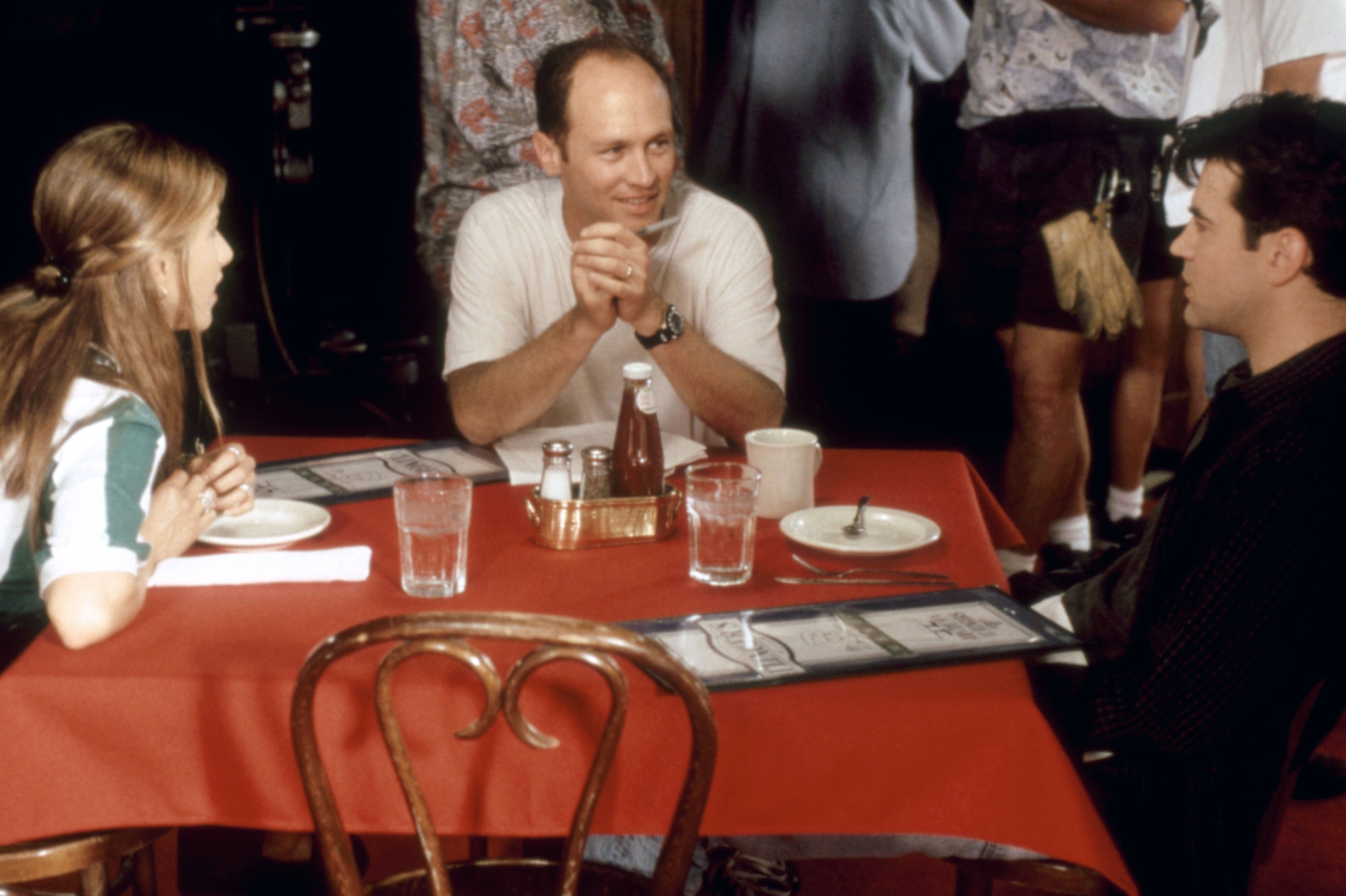
Ron Livingston, who turns 50 today, and Jennifer Aniston receive direction from Mike Judge on the set of Office Space in 1998:

Actor in the Spotlight:

The latest episode of the character actor showcase No Small Parts celebrates the career of Guardians of the Galaxy Vol. 2 actress Pom Klementieff:

[embedded content]

Set Video of the Day:

Speaking of MCU movies, here’s a video from the set of Avengers: Infinity War featuring Chris Hemsworth being hilarious as usual:

Charitable Act of the Day:

And here’s another MCU star, Tom Holland, visiting sick kids at Children’s Hospital Los Angeles in costume as Spider-Man:

Classic Trailer of the Day:

Today is the 30th anniversary of the release of Harry and the Hendersons. Watch the original trailer for the classic Bigfoot comedy below.

[embedded content]

and

Let’s block ads! (Why?)


No Image

Apple Joins Smart-Speaker Race With Music-Focused 'HomePod'

Apple executive Phil Schiller introduces the HomePod speaker at the Apple Worldwide Developers Conference in San Jose, Calif.

Marcio Jose Sanchez/AP

hide caption

toggle caption

Marcio Jose Sanchez/AP

And then there were three.

Apple has finally unveiled its answer to Amazon’s and Google’s smart speakers slash digital assistants — and it’s called HomePod.

This has been one major area in consumer electronics lacking Apple’s footprint. Amazon has heavily dominated the field with its home speaker called Echo, which uses the digital assistant Alexa. Google Home followed in October and Microsoft’s assistant, Cortana, is also finding a home in home speakers.

Both Amazon Echo and Google Home respond to voice commands to play songs, look up stuff online, check the weather, set a reminder or control Internet-connected home appliances.

Siri can do those things, too, but Apple’s pitch for Siri-powered HomePod is instead focused heavily on music — the company appears to bank on consumers paying for smart speakers that deliver high-quality audio sound as a sort of gateway into the world of smart home assistants.

“Just like we did with portable music, we want to reinvent home music,” Apple CEO Tim Cook said at the Worldwide Developers Conference, where HomePod was unveiled, becoming Apple’s first new device since the release of the Apple Watch in 2015.

The HomePod — due to launch in December — looks like a mesh cylinder. Inside is the same processor that powers the iPhone and an upward-facing 4-inch woofer. Pulling music from the Apple library, the speaker was presented as being able to recognize its placement and direct rich audio sound into the room.

The HomePod will be priced at $349, more expensive than Amazon’s $180 Echo or $50 Dot and Google’s $129 Home. The pricing of Apple’s device was shared at the conference in comparison to both smart home speakers as well as premium audio speakers. As The New York Timespoints out, that’s where one company might feel the competition the most:

“Though Apple appears to be playing catch up with Amazon and Google, the primary casualty here may be Sonos. That company offers a similar wireless multi-speaker system for listening to music throughout the home, similar to HomePod’s ability to chain together multiple speakers.

Observers are skeptical about Siri’s ability to successfully compete against Alexa and Google Assistant, as CNET notes:

“A big question mark for the new speaker, though, is whether Siri is good enough to power its own dedicated device. Siri was introduced as a feature in the iPhone 4S in 2011, three years before Amazon came out with Alexa and the Echo. However, Siri has been slow to improve its voice-recognition technology and set of responses, especially compared with the more capable Alexa and Google Assistant. A smart speaker utilizing an underachieving voice assistant could dampen interest in the product.”

The conference is typically devoted to software updates and this year, Apple released a series of new features and updates for the iPhone, the iPad, Mac and the Apple Watch — including an augmented-reality kit for developers aimed at making the iPhone “the largest AR platform in the world.”

As Reuters points out, the augmented-reality push might be combined later with another push by Apple Maps indoors:

“New indoor maps of areas like malls and airports indicated that Apple might be laying groundwork to display information over images of those places in the future.”

The latest version of Apple’s Safari browser will be able to stop automatically playing videos as well as online trackers used for advertisers.

The company is also launching new models of both the iPad and the Mac computer.

Let’s block ads! (Why?)


No Image

Wisconsin Family Stays Together With Help From Medicaid

Ben Gapinski, 10, (center) is greeted by his parents Dan and Nancy Gapinski after getting off the school bus. When Ben was a toddler, he was diagnosed with an autism spectrum disorder and needed constant monitoring to stay safe.

Sara Stathas for NPR

hide caption

toggle caption

Sara Stathas for NPR

Nancy and Dan Gapinski of Glendale, Wis., remember a time when they couldn’t really communicate with their own son.

“He used to not really have any kinds of conversations with us. He did a lot of echoing things that we said, and scripting from movies,” Nancy Gapinski says as she and her husband wait for their son Ben’s school bus to arrive. “A lot of times kids didn’t know how to respond to him then, and didn’t know what he was trying to say and conversations wouldn’t really go anywhere.”

But that’s all changed. On a recent Friday afternoon, 10-year-old Ben hops off the bus, greets both his parents and starts chatting about his day.

“So what I did today was I had an extra recess today, and also I had to do two star math tests,” he reports. He says he did pretty well on those tests.

When Ben was a toddler he was diagnosed with an autism spectrum disorder. He barely communicated with his parents and needed constant monitoring to stay safe.

The Gapinskis needed help. They found a therapist to work with Ben for 24 hours a week, which cost more $50,000 a year. Dan’s workplace insurance paid for some of the costs, but not all.

So they turned to Medicaid.

Ben’s disability was severe enough – he was deemed by the state to require “an institutional level of care” — that he was eligible for Wisconsin’s children’s long-term care program, funded by Medicaid.

Nancy Gapinski waits for the school bus to drop off her 10-year-old son, Ben, at their home in Glendale, Wis.

Sara Stathas for NPR

hide caption

toggle caption

Sara Stathas for NPR

“They work with the child on basic language skills, trying to learn words, trying to do some intellectual exercises,” Ben’s father Dan recalls. “It eventually graduates into some back and forth conversation, and doing homework and doing things that are more like what normal kids do.”

While Medicaid is best known as a health care program for poor people, more than 80 percent of its budget goes to care for the elderly, the disabled and children, according to the Kaiser Family Foundation. Only 15 percent goes to health care for able-bodied adults.

The program has been growing in recent years and it now makes up almost 10 percent of federal spending. That’s why it’s the number one target in President Trump’s proposed budget, and figures prominently in the Republican proposal to replace the Affordable Care Act. Some estimates suggest the program could be cut by more than 1 trillion dollars over 10 years.

After three years of intense therapy, Ben now goes to his local public school and works on grade level in math and English. He no longer works with his private therapist or uses Medicaid benefits.

“We just decided not to reapply,” Nancy says. “The need had been met.”

President Trump and Republicans in Congress have proposed massive cuts to Medicaid’s budget over the next decade, and Nancy and Dan Gapinski worry that the services they used for Ben won’t be there if he needs them in the future, or be there for other families.

“I don’t know what Ben will need in his lifetime,” Nancy Gapinski says. “Our goals for him are very much like our goals for our daughter Zoe. We really want for them to be active, engaged citizens.”

Ben’s not the only one in the Gapinski home who has used Medicaid services. His grandmother Evelyn Benjamin is also a beneficiary.

Evelyn Benjamin, Nancy’s 84-year-old mother, wears a medical alert service device around her neck at all times.

Sara Stathas for NPR

hide caption

toggle caption

Sara Stathas for NPR

Evelyn is 84. She’s had a few falls and depends on a walker to get around. She also has heart disease and uses three different inhalers.

“They take very good care of me,” Evelyn says, sipping tea in the living room surrounded by her family. “I’m very lucky to be one that can stay in my home, and know that I’m cared for.”

Evelyn has health insurance through Medicare. But after her husband suffered a stroke and needed constant care, she depleted her savings and now qualifies for Medicaid as well. It helps pay for her 12 prescription medications and, through a Medicaid-funded program called IRIS, she gets in-home help.

Wisconsin’s IRIS program is an example of how states tailor Medicaid to their own needs. It gives beneficiaries a budget to use for the services they need, and it allows people to hire whoever they want.

Nancy Gapinski organizes Evelyn’s medications into a plastic pill box case. Medicaid helps pay for her 12 prescription medications.

Sara Stathas for NPR

hide caption

toggle caption

Sara Stathas for NPR

So Evelyn hired her daughter, Nancy, who gave up her full-time career to care for her mother and son. She works part-time from home, and supplements that income with $11.50 an hour for 20 hours a week caring for her mother. She says it’s helped keep them out of bankruptcy. And her hourly rate is a fraction of the going rate for such services from an agency. According to a 2015 study by Genworth, home health aides and homemaker services in Milwaukee cost an average of about $22 an hour.

“It’s just a big, big help for not only me, but for my daughter who worries about me constantly,” Evelyn says.

Nancy Gapinski worries that help may disappear under the proposed budget cuts. That’s because the services her family uses are considered optional under the Medicaid law. The program is required to pay for doctor visits, hospital care and even nursing home care. But in-home support services that Evelyn uses and therapies like those Ben received aren’t.

Dan Gapinski says his children love having their grandmother around. When they have nightmares they climb into her bed and they giggle with her in the living room.

Three generations: Zoe, 8, Evelyn, and Nancy, sit on the couch of their living room. Dan says the children love having their grandmother live with them.

Sara Stathas for NPR

hide caption

toggle caption

Sara Stathas for NPR

“I don’t think we, as a society, appreciate the value of that,” he says. “There’s a lot of talk about entitlements and how that’s become a bit of dirty word. We don’t take the satisfaction in having made a greater society by making these kinds of situations possible.”

The day I visited the Gapinskis, Ben was excited to go on a sleepover at his aunt’s house. He was packing up pajamas, his Nintendo DS game, some comic books and Minecraft books.

As he heads for the door, his grandmother calls out for a hug.

“Give my love to Aunt Susie OK?” she says, while reaching her arms around Ben.

“Yeah, I’ll give your heart to Aunt Susie,” he replies with a laugh.

Let’s block ads! (Why?)


No Image

David Lewiston, A World-Spanning 'Musical Tourist' Who Brought Old Sounds To New Ears

David Lewiston, making one of his field recordings in an undated photo.

Courtesy of Nonesuch Records

hide caption

toggle caption

Courtesy of Nonesuch Records

David Lewiston, a seminal producer of music from around the world has died. The force behind more than two dozen recordings for the Nonesuch Explorer series, Lewiston died May 29 in Wailuku, Hawaii, at age 88, from what the Nonesuch label has described as an “extended illness”; his longtime friend and colleague, Brian Cullman, told the New York Times that his death resulted from “complications of a series of strokes.”

Cullman wrote about Lewiston’s treks in a remembrance for Nonesuch:

“Sometimes by bus; sometimes by jeep or truck or caravanserai; sometimes by donkey, though not if he could help it; and almost always on foot, it always came to that, by foot across rickety bridges and footpaths, up the sides of mountains, through valleys and hills rife with goats and wayward sheep, over rocks and fences, across streams and rivers swollen by rain or dry from drought, carrying a small—but not that small—portable tape recorder; twenty or thirty reels of 1/4″ tape; a couple of microphones; cables; a week’s supply of batteries; a few packs of Fortnum & Mason tea, and a few spare shirts.”

Born in London in 1929, Lewiston studied composition at Trinity College of Music, and went on to study with the Russian composer Thomas de Hartmann — who was in turn a student of composer, mystic and author George Ivanovich Gurdjieff. De Hartmann got Lewiston interested in the music of Central Asia — and an obsession was born. Lewiston’s first music-collecting trip was in 1966, when he visited the islands of Java and Bali; recordings from that voyage became the iconic album Music From The Morning Of The World: Gamelan And Ketjak. As Lewiston later noted, he was very much a neophyte producer at that time, chalking up early shortcomings to ineptitude rather than intentional omission: “Since I was inexperienced,” he wrote in 2002, “I failed to list the musical groups when this album was first released.”

[embedded content]

Music From The Morning Of The World became the first of 28 albums which Lewiston produced for the Nonesuch label’s Explorer series, working with the imprint’s famed director, Teresa (“Tracey”) Sterne. Their albums were not meant as records for specific ethnic audiences (which labels like Columbia and RCA had already been churning out since well before World War II), or for academics; rather, they were squarely aimed at a general audience with adventurous musical tastes. In an often-repeated anecdote that Lewiston attributed to Sterne, late at night on New York radio station WBAI, the DJ would say “OK, light that joint, here it comes!” and then play the second side of Golden Rain, a 1969 Lewiston album of Balinese music.

[embedded content]
YouTube

Over the ensuing decades, Lewiston’s ear took him all over the globe, capturing a scope of music that may seem unimaginably broad today. He made recordings across Asia including in Iran, Georgia, Tibet, Korea, China, Indonesia, India, Pakistan and Japan; throughout Central and South America in Mexico, Guatemala, Peru, Colombia, Ecuador, Bolivia, Chile, Uruguay, Paraguay, Argentina and Brazil; and in Morocco.

Lewiston was always quick to separate what he did from the work of traditional ethnomusicologists, as he told writer Christina Roden in an interview for the world music magazine RootsWorld in 2000. “I prefer to be described as a ‘musical tourist,’ if a description is absolutely necessary,” he said.

It’s not that Lewiston objected to the label of “ethnomusicologist” due to concerns about bias or colonialistic thinking. Rather, as he told Roden,

“Tracey [Sterne] and I thought that most ethnomusicologists were pretty dim. We called them ‘ethnoids.’ I think of an ethnomusicologist as someone who takes wonderful music and analyzes it until all the joy has been lost. It’s as though a rather boring person who wanted to be paid for talking about music invented a teutonic-sounding, pseudo-academic title as a scam – and got away with it! Much better to just shut up and enjoy the music. I have a really hard time when I’m writing liner notes, because I feel that if a person is reading them, he isn’t enjoying the music.”

As a white visitor to these cultures, Lewiston certainly prioritized what he, and he alone, judged as the “authentic” music of a given place, rather than what the musicians themselves might want to share with foreign audiences. As he told Roden in 2000,”When I go to the Himalayas, which is an annual jaunt for me, I have to be very careful to remind the musicians: ‘Please! No film music from Bombay!'”

At the same time, Lewiston documented important traditions — and sketched out crosscurrents that might otherwise have been missed, or at least undervalued. As writer Chris Nickson has pointed out in a review of Lewiston’s South America: Black Music In Praise Of Oxala And Other Gods:

“The whole concept of strong African culture remaining among the descendants of slaves has become common currency these days, but in 1968 no one had done research into the phenomenon, making this quite groundbreaking in the way it connected the dots between continents. The scholarly work might have gone beyond this, but the music remains as vital as ever, as does its importance.”

[embedded content]
YouTube

For those interested in music whose wellspring lay somewhere besides Europe, Lewiston’s work was — and remains — an aural primer. In 2006, composer Osvaldo Golijov poetically wrote:

“David Lewiston’s recordings are among the great testimonies in sound of our time. Anyone who hears them will be struck by the mysterious yearnings, the transcendental manifestations of joy, and the fragility and impermanence that unite wildly diverse cultures in our planet: ultimately, they give us a sense of how much and how little we humans are as a species. These records continue to inspire me as much as those by Stravinsky, Miles Davis and any of the other masters of the past century. They are a treasure: life as it is truly lived and dreamed.”

One of the most mesmerizing and mysteriously beautiful recordings Lewiston made in Chiapas, Mexico, became a sample in Golijov’s own music: his 2002 pieceK’In Sventa Ch’Ul Me’Tik Kwadalupe [Festival For The Holy Mother of Guadalupe].

[embedded content]
YouTube

After Sterne was fired from Nonesuch in 1979, the label’s interest in the Explorer series dried up, and Lewiston went on to produce recordings for the Ellipsis Arts, Shanachie and Bridge labels, as well working with the BBC Sound Archives.

In the last three-plus decades of his life, Lewiston became more devoted to focusing his efforts on conserving the music and ritual traditions of Tibetan Buddhism, particularly among the communities living in exile in India. (Brian Cullman told the New York Times that Lewiston’s archive contains almost 400 hours of recorded material, with much of it dedicated to Tibetan music, and that he is currently working with the label Dust-to-Digital to make a boxed set available.)

Despite that devotion to Tibetan music, Lewiston also made return trips to Bali in 1987 and 1994, spending a total of eight months collecting more music; in the late 1990s, he also went to Morocco to record music of the Sufi Muslim brotherhoods in the city of Fes, and to the Caucasus to record the region’s polyphonic singing traditions. As ever, Lewiston just couldn’t be tied down to a particular place.

[embedded content]
YouTube

Let’s block ads! (Why?)