Articles by admin

No Image

FDA Asks Drug Maker To Pull Opioid Opana ER Off The Market

The Food and Drug Administration requested drug maker Endo Pharmaceuticals stop selling Opana ER, which is an opioid. NPR’s Robert Siegel speaks with Dr. Janet Woodcock, director of the FDA’s Center for Drug Evaluation and Research, about the decision.

ROBERT SIEGEL, HOST:

Yesterday the U.S. Food and Drug Administration asked the drug maker Endo Pharmaceuticals to stop selling the prescription drug Opana ER. It’s a potent opioid painkiller, and like OxyContin, it’s been heavily abused. Joining us now to talk about the FDA’s move is Janet Woodcock. She is director of the FDA’s Center for Drug Evaluation and Research. Welcome to the program.

JANET WOODCOCK: Thank you.

SIEGEL: The FDA came to this decision after determining that the risks of Opana ER outweigh the benefits. Can you elaborate on that finding? What are the risks?

WOODCOCK: The risks that this decision was made on have to do with the risk of abusing the product. And people who were abusing Opana ER developed several serious problems. One was we had outbreaks of HIV and Hepatitis C from sharing the drug after it was extracted by abusers. Second, there was a outbreak of a serious blood disorder.

SIEGEL: And when you say the way in which it was used, you mean it was being injected, actually.

WOODCOCK: That’s right. It was being injected, and you were injecting those materials that were added to try to make it more abuse-deterrent. But I will add, the FDA never granted the finding that Opana ER was abuse-deterrent because it didn’t meet our standards.

SIEGEL: And I should just – just to state the obvious in case I’m getting the obvious wrong here, people who used to just crush these pills to abuse them then were confronted with a coating that made that much more difficult. But it seems they were going ahead, crushing, melting and shooting up with this substance. That’s where the problem comes in. Do I have that right?

WOODCOCK: Yes. This – we’re not saying that Opana ER, when it was taken as directed, would cause these problems. These problems were due to people who were injecting the drug.

SIEGEL: Your agency has asked Endo Pharmaceuticals to take Opana ER off the market. What does that actually mean? Is it an outright ban of the drug or not?

WOODCOCK: Well, FDA does not have the authority for drugs to immediately remove them from the market. Generally we ask companies to voluntarily pull their drug off the market. If they are not willing to do that, we will issue a notice of a hearing, and we have to go through a judicial type of process.

SIEGEL: What so far has been the response from the company?

WOODCOCK: Well, they’re evaluating this request. So we did have an advisory committee meeting on this issue in March of this year, and the independent scientists voted 18 to 8 that the benefits of this drug no longer outweigh its risks.

SIEGEL: Dr. Woodcock, critics would say the FDA hasn’t been tough enough on the drugs that are out there and that people are abusing. Does yesterday’s action on Opana ER seem like perhaps a little too little too late?

WOODCOCK: The opioid crisis is a very serious problem, and we are exploring every avenue that we can to try to deal with this. This action has to do with a specific adverse event that is associated with abuse. The overall societal consequences of the abuse of these drugs is tremendous and terrible, and more definitely needs to be done. At the same time, of course the FDA – we have to keep pain medicines available, say, for people who have terminal cancer and so forth. So there’s a balance that has to be kept there.

SIEGEL: Well, Dr. Woodcock, thank you very much for talking with us about it today.

WOODCOCK: You are most welcome.

SIEGEL: That’s Janet Woodcock, director of the FDA’s Center for Drug Evaluation and Research.

Copyright © 2017 NPR. All rights reserved. Visit our website terms of use and permissions pages at www.npr.org for further information.

NPR transcripts are created on a rush deadline by Verb8tm, Inc., an NPR contractor, and produced using a proprietary transcription process developed with NPR. This text may not be in its final form and may be updated or revised in the future. Accuracy and availability may vary. The authoritative record of NPR’s programming is the audio record.

Let’s block ads! (Why?)


No Image

Got Cancer Questions? This Little-Known Hotline Is Here To Help

Jill Wiseman answers questions for the Contact Center based at the Fred Hutchinson Cancer Research Center in Seattle.

Robert Hood/Fred Hutch News Service

hide caption

toggle caption

Robert Hood/Fred Hutch News Service

If you were worried you had cancer, who would you call for information? Chances are a federally-funded cancer helpline isn’t the first place that pops into your mind.

But for 40 years, a helpline funded primarily by the National Cancer Institute has been answering people’s questions about cancer.

It’s a source of information for people who have been called back for a follow-up after routine screenings and are worried they might have cancer. And it can also help cancer patients get information about participating in clinical trials and help them figure out questions to ask their doctors.

The Fred Hutchinson Cancer Research Center in Seattle runs the Contact Center, which is funded mostly by the National Cancer Institute with some support from the Veteran’s Administration. Last month, the NCI awarded Fred Hutch a $24 million, three-year contract to continue operating the helpline.

“There will be about 1.7 million Americans diagnosed with cancer this year. For many of them, access to good information can be the difference between life and death,” says Peter Garrett, a spokesperson for the National Cancer Institute.

More than 91,000 people reached out to the Contact Center via phone, email or social media in 2016 — a total of about 250 inquiries per day. This year, more people have been contacting the center through a live chat, email or social media than with a phone call, says the center’s director, Nancy Gore.

“Over the years, call volume has declined although the complexity of the calls has increased,” says Gore. “People seek information via the Internet, so [they] can often find answers to basic questions such as general cancer symptoms, a common call before the Internet became pervasive.”

Now, people more often need technical information about clinical trials and gene therapies, she says.

But the helpline remains relatively little-known by the general public. About 10 percent of those inquiries were from repeat clients, according to data provided by the center.

Back in the 1980s, more than 20 cancer call centers operated around the country. Now there’s just one.

Assuming that the cancer center spends about $8 million this year to handle a similar number of inquiries, by our very rough calculation that adds up to a cost of about $87.14 per inquiry.

There’s no limit on the amount of time a helpline staffer can spend on the phone with a client. Eric Suni, a cancer information specialist at the center, says he has occasionally spent more than an hour on the phone with a caller during the seven years he’s worked there.

“Sometimes people will call and say they have one quick question, but answering that one quick question requires a much more in-depth discussion because you can only answer that question by explaining some other concept,” Suni says. “Even those that seem like, oh, this should take two minutes to answer is actually a much more involved conversation. So you never really know until it actually starts to unfold.”

Hotline staffers, who are required to have a four-year college degree, spend six to seven weeks in initial training. The center calls this process “the metamorphosis from civilian into a Cancer Information Specialist,” in a training overview document.

It’s hard not to think that the call center had become less necessary in an era when people can Google symptoms and get advice in patient groups on Facebook, but Gore says there’s still a need.

“In fact, it is such a common, common comment that is shared with us that they [the clients] wish they had known we were here when they were first diagnosed, or when their mother was diagnosed,” Gore says.

Gore’s husband died of melanoma when he was 34. She didn’t know much about his disease at the time of his diagnosis, she says.

“Until a cancer diagnosis is part of someone’s family or close friend situation people are aware of it, but until it hits home you’re not that in tune to it,” Gore says. “Once it actually hits home, then people have intense interest and a thirst for knowledge because they want to understand.”

Doctors may explain information to patients, but sometimes the shock of a cancer diagnosis can make it tough for a patient to focus.

“For most people, you don’t hear anything after the diagnosis. You’re just processing the words,” Gore says.

The NCI estimates that about 4 in 10 people in the U.S. will be diagnosed with cancer at some point in their lives, according to data from 2010 to 2012.

Callers to the hotline ask most frequently about breast cancer, according to 2016 data, followed by other more common cancers including lung and prostate.

And more people called with questions about a spouse, friend or relative than about themselves.

The people who reach out to the center in English tend to be in their 50, 60s and 70s, but those who seek a conversation in Spanish are generally younger – most are in their 30s, 40s or 50s.

Other sources of information about cancer also exist, such as a 24-hour hotline run by the American Cancer Society, which received about 744,000 inquiries last year.

Dr. Deanna Attai, a clinical professor of surgery at the University of California Los Angeles, participates in the weekly Breast Cancer Social Media chats known as #bcsm. She says she got involved after she noticed a Twitter conversation where a breast cancer patient was asking for treatment advice. Attai started a private conversation with the patient, offering her advice about reliable surgeons.

She calls it her Twitter “ah-ha” moment.

“Just by stumbling across a conversation in the middle of the night, you could really have a big impact,” Attai says. “That was for me, when I started to realize where my voice is among the community, that I could act as kind of like a guide.”

Attai doesn’t see social media making the NCI Contact Center obsolete. Instead, the cancer institute could use social media to point people to the NCI as a source of up-to-date, unbiased information.

“I think they should be using social media to promote themselves,” Attai says. “People don’t really understand what the NCI does, unless you’re a researcher or physician or maybe someone that’s participated in a clinical trial.”

Let’s block ads! (Why?)


No Image

Saudi Soccer Apologizes After Team Skips Tribute To London Rampage Victims

Australian soccer players (in yellow) observe a moment of silence for the victims of last week’s London attacks prior to a 2018 FIFA World Cup qualifier against Saudi Arabia’s national team on Thursday in Australia.

Daniel Kalisz/Getty Images

hide caption

toggle caption

Daniel Kalisz/Getty Images

The Saudi Arabian Football Federation issued an apology after its national team provoked outrage in Australia by not formally participating in a moment of silence for London rampage victims.

Ahead of a World Cup qualifying match on Thursday in North Adelaide, the Australian players lined up in a row, put their arms around one another and stood silently in memory of the eight people killed on Saturday.

Members of the Saudi team largely appeared to disregard the tribute, with some milling around the field. One player appeared to bend down and tie his shoe, which can be seen in a video from Euronews.

[embedded content]
YouTube

Saudi Arabia’s federation hasn’t specifically explained why its team did not participate. But in a statement carried by The Associated Press, Football Federation Australia said it was told by the Saudi team prior to the game that its players did not plan to take part for cultural reasons.

“Both the (Asian Football Confederation) and the Saudi team agreed that the minute of silence could be held,” the FFA said in a statement, as quoted by the AP. “The FFA was further advised by Saudi team officials that this tradition was not in keeping with Saudi culture and they would move to their side of the field and respect our custom whilst taking their own positions on the field.”

This has drawn sharp criticism. As Australian politician Anthony Albanese told Channel Nine’s Today Show: “That was a disgraceful lack of respect not just for the two Australians killed, one of whom was a young South Australian, but also all of those victims of that terror attack in London.”

In a statement, the Saudi Arabian Football Federation said it “deeply regrets and unreservedly apologises for any offense caused by the failure of some members of the representative team of the Kingdom of Saudi Arabia to formally observe the one minute’s silence.”

It added that the “players did not intend any disrespect to the memories of the victims or to cause upset to their families, friends, or any individual affected by the atrocity.”

FIFA has said it would not discipline the team over the controversy, as Reuters reported. Soccer’s governing body said, “After reviewing the match report and images of the said match, we can confirm that there are no grounds to take disciplinary action.”

The Saudi team lost the Thursday night game against Australia, 3-2.

Since the incident, several examples have emerged of Saudi teams appearing to participate in similar tributes.

In Doha, Qatar, in December, Al-Ahli Saudi FC joined FC Barcelona in observing a moment of silence honoring members of a Brazilian soccer team killed in a plane crash, according to the BBC.

Before a 2016 match in Qatar, members of Saudi club Al-Ahli Saudi FC (right) did join FC Barcelona in observing a moment of silence.

AK BijuRaj/Getty Images

hide caption

toggle caption

AK BijuRaj/Getty Images

The broadcaster also reported that “Saudi male handball players also held a minute’s silence before a match against Germany in January 2015 to remember the late king, Abdullah bin Abdulaziz.”

So is this kind of commemoration actually against Saudi culture?

Shadi Hamid, a senior fellow at the Brookings Institution, tells The Two-Way that ultraconservative Salafi clerics like those in Saudi Arabia “would be opposed to minutes of silence since they’d consider it a bida’a or ‘innovation’ ” to the way early Muslims practiced the faith.

He adds: “That doesn’t mean the Saudi football team has to follow suit, but it’s hard for me to imagine a state-sponsored activity of any sort directly contradicting the state’s religious establishment’s ultraconservative version of Islam.”

Let’s block ads! (Why?)


No Image

Watch A Buoyant, Bubbly New Video From Ibeyi

Nearly three years ago, the twin artists Lisa-Kaindé and Naomi Díaz burst onto the music scene with their haunting songs “Oya” and “River,” which were soon followed by remarkable eponymous debut. That first album was lovely, aching, and suffused with a melancholy spirit and Afro-Cuban plays of shade and light.

However, for the first single from the 22-year-old sisters’ highly anticipated sophomore album, expected later this year on XL, the duo has spun away from brooding into unbridled happiness.

“Away Away” still bears the hallmarks of their sound: Lisa-Kaindé’s sweet vocals laid atop Naomi’s deeper voice and percussion; haunting electronics; and English lyrics eventually giving way to Yoruba chant.

But “Away Away” is a song about joy, through and through. The audio version of the song begins with the sound of wailing sirens — a tragically commonplace harbinger of chaos in 2017 — before the buoyant beats kick in; it’s a conscious turn away from grief and worry. By contrast, those warning notes are barely audible in the video; instead, it’s all sweetness and sunshine.

Directed by Christian Beuchet, the “Away Away” video has a loose, spontaneous and intimate feel, with the artists simply dancing and goofing around in the studio; it’s like the best selfie footage ever. (It doesn’t hurt that the Díaz women are absolutely stunning — a fact that has not escaped the notice of Beyoncé, who had them appear on Lemonade, or the house of Chanel, who cast them in the 2016/17 cruise show.)

And yet, Ibeyi acknowledges that happiness has its own, inverted twin of sorts. As the song concludes, they shift into the Yoruba language of their Afro-Cuban heritage to sing a chant to the orisha Aggayu. Aggayu is often depicted as a ferryman, the strength-giving figure who provides support in life’s hard moments. In nature, Agayu is also the volcano — and the seething, destructive fiery lava that also provides incredibly fertile soil. And Ibeyi’s recognition of life’s dualities is part of what makes their music such a pleasure.

Ibeyi goes on a European tour starting this fall.

Let’s block ads! (Why?)


No Image

Penguins Dominate Game 5: Trounce Predators 6-0 In NHL Stanley Cup Final

Pittsburgh Penguins goalie Matt Murray (30) and teammates celebrate their 6-0 win over the Nashville Predators in Game 5 of the Stanley Cup Final Thursday night in Pittsburgh.

Bruce Bennett/AP

hide caption

toggle caption

Bruce Bennett/AP

The Pittsburgh Penguins are one game away from a second consecutive Stanley Cup championship.

Six different players scored goals in the Penguins’ rout of the Nashville Predators Thursday night in Pittsburgh.

The 6-0 score tied for the seventh-biggest blowout in Stanley Cup Final history.

Justin Schultz, Bryan Rust, Evgeni Malkin, Conor Sheary, Phil Kessel and Ron Hainsey scored for the defending champions. Sidney Crosby had three assists, and goaltender Matt Murray had 24 stops in the shutout.

Predators goaltender Pekka Rinne was pulled after allowing three goals in the first period. Backup Juuse Saros didn’t fare much better, giving up three goals in relief.

After the game, Rinne told The Associated Press:

“Obviously not the start you want to have. It seemed hard for us to get anything going. Right now we’ve just got to focus on Game 6 at home and put all our energy in that one.”

Predator coach Peter Laviolette, who talked to The AP, didn’t put all the blame on Rinne.

“We’ve got to be better in front of him. I don’t think that necessarily they were bad goals. Our guys have a tremendous amount of confidence him. We just have to do a better job in front of him.”

The Penguins were clearly fired up in front of the home crowd. Losing the two previous games in Nashville gave them something to think about on the trip home.

Heading into Nashville, Pittsburgh was leading the series 2-0 but the Predators won Games 3 and 4 and tied the series 2-2.

Game 6 will be played Sunday night in Nashville, where the Penguins will try to be the first team to repeat as Stanley Cup champions since the Detroit Red Wings in 1997-98.

Let’s block ads! (Why?)


No Image

Today in Movie Culture: Terrence Malick's 'Wonder Woman,' 'John Wick 2' Kill Count and More

Here are a bunch of little bites to satisfy your hunger for movie culture:

Alternative Universe Movie of the Day:

Here’s a recut trailer for Wonder Woman to make it look like it was made by To the Wonder and Tree of Life director Terrence Malick:

[embedded content]

Movie Science of the Day:

Kyle Hill scientifically discusses how Mary Poppins explains the power of Yondu’s arrow in the Guardians of the Galaxy movies:

[embedded content]

Mashup of the Day:

Speaking of Yondu and Mary Poppins, ya’ll, here’s another mashup of them from BossLogic parodying the latest Entertainment Weekly cover:

Had to do it XD @Guardians@JamesGunnpic.twitter.com/q6UKE6t9sr

— BossLogic (@Bosslogic) June 7, 2017

Cosplay of the Day:

While we’re talking MCU, here’s a video on how to make your own cheap Spider-Man: Homecoming-inspired Spidey suit:

[embedded content]

Vintage Image of the Day:

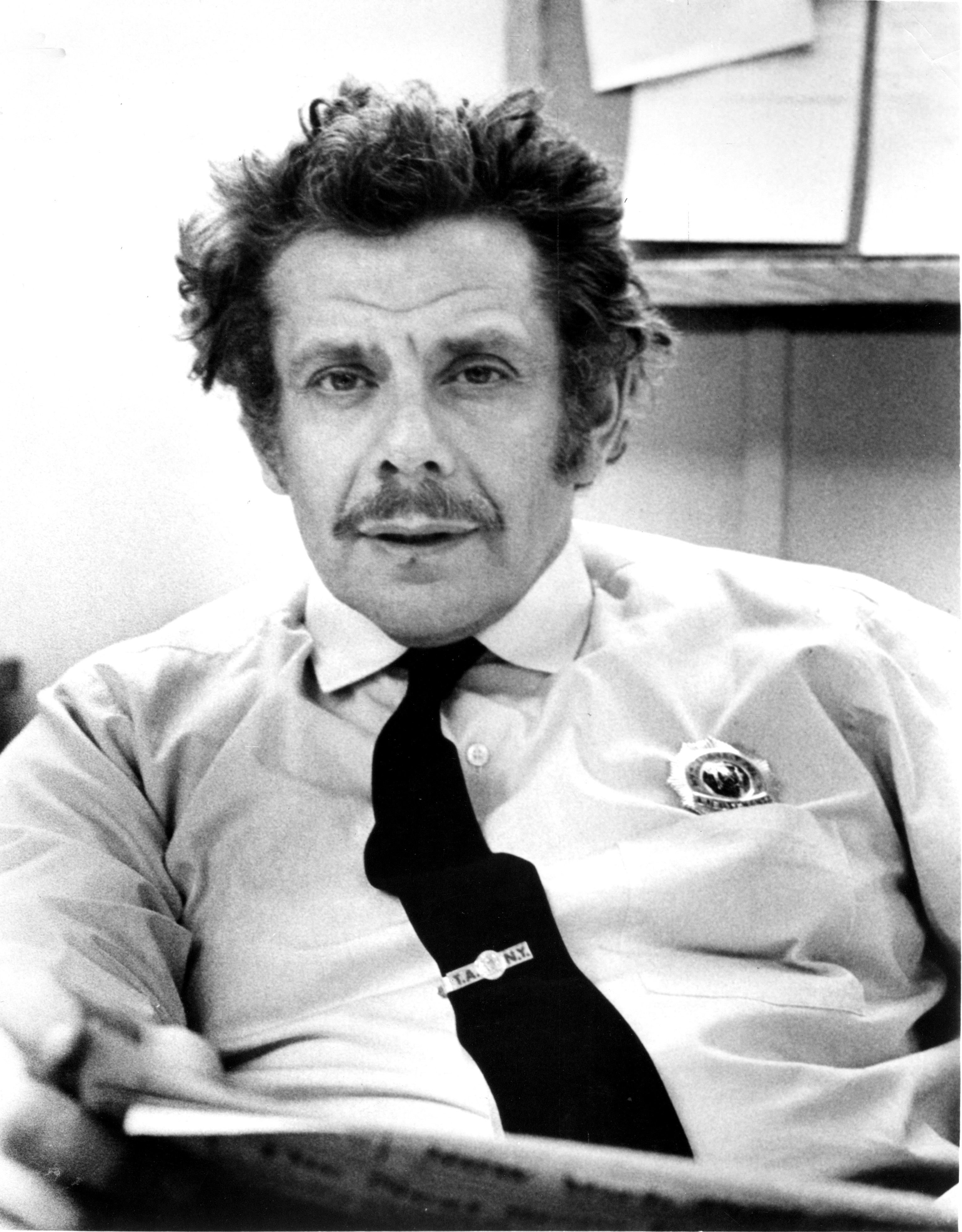
Jerry Stiller, who turns 90 today, poses for a photos on the set of the original 1974 version of The Taking of Pelham One, Two, Three:

Character Celebration of the Day:

In this video essay, Pop Culture Detective explores the “fantastic masculinity” of Newt Scamander from Fantastic Beasts and Where to Find Them:

[embedded content]

Kill Count of the Day:

See all 128 of John Wick’s kills in John Wick: Chapter 2 in this very violent supercut:

[embedded content]

Movie Trivia of the Day:

Celebrate the existence of The Usual Suspects with this bunch of trivia from ScreenCrush:

[embedded content]

Supercut of the Day:

Today is National Best Friends Day, so IMDb made a supercut for the occasion featuring clips from Thelma and Louise and more:

[embedded content]

Classic Trailer of the Day:

This weekend is the 35th anniversary of the release of Steven Spielberg’s E.T. the Extra-Terrestrial. Watch the original trailer for the sci-fi classic below.

[embedded content]

and

Let’s block ads! (Why?)


No Image

House Passes Bill Aimed At Reversing Dodd-Frank Financial Regulations

House Financial Services Committee Chairman Jeb Hensarling, R-Texas, authored and championed the Financial Choice Act.

Jacquelyn Martin/AP

hide caption

toggle caption

Jacquelyn Martin/AP

House Republicans voted Thursday to deliver on their promise to repeal Dodd-Frank — the massive set of Wall Street regulations President Barack Obama signed into law after the 2008 financial crisis.

In a near party-line vote, the House approved a bill, dubbed the Financial Choice Act, , which scales back or eliminates many of the post-crisis banking rules.

The legislation is the brainchild of House Financial Services Committee Chairman Jeb Hensarling, R-Texas.

“Dodd-Frank represents the greatest regulatory burden on our economy, more so than all the other Obama-era regulations combined,” Hensarling told reporters Wednesday. “There is a better way: economic growth for all; bank bailouts for none.”

Rolling back regulations

Hensarling’s nearly 600-page bill would defang Dodd-Frank by repealing the so-called Volcker Rule, which prevents government-insured banks from making risky bets with investments. It would also scrap a requirement, which goes into effect Friday, that retirement advisers put their clients’ interests ahead of their own.

In perhaps the biggest partisan flashpoint, the bill aims to scale back the authority of the Consumer Financial Protection Bureau to regulate large banks and payday lenders.

The CFPB was created under Dodd-Frank and is designed to operate as an independent watchdog with a single director. Hensarling considers its structure to be undemocratic.

“To think in a democracy that one un-elected individual can functionally decide what credit cards go in our wallets, what mortgages we can have on our home, whether or not we even have a checking account. I mean, that’s just anathema to me to the founding principles of this republic,” Hensarling said while speaking last month at the right-leaning American Enterprise Institute.

Financial reform advocates argue the Choice Act would leave the U.S. economy vulnerable to another financial crisis.

“It is bad for consumers, it is bad for investors, and it’s bad for the stability of the American economy — which is bad for all of us,” said Lisa Donner, executive director of Americans for Financial Reform. “People believe there should be more — not less — regulation of Wall Street. They’re worried about regulators being too weak and being too afraid to take on the big guys. Not about their being tough.”

“The bill even specifically exempts payday and car title lenders — notorious for springing devastating debt traps for their already vulnerable customers — from any regulation,” added Yana Miles, senior legislative counsel for the Center for Responsible Lending.

The top lobbyist for the banking industry — which supports parts of the Choice Act — says the bill would bring relief to community banks, which many say have been overburdened by Dodd-Frank’s onerous, one-size-fits-all regulations.

“We are not seeking to roll back all of the policy response, all of Dodd-Frank,” said Rob Nichols, president and CEO of the American Bankers Association. “That’s not our intention. Our intention is to acknowledge what many regulators and legislators will tell you both publicly and privately, which is aspects of Dodd-Frank overshot.”

The Senate has been working on a separate bill that is more focused on loosening regulations on community banks. Federal Reserve Chair Janet Yellin has endorsed efforts to “mitigate the regulatory burden” when it comes to small banks.

Frank: “You don’t get everything 100 percent right the first time”

Former Rep. Barney Frank of Massachusetts agrees — despite having his name attached to the regulations, alongside that of former Sen. Christopher Dodd, D-Conn.

“Anytime you pass a very complicated piece of legislation, you don’t get everything 100 percent right the first time,” said Frank, who is the former Democratic chairman of the House Financial Services Committee.

Frank says his namesake financial reform law has been too restrictive on smaller banks. He also believes the threshold used to identify other banks “as too big to fail” should be higher.

“Beyond that what you have are Republicans — including the chairman of the committee, Mr. Hensarling, who is a very honorable, very pleasant, deeply rigidly ideological conservative who is essentially against any regulation.”

Democratic opposition can stop the bill in the Senate

Even though some Democrats recognize there are some problems with Dodd-Frank, they are unified in opposing the Choice Act.

“The Wrong Choice Act is a vehicle for Donald Trump’s agenda to get rid of financial regulation and help out Wall Street. It’s an invitation for another Great Recession, or worse,” said California Rep. Maxine Waters, currently the top Democrat on the House Financial Services Committee.

Hensarling’s bill is a revised version of legislation he proposed last year, which stalled in Congress. Waters says it’s no surprise that Republicans see success in their sights this time around.

“With the majority that they have in the House and the Senate and President Trump, this is their big opportunity to deregulate, deregulate, deregulate — and they’re going to go for it,” she said.

But the GOP will run into obstacles in the Senate, because Republicans in the upper chamber don’t have the 60 votes needed to pass the legislation.

Hensarling says he’s undeterred.

“If I live my life thinking that something might not pass the Senate, I would never even get up and bother to go to work,” he said.

Let’s block ads! (Why?)


No Image

CDC Reveals Sharper Numbers Of Zika Birth Defects From U.S. Territories

Michelle Flandez’s son Inti Perez — pictured at home in Bayamon, Puerto Rico, in 2016 — was born with microcephaly linked to the mosquito-borne Zika virus.

Carlos Giusti/AP

hide caption

toggle caption

Carlos Giusti/AP

Zika is a scary virus because of the terrible birth defects it can cause. Now scientists have a clearer sense of the size of that risk.

The U.S. Centers for Disease Control and Prevention identified 2,549 pregnant women with the Zika virus in Puerto Rico and other U.S. territories between Jan. 1, 2016 and April 25, 2017. The CDC found that 122 of these women — about 5 percent — gave birth to babies with birth defects such as small heads (known as microcephaly).

The federal health agency, which has been struggling to get clear information out of Puerto Rico about Zika, declined to say how many of those birth defects came from Puerto Rico.

But Dr. Anne Schuchat, acting director of the CDC, said she is confident that health officials in the territory are now fully reporting its cases to the federal health agency. Puerto Rico is not required to use the CDC definition when publishing its own figures, which have appeared to be out of step with expectations.

CDC will blend the Puerto Rico numbers with any cases reported from the U.S. Virgin Islands, American Samoa, and the Federated States of Micronesia and Marshall Islands for “an assurance of privacy,” Schuchat told reporters. The upshot is that the public will not be able to identify risks specific to any of these areas. Puerto Rico’s population accounts for more than 90 percent of the total of these territories.

Earlier this week, Puerto Rico, which has been struggling to attract tourists during the Zika outbreak, declared that the epidemic had ended. Schuchat agreed that the number of cases has fallen sharply since the peak of the epidemic. But in a telephone news conference Thursday, she said, “We don’t feel the period of risk is over.”

Another mosquito season is on the way, she noted.

Scientists have had trouble pinning down the risk of Zika to pregnant women. Estimates of birth defects have ranged from 1 percent of pregnancies to more than 10 percent. This latest study, published Thursday in Morbidity and Mortality Weekly Report, provides a sharper answer.

The study found that even infected women without symptoms of the disease were at risk of giving birth to babies with abnormalities.

Women whose infections were identified in the first trimester of pregnancy had a somewhat higher risk — 8 percent overall. The study found that women whose infections were identified later in pregnancy were also at significant risk for having a baby with birth defects.

Not all birth defects are immediately recognized at birth, Schuchat said, so it’s important for doctors to follow up with these babies. In addition to microcephaly, the children may have other brain malformations, eye problems and neurological damage.

Let’s block ads! (Why?)


No Image

Today in Movie Culture: Tom Cruise Performs Kids' 'Mummy' Plays, 'Wonder Woman' Meets 'Moana' and More

Here are a bunch of little bites to satisfy your hunger for movie culture:

Talk Show Appearance of the Day:

Watch Tom Cruise and Jimmy Fallon act out mummy stories written by kids in this Tonight Show appearance promoting The Mummy:

[embedded content]

Supercut of the Day:

Since Tom Cruise runs in a lot of his films, including The Mummy, here’s an IMDb supercut of people (Cruise included) running in movies:

[embedded content]

Mashup of the Day:

Follow the entire thread that begins with the below tweet from the Blank Check podcast putting lyrics to “How Far I’ll Go” from Moana to images from Wonder Woman:

I know everybody on this island
Seems so happy on this island
Everything is by design… pic.twitter.com/pIiZ50DYFL

— Blank Check Podcast (@blankcheckpod) June 7, 2017

Filmmaker in Focus:

Martin Scorsese isn’t particuarly known for romance pictures, but this video focuses on the love stories within his movies (via Film School Rejects):

[embedded content]

Vintage Image of the Day:

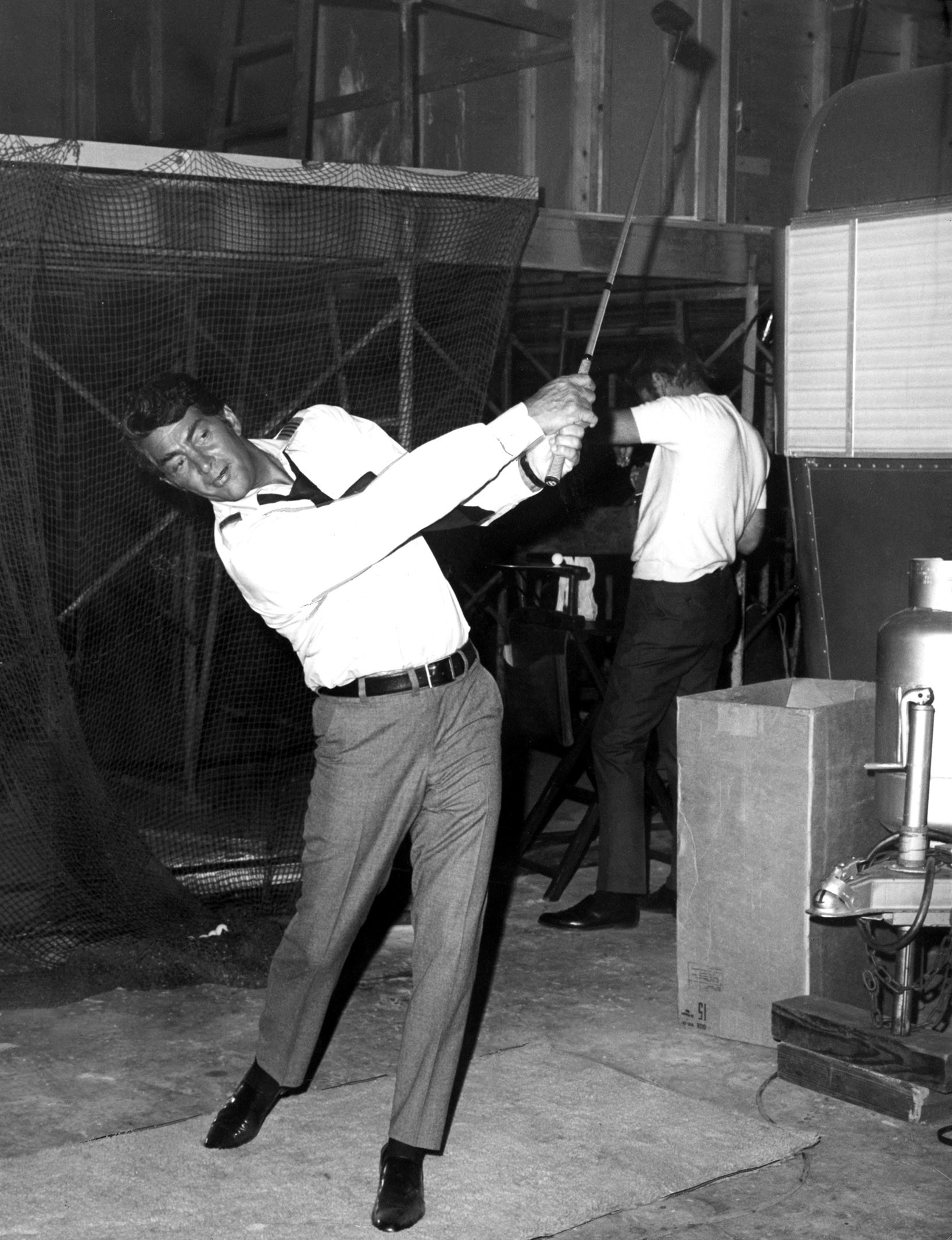
Dean Martin, who was born on this day 100 years ago, practices his golf swing on the set of Airport in 1969:

Actor in the Spotlight:

Kevin Costner discusses his early years in this animated adaptation of a 2012 Esquire interview:

[embedded content]

Casting Rendering of the Day:

You can’t see her face too well, but here’s an awesome interpretation from BossLogic of what Sophie Turner might look like as Dark Phoenix in the next X-Men movie:

Dark Phoenix – @SophieT@XMenMoviespic.twitter.com/KJN8LKT2mr

— BossLogic (@Bosslogic) June 7, 2017

Bad Film Analysis of the Day:

See an alien in the future badly discuss the hidden meaning of Ex Machina in the latest episode of Earthling Cinema:

[embedded content]

Cosplay of the Day:

While not exactly cosplay — the little girl isn’t supposed to be the snowspeeder — this dad-build made for “drive-in movie day” is still very precious (via Geekologie):

6 year old sitting in a cardboard snow speeder

Classic Trailer of the Day:

Today is the 50th anniversary of the release of El Dorado. Watch the original trailer for the classic western below.

[embedded content]

and

Let’s block ads! (Why?)


No Image

Victory In Cleveland Puts Warriors 1 Win From 16-0 Streak To NBA Title

Golden State Warriors forward Kevin Durant, center, celebrates with teammates after the Warriors defeated the Cleveland Cavaliers 118-113 Wednesday night in Game 3 of the NBA Finals in Cleveland.

Ron Schwane/AP

hide caption

toggle caption

Ron Schwane/AP

The Cleveland Cavaliers came into the third game of the NBA Finals in a dispiriting but familiar position after two Golden State blowouts. Last year, that led to one of the most stunning comebacks in NBA history

That remained a possibility the entire game Wednesday night — until the closing minutes, when the Warriors ripped the Cavaliers hearts out. Now Cleveland, which last year became the first team to recover from a 3-1 Finals deficit, faces historically long odds again.

Golden State closed the game in Cleveland on an 11-0 run to win 118-113, with perhaps no basket bigger than Kevin Durant’s transition three-pointer over Lebron James with 45 seconds left. That gave the Warriors a lead they held the rest of the way.

“I’ve been wokring on that shot my whole life, and for that one to go in, that’s liberating,” the forward told ESPN’s Doris Goodwin after the game.

Warriors coach Steve Kerr said that Durant has played with purpose throughout the series.

“You can tell, he knows this is his moment,” Kerr said. “He’s been an amazing player in this league for a long time, and I think he senses this is his moment, his team.”

Durant finished 31 points and eight rebounds, with guard Klay Thompson adding 30 points in a breakout performance after two weak games to start the series. Point guard Steph Curry scored 26 points and led the team in rebounding with 13.

The Warriors turnover problems from Game 2 carried over to Wednesday night, when they had 18, which helped the Cavaliers stay in the game.

Cleveland was led by James with 39 points, 11 rebounds and nine assists. Point guard Kyrie Irving added 39 points, though he missed all seven of his three-point shots. Forward Kevin Love went 1-9 from the field, including 1-7 from three, but did have six steals. Starting center Tristan Thompson went scoreless for the second time in the series.

Friday night in Cleveland (9 p.m. ET, ABC) both teams will have an unprecedented goal in mind. For the Warriors, a win will make them the first NBA team to get through the playoffs with four series sweeps, 16-0. For the Cavaliers, a win would be the first step toward becoming the first NBA team to overcome a 3-0 deficit in the Finals.

Let’s block ads! (Why?)