Articles by admin

No Image

First Listen: Arturo O'Farrill & Chucho Valdés, 'Familia: Tribute To Bebo & Chico'

Chucho Valdés and Arturo O’Farrill pay tribute to their historic fathers on Familia: Tribute to Bebo and Chico.

Courtesy of the artists

hide caption

toggle caption

Courtesy of the artists

It’s impossible to overstate the importance of both Bébo Valdés and Chico O’Farrill to 20th century Afro-Cuban music and jazz.

Their rich and multi layered influence is evident in iconic compositions, big band arrangements written 60 years ago that still sound cutting edge, and piano playing that echo Cuban classical music and jazz pianist Bill Evans.

The curious thing is that each made those contributions on opposite sides of the Florida Straights. Bebo Valdés (1918-2013) was a pianist, composer, arranger and bandleader in Havana, while Chico O’Farrill (1921-2001) was busy leading ensembles in New York. Their paths through Cuban music reflect unbreakable musical ties between the U.S. and Cuba that defied politics and a Cold War.

Arturo O'Farrill & Chucho Valdés: Familia: Tribute To Bebo & Chico

Courtesy of the artist

Familia: Tribute to Bebo and Chico, is just that: a multi-generational celebration of their lofty contributions led by their sons, pianist and composer Chucho Valdés and pianist and bandleader Arturo O’Farrill, in a series of performances that not only pay tribute to their fathers, but also continue to expand the tradition of Afro-Cuban jazz.

Tribute‘s generational magic doesn’t stop there. Pianist Leyanis Valdés and drummer Jessie Valdés would have made their grandfather proud, and the same can be said about trumpeter Zack O’Farrill and drummer Adam O’Farrill. These inclusions are not just acts of empty nepotism. The playing is skilled, creative and impressive. For fans of Chucho and Arturo, this will come as no surprise since each pair of progeny have recorded extensively under the family name.

Chucho Valdés is literally a towering figure of Cuban music made on the island. Standing over 6 feet in height, his explorations of the African influences in Cuban music are so profound that he is revered by musicians who play jazz, dance music, Buena Vista styled classic Cuban son, and even the island’s hip-hop community.

Arturo O’Farrill took over his dad’s regular Sunday night big band gig when his father died in 2001 and used the gig to remind music fans not just of Chico’s individual contribution, but also of the magic found in the sounds of all those horns playing intricate, joyful noise over Afro-Cuban mambos swing. He has recast the band as the Afro Latin Jazz Orchestra and has brought the music into the 21st century.

The entire album is full of music that would have intrigued both elder statesmen. And yet this album is so much more than a tribute to musical giants. It has the feel of an emotional homage to patriarchs who have left both a familial and musical legacy in their wakes.

Arturo O'Farrill & Chucho Valdés: Familia: Tribute To Bebo & Chico

Courtesy of the artist

First Listen: Arturo O’Farril & Chucho Valdés, ‘Familia: Tribute To Bebo & Chico’

01Bebochicochuchoturo

8:56

  • <iframe src="https://www.npr.org/player/embed/546800354/547006494" width="100%" height="290" frameborder="0" scrolling="no" title="NPR embedded audio player">

    02Three Revolutions

    7:52

    • <iframe src="https://www.npr.org/player/embed/546800354/547006712" width="100%" height="290" frameborder="0" scrolling="no" title="NPR embedded audio player">

      03Ecuación

      9:34

      • <iframe src="https://www.npr.org/player/embed/546800354/547006761" width="100%" height="290" frameborder="0" scrolling="no" title="NPR embedded audio player">

        04Tema De Bebo

        11:59

        • <iframe src="https://www.npr.org/player/embed/546800354/547006833" width="100%" height="290" frameborder="0" scrolling="no" title="NPR embedded audio player">

          05Pianitis

          6:10

          • <iframe src="https://www.npr.org/player/embed/546800354/547006875" width="100%" height="290" frameborder="0" scrolling="no" title="NPR embedded audio player">

            06Fathers, Mothers, Sons, Daughters

            10:18

            • <iframe src="https://www.npr.org/player/embed/546800354/547007022" width="100%" height="290" frameborder="0" scrolling="no" title="NPR embedded audio player">

              07Run And Jump

              7:21

              • <iframe src="https://www.npr.org/player/embed/546800354/547007320" width="100%" height="290" frameborder="0" scrolling="no" title="NPR embedded audio player">

                08Recuerdo

                7:41

                • <iframe src="https://www.npr.org/player/embed/546800354/547007360" width="100%" height="290" frameborder="0" scrolling="no" title="NPR embedded audio player">

                  09Gonki Gonki

                  5:45

                  • <iframe src="https://www.npr.org/player/embed/546800354/547007566" width="100%" height="290" frameborder="0" scrolling="no" title="NPR embedded audio player">

                    10Pura Emoción

                    3:50

                    • <iframe src="https://www.npr.org/player/embed/546800354/547007756" width="100%" height="290" frameborder="0" scrolling="no" title="NPR embedded audio player">

                      11Para Chico

                      2:32

                      • <iframe src="https://www.npr.org/player/embed/546800354/547007782" width="100%" height="290" frameborder="0" scrolling="no" title="NPR embedded audio player">

                        12Con Poco Coco

                        8:07

                        • <iframe src="https://www.npr.org/player/embed/546800354/547007824" width="100%" height="290" frameborder="0" scrolling="no" title="NPR embedded audio player">

                          13Raja Ram

                          4:13

                          • <iframe src="https://www.npr.org/player/embed/546800354/547007944" width="100%" height="290" frameborder="0" scrolling="no" title="NPR embedded audio player">

                            Let’s block ads! (Why?)


                            No Image

                            Today in Movie Culture: 'Justice League' '80s Style, Chinese 'Spider-Man: Homecoming' Posters and More

                            Here are a bunch of little bites to satisfy your hunger for movie culture:

                            Reimagined Movie of the Day:

                            What would Justice League look like if it was made in the late ’80s when Batman came out? This mashup from Darth Blender shows one possibility:

                            [embedded content]

                            Alternate Posters of the Day:

                            Spider-Man: Homecoming has some cool new fan-made posters for its upcoming Chinese release:

                            New posters #SpiderManHomecoming for China pic.twitter.com/gimGYxyCHk

                            — Holland News (@Hollandersbr) August 27, 2017

                            Movie Comparison of the Day:

                            Just when you thought Get Out was one of the most original movies of the year, Couch Tomato shares 24 reasons why it’s the same movie as The Skeleton Key:

                            [embedded content]

                            Trend of the Day:

                            Fandor addresses the prevalence of the complimentary colors blue and orange in movies lately:

                            [embedded content]

                            Vintage Image of the Day:

                            Cameron Diaz, who turns 45 today, receives direction from Peter and Bobby Farrelly on the set of 1998’s There’s Something About Mary:

                            Actor in the Spotlight:

                            Fandor answers the question of why Robert De Niro just isn’t funny:

                            [embedded content]

                            Filmmaker in Focus:

                            Mr. Nerdista looks at how David Fincher crafts the perfect lonely protagonist in this video essay focused on The Game:

                            [embedded content]

                            Fan Art of the Day:

                            Apparently Guillermo del Toro has a new nickname: Guillermo El Totoro, and now fans are making art in the name’s honor (via IndieWire):

                            You have heard of Totoro and of Guillermo del Toro, I present to you Guillermo El Totoro. One day I will do a watercolor rendition of this. pic.twitter.com/Rb10DrC7Qo

                            — Enrique Robles (@DraftDesigner) August 23, 2017

                            National Cinema of the Day:

                            Get into the cinema of South Korea with this video highlighting such works as The Handmaiden and Oldboy by editor Gamze Bas:

                            [embedded content]

                            Classic Trailer of the Day:

                            Today is the 50th anniversary of the premiere of John Boorman’s Point Blank in San Francisco. Watch the original trailer for the classic thriller below.

                            [embedded content]

                            and

                            Let’s block ads! (Why?)


                            No Image

                            FACT CHECK: 4 Claims From Trump's Tax Speech

                            President Trump pitches tax overhaul at an event at the Loren Cook Co. in Springfield, Mo., on Wednesday.

                            Jim Watson/AFP/Getty Images

                            hide caption

                            toggle caption

                            Jim Watson/AFP/Getty Images

                            President Trump pitched a tax overhaul package on Wednesday in a speech that was heavy on politicking and light on the particulars.

                            Trump’s tax policy ideas are still sketchy — when pitched in April, they amounted to one page of bullet points. In his Wednesday remarks, he didn’t add much more detail beyond the broad strokes, saying he wants lower rates for the middle class, a simpler tax code, lower corporate rates and for companies to “bring back [their] money” from overseas to the U.S.

                            In his speech in Springfield, Mo., though, he said a few things that were misleading or could use more context. Here are four fact checks:

                            1. Economic growth rate

                            “We just announced that we hit 3 percent in GDP. Just came out. And on a yearly basis, as you know, the last administration during an eight-year period never hit 3 percent. So we’re really on our way.”

                            He’s right that on Wednesday, the Commerce Department announced that the economy grew at a 3 percent rate in the second quarter. This was an upward revision from a previously announced 2.6 percent (and will still be revised again).

                            But he is making it sound as if growth during his administration is already appreciably faster than it was during the Obama administration. That’s not true. Quarterly GDP growth during the Obama presidency did hit 3 percent several times.

                            There’s a technicality here, though: Trump used the phrase “on a yearly basis.” If he’s talking about calendar years, he’s right, but barely. According to Commerce Department data, annual GDP growth during Obama’s presidency hit a high of 2.9 percent in 2015 — so, just shy of 3 percent. But then, if he is measuring any given 12-month period, he’s not right; year-over-year GDP growth was at times over 3 percent during the Obama presidency.

                            Either way, that 3 percent rate he pulled out is how annual growth would look ifgrowth from the second quarter were to hold for a full year. Reporting the GDP rate in this annual way makes it easier to show whether growth was faster in, say, this quarter than it was in prior years. But once again, it still has that hypothetical aspect to it.

                            And that leads to a more important point here: Many economists believe that sustained 3 percent growth, like Trump says he can help create, is unlikely. The Committee for a Responsible Federal Budget earlier this year tried to game out how that kind of GDP growth could happen. Its outlook was not rosy.

                            “By our estimates, returning capital growth, productivity growth, and prime-age labor force participation to where they were in the 1990s would result in 2.9-percent growth,” they wrote. And getting to those levels, they added, would be “an unlikely scenario given recent trends.”

                            In other words, while Trump is celebrating this one quarter of growth, seeing it quarter after quarter after quarter would be a surprise.

                            2. Comparing U.S. growth with other countries’

                            “You look at other countries and you look at what their GDP is, they’re unhappy when it’s 7, 8, 9. And I speak to them, leaders of the countries — ‘How are you doing?’ ‘Not well. Not well.’ ‘Why?’ ‘GDP is down to 7 percent.’ And I’m saying, ‘We were hitting 1 percent just a number of months ago.’ “

                            We can’t fact-check Trump here in the strictest sense (that is, we don’t really know what these other leaders are telling him), but we can check the assumption that we can compare the U.S.’s growth rate with other countries’. The answer: It doesn’t work like that.

                            “The countries that are growing at 7 percent are emerging market economies like China or India or other emerging market economies,” said Nick Lardy, senior fellow at the Peterson Institute for International Economics.

                            He explained that these countries have what some economists call a “latecomer advantage” — an additional lift that comes from starting out behind other countries. For example, he pointed to China, which has grown quickly in part because of foreign firms coming in and setting up shop there. So when Volkswagen sets up a plant in China, it’s bringing in processes and technologies from the outside.

                            “They can do joint ventures or have foreign firms come in, they can license technology, they can improve labor productivity,” he explained.

                            This is what helps a country like China or India have an economic growth rate of around 7 percent.

                            3. A “simple” tax code

                            “We need a tax code that is simple, fair and easy to understand. And that means getting rid of loopholes and complexity that primarily benefit the wealthiest Americans and special interests. Our last major tax rewrite was 31 years ago. It eliminated dozens of loopholes and special interest tax rates, reduced the number of tax brackets from 15 to two, and lowered tax rates for individuals and businesses. Since then, tax laws have tripled in size.”

                            The Reagan tax plan, approved by Congress in 1986, did cut back on loopholes, and it did cut the number of brackets down to two.

                            But there’s one important point buried in here, and it’s that bit about the number of tax brackets and setting rates. Trump said he wants to make the tax code “simple, fair, and easy to understand.” Brackets and rates are not what make the tax code byzantine (“fair” is subjective, and we’re staying out of that here).

                            “It’s a very mild form of simplification,” said William Gale, co-director of the Urban-Brookings Tax Policy Center at the Brookings Institution, a liberal-leaning Washington think tank, in an interview with NPR in 2015. “The real complication in the system is in the tax base, not in the rate structure. Figuring out how you calculate capital gains or figuring out whether you’re eligible for the [earned income tax credit for lower-income Americans], given the child rules — once you’ve got that, then you just plug in the rates.”

                            The brackets-simplicity argument is one Americans are bound to hear more as Congress debates a tax code overhaul; politicians try to draw this connection often. But slicing down deductions — and potentially upsetting some groups of voters — could be a tougher sell.

                            4. The corporate tax rate

                            “Today we are still taxing our businesses at 35 percent. And it’s way more than that. And think of it — in some cases way above 40 percent when you include state and local taxes in various states. The United States is now behind France, behind Germany, behind Canada, Ireland, Japan, Mexico, South Korea and many other nations also.”

                            The top federal corporate tax rate is indeed 35 percent, and in some states, corporate tax rates can push that rate higher. In Iowa, the top corporate rate is 12 percent, and in five other states plus the District of Columbia, the rate is 9 percent or higher, according to the right-leaning Tax Foundation. (One could quibble with “way higher,” then, but in general, Trump is right on this.)

                            That’s what puts the U.S. “behind” other countries, in Trump’s estimation. Except what matters is the effective tax rate. Deductions and credits help bring U.S. companies’ tax rates below what they would otherwise pay. The effective tax rate for U.S. corporations is only around 18.6 percent, which is on the high end compared with other advanced economies but not unusually high — it’s a few percentage points below Japan, a few above Germany, and right in line with the U.K.

                            And those tax rates vary widely from firm to firm: A recent report found that out of 258 profitable Fortune 500 companies, 39 percent paid zero corporate taxes in at least one year between 2008 and 2015.

                            Loading…

                            Let’s block ads! (Why?)


                            No Image

                            Andy Murray Stands Out As He Stands Up For Female Tennis Players

                            Andy Murray has established himself as one of the only male tennis players to stand up for his female counterparts, advocating for equal pay and calling out sexism in the sport. NPR’s Kelly McEvers speaks with Elle magazine writer Lizzy Goodman about Murray’s unique brand of feminism.

                            KELLY MCEVERS, HOST:

                            Professional tennis is one of the major sports where men and women play in the same tournaments, on the same courts. Yet women make less money than men, and they deal with a lot of scrutiny. But one male player, Andy Murray, who is currently ranked number two in the world, has become a kind of champion for women in the sport. He gets in fights with people on Twitter. This summer at Wimbledon, he corrected a reporter who said Sam Querrey was the first U.S. player to advance to a semifinal since 2009.

                            (SOUNDBITE OF ARCHIVED RECORDING)

                            UNIDENTIFIED REPORTER: How would you describe the…

                            ANDY MURRAY: Male player.

                            UNIDENTIFIED REPORTER: I beg your pardon.

                            MURRAY: Male player, right?

                            UNIDENTIFIED REPORTER: Yes.

                            MURRAY: Yeah.

                            UNIDENTIFIED REPORTER: Yes, first male player. That’s for sure.

                            MCEVERS: Meaning the Williams sisters Serena and Venus have made it to the semis tons of times. Lizzy Goodman recently profiled Murray for Elle magazine, and she is here in the studio with me now. Hey there.

                            LIZZY GOODMAN: Hey there.

                            MCEVERS: OK, so first let’s just talk about last year. I mean it was a pretty tough year for women in tennis, right? What happened?

                            GOODMAN: Yes. I – it kind of started in the spring with the Indian Wells tournament, which is one of the biggest tournaments of the year. And the tournament director gave some quotes in which he basically said that the women are riding the coattails of the men. So sort of – and he used the phrase, get down on their knees and thank Rafael Nadal and Roger Federer and these sort of banner players on the male side for the attention they’ve brought the sport in the last few years.

                            So that was not received well. And that was kind of the gun going off. And as the year progressed, there were a series of events in which this came up. And tournament directors made ill-advised comments in response.

                            MCEVERS: And so enter into Andy Murray. I mean we talked about some of the things that he did. What else has he done and said?

                            GOODMAN: He’s been at this for a long time (laughter). It’s – his mom, Judy Murray, is a kind of stalwart supporter of women in tennis, an incredible coach, an icon in the sport in general and an advocate for women. But he also quite famously sort of ushered in the era of bold name coaching with his relationship with Ivan Lendl. Now that’s standard. Like, all the big players on the male side have kind of recruit past greats to help them. Andy was first.

                            Then his second choice after he worked with Ivan Lendl – the next person that he went to was a woman, Amelie Mauresmo, and that drew a lot of negative attention at the time. It was like he had launched this sort of – this pattern. And then when he changed it up by hiring the next in line of sort of amazing former players to work with and it happened to be a female human being, that was quite scandalous.

                            MCEVERS: Really? And so what did he do when people criticized him for that?

                            GOODMAN: He spoke out really strongly about it. And I think the clip you played is a really good example of what’s great about Andy’s feminism, which is that it’s kind of – it’s dudish (ph). Like, there’s something very, like, bro-y (ph) in the best way about his response. He doesn’t give this sort of soliloquy about – excuse me, reporter; did you actually mean to say? He’s just like, male player, right?

                            Like, it’s very in the language of his – the way he speaks about everything else is how he speaks about this, and I think that’s what’s lent power to his advocacy in this space because on some level, he’s sort of like, I’d really rather not talk about this. But, like, you’ve got to be kidding me. Like, I can’t anymore. And I think that’s – the female players that I spoke to for the piece – that echoed – that rings really true with them because it’s sort of, like – it’s not something you want to talk about. It’s eye roll inducing, and yet it’s so prevalent.

                            MCEVERS: Yeah, your piece is called “Game Changer.” I mean do you think he really is changing the game and helping it move forward in the way people treat women?

                            GOODMAN: I think so. I think that attention on this level from this side of the aisle, so to speak, is powerful. I don’t – I think it’s unfortunate that that’s what it takes…

                            MCEVERS: Right.

                            GOODMAN: …(Laughter) Obviously.

                            MCEVERS: Yeah. We’re talking about a dude as a feminist here.

                            GOODMAN: Yes.

                            MCEVERS: Yeah.

                            GOODMAN: And I struggled with that in the piece. I mean to write a piece in a women’s magazine that uses this kind of attention on a man and have it be about feminism is a trick, you know? But I think to – it’s appropriate because he is making waves in a way that has an effect. You can tell by Serena’s response to it.

                            I mean Serena’s response to Andy has basically been – at each of these junctures has been, like, you know, all of us are grateful to him for calling these issues out because you have to – there – we need it from all sides. And he has a powerful megaphone.

                            MCEVERS: Lizzy Goodman is a contributing editor at Elle magazine. She’s also out with a new book called “Meet Me In The Bathroom.” It’s an oral history of rock in New York City in the first decade of the 2000s. Thank you.

                            GOODMAN: Thank you so much.

                            (SOUNDBITE OF TORO Y MOI SONG, “SAY THAT”)

                            Copyright © 2017 NPR. All rights reserved. Visit our website terms of use and permissions pages at www.npr.org for further information.

                            NPR transcripts are created on a rush deadline by Verb8tm, Inc., an NPR contractor, and produced using a proprietary transcription process developed with NPR. This text may not be in its final form and may be updated or revised in the future. Accuracy and availability may vary. The authoritative record of NPR’s programming is the audio record.

                            Let’s block ads! (Why?)


                            No Image

                            In Houston, Most Hospitals 'Up And Fully Functional'

                            Parts of Houston remain flooded, but most hospitals are up and running, according to Darrell Pile, CEO of the Southeast Texas Regional Advisory Council, which manages the catastrophic medical operations center in Houston.

                            Marcus Yam/LA Times/Getty Images

                            hide caption

                            toggle caption

                            Marcus Yam/LA Times/Getty Images

                            In southeastern Texas, about two dozen hospitals remained closed as of midafternoon Wednesday, and several Houston hospitals remain under threat of flooding from nearby reservoirs.

                            But things are looking up. Some hospitals that had been evacuated have reopened, and others are restoring services they had temporarily suspended. Many never closed at all.

                            A catastrophic medical operations center, housed within Houston’s emergency center, has been coordinating with hospitals throughout the storm and continues to field calls about patients needing evacuation or immediate medical attention.

                            All Things Considered host Kelly McEvers spoke with Darrell Pile, CEO of the Southeast Texas Regional Advisory Council, which runs the catastrophic medical operations center.

                            This interview has been edited for length and clarity.


                            Interview Highlights

                            While the storm has largely left Houston, the flooding continues. What is the situation with the hospitals you’re working with?

                            The flooding is devastating, and we have at least two reservoirs where water is having to be released and is, in fact, flooding neighborhoods as we speak and has placed three hospitals in harm’s way.

                            The three hospitals are monitoring the water coming from the two reservoirs very closely, and they could, depending on the flow of the water, find that they could become inaccessible to EMS agencies. We are tracking that very closely.

                            The situation with residents in their homes — some are on the second floor of their homes — the evacuation process [for those neighborhoods] continues, and, as a result, it’s unclear what the demands on the health care system may be. However, most hospitals are up and fully functional, and we believe we can handle any new demands that happen today or tomorrow.

                            Has the catastrophic medical operations center ever handled anything like this?

                            No. The phone lines at one point became inundated. The amount of resources needed began to exceed what we had available. The calls included patients needing dialysis who might be at home. It included hospitals saying we need to evacuate. One call was asking for 50 wheelchairs to be sent to a shelter. We didn’t have 50 wheelchairs left. Fortunately, our governor declared a disaster and the president declared a disaster and resources have been brought in from all over the state and all over the nation to help us.

                            How did you get those 50 wheelchairs?

                            I’m not clear on how they ended up getting the 50 wheelchairs, but I can tell you, it can be accomplished just through one or two tweets to Houstonians. Those with wheelchairs perhaps in their attic or stored [elsewhere] could bring an abundance of wheelchairs, perhaps more than you even need. So there are methods to solve every problem. It’s just having enough people to make the calls or to be innovative and creative to solve the problems. This community has come to the call.

                            A number of hospitals did evacuate, either prior to the storm or during. How difficult is it to evacuate a hospital?

                            It’s not as simple as pulling up a bus or a convoy of ambulances and moving patients from one hospital to another hospital. My organization makes sure that the receiving hospital meets the need of every single patient they agree to receive. As a result, the evacuation of a hospital might mean we must identify 10 different hospitals to meet the unique needs of each patient.

                            Every day, three times per day, we have hospitals electronically advise us of beds that they have available and the type. So a pediatric patient goes to a pediatric bed.

                            And we’ve also spent time making sure the receiving hospital is not in harm’s way so that the patient would not have to be evacuated twice. We have worked with the [Texas] Department of State Health Services to also identify hospitals with beds available in cities such as Dallas or San Antonio or Austin or even further away so that a patient doesn’t move twice.

                            We’ve heard news of at least one hospital being short of food. Has that been resolved?

                            Yes. I was intimately involved in the Ben Taub [Hospital] decision to evacuate, and I was aware of their call for food. It was not a problem that was devastating or affecting patient care to any significant extent, and it did not last throughout the disaster period.

                            We do have to deal with situations where we have to dig down and find out the truth and make sure our response is responding to facts and not to stories that might have had some facts at one point, but as days went by, it became a little distorted.

                            [Editor’s note: Ben Taub Hospital confirmed to NPR that they have reopened, that supply lines are steadily improving and that they have received a food delivery and are expecting another one today.]

                            A number of Houston hospitals added flood protections as a result of other devastating storms, including Allison in 2001. Have those worked?

                            Absolutely. We had a situation where in prior storms, water came into a tunnel system that connects the Texas Medical Center hospitals. [The tunnels] make it easier to go from one hospital to another hospital. However, waters came in and flooded every hospital through that tunnel system.

                            The Texas Medical Center invested in submarine-type doorways, and when there is a risk of flooding, they now close those doorways. So each hospital is compartmentalized. As a result, this storm — even though flooding devastated our community, it did not devastate Texas Medical Center. So, congratulations to the Texas Medical Center.

                            Do the hospitals have the staff they need right now?

                            I can imagine some of the hospitals have fewer employees available to staff the hospital. Some members of their workforce have lost everything — their homes destroyed, their automobiles destroyed.

                            Tomorrow, we will be holding a meeting to discuss what do our hospitals need. And from there we will be identifying where we need to place nurses. We have an abundance of nurses from throughout Texas who have offered to help. We also have an abundance of physicians who have offered to help. Now it’s a matter of making sure we place them in the proper facilities.

                            Let’s block ads! (Why?)


                            No Image

                            Today in Movie Culture: Kermit the Frog's New Voice, 'Thor: Ragnarok' Gets Sweded and More

                            Here are a bunch of little bites to satisfy your hunger for movie culture:

                            New Voice of the Day:

                            Kermit the Frog has a new voice, care of Muppets puppetteer Matt Vogel, and this video marks its first appearance:

                            [embedded content]

                            Remade Trailer of the Day:

                            Thor: Ragnarok still has a while until it comes out, but to tide us over here’s a sweded version of the trailer:

                            [embedded content]

                            Reworked Movie of the Day:

                            What if Michael Bay directed The Iron Giant? This mashup of the animated feature and Transformers 2 provides a fair idea:

                            [embedded content]

                            Movie Takedown of the Day:

                            Honest Trailers takes aim at the ridiculousness of John Woo’s Face/Off:

                            [embedded content]

                            Classic Image of the Day:

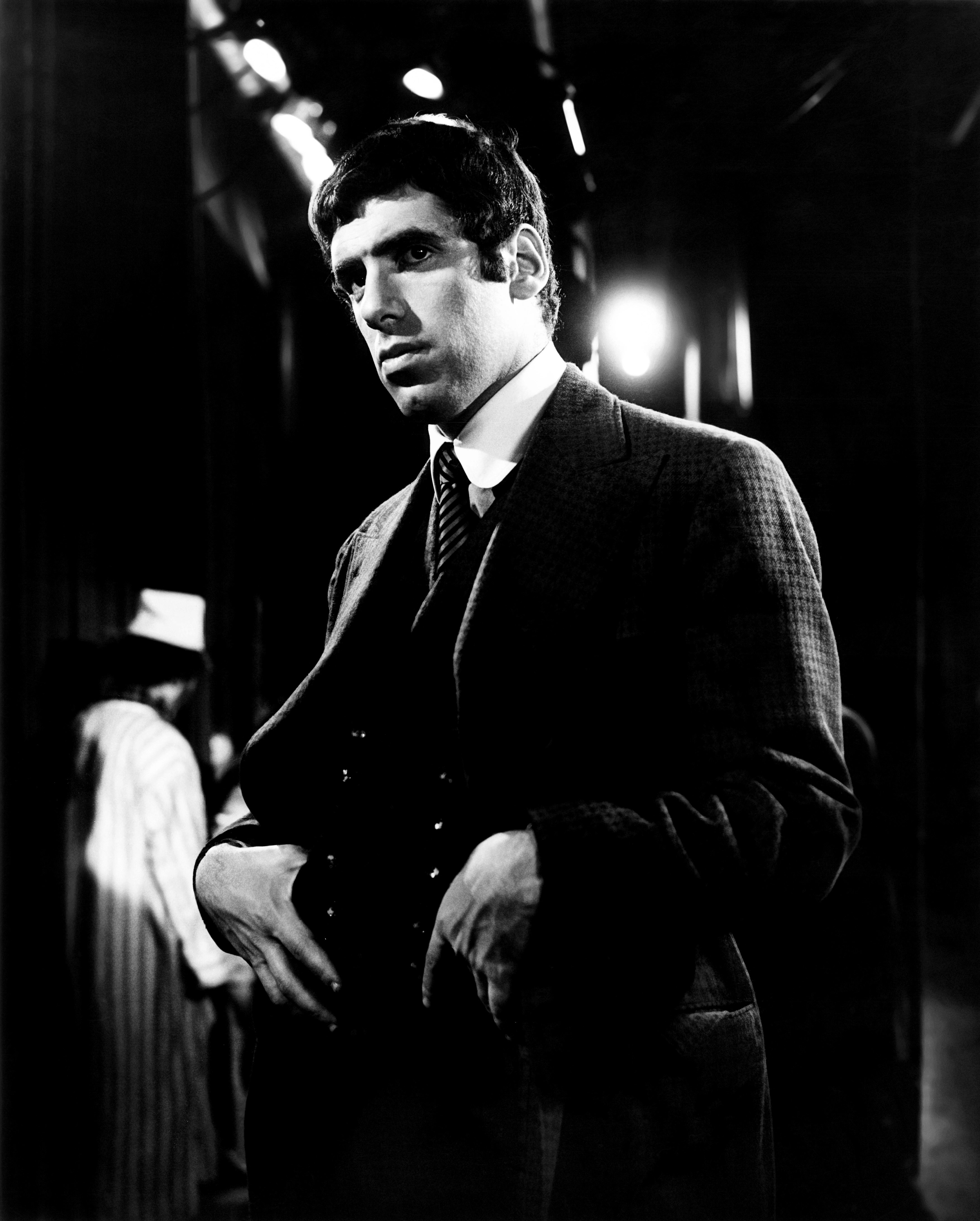
                            William Friedkin turns 82 today and Elliott Gould turns 79 today, so here’s a photo of the latter from the former’s 1968 comedy The Night They Raided Minsky’s:

                            Filmmaker in Focus:

                            The career of David Cronenberg is summed up perfectly in this [CINEMASTERS] mashup of his movies:

                            [embedded content]

                            Actor in the Spotlight:

                            How familiar are you with martial arts action star Jackie Chan? ScreenCrush shares a bunch of trivia about the actor:

                            [embedded content]

                            Cosplay of the Day:

                            Here’s a perfect Moana at Sri Lanka’s Lanka Comic Con last weekend:

                            #Moana of Motonui showed up at #AsusLankaComicCon2017 over the weekend.

                            It was worth all the effort spent on making this cosplay :’) ?? pic.twitter.com/79vzdLg92f

                            — ~°PiNgi°~ (@_piNgi_) August 28, 2017

                            Condensed Movie of the Day:

                            If all you want from Free Fire is the gunshots, this near-five-minute supercut will do the trick:

                            [embedded content]

                            Classic Trailer of the Day:

                            Today is the 60th anniversary of the release of The Pajama Game starring Doris Day. Watch the original trailer for the classic musical below.

                            [embedded content]

                            and

                            Let’s block ads! (Why?)


                            No Image

                            Keep It Simple And Stay Open: The Waffle House Storm Menu

                            This view of Tropical Storm Harvey flooding in Houston on Tuesday shows why even the storm-hardy Waffle House had to close two of its restaurants in the city.

                            David J. Phillip/AP

                            hide caption

                            toggle caption

                            David J. Phillip/AP

                            The massive flooding in the Houston area has brought much of the city’s commercial life to a halt. For those venturing out it can be hard to find a place to eat. The Houston Chronicle posted a list of bars and restaurants that are open in the aftermath of Harvey. It’s not a big list. There are some cafes and diners serving up meals, but most of the locations are McDonald’s or Waffle House restaurants.

                            Waffle House, the 247 comfort-food chain, is notable for keeping the doors open when hurricanes and natural disasters strike. The Federal Emergency Management Agency even measures the severity of a storm’s damage by something called the Waffle House Index. When a Waffle House restaurant shuts down, it’s really bad. “Waffle House stays on when the wind’s blowing — they never close,” Philip Strouse, FEMA’s private sector liaison, told Yahoo Finance last year.

                            Well, Harvey’s storm surges have been so severe that two Waffle House locations in the Houston area have indeed closed — one owing to flooding and one because nearby roads are impassable, said Pat Warner, Waffle House director of external affairs. But 30 Waffle House restaurants in Houston remain open, serving up hot meals and giving people a place to congregate and charge their cellphones.

                            Because Waffle House tells customers it never closes, the company feels a special obligation to stay open under the most severe weather conditions. That means a lot of planning and storm logistics. In the case of Harvey, Waffle House “jump teams,” restaurant managers from Ohio, Tennessee and Georgia, headed to Houston to keep the grills going — in some cases doing the shifts of storm-stranded local employees.

                            “We go to a limited menu,” said Warner, meaning fewer choices for breakfast, lunch and dinner. “That makes it easier for our production teams and for our supplier.” Fortunately, power and water have been available at the Houston-area restaurants. But every restaurant has a “Waffle House storm playbook” with protocols for how to keep operating if the electricity and running water go out. Without natural gas, however, Waffle House is cooked. The restaurants need gas to keep the grills running.

                            Warner says keeping everything as simple as possible helps Waffle House stay on track during a crisis.

                            “To be honest, we just cook bacon and eggs. But sometimes you need bacon and eggs.”

                            Let’s block ads! (Why?)


                            No Image

                            Health Issues Stack Up In Houston As Harvey Evacuees Seek Shelter

                            Evacuees fill up cots at a shelter set up inside the George R. Brown Convention Center in Houston, Texas.

                            Joe Raedle/Getty Images

                            hide caption

                            toggle caption

                            Joe Raedle/Getty Images

                            As floodwaters continue to rise in parts of Houston, health workers are trying to keep people safe and well, though that challenge is escalating.

                            “The first and foremost thing that everybody’s concerned about is just getting folks out of harm’s way with the flooded waters,” says Dr. Umair Shah, Executive Director of Harris County Public Health, whose own home came under mandatory evacuation Tuesday morning.

                            Before the storm hit, Harris County Public Health sent out a number of messages warning residents of to avoid hazards presented by flood waters: downed power lines, sewage contamination, rusted nails and the possibility of critters in the water — everything from snakes to spiders to alligators.

                            Now that people are showing up in shelters, efforts are turning to helping people with both health issues arising from the flood — including respiratory and gastrointestinal problems — and with getting care for preexisting conditions, some of which can be life-threatening if not treated promptly.

                            “That doesn’t even obviously take into account the numerous injuries and the mental health issues that all come into play. So it’s a very complicated response system,” Shah tells All Things Considered host Ari Shapiro.

                            Shah remembers that after Hurricane Katrina in 2005, health workers set up clinics in shelters and asked people with anxiety or schizophrenia to come forward. Many were not willing to do so. “So we actually had to fan into the shelter to identify ourselves mental health issues,” Shah recalls. “That’s a big component and something we’re also mindful of now.”

                            At the George R. Brown Convention Center in downtown Houston, licensed clinical social worker Brittany Burch showed up to help some of the thousands of people who have taken shelter there. As she tells NPR, she’s already seeing and hearing a lot of distress.

                            “A lot of people really overwhelmed, stories of having to jump in a boat or get a helicopter out, wade through waist-high water, losing everything,” she says. “So just a lot of people in shock, trying to adjust to what’s happened and what happens from here.”

                            Burch has heard from people who, before the storm, already suffered from chronic depression, post-traumatic stress disorder, bipolar disorder and other illnesses. “Some people haven’t been on their medications for a few days,” she says. “So there’s a lot of stress just being here, and then the extra mental health needs that arise in the midst of this [are] also very challenging.”

                            “There is such an unmet medical need,” says Kristin Malaer, another social worker who also showed up to volunteer. “Just going and connecting with people, you find out so many of them are diabetic or so many of them have chronic medical illness, that serving them all is pretty overwhelming.”

                            Among the more pressing medical issues is getting treatment to the sizeable population of people on dialysis.

                            DaVita, a leading provider of dialysis services nationwide, says the company normally serves approximately 6,700 patients in Houston. About a third of their 100 or so centers in the city remain open for all patients who need dialysis, according to Chakilla Robinson White, who oversees operations at DaVita’s dialysis centers in Texas and neighboring states.

                            “We are trying to call proactively and ensure that those patients we know need treatment are seeking treatment, either with us or within a hospital system,” White says. “We’re like, ‘Hey, we would like to see you in a center. What do we need to do to be able to get you here?’ “

                            For patients they reach who are stuck in their homes, surrounded by flood water, they’re trying to arrange transportation. “We’re alerting the authorities that this is a medical emergency so that they can get prioritized,” she says.

                            Gail Torres, senior clinical communications director for the National Kidney Foundation, says forgoing dialysis treatment for even a day can be extremely dangerous, particularly to the heart.

                            “Certain toxins can build up, but most importantly, potassium and fluid can affect the heart,” she says. “If you have a buildup of potassium, depending on what their baseline is, it can send them into cardiac arrest.” She says that delays in treatment can result in cumulative damage, as they saw after Hurricane Katrina in 2005 and Superstorm Sandy in 2012.

                            In Houston, DaVita is working to bring in enough staff to keep dialysis centers open, calling in workers from other cities and states and also finding ways to get their Houston-based colleagues to work.

                            “We’re working on bringing in boats to actually get our teammates in some of the neighborhoods where they’re unable to escape through the flood,” White says. “It’s amazing how many teammates have had hardships themselves, losing part of their homes and still showing up to treat our patients.”

                            Let’s block ads! (Why?)


                            No Image

                            Running Community Mourns Olympian David Torrence, Found Dead At 31

                            David Torrence, seen here during the 2014 Penn Relays at Franklin Field in Philadelphia, has died in Scottsdale, Ariz.

                            Icon Sports Wire/Corbis via Getty Images

                            hide caption

                            toggle caption

                            Icon Sports Wire/Corbis via Getty Images

                            David Torrence, an athlete who ran in last year’s Summer Olympics and had been training for more races, was found dead in a swimming pool in Scottsdale, Ariz., on Monday, according to local news reports and Torrence’s friends.

                            “The track world lost a great friend and athlete today,” USA Track & Field said in a tweet about the 31-year-old runner’s death.

                            Torrence, a popular member of America’s running community, was found at the bottom of an apartment complex’s pool Monday morning, the Arizona Republic reports, citing Scottsdale police. A cause of death has not been reported; his death is under investigation.

                            A California native, Torrence was a middle-distance runner who holds the American indoor record for the 1,000 meters. From 2009 to 2011, he won three straight USATF Road Mile titles. Torrence won silver medals at the 2014 IAAF World Relay Championships and the 2015 Pan American Games.

                            “Today we lost an amazing athlete and an even greater friend,” Kyle Merber, another elite runner and a friend of Torrence, said via Twitter.

                            Merber added, “I was going to pick David up at the airport in a few days to come to my house like he does every September. He was going for #3 this year.”

                            Today we lost an amazing athlete and an even greater friend pic.twitter.com/TDrD0mLkUn

                            — Kyle Merber (@TheRealMerb) August 29, 2017

                            That last reference is to the Hoka One One Long Island Mile — a race that Torrence won last year — and that Merber says will now be renamed to honor its two-time champion and record holder.

                            “David was an amazing man who showed tremendous strength and dedication in everything he did both personally and professionally,” Wendy Yang, president of Hoka, said via an email to NPR. “He will be greatly missed and our thoughts are with his family and friends during this difficult time.”

                            The Republic reports, “Torrence, a University of California-Berkeley alum, left his home in Malibu, California, to train in Arizona a few weeks ago.”

                            At the Summer Games in Rio, Torrence ran for Peru, his mother’s country. Competing in the men’s 5,000 meters, he came in 15th. He is now Peru’s national record holder in several events, from the 800 meters to the 5,000 meters.

                            As the site LetsRun notes, “while David made his name as a professional, he became a LetsRun.com legend as a 20-year-old in 2005. In October of that year, ‘after a night of trash talking and pasta,’ David made a bet with a teammate: he would run a sub-4:00 mile by the end of the year; if he was successful, his teammate would have to run a naked mile.”

                            [embedded content]
                            YouTube

                            The bet played out in unusual fashion, with Torrence running the mile downhill — on a city street at 2 a.m. — in a feat immortalized in a popular Web video that was filmed from a vehicle blasting the song “Eye of the Tiger.” (Warning: The video includes a wide range of profanity.)

                            Torrence “never ceased to inspire the running community with his athleticism, enthusiasm and compassion,” the FloTrack site says, adding that he was “by far one of the kindest athletes our staff had the honor of working with over the years.”

                            In the world of elite running, Torrence was famous for speaking his mind — whether it was to show his emotions or to denounce performance-enhancing drugs. He reportedly played a role in an anti-doping investigation into a coach who was arrested last summer, and he was outspoken about how his sport should treat athletes who were implicated in doping.

                            Runner’s World also highlighted a 2013 interview in which Torrence gave advice to young runners that also hinted at what athletics and his coach meant to him. Here’s an excerpt:

                            “My coach would tell me during particularly hard workouts, ‘This last repeat isn’t about getting into shape; this is about becoming a man. Twenty years from now, you may be tired after a day of work and not want to talk to your wife or play with your kids or pay your bills, but you have to suck it up and learn how to get it done.'”

                            Let’s block ads! (Why?)


                            No Image

                            Today in Movie Culture: 'The Shining” as a Musical, ILM's 'Kong: Skull Island' VFX Breakdown and More

                            Here are a bunch of little bites to satisfy your hunger for movie culture:

                            Reworked Movie of the Day:

                            What if The Shining was a musical? Here’s a number between Jack and Grady reworking a scene in Stanley Kubrick’s classic:

                            [embedded content]

                            VFX Reel of the Day:

                            ILM posted a breakdown of the visual effects they produced for Kong: Skull Island (via /Film):

                            [embedded content]

                            Enhanced Trailer of the Day:

                            You’ve seen the trailer for American Made, now watch it again with commentary from director Doug Liman via IMDb:

                            [embedded content]

                            Prop Replica of the Day:

                            Watch a Jumanji fan make a perfect replica of the movie’s board game in this time-lapse video (via Geekologie):

                            [embedded content]

                            Vintage Image of the Day:

                            Daniel Stern, who turns 60 today, with co-star Ellen Barkin and director Barry Levinson on the set of Diner in 1981:

                            Filmmaker in Focus:

                            Editor Catherine Grant pays tribute to the late Tobe Hooper with a look at three of his most terrifying scenes, from Salem’s Lot and Poltergeist (via Film School Rejects):

                            [embedded content]

                            Filmmaking Lesson of the Day:

                            The latest video essay from Now You See It explains how to properly write (and how not to write) a plot twist:

                            [embedded content]

                            Cosplay of the Day:

                            Wait, is this really not actually Emma Watson in an acutal shot from Harry Potter and the Deathly Hallows? That’s some perfect cosplay:

                            Currently editing my Hermione Deathly Hallows Cosplay ?? @jk_rowling@EmmaWatson@MuggleNetpic.twitter.com/msHru1x6a7

                            — Megan Flockhart (@meganflockhart) August 28, 2017

                            Movie Comparison of the Day:

                            Fandor shows the similarities and differences between the original Oldboy and its remake, side by side:

                            [embedded content]

                            Classic Trailer of the Day:

                            Today is the 25th anniversary of the release of Honeymoon in Vegas. Watch the original trailer for the Nicolas Cage classic below.

                            [embedded content]

                            and

                            Let’s block ads! (Why?)