Articles by admin

No Image

NFL's Michael Bennett Says Las Vegas Cop Threatened To Shoot Him In The Head

Michael Bennett of the Seattle Seahawks has accused the Las Vegas police of using excessive force against him last month.

Elsa/Getty Images

hide caption

toggle caption

Elsa/Getty Images

Editor’s note: This story contains language that some might find offensive.

Seattle Seahawks star defensive end Michael Bennett says he is considering filing a civil rights lawsuit against Las Vegas police after a harrowing encounter last month.

Bennett was in Las Vegas on Aug. 26 to attend the Floyd Mayweather-Conor McGregor fight. He says that as he was heading to his hotel afterward, he and hundreds of others heard what sounded like gunshots.

“Like many of the people in the area, I ran away from the sound, looking for safety,” he writes in a letter he posted to Twitter on Wednesday. “Las Vegas police officers singled me out and pointed their guns at me for doing nothing more than simply being a black man in the wrong place at the wrong time.

“A police officer ordered me to get on the ground,” Bennett continues. “As I laid on the ground, complying with his commands not to move, he placed his gun near my head and warned me that if I moved he would ‘blow my [f******] head off.’ Terrified and confused by what was taking place, a second Officer came over and forcefully jammed his knee into my back making it difficult for me to breathe. They then cinched the handcuffs on my wrists so tight that my fingers went numb.”

Equality. pic.twitter.com/NQ4pJt94AZ

— Michael Bennett (@mosesbread72) September 6, 2017

Bennett says he felt helpless, lying handcuffed on the ground “facing the real-life threat of being killed.”

“All I could think of was ‘I’m going to die for no other reason than I am black and my skin color is somehow a threat,’ ” he writes.

He says they loaded him into the back of a police car, where he sat “until they apparently realized I was not a thug, a common criminal or ordinary black man but Michael Bennett a famous professional football player.”

TMZ posted video of part of the encounter, which shows an officer handcuffing Bennett on the ground as he protests, “I wasn’t doing nothing!”

A 31-year-old in his ninth season in the NFL, Bennett told ESPN last month that the violence in Charlottesville, Va., linked to a white nationalist rally persuaded him to sit during the national anthem for the entire 2017 season. He grew up in Houston and recently announced a campaign to raise relief funds for those affected by Hurricane Harvey.

“I have always held a strong conviction that protesting or standing up for justice is just simply, the right thing to do,” he writes. “[E]quality doesn’t live in this country and no matter how much money you make, what job title you have, or how much you give, when you are seen as a ‘[N*****],’ you will be treated that way.”

Las Vegas police told The Associated Press that they were checking casino and police body camera video, as well as written reports.

“Without looking at video footage or reading any reports we can’t say yet what happened,” Officer Jacinto Rivera told the news service.

Bennett has hired prominent civil rights attorney John Burris to explore his legal options, including filing a civil rights lawsuit.

“We think there was an unlawful detention and the use of excessive force, with a gun put to his head,” Burris told the AP. “He was just in the crowd. He doesn’t drink or do drugs. He wasn’t in a fight. He wasn’t resisting. He did nothing more or less than anyone in the crowd.”

Colin Kaepernick, the former San Francisco 49ers quarterback who started the national anthem protests last season, tweeted his support of Bennett.

“This violation that happened against my Brother Michael Bennett is disgusting and unjust,” he wrote. “I stand with Michael and I stand with the people.”

Bennett says the system failed him. “I can only imagine what Eric Garner, Michael Brown, Trayvon Martin, Tamir Rice, and Charleena Lyles felt,” he writes.

Martin, a black teenager, was fatally shot by a neighborhood watch volunteer. The others, who were also black, were killed by police.

Let’s block ads! (Why?)


No Image

Today in Movie Culture: New 'Star Wars: The Last Jedi' Animated Shorts, John Cena as Shazam! and More

Here are a bunch of little bites to satisfy your hunger for movie culture:

Short Films of the Day:

New Star Wars: The Last Jedi characters BB-9E and a porg have some fun with BB-8 in new animated “blips” cartoons:

The Mirror Match. #StarWarsBlipspic.twitter.com/Gi05f5gNBm

— Star Wars (@starwars) September 2, 2017

Looks like Chewie may have a new wingman. #StarWarsBlipspic.twitter.com/vjpW2vh8QV

— Star Wars (@starwars) September 4, 2017

Casting Rendering of the Day:

John Cena has been rumored as a frontrunner for the lead in DC’s Shazam! so here’s BossLogic with what that could look like:

Can you or ‘CAN’T you SEE’ @JohnCena as #shazam ? @WWEpic.twitter.com/LyJZyFGzhc

— BossLogic (@Bosslogic) September 5, 2017

Movie Parody of the Day:

Speaking of superheroes, ArtSpear Entertainment parodies scenes from Thor: Ragnarok in this animated video:

[embedded content]

Custom Build of the Day:

Speaking of Thor: Ragnarok, the guys at Baltimore Knife and Sword forge replicas of Thor’s dual swords in the latest edition of Man at Arms: Reforged:

[embedded content]

Vintage Image of the Day:

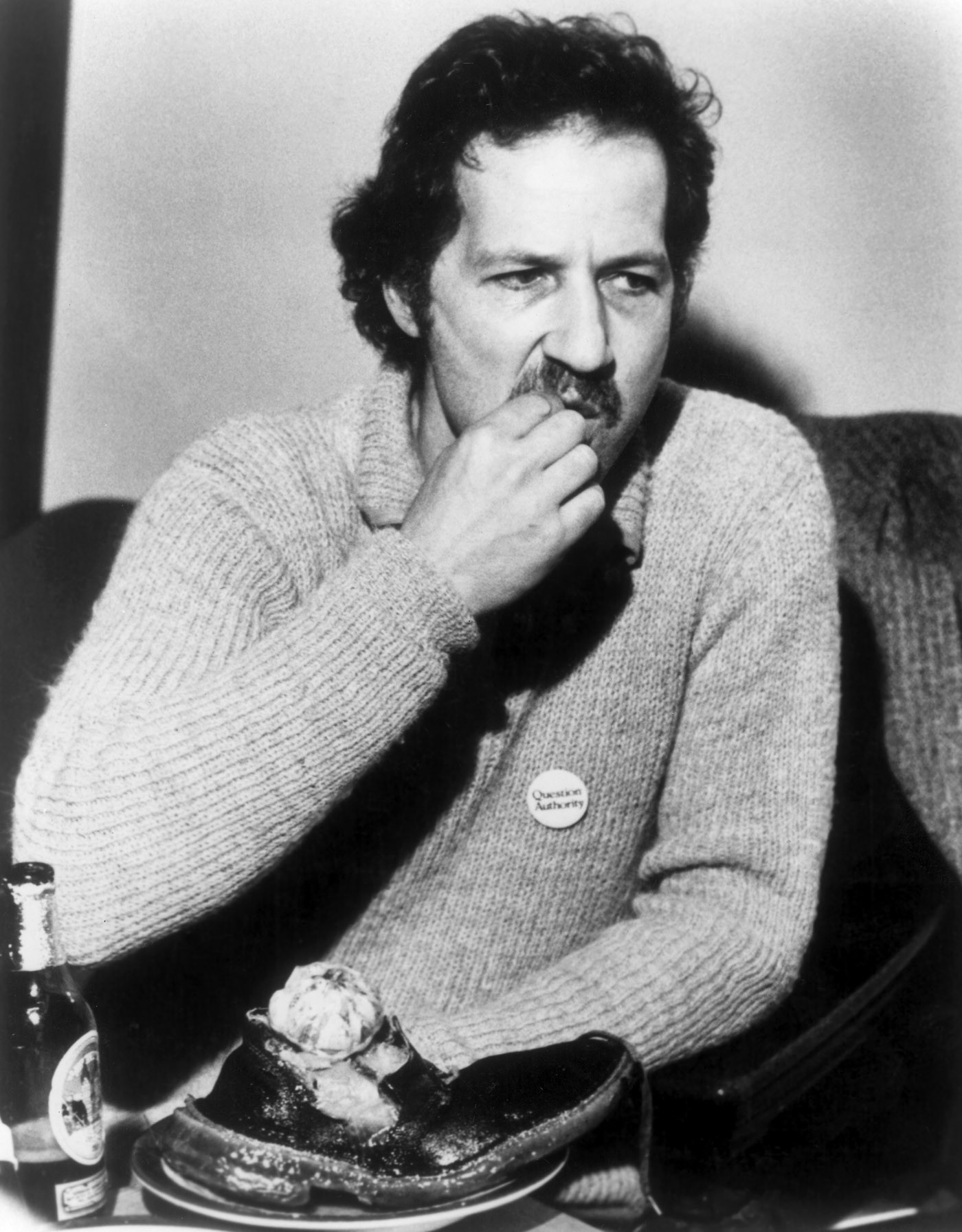
Werner Herzog, who turns 75 today, literally eats his shoe during the making of the Les Blank documentary Werner Herzog Eats His Shoe in 1979:

Mashup of the Day:

Pickle Rick from Rick and Morty is huge right now, enough that someone inserted him into Pixar’s Ratatouille (via Geek Tyrant):

[embedded content]

Movie Takedown of the Day:

After Jordan Vogt-Roberts slammed CinemaSins, it was only natural that Honest Trailers have their fun with Kong: Skull Island — and then for Vogt-Roberts to join them in the fun::

[embedded content]

Cosplay of the Day:

Wonder Woman is a timeless superhero movie classic, and so are its fans (via Patty Jenkins):

I can save the day but you can save the world. The lovely @CosplayParents as Diana Prince and Steve Trevor. pic.twitter.com/dXbSFrYZKa

— Katie Y (@KatieBePhoto) September 3, 2017

Movie Food of the Day:

It’s back to school time, so it’s Back to School time with Binging with Babish and the hors d’oeuvres sandwich Rodney Dangerfield makes in the movie:

[embedded content]

Classic Trailer of the Day:

Today is the 70th anniversary of the release of Dark Passage starring Humphrey Bogart. Watch the original trailer for the classic film noir below.

[embedded content]

and

Let’s block ads! (Why?)


No Image

Chastened Lawmakers Aim For Small, Bipartisan Health Care Victories

Sen. Lamar Alexander, R-Tenn., is working with Patty Murray, D-Wash. on a bill to stabilize the health insurance market.

Zach Gibson/Getty Images

hide caption

toggle caption

Zach Gibson/Getty Images

After Republicans in the Senate spectacularly failed to deliver on their promise to repeal and replace the Affordable Care Act, also known as Obamacare, a smaller group of lawmakers is trying a new approach: bring in the Democrats and aim low.

It starts Wednesday when the Senate Health, Education, Labor and Pensions Committee holds the first of four hearings over two weeks with the goal of passing a modest bill to help stabilize the Obamacare health insurance markets for 2018.

Committee Chairman Lamar Alexander, R-Tenn., says he’s looking to do something “small, bipartisan and balanced.”

What’s remarkable is that he made that statement in a joint press release last month with the committee’s ranking Democrat, Sen. Patty Murray, D-Wash.

Up until recently, all major Republican efforts to alter Obamacare were launched with no Democratic support, and no attempts to get any.

Alexander and Murray say they want to work first to stabilize the markets for next year and then perhaps move on to broad reforms that will attract more insurance companies to compete in the individual markets, potentially making prices lower for consumers.

They’ve got a short window. Insurance companies have until Sept. 27 to sign contracts committing them to offering health plans on the Affordable Care Act exchanges next year, and setting their prices.

Alexander says his priorities include getting Congress to commit to funding so-called cost-sharing subsidies – payments that reimburse insurance companies for giving their lowest-income customers discounts on deductibles and co-payments.

President Trump has threatened to end the payments, and has refused to even say whether the government will make them for the final four months of this year.

“State insurance commissioners have warned that abrupt cancellation of cost-sharing subsidies would cause premiums, copays and deductibles to increase and more insurance companies to leave the markets in 2018,” Alexander said in a statement last month. “Congress now should pass balanced, bipartisan, limited legislation in September that will fund cost-sharing payments for 2018.”

He also wants the federal government to make it easier for states to get waivers so they can implement health policies that differ from Obamacare.

Wednesday’s hearing will feature insurance commissioners from four states, including Julie Mix McPeak from Alexander’s home state of Tennessee. She’s called for assurances that the payments will continue.

“When there’s any uncertainty surrounding the continuation of those payments, the insurers are doing two things. They are raising premium rates for 2018 and they’re making decisions about whether or not to participate in the individual exchange markets across the nation,” McPeak told NPR’s Ari Shapiro in August.

On Thursday, governors from four states will testify. They include John Hickenlooper of Colorado, who together with Gov. John Kasich of Ohio recently proposed their own bipartisan plan to overhaul the insurance markets.

Their plan includes creating a two-year reinsurance fund to protect insurers from people who have severe illnesses and make big claims. It would also exempt insurance companies from certain taxes if they enter a market in which there’s little to no competition.

The governors’ plan also advocates maintaining the so-called individual mandate, which requires everyone to own health coverage or pay a fine. That mandate is one of the most hated elements of Obamacare among republicans and President Trump has suggested that his administration will make little effort to enforce it.

Hickenlooper and Kasich laid out their plan last week in a letter to congressional leaders that was signed by the Republican and Democratic governors of eight states, including Gov. Brian Sandoval of Nevada. By signing on to this proposal, Sandoval, a popular Republican, seems to be indicating he will not support the new health plan proposed by his fellow Nevadan, Sen. Dean Heller.

Throughout the late spring and summer, insurance companies filed plans with the federal government that included proposed premiums for the health insurance plans they intend to offer in 2018. Many said they were raising rates because they weren’t certain the Obama administration would enforce the individual mandate or pay the cost-sharing subsidies.

An analysis by the consulting firm Oliver Wyman suggest that by taking action to stabilize the market, lawmakers could boost enrollment by two million people while cutting prices.

HELP isn’t the only Senate committee pursuing the bipartisan approach. Finance Committee leaders Orrin Hatch, R-Utah, and Ron Wyden, D-Ore., are planning two hearings in the next two weeks on insurance markets and the Children’s Health Insurance Program.

Let’s block ads! (Why?)


No Image

New CEO Richard Anderson Outlines His Vision For Amtrak

NPR’s Robert Siegel interviews Richard Anderson, former head of Delta Airlines, who has been recruited to lead Amtrak during a period of major renovations.

ROBERT SIEGEL, HOST:

When we heard here in the past from Richard Anderson, he was CEO of a venerable and very successful American company, Delta Airlines. His new employer is a little different. He is now co-CEO. And next year, he’ll become the sole CEO of Amtrak, a company that is often modified by words like ailing and troubled. Richard Anderson joins us from, appropriately, Penn Station on Manhattan’s West Side. Thanks for joining us once again.

RICHARD ANDERSON: Thank you, Robert. It’s nice to speak with you again.

SIEGEL: When we say Amtrak is ailing, we mean the infrastructure is old. It doesn’t have the high-speed rail lines that other industrialized countries have. Is Amtrak fixable at its current size and with a billion dollars of annual net loss?

ANDERSON: First it’s not a completely fair characterization to say that Amtrak is broken because it’s really not. It provides very reliable service to over 30 million people a year. Now, it is true we do not, except for Acela, to have high-speed rail. That’s a choice we’ve made in the United States, a choice that’s been different in some of the European countries and countries like Japan and China.

SIEGEL: Was that really a good decision, or was it just an inability to make a decision in favor of high-speed rail?

ANDERSON: Well, we have made the decision with respect to the Acela service between Washington, D.C., New York and Boston. And Amtrak is soon to operate 20 next-gen, high-speed trains in the corridor.

SIEGEL: Although, I think I can hear some listeners hearing you say, wait a minute. I’ve been on some fast trains in France or Japan. And the Acela might be able to go fast, but it only knocks about a quarter of an hour off the ride between Washington and New York. It just doesn’t seem to be comparable to what other countries have done.

ANDERSON: Well, it isn’t. But that doesn’t mean we can’t take the infrastructure that we have and improve our track speeds, where we offer a product that’s competitive with cars and buses because that’s really, in some sense, what we compete against.

SIEGEL: I’m curious about your transition from Delta to Amtrak. When you were at the airline, you were CEO of a company that did very well. You made some very interesting strategic decisions. Does being CEO of Amtrak provide an opportunity for executive decisions like those, or is it more about day-to-day management and persuading the government to do more to continue support of the system?

ANDERSON: It’s really all of the above. It’s the opportunity to make decisions that will improve the accessibility for urban areas around the U.S.

SIEGEL: You’ve spoken of serving cities and urban areas. I mean, are you saying, in effect – perhaps this is – the deed’s been done already – that real, long-range intercity train travel is finished. We’re talking about much shorter-range train trips.

ANDERSON: Well, when you say long range, Amtrak long range means over 750 miles. And where we see the most growth over the last couple of decades has been in routes under 750 miles, like Milwaukee to Chicago, Detroit to Chicago, San Francisco to Los Angeles down the coast. When you think about infrastructure in the U.S., we have become a very urbanized society – less reliance on automobiles, more reliance on public transportation. There’s an important role for Amtrak to play. And that’s actually been one of the fastest-growing parts of this business and represents over half of Amtrak’s passenger traffic annually.

SIEGEL: You know, Mr. Anderson, finally, I realize I have the opportunity to put this to the CEO of Amtrak, which has been bugging me now for for years and years and years. When I take the train from Washington to New York and back, in Washington, it tells me what gate the train is leaving at. I go there. I sit. And then I get in line. And we board the train in an orderly fashion.

When I come back from New York, the track that the train will be on is only announced moments before boarding. And there’s a mass scramble of dozens, if not hundreds of people, to get in front of the right stairs at Penn Station, where you’re speaking to us. Can Amtrak fix the way people board their trains in Penn Station one of these days?

ANDERSON: I have my assignment from you, Robert.

SIEGEL: (Laughter). I’ll hold you to it.

ANDERSON: OK.

SIEGEL: Richard Anderson – for now, co-CEO of Amtrak. Thanks for talking with us.

ANDERSON: Thanks.

Copyright © 2017 NPR. All rights reserved. Visit our website terms of use and permissions pages at www.npr.org for further information.

NPR transcripts are created on a rush deadline by Verb8tm, Inc., an NPR contractor, and produced using a proprietary transcription process developed with NPR. This text may not be in its final form and may be updated or revised in the future. Accuracy and availability may vary. The authoritative record of NPR’s programming is the audio record.

Let’s block ads! (Why?)


No Image

Houston Rockets Set To Get A New Owner: Local Billionaire Tilman Fertitta

Tilman Fertitta, seen here at a television premier last year in Universal City, Calif. A native Texan, Fertitta owns the Houston-based restaurant chain Landry’s, Inc. And now he is set to own the Houston Rockets, too.

Michael Boardman/Getty Images

hide caption

toggle caption

Michael Boardman/Getty Images

The Houston Rockets announced Tuesday the franchise has been sold to a local and longtime fan, Tilman Fertitta. The billionaire businessman, sole owner of the Landry’s restaurant empire and Golden Nugget Casinos and Hotels, now becomes sole owner of the Rockets as well — pending approval from the NBA’s Board of Governors.

“I am truly honored to have been chosen as the next owner of the Houston Rockets,” Fertitta said in a statement released Tuesday by the team. “This is a life-long dream come true.”

It is an honor to be a part of the @NBA. I look forward to serving the city of #Houston and continuing the success of @HoustonRockets. pic.twitter.com/1RE6vbj8j1

— Tilman Fertitta (@TilmanJFertitta) September 5, 2017

The terms of the sale have not been released officially by the team, but ESPN and USA Today, citing unnamed sources, both report the sale broke an NBA record at $2.2 billion. The agreement tops the 2014 purchase price of the LA Clippers — formerly the league’s most expensive — by roughly $200 million and significantly exceeds the team’s reported value, which according to Forbes rests at $1.65 billion.

CNBC columnist Eric Jackson notes that, all told, Fertitta is “spending 71% of his net worth on the Rockets.”

Steve Ballmer spent 6% of his net worth on the Clippers.

Tilman Fertitta is spending 71% of his net worth on the Rockets

— Eric Jackson (@ericjackson) September 5, 2017

Still, this purchase is also something of an act of devotion for the native of Galveston, Texas. Landry’s is headquartered in Houston, and as ESPN observes, Fertitta has had courtside seats to the Rockets for years. Indeed, he tried and failed to purchase the team the last time they were up for sale, losing out to Leslie Alexander, who bought the Rockets for $85 million in 1993.

Alexander says the two of them have stayed in touch since then.

“I am excited to welcome and pass the torch to Tilman. He is a Houstonian, business leader and committed to the success and excellence of the Rockets both on and off the basketball court,” Alexander said in the team’s statement. “I have personally known Tilman for over 24 years and don’t think I could have found anyone more capable of continuing the winning tradition of our Houston Rockets.”

In its release, the team acknowledged the poor timing of the announcement, coming as it does “amidst the aftermath of one of the biggest tragedies in the history of our great City.” But, the Houston Rockets were careful to note, negotiations for the team’s sale began in July, weeks before the storm’s landfall.

Let’s block ads! (Why?)


No Image

In Texas, Concerns About Damage To Flooded Toxic Waste Sites

Floodwater from last week’s storm ripped apart fences and flooded I-10. The San Jacinto Waste Pits Superfund site is just on the other side of the road.

Rebecca Hersher/NPR

hide caption

toggle caption

Rebecca Hersher/NPR

Updated at 8:15 p.m. ET

Officials are still trying to confirm whether Texas floodwaters have spread contamination from decades-old toxic waste sites, as water recedes and residents return to homes that, in some cases, were flooded with water that passed over known contaminated areas.

The Environmental Protection Agency says 13 Superfund sites were flooded and potentially damaged by Hurricane Harvey. In addition to two sites determined to be undamaged over the weekend, the EPA said Monday that personnel had inspected the Highland Acid Pit, U.S. Oil Recovery and the San Jacinto Waste Pits, but did not announce results of those inspections.

The agency said earlier in the day it had not been able to inspect eight other sites yet: Bailey Waste Disposal, French LTD, Geneva Industries/Fuhrmann Energy, Gulfco Marine Maintenance, Malone Services, Patrick Bayou, Petro-Chemical Systems and Triangle Chemical.

EPA spokesperson Liz Bowman wrote in a statement on Monday, “EPA teams are in place to investigate possible damage to these sites as soon flood waters recede, and personnel are able to safely access the sites.” NPR found little or no water left around three of the remaining sites on Sunday.

In a separate statement, the EPA also said it had done initial aerial assessments of 41 Superfund sites.

A sign along the San Jacinto River warns against eating fish or shellfish from the river. A nearby site that has been a source of toxins was flooded by Hurricane Harvey.

Rebecca Hersher/NPR

hide caption

toggle caption

Rebecca Hersher/NPR

‘That site started sinking into the river’

The San Jacinto Waste Pits are located in the middle of the San Jacinto River about 20 minutes from downtown Houston, adjacent to Interstate 10. It is made up of two main pits, was used as a dumping area for toxic waste from a paper mill in the 1960s, and is heavily contaminated with chemicals called dioxins, according to the EPA.

“This was just an open pit on the edge of the San Jacinto River,” says Scott Jones of the Galveston Bay Foundation, a nonprofit group that works with state and federal agencies on waterway cleanup efforts in the region. He says a bad location for waste disposal was made worse by groundwater pumping over the years. “That site started sinking into the river, so probably since the mid-’70s about half that pit has been permanently underwater. So all those years that dioxin can get out into the water.”

The site was added to the National Priorities List of Superfund sites in 2008, after the EPA found the area around the pits was contaminated with both dioxins and furans. The Texas Parks and Wildlife Department warns people should not eat fish and crabs from the area because the animals may be contaminated.

Jones, who used to work for the Texas Commission on Environmental Quality, says he’s been generally happy with the EPA’s handling of the site, but wishes the entire process moved more quickly, given the dangers to wildlife and humans who live in the area.

“With all of our government agencies, whether it’s federal or state, we don’t put enough money into [them],” he says. The Texas Commission on Environmental Quality did not return requests for comment.

In 2011, the pits full of toxic soil and sand were temporarily capped with a liner held in place with large rocks, and last year the EPA announced it was taking public comments on a proposed plan to remove 152,000 cubic yards of contaminated material from the site. The agency was still reviewing those comments when last week’s storm hit.

‘I don’t trust it’

The Highlands Acid Pit Superfund site remained flooded on August 31. The water has since receded, and some residents are concerned that toxins from the site could have spread into the nearby neighborhood.

Jason Dearen/AP

hide caption

toggle caption

Jason Dearen/AP

Residents who live near multiple Superfund sites in the Houston area say they haven’t heard from EPA or TCEQ officials, and some are concerned that the mud left behind by flooding could be dangerous.

Barbara and Ellen Luke grew up a few blocks from the Highland Acid Pit, which was contaminated with industrial sludge thought to contain sulfuric acid in the 1950s.

“We always walked down there and messed around,” says Barbara. Her 73-year-old mother still lives in the family home, which had 2 feet of water in it at the height of the floods last week. On Sunday, the sisters set fire in the front yard to whatever waterlogged belongings would burn. Both women said they are skeptical of any official who tells them the area is safe.

“I don’t trust it,” says Barbara. “I mean that is probably something that will forever affect the environment. I don’t see how you can get rid of that.”

Up the street, Adolfo Peralta says the water was 12 feet high in his yard. His home, he says, is destroyed. He’d like to repair it, but his wife would like them to move, in part because she’s concerned about contamination. He’s hoping someone from the government will be able to tell him definitively that the water and soil on his property are safe in the coming weeks.

Another neighbor, Dwight Chandler, is repairing a home that’s been in his family since 1942. “I grew up in that acid pit,” he says. “Played in it my whole life. That’s my cousin. He was raised here, played in it. Ain’t affected us, you know?” His cousin nods in agreement from across the room.

It’s always difficult to tie any particular health outcome to contamination, or lack of it. Studies have found significantly higher rates of cancer and respiratory illness among those living along the Houston Ship Channel and San Jacinto River.

Chandler says he welcomes testing for toxins in the neighborhood. It can’t hurt. But he’s not waiting for it; he’s rebuilding now.

Let’s block ads! (Why?)


No Image

Scanning The Future, Radiologists See Their Jobs At Risk

These days, a radiologist at UCSF will go through anywhere from 20 to 100 scans a day, and each scan can have thousands of images to review.

xijian/iStockphoto

hide caption

toggle caption

xijian/iStockphoto

In health care, you could say radiologists have typically had a pretty sweet deal. They make, on average, around $400,000 a year — nearly double what a family doctor makes — and often have less grueling hours. But if you talk with radiologists in training at the University of California, San Francisco, it quickly becomes clear that the once-certaingolden path is no longer so secure.

“The biggest concern is that we could be replaced by machines,” says Phelps Kelley, a fourth-year radiology fellow. He’s sitting inside a dimly lit reading room, looking at digital images from the CT scan of a patient’s chest, trying to figure out why he’s short of breath.

Because MRI and CT scans are now routine procedures and all the data can be stored digitally, the number of images radiologists have to assess has risen dramatically. These days, a radiologist at UCSF will go through anywhere from 20 to 100 scans a day, and each scan can have thousands of images to review.

“Radiology has become commoditized over the years,” Kelley says. “People don’t want interaction with a radiologist, they just want a piece of paper that says what the CT shows.”

Dr. Marc Kohli says that radiologists should embrace artificial intelligence.

Courtesy of Christopher Jovais

hide caption

toggle caption

Courtesy of Christopher Jovais

‘Computers are awfully good at seeing patterns’

That basic analysis is something he predicts computers will be able to do.

Dr. Bob Wachter, an internist at UCSF and author of The Digital Doctor, says radiology is particularly amenable to takeover by artificial intelligence like machine learning.

“Radiology, at its core, is now a human being, based on learning and his or her own experience, looking at a collection of digital dots and a digital pattern and saying ‘That pattern looks like cancer or looks like tuberculosis or looks like pneumonia,’ ” he says. “Computers are awfully good at seeing patterns.”

Just think about how Facebook software can identify your face in a group photo, or Google’s can recognize a stop sign. Big tech companies are betting the same machine learning process — training a computer by feeding it thousands of images — could make it possible for an algorithm to diagnose heart disease or strokes faster and cheaper than a human can.

UCSF radiologist Dr. Marc Kohli says there is plenty of angst among radiologists today.

“You can’t walk through any of our meetings without hearing people talk about machine learning,” Kohli says.

Both Kohli and his colleague Dr. John Mongan are researching ways to use artificial intelligence in radiology. As part of a UCSF collaboration with GE, Mongan is helping teach machines to distinguish between normal and abnormal chest X-rays so doctors can prioritize patients with life-threatening conditions. He says the people most fearful about AI understand the least about it. From his office just north of Silicon Valley, he compares the climate to that of the dot-com bubble.

“People were sure about the way things were going to go,” Mongan says. “Webvan had billions of dollars and was going to put all the groceries out of business. There’s still a Safeway half a mile from my house. But at the same time, it wasn’t all hype.”

‘You need them working together’

The reality is this: dozens of companies, including IBM, Google and GE, are racing to develop formulas that could one day make diagnoses from medical images. It’s not an easy task: to write the complex problem-solving formulas, developers need access to a tremendous amount of health data.

Health care companies like vRad, which has radiologists analyzing 7 million scans a year, provide data to partners that develop medical algorithms.

The data has been used to “create algorithms to detect the risk of acute strokes and hemorrhages” and help off-site radiologists prioritize their work, says Dr. Benjamin Strong, chief medical officer at vRad.

Zebra Medical Vision, an Israeli company, provides algorithms to hospitals across the U.S. that help radiologists predict disease. Chief Medical Officer Eldad Elnekave says computers can detect diseases from images better than humans because they can multitask — say, look for appendicitis while also checking for low bone density.

Radiologist John Mongan is researching ways to use artificial intelligence in radiology.

Courtesy of Mark Kohli

hide caption

toggle caption

Courtesy of Mark Kohli

“The radiologist can’t make 30 diagnoses for every study. But the evidence is there, the information is in the pixels,” Elnekave says.

Still, UCSF’s Mongan isn’t worried about losing his job.

“When we’re talking about the machines doing things radiologists can’t do, we’re not talking about a machine where you can just drop an MRI in it and walk away and the answer gets spit out better than a radiologist,” he says. “A CT does things better than a radiologist. But that CT scanner by itself doesn’t do much good. You need them working together.”

In the short term, Mongan is excited algorithms could help him prioritize patients and make sure he doesn’t miss something. Long term, he says radiologists will spend less time looking at images and more time selecting algorithms and interpreting results.

Kohli says in addition to embracing artificial intelligence, radiologists need to make themselves more visible by coming out of those dimly lit reading rooms.

“We’re largely hidden from the patients,” Kohli says. “We’re nearly completely invisible, with the exception of my name shows up on a bill, which is a problem.”

Wachter believes increasing collaboration between radiologists and doctors is also critical.

“At UCSF, we’re having conversations about [radiologists] coming out of their room and working with us. The more they can become real consultants, I think that will help,” he says.

Kelley, the radiology fellow, says young radiologists who don’t shy away from AI will have a far more certain future. His analogy? Uber and the taxi business.

“If the taxi industry had invested in ride-hailing apps maybe they wouldn’t be going out of business and Uber wouldn’t be taking them over,” Kelley says. “So if we can actually own [AI], then we can maybe benefit from it and not be wiped out by it.”

At least for now, Kelley offers what a computer can’t — a diagnosis with a face-to-face explanation.

Let’s block ads! (Why?)


No Image

High School Female Quarterback Throws Touchdown Pass In First Game

Holly Neher is a high school quarterback who threw a touchdown pass in her very first varsity game, and possibly the first female to throw a touchdown pass in a high school game in Florida.

MARY LOUISE KELLY, HOST:

Good morning. I’m Mary Louise Kelly with news of the high school quarterback who threw a touchdown pass in her very first varsity game. That’s right, her – Holly Neher, the first female quarterback for the Hollywood Hills Spartans in Florida may be the first female in state history to throw a touchdown pass in a game.

(SOUNDBITE OF ARCHIVED RECORDING)

KELLY: I was jumping up and down, said Holly. It felt amazing.

You go, girl.

Copyright © 2017 NPR. All rights reserved. Visit our website terms of use and permissions pages at www.npr.org for further information.

NPR transcripts are created on a rush deadline by Verb8tm, Inc., an NPR contractor, and produced using a proprietary transcription process developed with NPR. This text may not be in its final form and may be updated or revised in the future. Accuracy and availability may vary. The authoritative record of NPR’s programming is the audio record.

Let’s block ads! (Why?)


No Image

Blind USC Football Player Executes Perfect Snap In Game Debut

USC long snapper Jake Olson leads the Trojan Marching Band following a victorious game against Western Michigan on Saturday.

Mark J. Terrill/AP

hide caption

toggle caption

Mark J. Terrill/AP

Jake Olson cannot see but he felt his moment of triumph Saturday with absolute clarity.

The blind 20-year-old executed a perfect snap for an extra point in the last three minutes of the University of Southern California’s game against Western Michigan.

USC won 49-31.

As the ball sailed between the uprights, the stadium erupted in cheers. Olson’s teammates grabbed him in bear hugs.

PAT IS GOOD.

FORGET ROJO, JAKE OLSON IS THE PLAYER OF THE GAME!

— Reign of Troy (@ReignofTroy) September 3, 2017

“I just loved being out there. It was an awesome feeling, something that I will remember forever,” Olson said.

After USC’s Marvin Tell III returned an interception for a touchdown making the score 48-31, USC Coach Clay Helton turned to Olson and asked if he was ready to get in, reports ESPN.

Olson said he was ready.

A teammate helped guide him onto the field. He crouched into position and snapped the ball for the successful kick.

Watch the video of the play:

[embedded content]
YouTube

“What a pressure player,” Helton toldThe Los Angeles Times. “Is that not a perfect snap at that moment? It’s beyond words.”

The 6-foot-4 Olson said he couldn’t have done it alone.

“It’s an operation, from a holder just making sure I’m lined up straight and it just creates a lot of trust, you know.”

It has been a long journey for the junior from Orange County, Calif.

Olson has dedicated himself to two years of practice, making snaps during drills and in spring games, but Saturday was his first appearance in a live game.

Born with retinoblastoma, a cancer of the retina, Olson’s left eye was removed when he was a baby. By age 12, he knew he would also lose his right eye.

The day before his surgery, Olson spent the final evening he would ever be able to see beholding a USC practice, reports ESPN.

Having learned of his story, the team had adopted the boy as something of an honorary member, allowing him to run with them through the stadium tunnel, walk the sidelines during games and give locker room pep talks, reports USC News.

This is anything but a regular PAT.

Jake Olson, blind since age 12, just snapped for the first time in a live game. https://t.co/amyHcFoVue

— Pac-12 Network (@Pac12Network) September 3, 2017

But Olson didn’t know he that he could get off the sidelines and play until he learned about long snapping.

“It kind of clicked in my mind that it is a consistent position in that you’re snapping the same distance for every snap,” he told CNN. “You definitely have the mechanics of what you’re supposed to do, but a lot of it is just feel.”

He became a starting long snapper on his high school varsity team, reportsThe Los Angeles Times. And while he relied on teammates to guide him onto the field and help line up the ball, he earned respect as a solid player in his own right.

“We didn’t see him as a blind person,” teammate Jerry Fitschen told the newspaper. “We saw him as a football player.”

Hell YEEEEAAAAHHH. If you don’t know #JakeOlson then ya betta ask somebody. Without Sight, NOT without Vision! So proud of you @JakeOlson61https://t.co/mD30V66i0Z

— Nate Boyer (@NateBoyer37) September 3, 2017

It helped earn him a scholarship to USC. In 2015, the year Olson was accepted to the university, coach Steve Sarkisian told the LA Times:

“Someday, he’s going to snap in a game for us,” Sarkisian said. “When? I don’t know. But it will happen.”

“When that day comes, it will be awesome.”

Let’s block ads! (Why?)


No Image

On Capitol Hill, 'See You in September' Is A Refrain Without Romance

[embedded content]
NPR via YouTube

Some years back a hit song filled the summertime airwaves with its chorus of “See You In September.”

It was meant to be a lover’s promise of joyful reunion at summer’s end.

But to use those words in Washington, D.C., right now sounds more like a warning … or even a threat.

That’s because when Congress returns after Labor Day and official business resumes, the agenda will be heavy, the deadlines tight and the atmosphere fraught with potential fiscal disaster.

The end of the fiscal year comes on Sept. 30. That’s the deadline for the spending bills for the new fiscal year. And that homework didn’t get done before Congress left on its August recess.

Those spending bills really matter because without them the government starts to shut down on Oct. 1. We have seen this happen as recently as 2013, with substantial consequences and overwhelmingly negative public reaction.

Polls show the public is in no mood for a replay. Those polls held after President Trump in August said he wanted his Mexican border wall to be funded even if it triggered a shutdown crisis. Trump vowed that his signature issue, the wall, will be financed somewhere in the welter of legislation awaiting action this month and said he was willing to have a shutdown rather than see the wall abandoned. Since that threat was issued in late August, some reports have suggested he would not make good on it. But White House press secretary Sarah Huckabee Sanders insisted on Friday that Trump still meant the wall-or-shutdown ultimatum as stated.

But this is not just a crisis about future spending. It’s also about 200 years of accumulated debt to pay for past spending. The federal government has reached (and breached) the ceiling Congress most recently placed on its authority to borrow money — the number people call the “debt limit.”

The debt limit matters because in a few weeks the Department of Treasury will exhaust its delaying tactics and be unable to issue new debt. Without new debt to pay off old bonds and other obligations coming due, Treasury says it would have to default.

What would happen then? The U.S. has never defaulted, so we don’t know for certain. But the general consensus among economists and investors is that bad things would happen. Very bad things. More about this in a moment.

First, we should note that Congress also has other urgent items to attend to in September. By far the most pressing will be the emergency measures to help the people of Houston and East Texas who have been devastated by Harvey, a historic storm.

The Trump administration has asked for nearly $8 billion in emergency funding, a down payment on an aid package that many expect to reach $100 billion or more. That will be a lot for fiscal conservatives to swallow, especially if no offsetting cuts to other kinds of spending can be enacted.

The September Congress also has a deadline looming for the reauthorizing of the Federal Aviation Administration, one of those pillars of government service people take for granted most of the time.

Congress has been delaying this particular chore because of deep disagreements about the mix of private and public authority involved in American air travel. Not all of that conflict will be resolved in the coming days, but deals must be struck to keep the nation’s commercial air traffic in the air.

But back to the fiscal collision one White House official has called “brutal.” What do we really have to worry about in all this? Can’t Congress just get down to business and get this stuff done?

Everyone wants to move on to President Trump’s grander wish list, including an infrastructure bill (jobs and projects galore) and the rewriting of the tax laws (which is assumed to include some sweet tax cuts for businesses and individuals alike).

But right now those issues look like dessert. First, Congress has to clean its plate.

The first forkful should probably be a budget resolution. This is useful not only to guide the spending process, but to set up the debate on taxes. Without a budget resolution, Senate Republican leaders would not be able to rule out filibusters when they got around to considering a tax overhaul. That means they would need 60 votes instead of 50 to prevail. (And on health care recently, they could not even get 50.)

How hard is it to pass a dozen spending bills for programs people generally want to have funded? Harder than you think. Parts of Congress have been working on just this problem all year without making much headway.

The House did manage to pass four of its 12 spending bills before going on August recess. But the Senate has neither taken up these four House offerings, nor passed any of its own. Zero.

So let’s do the math. We need eight more spending measures from the House and a dozen from the Senate. Then all those bills would need to be mashed up in conference committees between the two chambers. The results would still need to pass both chambers and be signed by President Trump.

Sure, deadlines make a difference. But they don’t make disagreements and partisan blood feuds disappear. So…happen overnight… this will not.

You might take solace in the fact that Congress still has almost a month to get all this done. Except that leadership has only scheduled a dozen legislative working days in September. So, right now it seems a safe bet we will need that old reliable tool from the days of divided government. It’s known as a “continuing resolution,” and it will keep the government operating past Oct. 1. We will probably need more than one CR before it all gets done.

That would at least forestall the prospect of a shutdown over spending. But the greater threat at this point might be coming from that other problem: the debt limit and the specter of default.

Default is different from shutdown. We have survived shutdowns several times, in part by exempting such essentials as the military, emergency relief such as for Harvey, air traffic control and meat inspection.

But default is unknown territory. It’s never happened. That may make some people say: “Let’s try it.” But those might not be the people you want to trust with your life savings.

If Treasury defaults on U.S. obligations, the reliance on the dollar and on U.S. debt instruments as the ultimate safe haven for creditors and investors all over the world would be at risk. Credit markets would absorb the worst shock since the crisis of 2008 that triggered the worst recession since the 1930s.

At a minimum, the cost of borrowing more money in the future would go up. Probably by a lot. And those higher interest costs would add more to the annual deficit, and the national debt.

That is why default is usually not even discussed and why the debt limit must be raised.

Congress first imposed the debt limit 100 years ago to mollify anti-debt (and anti-war) elements among its members as the U.S. entered World War I. The idea was to tell Uncle Sam he could go a billion into debt to defeat the enemy, but no more.

That amount seems laughable now. The limit has been lifted many times since, by ever escalating amounts. The current U.S. debt stands at about $20 trillion. Even in the current low-interest rate environment, paying the interest on the debt is one of the larger items in the federal budget — after things like defense and security, Social Security, the major federal health insurance programs and safety net programs.

And of course, many Republicans in Congress have campaigned on slashing federal spending and reducing the federal debt without raising taxes. Many have said they will not vote for a debt limit increase ever. Others say they won’t support one without deep spending cuts attached.

Yet the debt limit must be raised. House Speaker Paul Ryan, R-Wis., and Senate Majority Leader Mitch McConnell, R-Ky., have said they will do so, knowing they cannot make good on their pledge without Democratic help. In the House, especially, Ryan will probably need quite a few Democratic votes to make up for the defections in GOP ranks. Will the Democrats do it? Yes, but at a price steep enough to make the Republicans blanch.

Can Ryan find the sweet spot where he cuts enough spending to get enough Republicans but not so much as to sacrifice his slice of the Democrats?

The Trump administration has called for a clean debt limit bill, meaning a substantial increase in the debt limit with no changes to spending or taxes or anything else. Some may want Trump to attach his border wall to the debt limit. But the inner circle of his financial and economic advisers — such as Wall Street alumni Steve Mnuchin and Gary Cohn — regard this as anathema.

Will they prevail? Will the votes be there? If not, as Treasury’s cash flow peters out, one solution could be to shut down parts of the government.

Some conservatives have argued that a partial shutdown would save enough money to enable the Treasury to meet obligations coming due — rather than default. But Treasury officials see it differently. They say the day is coming when default will be real.

Which is one more big reason why “see you in September” now means that a day of reckoning has arrived.

Let’s block ads! (Why?)