Articles by admin

No Image

Episode 793: This Week in Time Bombs

This week, for Congress, time is running out. It's like the TV show 24...but with sub-committee hearings and continuing budget resolutions.

Renee Klahr, NPR

We returned from vacation this week and it felt like the world as we know it was about to end.

We’re not talking about nuclear war or natural disasters. (Although there is that, too.) We’re talking about the approaching economic abyss. Amid the hustle and bustle of the summer, Congress has somehow neglected to perform the basic job of passing essential legislation that keeps the U.S. economy going.

For instance, the fiscal year for the United States of America ends this month, and somebody (we’re looking at you, Congress) has not yet written a new budget.

Here’s something else they didn’t do: Our government needs to raise the debt ceiling to pay the bills that it has promised to pay, or else… the entire world economy will suffer. No joke. Nobody took care of that, either. And then there’s the DACA program—Deferred Action for Childhood Arrivals. For years, it’s fate has been uncertain because then-President Obama went around Congress to implement it. Now President Trump is rescinding DACA, but he’s giving Congress six months to come up with a replacement. That’s another ticking time bomb.

On today’s show, three time bombs: The debt ceiling, the federal budget, and DACA. All of these ticking clocks are of Congress’s making, and if any of them blows up, it could cause suffering around the nation and the world. The clock is ticking. But that might be just what Congress needs.

Music: “Bout That Live,” “Tik Tok,” and “Funeral Crown.” Find us: Twitter/ Facebook.

Let’s block ads! (Why?)


No Image

Using A Robotic Hand, She Wants To Throw Out The First Pitch For All 30 MLB Teams

Hailey Dawson throws out the opening pitch with her 3D printed hand before the game between the Washington Nationals and the Texas Rangers at Nationals Park in June.

Greg Fiume/Getty Images

hide caption

toggle caption

Greg Fiume/Getty Images

Hailey Dawson’s favorite thing to do is throw out the first pitch at a baseball game, and thanks to a majority of all the MLB teams, she’s going to be doing quite a bit of that in the future.

The first pitch seven-year-old Hailey threw out was at a University of Nevada, Las Vegas Rebels game. The UNLV engineering department had made it possible.

At the request of Hailey’s mother, Yong, a group of researchers and students took on the challenge to create a 3D printed prosthetic hand for Hailey. As a result of being born with Poland syndrome, which leaves a pectoral muscle and other parts of the affected side underdeveloped, Hailey was born with a right palm, but not all of her fingers on that hand. The prosthetic hand the university created allows her to grasp objects, like a baseball.

In 2015, Yong told theMid-Atlantic Sports Network that after throwing out the first pitch for the Rebels team, Hailey said she wanted to throw out the first pitch for the Orioles, the family’s favorite team.

[embedded content]
YouTube

“She just loves throwing that ball out and when she did it for UNLV it was amazing and she just hammed it up big time,” Yong told MASN.

Yong said she was unsure of how to make her daughter’s wish happen, but then decided to send a letter with a request. It worked and on Aug. 17, 2015, Hailey threw the first pitch for the Orioles game to her favorite player, Manny Machado.

“For her to be able to have a hand to actually hold something, where in the past she’s never been able to, that’s amazing,” Yong said at the time.

Yong told MASN that the entire family enjoyed watching the UNLV team create the hand for Hailey.

“It was inspiring for me to watch the students when she first put that hand on and used it and what it meant to them,” Yong said in the interview with MASN. “Not just what it meant to us, but to them to actually build it for her and for her to actually hold something. And they loved it, and I loved it.”

Hailey’s pitching didn’t stop in Baltimore. She went on to throw out the first pitch for a Washington Nationals game in this June, after meeting Bryce Harper in Las Vegas and asking him if he could arrange for her to visit the park in Washington, D.C.

After she showed her pitching skills at the Nationals game, Bleacher Report produced a video about Hailey’s story that got the attention of even more teams. Hailey’s goal is to throw out the first pitch for all 30 MLB teams and as of Friday afternoon, Yong says 24 more teams have responded on Twitter saying they would love to have Hailey come for a game.

7-year-old Hailey Dawson wants to throw out the first pitch at every MLB ballpark with her 3-D printed hand pic.twitter.com/onStqhEzyB

— Bleacher Report (@BleacherReport) September 7, 2017

In total, Hailey has seven different hands, including the custom ones she wore to the Orioles and Nationals games where she got to hang out with some of her favorite players, who she now refers to as her “buddies.”

“She likes to get her hands signed, so now every time she gets a new hand she likes to get it signed by someone,” Yong says.

While Hailey is having a good time meeting some of her favorite players, Yong says she’s glad this is also raising awareness for Poland syndrome and how accessible and affordable it is to get a 3D printed prosthetic. The robotic hand has also been a confidence boost for Hailey, who was once shy.

“It was initially a functional thing for her … to be able to ride a bike and for safety issues, but it eventually became a social confidence thing,” Yong says. “Because when she puts it on everybody wants to see it, everybody want to touch it and everybody wants to be around her.”

Because school just started and baseball season is closing out, Yong says the family will probably wait until next season to start visiting a lot of teams — but they could make an exception, say, for a World Series game.

Let’s block ads! (Why?)


No Image

Dental Schools Add An Urgent Lesson: Think Twice About Prescribing Opioids

Dentists are among the larger prescribers of opioid painkillers. They’re trying to change that.

PureRadiancePhoto/Getty Images

hide caption

toggle caption

PureRadiancePhoto/Getty Images

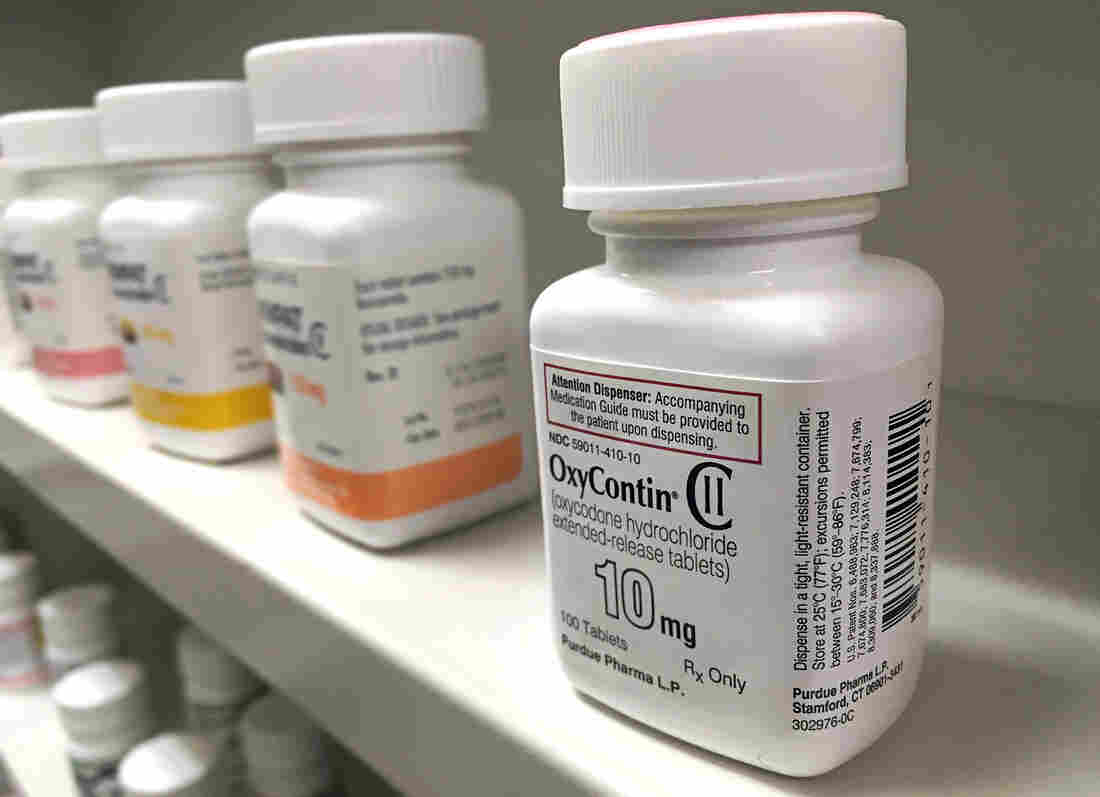
The opioid epidemic has been fueled by soaring numbers of prescriptions written for pain medication. And often, those prescriptions are written by dentists.

“We’re in the pain business,” says Paul Moore, a dentist and pharmacologist at University of Pittsburgh School of Dental Medicine. “People come to see us when they’re in pain. Or after we’ve treated them, they leave in pain.”

Indeed, 12 percent of prescriptions for immediate-release opioids are written by dentists. In 2012, dentists ranked fourth among medical specialties for their opioid prescribing rates, according to data from QuintilesIMS. It has made dentists targets for people “doctor shopping” in order to get opioids.

Loading…

“I have dentures,” said Shawn Bishop, who is recovering from an opioid addiction at Hope House, a treatment center in Boston. “I had went to get some legitimate work done. And I got some Percocet. I realized that by going to another dentist, I could get some more Percocets.”

Bishop, now 59, recounts the times he teamed up with others to play dentists for their opioid pills.

“He would look at our teeth or Mark’s teeth in particular,” Bishop said. “He would look at his teeth and say, ‘Yeah, we need to take this one, this one, and this one.’ And Mark will always say well, ‘I can’t do it today. Can we make an appointment for next week?’ And then the doctor will say, ‘Yeah, I need to write a prescription of Percocets.’ He kept bad teeth and toothaches just so he can do that, you know?”

For Bishop and his friends, the enterprise of getting opioid pain pills from dentists grew so routine that, he says, he became a professional at it.

“It was almost like they knew their part to play and we knew ours,” he said. “It was like actors in a little sketch there.”

Massachusetts has taken the lead in trying to reduce opioid prescription abuse. Last year, Gov. Charlie Baker’s office passed a law to prevent drug misuse. Dental schools in the state are also required to teach a set of core competencies that their students are required to meet before graduating. Students will have to demonstrate that they know how to consider nonopioid treatment options.

“At least at the medical school, the dental school, nursing school and pharmacy school level, you don’t graduate from those places without having studied this stuff and understanding both the positives and the negatives associated with using it,” Baker says. “In addition to that, making sure as a condition of relicensure, you’re getting everyone who is writing prescriptions as part of that process.”

Now, after decades of criticizing health care providers for undertreating pain and not prescribing enough pain medication, the pendulum is swinging back. Some dentists are getting back up to speed about alternatives to opioids.

“For most dental pains, the nonsteroidal anti-inflammatory drugs (NSAIDS) —that’s Advil, Aleve, Naproxen — those agents are every bit as effective as one Vicodin or one Percocet,” Moore says. “That’s been shown over and over and over again.”

Third-year students at the Harvard School of Dental Medicine learn how to trim crowns and prep a tooth for a crown. They’re also learning to deal with the aftereffects, studying alternatives to opioids for pain relief.

Jessica Cheung/NPR

hide caption

toggle caption

Jessica Cheung/NPR

This next generation of dentists is not only learning about how to prescribe opioids appropriately, but also about how to think about pain differently. At the Harvard School of Dental Medicine, students are learning how to approach pain, a world away from opioids.

“You can approach it from opioid therapy, you can approach it from different neuropathy drugs, you can approach from stretching exercises to meditation,” says Kellie Moore, a fourth-year dental student at Harvard. “And just kind of like, exhausting all the options.”

Leaning on different methods of pain treatment can yield mixed success, she says: what works with one patient might not work for another.

Dental students are also rethinking what the goal of treating pain is.

“On a scale of 0 to 10, with 10 being the worst, if we can get you to a 4 or 5, could you live with that and still function daily?” says Sam Lee, a fourth-year dental student. “If the answer is yes, then I think it’s important to the patient understand that that’s what we’re going to try to maintain as the new normal for them.”

David Keith, an oral surgeon at Massachusetts General Hospital, agrees.

“I think it does us a disservice, making us and the patients assume that we should a total smiley face and a zero level of pain,” he said. “That’s not the real world. So we take a tooth out. We do a dental implant. You’re going to be sore for a few days, but that doesn’t mean you can’t go to work.”

Mannequin patients are stationed at the Harvard School of Dental Medicine’s Preclinical Lab, ready to have their teeth restored with crowns by a class of third-year dental students.

Jessica Cheung/NPR

hide caption

toggle caption

Jessica Cheung/NPR

The changing definition of pain is part of a larger change in the profession of dentistry. And Jeff Shaefer, an orofacial pain specialist who teaches at the Harvard School of Dental Medicine, says the role of the dentist is changing as a direct result of the opioid crisis.

“Dentistry is part of the problem and I think that hurts — that we’ve been overprescribing medication,” he says. “Having a standard regimen to give every patient is not appropriate.”

Nationally, the profession of dentistry is starting to change as well. This summer, the Commission on Dental Accreditation, which sets accreditation standards for all dental schools, ordered all graduates to be competent in accessing for substance use disorder.

But currently practicing dentists may not be so eager for a change to their profession. Keith, who regularly gives lectures to dentists in the state, has heard their complaints.

“There is a reluctance to add that, as there is reluctance to check blood pressure or check a list of medication their patients are on because it adds time to the day,” he said.

Let’s block ads! (Why?)


No Image

Today in Movie Culture: He-Man Meets 'Dirty Dancing,' The Fraud of 'Jurassic Park' and More

Here are a bunch of little bites to satisfy your hunger for movie culture:

Mashup of the Day:

He-Man and Skeletor perform the climactic dance from Dirty Dancing in this silly MoneySuperMarket commercial (via Geek Tyrant):

[embedded content]

Fan Theory of the Day:

Jurassic Park isn’t actually about the resurrection of dinosaurs but a fradulent amusement park. Cracked explores the wild theory:

[embedded content]

Dream Casting of the Day:

Priyanka Chopra has expressed interest in playing Batgirl in the DCEU. Fans want her to play Catwoman. BossLogic shows what the latter could look like:

Today’s #DailyPS@priyankachopra#Catwomanpic.twitter.com/iVXZTQWnqj

— BossLogic (@Bosslogic) September 7, 2017

Video Essay of the Day:

Every movie is about something, except Ghostbusters. That’s the point of the latest video essay by Patrick Willems:

[embedded content]

Poster Homage of the Day:

This week’s official Stranger Things poster pays tribute to the poster for Evil Dead:

The Ultimate Experience in Grueling Curiosity. #StrangerThursdays begins now. pic.twitter.com/x6c9NC0ZwL

— Stranger Things (@Stranger_Things) September 7, 2017

Movie Comparison of the Day:

With the new It hitting theaters tomorrow, Couch Tomato shows 24 reasons the old It miniseries has the same story as A Nightmare on Elm Street:

[embedded content]

Vintage Image of the Day:

Elia Kazan, who was born on this day in 1909, directs Marlon Brando on the set of 1954’s On the Waterfront:

Filmmaker in Focus:

Darren Aronofsky’s new movie, mother!, hits theaters next week so The Discarded Image showcases the obsessions of his characters:

[embedded content]

Cosplay of the Day:

Mineralblu’s video highlighting the best cosplay of Dragon Con 2017 includes fans inspired by Baby Driver, Wonder Woman, Wall-E, Star Wars and more:

[embedded content]

Classic Trailer of the Day:

This weekend is the 25th anniversary of the release of Sneakers. Watch the original trailer for the classic movie below.

[embedded content]

and

Let’s block ads! (Why?)


No Image

Hackers Accessed The Personal Data Of 143 Million People, Equifax Says

Equifax announced Thursday that its systems were hacked in May, exposing 143 million consumers’ personal information.

Mike Stewart/AP

hide caption

toggle caption

Mike Stewart/AP

Equifax, an international credit reporting agency, has announced that a cybersecurity breach exposed the personal information of 143 million U.S. consumers. In a statement released Thursday, the Atlanta-based agency acknowledged that “criminals exploited a U.S. website application vulnerability to gain access to certain files.”

Those files include data such as Social Security numbers, birthdates and addresses — and, Equifax adds, “in some instances, driver’s license numbers.”

For a span of roughly two months — from mid-May through July 29, when Equifax says it uncovered the breach — hackers had access to this information, as well as the credit card numbers of about 209,000 consumers and “certain dispute documents with personal identifying information” of about 182,000.

All told, the number of American consumers affected constitutes about 44 percent of the U.S. population.

Equifax did not explain why more than two months passed before it discovered the hack, which also affected an unspecified number of consumers from Canada and the U.K.

However, the agency is careful to note, it “has found no evidence of unauthorized activity on Equifax’s core consumer or commercial credit reporting databases.”

[embedded content]
YouTube

“This is clearly a disappointing event for our company, and one that strikes at the heart of who we are and what we do. I apologize to consumers and our business customers for the concern and frustration this causes,” said Chairman and CEO Richard F. Smith said in a statement.

Equifax handles the data of more than 820 million people and more than 91 million businesses worldwide, the agency says on its website, to transform “knowledge into insights that help make more informed business decisions.”

As gargantuan as the numbers may be, The New York Times points out this is not the largest data breach in history. That dubious distinction goes to Yahoo, which nearly a year ago announced that the personal information of at least 500 million people had been stolen. Just months later, the company said hackers stole data associated with more than 1 billion user accounts.

Equifax, for its part, says it has been in touch with law enforcement and that it has set up a website for consumers to determine whether they have been affected by the breach announced Thursday. It has also set up a call center at 866-447-7559 for the same purpose.

Let’s block ads! (Why?)


No Image

Governors Sound Off On How To Fix Health Insurance

Governors from left; Bill Haslam of Tennessee, Steve Bullock of Montana, Charlie Baker of Massachusetts, John Hickenlooper of Colorado and Gary Herbert of Utah all testified Thursday about ways t improve the ACA.

Jose Luis Magana/AP

hide caption

toggle caption

Jose Luis Magana/AP

The Senate is again trying to tackle the politics of health care. Rather than going for sweeping changes, lawmakers are acting more like handymen this time, looking for tweaks and fixes that will make the system that’s already in place work better.

Sen. Lamar Alexander, R-Tenn., is leading the effort to stabilize the Affordable Care Act’s insurance markets for next year. He’s trying to get a bipartisan bill together in the next 10 days, he said Thursday. He’s working against the clock; insurance companies have only until Sept. 27 to commit to selling policies on the ACA exchanges, and to set their final prices for health plans.

It’s a big ask. And Alexander, who is chairman of the Senate’s Health, Education, Labor and Pensions Committee, was frank about what needed to happen.

“To get a Republican president and a Republican House and a Republican Senate just to vote for more money won’t happen in the next two or three weeks, unless there’s some restructuring,” he told a group of five governors who testified before his committee Thursday.

It was the second of four hearings the committee is holding while developing a new health bill.

All of the governors and most of the senators in the room agreed that the top priority was for Congress to appropriate money for what are called cost-sharing reductions. These reimburse insurance companies for discounts they’re required by law to give low-income customers.

President Trump has threatened to cut off the payments, and insurance companies have responded to that uncertainty by proposing higher premiums for next year.

Funding CSR’s is the easy part, Alexander said.

He was looking for tweaks that will appease conservative Republicans who for years have told their constituents that Obamacare is a failure. They would be hard-pressed to appropriate money to fund it without some substantive changes.

Alexander presented the dilemma to the governors as an opportunity to ask for specific changes they’d like to see happen fast.

“This train may move through the station, and this is the chance to change those things,” he said near the end of the hearing. “And so if you want to tell us exactly what those are, and we got it by the middle of next week, we could use it and it would help us get a result.”

The governors had plenty of ideas.

Massachusetts Governor Charlie Baker, a Republican, said establishing reinsurance plans — pools of money to help insurers when they face huge costs from severely ill patients — can cut premiums for everyone.

Alaska last year created a reinsurance program that almost immediately slowed down the inflation in health insurance premiums in that state, Lori Wing-Heier, the director of the Alaska’s Division of Insurance, told the committee in testimony Wednesday.

Democratic Sen. Maggie Hassan of New Hampshire thinks Washington should put up some of the money for such programs.

“I’d be making the argument that at least some of the seed money should be coming from the feds because the feds are going to save money,” she told the governors at Thursday’s hearing.

And the governors unanimously supported Alexander’s proposal to give states waivers that would allow them out of some of Obamacare’s regulations, and enable states to design their own health care systems.

“What we’re really focused on is, how do you make the bureaucracy easier so that you can get these various waivers that pretty much all of us agree offer not only cost savings but in many cases will improve the actual outcomes of health care delivered,” Gov. Steve Bullock, of Montana, told the committee.

Sen. Chris Murphy, D-Conn., said he was concerned that giving too much flexibility would diminish the quality of the insurance policies.

Gov. Bill Haslam, of Tennessee, took issue with that.

“There’s an assumption from the federal government, that’s a little offensive to be honest, that ‘you won’t care for the least of these unless we tell you exactly how to do it,’ ” he said.

The governors were divided on a suggestion by Alexander that catastrophic health plans — which have high deductibles and don’t cover routine health care — should be more widely available. Under the Affordable Care Act such policies are only available to people under age 30.

Alexander said expanding the role of such policies could help gain the support of conservative Republicans in the House and Senate who want consumers to have more and cheaper choices in their insurance plans.

Baker, of Massachusetts, said he opposed expanding such policies, but Gov. Gary Herbert of Utah said he liked the idea.

In the end, Alexander suggested the bill he’ll pursue will likely include funding for cost-sharing payments and a more flexible waiver program. But he says he’s open to ideas.

“The reason for the hearings is for me to learn and listen,” Alexander said.

Let’s block ads! (Why?)


No Image

New England Patriots And Kansas City Chiefs Kick Off NFL Season

The NFL season kicks off with the New England Patriots against the Kansas City Chiefs. But ongoing civil rights protests and player safety concerns bring questions to this year’s season.

ARI SHAPIRO, HOST:

Tonight is the opening game of the NFL regular season. The defending champs, the New England Patriots, face the Kansas City Chiefs. The Patriots are led by age-defying 40-year-old quarterback Tom Brady. While football fans look forward to the game, they’re also trying to digest a number of off-field issues. NPR’s Tom Goldman has more.

TOM GOLDMAN, BYLINE: During her nearly 30 years in the NFL, former Oakland Raiders CEO Amy Trask loved nothing more than the first kickoff of the first regular season game. Now a football analyst for CBS Sports, she still loves it.

AMY TRASK: All off-season long we talk about football issues, whether it’s free agency or the draft or team composition or off-field issues. When that foot hits that ball and we have kickoff, it’s a very exciting moment.

GOLDMAN: But this year’s excitement is competing with an inordinate amount of off-field controversy about concussions – we’re now in an age when head trauma not only is recognized, it’s posited by some as a threat to the survival of the game – about the national anthem protests begun last season by quarterback Colin Kaepernick. He still doesn’t have a job. There are allegations, all denied, that NFL owners are colluding to keep him out. In his absence, the protests have grown. This week, the most prominent protester, Seattle Seahawks defensive lineman Michael Bennett, alleged police held him at gunpoint last month without cause during a disturbance in Las Vegas. Bennett is African-American. He says he’s considering filing a civil rights lawsuit.

(SOUNDBITE OF ARCHIVED RECORDING)

MICHAEL BENNETT: Do I think every police officer is bad? No, I don’t believe that. Do I believe there are some people out there that judge people on the color of their skin? I do believe that.

GOLDMAN: Las Vegas police deny Bennett was racially profiled during the incident. And then there’s the case of last year’s top NFL rusher, Ezekiel Elliott of the Dallas Cowboys. He’s been suspended for six games related to domestic violence allegations, allegations he denies. Elliott, who hasn’t been charged, will play this Sunday. A judge is expected to rule tomorrow on a motion to stay the ban. If the judge says no, Elliot’s suspension will start week two. So what’s a football-hungry fan to do, hang their collective heads in shame or press on and enjoy the game? Amy Trask says in many cases, fans will do both. She remembers last season, when then-New York Giants kicker Josh Brown was embroiled in a domestic violence case.

TRASK: I was having a discussion with a fan who was so angry that this player was on the Giants roster as she stood there – and this is really the honest-to-goodness truth – with a shopping bag in her hand, having just purchased for her son a Giants jersey.

GOLDMAN: This kind of cognitive dissonance, as Trask calls it, appears to be here to stay as a troubled game begins for many an exciting new season. Tom Goldman, NPR News.

Copyright © 2017 NPR. All rights reserved. Visit our website terms of use and permissions pages at www.npr.org for further information.

NPR transcripts are created on a rush deadline by Verb8tm, Inc., an NPR contractor, and produced using a proprietary transcription process developed with NPR. This text may not be in its final form and may be updated or revised in the future. Accuracy and availability may vary. The authoritative record of NPR’s programming is the audio record.

Let’s block ads! (Why?)


No Image

Today in Movie Culture: Terminator vs. Predator, the Biggest Problem With 'Wonder Woman' and More

Here are a bunch of little bites to satisfy your hunger for movie culture:

Mashup of the Day:

Terminator 2: Judgment Day didn’t do too well in its 3D re-release, but you can bet Terminator vs. Predator would be huge. Here’s what it could look like:

[embedded content]

Casting Rendering of the Day:

Warner Bros. wants Leonardo DiCaprio to play the Joker in an origin movie, so BossLogic shows us what that could look like:

Some messing around with @leonardodicaprio as #joker with @comicbook, I think I went too scary…. XD (rumours are rumours) pic.twitter.com/i9ir3jdcOI

— BossLogic (@Bosslogic) September 2, 2017

Fan Theory of the Day:

Now that summer’s over, MatPat of The Film Theorists raises an issue about the season’s biggest hit, Wonder Woman:

[embedded content]

Remade Trailer of the Day:

Thor: Ragnarok gets sweded again, this time by the homemade-trailer-remaker masters at CineFix:

[embedded content]

Vintage Image of the Day:

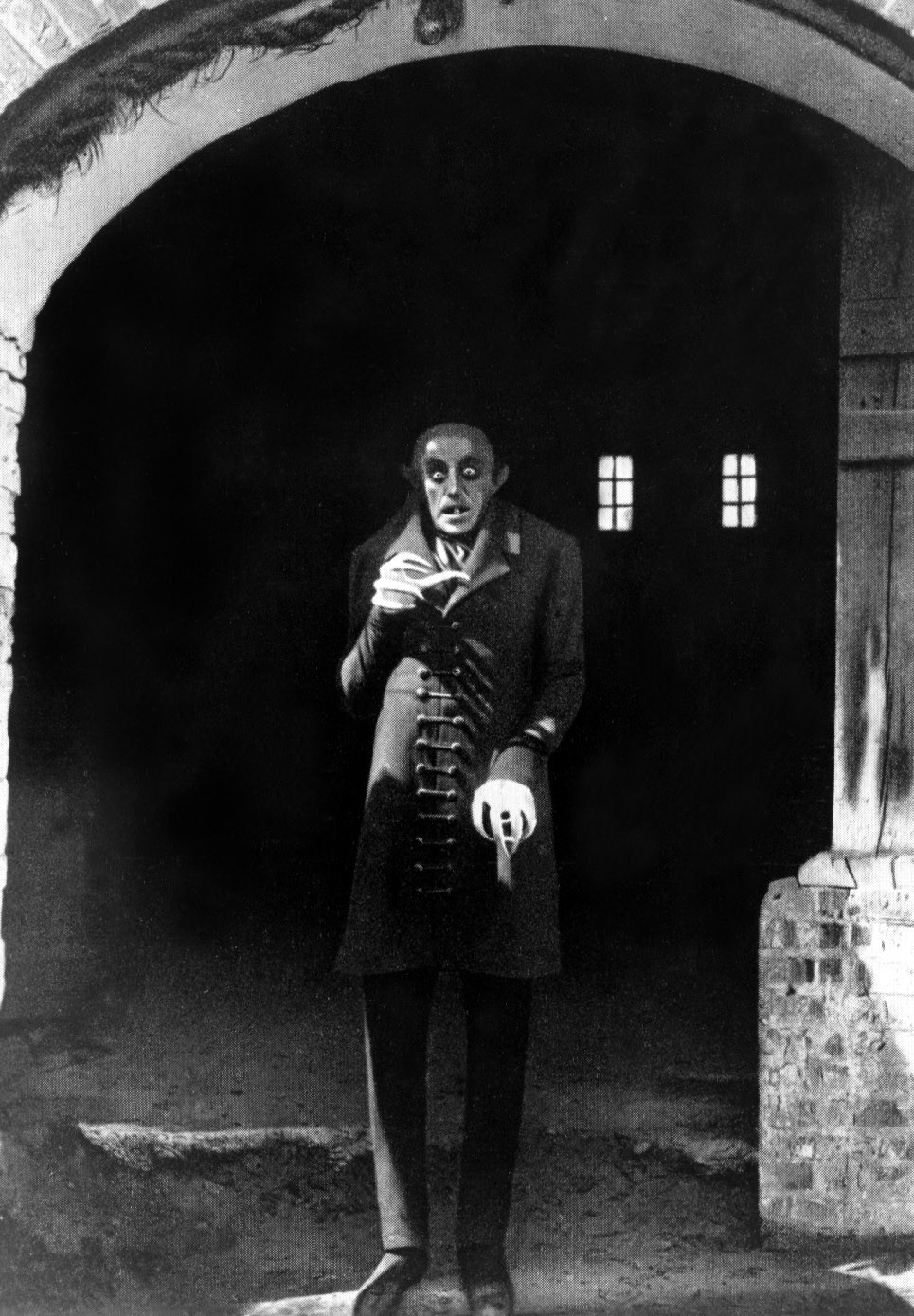
Max Schreck, who was born on this day in 1879, poses on the set of F.W. Murnau’s classic Nosferatu in 1921:

Actor in the Spotlight:

IMDb and No Small Parts celebrate the career of Westworld star Evan Rachel Wood:

[embedded content]

Filmmaker in Focus:

For Fandor, Haroon Adalat highlights the color schemes of the films of Jean-Luc Godard:

[embedded content]

Cosplay of the Day:

Turner Classic Movies found some classic cinema cosplayers at DragonCon last weekend, including this Charlie Chaplin and Wicked Witch:

Great classic film cosplay at #DragonCon2017pic.twitter.com/Fg5HzUSjxs

— TCM (@tcm) September 1, 2017

Movie Studio History of the Day:

Burger Fiction chronicles the evolution of Studio Ghibli, home of Hayao Miyazaki and some of the best Japanese animated films ever made:

[embedded content]

Classic Trailer of the Day:

This week is the 10th anniversary of the remake of 3:10 to Yuma. Watch the original trailer for the Western below.

[embedded content]

and

Let’s block ads! (Why?)


No Image

Episode 628: This Ad's For You

Tom Burrell, ad man.

Courtesy of Tom Burrell

hide caption

toggle caption

Courtesy of Tom Burrell

Note: This show originally ran in 2015.

In the early 1960s, the ad world had a one-size-fits-all philosophy. Black people, white people—they all saw the same ads. And while that sounds egalitarian in theory, it often led to hilariously inappropriate ad copy, like: “1842. It was a very good year for beer drinkers.”As Tom Burrell points out, it wasn’t really a good year for black people in the U.S., many of whom were still enslaved.

Tom Burrell was the first black man in Chicago advertising. He realized that this sort of one-size-fits-all marketing wasn’t just tone-deaf, but that it just wouldn’t work as well as it could. He thought there had to be a different way.

Nowadays, marketing is precisely targeted. The targeting is so laser-specific that the ads you see on your Facebook feed practically have an audience of one: You. Tom Burrell started that shift.

Today on the show, the story of the man who transformed the way people think about advertising and how advertisers think about us.

Music: “Low Slung” and “Private Number.” Find us: Twitter/ Facebook.

Let’s block ads! (Why?)


No Image

Will Congress Continue Health Care For 9 Million Children?

The Children’s Health Insurance Program relies on money from state and federal governments to help subsidize the cost of medical care for some kids not poor enough to qualify for Medicaid.

Rebecca Nelson/Getty Images

hide caption

toggle caption

Rebecca Nelson/Getty Images

A popular federal-state program that provides health coverage to millions of children in lower- and middle-class families is up for renewal Sept. 30.

But with a deeply divided Congress, some health advocates fear that the Children’s Health Insurance Program could be in jeopardy or that conservative lawmakers will seek changes to limit the program’s reach. Other financial priorities this month include extending the nation’s debt ceiling, finding money for the Hurricane Harvey cleanup and keeping the government open.

“With all that is on Congress’ plate, I am very worried that a strong, wildly successful program with strong public support will get lost in the shuffle and force states to begin the process of winding down CHIP,” said Bruce Lesley, president of the advocacy group First Focus.

The program covers more than 9 million kids — typically from families not poor enough to qualify for Medicaid, the state-federal program that covers health care for people with low incomes.

Income eligibility levels for CHIP vary widely among states, though most set thresholds at or below 200 percent of the poverty level — about $49,000 for a family of four. Unlike Medicaid, CHIP is usually not free to participants. Enrolled families pay an average premium of about $127 a year.

Since CHIP’s enactment, the share of uninsured children in the U.S. fell from 13.9 percent in 1997 to 4.5 percent in 2015, according to the Medicaid and CHIP Payment and Access Commission.

The 20-year-old program has bipartisan support. One of its original sponsors is Sen. Orrin Hatch, R-Utah, chairman of the Finance Committee, which has scheduled a hearing on reauthorization Thursday.

It’s possible in the jam-packed legislative calendar this month that other health-related provisions could be attached to a CHIP reauthorization bill — such as Republican-sponsored changes to the Affordable Care Act. Those changes could keep the resulting bill from getting enough support from Democrats and some Republicans in the Senate for passage.

“It’s the only vehicle in health care policy other than the federal budget that’s going to be moving, so it’s likely extraneous items are likely to be added to it,” says Christopher Pope, a health policy researcher and senior fellow at the conservative Manhattan Institute.

Supporters of CHIP also worry about changes in eligibility for the program that could dampen enrollment.

The Affordable Care Act bumped up federal funding of CHIP by 23 percentage points and forbids states to restrict eligibility rules that were in place in 2010. Both of those requirements continue through September 2019.

The added funding means a dozen states have their entire CHIP programs paid for by the federal government. In the fiscal year that ended last September, states contributed less than $2 billion, compared with the federal government’s $13.6 billion contribution, according to the conservative Heritage Foundation. States should pay a higher share of the program’s costs, the foundation argues.

President Trump’s budget request this spring called for immediately eliminating the ACA bump in funding and ending the restriction on a state’s ability to curtail eligibility — often referred to as the “maintenance of effort” provision.

But that provision has kept CHIP stable at a time when the individual insurance market faces uncertainty, says Joan Alker, director of Georgetown University’s Center for Children and Families in Washington, D.C.

Advocates note that if children have to leave CHIP and move to marketplace coverage, their families may be forced to pay higher out-of-pocket costs for their kids’ health care.

Without the maintenance-of-effort requirement, advocates fear that states would be more likely to do what Arizona did during the last economic downturn: It froze enrollment from December 2009 until last June. The move was allowed because it took effect before the ACA’s restriction began in March 2010.

Meanwhile, Republicans are not united in their views of the maintenance-of-effort requirement. Some favor it because, they say, it shifts more authority of the program to states. Others say it would very likely lead some states to move many CHIP enrollees into either Medicaid or private insurance policies sold on the Obamacare exchanges — both areas where the federal government may pay an even higher share of the costs, Pope says.

“It’s not a simple win for anything, but you can see why some governors would like it,” he says.

At a House subcommittee hearing in June, some Republican lawmakers expressed concerns about extending the enhanced federal funding for CHIP.

“This increase in funding has challenged the program by both shifting the nature of shared responsibility of the state Children’s Health Insurance Program to the federal government and making states more dependent on federal dollars,” said Rep. Michael Burgess, R-Texas, who heads the Energy and Commerce subcommittee on health.

A committee staff memo prepared for the hearing suggested that taking away the extra funding (as some Republicans would like to do), but leaving the maintenance-of-effort requirement in place, would not result in fewer children having coverage.

Without renewal of the program, Arizona, Minnesota, North Carolina and the District of Columbia would run out of their federal CHIP funding by the end of this year. By March 2018, an additional 27 states would exhaust their funds.

Minnesota and D.C. officials say all children in those two regions who are covered by CHIP will transition to Medicaid if the federal funding is cut.

Alker says the enhanced funding included in CHIP’s 2009 reauthorization has helped several states, including Nevada and Utah. The states were able to expand coverage to legal immigrant children immediately; before that extra money came in, these kids faced a five-year wait for insurance.

Given the complexity of making major changes and the tight congressional timeline, some experts say Congress may opt to pass a clean CHIP bill — without major changes to the program.

“Congress is in [session] this month so few days that I can easily see CHIP simply being reauthorized without strings attached,” says Joe Antos, a health economist with the conservative American Enterprise Institute. Lawmakers’ attention is more likely to focus on the debt-limit deadline, the budget resolution and tax reform, Antos says.


Kaiser Health News is a national health policy news service that is part of the nonpartisan Henry J. Kaiser Family Foundation. Phil Galewitz is a senior correspondent for KHN.

Let’s block ads! (Why?)