
As Trump Moves To Renegotiate NAFTA, U.S. Farmers Are Hopeful But Nervous


As She Evacuated Patients From The Hospital, Her Home Burned

Hundreds of homes in the Coffey Park neighborhood that were destroyed by the Tubbs Fire on October 11, 2017, in Santa Rosa, California.
Justin Sullivan/Getty Images
hide caption
toggle caption
Justin Sullivan/Getty Images
Julayne Smithson was working an overnight shift in the Intensive Care Unit at the Kaiser Permanente hospital in Santa Rosa, Calif., when massive wildfires started racing through the city late last Sunday.
Smithson had no idea how close they were. She was too busy taking care of her patient. Then, she says, “One of the nurses came up to me and she said, ‘Julayne, I’m sorry, but your house is not going to make it.'”
Smithson, 55, recently moved from Indiana and had just bought a new home a few weeks ago. From the hospital window, she could see the flames moving through her neighborhood.
“I was so busy working the last couple of weeks that I didn’t get my insurance, which I never do. I never ever, ever go uninsured,” she says. “I kept saying, ‘Tomorrow, I’m going to do that. Tomorrow, I’m going to do that.’ “
Smithson asked a colleague to watch her patient while she raced home to try to save a few things. The fire was a block away.
“I knew I didn’t have much time,” she says. “So I ran inside and I thought, ‘I have to get my nursing documents, because if I’m going to lose everything I own, I have to be able to work, to care for patients.'”
She grabbed the papers, a pair of scrubs and a nightgown, and raced back to the ICU. Over the next two hours, smoke filled the hospital.
“All of a sudden the police busted in the door and they said, ‘Everybody out! ‘Grab what you can carry, get your patients, and go now,'” she recalls.
One of Kaiser’s emergency room doctors took charge as the fire approached, setting up a disaster command center, and making the call to evacuate the hospital’s 130 patients.
“It’s a really challenging decision to make, one you don’t make lightly,” says Joshua Weil, Kaiser’s ER doctor in charge that night. “You have to weigh the potential risk of moving hospitalized patients and patients from the emergency department, versus the risk of keeping them where they are.”
He decided to evacuate when the fire moved suddenly toward the hospital. Firefighters told him the blaze was 100 to 200 yards from the property, posing an imminent threat to the hospital structure.
“They literally used the words, ‘We’re making the last stand,'” Weil says.
Staff immediately started assessing and triaging patients.
Patients who could walk, staff guided to a bus provided by the city. Patients who couldn’t walk, like Smithson’s critical patient, had to wait.
Nearby Sutter Santa Rosa Regional Hospital was also evacuating, and they had close to 80 patients, so ambulances were in high demand.
“A lot of nurses and staff were putting patients in their cars and driving them to the hospital,” she says. “And then other people were carrying people on blankets, people who couldn’t walk, and putting them in cars.”
In the end, Smithson says they waited about 15 minutes for an ambulance, but it was a long 15 minutes. Her team was manually pumping air into her patient’s mouth with an air bag. A team of five had to push him, in his bed with all the monitors, through the parking lot several times to get away from fast-moving smoke and flames. His medication was running low and he was getting agitated.
“The pharmacy pre-mixes those medicines for us, but we didn’t have time to prepare extra medication for a trip like that because it just came up so fast,” she says.
Three hours passed from the moment the evacuation was called to the moment the last patient was out of the hospital, Weil says.
Smithson’s patient and others made it safely to Santa Rosa Memorial Hospital, about four miles away. About a hundred less critical patients were transferred to Kaiser’s hospital in San Rafael, about 40 miles away.
Beatrice Immoos was one of the nurses there getting prepped to receive the influx.
“We were essentially told that we were in a disaster situation and all ratios were out the window,” she says, meaning nurses would be assigned more patients than usually allowed under California law. “They were going to start triaging people through the ER.”
She remembers patients arriving wearing colored armbands, indicating the severity of their health status. These were likely assigned by paramedics during transport, Weil says.
“This level of disaster is a new one for us,” says Immoos. “It was very emotional, but there was a lot of resolve. Every day, nurses are always working with the common goal of taking care of our patients, and in a disaster, it’s just even more hands on deck working to get them the best treatment.”
The hospital put out calls for volunteer nurses to come help in San Rafael. Many responded, including Julayne Smithson. Her husband was supposed to fly in from Indiana in two days, but with their new home gone, she told him to wait.
“I said, ‘Well, I don’t have anywhere to go right now. And we don’t know what’s going on,'” she says. “So I said ‘I’ll go to San Rafael and help there.'”
Another nurse offered Smithson a pullout couch in a spare room. She’s been sleeping there during the day, and working 7 p.m. to 7 a.m. every night since the fire. She says all she wants to do right now is help patients, so she doesn’t have to think about what she’s lost.
This story is part of a reporting partnership with NPR, KQED and Kaiser Health News, which is not affiliated with Kaiser Permanente.
Barbershop: U.S. Men's Soccer Loss, Boy Scouts And Eminem

The U.S. men’s soccer team failed to qualify for the World Cup, the Boy Scouts are letting girls join their ranks and Eminem has a bone to pick with the president. CNN’s AJ Willingham, The Guardian‘s Les Carpenter and columnist Gustavo Arellano discuss.
MICHEL MARTIN, HOST:
Now it’s time for the Barbershop. That’s where we gather interesting folks to talk about what’s in the news and what’s on their minds. Sitting in the chairs for a shapeup today are Les Carpenter. He is a writer for The Guardian, and he’s with us from our studios in Washington, D.C. Les, welcome. Thanks for joining us.
LES CARPENTER: Welcome. Thank you.
MARTIN: All right. Also with us, writer and journalist Gustavo Arellano. He’s known for his nationally syndicated column “Ask A Mexican” and his book “Taco Usa: How Mexican Food Conquered America.” He’s with us from KUCI in Irvine, Calif. Gustavo, welcome back.
GUSTAVO ARELLANO: Hola, Michel.
MARTIN: And welcome back to CNN writer AJ Willingham, who joins us from WCLK in Atlanta. AJ, good to have you back with us as well.
AJ WILLINGHAM: Good afternoon, Michel.
MARTIN: So let’s start the conversation today with what is an open wound for American soccer fans. For the first time since 1986, the U.S. men’s soccer team failed to qualify for the World Cup. They lost 2-1 to Trinidad and Tobago, a team that many felt they could handle. On Friday, U.S. coach Bruce Arena announced his resignation. And…
(SOUNDBITE OF ARCHIVED RECORDING)
BRUCE ARENA: It’s a blemish for us. We should not be staying home for this World Cup.
MARTIN: AJ, I’m going to start with you because you focus on sports. What happened here? And I also want to mention that he said also in the same press conference that there was no need for a lot to change. So what happened, and is he right, does nothing need to change?
WILLINGHAM: I think it really depends on what sort of scale we’re looking at. We’re really talking about a matter of scale. What happened is, you know, if Clint Dempsey’s goal had gone in, we would have been going to Russia, but it didn’t. Is that where the conversation stops? Obviously not. Nothing has to change, now, in retrospect, feels like sort of the wrong thing to say. I think that that’s, you know, quite clear that that’s not the case. But what I think happened here is that there is just a lack of passion, both in playing and a lack of an understanding, that if we didn’t make the World Cup, that it would be such a huge deal and such a national embarrassment and such a wake-up call to, you know, to what soccer looks like at a national level for us to what it looks like to viewers and to potential fans and just all up and down the line. And really, I mean, choose where you want to come in on this because, like I said, it’s a matter of inches or it’s a matter of hundreds and thousands of viewers.
MARTIN: So, Les, you wrote – you’ve gotten a lot of attention for a story that you wrote last year on American soccer’s diversity problem. I mean, your piece argued that soccer in the U.S., unlike the rest of the world, is kind of a white upper-class-suburban sport. And that kind of hurts the – it just hurts the sort of the pool of players, the talent that would be available. You want to talk a little bit more about that?
CARPENTER: Well, it not only hurts the pool of players, it also hurts the idea of a culture, which is what I think U.S. Soccer really needs to be looking at right now. It’s not such a matter of, oh, we’re just a couple inches away against Trinidad and Tobago. We could have just gone to another World Cup. It’s a matter of, what kind of style does the U.S. play? Who is us trying to be? And I think that soccer’s played great by Latinos who have come to this country and a lot of places that don’t have access to what’s become a pay-for-play system in this country. You have so many of these leagues right now where if you’re rich, you have a lot of money, you can get on a team. And if you’re halfway good, you have a good chance of getting to a big college, getting seen by the national team people.
But what happens to all these people that have come from Guatemala, Honduras, Mexico, where the kids, you know, from those families are playing just on the streets? They don’t have access to the system, and yet, their style is so free, and it’s what’s played around the rest of the world. The U.S. is very robotic. And I feel like what we see now, the culture and the style and the U.S. is Americanized. We’ve taken soccer and just coached it coached and coached it, so you don’t really have that free kind of open style that you have elsewhere, and it’s starting to hurt at this level.
MARTIN: OK. But let me just raise one issue here, which is that you look at the U.S. women’s gymnastics team that competed so successfully at the last Olympics, 3 of the 5 people on that team were girls of color. It’s an extremely expensive sport. So what is the deal with that? You know, these are also people who, you know, Gabby Douglas made no secret of the fact that this was tremendously costly to her family, but somehow she was able to get there. So what’s the difference, you know what I mean?
CARPENTER: Well, obviously, it’s – even for wealthy families, these things are going to be extremely expensive.
MARTIN: She’s not wealthy.
CARPENTER: But, I mean, there’s – the action – the commitment has been there from her parents. I mean, you’re talking in many cases with soccer about people who have come to this country with nothing or people who have almost nothing and their kids are wonderful, wonderful players, but they can’t get into that system. It’s a big – obviously, you’re looking at a much bigger pool – in gymnastics where you’re – it’s a tiny group of players – athletes. With soccer, it’s a massive, massive group. And yet, these kids don’t have a shot at even just the basic level of organized soccer that gets you seen to that level where Gabby Douglas is training in a high level play for the U.S. Olympic team. You don’t have the access to be seen in this country at that level.
MARTIN: Gustavo, what do you think?
ARELLANO: First and foremost, respect to all the Trinnies (ph) out there for their amazing victory over the U.S.
MARTIN: True that.
ARELLANO: I had a huge bowl of callaloo in their honor, so God bless them for that. I agreed with everything that Les said. I mean, this is what it boils down to. Why should – I mean, we have immigrant populations who are crazy about soccer, that are playing on the field at parks all across the United States from New York City down here to Santa Ana in Orange County. They’re playing all the time. And they’re playing in leagues. They are playing in their own leagues that are way cheaper than whatever leagues you need to get into U.S. soccer. So the parents are going to say, well, why should my kids play in the expensive leagues when you could just play at the Saturday leagues?
More importantly though, a lot of – and this is a big problem that I think U.S. Soccer still has to solve and they can’t – a lot of these players, if they could get dual citizenship, if you ask your typical Mexican-American kid right now, if you want to be a great soccer player, would you play for the Mexican squad, El Tri, or are you going to play for the United States? Ninety percent of them would go to El Tri, not just out of loyalty but also because, frankly, El Tri’s going to be a better team than the U.S. But then, you know, and I also have to say, Mexicans are so happy that the United States is not going into the World Top. That said, us Mexicans, we have our own problems as well so we could be happy about that, but whatever. We’re going to flame out in the second round like we do every year or every Cup, I mean.
MARTIN: (Laughter) All right. Well, you know, let me just point out – AJ, let me go back to you on this – a lot of people were quick to point out that one American soccer team still has a shot to make their World Cup. The women’s team went undefeated in 2015 and won the World Cup. So, AJ, is there something that the men can learn from the women, or is the same problem going to catch up with them? Because it has not escaped, I think, anybody’s attention who’s paying attention that the women’s team isn’t particularly diverse either.
WILLINGHAM: What I’m thinking about this, Michel, what I’m thinking is you have to make good soccer in order for people to want to watch good soccer. And there are two things that you can do to make that happen. You either have to be successful, win your games, you know, get those goals in, or you have to be newsworthy. And I think that one thing the U.S. women’s national team has going for them is that they are both of those things. They’re successful, and they are newsworthy off the field. They, you know, they keep the names in the news.
I feel like if you asked a casual viewer who Alex Morgan was, asked a casual viewer who Clint Dempsey, was maybe they know both of them, but I feel like because of the U.S. women’s national team’s success, they know a little bit more about the women. They know a little bit more about what it means to, you know, to cheer for them and to root for them. And so to me, that’s the big sort of thing is that you’re winning games but then you’re keeping yourself in the news. You’re keeping yourself in the headlines, and you’re you’re keeping people’s interest. And I think that those two things feed off of each other.
MARTIN: Let me move to another topic this Wednesday. The Boy Scouts said that girls can now join. And some people were saying that’s cool girls can be Eagle Scouts now, and that’s nice. And for families who maybe have multiple kids, they think that’s great. I only have to go to one community center on the weekends and that’s good for me. But others are not happy including, Girl Scouts USA. And, AJ, sticking with you – sort of focusing on you today, sorry to be sort of giving you the burden of the whole thing, carrying the ball as it were – but you co-authored a piece on CNN this week highlighting some of the negative responses to this. And what’s your take on it?
WILLINGHAM: Yes. So obviously, the Girl Scouts are not going to be happy about this. I want to give them credit. They have certainly done a lot in the last couple of years to try and boost membership. It’s no secret that membership for both the gender scouting sort of organizations have been down over decades. It’s just, you know, it’s something that’s very difficult to modernize. So they have definitely done their part. They brought in consultants. They diversified their programs. But what they did is that they took away some of the attention from outdoor activities. They took away some of that attention from some of the more adventurous programs.
Like I said, it went to other things, but so the Boy Scouts, seeing their numbers go down and seeing their own numbers being hurt by some of the more recent scandals, thus is a perfect opportunity for them to come in. They have the outdoor stuff that a lot of young women are going to be interested in. And most importantly, they have the Eagle Scout designation. And that is something that the Girl Scouts have not been able to replicate, even though they have the wonderful Gold Award. In the culture – in our culture, it is not as prestigiously sort of looked at as that Eagle Scout award, and that is the big thing.
MARTIN: But, you know, Gustavo, do you want to talk about that for a second? You know, they – but the Girl Scouts have other things which is that they have a track record – it’s – an incredible number of women in high levels of achievement have been Girl Scouts. And I don’t know. What’s your take on this?
ARELLANO: Yeah, no, I love the Girl Scouts. You know…
MARTIN: The cookies especially.
ARELLANO: …I buy hundreds of dollars of cookies. And not just the cookies, they also have their nuts sale right now for the winter, so people should be buying those as well. But I have seen so many young women be transformed by the Girl Scouts. And I’ve seen like – they do – they’ve always been a far more progressive organization than the Boy Scouts. What amazes me most about this is how much the Boy Scouts has changed within a generation. About 25 years ago or so, there was a national story that came out of Orange County where there was two scouts who were atheist and they just – they would not say the Pledge of Allegiance or they wouldn’t say under God in the Pledge of Allegiance, so the Boy Scouts at the time booted them.
In a generation, now you’ve gone from such like backward opportunistic ways to the Boy Scouts saying, hey, like, let’s also include girls in there as well. And, of course, it’s all for money. It’s all for getting more membership in there. But yeah, I mean, people – the Girls Scouts is an amazing organization. They really focused on, yeah, let’s teach our young women out there of all colors, of, you know, of everything, let’s teach them skills that they’re going to go out and, you know, make better people in society. Nothing against the outdoors but camping, yeah, it’s nice but it’s not going to get you a job.
MARTIN: Les, what do you think about this?
CARPENTER: You know, I’m thinking about my 7-year-old daughter. She’s never gotten into scouting. Thank God we haven’t had to cross that bridge yet. But honestly, I think she’d be more interested in what the Boy Scouts offer than what the Girl Scouts offer.
MARTIN: Because?
CARPENTER: Because I think she’s that kind of a person. She’s very adventurous. She wants to try things. She’s the kind of girl who would, you know, see a gondola, you know, 20 feet up in the air and say, hey, I’d like to jump in that and see where it goes. I mean, so I think that what the Boy Scouts offer will be far more interesting to her than what the Girl Scouts offer. And I know it’s a massive generalization, but I think this is something that she would think was a lot of fun.
MARTIN: I’ll have to arrange an escort to get you out of the building because there are a lot of Girl Scout parents and Scout leaders in there. I’ll see what I can do.
WILLINGHAM: Michel.
MARTIN: Go ahead, AJ.
WILLINGHAM: Michel, I want to go really quickly back to the negative reaction.
MARTIN: Sure.
WILLINGHAM: Obviously, a lot of people on social media, a lot of people in the general conversation sort of, you know, thinking that this is going to somehow rend the gender binary because we’re going to have boys in the Girl Scouts and, you know, boys and girls, and they could just be anywhere together now. I think what people forget is that girls have been in Boy Scouting programs now for a century. You know, they allow girls in the venturing program. And so it’s really not – yes – is it a big move? Yes, but it’s not unprecedented in their history to have girls participate in their activities. I think people forget that.
MARTIN: I confess, I was one that forgot that, so thank you for bringing that up. Before we let you go, gosh, I only have a minute left. So, Gustavo, I’m going to go to you on this. Eminem – I think by now, people have heard about his kind of scathing rap about President Trump at the BET Awards earlier this week. And I wanted to ask you your take on that.
ARELLANO: I love it. I know people are criticizing it because he gets the attention, not other rappers of color. I’ll say what I said on Code Switch a couple of months ago. Sometimes you need those people to go out and to places or to people that don’t want to listen to your message. Eminem has a huge suburban white audience. These people worship him as a god. And for him to be saying all those things about our current president, it comes as a shock to them, but they listen to him. They would not listen to the people. So good job, Eminem.
MARTIN: Because you agree with him, but what if you didn’t? Would you be offended?
ARELLANO: If I – if he supported Trump?
MARTIN: Yeah.
ARELLANO: Oh, well, then I wouldn’t like him.
(LAUGHTER)
ARELLANO: I mean, I like Eminem. You know, I’m for any of these entertainers who take stands, whether they’re good or not, because they are risking their fans. I mean, look at what’s happening with the NFL, I mean, with (unintelligible) and everything like that. They are taking their stand. And according to some people – I don’t got the stats – but, you know, they’re losing fans and all that, but at least they’re taking that position though.
MARTIN: Oh, I hear. All right. Well, that’s your – thanks for your take on that. That’s Gustavo Arellano. He’s an author and nationally syndicated columnist. Les Carpenter is a writer for The Guardian. AJ Willingham is a writer for CNN. Thank you all so much for joining us.
CARPENTER: Thank you.
ARELLANO: Gracias.
WILLINGHAM: Thank you, Michel.
(SOUNDBITE OF EMINEM’S “THE REAL SLIM SHADY”)
Copyright © 2017 NPR. All rights reserved. Visit our website terms of use and permissions pages at www.npr.org for further information.
NPR transcripts are created on a rush deadline by Verb8tm, Inc., an NPR contractor, and produced using a proprietary transcription process developed with NPR. This text may not be in its final form and may be updated or revised in the future. Accuracy and availability may vary. The authoritative record of NPR’s programming is the audio record.
What Affordable Care Act Rollback Means For The Health Care Insurance Industry
Health insurance providers have already raised rates in anticipation of reduced government subsidies. NPR’s Michel Martin talks with health policy analyst Robert Laszewski about how the industry might fare.
MICHEL MARTIN, HOST:
We have one more conversation about healthcare. As we just heard, health insurers are trying to figure out what to do without the reimbursement from the government that the Trump administration says will no longer be paid. The question is, will insurers raise their rates or withdraw from the health exchanges created by the Affordable Care Act? For perspective on this, we called Robert Laszewski. He’s a former insurance executive who’s now a health policy consultant. Mr. Laszewski, thanks so much for speaking with us.
ROBERT LASZEWSKI: You’re welcome.
MARTIN: So based on your knowledge of the industry, what are the options that insurers are considering to deal with the lack of these subsidies?
LASZEWSKI: Well, actually, many of them have already raised the rates. They had to have their 2018 rates into the regulators and approved a couple of weeks ago, so most of them have already made some pretty significant rate increases – between 10 and 20 percent – assuming that Trump would cut off the subsidies. A few insurance companies and a few regulators did not do that. They did not allow for it. I think now what’s going to have to happen is these insurance companies today are having some pretty tense conversations with the regulators, saying, if you want us to stay in the market, you’re going to have to let us raise those rates 10 to 20 percent.
MARTIN: Is it possible or likely that some of these companies will just pull out? And can they do that even if they’ve already offered plans for the coming year?
LASZEWSKI: It is still possible for insurance companies to pull out. The contracts they have with the government have an out clause if there’s a major material change. So it’s possible. More likely, I think you’re going to see some regulators make some accommodations and allow for the higher rates to happen pretty quickly. I don’t think we’re going to see many, if any, pull-outs. Now we’ve got dozens of insurance companies involved, so I wouldn’t be shocked to see one do it. But generally speaking. The carriers have known this is coming, they know what kind of environment they’re in, and they’re pretty much pricing for it.
MARTIN: Let’s say for the sake of argument that companies do pull out of the exchange. Is there a tipping point at which the Affordable Care Act no longer effectively exists?
LASZEWSKI: Well, that’s possible if you had substantial carriers pull out in some of the larger markets – with any markets of any consequence with no insurance company. But I think we’re actually entering a strange period here. The insurance companies are figuring out how to make money in the Obamacare insurance exchanges. They just raise the rates. So the carriers – the insurance companies – are backing into a survivable market here. Run the rates up as high as you have to. They can at least break even. It becomes sustainable for the insurance company, but it’s a terrible situation for people who don’t get subsidies and have to pay the full cost.
MARTIN: So finally, before we let you go, are there other options on the table? Could Congress theoretically, anyway, pass some sort of a patch to fund these cost savings reimbursement?
LASZEWSKI: Absolutely. The Congress could pass legislation not only to fix the cost-sharing subsidy problem that Trump created but to fix a lot of other problems. Obamacare has some very serious architectural problems when it comes to the insurance exchanges. It needs an overhaul minimally. So the Congress could fix it, but here’s the problem – Trump would veto it.
So I think we’re stuck in a really bizarre period right now, one where people getting subsidies are going to be OK. Even though we cut the funding to the insurance companies, they’re going to get their subsidies to help pay for it. But 43 percent of those in the individual market didn’t get a subsidy last year because they made too much money, and those people are really getting hurt.
MARTIN: That’s Robert Laszewski. He’s a health policy consultant, a former insurance executive. He was kind enough to speak to us by phone just outside Washington, D.C. Mr. Laszewski, thanks so much for speaking with us.
LASZEWSKI: You’re welcome.
Copyright © 2017 NPR. All rights reserved. Visit our website terms of use and permissions pages at www.npr.org for further information.
NPR transcripts are created on a rush deadline by Verb8tm, Inc., an NPR contractor, and produced using a proprietary transcription process developed with NPR. This text may not be in its final form and may be updated or revised in the future. Accuracy and availability may vary. The authoritative record of NPR’s programming is the audio record.
What Affordable Care Act Rollback Means For The Health Care Insurance Industry
Health insurance providers have already raised rates in anticipation of reduced government subsidies. NPR’s Michel Martin talks with health policy analyst Robert Laszewski about how the industry might fare.
MICHEL MARTIN, HOST:
We have one more conversation about healthcare. As we just heard, health insurers are trying to figure out what to do without the reimbursement from the government that the Trump administration says will no longer be paid. The question is, will insurers raise their rates or withdraw from the health exchanges created by the Affordable Care Act? For perspective on this, we called Robert Laszewski. He’s a former insurance executive who’s now a health policy consultant. Mr. Laszewski, thanks so much for speaking with us.
ROBERT LASZEWSKI: You’re welcome.
MARTIN: So based on your knowledge of the industry, what are the options that insurers are considering to deal with the lack of these subsidies?
LASZEWSKI: Well, actually, many of them have already raised the rates. They had to have their 2018 rates into the regulators and approved a couple of weeks ago, so most of them have already made some pretty significant rate increases – between 10 and 20 percent – assuming that Trump would cut off the subsidies. A few insurance companies and a few regulators did not do that. They did not allow for it. I think now what’s going to have to happen is these insurance companies today are having some pretty tense conversations with the regulators, saying, if you want us to stay in the market, you’re going to have to let us raise those rates 10 to 20 percent.
MARTIN: Is it possible or likely that some of these companies will just pull out? And can they do that even if they’ve already offered plans for the coming year?
LASZEWSKI: It is still possible for insurance companies to pull out. The contracts they have with the government have an out clause if there’s a major material change. So it’s possible. More likely, I think you’re going to see some regulators make some accommodations and allow for the higher rates to happen pretty quickly. I don’t think we’re going to see many, if any, pull-outs. Now we’ve got dozens of insurance companies involved, so I wouldn’t be shocked to see one do it. But generally speaking. The carriers have known this is coming, they know what kind of environment they’re in, and they’re pretty much pricing for it.
MARTIN: Let’s say for the sake of argument that companies do pull out of the exchange. Is there a tipping point at which the Affordable Care Act no longer effectively exists?
LASZEWSKI: Well, that’s possible if you had substantial carriers pull out in some of the larger markets – with any markets of any consequence with no insurance company. But I think we’re actually entering a strange period here. The insurance companies are figuring out how to make money in the Obamacare insurance exchanges. They just raise the rates. So the carriers – the insurance companies – are backing into a survivable market here. Run the rates up as high as you have to. They can at least break even. It becomes sustainable for the insurance company, but it’s a terrible situation for people who don’t get subsidies and have to pay the full cost.
MARTIN: So finally, before we let you go, are there other options on the table? Could Congress theoretically, anyway, pass some sort of a patch to fund these cost savings reimbursement?
LASZEWSKI: Absolutely. The Congress could pass legislation not only to fix the cost-sharing subsidy problem that Trump created but to fix a lot of other problems. Obamacare has some very serious architectural problems when it comes to the insurance exchanges. It needs an overhaul minimally. So the Congress could fix it, but here’s the problem – Trump would veto it.
So I think we’re stuck in a really bizarre period right now, one where people getting subsidies are going to be OK. Even though we cut the funding to the insurance companies, they’re going to get their subsidies to help pay for it. But 43 percent of those in the individual market didn’t get a subsidy last year because they made too much money, and those people are really getting hurt.
MARTIN: That’s Robert Laszewski. He’s a health policy consultant, a former insurance executive. He was kind enough to speak to us by phone just outside Washington, D.C. Mr. Laszewski, thanks so much for speaking with us.
LASZEWSKI: You’re welcome.
Copyright © 2017 NPR. All rights reserved. Visit our website terms of use and permissions pages at www.npr.org for further information.
NPR transcripts are created on a rush deadline by Verb8tm, Inc., an NPR contractor, and produced using a proprietary transcription process developed with NPR. This text may not be in its final form and may be updated or revised in the future. Accuracy and availability may vary. The authoritative record of NPR’s programming is the audio record.
Syracuse Field Goal Disrupts Clemson's Aim For A Perfect Season

Syracuse quarterback Eric Dungey celebrates with fans after his win over Clemson Friday night in Syracuse, N.Y. The Orange upset the Tigers 27-24.
Adrian Kraus/AP
hide caption
toggle caption
Adrian Kraus/AP
The Clemson Tigers went into the Carrier Dome in Syracuse, N.Y., Friday night undefeated, but they left crushed after their hopes for a perfect season were dashed. The Syracuse Orange beat the No. 2-ranked Tigers 27-24.
Clemson had won 12 consecutive games on the opponent’s home field — the longest streak in Clemson history. It also ties for the second longest active streak in the nation.
Syracuse Quarterback Eric Dungey threw for 278 yards and three touchdowns. But it was Cole Murphy who put the Orange ahead on the scoreboard when he kicked a tie-breaking field goal in the fourth quarter.
Dungey got the team off to a good start, he threw a 23-yard touchdown pass on the opening drive of the game.
Afterward, Syracuse coach Dino Babers told reporters, “This is truly one of the moments that you coach for. This is really special.” Babers is in his second year with the Orange.
“It wasn’t our night tonight,” Clemson coach Dabo Swinney told reporters. “We’re not going to be 12-0, that’s for sure. That’s not going to happen. This is going to hurt, but you move forward.”
Adding to Clemson’s problems, quarterback Kelly Bryant suffered a likely concussion in the final minutes of the first half. No word yet if he’ll have to sit out any games.
But Clemson had other issues as ESPN reports:
“Clemson, too, was a mess, a shell of the team that held the nation’s longest active winning streak. On defense, the Tigers were flummoxed by Syracuse’s up-tempo attack. On offense, aside from two big runs — a 37-yard touchdown by Tavien Feaster and a 52-yard score by Travis Etienne — there was no consistency. On special teams, it was a nightmare, with two missed field goal attempts and a disastrous fake punt that proved to be the last play Clemson would run.
“The same team that so thoroughly dominated Louisville and Virginia Tech on the road seemed overwhelmed inside the Carrier Dome.”
The loss — while ruining Clemson’s chance at a perfect season — also hurts the Tigers’ chances as repeating as national champions.
The bright spot is that Clemson won the national championship last year despite a loss during the season to Pittsburgh.
The Tigers will have a chance to regroup next weekend — the team has a bye. Syracuse travels to Florida to face No. 11 Miami.
The Week in Movie News: Here's What You Need to Know

Need a quick recap on the past week in movie news? Here are the highlights:
BIG NEWS
Thor Ragnarok kicks off a big narrative arc for the Hulk: Hulk can’t have a solo feature in the currrent MCU, but that’s not stopping Marvel from giving him his own trilogy within non-exclusive installments, starting with Thor: Ragnarok and continuing in the next two Avengers sequels. Read more here and here and see more on the MCU below.
TERRIFIC NEWS
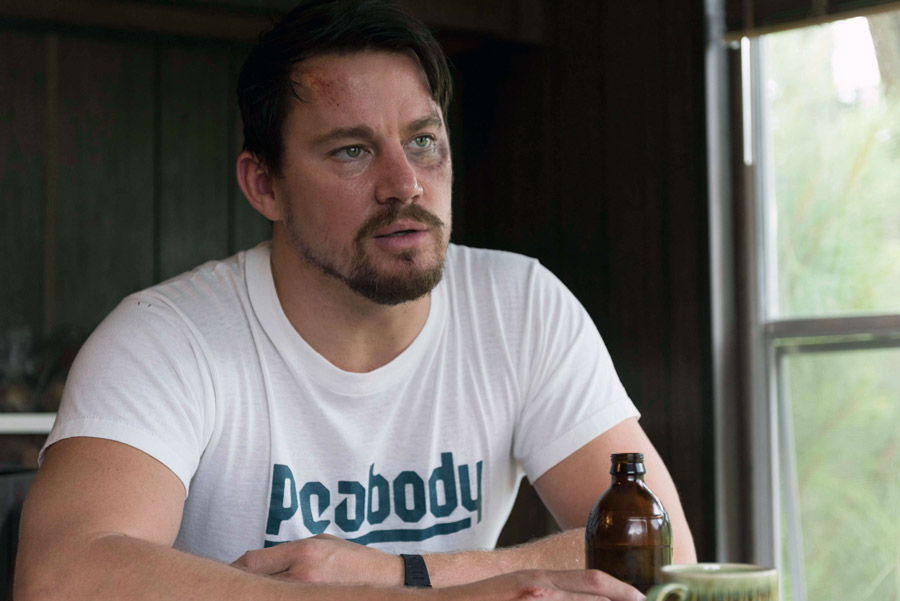
Gambit is finally truly on track again: The X-Men spin-off Gambit was originally supposed to come out a while ago, but the movie hit some hurdles and Fox wound up taking it off the calendar. Now it’s back on with a new release date and a new director plus hung-in-there star Channing Tatum. Read more here and see a trailer for another X-Men spin-off down below.

GREAT NEWS
Star Wars: The Last Jedi tickets are now on sale: After this week, we have exactly two months until the release of Star Wars: The Last Jedi, but fans were able to buy advance tickets this week, making the wait seem much shorter. Read more here and see the trailer down below.
COOL CULTURE
Star Wars: The Last Jedi brings Porg mania and more excitement: Speaking of Star Wars: The Last Jedi, the new trailer has exploded Porgs into the mainstream and the meme stream, while the new spot and the new poster have been subject to more fun movie culture around the web. See one of the most popular examples of how Porg mania is being spread by movie fans below, and see more cool Photoshops and videos here and here and here.
Oh, the porg images being shared in our team Slack channel right now are glorious… pic.twitter.com/l3NDbtSO2N
— ErikDavis (@ErikDavis) October 11, 2017

EXCLUSIVE BUZZ
Kevin Feige on the possibility of a Marvel convention: We talked to Marvel Studios head Kevin Feige in anticipation of the release of Thor: Ragnarok plus the chance of Marvel having its own equivalent of Star Wars Celebration. Read what he had to say here.

MUST-WATCH TRAILERS
Star Wars: The Last Jedi teases a darker episode: In conjuction with tickets going on sale, Star Wars: The Last Jedi got a new trailer, which is filled with apparent doom for the good guys, plus teases of major character deaths and other disruptions in the Force. Also Porgs! Watch the new trailer below and see our highlights of the best moments here.
[embedded content]

Justice League looks explosive: The latest trailer for Justice League debuted during New York Comic Con, and it’s making DC superhero fans very excited for next month’s release. Also, Aquaman? More like awesomeman. Check out the third spot below:
[embedded content]

The New Mutants shows us what an X-Men horror movie looks like: The first trailer for X-Men spin-off The New Mutants arrived in the middle of the night on Friday the 13th because it’s an eerie entry for the franchise, a kind of teen superhero haunted house flick. Check it out here:
[embedded content]
and
New York District Attorney On The Defense Over Handling Of Weinstein Allegations

Manhattan District Attorney Cyrus Vance Jr. faces criticism of his handling of sexual assault allegations against Harvey Weinstein and a case involving the Trump SoHo development in New York City.
Pacific Press/LightRocket via Getty Images
hide caption
toggle caption
Pacific Press/LightRocket via Getty Images
If only because of its venue, the office of New York district attorney has long been among the highest-profile prosecutorial jobs in the country. The men who have served in it, legal legends such as Thomas Dewey, Frank Hogan and Robert Morgenthau, have often held the job for years, gaining enormous stature and political capital along the way.
Until recently, it seemed the current DA, 63-year-old Cyrus Vance Jr., might enjoy the same long tenure.
But controversies over the Trump SoHo development and the sexual assault allegations against Harvey Weinstein have raised new questions about Vance’s prosecutorial discretion and even his ethics. Both cases involved wealthy, powerful individuals who had contributed to his election campaigns.
This week, as numerous actresses stepped forward to say they had been assaulted by Weinstein, Vance had to explain why he declined to prosecute the movie mogul, despite graphic audiotape of Weinstein harassing an Italian model in a Manhattan hotel. The tape was collected in 2015 as part of an undercover sting operation by New York police.
Despite the audiotape, Vance said prosecutors in his office had determined the evidence against Weinstein wasn’t strong enough to pursue a case.
“I understand that folks are outraged by his behavior,” Vance told reporters. “I understand that there are many other allegations that have surfaced, but in our case, we really did what I think the law obligates us to do.”
“If we could have prosecuted Harvey Weinstein for the conduct that occurred in 2015, we would have,” said Karen Friedman Agnifilo, chief assistant district attorney.
But criminal attorney Matthew Galluzzo, who once worked in the DA’s sex crimes unit, told The Associated Press he believed the audiotape, in which Weinstein acknowledges touching Gutierrez on the breast, could have been used to pursue a case.
“She can testify about what happened, and you’ve got him acknowledging he did something wrong,” Galluzzo said.
Before this week, questions were also being raised about Vance’s handling of a fraud investigation involving the Trump SoHo, a condo hotel built by the Bayrock Group. Some early buyers of units at the hotel sued Bayrock, arguing that they had been misled about the hotel’s sales records.
The Manhattan DA’s office had considered pursuing fraud charges against Ivanka Trump and Donald Trump Jr., who played a big role in promoting the hotel. An investigation by The New Yorker, WNYC and ProPublica said prosecutors wanted to pursue a criminal case, but Vance said evidence to do so was lacking.
The report also noted that Vance had received a $32,000 campaign contribution from one of Trump’s lawyers shortly after dropping the case. Vance had also received an earlier donation, which he had returned.
“It was improper for him to accept it in the first place. He responded by returning those donations and then apparently accepted them again after the fact,” noted Jim Cohen, a professor at Fordham University School of Law.
Before these controversies, Vance, who was first elected in 2009, enjoyed a solid if somewhat low-profile reputation in the New York legal world.
“He is in general viewed with great respect. He’s considered to be a straight shooter. But recent news events may ultimately end up changing that,” Cohen says.
The son of Cyrus Vance, secretary of state in the Carter administration, Vance attended Georgetown University Law Center before taking a job in the Manhattan DA’s office.
Although he moved to Seattle to work in private practice, he later returned to New York, where he was long seen as a potential successor to Morgenthau.
After Morgenthau chose not to run for re-election, Vance was elected as a Democrat to replace him. He was re-elected in 2013.
While Vance hasn’t yet achieved the prominence of his predecessors, his office has handled major investigations such as the sexual assault case against former International Monetary Fund head Dominique Strauss-Kahn.
The Weinstein case has exploded just as Vance is preparing to run for a third term. He is running unopposed, which makes his re-election almost inevitable, says longtime Democratic consultant Jerry Skurnik.
But the controversies have definitely hurt Vance’s reputation and make him more vulnerable should he choose to run again in 2021, Skurnik says.
“His name recognition has probably gone up. But most of this new name recognition is not positive,” he says.
Week In Politics: Trump Announces End To Obamacare Subsidy Payments
Ana Kasparian, host for The Young Turks network, and John Phillips of The Orange County Register, CNN, and KABC discuss the end of cost-sharing reduction subsidies by the government.
KELLY MCEVERS, HOST:
To talk more about the politics of health care, I am joined here in the studio by Ana Kasparian. She’s co-host and producer for the online news network The Young Turks. Welcome.
ANA KASPARIAN: Thank you for having me.
MCEVERS: And John Phillips, political commentator for CNN and a columnist for the Orange County Register, welcome to you.
JOHN PHILLIPS: Thank you so much.
MCEVERS: So as we just heard, President Trump says one by one, his administration is dismantling the Affordable Care Act. But there is lots of polling to suggest that people do not want these insurance markets to fall apart. Some senators led by Republican Lamar Alexander of Tennessee had been working on a bipartisan bill to stabilize the markets, and now this. John, I’ll start with you. I mean, how is this move going to affect the president’s relationship with members of his own party?
PHILLIPS: Well, I think if you’re talking about voters who you first mentioned, people first vote with their feet before they vote at the ballot box. And one of the things the critics have been saying is if you allow people to leave the health exchange, if you allow people to leave Obamacare, anyone who can leave will leave. Well, what does that tell you about the product? I mean, that’s like the same argument that the teachers unions make about school vouchers and charter schools.
So I think that him making this move – and look; I’m a process guy, and I’d rather have Congress do it. But John McCain’s feelings are hurt, and he doesn’t have the votes right now. So he’s got to wait until Joe Manchin switches teams or Bob Menendez goes to prison. This was the best of a lot of bad options that he had, and kicking it to Congress is the long-term solution that I think is best for the Republicans and for Donald Trump.
MCEVERS: But is it going to work? I mean, Ana, these are – you know, as we just heard in Tam’s piece, President Trump needs votes on other things – the Iran deal, immigration, a tax bill among other things. Is, you know – are they going to be able to handle this stuff?
KASPARIAN: Well, whether or not Congress is going to be able to handle it is an interesting question. But what I do disagree with is the notion that Trump will allow Congress to do what it needs to do. I mean, he has already shown, and he is continuing to threaten Congress with unilateral action if they don’t give him exactly what he wants, which I think is fascinating given the fact that someone like Obama was criticized pretty aggressively by Republicans for signing executive orders and doing things unilaterally. So I do agree in our system of government and the need for checks and balances, especially when you have an individual which in my belief is as unhinged as Trump and doesn’t really understand the ramifications of these issues.
And just to quickly, you know, respond to your answer about voters, you know, when you do look at polling and you refer to the Affordable Care Act as the Affordable Care Act rather than Obamacare, even Republican voters like it, and it’s because it has provided certain protections for them that they don’t want to lose.
And I will not sit here and say that the Affordable Care Act is perfect. It was deeply flawed, and it did not have the proper cost controls in place to prevent higher premiums. But what Trump just did will increase premiums so much that, you know, Americans are really going to suffer. And I’m concerned about that.
MCEVERS: I mean, Republicans ran on promises to repeal Obamacare, and they didn’t have the votes to do it, as we know, in Congress. And now the president is acting on his own to hollow it out. Will this hurt Republican members of Congress in re-election races in 2018, John?
PHILLIPS: In the long term, getting a bill done is more important for Republicans in Congress than it is for Donald Trump. Donald Trump’s signature issue in the campaign was immigration. It was building the wall. If he doesn’t build the wall, his re-election chances have, you know, gone down to zero.
Republicans have won – what? – three different national elections based on repealing and replacing Obamacare. If Trump doesn’t get it done, it’s like going to Red Lobster and saying the chicken stinks. No one goes to Red Lobster for the chicken. They go there for the lobster. He’s selling immigration. They’re selling health care. If they don’t get it done, that’s a big blow to the Republicans in Congress.
MCEVERS: It sounds like he knows that, right?
PHILLIPS: Yes.
MCEVERS: (Laughter) I want to talk about the Democrats, too. I mean, this morning the president tweeted that now the Democrats have to call him to fix health care. I mean, is that true? Do they need to come to him at this point, Ana?
KASPARIAN: I don’t think they need to come to him. I think that that is a mistake because one thing that Donald Trump claims is that he’s a good negotiator. He has no interest in negotiations. He has all the interest in coercing or being coercive and threatening and bullying people into giving him what he wants. That is not a good negotiator.
What I would argue is that Democrats need to focus on their messaging because they are devastatingly weak in explaining and expressing how disastrous this will be for the American people. I mean, Republicans will latch onto something, and they will not let it go – Hillary Clinton with Benghazi. I mean, we’re still hearing about Benghazi. But Democrats – they – they’re soft, and they need to toughen up. And they need to really work on their messaging.
PHILLIPS: And for Democrats, it’s weird because Hillary Clinton won the nomination. She won the election over Bernie Sanders. But if you look Democratic voters are on issues like health care, Democratic voters are closer to Bernie Sanders…
KASPARIAN: Absolutely.
PHILLIPS: …Than they are to Hillary Clinton. So with all the problems that you see right now in Congress with Republicans, Democrats are facing the same issue. You saw Bernie Sanders standing up on stage with any number of Democrats who could be candidates for president next time around who signed on for single payer. Well, what is Nancy Pelosi going to do? What is Chuck Schumer going to do? What’s going to happen in Democratic primaries in the midterm elections, and what does that mean for compromise? It means compromise is probably not an option between the parties.
MCEVERS: Right. That leads to my next question. I mean, do you – either of you see any chance of some bipartisan solution to health care right now?
KASPARIAN: Quite honestly, I don’t because what I’m seeing is, you know, two or three senators – Republican senators that seem reasonable, and they’re looking out for the best interest of their constituents – Lisa Murkowski, Susan Collins and John McCain. But at the same time, you have some like Rand Paul that think, no, no, I want to get rid of everything. I don’t want to help Americans out at all.
And so there’s a disagreement within the Republican Party. There’s a lot of disagreement among Democrats. I feel like, you know, we need to figure out what’s going on in these two teams and kind of come to some sort of agreement before this negotiation could even happen.
MCEVERS: Likely?
PHILLIPS: I don’t think there’s any negotiation that can be done with the leadership with the Democratic Party. I think you could potentially pick off one or two votes. He could get a Joe Manchin to sign on. He could get a Heidi Heitkamp to sign on. And that way, you can lose a John McCain. You can lose a Susan Collins. But if you largely keep that Republican caucus together, one or two Democrats could put you over the top.
MCEVERS: Some people say that this fight could go to the states. Attorneys general in, you know, majority Democratic states here in California and New York have said they will sue the Trump administration to continue making these subsidy payments. Does that seem like a viable option going forward in the short term for the ACA?
KASPARIAN: I think it’s a viable option. I would like them to be more aggressive. Lawmakers in California squashed any and all efforts to provide universal health care to Californians, something that polls as very popular. And it kind of shows you where their heart is. And I just don’t agree with it.
MCEVERS: Ana Kasparian of The Young Turks and John Phillips, commentator for CNN and columnist for the Orange County Register, thanks to both of you.
PHILLIPS: Thank you.
KASPARIAN: Thank you.
Copyright © 2017 NPR. All rights reserved. Visit our website terms of use and permissions pages at www.npr.org for further information.
NPR transcripts are created on a rush deadline by Verb8tm, Inc., an NPR contractor, and produced using a proprietary transcription process developed with NPR. This text may not be in its final form and may be updated or revised in the future. Accuracy and availability may vary. The authoritative record of NPR’s programming is the audio record.
Watch: 'The New Mutants' Trailer Shows What an 'X-Men' Horror Movie Looks Like

We heard The New Mutants was aiming for a horror vibe, but debuting its first trailer in the middle of the night on Friday the 13th pretty much confirms the idea (it also opens on a Friday the 13th). The movie, a spin-off from the X-Men franchise, is based on the 1980s Marvel comic book series of the same name, particularly its darker run written by co-creator Chris Claremont and illustrated by Bill Sienkiewicz.
Described as “a haunted house movie with a bunch of hormonal teenagers” and a cross between The Breakfast Club and’ One Flew Over the Cuckoo’s Nest by 20th Century Fox chairman and CEO Stacey Snider, New Mutants stars a hot young cast as mutant heroes Cannonball, Magik, Wolfsbane, Sunspot and Mirage. They’re overseen by a mutant doctor named Cecilia Reyes while locked in a secret facility.
Watch the first trailer below.
[embedded content]
Directed by:
Josh Boone, whose last movie was the teen romance drama The Fault in Our Stars.
Written by:
Boone, Scott Neustadter (The Fault In Our Stars), Michael H. Weber (The Fault in Our Stars) and Knate Lee (Kidnap).
Starring:
Anya Taylor-Joy (Split), Maisie Williams (Game of Thrones), Charlie Heaton (Stranger Things), Alice Braga (Queen of the South), Blu Hunt (The Originals) and Henry Zaga (Teen Wolf).
Official Synopsis:
“Five young mutants, just discovering their abilities while held in a secret facility against their will, fight to escape their past sins and save themselves.” (via 20th Century Fox)
Release Date:
April 13, 2018.
