
Top Exec At Amazon Studios Put On Leave After Harassment Allegations

Roy Price, head of Amazon Studios, participates in the “Hand of God” panel at the Amazon Summer TCA Tour at the Beverly Hilton Hotel in Beverly Hills, Calif., in Aug. 2015.
Richard Shotwell/Richard Shotwell/Invision/AP
hide caption
toggle caption
Richard Shotwell/Richard Shotwell/Invision/AP
Updated at 2:30 a.m. ET
Roy Price, the head of Amazon Studios, has been put on leave following allegations published in The Hollywood Reporter that he sexually harassed a female producer for the series The Man in the High Castle.

Producer Isa Hackett attends “The Man in the High Castle” photo call at the Amazon Summer TCA Tour at the Beverly Hilton Hotel in Beverly Hills, Calif. Hackett says she was sexually harassed in 2015 by Amazon Studios executive Roy Price.
Richard Shotwell/Richard Shotwell/Invision/AP
hide caption
toggle caption
Richard Shotwell/Richard Shotwell/Invision/AP
The incident allegedly occurred in July 2015 at a Comic-Con in San Diego, according to the trade paper, which says that in a taxi, Price “repeatedly and insistently propositioned” producer Isa Hackett using explicit language.
In a brief statement, Amazon confirmed late Thursday that: “Roy Price is on leave of absence effective immediately.”
Hackett, who is the daughter of Philip K. Dick, the author of the book The Man in the High Castle says that Michael Paull, then-Amazon executive and now CEO of the digital media company BAMTech, was also in the taxi with Hackett and Price at the time of the incident.
According to Hollywood Reporter:
“Hackett says she reported the incident to Amazon executives immediately. An outside investigator, Christine Farrell of Public Interest Investigations Inc., was brought in and spoke to Hackett and executives at Amazon. Hackett says she was never told the outcome of that inquiry, but notes that she hasn’t seen Price at any events involving her shows.”
The allegation against Price follows a series of similar ones directed at film executive Harvey Weinstein. On Sunday, The Weinstein Co., which Weinstein co-founded, fired him after dozens of women, including actors Angelina Jolie and Gwyneth Paltrow, went public with allegations of sexual misconduct and assault.
In Thursday’s statement from Amazon, the company said it was also reviewing its options for projects with The Weinstein Co. Those projects include The Romanoffs and an untitled drama from filmmaker David O. Russell starring Robert De Niro and Julianne Moore, according to The Associated Press.
That review also follows a series of tweets by actor, director and producer Rose McGowan on Thursday in which she confirmed that Weinstein is the Hollywood executive she claims raped her. In the tweets, directed at Amazon CEO Jeff Bezos, McGowan says “I told the head of your studio that HW raped me. Over & over I said it.” McGowan also says that a script she had written that was in development was abruptly pulled by Amazon after she raised the allegations.
The AP, quoting Hackett’s attorney, Christopher Tricarico, says Hollywood Reporter’s account is accurate. Tricarico says his client does not intend to pursue legal action against Amazon or Price.
Hackett, who initially was publicly reticent about the incident, told Hollywood Reporter that “It was shocking and surreal,” and that she believed it was important to speak up now.
“I didn’t want the details to come out previously because I didn’t want to distract or deflate the energies of all the people who are so invested in these shows, and all of that positivity,” she told the trade paper. “You don’t want to bring this into it. It feels demoralizing.”
How Trump's Executive Order Could Affect The Health Insurance System

NPR’S Robert Siegel talks with Sabrina Corlette, a professor at Georgetown University and expert on the health insurance market, about President Trump’s executive order on health associations and the impact they will have on the health care system.
ROBERT SIEGEL, HOST:
Now we turn to Sabrina Corlette. She used to be a staffer with the Senate Health Committee. She now studies the health insurance industry at Georgetown University. Welcome to the program.
SABRINA CORLETTE: Thank you.
SIEGEL: One of the things this executive order does is allow small businesses to band together with an association so they can get more coverage and cheaper coverage for their employees. What’s the problem with that?
CORLETTE: Well, there’s a couple of problems. One is that the Affordable Care Act is very clear that if you have a older or sicker group of employees, insurance companies can’t discriminate against you. This would turn that on its head. And if you came into the association with, say, somebody who had cancer or women of childbearing age, you could find that your premiums would be much, much higher than employers with healthier workers.
SIEGEL: But the difference would be that the associations would not be regulated, would not be covered by the requirements of the Affordable Care Act.
CORLETTE: That’s right. That’s right. The associations would be exempt from a lot of the insurance protections that are in the ACA.
SIEGEL: But as I understand it, health insurance policies that we get from our employers are also not directly covered in that sense. If everybody got a job at a company that gave them insurance, would that pose the same problem?
CORLETTE: Well, I think it’s important to distinguish between the kind of insurance you get at a large employer and what you might get through these association health plans. Remember that a large employer like NPR has both healthy and not-so-healthy employees, but the reason you have insurance is not ’cause you need insurance. It’s because you work at NPR.
Association health plans are different. The reason people are coming to them is because they need insurance. And so insurance companies are trying to protect themselves from people who need to use a lot of health care services.
SIEGEL: So the members of the association are individuals, or they’re groups of employees at companies who – what’s the association an association of?
CORLETTE: Well, here it sounds like what this executive order is directed at is associations that are made up of small employers. So you could imagine the Bar Association might have a group of law firms signing up for health insurance or the gym owners association. So there are multiple reasons why you could create an association, but essentially people would be using it to purchase insurance for their employees.
SIEGEL: But I mean, I’m sure you can appreciate what sounds like the appeal of this, which is that 20 law firms joining together to buy health insurance sounds like it’d get a better deal than each law firm individually trying to do that.
CORLETTE: Well, you’ll get a better deal if you have young, healthy workers. If you have older, sicker workers, you will be charged a higher premium to reflect the higher use of health care services.
SIEGEL: As we’ve mentioned, 150 million of us I think get health insurance through our employer. Are we affected by this executive order?
CORLETTE: Well, it’s hard to say. If these association health plans do become more widespread and are – become exempt from state laws, we could be, particularly if we work for a small employer. If, for example, we have a problem with our plan and we’re in one of these associations, we may not be able to get help from our state insurance department – for example, if claims aren’t being paid.
SIEGEL: What do you say to the argument that proposal like the one that’s made today with these new rules shouldn’t be compared with the ideal but rather with the real situation that many people face, which is the only policies they can afford and, under the Affordable Care Act, have such high deductibles that they feel they have no access to the real coverage? There’s a serious problem out there.
CORLETTE: There’s no question that the Affordable Care Act could use some policy fixes, but these are not the policy fixes that we need. Rather than fixing the problems that do exist with the Affordable Care Act marketplaces and shoring up the coverage, this effectively undermines those marketplaces and makes the coverage that is available to people with pre-existing conditions much less stable and secure.
SIEGEL: Sabrina Corlette studies health insurance reform issues at Georgetown University. Thanks for talking with us.
CORLETTE: Thank you.
(SOUNDBITE OF RJD2’S “MONSTERS UNDER MY BED”)
Copyright © 2017 NPR. All rights reserved. Visit our website terms of use and permissions pages at www.npr.org for further information.
NPR transcripts are created on a rush deadline by Verb8tm, Inc., an NPR contractor, and produced using a proprietary transcription process developed with NPR. This text may not be in its final form and may be updated or revised in the future. Accuracy and availability may vary. The authoritative record of NPR’s programming is the audio record.
How The U.S. Men Missed The World Cup, And What It Means For Soccer In America

A raucous crowd cheers for Team USA during a Tuesday, July 1, 2014 World Cup soccer match between the U.S. and Belgium at a public viewing party in Detroit, Tuesday, July 1, 2014. For many fans during next year’s U.S.-free World Cup, it’ll be just another day in the office.
Paul Sancya/AP
hide caption
toggle caption
Paul Sancya/AP
On Tuesday, the U.S. Men’s Soccer Team failed to qualify for the World Cup for the first time since 1986. The stunning result brings to an end two disappointing years of qualifying matches for the United States, and reactions to those results could significantly change soccer in America.
World Cup qualifying is split into regions; the U.S. plays in CONCACAF, the soccer body covering North and Central America. Its qualifying tournament often is described as “forgiving,” as it stacks the odds heavily in favor of stronger teams, including the U.S. and Mexico. Even after one of the worst qualifying cycles in recent history, ESPN measured the U.S. odds to qualify for next year’s World Cup in Russia at 97 percent before Tuesday night.
But a 2-1 loss to Trinidad and Tobago, combined with upset wins by Honduras and Panama, meant the only scenario that could outright eliminate the U.S. became a reality. Now, the country’s soccer program must figure out how to rebuild and qualify for the World Cup in Qatar — five long years away.
The impact of failing to qualify
Financially, U.S. Soccer will miss out on at least $10 million in prize money awarded to each country at the World Cup. They’re also likely to lose tens of millions of dollars in potential sponsorship deals, merchandise sales and television licenses. U.S. Soccer brought in about $100 million total in 2014, the year of the most recent World Cup. That would put a significant dent in the organization’s revenue, and potentially set back the country’s next generation of soccer talent.
The United States team wandered aimlessly for 40 years between the World Cups of 1950 and 1990, and have been trying to catch up to the top European and South American countries ever since. A key part of that effort is the fledgling U.S. development academy system. About a quarter of U.S. National Team expenses are spent on the country’s youth national teams and player development — around $22 million in 2016. A budget crunch could limit the growth of that program.
The failure to qualify for the World Cup also could influence perception of U.S. Soccer around the globe. The United States team may find it more difficult to schedule exhibition matches, and larger international clubs — where U.S. players alreadyare few and far between — may be less willing to sign Americans.
Meanwhile, dual-citizen players, who must choose one country to represent, may be less likely to follow the lead of phenom Christian Pulisic — who also has Croatian citizenship — and pick the United States. And younger American athletes may not be inspired to take up soccer in the first place if their country isn’t represented at the world’s biggest tournament.
U.S. Soccer will also miss its best opportunity to showcase the sport for potential new fans, which could hinder its growth moving forward. In 2014, about 20 million more Americans watched World Cup games featuring the United States than similar games without them. Next year, none of the games will feature the U.S. — and unlike the games from the 2014 World Cup in Brazil, the 2018 matches won’t be broadcast in prime time.
In addition, the 2014 World Cup Final between Germany and Argentina reached a record number of Americans. Without the boost of the U.S. in the tournament, the 2018 Final may be unable to replicate those ratings.
That’s all bad news for Fox Sports, which outbid ESPN for the broadcasting rights and will pay $425 million to air next two World Cups. The network already had scheduled more than 350 hours of World Cup-related programming.
However, missing the men’s World Cup isn’t the end of soccer in the United States. The women’s national team is still ranked first in the world, and their World Cup win in 2015 set ratings records in the U.S.
The next Women’s World Cup will be played in France in 2019, and qualification matches for that tournament begin next year.
Tim Webber is an intern on NPR’s National Desk.
Today in Movie Culture: Deadpool vs. The Punisher, 'Star Wars: The Last Jedi' Porg Mania and More
Here are a bunch of little bites to satisfy your hunger for movie culture:
Mashup of the Day:
Deadpool and the Punisher are in two separate franchises, but the Marvel antiheroes come together in this fake trailer by Stryder HD:
[embedded content]
Meme of the Day:
Ever since the Porg made its first appearance in the Star Wars: The Last Jedi trailer, it’s been total Porg mania with memes galore. Here’s some via io9 and Gizmodo:
68 Porg photoshops that will haunt your dreams https://t.co/nsLchRIBG5pic.twitter.com/Wsx4d8upao
— io9 (@io9) October 11, 2017
Theme Song Cover of the Day:
As if that meme wasn’t enough, here’s a video with the Star Wars theme covered by Porgs:
Who loves Porgs? I love Porgs so much that I made them sing the @starwars theme song ?? #StarWars#PorgNation#Porglife#Porg#TheLastJedipic.twitter.com/RSzYBYBdVy
— Julian Boo-mani ?? (@akaVolpe) October 10, 2017
Recut Trailer of the Day:
In case you didn’t see enough parallels between The Last Jedi and The Empire Strikes Back, The Unusual Suspect cut the latter in the style of the former’s new trailer:
[embedded content]
Reworked Movie of the Day:
While we’re on a Star Wars kick, here are a couple scenes from the original movie with dialogue taken out for maximum awkwardness:
[embedded content]
Vintage Image of the Day:
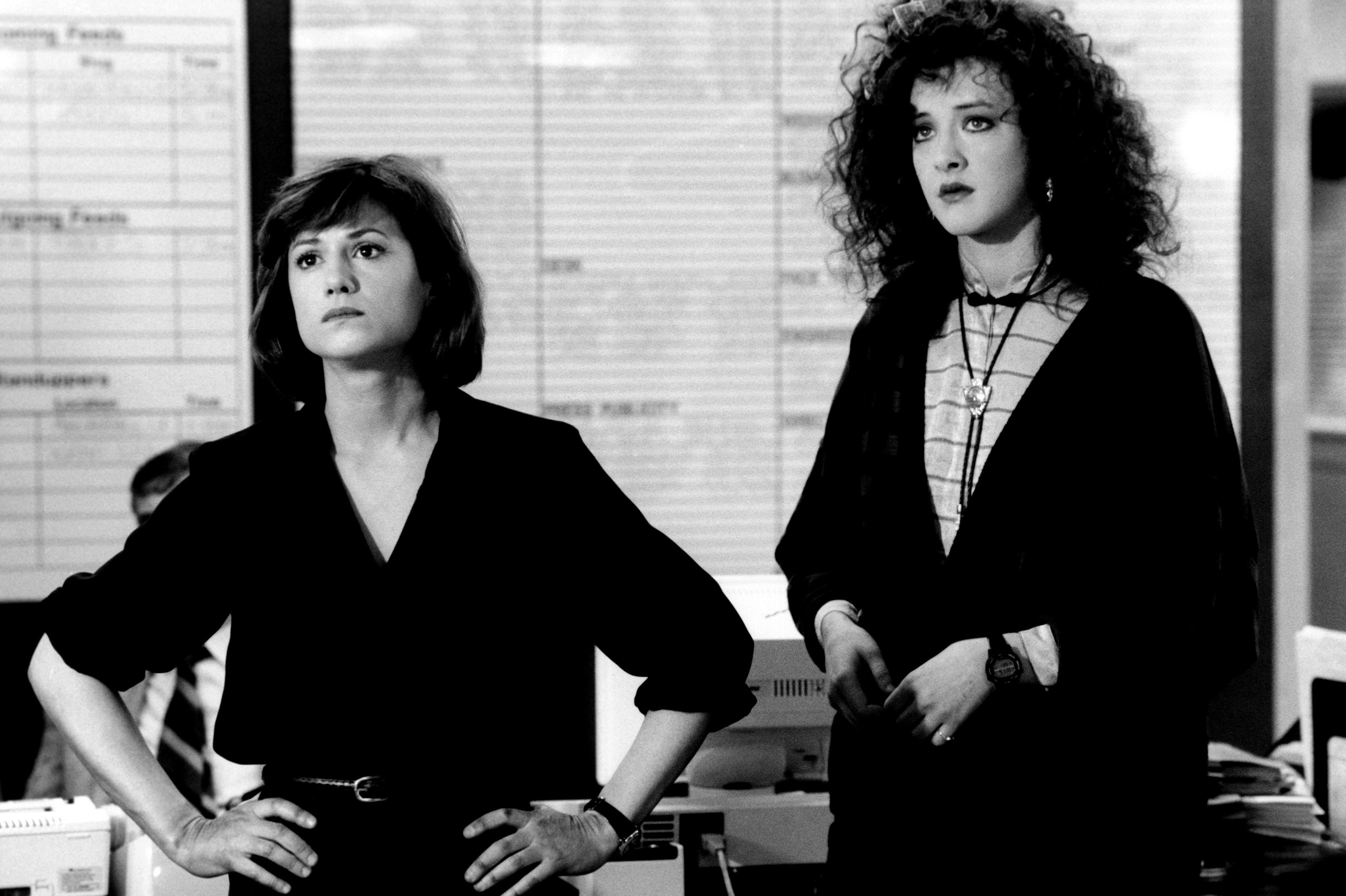
Joan Cusack, who was born on this day in 1962, with Holly Hunter in a publicity still for Broadcast News. Cusack earned her first Oscar nomination for her performance in the movie.
Remade Trailer of the Day:
Professor Marston and the Wonder Women, which comes out this Friday, is about the creation of Wonder Woman, so here’s a comic book style remake of its trailer:
[embedded content]
Video Essay of the Day:
In this video for Film Radar, Daniel Netzel explores the color coding of characters in Edgar Wright’s Baby Driver:
[embedded content]
Cosplay of the Day:
No, this isn’t Sophia Lillis from It. It’s another winning lookalike cosplayer, and her name is Aleksandra Bodler:
can someone find who this is because THIS IS A GREAT COSPLAY pic.twitter.com/tpIv3Dy4hH
— dani loves katie 17 (@bivmarsh) October 11, 2017
Classic Trailer of the Day:
Today is the 15th anniversary of the initial limited release of Paul Thomas Anderson’s Punch-Drunk Love. Watch the original trailer for the romance classic below.
[embedded content]
and
Judge Limits DOJ's Warrant For Records From Anti-Trump Site

Anti-Trump protesters chant during an Inauguration Day demonstration in Washington, D.C., in January. A judge has narrowed the Justice Department’s warrant for records related to a website used to plan protests.
Mario Tama/Getty Images
hide caption
toggle caption
Mario Tama/Getty Images
A Washington, D.C., judge has significantly narrowed the Justice Department’s warrant related to a website used to plan anti-Trump protests during the Inauguration.
The government had sought a sweeping warrant for records from web hosting company DreamHost of all visitors to its customer’s website, DisruptJ20.org — even those not suspected of committing a crime. As NPR previously reported, DreamHost resisted complying with that warrant, considering it overly broad, and endangering privacy and free speech.
“[W]hile the government has the right to execute its Warrant,” D.C. Superior Court Judge Robert Morin wrote in his order, “it does not have the right to rummage through the information contained on DreamHost’s website and discover the identity of, or access communications by, individuals not participating in alleged criminal activity, particularly those persons who were engaging in protected First Amendment activities.”
The government sought the warrant as it gathers evidence for its cases against nearly 200 people charged with rioting on Jan. 20.
The judge’s new order instructs DreamHost to redact identifying information of “innocent persons” who visited the website before providing the records to the government. It also dictates a protocol for incorporating procedural safeguards to comply with “First Amendment and Fourth Amendment considerations.” Among other stipulations, the government must submit to the court its plan for permanently deleting from its possession all information not within the scope of the warrant.
DreamHost considered the judge’s ruling a significant victory.
“The new order is a far cry from the original warrant we received in July,” DreamHost General Counsel Christopher Ghazarian wrote in a statement to NPR. “Absent a finding by the Court that probable cause of criminal activity exists, the government will not be able to uncover the identities of these users. There are also quite a few modifications that further reduce the government’s ability to review unrelated data. This is another huge win not just for DreamHost, but for internet users around the world.”
The company says it does not intend to appeal the court’s ruling.
“As it stands today, the sum total of requested data in this case very closely aligns with hundreds of other government requests that DreamHost has received, and complied with lawfully, in the past,” DreamHost VP of Corporate Communications Brett Dunst tells NPR.
Morin took over adjudication of the matter from another judge, Ronald Wertheim, who had granted the initial warrant.
The Justice Department declined to comment on the order.
After Devastating Loss For USMNT, What Comes Next?
Last night was one of the worst in U.S. men’s soccer history. An embarrassing loss to Trinidad and Tobago means the team will not make the World Cup for the first time since 1986. What happens now?
ROBERT SIEGEL, HOST:
If you listen very closely to this next highlight, you can hear the sound of millions of U.S. soccer fans tearing their hair out.
(SOUNDBITE OF ARCHIVED RECORDING)
UNIDENTIFIED MAN: Long distance blast, and it’s Alvin Jones – one for the legend books. Oh, my, his first Trinidadian goal, and he might as well retire right now.
SIEGEL: The second goal for tiny Trinidad and Tobago clinched the match against the United States men’s team last night, and it kept the U.S. out of the World Cup for the first time since 1986. Well, now fans and experts alike are wondering what happened, and one of those experts joins us now. He’s Roger Bennett, a co-host of the “Men In Blazers” show and podcast on NBC Sports. Thanks for joining us today.
ROGER BENNETT: I’d like to say it’s a pleasure, Robert, but to hear that open wound of a goal and live it out again after the night that we all went through – the American football community – these are dark times.
SIEGEL: Well, to put this in context, just how bad a loss was this for the U.S. men’s team?
BENNETT: It was a debacle. It was an Armageddon. It was an apocalypse. It was a night in which so many results had to go against the U.S. for them to fail to qualify. And slowly, as if there was no such thing as free will but we were all just doomed by fate, all those results did start to slide. And I know that it’s only a game of football. I keep telling myself that. But it feels so much more. It’s simply devastating, the result, to those of us who care about the game in America and its future.
SIEGEL: I’m a sports fan but a very casual soccer fan. This is not something that I watch closely. But every time I’ve watched a soccer match in recent years, Tim Howard has been in the net, been the goalkeeper for the United States. Is that a sign that he is the greatest goalkeeper around or that the U.S. has a very old goalkeeper playing every year?
BENNETT: Tim Howard is an incredible servant for U.S. soccer. The night of the World Cup against Belgium – that’s how I’d like to remember him, for the save after save after save as he played lights out. This was not his finest moment. It’s not just him. With a manager that they changed to mid-cycle, a gentleman, Bruce Arena, who’d led them wonderfully in the early 2000s and in players that he then picked, it was a little bit of a reversion of what we used to know. And the U.S. Soccer Federation, at all levels, perhaps could be accused of worshipping the old gods. And now it needs to work out the new.
What I will say – in this moment of darkness, we really should usher in the light. Other teams – Germany – when they had a national debacle in 2000, it triggered a national soul searching about how they train their players, how they coach them, how they recruit them. And I believe that the U.S. have a true opportunity that they can do something similar here.
SIEGEL: Well, I mean, what does U.S. men’s soccer do at this point? Do you fire the coach? Do you change the way the team trains or the way it’s selected? Do you decide this is a disaster; we’ve got to zero it out and start all over again? What?
BENNETT: It’s not a birth right to qualify to the World Cup. We have had a remarkable run – seven straight tournaments. And no team qualifies forever, Robert. And Chile failed this time around. The (unintelligible) Netherlands failed. The World Cup’s still going to be massive in America. It will still be a television ratings buster. But this was always going to have seismic repercussions for all levels of the game.
SIEGEL: Boy, listening to you, I’m feeling worse and worse and worse. This is just disastrous what happened last night.
BENNETT: That’s what I’m here for, Robert.
SIEGEL: Yeah, that’s what you’re here for.
BENNETT: Thank you very much. And good luck.
SIEGEL: Roger Bennett, co-host of the “Men In Blazers” podcast and show on NBC Sports spoke to us via Skype.
BENNETT: Courage.
Copyright © 2017 NPR. All rights reserved. Visit our website terms of use and permissions pages at www.npr.org for further information.
NPR transcripts are created on a rush deadline by Verb8tm, Inc., an NPR contractor, and produced using a proprietary transcription process developed with NPR. This text may not be in its final form and may be updated or revised in the future. Accuracy and availability may vary. The authoritative record of NPR’s programming is the audio record.
Health Conditions That Increase Stroke Risk Rise Across All Ages, Races

Roughly 80 percent of all first strokes arise from risks that people can influence with behavioral changes, doctors say — risks like high blood pressure, smoking and drug abuse.
Brenda Muller/Gallo Images/Getty Images
hide caption
toggle caption
Brenda Muller/Gallo Images/Getty Images
For years, doctors have been warning us that high cholesterol, cigarette smoking, illegal drug use and diabetes increase our chances of having a potentially fatal stroke.
And yet, most of the stroke patients showing up at hospitals from 2004 to 2014 had one or more of these risk factors. And the numbers of people at risk in this way tended to grow among all age groups and ethnicities in that time period.
That’s according to an analysis of the charts of more than 900,000 people admitted to U.S. hospitals for stroke within that decade. The study was published Wednesday in the journal Neurology.
“An estimated 80 percent of all first strokes are due to risk factors that can be changed — such as high blood pressure — and many efforts have been made to prevent, screen for and treat these risk factors,” says neurologist and study author Dr. Fadar Oliver Otite of the University of Miami Miller School of Medicine. “Yet we saw a widespread increase in the number of stroke patients with one or more risk factors.”
Most surprising, researchers say, was the high rate of Hispanic stroke patients who also had diabetes — about 50 percent— and African-American stroke patients, 44 percent of whom also had diabetes.
“Those rates are really very alarming” for a variety of complex reasons, says Dr. Seemant Chaturvedi, who also worked on the study and is a professor of clinical neurology at the Miller School of Medicine. Poor diet, less access to health care, lack of exercise and other factors all can contribute to risk, he says.
“Those are populations that need to be looked at,” Chaturvedi adds.
But not all of the risk factors increased equally, or can be attributed to the same causes, he notes. Diabetes increases many of the other risk factors, and this country is still in the midst of a diabetes epidemic, although recent studies suggest it may have reached a plateau.
Other risk factors may simply appear to be increasing because doctors have become more tuned in to checking for them.
For example, stroke patients with dislipidemia (a fancy way of saying an imbalance of fat and other substances in the blood) nearly doubled during that decade, although that is probably because doctors are testing for the condition and treating it more often. High cholesterol has become an increasingly important factor in stroke risk, Chaturvedi notes.
Given the demographics of the opioid epidemic the U.S. is struggling with, it’s probably not too surprising that stroke risks are rising among younger people. The prevalence of drug abuse among stroke patients doubled from 1.4 percent in 2004 to 2.8 percent by 2014, the study shows.
It’s really important that younger and middle-aged people understand that “these behaviors do put them at risk” for stroke, and that stroke is no longer just a disease for older people, Chaturvedi says.
The findings add to a growing list of recent studies showing stroke is an increasing problem among young to middle-aged adults.
The study also found that the prevalence of diabetes across stroke patients of all ages and ethnicities increased by 22 percent — from 31 percent of patients in 2004 to 38 percent in 2014. And the prevalence of high blood pressure increased by 15 percent — from 73 percent of patients at the beginning of the study period to 84 percent by the end.
According to the American Heart Association, stroke is the second-most-common cause of death from cardiovascular disease, although rates of stroke deaths decreased between 2004 and 2014 by almost 29 percent. However, if stroke risk factors are increasing, that’s a trend to watch.
Chaturvedi says the authors would next like to study data coming in from 2011 to 2016 to see if the risk factor rates change.
The Thistle And Shamrock: The Atlantic Bridge

Today in Movie Culture: 'Star Wars: The Last Jedi' Trailer Easter Eggs, the Hidden Character in the Poster and More
Here are a bunch of little bites to satisfy your hunger for movie culture:
Movie Trailer Easter Eggs of the Day:
You’ve seen the new Star Wars: The Last Jedi trailer a hundred times, but now you need Mr. Sunday Movies to point out all its Easter eggs and other things you missed:
[embedded content]
Movie Poster Easter Egg of the Day:
Many fans are making fun of this reveal, but it really does look like there’s supposed to be an upside down Darth Vader hidden in the new Star Wars: The Last Jedi poster:
#Starwarspic.twitter.com/bwOBFI44tt
— BossLogic (@Bosslogic) October 10, 2017
Fan Theory of the Day:
For those of you who did see Blade Runner 2049, here’s Mr. Sunday Movies again with all the movie’s Easter eggs and a discussion of whether Deckard is really a replicant:
[embedded content]
Movie Analysis of the Day:
ScreenCrush goes deep on the opening scene of Reservoir Dogs and reveals how it holds the secret meaning of the whole movie:
[embedded content]
Vintage Image of the Day:
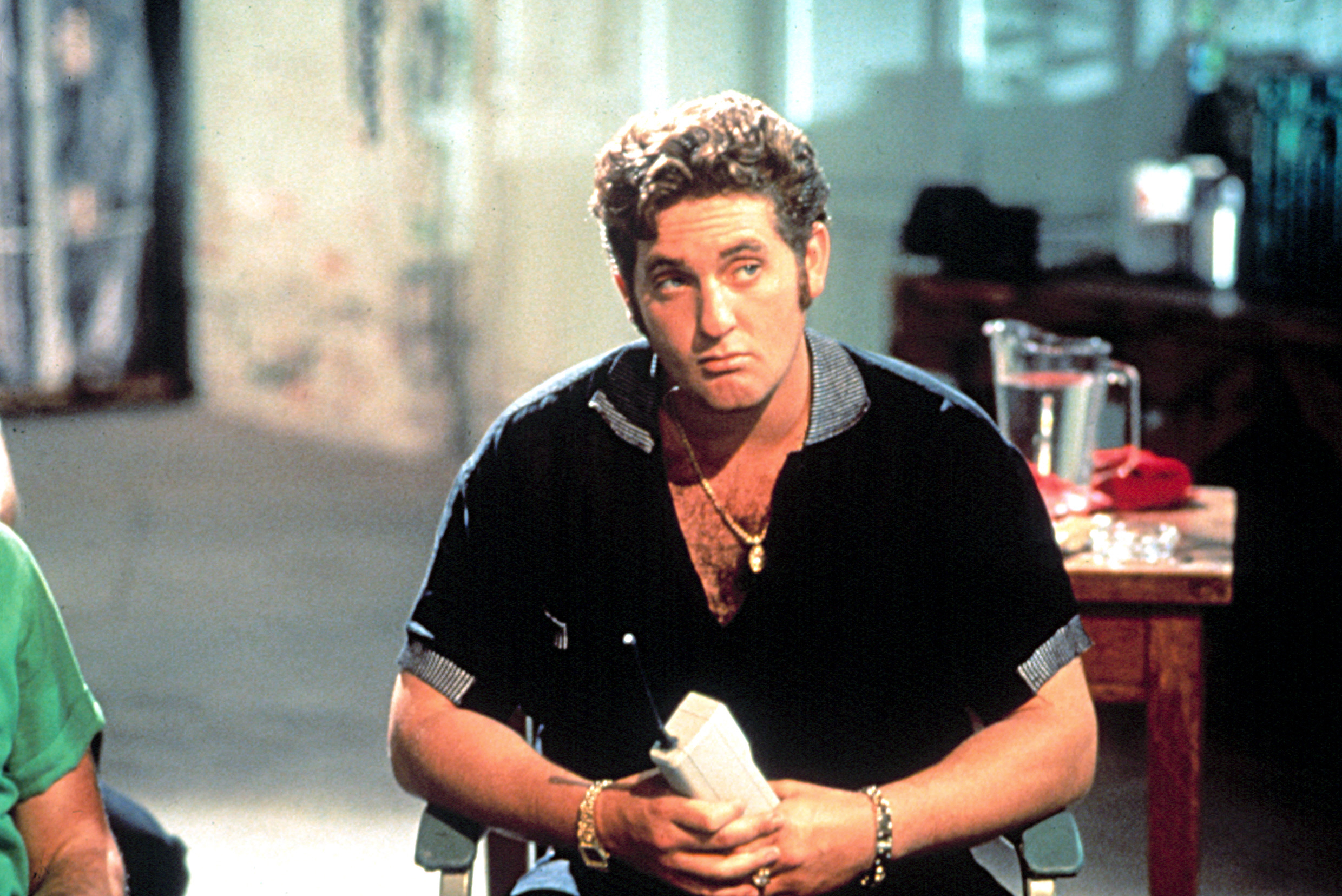
Speaking of Reservoir Dogs, here’s a publicity still of Chris Penn, who was born on this day in 1965, as Nice Guy Eddie:
Filmmaker in Focus:
This video essay from Titouan Ropert highlights all the art that inspired shots in Lars von Trier movies with side by side comparison:
[embedded content]
Movie Trivia of the Day:
Cracked shares the story of how an iconic scene from Midnight Cowboy was made up on the spot in this trivial film history lesson:
[embedded content]
Cosplay of the Day:
With Cult of Chucky now available in stores, here’s a woman doing some gender-swapped Child’s Play cosplay:
Chucky #cosplay done by @Darshelle_pic.twitter.com/TKrKKQJHwS
— Cosplay Girls (@CosplayGirIs) October 10, 2017
Alternate Poster of the Day:
Speaking of Child’s Play, here’s one of the 31 amazing horror movie posters Matt Talbot is drawing up for the month of Halloween:
Today’s #31DaysOfHorror is for Child’s Play! The flick that kicked off the franchise is still a really fun watch. #31daysofhalloweenpic.twitter.com/NF3MmEW3c5
— Matt Talbot (@mattrobot) October 7, 2017
Classic Trailer of the Day:
Today is the 20th anniversary of the release of Paul Thomas Anderson’s Boogie Nights. Watch the original trailer for the classic movie below.
[embedded content]
and
U.S. Men's Soccer Team Won't Play In World Cup For First Time Since 1986

Team USA’s Christian Pulisic is defended by Trinidad and Tobago’s Kevon Villaroel on Tuesday night during their 2018 World Cup qualifier football match in Couva, Trinidad and Tobago. A loss, combined with other results, means the U.S. team will be staying home next year.
Luis Acosta/AFP/Getty Images
hide caption
toggle caption
Luis Acosta/AFP/Getty Images
A win or a tie would have done it. Or even one loss or tie by the underdogs in Tuesday night’s other two qualifying games.
Or beating Honduras a month ago, or beating Panama in March, or not losing both games to Costa Rica.
A 2-1 loss Tuesday night to Trinidad and Tobago — the only team below the U.S. soccer team in the standings — and wins by Honduras and Panama over the qualifying tourney’s best two teams mean the Americans will miss the 2018 World Cup in Russia. They’d played in seven World Cups in a row dating back to 1990.
The U.S. defense, which has taken much of the blame for the team’s poor performances, had another sloppy night. Trinidad and Tobago’s first goal came when the Americans’ Omar Gonzales shanked his attempt to clear a cross, instead blooping it in over the head of U.S. goalie Tim Howard.
??GOOOOAAAAL??
Omar, WYD?! #TRIvsUSApic.twitter.com/MjV03LIH3y— beIN SPORTS USA (@beINSPORTSUSA) October 11, 2017
A long-range goal by Trinidad and Tobago defender Alvin Jones gave the team a 2-0 lead at halftime — and only Howard’s quick reaction to and pursuit of a later spinning free kick from Jones kept it from being 3-0.
Midfielder Christian Pulisic — a 19-year-old star who is seen as the future of the struggling U.S. men’s team — added a goal just after halftime to complete the scoring.
??GOOOOAAAAL??
It’s the kid, AGAIN! @cpulisic_10 out here looking like Mes…a promising young prospect! #TRIvsUSApic.twitter.com/99n0vlxO9f— beIN SPORTS USA (@beINSPORTSUSA) October 11, 2017
Team USA got into this position thanks to stumbles in early qualification games, which led to the firing of manager Jurgen Klinsman in November 2016 and his replacement by Bruce Arena, who had led the Americans from 1998-2006. Arena had a string of successes, going months without losing.
“Four months ago we were rebuilding our program. A program that was in desperate shape of being in a position to qualify for a World Cup,” he said. “So I think we’ve made great strides in the past four months and [playing in the Gold Cup Final] is a great opportunity for us to make progress.”
But a 2-0 loss to Costa Rica and a 1-1 tie with Honduras in September left Team USA vulnerable, and the only scenario that could keep them out of the World Cup — including a loss to the 99th ranked team in the world — came to pass Tuesday night.
