Articles by admin

No Image

Reporter Pulls Blanket Off Cozy Ties Between Mattress Companies And Reviewers

Shoppers go online for reviews of the products they want to buy — like mattresses. But one reporter found out that reviewers often have cozy business deals with the companies they’re reviewing.

ARI SHAPIRO, HOST:

Now to the shadowy underworld of online mattress reviews. When you’re getting ready to spend hundreds or even thousands of dollars on a new mattress you want to be smart about it, so you start Googling and reading reviews. And writer David Zax says there are some things you need to know about those reviews. He discovered a kind of Wild West of memory foam where people writing about mattresses have cozy business deals with the companies they’re reviewing. Zax described this in a piece for Fast Company magazine and joins us now. Welcome.

DAVID ZAX: Thank you for having me.

SHAPIRO: Your discovery started in the spring of 2016 when you met a guy named Kenny who gave you a free mattress. Who is this dude?

ZAX: Kenny’s a nice guy. Let me begin by saying that. He’s my neighbor. He’s a friend of a friend. And I heard that he had mattresses to spare. So I actually just walked over one day with a bottle of wine under my arm and traded him a bottle of wine for a free mattress. And I sort of asked him, what’s going on here? I hear you’re handing out free mattresses left and right. And it emerged that he reviewed mattresses online and that he actually got paid a commission from companies when he managed to persuade the people reading his reviews to buy a given mattress.

SHAPIRO: We actually have a clip here from one of his YouTube videos. This one’s from 2015.

(SOUNDBITE OF ARCHIVED RECORDING)

KENNY KLINE: Hey, I’m Kenny with Slumber Sage. Today I’m reviewing the Leesa mattress. I’ve been sleeping on the Leesa about three weeks now. It’s been a great experience.

SHAPIRO: So he goes on to rate the firmness of the mattress. And right under the review is a link for a coupon, $60 off the mattress. This has more than 60,000 views. What does Kenny get for doing this?

ZAX: So I did interview the CEO of Leesa, David Wolfe. And with his affiliate marketing partners, as they’re called, these reviewers who are also paid commissions on sales they generate, he pays $50 per mattress.

SHAPIRO: You report that some of these mattress reviewers are making more than a million dollars a year from mattress companies just for doing these reviews and doing referrals.

ZAX: It’s pretty incredible. But when you think about it – so a mattress is a – it’s a big-ticket item. It’s a thousand bucks on average, right about. And 5 percent of that, which is a standard commission for salespeople, is $50. So that adds up.

SHAPIRO: We’re not going to reveal all the twists and turns of your magazine story, including the surprise ending. But ultimately, the moral seems to be that you can’t necessarily trust the reviews you read online, at least of mattresses. How true is this of other review sites?

ZAX: Yeah, well, I wanted my story to be a way into understanding this giant industry called affiliate marketing. $4.5 billion were exchanged – changed hands last year in affiliate marketing. Affiliate marketing basically means, you know, often review sites where a product is reviewed. And on a deep level, the reviewers are incentivized by the very companies that they are reviewing.

SHAPIRO: Because on the review site you can click to buy. And if you click to buy on, say, Amazon, Amazon will give you a cut.

ZAX: Exactly. Or there’s a tracking code embedded in a link that goes straight to casper.com or leesa.com. There’s no obligation to disclose a case where you’re reviewing two competitors and one competitor’s paying you $250 per mattress and another competitor is paying you $50 for mattress or $0 per mattress. So it’s very difficult to know which sites are honest and which might be less so.

SHAPIRO: What advice do you have for people going online to buy things, wondering if reviewers are getting paid to give positive reviews?

ZAX: You know, definitely snoop around on the website. Check out the disclosures page. Be skeptical of language that says, you know, we may earn a small affiliate commission. Sometimes I tend to think that these disclosures that use the word affiliates, it’s almost as though that word is sort of almost boring enough that I think it causes consumers to – eyes glaze over. But that means in some cases that – especially if this is a highly trafficked website – that the people behind that website are making an awful lot of money. That doesn’t mean that the review is inaccurate. It’s just something consumers should be aware of.

SHAPIRO: That’s David Zax, contributing writer for Fast Company magazine. His latest story is called “The War To Sell You A Mattress Is An Internet Nightmare.” Thanks a lot.

ZAX: Thank you.

Copyright © 2017 NPR. All rights reserved. Visit our website terms of use and permissions pages at www.npr.org for further information.

NPR transcripts are created on a rush deadline by Verb8tm, Inc., an NPR contractor, and produced using a proprietary transcription process developed with NPR. This text may not be in its final form and may be updated or revised in the future. Accuracy and availability may vary. The authoritative record of NPR’s programming is the audio record.

Let’s block ads! (Why?)


No Image

Rural Hospice That Spurns Federal Funds Has Offered Free Care for 40 Years

Helping her father die at home “was the most meaningful experience in my nursing career,” said Rose Crumb. She went on to found Volunteer Hospice of Clallam County in Port Angeles, Wash.

Dan DeLong for Kaiser Health News

hide caption

toggle caption

Dan DeLong for Kaiser Health News

Rose Crumb can’t even count the number of people she’s helped die.

The former nurse, 91, who retired in her mid-80s, considers the question and then shakes her head, her blue eyes sharp above oval spectacles.

“Oh, hundreds,” estimates Crumb, the woman who almost single-handedly brought hospice care to the remote Pacific Northwest city of Port Angeles, Wash., nearly 40 years ago.

But the actual number of deaths she has witnessed is likely far higher — and Crumb’s impact far greater — than even she will admit, say those affiliated with the Volunteer Hospice of Clallam County.

“[Rose] let people know hospice is not all about dying,” said Bette Wood, who manages patient care for VHOCC. “Hospice is about how to live each and every day.”

In a nation where Medicare pays nearly $16 billion a year for hospice care, and nearly two-thirds of providers are for-profit businesses, the tiny volunteer hospice is an outlier.

Since 1978, the hospice founded by Crumb — a mother of 10 and devoted Catholic — has offered free end-of-life care to residents of Port Angeles and the surrounding area. She was the first in the region to care for dying AIDS patients in the early days of the epidemic. Her husband, “Red” Crumb, who died in 1984 of leukemia, was an early patient.

“He died the most perfect death,” Rose Crumb told visitors on a recent afternoon. “He spent time alone with each of our kids. That meant so much to him.”

At the same time, Crumb and her successors have refused to accept federal funding or private insurance, relying instead on a mostly volunteer staff and community donations to keep the hospice going.

That’s rare, said Jon Radulovic, a spokesman for the National Hospice and Palliative Care Organization, NHPCO, a trade group. Most of the nation’s 4,000-plus hospices receive Medicare payments for their services. He estimates there are only a few volunteer hospices like Crumb’s in the U.S.

There was pressure in the early years to “take the money,” as Crumb put it. But she had little use for the regulations that accompanied federal Medicare reimbursement starting in 1982.

“It was our experience that we could operate on a much smaller budget and we could be more flexible in providing services,” Crumb wrote in a 2007 newsletter.

Today, the hospice relies on 10 paid staff, 160 volunteers and an annual budget of less than $400,000 to provide end-of-life care for 300 patients each year, according to federal records.

Patients don’t have to meet Medicare’s criteria of having six months or less to live to be enrolled, though most do. They can keep their own doctors instead of turning over care to a hospice physician. If families need medical equipment, the hospice supplies it for free.

Eve Farrell holds a portrait of her husband, Daniel, in her Port Angeles, Wash., home. He died in January of chronic obstructive pulmonary disease.

Dan DeLong for Kaiser Health News

hide caption

toggle caption

Dan DeLong for Kaiser Health News

“I don’t know how I would have made it without them,” said Eve Farrell, 82, whose husband, Daniel, had chronic obstructive pulmonary disease, or COPD. He died in January at age 80 after four months of hospice care at the couple’s Port Angeles home.

Staffers helped her husband shower when she couldn’t lift him, offered advice about medication and gave her breaks from relentless caregiving.

“We felt like Dan was the only patient they had,” Eve Farrell said.

Crumb was drawn to hospice care in the 1970s, after the book “On Death and Dying” by Dr. Elisabeth Kübler-Ross galvanized conversations in the U.S. about how to treat the terminally ill. Years earlier, when Crumb’s father was diagnosed with lymphoma, she helped him die at home.

“It was the most meaningful experience in my nursing career,” she said.

In April 1977, when Crumb attended a convention that included a program on hospice, she was hooked.

“Everything clicked,” she recalled. “I thought ‘Yes!’ “

Organizers had little money and less support, Crumb said. The local medical community was skeptical about hospice, which started in the U.S. in Connecticut in 1974.

“Some of the doctors called us ‘the death squad,'” Crumb said. Crumb’s refusal to take federal funds put her at odds with the for-profit hospice industry, which lobbied state lawmakers in 1992 to eliminate an exemption that allowed volunteer hospices to remain unlicensed.

Crumb had to enlist the services of her eighth child, Patrick Crumb, then a corporate lawyer, to fight back.

“In my view, they were clearly misrepresenting the current status of the law,” recalled Patrick Crumb, 55, who is now president of the AT&T Sports Network. “I told them, ‘If you do what you’re threatening to do, I’m going to sue you and I’m going to win.’ “

Lawmakers eventually agreed to create an exemption to state law that allows volunteer hospices to remain unlicensed and unregulated. Crumb’s hospice remains the only agency in state history to use it.

In 2002, the volunteer hospice faced a for-profit rival, Assured Home Health and Hospice, now owned by the LHC Group based in Lafayette, La. Documents show that Assured officials predicted they’d serve 70 percent of the local hospice market within two years.

Since 1978, the Volunteer Hospice of Clallam County has offered free end-of-life care to residents of Port Angeles, Wash.

Dan DeLong for Kaiser Health News

hide caption

toggle caption

Dan DeLong for Kaiser Health News

But competition was fierce, recalled Dr. Tom Kummet, medical director at the Olympic Medical Cancer Center, who referred dying patients to hospice care.

“It was a bit of an awkward time,” he said. “Assured hospice wanted to be a successful business. And Volunteer Hospice was going to negatively impact their chances of being a successful business.”

Fifteen years later, Assured still struggles, said Leslie Emerick, director of public policy and outreach for the Washington State Hospice and Palliative Care Organization.

“They tread lightly up there because of Rose,” Emerick said. “Rose is a beloved person in that community.”

Officials with LHC declined to discuss competition in the Port Angeles market or to say how many patients Assured has enrolled.

“We value the care that Volunteer Hospice provides for our community,” Candace Hammer Chaney, a local Assured manager and community liaison, said in a statement.

Emerick and other hospice industry officials said volunteer hospices don’t offer the range of services required of those who receive federal funding. And, Emerick added, there’s little oversight.

“They don’t have a reputation of negligence or complaints as far as I’m aware, but there’s always the possibility of that when they’re unlicensed or unregulated,” she said.

But Astrid Raffinpeyloz, VHOCC’s volunteer services manager, said the hospice wouldn’t have lasted long in a small town if there were problems.

“We don’t have oversight from the government, but we have minute oversight from the community,” said Raffinpeyloz.

Mike Clapshaw poses with a picture of him and his wife, Deborah, in his Port Angeles, Wash., home.

Dan DeLong for Kaiser Health News

hide caption

toggle caption

Dan DeLong for Kaiser Health News

For Mike Clapshaw, 71, there was no question about who would care for his wife, Deborah, when her cancer came back for the third time, leading to her death in December 2014. She was 60. For the last four months of her life, VHOCC staff eased her pain — and his.

“It was always, ‘What can I do to help?’ ” he said.

Helping was always the point, said Rose Crumb, whether the pain at the end of life was physical, emotional — or both.

“Some people just need someone to listen to them,” she said.

Crumb at nearly 92, now suffers from osteoporosis, congestive heart failure and other ailments that plagued her patients in earlier years. But she’s not worried about her final days.

“I’m all signed up for hospice,” she said. “I have everything written down.”

KHN’s coverage of end-of-life and serious illness issues is supported byThe Gordon and Betty Moore Foundation.

Kaiser Health News, a nonprofit health newsroom whose stories appear in news outlets nationwide, is an editorially independent part of the Kaiser Family Foundation.

Let’s block ads! (Why?)


No Image

Today in Movie Culture: A History of Werewolves in Movies, How David Fincher Hijacks Your Eyes and More

Here are a bunch of little bites to satisfy your hunger for movie culture:

Film History Lesson of the Day:

For Fandor, Luis Azevedo looks at the history of werewolves, particularly in movies from Werewolf of London to Harry Potter and the Prisoner of Azkaban:

[embedded content]

Movie Trivia of the Day:

With Halloween coming up, Screen Rant looks into the dark truth behind the original script for Monster House:

[embedded content]

Movie Science of the Day:

Why does Captain America’s shield bounce? Kyle Hill gives a scientific explanation for Nerdist:

[embedded content]

Film Legend of the Day:

Wonder Woman goes through the Film Theorists’heavy point-based analysis to determine where it ranks among film legends:

[embedded content]

Vintage Image of the Day:

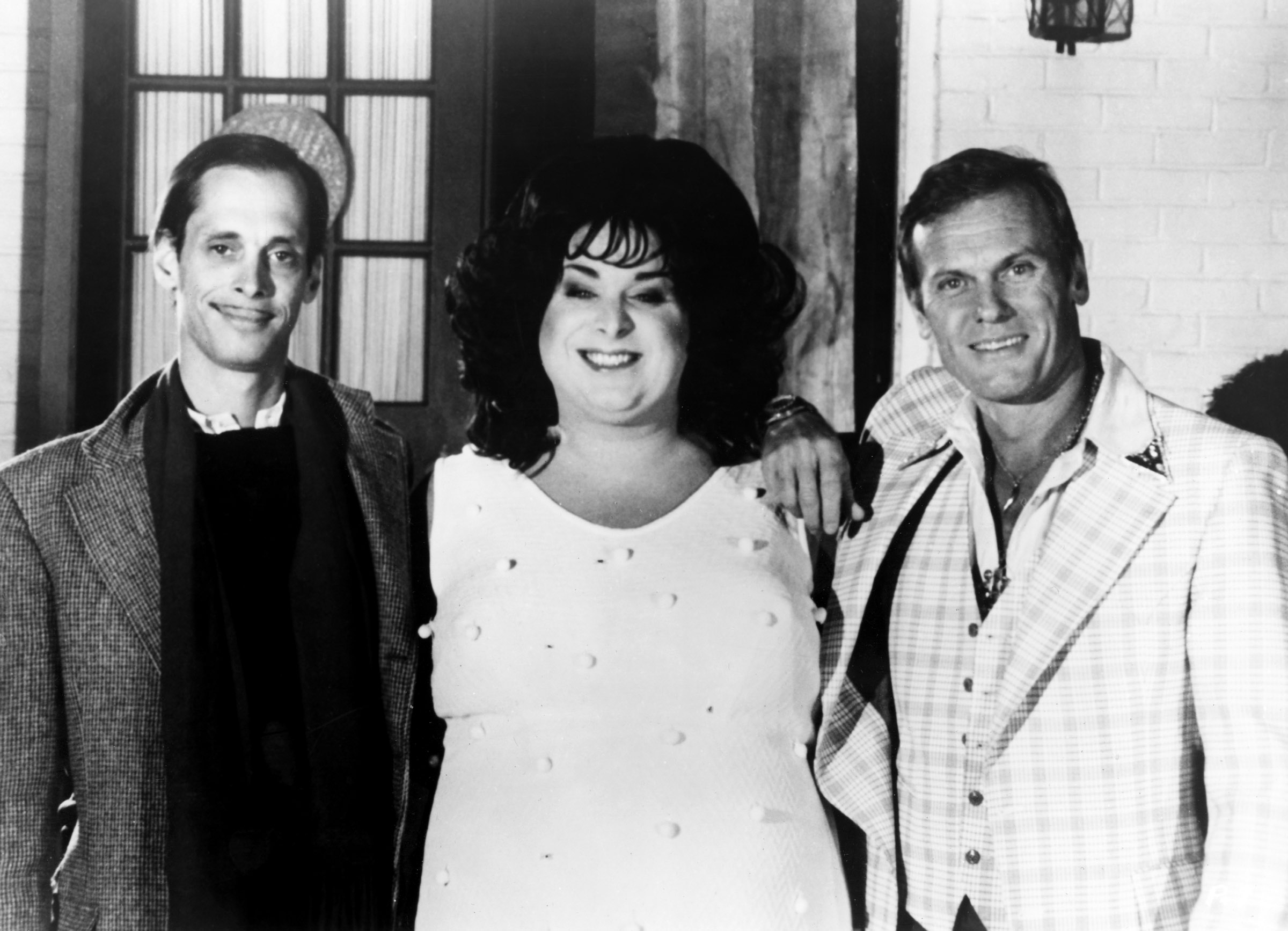
Divine, who would have turned 72 today, with director John Waters and co-star Tab Hunter on the set of the 1981 cult classic Polyester:

Filmmaker in Focus:

With David Fincher’s new series Mindhunter out on Netflix, The Nerdwriter looks at the filmmaker’s work and how he “hijacks your eyes”:

[embedded content]

Video Essay of the Day:

Matt Draper explores the legacy of John Carpenter’s The Thing and what has made it a classic over time:

[embedded content]

Alternate Poster of the Day:

For his month-long horror-poster-a-day project, Matt Talbot offers a different take on last weekend’s box office hit, Happy Death Day:

My #31DaysOfHorror poster today is for #HappyDeathDayMovie ! Really dug this fun slasher film. @blumhouse FTW again! #31daysofhalloweenpic.twitter.com/5EUEa97I7H

— Matt Talbot (@mattrobot) October 18, 2017

Cosplay of the Day:

Mineralblu’s video showcasing the best cosplay of this year’s New York Comic Con includes It, Coraline, Transformers, Wonder Woman costumes and much more:

[embedded content]

Classic Trailer of the Day:

Today is the 10th anniversary of the release of Ben Affleck’s feature directorial debut, Gone Baby Gone. Watch the original trailer for the classic crime film below.

[embedded content]

and

Let’s block ads! (Why?)


No Image

Los Angeles Dodgers Take National League Pennant, Beating Chicago Cubs 11-1

Los Angeles Dodgers’ Enrique Hernandez his grand slam in Game 5 of the National League Championship Series against the Chicago Cubs on Thursday in Chicago.

Matt Slocum/AP

hide caption

toggle caption

Matt Slocum/AP

The Los Angeles Dodgers nailed down the National League championship and a trip to the World Series Thursday by beating the Chicago Cubs 11-1 to take the series four games to one. Left fielder Enrique Hernandez was on fire for the Dodgers, hitting three home runs and driving in seven runs at Wrigley Field in Chicago.

The Dodgers were in charge all the way. Their biggest inning was the third, with four runs on a grand slam by Hernandez. He also hit two other homers and joined nine other players, including Babe Ruth, who have hit three home runs in one postseason game.

The defending champion Cubs got on the board with a solo homer by Kris Bryant in the fourth inning.

Los Angeles will play the winner of the American League Championship Series between the New York Yankees and the Houston Astros. The Yankees lead three games to two in the best-of-seven series. Game 6 is Friday night.

Let’s block ads! (Why?)


No Image

After Ikea Dresser Recall, Another Toddler Reportedly Died In Tip-Over

Two recalled Ikea dressers are displayed during a Consumer Product Safety Commission news conference in 2016. Since the recall was announced, at least one more toddler has been crushed to death by a falling dresser.

Carolyn Kaster/AP

hide caption

toggle caption

Carolyn Kaster/AP

Another toddler has reportedly been crushed to death by an unsecured Ikea dresser, after the furniture giant recalled millions of chests and dressers over the risk of deadly tip-over accidents.

Jozef Dudek, 2, died in May, according to lawyers for his family, when he was crushed by an Ikea Malm dresser in his parents’ room after he was put down for a nap.

In the recall, which began last June, Ikea offers full or partial refunds as well as providing free wall-anchoring kits to make the furniture safe to use. The move came after multiple toddlers were killed in similar tip-over accidents.

But Jozef’s parents weren’t aware that their Malm dresser had been recalled, Daniel Mann, who is representing the family, tells NPR.

In a statement, Mann’s colleague Alan Feldman called Jozef’s death “completely avoidable” and criticized Ikea’s recall effort as “poorly publicized … and ineffective.”

In a statement, Ikea said it is aware of the accident and extends its “sincere condolences” to the family. The company says it went to “great lengths to get the word out” about the recall, including a national advertising campaign, millions of emails to consumers and information “posted prominently” in stores.

Last June, Ikea said that 29 million dressers in the U.S. were covered by the recall. The company has not identified how many dressers have since been returned or how many wall-mounting kits have been claimed.

The Philadelphia Inquirer, which has extensively investigated tip-over deaths, reports that in the first six months of the recall about 882,500 dressers were returned or “repaired” — representing 3 percent of the recalled items. More recent numbers are not available, the paper says.

Ikea challenges the accuracy of any percentages, saying that the affected dressers have been sold “going back decades,” that “it’s impossible to know how many of those units are still in use” and that some users might have attached the unit to the wall without participating in the recall.

As NPR previously reported, the recalled chests and dressers — as well as similar items of furniture — can be pulled over by a child, with potentially fatal consequences:

“When multiple drawers are opened, or if a child opens drawers and attempts to climb on them, even dressers that seem too heavy for a child to move can become vulnerable to tipping. (Seemingly stable televisions can pose a similar hazard.)

“In 2014, two children, both around 2 years old, died in tip-over accidents involving Ikea’s Malm dressers. The next year, the company launched a program offering free wall-mounting kits to consumers and encouraging them to attach dressers to the wall.

“But in February [2016], a third child, a 22-month-old boy in Minnesota, died after a Malm chest fell on top of him.

“His family was renting its apartment, the Star Tribune reports, and was not allowed to put holes in the walls, as Ikea’s wall-mounting kits require.”

“IKEA urges all consumers to securely attach chests to the wall with the hardware included in every IKEA chest of drawers package,” the company says in its newest statement. “Wall attachment is a necessary part of the assembly instructions, which must not be overlooked. If it is impossible for units to be attached to the wall, consumers should choose a different storage solution.”

The Consumer Product Safety Commission says it is investigating the death of Jozef Dudek. He would be the eight toddler known to have died in an Ikea dresser tip-over, according to the CPSC and the Inquirer.

“We urge people who have IKEA dressers covered by the recall to take advantage of the remedies provided,” the agency says.

Meanwhile, a group of consumer safety advocacy groups — including the American Academy of Pediatrics and the Consumer Federation of America — have issued a joint statement criticizing Ikea for promoting wall-mounting instead of urging owners to return their dressers.

“Unfortunately, the communication efforts focused on anchoring a deadly dresser to the wall are not enough on their own. Anchoring devices are meant as a second layer of protection for stable dressers — not as a replacement for making stable dressers in the first place,” the groups write.

Safety standards for dressers are currently voluntary. Last year, some lawmakers introduced a bill to call for mandatory safety standards, which failed in committee.

Let’s block ads! (Why?)


No Image

Sure, There's A Health Care Deal. That Doesn't Mean It Can Pass

Sen. Lamar Alexander, R-Tenn., chairman of the Senate Health, Education, Labor, and Pensions Committee, talks to reporters on Capitol Hill Wednesday.

Carolyn Kaster/AP

hide caption

toggle caption

Carolyn Kaster/AP

Updated at 3:55 p.m. ET

A bipartisan coalition of 24 senators — 12 Republicans and 12 Democrats — has signed on to health care legislation to prop up the individual insurance market and keep premiums down. With the expected support of all Senate Democrats, it could have the votes to pass the chamber. But questions remain over when it might actually get a vote, as well as whether President Trump and House Republicans would bring the bill over the finish line.

“This is a first step: Improve it, and pass it sooner rather than later. Our purpose is to stabilize and then lower the cost of premiums in the individual insurance market for the year 2018 and 2019,” said Sen. Lamar Alexander, R-Tenn., on the Senate floor. Alexander and Sen. Patty Murray, D-Wash., crafted the compromise bill.

Alexander and Murray have been working on this legislation for months. Negotiations initially began after the Senate failed to pass legislation to repeal and replace Obamacare back in July.

Most Americans get health insurance through their employer or from the government. About 18 million Americans get their insurance through the individual market established by the Affordable Care Act. “They’re the ones we’re worried about; they’re the ones we’re seeking to help,” Alexander said, noting that includes about 350,000 people in his home state.

“I have to say that after seven years of intense partisanship on these issues, which would lead everyone to believe there was no hope for Republicans and Democrats to come together and work to strengthen our health care, I’m really pleased with this common ground we’ve been able to find,” Murray said on the Senate floor.

President Trump’s decision last week to end subsidies to insurance companies that were allowed under the ACA revived congressional talks. The Trump administration argued — and initial court rulings backed it up — that the payments were illegal because they had not been appropriated by Congress, which has the constitutional authority to spend the government’s money. Although the 2010 health care law required insurers to provide discounts to some low-income consumers and said the government would reimburse them, without authorizing the spending.

The Alexander-Murray proposal would appropriate those subsidies for two years, and tie them to permanent changes to the law that give states more flexibility to seek waivers from the Health and Human Services Department from the ACA’s requirements. It would also allow insurances companies to sell less comprehensive plans to all customers, not just those under age 29 as is the case under current law.

The nonpartisan Congressional Budget Office estimates that without the subsidies, premiums will go up, the deficit will rise and up to 16 million Americans could live in counties with no insurance providers at all.

“Unless they are replaced with something else temporarily, there will be chaos in this country and millions of Americans will be hurt,” Alexander warned.

Alexander said Trump has been privately encouraging of the talks, but the president cast doubts on the legislation this week by suggesting it was a “bailout” for insurance companies that he could not support. However, the bill’s sponsors counter that the legislation requires that the subsidies go directly to the consumer to keep premiums down.

The bipartisan bill has potentially critical GOP support from Sens. Susan Collins of Maine, Lisa Murkowski of Alaska and John McCain of Arizona. The trio played a defining role in the defeat of previous GOP health care bills this year. It also has the backing of Sens. Lindsey Graham of South Carolina and Bill Cassidy of Louisiana, who have competing legislation to dismantle the ACA and replace it with a block grant system to the states.

GOP backers say the bill does not pre-empt the party’s ongoing effort to end Obamacare but rather buys time to keep working on legislation that can muster enough support to pass Congress. Conservatives have balked at Alexander-Murray as a tacit admission that Obamacare will remain the law of the land. House Speaker Paul Ryan said through a spokesman Wednesday that the speaker believes the Senate should remain focused on legislation to end Obamacare, not prop it up.

The proposal puts the GOP in a bind between the policy necessity to act to protect millions of Americans from premium hikes and the political necessity to continue to keep up its effort to dismantle the current system. An August poll from the Kaiser Family Foundation found that 60 percent of Americans think Trump and Republicans in Congress are responsible for what happens to the ACA in the future.

Senate Majority Leader Mitch McConnell has not taken a position on the bill, but he is unlikely to bring something to the floor unless it has Trump’s support and the 60 votes needed to clear a potential filibuster, which it should if all 48 Senate Democrats support it along with the 12 Republicans who have signed on. The legislation crowds an already limited legislative calendar. It would need to become law before the end of the year when Congress needs to pass a spending bill package to keep the government running. That spending bill would be the vehicle to fund the insurance subsidies.

Along with Alexander, Collins, Murkowski, McCain, Graham and Cassidy, the additional GOP co-sponsors include Sens. Mike Rounds of South Dakota, Joni Ernst and Chuck Grassley of Iowa, Bob Corker of Tennessee, Richard Burr of North Carolina and Johnny Isakson of Georgia.

The Democratic co-sponsors joining Murray include Sens. Angus King, independent of Maine, Jeanne Shaheen and Maggie Hassan of New Hampshire, Joe Donnelly of Indiana, Amy Klobuchar and Al Franken of Minnesota, Heidi Heitkamp of North Dakota, Joe Manchin of West Virginia, Tom Carper of Delaware, Tammy Baldwin of Wisconsin and Claire McCaskill of Missouri.

Let’s block ads! (Why?)


No Image

Augustin Mawangu Mingiedi, Bandleader Of Konono No. 1, Dies At 56

Augustin Mawangu, bandleader of the Grammy-winning Congolese band Konono No. 1, died on Monday, Oct. 16.


Vera Marmelo/Courtesy of Konono No. 1
hide caption

toggle caption


Vera Marmelo/Courtesy of Konono No. 1

Augustin Mawangu Mingiedi, leader of the Congolese group Konono No. 1, died on Monday, Oct. 16 after a months-long illness related to complications from diabetes, a representative for the band confirmed. He was 56 years old.

Konono No. 1 was founded between 1965 and 1968, by his father, Mingiedi Mawangu. After the elder Mawangu’s death in April 2015 at the age of 85, Augustin Mawangu Mingiedi became the group’s leader. Now a third member of the family, Augustin’s son Makonda, will take the reins of the celebrated group. “We are devastated,” the band wrote. “But Konono No. 1 are indestructible.”

Augustin’s instrument, like that of both his father and his son, was an amplified version of the likembe, a handheld instrument sometimes referred to as a “thumb piano” (and also known elsewhere as the mbira or karimba, among other names). It is played by plucking metal tines connected to a resonator board. Mingiedi Mawangu electrified the instrument using found parts, yielding a mesmerizing distortion that Westerners compared to the sounds of experimental rock and electronic music.

[embedded content]
YouTube

“At the beginning, my father went very often to collect car parts like springs, wire, metal discs, old car alternators, magnets … all that sort of stuff, as well as the wood, which he used to make the likembe,” Augustin told the BBC in a 2015 profile.

Only decades after the group’s founding did it release its first album, 2004’s Congrotronics, recorded in Kinshasa for the Belgian label Crammed Discs. It was the result of a long search by Belgian producer Vincent Kenis, a zealous fan of Congolese music who first traveled to the country in 1971, making regular trips there over the following three decades.

“Only in 2000, I found a Konono fan club,” he said in a 2006 interview with Afropop. “I left a note.”

In that same interview, Mingiedi Mawangu said of Kenis’ search: “Konono was playing in villages in different places, and parties for a long time. That’s why Vincent couldn’t find me. We didn’t stop. We kept playing. But you had to know where we were, exactly where we were playing. Even if you asked people, they wouldn’t tell you. You had to know my address.”

In a statement sent to NPR, Kenis wrote, “On the footsteps of his father the great Mingiedi, founder of Konono No. 1, likembe virtuoso Augustin Mawangu acted as a pionneer by enhancing the instrument’s expressivity with electronic devices and new techniques, with stunning effects. His brilliant and bold playing, his stage presence, his humor and high spirits graced many projects …. It’s a great honor for me to have worked with him.”

The release of Congotronics led to the group touring the world and collaborating with artists like Björk, on her song “Earth Intruders” from the 2007 album Volta. The attention culminated in a nomination for best traditional world music album at the 2007 Grammys for the group’s record Live At Coleur Café, and a 2010 Grammy Award for best pop collaboration with vocals, for playing on Herbie Hancock’s The Imagine Project.

“To me,” Augustin Mawangu told the BBC, “it’s like you’re planting seeds which are useful, and that everybody loves. It’s like leaving a mark — it’s a feeling of joy.”

Let’s block ads! (Why?)


No Image

Today in Movie Culture: 'La La Land' Meets 'Blade Runner 2049,' 'Black Panther' Easter Eggs and More

Here are a bunch of little bites to satisfy your hunger for movie culture:

Mashup of the Day:

This fan-made trailer for La La Land 2049 mashes two Ryan Gosling movies perfectly (via ScreenCrush):

[embedded content]

Easter Eggs of the Day:

We got a new Black Panther trailer, so here’s Mr. Sunday Movies with a funny look at its Easter eggs and other things you might have missed:

[embedded content]

High School Assembly of the Day:

An Arizona high school’s dance team performs the greatest homecoming assembly routines ever. Following last year’s Pixar-themed pep rally comes this year’s The Wizard of Oz extravaganza (via Geekologies):

[embedded content]

Vintage Image of the Day:

George C. Scott, who was born on this day in 1927, with co-star Tracy Reed and director Stanley Kubrick on the set of Dr. Strangelove or: How I Learned to Stop Worrying and Love the Bomb in 1963:

Filmmaking Lesson of the Day:

For Filmmaker IQ, John P. Hess discusses the math and science behind forced perspective shots:

[embedded content]

Filmmakers in Focus:

For Fandor, Philip Brubaker looks at the Joel and Ethan Coen and Sam Raimi’s use of the shaky cam for traveling POV shots:

[embedded content]

Alternate Poster of the Day:

Speaking of Raimi, one of Matt Talbot’s new horror movie posters for his Halloween-themed month-long project is of Evil Dead:

My #31DaysOfHorror poster for day is Evil Dead, which premiered on this day in 1981! #31daysofhalloweenpic.twitter.com/98b7i9AExD

— Matt Talbot (@mattrobot) October 16, 2017

Movie Comparison of the Day:

Also speaking of Raimi, with Spider-Man: Homecoming out in theaters, Couch Tomato shows 24 reasons why it’s better than the Spider-Man trilogy:

[embedded content]

Cosplay of the Day:

Check out the Extreme Costumes Bumblebee from Transformers cosplay at this year’s New York Comic Con via mineralblu:

[embedded content]

Classic Trailer of the Day:

This week is the 20th anniversary of the release of The Devil’s Advocate. Watch the original trailer for the classic thriller below.

[embedded content]

and

Let’s block ads! (Why?)


No Image

Emoluments Hearing Hints At What May Be At Stake: Trump's Tax Returns

A lawsuit against President Trump alleges he is violating the Foreign and Domestic Emoluments clauses of the Constitution. Plaintiffs’ lawyer Deepak Gupta says Trump’s Washington hotel (above) is “an emoluments magnet.”

Paul J. Richards/AFP/Getty Images

hide caption

toggle caption

Paul J. Richards/AFP/Getty Images

If there’s one thing President Trump’s critics want from him, and he refuses to give up, it’s his tax returns.

The returns didn’t come up during Wednesday’s hearing in U.S. District Court for the Southern District of New York in Manhattan. But the hearing was the first step in a process that could loosen Trump’s grip on them.

If the next step goes the plaintiffs’ way, the case could make the president’s tax returns surface.

Trump is being sued by four plaintiffs who allege he is violating anti-corruption provisions in the Constitution, namely, its Foreign and Domestic Emoluments clauses.

If Judge George Daniels says the plaintiffs have legal standing to proceed with the suit, they then can seek internal financial documents, including those tax returns.

“We will be looking for detailed financial records, foreign and domestic transactions, in the president’s businesses,” plaintiffs’ lawyer Joseph Sellers told reporters after the hearing. “If the tax returns turn out to be relevant we may seek them.”

Trump is the only president since 1977 to withhold his tax returns from voluntary disclosure. Unlike recent presidents, he has also refused to comply voluntarily with the federal conflict-of-interest law. Doing so would have forced him to separate himself from the Trump business empire.

The lawsuit comes from three plaintiffs in the hotel and restaurant industry, and one watchdog group, called Citizens for Responsibility and Ethics in Washington.

The Constitution’s clauses banning emoluments — that is, money and other favors — are meant to keep federal officials out of conflicts of interest.

Plaintiffs’ lawyer Deepak Gupta told Daniels that Trump’s Washington hotel is “an emoluments magnet.” Its international business has been burgeoning, according to news reports.

Justice Department lawyer Brett Shumate said the plaintiffs failed to show they have been injured by Trump hotels and restaurants, so they wouldn’t have legal standing.

As the hearing wrapped up, Shumate opened a possible argument that presidents aren’t even covered by the Foreign Emoluments Clause.

Let’s block ads! (Why?)


No Image

Olympic Gymnast McKayla Maroney Says She Was Molested For Years By Team Doctor

McKayla Maroney stands on the podium at the 2012 Olympic Games in London. She says a team doctor molested her for years, including during the Olympics.

Ronald Martinez/Getty Images

hide caption

toggle caption

Ronald Martinez/Getty Images

Editor’s note: This story contains graphic language.

As women around the world tell their stories of sexual harassment and assault using the phrase “#MeToo,” one prominent voice added her own harrowing account.

McKayla Maroney, a member of the U.S. women’s gymnastics team that won gold at the 2012 Olympics in London, says she was abused for years by former USA Gymnastics team doctor Larry Nassar.

“I had a dream to go to the Olympics,” she writes in a statement posted to Twitter, “and the things that I had to endure to get there, were unnecessary, and disgusting.”

#MeToopic.twitter.com/lYXaDTuOsS

— mckayla (@McKaylaMaroney) October 18, 2017

“Dr. Nassar told me that I was receiving ‘medically necessary treatment that he had been performing on patients for over 30 years,’ ” she writes. “It started when I was 13 years old, at one of my first National Team training camps, in Texas, and it didn’t end until I left the sport.” She says the abuse continued in London during the 2012 games.

Former USA Gymnastics team doctor Larry Nassar.

Michigan Attorney General/AP

hide caption

toggle caption

Michigan Attorney General/AP

Maroney says the scariest night of her life happened when she was 15 years old, when the team traveled to Tokyo. She says Nassar gave her a sleeping pill to help her sleep on the flight, and when she awoke she was alone with him in his hotel room, “getting a ‘treatment.’ ” She does not describe his specific actions.

“I thought I was going to die that night,” she writes.

Maroney retired from gymnastics in 2016, at age 20. She sprang to fame with strong routines at the 2012 Olympics, and her look of dissatisfaction at her silver medal performance in the vault final gave rise to the “McKayla is not impressed” meme.

Her story of molestation by Nassar echoes the accounts of many others. More than 125 women have sued the former team doctor, alleging abuse.

Attorneys representing Nassar had no comment on Maroney’s accusations.

In July, Nassar pleaded guilty in federal court to three counts related to child pornography, for which he could be sentenced to 22 to 27 years in prison. Sentencing in that case is scheduled for Dec. 7, the same week as jury selection in his trial on state charges in Michigan.

Nassar faces almost two dozen charges of sexual assault in two different Michigan counties, the Lansing State Journalreports. From 1997 until he was fired last September, Nassar was a sports medicine doctor and faculty member at Michigan State University.

He has pleaded not guilty to the assault charges; many of the civil charges are in mediation, according to The Associated Press.

In court, Nassar’s attorneys have defended his actions — including breast massages and digital vaginal and anal penetration for up to 20 minutes as a time — as helpful medical treatments, according to the Journal.

Maroney’s accusation against Nassar comes amid sweeping allegations of sexual harassment and misconduct by film executive Harvey Weinstein and others. She says she wants people to know that the problems are not only in Hollywood.

“Things have to change,” Maroney writes, and she has some suggestions for how to make that happen:

“One: Speaking out, and bringing awareness to the abuse that is happening.

“Two: People, Institutions, Organizations, especially those in positions of power, etc. need to be held accountable for their inappropriate actions and behavior.

“Three: Educate, and prevent, no matter the cost.

“Four: Have zero tolerance for abusers and those who protect them.”

She ends with one more piece of advice: “remember, it’s never too late to speak up.”

Let’s block ads! (Why?)