
Iditarod Names Four-Time Champ Dallas Seavey In Dog Doping Scandal

In a March 15, 2016, file photo, Dallas Seavey poses with his lead dogs Reef, left, and Tide after finishing the Iditarod Trail Sled Dog Race in Nome, Alaska. Seavey denies he administered banned drugs to his dogs in this year’s race, and has withdrawn from the 2018 race in protest.
Mark Thiessen/AP
hide caption
toggle caption
Mark Thiessen/AP
Alaska’s Iditarod race committee has identified four-time champion Dallas Seavey as the musher whose dogs tested positive for a banned opioid pain reliever in this year’s race. Seavey is denying the charge and has withdrawn from the 2018 dog sled race in protest.
Last week, the Iditarod Trail Committee announced that at the March finish in Nome this year, four dogs from a single team had tested positive for the drug tramadol. The committee initially declined to name the musher involved.
However, competitors kept up pressure to release the name of the accused musher. On Monday, the Iditarod Official Finishers Club released a statement signed by 83 current and former competitors calling for the musher to be named within 72 hours, according to The Associated Press.
Seavey, now 30, came in second in this year’s Iditarod Trail Sled Dog Race behind his father, 57-year-old Mitch Seavey.
In a YouTube video, a visibly agitated Dallas Seavey denied any wrongdoing and fired back at the race organizers, saying he had been cooperating with them to clear things up.
“I did nothing wrong,” Seavey said in the video.
“I have never knowingly broken any race rule. I have never given any banned substance to my dogs,” he said, adding that he fully expects to be banned but that he doesn’t care “if I never make another cent” from the sport, which he said “is my life.”
He said he spent several months trying to explain how his dogs showed positive for the drug, but instead was “thrown under the bus.”
“I believe this was given to my dogs maliciously,” he said. “That’s one of the options. I think that is the most likely option. There are numerous ways that could have been done.”
As we wrote in last week’s story:
“… the board said it was revising the rules on doping by shifting the burden of proof from race officials to the mushers.
“In future, mushers will be held accountable for a positive test unless they can prove the drugs were administered the drug outside their control. Previously, the rule could be interpreted so that race officials would need to prove the doping was intentional, AP says.”
Fresh Headache For Murdochs: Bill O'Reilly Got Raise After Secret Payout

Former Fox News host Bill O’Reilly paid $32 million to a colleague to settle sexual harassment allegations.
Dimitrios Kambouris/Getty Images for Hollywood Reporter
hide caption
toggle caption
Dimitrios Kambouris/Getty Images for Hollywood Reporter
Bill O’Reilly wants you to know it’s all lies, driven by ideology, personal animus and professional jealousy.
Since The New York Times reported this weekend that he had agreed to a $32 million settlement to silence a longtime colleague’s accusations of sexual harassment back in January, O’Reilly has been brawling to defend his already deeply tarnished reputation.
O’Reilly’s former bosses at Fox News and parent company 21st Century — and especially for the Murdoch family that controls both — are fighting to contain fallout on multiple fronts. The Murdochs signed O’Reilly to a contract extension a month after their star host agreed to the secret payout — and despite knowing of at least four earlier instances in which he settled with women over sexual harassment dating back to 2004.
“Nobody pays $32 million to anybody for false accusations,” former Fox News host Gretchen Carlson told HLN.
“It’s shocking and it’s disturbing,” former Fox News host Megyn Kelly said on her new NBC Today show program.
All three Murdochs — Rupert and his sons Lachlan and James — have made pledges to reform the culture of Fox News. The late Roger Ailes, the propulsive force behind Fox News, was bought out as chairman last year after Carlson, Kelly and others accused him of sexual harassment. A host of network executives were forced out over the ensuing year for their ties to Ailes and perceptions they had enabled abusive behavior. The Murdochs paid O’Reilly $20 million to leave in the spring after several previously unknown settlements with women came to light. The network also forced out host Eric Bolling.
And yet Kelly devoted the opening minutes of her Monday morning show to an extended argument that Fox had not done enough.
On her show, Kelly just about set out a roadmap for prosecutors, arguing Fox had betrayed a pattern of hiding allegations through payments and threats, and retribution against those women who spoke up. “This has to stop,” Kelly said on NBC. “The abuse of women, the shaming them, the threatening, the retaliation, the silencing of them after the fact.”
O’Reilly’s spokesman, Mark Fabiani, sent a statement to NPR calling the Times‘ reporting a “diatribe … designed to embarrass Bill O’Reilly and to keep him from competing in the marketplace.” The statement also repeated O’Reilly’s frequent claim that no co-worker has ever filed a complaint against him with the network’s human resources or legal divisions. O’Reilly also released handwritten thank-you notes from Carlson and Kelly, and claimed he had helped them throughout their careers.
“Any fair-minded person can start to formulate a picture here,” O’Reilly said on former Fox News host Glenn Beck’s radio show Monday. “All I can hope for is that the American people will see that this is an attack on me for political purposes. It has done enormous damage to me and my family.”
Carlson and Kelly have both questioned the sincerity of the network’s past human resources and legal officials. Kelly also pointed to Fox’s chief publicity executive, Irena Briganti, as a corporate enforcer. (21st Century Fox issued a brief statement backing Briganti, saying she was a valued colleague who had the company’s full support.)
In a draft of a lawsuit, former Fox News legal analyst Lis Wiehl alleged O’Reilly had sexually harassed her over an extended period, sent her gay pornography, and that they had a “nonconsensual sexual relationship.” That troubling phrase was not further defined. O’Reilly agreed within weeks to the $32 million settlement, the Times reported. Wiehl signed an affidavit attesting she had no complaints against either O’Reilly or Fox News.
Officials for 21st Century Fox released a statement hailing the changes at Fox News and saying it was not aware of the amount of money involved in the settlement. The Murdochs were aware, however, of the nature of Wiehl’s allegations when they re-signed O’Reilly to a new multi-year contract with a raise. The company said any network would have done the same given O’Reilly’s position. (He was the top rated figure in cable news for years before his departure.)
“I’ve never heard of two employees reaching their own agreement and then the employer turning a blind eye to how much it was settled for,” said employment lawyer Douglas Wigdor, who is representing 22 people suing Fox News for a variety of charges. He won a confidential settlement from O’Reilly last year for Fox News commentator Juliet Huddy after she alleged the host had sexually harassed her.
As the Times also reported, the general counsel for parent company 21st Century Fox, Gerson Zweifach, warned his colleagues that he might have to disclose the settlement between O’Reilly and Wiehl. He wrote in an email that federal prosecutors would view that development as relevant to their investigation. Prosecutors have asked questions about activities of the network’s former president, chief attorney, financial officer, and the current public relations chief, according to two people knowledgeable about the process. It appears intent on probing the extent of actions taken by Fox officials toward women who say Ailes sexually harassed them.
In addition, 21st Century Fox is fighting in the U.K. for regulatory approval of the takeover of the more than 60 percent of the European satellite television company Sky that it does not already control. The value of the deal stands currently at more than $15 billion. But the British culture minister has delayed and expanded the review process, due to the sexual abuse scandal, the network’s handling of the Seth Rich story, and incidents of illegality and bribery at the Murdochs’ newspapers in that country.
Regulators are now assessing more broadly the family’s leadership. The Murdochs rewarded O’Reilly with a new contract and a raise after learning of the Wiehl settlement. That suggests the Murdochs were willing to give O’Reilly a sixth chance on sexual harassment, just six months after ousting their chairman for the same transgression.
Screening For Diabetes Is Working Better Than Thought

Screening for Type 2 diabetes involves a blood test, and if results are concerning a second test is recommended.
ERproductions Ltd/Blend Images/Getty Images
hide caption
toggle caption
ERproductions Ltd/Blend Images/Getty Images
Undiagnosed diabetes may not be as big of a public health problem as thought.
That’s the takeaway from a study published Monday in the Annals of Internal Medicine that says that some previous efforts have likely overestimated the number of people with undiagnosed diabetes because they relied on a single positive test result.
By contrast, this new measure used the American Diabetes Association’s diagnostic criteria, which recommend that people with one positive fasting blood glucose or A1C test should have a second test to confirm a diagnosis in all but the most severe and obvious cases of Type 2 diabetes. That’s because there’s some inherent variability in the tests and because blood sugar levels fluctuate naturally because of exercise, illness and even the time of day.
If left untreated, Type 2 diabetes can contribute to kidney disease, nerve damage, high blood pressure and stroke.
The Centers for Disease Control and Prevention has applied the less stringent standard to data from the National Health and Nutrition Examination Survey and the U.S. Census to come up with an estimate of 33.3 million people with diabetes in 2015, 7.2 million of whom, or almost 24 percent, were undiagnosed. When researchers in this study applied the stricter clinical diagnostic standard to the same data, they came up with an estimate of 25.5 million people with diabetes, with about 2.8 million, or about 11 percent, of them undiagnosed.
“This is good news,” says Elizabeth Selvin, a professor of epidemiology at the Johns Hopkins Bloomberg School of Public Health and the lead author of the study. “We’re doing a good job with screening and diagnosis.”
But she says that doesn’t mean diabetes isn’t a public health problem, and a significant one at that; the study found the prevalence of diabetes in the U.S. population has risen from 5.5 percent in 1988-1994 to 10.8 percent in 2011-2014. The proportion of undiagnosed cases has dropped from 16.3 percent over the same period, the study found.
The difference in how the estimates are calculated is due to the difference between epidemiological studies, which track patterns and trends across an entire population, and clinical practice, which focuses on individual patients. If you’re just studying historical trends, using a single-test value isn’t such a big deal, says Selvin. “But if we are focused on the burden of undiagnosed diabetes, or the percentage of diabetes that’s undiagnosed, it becomes important,” she says. (A CDC spokeswoman says the agency doesn’t directly comment on studies that aren’t its own.)
The results suggest that public health efforts to promote screening should be focused more closely on the people who are most likely to have undiagnosed diabetes rather than the population as a whole. According to the study, that group includes people who are obese, a racial or ethnic minority, and who don’t have health insurance or get regular health care. While increased age is also a risk factor, the authors noted that there’s an undiagnosed group of overweight and obese younger adults with very high A1C levels who are likely not engaged with the health care system and are falling through the cracks.
“We’re not missing hordes of people, which isn’t to say we aren’t missing some people,” says Anne Peters, an endocrinologist and professor of medicine at the Keck School of Medicine at USC, who wrote an editorial accompanying the study. “We need to continue to reach out to the people who do need help.”
She says more and more programs are focused on preventing diabetes in the first place, focusing on people with risk factors such as obesity and high cholesterol. That can help people avoid the complications of full-blown diabetes, and the label of having a chronic disease, which have long-term psychological effects as well as consequences for buying life insurance and long-term care insurance, Peters says. (And health insurance, if current Affordable Care Act rules about pre-existing conditions should change.)
The study’s authors pointed out some limitations of their work. Among them: the data includes fasting glucose and A1C levels taken only at one point in time, and the results might differ if samples were taken later. And the diagnosis of diabetes depends on study participants’ self-reports, which may not be accurate.
Katherine Hobson is a freelance health and science writer based in Brooklyn, N.Y. She’s on Twitter: @katherinehobson.
AFL-CIO President Richard Trumka Wins A Third 4-Year Term

AFL-CIO President Richard Trumka, who was re-elected to a third term Sunday night in St. Louis, speaks at the National Press Club in Washington, D.C., on April 4, 2017.
Alex Brandon/AP
hide caption
toggle caption
Alex Brandon/AP
AFL-CIO members, meeting in St. Louis, voted Sunday night to give Richard Trumka another term as president. He has been in the position since 2009.
Trumka ran unopposed as did Secretary-Treasurer Liz Shuler and Executive Vice President Tefere Gebre.
Bloomberg News reports Trumka has another four years to try to reverse the fortunes of the embattled labor movement.
“While Trumka’s re-election proved easy, it takes place at time U.S. unionization is at record lows and the Supreme Court is considering a case that could shrink the membership even further by banning mandatory public-sector union fees.
“Trumka has pursued a restructuring of the AFL-CIO this year, dismissing dozens of staff and dissolving departments in a move he said would tighten the group’s focus on mounting campaigns, passing legislation and stimulating growth.”
I am humbled and honored for the opportunity to serve the working families of the AFL-CIO for another four years #AFLCIO17
— Richard L. Trumka (@RichardTrumka) October 22, 2017
The re-election was held at the start of the AFL-CIO’s four-day, quadrennial convention.
The Wall Street Journal reports:
Following the election, crafting a “Workers’ Bill of Rights” will be a primary focus of the event, Mr. Trumka said. “The aim is to give politicians a clear view on union priorities, including the need for better wages and rethought trade agreements. It would establish a litmus test to determine if the AFL-CIO will support candidates in the 2018 and 2020 elections, regardless of party.
“People that support that Workers’ Bill of Rights will get our support,” Mr. Trumka told reporters Sunday. “Those that don’t—we’re sorry. We’re going to use our resources and our power to help people get elected that support the needs of workers.”
Looking ahead to the 2018 mid-term elections, NPR National Political Correspondent Don Gonyea reported that Trumka said unions have learned lessons from the 2016 election.
“Labor endorsed Democrat Hillary Clinton. According to exit polls, she carried union households, but by just 9 percentage points. Compare that with President Barack Obama’s 18-point margin among labor voters four years earlier. The shift certainly helped Donald Trump secure victory in closely contested battleground states like Michigan, Wisconsin and Pennsylvania.
“Turning that around in the next year’s midterm elections will require aggressive outreach to union voters. Personal contact is always the key, according to Trumka, but he also acknowledged his organization didn’t make the case well enough — or often enough — last year.
“As for the appeal of Trump among the rank-and-file membership, Trumka said, “My members, just like most Americans, are angry that the system isn’t working for them. That it keeps moving them further and further behind,” adding, “while the country is the richest country on the face of the earth.”
“He said they were willing to take a risk on Trump because he promised to shake up the system.
Every two years the AFL-CIO mounts an expensive get-out-the-vote and informational effort on behalf of the candidates it endorses.
Houston Astros Advance To The World Series For The Second Time In History

The Houston Astros head to the World Series to face the Los Angeles Dodgers. Brian Smith of the Houston Chronicle speaks about what the Astros’ entry into the baseball world series might mean for the city in the wake of Hurricane Harvey.
LAKSHMI SINGH, HOST:
It’s been nearly two months since Hurricane Harvey brought record rainfall and flooding to Houston, Texas. The city faces a long road of recovery. But this week, Houstonians have reason to celebrate because their baseball team is in the World Series, and they needed this. Last night, the Astros routed the Yankees in game seven to win the American League pennant and advance to the big show for only the second time in club history.
Starting Tuesday, the Astros will face the L.A. Dodgers, who won the National League Championship Series. To hear more, we’re joined now by Brian Smith. He’s a columnist for the Houston Chronicle, and he joins us from his home in Houston. Brian Smith, thank you so much for speaking with us.
BRIAN SMITH: Thank you for having me on. I appreciate it.
SINGH: The Astros have only been to the World Series once before in their 56-year history. Give us a sense of how big of a deal this is – not only for the Astros, but for the city.
SMITH: This is about so much more than baseball for the city of Houston. This is about Houstonians. This is about a city that was ravaged, and destroyed and in chaos during Hurricane Harvey just two months ago. And they couldn’t play baseball at Minute Maid Park. They actually had to replace the outfield. When the Astros returned after playing some home games in St. Petersburg, Fla., and spending a little time in the Dallas area while Harvey was going on, and everyone across the country is watching on television, they finally returned to Minute Maid to play again, they had an old-fashioned double header against the Mets on September 2.
And manager A.J. Hinch, who’s now in the World Series for the first time in his career, gave a pre-game speech on the Jumbotron and said, you know, Houston, this is for you. And basically, the rest of the season has been the Astros being a great baseball team that was World Series caliber. We’re playing for much more than that. And to have the Astros, who have never won a World Series game in their history and, now, be in the World Series about two months after Harvey said so much about this team. And there’s no question about it. The entire city has fallen in love with this team. And now, they really have something to be proud of with the Astros in the World Series.
SINGH: Because it’s – also sounds like making it to the World Series gives the people of Houston that much more resolve to keep going when it seems like everything else is a struggle and hopeless.
SMITH: It really does. And I’ve had friends affected by it. And I’ll never forget – a couple of days after Harvey started to subside, and we visited one of them, and they had, you know, floodwater in their house. They woke up to it. And one of the family members – the first thing he really wanted to talk about was the Astros. How are the Astros doing, you know? I mean, they’re dealing with unthinkable chaos and destruction in their lives, and the one thing you can keep up with – and it’s baseball. It’s every day. You know, Houston is doing well two months later. You can drive around. You can walk around. You’d have no idea. But then, you go into a neighborhood, and they’re going to be dealing with this for years.
So it’s a very lovable, energetic, thrilling team. They’re a very diverse team just like the city of Houston. So this entire city has followed this team. They fall in love with them. But at the same time, it’s an even bigger picture than that. This is a franchise and a city that really doesn’t win anything. I mean, Houston hasn’t won a major pro sports title since 1995. So simply getting in the World Series means so much to the city and this fan base. But I could easily see taking this to six or seven games and maybe shocking baseball and winning the World Series.
SINGH: What do you think a win in the World Series would actually mean for the people of Houston this year?
SMITH: For Houston to actually be able to have a championship in this city what would be about three months after Hurricane Harvey, that’s Hollywood, that’s storybook. They’re four wins away from it. And honestly, if it happens, they will go national – international. But they have the potential to really get into America’s hearts if they can pull this off.
SINGH: Brian Smith is a sports columnist for the Houston Chronicle in Houston, Texas. He spoke with us from his home there. Brian Smith, thank you again for joining us.
SMITH: Thank you.
Copyright © 2017 NPR. All rights reserved. Visit our website terms of use and permissions pages at www.npr.org for further information.
NPR transcripts are created on a rush deadline by Verb8tm, Inc., an NPR contractor, and produced using a proprietary transcription process developed with NPR. This text may not be in its final form and may be updated or revised in the future. Accuracy and availability may vary. The authoritative record of NPR’s programming is the audio record.
Fact Check: President Trump's Comments On ACA's Subsidies
NPR’s Melissa Block talks to Sarah Kliff, Vox senior policy correspondent, to fact check Trump’s claim that subsidies for insurance companies are “bailouts” and “a windfall” for those companies.
MELISSA BLOCK, HOST:
And now we’re going to truth squad some of President Trump’s latest claims about health care – in particular, what he’s said about his decision to stop paying for subsidies under the Affordable Care Act, or Obamacare. The president has called those subsidies bailouts to insurance companies, a windfall. Sarah Kliff joins us for a fact check. She covers health care policy for vox.com. Sarah, good morning.
SARAH KLIFF: Good morning.
BLOCK: And first, why don’t you give us a quick review of just how these cost-sharing reduction subsidies work?
KLIFF: Yeah, so these are subsidies for low-income Americans who buy Obamacare to help make their co-payments and deductibles a little bit lower, to make it a little easier to go to the doctor. And these payments have – will continue to be paid by insurance companies, even though the government will not finance them. It is just coming out of insurance companies’ own pockets at this point.
BLOCK: So basically, if they get reimbursed by the federal government, that is a wash? They’re getting just made up for what they already paid out?
KLIFF: Yeah, so the federal government, you know, makes these payments each month, and insurance companies, in turn, help lower the co-payments and deductibles of their low-income consumers. What President Trump is changing is he’s not going to make those payments, so insurance companies have no one on the back end, you know, sending them the payment to make up for that spending.
BLOCK: OK. So when President Trump calls those payments a gift to insurance companies, are they a gift?
KLIFF: I would disagree that they are a gift. You know, for one thing, they are going not necessarily to the insurance companies. They’re ultimately going to low-income Americans to help them afford their co-payments and afford their deductibles. So, you know, on that level, they don’t seem like a bailout or a gift to the insurance companies. They are required by the law. The law requires these subsidies to be made. So they’re really – you know, I see them as part of the Affordable Care Act and not necessarily a bailout.
BLOCK: The president has also said, Sarah, that the insurance companies, in his words, made a fortune with Obamacare. Is that true? What do the numbers show?
KLIFF: The numbers are a lot more mixed. The best data on this probably comes from the nonprofit Kaiser Family Foundation, which looks at quarterly margins – so how much insurance companies have each quarter leftover after paying out all those claims. In 2014 and 2015, insurance companies had a quarterly margin of just about $20 a person. That’s not a ton of money. It’s gone up as the Obamacare markets have stabilized.
In 2016, it was about $90 a person, so it’s definitely getting better. But the insurance markets – you know, I’ve covered them since they launched. And they’ve really been a very rocky experience for insurance companies financially. They didn’t know how to price at first. People were sicker than they expected. It’s only in the past year that insurance companies have made decent profits there, but I think of them as a mixed bag when it comes to financial performance.
BLOCK: Decent profits, which raises the question – if the insurance companies are losing the federal payments, they began compensating by jacking up the premiums for other people – right? – raising those premiums a lot – in some cases by double digits. Couldn’t the insurance companies just absorb the costs themselves, cut into their profits but not pass it along to consumers?
KLIFF: Yeah, so one of the things I’ve learned as a health care reporter is insurance companies tend to have relatively low profit margins, usually in the 3 to 4 percent range. So there definitely is some space. But one of the things that surprised me a little bit is state regulators often are the ones saying, you have to make those increases. They’re really worried that insurance companies might get hit with a big claim and not have enough money to pay for it.
So they want to make sure that insurance companies are getting enough revenue from their premiums to cover that loss, to make sure they can actually pay out claims. The worst-case scenario for a state regulator is to have an insurance company that just can’t pay its medical bills for patients.
BLOCK: That’s Sarah Kliff. She’s a senior policy correspondent for vox.com and host of the podcast The Impact, which covers health care policy. Sarah, thanks so much for being with us.
KLIFF: Yeah, thanks for having me.
Copyright © 2017 NPR. All rights reserved. Visit our website terms of use and permissions pages at www.npr.org for further information.
NPR transcripts are created on a rush deadline by Verb8tm, Inc., an NPR contractor, and produced using a proprietary transcription process developed with NPR. This text may not be in its final form and may be updated or revised in the future. Accuracy and availability may vary. The authoritative record of NPR’s programming is the audio record.
Astros Advance To The World Series By Shutting Out Yankees, 4-0

Houston Astros’ Jose Altuve holds up the championship trophy after Game 7 of baseball’s American League Championship Series against the New York Yankees Saturday in Houston.
Eric Christian Smith/AP
hide caption
toggle caption
Eric Christian Smith/AP
The Houston Astros are going to the World Series. They beat the New York Yankees 4-0 Saturday night in Minute Maid Park in Houston — the series went seven games.
The only other time the Astros have made an appearance in the World Series was in 2005 when they lost to the Chicago White Sox.
According to the MLB Stat of the Day: The Astros are the first team to reach the World Series as an American League team (2017) and as a National League team (2005).
Pitcher Justin Verlander was named the Most Valuable Player of the American League Championship Series.
“Verlander, 34, was remarkable in his two ALCS starts, going 2-0 with a 0.56 ERA while striking out 21 and walking two. The right-hander allowed one run in a complete-game effort that included 124 pitches and 13 strikeouts in Game 2 to help the Astros take a 2-0 lead in the series. In Game 6, with Houston’s back against the wall, down 3-2, Verlander went to the well again with seven shutout innings and eight strikeouts to help his team stay alive.
“Houston was rumored to be a potential trade destination for Verlander all summer, but a deal seemed unlikely when the Astros were unable to work out a deal with Detroit before the July 31 non-waiver Trade Deadline. Still, Houston’s front office didn’t give up on Verlander and finally inked a deal with the 2011 AL Cy Young Award winner with seconds to spare before the Aug. 31 deadline for waiver trades.”
The World Series begins Tuesday in Los Angeles, where the Dodgers have been waiting to find out who they would be playing.
The Dodgers beat the Chicago Cubs 11-1 Thursday night at Wrigley Field in Chicago to capture the National League Championship Series.
A Portland Video Store Goes Nonprofit To Save Itself


Many Breast Cancer Patients Receive More Radiation Therapy Than Needed

Annie Dennison said doctors offered just one option after her breast cancer diagnosis last year: six weeks of radiation treatment.
Courtesy of Annie Dennison
hide caption
toggle caption
Courtesy of Annie Dennison
When Annie Dennison was diagnosed with breast cancer last year, she readily followed advice from her medical team, agreeing to harsh treatments in the hope of curing her disease.
“You’re terrified out of your mind” after a diagnosis of cancer, said Dennison, 55, a retired psychologist from Orange County, Calif.
In addition to lumpectomy surgery, chemotherapy and other medications, Dennison underwent six weeks of daily radiation treatments. She agreed to the lengthy radiation regimen, she said, because she had no idea there was another option.
Medical research published in The New England Journal of Medicine in 2010 – six years before her diagnosis — showed that a condensed, three-week radiation course works just as well as the longer regimen. A year later, the American Society for Radiation Oncology, which writes medical guidelines, endorsed the shorter course.
In 2013, the society went further and specifically told doctors not to begin radiation on women like Dennison – who was over 50, with a small cancer that hadn’t spread – without considering the shorter therapy.
“It’s disturbing to think that I might have been overtreated,” Dennison said. “I would like to make sure that other women and men know this is an option.”
Dennison’s oncologist, Dr. David Khan of El Segundo, Calif., notes that there are good reasons to prescribe a longer course of radiation for some women.
Khan, an assistant clinical professor at UCLA, said he was worried that the shorter course of radiation would increase the risk of side effects, given that Dennison had undergone chemotherapy as part of her breast cancer treatment. The latest radiation guidelines, issued in 2011, don’t include patients who’ve had chemo.
Yet many patients still aren’t told about their choices.
An exclusive analysis for Kaiser Health News found that only 48 percent of eligible breast cancer patients today get the shorter regimen, in spite of the additional costs and inconvenience of the longer type.
The analysis was completed by eviCore healthcare, a South Carolina-based medical benefit management company, which analyzed records of 4,225 breast cancer patients treated in the first half of 2017. The women were covered by several commercial insurers. All were over age 50 with early-stage disease.
The data “reflect how hard it is to change practice,” said Dr. Justin Bekelman, associate professor of radiation oncology at the University of Pennsylvania Perelman School of Medicine.
A growing number of patients and doctors are concerned about overtreatment, which is rampant across the health care system, argues Dr. Martin Makary, a professor of surgery and health policy at the Johns Hopkins University School of Medicine in Baltimore.
From duplicate blood tests to unnecessary knee replacements, millions of patients are being bombarded with screenings, scans and treatments that offer little or no benefit, Makary said. Doctors estimated that 21 percent of medical care is unnecessary, according to a survey Makary published in September in the journal PLOS One.
Unnecessary medical services cost the health care system at least $210 billion a year, according to a 2009 report by the National Academy of Medicine, a prestigious science advisory group.
Those procedures aren’t only expensive. Some clearly harm patients.
Overzealous screening for cancers of the thyroid, prostate, breast and skin, for example, leads many older people to undergo treatments unlikely to extend their lives, but which can cause needless pain and suffering, said Dr. Lisa Schwartz, a professor at the Dartmouth Institute for Health Policy and Clinical Practice.
“It’s just bad care,” said Dr. Rebecca Smith-Bindman, a professor at the University of California-San Francisco, whose research has highlighted the risk of radiation from unnecessary CT scans and other imaging.
Outdated Treatments
All eligible breast cancer patients should be offered a shorter course of radiation, said Dr. Benjamin Smith, an associate professor of radiation oncology at the University of Texas MD Anderson Cancer Center.
Studies show that side effects from the shorter regimen are the same or even milder than traditional therapy, Smith said.
“Any center that offers antiquated, longer courses of radiation can offer these shorter courses,” said Smith, lead author of the radiation oncology society’s 2011 guidelines.
Smith, who is currently updating the expert guidelines, recently said there’s no evidence that women who’ve had chemo have more side effects if they undergo the condensed radiation course.
“There is no evidence in the literature to suggest that patients who receive chemotherapy will have a better outcome if they receive six weeks of radiation,” Smith said.
Shorter courses save money, too. Bekelman’s 2014 study in JAMA, the journal of the American Medical Association, found that women given the longer regimen faced nearly $2,900 more in medical costs in the year after diagnosis.
The high rate of overtreatment in breast cancer is “shocking and appalling and unacceptable,” said Karuna Jaggar, executive director of Breast Cancer Action, a San Francisco-based advocacy group. “It’s an example of how our profit-driven health system puts financial interests above women’s health and well-being.”
Just getting to the hospital for treatment imposes a burden on many women, especially those in rural areas, Jaggar said. Rural breast cancer patients are more likely than urban women to choose a mastectomy, which removes the entire breast but typically doesn’t require follow-up radiation.
Too Many Tests
Meg Reeves, 60, believes much of her treatment for early breast cancer in 2009 was unnecessary. Looking back, she feels like she was treated “with a sledgehammer.”

Meg Reeves believes that much of the treatment she received after being diagnosed with breast cancer was unnecessary.
Courtesy of Meg Reeves
hide caption
toggle caption
Courtesy of Meg Reeves
At the time, Reeves lived in a small town in Wisconsin and had to travel 30 miles each way for radiation therapy. After she completed her course of treatment, doctors monitored her for eight years with a battery of annual blood tests and MRIs. The blood tests include screenings for tumor markers, which aim to detect relapses before they cause symptoms.
Yet cancer specialists have repeatedly rejected these kinds of expensive blood tests and advanced imaging since 1997.
For survivors of early breast cancer like Reeves – who had no signs of symptoms of relapse — “these tests aren’t helpful and can be hurtful,” said Dr. Gary Lyman, a breast cancer oncologist and health economist at the Fred Hutchinson Cancer Research Center. Reeves’ primary doctor declined to comment.
In 2012, the American Society for Clinical Oncology, the leading medical group for cancer specialists, explicitly told doctors not to order the tumor marker tests and advanced imaging — such as CT, PET and bone scans — for survivors of early-stage breast cancer.
Yet these tests remain common.
Thirty-seven percent of breast cancer survivors underwent screening for tumor markers between 2007 and 2015, according to a study presented in June at the American Society of Clinical Oncology’s annual meeting and published in the society’s journal online.
Sixteen percent of these survivors underwent advanced imaging. None of these women had symptoms of a recurrence, such as a breast lump, Lyman said.
Beyond wasted time and worry for women, these scans also expose them to unnecessary radiation, a known carcinogen, Lyman said. A National Cancer Institute study estimated that 2 percent of all cancers in the United States could be caused by medical imaging.
Paying The Price
Health care costs for breast cancer patients monitored with advanced imaging averaged nearly $30,000 in the year after treatment ended. That was about $11,600 more than for women who didn’t get such follow-up tests, according to Lyman’s study. Women monitored with biomarkers had nearly $6,000 in additional health costs.
Reeves knows the costs of cancer treatment all too well. Although she had health insurance from her employer, she says she had to sell her house to pay her medical bills. “It was financially devastating,” Reeves said.
“It’s the worst kind of financial toxicity, because you’re incurring costs for something with no benefit,” said Dr. Scott Ramsey, director of the Hutchinson Institute for Cancer Outcomes Research.
Even simple blood tests take a toll, Reeves said.
Repeated needle sticks – including those from unnecessary annual blood tests — have scarred the veins in her left arm, the only one from which nurses can draw blood, she says. Nurses avoid drawing blood on her right side – the side of her breast surgery – because it could injure that arm, increasing the risk of a complication called lymphedema, which causes painful arm swelling.
Reeves also worries about the side effects of so many scans.
After treatment ended, her doctor also screened her with yearly MRI scans using a dye called gadolinium. The Food and Drug Administration is investigating the safety of the dye, which leaves metal deposits in organs such as the brain. After suffering so much during cancer treatment, she doesn’t want any more bad news about her health.
Becoming An Advocate
Kathi Kolb, 63, was staring at 35 radiation treatments over seven weeks in 2008 for her early breast cancer. But she was determined to educate herself and find another option.
“I had bills to pay, no trust fund, no partner with a big salary,” said Kolb, a physical therapist from South Kingstown, R.I. “I needed to get back to work as soon as I could.”

Kathi Kolb, a Rhode Island physical therapist, says she’s frustrated that fewer than half of eligible breast cancer patients receive a shorter course of radiation, even though studies proved it was safe nearly 10 years ago.
Katye Martens Brier for KHN
hide caption
toggle caption
Katye Martens Brier for KHN
Kolb asked her doctor about a 2008 Canadian study showing that three weeks of radiation was safe. He agreed to try it.
Even the short course left her with painful skin burns, blisters, swelling, respiratory infections and fatigue. She fears these symptoms would have been twice as bad if she had been subjected to the full seven weeks.
“I saved myself another month of torture and being out of work,” Kolb said. “By the time I started to feel the effects of being zapped [day] after day, I was almost done.”
A growing number of medical and consumers groups are working to educate patients, so they can become their own advocates.
The Choosing Wisely campaign, launched in 2012 by the American Board of Internal Medicine Foundation, aims to raise awareness about overtreatment. The effort, which has been joined by 80 medical societies, has listed 500 practices to avoid. It advises doctors not to provide more radiation for cancer than necessary, and to avoid screening for tumor markers after early breast cancer.
“Patients used to feel like ‘more is better,’ ” said Daniel Wolfson, executive vice president of the ABIM Foundation. “But sometimes less is more. Changing that mindset is a major victory.”
Yet Wolfson acknowledges that simply highlighting the problem isn’t enough.
Many doctors cling to outdated practices out of habit, said Dr. Bruce Landon, a professor of health care policy at Harvard Medical School.
“We tend in the health care system to be pretty slow in abandoning technology,” Landon said. “People say, ‘I’ve always treated it this way throughout my career. Why should I stop now?’ “
Many doctors say they feel pressured to order unnecessary tests out of fear of being sued for doing too little. Others say patients demand the services. In surveys, some doctors blame overtreatment on financial incentives that reward physicians and hospitals for doing more.
Because insurers pay doctors for each radiation session, for example, those who prescribe longer treatments earn more money, said Dr. Peter Bach, director of Memorial Sloan Kettering’s Center for Health Policy and Outcomes in New York.
“Reimbursement drives everything,” said economist Jean Mitchell, a professor at Georgetown University’s McCourt School of Public Policy. “It drives the whole health care system.”
Smith-Bindman, the UC-San Francisco professor, said the causes of overtreatment aren’t so simple. The use of expensive imaging tests also has increased in managed care organizations in which doctors don’t profit from ordering tests, her research shows.
“I don’t think it’s money,” Smith-Bindman said. “I think we have a really poor system in place to make sure people get care that they’re supposed to be getting. The system is broken in a whole lot of places.”
Dennison said she hopes to educate friends and others in the breast cancer community about new treatment options and encourage them to speak up. She said, “Patients need to be able to say, ‘I’d like to do it this way because it’s my body.’ “
KHN’s coverage related to aging & improving care of older adults is supported by The John A. Hartford Foundation.
Kaiser Health News, a nonprofit health newsroom whose stories appear in news outlets nationwide, is an editorially independent part of the Kaiser Family Foundation.
The Week in Movie News: Here's What You Need to Know

Need a quick recap on the past week in movie news? Here are the highlights:
BIG NEWS
Ron Howard revealed the Han Solo movie title: Solo: A Star Wars Story isn’t a surprising title for the standalone young Han Solo movie, but at least we know what to call it now. Read all we know about the movie here and check out some extra Star Wars news and rumors here and here and here.

TERRIFIC NEWS
The New Mutants will kick off an X-Men horror trilogy: If you liked what you saw in last week’s terrifying The New Mutants trailer, then you’ll be happy to know that it’s just the first in a trilogy that will cover different types of horror. Read more details from director Josh Boone here.

AWARDS BUZZ
Get Out leads Gotham Awards nominees: One of the first big awards events of the year has announced its nominees, including many for Get Out. That’s great for the horror movie’s Oscar chances. Read more here.

COOL CULTURE
Geostorm pranks New York City: This weekend sees the release of the disaster movie Geostorm, a promotion for which involved scaring New York cab riders with a surprise detour into winter conditions. Watch the prank below.
[embedded content]

EXCLUSIVE BUZZ
Kevin Feige on the possibility of a female Thor movie: We talked to Marvel Studios head Kevin Feige in anticipation of the release of Thor: Ragnarok and got him to address the possibility that the female Thor of the comics could wind up with her own movie. Read what he had to say here.

MUST-WATCH TRAILERS
Black Panther teases something never seen before: Marvel unveiled another Black Panther trailer this week that shows off more of the movie’s supervillains and hints that we’ve never seen anything quite like this in the MCU. Watch it below.
[embedded content]

12 Strong sends Thor to war: The first trailer for 12 Strong showcases Thor: Ragnarok star Chris Hemsworth as a real American hero, leading troops in Afghanistan after 9/11. Check out the third spot below:
[embedded content]
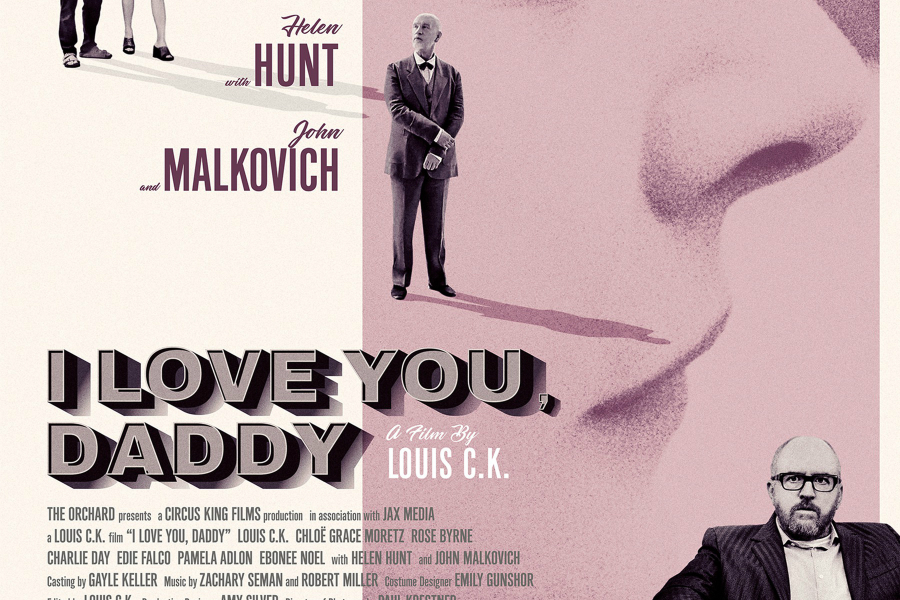
I Love You, Daddy looks very funny: I Love You, Daddy is Louis CK’s first feature in decades as a director, and it looks good enough to hope for more movies by the comedian in the future. Check it out here:
[embedded content]
and
