Articles by admin

No Image

Junior Drag Racing Rules Reconsidered In Australia After 8-Year-Old Dies

Terrible news out of Princess Margaret Hospital – little drag car driver Anita Board, 8, has died

MORE: https://t.co/zk7gQ2fLjp#perthnews#wanewspic.twitter.com/JcCjjtpifI

— The West Australian (@westaustralian) November 12, 2017

An Australian girl described by her dad as “bright and bubbly” died Saturday after her drag racing car crashed into the track barrier.

Anita Board celebrated her eighth birthday less than one week ago.

At a press conference Monday from the site of Anita’s accident, her father Ian Board said, “Her passion for motorsport, drag racing and being here as a family with her sister at the track was the highlight of her life.”

Anita was doing a test run ahead of a competition at the Kwinana Motorplex in Perth, when “she failed to stop and struck a cement barrier,” the Western Australia Police Force said in a statement. “Police would like to speak to anyone who was at the Motorplex who saw the crash, or has vision of the crash.”

Pending the outcome of the investigation, Sport and Recreation Minister Mick Murray has suspended junior competition drag racing at the Motorplex, Western Australia’s sole drag-racing track.

But Anita’s dad said Monday it is his wish that children continue to “enjoy their racing.”

“We do understand there will need to be a couple of changes. We don’t believe there needs to be a major change,” Board said at the press conference.

Eight is the minimum age for children to compete in junior events, according to the Australian National Drag Racing Association. Its rules also state that drivers between the ages of eight and 10 years old may not exceed 60 mph.

Acting Premier of Western Australia Roger Cook seemed taken aback after learning how fast children could go. He told local media, “I think it would strike anyone that it’s an extraordinary speed for an eight-year-old to be having the sole control of a vehicle.”

And Murray told local media, he too was surprised that children so young were allowed to race and that the government was taking a “hard look” at the rules. He added, “from my understanding (the system) was well controlled but an unfortunate accident that happened.”

The speed Anita was going at the time of the crash is not clear. And her father said it was his belief that she would remain protected in the sport. “We chose drag racing because we believed it was the safest form of motor sport,” Board said. “Sadly this one in a million event happened to us. To our little girl.”

Mike Sprylan, who runs a junior dragster web site in Perth, told The Washington Post that children practice “all sorts of safety” measures in the sport, including beginning driving a fraction of the track and slowly building up their distance and speed.

In September, Anita’s father posted a picture on Facebook of his daughter standing behind her drag racing car, “Pony Power,” her sister posing next to her with her own car.

[embedded content]

In the United States, drivers as young as five years old are permitted to compete, according to rules set by the National Hot Rod Association’s Summit Racing Jr. Drag Racing League.

Jr. dragsters are half-scale versions of adult models and can go as fast as 85 mph in an eighth-mile, although the league’s web site says, “younger competitors are restricted to slower times/speeds.”

“Drag racing is a dangerous sport,” NHRA’s rule book states. “There is no such thing as a guaranteed safe drag race.”

Let’s block ads! (Why?)


No Image

Making Sense Of The Paradise Papers Dump And Its Ties To The Trump Administration

The Paradise Papers dump revealed the extent to which the wealthy hide their assets from the government through offshore tax havens. Michael Montgomery of the Center for Investigative Reporting is one of hundreds of journalists poring over the papers.

MICHEL MARTIN, HOST:

You might remember the Panama Papers. Millions of documents held by a Panamanian law firm made their way to journalists last year who exposed a system of offshore companies that allowed wealthy individuals to avoid taxes and, sometimes, criminal groups to evade detection. A new document leak shows again the lengths to which some will go to avoid taxes. It’s called the Paradise Papers. Michael Montgomery is a reporter with “Reveal,” the radio show and podcast from the Center for Investigative Reporting. He’s one of hundreds of journalists around the world sifting through the new trove of information. And since investing in offshore entities generally isn’t illegal, I began by asking him why these stories matter.

MICHAEL MONTGOMERY: I think one of the big issues here is secrecy. A lot of companies and individuals go to places like Bermuda and other locales to keep ownership structures secret and to keep the connections between who’s doing business with whom secret. Again, not necessarily illegal but certainly of interest to the public when you have members of the Trump administration connected – or indirectly connected – to people very close to Vladimir Putin. Then the other issue is tax avoidance. We’re talking about billions and billions of dollars parked offshore that would otherwise be taxed in the U.S. and other countries. And that – you know, that affects all of us.

MARTIN: I mean, if these loopholes exist, and if they are indeed legal, should anybody be surprised that people take advantage of them?

MONTGOMERY: Well, at one level, no. I mean, especially big companies with lots of lawyers. They’re definitely going to take advantage of loopholes or put their money in places where it won’t be subject to the kind of taxes it might be in the U.S. Keep in mind that the people interested in doing that also push and lobby very hard to keep those loopholes in place. And we’re seeing a big battle right now obviously in Washington over tax reform. There – it may touch on some of this offshore issues.

But the other thing I would say, Michel, is these advantages are only available to the super rich – big corporations, the .1 percent. And it allows them to get richer arguably more quickly because their investments aren’t taxed. So once again, it is legal. But the question is, is it right? And is it fair or does it deepen global inequality?

MARTIN: Next week, the House is going to vote on a Republican-drafted tax bill. And Senate Republicans have been working on their version of the bill. And so I think the question becomes are there specific strategies that were used by wealthy individuals that you uncovered in your reporting that are important for the public to know right now as this tax bill is being debated?

MONTGOMERY: There’s a long-running debate about how to deal with multinational companies that have a lot of profits or assets offshore. I mean, that’s a long-running debate. And President Trump has suggested, a, that we reduce the corporate tax in the U.S. from the official rate of 35 percent to 20 percent to bring more business here to the U.S. And secondly, to encourage companies to bring all that money back to the U.S., the idea is to lower the, quote, “repatriation tax” to 10 percent from 35 percent. There’s a lot of questions about how effective that would be, and I don’t think we have a clear picture where that’s going to come out in terms of the overhaul.

MARTIN: That’s Michael Montgomery. He’s a reporter and producer at “Reveal,” the radio show and podcast from the Center for Investigative Reporting. As we said, he’s one of the hundreds of journalists around the world who have been sifting through another trove of previously confidential documents. He’s joined us from Emeryville, Calif. Michael, thanks so much for speaking with us.

MONTGOMERY: Thanks for having me.

Copyright © 2017 NPR. All rights reserved. Visit our website terms of use and permissions pages at www.npr.org for further information.

NPR transcripts are created on a rush deadline by Verb8tm, Inc., an NPR contractor, and produced using a proprietary transcription process developed with NPR. This text may not be in its final form and may be updated or revised in the future. Accuracy and availability may vary. The authoritative record of NPR’s programming is the audio record.

Let’s block ads! (Why?)


No Image

After Fires, California Wine Country Wants Tourists Back

Charred hills are visible behind field workers as they pick Syrah grapes during a harvest operation on October 25, 2017 in Kenwood, California.

Justin Sullivan/Getty Images

hide caption

toggle caption

Justin Sullivan/Getty Images

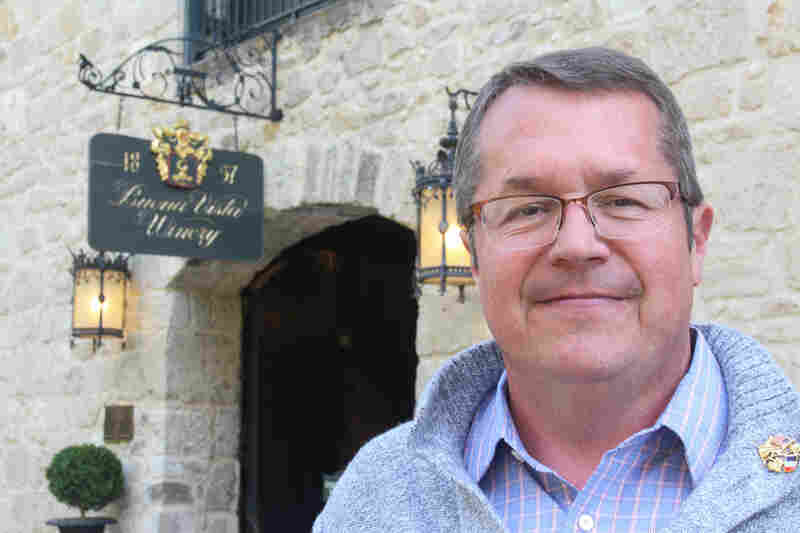
Buena Vista winery in Sonoma Valley, founded in 1857, is considered the birthplace of California wine. The cavernous cellar, carved into a hill by Chinese laborers, has survived earthquakes, several owners and last month’s fires in Northern California.

Now, the black tree stumps and scorched hills right next to the winery’s buildings show just how close the flames came — less than 30 feet, says Tom Blackwood, general manager at Buena Vista.

“The fire could not have come any closer without hitting the buildings. Buena Vista was surrounded by flames,” says Blackwood, who credited firefighters with saving the winery, which withstood untouched. “We are so lucky.”

Tom Blackwood, general manager for Buena Vista, stands in front of the winery’s cellar in Sonoma, Calif. on Nov. 7, 2017. Since the winery reopened two weeks ago, the number of visitors has dropped significantly, he said.

Farida Jhabvala Romero/KQED

hide caption

toggle caption

Farida Jhabvala Romero/KQED

But since Buena Vista reopened a couple of weeks ago, Blackwood is facing another problem: a big drop in visitors. During the month before the fires began, Buena Vista saw 6,000 visitors, says Blackwood. But since the winery reopened about two weeks ago, only 500 visitors have shown up.

“If the fires hadn’t happened we would probably see about 50 or more people here at the bar,” says Blackwood, gazing at the winery’s relatively quiet tasting room. “What do we have here, like six people now at the bar?”

Last month’s fires in Northern California hit wine country during peak tourist season. While some businesses burned, many others were forced to close temporarily because of lack of road access or bad air quality when the fires raged. Now that the danger has passed, wineries and restaurants across the region are open and want visitors to return.

Most of the cancellations came from tourists who are not local, according to small businesses in Sonoma Valley — a region where burned hills, homes and cars can be seen.

“Once the fires were under control, we found that very few people had decided to return. There was initially a fear of the entire valley being burned,” says Hunt Bailie, who owns a small segway and bicycle tour company with his wife in the town of Sonoma. He said about 90 percent of his tours were cancelled.

“We found that most folks are interested in returning, but they think it might be too soon,” says Bailie. “Typically October is the time when we can save all the pennies until spring, but that month dried up for us.”

While the affected areas were “very limited,” news coverage all over the world mostly showed destruction from the fires, says Caroline Beteta, who heads Visit California, the organization tasked with attracting tourists to the state.

Charred hills are near vineyards in Sonoma Valley, Calif. on Nov. 7, 2017. Local wineries such as Buena Vista were close to the flames.

Farida Jhabvala Romero/KQED

hide caption

toggle caption

Farida Jhabvala Romero/KQED

“Just the imagery alone I would argue did more damage than the actual damage to the tourism infrastructure,” Beteta told a conference of wine marketers in Santa Rosa, the biggest city in Sonoma county. News images of charred houses and red glowing skies flashed behind her.

Tim Zahner, chief operations officer for Sonoma County Tourism, says most hotels and wineries in the county are fine, and are pouring in their tasting rooms today.

“The weather is mild. You know if you’re in Chicago and it’s November and it’s snowing, out here it is not snowing. It’s gorgeous,” says Zahner, who was also attending the wine marketing conference. “It’s a good time to come visit.”

His group and Beteta’s are trying to convince visitors to return to the region. Visit California launched a $2 million dollar advertising campaign to bring back images of sunny vineyards and happy couples enjoying a glass of cabernet sauvignon — wine country images.

Economist Robert Eyler says it’s too early to tell the economic impact of the fires on tourism. But he expects the county to overcome any downturn in visitors.

Bill and Debbie Hart (front) from Springfield MO visit Buena Vista in Sonoma, Calif. on Nov. 7, 2017. “There’s been some devastation but so many of the wineries are still open for business and we wanted to do our part to help support them,” said Debbie Hart.

Farida Jhabvala Romero/KQED

hide caption

toggle caption

Farida Jhabvala Romero/KQED

“The brand of Sonoma and wine country is going to survive because the brand is very very established,” says Eyler, a professor at Sonoma State University. “This is something that is a brand challenge in the short term. I would be flabbergasted if it was in the long.”

That brand is something local small business owners are counting on. People like Mingma Sherpa, who co-owns a Mexican restaurant about two miles from the fire line.

The immigrant from Nepal estimates half of his customers are gone. Before the fires, at least one tour bus would stop here daily, he said.

“Since that happened, most of them have cancelled,” says Sherpa, adding that the sudden loss in revenue forced him to cut shifts for servers and other employees.

“It’s definitely tough. But this town is very special. So hopefully they’ll come back,” he says.

Let’s block ads! (Why?)


No Image

Diana Nyad Opens Up About Being Sexually Abused

Diana Nyad, the champion long-distance open water swimmer, opened up about her past as a victim of sexual assault. Her op-ed in the New York Times is yet another case of a woman speaking out about sexual violence and harassment.

MICHEL MARTIN, HOST:

On Twitter today, women all over the country are posting pictures of themselves at 14 with the hashtag #meat14. The photos underscore just what a serious violation it is when girls so young are targeted for sexual attention, especially by someone older and more powerful. The campaign is one response to accusations against Judge Roy Moore, the Republican U.S. Senate candidate in Alabama. The Washington Post reported he initiated a sexual encounter with a 14-year-old when he was a 32-year-old prosecutor. Moore says the accusation is, quote, “completely false,” unquote.

But all of this comes at a time when women around the world and across professions are speaking up about sexual abuse. And in response to that, some are asking, why now? Why bring this up years after the events are alleged to have taken place? Our next guest offers some perspective on that. Diana Nyad is known for her record-breaking long-distance swimming, but this past week, she wrote an essay for The New York Times about the swim coach who started molesting her when she was just 14 years old and the effect it had on her life for years.

Diana Nyad joined me earlier today from NPR West in Culver City, Calif. And let me say here this conversation may be upsetting to some for obvious reasons. We’ll begin here at the point where I asked her what it means to her to see so many women coming forward with stories like hers.

DIANA NYAD: I am heartened, I’ll tell you, Michel, that after all the years of trying to prosecute my perpetrator, even though I had corroborators – there were other people who went through the same thing with the same coach – we couldn’t break through the system. But look at this. I am so heartened by these past few weeks of the education of the public. You just brought up the Roy Moore case.

People say, now, come on. If this were true, if this 14-year-old story were true, she – and it was that disturbing to her, she would come out with it sooner. She’s waited all these years. Well, now, in just this short time, we’ve had a little bit of a cultural shift in the last few weeks in discussing all this to say that we get it. You are so traumatized. You think it’s your fault, especially young people.

MARTIN: Why did you want to write this essay now? Was it in part to answer the why now question?

NYAD: It sort of started with just joining the me too, you know, movement. What we’ve started here is the archiving of the voices. And so many of those voices, I’ll tell you right now, I am more angry about being silenced than I even am about being touched. You know, it’s hard to say that, but let’s just say it’s equal to be pinned down and to be told, don’t you ever tell anybody. You’ll never have a life. You’ll be thrown out of school. Your entire life will collapse if you tell anybody about our beautiful special secret. So I want to be one of the leaders of the voices who collect the archiving. And next, I want to be one of the leaders as to what the heck we’re going to do about this to change this in our culture.

MARTIN: One of the things that really struck me is how very graphic you are about the effect that it had on you. I mean, I’ll just start by reading the top of the essay. You start by saying, (reading) here I was, a strong-willed young athlete. There he was, a charismatic pillar of the community. But I am the one who after all these many years later at the age of 68, no matter how happy and together I may be, continues to deal with the rage and the shame that comes with being silenced. Talk about that a bit if you would. Talk a little bit about that rage. I mean, you said it just used to just come on you?

NYAD: Yeah, it can still. I don’t like to admit it, but now I’m at the point that I’ve just got to be an open book because all – you know, the thousands of people I’ve heard from over these past 48 hours since that Times op-ed piece hit are saying, you know, these precise same symptoms. And one of them is that you’re in a rage. You’re in a rage that it happened. You’re in a rage toward your perpetrator. And unfortunately, you’re in a rage toward yourself for not stopping it.

So I have to admit that I have an imprint. I wake up, you know, with joy. I have a strong will. I have an iron will. And still there’s that region side of no, you do not silence me. You don’t pin me down. You don’t make me touch your disgusting body. I just – you know, that man’s deceased now, but I’ve been going through this all my life. And I think one of the little cultural shifts that’s happening out there when people are getting educated is they’re saying, you know what? It isn’t a momentary thing. You don’t just suffer that trauma and then you’re over it. It’s a life-long deal.

MARTIN: Do you feel free now?

NYAD: Oh, no. I’ve been speaking about this for 50 years, so I don’t feel freer for speaking about it again this week. What I feel is gratification that this country is addressing this issue. I don’t feel freer. I feel gritty. I’m going to get down to the work of trying to make a big change in the United States.

MARTIN: That’s Diana Nyad. She’s a record-breaking swimmer, author and motivational speaker. You can read her latest essay, “My Life After Sexual Assault” in the New York Times Opinion section. Diana Nyad, thank you so much for speaking with us.

NYAD: Thank you, Michel. I appreciate it.

Copyright © 2017 NPR. All rights reserved. Visit our website terms of use and permissions pages at www.npr.org for further information.

NPR transcripts are created on a rush deadline by Verb8tm, Inc., an NPR contractor, and produced using a proprietary transcription process developed with NPR. This text may not be in its final form and may be updated or revised in the future. Accuracy and availability may vary. The authoritative record of NPR’s programming is the audio record.

Let’s block ads! (Why?)


No Image

The Week in Movie News: Another 'Star Wars' Trilogy, the Possibility of Disney Buying Fox and More

Need a quick recap on the past week in movie news? Here are the highlights:

BIG NEWS

Rian Johnson is developing a new Star Wars trilogy: Ahead of the release of Star Wars: The Last Jedi, Lucasfilm is showing confidence in its writer-director, Rian Johnson. They announced Johnson will develop a new trilogy unrelated to the Skywalker saga. Also, Disney announced a live-action Star Wars series is in the works for its new streaming service. Read more here.

INCREDIBLE NEWS

Christopher Plummer will replace Kevin Spacey in All the Money in the World: Ridley Scott is reshooting all of Kevin Spacey’s scenes in All the Money in the World with Christopher Plummer in the role, and the movie’s still going to be released next month. Read more here.

SURPRISING NEWS

Disney had talks to buy 21st Century Fox: While nothing came of it (yet), Disney has reportedly been considering buying the movie and TV properties of 21st Century Fox, which would bring X-Men and Fantastic Four characters into the Marvel Cinematic Universe. Read more here.

COOL CULTURE

Thor vs. Wonder Woman: Following the successful release of Thor: Ragnarok, a lot of fun and interesting videos have arrived to further the enjoyment, including the below fan-made trailer for a found-footage Thor vs. Wonder Woman movie. Find more on Thor, including Easter eggs and scientific context on the superhero here and here.

[embedded content]

MUST-WATCH TRAILERS

The Post looks like Oscar gold: The first trailer for Steven Spielberg’s latest, The Post, has arrived with a tease of the award-worthiness of stars Meryl Streep and Tom Hanks. Watch it below.

[embedded content]

Fifty Shades Freed looks to tie things up nicely: The final trailer for Fifty Shades Freed, the third and concluding chapter in the erotic romance trilogy, has arrived with plenty of steamy scenes on display. Check it out below:

[embedded content]

Game Night teases a lot of fun: The first trailer for Game Night debuted with a wild look at the upcoming comedy starring Jason Bateman and Rachel McAdams about a group of gaming friends who get mixed up in danger. Watch it here:

[embedded content]

and

Let’s block ads! (Why?)


No Image

In Latest Twist, Anti-Doping Watchdog Says It Has Data Trove From Russian Lab

The World Anti-Doping Agency says it has acquired more than three years of testing data from the lab, in the building pictured here, which WADA says was the site of a state doping program of Russian athletes.

Yuri Kadobnov/AFP/Getty Images

hide caption

toggle caption

Yuri Kadobnov/AFP/Getty Images

In what may be the crucial missing piece in the investigation into the Russian state doping program, the World Anti-Doping Agency said it is in possession of the database of test results from Russia’s anti-doping laboratory.

WADA says the “enormous backup file” covers all the testing data from January 2012 to August 2015. That period includes the 2014 Sochi Olympics, at which Russia dominated the medal stands.

The New York Timesreports that according to two sources with direct knowledge, the electronic file was handed over by a whistleblower, not through official channels.

Last summer, an independent WADA investigation by Canadian lawyer Richard McLaren confirmed widespread and institutionalized doping before, after and during the Sochi Olympic and Paralympic Games. WADA says the freshly acquired database, which Russian officials have refused to hand over, will allow the agency to cross-reference the McLaren findings.

In his report, McLaren explained how the scheme was carried out:

“In total violation of the WADA International Standard for Laboratories (“ISL”) all analytical positives appearing on the first sample screen at the Moscow laboratory were reported up to the Deputy Minister after the athlete’s name had been added to the information to be supplied. The order would come back from the Deputy Minister ‘SAVE’ or ‘QUARANTINE’. If the order was a SAVE the laboratory personnel were required to report the sample negative in WADA’s Anti-Doping Management System (‘ADAMS’). Then the laboratory personnel would falsify the screen result in the Laboratory Information Management System (‘LIMS’) to show a negative laboratory result. The athlete benefited from the cover up determined and directed by the Deputy Minister of Sport and could continue to compete dirty.”

Over at the Times, you can see photos of the hole in the laboratory wall through which positive urine samples were swapped with clean ones.

“The subterfuge included using table salt and Nescafé instantcoffee granules to help conceal tainted urine and bypass controls, according to the inquiry,” the newspaper reported. “Some samples were clearly fraudulent: Urine provided by two female hockey players at the Sochi Games contained male DNA.”

WADA says it will finalizing its forensic analysis of the database before its board meetings next week.

The new intelligence could have major implications for Russia’s participation in the upcoming Winter Games in Pyeongchang, just three months away. The International Olympic Committee said it will decide next month what to do about Russia’s participation in Pyeongchang.

When the initial McLaren report was released in July 2016, it led to the banning of more than 100 Russian athletes from the Rio Olympics.

Russia’s Ministry of Sport did not immediately reply to NPR’s request for comment, but Russian officials have been consistent in calling the doping charges politically motivated.

“All of Russian sport finds itself under pressure, under political pressure,” Russia Olympic Committee deputy director Igor Kazikov said on Friday, according to the Associated Press, adding that most IOC cases against Russia’s athletes were “baseless and unsubstantiated.”

This month, the IOC banned six Russian cross-country skiers for life. In response, Reuters reports, Russia cross-country skiing federation president Elena Valbe said the move “has … absolutely nothing to do with sport. … For me, it’s (political).”

The Timesreports today that McLaren had warned in his report,

“without access to Russia’s lab data and forensic analysis of it, the extent of similar discrepancies and the full scope of cheating could not possibly be known.

“But if the database now in the regulator’s possession reveals new inconsistencies in the testing histories of Russian athletes, sports officials could mount strong disciplinary cases.

“Without a positive drug test, it can be challenging to build a case against an athlete that will withstand a legal challenge. To date, Olympics officials have issued sanctions against six Russian Olympians who competed in Sochi and exonerated another; investigations into scores of others are continuing.”

The anti-doping regulator declared the Russian Anti-Doping Agency noncompliant in November 2015. To be reinstated, the watchdog has asked for Moscow authorities to accept the findings of the McLaren report and provide access to the Russian lab’s data and samples.

“This new intelligence serves to reinforce our requirement of Russian authorities that they too publicly accept the outcomes; so that, we can all move forward in rebuilding public trust and confidence in Russian sport,” WADA President Craig Reedie said today in a statement.

Let’s block ads! (Why?)


No Image

German Consumers Fight Automakers For Compensation In Emissions Scandal

German automakers are under fire again, this time from European owners of vehicles linked to the diesel emissions scandal who, unlike American owners, have gotten no compensation.

ROBERT SIEGEL, HOST:

Two years ago, the EPA ruled that the Volkswagen Group had deliberately manipulated its diesel cars to hide how much pollution they were emitting. In the U.S., between fines and payouts to car owners, the scandal has cost the company nearly $23 billion. But that’s just one part of the story. VW and its subsidiaries like Audi have resisted paying compensation to car owners in Europe. There some 8 million diesel cars have been affected. And in Germany, people are fighting for change. NPR’s Soraya Sarhaddi Nelson reports from Berlin.

SORAYA SARHADDI NELSON, BYLINE: Retired German Judge Hartmut Baeumer says he’s driven German-made diesel cars for more than a quarter of a century. The 69-year-old says he even let Audi officials talk him out of buying a Toyota Prius in 2008 when he discovered his A6 wasn’t as fuel efficient as advertised.

HARTMUT BAEUMER: And they told me, no, we will change now. It will be – everything will be better. And finally I decided, OK, I’ll try it once more.

NELSON: The Audi A4 he bought a year later turned out to be one of the diesel models embroiled in the emissions test cheating scandal. Baeumer has been in a fight with VW Audi ever since. He claims the $58 software upgrade the German automaker is proposing could harm his car and won’t keep it from exceeding current pollution limits set by the European Union. Baeumer is demanding a similar hardware upgrade offered to hundreds of thousands of U.S. VW Audi owners. He estimates it will cost about $1,700 dollars and says the carmaker refuses to do it.

BAEUMER: Compared with the United States, German consumers are citizens of second class.

NELSON: The German government and EU officials aren’t demanding parity even though the carmakers broke the laws here, too. So earlier this year, Baeumer turned to the German courts for relief. Another 15,000 German diesel car owners did the same this week, joining the consumer advocacy group myRight in a $420 million lawsuit. Lawyer Christopher Rother, who works with the American firm Hausfeld in Berlin, represents Baeumer and the other plaintiffs.

CHRISTOPHER ROTHER: We have two stakeholders here. I mean, one stakeholder is the consumer. The other stakeholder is the environment. And nothing really was done to address consumer and environmental issues in an effective way.

NELSON: VW disagrees. In an email to NPR, a spokesman says it expects German courts to dismiss the latest claims against VW over the diesel scandal. German law doesn’t provide for German consumers the kind of protections U.S. law does for American consumers, including the ability to file a class-action suit. The VW spokesman says customer trust and satisfaction are, quote, “extremely important” to the company, and that repairs are being made in accordance with guidelines provided by the German agency that regulates motor vehicles. That doesn’t satisfy VW’s many German critics, however. Rother criticizes the close ties between carmakers and the German government, which is protective of the 800,000 jobs the automotive industry provides.

ROTHER: The financial and economic threat to the German auto industry is considered to be such an issue that you will hardly find any politician who will want to do something about it.

NELSON: Rother adds his firm expects to file more lawsuits over the coming year not only in Germany, but in several other European countries. Soraya Sarhaddi Nelson, NPR News.

(SOUNDBITE OF ENGLEWOOD AND SIMON ENG’S “HELLO THERE”)

Copyright © 2017 NPR. All rights reserved. Visit our website terms of use and permissions pages at www.npr.org for further information.

NPR transcripts are created on a rush deadline by Verb8tm, Inc., an NPR contractor, and produced using a proprietary transcription process developed with NPR. This text may not be in its final form and may be updated or revised in the future. Accuracy and availability may vary. The authoritative record of NPR’s programming is the audio record.

Let’s block ads! (Why?)


No Image

Medicaid Expansion Takes A Bite Out Of Medical Debt

Medical debts weigh on Geneva Wilson, who keeps a chicken and rooster in a coop behind her cabin in rural southwest Missouri.

Alex Smith/KCUR 89.3

hide caption

toggle caption

Alex Smith/KCUR 89.3

As the administration and Republicans in Congress look to scale back Medicaid, many voters and state lawmakers across the country are moving to make it bigger.

On Tuesday, Maine voters approved a ballot measure to expand Medicaid under the Affordable Care Act. Advocates are looking to follow suit with ballot measures in Utah, Missouri and Idaho in 2018.

Virginia may also have another go at expansion after the Legislature thwarted Gov. Terry McAuliffe’s attempt to expand Medicaid. Virginia voters elected Democrat Ralph Northam to succeed McAuliffe as governor in January, and Democrats made inroads in the state legislature, too.

An exit poll of Virginia voters on Election Day found that 39 percent of them ranked health care as their No. 1 issue. More than three-quarters of the Virginians in this group voted for Democrats.

A study from the Urban Institute may shed some light on why Medicaid eligibility remains a pressing problem: medical debt. While personal debts related to health care are on the decline overall, they remain far higher in states that didn’t expand Medicaid.

In some cases, struggles with medical debt can be all-consuming.

Geneva Wilson is in her mid-40s and lives outside of Lowry City, Mo. She has a long history of health problems, including a blood disorder, depression and a painful misalignment of the hip joint called hip dysplasia.

She’s managed to find some peace living in a small cabin in the woods. She keeps chickens, raises rabbits and has a garden. Her long-term goal is to live off her land by selling what she raises at farmers markets.

Her health has made it hard to keep a job and obtain the insurance that typically comes with it. And Missouri’s stringent Medicaid requirements — which exclude nondisabled adults without childrenhave kept her from getting public assistance.

Since graduating from college more than 20 years ago, Wilson has mostly had to pay out of pocket for medical care, and that’s left her with a seemingly endless pile of medical debt.

“As soon as I get it down a little bit, something happens, and I have to start all over again,” Wilson says.

Right now her medical debt stands at about $3,000, which she pays down by $50 a month. She desperately needs a hip replacement, but she canceled the surgery because, even with deeply discounted rate from a nearby hospital, she can’t afford it.

“Approximately $11,000 is what would come out of my pocket to pay for the hip. That’s my entire pretax wage from last year,” Wilson says. “So it’s kind of on hold, but I don’t know if I can survive the year without going ahead and trying to get it done.”

For many people like Wilson, medical debt can be nearly as problematic as their illness. In 2015, 30.6 percent of Missouri adults ages 18 to 64 had past due medical debt, the seventh-highest rate in the country. Kansas, at 27 percent, had the 15th highest rate. In Maine, which voted to expand Medicaid this week, it was 27.7 percent.

Researchers Aaron Sojourner and Ezra Golbertstein of the University of Minnesota studied financial data from 2012 to 2015 for people who would be eligible for Medicaid where it was expanded.

They found that in states that didn’t expand, the percentage of low-income, nonelderly adults with unpaid medical bills dropped from 47 to 40 percent within three years.

“The economy improved and maybe other components of the ACA contributed to a 7 percentage point reduction,” Sojourner says. “Where they did expand Medicaid, it fell by almost twice as much.”

Those states saw an average drop of 13 percentage points, from 43 to 30 percent.

In Kansas, the rate of medical debt for nonelderly adults fell by 4 percentage points to 27 percent. In Missouri, the rate dropped 4 points to 31 percent, according to the Urban Institute. In Maine, it dropped only 1.4 percentage points between 2012 and 2015.

Medicaid, as opposed to private insurance, is the key, says The Urban Institute’s Kyle Caswell, because it requires little out-of-pocket costs.

Even if Medicaid patients need lots of care, there aren’t on the hook for big out-of-pocket costs in the same way someone with private insurance might be.

“We would certainly expect that their risk to out-of-pocket expenses to be much lower, and ultimately the risk of unpaid bills to ultimately be also lower,” Caswell says.

But Medicaid’s debt-reducing advantages over private insurance could disappear under the leadership of the Trump administration.

Shortly after Seema Verma was confirmed as the Administrator for the Centers for Medicare & Medicaid Services, she and Tom Price, then head Department of Health and Human Services, sent a letter to the governors outlining their plans for Medicaid.

The letter encouraged states to consider measures that would make their Medicaid programs operate more like commercial health insurance, including introducing premiums and copayments for emergency room visits.

Verma says that by giving recipients more “skin in the game,” they will take more responsibility for the cost of care and save the program money.

Republican proposals in Congress to repeal and replace the Affordable Care Act would have eliminated or limited Medicaid expansion. And that would have affected the last few years’ downward trend in medical debt.

“Anything that reduces access to Medicaid most likely would have the reverse effect of what of we’re seeing in our paper,” Caswell says. “Reduced access to Medicaid would likely increase exposure to medical out-of-pocket spending and ultimately unpaid medical bills.”

As Geneva Wilson tends to her chickens, she says she tries not to think too much about her medical debt or how she’ll pay for that hip replacement.

“It’s going to the point where, if I were to go shopping at Walmart, I would have to get one of the carts you drive because I can’t manage,” she says.

Wilson has already sold her jewelry, some furniture and a wood stove to pay down her debts. Now there’s not much left to sell except her cabin and her land.

“Probably the homestead and garden that I want, that I’ve been wanting and trying to work for, I don’t think they are a viable dream either,” Wilson says. “It’s hard losing your dreams.”

This story is part of a reporting partnership with NPR, KCUR and Kaiser Health News. Alex Smith can be reached on Twitter at @AlexSmithKCUR.

Let’s block ads! (Why?)


No Image

Today in Movie Culture: How Thor Summons His Hammer, Christopher Plummer in 'The Usual Suspects' and More

Here are a bunch of little bites to satisfy your hunger for movie culture:

Movie Science of the Day:

For Nerdist, Kyle Hill continues his focus on the science of Thor: Ragnarok and tells us how Thor summons his hammer:

[embedded content]

Future Recasting of the Day:

X-Men: Dark Phoenix hasn’t even come out yet, but BossLogic shows us what Millie Bobbie Brown could look like as Phoenix in the next reboot:

Thinking of doing a fun series of the #strangerthings kids as #xmen here is @milliebbrown as phoenix @netflix@Stranger_Thingspic.twitter.com/IHvY0VOGEl

— BossLogic (@Bosslogic) November 9, 2017

Retrospective Recasting of the Day:

With Christopher Plummer replacing Kevin Spacey in All the Money in the World, here’s a video where the actor has also replaced Spacey in The Usual Suspects (via Free Cinema Now):

[embedded content]

VFX Reel of the Day:

Hybride Technologies presents a breakdown of their incredible digital effects work for Kong: Skull Island (via io9):

[embedded content]

Vintage Image of the Day:

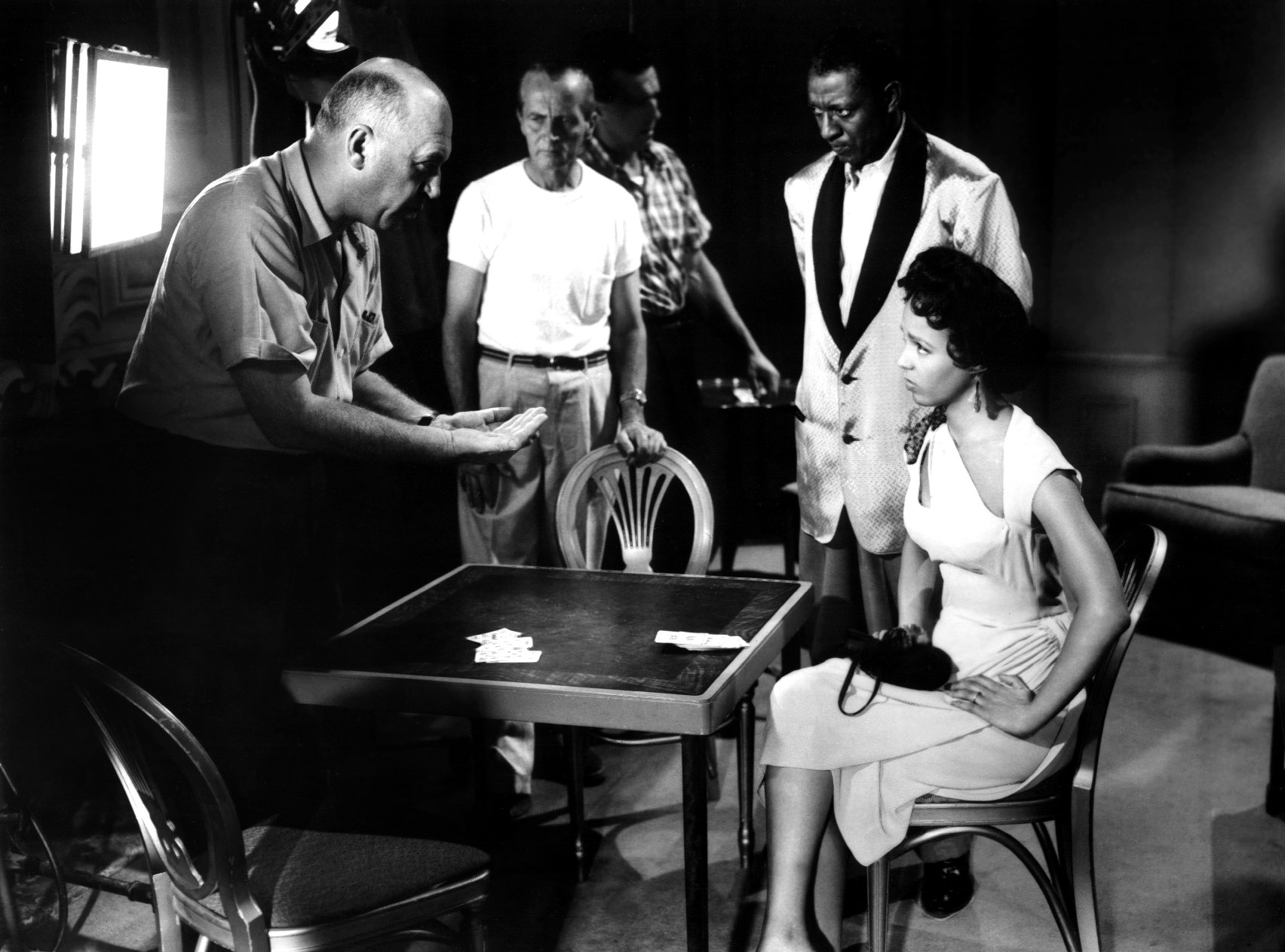
Dorothy Dandridge, who was born on this day in 1922, receives direction from Otto Preminger on the set of Carmen Jones in 1954:

Actress in the Spotlight:

In honor of her new movie, Three Billboards Outside Ebbing, Missouri, Jacob T. Swinney and Fandor celebrate the many faces of Frances McDormand:

[embedded content]

Filmmaker in Focus:

For Trois Couleurs, Nicolas Longinotti highlights the panoramic landscape shots in Jeff Nichols movies:

[embedded content]

Movie Influences of the Day:

In this video essay, Patrick Willems looks at the origins of both Drive and Baby Driver:

[embedded content]

Cosplay of the Day:

Kotaku has compiled a great collection of people who’ve cosplayed as Star Wars vehicles:

The people who cosplay as Star Wars vehicles: https://t.co/0zzxoQRB9opic.twitter.com/IaE71Cpawn

— Kotaku (@Kotaku) November 9, 2017

Classic Trailer of the Day:

Today is the 10th anniversary of the release of the Coen Brothers’ No Country for Old Men. Watch the original trailer for the Best Picture-winning classic below.

[embedded content]

and

Let’s block ads! (Why?)


No Image

Researcher Says Aaron Hernandez's Brain Showed Signs Of Severe CTE

Former New England Patriots tight end Aaron Hernandez in a Boston courtroom days before he hanged himself in his prison cell.

Stephan Savoia/AP

hide caption

toggle caption

Stephan Savoia/AP

The Boston researcher who examined the brain of former football star Aaron Hernandez says it showed the most damage her team had seen in an athlete so young.

Hernandez, whose on-field performance for the New England Patriots earned him a $40 million contract in 2102, hanged himself in a prison cell earlier this year while serving a life sentence for murder. He was 27 years old.

Dr. Ann McKee, a neuropathologist who directs research of chronic traumatic encephalopathy, or CTE, at Boston University, said her research team found Hernandez had Stage 3 CTE and that they had never seen such severe damage in a brain younger than 46 years old.

McKee announced her findings at medical conference on Thursday in Boston where she spoke publicly for the first time.

Dr. Ann McKee of Boston University talks about the severe degenerative brain disease suffered by former NFL star Aaron Hernandez. Her research team examined his brain after Hernandez died from suicide in prison.

Steven Senne/AP

hide caption

toggle caption

Steven Senne/AP

Among the lingering questions in the sports world and among brain researchers is, why did a young man with wealth, fame and a potentially bright athletic career ahead of him kill a friend and wind up in prison?

“We can’t take the pathology and explain the behavior, but we can say collectively that individuals with CTE of this severity have difficulty with impulse control, decision-making, aggression, often emotional volatility, and rage behavior,” said McKee as quoted by the Boston Globe.

McKee, who has pioneered research in brain injuries at BU’s CTE Center, had previously issued a dispassionate stick-to-the-facts statement in September confirming that Hernandez had CTE Stage 3, (with Stage 4 being the most severe). At the time, Hernandez’s attorney, Jose Baez, announced the filing of a lawsuit against the National Football League and the New England Patriots, alleging that they “failed to disclose, treat or protect” against the dangers of repetitive injuries to the former tight end’s brain.

The organ appeared normal when the BU researchers received it in April, reports the New York Times. But after they sliced it in about half-inch sheaths, they found evidence of brain atrophy and damage to the frontal lobe. McKee showed slides comparing Hernandez’s brain to one without CTE. The differences in the two samples, reports the Washington Post, left some physicians and conference attendees gasping in reaction.

But McKee acknowledged that her researchers rarely get a chance to study the brain of someone of Hernandez’s age, so no conclusions could be drawn about whether his damaged brain was similar to those of other 27-year-old football players. But his brain is clearly at the severe end of the spectrum for his age group, said McKee.

“There is a concern that we’re seeing accelerated disease in young athletes. Whether or not that’s because they’re playing more aggressively or if they’re starting at younger ages, we don’t know. But we are seeing ravages of this disease, in this specific example, of a young person,” she said, as quoted by the Post.

McKee also said that Hernandez was born with a genetic marker associated with neurodegenerative diseases and that could have contributed to his CTE.

Let’s block ads! (Why?)