
UCLA Basketball Players Admit To Shoplifting In China, Are Suspended From Team

Flanked by teammates Cody Riley (left) and Jalen Hill, UCLA basketball player LiAngelo Ball reads his statement during a news conference at UCLA on Wednesday.
Jae C. Hong/AP
hide caption
toggle caption
Jae C. Hong/AP
Three UCLA freshmen have been suspended indefinitely from the basketball team, one day after returning home from China, where they were detained and accused of shoplifting, announced head coach Steve Alford at a news conference at the university on Wednesday.
“They’re going to have to regain the trust of this athletic department, of this university, and because this was such a high-profile international matter, the trust of the general public,” Alford said, adding that the school is working through a review process with its office of student conduct.
The three players — LiAngelo Ball, Jalen Hill and Cody Riley — also spoke at the news conference, and each one apologized and admitted to stealing. They were supposed to play Georgia Tech at the Pac-12 China Game but were detained on Nov. 7, spending one night at a police station and remaining at a Hangzhou hotel for nearly a week.
“I want to start off by saying how embarrassed and ashamed I am for disappointing my family, my teammates, my coaches and the entire UCLA community,” said Riley. “I take full responsibility for the mistake I have made — shoplifting.”
“What I did was stupid,” said Hill, “there’s just no other way to put it.”
“I’m extremely sorry for those who I let down,” said Ball, who is the younger brother of Los Angeles Lakers player Lonzo Ball. “And I take full responsibility for my actions.”
Do you think the three UCLA Basketball Players will say thank you President Trump? They were headed for 10 years in jail!
— Donald J. Trump (@realDonaldTrump) November 15, 2017
Each player also thanked President Trump.
Earlier in the day, Trump tweeted, “Do you think the three UCLA Basketball Players will say thank you President Trump? They were headed for 10 years in jail!”
Trump arrived in Beijing as part of his Asia trip one day after the players were accused of shoplifting, and he used the state visit to bring up their fate with Chinese President Xi Jinping, reports The Washington Post.
On Tuesday before leaving the Philippines, Trump told reporters he “had a great conversation” with Xi and went on to talk about the American students. “What they did was unfortunate. You’re talking about very long prison sentences. They do not play games. He was terrific and they’re working on it right now.”
Later that day the players were on their way home to Los Angeles.
White House chief of staff John Kelly called the three players over the weekend, according to UCLA Athletic Director Dan Guerrero, who also spoke at the news conference.
Guerrero provided more details about the incident, saying the students stole items from three shops near their hotel on the evening of Nov. 6 during a block of free time.
The next morning, police arrived at their hotel and interviewed players and searched bags. Ball, Hill and Riley were then taken to a police station, said Guerrero, and were freed on the morning of Nov. 8 on $2,200 bail. They had to surrender their passports and agree to travel restrictions.
“They were not required to remain in the hotel, though we made that decision out of an abundance of caution and respect for the process,” Guerrero said.
ESPN reports that according to a source, there is surveillance video of the players shoplifting from three stores inside a shopping center.
“I’m grateful to be back home and I’ll never make a mistake like this again,” said Ball at the press conference Wednesday.
Alford said that the trio is currently forbidden to travel with the team or suit up for home games, but “at some point they may be permitted to join team workouts, practices and meetings, but that timeline has yet to be determined.”
“These are good young men, who have exercised an inexcusable lapse of judgment,” Alford said. “These young men are going to have to prove their words and actions that this isn’t who they are.”
What If We Treated Gun Violence Like A Public Health Crisis?

More than 30,000 people a year are killed by gun violence, including 50 killed near the Los Vegas strip last month where this makeshift memorial stands.
Drew Angerer/Getty Images
hide caption
toggle caption
Drew Angerer/Getty Images
When U.S. officials feared an outbreak of the Zika virus last year, the Department of Health and Human Services and state officials kicked into high gear.
They tested mosquitoes neighborhood by neighborhood in Miami and other hot Gulf Coast communities where the virus was likely to flourish. They launched outreach campaigns to encourage people to use bug spray. And they pushed the development of a vaccine.
“The response was swift,” says former Surgeon General Vivek Murthy, and was even faster during the Ebola outbreak a year earlier.
But last month when 50 people died and more than 400 were injured in Las Vegas, and weeks later another 26 died in Texas of the same cause, public health officials have had almost no role.
That’s because the victims in Las Vegas and Texas were killed with guns. And over the last three decades, Congress has made it clear that they don’t want the public health community looking too hard into the causes of the violence.
“If you look at the number of people who have died or been injured from gun violence, that dwarfs the number of people who have been affected by Zika or Ebola. There’s absolutely no comparison,” Murthy says.
More than 30,000 people are killed with guns in the U.S. every year. That’s more than die of AIDS, and about the same number as die in car crashes or from liver disease. But unlike AIDS or car crashes, the government doesn’t treat gun injuries or deaths as a public health threat.
Murthy and other public health experts say it should.
Funding For Research On Gun Violence Compared To Other Leading Causes Of Death
Funding represents the total funding awarded over the years 2004 to 2015. Dollar amounts have not been corrected for the year in which they were reported. (Note: Funding and mortality rate values are plotted on a logarithmic scale.)

Source: JAMA
“It should be no different than the approach we take to cancer, heart disease or diabetes,” he says.
But such an approach would have to start essentially from scratch. The government spends only about $22 million a year on research into gun violence — a tiny fraction of what it spends on other major health threats.
That’s because of Congress. Back in 1997, lawmakers added a provision in the bill that funds the Centers for Disease Control and Prevention barring the agency from doing anything that would “advocate or promote gun control.” At the same time, they cut CDC’s budget by the exact amount it had been spending in gun violence research up until then.
So government research into the causes of gun deaths virtually stopped.
The issue comes up routinely after mass shootings. Two years ago, after a young man killed nine people in a church in South Carolina, a reporter asked former Republican House Speaker John Boehner about the CDC restrictions.
“The CDC is there to look at diseases that need to be dealt with to protect the public health. I’m sorry but a gun is not a disease,” he said at the time.
After the most recent shootings, Democrats in Congress have called for more restrictions on guns while Republicans, including President Trump, say the problem is mental health.
But neither conclusion is backed by research, says Dr. Georges Benjamin, the executive director of the American Public Health Association.
“When a new disease, particularly an infectious disease, enters the community … we have a mechanism to anticipate it, track it, get our arms around it,” he says. “We do that when he have measles, mumps, chicken pox, zika. But firearm-related death and disability, we don’t.”
That kind of prior knowledge could lead to policies that reduce the toll of gun injuries without cutting off access to them.
“Firearms are a tool, and … a consumer product. And unlike other consumer products, we’re not working hard to make that consumer product safer,” he says.
Take cars for example. Benjamin points to the combination of safety features — airbags and seat belts — and safety policies like requiring licensing and banning drunk driving — that have made cars less lethal, while ensuring they’re still available.
A similar strategy with guns could lead to some laws or regulations that make them safer.
That could involve barring large ammunition clips to limit the number of shots a person could take, or requiring trigger locks that open by fingerprint, allowing only the gun owner to fire a weapon.
“We could think about where firearms ought not to be,” he says. “Alcohol and firearms and people who might get a little rowdy probably are not a good combination. There are solutions to that.”
Creating more shooting ranges may be a good idea so gun owners have a safe place to use their weapons, he says.
Today, Benjamin says, there is no data to show whether people are safer in communities with more or fewer guns.
Something has to change, because up until now, “We have done everything we can to ensure that this epidemic of death and disability from firearms is only going to get worse,” he says.
Shocking Omissions: Marcia Griffiths' 'Naturally'

Jamaican reggae singer Marcia Griffiths performed as one of Bob Marley’s backing singers — and is a remarkable solo artist in her own right.
Graham Wood/Getty Images
hide caption
toggle caption
Graham Wood/Getty Images
This essay is one in a series celebrating deserving artists or albums not included on NPR Music’s list of 150 Greatest Albums Made By Women.
Walls of huge speakers delineate the outdoor dancefloor, the warmth of the air matched by the warmth of the bass: This is a Jamaican soundsystem dance. One of the best things to hear at one of these events is the powerful, smooth sound of Marcia Llyneth Griffiths’s voice floating over the rhythms. Hers is a voice that can be trusted, relied on; powerful, experienced and wise, but with such pure tone. It feels like it wraps itself around you, reassuring you that everything will really, truly be all right.
Marcia Griffiths is the undisputed Queen of Reggae. For over half a century, she has soundtracked Jamaica with her tell-tale timbre — in truth, you are more likely to hear Griffiths in Jamaica than Bob Marley — and she’s still recording and performing today. From 1960s ska to 1970s reggae to today’s dancehall, she has been a central figure in the history of Jamaican music. Outside Jamaica, Griffiths is also well-known for the go-to wedding party hit “Electric Boogie,” originally released in 1983 by Bunny Wailer. Griffiths’ 1989 remix is one that very few people have not heard — and it remains the top-selling single by any female reggae singer.
Griffiths is also well-known as a member of the I Threes, the all-important backing vocalists for Bob Marley on record and live, which she formed with Rita Marley and Judy Mowatt in 1974 and performed with until 1981. Griffiths, however, was recording solo all the while. And it is Naturally, released in 1978 (reissued as Dreamland), that perhaps showcases her talents most fully. Though the Jamaican music industry has always been more based on singles, Naturally is a ten-song, album-length argument for why Griffiths is such a foundational artist.
The story goes that Griffiths found her calling when the 99-pound teen — she describes her 13-year-old self as “one skinny little toothpick” — took the stage with then-calypso king Byron Lee and his Dragonaires at the Carib Theatre in Kingston, Jamaica on Easter Monday in 1964. Clement “Sir Coxone” Dodd was impressed and invited her to record at the storied Studio One, and this led to Griffiths’ first Jamaican No. 1 hit, 1968’s “Feel Like Jumping.” Legendary singer-songwriter Bob Andy wrote that classic and became one half of Bob and Marcia, whose joyful, string-laden version of “Young, Gifted and Black” reached No. 5 on the UK charts in 1970. The duo, who were successful solo artists already, eventually went their separate ways, but still, from time to time, perform together to this day.
The album kicks off with “Dreamland,” written by Bunny Wailer. Griffiths provides a narrative of repatriation, singing of a land “so far across the sea.” Given the Rastafari movement’s ideas and concepts, the song is potentially representative of a desire for Africa as home. This space, where breakfast comes from trees, waterfalls are plentiful and stars shine in the sky, can be seen as references to the roots and culture lifestyle of Rastafari as well.
“Truly,” another standout track on the album — originally produced by Sir Coxone and written by Bob Andy — has one of the most memorable hooks, just declaring love, over and over. The song’s instrumental track (referred to as a “riddim” in Jamaica) has been repurposed countless times — memorably by the late Garnet Silk as “Fill Us Up With Your Mercy.” The keyboard part riffs on Wagner’s “Bridal Chorus” (better known as “Here Comes the Bride”) and is the perfect accompaniment for Griffiths’ declarations of love: as sincere and firm as Silk’s sung prayer to Jah. The focus on love in “Truly” makes it an excellent partner to “Melody Life,” another track on Naturally, perhaps one of the best arguments for marriage, thanks to Griffiths’ convincing delivery.
Naturally contains tunes that reach back to the beginning of Griffiths’ career, too — the Andy-penned “Feel Like Jumping” is here, with its tell-tale ska jump. It’s a little slower here than the 1968 original, but all the exuberant energy in the “la la la la laaas” still remains. The feel of the track still exemplifies the music of Jamaica, characterized by the excitement of a country who had recently — on Aug. 1, 1962 — achieved independence. Similarly, Griffiths’ variation on The Wailers‘ song “Lonesome Feeling” moves the track into a less ska and more relaxed reggae setting, communicating the title’s sentiment just so. The balance of the short album provides images of resistance, as in “Survival (Is the Game),” and struggle, in another Bob Andy song, “I’ve Got to Go Back Home,” which shows off the upper registers of Griffiths’ vocals.
Naturally was produced by Sonia Pottinger, an exemplary producer from the 1970s so-called golden era of reggae, and the production really demonstrates Griffiths’ absolutely reassuring control over her voice. “Miss Pottinger, the only female producer, she used to do gospel first. [She] was a woman that we could relate to as another female. And I was very comfortable working with Miss P,” said Griffiths in an interview with poet and radio host Mutabaruka in 2014, celebrating her 50 years in the music industry. The record exemplifies this comfort, with Griffiths reaching back to early career highlights and effortlessly moving from spirituality and celebration to love and loss, always with her stunning, reliable alto that expresses just the right amount of emotion — be it plaintive or joyful or somewhere in between. Though reggae is indeed a male-dominated industry, it would not be the genre it is today without Marcia Griffiths, Jamaica’s First Lady of Song.
Today in Movie Culture: What You Need to Know Before 'Justice League,' David Fincher's Use of Music and More

Here are a bunch of little bites to satisfy your hunger for movie culture:
Franchise Recap of the Day:
Get ready for Justice League with this funny redubbed recap of the events of Batman v Superman: Dawn of Justice:
[embedded content]
Movie Trivia of the Day:
Also in preparation for Justice League, CineFix shares a bunch of possibly obscure pieces of trivia about the superhero team:
[embedded content]
Casting Rendering of the Day:
Charlie Heaton is playing Cannonball in The New Mutants, so that’s the character he’s depicted as in BossLogic’s Stranger Things cast as X-Men series:
Stranger X-men – #charlieheaton Cannonball since he will be playing him, no chance of him looking like this since it’s more a horror movie.
I might just finish the cast for you guys if that’s what you want 🙂 #strangerthings@Stranger_Things@NewMutantsFilmpic.twitter.com/aVwHHMrKjA
— BossLogic (@Bosslogic) November 14, 2017
Fan Build of the Day:
Thor may have lost his hammer in Thor: Ragnarok, but this fan shows off his own flying Mjolnir drone in this video:
[embedded content]
Vintage Image of the Day:
Veronica Lake, who was born on this day in 1922, has a drink on the set of This Gun for Hire in 1941:
Actor in the Spotlight:
Fandor celebrates Jaws and The French Connection star Roy Scheider as an underrated action hero:
[embedded content]
Filmmaker in Focus:
Inspired by Mindhunter, The Discarded Image’s Julian Palmer looks at David Fincher’s use of pop music in his movies and TV shows:
[embedded content]
Movie Food of the Day:
The latest edition of Binging with Babish shows how to make a number of treats from the Harry Potter franchise:
[embedded content]
Cosplay of the Day:
Another Avengers cosplay the week of Justice League, here’s a great Agent Carter:
Peggy Carter (photography by HubsterPhotography; edit by @jennmarvel1 ) #AgentCarter#CaptainAmerica#cosplaypic.twitter.com/77nLLOUqfZ
— Dee Ellie (@DeeGuardia) November 13, 2017
Classic Trailer of the Day:
This week is the 60th anniversary of the release of Zero Hour!, the movie spoofed by Airplane! Watch the original trailer for the classic thriller below.
[embedded content]
and
Republican Senators Add Repeal Of Individual Health Care Mandate To Tax Bill

Italy Misses World Cup Qualifier For First Time Since 1958

After a loss to Sweden Monday night, Italy will miss the World Cup for the first time since 1958. Italian goalkeeper Gianluigi Buffon, who played in his last international game, was in tears and La Gazzetta Dello Sport said for “Italy, this is the Apocalypse.”
ELISE HU, HOST:
Italy lost a playoff to Sweden last night. La Gazzetta dello Sport wrote this about the loss – Italy, this is the apocalypse – because it means the Italian men’s national soccer team will miss the World Cup for the first time since 1958. Italian goalkeeper Gianluigi Buffon, who played in his last international game, was in tears.
(SOUNDBITE OF ARCHIVED RECORDING)
GIANLUIGI BUFFON: (Speaking Italian).
HU: He’s apologizing there and knows this loss was much bigger than him. The tears have been flowing all over Italy today. So what happened? Let’s ask Paolo Bandini. He’s a European soccer writer and joins us via Skype. Paolo, thanks for being with us.
PAOLO BANDINI: No problem.
HU: So what happened? This was obviously a historic loss. But was it a surprising one, too?
BANDINI: Yeah. I mean, I suppose because the game is played over two legs. Italy had lost the first leg. There was some anxiety that we’re in a tough spot now and that things could go wrong from here. But I think even despite that there was still a lot of expectation that Italy would go through. Italy are historically and traditionally a stronger soccer nation than Sweden. But there has been a sense of unease about this Italy side for a long time.
HU: How would you say Italy got to this point?
BANDINI: Well, I think the manager is a huge part of it. Gian Piero Ventura is an older manager – he’s now 69, he was 68 already when he took the job – who has never really managed at the top, top level of club soccer. He never competed in the Champions League. He never competed for trophies. And I think that the reality was he wasn’t up to this job.
HU: Now, when the U.S. team was eliminated from the World Cup last month, there was a lot of hair pulling over here and finger pointing. But we’re talking about Italy here. Italy, which has – what? – four World Cups. How are people in Italy dealing with this at this point?
BANDINI: Terribly, obviously. It’s – you know, it’s – this is – it’s a national crisis. You know, it’s something that generations and generations, including myself, of Italians have never experienced in our lifetime. You know, I think people looking from the outside sometimes imagine that Italians don’t love soccer like they used to because the crowds in the stadiums have gone down a little bit. There’d been some trouble with sort of violence in some of the stadiums.
But actually it’s just not true. I mean, soccer is still everything in Italy. And you see it in the streets everywhere you go. You feel it in the conversations you have with everybody. Every little bar you go into will have a copy of Gazzetta dello Sport on the table, which is the – you know, the national sports paper. It’s everything in Italy, soccer. And I think that it’s a huge blow to the national psyche to not be part of the World Cup, the one tournament that matters most.
HU: What about you? How are you doing?
BANDINI: It’s been a bit of a whirlwind today, to be honest with you. It’s one of those things – someone on a purely professional level had asked me earlier, oh, this is going to mean less work for you next summer, isn’t it? And I’m like, yeah, but today it seems to mean a lot more. But, yeah, it’s one of those things, I guess, being a journalist sometimes you slightly lose the sense in a moment. But last night I was pretty cut up about it, and today I’m just trying to get on with it.
HU: Paolo Bandini, we hope the shock wears off soon. Paolo writes about soccer for The Guardian, ESPN and other outlets. Paolo, thanks.
BANDINI: Any time.
Copyright © 2017 NPR. All rights reserved. Visit our website terms of use and permissions pages at www.npr.org for further information.
NPR transcripts are created on a rush deadline by Verb8tm, Inc., an NPR contractor, and produced using a proprietary transcription process developed with NPR. This text may not be in its final form and may be updated or revised in the future. Accuracy and availability may vary. The authoritative record of NPR’s programming is the audio record.
Grad Students Would Be Hit By Massive Tax Hike Under House GOP Plan

Students Kate Shulenberger (left) and Sarah Goodman on the Massachusetts Institute of Technology’s Graduate Student Council plan a “call your congressman” event on campus.
Chris Arnold/NPR
hide caption
toggle caption
Chris Arnold/NPR
There are a lot of anxious graduate students at universities around the country right now.
That’s because to help pay for more than $1 trillion in tax cuts for U.S. corporations, the House Republican tax plan would raise taxes on grad students in a very big way. These students make very little money to begin with. And many would have to pay about half of their modest student stipends in taxes.
“The past week this is what I’ve been talking about with other graduate students and classmates. I think we’re all shocked,” says Tamar Oostrom. She’s in her third year of getting her Ph.D. in economics at the Massachusetts Institute of Technology.
She and her classmates have been crunching the numbers. “This bill would increase our tax by 300 or 400 percent. I think it’s absolutely crazy,” Oostrom says.
In exchange for helping to teach courses or working with professors on research projects, MIT gives students such as Oostrom a modest $30,000 stipend. And as part of the deal she also doesn’t pay tuition. The arrangement is typical for many students at MIT and other universities.
That tuition price tag at MIT is technically about $50,000, even though students like Oostrom don’t have to pay it. Under the tax plan proposed by House Republicans, these students would have to report that tuition forgiveness as income.
Ryan Hill, a fourth-year Ph.D. student at MIT, already pays taxes on his $30,000 stipend. But, he says, adding in the value of his free tuition, he’d have to pay taxes as if he made $80,000 a year. And that’s a massive difference for Hill and his wife, who works part time on top of caring for their new baby.
“I wish we didn’t have to stress about money as much as we already do,” Hill says. “It’s already been very hard to just emotionally get through this time of life because we have to be so frugal.”
The couple already gave up dental insurance to save money. And Hill says his wife sews clothes for their baby so they don’t have to buy clothes.
About 145,000 grad students received a tuition reduction in 2011-12, the American Council on Education says.
Hill and other MIT students say the tax proposal is ill-conceived. So do economists, who say it would discourage Americans from seeking advanced degrees at a time when the country badly needs a better educated workforce.
Kim Rueben, a senior fellow in the Urban-Brookings Tax Policy Center at the Urban Institute, said the plan wouldn’t harm just grad students. If young people opt out of graduate education, the damage would be felt throughout the economy.
“Dollar for dollar, this might be the most misguided part of the plan,” she says. “What you’re doing is increasing the cost of going to graduate school … and ignoring the fact that the government makes much more money if people have more education.”
So, Rueben says, the relatively small amount of money taken from grad students to pay for other cuts would stymie the country’s growth in the future.
Larry Lyon, vice provost and dean of Baylor University’s graduate school, was blunt. “I’ve been promoting graduate education for over 20 years,” he said, and the plan is “probably the most serious threat to doctoral education we have ever experienced.”
Other university administrators across the country appear to be just as appalled as students — the American Council on Education sent a letter to Congress decrying the plan. The letter was signed by over 30 academic organizations, including the Association of American Universities, the Council for Advancement and Support of Education and the American Psychological Association.
The provision exists only in the House tax bill, not the Senate version. Many graduate students are hoping that the proposal doesn’t end up seeing the light of day.
Today in Movie Culture: 'SNL' Spoofs the 'Lion King' Remake, a History of Batman and Superman Costumes and More
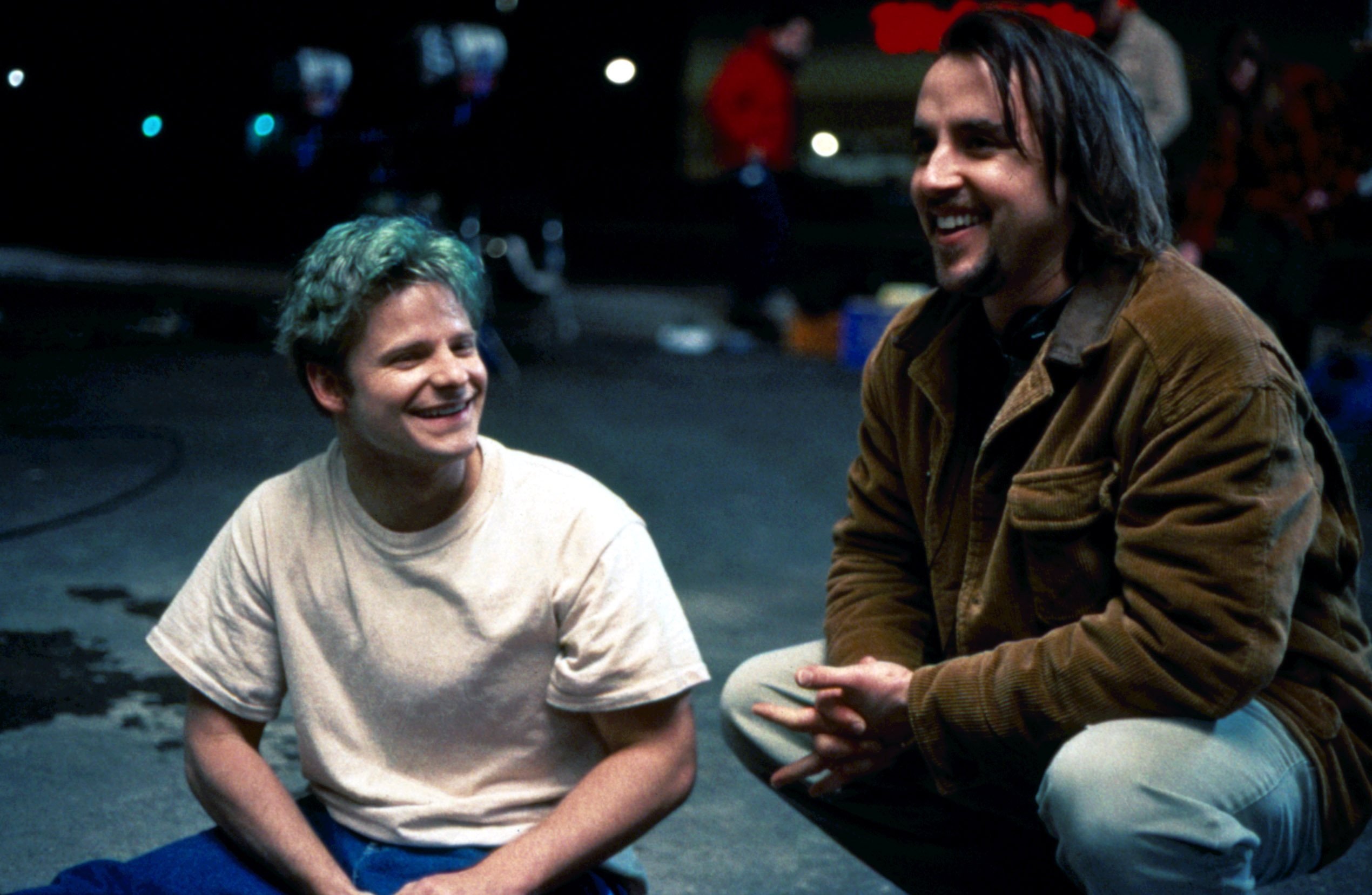
Here are a bunch of little bites to satisfy your hunger for movie culture:
Fake Auditions of the Day:
Saturday Night Live spoofed the casting of the live-action The Lion King remake with impersonations of Lin-Manuel Miranda, Nick Offerman, LL Cool J and more:
[embedded content]
Franchise Flashback of the Day:
With Justice League out this Friday, ScreenCrush looks at the history of Batman and Superman’s costumes on the big screen:
[embedded content]
Recut Trailer of the Day:
Speaking of flashbacks, Nerdist recut the Justice League trailer so it looks like the opening credits of a 1997 TV series:
[embedded content]
Alternate Casting of the Day:
If Channing Tatum never winds up playing Gambit on the big screen, perhaps Joe Keery could take the role. BossLogic shows what he could look like as part of his Stranger Things cast as the X-Men series:
Stranger X-men – Ya boy Steve @joe_keery Gambit @Stranger_Thingspic.twitter.com/H458SaH0O9
— BossLogic (@Bosslogic) November 13, 2017
Video Essay of the Day:
With The Disaster Artist out in theaters soon, Now You See It explores the enjoyment of movies that are so bad they’re good:
[embedded content]
Vintage Image of the Day:
Steve Zahn, who turns 50 today, with director Richard Linklater on the set of SubUrbia in 1996:
Actor in the Spotlight:
For Fandor, Philip Brubaker looks at the roles where Murder on the Orient Express star Johnny Depp is unrecognizable on screen:
[embedded content]
Movie Fix of the Day:
Cracked shows how one change to Pacific Rim would have made the Guillermo del Toro movie a certain classic:
[embedded content]
Cosplay of the Day:
It may be Justice League week at the movies, but here’s some great Avengers cosplay, specifically Black Widow:
This has been a cosplay dream! Only took 100 diff kicks & awkward posing on a stool, lol
“The Widow Strikes”
Photo/Art Direction: @patloika
Post-Production: Ghani Madueno
Inspired by the art of Daniel Acuna#blackwidow#cosplay#avengers@Marvel#marvelpic.twitter.com/PUPZjL9nep— ???? Tally (@ThatTallySmith) November 13, 2017
Classic Trailer of the Day:
Today is the 30th anniversary of The Running Man starring Arnold Schwarzenegger. Watch the original trailer for the action sci-fi classic below.
[embedded content]
and
AARP Foundation Sues Nursing Home To Stop Illegal Evictions

Gloria Single and her husband Bill Single in the dining hall of the skilled nursing floor at Pioneer House nursing home in Sacramento. AARP Foundation attorneys say California needs to more tightly enforce laws that prohibit evictions of the sort that separated the Singles, and sped up her physical decline.
Aubrey Jones
hide caption
toggle caption
Aubrey Jones
A California judge could decide Tuesday if Gloria Single will be reunited with her husband, Bill. She’s 83 years old. He’s 93. The two have been married for 30 years. They lived in the same nursing home until last March, when Gloria Single was evicted without warning.
Her situation isn’t unique. Nationwide, eviction is the leading complaint about nursing homes. In California last year, more than 1,500 nursing home residents complained that they were discharged involuntarily. That’s an increase of 73 percent since 2011.
Gloria Single has a number of ailments. One of them is Alzheimer’s disease. So when her son Aubrey Jones comes to visit her in her new nursing home, he brings old photos to show her. She can still recognize faces from long ago — one picture shows her three sons when they were just little kids.
Jones says the photograph makes him and his brothers look like real troublemakers. “You are troublemakers,” his mom teases.
Jones also shows his mother a more recent photo. It was taken at Pioneer House, the nursing home where Gloria Single and her husband Bill lived together before her eviction. They’re gazing into each other’s eyes and smiling.
When Jones tells her he loves that photo, Gloria Single slyly replies that’s “because [Bill’s] got his hand on my knee.”
In court documents, Pioneer House paints a more troubling picture of Gloria Single. They say that she became aggressive with staff and threw some plastic tableware. So Pioneer House called an ambulance and sent her to a hospital for a psychological evaluation. The hospital found nothing wrong with her, but the nursing home wouldn’t take her back. They said they couldn’t care for someone with her needs.
Jones protested his mother’s eviction to the California Department of Health Care Services. The department held a hearing. Jones won.
“I expected action — definitely expected action,” says Jones.
Instead, he got an email explaining that the department that holds the hearings has no authority to enforce its own rulings. Enforcement is handled by a different state agency. He could start over with them.
This Catch-22 situation attracted the interest of the legal wing of the AARP Foundation. Last year, attorneys there asked the federal government to open a civil rights investigation into the way California deals with nursing home evictions. Now, they’re suing Pioneer House and its parent company on Gloria Single’s behalf. It’s the first time the AARP has taken a legal case dealing with nursing home eviction.
“We certainly hope we can get Mrs. Single some relief,” says William Alvarado Rivera, the foundation’s senior vice president for litigation. “But we also hope that there is a lesson to be learned by facilities — that there will be accountability for their failure to respect the due process rights of their residents.”
Nursing home residents have a lot of rights guaranteed in state and federal law. For example, they have to be given 30 days’ notice before they’re moved involuntarily. And the nursing home has to hold their bed for a week if they’re in the hospital.
Rivera says Gloria Single didn’t get any of that. As a result, she was stuck in the hospital for four and a half months before being accepted by another facility. During that time Single received none of the services and activities she would have had in a nursing home. She lost her ability to walk and now relies on a wheelchair.
Rivera says that “in the absence of state enforcement, it will depend on individuals like Mrs. Single having to advocate for themselves to get their rights respected and enforced.”
Fourteen years of public records obtained by NPR show that nursing homes rarely pay a price for illegally evicting residents. Just 7 percent of nursing homes that were found to have violated the law in California were fined by the state. With just a couple of exceptions, the highest fines assessed were $2,000. The majority were $1,000 or less — and most fines were never paid in full.
Diana Dooley, California’s secretary of health and human services, declined NPR’s request for an interview, citing pending litigation against the state on a similar issue.
Frustration with the lack of state enforcement led the California Long-Term Care Ombudsman Association to join the Single lawsuit as a co-plaintiff. The organization represents long-term-care ombudsmen. Those are the public officials who track complaints about nursing homes and advocate for residents. But Leza Coleman, the group’s executive director, says the spike in complaints about evictions is so overwhelming, that it’s “impacting our ability to handle other complaints.”
Coleman believes another reason that eviction complaints are going up, is that the number of nursing homes is going down. State records show there are about 2,300 fewer beds in California than there were six years ago.
“Those residents that are more challenging — those that have to be repositioned often, those that don’t want to sit quietly and watch television — … they’re more expensive,” she says. “They can be very taxing on the staff of a facility, and if a facility has one bed and two people looking at it, they’re going to take the person that’s easier to care for.”
But eviction complaints need to be seen in a different context, says Jim Gomez, CEO of the California Association of Health Facilities. “We have a very low rate of complaints regarding discharge,” he says, adding that roughly 1,500 complaints is “less than a half of 1 percent of some 300,000 discharges” a year.
And when residents are involuntarily discharged, Gomez says, “it’s for the safety of staff and other residents.
“We’ve had many attacks on residents and staff,” he says. “Are you going to allow that person back to the facility?”
Pioneer House and its parent corporation, the Retirement Housing Foundation, declined to be interviewed for this story. They sent a written statement which says, in part, “We intend to vigorously defend the allegation set forth in the lawsuit.”
Meanwhile, Aubrey Jones says the lawsuit is not just about his mother any more.
“If anything,” he says, “I want the dial to be turned a little bit so this thing doesn’t happen again —[so] it’s less likely to happen to someone else.”
Most of all, Jones says, he wants to see his mother and stepfather reunited, so they can be together for the little bit of time they have left.
Sean Hannity's Losing Advertisers After Showing Support For Roy Moore
Sean Hannity is getting increasingly lonely in his defense of Roy Moore after accusations that the Senate candidate initiated sexual contact with a 14-year-old girl in 1979. Critics are calling for a boycott of Hannity — with some success.
ROBERT SIEGEL, HOST:
And this is the sound of the political moment we’re in.
(SOUNDBITE OF ARCHIVED RECORDING)
UNIDENTIFIED MAN #1: Wait.
UNIDENTIFIED MAN #2: Oh, boy, oh.
UNIDENTIFIED MAN #1: Oh.
UNIDENTIFIED MAN #3: Hope you’re happy, Keurig.
SIEGEL: That is from one of several videos posted on social media this weekend of people smashing Keurig coffee makers. The videos became a form of political expression after Fox News host Sean Hannity embraced the embattled Republican Senate candidate in Alabama, Roy Moore. Hannity’s support of Moore caused some companies to pull their advertising from his show, Keurig among them. NPR media correspondent David Folkenflik has been following this and joins us from our bureau in New York. David, walk us through what’s happened here.
DAVID FOLKENFLIK, BYLINE: Well, let me take you through some of this highly caffeinated ground. You’ve got Sean Hannity essentially giving not just an embrace but a bear hug to Roy Moore in the wake of this extraordinarily well-reported and sourced with, on the record, women making accusations against Moore that he initiated romantic contact, in a case – physical, sexual contact with a teenage girl, in that particular instance 14 years old.
And Sean Hannity, a law-and-order guy who’s quick to denounce Democratic figures accused of wrongdoing, has been extraordinarily cautioning and says, let’s take our time before rushing to any judgment here. Here’s an example of a cut that raised some hackles that occurred a few days ago.
(SOUNDBITE OF RADIO SHOW, “THE SEAN HANNITY SHOW”)
SEAN HANNITY: Now, there’s politics in all of this. Then you have false allegations that are made. And you know, how do you determine – it’s he said, she – what? You’re looking at me puzzled. Why are you looking at me with that look?
FOLKENFLIK: Now, given that there were four women making these accusations, you might think that he’s talking to somebody in-studio who’s going to call him on what level of proof he needs before he starts taking it seriously. In fact, that woman was among the people on his show that he had who were, if anything, more defensive of Roy Moore. Hannity has been, you know, strongly supporting of Moore even though these essentially are accusations of preying upon people considered under the law to be, at least in one case, a child.
SIEGEL: So Hannity’s statements notwithstanding, several advertisers, including Keurig, say they’re pulling back from the show. What’s happened since then?
FOLKENFLIK: Well, this has been pushed in part by this liberal watchdog group called Media Matters. And there have been a number of big-name donors and some smaller-name donors that have been pressured to drop it. Keurig was among those that online, on its social media account, said, we’re – we’ve suspended advertising; we’ve moved advertising away from Sean Hannity.
And so you saw a lot of backlash from Hannity supporters, from people who were Trump – supporters of President Trump, supporters of Roy Moore, who say, well, we’ll have nothing to do with Keurig. And you saw this organic generation of these videos to destroy the Keurig coffee machines.
SIEGEL: And what’s been the reaction from Hannity?
FOLKENFLIK: He’s been stoking it. He’s been encouraging people to go after it. I will say that the head of Keurig, the company that makes these machines, issued a statement saying, you know, we took a pause to sort of consider all the facts and learn what’s happening more. We shouldn’t have communicated that publicly. That was unfair to Sean Hannity and his supporters. We don’t like making political statements. And Hannity just this afternoon on his radio show said he accepts that apology and says to people, hey, don’t destroy your Keurigs anymore.
SIEGEL: What do you think the effect of a boycott like that one is on Fox News?
FOLKENFLIK: Well, in one sense, Fox is very well-placed to endure and weather these things. And it tends to – although it didn’t respond to requests for comment for us, it tends to sort of shift advertising spots onto other programs. And you know, that – it’s got a lot of money that it’s made, and it can go through this. On the other hand, in certain rare instances, as pressure builds, it can have effect. We don’t know what will happen here. And I suspect that Sean Hannity – as a fifth accuser came forward today against Roy Moore, Hannity will feel increasingly exposed if he continues to embrace Roy Moore.
But you saw in the past, even on very popular figures such as Bill O’Reilly earlier this year and Glenn Beck in earlier years – as advertisers peel away, as the controversy grows too hot, at times boycotts can have an effect. You’ve seen Sean Hannity get in the middle of a number of controversies over the years, this year in terms of Seth Rich conspiracy theories, in this case involving the defense of a man accused in some quarters of pedophilia. I think that, you know, we don’t know how this’ll play, but Hannity is certainly feeling some heat as this all plays out.
SIEGEL: OK. That’s NPR’s David Folkenflik in New York. David, thanks.
FOLKENFLIK: You bet.
(SOUNDBITE OF LITTLE DRAGON’S “RITUAL UNION”)
Copyright © 2017 NPR. All rights reserved. Visit our website terms of use and permissions pages at www.npr.org for further information.
NPR transcripts are created on a rush deadline by Verb8tm, Inc., an NPR contractor, and produced using a proprietary transcription process developed with NPR. This text may not be in its final form and may be updated or revised in the future. Accuracy and availability may vary. The authoritative record of NPR’s programming is the audio record.
