Articles by admin

No Image

Bruce Springsteen On Broadway Comes With An Economics Lesson

The hottest ticket on Broadway is for a one-of-a-kind, one-man-show. For a limited time, Bruce Springsteen is playing songs and telling stories in a 960-seat theatre. And those lucky fans are now learning a valuable, Nobel Prize Winning economics lesson. Something called: The Endowment Effect.

ROBERT SIEGEL, HOST:

One of the hottest tickets on Broadway is for a one-of-a-kind one-man show. For a limited time only, Bruce Springsteen is playing a 960-seat theater. And the luckiest fans are now learning a valuable, Nobel-Prize-winning economics lesson. Kenny Malone of our Planet Money team explains.

KENNY MALONE, BYLINE: What date – so what date are your tickets for?

DANIEL FLYNN: December…

MALONE: The biggest Bruce Springsteen fan I know, my friend Daniel Flynn, actually snagged two Bruce on Broadway tickets when they went on sale.

Fifteen – and how much did you pay for them?

FLYNN: Four-hundred plus fees.

MALONE: Four-hundred dollars plus fees per ticket – that is the face value. Now, Daniel knows he could resell these for a lot of money.

Have you looked at what they’re going for?

FLYNN: I have not.

MALONE: You still haven’t.

FLYNN: No.

MALONE: Because Daniel worries that if he sees what he could resell the tickets for, it would ruin the show for him.

FLYNN: I mean, it’s self-protection – right? – because I don’t want to know what a stupid decision from an economic standpoint I’m making.

MALONE: (Laughter) I mean, it is pretty stupid.

FLYNN: Yeah.

MALONE: Stupid because he does have another choice. Sell the tickets. Classical economic theory says that if you use a ticket that’s worth, say, a thousand bucks, it is like buying a ticket for a $1,000 because you’re choosing to give up $1,000 to see the show. Daniel would never pay $1,000 to see this show, but classical economic theory does not seem to apply to Bruce Springsteen tickets.

RICHARD THALER: Hello.

MALONE: This is Richard Thaler.

THALER: Professor at the Booth School of Business, University of Chicago.

MALONE: Thaler won the Nobel Prize in Economics this year for studying the many irrational ways human beings deal with money. And he did this famous study where he and two other colleagues told a classroom of students…

THALER: Bring money to class this day. We’re running an experiment.

MALONE: The kids walked in that day, and Thaler gave brand new coffee mugs to half of the students in the class.

THALER: Forty-four students – so 22 mugs.

MALONE: Then he basically said, sell your mug if you want to. And what they found was that people who had been randomly handed a mug suddenly really valued that mug.

If didn’t have this mug, I didn’t care about this mug. But now that I have it…

THALER: Yeah. I’m not giving that mug up.

MALONE: The discovery was that simply having a thing makes you overvalue the thing.

THALER: I ended up calling this the Endowment Effect.

MALONE: And this Endowment Effect – one of the places you’ll see it a lot is with concert tickets.

Are you and the orchestra?

FLYNN: Yes.

MALONE: You are in the orchestra.

FLYNN: I am in orchestra, and I know the row number.

MALONE: And so the way that I see my friend Daniel Flynn and his refusal to even look at how much his Bruce Springsteen tickets are worth is that he’s sort of accepting that he is a human and he is susceptible to this Endowment Effect. Once he had that ticket in his hand, he knew he was going to go with his dad even though it might be economically irrational.

I do have StubHub pulled up in front of me.

FLYNN: OK, great (laughter).

MALONE: I mean, do you want to know? You don’t have to.

FLYNN: Yes.

MALONE: Really?

FLYNN: Sure.

MALONE: OK.

I also checked with the ticket website SeatGeek about this, and they said there is a range, but tickets like Daniel’s have sold for as much as $4,000 each.

FLYNN: Oh my gosh, wow, yeah, man.

MALONE: Would you be willing to pay $4,000 to go to it?

FLYNN: (Laughter) Of course not. I wouldn’t even pay close to that. But I am honestly surprised it’s that high. But Bruce Springsteen is incredible. And how often do you get to see him in a theater with less than a thousand people?

MALONE: Well, I understand all of that, but now you’re just rationalizing spending $4,000 on it.

FLYNN: Right. It’s Bruce on Broadway, man.

MALONE: Kenny Malone, NPR News.

(SOUNDBITE OF BRUCE SPRINGSTEEN SONG, “DANCING IN THE DARK”)

Copyright © 2017 NPR. All rights reserved. Visit our website terms of use and permissions pages at www.npr.org for further information.

NPR transcripts are created on a rush deadline by Verb8tm, Inc., an NPR contractor, and produced using a proprietary transcription process developed with NPR. This text may not be in its final form and may be updated or revised in the future. Accuracy and availability may vary. The authoritative record of NPR’s programming is the audio record.

Let’s block ads! (Why?)


No Image

Today in Movie Culture: 'Justice League' Remade With Action Figures, RC 'Star Wars' Podracers and More

Here are a bunch of little bites to satisfy your hunger for movie culture:

Remade Trailer of the Day:

Most trailers get redone in Lego, but DC and Mattel teamed up to redo Justice League with action figures (via Geek Tyrant):

[embedded content]

Fan Builds of the Day:

Check out some flying RC podracers with a mini Anakin Skywalker inspired by Star Wars: Episode I – The Phantom Menace (via Geekologie):

[embedded content]

Movie Comparison of the Day:

Two of this year’s best blockbusters are almost the same movie, as evident by Couch Tomotoes 24 reasons Logan and War for the Planet of the Apes are similar:

[embedded content]

Repurposed Dialogue of the Day:

Nick Murray Willis has animated a series of literal and punny interpretations of iconic movie lines:

[embedded content]

Movie Influences of the Day:

IMDb highlights the movies that inspired Stranger Things 2 with side-by-side comparisons between the original and the homage:

[embedded content]

Vintage Image of the Day:

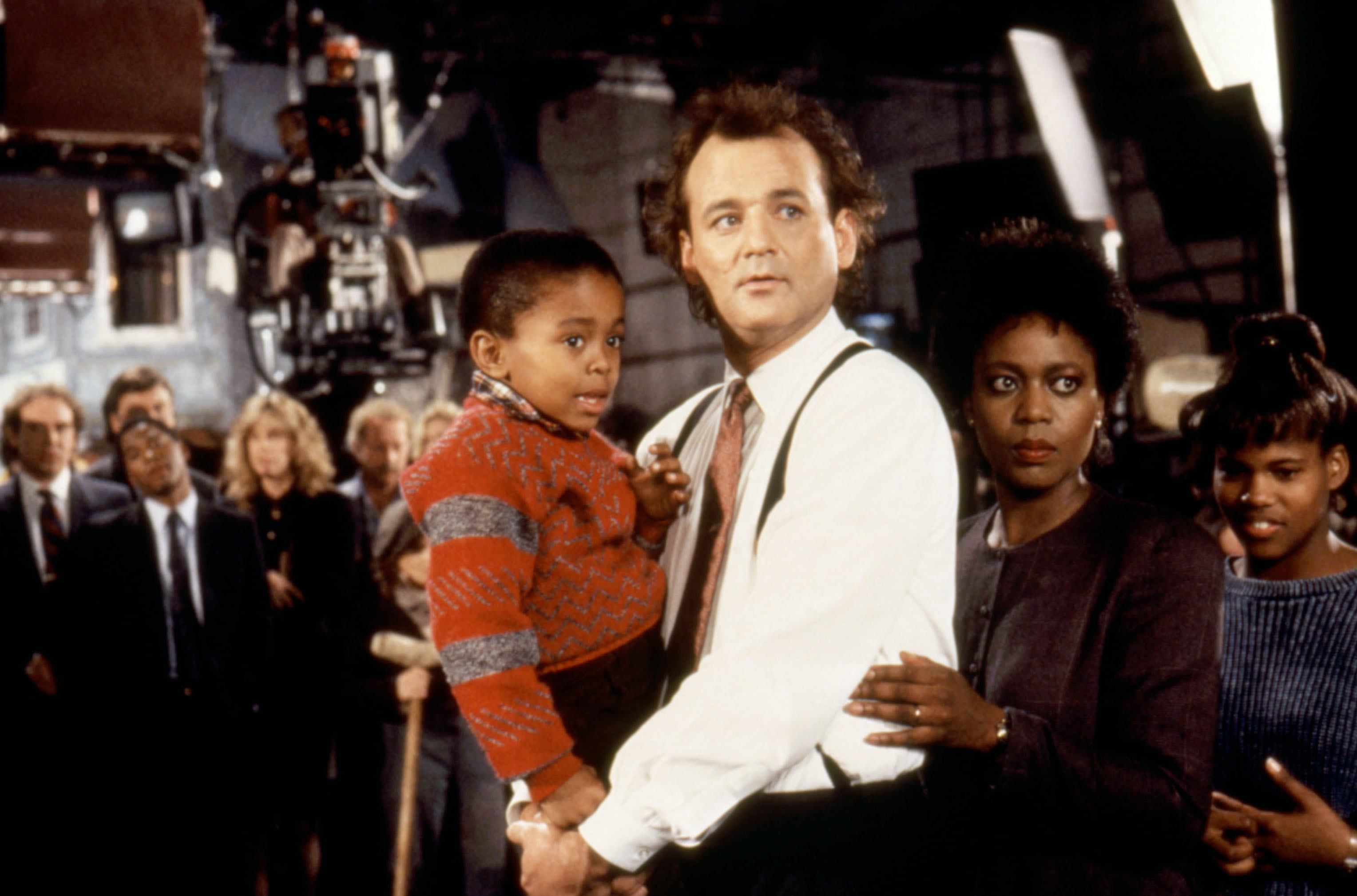
Christmas season has apparently already begun, so here’s Alfred Woodard, born on this day in 1952, with Bill Murray and little Nicholas Phillips on the set of the 1988 holiday classic Scrooged:

Actor in the Spotlight:

Go! makes a great case for Keanu Reeves being the best actor in Hollywood:

Movie Trope of the Day:

For Fandor, Daniel Mcilwraith showcases the “meta-flashback” as used in The Limey and other movies:

[embedded content]

Cosplay of the Day:

When you have a baby on Halloween, you might wind up with a doctor dressed up. Watch the Joker from The Dark Knight deliver Oaklyn (via Geekologie):

Classic Trailer of the Day:

Today is the 15th anniversary of the release of 8 Mile starring Eminem. Watch the original trailer for the classic rap musical biopic below.

[embedded content]

and

Let’s block ads! (Why?)


No Image

Some Twitter Users Embrace Longer Tweets; Some Stay Terse

Gokhan Balci/Getty Images

Gokhan Balci/Getty Images

Editing down your thoughts to cram them into a single tweet can be painful. Now, Twitter users might find that process half as painful.

In early September, Twitter announced it was moving on from its “arbitrary” 140-character limit by doubling the amount of characters a tweet can contain to 280.

This is a small change, but a big move for us. 140 was an arbitrary choice based on the 160 character SMS limit. Proud of how thoughtful the team has been in solving a real problem people have when trying to tweet. And at the same time maintaining our brevity, speed, and essence! https://t.co/TuHj51MsTu

— jack (@jack) September 26, 2017

Some users were instantly skeptical — after all, they had signed up for a website whose defining features were, as its founder and CEO Jack Dorsey noted, brevity and speed.

139 characters pic.twitter.com/WkfdXL8oLh

— Caitlin Kelly (@caitlin__kelly) September 26, 2017

Until this week, only a select group of Twitter users were able to tweet past the 140 character count in a trial period. Now, the 280 character feature has been rolled out for the entirety of the platform.

“We — and many of you — were concerned that timelines may fill up with 280 character tweets, and people with the new limit would always use up the whole space,” said Twitter product manager Aliza Rosen in a blog post. “But that didn’t happen.”

Just 5 percent of tweets posted during the trial period were longer than 140 characters — and only 2 percent were longer than 190 characters.

“People in the test got very excited about the extra space in the beginning and many tweets went way beyond 140. We expect to see some of this novelty effect spike again with this week’s launch and expect it to resume to normal behavior soon after,” said Rosen.

Rosen also says that during the 140 character-only era, 9 percent of English language tweets hit the character limit. Since the expanded character count, this happened far less frequently — now, only 1 percent of tweets run up against the limit.

The company also cited language differences in its decision to expand. In character-based languages such as Chinese and Japanese, “you can convey about double the amount of information in one character as you can in many other languages, like English, Spanish, Portuguese, or French,” wrote Rosen.

Twitter says its research shows us that the 140 character limit was a major cause of frustration for people tweeting in English, but not in Japanese. Only 0.4 percent of Japanese tweets compared to the 9 percent of English tweets hit the 140 character limit.

For these reasons, says Rosen, the character count for tweeting in Japanese, Korean, and Chinese won’t be doubled.

Some Twitter users were lukewarm about the platform-wide update. Many chose to dedicate their first 140+ character post to jokes.

.???
?
?
?
???

???
? ?
? ?
? ?
???

???
? ?
? ?
? ?
???

? ?
? ?
? ?
? ?
? ?

?
?
?
?
?

????
?
? ??
?
????

— Cookie Monster (@MeCookieMonster) November 8, 2017

‘Extravagant’:
baroque, devilish, exorbitant, excessive, extreme, fancy, immoderate, inordinate, insane, intolerable, lavish, overdue, overextravagant, overmuch, overweening, plethoric, profligate, steep, stiff, spendthrift, thriftless, towering, unconscionable, undue, unmerciful

— Merriam-Webster (@MerriamWebster) November 7, 2017

BIRD BIRD BIRD BIRD BIRD BIRD BIRD BIRD BIRD BIRD BIRD BIRD BIRD BIRD BIRD BIRD BIRD BIRD BIRD BIRD BIRD BIRD BIRD BIRD BIRD BIRD BIRD BIRD BIRD BIRD BIRD BIRD BIRD BIRD BIRD BIRD BIRD BIRD BIRD BIRD BIRD BIRD BIRD BIRD BIRD BIRD BIRD BIRD BIRD BIRD BIRD BIRD BIRD BIRD BIRD BIRD

— birdsrightsactivist (@ProBirdRights) November 7, 2017

Twitter’s destroyed its USP. The whole point, for me, was how inventive people could be within that concise framework. #Twitter280characters

— J.K. Rowling (@jk_rowling) November 8, 2017

By the way, it took 2579 characters—or 10 280 character tweets—to file this story.

Let’s block ads! (Why?)


No Image

CBO: Repealing Health Coverage Mandate Would Save $338 Billion

House Ways and Means Committee Chairman Kevin Brady, R-Texas, and Rep. Richard Neal, D-Mass., listen to debate on tax reform on Wednesday.

J. Scott Applewhite/AP

hide caption

toggle caption

J. Scott Applewhite/AP

Getting rid of the requirement that everyone in the country have health insurance coverage would save the government $338 billion over the next decade, according to a Congressional Budget Office analysis released Wednesday.

But that savings would come with 13 million fewer people having insurance coverage by 2027, CBO analysts say. Some of those people would not want to buy insurance, but others couldn’t afford it. The CBO also predicts that average premiums would be 10 percent higher in most years than they would be under current law.

Wouldn’t it be great to Repeal the very unfair and unpopular Individual Mandate in ObamaCare and use those savings for further Tax Cuts…..

— Donald J. Trump (@realDonaldTrump) November 1, 2017

House Republicans are toying with the idea of repealing the so-called individual mandate — a key part of the Affordable Care Act — as part of their plan to overhaul the tax code.

Including the provision could be a win-win for Republicans. The move would allow them to offset more of the tax cuts they want in their tax plan and give them the chance to claim they repealed one of the most hated parts of the Affordable Care Act, also known as Obamacare.

“That depends upon through what prism you look at the issue,” says Chris Jacobs, a health policy analyst at Juniper Research Group. “As a matter of tax policy, including $338 billion in additional revenue to pay for tax reform is a positive outcome. But as a matter of health policy, repealing the mandate without repealing any of Obamacare’s insurance regulations will raise premiums.”

House Speaker Paul Ryan has said repeatedly that one of his goals in repealing the Affordable Care is to make insurance cheaper and give people more choices.

President Trump has pressed lawmakers to include the repeal of the individual mandate in the tax overhaul plan. He took to Twitter on Nov. 1 and mused that it would be “great to Repeal the very unfair and unpopular Individual Mandate in ObamaCare.”

But on Monday, House Ways and Means Committee Chairman Kevin Brady said he is not inclined to add health care policies to the tax bill.

The new CBO report is an update of an estimate from last December that concluded that repealing the individual mandate would cut the deficit by about $416 billion over 10 years.

Let’s block ads! (Why?)


No Image

Investigating Pain Management In Sports

Utah Jazz player Rodney Hood injured his ankle during a game against the Minnesota Timberwolves earlier this year. Pain management in sports sometimes involves medications and their attendant risks.

Hannah Foslien/Getty Images

hide caption

toggle caption

Hannah Foslien/Getty Images

We praise athletes, at every level, for their ability to compete, to dazzle, to perform under pressure, to inspire and — maybe most importantly — to win.

And when they fall down, when they tear, break or injure themselves, they promise to pick themselves back up, come back stronger than ever and carry their team to victory — thus solidifying their seemingly superhuman performance.

But what goes into recovery? How do athletes get better? And then how do they stay healthy?

Often, recovery — and general pain management in sports — involves medication.

On game day, many NFL players find themselves lining up to receive a shot of Toradol, Bleacher Report reported earlier this year. Toradol, or ketorolac, is described as a stronger and faster-acting version of Advil or Aleve.

One player told Bleacher Report that he had received a shot of Toradol before every game for the past “four or five years.”

Persistent use of such medication could have long term effects, and it’s not just a problem in professional sports. In 2013, a University of Michigan researcher found that “male adolescent athletes who participated in competitive sports across the three-year study period had two times greater odds of being prescribed painkillers during the past year and had four times greater odds of medically misusing painkillers (i.e., using them to get high and using them too much) when compared to males who did not participate in competitive sports.”

The researcher also found that by the time high school athletes became seniors, approximately 11 percent had used narcotic pain relievers such as OxyContin or Vicodin for nonmedical purposes.

So, where does that leave us? We want to hear from you.

What do you want NPR’s Morning Edition to investigate about pain management in sports and opioid use?

Here’s how this works: Tell us your question by submitting it below. Our team at Morning Edition will go through responses and pick one — or potentially a few — to investigate further. Your question could be the central topic in a future sports segment on Morning Edition.

_

Let’s block ads! (Why?)


No Image

Shocking Omissions: Cesária Évora's 'Cesária'

Singer Cesária Évora lifted Cape Verde’s little-known blues, morna, beyond the island and into the international world of music.

VALERY HACHE/AFP/Getty Images

hide caption

toggle caption

VALERY HACHE/AFP/Getty Images

This essay is one in a series celebrating deserving artists or albums not included on NPR Music’s list of 150 Greatest Albums Made By Women.

If there were ever a voice that embodied that of a siren, a voice that could seduce, sadden and soothe with its elegance, it was Cesária Évora‘s. It was the voice that lifted Cape Verde’s little-known blues, morna, beyond the island and into the international world of music. In 1995, Évora’s years of living and singing the blues culminated in Cesária, an album that cemented the importance of Évora, and morna, in world music.

As with the greatest blues singers of all time, the knowing and sensitivity Évora brought to morna was lived, not sought after. She was born in Mindelo, a port city on the island of São Vicente. Her musician father died when she was a young girl; Évora’s mother, unable to care for her, placed her in an orphanage soon after. By the age of 16, Évora was already world-weary: swigging scotch, burning through cigarettes and captivating patrons with songs of loss in tiny Cape Verde taverns.

She sang in Kriolu, which draws from West African dialects and Portuguese — the language of Cape Verde’s former colonizer. Évora had a gift for elevating morna ballads, a style of song whose lyrics address poverty, longing, and most deeply, partings: of both the physical and emotional kind. Her melodic voice conjured the beauty and struggle, melancholy and yearning of life in Cape Verde. Performing without shoes, Évora was often paid with drinks and trivial tips as she performed for the sailors who arrived on the Portuguese cruise ships that docked at Mindelo. Yet her languid vocals and blasé glamour were unforgettable. She would eventually be known as the “barefoot diva” and the queen of morna, both names capturing the humble majesty she evoked.

Decades before seasoned artists such as Sharon Jones and Charles Bradley reached world-wide fame at ages where most musicians had long retired or given up, Évora was “discovered” at the age of 47 by producer José Da Silva while singing in Lisbon. Bana, a Cape Verdean singer (known as the “king of morna) who had found success off the island, wanted to expose Évora, and morna, to a larger audience. So he invited Évora to perform in Portugal. That fateful trip would change her life. But as with much of her career, rightful acclaim would come later: four albums in, to be exact, with 1992’s Miss Perfumado. That album made her an international star, and went on to sell 300,000 copies worldwide.

[embedded content]
YouTube

But in 1995, Évora lit the torch brighter with Cesária, cementing her place as Cape Verde’s morna master. Nominated for a 1996 Grammy for Best World Music Album, Cesária sees Évora’s exquisite vocals paired with theopulence of guitars, percussion and violin. For the first time, her music was carried by a celebratory quality, suggesting that even in mournful morna some moments call for one to dance and sway in pleasure.

On “D’Nhirim Reforma” the buoyancy in Évora’s vocals lifts her beyond her renowned languidness. The rhythmic guitars on “Petit Pays” and “Nha Cancera Ka Tem Medida” captivate with their warmth, while the inclusion of the violin on “Areia de Salamansa” makes Évora sound as if she is performing in a European cafe. “Consedjo” and “Flor Na Paul” are communal songs sang with spirited backing singers whose inclusion strikingly contrasts with the lonesomeness Évora’s vocals conjured on prior albums. And even when Évora is heard singing solo, the inspired whistles on “Rotcha ‘Scribida” and “Doce Guerra” feel like sorrowful companions. The result is an album that is nostalgic yet saccharine free, one on which Évora’s voice commands the music fully and is the vortex that all its beauty swirls around. By the end of Cesária,the definitive stamp that Évora had placed on morna was complete.

By the mid-2000’s, Évora was celebrated around the world — including a 2004 Grammy win for her ninth album, Voz d’Amor. But despite the acclaim, she was already beyond the notions and trappings of fame. She knew it was well-deserved and a long time coming. Rather than feel chosen like Cinderella placing her foot into the glass slipper, the barefoot diva remained unchanged. During one of her sold-out Montreal International Jazz Festival shows, which I attended towards the end of her career, Évora graced the stage with nonchalance, smoked throughout despite the non-smoking rule and addressed the audience at the end with a single goodbye. The intimate, spontaneous manner of her performance suggested that though the audiences had grown and the faces and places changed each night, she was still the woman performing in nondescript bars, singing timeless stories to drifting faces. She viewed fame as something that provided a greater vehicle to share her gifts with people around the world, which she did until her death in 2011.

Évora’s blues transcended the limitations of language, allowing her to blaze a one-woman path forward. And this groundwork she set has paved the way for others as diverse as the Buena Vista Social Club and Daymé Arocena. Today, artists in the genre of morna remain indebted to, and live in the shadow of, Cape Verde’s chanteuse of blues.

Let’s block ads! (Why?)


No Image

Today in Movie Culture: All Your Favorite Movie Stars as Zombies, Thor vs. Wonder Woman and More

Here are a bunch of little bites to satisfy your hunger for movie culture:

Fake Movie of the Day:

How has this not already been a real movie? Movie stars play living dead versions of themselves in the trailer for the fake movie Hollywood Zombies:

[embedded content]

Casting Rendering of the Day:

Now that Asher Dov Angel has been cast as Billy Batson in Shazam!, BossLogic shows us what he could look like in the DC movie alongside Zachary Levi:

Quick mock-up of Billy and Shazam, congrats to both @Asherdovangel and @ZacharyLevi on the roles #Shazampic.twitter.com/8r6fu1AYMV

— BossLogic (@Bosslogic) November 7, 2017

Alternate Universe Casting of the Day:

What a young Chuck Norris had starred in a Punisher movie? Darth Blender shows us what that could have looked like in this fake trailer:

[embedded content]

Superhero Battle of the Day:

A fight between Thor and Wonder Woman is teased in this fan-made “found footage video:

[embedded content]

Vintage Image of the Day:

Oscar-winning Citizen Kane co-writer Herman J. Mankiewicz, was born on this day in 1897, with Orson Welles:

Herman J Mankiewicz (7/11/1897 – 5/3/1953) with his Citizen Kane co-writer Orson Welles. #OrsonWelles@OrsonWellespic.twitter.com/iiVKgdi1vw

— Richard Luck (@RMGLUCK2017) November 7, 2017

Actor in the Spotlight:

Burt Lancaster’s legacy as a movie star is showcased in the supercut edited by Phiip Brubaker:

[embedded content]

Video Essay of the Day:

For Fandor, Leigh Singer looks at the art and ethics of the current digital de-aging trend:

[embedded content]

Movie Song Cover of the Day:

Watch John Stamos perform “Pure Imagination” from Willy Wonka & the Chocolate Factory in concer in Hollywood:

[embedded content]

Classic Trailer of the Day:

Today is the 20th anniversay of the release of Paul Verhoeven’s Starship Troopers. Watch the original trailer for the sci-fi classic below.

[embedded content]

and

Let’s block ads! (Why?)


No Image

Report: Weinstein Hired Agents To Investigate And Suppress Accusations Against Him

A report in The New Yorker says Harvey Weinstein hired an Israeli intelligence firm to collect information on the allegations against him.

Chris Pizzello/Chris Pizzello/Invision/AP

hide caption

toggle caption

Chris Pizzello/Chris Pizzello/Invision/AP

When women started telling their stories of sexual harassment and assault by Harvey Weinstein, many talked about the fear they had of him. Likewise, some journalists spoke of the pressure the powerful film executive had applied on them or their bosses to quash reports of his misconduct.

Now a new report by Ronan Farrow, published Monday evening in The New Yorker, shows that Weinstein hired “an army of spies” to investigate the women who were considering speaking out and the journalists who were digging into the allegations.

Though Farrow lays out the details plainly, it still reads like an espionage thriller. It involves multiple “international high-level corporate intelligence firms, using very aggressive tactics,” Farrow told NPR.

One firm’s tactics included “targeting women, targeting journalists,” Farrow said. “Showing up in their lives using fake identities. Using fake companies as a front. This was detailed, this was aggressive, and according to the women I spoke to — this was terrifying.”

According to Farrow’s reporting, this is the plot:

Last fall, Weinstein began hiring private security firms to collect information on the women who might speak out against him. One firm was Kroll, a major corporate intelligence firm. Another was Black Cube, a much newer company founded by two former Israeli intelligence officers, Dan Zorella and Avi Yanus, and which touts its staff of “veterans of elite units” from Israeli intelligence.

Black Cube was hired by Weinstein’s lawyer, David Boies. Boies is well-known attorney: he represented Al Gore in the disputed 2000 presidential election, and he fought California’s ban on same-sex marriage. He has also provided legal counsel to The New York Timesin three matters over the last decade.

That last part is problematic because his law firm, Boies Schiller Flexner, hired Black Cube to accomplish two objectives. One was to learn the contents of a book – a forthcoming memoir by actress Rose McGowan – that “includes harmful negative information” about Weinstein. The other was to provide intelligence that would help Weinstein stop the Times from publishing a negative article about him.

That would be this article, published in the Times on October 5. Weinstein was fired from his company three days later.

Farrow obtained the contract between the law firm and Black Cube, which lays out some details of the deal. A key part of the mission was an agent known as “Anna,” who managed to meet and befriend McGowan, who says Weinstein assaulted her. Anna told McGowan her name was Diana Filip, an advocate for women’s empowerment at a London-based wealth management firm.

But Anna and Diana Filip are both aliases for a former Israeli Defense Force officer, Farrow reports. The operative also met with Ben Wallace, a reporter at New York magazine who was working on a possible Weinstein story. The agent and others were apparently gathering intelligence on who was likely to come forward, and which reporters were working on Weinstein stories.

Another intelligence firm, PSOPS, sent Weinstein research on Farrow, Wallace, Times reporter Jodi Kantor, and New York editor Adam Moss. Weinstein had hired Kroll to collect information on the late journalist David Carr back in the early 2000s, Farrow reports, and Carr’s widow says he “believed that he was being surveilled, though he didn’t know by whom.”

In the contract, Black Cube promised that “due to the urgency of the project,” it would use its “blitz methodology” to bring its resources to the Weinstein job.

Black Cube said its team would include a project manager, a legal advisor, “avatar operators” fluent in media analysis, linguists, an investigative journalist, a full-time agent (“Anna”), and operations experts with “extensive experience in social engineering.” It also promised the support of its board and advisors: “businessmen in key positions in Israel and abroad” and former heads of Israeli intelligence forces.

That’s a lot of firepower to unleash on actresses and journalists.

But this kind of intelligence work on behalf of private clients “is huge in Israel,” according to Israeli journalist Ronen Bergman.

The Weinstein scheme sounds like “the same sort of mindset and originality and experience that someone who served many, many years in Israeli intelligence” would have deployed on behalf of the state of Israel, Bergman told NPR. Only now, those former officers are doing that work on behalf of a private company.

Farrow reported that Boies’ firm paid Black Cube $100,000 on Oct. 28, 2016, toward an eventual $600,000 invoice. Black Cube was promised a “success fee” of $300,000 if it managed to block the Times from publishing its report on Weinstein. It would get an additional $50,000 if it managed to acquire the second half of McGowan’s book.

The mission failed, of course. The Timespublished its story and The New Yorkerpublished its own (reported by Farrow). Now police in New York are building a case that Weinstein raped an actress there seven years ago.

It’s not known how much money Weinstein paid out to to all the firms he hired. Bergman, the Israeli journalist, says articles like the one you’re reading are good business development for such firms – suggesting they’ll do whatever possible for their clients, and they’ll bring significant capabilities to the task.

For Boies Shiller Flexner, the outlook is less rosy. As Farrow notes, law firms are often used as the middlemen between clients and intelligence firms, “to place investigative materials under the aegis of attorney-client privilege, which can prevent the disclosure of communications, even in court.”

Boies defended his actions, telling Farrow that he didn’t think it was a conflict of interest to hire Black Cube to work on stopping the Times story, while he was also representing the paper in a libel suit. He said he never pressured any news outlets, and that Weinstein was at that point denying the allegations.

“Given what was known at the time, I thought it was entirely appropriate to investigate precisely what he was accused of doing, and to investigate whether there were facts that would rebut those accusations,” he said.

The Times feels differently.

“We learned today that the law firm of Boies Schiller and Flexner secretly worked to stop our reporting on Harvey Weinstein at the same time as the firm’s lawyers were representing us in other matters,” the newspaper said in a statement Monday. “We consider this intolerable conduct, a grave betrayal of trust, and a breach of the basic professional standards that all lawyers are required to observe. It is inexcusable and we will be pursuing appropriate remedies.”

And it seems that Weinstein’s intense efforts to keep a lid on the allegations against him weren’t enough in the end.

It’s proof, Bergman says, that sometimes even the most highly trained staff and whole lot of money “cannot stop a truthful and profound and deep investigative journalism.”

Let’s block ads! (Why?)


No Image

Roy Halladay, Retired Cy Young-Winning Pitcher, Dies In Plane Crash At Age 40

Roy Halladay won two Cy Young awards and was an eight-time All-Star during his 16 years in the major leagues. He’s shown during his final season, in 2013.

Matt Slocum/AP

hide caption

toggle caption

Matt Slocum/AP

For years, Roy Halladay stood not only atop the pitcher’s mound but atop Major League Baseball, too. Over the course of his career, the pitcher racked up two Cy Young awards and earned All-Star honors eight times. Even after retirement, he also achieved great heights — albeit in a different way, getting his pilot’s license and posting often on social media about his beloved new plane.

On Tuesday, that new avocation ended in tragedy. The Pasco County (Fla.) Sheriff’s Department confirmed that Halladay’s small aircraft crashed in the waters off Florida, killing him at age 40.

“Many know Roy as a Cy Young winner, a future Hall of Famer, one of the best pitchers to ever pitch in the game of baseball. We know Roy as a person, as a caring husband who loved his wife, Brandy, and loved his two boys tremendously,” Sheriff Chris Nocco said at a news conference Tuesday.

Nocco said Halladay even donated a dog to the sheriff’s office to serve as a K-9 officer.

Roy Halladay bought a dog for his local Sheriff’s office. This is K9 Doc. pic.twitter.com/kM7Rjj1UsK

— Blake Schuster (@Schustee) November 7, 2017

“He was probably one of the most humble human beings you’ll ever meet,” Nocco continued, later adding:. “You wouldn’t know what Roy did because Roy would never tell you what he did. And that’s the legacy of a great man.”

“We are numb over the very tragic news about Roy Halladay’s untimely death,” one of his former teams, the Philadelphia Phillies, said in a statement. “There are no words to describe the sadness that the entire Phillies family is feeling over the loss of one of the most respected human beings to ever play the game.”

We are saddened by the tragic news that Roy Halladay, 2-time Cy Young Award winner & 8-time All-Star, has died in a plane crash. He was 40. pic.twitter.com/SOFv3bOLyt

— MLB (@MLB) November 7, 2017

During Halladay’s 16 years in the league, he recorded a staggering 67 complete games — the most by any one player since he made his professional debut in 1998, according to MLB network columnist Jon Morosi. In 2010, he also pitched what was then only the 20th perfect game in MLB history.

He retired in 2013.

Roy Halladay’s cap and ball from his 2010 perfect game. His legacy lives on in Cooperstown. Rest in peace, Doc. pic.twitter.com/PqASdhK8bf

— Baseball Hall ? (@baseballhall) November 7, 2017

Lately, as discussion of his career turned to when he would be inducted into the Hall of Fame, Halladay himself turned to another passion: flight. Just last month, ICON Aircraft delivered one of its aircraft — the first of its kind — to Halladay, prompting a meditation on his love for flying.

“I’ve been dreaming about flying since I was a boy but was only able to become a pilot once I retired from baseball,” said Halladay, before going on to praise the plane he received, an A5.

What do clouds feel like? I didn’t know either until I got my new Icon A5! I’m getting bruises on my arms from constantly pinching myself! pic.twitter.com/BaObEUj3Xo

— Roy Halladay (@RoyHalladay) October 13, 2017

Authorities say they found him after a private resident reported a crash at about midday and officials launched an hours-long search-and-rescue effort. Law enforcement ultimately found Halladay’s plane in shallow water, with only Halladay onboard.

Nocco asked that people give the late pitcher’s family privacy.

On social media, his loss drew an outpouring of support from friends, teammates, rivals and even some admirers, whom Halladay inspired to pursue baseball themselves.

In shock over the terrible news about Roy Halladay… a pitcher I grew up admiring & rooting for. Praying for his family & friends. #RIPDoc

— Mike Trout (@MikeTrout) November 7, 2017

Heart is broken to hear about Roy Halladay .great friend, teammate, father and husband. One of the best teammates ever! You will be missed !

— Roy Oswalt (@royoswalt44net) November 7, 2017

It was our honor to share a field with the incredible Roy Halladay. Our thoughts and prayers are with his family, friends and fans. pic.twitter.com/rwtSYsgpgm

— Atlanta Braves (@Braves) November 7, 2017

Let’s block ads! (Why?)