Articles by admin

No Image

Saturday Sports: Tiger Woods And Eli Manning

Tiger Woods is attempting yet another comeback and Eli Manning will not start for the first time in 13 years.

SCOTT SIMON, HOST:

And now it’s time for sports.

(SOUNDBITE OF MUSIC)

SIMON: Eli Manning’s streak of consecutive games is scheduled to come to an end tomorrow. But in golf, Tiger Woods might be back again. NPR sports correspondent Tom Goldman joins us. Tom, thanks so much for being with us.

TOM GOLDMAN, BYLINE: Scott, thanks for having me.

SIMON: (Laughter) And Tiger’s looking like he can play golf again, isn’t he?

GOLDMAN: You know, he certainly doesn’t look like a nearly 42-year-old man returning from his fourth back surgery. In his first competitive golf in almost a year, he has shot two straight rounds in the 60s. He’s swinging free and hard. He’s hitting the ball far. He’s chipping and putting. It looks solid. Granted, Scott, this tournament he’s playing in is a nice, little cushy event hosted by him in the Bahamas. It only has 18 players, although many of them are the world’s top-ranked guys.

SIMON: It’s his own – he’s hosting his own event? Surely, that’s stacking the deck, isn’t it? But go ahead. Yeah?

GOLDMAN: (Laughter) No, no, no. I mean, everyone has a shot. There is no cut after two rounds, so it’s not the pressure cooker of a regular PGA Tour event. But he led for a time Friday. Going into today, he was five shots behind the leader. And Tiger Mania (ph) is growing. There’s so many people who are so eager to see him do magical things on the golf course again.

SIMON: He’s had a lot of back trouble, as you note – four surgeries – and, to be sure, personal trouble, much of his own making. But he’s only 41, 42. He could have some very strong years – tricky as backs are – couldn’t he?

GOLDMAN: Yeah. Well, he could. You know, a few. Backs are very tricky, especially with violent torquing golf swings like Tiger’s. And we should note that he played this event last year. He did really well – raised expectations like he is now. And then in a couple of events after that, his back deserted him. He did play golf for nine straight days before this event began to get his back and his body and his mind ready. After two really good rounds, the back appears to be holding up. He said he took some Advil during the round yesterday not because he was hurting but because of his surgeon’s orders. So we shall see. If he can stay healthy, 2018 could be a fascinating year on the Tour.

SIMON: Yeah. Eli Manning doesn’t start tomorrow – New York Giants against the Oakland Raiders – ending a streak of 210 regular season games at that number. Now, the Jints have had a miserable season, but is Eli Manning the reason?

GOLDMAN: Well, he’s not the entire reason. It’s always – you know, it’s a team failure. But yeah. You look at a few key stats, and Manning doesn’t appear to be the guy who led the Giants to two Super Bowl titles in the last nine years. You know, perhaps it was time to move on.

But it’s the way the Giants did it that has appalled many fellow players and fans. He was told he could keep starting the final games of the season to keep the streak alive but that he’d come out of games so the team could take a look at his backups. He wanted none of that. He said that was more about chasing hollow numbers than competing.

SIMON: Yeah. The NFL’s been dealing with social actions and protests this season. They announced a social action plan initiative of their own this week. What do you see in it?

GOLDMAN: It’s a response to the player protests begun by Colin Kaepernick last season, which, you know, multiplied this season. The NFL reportedly will put up about $90 million over seven years for social justice programs – programs that deal with improving education, community police relations, the criminal justice system. Some players still are suspicious of this and say the league is trying to buy its way out and get players to stop protesting. But there are a lot supporting the plan. And at the very least, this appears to be a step in a good direction.

SIMON: NPR’s Tom Goldman, thanks so much for being back with us. Talk to you soon.

GOLDMAN: Always a pleasure, Scott.

(SOUNDBITE OF SPEEDOMETER SONG, “TROUBLED LAND”)

Copyright © 2017 NPR. All rights reserved. Visit our website terms of use and permissions pages at www.npr.org for further information.

NPR transcripts are created on a rush deadline by Verb8tm, Inc., an NPR contractor, and produced using a proprietary transcription process developed with NPR. This text may not be in its final form and may be updated or revised in the future. Accuracy and availability may vary. The authoritative record of NPR’s programming is the audio record.

Let’s block ads! (Why?)


No Image

The Week in Movie News: 'Avengers: Infinity War' Trailer, Disney Finds 'Mulan' Remake Star and More

Need a quick recap on the past week in movie news? Here are the highlights:

BIG NEWS

Marvel has 20 more movies already planned: Marvel Studios head Kevin Feige revealed this week that in addition to the currently known 22 titles, there are 20 more installments of the Marvel Cinematic Universe in various planning stages. Read more here and see the trailer for Avengers: Infinity War below.

GREAT NEWS

Disney’s Mulan finds its star: Chinese actress Liu Yifei (aka Christal Liu), best known in America for The Forbidden Kingdom, has been cast in the lead title role in Disney’s live-action remake of Mulan. Read more here.

AWARDS BUZZ

The Post and Get Out are already big winners: Awards season is in full force now, with Gotham Awards naming Get Out and Call Me By Your Name in major categories and the National Board of Review picking The Post as best movie of the year. Meanwhile, Girls Trip is also on the map thanks to Tiffany Haddish. Read more here and here and here.

FESTIVAL BUZZ

Sundance Film Festival announces 2018 slate: While this year’s movies are immersed in awards fever, many of next year’s best movies are likely among the titles announced this week as part of the 2018 Sundance Film Festival program. Read more here.

Avengers: Infinity War Easter eggs: Following the release of the Avengers: Infinity War trailer (see below), fans have been poring through the footage and highlighting Easter eggs and other clues about the movie. Watch one of them below and see another here.

[embedded content]

MUST-WATCH TRAILERS

Avengers: Infinity War looks absolutely epic: The highly anticipated first trailer for Avengers: Infinity War finally dropped, and it’s just as amazing as we hoped. Watch it below and see our picks for the best moments here.

[embedded content]

Thoroughbreds showcases two rising stars: The first trailer for the Sundance hit thriller Thoroughbreds starring rising stars Anya Taylor-Joy and Olivia Cooke. Check it out below:

[embedded content]

Mary Magdalene previews a Biblical drama: The first trailer for the Biblical drama Mary Magdalene features Rooney Mara as the title character and Joaquin Phoenix as Jesus. Watch it here:

[embedded content]

and

Let’s block ads! (Why?)


No Image

American Airlines And Pilots Work Out Deal To Save Holiday Flights

There is no need to charter a sleigh pulled by reindeer for your air travel to holiday destinations after all. American Airlines and its pilots have worked out a deal to staff cockpits in late December after a scheduling snafu threatened to cancel thousands of flights.

Because of what the airline is calling “a processing error” in its scheduling system, American mistakenly allowed many more pilots to take time off over the holidays than it should have.

American Airlines has a deal with its pilots to keep its end-of-the-year flights staffed. The airline had inadvertently given too many pilots the holidays off.

Wilfredo Lee/AP

hide caption

toggle caption

Wilfredo Lee/AP

Capt. Dennis Tajer, who serves as spokesman for the Allied Pilots Association, told NPR earlier this week that many of his fellow pilots “went to their sons, daughters, husbands and wives and said, ‘Guess what? I’m off for Christmas! First time in 10 years!’ “

But it turned out to be too good to be true, and Tajer said more than 15,000 flights between Dec. 17 and Dec. 31 were without a captain, first officer or both assigned to fly the plane. He said the scheduling mess-up threatened to cancel many of the flights.

The airline tried to cover the scheduling error by staffing flights with reserve pilots and offering some pilots premium pay to work. But the union filed a grievance saying the airline’s efforts to restrict premium pay and trip trading for December flights violated terms of the pilots’ contract.

The timing of the snafu couldn’t have been worse, said transportation professor Joe Schwieterman of Chicago’s DePaul University. “You look at the holiday season and [full flights] and you throw this kind of problem into the mix and no doubt, travelers get nervous,” he said. “Many dread the crowds already without this lingering uncertainty.”

The world’s largest airline had a lot on the line, and not just because of the possibility of ruining holiday travel plans for thousands of occasional customers.

“American has a huge business traveler base that they need to keep happy,” said Schwieterman, adding that he expected the airline to “open the wallet to fix this the best they can.”

American apparently did just that. After a meeting Friday between union leadership and American’s senior management, they reached “an agreement in principle addressing our respective needs, and we have withdrawn our grievance,” the Allied Pilots Association said in a statement.

American Airlines thanked its pilots “who are doing their part to cover the holiday schedule and beyond.”

“We can assure our customers that among the many stresses of the season, worry about a canceled flight won’t be one of them,” the airline’s statement adds. “In short, if Santa is flying, so is American.”

Let’s block ads! (Why?)


No Image

FIFA Announces Final Draw For 2018 World Cup

On Friday, FIFA announced the World Cup final draw for next year’s event in Russia. So now that the match-ups have been set, who has an easy path to the final, who’s in the Group of Death, and who should Americans root for since the U.S. will not be in it?

KELLY MCEVERS, HOST:

The final draw for the World Cup was announced today. The 32 teams in the tournament now know who they will be playing next summer in Russia. And of course that does not include the U.S. team which was eliminated back in October. Hardcore U.S. fans might not be ready to root for another country, but if you are up for it, there are still plenty of upstarts and feel-good teams to root for. Here to help us figure that out and talk about all other things World Cup is Roger Bennett of the “Men In Blazers” podcast and show on NBC Sports. Welcome back to the show.

ROGER BENNETT: Oh, Kelly, it’s a joy to be here even with bittersweet emotion after that World Cup draw without the United States in it.

MCEVERS: Are you sure you’re that upset about the U.S.?

BENNETT: I could not be more distraught. I adore the United States more than Kid Rock loves the United States. So I am absolutely bereft despite my accent.

MCEVERS: For those of us who would have liked to root for the U.S. and are looking for somebody else to root for, who would you advise?

BENNETT: If you’re big-hearted, you could go for the home team – little Russia, the host nation. I’m not a conspiracy theorist, Kelly, but they ended up in the easiest group while Vladimir Putin looked on from the stage. They’re essentially in the Cleveland Browns of groups for Putin’s team. And there will no doubt be viewing parties across the United States of America for the opening game on June 14 when Russia plays Saudi Arabia. That’s the big one.

MCEVERS: Aside from Russia, are there any other good underdogs to root for?

BENNETT: My advice to all of your listeners is do not choose the England team, whatever you do.

MCEVERS: (Laughter) OK.

BENNETT: I’m speaking with scars all over my body, emotional traumas that this team have given me in major tournaments past. They will raise your hopes and then find cruel, sadistic, unusual ways to self-sabotage. The jewel of the tournament, Kelly, if you’re looking for an underdog, a heart-warming story – look no further than Iceland, the smallest nation of all time to compete in the World Cup, just 325,000 Icelanders in that population, around the same size as Corpus Christi, Texas.

I met them. They have a charming coach who until recently was a part-time dentist on an island that has more puffins than it did people. But these players – they have a collective (unintelligible). Their talent – very little of it is world-class. Collectively, when they take the field, they believe Viking blood runs through their veins. And watching them in major tournaments defy the odds over and over again, it’s a delirious sight to see. They take on Argentina in that opening game, and I fancy their odds.

MCEVERS: OK, so – but what if you actually hate underdogs – just, like, not your thing. You were the one person who is actually sad that the Death Star blew up at the end of Star Wars, or you were, like, somebody who, you know – I don’t know – roots for the New England Patriots. Like, who, besides the big ones – like, who are the ones you’d really bet on?

BENNETT: There’s a saying in world football that football is a simple game where 22 men chase a football and at the final whistle, Germany always wins.

MCEVERS: (Laughter).

BENNETT: They are the reigning world champions.

MCEVERS: Yeah.

BENNETT: They have the – just a youth development system that pumps out a trout farm of young talent. And if you want to back the favorites, Germany is the team for you.

MCEVERS: Roger Bennett of the “Men In Blazers” podcast and TV show on NBC Sports, thank you so much.

BENNETT: Kelly, thanks for having me on.

Copyright © 2017 NPR. All rights reserved. Visit our website terms of use and permissions pages at www.npr.org for further information.

NPR transcripts are created on a rush deadline by Verb8tm, Inc., an NPR contractor, and produced using a proprietary transcription process developed with NPR. This text may not be in its final form and may be updated or revised in the future. Accuracy and availability may vary. The authoritative record of NPR’s programming is the audio record.

Let’s block ads! (Why?)


No Image

What We've Learned Treating People With HIV Can Make Care Better For Us All

A memorial honoring victims of the AIDS epidemic sits across the street from the former St. Vincent’s Hospital site in New York City, where many of the early victims of AIDS were diagnosed.

Spencer Platt/Getty Images

hide caption

toggle caption

Spencer Platt/Getty Images

It’s been two decades since we established effective treatment against HIV, rendering what was nearly always a fatal infection to a chronic, manageable condition.

I remember one of the first AIDS patients I met as a medical student in the mid-90s: Harry, a young man losing his sight from an opportunistic infection called CMV retinitis. We had only one drug we could give him to try to stop him from going blind.

Ganciclovir was horrible. Given intravenously, it burned at the infusion site, made him severely nauseous, and caused his already-low blood count to fall. On top of all that, it didn’t work very well.

Days after we discharged him from the hospital, Harry was readmitted with pneumonia caused by Pneumocystisand died. He was 32 years old.

In those years, we saw many patients in the hospital with complications from HIV. They had unusual malignancies like Kaposi’s sarcoma, and other opportunistic infections like toxoplasmosis that we never see in patients with intact immune systems.

In extreme cases, patients simply wasted away, physically and mentally, from AIDS.

Then protease inhibitors were introduced in 1996, and almost overnight the death rate from AIDS plummeted. Now people could live with HIV rather than die from it. Patients with AIDS disappeared from our teaching hospital wards. HIV had become an “outpatient problem.”

Antiretroviral therapy keeps the viral load suppressed in patients infected with HIV. This means not only that they stay healthy, but also are much less likely to transmit the virus to others.

Fortunately, the cocktail of three different medications taken to keep HIV in check, which include a protease inhibitor like darunavir and the newer integrase inhibitors like dolutegravir, have become better tolerated over the years. Today the life expectancy for someone who is HIV-positive is about the same as for someone without HIV — as long as they are able to stay on their medication.

A woman holds the 14 different AIDS medications that she takes three times a day. Antiretroviral drugs have turned HIV from a death sentence into a chronic illness.

Joe Raedle/Getty Images

hide caption

toggle caption

Joe Raedle/Getty Images

For many, though, there are still significant barriers to care that make the not-so-simple act of adhering to a medication regimen near impossible.

Chief among them is access to care. Especially in rural areas, it remains difficult to find practitioners up to date with the latest information in HIV care. In addition, stigma associated with HIV diagnosis and treatment continues to be a formidable barrier to getting care, regardless of location.

Carmel was a patient I cared for years after Harry. She’d been abused as a youngster, which understandably put her in a dark place emotionally. She was isolated from her family, and struggled with drug addiction over the years.

Her HIV eventually progressed to full-blown AIDS because of many fits and starts with her antiretroviral treatment. When I met her, she’d lost her ability to walk due to an opportunistic infection called cryptococcal meningitis.

After three years with numerous hospital admissions, Carmel died. To me, it seemed especially tragic because I knew we had the medical tools to nurse her toward health. But we were unable to cross the psychosocial chasm that Carmel lived beyond to effectively engage her in care.

Even with effective medications, only half of the 1.1 million Americans living with HIV have an undetectable viral load. But this represents progress, as does the fact that 85 percent of Americans infected with HIV are aware of their status, according to the Centers for Disease Control and Prevention.

These are all-time highs, but show that there is still work to be done.

It’s worth remembering that strong, sometimes militant advocacy is what pushed us forward in how we diagnose and treat HIV. Scientific, medical, and social progress occurred more rapidly with HIV than with any other condition before it.

Protestors carry signs at a rally in New York City on October 7, 1995 in New York City. Activists played a key role in speeding research that developed treatments for HIV.

Evan Agostini/Liaison/Getty Images

hide caption

toggle caption

Evan Agostini/Liaison/Getty Images

AIDS activism pushed the research agenda forward, and brought truly holistic care to people diagnosed with HIV. The care model we use for HIV-positive persons is an ideal model for how we could care for everyone—thinking not just about the medical aspects per se, but also about nutrition, medication adherence, transportation, mental health and overall wellbeing.

In Oklahoma, where I practice, the stigma surrounding HIV is still palpable. Fortunately, an organization called Tulsa Cares has blossomed to provide case management and psychosocial and nutritional support to people with HIV and their loved ones. This vastly increases the likelihood that patients will get into treatment and stay with it.

Advocacy for HIV is what led to the dramatic improvements in our ability to care for the illness. On this 30th anniversary of World AIDS Day, let’s remember what a difference holistic care has made for people with HIV and how amazing it would be if such a model spread to all corners of health care.

John Henning Schumann is an internal medicine doctor and serves as president of the University of Oklahoma’s Tulsa campus. He also hosts Studio Tulsa: Medical Monday on KWGS Public Radio Tulsa. You can follow him on Twitter: @GlassHospital.

Let’s block ads! (Why?)


No Image

Today in Movie Culture: Justice League Vs. X-Men, 'Star Wars' Saga Recap and More

Here are a bunch of little bites to satisfy your hunger for movie culture:

Mashup of the Day:

See Wolverine go up against Wonder Woman and The Flash racing Quicksilver in the Stryder HD’s fan-made trailer for Justice League vs. X-Men:

[embedded content]

Trailer Reaction of the Day:

Speaking of Justice League, watch DC’s superheroes concernedly watch the Avengers: Infinity War trailer:

[embedded content]

Cosplay of the Day:

Speaking of Infinity War, here’s a woman cosplayer as Star-Lord who is excited about the new trailer:

Star-Lord…waiting to be in the #AvengersInfinityWar film… #Cosplay (Photography by HubsterPhotography) pic.twitter.com/71i2yuU2Uz

— Dee Ellie (@DeeGuardia) November 29, 2017

Easter Eggs of the Day:

We shared one Easter egg showcase for the Avengers: Infinity War trailer yesterday, but here’s another from ScreenCrush:

[embedded content]

Actor in the Spotlight:

We shared a supercut of Tom Hanks screaming yesterday, and here’s a counterpart of him laughing in his movies:

[embedded content]

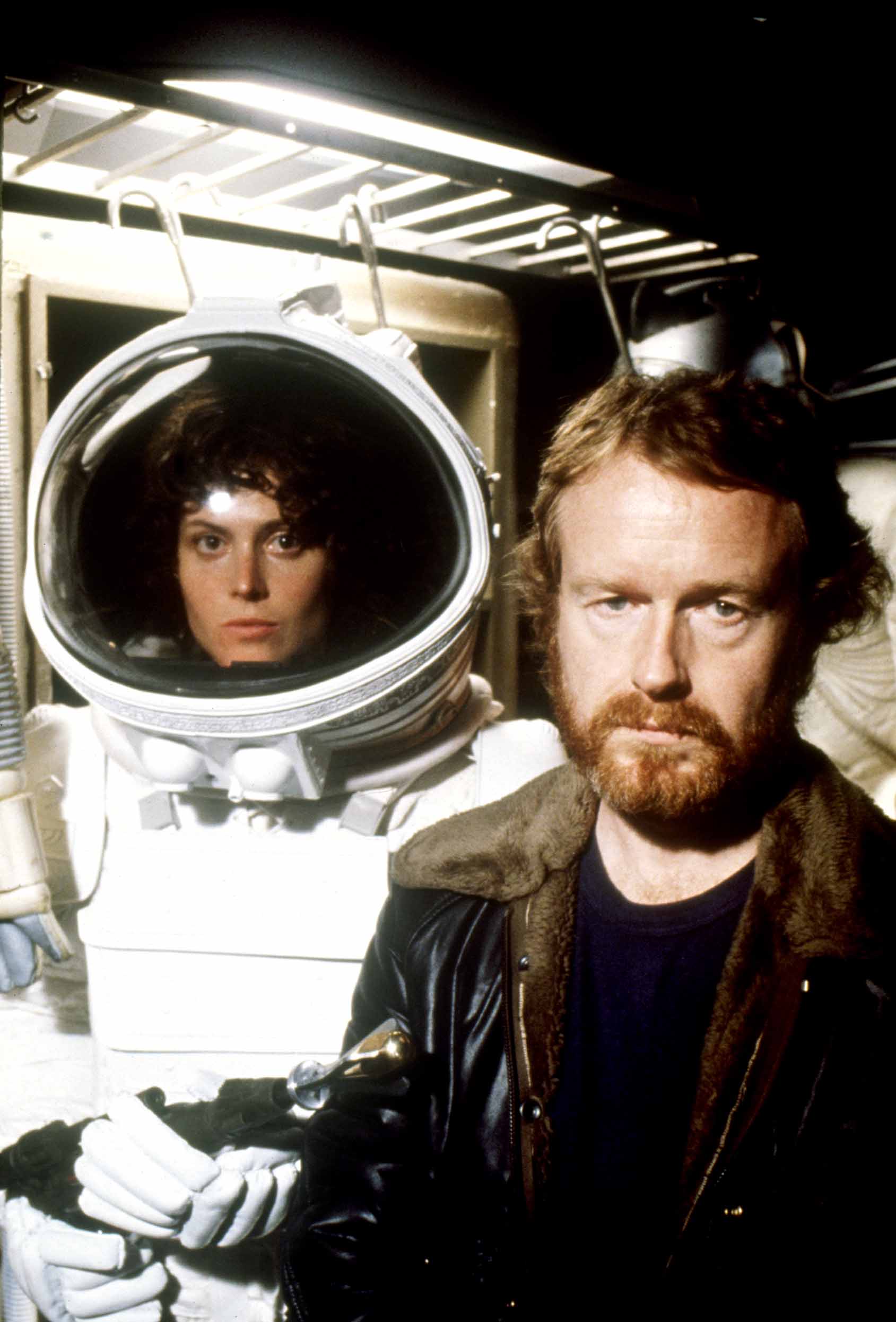
Vintage Image of the Day:

Ridley Scott, who turns 80 today, with actress Sigourney Weaver on the set of Alien in 1978:

Franchise Recap of the Day:

With a few weeks left ahead of the release of Star Wars: The Last Jedi, here’s a recap of the Saga so far (via /Film):

[embedded content]

Trailer Parody of the Day:

Speaking of Star Wars, ArtSpear Entertainment sends up The Last Jedi in this animated spoof of its trailer:

[embedded content]

Fan Build of the Day:

Also speaking of Star Wars, the guy who built an AT-AT in his yard has now build a life-size replica of Kyle Ren’s TIE Fighter (via Geekologie):

[embedded content]

Classic Movie Clip of the Day:

Today is the 35th anniversary of the premiere of Gandhi, which was held in New Delhi, India. Watch a scene from the classic biopic starring Ben Kingsley below.

[embedded content]

and

Let’s block ads! (Why?)


No Image

A Promise Of $1,200 Not Enough To Buy Wide Support For Republican Tax Plan

House Ways and Means Committee Chairman Kevin Brady, left, pauses while speaking during a press event with Republican leaders to discuss their tax plans on Sept. 27 in Washington, D.C.

Drew Angerer/Getty Images

hide caption

toggle caption

Drew Angerer/Getty Images

Republicans say their tax legislation will be great for the middle class. So why is it so unpopular?

Depending on the poll, only 25 percent to 33 percent of Americans approve of the tax plan. And that means even many people who would get a tax break aren’t won over.

In pitching their tax plan to the country, Republicans say it would save the typical middle class American family between $1,200 and $1,400.

But that may not be enough to buy widespread support for this plan because not everybody gets that amount, and the House and Senate bills contain some unpopular provisions.

Dave Lewandowski, a resident of Grand Rapids, Mich., is married and has three children. He works for a company selling vitamins, water filters and other health-related products.

The family’s household income is about $90,000 and he estimates he’ll save $600 under the House plan and about $1,800 under the Senate version.

And he’d definitely be happy to get a tax cut.

“We’re receiving a bit of a benefit at a time where it really helps,” Lewandowski says. “We’re trying to pay down some debt. We’re looking forward to taking a vacation next year. This is a welcome benefit for me and my family.”

Still, when it comes to the design of the overall tax plan itself, he’s conflicted.

Lewandowski says he votes for Republicans more often than Democrats, so it’s not politics. But he says he’s not sure the balance is right with the GOP plan’s huge tax cut for corporations.

“Many people in the middle class will receive a benefit, but that benefit is going to be muted or small,” he says, “whereas the bulk of the benefit is going to be felt by corporations and the wealthy.”

According to numbers from Congress’s nonpartisan Joint Committee On Taxation, the wealthy and corporations do get a much bigger share of the benefits from the tax bills.

And Lewandowski doesn’t like something else about the Republican plans.

“It’s not equally applied across it,” he says. “And when you look at the fact that this is a federal, national tax reform, some people are going to be impacted a lot more than others. So I would rather it be more that all people are impacted in the same way.”

For example, the plans don’t allow people to deduct state and local income taxes — and that can make a big difference for people in higher-tax states like California, New York and New Jersey.

Ani McHugh, a high school English teacher in Delran, N.J., says the plan “essentially punishes taxpayers who are already paying more in taxes. I don’t see how that’s a fair approach or a reasonable approach.”

Ani McHugh, a high school English teacher, and her husband Patrick McHugh, a police officer, live in Delran, N.J. “I don’t see how they can say this helps middle class people in New Jersey,” Ani McHugh says of the Republican tax plan.

Courtesy of Ani McHugh

hide caption

toggle caption

Courtesy of Ani McHugh

McHugh’s husband is a police officer in the town where they live and they have two children. After checking with their tax adviser, she estimates the couple would end up paying between $3,000 and $5,000 more under the plan.

“I don’t see how they can say this helps middle class people in New Jersey,” she says.

Something else bothers her about the legislation. As a teacher, McHugh buys books for her students and other school supplies. And under at least the House tax plan, she would no longer be allowed to write those off her taxes.

“It’s just hard for me to wrap my head around the fact that corporations are getting huge tax cuts and the wealthy tax breaks, and I’m a teacher and I’m spending my own money on things that will help me teach and things that will help my students learn and I can’t write that off,” she says.

McHugh says she’s also worried that after they graduate, her students couldn’t write off student loan interest — the House bill would repeal that deduction. That would make college more expensive. Many graduate students actually see a huge tax increase under the House version.

Meanwhile she says that among the middle class people she sees around New Jersey, “everybody seems to be struggling and working harder and a lot of people have second jobs. And so when corporations get a permanent tax break and the wealthy get tax breaks and we’re paying more, yeah, that’s frustrating. … It’s infuriating.”

Multiple polls show that most Americans do not want a tax cut for the rich. That may be the biggest reason this tax overhaul is so unpopular.

Let’s block ads! (Why?)


No Image

States Sound Warning That Kids' Health Insurance Is At Risk

Alejandra Borunda, sits with her two children, Natalia, 11, and Raul, 8, holding the family dog at their home in Aurora, Colo. Borunda’s children are among those who would lose out if the CHIP program isn’t funded.

Helen H. Richardson/Denver Post via Getty Images

hide caption

toggle caption

Helen H. Richardson/Denver Post via Getty Images

This week, Colorado became the first state to notify families that children who receive health insurance through the Children’s Health Insurance Program are in danger of losing their coverage.

Nearly 9 million children are insured through CHIP, which covers mostly working-class families. The program has bipartisan support in both the House and Senate, but Congress let federal funding for CHIP expire in September.

The National Governor’s Association weighed in Wednesday, urging Congress to reauthorize the program this year because states are starting to run out of money.

In Virginia, Linda Nablo, an official with the Department of Medical Assistance Services, is drafting a letter for parents of the 66,000 Virginia children enrolled in CHIP.

“We’ve never had to do this before,” she says. “How do you write the very best letter saying, ‘Your child might lose coverage, but it’s not certain yet. But in the meantime, these are some things you need to think about.’ “

Children may be able to enroll in Medicaid, get added to a family plan on the Affordable Care Act’s health exchange, or be put on an employer health plan. But the options vary by state and could turn out to be very expensive.

If Congress reauthorizes CHIP funding, states are in the clear. But they can’t bank on it yet, and states have to prepare to shut down if the funding doesn’t come through. Virginia would have to do so on January 31, 2018.

“We’re essentially doing everything we would need to shut down the program at the end of January,” Nablo says. “We’ve got a work group going with all the different components of this agency, and there are many.”

For example, they will need to reprogram their enrollment systems, inform pediatricians and hospitals, and train staff to deal with an onslaught of confused families.

Joan Alker, who runs the Georgetown University Center for Children and Families, says most states need to give families 30 days’ notice.

“But [state officials] are hearing rumors that Congress might get this done in the next couple of weeks and they don’t want to scare families,” she says. “States are really in a bind here, it’s very tough to know what to do.”

Colorado was the first to send out a notice and other states are close behind. There are a handful that are starting to run out of money in December, Alker says, such as Oregon, Minnesota and the District of Columbia.

The exact deadline for when CHIP funding runs out in each in each state is tricky to calculate, because the amount of money they have depends on how fast states spend it — and how much stopgap help the federal government gives them.

Some states are getting creative. Oregon just announced it will spend state money to keep CHIP running, says Alker, “And they’re assuming that Congress will pass it and they’re get reimbursed retroactively. That’s what they’re hoping.”

Texas is set to run out of CHIP funds a lot sooner than was expected just a few months ago. And there’s a big reason for that: Hurricane Harvey, says Laura Guerra-Cardus with the Children’s Defense Fund in Austin.

“Natural disasters are often a way that individuals that never had to rely on programs like Medicaid and CHIP need them for the first time,” she says.

Guerra-Cardus says after Harvey, a lot of new families enrolled in CHIP and there was also a higher demand for services. “When there is such a traumatic event, health care needs also rise. There’s been a lot of post-traumatic stress in children,” she says.

And to help those families out, Texas officials also waived fees they usually have to pay to join CHIP. So, lately there’s been less money coming in and more money going out. Like Virginia, without reauthorization, Texas would have to shutter CHIP by the end of January.

For Amy Ellis in Alpine, Texas, that’s something she’s dreading. “Losing a lot of sleep,” she says. “Still losing a lot of sleep.”

Ellis has an 8-year-old daughter who has been on CHIP since she was born.

She has asthma and allergies. Ellis says health insurance is really important because her family doesn’t make a lot of money. Her daughter’s allergy medicine is expensive.

Ellis lives in rural West Texas, nearly four hours southeast of El Paso and “three hours from the closest city,” she says.

The isolation means that Ellis doesn’t have a lot of options other than CHIP, she says. One would be enrolling her daughter in the insurance plan she and her husband have through the Affordable Care Act marketplace, but Ellis says that would be expensive.

“It would cost $300 to $400 a month for us to add her to our plan, which would be a huge chunk of our income,” she says. “That’s our grocery money and our gas money.”

A lot of families in Texas could find themselves in the same situation if Congress doesn’t act soon, says Guerra-Cardus. “Kids with chronic or special health care needs, this is going to turn their lives absolutely upside down.”

Roughly 450,000 children are covered by CHIP in Texas. Officials say they are asking the federal government to give them money that will keep CHIP alive through February.

But because officials must give families 30 days’ notice if the program will end, families in Texas could get letters right around Christmas that say their children are losing their health insurance.

This story is part of a reporting partnership with NPR, local member stations and Kaiser Health News. Selena Simmons-Duffin is a producer at NPR’s All Things Considered, currently on an exchange with Washington, D.C. member station WAMU.

Let’s block ads! (Why?)


No Image

Hermeto Pascoal's Music Reaches Far Into The Stratosphere

No Mundo Dos Sons, the latest album from Hermeto Pascoal and his group, is available now.

Gabriel Quintão/Courtesy of the artist

hide caption

toggle caption

Gabriel Quintão/Courtesy of the artist

Brazil’s Hermeto Pascoal is a legend among musicians and fans for his ability to conjure beautiful sounds out of just about anything — from tea kettles to PVC pipes to traditional woodwinds.

Earlier this May, the New England Conservatory awarded Pascoal an honorary Doctorate of Music degree and in July, the 81-year-old released No Mundo Dos Sons, the first album from him and his group in 15 years.

Pascoal can come up with a melody at the drop of a hat. He says he’s written 9,000 compositions and most, if not all, were created on the spot.

“It’s because I’m 100 percent intuitive,” he says. “I don’t premeditate anything. I feel it. When something happens, I don’t say, ‘Now I’m going to do that.’ No. If I want to write the music, I start creating. Every piece of my music, even the one I write on a piece of paper, I consider an improvisation.”

Pianist Jovino Santos Neto is a professor of music at Seattle’s Cornish College of the Arts and agrees with the impromptu nature of Pascoal’s work. Santos Neto was also a member of Pascoal’s band for 15 years and is now the archivist of his work.

“Hermeto is music,” Santos Neto says. “He is the current. He’s like a source or a spring that’s just gushing that water, and that water is music. … There’s a saying, I think it’s a John Cage thing that said, ‘Music is playing all the time. Music continues, we just kind of dip into it once in a while.’ Well, Hermeto is fully immersed in it. So because of that, whenever you are close to him, you just see [that] the music is just coming out.”

Pascoal was born in a small farming town in the northeastern Brazilian state of Alagoas. He dropped out of school in the fourth grade — there was no such thing as special education back then for a child with the vision problems that come with albinism. His father taught him to play the accordion and in the early 1960s, Pascoal moved to Rio de Janeiro. By then, he’d picked up piano and flute and began recording with some of the new generation of Brazilian musicians, including Quarteto Novo.

Quarteto Novo’s percussionist was Airto Moreira, who went on to play with Chick Corea and Miles Davis. Moreira recommended Pascoal to Davis and together, the trumpeter recorded with the Brazilian on the album Live-Evil.

Santos Neto says one of Pascoal’s compositions for Miles, titled “Little Church,” was inspired by the Brazilian’s childhood memory of hearing his mother and her friends singing novenas to the Virgin Mary.

“[Pascoal] would hear these voices wafting through the walls of the church,” Santos Neto says. “He was scared to go inside, so he’d sit outside and listen as his mother was singing. So he wrote this gorgeous melody.”

[embedded content]
YouTube

Pascoal recalls an interview Davis gave in which the trumpeter was asked how he’d like to return from the afterlife.

“‘I would like to be a musician like that ‘crazy albino,'” he says, recalling Davis’ response to the question. “[Miles] used to call me ‘crazy Brazilian albino.’ And to make music like that of Hermeto Pascoal, the ‘crazy albino.’ I was very happy when I heard that.”

That’s typical of Pascoal’s personality says Santos Neto. In the more than 40 years Santos Neto has known the older musician, Pascoal has never changed.

“He never aged and he’s at the same time…a very complex personality,” Santos Neto says. “He’s both the wise old man, because of the white hair, but he’s also the prankster, the 16-year-old who’s really crazy to play a prank on somebody and to laugh and to make jokes.”

Pascoal doesn’t make jokes about his honorary Doctor of Music degree from the New England Conservatory. He says it’s one of the greatest recognitions of his life. But this acknowledgement reinforces something he’s believed for a long time.

“Hermeto doesn’t make Brazilian music, he makes music in Brazil,” Pascoal says. “Therefore, Hermeto is a Brazilian citizen only on a piece of paper. But in my music, I’m universal.”

And, as the title of his new album says, Pascoal will always be No Mundo Dos Sons — in the world of sounds.

Let’s block ads! (Why?)


No Image

Today in Movie Culture: 'Avengers: Infinity War' Easter Eggs, Superman vs. Thanos and More

Here are a bunch of little bites to satisfy your hunger for movie culture:

Easter Eggs of the Day:

The first trailer for Avengers: Infinity War arrived today, so Mr. Sunday Movies humorously highlights its Easter eggs and other things you might have missed:

[embedded content]

Franchise Parody of the Day:

That video set up where all the characters are leading up to Avengers: Infinity War, but here’s a great gag teasing a conversation that needs to happen between Iron Man and Captain America:

Classic #TeamCap#InfinfityWarpic.twitter.com/87J2SX3OcU

— Tony A Soon #HVFF (@tarmatys) November 29, 2017

Mashup of the Day:

It’s going to take all of the Marvel superheroes to take on Thanos, but here’s how it’d go if he landed in the wrong cinematic universe:

Oops! #INFINITYWARpic.twitter.com/xeJSfg2war

— ASH (@brown_batman_) November 29, 2017

Cosplay of the Day:

Here are two cosplayers who are very excited about Avengers: Infinity War, especially the scenes with Cap and Bucky:

Jep.
I am ready for #InfinityWar !!!
ALL ABOARD! ???
We need more photos. Goddamn! @TeamCrossbones as James B. Barnes
Me as Steven G. Rogers
?? @yukiharuka89 & https://t.co/dX4Agji2ap (FB) #AvengerInfinityWar#Stucky#CaptainAmerica#BuckyBarnes#Cosplay#MCUpic.twitter.com/sgieDrSKVo

— Tsubasa_Oozora (@Captain_Bootie) November 29, 2017

Cover Song of the Day:

Iron Man and many more movie characters sing “Teenagers” by My Chemical Romance thanks to this montage by The Unusual Suspects:

[embedded content]

Vintage Image of the Day:

Joel Coen, who turns 63 today, directs Jeff Bridges on the set of The Big Lebowski in 1997:

Actor in the Spotlight:

Tom Hanks, who is garnering a lot awards buzz for The Post, sure does yell a lot in his movies. Here’s a supercut from Owenergy Studios showing this to be so (via Film SchooL Rejects):

[embedded content]

Fan Theory of the Day:

Is Simba actually the villain in The Lion King? Wisecrack examines this controversial idea involving Disney’s animated classic:

[embedded content]

Movie Trivia of the Day:

Speaking of Disney animated classics, in honor of Aladdin‘s 25th anniversary this month, Nerdist shares a bunch of trivia about the movie:

[embedded content]

Classic Trailer of the Day:

This week is the 40th anniversary of the release of The Goodbye Girl. Watch the original trailer for the Oscar-winning rom-com classic below.

[embedded content]

and

Let’s block ads! (Why?)