
A Revenue 'Trigger' Would Shoot Down Tax Cuts If Economy Doesn't Grow As Expected

Republican Senate leaders, shown here speaking to reporters after the Republican Policy Committee luncheon at the Capitol Wednesday, are finalizing details of a tax plan they hope to vote on this week.
Chip Somodevilla/Getty Images
hide caption
toggle caption
Chip Somodevilla/Getty Images
Republicans lawmakers are considering a federal budget “trigger” that would raise taxes if proposed tax cuts don’t deliver the economic growth they have promised.
But the proposal is generating a lot of pushback from critics, especially conservatives.
The so-called trigger mechanism would be a legislative provision to rescind corporate tax cuts by as much as $350 billion if revenue targets are not met, Bloomberg News reports.
Congressional Republicans have said they expect the tax cuts to unleash a wave of economic growth, which will boost tax revenues and keep the budget deficit from increasing.
The trigger would kick in if that doesn’t happen as promised.
While few details have been released, the aim would be “to try to create a backstop or a trigger mechanism that to the extent that growth estimates that have been laid out aren’t achieved, we don’t pass on even greater debt to our children,” Sen. Bob Corker, R-Tenn., told Fox News on Tuesday.
But the idea is opposed by many economists, who say it could force Congress to raise taxes in the middle of an economic slowdown — which they say is exactly the wrong time to do so.
“I’m concerned that if we hit a downturn, then we could have these automatic tax increases, and that would actually make a recession worse,” said Gus Faucher, chief economist at PNC Financial Services Group.
Lawrence Summers, who was Treasury secretary in the Clinton administration, said, “You’ll deliver the economy a body blow, reducing consumption and reducing investment, just at the moment you most need to be encouraging [it].”
Summers also expressed doubt that Congress would actually implement a trigger during a recession, when the political pressure to keep taxes low would be especially strong.
“This kind of gimmick is the reason why Congress has single-digit popularity ratings,” he adds.
The trigger has also been criticized by a number of business and conservative groups, including the U.S. Chamber of Commerce and Americans for Prosperity, which is funded by the Koch brothers.
Romina Boccia, deputy director for economic policy studies at the Heritage Foundation, says the trigger would leave businesses uncertain about the future, undermining the potential benefits of the tax cuts.
“Including a potential tax increase through a trigger or by any other means creates uncertainty, which will lower the overall economic growth we can expect to see from the tax plan,” Boccia said.
Several GOP senators have also expressed doubts about the trigger, including Iowa’s Charles Grassley and Thom Tillis of North Carolina. John Kennedy of Louisiana was quoted as saying he would rather “drink weed killer than vote for the thing.”
But it was not clear whether their opposition would be enough to kill the trigger, and congressional Republicans are reportedly still talking about ways to keep the idea on the table.
“We are probably going to have one but I prefer not having it,” Utah Sen. Orrin Hatch told reporters. “It depends on how the bill is written. There’s a way I would support it.”
Trio Da Kali And Kronos Quartet: A Happy Marriage Of Tradition And Rule-Breaking

Trio da Kali and Kronos Quartet’s album, Ladilikan, is available now.
Jay Blakesberg/Courtesy of the artist
hide caption
toggle caption
Jay Blakesberg/Courtesy of the artist
You might think traditional West African music and Western classical music would share little common ground. But Ladilikan, the album from Mali’s Trio Da Kali and San Francisco’s Kronos Quartet is a welcome landmark in the history of unlikely musical collaborations.
The two groups together are a voice of an African praise singer harmonized by a string quartet.
Trio Da Kali’s members descend from venerable musical families in Mali. With centuries of history and musicianship at their backs, they represent the chamber music of West Africa. Hawa Diabaté, the group’s vocalist, has been singing for decades, schooled at the foot of her world famous father, Kassé Mady Diabaté. Lassana Diabaté — no direct relation — is a monster balafon player who’s worked with everyone from Taj Mahal to Béla Fleck to the top musicians of Mali. And the young Mamadou Kouyaté — whose dad, Bassekou Kouyaté, was nominated for a Grammy — holds down a solid, swinging bass on the traditional lute, known as a ngoni. Just these three musicians create such a big sound.
Kronos Quartet is known for progressive and daring rule-breaking. Trio Da Kali, by contrast, is made up of staunch defenders of an ancient tradition: jeliya, the art of the griot. “Da Kali” means to keep a pledge, and the group’s mission is to restore and renew their heritage in an era of rampant modernism and Islamic fundamentalism.
Trio Da Kali and Kronos first performed together in a series of concerts some years before this album was recorded. So by the time they met in a Swiss recording studio, they knew exactly what to do. Central to everything is Hawa’s luminous voice.
So call this a happy marriage of pledge-keepers and rule-breakers. The trio holds fast to tradition, while the quartet soars into realms unknown.
This mesmerizing album includes two songs adapted from Mahalia Jackson, who shares with Hawa a robust contralto voice. Think of it: a Muslim African praise singer channeling a late American gospel diva!
On Ladilikan, out now, Trio Da Kali and Kronos Quartet shatter boundaries of culture, genre, faith and ethnicity — all with an ease that must be heard to be believed.
Advocates For Patients With Rare Diseases Defend Tax Credits For Orphan Drugs

Peter Saltonstall, president of the National Organization of Rare Disorders, speaks at a rally Tuesday in support of tax credits for companies that develop drugs for rare diseases.
Sarah Jane Tribble/KHN
hide caption
toggle caption
Sarah Jane Tribble/KHN
As President Trump talked tax overhaul on Capitol Hill Tuesday, Arkansas patient advocate Andrea Taylor was also meeting with lawmakers and asking them to save a corporate tax credit for companies that develop drugs for rare diseases.
Taking the credit away, Taylor said, “eliminates the possibility for my child to have a bright and happy future.”
Taylor, whose 9-year-old son, Aiden, has a rare connective tissue disorder, spoke as part of a small rally organized this week by the National Organization for Rare Disorders — the nation’s largest advocacy group for patients with rare diseases.
Earlier this month, House Republicans proposed eliminating the orphan drug tax credits, which Congress passed as part of a basket of financial incentives for drugmakers in the 1983 Orphan Drug Act. The law, intended to spur development of medicines for rare diseases, also gives seven years of market exclusivity for drugs that treat a specific condition that affects fewer than 200,000 people.
The Senate Finance Committee, led by Sen. Orrin Hatch, R-Utah, put the tax credit back into the tax legislation. After some negotiations, the committee settled on reducing the credit to 27.5 percent of the costs of preapproved clinical research, compared with the current 50 percent. The committee also restored a provision that would have eliminated any credits for drugmakers who repurpose a mass-market drug as an orphan.
Today, many orphan medicines treat more than one condition and often come with astronomical prices. Many of the medicines aren’t entirely new, either. A Kaiser Health News investigation, which was also aired and published by NPR, found that more than 70 of the roughly 450 individual drugs given orphan status were first approved for mass-market use, including cholesterol blockbuster Crestor, Abilify for psychiatric conditions, cancer drug Herceptin and rheumatoid arthritis drug Humira, which for years was the best-selling medicine in the world.
More than 80 other orphans won Food and Drug Administration approval for more than one rare disease and, in some cases, multiple rare diseases, the KHN investigation showed.
“As with any major reform, tough choices have to be made,” a Hatch spokesperson wrote in an emailed statement, adding that the senator will continue to work “to make the appropriate policy decisions” to deliver a comprehensive tax overhaul.
Hatch, who is a member of a rare-disease congressional caucus, received $102,600 in campaign contributions from pharmaceutical and related trade group political action committees in the first half of 2017, making him the top recipient of pharmaceutical cash in the Senate.
If the Senate provision remains untouched, reducing the tax credit would save the federal government nearly $30 billion over a decade, according to a markup of the bill released late last week.
Orphan drug development has become big business in recent years and advocates as well as critics of the industry say tax credits have been an important motivation for companies. Orphan drugs accounted for 7.9 percent of total U.S. drug sales in 2016, according to a report released by QuintilesIMS and NORD.
Because patient populations for rare-disease drugs are relatively small, companies often charge premium pricing for the medicines. EvaluatePharma, a company that analyzes the drug industry, estimates that among the top 100 drugs in the U.S. the average annual cost per patient for an orphan drug was $140,443 in 2016. Giant pharmaceutical companies such as Celgene, Roche, Novartis, AbbVie and Johnson & Johnson have led worldwide sales in the orphan market, according to EvaluatePharma’s 2017 Orphan Drug Report.
Jonathan Gardner, U.S. news editor for EvaluatePharma, said the orphan drug tax credit is “probably the most important incentive for developing an orphan drug.” Cutting the credit will force even the large companies to question development of drugs for rare diseasess, Gardner said.
Dr. Aaron Kesselheim, an associate professor of medicine at Harvard Medical School, has been critical of the Orphan Drug Act’s incentives and of companies taking advantage of the law’s financial incentives for profit. But he warned against rushing to eliminate the tax credit.
“We need to think about ways we can improve the Orphan Drug Act and stop people from gaming the system and exploiting it,” Kesselheim said. But there “are a lot of rare diseases that don’t have treatments. So, we need to be careful in making changes.”

Advocates for the National Organization of Rare Disorders rallied on Capitol Hill and then visited a couple of dozen lawmakers to argue for the orphan drug tax credit.
Sarah Jane Tribble/KHN
hide caption
toggle caption
Sarah Jane Tribble/KHN
The battle over the tax credit is the latest controversy for the FDA’s orphan drug program. FDA Commissioner Scott Gottlieb announced a “modernization” plan for the agency this summer, closing a pediatric testing loophole and eliminating a backlog of corporate applications for orphan drug status. And, this week, the agency confirmed that Dr. Gayatri Rao, director for the Office of Orphan Products Development, is leaving.
Meanwhile, the Government Accountability Office confirmed this month that it recently launched an investigation of the orphan drug program. The GAO’s review was sparked by a letter from top Republican Sens. Hatch, Chuck Grassley, R-Iowa, and Tom Cotton, R-Ark., asking the agency to investigate whether drugmakers “might be taking advantage” of the drug approval process.
The pharmaceutical industry has had a muted response to the tax bill, which includes a corporate tax cut. The powerful industry lobbying group PhRMA said it is pleased Congress is looking at overhauling the tax code but “encourages policymakers to maintain incentives” for rare diseases. BIO, the Biotechnology Innovation Organization that represents biomedical companies, said it was “gratified” the Senate committee chose to partially retain the credit but would prefer to keep the existing incentive.
The group that rallied Tuesday — wearing bright-orange shirts that read “Save the Orphan Drug Tax Credit” — planned to meet with a couple of dozen lawmakers, including Grassley, who is a member of the Senate Finance Committee. NORD, like many patient advocacy groups, receives funding from pharmaceutical companies but the organization’s leaders say the industry does not have members on the board and does not dictate how general donations are spent.
On Tuesday, NORD leaders said they are open to discussions about the tax credit, and whether the overall law is working as intended. “We’re here to have that conversation; we’re ready to have that conversation,” said Paul Melmeyer, director of federal policy for NORD. “Sadly, that’s not the conversation we are having today.”
Abbey Meyers, a founder of NORD and the leading advocate behind passing the initial 1983 law, said she fears the high cost of the drugs will make it impossible to sustain the orphan drug program. Now retired, Meyers said she has followed the law’s success over the years and believes the tax credit should not be changed.
“There are other things that have happened since the law was passed where there wasn’t any logic to what they did,” Meyers said, adding “because somebody went to a senator and they put into the law.”
Kaiser Health Newsis a nonprofit news service covering health issues. It is an editorially independent program of the Kaiser Family Foundationthat is not affiliated with Kaiser Permanente.
KHN’s coverage of prescription drug development, costs and pricing is supported by the Laura and John Arnold Foundation. Dr. Aaron Kesselheim’s work is also supported by the foundation.
Iranian Wrestler Throws Match To Avoid Facing Israeli In Next Round

A photo from 2016 Rio Games, shows Iran’s Ali Reza Karimi, right, facing off USA’s J’den Michael Tbory Cox (red) in the men’s 86kg freestyle quarter-final match.
Jack Guez/AFP/Getty Images
hide caption
toggle caption
Jack Guez/AFP/Getty Images
Iranian wrestler Ali Reza Karimi had his eye on the prize at the U-23 World Championship in Poland: He was heading to certain victory against his Russian opponent.
All was good until his coach shouted from the sidelines “Ali Reza, lose.”
As The New York Timesdescribes the scene: “The Iranian wrestler shakes his head and continues, until his coach once again shouts at him. At that point, he throws in the towel, metaphorically speaking …” According to the Times, Karimi was forced into the same dilemma in 2013.
In a video of the match, to the untrained eye it seems at first like a simple stumble for Ali Reza, as his opponent, Alikhan Zhabrailov, manages to pin him by the shoulders. But it quickly becomes obvious that the Iranian isn’t even trying as the wrestlers do a series of half-hearted barrel rolls around the circumference of the ring.
Iranian wrestler Alireza Karimi about to beat Russian, but will have to face Israeli next round. His coach his calling him from the sidelines, telling him to “lose.” Iran forbids its athletes to play Israeli’s. Iranian wrestler gives up. pic.twitter.com/nX9KHaH8Jn
— Thomas Erdbrink (@ThomasErdbrink) November 27, 2017
Later, Karimi told the semi-official Iranian Students News Agency that he was “told that the Israeli wrestler defeated his American rival, and that I must lose to avoid facing an Israeli opponent,” adding, “in a moment, my whole world seemed to come to an end.”
“I tried hard for months to get the world gold medal,” Karimi said. “Achieving a world medal is the only happiness for any of us.”
Iranian athletes are expected to refrain from competing against Israelis, reflecting the animosity between the two countries.
The Times of Israelwrites: “Iran has had a long-time policy of avoiding Israelis in athletic competitions, frequently at the expense of its own competitors. An Iranian swimmer refused to enter the same pool as an Israeli at the Beijing Olympics and in the 2004 Athens Games, an Iranian judoka refused to face an Israeli, resulting in his disqualification.”
Today in Movie Culture: 'Star Wars: The Force Awakens' Recapped, the Deaths of the Avengers and More

Here are a bunch of little bites to satisfy your hunger for movie culture:
Franchise Recap of the Day:
Get ready for Star Wars: The Last Jedi with this rapped recap of what happened in Star Wars: The Force Awakens:
[embedded content]
Supercut of the Day:
While we wait and wonder which if any Avengers die in Avengers: Infinity War, here’s a supercut of Avengers actors dying (or almost dying) in other movies (via Geek Tyrant):
[embedded content]
Movie Comparison of the Day:
Couch Tomato shows 24 reasons The Lego Batman Movie is basically a rehash of The Dark Knight Rises:
[embedded content]
Movie Trivia of the Day:
Wonder Woman remains the highest-grossing superhero movie of the year, so here’s Leigh Singer with some trivia about it via Fandor:
[embedded content]
Cosplay of the Day:
Speaking of Wonder Woman, here’s a cosplayer with a pretty cool and unique take on the superhero:
I just had to share this ABSOLUTELY AMAZING #WonderWoman#cosplay from Deepica Mutyala. https://t.co/mDTo2A5RG4pic.twitter.com/zrjpwxYXs6
— Ruthanne Reid (@RuthanneReid) November 28, 2017
Fan Theory of the Day:
Cracked looks into the possibility that the plot of The Breakfast Club was all in one character’s imagination:
[embedded content]
Vintage Image of the Day:
Gloria Grahame, who was born on this day in 1923, waits off to the side as Fred Zinnemann directs co-stars Eddie Albert and Shirley Jones on the set of Oklahoma! in 1954:
Actor in the Spotlight:
In honor of his breakout apearance in Stranger Things 2, No Small Parts showcases the career of actor Dacre Montgomery:
[embedded content]
Screenwriting Lesson of the Day:
Lessons from the Screenplay looks at the power of subplots with focus on the script for Hidden Figures:
[embedded content]
Classic Trailer of the Day:
This week marks the 15th anniversary of Disney’s Treasure Planet. Watch the original trailer for the classic animated feature below.
[embedded content]
and
Hospital Improperly Billed Patients For Rape Exams, Says New York Attorney General

New York Attorney General Eric Schneiderman said Tuesday that the Brooklyn Hospital Center had improperly billed patients for nearly every rape exam the hospital administered in a two-year span.
Drew Angerer/Getty Images
hide caption
toggle caption
Drew Angerer/Getty Images
An investigation by New York’s attorney general found that the Brooklyn Hospital Center improperly billed dozens of patients for the cost of forensic rape exams.
The exams, known as rape kits, are required by state law to be free of cost to patients. Attorney General Eric Schneiderman’s office said Tuesday that between January 2015 and February 2017, the hospital conducted 86 forensic rape exams. It billed the patient or her insurance plan in 85 of those cases, without revealing that the exam could be free.
Schneiderman said he launched the investigation after one victim complained that she had been billed seven times for a forensic rape exam performed at the hospital’s emergency room. After receiving the initial bill, the patient contacted a victim’s assistance organization, which reached out to the state’s Office of Victim Services, which told the hospital that the state should be billed. A month later, the patient got a bill from a collection agency.
“These kits are used on what is undoubtedly one of the worst days of a survivor’s life,” Schneiderman told The Associated Press. “The absolute last thing they should have to worry about is how they’ll pay for their care at the hospital. But we have found contrary to law that way too often they do have to worry.”
Schneiderman said the state had reached a settlement with the Brooklyn hospital, which dictates that the hospital maintain a Sexual Assault Victim Policy that prevents improper billing and provide full restitution to those who should not have been billed. He said he had also sent letters to 10 other hospitals in the state, seeking information on their policies.
The Violence Against Women Act, reauthorized by Congress in 2005, requires that the full out-of-pocket costs of sexual assault medical forensic exams be covered by a state or other entity, as a condition of receiving federal grants through a program called STOP. That program provides funding for law enforcement and prosecutions in combating violence against women as well as for victim services. Victims cannot be required to file law enforcement reports to receive free exams.
New York is not the only place where victims have been improperly billed. CBS News reported in 2014 that victims in 13 states said they had been billed for medical services related to a sexual assault. A victims’ advocate organization in Chicago told CBS it got as many as six calls a month from rape victims who had been wrongly billed.
In 2014, the Urban Institute published a study on how the funding for sexual assault exams is handled by states. “In practice, each state (or local jurisdiction, in the case of non state-level paying systems) decides what it will cover as part of the free exam,” the report found. “Some states cover only what is required by federal mandate, and other states provide more free services to victims.”
The report’s authors explain that VAWA 2005 dictates that such exams should, at minimum, include:
- Examining physical trauma
- Determining penetration or force
- Interviewing the patient
- Collecting and evaluating evidence
But the victim may require medical services for treatment relating to an injury, pregnancy or sexually transmitted infections. Whether and how those expenses are covered varies by state, and some victims are billed for the additional services.
The Urban Institute study found that crime victim compensation funds were the primary funding sources for the exams in most states, rather than federal STOP grants.
And, the report said, there are issues with using victim compensation funds to pay for rape kits:
“Victim compensation is intended to pay for services that directly benefit victims. … The most common types of expenses compensated are medical and dental services, mental health counseling, lost wages, and funeral or burial expenses. It is clear that the medical services provided in an exam directly benefit victims and are in keeping with the mission of compensation.
“However, some have questioned—through this study and otherwise—whether funds intended to benefit victims should be used to pay for forensic evidence collection intended to build a criminal case. Is forensic evidence collection a benefit to victims, or is it a benefit to the justice system? Victims who have had negative experiences with the justice system might say that it is no benefit to victims at all. No other evidence collection activities (such as autopsies, crime scene processing, and ballistics analysis) are paid for with funds meant for services to victims.”
New York’s Office of Victim Services covers the cost of emergency care for survivors of sexual assault. The attorney general’s office said it did not have details on how the victim services office funded its programs.
Ariel Zwang, CEO of victim assistance organization Safe Horizon, welcomed Schneiderman’s announcement.
“Rape survivors deserve expert and immediate medical care after an assault, including access to a rape kit,” she said in a statement Tuesday. “For so long, survivors and victim advocates fought to change the law so that survivors would not incur the cost of these important exams. We applaud the Attorney General’s office for ensuring enforcement of this law, holding hospitals accountable who have unnecessarily charged for this exam, and standing up for survivors.”
Trump Wins Opening Round In Legal Battle Over Consumer Watchdog Agency

Mick Mulvaney speaks at a news conference after his first day as acting director of the Consumer Financial Protection Bureau on Monday.
Jacquelyn Martin/AP
hide caption
toggle caption
Jacquelyn Martin/AP
Updated at 6:40 p.m. ET
A federal court has denied a request for a temporary restraining order sought by an Obama-era appointee seeking to block the Trump administration from assuming control of the Consumer Financial Protection Bureau.
The ruling by U.S. District Court Judge Timothy Kelly is a victory for President Trump, who appointed White House Budget Director Mick Mulvaney to take charge of the CFPB after the resignation of its previous director, Richard Cordray.
Cordray had attempted to appoint Leandra English, the CFPB’s deputy director, as his successor. That move set the stage for a power struggle with the White House over who will run the federal agency designed to represent consumers in disputes with major financial institutions over issues such as credit cards, checking accounts and debt collections. English sued, asking a judge for an order blocking Mulvaney from taking over the CFPB while the case is adjudicated.
Sen. Elizabeth Warren, D-Mass., who spearheaded the creation of the CFPB, told Reuters earlier that she had “no doubt” there would be an appeal no matter which way Kelly ruled.
The CFPB was created in the aftermath of the financial meltdown under the 2010 Dodd-Frank Act. English argued that the law laid out a succession plan naming the deputy director to run the agency until the Senate approved a White House nominee.
But the administration argued that the 1998 Presidential Vacancies Reform Act granted the president the right to appoint a temporary successor.
Kelly, who is a Trump appointee, sided with the administration in rejecting the request for a temporary restraining order.
“On its face, the [Federal] Vacancies Reform Act does appear to apply” to the appointment of acting director at CFPB, said the judge.
In a statement, White House principal deputy press secretary Raj Shah said:
“The Administration applauds the Court’s decision, which provides further support for the President’s rightful authority to designate Director Mulvaney as Acting Director of the CFPB. It’s time for the Democrats to stop enabling this brazen political stunt by a rogue employee and allow Acting Director Mulvaney to continue the Bureau’s smooth transition into an agency that truly serves to help consumers.”
Today in Movie Culture: Imagining Jude Law as Mar-Vell, 'Deadpool 2' Teaser Redone in Lego and More
Here are a bunch of little bites to satisfy your hunger for movie culture:
Casting Rendering of the Day:
Jude Law has been cast as Mar-Vell in Captain Marvel, so BossLogic shows us what he might look like in the role:
Worked on Mar-vell for some fun today, I heard he was confirmed for @captainmarvel (Jude law will be playing) can’t wait to see him pass the torch over to @brielarsonpic.twitter.com/VCrkxw5s6u
— BossLogic (@Bosslogic) November 23, 2017
Trailer Remake of the Day:
Huxley Berg Studios quickly remade the new Deadpool 2 teaster with Lego minifigs and bricks:
[embedded content]
Interview of the Day:
Watch Star Wars star Daisy Ridley assemble a Lego Millennium Falcon while being interviewed by Elle magazine:
[embedded content]
Character Study of the Day:
Speaking of Star Wars, in his latest video essay, Rob Ager analyzes the significance of droids C-3PO and R2-D2 in A New Hope:
[embedded content]
Vintage Image of the Day:
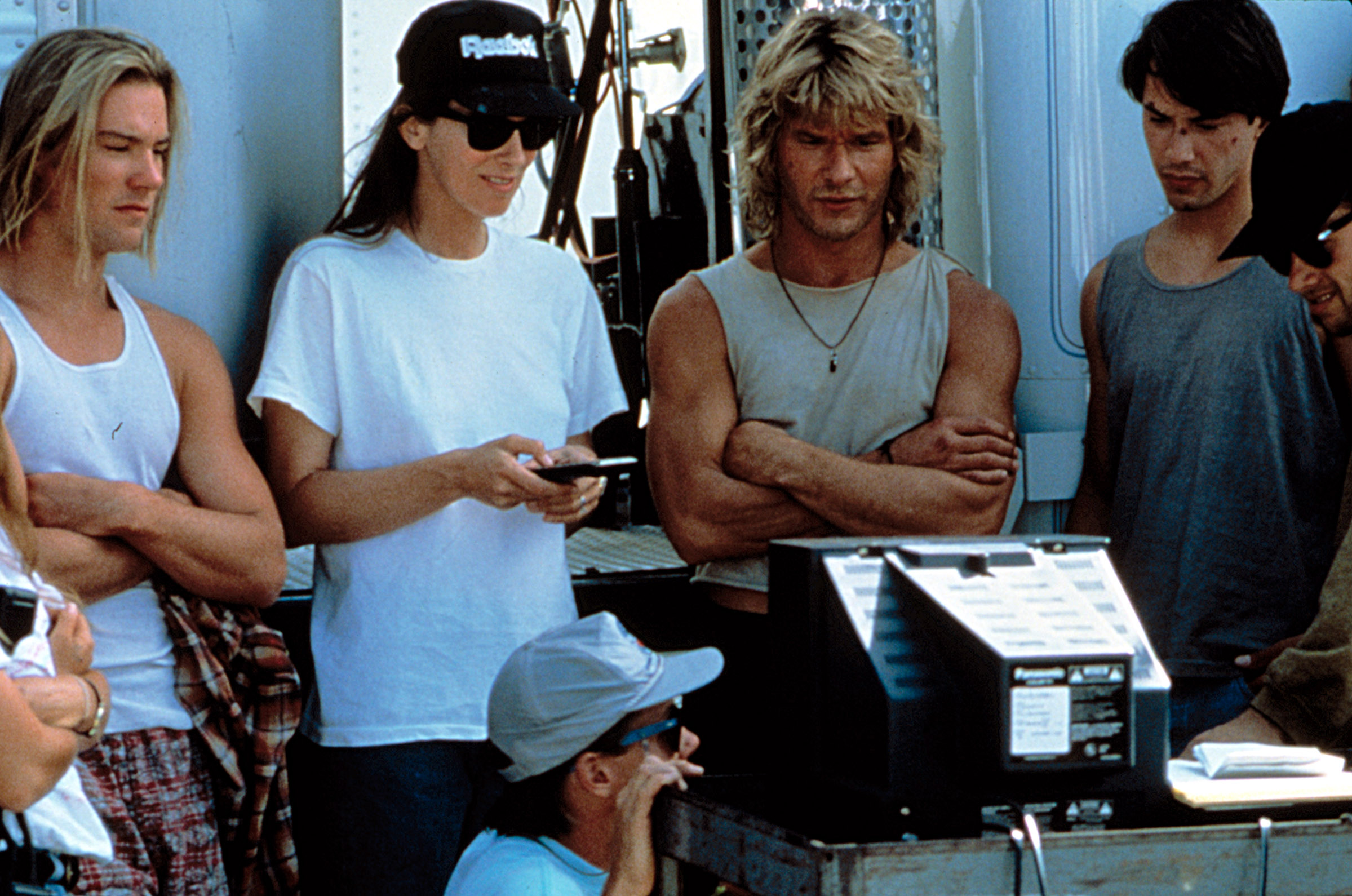
Kathryn Bigelow, who turns 66 today, directs Keanu Reeves and Patrick Swayze on the set of Point Break in 1990:
Movie Science of the Day:
In honor of Justice League being in theaters, Kyle Hill scientifically explains the secret of Wonder Woman’s bullet blocking:
[embedded content]
Fan Theory of the Day:
The latest theory from MatPat and The Film Theorists explains why Frodo couldn’t just fly to Mordor in The Lord of the Rings:
[embedded content]
Cosplay of the Day:
This cosplayer went so far as to put on purple contact lenses for a more authentic Megara from Disney’s Hercules:
Megara from Hercules #cosplay done by https://t.co/iAJdc8xmPhpic.twitter.com/XdYMMo3E8t
— Cosplay Girls (@CosplayGirIs) November 27, 2017
Movie Trivia of the Day:
With Planes, Trains and Automobiles turning 30 this week, CineFix shares a bunch of trivia about the holiday classic:
[embedded content]
Classic Trailer of the Day:
This week is the 75th anniversary of the premiere of Casablanca. Watch the original trailer for the classic movie below.
[embedded content]
and
Alabama Men's Basketball Team Almost Had An Amazing Comeback

Down to only three players on the court, the University of Alabama men’s basketball team came very close to pulling off the upset of a lifetime against Minnesota. Instead, the team will have to settle for one of the grittiest losing efforts ever.
ROBERT SIEGEL, HOST:
For University of Alabama fans, rock bottom came at about 6:30 p.m. Eastern on Saturday. The top-ranked Crimson Tide football team had just lost to despised rival Auburn in a nationally televised upset.
KELLY MCEVERS, HOST:
And then the Alabama basketball team was about to lose, well, almost everyone. We’ll explain. Bama was down by seven in the second half of its game against the University of Minnesota. The only really noteworthy thing at that point about the game is that it was being live streamed on Facebook. And then this happened.
(SOUNDBITE OF ARCHIVED RECORDING)
UNIDENTIFIED ANNOUNCER: And we’ve got fisticuffs, a scuffle underneath and players ready to throw.
SIEGEL: Well, nobody wound up throwing a punch, but the entire Alabama bench stormed onto the court. And according to NCAA rules, any bench player who steps onto the court during a fight can be ejected, which meant this.
(SOUNDBITE OF ARCHIVED RECORDING)
UNIDENTIFIED ANNOUNCER: The entire bench from Alabama has been ejected from this game, and now the five on the court for Alabama are the five who have to go the rest of the way.
MCEVERS: With all their subs out of the game, the pressure was on the five players who were left on the court. But a couple minutes later, one of those five fouled out. And a minute after that, another Alabama player sprained his ankle. That meant the Crimson Tide had to go most of the second half with three players against five.
SIEGEL: The announcers had a hard time wrapping their heads around this idea.
(SOUNDBITE OF ARCHIVED RECORDING)
UNIDENTIFIED ANNOUNCER: Now, you might see this in someone’s front yard when you have three high school guys playing against maybe four or five younger children.
MCEVERS: Yet somehow Alabama, who once trailed Minnesota by 19 with five players, cut the lead to three points with a minute left in the game.
SIEGEL: Now, it turns out they only needed one player, freshman guard Collin Sexton. He nearly beat Minnesota by himself, scoring 40 points with crazy drives to the basket and impossible three-point shots over two and even three defenders.
(SOUNDBITE OF ARCHIVED RECORDING)
UNIDENTIFIED ANNOUNCER: Sexton – the rebound. Here he comes. Sexton himself got it. It’s a one-possession game.
(CHEERING)
MCEVERS: Sadly Sexton and his two teammates ran out of gas and got no closer. Minnesota won by five and thus ended Alabama’s no good, very bad sports day. But even in losing, Bama might have gained a cult hero in Collin Sexton.
(SOUNDBITE OF SAINT MOTEL SONG, “MY TYPE”)
Copyright © 2017 NPR. All rights reserved. Visit our website terms of use and permissions pages at www.npr.org for further information.
NPR transcripts are created on a rush deadline by Verb8tm, Inc., an NPR contractor, and produced using a proprietary transcription process developed with NPR. This text may not be in its final form and may be updated or revised in the future. Accuracy and availability may vary. The authoritative record of NPR’s programming is the audio record.
Time Inc. Sold To Meredith Corporation, Backed By Koch Brothers
Time Inc. announced on Sunday night that it had sold itself to the Meredith Corporation. It was in a deal backed by Charles G. and David H. Koch, the billionaire brothers known for using their wealth and political connections to advance conservative causes.
ROBERT SIEGEL, HOST:
Time, Fortune and Sports Illustrated magazines are being sold to the publisher of such titles as Better Homes and Gardens and Family Circle. The Iowa-based Meredith Corporation is set to acquire Time Inc. in a deal valued at $2.8 billion. The deal’s financing has raised eyebrows. It’s linked to the politically active Koch brothers.
NPR media correspondent David Folkenflik joins us from New York to talk more about this deal. And David, what does it mean for Time Inc. to disappear and for Time magazine to be sold like this?
DAVID FOLKENFLIK, BYLINE: Well, I think it’s a recognition of a reality, but it’s a sobering one. Time is, you know, almost a century old. Time magazine – its founder, Henry Luce, really was able to do – or insist on the idea of the 1900s as being the American century in the post-World War II era. It was a strong fixture of the center-right. But it brought, you know, news of the nation, of the world to many millions of people’s homes. And it’s no longer a defining institution as it once was in David Halberstam’s book “The Powers That Be.” It’s now, you know, going to be part of a larger magazine empire, kind of one of a number of cards in the deck.
SIEGEL: Since this is a pretty tough time for magazines, why would Meredith want Time and spend so much for it?
FOLKENFLIK: You know, I think it’s less to do with Time than some of its sister publications. Meredith owns Better Homes and Gardens, Family Circle, Shape, parenting magazines. It publishes Martha Stewart Living under a production deal.
And in the Time Inc. stable, there are these other titles – Real Simple, Cooking Light, Southern Living, InStyle and then perhaps the most famous of the bunch for this, People magazine. And that appeals to the – call it 65, 70 percent of Meredith’s current readership that are female. And Meredith boasts of having a fairly affluent readership. And I think that would fit in neatly with that. The question of whether Time magazine, whether Fortune magazine, Sports Illustrated – whether these titles, although, you know, famous, world-renowned in some ways, would fit in as neatly I think is a very open question.
SIEGEL: Let’s turn now to the Koch brothers. They’re billionaires. They’re very, very involved in conservative politics and causes. What would their role be in this, and what’s their interest in the deal?
FOLKENFLIK: So there are two schools of thought on this. Their role, as being announced by Meredith, is saying, you know, the equity they’re providing – $650 million of financing for this deal. The – Meredith is taking on billions of dollars of debt. They’re saying the Koch brothers will have no membership on the board of directors of this newly expanded Meredith Corporation, and they’ll be silent partners. They’ve been promised a dividend. So in some ways, this is, you know, being done by the venture capital arm – investment arm of the Koch brothers’ fortunes. And so in some ways, they’re willing to do something silently.
On the other hand, they are, as you say, very active in conservative and libertarian circles. They are very interested in public policy and politics. They spent just an astonishing amount of money to influence that, particularly in trying to strip away certain kinds of regulations, particularly as it pertains to things like carbon emissions and climate change, which they have very strong feelings about given their own investments.
So you can look at the Koch brothers and say they just invest in things. They are through Koch Industries. They underwrite NPR, among other entities. And they seem to have had no effect here or at the point or institution of journalism outfit. And by the same token, they have been extraordinarily powerful political players in influencing the scene. So I think you’ve got to take these promises with a grain or perhaps a mine of salt and see what plays out.
SIEGEL: That’s NPR media correspondent David Folkenflik in New York. Thank you, David.
FOLKENFLIK: You bet.
Copyright © 2017 NPR. All rights reserved. Visit our website terms of use and permissions pages at www.npr.org for further information.
NPR transcripts are created on a rush deadline by Verb8tm, Inc., an NPR contractor, and produced using a proprietary transcription process developed with NPR. This text may not be in its final form and may be updated or revised in the future. Accuracy and availability may vary. The authoritative record of NPR’s programming is the audio record.
