
A 1960s 'Hippie Clinic' In San Francisco Inspired A Medical Philosophy

Inside the Haight Ashbury Free Medical Clinic in its earliest days. The clinic opened on June 7, 1967, and treated 250 patients that day. It’s motto, then and now: “Health care is a right, not a privilege.”
Courtesy of Gene Anthony/David Smith Archives
hide caption
toggle caption
Courtesy of Gene Anthony/David Smith Archives
Unlike many things from the 1967 “Summer of Love,” the Haight Ashbury Free Clinic survived.
The clinic, now part of a larger network, still operates out of a second-floor office overlooking Haight Street in San Francisco. A steep wooden staircase leads to a warren of small but airy rooms.
One exam room still has a wall covered by a faded psychedelic mural, featuring a collage of famous rock stars, naked bodies and peace signs.
The decor used to be even more colorful, according to lab manager Pam Olton. She has worked at the Free Clinic for more than 40 years.
“Pink, aqua, Day-Glo orange … all of these exam rooms were painted in those Day-Glo colors,” she says.
The colors helped the young patients feel welcome, Olton explains, easing their drug-induced paranoia or just reassuring them that the clinic was a safe and sympathetic space. In the summer of 1967, and for years after, the Free Clinic treated the countercultural denizens of the Haight-Ashbury neighborhood. They were often the patients that nobody else wanted.
“You had a big flash mob of kids coming to this neighborhood from all over — from everywhere in America,” Olton says. Most had no health insurance, and some were living in parks, on the street or sharing crowded apartments.
“They’re kids, they’re dirty, they’re a mess and they’re addicted,” Olton says. “But we have to take care of their medical needs first. And we have to be nonjudgmental. They’re human beings — they’re somebody’s kid and we need to take care of them.”
Dr. David Smith was a young faculty member at the University of California, San Francisco when he started the free clinic 50 years ago. He’s now 78 and still works in addiction medicine.
“We were kind of the caregivers to the love generation,” Smith says. At the beginning of 1967, he had one foot in the world of academic medicine and one foot in the burgeoning counterculture. He lived in the Haight and had experimented with drugs.
“I had an LSD spiritual experience, and a vision that denial of health care to one segment of the population is a denial to all,” Smith recalls. “So there was a transformation of me in that period, in ’67, like what happened to so many young people. I just happened to have a medical skill when that transformation occurred.”

Dr. David Smith (second from left) helps a young woman by bandaging her feet as part of the clinic’s street medicine in 1968.
Courtesy of David Smith Archives
hide caption
toggle caption
Courtesy of David Smith Archives
‘Health care is a right, not a privilege’
Smith knew that thousands of young adults would flood into San Francisco that summer, and he was worried about who would treat them and how these young people would be treated by people in mainstream medicine.
“Some of us went to the city [health officials] and said, there’s going to be a huge problem this summer, and we need what we called then ‘a hippie clinic,’ ” Smith recalls. “And it was soundly rejected by the health department. They had no interest in this. They said, ‘We don’t want to take care of them. We want them to go away.’ “
Smith and some colleagues, along with residents of the Haight, started getting ready anyway. It was during one of their planning meetings that Smith stood up and declared: ” ‘Health care is a right, not a privilege.’
“It became the founding slogan of our Haight Ashbury Free Clinic,” he says.
The clinic opened on June 7, 1967, to a line of people stretching down the block. The team worked through the night and treated 250 people, Smith says. The next day, the staff treated 350 more.
At that time, the staff was entirely volunteer — a mix of sympathetic doctors, nurses and students from the local medical and pharmacy schools.
Keeping the clinic going was a struggle. Money for rent and supplies was in short supply. Police officers would frequently show up and search the rooms, looking for illicit drugs and underage runaways.
But Smith was determined to keep the clinic open. If hippies hurt themselves, many mainstream doctors thought they got what they deserved. Sometimes hospitals turned them away. And when they got sick from taking illegal drugs, or overdosed, or became psychotic, they were often shamed, restrained or thrown in jail. The Free Clinic offered a safe space.
“If you were taken to the Haight Ashbury Free Clinic, you would be put into a room … with a talk-down guide and a lava lamp,” he says. “You’d be examined by a physician to see if you needed medication to help you come down.”
After 1967, the clinic continued as a medical refuge and its compassionate approach endured through the harder drugs of the 1970s, and the AIDS epidemic of the 1980s.
Eric Smith (no relation to the clinic’s founder) remembers visiting the Free Clinic about 15 years ago. He was living on the streets of San Francisco and using heroin. He can’t remember why he went there for care, but he does remember what it felt like to be there.
“I went in there — there was a whole bunch of people hanging out. It was cool,” Eric says. He remembers the staff and others asking, ” ‘How can we help you out?’ “

Eric Smith, left, talks to a homeless couple in San Francisco during neighborhood rounds. He’s patient coordinator at the Haight-Ashbury Free Clinics, and wants to make sure they know they can get health care and addiction treatment there.
Carrie Feibel / KQED
hide caption
toggle caption
Carrie Feibel / KQED
“People were eating,” he recalls. “Some girl asked if I was hungry. She brought me a vegetarian burrito. It was very welcoming, and I didn’t feel nervous or ashamed being in there. You know? I felt like these are my people, they’ll help me out. I can be honest with them. I think that carries on right now.”
Meeting modern challenges
Eric Smith eventually got off drugs, and for the last two years has worked for the clinic as a patient coordinator.
When patients come to the clinic, Smith makes sure they are connected to the services they need — whether that’s medical or dental care, therapy, detox or a drug recovery program.
And he walks the neighborhoods of San Francisco, doing outreach.
He brings naloxone for opioid overdoses and a CPR mask. He has a big backpack full of snacks to hand out, along with gloves, socks, condoms and toothbrushes.
On the day I join him for his rounds, Eric stops by a row of tents on Folsom Street. Men gather around as he passes out supplies.
“You guys know who I work with, right?” he asks as he hands out socks and granola bars. “So, you guys need any services at all? Is there anything you need?”
On this particular day, none of the men are interested in visiting the clinic.
Eric just smiles and moves on. No encounter is ever wasted, he tells me.
“I have to build a trust and rapport with the individual, so they know — no matter what they tell me — that it’s safe,” he says.
“You want the best for everybody, but you can’t really push yourself too hard on them,” he added. “You’ve got to meet them where they’re at, and in their time they’ll come around eventually, you hope.”
Erie Street is just one block from the Haight Ashbury Free Clinic’s location in the Mission district. It’s a long alleyway of sharp shadows and slants of sunlight. On the day we walk past, there is a tent at the far end, and a guy on a stepladder, spray-painting a mural on a large blank wall.
“It’s heartbreaking — I used to get high in this alley, too,” Eric says. “I feel for these individuals.”
He spots some new faces.
“Hey, guys,” he booms, smiling and striding over. “You need any socks?”
A man and a woman are cuddled together with just thin sleeping bags against the hard sidewalk.
Nearby is a shopping cart stuffed with belongings and a cooler. A pit bull puppy flops across their legs. They sit up and happily accept everything Eric offers.
“Hey, so you guys, you guys need any medical attention at all?” Eric asks. “Do you got Medi-Cal?” he asks, referring to the Medicaid program in California — the health insurance for low-income people.
The young couple — Sean and Kat — are from Mendocino County, they tell us, and have been in San Francisco for only a month. They are trying to a quit a drug habit, and NPR agreed not to use their last names. They need advice, and Eric has plenty: They talk about places to get day-old pastries; charities that offer free breakfast or lunch; and places to shower. Eric points out the nearby clinic. They discuss getting the puppy fixed at the SPCA, which is also in the neighborhood.
“You guys use?” Eric asks. “I mean I’m an old junkie, all right?”
“We’re working on quitting,” Kat says.
“Oh what, heroin?”
“No,” says Sean.
“Meth?”
“Yeah.”
“Slamming it?”
“No.”
“Smoking?”
“Yeah, we smoke.”
Kat tells Eric she used to slam, meaning she used to inject the drug. But after meeting Sean, she was able to stop that. He helped her “get off the needle.”
Eric jumps on this point: “Really? So you guys are together. And you’re supporting one another, all right?”
Giving up the needle is a small step, but a positive one. It’s a little less harmful. Eric wants them to know he gets it: They’re trying.
“So, you guys, come and talk to me, OK?” he tells them. “Seriously, if you want help at all. I don’t care if you don’t want recovery or not, but just to know that there’s someone out there. I used to get high right here in this alley, dude — back in the day.”
Survival in consolidation
Today, the Haight Ashbury Free Clinics are part of an umbrella organization called HealthRIGHT 360. It’s a large network of social service agencies tackling a variety of issues besides health care: domestic abuse; rehabilitation for ex-inmates; gay, lesbian and transgender health issues, and addiction.
Consolidating with other agencies helped the Haight Ashbury Free Clinic survive.
Seven years ago, in 2010, it was struggling financially. Some staffers had been caught embezzling, and the clinic couldn’t afford the transition to electronic medical records — a requirement of the Affordable Care Act.
In 2011, the Free Clinic joined forces with Walden House, a nearby addiction recovery center. Other nonprofits soon joined as well, and HealthRIGHT 360 became the umbrella brand, allowing the smaller agencies to pool resources for administration, electronic records and fundraising.
Dr. David Smith, who started it all, applauds the decision to consolidate with other nonprofits. But he does miss the intimacy of those early days, he says, when volunteers from the neighborhood worked at the clinic.
When money got tight back then, they held benefit concerts, featuring local bands — like Big Brother and the Holding Company, during the time Janis Joplin was the lead singer.
After 1967, free clinics opened in Seattle, Los Angeles and Berkeley. By the end of the 1960s, the U.S. had dozens of free clinics — a third of them in California.
This story is part of a NPR’s reporting partnership with KQED and Kaiser Health News.
Opioid Policy Becomes Personal For One Health Official After Husband's Death


Apple Issues Apology After Admitting To Slowing Down Older iPhones

Apple is doing damage control after iPhone owners expressed outrage when the company admitted to intentionally slowing down older phones to preserve battery life. NPR’s Ari Shapiro talks with Will Oremus, who is covering the story for Slate, now that Apple has put out an unsigned apology.
ARI SHAPIRO, HOST:
Apple is doing some damage control. iPhone owners were furious when the company admitted that it intentionally slowed down older phones to preserve battery life, Apple said. Some users filed class-action lawsuits. Now the company has put out an unsigned apology. Will Oremus is covering the story for Slate and joins us now. Hi there.
WILL OREMUS: Thanks for having me.
SHAPIRO: Apple says it is trying to clarify a misunderstanding by releasing this statement. What is the company actually telling customers?
OREMUS: There had been these rumors going around for a long time that Apple was intentionally slowing down older iPhones each time it came out with a new one in order to get people to buy the new phone. Now, Apple assures everyone this is not what was happening, but it was discovered that Apple was in fact slowing down older iPhones for a different reason.
As their batteries degraded, the phone was unexpectedly shutting down. And so to keep that from happening, they put in place a software mechanism that limited the processor speed. They didn’t tell people they were doing that. Now that’s what they’re apologizing for.
SHAPIRO: So part of the apology includes an announcement that they are going to lower the price on a new battery from 79 to $29, at least for a little while. People were pretty outraged about this initial revelation. There are at least a dozen class-action lawsuits. Do you think this is likely to satisfy angry users?
OREMUS: You know, I think it is going to cause a bit of a dent to Apple’s reputation in some quarters. The people who are familiar with the technical details and people who are longtime loyal Apple customers are likely to forgive the company, especially with this apology and the discount on new batteries. It really does seem like this was an error of communication and not the nefarious scheme that the conspiracy theorists had in mind.
SHAPIRO: If this is damaging Apple’s reputation, it does not seem to be reflected in holiday sales. According to the analytics website Flurry, which looked at the activation of new devices, about 44 percent of those new devices were iPhones or iPads. Only about a quarter of the new devices were Samsung, which is Apple’s biggest rival.
OREMUS: Yeah, Apple has some leeway here. I mean, they can make a mistake like this and get away with it because they command such loyalty from their consumers. It also doesn’t hurt that their chief rival, Samsung, underwent a much worse PR problem recently with its exploding phones.
SHAPIRO: (Laughter) Right. I guess if you have to choose a dying battery or an exploding phone, you’ll go with a dying battery (laughter).
OREMUS: That’s right (laughter). And in fact, Apple does say that the effects whereby they’ve slowed down the processors on older phones has addressed the unexpected shutdown issue, at least.
SHAPIRO: You’ve written that Apple’s big mistake was not slowing down old phones but hiding the fact for so long. Explain what you mean.
OREMUS: Apple has this entrenched culture of secrecy. I used to live with a couple of Apple engineers who were dating each other, and they couldn’t even talk to each other about what they were doing. This kind of secrecy extends to Apple’s communications with the public. They prefer to give information via these carefully stage-managed launch events that we’ve all come to anticipate. Now, in this case, I think it backfired because it set the stage for the types of rumors that went around, and Apple’s refusal to address them earlier allowed these conspiracy theories to flourish. I think Apple has itself to blame for that.
SHAPIRO: Will Oremus is the senior technology writer for Slate and co-host of the podcast “If Then,” speaking with us on Skype. Thanks so much for joining us.
OREMUS: Thanks, Ari.
Copyright © 2017 NPR. All rights reserved. Visit our website terms of use and permissions pages at www.npr.org for further information.
NPR transcripts are created on a rush deadline by Verb8tm, Inc., an NPR contractor, and produced using a proprietary transcription process developed with NPR. This text may not be in its final form and may be updated or revised in the future. Accuracy and availability may vary. The authoritative record of NPR’s programming is the audio record.
Moviegoers Name 'Avengers: Infinity War' the Most Anticipated Release of 2018

Superheroes dominate Fandango’s annual poll of the most ancipated movies of the coming year. According to a survey of more than 8,000 visitors to the site, Avengers: Infinity War was the obvious first choice for what to see in 2018. Following that epic crossover collection of Marvel characters, fellow MCU installment Black Panther is the people’s next most anticipated.
Also ranking in the top 10 are the superhero sequels X-Men: The Dark Phoenix, the untitled Deadpool follow-up and Pixar’s Incredibles 2, which additionally was named the most-anticipated family movie of 2018. The DC superhero franchise, which had one of the biggest movies of 2017 with Wonder Woman, was also represented in Aquaman being named one of the most anticipated comic-book characters in a standalone movie.
Other superhero movies appearing in that category include Venom and Ant-Man and the Wasp. X-Men spin-off The New Mutants showed up among the picks for rising male star via actor Charlie Heaton. Moviegoers also named Avengers: Infinity War‘s Thanos, played by Josh Brolin, as the villain they’re most excited to see in the new year.
[embedded content]
This was the first time in four years that a Star Wars movie did not top the list, but the spin-off prequel Solo: A Star Wars Story came in fifth, while its lead actor, new young Han Solo player Alden Ehrenreich, topped the list of rising male movie stars and its female lead, Emilia Clarke, was named one of the top five fan favorite actresses.
Other non-superhero movies that fans are looking forward to include Jurassic World: Fallen Kingdom, which came in third place, Fantastic Beasts: The Crimes of Grindelwald, Ocean’s 8, and A Wrinkle in Time, which marks the second movie helmed by an African-American director and featuring a person of color as the main protagonist to be highlighted.
Inclusion is also noted in other categories of this year’s poll. The three favorite rising female stars this year are Black Panther‘s Danai Gurira, A Wrinkle in Time newcomer Storm Reid and the Deadpool sequel’s Zazie Beetz. And Chadwick Boseman as Black Panther‘s title hero is the most-anticipated superhero character in a standalone movie.
[embedded content]
Check out the full list of poll results below and mark your 2018 calendars to join in the excitement for the year’s upcoming movies.
Most anticipated movie:
1. Avengers: Infinity War (May 4)
2. Black Panther (Feb. 16)
3. Jurassic World: Fallen Kingdom (June 22)
4. Untitled Deadpool sequel (June 1)
5. Solo: A Star Wars Story (May 25)
6. Incredibles 2 (June 15)
7. Fantastic Beasts: The Crimes of Grindelwald (Nov. 16)
8. A Wrinkle in Time (March 9)
9. X-Men: Dark Phoenix (Nov. 2)
10. Ocean’s 8 (June 8)
Fan favorite actress:
1. Scarlett Johansson (Infinity War, Isle of Dogs)
2. Jennifer Lawrence (Red Sparrow, Dark Phoenix)
3. Zoe Saldana (Infinity War)
4. Sandra Bullock (Ocean’s 8)
5. Emilia Clarke (Solo)
Fan favorite actor:
1. Chris Pratt (Infinity War, Fallen Kingdom)
2. Ryan Reynolds (Deadpool 2)
3. Robert Downey Jr. (Infinity War)
4. Chris Evans (Infinity War)
5. Dwayne Johnson (Skyscraper, Rampage)
Rising female movie star:
1. Danai Gurira (Black Panther)
2. Storm Reid (A Wrinkle in Time)
3. Zazie Beetz (Deadpool 2)
4. Olivia Cooke (Thoroughbreds, Ready Player One)
5. Pixie Davies (Mary Poppins Returns)
[embedded content]
Rising male movie star:
1. Alden Ehrenreich (Solo)
2. Winston Duke (Black Panther)
3. Tye Sheridan (Ready Player One)
4. Levi Miller (A Wrinkle in Time)
5. Charlie Heaton (The New Mutants)
Most anticipated comic-book character in a standalone movie:
1. Chadwick Boseman as Black Panther (Black Panther)
2. Jason Momoa as Aquaman (Aquaman)
3. Tom Hardy as Venom (Venom)
4. Sophie Turner as Jean Grey/Phoenix (Dark Phoenix)
5. Evangeline Lilly as The Wasp (Ant-Man and the Wasp)
Most anticipated movie villain:
1. Josh Brolin as Thanos (Infinity War)
2. Johnny Depp as Gellert Grindelwald (The Crimes of Grindelwald)
3. Michael B. Jordan as Erik Killmonger (Black Panther)
4. Jessica Chastain as the yet-to-be-revealed villain (Dark Phoenix)
5. Nick Castle as Michael Myers (Halloween)
Most anticipated horror thriller:
1. Untitled Cloverfield movie
2. Halloween
3. The Purge: The Island
4. Insidious: The Last Key
5. A Quiet Place
Most anticipated family movie:
1. Incredibles 2
2. A Wrinkle in Time
3. Mary Poppins Returns
4. Ralph Breaks the Internet: Wreck-It Ralph 2
5. Hotel Transylvania 3: Summer Vacation
Go Jump In A Lake
Last season, the Cleveland Browns were 1-15. Coach Hue Jackson vowed they’d be better this year or he’d swim in Lake Erie. Now that the Browns have lost 15 games already he said he’s “got to” jump in.
DAVID GREENE, HOST:
Good morning. I’m David Greene. Last season, the Cleveland Browns were 1-15. Their coach, Hue Jackson, vowed they’d be better this year or, he promised, he’d swim in the lake over there. He was talking about frigid Lake Erie. Well, the Browns have lost 15 games already, so Jackson was asked…
(SOUNDBITE OF ARCHIVED RECORDING)
UNIDENTIFIED JOURNALIST: Are you really going to jump in the lake?
HUE JACKSON: Heck yeah, I got to. Well, how? You just jump in.
GREENE: He is turning it into a positive, using it to raise money to fight human trafficking. It’s MORNING EDITION.
Copyright © 2017 NPR. All rights reserved. Visit our website terms of use and permissions pages at www.npr.org for further information.
NPR transcripts are created on a rush deadline by Verb8tm, Inc., an NPR contractor, and produced using a proprietary transcription process developed with NPR. This text may not be in its final form and may be updated or revised in the future. Accuracy and availability may vary. The authoritative record of NPR’s programming is the audio record.
Will Gathering Vast Troves of Information Really Lead To Better Health?

Scientist Michael Joyner rides his bike to work every day because he believes the exercise has more of an impact on people’s BMI than their genetic profile.
Richard Harris/NPR
hide caption
toggle caption
Richard Harris/NPR
The Mayo Clinic is building its future around high-tech approaches to research known as “precision medicine.” This involves gathering huge amounts of information from genetic tests, medical records and other data sources to ferret out unexpected ideas to advance health. But one longtime scientist at the Mayo Clinic isn’t playing along.
Dr. Michael Joyner is a skeptical voice in a sea of eager advocates. Joyner’s lab studies exercise. It is, fittingly enough, in a hospital building founded in the 1880s. While Mayo has built all sorts of new labs at its sprawling campus in Rochester, Minn., Joyner can conduct his work without glitzy DNA sequencers and other high-tech tools of precision medicine.
And it’s not simply that he’s an old-school devotee. He believes that the solution to our most pressing health problems lies in thinking about whole human beings, not breaking everything down to DNA sequences.
“The enthusiasm for this [precision medicine] is occurring in a country where life expectancy is actually falling,” he says as he walks through the old linoleum-tiled halls of St. Mary’s hospital.
That fact alone leads Joyner to ask whether the money being poured into high-tech medical research is really solving the nation’s stark health problems, like obesity, heart disease, high blood pressure, diabetes, Alzheimer’s disease and cancer.

Volunteer Greg Ruegsegger is outfitted with monitors, a catheter threaded into a vein and a mask to capture his breath in an experiment run by Joyner to measure human performance.
Richard Harris/NPR
hide caption
toggle caption
Richard Harris/NPR
Joyner says there are certainly appropriate places to use this technology, and he doesn’t dispute the individual stories of success his colleagues tout. But he believes the best way to address the health concerns facing the nation is by studying — and treating — whole people, not by breaking the problems down to billions of genetic bits and pieces.
He practices what he preaches in both his personal life — his thorough exercise routine includes commuting by bicycle — and his physiology lab.
On the day I visited at the end of August, volunteer Greg Ruegsegger was outfitted with monitors, a catheter threaded into a vein and a mask to capture his breath. He would exercise to the point of exhaustion while scientists studied him. This is far more informative than any genetic test, Joyner says.
“People have looked at 3,000 elite endurance athletes — these are people who compete in the Tour de France and win Olympic medals in cross-country skiing and distance running — and [scientists] have been unable to find any genetic marker for superior performance.”
And when it comes to the health of ordinary people, Joyner talks about real-world studies, which show that walking or biking to work has four- or fivefold more influence on a person’s body mass index than that person’s genetic profile.
Joyner is focused on how the body’s systems work together during exercise, but the same interconnectedness applies to many diseases. That’s why cancer drugs that target one biological pathway generally don’t last long. Tumor cells simply find workarounds, exploiting the redundancies deeply embedded in biology. And that’s why Joyner has so little faith in science that keeps trying to focus down on smaller and smaller details.
“One of the things we have to ask ourselves when we get these big initiatives is, ‘What’s the definition of success?’ ” he says.
Scientific discoveries alone don’t do it for him. Doctors need to build effective treatments — and patients need to follow along. This is the promise of precision medicine in the long run, but Joyner has published articles (like this one) skeptical of the drive to collect vast piles of information, hoping to make sense of it later.
“Is this just going to be a biological Tower of Babel,” he asks, or will this information also lead to discoveries that translate beyond the laboratory and actually change public health for the better?
He doesn’t doubt that DNA sequencing and other tools of precision medicine are useful in specific instances, such as for diagnosing rare diseases. There are a few uses in cancer treatment, but so far there has been just one randomized study of patients assigned to treatments based on their tumor’s DNA profile, and it showed no advantage over traditional medical judgment.
This isn’t a popular point of view elsewhere at the Mayo Clinic, which is sinking hundreds of millions of dollars a year into precision medicine. The shiny new labs across campus seem a world apart from Joyner’s physiology lab.
After my conversation with Joyner, Mayo public affairs officers eagerly led me to a series of scientists there who disagree with him. One stop was at the Medical Genome Facility.
This room is chock-full of machines that cost many hundreds of thousands of dollars apiece. They can analyze DNA from a person, a tumor or even a single human cell. They can read out an entire genome, or just a subset, which is called the exome.
“I really do believe that understanding our genome is fundamental,” says Julie Cunningham, one of the facility’s three co-directors. Like other scientists at Mayo, she has had swaths of her own exome sequenced.
“I learned that by and large I’m really lucky, but I learned that I have two [genetic] variants that affect how I respond to particular drugs that are out there.” She had actually known that before for one of those drugs, “but now I know exactly why I have it and it’s potentially serious. That has to be good. There’s nothing wrong with that.”
Bad drug reactions are a serious medical problem, so in principle, a genome profile should help reduce that risk. The reality, though, is that the vast majority of genomic tests for drug sensitivity give ambiguous answers.
One of the most carefully studied examples involves the blood thinner warfarin. Four separate studies show that people who got genomic testing for this susceptibility did no better — or only marginally better — than patients whose dosages were determined by traditional strategies.
This lack of strong data is a problem for many areas of precision medicine.
“Although we think conceptually this is going to be of high value, and it will ultimately improve health care with better quality and lower cost, we have to prove that,” says Keith Stewart, a hematologist who directs Mayo’s Center for Individualized Medicine. “If it doesn’t all pan out the way we expect that’s OK. But I think there will be plenty of unexpected areas that we haven’t conceptualized yet, so I think it’s a very worthwhile investment on the taxpayers’ point of view.”
Whether precision medicine is going to be a boom or a bust, “right now it’s just speculation on both sides,” he says.
“It is somewhat inevitable that every person in this country will have their genome sequenced.” he adds.
Gianrico Farrugia, a gastroenterologist who is chief executive officer of the Mayo Clinic in Florida, agrees.
“What we’re beginning to see is that technology is invading and replacing traditional testing,” says Farrugia. For example, it is already used to determine treatments for lung cancer and diagnose rare diseases.
And, in any event,he says medicine is already moving aggressively into this new territory and there’s no going back. “That’s not only wrong,” he says, “it’s impossible.”
With the momentum now built up behind this enterprise, precision medicine will be judged like much of modern medicine: in hindsight, after it becomes entrenched in clinical practice.
You can contact Richard Harris via email.
Liberia Elects Soccer Star George Weah Its Next President

Liberian election officials said Thursday that soccer great George Weah, seen addressing an October campaign rally in Monrovia, had won the presidential runoff.
Issouf Sanogo/AFP/Getty Images
hide caption
toggle caption
Issouf Sanogo/AFP/Getty Images
Former international soccer star George Weah has won Liberia’s presidential runoff, the country’s election commission announced Thursday.
Weah won 61.5 percent of the vote, with more than 98 percent of ballots counted. He defeated the current vice president, Joseph Boakai.
This marks the first time in 70 years that Liberia will transfer power from one elected president to another. President Ellen Johnson Sirleaf, a Nobel Peace Prize winner and the first female head of state elected in Africa, is stepping down after two terms in office. She did not publicly endorse either candidate.
Weah had run unsuccessfully for president twice before. NPR’s Ofeibea Quist-Arcton reports that many Liberians identify with the 51-year-old footballer, who grew up poor and was not part of the social or political elite. Critics say Weah has limited experience and education.
The job won’t be easy, as Ofeibea explained on NPR’s Morning Edition:
“Liberians will tell you that Ellen Johnson Sirleaf, the outgoing president, has managed to cement peace, which is hugely important after back-to-back civil wars and then that Ebola outbreak three years ago in Liberia but that she has not done enough to make Liberians prosper, to pull them out of poverty and to give them jobs and deal with the economy. And also, there have been allegations of corruption. So whoever wins has huge challenges ahead of him.”
Soccer’s international governing body, FIFA, has described Weah as “a towering figure on the ’90s football scene.” He burst onto the world stage at Monaco under manager Arsene Wenger and went on to play at some of the sport’s pre-eminent clubs: Paris Saint-Germain, AC Milan, Chelsea and Manchester City. He is the only African player to have won FIFA’s World Player of the Year. He announced his retirement in August 2003.
Weah’s vice president will be Jewel Howard Taylor, ex-wife of former president Charles Taylor, who is serving a 50-year sentence for war crimes. Some are asking whether the former president will try to influence the country’s politics from prison.
“She’s my colleague in the Senate,” Weah told Deutsche Welle, explaining his choice of running mate. “She is a Liberian, capable, qualified, and Liberian people love her. I also believe in gender and equality, so I think having a woman as my vice president is a good thing.”
In Houston, Thousands Remain Displaced As Harvey Recovery Continues

Damaged furniture and personal belongings sit in front of a flooded home in September in Richwood, Texas. Several months after Hurricane Harvey hit southern Texas, residents are still navigating the long recovery process.
Justin Sullivan/Getty Images
hide caption
toggle caption
Justin Sullivan/Getty Images
Recovery efforts are ongoing in Houston from nearly $200 billion worth of damage caused by Hurricane Harvey in late August.
More than 100,000 homes were damaged in historic flooding, and thousands of residents are still living in hotels and rental housing while they wait for insurance checks.
Alma Roberts, who told Here & Now‘s Meghna Chakrabarti in October that her home of 14 years flooded for the third time in the storm, says she and her family are still renting an Airbnb. Nearly 11,300 families were still living in hotel rooms funded by the Federal Emergency Management Agency as of Dec. 15, according to The Texas Tribune.
Roberts says they plan to rebuild and expected the estimated six- to nine-month rebuilding process to begin soon. She tells Here & Now‘s Jeremy Hobson that she is concerned about the city’s infrastructure overall.
“I’m concerned about what’s the city doing. What’s going to happen the next time we have really bad weather and if it rains a lot?” Roberts says.
Even though Roberts had flood insurance, she says her family will still have to borrow some money to cover the cost of rebuilding. Nearly four out of five homes damaged in Harvey’s flooding were not covered by flood insurance, according to the Consumer Federation of America.
Houston’s chief recovery officer, Marvin Odum, the former head of Shell Oil Co. who helped the company recover in New Orleans after Hurricane Katrina, told Marketplace this week that Houston is essentially two cities right now: the part that was open for business two weeks after the storm and the areas that are still struggling to recover.
“The danger is that what gets lost in that picture are the vast number of people and pockets and neighborhoods that have been severely impacted by the storm,” he says. “And that’s where we need to maintain the focus of this recovery and that’s where we need to maintain a certain amount of public awareness as well so that we recognize there’s still a tremendous amount to be done.”
Earlier this month, Houston Mayor Sylvester Turner made a desperate plea for Congress to approve $61 billion in federal disaster assistance. So far, the state has received $11 billion in federal aid, which is significantly less than the $115 billion allocated after Hurricane Katrina and the $56 billion after Hurricane Sandy.
“Literally, there are thousands of people living in homes that need to be remediated,” Turner said. “And there are thousands of people who are still living in hotels. And the question is, where do they go when FEMA says, ‘No more’?”
Before the holiday break, the House passed an $81 billion disaster relief bill for Texas, Florida, California and Puerto Rico, but the Senate is not expected to consider the bill until next year. Odum says federal money is needed to prepare the city for future disasters.
“To do the same thing we’ve done before — which is just repair structures, put people back in their homes and basically sit there and wait for the next flood when it starts all over again — is absolutely untenable,” he told NPR in an interview this month. “Allocating the money now for the flood mitigation activities so that you can make these neighborhoods resilient, prevent the floodwaters from coming into the houses and then not have to pay for this kind of repair three years down the road makes perfect sense.”
Roberts says her family expects to spend an estimated $24,000 in rent while they wait for their home to be rebuilt. While they could find a cheaper option than Airbnb, Roberts says her family of five needs the amenities offered because they lost everything.
“Even if we found a place that was less expensive, we don’t have trash cans. We don’t have anything,” she says. “And this place did come with a bunch of fresh clean towels, blankets, sheets, you know, things that you take for granted. So for us to go and spend more time right now just didn’t make sense, especially when we’re trying to really count our pennies now to rebuild.”
Today in Movie Culture: 'Thor: Ragnarok' VFX Breakdown, Why Stormtroopers Wear Armor and More
Here are a bunch of little bites to satisfy your hunger for movie culture:
VFX Reel of the Day:
See how pretty much everything in Thor: Ragnarok was created from nothing in this breakdown of the movie’s visual effects (via /Film):
Movie Science of the Day:
Kyle Hill scientifically explains why Stormtroopers even bother wearing armor since it doesn’t protect them:
[embedded content]
Year-End Recap of the Day:
This latest supercut tribute to the movies of 2017 is the work of editor Max Shishkin:
[embedded content]
Mashup of the Day:
Here’s the way to continue the Ghostbusters franchise, have the title characters battle the Ghost with the Most:
Oh this #MASHUP is definitely happening, thanks to @MinddKidzag for giving me a great idea! #Beetlejuice#Ghostbusterspic.twitter.com/YL0SCGSqjF
— Matthew Anthony (@StryderHD) December 27, 2017
Fan Film of the Day:
This Star Trek fan film is special because it stars a teen-aged Seth McFarlane, creator of the Star Trek-inspired series The Orville (via Geek Tyrant):
[embedded content]
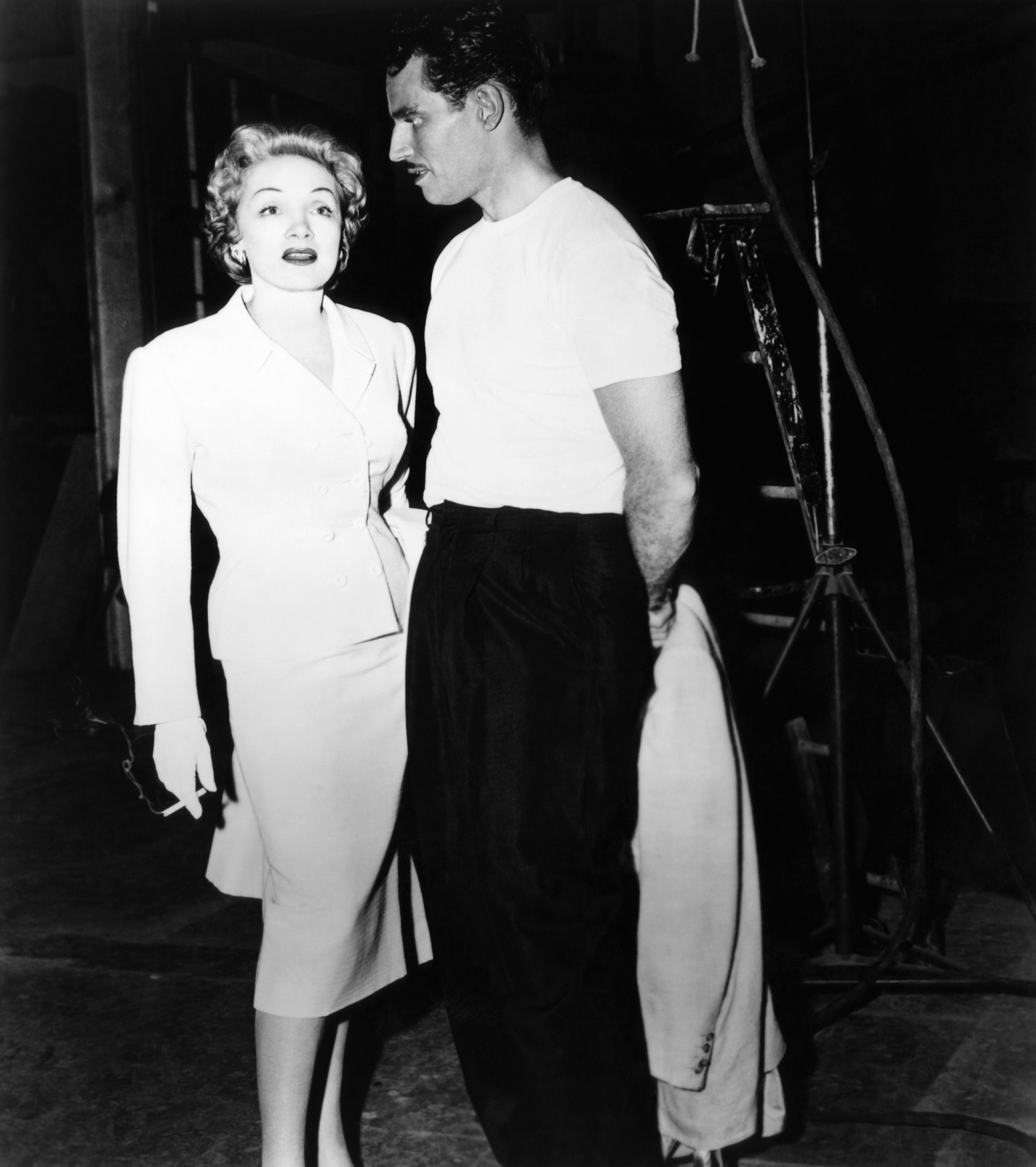
Vintage Image of the Day:
Marlene Dietrich, who was born on this day in 1901, with co-star Charlton Heston on the set of Touch of Evil in 1957:
Filmmaker in Focus:
This video by Nilsu Turkar and Sherimbek Zhunushev highlights Steven Spielberg’s regular use of reflection in his mise-en-scene:
[embedded content]
Abridged Movie of the Day:
Someone cut Speed down to just the shots of the spedometer and obviously it’s a whole lot shorter (via Geek Tyrant):
[embedded content]
Film History of the Day:
The Florida Project director Sean Baker revisits the making of his breakthrough, Tangerine, in this video promoting the submission of one of the iPhones used to shoot that movie to the new Academy Museum:
[embedded content]
Classic Trailer of the Day:
Today is the 15th anniversary of the release of Chicago. Watch the original trailer for the classic, Best Picture-winning musical below.
[embedded content]
and
New York Vineyard Takes A Risk On Ice Wine For A Sweet Reward

Making ice wine requires the grape to be picked and pressed at below-freezing temperatures, like in this vineyard in southern Germany. So, only a few places in the world — mainly Canada and Germany — produce it. But now, vineyards in frigid parts of the U.S., are making their own ice wine, giving Americans a chance to buy domestically produced bottles.
Patrick Seeger/AFP/Getty Images
hide caption
toggle caption
Patrick Seeger/AFP/Getty Images
There are few regions in the world where you can make true “ice wine,” a sweet, dessert-style vintage. You need warm summers to grow quality grapes. But the fruit must be picked and pressed when it’s well below freezing. So you need frigid winters.
Most of the ice wine in the U.S. is imported from Canada or Germany. But a growing number of wineries in places like upstate New York, Michigan, and Pennsylvania have started making their own, giving American consumers the option of buying domestically produced bottles.

The frozen grapes are collected, then pressed outside while they’re still frozen. It’s risky waiting so long to harvest – a wind storm can destroy the whole crop. But the reward is 375ml bottles that fetch $50 and up.
David Sommerstein
hide caption
toggle caption
David Sommerstein
Coyote Moon vineyards, a family-owned winery in Clayton, N.Y., just a few miles from the Canadian border, began making ice wine last year. As an arctic front settled on the vineyards recently, creating the perfect harvesting conditions, they harvested their grapes for next year’s vintage.
It was three degrees Fahrenheit when the winery’s crew trudged out to 30 rows of vines dedicated to ice wine. It was so cold that the snow was squeaking underfoot. The temperature dropped to zero just as the sun peaked over the horizon. The vines were cast in orange. And the snow glowed blue.

Robert Heyman, a Coyote Moon, employee, returns to the vines to fill his bucket with frozen grapes. The vineyard grows two cold climate varietals for ice wine: frontenac (red) and frontenac gris (white).
David Sommerstein
hide caption
toggle caption
David Sommerstein
“All of our grapes are covered with netting,” says the winery’s marketer, Christine Shanley, her eyelashes caked with ice. “So you can look through the nets and you see all your friends, bundled up, shivering, picking the clusters.”
Robert Heyman, a man with a burly beard and a red wool hat works fast along one row. The grapes look almost black, brittle and abandoned. He cracks bunches off the vine with his bare hands and drops them into a bucket. “Ah, it’s nothing compared to ice fishing,” he says, chortling. “No brain, no pain.”
The vineyard has grown two kinds of grapes for ice wine this year, both cold climate varietals: frontenac (red) and frontenac gris (white). This is only their second winter making the product for mass distribution. It’s the first for frontenac gris, so there’s still some experimenting involved.
“We’re letting these grapes essentially turn into raisins,” says co-owner Tony Randazzo.
The chemistry behind ice wine involves letting the water in the grape crystallize in the cold, leaving the sugars to concentrate and mature. “We’re taking the best of the best of that kind of sweet goodness that’s left, and turning that into wine,” says Randazzo.“That’s really where the magic happens.”
Ice wine is believed to have started in Germany in the 1700s, when winemakers had to make the best of a frozen harvest. But Canada has become the world’s leader today. In the United States, ice wine is made throughout upstate New York, as well as parts of Michigan.
Coyote Moon follows Canada’s strict standards. Winemakers have to harvest and press the grapes below 17.6 degrees Fahrenheit, and there are precise guidelines for alcohol and sugar content.
Founder and patriarch Phil Randazzo rumbles up in a tractor to haul a vat of grapes to the outdoor press. There are plenty of imitators who use coolers instead of nature, he says. “A lot of guys will take and freeze their grapes, and that’s just not the real deal. They taste different.”
He cautions against alternative language on bottles, like ‘iced wine’ or ‘frozen wine.’ “It’s got to be called ‘ice wine,'” he adds.
There are big risks to leaving tons of grapes just hanging on the vine long after the traditional late summer harvest. A wind storm can blow away the whole crop. Adequate cold may not come for months. Last year’s warm winter delayed the harvest until February.
But the reward is 375ml bottles that fetch $50 and up, and a sweet, fruity, almost creamy taste. “It’s soothing down your throat when you drink it,” says Lori Randazzo. “The texture in your mouth is pleasant, not syrupy, but coating, wonderful. It sticks with you a little.”
But on this day, there will be no tasting. Ice wine requires patience. After pressing, the juice will ferment and age for a year, just about when it’s time to brave the cold and harvest next year’s frozen crop.
The bottles with last year’s Frontenac harvest are just about to come in from the manufacturer, meaning Coyote Moon’s ice wine will soon be ready for sweet sipping.
