
Brush With Death Leads Doctor To Focus On Patient Perspective

A doctor’s nearly fatal medical event opened her eyes to communication lapses, uncoordinated care and at times a total lack of empathy in the health care system.
kokouu/Getty Images/iStockphoto
hide caption
toggle caption
kokouu/Getty Images/iStockphoto
The searing abdominal pain came on suddenly while Dr. Rana Awdish was having dinner with a friend. Soon she was lying in the back seat of the car racing to Henry Ford Hospital in Detroit, where Awdish was completing a fellowship in critical care.
On that night nearly a decade ago, a benign tumor in Awdish’s liver burst, causing a cascade of medical catastrophes that almost killed her. She nearly bled to death. She was seven months pregnant at the time, and the baby did not survive. She had a stroke and, over the days and weeks to come, suffered multiple organ failures. She required several surgeries and months of rehabilitation to learn to walk and speak again.
Helpless, lying on a gurney in the hospital’s labor and delivery area that first night, Awdish willed the medical staff to see her as a person rather than an interesting case of what she termed “Abdominal Pain and Fetal Demise.” But their medical training to remain clinically detached worked against her. Later, in the intensive care unit, she overheard her case being discussed by the surgical resident during morning rounds.
“She’s been trying to die on us,” he said. It made her angry, she says, because she was trying desperately not to die. “I felt he was positing me as an adversary. If my care team didn’t believe in me, what possible hope did I have?”
Awdish survived and returned to her work at Henry Ford Hospital, but her perspective was indelibly altered. In her recently published book, In Shock, she describes her through-the-looking-glass experience as a critically ill patient. The ordeal opened her eyes to communication lapses, uncoordinated care and at times a total lack of empathy at an institution that says on its home page that health care there “should be built around just one person: you.”
The health system has embraced many of her suggestions for change.
Today, she splits her time working as a critical care physician and as the medical director of care experience for the Henry Ford Health System. In the past five years, she and three colleagues have developed a program called Clear Conversations to improve empathy and communication with patients. At retreats that typically last two days, Henry Ford Hospital staff practice having difficult conversations with improvisational actors who play their patients. The program also trains providers in fundamental patient communications skills and offers real-time physician “shadowing” to provide feedback.

“To listen to our patients with a generous ear does require a willingness to relinquish control of the narrative,” Dr. Rana Awdish says in her book.
Courtesy of Henry Ford Health System
hide caption
toggle caption
Courtesy of Henry Ford Health System
Awdish regularly speaks about her work around the country at conferences and medical schools, “trying to capture the students a bit upstream,” she says.
“To listen to our patients with a generous ear does require a willingness to relinquish control of the narrative,” she says in her book. “Our questions allow for the possibility that we do not already know the answers. By not dominating the flow of information, we allow the actual history to emerge.”
Awdish spoke with me recently about her book. The following interview has been edited for length and clarity.
Interview Highlights
What about being a patient surprised you?
What surprised me the most about being a critically ill patient was how much what I needed as a patient was different than what as a physician I would have thought I needed. As a physician, I was truly focused on trying to provide the best medical care possible. I thought that meant trying to treat people and bring them back to health as fast as possible, not staying in emotional spaces.
As a patient, I realized that someone could treat me but if I didn’t feel they really saw me, that somehow I didn’t feel healed. That emotional space is really where healing occurs.
Through the Clear Conversations program, you’re trying to address the lack of effective communication and empathy you experienced as a patient. Did it help or hinder you that you were bringing this idea to your own hospital?
What helped me in my patient experience was that as much as I saw what was missing, I also saw myself in every failure. And it was very clear that as a physician I was a product of my training. We all are. That removed much of the shame. That very much helped.
Though I believed we were doing this for the patients, what was shocking for me was how valuable the physicians found the training. As physician and author Atul Gawande said, “We all need a coach.” Once we go into practice, where do you go for guidance?
Do the changes really “take” after a two-day workshop?
By immersing departments, by training not only senior staff physicians in how to have these conversations with patients but also their fellows and residents, we gain traction. Because if residents don’t see the communication tools valued by their mentors, they won’t value it. And everyone holds each other accountable. Everyone’s ears are attuned to the same thing. It does start to create change in the sense that expectations have changed for everybody.
How is insurance a barrier to change?
The system is not set up to facilitate conversation, to facilitate time spent with patients. It doesn’t facilitate things that are of value. The need to see patients so often to keep up productivity, and the limitations on time because we’re so caught up in electronic medical record charting — all those things pull you away from patients. It’s up to physicians to keep that space sacred against the competing priorities.
Is there anything that patients can do to help connect with a physician?
What I most wish people knew is that while the system is broken, the people are good. The system actually obstructs things like communication and access. So it’s up to us to figure out the best way to communicate on a one-on-one basis and create that sacred space between ourselves.
Kaiser Health News is an editorially independent news service that is part of the nonpartisan Henry J. Kaiser Family Foundation. Michelle Andrews is on Twitter @mandrews110.
Today in Movie Culture: 'Dunkirk' as a Silent Film, 'Star Wars: The Last Jedi' as a 16-Bit Video Game and More
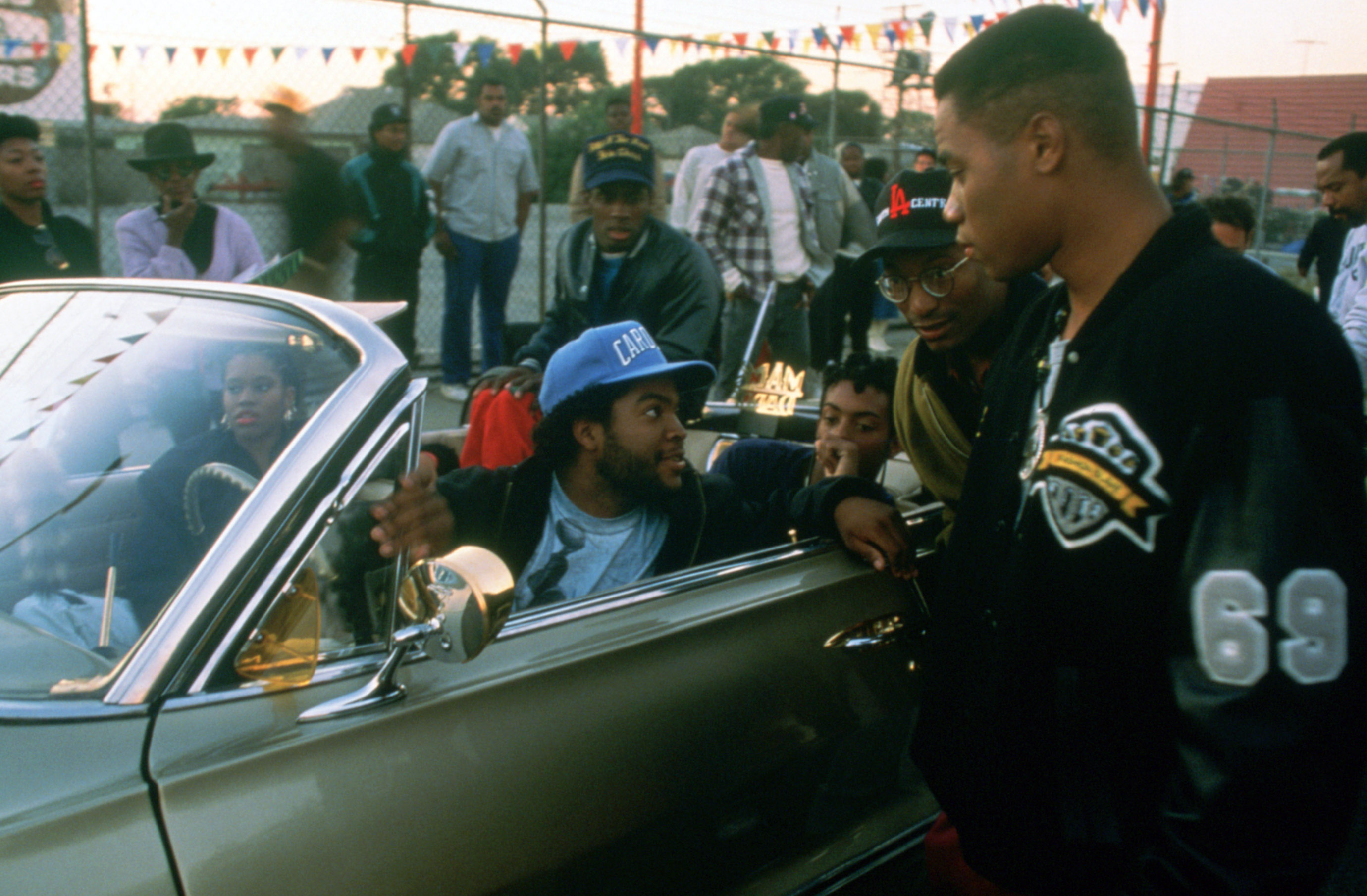
Here are a bunch of little bites to satisfy your hunger for movie culture:
Reworked Movie of the Day:
Christopher Nolan’s Dunkirk is such a marvel of visual storytelling that Like of Stories of Old reworked it so it’s a black and white silent film:
[embedded content]
Reworked Movie Scene of the Day:
Hopefully you’ve seen Star Wars: The Last Jedi already so now you can watch its climactic fight scene again in video game graphics form via Mr. Sunday Movies:
[embedded content]
Video Essay of the Day:
Speaking of Star Wars, Pop Culture Detective makes a case that Jedi teachings are problematic:
[embedded content]
End of Year Recap of the Day:
We’re into 2018 but there are still some great recaps of 2017 at the movies, such as this one for One Perfect Shot by Sleepy Skunk:
[embedded content]
Vintage Image of the Day:
Cuba Gooding Jr., who turns 50 today, with co-star Ice Cube and writer/director John Singleton on the set of Boyz n the Hood in 1990:
Actor in the Spotlight:
Stan Lee, who just turned 95, isn’t an actor but he’s been in numerous movies. Here’s a montage of all his cameo appearances (via Geekologie):
[embedded content]
Movie Takedown of the Day:
One of the biggest hits for kids last year is also the one that will mess them up the most, according to this Honest Trailer for The Boss Baby:
[embedded content]
Bad Film Analysis of the Day:
Speaking of animated movies, here’s the “hidden meaning” of Pixar’s Up according to an alien in the future:
[embedded content]
Filmmaking Lesson of the Day:
This video essay from Film Radar shows how editing shapes story using Eternal Sunshine of the Spotless Mind as an example:
[embedded content]
Classic Trailer of the Day:
This week marks the 40th anniversary of Michael Crichton’s Coma. Watch the original trailer for the classic thriller below.
[embedded content]
and
Tax Changes Could Hurt Affordability At High End Of The Housing Market

The new tax law will have the biggest impact on the market for luxury homes such as this one in the Pacific Heights neighborhood of San Francisco.
Justin Sullivan/Getty Images
hide caption
toggle caption
Justin Sullivan/Getty Images
Kari Pinto and her husband recently retired, and now they hope to trade Iowa — and its harsh winters — for a state with a milder climate.
But the tax bill President Trump signed into law last month has complicated their search for a new home.
“Now we just have another wrinkle in trying to determine where to go, and how much it’s going to cost us,” she says.
The new tax law is forcing a lot of people to reconsider whether they want to buy a home and how much they can pay, and that could affect housing prices, says Mark Zandi, chief economist at Moody’s Analytics.
By the summer of 2019, housing prices nationwide will be about 4 percent less than they otherwise would have been, Zandi predicts. Prices could actually decline for higher-priced homes in parts of the country such as the Northeast, South Florida and the West Coast, he says.
Homebuyers will take a hit in several ways.
Starting in 2018, homeowners can deduct interest on mortgages only up to $750,000. The previous cap was $1 million, with an additional $100,000 allowed for home equity loans. Interest on home equity loans and lines of credit will no longer be deductible.
Not many Americans have mortgages that large, so relatively few will be hurt, says Sam Chandan, associate dean and head of New York University’s Schack Institute of Real Estate.
The doubling of the standard deduction on federal income tax will be much more consequential, he says.
“That means that for a lot of people around the country, it just won’t make sense to itemize and take advantage of that mortgage interest deduction any longer. So that doesn’t really hurt housing directly, but it does take away one of the advantages” of homeownership, Chandan says.
For the first time, homeowners also will face a $10,000 cap on what they can deduct on their state and local taxes. Some 95 percent of homeowners fall below that amount, so the impact of the change will once again be minimal in most places, says Lawrence Yun, chief economist at the National Association of Realtors.
“We don’t anticipate too much change for the middle part of the country, where home values are fairly affordable,” Yun says.
But in high-tax states such as New York, Maryland, Connecticut and California, many more people will take a hit.
“The homeownership rate is falling in California, because of the unaffordable condition. Now, with the tax reform it will make it even more unaffordable than before,” Yun says.
In New York, 20 percent of homeowners pay more than $10,000 in property tax alone. In New Jersey, it’s 30 percent.
Capping the tax deduction will make housing more expensive to own at the upper end and could gradually drag down prices in that segment of the market in some places.
“My gut tells me that it’s going to have an impact at some level. That is, I think it’s probably going to be in the $450,000-plus range,” says Richard Wight, owner of Ward Wight Sotheby’s International Realty in Manasquan, N.J.
“It’s going to have an impact on the disposable income of some buyers, which will in fact impact their qualifications to bid higher than they otherwise might have bid,” he says.
That’s not necessarily a bad thing, NYU’s Chandan notes.
Many economists have long argued that the generous mortgage-interest deductions given by the federal government amounted to an indirect subsidy to home purchases and have distorted housing prices.
“When we subsidize something, when we make it cheaper, we’re going to get more of it. And so we get more housing,” Chandan says. “That in itself has acted to increase house prices, increased the extent to which we consume housing, has directed resources in the economy into the housing sector and at least on the margin have crowded out investment in other areas.”
That means the reduction in mortgage interest and tax deductions may actually benefit the economy in the long run. But for now, some homeowners could see the value of their properties fall.
WATCH: Hockey Player Tells Dad He Made The Olympic Team

Bobby Butler during hockey training camp when he played for the Florida Panthers in 2014.
Lynne Sladky/AP
hide caption
toggle caption
Lynne Sladky/AP
The U.S. unveiled its roster for the men’s Olympic hockey team on Monday.
And the joyful, emotional moment when forward Bobby Butler told his dad that he made the team was caught on video.
It shows Butler skating up to the side of the rink as his father walks in. The two men shake hands, then Butler breaks the news. His dad immediately throws his arms around him as his teammates cheer.
Watch, it will probably brighten your day:
TFW you tell your dad that you’ve made the US Olympic Team ??#TeamUSA ?? pic.twitter.com/ASoOYYXS4Z
— Milwaukee Admirals (@mkeadmirals) January 1, 2018
The 30-year-old Butler, who hails from Marlborough, Mass., skates for the American Hockey League’s Milwaukee Admirals.
Like 14 of his Olympic teammates, Butler has played on NHL teams. But this is the first Olympics in two decades that no U.S. team members are currently playing for the NHL.
That’s because the NHL announced last April that it wouldn’t pause its regular season to accommodate players who want to compete at the games in Pyeongchang, South Korea. The NHL stated that the “overwhelming majority of our clubs are adamantly opposed to disrupting the 2017-2018 NHL season.”
The decision was also about money, as NPR’s Camila Domonoske reported: “The International Olympic Committee has previously paid for players to travel to the Olympics and covered their insurance costs. But the IOC wasn’t planning to foot the bill for 2018.”
The players on the men’s final roster came from colleges, from Americans playing in Europe and from the American Hockey League. And, as SB Nation wrote, NHL stars are out and “in their place are a bunch of guys you’ve probably never heard of.”
In previous years, “USA Hockey got all its Olympic players from one league: the NHL,” according to SB Nation. “Without that option, management turned to a wide variety of sources, plucking players from leagues around the world to piece together a roster for Pyeongchang.”
The NHL’s decision created a unique opportunity for players who would not have been able to make the team otherwise. Just one member of the team, captain Brian Gionta, has played in the Olympics before.
“We really like our roster,” team general manager Jim Johannson said in a statement. “It’s a group that brings versatility and experience and includes players with a lot of passion about representing our country.”
The roster is perplexing to some hockey observers, such as Deadspin’s Barry Petchesky, who calls it “weird as hell” with little name recognition.
But it may be that the lack of prior fame makes moments like Butler’s all the more poignant.
“I know we’re a little down on the Olympics without the NHL, but these are the kinds of moments that make me so happy for the players selected,” writes ESPN hockey analyst Chris Peters. “You know they’ll battle every day for the crest on that jersey.”
From Retirement To The Front Lines Of Hepatitis C Treatment

Dr. Ronald Cirillo helps Deborah Hatfield fill out paperwork at a Florida clinic, before running a test to see whether she has hepatitis C.
Daylina Miller/Health News Florida
hide caption
toggle caption
Daylina Miller/Health News Florida
When a hepatitis C treatment called Harvoni was released in 2014, Dr. Ronald Cirillo knew it was big.
“It’s the reason that dragged me out of retirement!” he says.
Cirillo specialized in treating hepatitis C for more than 30 years in Stamford, Conn., before retiring to Bradenton, Fla. During his time in Connecticut, the only available treatment for hepatitis C had terrible side effects and it didn’t work very well. It cured the viral infection less than half the time. But the newer drugs Harvoni and Solvaldi cure almost everybody, with few adverse reactions.
“In my lifetime I’ve seen it change from a horrible treatment to a manageable treatment,” Cirillo says.
His mission is finding the patients.
“The disease is out there,” he says. “My job is to get the disease in here so we can follow them and treat them.”
Cirillo joined the Turning Points free clinic last year. It’s in Bradenton, about an hour south of Tampa. The clinic primarily serves uninsured Floridians who fall into what many refer to as a coverage gap in states like Florida that chose not to expand Medicaid. Falling into this gap are people who make too much money to qualify for Medicaid in the non-expansion state, but can’t get subsidies to buy insurance on the Affordable Care Act exchanges; subsidies kick in when people make 100 percent of the poverty level — about $12,000.
Cirillo is trying to test every high-risk patient he encounters. Today, his assistant pricks a patient’s finger, and squeezes blood onto the end of a small plastic tube.
“And this little measuring tool goes into the blood and solution mix there,” Cirillo says. “We are going to time it — 20 minutes and that’s it. That’s the test.”
Nearly 30,000 people in Florida were found to have hepatitis C in 2016. It’s likely that many more are infected, because the virus can lie dormant for decades.
Cirillo spearheaded a partnership with Harvoni’s maker, Gilead Sciences, and that partnership has provided treatment to about 100 patients.
“We treat people without any insurance, that have no hope,” Cirillo says.”If you qualify to be a patient here, you’ll get tested.”
A 57-year-old patient named Patricia discovered she had hepatitis C a few months ago during a trip to the clinic. NPR is not using her last name because the virus is sometimes associated with illegal IV drug use. It can also spread via sex. Patricia says she’s not sure how she got it.
“So, just because of my age, I guess, they went ahead and tested me for it and it blew my mind that I actually had hep C,” she says. “And the levels ended up being really high.”
The virus had started to scar and inflame her liver. But she lacked insurance and a job; the $94,000 Harvoni treatment would have been out of reach if she hadn’t had financial help.
“I would never been able to afford that treatment,” she says. “Never.”
Staff at the clinic help patients fill out the complicated application from Gilead. Only patients who don’t have insurance, have been drug-free for at least six months, and who meet income requirements are eligible.
Patricia was able to get the treatment — one pill a day for 12 weeks — and will be tested again in three months to determine whether she is free from hepatitis C.
“Had they not discovered it, really, and gotten me onto the program — who knows?” she says.
The Bradenton clinic is just one of many free clinics across Florida. But it stands out in its success in treating people who have hepatitis C.
This story was produced with the USC Center For Health Journalism’s National FellowshipandKaiser Health News.
Alabama Bulldozes Into 3rd Straight Title Game; Georgia Runs By Oklahoma


Economists Are Saying We Will Have A Happy — Really Happy — New Year

Researchers Gather Health Data For 'All Of Us'

Mine Cicek, an assistant professor at the Mayo Clinic, processes samples for the All of Us program.
Richard Harris/NPR
hide caption
toggle caption
Richard Harris/NPR
Federal taxpayers are pouring hundreds of millions of dollars into a quest for blood samples, medical information and fitness readouts from a million Americans. It’s called the All of Us precision medicine initiative, and it’s the biggest push ever mounted to create a huge public pool of data that scientists — and anybody else who is interested — can mine for clues about health and disease.
Proponents say this big data approach to medicine will be revolutionary. Critics aren’t so sure.
The plan is to recruit a million Americans to sign up for a program that will not only gather all sorts of medical data about them but will also follow them for at least a decade, possibly much longer. Their electronic medical records could end up in huge databases. The physical samples of blood and urine will end up in an industrial park in Rochester, Minn.
Mine Cicek, an assistant professor of laboratory medicine and pathology at the Mayo Clinic, leads me into a vast building with more than an acre and a half of floor space. “This used to be an old warehouse, but when we moved in three to four years ago, we really built a laboratory, and it’s in the space,” she says.
Power cords drop down from the ceiling to lab benches and robotic instruments, lined up row after row. These machines will help take the grunt work out of sorting through what will eventually be 34 million samples, gathered from all across America.
At the moment, the project is limited to pilot studies, with fewer than 100 samples a day coming off the UPS and FedEx trucks to be sorted, centrifuged and ultimately plunged in the deep freeze. But when the operation is fully up to speed, the lab may receive specimens from a thousand participants a day.

Technicians examine part of a 74-foot-long freezer. Robots inside the freezer will handle millions of specimens and store them in even colder freezers inside.
Richard Harris/NPR
hide caption
toggle caption
Richard Harris/NPR
Cicek takes me into another cavernous part of the warehouse, filled not only with ordinary looking freezers but also with one behemoth — 74 feet long and more than 15 feet wide. It’s bigger than a railroad boxcar.
We loop around to the front, which has a glowing green slit, delineating the narrow freezer door.
Inside, robots pick up the samples, read bar codes stamped on them and store them in individual freezers hidden inside. The robot works in a freezer set to minus 20 degrees Celsius, sorting samples into smaller freezers kept at minus 80 C (or minus 112 degrees Fahrenheit). People only enter the freezer if there is a problem inside.
When everything is up and running, Cicek says, the incoming tubes of blood will be processed by a fully automated system. All she’ll have to do is pick up boxes of samples and feed them into this freezer.
And the scientific output for this enterprise? That is less tangible at the moment.
“It’s really a research resource that we’re building for the whole country, if not for the whole world,” says Eric Dishman, who runs the National Institutes of Health’s All of Us initiative from another anonymous building, in Rockville, Md., a suburb of Washington, D.C.
His job is to build it and then make the data widely available — to top biomedical researchers as well as to community colleges and even high schools, so all sorts of people can dive into the data and try to extract meaning from it.
Echoes of the human genome project
In some ways, this project is akin to the original effort to sequence the human genome more than a decade ago. It’s not an end in itself; it’s a tool. The idea is to bring the big data revolution that has reshaped online commerce and social media to science. Ultimately, the information could help make medicine more personal and precise.
Scientists don’t yet have a concrete plan, but Dishman sketches out the goals. “We keep looking at diseases in isolation,” he says. But by looking at entire genomes, he hopes scientists will get a better idea about how diseases are interconnected.
“The All of Us research program is really trying to bring a diversity of people, of health conditions, and a diversity of data sets to try to understand us more in our complexity,” he says.
Scientists might scour this pile of data for unexpected patterns or dive into it looking for answers to specific questions.
Dishman, who has lived through a 23-year odyssey with kidney disease and kidney cancer, uses his experience as an example. “I had $6 million of care. Now looking back at it, scientists tell me that 90 percent of everything we ever did to me was destined to be wrong.”
Medicine is often a matter of trial and error, so that is not so unusual. But Dishman also had the DNA in his tumor deciphered. That gave doctorsyet one more clue about what to do, and it led to an effective treatment.
“I’m nervous about sharing this story because it is hopeful,” Dishman says. “I also know there’s a lot of science, but also a lot of luck this worked for me.”
Still, he regards his story as a lesson about what the future could bring, in a world where genetic data are merged with information from medical records, exercise monitoring gear and whatever else can be put into a giant database for analysis. The hoped-for output of this will be “precision medicine.”
“We are in the early days of precision medicine and this is exactly why we need to accelerate the science and the discovery so there’s an evidence base for the decisions and choices we’re making for you as an individual, as well as the general population.”
Millions invested, future benefits unknown
Among those skeptical about the big talk — and big investment — behind precision medicine is Kenneth Weiss, who recently retired from his post as a genetics professor at Penn State, and has written about this issue.
“I think there will be some progress, but I also think this is also as much a slogan to get funding as it is a serious promise,” he says. The All of Us programreceived $360 million for its first two years of funding and hopes to run for many decades.
Gathering huge data sets may be useful for merchants trying to suss out consumer spending patterns, but he cautions that in biology, it may lead to more confusion than clarity. That is because many health conditions involve hundreds of genes, and the pattern is different in every individual. As it is, the more scientists look the more variants they find. So, he says, think about what that will look like when they have gathered a million samples.
“Bigger and bigger samples will just in a way identify more and more very rare or very weak effects, and the upshot will be each person will become even more different in terms of the identifiable genetic effects,” Weiss predicts.
When the human genome was sequenced, many scientists hoped they would quickly be able to identify the common genes that are responsible for common diseases, like diabetes, heart disease, high blood pressure and so on. That simply didn’t pan out. Common diseases don’t have common genetics. Weiss says it’s time to cut our losses pursuing that concept.
“I think we’re already at the diminishing returns point for many of the complex traits that important to our society in terms of health.”
The solutions to these common conditions lie largely in changing diets, exercise habits and tobacco addiction. Focusing genetic resources on diseases that do have strong genetic components makes a lot of sense, he says.
“But pouring more and more investment into these huge studies based on the idea that if you search enough computer data you will get an answer, I think is a false promise,” he says.
He would rather take the money being spent on All of Us and use it to work on gene therapies for diseases that have a clear genetic cause, such as muscular dystrophy or Huntington’s disease. “And once those [therapies] are developed — which I think they will be because I think humans are really good at engineering — then we can extend to the less clear-cut genetic traits.”
Meanwhile, if the goal is to improve the health of our population, he says, “let’s spend money on dietary exposures, exercise exposures, all the things that we know about to reduce the frequency of the kinds of diseases that we’re spending so much money to try to treat is if they were genetic.”
Given all the momentum built up behind the precision medicine initiative, Weiss is not voicing a popular point of view. But the retired geneticist says he has no ax to grind — and no brilliant insights about what would actually lead to medical breakthroughs. His concern is that biomedical research is committed to this idea because they have a tool they are eager to use — not because they have a clear path ahead.
You can contact Richard Harris via email.
Lawsuits Mount As Apple Manages Fallout From Revelation Of Slowed iPhones

Owners of iPhones from several states sued Apple Inc. for not disclosing sooner that it issued software updates deliberately slowing older-model phones so aging batteries lasted longer.
Eric Risberg/AP
hide caption
toggle caption
Eric Risberg/AP
Apple had a message for its customers this past week: “We apologize.”
Customers have been angry ever since the company confirmed its software updates slow down older iPhones with aging batteries. Apple says it did that to prevent those iPhones from shutting down unexpectedly.
While this apology might help on the public relations front, the legal issues are another matter.
Apple is facing a number of lawsuits over the issue from iPhone owners in states including California, New York and Illinois. There’s also a lawsuit from customers in Israel and one from a French consumer rights group.
Broadly, the lawsuits cover contract law claims — saying that Apple harmed something the consumer owned and wasn’t transparent about it — as well as consumer protection violations.
“You changed my phone in a harmful way [and] didn’t tell me you were doing that,” Rory Van Loo tells NPR’s Lauren Frayer. Van Loo is a law professor at Boston University who focuses on technology and regulation.
The claims allege that the deception may have caused consumers to buy a new phone when instead they could have just bought a new battery. For the plaintiffs to succeed in the fraud claims, they will need to prove that Apple intended to promote new phone sales by slowing down old phone sales.
“For all claims [plaintiffs] will need to prove some kind of harm,” Van Loo says. “They’re going to need to show that Apple intentionally withheld information about slowing down the phones” and that customers would have made a different decision.
Though these lawsuits face a bit of an uphill battle, Van Loo says Apple should be nervous.
“For one, Apple has lost a number of cases across the country on some similar arguments in recent years,” he says.
In a lawsuit first filed in 2015, iPhone 4s users claimed they were forced to download an update that made their phones buggy and unusable. Apple tried to get that case thrown out, but last month a judge ruled against the company.
Apple’s argument, and one that they Van Loo says they may use again, is that users are told in the fine print of software updates that “things may go wrong.”
“Apple is not going to be protected by what they put in the fine print,” he says. “You have to be very specific about what you say in the fine print, and as far as I’m aware, it didn’t anywhere say, ‘We may slow down your phones with our updates.’ “
After the battery issue came to light, Apple apologized to customers and said it would offer discounts to replace old batteries. The company also said new features are rolling out “that give users more visibility into the health of their iPhone’s battery, so they can see for themselves if its condition is affecting performance.”
While good news for future customers and in the court of public opinion, Van Loo says it doesn’t free them from the potential legal liability.
Apple’s apology “is not going to protect them from what they did last month and last year,” he says.
Despite the criticism and lawsuits, Apple’s explanation and response to the battery concerns does not include any indication that older phones using old batteries will stop slowing down.
Saturday Sports: Expect More Politics In The New Year

Politics is expected to dominate sports in the new year much as it did in 2017, from the NFL playoffs and Super Bowl to the Olympics and World Cup.
LINDA WERTHEIMER, HOST:
And now it’s time for sports.
(SOUNDBITE OF MUSIC)
WERTHEIMER: It seems like our sports coverage this past year was as much about politics as it was about touchdowns or home runs. And heading into 2018, we’re likely in for more of the same. We have NPR’s Tom Goldman to give us a preview.
Good morning, Tom.
TOM GOLDMAN, BYLINE: Happy new year – almost.
WERTHEIMER: Yeah. The NFL taking the knee protests were front page, headline news for weeks and months. Politicians and ordinary Americans had strong opinions about this and voiced them loudly. What are you expecting to see in the playoffs and in the Super Bowl?
GOLDMAN: Probably more. The protests have continued up through last weekend, and there’s a good chance they’ll keep going through the postseason, Linda – although some players stopped after they reached a tentative agreement with the NFL about a month ago, where the league will contribute about $90 million to social causes important to the players, an owners vote on that expected in March. Some of the more outspoken players this season are on the Philadelphia Eagles. And the Eagles will be a No. 1 seed as the playoffs start.
And if they make it to the Super Bowl, we may very well hear about the issues these players have been talking about, especially considering the big game’s in Minnesota. That, of course, is where a policeman shot and killed Philando Castile last year, one of the prominent police shootings that prompted the NFL protests in the first place.
WERTHEIMER: Then, less than a week after the Super Bowl, the Winter Olympics open in South Korea. We know of at least one prominent Olympian who is not shying away from politics, alpine ski champion Lindsey Vonn.
GOLDMAN: Yeah, she has said she’ll be competing at the Olympics for the American people and not for the president. She’s also said she won’t visit the White House if she’s invited. It’s not clear what she’ll say or do in South Korea. The Olympic rules strictly forbid political protests. But, you know, she’s one of the most famous Olympians, and she’ll certainly be asked a lot about it.
WERTHEIMER: The Olympics are always political, Tom. But this year…
GOLDMAN: Oh, really?
(LAUGHTER)
WERTHEIMER: …With the IOC picking the Russian team out of the Winter Games in South Korea, that’s created an extra layer of controversy.
GOLDMAN: Yeah, it sure has. I mean, the International Olympic Committee kicked out the Russian team because of Russia’s widespread doping scandal, which Russian officials continued to deny. But supposedly, clean Russian athletes who passed the screening process going on right now will be in Pyeongchang. Technically, they’ll be neutral competitors with no official Russian uniforms or anthem or flags. But in a compromise by the IOC because Russia is such a power player in the Olympics, Russian athletes will wear uniforms that say Olympic athlete from Russia. So we’ll know who’s who.
It will be an uncomfortable Russian presence at the games. And, you know, it’s bound to create some tension. Will fans wave Russian flags? Will winning Russian athletes sing their national anthem while the Olympic anthem plays over the loudspeakers? So all of this is layered on top of the tension already on the Korean peninsula. It’s going to be a very political games.
WERTHEIMER: And Russia’s state-sponsored doping scandal will hang over the World Cup as well. The soccer tournament kicks off in June, hosted by Russia.
GOLDMAN: Yeah. And this week, a prominent Russian sports official, Vitaly Mutko, resigned as head of the World Cup organizing committee. He’d become a PR liability after he was banned from the Olympics because of the doping scandal. Russia is hoping, with him gone, it’ll smooth this approach to the World Cup in the summer. But already, there’ve been allegations about doping by members of the Russian men’s national soccer team, allegations about bribery in the awarding of the World Cup to Russia. And by June, who knows where the story will be about Russian interference in the 2016 U.S. election?
WERTHEIMER: Now, the U.S. soccer team will not be at the World Cup. The USA is not a soccer superpower. But there were some unexpected results from the qualifying matches.
GOLDMAN: Yeah – no USA, no Netherlands, no Italy – that’s a big absence. Soccer fans in the U.S. still will be interested. There will be a lot of great action. But casual fans who’d normally be drawn to the tournament because the U.S. is playing – they won’t be as interested. TV ratings in this country will take a hit. That’s important because the promise of those ratings bring in big advertisers and sponsors. And hopefully, U.S. soccer will figure out what it takes to bolster the men’s program in order to get the Yanks back in the next World Cup.
WERTHEIMER: That’s NPR’s Tom Goldman. Tom, thank you.
GOLDMAN: You’re welcome, Linda.
(SOUNDBITE OF TOE’S “VANISHING POINT AND WHISTLE”)
Copyright © 2017 NPR. All rights reserved. Visit our website terms of use and permissions pages at www.npr.org for further information.
NPR transcripts are created on a rush deadline by Verb8tm, Inc., an NPR contractor, and produced using a proprietary transcription process developed with NPR. This text may not be in its final form and may be updated or revised in the future. Accuracy and availability may vary. The authoritative record of NPR’s programming is the audio record.
