
Time To Make The Doughnuts Free Of Artificial Dyes, Dunkin' Decides

Doughnuts for sale at a Dunkin’ Donuts in Edmond, Okla. Last year, the parent company said it would remove artificial colors from its products in the U.S. by the end of 2018. Now they say they’ve already achieved that goal for their flagship product.
Sue Ogrocki/AP
hide caption
toggle caption
Sue Ogrocki/AP
Dunkin’ Donuts has removed all artificial dyes from its doughnuts, nearly one year ahead of schedule, as the company continues to work to find replacements for synthetic coloring in its other menu items.
Rick Golden, Manager of Donut Excellence for Dunkin’ Brands, announced the news on Thursday, saying that “bright, colorful confections” are a hallmark of Dunkin’s doughnut lineup. The colors will remain, but the artificial colorings will be gone.
Last year, Dunkin’ announced it planned to drop artificial colors. The target date was the end of 2018. That’s still the goal for frozen drinks, other baked goods and breakfast sandwiches — but the doughnuts went au naturel, as it were, a little early.
“Our biggest challenge was replacing the artificial dyes in donuts with fruit juices and other extracts while balancing the flavor profile and bright colors,” Golden wrote. “It took years of research and development to get it just right.”
Some items used as toppings or decoration may still contain synthetic dyes, the company notes.
Dunkin’ is the latest in a long line of food companies to replace artificial colors with naturally derived dyes, which can be more expensive and more difficult to consistently produce. (Meanwhile, some perfectly natural colorings, like a red dye made from crushed insects, have also been known to ick out consumers.)
In 2015, General Mills announced it would be coloring Trix cereal with dyes made from the spices turmeric and annatto, as well as fruit and vegetable juices, instead of the old artificial options. Nestle re-did the recipes for 75 different candy bars to eliminate artificial flavors and colors. Panera boasted that it was dropping 150 different additives, including artificial colors.
Food dyes have been a particular target for advocates against artificial food additives, partly because they serve no health purpose, and partly because of specific concerns about their effect on children.
As NPR’s Allison Aubrey has previously explained:
“Some parents, including the sponsor of a petition aimed at getting dyes out of candies, believe that artificial colorings in food can contribute to hyperactivity in their children.
“But the evidence to back this claim is mixed. ‘I think there’s a growing body of research that shows that artificial food colorings can affect a child’s behavior,’ Andrew Adesman, a spokesperson for the American Academy of Pediatrics, told us. ‘On the other hand, these effects are relatively modest.’
“And, he adds, there’s no evidence that artificial dyes pose long-term safety or health risks.
“Adesman says it’s good that the food industry is giving parents more options to buy products that are free of these artificial ingredients. But he points out that eliminating artificial dyes does not turn chocolate bars into health foods.
” ‘They [can be] high in fat and in sugar,’ Adesman says — two things many of us could stand to cut back on.”
The same, alas, is true of doughnuts.
U.S. Figure Skaters Preparing For PyeongChang Winter Olympics

The best figure skaters in the United States are squaring off this week and will learn who will compete at next month’s Winter Olympics in South Korea. Already, there have been some surprises.
ROBERT SIEGEL, HOST:
Figure skating is always a fan favorite at the Olympic Games, a combination of athleticism, sequined costumes and often melodrama. U.S. figure skaters are gathered in San Jose, Calif., this week for the national championships and a chance to qualify for the Olympics, which begin next month. NPR’s Tom Goldman reports there has been drama, more real-world than soap opera.
TOM GOLDMAN, BYLINE: The U.S. Figure Skating Championships in an Olympic year are a stressful event. Performances in the short program and longer free skate don’t solely determine whether a skater makes the Olympic team, but they count a lot. So the stumbles during routines are more frequent, the on-ice smiles sometimes appear strained. 2016 U.S. champion Adam Rippon was feeling it before his short program last night.
ADAM RIPPON: When I made a little mistake in the six-minute warm-up, I said, girl, you tight. So…
(LAUGHTER)
GOLDMAN: But the 28-year-old veteran told himself to bend his knees, take things one at a time. And it worked.
(SOUNDBITE OF MUSIC)
GOLDMAN: Rippon flowed and jumped with ease. Although he’s had success in his career, he’s battled injury and illness and never qualified for an Olympics. But last night’s second-place finish was what he calls a first step toward that elusive Olympic gold.
(APPLAUSE)
GOLDMAN: And if Adam Rippon makes the trip to South Korea next month, a much bigger audience will get to know a top-notch and highly entertaining skater.
RIPPON: A few weeks ago, I was asked in an interview – and I tweeted about it – that they asked me, what was it like being a gay athlete in sports? And I said, it’s exactly like being a straight athlete, only with better eyebrows.
(LAUGHTER)
GOLDMAN: Rippon came out in 2015, and he could be one of the first openly gay figure skaters to compete in an Olympic Games.
RIPPON: Growing up, I really didn’t have a lot of role models. And I said, if I was ever given the chance and the platform, I would share my story.
GOLDMAN: He says sharing that story has made him a better competitor.
RIPPON: Because I don’t really care what other people think of me. I’m able to go out there and I’m really able to be, like, unabashedly myself. And I want somebody who’s young, who’s struggling, who’s not sure if it’s OK if they are themselves to know that it’s OK.
GOLDMAN: Adam Rippon isn’t the only member of the figure skating world to put a dramatic stamp on these championships. Sports federation leaders traditionally don’t wade into controversy, certainly geopolitics, but not this week. After North Korea floated the idea that its athletes might participate in the Olympics, Senator Lindsey Graham said the U.S. should boycott the games. In San Jose, U.S. Figure Skating President Sam Auxier willingly waded into the fray.
SAM AUXIER: These athletes have worked so hard to get here. I mean, their whole lives are focused on getting to the Olympics. It would be devastating if we were to pull out just for this kind of posturing.
GOLDMAN: There’s a direct connection to his sport. The only North Koreans who’ve qualified for Olympic competition are a pairs skating team. With talks now scheduled next week between North and South Korea dealing in part with the Olympics, Auxier hopes this country’s leaders can see the games as one way to help move the Korean Peninsula away from crisis.
At least, he says, the U.S. should go to the games and win medals. He’ll get no argument from Adam Rippon, Nathan Chen and Bradie Tennell, the men’s and women’s leaders after the short programs, and the rest of a bunch of hungry and slightly anxious skaters in San Jose. Tom Goldman, NPR News.
(SOUNDBITE OF TARO UMEBAYASHI’S “YURI ON ICE”)
Copyright © 2018 NPR. All rights reserved. Visit our website terms of use and permissions pages at www.npr.org for further information.
NPR transcripts are created on a rush deadline by Verb8tm, Inc., an NPR contractor, and produced using a proprietary transcription process developed with NPR. This text may not be in its final form and may be updated or revised in the future. Accuracy and availability may vary. The authoritative record of NPR’s programming is the audio record.
New Three Kings Day Traditions Form In The Aftermath Of Hurricane Maria

Puerto Ricans celebrate Three Kings Day every Jan. 6 with parades, parties and musical performances.
Mario Tama/Getty Images
hide caption
toggle caption
Mario Tama/Getty Images
On Sept. 20, Hurricane Maria devastated Puerto Rico, initially wiping out electricity and cellular reception on the entire island and causing billions of dollars in structural damage. Nearly four months later, much of the island still has no power and there are debates over the official death toll. Although the island officially reopened its doors to tourism last month, locals and natives note that the Christmas holiday was understandably scaled back compared to years past.
“In my town, this Christmas has been way understated because there’s many parts that still have no electricity,” says Luis Miranda Jr., a native of Vega Alta. “So it’s difficult to even put a Christmas tree up with some lights.”
But while Christmas was subdued, morale on the island is being re-energized by this weekend’s upcoming celebration of Three Kings Day. As one of the most important dates on the Puerto Rican calendar, the Jan. 6 holiday commemorates the arrival of the biblical three kings, also known as the three wise men or the magi, and their adoration of the baby Jesus. In many Spanish-speaking countries, the holiday is marked with festivals, processions and presents for children. Miranda has memories of singing, dancing and chasing chickens for the holiday meal at his grandfather’s house in Maricao.
“It was the holiday,” Miranda explains. “There is always live music. We celebrate it with music and food — those were two important ingredients. Presents were important and we all got presents, but the celebrations’ main items were music and food.”
Usual traditions on the island include a celebration at Luis Muñoz Marín Park in San Juan and large processions in Juana Diaz, the unofficial hometown of the magi. (The tourism offices of these respective cities could not be reached to confirm if their annual events were taking place this year.) The department store chain Macy’s is still planning to hold celebrations in both their Ponce and San Juan stores this week.
“Guests will enjoy live holiday music from local group Plenativa, arts and crafts [and] special gifts,” Jacqueline King, Macy’s Inc Media Manager says. “Plus, guests will be able to snap a photo with the three kings themselves with their personal camera.”
But with the past few months being anything but usual for Puerto Ricans, new traditions are forming as well.
Luis Miranda, Jr. and with his son, the Tony Award-winning Hamilton creator and star Lin-Manuel Miranda, have partnered with Toys ‘R’ Us and Telemundo, to orchestrate 40 toy drive events in the last month. The Mirandas’ “Toys 4 Puerto Rico” drive will distribute the nearly 40,000 collected toys across the island this weekend, while four events take place in the U.S. where Puerto Ricans have migrated (New York, Philadelphia, Orlando and Chicago).
Luis Miranda, Jr. is employing out-of-work musicians on the island, from plenero bands to singing theater troupes, to act as the day’s entertainment.
“They will get paid to perform when they have not been able to because of the economic situation in the island,” Miranda says.
To hire the talent, Miranda enlisted the help of R.Evolucion Latina, an arts and community outreach organization based in NYC but working extensively on the island. Luis Salgado, founder and director of the organization, says there are performances planned in every corner of the island, from San Juan to Vega Alta to Dorado, with “a big spectrum of different artists.” One of those artists is Yari Helfeld. R.Evolucion Latina has been working with Helfeld’s performance group Y No Habia Luz since the hurricane hit in September and has hired them for this weekend’s events.
“It’s super useful to help people start opening their feelings because now people are super tense and anxious,” Helfeld says. “We don’t know how to escape, to relax the feelings the catastrophe created in us. So, through the music, we start to ‘dejando,’ let it go.”
R.Evolucion Latina and the Mirandas aim to not only unite the island with music this holiday, but set up a six-month work calendar for those still on the island — a new “normal” for Puerto Rico’s musicians, Salgado says.
“Once the parrandas season is over, a lot of those musicians are also looking for work,” he explains. “We’re trying to activate them in social ways where they continue to visit different towns and continue to uplift the moral necessities and the psychological necessities that people are going to are facing due to the circumstances.”
New Three Kings Day Traditions Form In The Aftermath Of Hurricane Maria
Puerto Ricans celebrate Three Kings Day every Jan. 6 with parades, parties and musical performances.
Mario Tama/Getty Images
hide caption
toggle caption
Mario Tama/Getty Images
On Sept. 20, Hurricane Maria devastated Puerto Rico, initially wiping out electricity and cellular reception on the entire island and causing billions of dollars in structural damage. Nearly four months later, much of the island still has no power and there are debates over the official death toll. Although the island officially reopened its doors to tourism last month, locals and natives note that the Christmas holiday was understandably scaled back compared to years past.
“In my town, this Christmas has been way understated because there’s many parts that still have no electricity,” says Luis Miranda Jr., a native of Vega Alta. “So it’s difficult to even put a Christmas tree up with some lights.”
But while Christmas was subdued, morale on the island is being re-energized by this weekend’s upcoming celebration of Three Kings Day. As one of the most important dates on the Puerto Rican calendar, the Jan. 6 holiday commemorates the arrival of the biblical three kings, also known as the three wise men or the magi, and their adoration of the baby Jesus. In many Spanish-speaking countries, the holiday is marked with festivals, processions and presents for children. Miranda has memories of singing, dancing and chasing chickens for the holiday meal at his grandfather’s house in Maricao.
“It was the holiday,” Miranda explains. “There is always live music. We celebrate it with music and food — those were two important ingredients. Presents were important and we all got presents, but the celebrations’ main items were music and food.”
Usual traditions on the island include a celebration at Luis Muñoz Marín Park in San Juan and large processions in Juana Diaz, the unofficial hometown of the magi. (The tourism offices of these respective cities could not be reached to confirm if their annual events were taking place this year.) The department store chain Macy’s is still planning to hold celebrations in both their Ponce and San Juan stores this week.
“Guests will enjoy live holiday music from local group Plenativa, arts and crafts [and] special gifts,” Jacqueline King, Macy’s Inc Media Manager says. “Plus, guests will be able to snap a photo with the three kings themselves with their personal camera.”
But with the past few months being anything but usual for Puerto Ricans, new traditions are forming as well.
Luis Miranda, Jr. and with his son, the Tony Award-winning Hamilton creator and star Lin-Manuel Miranda, have partnered with Toys ‘R’ Us and Telemundo, to orchestrate 40 toy drive events in the last month. The Mirandas’ “Toys 4 Puerto Rico” drive will distribute the nearly 40,000 collected toys across the island this weekend, while four events take place in the U.S. where Puerto Ricans have migrated (New York, Philadelphia, Orlando and Chicago).
Luis Miranda, Jr. is employing out-of-work musicians on the island, from plenero bands to singing theater troupes, to act as the day’s entertainment.
“They will get paid to perform when they have not been able to because of the economic situation in the island,” Miranda says.
To hire the talent, Miranda enlisted the help of R.Evolucion Latina, an arts and community outreach organization based in NYC but working extensively on the island. Luis Salgado, founder and director of the organization, says there are performances planned in every corner of the island, from San Juan to Vega Alta to Dorado, with “a big spectrum of different artists.” One of those artists is Yari Helfeld. R.Evolucion Latina has been working with Helfeld’s performance group Y No Habia Luz since the hurricane hit in September and has hired them for this weekend’s events.
“It’s super useful to help people start opening their feelings because now people are super tense and anxious,” Helfeld says. “We don’t know how to escape, to relax the feelings the catastrophe created in us. So, through the music, we start to ‘dejando,’ let it go.”
R.Evolucion Latina and the Mirandas aim to not only unite the island with music this holiday, but set up a six-month work calendar for those still on the island — a new “normal” for Puerto Rico’s musicians, Salgado says.
“Once the parrandas season is over, a lot of those musicians are also looking for work,” he explains. “We’re trying to activate them in social ways where they continue to visit different towns and continue to uplift the moral necessities and the psychological necessities that people are going to are facing due to the circumstances.”
Today in Movie Culture: 'Dunkirk' Meets 'Top Gun,' Spotlight on Sally Hawkins and More
Here are a bunch of little bites to satisfy your hunger for movie culture:
Reworked Movie Scene of the Day:
Tom Hardy’s Dunkirk sequences are a lot different set to “Danger Zone” from Top Gun (via Geek Tyrant):
[embedded content]
Movie Comparison of the Day:
Speaking of Dunkirk, watch clips from the movie next to archival material to see how authentic it is:
[embedded content]
Mashup of the Day:
Many movies have depicted the JFK assassination, so here’s the incident viewed through the compilation of shots from JFK, Watchmen, Jackie and Parkland:
[embedded content]
Movie Science of the Day:
Kyle Hill scientifically explains how much power Magneto needs to rip iron from his guards’ blood in X2: X-Men United:
[embedded content]
Vintage Image of the Day:
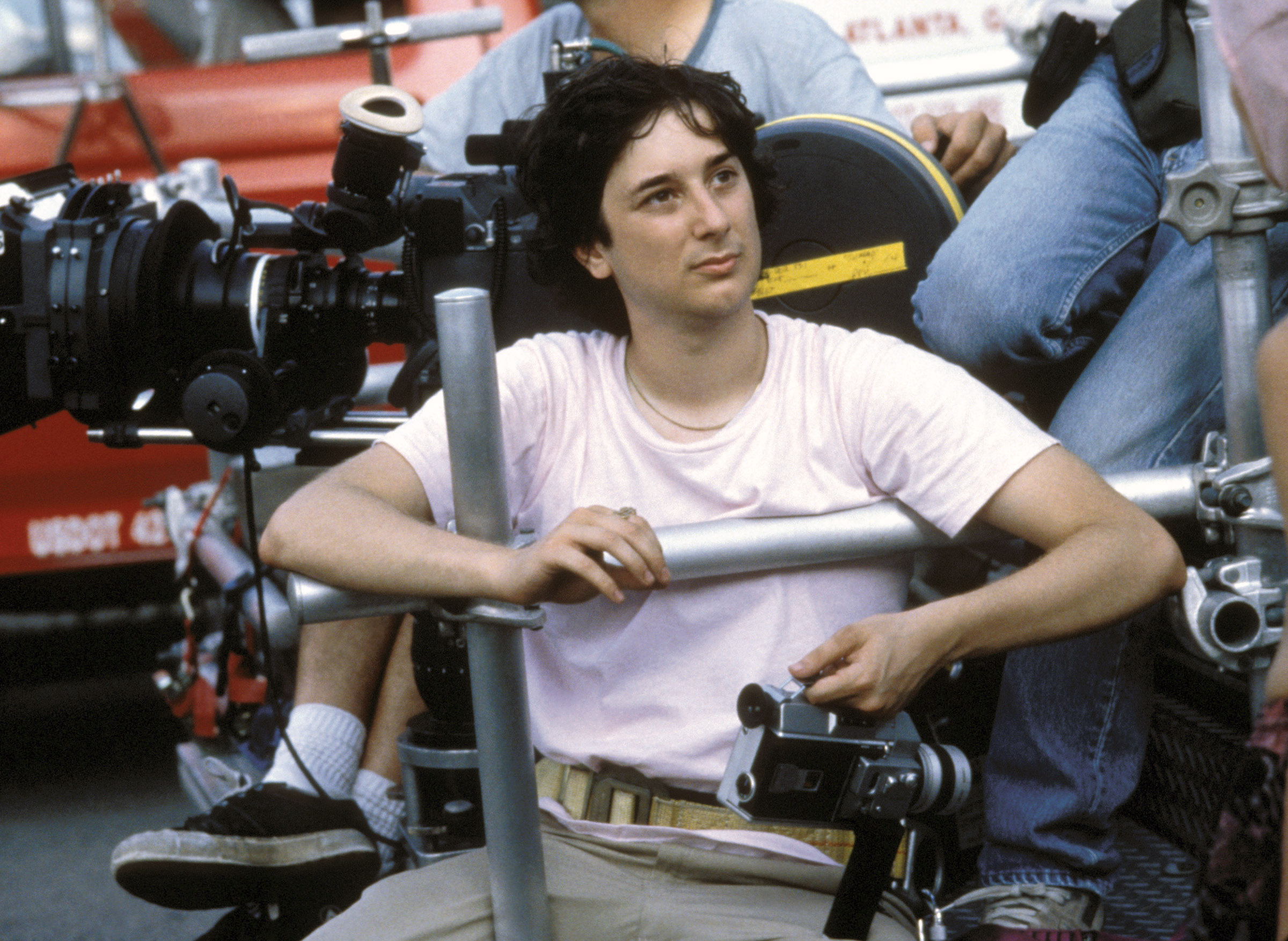
Harmony Korine, who turns 45 today, on the set of his directorial debut, Gummo, in 1996:
Actor in the Spotlight:
In honor of her award-winning performance in The Shape of Water, No Small Parts highlights the career of Sally Hawkins:
[embedded content]
Movie Location Guide of the Day:
Revisit the places of Forrest Gump with this tour through the locations as they look today:
[embedded content]
Movie Score Performance of the Day:
What’s better seeing a live performance of the Jurassic Park theme? Seeing a T.rex conduct the orchestra performing the Jurassic Park theme:
My entire life has led to this moment… T-Rex conducting the Jurassic Park theme song. ????????? pic.twitter.com/j9BtCwmPKY
— Ailyn Marie (@TheLeanMarie) January 3, 2018
Dream Video Game of the Day:
Here’s a look at an awesome Star Wars video game that unfortunately was never given a greenlight:
[embedded content]
Classic Trailer of the Day:
This weekend is the 70th anniversary of the release of The Treasure of the Sierra Nevada. Watch the original trailer for the classic movie below.
[embedded content]
and
Stocks Continue A Winning Streak; Dow Industrials Now Over 25,000

Training For The Olympics Is Hard Enough. Try Doing That While Earning A Degree

2013 Figure skating national champion and Olympic hopeful Max Aaron trains at the World Arena Ice Hall in Colorado Springs. Aaron recently graduated with a degree in finance.
Matt Nager for NPR
hide caption
toggle caption
Matt Nager for NPR
Max Aaron may have been the 2011 men’s junior figure-skating champion, 2013 U.S. national champion and 2015 Skate America champion. And sure, he’s a top contender for a spot on the U.S. team in next month’s Winter Olympic Games in PyeongChang, South Korea.
But all his grandfather wants to know is when he’s going to machan a leibedik—Yiddish for “make a living.”
Before he can do that, though, Aaron and many other elite athletes face a big hurdle: Finding time, between all that training — hours in the gym or pool or on the ice — to earn a college degree.
Aaron, who is 25, has been working on it — for years — balancing his grueling training schedule with classes in finance at the University of Colorado Colorado Springs.
A onetime hockey player who switched to figure skating after breaking his back in high school, Aaron took his competitive nature with him to the university, where he was determined to outdo his classmates.
This story was reported for radio by Elissa Nadworny and for the web by Jon Marcus of the Hechinger Report.
“I look at, they got a 99 — I’m going to get 100,” he says during a break from the rink in the World Arena Ice Hall, where aspiring and elite Olympic skaters train.
That doesn’t mean it was easy. Because of his skating career, he hadn’t ever taken the SAT or ACT, so he had to start at community college. He worked as a a waiter on the weekends to help pay the tuition. To accommodate his three hours a day at the rink, plus warmup time, strength conditioning, physical therapy and dance, he typically took his finance classes from 8 to 10:40 a.m. and 7:30 to 10:05 p.m.

Max Aaron talks with his coach, Tom Zakrajsek, during practice at the World Arena Ice Hall in Colorado Springs.
Matt Nager for NPR
hide caption
toggle caption
Matt Nager for NPR
“I laid out my entire schedule,” he says. ” ‘And these are my breaks and this is when the courses meet and where I can fit them in.’ ” Universities “don’t work around you,” he says, “you work around them.”
Meeting the needs of older students
Olympic athletes and hopefuls comprise only a tiny handful of the older students trying to get higher educations. But their struggles with finding the money and time to do it, among other problems, illustrate the problems legions of adults are facing.
American higher education long ago stopped being primarily for the 18-year-old undergraduate, tossing a Frisbee on a manicured quadrangle.
Sixty percent of undergraduates today are over 25, working full time, financially independent of their parents, or connected with the military, according to the American Council on Education. That’s nearly 16 million people.
As the number of 18-year-olds declines, colleges and, eventually, employers, are becoming more dependent on this older group to fill classrooms and jobs. And the supply of them is vast. One in five American adults has earned some college credit, but never finished a degree, the American Academy of Arts & Sciences reports.
Yet exactly at the time when more nontraditional-aged adults are needed to go to college, institutional and government policies make that harder than trying to skate uphill.
Compared with most of these older students, Olympic athletes and hopefuls have some help. In August, Colorado made them eligible for lower in-state tuition at community colleges and public universities; 56 athletes are already taking advantage of that. There are 500 athletes in residence at the U.S. Olympic Training Center, chosen by the governing bodies of their sports.
In 2014, the U.S. Olympic Committee began offering college scholarships, using money it receives from donors. And athletes can take online courses for free from the for-profit DeVry University, a USOC sponsor.
Thirty-seven student-athletes have graduated, and there are another 118 enrolled. (About 1,600 paying students at DeVry have filed claims for loan forgiveness, saying the school defrauded or misled them, according to the Century Foundation, a nonpartisan think tank, and its parent company has reached a tentative deal to sell it.)
“The athletes are a little bit at the forefront of this,” says Leslie Klein, the USOC’s director of athlete career and education. She’s a former two-time Olympian who competed in kayaking and canoeing. Veteran athletes with multiple trips to the Olympics, she says, “are just trying to chisel away at their educations [and] we’re trying to make it a little easier for them.”
In many ways, it’s still tough. The USOC last year awarded $236,000 in tuition scholarships, for instance, but the amount requested was four times that much. Only 80 athletes got them out of 120 who applied.
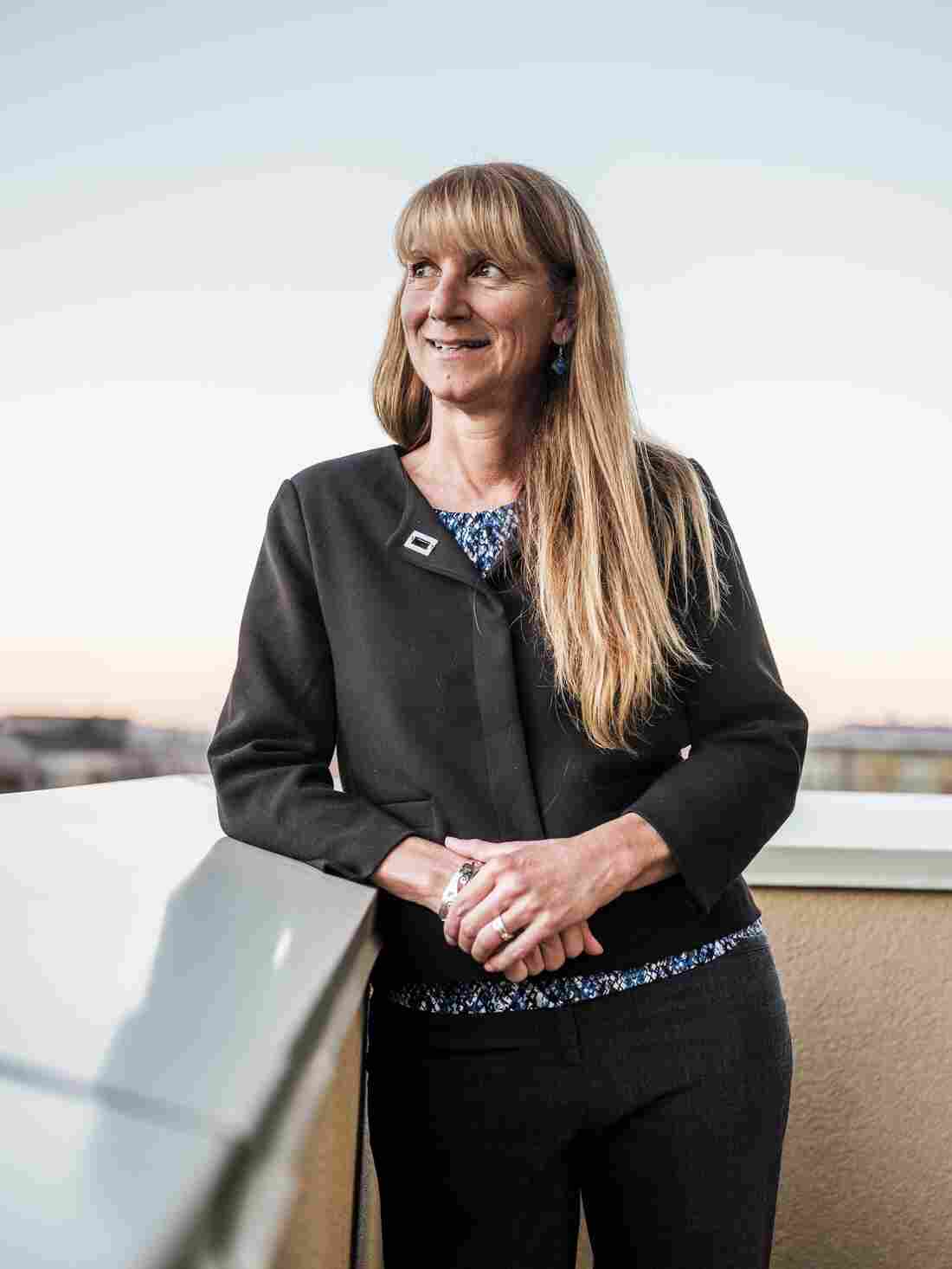
Leslie Klein, director of the athlete career and education program the U.S. Olympic Committee.
Matt Nager for NPR
hide caption
toggle caption
Matt Nager for NPR
Then there are the time constraints. Olympic hopefuls train so incessantly that their training is often the equivalent of a full-time job. On top of that, they travel often to compete. And many older athletes juggle families and jobs on top of all that.
Elana Meyers Taylor is a bobsledder with two Olympic medals: bronze in Vancouver and silver in Sochi. It took her four years to get her master’s in sports administration, and then she started studying online for an MBA.
Bobsled competitions are often held in tiny ski towns around the world, which made studying hard in places without reliable wireless service.
“You can imagine getting an online degree is pretty difficult,” she says.
She’d work on her academics during travel time and at night. “I’d get a couple of hours in and study here and there,” Meyers Taylor says. She got her MBA in finance in 2015.
“It’s not easy,” she says of combining work, study and international competition. “I’m not going to say … I wanted to sit down and read about the stock market” after every race. “It’s about setting a goal and keeping that long-term perspective.”
Jennifer Page, a 2020 Olympic hopeful in women’s wrestling, just finished an undergraduate degree in health sciences and strength and conditioning at the University of Colorado Colorado Springs, or UCCS.
“I would wake up, I’d have class at 8 a.m., I had practice at 10. I’d eat, shower, go back to school from 1 to around 3:30 and then have practice again from 4 to 6 p.m. and I’d go home and eat, shower, do homework and go to bed. And that was my day.”
Page earned some credits at Oklahoma City University, where she spent a year on a wrestling scholarship but quit to train for London with the Olympic team. It took her six years to earn her bachelor’s degree.
Page was amused to hear her younger classmates complain about how hard college was.

Team USA wrestler Jennifer Page trains in a pool at the Colorado Springs Olympic Training Center. She is recovering from an ACL surgery.
Matt Nager for NPR
hide caption
toggle caption
Matt Nager for NPR
“I think how easy it would be if all I had to do was go to school,” she says. “Life seems so simple when all you have to do is show up for school and do your homework.”
Figure skater Mirai Nagasu also hopes to return to the Olympics — she came in fourth in Vancouver in 2010, when she was just 16.
“Whenever I have a break, I’m back on my computer and studying,” says Nagasu, now 24. She’s in the equivalent of her junior year, on her way to a bachelor’s degree in international business at UCCS. “It is so beyond difficult to balance it all. During finals week I don’t get a lot of sleep and I tell myself, ‘I can’t do this anymore.'”
But she and other Olympic athletes do, because they know their competitive years will someday end.
“An athlete ends up at the pinnacle of a career sometimes as early as their late 20s and they’ve never known a life outside of sport,” says Leslie Klein, who interrupted her own education to compete before later earning undergraduate and graduate degrees. “If they haven’t gone to school, they have nothing to lean on in terms of a career outside of sport.”
That’s what keeps Max Aaron focused on fulfilling his grandfather’s wishes.
“I have met a lot of athletes who were on the top of their sport, and then sat around and did nothing. They just didn’t know what to do,” he says. “It eventually ends, and that’s what I think a lot of athletes forget. It’s 10 years after the Olympics and you won the Olympics and that’s great, but no one cares.”

Figure skater Mirai Nagasu at the World Arena Ice Hall in Colorado Springs.
Matt Nager for NPR
hide caption
toggle caption
Matt Nager for NPR
His graduation ceremony last month was held in the arena next to the rink where he trained. His grandfather couldn’t make it, but his parents did.
After he received his degree, he went back to the locker room, changed clothes, and got back on the ice to train some more.
This story was produced with The Hechinger Report, a nonprofit, independent news organization focused on inequality and innovation in education.
Today in Movie Culture: 'Dunkirk' Meets 'Darkest Hour,' New 'Star Wars: The Last Jedi' Porg Toys and More
Here are a bunch of little bites to satisfy your hunger for movie culture:
Mashup of the Day:
Given that both Darkest Hour and Dunkirk deal with the same events during World War II, it was only a matter of time before they were joined together like so (via Geek Tyrant):
[embedded content]
Re-created Scene of the Day:
You’ve seen Star Wars: The Last Jedi, now see the awesome Snoke throne scene redone with Lego by Huxley Berg Studios:
[embedded content]
Action Figure of the Day:
Speaking of The Last Jedi spoilers, here’s a new unofficial BBQ Porg action figure from Forces of Dorkness:
How does #PorgNation feel about this amazing action figure, @AshCrossan? pic.twitter.com/RXnzN18hP9
— ErikDavis (@ErikDavis) January 3, 2018
DIY Craft of the Day:
And speaking of Porgs, learn how to make your own adorable nesting dolls from the official Star Wars site with the link in this tweet:
Create your own flock of porgs with this easy DIY craft. https://t.co/XtNP2N098Kpic.twitter.com/kYs9wFTTd6
— Star Wars (@starwars) January 3, 2018
FX Breakdown of the Day:
See how they brought Rachel back for Blade Runner 2049 in this effects breakdown from IAMAG:
[embedded content]
Vintage Image of the Day:
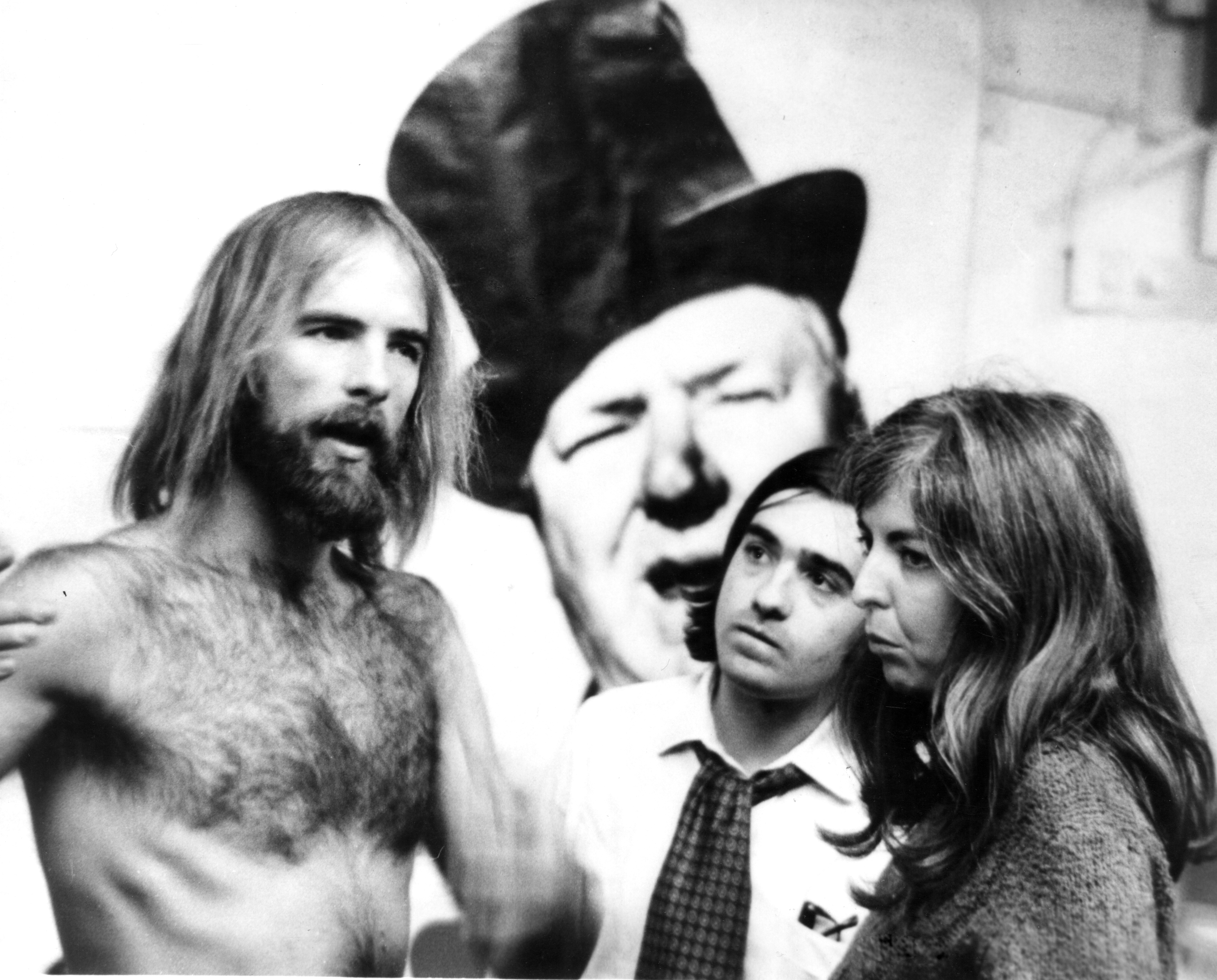
Legendary editor Thelma Schoonmaker, who turns 78 today, with Martin Scorsese and director Michael Wadleigh and the spirit of W.C. Fields during the making of the documentary Woodstock in 1970:
Actor in the Spotlight:
The latest edition of No Small Parts looks at the career of Daniel Kaluuya leading up to his breakthrough in Get Out:
[embedded content]
Cosplay of the Day:
We’ve probably seen this Transformers cosplayer before, but his Bumbebee is so great it’s worth sharing again:
This Transformers cosplay is incredibly realistic ?? pic.twitter.com/H3uNAnL2Bq
— INSIDER (@thisisinsider) January 3, 2018
Remixed Movie of the Day:
Eclectic Method repurposes some dialogue and sounds from Doctor Strange and turns them into a dance mix:
[embedded content]
Classic Movie Clips of the Day:
This week is the 25th anniversary of the Hong Kong premiere of Chen Kaige’s Farewell My Concubine. Watch 10 clips from the Oscar-nominated classic below.
[embedded content]
and
Sweeping New Music Law Expedites A $1.6 Billion Lawsuit Against Spotify

The introduction of the Music Modernization Act had the effect of prompting Wixen, a music publishing company, to file legal action against Spotify before the beginning of the new year.
Mark Wilson/Getty Images
hide caption
toggle caption
Mark Wilson/Getty Images
When it comes to reporting on Spotify and the company’s strained relationship with songwriters and publishers, it’s beginning to sound like a broken … system. But a possible fix is in.
Just two days before New Year’s Eve, the music publishing company Wixen, which manages the compositions of a wide cross section of artists from Neil Young to Rage Against The Machine, filed a lawsuit against Spotify over its failure to properly license those works before making them available to stream.
The new lawsuit is not the first (or the second or the third) brought against the world’s most popular streaming service over compositions, which are legally discrete from recordings and require a separate license (a “mechanical”). In fact, Wixen’s action is directly related to a $43 million settlement that Spotify struck six months ago over a largely identical suit against it that it hoped would sunset further court battles.
“Unfortunately, the Ferrick settlement,” reads Wixen’s complaint, referring to that agreement last year, “is still grossly insufficient to compensate songwriters and publishers for Spotify’s actions, as well as procedurally unjust.” It seeks a “total statutory award of at least $1.6 billion.” That language closely mirrors that of another legal action, brought against Spotify one month after the Ferrick settlement was announced.
The timing of the suit is inauspicious for Spotify — Wednesday it reportedly filed papers with the SEC for an initial listing on the stock exchange some time in the first half of this year.
While the reason for the suit isn’t new, the reason for its as-late-in-the-year-as-you-can-get filing is. If that settlement didn’t quite protect Spotify against lawsuits like Wixen’s (songwriters and publishers can opt out of the Ferrick deal) then a new piece of legislation will — and it’s the reason the company is going after Spotify now.
On Dec. 21, 2017, Republican Rep. Doug Collins of Georgia introduced that new piece of bipartisan legislation, which makes sweeping changes to the labyrinthine licensing system for compositions that has left many songwriters in the lurch and tech companies on the hook. It would also prevent lawsuits like Wixen’s from being filed.
“It’s the Music Modernization Act, and the Jan. 1 deadline it imposes forced our clients’ hands,” Daniel Schacht of Donahue Fitzgerald LLP, the firm handling Wixen’s case, tells NPR of the Dec. 29 filing.
“We’ve been working on this now for a little over 4 1/2 years,” Collins said in an interview with NPR conducted on Dec. 20. “We’re trying to provide a way so that [digital services] can provide the music they want to, have a safe haven where they can match the royalties, where the songwriters can also benefit — that they can get fairly compensated. It’s really is a product of a lot of hard work to reach a consensus. I have to admit, there were times during the journey that I would have — that I’d just throw up my hands and not find the answer.”
The Music Modernization Act establishes, among many other things, what tech companies, songwriters and publishers have needed but failed to create for some time: a central database that identifies which songwriter and/or publisher controls which composition. (A bill introduced late last summer by Rep. Jim Sensenbrenner, R-Wis., also attempted to address the database issue but was not taken seriously by the stakeholders involved.)
That database, while long needed, has never been created — or really even come close — mostly owing to its cost and disagreements about control of the proprietary information that would have to be held within it.
“It allows the digital service providers to have a central place to go for not only paying royalties,” Collins says, “but protects songwriters from them using things they shouldn’t be. But also, to give songwriters a place where they can be confident that they’re going to be compensated as well.”
To accomplish this, tech companies would foot the bill for its creation in exchange for a blanket license that would cover the compositions within it, helping them pay the songwriters who control those works.
Digital services “will basically be indemnified, where they will not be able to be sued, which is something that songwriters and publishers had to give them — with all these things, it’s all quid pro quo,” Michael Eames, president of the Association of Independent Music Publishers, tells NPR. Eames says that organizations like his, which represents smaller music publishers, could benefit from the bill. “We’re having to monitor and police our data in multiple databases through multiple vendors in order to get paid. It’s difficult, to say the least.”
The bill was drafted after consultation with industry groups that represent the major stakeholders involved, including the National Music Publishers Association, the Digital Media Association (which represents services like Spotify), ASCAP and BMI (the two leading performance-rights organizations) and the Nashville Songwriters Association International, among others. All support its passage.
However, Songwriters Guild of America President Rick Carnes issued a letter the day of the bill’s introduction detailing his organization’s doubts around the new law. Among his concerns:
… serious fairness, transparency and practical issues related to the proposed processes of setting up the licensing collective, the distributing of unidentified monies on a market share basis and the need to better protect music creator economic rights in that context, the vague nature of any opt-out mechanisms, the granting of relief from statutory damages liability to prior willful infringers, the scope of the musical composition database (including songwriter/composer information), the provisions concerning shortfall and other funding aspects of the collective, the absence of direct distribution of royalties by the collective to songwriters and composers, the vague nature of the audit activities to be optionally conducted by the collective, and the complications in that and other regards raised by obvious conflicts of interest issues.
Spotify declined to comment on both the Music Modernization Act and Wixen’s lawsuit. But considering its forthcoming public listing, it will have to assuage investors’ worries over a seemingly endless parade of litigation. Apple was sued on Dec. 28 over the same issue.
Terrell's World Marathon Challenge Raises Money For Mental Health
David Greene talks to Jonathan Terrell, founder of the consulting firm KCIC, about running seven marathons on seven continents in seven days to raise money for pediatric mental health.
AILSA CHANG, HOST:
Here’s a question for you – would you run a marathon? Maybe. But what about seven marathons? What about seven marathons in seven days on seven different continents? Well, that’s exactly what Jonathan Terrell is planning to do this month. It’s called The World Marathon Challenge. And he’s running to raise money for pediatric mental health. Terrell lives in Washington, D.C. And when he stopped by our studio, our co-host David Greene asked him, why are you doing this to yourself?
JONATHAN TERRELL: I think I might be a little crazy. And that’s why I took it on because it is so crazy. And if I was running a 5K, I don’t think anyone would care.
DAVID GREENE, HOST:
Have you been a marathon runner for a long time?
TERRELL: Well, not really. I’m 55 now. And I ran my first marathon when I was 49.
GREENE: Wow. OK.
TERRELL: And I’ve – did the JFK 50-mile Ultra Marathon, and that was my 25th marathon. So I’ve been packing them in.
GREENE: And so what is the training regimen beyond what you’re describing? I mean, are you on a special diet? Do you have to kind of get your head in the right place to get ready for something like this?
TERRELL: There’s the actual physical training. And I train about 20 to 25 hours a week. I do triathlon training – so a lot of running but also swimming and biking and strength training. Secondly, I’m very particular about my diet. And then, as you say, the mental game is really huge. And, you know, exercises in belief and gratitude and meditation are all part of how I get myself ready for this.
GREENE: So what is your exercise? Belief – is that what you said?
TERRELL: So, you know, I start off with gratitude. Grateful to be in this physical shape. Grateful for the people in my life who are supporting me. But I also have to visualize and believe that I can achieve this. And once you start thinking that defeatist way, pretty soon you’re dropping out. But I do consciously exercise a sense of belief that I will get to the finish line in each of these seven marathons.
GREENE: I keep going back to you saying you’re 55 years old. I mean…
TERRELL: But I’m spry.
GREENE: A spry 55. I mean, is there something different in your experience, do you think, compared to someone who has been running marathons since they were, you know, like, 14?
TERRELL: Well, I come from a place of having health problems in my mid-40s. And I had kids late in life. And I think when you start having children in your 40s, it makes you attitudinally stay a little bit younger, perhaps, because I want to be physical and present and involved in my children’s lives.
GREENE: I just want to get kind of a picture of what your week is going to be like. Where’s the first marathon?
TERRELL: Well, we’re going to be meeting up in Cape Town.
GREENE: OK. South Africa, right?
TERRELL: South Africa, yes. And then we’ll fly down to Nuvo, Antarctica. And then two hours later, we’ll run the first marathon. After that, we’ll all get back to Cape Town and run the second. And then on to Perth, Australia – from there to Dubai, from there to Lisbon, Portugal, from there to Barranquilla, Colombia and finishing, finally, in Miami in Florida.
GREENE: And you’re traveling with a group. Are you’re also running with other people, or is this a very solitary thing for you?
TERRELL: No. It’s an organized event. The first two years, there were 12 runners. There was about 30 last year. And this year, it’s much bigger. It will be 60. And there’s a very great camaraderie between runners when you’re on these kinds of events and a lot of high-fives and encouragement and all that. So I think there will be, you know, a good energy and a good group dynamic.
GREENE: Well, congratulations for improving your health. It sounds like this is just such an important cause that you’re working for. And best of luck to you in these seven marathons.
TERRELL: Thank you.
CHANG: That was runner Jonathon Terrell. He plans to run seven marathons in seven days on seven continents in January.
Copyright © 2018 NPR. All rights reserved. Visit our website terms of use and permissions pages at www.npr.org for further information.
NPR transcripts are created on a rush deadline by Verb8tm, Inc., an NPR contractor, and produced using a proprietary transcription process developed with NPR. This text may not be in its final form and may be updated or revised in the future. Accuracy and availability may vary. The authoritative record of NPR’s programming is the audio record.
