Articles by admin

No Image

Russian Doping Whistleblower Says He Fears For His Life

NPR’s Robert Siegel speaks with Michael Isikoff, chief investigative correspondent for Yahoo News about Grigory Rodchenkov, the whistleblower in the Russian doping scandal. Rodchenkov fled to the U.S. and says he now fears for his life.

ROBERT SIEGEL, HOST:

Two years ago, Grigory Rodchenkov fled Russia for the United States. He didn’t come empty-handed. Rodchenkov gave details of a massive state-run doping campaign that helped Russian athletes win big in the 2014 Sochi Olympics. His cooperation was instrumental in the International Olympic Committee’s decision to ban Russia from the 2018 Winter Olympics in South Korea. Well now, Rodchenkov fears Russia wants him dead, as reported by our guest Michael Isikoff, who is chief investigative correspondent for Yahoo News. Welcome to the program once again.

MICHAEL ISIKOFF: Good to be here.

SIEGEL: And first, where is Grigory Rodchenkov, and what have you learned about him?

ISIKOFF: Well, we know that Grigory Rodchenkov somewhere in the United States, but he’s under the Federal Witness Protection Program. And in fact, because there are genuine concerns about threats to his life, his own lawyer has not even been able to communicate with him over the past week or so. That lawyer, Jim Walden, told me that he was recently informed by a U.S. government official that he should assume that there are Russian agents in the United States looking for Mr. Rodchenkov and that significant enhancements needed to be made in his security protections.

SIEGEL: Is it fair to say that Rodchenkov knew a lot about the Russian doping program because he in fact was doing it?

ISIKOFF: Well, he was the mastermind of the Russian doping program. He supervised it, but he did so under the direction of the Russian Olympic Committee and with the assistance of the FSB, the Russian secret police.

SIEGEL: The idea that there might be Russian agents looking for the now underground Grigory Rodchenkov, it raises the question of he’s not challenging Vladimir Putin as president of Russia, he didn’t send us nuclear secrets or tell us where Russian submarines are – how big a deal is disclosing the Russian athletic doping program?

ISIKOFF: This is a huge deal for Russia and for Vladimir Putin personally. The Sochi Olympics were a showcase for him. He took great pride in the fact that Russian athletes dominated those Olympics, winning more than 30 medals. And to have that prestige robbed from Russia, it was a huge embarrassment for Putin.

SIEGEL: When you’ve asked the Russian government about this, about the notion that Rodchenkov might be targeted by agents in the U.S., what are they saying?

ISIKOFF: Well, they have not responded to the specific information that Jim Walden, Rodchenkov’s lawyer, provided to me, but they have made clear that they view Rodchenkov as a criminal. They’ve filed criminal charges against him. They have demanded he be returned to Russia by the United States. And the former head of the Russian Olympic Committee has said that Rodchenkov should be executed the way Stalin would have done.

SIEGEL: So the Russians say they want to prosecute Rodchenkov, but if Rodchenkov enjoys witness protection here in the U.S., the implication is he is of some use to American prosecutors.

ISIKOFF: Exactly. One of the interesting things his lawyer, Mr. Walden, told me is that federal prosecutors are conducting investigations that could lead to criminal charges against Russian Olympic officials. These could be racketeering charges. And the idea would be that Americans who participated in the Olympics, the American Olympic Committee, American companies such as NBC, which broadcast the Olympics, would have been defrauded by this doping scheme.

SIEGEL: Michael Isikoff, chief investigative correspondent for Yahoo News, thanks.

ISIKOFF: Thank you.

Copyright Β© 2017 NPR. All rights reserved. Visit our website terms of use and permissions pages at www.npr.org for further information.

NPR transcripts are created on a rush deadline by Verb8tm, Inc., an NPR contractor, and produced using a proprietary transcription process developed with NPR. This text may not be in its final form and may be updated or revised in the future. Accuracy and availability may vary. The authoritative record of NPR’s programming is the audio record.

Let’s block ads! (Why?)


No Image

Why Some Teen Moms Can't Get The Pain Relief They Choose In Childbirth

Throughout the U.S., minors are generally required to have permission from a parent or legal guardian before they can receive most medical treatment. However, each state has established a number of exceptions.

PhotoAttractive/Getty Images

hide caption

toggle caption

PhotoAttractive/Getty Images

Editor’s Note: This story was produced in partnership with WOSU and Side Effects Public Media, a reporting collaborative focused on public health. A web-only version originally ran in Shots in September; listen to the audio above to hear from an Ohio woman, Shani Rucke, who couldn’t get the epidural pain relief she wanted during childbirth because she was 15 years old at the time, and her mom said no.

In 2011, before she became a nurse practitioner, Maureen Sweeney was working as a registered nurse in labor and delivery at a Cleveland-area hospital. She helped hundreds of women deliver their children, many of whom were minors in their early teens.

That’s because, in Ohio, the rate of teenage pregnancy is slightly higher than the national average. This year, about 23 in 1,000 teenage girls will become pregnant.

One patient in particular from those nursing school days sticks out in Sweeney’s mind.

“It was a 15-year-old woman who was coming in, in labor, to the emergency room,” Sweeney remembers.

The teen was scared. She didn’t talk much and didn’t trust any of the doctors. She told Sweeney she had no family and that she was a runaway.

“She was by herself and she was living on the streets or between friends’ houses,” Sweeney says.

In that moment, Sweeney became the young woman’s only support system to help her through the delivery of her baby.

“So as it progressed and it got more and more painful, she did request an epidural,” Sweeney says.

An epidural is a common type of regional anesthesia that eases the pain of labor. As she had done many times before, Sweeney followed hospital protocol and called the anesthesia department. But to her shock, they told her they could not help her young patient.

“They said that without parental consent, … she would not be able to sign for her own epidural,” Sweeney says.

In Ohio, people under 18 who are in labor cannot consent to their own health care. They can receive emergency services, but nothing considered to be elective. For the many Ohio minors who become pregnant, it’s a painful gap in coverage.

It’s also complicated by the fact that in Ohio, there is no legal process for emancipation: A minor’s parents must be deceased, or the minor must be married or enlisted in the armed forces to be granted independent legal status.

Ohio lawmakers are considering legislation that would allow minors to determine their own care during pregnancy. Colorado and North Dakota passed similar laws in recent years.

Abigail English, director of the Center for Adolescent Health and the Law, studies consent laws that govern minors. She says most states do allow pregnant teens to consent to their own care. One by one, it seems holdout states are moving in that direction, too, she says β€” once someone advocates for the change.

Delivery room doctors and nurses are often the ones pushing for that change.

When the hospital wouldn’t authorize an epidural for the 15-year-old Sweeney was caring for in 2011, Sweeney called the office of Cuyahoga County Children and Family Services; oftentimes an agent from children’s services can sign for medical consent in these cases. But it was 3 a.m. The young woman was in active labor and an agent couldn’t make it to the hospital until 9 a.m.

Sweeney remembers how hard to was to tell her patient the news.

“I had to go in, sit down with her and talk about the fact that she wasn’t going to be able to get an epidural, and she was going to have to do this naturally,” Sweeney says.

That’s when the young woman broke down, Sweeney says, and folded in on herself in tears.

Throughout the U.S., minors are generally required to have permission from their parents or legal guardian before they can receive most medical treatment that’s not considered emergency care. However, each state has established a number of exceptions.

According to the Guttmacher Institute, 26 states allow minors 12 and older to get prescription methods of contraception without a parent’s or guardian’s consent, and just two allow minors to consent, on their own, to an abortion. Ohio is one of more than a dozen states with no explicit policy allowing a minor to consent to prenatal and pregnancy-related care.

Diana Thu-Thao Rhodes directs public policy for Advocates for Youth, an advocacy organization that focuses on, among other things, the rights of minors to get access to health care. She says in the last few years, minor-consent laws in some places around the country have become increasingly restrictive.

“We can legislate minors’ decision-making much easier because of the fact that they are minors,” says Thu-Thao Rhodes.

Dr. Michael Cackovic, an obstetrician at The Ohio State University Wexner Medical Center, says every couple of months he sees a teenage mom who, under Ohio law, is unable to receive elective treatment, like an epidural. He says it’s frustrating to see patients in unnecessary pain.

“First of all, from a labor and delivery standpoint, you don’t like to see anybody uncomfortable,” Cackovic says.

Both Cackovic and Sweeney report that, just as frequently, they’ve had cases where the mothers intentionally denied their teenage daughters an epidural – as a sort of punishment for getting pregnant.

All Cackovic can do is try to talk them out of it.

“To take the mom aside,” he says, “and say, ‘You know, this isn’t some life lesson here. This is basically pain β€” and there’s no reason for somebody to go through that.’ “

This gap in Ohio law bars a young mother from choosing a C-section. And she can’t consent for a procedure to test for chromosomal abnormalities in the fetus.

Cackovic says he thinks that’s pretty backward: After she gives birth, the teenage mother can consent to the care of her baby, but she can’t consent to the prenatal procedure that would help pinpoint a diagnosis.

There is no way to know for sure how many teens across the country are denied these elective procedures. Thu-Thao Rhodes says in states like Ohio these young patients have been overlooked by lawmakers because they’re not in a position to advocate for themselves.

“The priority for a lot of these young people is to just get the basic health care and services they need,” Thu-Thao Rhodes says, “not spending unnecessary, and often unavailable, time and resources navigating complicated healthcare and legal systems.”

Let’s block ads! (Why?)


No Image

Today in Movie Culture: Dream Casting a Moon Knight Movie, 'Blade Runner 2049' VFX Breakdown and More

Here are a bunch of little bites to satisfy your hunger for movie culture:

Dream Casting of the Day:

Marvel is supposedly considering a Moon Knight movie, so BossLogic shows us what Jake Gyllenhaal could look like in the role:

Worked on a #jakegyllenhaal#moonknight with @ComicBook I hear rumours of movie but I’d much rather a series for this dude πŸ™‚ pic.twitter.com/x2ln9vza8j

β€” BossLogic (@Bosslogic) December 23, 2017

VFX Reel of the Day:

With Blade Runner 2049 now available for home viewing, here’s Rodeo FX with a breakdown of their visual effects for the movie:

[embedded content]

Parody Poster of the Day:

It all makes sense when you realize Star Wars: The Last Jedi is just a sci-fi remake of When Harry Met Sally:

I guess I make #Reylo fanart now pic.twitter.com/qeFXjgsGSd

β€” Alex Zalben (@azalben) December 21, 2017

Supercut of the Day:

Little White Lies recaps the year in movies with a specific look at people eating on the big screen in 2017:

[embedded content]

Vintage Image of the Day:

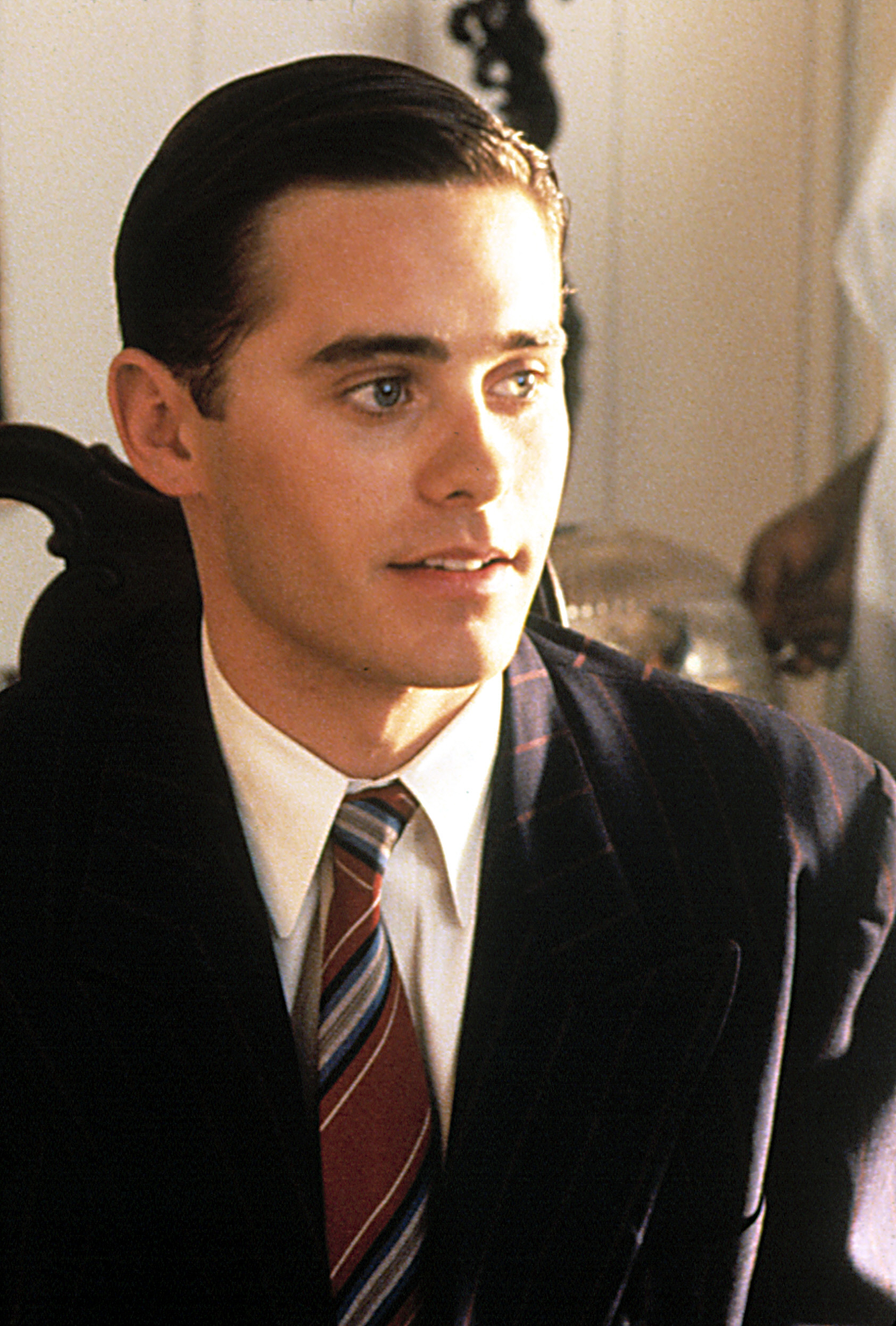
Jared Leto, who turns 46 today, looking so young in his film debut, How to Make an American Quilt, in 1995:

Actor in the Spotlight:

The latest edition of No Small Parts showcases the movie and TV career of Peaky Blinders star Cillian Murphy:

[embedded content]

Movie Science of the Day:

Kyle Hill scientifically explains why the Joker’s pencil trick in The Dark Knight wouldn’t actually be so deadly:

[embedded content]

Cosplay of the Day:

One of the best things about this year being so full of Wonder Woman cosplay is how varied the costumes are in style. Another example:

When you walk into Comic-Con dressed as Wonder Woman …to the beat of Carnival drums…@Artyfakes@VampyBitmepic.twitter.com/mBqIXkBZzY

β€” DESPOP (Des Taylor) (@DESPOPART) December 22, 2017

Filmmaker in Focus:

With Paul Thomas Anderson’s latest now in theaters, here’s a look at his reflective silence in a video by Jacob T. Swinney:

[embedded content]

Classic Trailer of the Day:

Speaking of Anderson, today is the 10th anniversary of the release of There Will Be Blood. Watch the original trailer for the classic drama below.

[embedded content]

and

Let’s block ads! (Why?)


No Image

Library Of Congress Will No Longer Archive Every Tweet

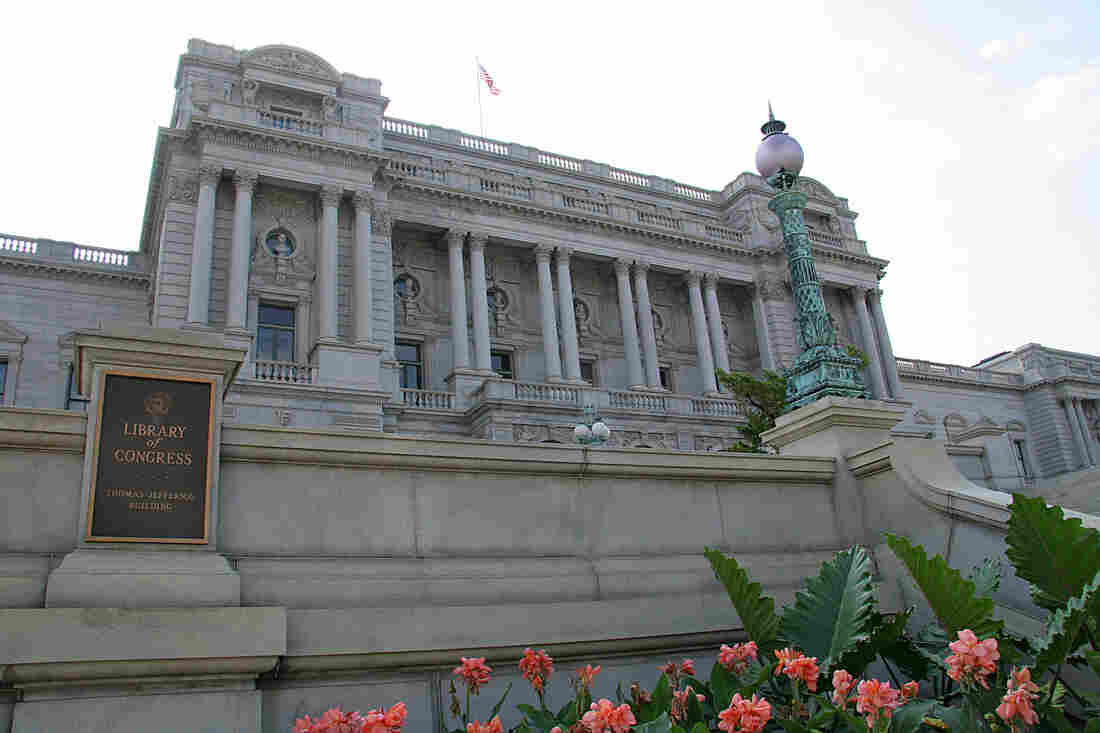
The Library of Congress said on Tuesday that it will no longer archive every public tweet. Instead it will collect them “on a very selective basis.”

Karen Bleier/AFP/Getty Images

hide caption

toggle caption

Karen Bleier/AFP/Getty Images

Since 2010, Library of Congress has been archiving every single public tweet: Yours, ours, the president’s.

But today, the institution announced it will no longer archive every one of our status updates, opinion threads, and “big if true“s. As of Jan. 1, the library will only acquire tweets “on a very selective basis.”

The library says it began archiving tweets “for the same reason it collects other materials – to acquire and preserve a record of knowledge and creativity for Congress and the American people.” The archive stretches back to Twitter’s beginning, in 2006.

But as anyone who’s been following along can attest, Twitter and the way it’s used has changed since then. First and foremost from a collection perspective: the sheer number of tweets.

“The volume of tweets and related transactions has evolved and increased dramatically since the initial agreement was signed,” the library explains in a white paper accompanying the announcement.

The library doesn’t say how many tweets it has in its collection now, but in 2013, it said it had already amassed 170 billion tweets, at a rate of half a billion tweets a day.

Tweets can now be longer, too: This fall, Twitter rolled out 280-character tweets to most users across the platform.

Another issue: Twitter only gives the library the text of tweets – not images, videos, or linked content. “Tweets now are often more visual than textual, limiting the value of text-only collecting,” the library says.

The library also has to figure out how to effectively manage deleted tweets, which aren’t part of the archive.

The institution says it will continue to preserve its collection of tweets from the platform’s first 12 years, but indicates that it has yet to figure out exactly how to make the archive public.

Researchers and archivists were delighted when the archive was first announced.

“This is an entirely new addition to the historical record, the second-by-second history of ordinary people,” Fred R. Shapiro, associate librarian and lecturer at the Yale Law School, toldThe New York Times in 2010.

But from the start, the project struck some of us as a little perplexing: You guys know what Twitter’s like, right? You really want ALL the tweets?

With this change, the library is acknowledging that, no, it doesn’t want all the tweets.

“Given the unknown direction of social media when the gift was first planned, the Library made an exception for public tweets,” it explains in the white paper. “With social media now established, the Library is bringing its collecting practice more in line with its collection policies,” which are generally not comprehensive.

So what tweets will be archived going forward? It’s a little unclear, but the library says it will collect tweets that are “thematic and event-based, including events such as elections, or themes of ongoing national interest, e.g. public policy.” Which sounds more like Twitter’s Moments feature.

Going forward, the library says it will focus on preserving the enormous collection of tweets that it has already amassed: a sort of oral history of the social media era.

“The Twitter Archive may prove to be one of this generation’s most significant legacies to future generations,” the library says. “Future generations will learn much about this rich period in our history, the information flows, and social and political forces that help define the current generation.”

Let’s block ads! (Why?)


No Image

Songs We Love: Tshegue, 'Muanapoto'

Tshegue’s debut EP Survivor is out now.

Courtesy of the artist

hide caption

toggle caption

Courtesy of the artist

Handling aux cord duties in a car full of girlfriends headed to a party is no small task. Expectations for playing just the right song to soundtrack the shared levels of excitement, confidence and sass are high. It only takes a few faulty shuffles or hesitant moments of silence to get your privileges revoked. It was in such a moment last summer that my friend, Keylah, triumphantly put me on to Parisian afropunk group Tshegue.

Something of a perfect storm of culture and innovation, Tshegue mix African drum patterns with pop and punk influences. Faty Sy Savanet, a braid-swinging vocal shape-shifter born in the Democratic Republic of Congo, sings over beats made by Nicolas Dacunha (a.k.a. Dakou). The band’s debut EP, Survivor, released this past June, houses only four tracks, but every note is of dynamic, pulsing jubilation.

[embedded content]

The final song, “Muanapoto,” starts off with a simple, fast drumbeat but builds up over the course of four minutes into a controlled explosion of sound. Like a car chase in an action movie, “Muanapoto” is exhilarating as it is unexpected β€” you’re not sure where the beat will take you next, but you already know you want to be along for the ride.

Get familiar with Tshegue now and expect to hear more in 2018.

Let’s block ads! (Why?)


No Image

For Children, A Good Booger Joke Helps The Medicine Go Down

Where are we? In the sinuses, with some dancing green mucus.

Rodale Kids

hide caption

toggle caption

Rodale Kids

Dr. Howard Bennett creates elaborate Lego sculptures, juggles squishy balls during office visits and transforms exam gloves into water balloons, but it’s his booger and fart jokes that crack up even his grumpiest pediatric patients.

“Kids of any age are curious about their bodies,” the pediatrician writes in his latest book, The Fantastic Body: What Makes You Tick & How You Get Sick, “especially if what they’re learning about is gross! That’s why kids laugh hysterically if someone tells a booger joke or lets out a big, juicy fart in class.”

Bennett, who practices in Washington, D.C., has been writing about children’s health for years, in books and in a column for The Washington Post. The Fantastic Body includes fun facts about lice, pimples, warts and other nasty stuff, but he also explains to children how muscles work, how you digest food, what’s going on inside your brain and heart, how to treat common ailments and how to avoid getting sick in the first place. This interview has been edited for length and clarity.

How did you discover that telling gross jokes could help children feel more comfortable?

Adults are typically scared about what’s wrong with them. Children are scared about what you’re gonna do to them, but in both cases, patients need to know that you’re interested in why they’re there, interested in them as people, that you care about them. There’s lots of different ways to do that. You don’t have to talk about pee and poop. You can talk about the weather, politics, and you can be kind and very serious and still get it across.

It just so happens that part of me never grew up, so pee and poop and that kind of stuff, my patients’ parents see that their kids like this, and so they let me go with it because they realize it makes the kids feel more comfortable.

In the adult world, research has shown that if you come into my office, and I spend just a minute talking to you about something unrelated to why you’re there, you’ll be more satisfied with the visit, and you’ll be more likely to do what I’m suggesting you do, so it improves patient compliance. It’s not just touchy-feely stuff. It actually has an impact on health care.

Do your strategies work even with very sick kids?

One time when I was in the ER, this child was very scared, and somebody called me over to see if I could do something ’cause I guess I had a little bit of a reputation for being childlike, if not childish. He was in his bed wearing Ernie pajamas and Ernie slippers, and I pulled out my Ernie puppet. I swear I could have put a tube in the child’s throat, and he would have said ‘Thank you.’ He was mesmerized. By taking out Ernie, I showed him that I liked kids, and I liked toys, and if I liked toys, maybe I’m not a jerk.

Do your jokes ever backfire?

At one visit, I was ranting about potty humor, and the mom said, “Dr. Bennett, we don’t use potty humor in our house.” For the next 20 years, I never used potty jokes with them. Another mom wrote me a letter explaining that my humor is inappropriate and offered to take me out to lunch to teach me how to interact with children. I declined.

The Fantastic Body shows kids how their bodies work, including what’s going on in the nose and mouth.

Rodale Kids

hide caption

toggle caption

Rodale Kids

I went into the room once with this girl who got hit on the head with a lacrosse ball, and the first thing she said is, “My head really hurts; I don’t want any jokes,” so I didn’t do any. You get a feel for it, but still, anybody can mess up. If people know that your intentions are good, I think it’s OK.

When did you start writing books, and how did you decide to write The Fantastic Body?

The first book I did was The Best of Medical Humor in 1991. Then I did Waking Up Dry: A Guide to Help Children Overcome Bedwetting in 2005, and I saw there was a perfect way to put together my writing for kids and my working with kids. You know that standard line about write what you know? It finally sort of came together. The Fantastic Body grew out of my KidsPost columns. There are a lot of gross books out there, but this was the first time anybody put the body, physiology, medical facts and gross stuff all together.

What’s your favorite gross fact in the new book?

One of my favorites is a sidebar in the skeleton chapter. When lobsters molt, and they’re just these things crawling around with no shell, people in the lobster industry refer to them as turds, so this is perfect. I’ve got a medical fact, and I’ve got a gross fact all wrapped into one.

Lauren Kafka is a freelance writer, editor and English tutor and founder of Kafka Consulting in Bethesda, Md. Her twins have been Dr. Bennett’s patients for 19 years. She’s on Twitter: @LaurenKafka

A side view of the eye shows how he iris works β€” and a sad little tear.

Rodale Kids

hide caption

toggle caption

Rodale Kids

Let’s block ads! (Why?)


No Image

Remembering That Must-Have Toy From Past Christmases

Every year, there are certain toys that whip the whole country into a frenzy. Morning Edition look back at some of the most coveted toys on Christmas wish lists in years’ past.

DAVID GREENE, HOST:

It is Christmas, and few things make kids scream and shout like Santa Claus and the promise of gifts. But children are not the only ones who get worked up. We all know that. Every year there are certain toys that whip the entire country into a frenzy.

NOEL KING, HOST:

And so this Christmas Day we thought we’d look back at some of the most memorable gift crazes of years past.

(SOUNDBITE OF ARCHIVED RECORDING)

UNIDENTIFIED ACTOR #1: (As Elmo, laughter) I’m getting tickled.

GREENE: Oh, no.

KING: You know that laugh. That’s Tickle Me Elmo, the giggling, red fuzzball that took the country by storm in ’96. Elmo impressively managed to frustrate both parents who couldn’t get one for their kid and also parents who did and then had to hear that laugh for hours on end.

GREENE: Well, if you remember that laugh, here is another iconic talker.

(SOUNDBITE OF ARCHIVED RECORDING)

UNIDENTIFIED ACTOR #2: (As Furby) I’m very happy.

GREENE: Furby – remember Furby, the Christmas craze from 1998? Talked, winked, purred. Well, Furby has actually grown up in nearly 20 years since its release. Now there is even a Bluetooth version.

KING: And this next toy has never had any blue teeth, but a few people did get black eyes trying to get their hands on one.

(SOUNDBITE OF ARCHIVED RECORDING)

UNIDENTIFIED REPORTER: When the doors opened at this Wilkes-Barre, Pa., store, the pushing and shoving began. One woman was knocked to the floor and suffered a broken leg.

KING: What was that all about? Cabbage Patch Kids.

GREENE: What is wrong with us?

(LAUGHTER)

GREENE: So depending on your kid’s taste in movies, you might be waking up to this sound this morning.

(SOUNDBITE OF PORG CHIRPING)

GREENE: That is a porg. It is one of those cuddly aliens from the new “Star Wars” movie. They are among the best-selling stuffed animals on Amazon this Christmas, and they are adorable.

Copyright Β© 2017 NPR. All rights reserved. Visit our website terms of use and permissions pages at www.npr.org for further information.

NPR transcripts are created on a rush deadline by Verb8tm, Inc., an NPR contractor, and produced using a proprietary transcription process developed with NPR. This text may not be in its final form and may be updated or revised in the future. Accuracy and availability may vary. The authoritative record of NPR’s programming is the audio record.

Let’s block ads! (Why?)


No Image

Facebook, Twitter Issue Policy Changes To Manage Fake News And Hate Speech

Facebook and Twitter update their platforms in order to better manage the amount of misinformation and hate speech that show up on people’s news feeds. Kerry Flynn, a reporter at Mashable, speaks with NPR guest host Ray Suarez on what to make of these changes and whether they’ll be effective.

RAY SUAREZ, HOST:

With billions of people spending billions of hours on social media today, the ability for Facebook and Twitter to control fake news and hate speech continues to be a challenge. But this past week, these major platforms announced new ways to prevent misinformation and violent rants from landing in people’s news feeds.

Here to speak with us is Kerry Flynn, a reporter from Mashable covering the story. Kerry, welcome to the program.

KERRY FLYNN: Thanks for having me on.

SUAREZ: Well, this is hardly the first time Facebook and Twitter have tried to manage these challenges. What’s different about these new updates?

FLYNN: So with Facebook, we’re starting to see them crack down on fake news. They’ve noticed that they’re spreading what’s misinformation. With Twitter, for a long time, they, again, have let anyone join the network. That means that those people on there could be violent people, these people who actually want to incite violence and spread their message out there. And that doesn’t make other people feel welcomed. And therefore, maybe it drives those people away from the platform.

SUAREZ: Give us an idea what it will look like. Let’s say you go to your Facebook feed – what would a fake news story that comes from a shop in Russia or from a boiler room somewhere in the Balkans look like? Will it look the same? Will it have some sort of warning?

FLYNN: One way that Facebook tried to address this – and this was only about a year ago – is add these, what they called, quote, unquote, “disputed” flags. But what Facebook admitted this week is while they tried that for a year, these red flag icons weren’t actually doing that job.

One important note, they said – there were four reasons why they decided to get rid of that program. And one of them is that red actually can enforce a message – as in, I’m reading something, and I’ll remember it more ’cause there is a red label next to it. That’s clearly not what they would want for someone to hope if they’re reading something that’s fake news.

And instead, what they’re pushing for is something called related articles. So maybe when you see what has become a fake news story, below that is going to be anywhere from two to three other Facebook posts that are about that same type of topic. So in the end, hopefully you’re understanding what the right narrative of that story is.

SUAREZ: Now you noted at the very beginning that Twitter and Facebook are taking different approaches. What is Twitter trying to do in the area of hate speech?

FLYNN: Yeah, Twitter is trying to deal with that, too. But they don’t do it as much. And really, their stance there is that if there’s a fake news story out there, maybe more people will retweet it and say this is wrong. And they’re hoping that more people see that.

What they are really trying to do is make sure that those people – whether they’re saying something is right or wrong – are not having people who promote and incite violence, whether they do that on platform or off platform.

SUAREZ: So Kerry, in the final analysis, aren’t the two platforms taking two very different approaches? While Facebook is adding more context to get any individual consumer to read more, think harder, take more onboard, Twitter’s just taking content out. It’s censoring it and saying – sorry, can’t say that on our place.

FLYNN: It’s an important point for sure, yes. Facebook isn’t necessarily taking down particular users or particular pieces of content, no. Like, if there is a fake news story, it can still be shared. But with that if you do not buy their (ph) standards either on or off the platform, you can be out. And for a lot of people, that’s what’s really scary about Twitter right now is they don’t really know whether they’re out because these processes are slowly rolling out. And even Twitter said perhaps they’ll make mistakes.

SUAREZ: Kerry Flynn has been covering efforts to police content on social media platforms for Mashable, where she’s a reporter.

Thanks a lot for talking to us.

FLYNN: Thanks for having me on.

Copyright Β© 2017 NPR. All rights reserved. Visit our website terms of use and permissions pages at www.npr.org for further information.

NPR transcripts are created on a rush deadline by Verb8tm, Inc., an NPR contractor, and produced using a proprietary transcription process developed with NPR. This text may not be in its final form and may be updated or revised in the future. Accuracy and availability may vary. The authoritative record of NPR’s programming is the audio record.
Let’s block ads! (Why?)


No Image

Louisiana Lawmaker Threatens Saints' Tax Breaks After Anthem Protests

The New Orleans Saints kneel before the playing of the national anthem before the game against the Green Bay Packers at Lambeau Field on Oct. 22.

Dylan Buell/Getty Images

hide caption

toggle caption

Dylan Buell/Getty Images

A Louisiana state legislator wants to cut off tax breaks and other funding for the state’s only NFL franchise, the New Orleans Saints.

State Rep. Kenny Havard, a Republican, objects to player protests during the pregame national anthem. He plans to propose an amendment to strip any state funding that benefits the Saints, including free rental of the Mercedes-Benz Superdome, their home venue.

“We’re paying the Saints a lot of money to entertain us β€” not to get off in the weeds of, you know, political discourse,” Havard says. “They can do that, but do it on their own time.”

The controversy started last season, when San Francisco 49ers quarterback Colin Kaepernick chose to kneel instead of stand during the national anthem in response to racial injustice and police brutality. Over the course of the 2016 season, other players joined Kaepernick’s protest by kneeling, sitting or raising a fist during the song.

Kaepernick was not offered an NFL contract in 2017, but the #TakeAKnee movement he sparked has continued without him. In September, President Trump entered the debate, saying in a speech and repeating on Twitter that the NFL should fire all players who refuse to stand for the national anthem.

The president’s comments only spurred more protests throughout the league, including by members of the Saints franchise. At the game after the president’s tweets, 10 Saints players remained on the bench for the national anthem. Since then, the team has knelt as a group before the anthem and then stood for the actual song.

Havard says removing the team’s tax breaks has had bipartisan support in the past, when the conversation focused on the league’s handling of domestic violence, concussion risk for players or team owner enrichment. But since the anthem protests began, he says, the tax debate is being perceived as a racial issue.

“Look: Slavery was however long ago, and it was a horrible thing and no one should have to go through that,” says Havard. “But it’s time that we move on as a nation.”

Havard says he believes institutional barriers to equal opportunity are gone, and he rejects the notion of an unjust society. For him, the debate over standing for the national anthem is not about how police treat African-Americans, but a question of doing what is right.

“When I see a lady coming, I open the door,” he says. “When I sit at the table, I take my hat off. When the national anthem plays, I stand.”

State Rep. Ted James, a Democrat, rejects Havard’s argument.

“This is not a conversation about Saints players being political,” James says. “This is a conversation about race.”

James represents a district in the state capital, Baton Rouge. That city became a flashpoint for the discussion about racial injustice in policing after the death of Alton Sterling, a black man who was shot by officers outside a convenience store there in 2016. No federal charges were filed in the case, and the state attorney general has not filed charges either.

Then, less then two weeks after Sterling’s death, three local police officers were killed and three others wounded in an ambush.

James says that Baton Rouge did some tough racial reconciliation work after those events and that the debate over the anthem protests is reopening painful wounds. He is preparing for a legislative fight over the Saints funding issue.

“As a black man and as a black player, you are telling these athletes ‘go throw that ball, catch that ball, run that ball, tackle that quarterback, but you dare not say a word,’ ” says James. “That’s a plantation mentality.”

The anthem protests have prompted NFL boycotts on both sides of the issue. Baton Rouge publisher and activist Gary Chambers joined the local protests after Sterling’s killing. He says he has stopped watching the NFL in solidarity with Kaepernick’s movement.

“This man took a knee and flipped America upside down,” says Chambers.

Sitting in a Baton Rouge cafe, Chambers and a friend, businessman Geno McLaughlin, say the football players are giving voice to what African-Americans have been fighting for in communities all across the country, including their own.

McLaughlin says how you view the flag and what patriotism means to you depend on your experiences as an American.

“When I see the red stripes, I also see bloodstains,” he says. “For me and for many black people … we don’t feel the same way about the flag that [a white person] might.”

He says that doesn’t mean he hates the country.

“My people, we built this country,” he says. “So do I love the country? Absolutely.”

Chambers says Trump’s inflammatory public statements and tweets about firing the players send a clear message.

“Trump is basically telling all the other slave owners ‘keep your Negroes in check’ is what I hear,” says Chambers.

Tony Melera, manager of Sarita’s Mexican Grill & Cantina, stands in front of a American flag β€” a gift from state Attorney General Jeff Landry β€” draped over the New Orleans Saints 2017 game schedule.

Debbie Elliott/NPR

hide caption

toggle caption

Debbie Elliott/NPR

About 25 minutes outside Baton Rouge, the player protests have sparked a boycott from the opposite perspective.

At Sarita’s Mexican Grill & Cantina in Denham Springs, nearly 50 big-screen TVs line the walls. Manager Tony Melera says diners can watch golf, pro wrestling and the Weather Channel, but never professional football. The restaurant has banned NFL games.

“There’s a time to protest,” Melera says. “They have the right to do so. But don’t take it out on national television against the flag.”

Melera, an immigrant from El Salvador, says the protests on the field send the wrong message.

“We respect the flag. We stand. And we pledge allegiance,” he says. “They make a lot more money than we do. Why do it? They’re going at it the wrong way.”

Melera says the restaurant lost some business at first; people in Louisiana take their football seriously. But Melera says they’ve also picked up new customers who support the boycott. Louisiana Attorney General Jeff Landry even gave the restaurant an American flag that now hangs over the New Orleans Saints schedule that had been posted in the bar.

The state Legislature will take up the tax break question when it reconvenes in March, in the meantime, the issue is also now in the courts. Just last week, a Saints season ticket holder sued the team for a refund, claiming he has been damaged by players using football games as a platform for protest.

Let’s block ads! (Why?)


No Image

Barbershop Talks The Republican Tax Bill And Basketball

Guest host Ray Suarez talks to Mary Kate Cary, Kevin Blackistone and Paul Butler about end of year news.

RAY SUAREZ, HOST:

Now it’s time for the Barbershop, where we talk to a group of interesting people about what’s in the news and what’s on their minds. Sitting in the chairs for a shapeup this week, we have Mary Kate Cary. She’s a former speechwriter for the first President George Bush, now a senior fellow at the University of Virginia’s Miller Center. She joins us in our Washington studios. Thanks for being here.

MARY KATE CARY: Thanks for having me.

SUAREZ: Next, Kevin Blackistone – he’s a professor of journalism at the University of Maryland and a columnist at The Washington Post. He’s with us here in Washington. Welcome, Kevin.

KEVIN BLACKISTONE: Thank you much.

SUAREZ: And finally, Paul Butler – he’s a professor of law at Georgetown University but joins us this week from our studios in New York. Paul, welcome.

PAUL BUTLER: What’s up, Ray? Woof-woof.

SUAREZ: All right. First up this week, the Republican tax plan. And I think we can call it the Republican tax plan because it had zero support from Senate Democrats. Mary Kate Cary, that’s not common, isn’t it? Is it reworking an entire tax system without support from the other party?

CARY: You’re right, Ray, that is not common. And when it’s been done in the past, it was months and months of work for sweeping bipartisan legislation. And I think most Republicans believe that bipartisan would have been better. But I think they’re going to take what they can get here. As a fiscal conservative, I wish that it was not adding to our deficit. But I do think that simplifying the tax code was long overdue and that the current tax code – not simple, not fair and not promoting economic growth – was a sort of unacceptable status quo for most people. So I think that’s why they moved ahead without the Democratic vote.

SUAREZ: Is it really that much simpler? Aren’t you going to need an accountant this spring?

CARY: Well, supposedly, we can all do our taxes on the back of a postcard now. I’m dying to see it. The IRS is going to issue new withholding numbers in February to employers. And that’s when I think people will start seeing the difference in their paychecks. And just in the last 48 hours, we’ve seen the number of companies that have started issuing bonuses and raising the minimum wage to $15 for their workers is pretty remarkable. Wells Fargo – 400 million to local communities. So I think it’s already having effects. So we’ll see if the postcards arrive, and we can all do our taxes on one piece of paper. That’d be great.

SUAREZ: What people make of this, I guess, is a crystal-ball moment. There’s really no way to know until it’s really here. A University of Chicago survey of economists found pretty wide skepticism about the tax bill’s effects on the GDP. Of 38 economists surveyed – and, you know, they’re nobody’s liberals at the economics department of the University of Chicago – only one thought U.S. GDP would be substantially higher a decade from now than under the status quo, before the tax bill was changed. Is this a kind of legislative victory that the Republicans will need going into the 2018 midterms? Or is it a kind of short-term success that will depend, really, on how the two parties talk to their followers about what this all means? Paul Butler, What do you think?

BUTLER: This is about hood robbing – robbing the poor to give to the superrich. Who does that? Republicans do. And that’s why Paul Ryan and Mitch McConnell were grinning from ear to ear. This is a redistribution of wealth to millionaires. But that’s pretty much why the Republican Party exists. It’s not good for anybody outside the 1 percent. But watch, for most white people, that’s not going to matter. Every Republican candidate for the last 50 years has gotten the majority of the white vote. And if Trump runs for re-election in 2020, he will too, despite this plunder disguised as a tax bill that he just aided and abetted.

SUAREZ: Now, come on. A moment ago, Mary Kate was talking about actual tangible things that corporations are doing. In a couple of weeks, people will start to get paychecks that may have an extra 20 bucks, 30 bucks or if they get paid monthly, as much as 150 bucks more in them. That’s not something that’s for real?

BUTLER: Well, Mary Kate was also saying that supposedly we’re going to be able to do our tax bill or our tax – pay our taxes on the back of an envelope. That’s not going to happen. Any idea that this helps anybody but the top 1 percent is a beautiful twisted fantasy.

SUAREZ: Kevin Blackistone, what’s your thoughts?

BLACKISTONE: Well, I look at it as a bribe. Before I covered sports, I actually used to cover economics in the great state of Texas. And one thing that jumps out to me about this is that these corporations, like AT&T, are getting a lot of credit for giving bonuses to so many of their employees in the wake of the passage of this tax bill. But AT&T, like so many corporations in America for a number of years now, have been sitting on record coffers and despite that, have not increased hiring, have not increased wages and have, to a large extent, if they are manufacturing, have left their manufacturing overseas. So I see this as being a hoodwink on the American public. And much like what the Trump administration just threatened to do at the U.N. over the Jerusalem declaration, they are trying to bully this issue, in this particular case, with the American public.

SUAREZ: Kevin, I want to change topics but stay with you. A new basketball league is in the offing – the Junior Basketball Association proposed by Big Baller CEO LaVar Ball. Explain what the JBA is and how this proposal came about.

BLACKISTONE: Well, LaVar Ball was the most audacious man in sports for 2017. He has three sons who are prodigious basketball talents, the oldest of whom is in the NBA, the youngest of whom should be in high school but is being home-schooled somewhere, maybe now in Lithuania. And he is proposing to put together a league for high school graduates who do not want to be part of the college system in order to become professionals.

And so what he is proposing to do is to pay them a salary of maybe a $100,000 a year to play in this league that he’s putting together. And there are no requirements that say that you have to be a year removed from high school before you can accept this paycheck, which is the case with the NBA’s most minor league, now called the G League.

And, you know, I applaud his audacity. And I applaud the idea because what he’s really doing is putting another spotlight on this multibillion-dollar college athletic industry that is in dire need of a more equitable way of dividing the revenues that it has with the labor that – off of which it gets all that revenue.

SUAREZ: And, Paul Butler, may it be tearing the veil of virtue off of the NCAA? The JBA says it’s going to pay its players, as was mentioned, as much as a $100,000 a year. Could this be a viable alternative to college for talented high school students who might not otherwise want to deal with the more restrictive rules of the NCAA?

BUTLER: No, man, as a university professor, I sure hope not. So what’s the problem? I think the problem is college students, who in this case are mainly young black men, creating millions of dollars in wealth and not reaping the benefits of their labor. There’s a name for that. It’s called capitalism. It’s how the economy works or doesn’t work for black people.

This actually reminds me of the debate this week between Ta-Nehisi Coates and Cornel West – with West saying it’s not just about racism; it’s also about economic exploitation. So black people get hit with a double whammy. But I don’t think, Ray, the answer is for workers to simply change masters – to go from the NCAA to LaVar Ball. I think there has to be a long-term solution that’s more about getting the NCAA to share the wealth.

SUAREZ: Let me jump in there because, right now, if you buy a kid a steak dinner, he loses his eligibility and you get in trouble, too. Meanwhile, the coach for state university is making a couple of million dollars a year – sneaker deals, Coca-Cola deals, festooning the arena, which is also a multi-million-dollar project. The only kid who’s not making any money, not even getting the cost of a steak dinner – the one who creates the entertainment that makes all of that money rule.

BUTLER: I feel you, Ray. I also think, though, that a college education is incredibly important. It’s something that many of these young men should aspire to. And if going to college to ultimately play in the NBA is their incentive, I guess I’m OK with that.

SUAREZ: Mary Kate Cary, some quick thoughts?

CARY: Yeah, I’m in favor of it. College isn’t for everyone. And for those who want college, you know, people like – we were talking about Malcolm Brogdon before we came out – got his masters while playing at UVA and is now with the Milwaukee Bucks. For guys like that, it works. And for those who want to go straight to the pros, there should be an option for them, too. Minor league baseball has not killed the NCAA baseball program, so why couldn’t this work if he can get the money to do it and pull it off?

SUAREZ: We have a little time left before we part to talk about who’s been naughty and who’s been nice. And I want to go around the panel. First, who’s getting a lump of coal in their stocking, Kevin Blackistone?

BLACKISTONE: Well, I’ve got to give a lump of coal to Jerry Jones and Bob McNair and those NFL owners who dared to thwart the constitutional rights of NFL players who decided to follow Colin Kaepernick in protesting. I would give a lump of coal to the coach of the Mississippi State women’s basketball team which, after a fabulous upset of UConn in the NCAA women’s semifinal – stopping UConn’s 111-game winning streak – then decided to play yo-yo with his star point guard in the championship game. She didn’t get enough minutes. She didn’t get a chance to score and cost them.

SUAREZ: Mary Kate, quickly.

CARY: Quickly. I’m taking Harvey Weinstein off the table because what he did was so far beyond naughty that it would be disrespectful to the women.

SUAREZ: He doesn’t even get coal.

CARY: He’s just gone. Right.

SUAREZ: And Paul Butler?

BUTLER: The random airline employees who make me take my carry-on luggage and try to fit it into that little compartment, which it never fits…

SUAREZ: Oh, wow. That’s a very specific lump of coal.

CARY: Wow.

SUAREZ: That was Mary Kate Cary, a senior fellow at the University of Virginia’s Miller Center, Kevin Blackistone, University of Maryland professor of journalism, and Paul Butler, professor of law at Georgetown. Thank you, everyone. Happy holidays to you all.

CARY: Thanks for having us.

BLACKISTONE: Same to you.

BUTLER: Merry Christmas.

Copyright Β© 2017 NPR. All rights reserved. Visit our website terms of use and permissions pages at www.npr.org for further information.

NPR transcripts are created on a rush deadline by Verb8tm, Inc., an NPR contractor, and produced using a proprietary transcription process developed with NPR. This text may not be in its final form and may be updated or revised in the future. Accuracy and availability may vary. The authoritative record of NPR’s programming is the audio record.
Let’s block ads! (Why?)