Articles by admin

No Image

Bank Of America Ends Free Checking Option, A Bastion For Low-Income Customers

Bank of America's latest fee arrangements for checking accounts could hit hardest with those who can least afford it, say critics.

Mark Lennihan/AP

Bank of America is eliminating eBanking accounts this month, transferring their owners into accounts that charge a maintenance fee if they don’t maintain a minimum balance or get direct deposit. The move ends a program introduced in 2010 and completes a phaseout begun several years ago, when the bank stopped offering eBanking as an option to new customers.

The eBanking account had offered customers a checking account without any monthly fees, provided they conduct their business online or at ATMs. If the eBanking customers wanted to get their statements by mail and speak with tellers in person, the accounts would carry an $8.95 monthly fee.

Now, the bank has swapped those remaining customers into Core Checking, an account that requires customers to maintain a minimum daily balance of $1,500 or at least one direct deposit a month of $250 or more — which comes out to $3,000 annually. Customers in these accounts are charged $12 a month if they cannot meet these requirements.

“This is one of the lowest qualifiers in the industry and a great value,” Bank of America spokeswoman Betty Riess told CNBC. She added that the Core Checking option “provides full access to all our financial centers, ATMs, mobile and online banking” and told the Chicago Tribune that — in the newspaper’s words — “only a small number of customers still had eBanking accounts.”

That has done little to assuage critics’ worries the move will disproportionately hurt the bank’s low-income customers, who would be the likeliest to struggle to meet the Core Checking requirements.

“The debate over Bank of America’s accounts and fees points to a larger economic justice issue — people with less income pay more to get cash, make payments, and conduct their business,” Dory Rand, president of the Woodstock Institute, told the Tribune.

“Without access to safe and affordable bank accounts, low-income consumers often turn to costly alternative financial services, such as currency exchanges or check-cashers,” she continued. “The bottom line is: the most financially vulnerable need more and better options to transact their business and participate in the financial mainstream.”

A study released last fall by Bankrate.com found that Americans with an annual household income under $30,000 pay more than three times the monthly bank fees paid by higher-income brackets — an average of $31 a month, compared with an average of $9 for other income groups.

That is one reason why “just 59% of U.S. adults with household income under $30,000 per year even have a checking account,” according to the study.

The change has prompted a backlash online, including a snowdrift of tweeters professing their intention to close their accounts and criticizing the bank for its effects on low-income customers. A Change.org petition protesting the move has also drawn more than 86,000 signatures as of this writing.

“Bank of America was one of the only brick-and-mortar bank that offered free checking accounts to their customers. Bank of America was known to care for both their high income and low income customers,” the petition’s creator, Mel San, wrote in her description.

“Now sadly, Bank of America seems to have changed their mind and wants to no longer offer free checking accounts to the American public.”

CNBC reports that the bank’s chief financial officer, Paul Donofrio, told Wall Street analysts the bank’s actions are driven by a desire to “balance” benefits for all.

“All I can tell you is that we’re going to balance our customer needs,” he said, “and we’re going to balance the competitive marketplace with our shareholders’ interests and we’re going to do the right thing for all the parties.”

Let’s block ads! (Why?)


No Image

What's Next For 'Safe Injection' Sites In Philadelphia?

Philadelphia officials cleared the way for a safe injection site for drug users. But there are many details to work out before the idea can become reality.

Matt Rourke/AP

hide caption

toggle caption

Matt Rourke/AP

Philadelphia is a step closer to opening what could be the nation’s first supervised site for safe drug injection. But turning the idea into reality won’t be easy.

City officials gave the proposition the green light Tuesday. They were armed with feasibility studies, harrowing overdose statistics and the backing of key leaders, including the mayor and a newly elected district attorney.

“There are many people who are hesitant to go into treatment, despite their addiction, and we don’t want them to die,” said Dr. Thomas Farley, Philadelphia’s health commissioner and co-chair of the city’s opioid task force. Supervised safe injection sites, he said, save lives by preventing overdose deaths and connecting people with treatment.

While one big hurdle has now been cleared, the details of how safe injection sites would actually work in Philadelphia have yet to be figured out. Who will actually fund and operate a site? Where will it be located? Will users really be safe there?

“We have a long way to go,” said Brian Abernathy, first deputy managing director for the city.

Neither city council approval nor special zoning ordinances would required to proceed, Abernathy said, but the city doesn’t plan to actually operate or pay for any sites. Instead Philadelphia officials would play the roles of facilitator and connector with providers of addiction services.

In that way, Tuesday’s announcement by the city was more like an open call to potential investors and operators than it was the roll out of a specific plan.

“We took a really really big first step,” said Jose Benitez, executive director of Prevention Point Philadelphia, a large nonprofit needle exchange. “It’s early to talk about our involvement at this particular point. As the city officials said, there’s a lot to consider.”

Broadly, the city envisions a place where people would be allowed to bring in drugs and inject them using clean equipment. If someone overdosed, trained staff would respond to prevent death. The sites could save lives and money otherwise lost to hospitalizations and emergency response efforts. Advocates say the sites also could reduce neighborhood problems associated with addiction, like people injecting in public and discarding needles.

A safe, supervised site wouldn’t just be about a spot to inject, Farley stressed, but also somewhere people could connect with other services and treatment.

Still, the effort to open a site will likely face many additional hurdles and unknowns, from community buy-in to legal concerns.

For one, Councilwoman Maria D. Quiñones-Sánchez, who has voiced opposition to a safe injection site in her district (one at the heart of the crisis), is wary of the city’s plan.

“This notion of letting a private developer or a private person come tell us how this could be done, we’re not paying for it, we’ll do wrap-around services, so much of that is just up in the air,” Quiñones-Sánchez said. “So why make an announcement with no answers?”

Another question: Could such a site be immune from federal prosecution? Realistically no, said Philadelphia official Abernathy, though some legal scholars are exploring potential safeguards.

The city’s police commissioner, Richard Ross, has gone from “adamantly against” any injection site to having an open mind. Whether police will take a hands-off approach remains to be seen. So would what the department’s role would be, what police officers would be asked to do, and how that would affect the policing of narcotics?

“I don’t have a lot of answers,” he said.

One point of clarity: Philadelphia’s Distract Attorney, Larry Krasner, has no plans to prosecute.

“What will we do? We will allow God’s work to go on,” Krasner said, citing state laws of justification that allow the committing of minor violations in the interest of preventing greater harms. “We will make sure that idealistic medical students don’t get busted for saving lives and that other people who are trying to stop the spread of disease don’t get busted.”

After all this, it should come as no surprise that the timeline is really unclear, too. Rollout will take months, at least, leaders have said. Though if it were up to Krasner, one would had opened years ago.

“My biggest concern moving forward with harm reduction is that government takes forever,” he said. “When we have three or four people dying every day, nobody can afford to wait.”

This story is part of a reporting partnership with NPR, WHYY’s health show The PulseandKaiser Health News.

Let’s block ads! (Why?)


No Image

From Post-Bop To House: Mapping The Legacy And Influence Of Hugh Masekela

Legendary trumpeter and anti-apartheid activist Hugh Masekela, who died this week, photographed during an interview on October 27, 2016 in Johannesburg, South Africa.

Sowetan/Getty Images

hide caption

toggle caption

Sowetan/Getty Images

Few careers in contemporary music had the arc and the diversity that South Africa-born trumpeter/singer/composer Hugh Masekela did, before he succumbed to prostate cancer on Tuesday at the age of 79. His life was filled with deep musical investigations and global cultural celebrations — both of which he pursued throughout an endlessly successful and inventive 50-plus-year career.

A now-Internet-famous photo of 16 year-old Masekela, exhilarated at receiving a trumpet (supposedly sent to him by Louis Armstrong), betrays the youngster’s excitement about jazz, which was his first love and enduring bedrock. An escape from Apartheid South Africa to New York for music schooling provided a broader education, and a relationship with singer Miriam Makeba opened the door to professional pop gigs, which he also took full advantage of. The spirit of the times continued to move his sound forward. Afro jazz, Summer of Love, Black Power, Pan-Africanism, the rise of disco and club culture, digital recording — all were internalized and used to his devices. Nothing, though, was as influential to Masekela’s music as the plight of his homeland, which he engaged with as an artist, promoted as an ambassador, protested as an activist and documented as a kind of folk sage.

The 15 tracks below are an overview to this arc, touching upon all of these threads. Hopefully, they’re only a first step towards the exploration of a mighty life that saw and heard many changes – some of which Hugh Masekela instigated, and many of which he played. Fearlessly.


The Jazz Epistles, “Dollar’s Moods” (1960)

Jazz Epistle – Verse 1 is a foundational document of South African jazz’s rich tradition. Because the post-bop played by the Epistles — featuring two future giants, the-20 year-old Masekela on trumpet and Dollar Brand (soon to be Abdullah Ibrahim) on piano, as well as alto Kippie Moeketsi, trombonist Jonas Gwangwa, bassist Johnny Gertze, and drummer Makaya Ntshako — locked into its swing like the finest Americans of the time. (The group was modeled on Art Blakey’s Jazz Messengers.) Side one, song one was Hugh’s lone writing contribution. The band did not last.

[embedded content]


Miriam Makeba, “Thanayi” (1962)
Hugh Masekela, “Thanayi” (1999)

Years before she recorded it on her second American studio album, The Many Voices of…, Makeba was performing this South African wedding song about the beauty of a girl named Thanayi, with her group the Skylarks. For this spooky, echo-heavy version recorded in the folk-rock style of the era, Masekela added a few spare lines and played a solo counterpoint to his soon-to-be-wife’s vocal and the acoustic guitar. But when revisiting the song on the occasion of his 60th birthday, it had a party-style gallop and a great vocal courtesy of the incomparable Thandiswa Mazwai.

[embedded content]

[embedded content]


“Canteloupe Island” (1965)

Upon graduating from the Manhattan School of Music, Masekela set about establishing his jazz bona fides in the States. Despite its horrid title, The Americanization of Ooga Booga, a live quartet gig at a not-so-full-sounding Village Gate that was recorded/produced by Tom Wilson (of Bob Dylan and Velvet Underground fame), kicked off a partnership with pianist Larry Willis and showcased a pan-global take on soul jazz, including this Herbie Hancock classic, which Hugh tears apart.

[embedded content]


The Byrds, “So You Want to be a Rock’n’Roll Star” (1967)

Classic rock mythology claims that Byrds bassist Chris Hillman composed parts of this ironic paean to the contemporary musical godhead at a Masekela session, then invited Hugh to craft a trumpet line for it, marking the first time brass had appeared on the Byrds’ recordings. The result is one of the all-time great rock singles, with tongue planted firmly in cheek, a mindfully mischievous sneer and Hugh’s horn flying above it all. In June of that year, the band brought him on-stage to close their set at the Monterey Pop Festival, setting the stage for…

[embedded content]


“Grazing In the Grass” (1968)

A slightly funky, cocktail jazz instrumental going No. 1 on the pop charts only seems unlikely if you don’t consider that besides being the Age of Aquarius, 1968 was also the age of Tijuana Brass. (In fact, Herb Alpert’s troop had directly preceded Masekela at the top of the chart with a version Bacharach & David‘s “This Guy’s In Love With You.”) A breezy trumpet-alto duet melody, mirrored by a giddy piano, and driven by drummer Chuck Carter’s “even more” cowbell, it remains a unique smash — especially in the context of its performer’s career.

[embedded content]


Hugh Masekela & The Union Of South Africa, “Shebeen” (1971)

The spirit of the times called for more than mere grazing, and following his chart success, Masekela’s music embraced an explicit pursuit of his South African roots and pan-African ideas. “Shebeen” is a wistful slice of guitar-and-brass township soul, written by Epistles trombonist Jonas Gwangwa, who joined Masekela and alto saxophonist Caiphus Semenya in the short-lived Union. Their self-titled album kicked off a distribution deal that Hugh’s Chisa Records had signed with one of the most popular black-owned businesses on the planet, Motown.

[embedded content]


“Stimela (Coaltrain)” (1974)

The story of exploited migrants toiling in Johannesburg’s gold mines, the closing track off Masekela’s classic album, I Am Not Afraid, has not only become one of the artist’s most-beloved political standards, but a union anthem as well. It is a roiling epic of a song, guided by the (originally uncredited) piano of The CrusadersJoe Sample and a choir of voices, a few of which belong to members of Hedzoleh Soundz, the percussion-heavy Ghanaian group who served as Masekela’s band in ’73-’74, introduced to him by Fela Kuti.

[embedded content]


Ojah feat. Hugh Masekela, “Afro Beat Blues” (1975)

Another Masekela track under the spell of Fela Kuti, but one that did not see the light of day until a 2006 compilation that opened the Chisa records vault. This funky blues takes as its model the Afrobeat music Fela was then bringing to life in Lagos, and its conceit of a traveling unified sound (the lyrics name-check numerous western and southern African countries) from the Nigerian bandleader’s notions on Pan-Africanism. The swirling guitars and Masekela-led brass drive a steady groove.

[embedded content]


Miriam Makeba, “Soweto Blues” (1977/1989)

One of Masekela’s best-known and most charged anti-Apartheid anthems was written as a response to, and as direct documentation of, the 1976 Soweto Uprising, which was set off by the government instilling Afrikaans as the official school language of the black townships. Originally recorded for Masekela’s 1977 album, You Told Your Mama Not to Worry (which the streaming music algorithm seems to have lost), it was an instant concert staple for Makeba (which she re-recorded for 1989’s Welela).

[embedded content]


“Don’t Go Lose It Baby” (1984)

A revitalization and a sonic update, this synth-heavy track became an international club smash when it was adopted by progressive DJs — most notably, Larry Levan at the Paradise Garage, New York’s trend-establishing, post-disco church of the late ’70s and early ’80s. If Masekela’s rapping on the track was a misstep (it was), its ingredients — Hugh’s trumpet playing against the Fairlight and a bass-synth, creating a kind of proto-house or electro makossa — were not dissimilar to what contemporaries like Miles Davis and Manu Dibango were doing. It certainly re-established Masekela’s club bond, which continued until the end. (Note: the Hot African mix remains pure fire.)

[embedded content]


“Bring Him Back Home (Nelson Mandela)” (1987)

As the anti-Apartheid movement swelled in the late ’80s, partially focusing on the release of Nelson Mandela, who’d been jailed since 1962, Masekela wrote an anthem to demand Madiba’s release, then set about playing it throughout Paul Simon‘s massive Graceland world tour. With its organ and vocal choir out front, and Masekela stringing together ebullient horn lines, this was South African gospel music of the best order, almost willing (imminent) freedom into being. Three years later, it was so; and the song’s melody became one of Mandela’s calling cards.

[embedded content]


“Lady” (live version 1993)

The synth-heavy, 1985 studio version of Masekela’s only recorded Fela Kuti cover was too lightweight to be a great creative homage; at the time, it served as a reminder that a hugely important international musician (and Hugh’s long-time anti-colonialist co-conspirator) was then languishing in a Nigerian jail. Yet from there onwards, “Lady” rarely left Masekela’s concert set-lists, becoming a centerpiece of his live sets. The version on Hope, a well-received career-spanning live album (recorded at Washington, D.C.’s Blues Alley), is pretty hot.

[embedded content]


“The Boy’s Doin’ It (Carl Craig remix)” (2005)

Masekela’s engagement with synthesizers in the ’80s plugged directly into South Africa’s healthy dance music scene, which, with the rise of kwaito in the early ’90s, became fully integrated into the sound the townships and sowed the seeds for Mzansi’s immense and diverse contemporary house scene. Carl Craig, one of Detroit techno’s pre-eminent producers (and one deeply familiar with both jazz and South African music history) decided to pay Masekela forward, with a remix of Hugh’s 1975 Afro-Disco classic, which got love in many clubs and still smokes.

[embedded content]


Black Coffee feat. Hugh Masekela, “We Are One” (2011)

Long ready to play the wise elder passing the torch, Masekela lent his voice and trumpet to one of South Africa’s biggest house music artists for a typically humanist statement. His horn dances across Black Coffee’s exceptionally minimal beat and open-chord keyboards, more languidly than it may have in previous years, but with numerous curt, melodic blasts to serve as a reminder. The mere pairing here speaks volumes across generations, genres and genealogies, just as Masekela had for almost his entire life.

[embedded content]

Let’s block ads! (Why?)


No Image

Remains Of 5 Gas Rig Workers Recovered After Explosion In Oklahoma

BREAKING: Authorities say remains of five missing Okla. oil rig workers have been recovered from site of fire, explosion. https://t.co/l4jJdCCGPu

— The Associated Press (@AP) January 23, 2018

Monday’s explosion in southeast Oklahoma sent plumes of black smoke in the air above the drilling site and left the charred rig crumpled on the ground.

The rig fire near the town of Quinton was extinguished later that night but emergency workers were not able to look for the missing men until the next day when the site had cooled down enough.

Pittsburg County Sheriff Chris Morris, during a news conference on Tuesday, said once the natural gas drilling rig was stabilized following the blast and subsequent fires, employees from the state medical examiner’s office went into the wreckage and recovered the bodies in about two hours.

“The bodies were located in the area where they were presumed to be working in, what they call the ‘dog house,'” Morris said. He was referring to a room on the rig floor that serves as an office for the drilling crew.

Authorities said 16 people escaped the explosion without major injuries. One person was airlifted to a hospital.

The cause of the blast is not known yet. State and federal officials, who are working with the companies involved, have launched an investigation.

The Associated Press reports:

Nationwide, there were 101 oil and gas-related fatalities in 14 states in 2014, the most recent year for which data is available from the National Institute for Occupational Safety and Health. Most of those occurred in Texas, Oklahoma and North Dakota, all three states with robust industry activity.

Most fatal incidents involved workers from servicing companies, but drilling companies accounted for 27 fatalities, the second most of any oil and gas industry group, according to the study.

A total of 15 workers were killed in Oklahoma while working in mining, quarrying and oil and gas extraction jobs in 2014, including six that involved transportation incidents, according to the U.S. Department of Labor’s Bureau of Labor Statistics.

The workers who were killed include three from Oklahoma: Matt Smith of McAlester, Parker Waldridge of Crescent and Roger Cunningham from Seminole. Also killed were Josh Ray of Fort Worth, Texas; and Cody Risk of Wellington, Colorado.

Let’s block ads! (Why?)


No Image

Today in Movie Culture: Imagining John Cena as Duke Nukem and Quentin Tarantino's 'Star Trek' and More

Here are a bunch of little bites to satisfy your hunger for movie culture:

Casting Rendering of the Day:

John Cena is in talks to star in the Duke Nukem movie, so BossLogic shows us what he could look like in the title role:

You can’t see him as @JohnCena but you can see him as Duke Nukem XD @WWEpic.twitter.com/y1iO6hRbZb

— BossLogic (@Bosslogic) January 23, 2018

Fake Movie Trailer of the Day:

We’ve all imagined what a Quentin Tarantino Star Trek movie would look like, but Nerdist shows us in this funny fake trailer for Star Trek: Voyage to Vengeance (via Geek Tyrant):

[embedded content]

Filmmaker in Focus:

Speaking of Tarantino, Jacob T. Swinney’s latest video for Fandor showcases the food in the Oscar-winning filmmaker’s movies:

[embedded content]

Truthful Movie Marketing of the Day:

Just in time for Get Out‘s big day earning four Oscar nominations, here’s an honest trailer for the hugely successful horror film:

[embedded content]

Vintage Image of the Day:

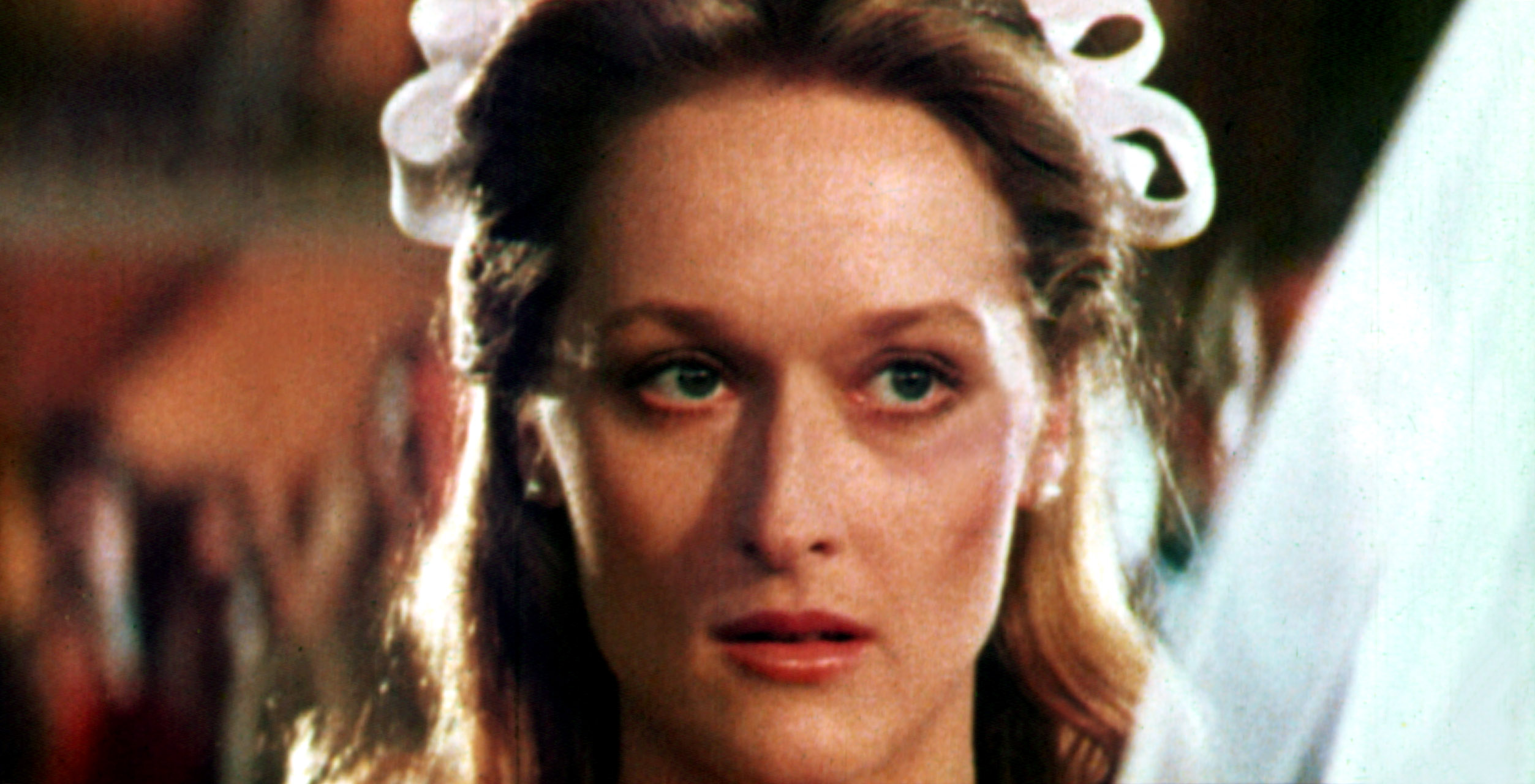
Meryl Streep received her 21st Oscar nomination today for her performance in The Post. Here she is in The Deer Hunter, which brought the actress her first:

Cinematographer Showcase of the Day:

Roger Deakins, who earned his 14th Oscar nomination today for the cinematography for Blade Runner 2049, is the focus of this video essay from Film In the Making (via Film School Rejects):

[embedded content]

Bad Plot Description of the Day:

Here’s a faulty explanation of American Psycho, which was nominated for zero Oscars, from an alien in the future in the latest Earthling Cinema:

[embedded content]

Remixed Movie of the Day:

The sounds of Minions, which was nominated for zero Oscars, have been remixed by Eclectic Method to be a fart-noise-heavy dance track:

[embedded content]

Cosplay of the Day:

In honor of Coco‘s Oscar nomination for Best Animated Feature, here’s some fantastic Hector Rivera cosplay:

#Cosplay#Cocopic.twitter.com/UHPK0iSrL6

— Cinergia (@cinergiaonline) January 13, 2018

Classic Movie Trailer of the Day:

The Silence of the Lambs was the last movie with a February release date to be nominated for Best Picture before Get Out was today. Watch the original trailer for the classic thriller, which also won the top Oscar, below.

[embedded content]

and

Let’s block ads! (Why?)


No Image

After Months In Limbo For Children's Health Insurance, Huge Relief Over Deal

Marbell Castillo held her granddaughter, Maia Powell, as she was being examined by nurse practitioner Molly Lalonde at Burke Pediatrics in Burke, Va., in October 2017. Maia is insured through Virginia’s Children’s Health Insurance Program.

Matt McClain/The Washington Post/Getty Images

hide caption

toggle caption

Matt McClain/The Washington Post/Getty Images

When parts of the federal government ground to halt this past weekend, Linda Nablo, who oversees the Children’s Health Insurance Program in Virginia, had two letters drafted and ready to go out to the families of 68,000 children insured through the program, depending on what happened.

One said the federal government had failed to extend CHIP after funding expired in September and the stopgap funding had run out. The program would be shutting down and families would lose their insurance.

The other letter said they didn’t need to worry anymore because federal funding had finally come through and the program’s future was assured.

Since Monday’s deal to end the shutdown included a six-year reauthorization of CHIP, enrolled families in Virginia will get that second letter. The program will go on and no children will lose their health insurance.

Taking Stock Of Costs

After months of uncertainty, Nablo said she’s relieved. “Hugely relieved. It’s over and the program is safe, and we can all go back to our normal jobs,” she laughed.

Preparations to shut down the program in Virginia down began over the summer, even before funding expired. Staff spent untold hours getting ready to end the program, retooling enrollment systems, changing contracts and more.

“Those aren’t huge dollar amounts,” Nablo said. “I think the cost more is in the worry from parents.”

CHIP covers children in low-income families — most can’t afford private insurance and their children might have had to go uninsured. Nationally, about 9 million children get health coverage through CHIP.

An Unprecedented Situation

In its 20-year history, CHIP had always been uncontroversial, even popular in both parties. Its funding needs to be periodically renewed, and it always had been taken care of well in advance of the money running out.

CHIP is a match program — states and the federal government split the cost. When states made their budgets for this year, they assumed federal funding for CHIP would be there, so they were blindsided by the funding gap.

Every state’s calculus for how long they could run on leftover money was different. In Texas, Hurricane Harvey threw off that state’s projections. Because of the disaster, it waived fees for CHIP and enrollment spiked, so it had less money coming in and more going out.

A handful of states — including Virginia — sent out letters warning families their coverage was in jeopardy because of the uncertainty in Congress.

“One state — Connecticut — did freeze enrollment between the week of Christmas and New Year’s,” said Joan Alker of the Georgetown University Center For Children and Families, which monitored CHIP funding closely during the last few months.

Virginia’s Nablo said there might be other, more subtle, costs from all the uncertainty.

“I can’t quantify it, but I am sure there are states that held off on things like mounting an outreach program to encourage people to enroll because they didn’t know if the program was going to be there for them,” she said. “There may have been states that were thinking of implementing some efficiencies or innovations, but didn’t because — again — is the program going to be there?”

Six Years Of Certainty

Alker is happy with the CHIP deal Congress passed. She does point out it’s the same one they agreed on in September, so she’s not sure why it took a shutdown to finally get it through.

The deal keeps the federal investment in the program at its current level for two fiscal years. After that, the amount that states have to pay for the program will increase.

“At least states now have time to plan for that,” Alker said. “Overall, it really was a fair and reasonable compromise.”

She is puzzled, though, as to why it was only a six-year extension when the Congressional Budget Office estimated extending CHIP for 10 years would save the federal government $6 billion.

“The six-year [extension] is a small saver — it saves just under a billion dollars,” Alker said. “Now there’s nothing preventing Congress from coming back as they move ahead with the bigger budget deal — they could come back and extend CHIP for four more years and grab those savings.”

Impact On Children’s Uninsured Rate

Alker does worry that the months of uncertainty around CHIP may have already caused children to drop out of the program, increasing the uninsured rate among children. That should become clear in the fall, when the Georgetown Center For Children and Families does its annual assessment of the children’s uninsured rate.

If that trend develops nationally, it hasn’t been the case in Virginia, where CHIP enrollment went up this past fall.

“We actually saw a boost in enrollment,” Nablo said. “I can’t really quite explain it.”

Maybe, she said, it was all the attention the unprecedented funding crisis brought to CHIP. A silver lining, perhaps, to many months of anxiety.

This story is part of a reporting partnership with NPR, local member stations and Kaiser Health News. Selena Simmons-Duffin is a producer at NPR’s All Things Considered, currently on an exchange with Washington, D.C. member station WAMU.

Let’s block ads! (Why?)


No Image

Hugh Masekela, South African Jazz Master And International Chart-Topper, Dies At 78

South African musician Hugh Masekela, performs in New Delhi in 2004.

Prakash Singh/AFP/Getty Images

hide caption

toggle caption

Prakash Singh/AFP/Getty Images

Updated at 3 p.m. ET

Hugh Masekela, the legendary South African jazz musician who scored an unlikely No. 1 hit on the Billboard chart with his song “Grazing in the Grass” and who collaborated with artists ranging from Harry Belafonte to Paul Simon, has died at 78 after a protracted battle with prostate cancer, his family announced Tuesday.

“[Our] hearts beat with profound loss,” the Masekela family said in a statement. “Hugh’s global and activist contribution to and participation in the areas of music, theatre, and the arts in general is contained in the minds and memory of millions across 6 continents.”

Over his career, Masekela collaborated with an astonishing array of musicians, including Harry Belafonte, Herb Alpert, Bob Marley, Fela Kuti, Paul Simon — and his ex-wife, Miriam Makeba. For almost 30 years, “Bra Hugh,” as he was fondly known, was exiled from his native country. And almost despite himself — as he struggled for decades with copious drug and alcohol abuse — Masekela became a leading international voice against apartheid.

[embedded content]
YouTube

The trumpeter, composer, flugelhorn player, bandleader, singer and political activist was born in the mining town of Witbank, South Africa, on April 4, 1939. Growing up, he lived largely with his grandmother, who ran a shebeen — an illicit bar for black and colored South Africans — in her house. (Until 1961, it was illegal for nonwhites in South Africa to consume alcohol.)

Masekela heard township bands and the music of the migrant laborers who would gather to dance and sing in the shebeen on weekends. One of his uncles shared 78s of jazz musicians like Louis Armstrong, Duke Ellington and Glenn Miller. Those two forces, the music and the booze, did much to shape Masekela’s life. He began drinking at age 13.

He was given his first trumpet at age 14 by an anti-apartheid crusader, the Rev. Trevor Huddleston, who was also the superintendent of a boarding school that Masekela attended.

“I was always in trouble with the authorities in school,” Masekela told NPR in 2004.

He had been inspired by the Kirk Douglas film Young Man with a Horn. Huddleston, hoping to steer him away from delinquency, asked what it was that would make Masekela happy. “I said, ‘Father, if you can get me a trumpet I won’t bother anybody anymore.’ “

Masekela soon became part of the Huddleston Jazz Band. And the priest managed to get one of the world’s most famous musicians to send young Hugh a new instrument, as Masekela told NPR in 2004.

“Three years later,” Masekela recalled, “[Huddleston] was deported and came through the United States on his way to England and met Louis Armstrong and told him about the band. And Louis Armstrong sent us a trumpet.”

By the mid-1950s, he had joined Alfred Herbert’s African Jazz Revue in Johannesburg; within just a few years, Masekela was good enough to co-found a landmark South African band, The Jazz Epistles, which also featured another landmark South African artist, the pianist and composer Abdullah Ibrahim. They recorded the first modern jazz record in South Africa featuring an all-black band.

[embedded content]
YouTube

Within months of The Jazz Epistles’ creation, South African police opened fire on thousands of protesters and 69 people were killed in the infamous Sharpeville Massacre of 1960. The apartheid government declared a state of emergency, and The Jazz Epistles couldn’t play together. Meanwhile, Masekela had learned that he was being targeted for his anti-apartheid activities, and he had made friends with a talented singer named Miriam Makeba, who had already fled the country for New York.

Masekela, now 21 years old, was scrambling to secure a passport and papers to study music abroad. And his friendship with Makeba proved crucial, as he told NPR’s Tell Me More in 2013. She and the singer and activist Harry Belafonte became his patrons and mentors.

[embedded content]
YouTube

Masekela had originally planned to head to England to study at the Guildhall School of Music & Drama. But once he was there, Makeba encouraged him to head to New York.

“We’d always dreamt of coming to the States, but she came a year earlier and blew the States away,” he told NPR.

“So she said, ‘Hey, you got to come, forget about London, this is the place to be.’ And she was on a first-name basis with everybody. Then she and Harry Belafonte gave me a scholarship to Manhattan School of Music. I also had to work part time in Harry Belafonte’s music publishing, because they ain’t going to give you no money,” Masekela said.

In short time, Masekela and Makeba became romantically involved; he also recorded with her and appeared on her album The Many Voices of Miriam Makeba. They married in 1964, despite the fact that their relationship was already tempestuous. Their marriage — one of four for Masekela — ended after barely two years.

At night, Masekela would go to the city’s great jazz clubs to catch the likes of Miles Davis, John Coltrane, Thelonious Monk, Charles Mingus and Max Roach. He wanted to be a jazz player in the same bebop style as his heroes, and that’s what he sounded like. But several of those giants gave him some solid advice. One of them was Miles Davis, as Masekela told NPR’s Morning Edition in 2004.

“I have a lot of great musical encounters with Miles, and he said, ‘Yeah. Yeah. You’re trying to play like me,’ ” Masekela said. “Miles was a funny guy. He said, ‘Listen, I’m going to tell you something. You’re going to be artistic because there’s thousands of us playing jazz but nobody knows the s*** that you know, you know, and if you can put that s*** in your s***, then we’re going to be listening.’ “

Masekela decided to put Davis’ advice to work. He put that bleep in his bleep, and began to develop his own, distinctive style — a blend of jazz, soul and one of the South African dance styles he had grown up with: mbaqanga.

[embedded content]
YouTube

It took him a while to get the blend just right. His first solo album was 1963’s Trumpet Africaine. In his 2004 autobiography, inevitably called Still Grazing: The Musical Journey of Hugh Masekela, the artist called that project a “disaster” and an “unlistenable mixture of elevator and shopping mall music.”

By the end of the decade, however, Masekela had pulled it all together and was living in Los Angeles. In 1967, the year his song “Up, Up and Away”was released, he performed alongside Janis Joplin, Otis Redding, Ravi Shankar, The Who and his friend Jimi Hendrix at the Monterey Pop Festival.

A year later, his single “Grazing in the Grass” became a No. 1 hit on the Billboard charts. It was an astounding success — and all the more so as a tossed-off track that the trumpeter recorded with his band as album filler in just half an hour.

In 1977, Masekela’s Soweto Blues, about the anti-apartheid Soweto uprising, was recorded by Makeba, and it reached an international audience. After the stupefying success of “Grazing in the Grass,” however, Masekela largely spent decades living in a haze of drugs, alcohol, bad financial decisions and a string of failed marriages and countless other relationships. He occasionally made music, but he was dumped by label after label; by his own reckoning, he hadn’t played sober since he was 16 years old.

In his autobiography, Masekela estimated that he wasted $50 million, all told. It wasn’t until 1997 that he reportedly got clean; he went on to found the Musicians and Artists Assistance Program of South Africa, to help fellow performers struggling with substance abuse.

He spent stints living in Liberia, Guinea, Ghana and Botswana, where he worked and recorded with a diverse array of African musicians, including leading the Ghanian band Hedzoleh Soundz. He also recorded the anti-apartheid anthem Bring Home Nelson Mandela in 1986.

In 1987, he appeared with Paul Simon on his Graceland album tour alongside South African musicians Ladysmith Black Mambazo and again in 2012 on the 25th anniversary of the Grammy Award-winning album’s release.

Masekela finally returned to South Africa in 1990, following Nelson Mandela’s release. In the meantime, some of his friends and family members were on the frontlines of the new South Africa; his sister Barbara, for example, became her country’s ambassador to the U.S. Upon his return, Bra Hugh was hailed as an elder statesman of South African music, and he subsequently recorded a string of international albums.

Masekela performed at the opening ceremony of the FIFA World Cup and tournament in Soweto’s Soccer City in 2010. That year, Masekela was also given the Order of Ikhamanga in gold, his home nation’s highest medal of honor.

He had been scheduled to tour the U.S. this spring with his former bandmate Abdullah Ibrahim. But last October, he announced that the cancer that he had been battling off and on for nearly a decade had returned.

Among those marking his death is South African President Jacob Zuma, who released a statement on Tuesday: “Mr Masekela was one of the pioneers of jazz music in South Africa whose talent was recognized and honored internationally over many years. He kept the torch of freedom alive globally fighting apartheid through his music and mobilizing international support for the struggle for liberation and raising awareness of the evils of apartheid. … It is an immeasurable loss to the music industry and to the country at large. His contribution to the struggle for liberation will never be forgotten.”

Let’s block ads! (Why?)


No Image

Today in Movie Culture: 'Maze Runner' Franchise Recap, the Surprise 'Crocodile Dundee' Sequel and More

Here are a bunch of little bites to satisfy your hunger for movie culture:

Franchise Recap of the Day:

It’s been awhile since the last Maze Runner movie so here’s the cast of Maze Runner: The Death Cure reminding us what’s happened so far:

[embedded content]

Mysterious Marketing of the Day:

Nobody can figure out if Dundee, the supposed Crocodile Dundee sequel starring Danny McBride and Chris Hemsworth, is a real movie or some sort of secret Super Bowl commercial setup. Watch two teasers:

[embedded content]

[embedded content]

Custom Shirt of the Day:

Celebrities are often stylish at Sundance, but this custom-made shirt honoring Ava DuVernay, Greta Gerwig, Dee Rees and Patty Jenkins shown off by Tessa Thompson and shared by DuVernay is the best piece of clothing in Park City ever:

This just made my Monday. Much love to you, @TessaThompson_x. And love to all who understand that a lack of women directors is to film/TV what one hand is to clapping. ?? pic.twitter.com/OIvcMuOiAj

— Ava DuVernay (@ava) January 22, 2018

Filmmaking Parody of the Day:

Featuring guest host Jessica Chastain, here’s a goofy new Saturday Night Live sketch involving a movie shoot:

[embedded content]

Vintage Image of the Day:

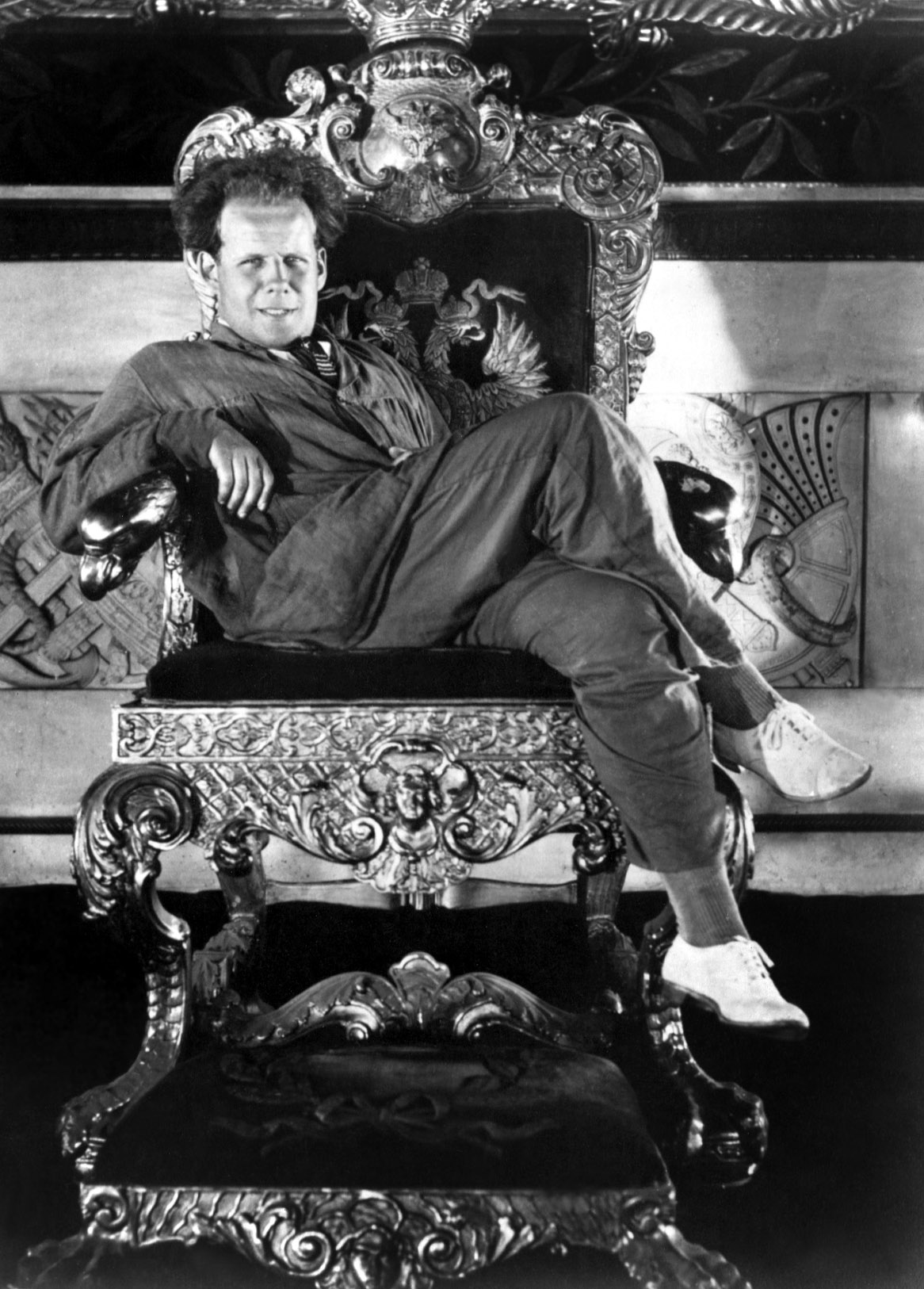
The king of montage and today’s Google Doodle subject Sergei Eisenstein, who was born on this day in 1898, sits atop his throne:

Filmmaker in Focus:

This video by Frank Perez pays tribute to the musical elements of movies of Edgar Wright:

[embedded content]

Movie Comparison of the Day:

See clips of Meryl Streep as Julia Childs in Julie & Julia side by side with actual footage of the famous chef, courtesy of Dimitreze:

[embedded content]

Movie Trivia of the Day:

CineFix highlights seven things you might not know about your favorite movie about skydiving bank robbers, Point Break:

[embedded content]

Cosplay of the Day:

A lot of fans are posting pictures of themselves as Kylo Ren on social media, but this woman goes the extra measure with a great makeup job:

???? Ben Swolo ????

First photos from my Kylo Ren makeup test! And of course I did a open chest binding again ?? (Also, for once my big nose actually fits a cosplay!) pic.twitter.com/dvVu8kzqsp

— N1njaG1rl (@N1njaG1rl) January 21, 2018

Classic Trailer of the Day:

Today is the 10th anniversary of the Sundance premiere of Man on Wire. Watch the original trailer for the classic, Oscar-winning documentary:

[embedded content]

and

Let’s block ads! (Why?)


No Image

Trump Slaps Tariffs On Imported Solar Panels And Washing Machines

Solar panels that make up the Public Service Company of New Mexico’s new 2-megawatt photovoltaic array in Albuquerque.

Susan Montoya Bryan/AP

hide caption

toggle caption

Susan Montoya Bryan/AP

Pledging to defend American businesses and workers, President Trump imposed tariffs on imported solar panel components and large residential washing machines on Monday.

In a statement, U.S. Trade Representative Robert Lighthizer said that, after consulting with the interagency Trade Policy Committee and the bipartisan U.S. International Trade Commission, the president decided that “increased foreign imports of washers and solar cells and modules are a substantial cause of serious injury to domestic manufacturers.”

The administration approved tariffs of 20 percent on the first 1.2 million washers and 50 percent of all subsequent imported washers in the following two years.

A 30 percent tariff will be imposed on solar panel components, with the rate declining over four years.

The move against imported solar components splits the solar panel industry with manufacturers favoring the tariffs as a necessary step to save domestic subsidiary companies, while installers oppose them as job-killers.

Two domestic manufacturers, Georgia-based Suniva and Oregon-based Solar-World, who have complained about competing with cheaper panels produced in Asia, stand to benefit from the tariffs. According to Bloomberg, Suniva has a Chinese majority owner and Solar-World is a unit of the German manufacturer SolarWorld AG.

As NPR’s Jeff Brady reported:

“SolarWorld laid off much of its workforce and Suniva was forced into bankruptcy, even as U.S. solar panel installations grew dramatically in recent years. That growth was largely attributed to the cheaper panels from overseas.

Solar panel prices have fallen by more than 70 percent since 2010, according to the Solar Energy Industries Association. For many homeowners installing solar panels has become more affordable, but now the industry’s main trade group worries that if prices go up the installation boom could come to a halt.”

The CEO and President of SolarWorld Americas Inc., Juergen Stein, praised the administration’s action in a statement:

“SolarWorld Americas appreciates the hard work of President Trump, the U.S. Trade Representative, and this administration in reaching today’s decision, and the President’s recognition of the importance of solar manufacturing to America’s economic and national security. We are still reviewing these remedies, and are hopeful they will be enough to address the import surge and to rebuild solar manufacturing in the United States.”

But representatives for the sector of the industry that actually installs solar panels criticized the move, saying that making imported solar components more costly will likely dampen demand for solar panels.

The President and CEO of the Solar Energy Industries Association, Abigail Ross Hopper, predicted the tariffs lead to the loss of roughly 23,000 American jobs this year.

“While tariffs in this case will not create adequate cell or module manufacturing to meet U.S. demand, or keep foreign-owned Suniva and SolarWorld afloat, they will create a crisis in a part of our economy that has been thriving, which will ultimately cost tens of thousands of hard-working, blue-collar Americans their jobs.”

Let’s block ads! (Why?)


No Image

Gus Kenworthy Will Be The Second Openly Gay Man To Compete For U.S. In Winter Games

Skier Gus Kenworthy speaks during the 100 Days Out 2018 Pyeongchang Winter Olympics Celebration with Team USA in November.

Mike Stobe/Getty Images for USOC

hide caption

toggle caption

Mike Stobe/Getty Images for USOC

Having earned a spot Sunday on the U.S. Ski Team, Gus Kenworthy is the second openly gay man who will compete for the United States at the Winter Olympics in Pyeongchang, South Korea.

Kenworthy, 26, placed second at the final Olympic qualifier for freeski slopestyle, according to NBC.

Twenty-eight-year-old figure skater Adam Rippon, the first openly gay man to qualify for the Winter Olympics, was selected for the figure skating team on Jan. 7.

Before this year, the U.S. had never sent an openly gay man to compete in the Winter Games. The last time an out male athlete competed on Team USA in the Summer Olympics was 14 years ago in Athens, Greece.

As NPR reported earlier this month:

Another gay athlete, luger John Fennell, was also vying for a spot on Team USA this year, but a sled malfunction slashed his chance at qualifying in December.

Figure skater Johnny Weir faced speculation about his sexuality while competing in 2006 and 2010, but he avoided questions on the matter. In 2011, he publicly confirmed he was gay in his memoir, Welcome to My World.

My run from today that secured my spot to PeyeongChang as the top ranked US slopestyle skier!!! pic.twitter.com/R5Cz2rANrH

— Gus Kenworthy (@guskenworthy) January 22, 2018

Kenworthy came out publicly in 2015, a year and a half after he took silver in slopestyle at the 2014 Sochi Olympics.

He told Reuters earlier this month that competing as an openly gay athlete had boosted his confidence on the way to Pyeongchang.

“I am more open with everyone in my life, and I think it just translates into me being able to ski a little bit more freely and not have so much to focus on and worry about,” Kenworthy said.

Rippon made headlines earlier this month for publicly criticizing the selection of Vice President Pence to lead the U.S. delegation to Pyeongchang, citing Pence’s alleged support of gay conversion therapy. (Pence’s spokesperson called “this accusation … totally false.”)

nothing has made me feel more PRIDE than getting to wave a rainbow flag in a national TV commercial! #ShouldersOfGreatnesshttps://t.co/aL7kfvm2Lf

— Gus Kenworthy (@guskenworthy) January 19, 2018

Both Rippon and Kenworthy have indicated they would not accept invitations from President Trump to visit the White House with Team USA after the Winter Games.

Over the past two years, Kenworthy has become a vocal advocate of LGBTQ visibility in sports — and is widely known as “the gay skier.”

He was recently named a brand ambassador for Head & Shoulders and appears in a new commercial, sporting a Team USA uniform and a rainbow flag.

“The Olympics is a cool opportunity to represent our country, which is amazing,” Kenworthy told Reuters. “But I have another community I am competing for, and that is the LGBT community.”

Let’s block ads! (Why?)