
In Trump's First Year, Anti-Abortion Forces Make Strides

Opponents of abortion rights rallied outside the U.S. Supreme Court during The March for Life on Friday in Washington, D.C.
Ricky Carioti/The Washington Post/Getty Images
hide caption
toggle caption
Ricky Carioti/The Washington Post/Getty Images
As a presidential candidate, Donald Trump promised abortion opponents four specific actions to “advance the rights of unborn children and their mothers.”
One year into his presidency, three of those items remain undone. Nevertheless, opponents of abortion have made significant progress in changing the direction of federal and state policies.
Indeed, on Friday, as anti-abortion protesters gathered in Washington for the 45th annual March for Life, the Trump administration announced two new policies. One is a letter to states aimed at making it easier for them to exclude Planned Parenthood facilities from their Medicaid programs; the other is a proposed regulation to allow health care providers to refuse to perform services that conflict with their “religious or moral beliefs.”
“In my administration, we will always defend the very first right in the Declaration of Independence, and that is the right to life,” President Trump said in a video address from the Rose Garden to the marchers.
Marjorie Dannenfelser, president of the anti-abortion group the Susan B. Anthony List, led the Trump campaign’s Pro-Life Coalition. The then-candidate said he was committed to “nominating pro-life justices to the U.S. Supreme Court,” which happened with the nomination and confirmation of Justice Neil Gorsuch in April.
Despite many attempts, Congress did not pass a federal ban on abortions occurring after 20 weeks, didn’t cut off Planned Parenthood’s federal funding and didn’t write into permanent law the Hyde Amendment, which bans most federal abortion funding but needs annual renewal.
Still, there was progress on scaling back abortion and, in some cases, access to contraception at the federal level.
The administration made myriad changes. It reinstituted and expanded the “Mexico City” policy, which forbids funding of international aid programs that “perform or promote” abortion. It issued rules aimed at allowing religious-affiliated and other employers to not offer contraceptive services if they have a “religious belief” or “moral conviction” against them, although federal courts have blocked the new rules from being implemented. And just last week the administration created a new “conscience and religious freedom” division in the Department of Health and Human Services’ Office of Civil Rights. That new division is designed to enforce both existing laws protecting the rights of conscience for medical personnel as well as the new regulations.
Most important, according to many in the anti-abortion movement, the president nominated and the Senate confirmed a dozen and a half federal district court and appeals court judges who are considered likely to rule in their favor.
Abortion rights supporters concede that while the priorities on their opponents’ wish list weren’t accomplished, plenty still happened.
“This administration is the worst we’ve ever seen for women and families,” says Kaylie Hanson Long of NARAL Pro-Choice America in a statement. “Its attacks on reproductive freedom are relentless, under the radar, and aren’t supported by the majority of Americans who believe abortion should remain legal.”
Dannenfelser says one of the biggest changes is the number of anti-abortion advocates now working in the Department of Health and Human Services in key roles. “I can say there is more unity in this administration than there has been in any presidency on this,” she says.
Abortion opponents know their biggest obstacle is the Senate, where they don’t have the 60 votes required for most legislation. “Without making advances in the Senate, it’s going to be really tough,” says Dannenfelser.
Meanwhile, outside Washington, states continued their efforts to restrict access to abortion and family planning. States have passed 401 separate measures since Republicans took over most state legislatures in 2011, according to the Guttmacher Institute, a reproductive rights research and advocacy group.
During 2017, 19 states enacted 63 separate restrictions, says Elizabeth Nash, who tracks state legislation for Guttmacher. Among the notable laws was one in Ohio to outlaw abortions of fetuses diagnosed with Down syndrome. Arkansas and Texas passed laws to ban “dilation and evacuation” abortions, a procedure that uses suction and medical instruments to remove the fetus and is the most common procedure for abortion after the first trimester of pregnancy. Both bans have been blocked by federal courts.
Some of the new restrictions came from states that haven’t been active on the issue in recent years. A Wyoming law requiring ultrasounds to be offered to pregnant women seeking an abortion was that state’s first in 30 years, Nash says.
But 2017 was also notable for states seeking to widen or ensure access to abortion and other reproductive services. For example, Delaware passed a law enshrining abortion rights, while Oregon and New York require private health plans to cover abortion without patients’ cost sharing. Legislators in California, which has a long history of protecting abortion rights, have been pushing a bill that would require public universities to provide abortion pills to female students who are less than 10 weeks pregnant. The bill stalled last year, but it is being picked up again this year.
As a result, says Nash, “we are really living in a bifurcated country. The states that are progressive are looking to protect access” to abortion and contraception. “The states that are conservative are looking to restrict it.”
In other words, a nation that looks a lot like it did 45 years ago, when the Supreme Court legalized abortion nationwide in Roe v. Wade.
Kaiser Health News is a national health policy news service. It is an editorially independent program of the Henry J. Kaiser Family Foundation. California Healthline reporter Ana B. Ibarra contributed to this story.
New England Patriots To Face Philadelphia Eagles At Super Bowl


For Federal Employees On Furlough During Shutdown, An Uncertain Future

When the government shut down, furloughed workers began preparing for an uncertain future. NPR’s Michel Martin talks with Pam Gilbertz, a furloughed employee at the CDC, about her plans.
MICHEL MARTIN, HOST:
Now that we’ve talked about the overall impact of a government shutdown, let’s talk with one of the tens of thousands of federal workers who may or may not be going to work tomorrow morning. Pam Gilbertz works as a health communications specialist for the Centers for Disease Control. We reached her in Atlanta. Ms. Gilbertz, thanks so much for speaking with us.
PAM GILBERTZ: You’re welcome. Thank you for having me.
MARTIN: What did your supervisors tell you on Friday about whether you will be at work on Monday?
GILBERTZ: My supervisor did not tell me anything on Friday because my supervisor had not received any information either. In fact, I received information before she did because I got that information in my role as a union official.
MARTIN: And what did you find out or what are they saying?
GILBERTZ: We haven’t received anything. I know in the past – the shutdown that occurred in 2013 – we all had some limited information but at least something from our headquarters, the Department of Health and Human Services, several days at least in advance.
MARTIN: Is it clear who in your agency has to work and who doesn’t?
GILBERTZ: It is not clear to most of us. All we know is that each individual employee got a letter by email from HHS. I haven’t even seen my letter yet because I have not logged into CDC email since Friday afternoon, but I have been told that the emails went out overnight, and those emails from HHS told each individual employee how they had been categorized. I’m assuming that I will be categorized the same way that I was categorized in 2013 because I’m doing the same job that I was doing then, and my position as a health communication specialist is categorized as non-essential because it’s not one of those that fall into the category, you know, of national security or so forth.
MARTIN: And you’re saying you worked for the government in 2013. Do you remember that – like, what that was like while the shutdown was going on? Can you just talk a little bit about, you know, what was it like? What did you do?
GILBERTZ: It’s very sad. I know that most employees who have contacted me are very upset. Many people live paycheck to paycheck, and it will be a real struggle for them to pay bills and be able to take care of themselves and their families without pay. You know, employees want to work. I think some people in the public may have the perception that federal employees don’t care that much about the work that we do, but it’s actually the opposite.
You know, I have found federal employees are the most dedicated bunch of people that I have ever worked with, particularly at the CDC. We take what we do very seriously. We take an oath of office when we become federal employees that is very similar to the oath of office that many of us took when we joined the military, including me, and many federal employees are military veterans. So, you know, it’s very stressing to us when we are not allowed to do that work and not allowed to provide the services that we’ve been trained to provide and we want to provide to the public.
MARTIN: That’s Pam Gilbertz. She’s an employee of the Centers for Disease Control. She believes she will be furloughed as of Monday if the government shutdown continues. We reached her in Atlanta. Thanks so much for speaking with us.
GILBERTZ: You’re welcome. Thank you.
MARTIN: And we’d like you to know that we reached out to the Department of Health and Human Services to ask how they spoke to their employees about the shutdown. We haven’t heard back.
Copyright © 2018 NPR. All rights reserved. Visit our website terms of use and permissions pages at www.npr.org for further information.
NPR transcripts are created on a rush deadline by Verb8tm, Inc., an NPR contractor, and produced using a proprietary transcription process developed with NPR. This text may not be in its final form and may be updated or revised in the future. Accuracy and availability may vary. The authoritative record of NPR’s programming is the audio record.
SAG Awards 2018: Actors Honor Actors, With Frances McDormand, Gary Oldman and 'Three Billboards' Leading the Way
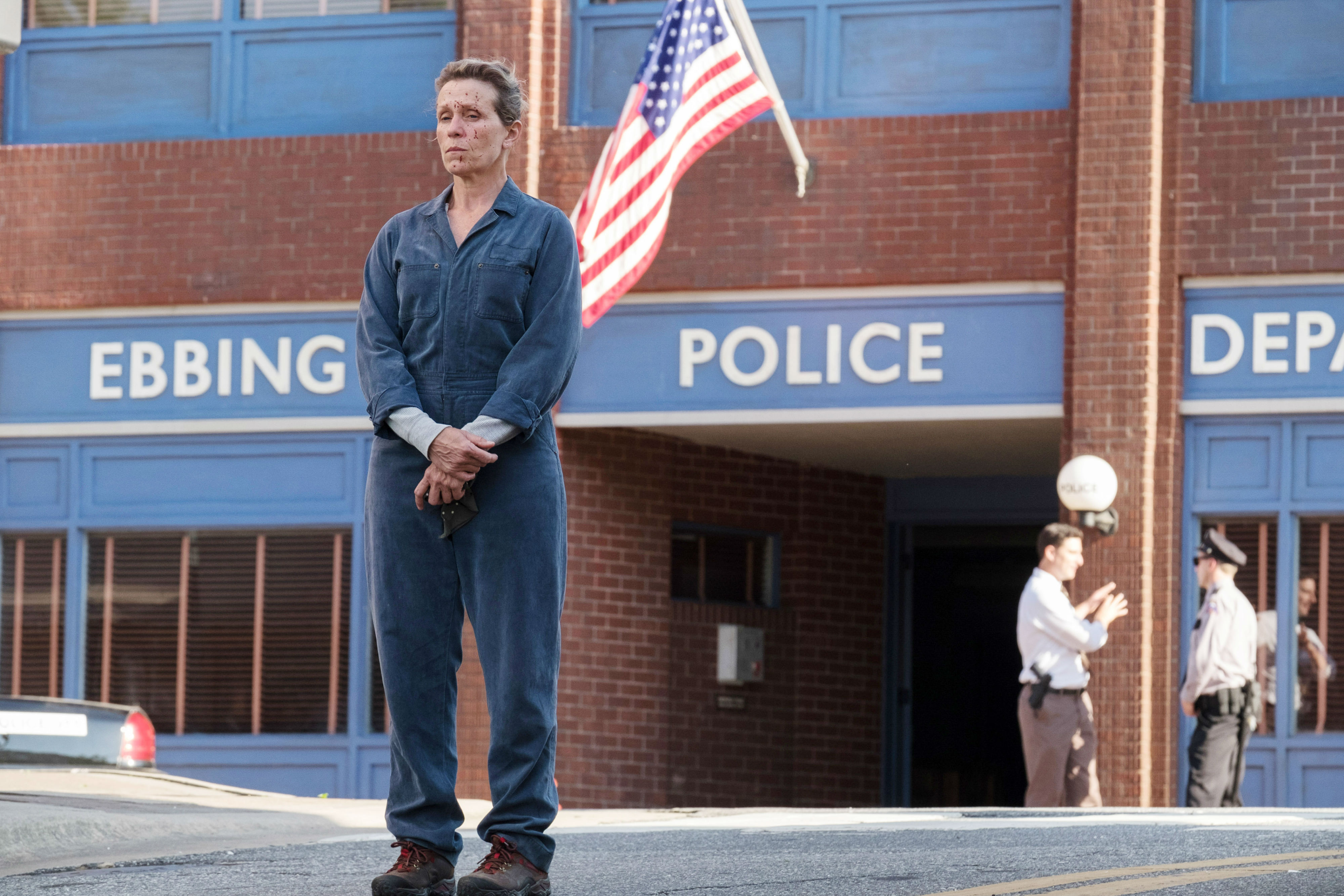
Kristen Bell hosted the 24th annual Screen Actors Guild awards ceremony on Sunday evening; it’s the only televised awards show that exclusively honors performers. Bell is the first-ever host for the show, which is filled with effusive praise and a genial atmosphere. Bell began things with a lightly comic introduction, which you can watch below.
[embedded content]
Here are the awards presented for motion picture acting, along with the acceptance speeches.
Outstanding Performance by a Cast in a Motion Picture: Three Billboards Outside Ebbing, Missouri. Frances McDormand accepted the award on behalf of her cast members, 11 in all.
[embedded content]
Outstanding Performance by a Female Actor in a Lead Role: Frances McDormand, Three Billboards Outside Ebbing, Missouri
[embedded content]
Outstanding Performance by a Male Actor in a Lead Role: Gary Oldman, Darkest Hour
[embedded content]
Outstanding Performance by a Female Actor in a Supporting Role: Allison Janney, I, Tonya
[embedded content]
Outstanding Performance by a Male Actor in a Supporting Role: Sam Rockwell, Three Billboards Outside Ebbing, Missouri
[embedded content]
Life Achievement Award: Morgan Freeman
In her introductory comments, Rita Moreno recalled that Morgan Freeman presented her with the Life Achievement Award five years ago and clearly she was delighted to present him with the same honor, recounting their past shared history together on the PBS show Sesame Street. Freeman, as might be expected, was quite gracious in his speech.
[embedded content]
Cancer Patients Get Little Guidance From Doctors On Using Medical Marijuana

Like most patients, Murphy’s first step was to ask her oncologist. Murphy said she loved her doctor and care team at Mount Auburn Hospital in Cambridge, but they had no advice to offer on medical marijuana.
“They said ‘yes, you can look into it,’ ” she said. “But I felt sad because you’re so lost and you’re so sick and this is so not your area of expertise, that it was very upsetting to me to not get direction one way or the other.”
Only about 1 percent of Massachusetts’ 25,000 doctors are registered with the state and allowed to legally prescribe marijuana. And only a fraction of those know much about cancer care.
Last June, the Massachusetts Medical Society approved a new online curriculum for medical marijuana. Six months later, only 27 medical professionals have taken the section on cancer care and cannabis. Both the Dana-Farber Cancer Institute and the Massachusetts General Hospital Cancer Center said they had no experts on staff to speak with us for this report.
Murphy eventually found her way to Dr. Jordan Tishler, who runs medical cannabis clinics in Cambridge and Brookline, called inhaleMD.
Tishler, a former emergency room physician and music producer, said he treats cannabis like any other therapy, meeting with new patients for an extended conversation and follow-ups. But some cannabis prescribers, he said, just want to sign the state paperwork and move on.
“By and large, physicians are simply saying, ‘yes, you can have it,’ and then stopping the conversation there,” he said.
Tischler explained that medical centers — particularly those that take federal funding — are in a tight spot because federal law still classifies cannabis as an illegal drug, despite its legalization for medical purposes, at a minimum, in 30 states and the District of Columbia.
“Most of those institutions are prohibited and/or afraid of the prohibitions from the federal government, so have opted not to pursue this within their domain,” Tischler said. He set up his private clinic so he could operate outside of those systems, though he said he receives referrals from all the major hospitals.
In early January, Attorney General Jeff Sessions told the nation’s U.S. attorneys to resume aggressively pursuing marijuana growers and distributors, even in states where marijuana has been legalized. It’s not clear yet what that will mean for Massachusetts’ medical marijuana system, but a few days later, Massachusetts U.S. Attorney Andrew Lelling said he cannot and will not rule out prosecuting state-sanctioned marijuana businesses.
As it currently stands, authorized doctors like Tishler have to fill out an online form with the state, which the patient then submits with a $50 check to request a license. Tishler said the process used to take several weeks, but now the state usually issues a medical card within three or four days of receiving a request.
Then, the patient has to take that license to one of the state-approved medical marijuana dispensaries, which offer a wide array of products containing cannabis.

New England Treatment Access in Brookline, Mass., is located in a former branch of Brookline Bank.
Jesse Costa/WBUR
hide caption
toggle caption
Jesse Costa/WBUR
New England Treatment Access, or NETA, whose Brookline dispensary is housed in an old bank building, sells 130 products. Garden Remedies, whose dispensary is in Newton about a block from a Whole Foods, sells 50 items, including bath bombs, lip balm and marijuana-infused honey they make themselves in their cultivation facility.
Murphy said she would have been overwhelmed by those choices if she hadn’t had a doctor like Tishler advising her on what to take. Tishler said he tells cancer patients, for example, that they should avoid using novelty items like bath bombs and creams. They may be fun, but they won’t help with nausea or pain, he says.
Murphy didn’t like the idea of edibles. She had young children at home and was anxious they might find a brownie too tempting to pass up.
Tishler warned his patients against getting advice on care either from the Internet — which he said is loaded with misinformation — or from the counter folks at the dispensaries, who are trained in their products but are not legally allowed to give out medical advice.
“They’re doing the best they can, but fundamentally, they’re salespeople,” he said. “Their level of training, I often say, is about the level of a Starbucks barista. So, I tell patients, ‘look, if you wouldn’t ask your coffee guy about your health, probably you shouldn’t ask these guys, either.’ “
Dispensing Experimental Wisdom
Dr. Karen Munkacy, president and CEO of Garden Remedies, said her staff generally recommends that someone with nausea use a vape pen, to get a quick effect from the cannabis, and then, if they need something longer-lasting, take an edible.
“Inhalation medical marijuana works within a few minutes, and so, now their nausea and vomiting is under control,” she said. “If they want to get a good night’s sleep they’re going to need to get something that they ingest because it’s going to last longer. They won’t wake up vomiting in the middle of the night.”
Munkacy started her company after her own bout with chemo-induced nausea. She was treated for breast cancer a decade ago in New Jersey, where medical marijuana was illegal.
“It was months of feeling a thousand times worse than any flu I’ve ever had,” said Munkacy, who at the time was an anesthesiologist with a 2-year-old son. “Before [medical cannabis] became legal, people would have to choose between breaking the law and suffering terribly.”
Convinced that medical marijuana could help other people avoid her misery, Munkacy worked to help get legalized medical marijuana on the ballot in Massachusetts in 2012, and said she is now committed to educating patients who come to her dispensary.
“Our goal is that when patients leave, they’ve learned everything they need to know,” she said.
Cannabis is generally very safe, Tishler said, as long as patients buy their medical marijuana from a dispensary, because state requirements ensure a safe, consistent product. There is no lethal dose, and the worst side effect for most of his patients, he said, is an unwanted feeling of getting high when they’ve taken too much.
Norton Arbelaez, director of government affairs for NETA, which also has a dispensary in Northampton, said that safety profile means patients can afford to be a little imprecise about what kind of marijuana they use and how much they get.
“There is some room here for the patient themselves to experiment and see what’s right for them,” he said.
In the end, that’s what Murphy did. She experimented. She tried a few joints and smoked a few times with a pipe.
She had already spent $700 paying Dr. Tishler, getting her $50 state license and buying the cannabis, so she didn’t want to invest more in the vaporizer Dr. Tishler recommended.
But even just those few weeks of occasional smoking made a big difference, Murphy said.
“It made me feel like I had an appetite for the first time in probably six months,” she said. “Instead of lying around thinking about how sick I felt all the time — which was not my personality, which was very upsetting to my whole family — I was up and cooking, which was not anything I had done since I hadn’t felt well.”
Murphy, who is now cancer-free, hasn’t smoked since her treatments ended in the summer of 2016. She still wishes patients didn’t have to work so hard to get the information they need about medical marijuana.
Younger Patients and Cannabis
The situation for children and teens with cancer is a little different than for adults, according to Prasanna Ananth, a pediatric oncologist at Yale Cancer Center. Ananth published a study in early December showing that an overwhelming majority of pediatric oncologists, nurses and other health care professionals in Massachusetts, Illinois and Washington state were willing to consider medical marijuana for children with cancer — particularly for those with advanced illness.
There are decades of research showing the potential dangers of marijuana for children and teenagers, but almost none into its possible benefits for young cancer patients, she said.
“Our calculus shifts when we’re talking about children facing serious, life-threatening illness,” Ananth said. “Health care providers must weigh their desire to provide compassionate care for their patients against limited scientific evidence to support use of medical marijuana by children.”
In her survey, nearly 1 in 3 pediatric oncology experts said they had been asked about medical marijuana by at least one patient.
Ananth said she would prefer to talk with her patients about their marijuana use than not know that they’re using it.
“Especially for the purpose of knowing what my patients are on and what the medical marijuana might interact with, it is important for us to maintain open lines of communication,” she said.
With Legal Pot Shops, Medical Use May See Boost
It’s not clear how Massachusetts’ medical marijuana system will change later this year when recreational marijuana sales are set to begin. Patients will pay 20 percent less than recreational users because they won’t have to pay taxes on their cannabis.
But Munkacy said she believes many more people will start using cannabis for their medical problems once recreational use becomes legal.
They may not have wanted to give their name to the state for a license, but the reduced restrictions and added legitimacy of legal marijuana will give them the push they need to start using it, Munkacy explained.
“I’m thinking there’s going to be a lot of people who will no longer have to buy their medicine on the black market.”
The first version of this story appeared on WBUR’s CommonHealth. Karen Weintraub spent 20 years in newsrooms before becoming a freelance writer in January 2010. She contributes to CommonHealth.
What Happens When CHIP Funds Run Out
One of the central issues of the shutdown battle is the Children’s Health Insurance Program. NPR’s Michel Martin talks with Alabama CHIP Director Cathy Caldwell about the program, which covers 9 million low-income kids across the U.S.
MICHEL MARTIN, HOST:
We’d like to turn now to one of the main issues caught in the middle of the spending battle in Congress – the Children’s Health Insurance Program, also known as CHIP. This program helps state insure about 9 million children whose parents can’t afford health insurance but make too much to qualify for Medicaid. At the moment, the program is operating on a temporary funding extension that’s expected to dry up in March, but several states say they could run out of funding before then. One of those states is Alabama.
And joining us now is Cathy Caldwell. She is the director of Alabama’s CHIP program. She’s speaking to us from Prattville, Ala. Cathy Caldwell, thank you so much for speaking with us.
CATHY CALDWELL: Oh, thank you for having me.
MARTIN: So for people who aren’t familiar with the program, could you just describe briefly, you know, what it does – amplify what I said earlier?
CALDWELL: Sure. The Children’s Health Insurance Program provides health insurance to uninsured children whose family income is above the Medicaid level. Currently, in Alabama, we have over 85,000 children insured in that program.
MARTIN: And how exactly does it work? Does it work like any other insurance program – people can go to the doctor that they want, go to the hospital if they need to?
CALDWELL: Absolutely. We have a comprehensive benefit package that provides a wide array of benefits for many services, including WellCare so children can get their preventive visits. They can get their immunizations. Also, (unintelligible) care certainly can go to the doctor when they’re sick. We cover inpatient. We also cover mental health services, vision and dental – so a very comprehensive benefit package.
MARTIN: One of my colleagues spoke with you in December. And you said then that your state could exhaust CHIP funds in February. If those funds run out, what happens if a kid whose family has CHIP gets sick and has to go to the doctor or to the hospital? What happens?
CALDWELL: And we did receive some additional funding. But we’re still worried that it’s going to run out before too long. What will happen when we exhaust our funding – we will dis-enroll children from the program. Many of those children will become uninsured. So for many, they will probably not be able to access all of the services they need.
If they’re sick, for example, and go to the doctor, they’ll be expected to pay for it out of their own pocket. In an emergency situation, it’s a – you know go to the emergency department or even an inpatient stay – the family will be expected to pay for those services which will be quite expensive. So it’ll create a hardship on the family. And like I said, there will be situations, likely, where the children won’t be able to obtain the services they need.
MARTIN: I’m sure you know now that we’re in a bit of a standoff here and that both the Republicans and Democrats in Washington are accusing each other of holding, you know, the country hostage to this or that program. Many of the Democrats are saying that the Republicans are using this as a bargaining chip to, you know, force them to vote for something – other things that they don’t agree with. I’d like to ask, how is this all striking you where you are?
CALDWELL: I would like to say that there is huge urgency. I think some people look at the numbers and think that if we still have a few weeks of funding, then there’s no urgency. That is absolutely not the case. These are large programs with many children enrolled. And so if in fact funding does not continue, then we have to shut down our programs. It is going to take time and many resources to accomplish that. So we need Congress to act and extend funding. And we really need to get that down this month.
MARTIN: That’s Cathy Caldwell. She is the director of Alabama’s CHIP program. We reached her in Prattville, Ala. Cathy Caldwell, thank you so much for speaking with us. We really appreciate it.
CALDWELL: Oh, you’re very welcome. Thanks for having me.
(SOUNDBITE OF KOLOTO’S “LIFE IN CLAY”)
Copyright © 2018 NPR. All rights reserved. Visit our website terms of use and permissions pages at www.npr.org for further information.
NPR transcripts are created on a rush deadline by Verb8tm, Inc., an NPR contractor, and produced using a proprietary transcription process developed with NPR. This text may not be in its final form and may be updated or revised in the future. Accuracy and availability may vary. The authoritative record of NPR’s programming is the audio record.
Saturday Sports: Gymnasts Testify On Larry Nassar's Abuse
NPR’s Scott Simon speaks with ESPN journalist Howard Bryant about the emotional testimonies against the former doctor of the USA Gymnastics team. How did the abuse remain hidden for decades?
SCOTT SIMON, HOST:
This week, women and girls have been standing up in court to denounce the man who sexually abused them. Dr. Larry Nassar, the longtime national team doctor for the U.S. women’s gymnastics team. Their testimony’s has been heart-wrenching and outrageous. It’s left many reeling and wondering how such blatant abuse could go on for 20 years, how the USA Gymnastics Federation (ph) failed to protect young athletes and if Michigan State University covered up the complaints against Larry Nassar. We turn now to Howard Bryant of ESPN and ESPN the Magazine.
Howard, thanks very much for being with us.
HOWARD BRYANT: Good morning, Scott.
SIMON: I know we’ve both been watching the court proceedings. What did these women say? What did it mean for them to be able to confront this man?
BRYANT: Well, I think it’s very important for them to be able to confront Larry Nassar, especially in a public forum because this is their life. As we always talk about with sports, this is our entertainment. But this is something so heinous that they’ve had to deal with – and not just Aly Raisman or Simone Biles or some of the other women that have come forward – or Gabby Douglas – that have said that they’ve been victims of Larry Nassar but also all of the athletes that have come before because this has been going on for 20 years…
SIMON: Twenty years, yeah.
BRYANT: …I think. And so I think Aly Raisman – her testimony yesterday was incredibly powerful, where she looked at him and told him he was nothing and that they were a collective and that this was finished for him. But to me, Scott, one of the big things that bothers me about this is, why was this their responsibility? There’s no question that you give them credit for their courage in stepping forward. But how did this happen? And how, when you look at this, how did it go on for so long? And the – and we’re still even asking the question as to if there were problems with the structure. Of course there were problems with the structure.
SIMON: You mean the structure of the…
BRYANT: Of USA Gymnastics and with Michigan State and Karolyi Ranch and all of the particulars where the adults are supposed to take care of these athletes, are supposed to protect them.
SIMON: Yeah.
BRYANT: And it’s no different than any other scandal. When you’re thinking about – whether it’s church or concussions or the rest of it, you cannot allow – and you and I spoke about this a couple of months ago – that you allow the bad guy to go to jail and you leave the structure intact.
SIMON: Michigan State University announced – the board of trustees said they’re – I guess an investigation is going to begin about what might have been a cover-up lasting for 20 years. My question would be, why did they wait so long? Not only why did they wait for 20 years but why did they – Larry Nassar has been under scrutiny for some time now.
BRYANT: Yeah. Well, I think that one of the reasons is for that thing. This is a very American thing that we do. We find the bad guy. We take the bad guy. And we punish the bad guy. And then we leave every mechanism that allowed the bad guy to exist and that enabled the bad guy – we leave those things alone. And Lou Anna Simon, the president of Michigan State, there are calls for her to resign right now. Clearly over some length of time of an investigation, you’re going to have to find some impropriety with somebody other than Larry Nassar. He couldn’t have done this all by himself.
SIMON: Yeah.
BRYANT: And so this is one of the things that we have to deal with as a culture because we don’t deal with it very well and especially when you’re dealing with young people. Joan Ryan, years ago in San Francisco, wrote a fantastic book about a lot of the abusiveness, you know – “Little Girls In Pretty Boxes” back in 1995. And there are plenty of books on this subject.
But it’s simply that we look at gymnastics in similar ways that we look at football and some of these other sports – is that it’s our entertainment and we don’t want to pay attention to what they go through to become elite athletes and all of the possible improprieties that can go on that ended up becoming reality.
SIMON: Howard Bryant of ESPN, thanks so much for being with us.
BRYANT: Thank you.
(SOUNDBITE OF IKEBE SHAKEDOWN’S “THE WAY HOME”)
Copyright © 2018 NPR. All rights reserved. Visit our website terms of use and permissions pages at www.npr.org for further information.
NPR transcripts are created on a rush deadline by Verb8tm, Inc., an NPR contractor, and produced using a proprietary transcription process developed with NPR. This text may not be in its final form and may be updated or revised in the future. Accuracy and availability may vary. The authoritative record of NPR’s programming is the audio record.
How America Has Changed During Trump's First Year In Office, By The Numbers

Saturday marks the first anniversary of President Trump’s inauguration.
Scott Olson/Getty Images
hide caption
toggle caption
Scott Olson/Getty Images
Over President Trump’s first year in office, the U.S. underwent some changes that he would probably cheer. The economy continued strengthening (including, yes, the stock market, as the president likes to emphasize) and the number of people apprehended while trying to enter the country illegally fell sharply. However, some changes are less promising: The nation’s carbon dioxide emissions rose, and the amount of student debt grew by $47 billion.
We have put together a wide variety of statistics to show how the U.S. has changed in the past year.
Although we’re looking at how the country is changing throughout the Trump presidency, this isn’t to say that the president created these outcomes. Wages, for example, are determined more by worker supply and demand than by the ripple effects of who is in the White House. Still, having a firm picture of the world the president is governing in and the direction it is moving is important for understanding the context in which he makes some of the most important decisions in the world.
Economy
The economy has continued to improve under Trump, with the unemployment rate falling from 4.8 percent to 4.1 percent, and GDP growth ticking upward. The stock market has likewise risen quickly (though those gains largely go to richer Americans). However, wage growth remains middling and has caused some economists to wonder why a tightening labor market hasn’t budged this number much yet.
Loading…
Environment
The global environment continues to trouble climate scientists and experts. Projected U.S. carbon dioxide emissions are nearly 15 million metric tons higher than they were a year ago. And while the global temperature average isn’t as above the 20th century average as it was in 2016, it still indicates that the world has warmed considerably in recent years.
Loading…
International affairs
There were a few bright spots on the foreign policy front in 2017: The United States and Russia both dialed back their numbers of nuclear weapons, bringing the global total down, and the number of “free” countries (as scored by nonprofit Freedom House) increased by one. However, North Korea also conducted another nuclear test, and the number of forcibly displaced people increased.
Loading…
Health policy
Trump never got to sign a health care overhaul bill that repealed the Affordable Care Act (also known as Obamacare). But he did sign a tax bill that eliminated the penalty for not having insurance — the mechanism for enforcing one of Obamacare’s most important parts, the individual mandate. That won’t go into effect until 2019, and it could mean millions more uninsured in the coming years, according one estimate. However, the health care picture in America already is less than rosy — premiums continue to rise, as do the shares of those premiums that workers have to pay.
Loading…
Health outcomes
Many health outcome indicators (like life expectancy and the obesity rate) lag by a few years, so we can’t tell how Americans fared on those in the first year of Trump’s presidency. But a few of the stats we do have show that America’s kids are, at least in two areas, engaging in fewer risky behaviors than in 2016. The share of teens who have ever been drunk or smoked a cigarette dipped in 2017, though the share who have used illicit drugs climbed slightly.
Loading…
Politics
2017 was an off year, so there are no major changes in the numbers of Republicans in office. But some of those small changes came with big attention — the number of Republicans in the Senate ticked down by one this year, with Alabama Democrat Doug Jones replacing Republican Jeff Sessions, who left the seat to become attorney general. Meanwhile, the resignations of three House Republicans and one Democrat shifted the numbers slightly in that chamber (many more have announced their intention to retire in 2018). Meanwhile, data suggest that Americans became slightly less Republican this year and slightly more Democratic and independent.
Loading…
Immigration
One of Trump’s main campaign promises was to crack down on immigration, and on two counts, immigration has fallen. Trump reduced the number of refugees admitted, bringing that figure down significantly in 2017 from one year prior. And the number of apprehensions of people entering the country illegally at the southwestern border has fallen off in a huge way. That’s in part because the Trump administration has focused heavily on enforcement. In addition, improved economies in Latin America give fewer people with reasons to leave, according to the Bipartisan Policy Center.
Loading…
NPR’s Rebecca Hersher, Hannah Bloch, Alison Kodjak, Joel Rose and Richard Gonzales contributed to this report.
The Week in Movie News: DC Named 'Flashpoint' Directors, DiCaprio Reuniting With Tarantino and More

Need a quick recap on the past week in movie news? Here are the highlights:
BIG NEWS
DC tapped new directors for Flashpoint: Warner Bros. is moving forward on its Justice League spin-off focused on The Flash (Ezra Miller) and has just hired Vacation directors John Francis Daley and Jonathan Goldstein to helm the DC superhero feature, which is called Flashpoint. Read more here and find additional DC Expanded Universe news here and here and here.

GREAT NEWS
Leonardo DiCaprio will reunite with Quentin Tarantino: After playing a villainous supporting role in Django Unchained, Leonardo DiCaprio will re-team with Quentin Tarantino playing an aging actor in the filmmaker’s next project, set in 1969 amidst the Manson Family murders. Al Pacino also might join the cast. Read more here.

SURPRISING NEWS
Lucasfilm had just one reason to dismiss the Star Wars Expanded Universe: Lucasfilm’s Leland Chee finally revealed why the Star Wars Expanded Universe novels, comics and other materials were made non-canon ahead of production on the new movies, and it all has to do with Chewbacca. Read more here and check out a new Star Wars rumor here.

EXCLUSIVE BUZZ
Sundance 2018 Preview: We’re at the Sundance Film Festival starting this week, so we picked out some of the movies we’re excited about. Read the list of titles, including Reed Morano’s I Think We’re Alone Now (pictured above), here.

COOL CULTURE
The movies that inspired Phantom Thread: Similar to the list of influences Paul Thomas Anderson shared with us recently, there’s a new video highlighting classic movies that inspired Phantom Thread. Watch it below and see another video showcasing the career of star Daniel Day-Lewis here.
[embedded content]

MUST-WATCH TRAILERS
Tomb Raider focuses on family: The Tomb Raider reboot starring Alicia Vikander has a new trailer, which highlights the title character’s search for what became of her missing father. Watch here:
[embedded content]

Black Panther has an entourage: The highly anticipated next Marvel movie has a new TV spot focused on Black Panther’s extended family and friends and features some spectacular action. Watch it here:
[embedded content]

Red Sparrow is packed with action: The upcoming Jennifer Lawrence-led spy thriller Red Sparrow also promises a lot of action in a new TV spot. Check it out here:
[embedded content]
and
Sexual Assault Survivor Speaks Out Against Former USA Gymnastics Doctor

Former gymnast Rachael Denhollander was the first woman to file a criminal complaint against Larry Nassar, the former doctor for USA Gymnastics. Nassar has admitted to sexually assaulting minors.
Chris Carlson/AP
hide caption
toggle caption
Chris Carlson/AP
Rachael Denhollander was 15 the first time she went to see Larry Nassar, then the doctor for USA Gymnastics. Denhollander didn’t tell anyone of authority about how he sexually assaulted her until years later, in 2004, when she was working as a gymnastics coach.
Nassar has admitted to sexually assaulting minors. He has been sentenced to 60 years in prison for charges related to child pornography, but has not yet been sentenced in a state case for sexually assaulting the athletes.
The sentencing hearing for the Ingham County, Mich., case started on Tuesday. As NPR previously reported, before issuing Nassar’s sentence, Judge Rosemarie Aquilina is giving all of those assaulted by Nassar a chance to speak. Olympic gold medalists Aly Raisman and Jordyn Wieber spoke on Friday and condemned the abuse and actions of Nassar, as well as what they see as the inaction and inability to protect athletes from USA Gymnastics and the U.S. Olympic Committee.
Olympians Simone Biles, McKayla Maroney and Gabby Douglas also have said they are survivors of sexual abuse by Nassar.
Denhollander was the first person to file a criminal complaint against Nassar in 2016. That led to more than 100 women coming forward saying they also had been victims of his abuse. Denhollander contacted The Indianapolis Star after the paper published an investigation about sexual abuse within USA Gymnastics.
Denhollander testified for nearly three hours during the preliminary examination for the child pornography case against Nassar, and she will be the last of at least 120 women to speak during the sentencing hearing, which continues next week.
She says while she’s not sure of exactly what she will say, she will address Nassar and those watching.
“This is the greatest sexual assault scandal in sports history,” Denhollander says. “Larry is arguably the most prolific pedophile in history. And it is imperative that we learn some very serious lessons from what has happened here.”
Denhollander spoke with All Things Considered host Mary Louise Kelly about the abuse she experienced, the trial and her feelings toward gymnastics today.
This interview has been edited for length and clarity.
Interview Highlights
On women speaking at the sentencing hearing
It really is an empowering thing. It is an incredibly difficult thing to face your abuser, but to see all of these survivors able to stand up and to look Larry in the eye, and to speak the truth about what he did, and to put the shame and the blame and the guilt exactly where it belongs — on Larry and on Larry alone — is an incredible thing to witness.
On when she first told someone about the abuse
I first spoke up to an authority figure in 2004. I was coaching gymnastics at that point and one of the young gymnasts that I coached was going to be sent to him for treatment for hip pain. She was only 7 or 8, and I thought I couldn’t let that happen. So I did disclose parts of the abuse — not all of it, but parts of the abuse — and told the coach at the gym that he had sexually assaulted me under the guise of treatment, and that no gymnast should be seeing him.
On what happened when she spoke out
The response to that was not malicious in any way shape or form — I consider that coach a good friend still to this day — but she didn’t know what to do with it. And so she did continue to send gymnasts to Larry up until the point that she stopped coaching at that gym.
On if Nassar’s behavior was an open secret
Absolutely … many of the dancers, the gymnasts, the people who saw him would talk about the treatments. And the conclusion was, “Well this must be medical treatment, because he’d never be allowed near us if it wasn’t.” And as a 15-year-old that was my thought process.
As I lay on that exam table, it was very clear to me that this was something Larry did regularly. I knew if it was something Larry did regularly — that he was seeing girls every day, including our elite gymnasts — that there was no way someone had not described before what Larry was doing.
And so the only conclusion that I could come to was that it had to be a legitimate medical treatment, because surely the adults that heard the description of what he was doing would have done something if it wasn’t, and he would have never been near me. And that thought process caused me to lay still.
On how she views gymnastics now
The sexual assault itself does not color my view of gymnastics — I think it is an incredible, beautiful sport, that there is so much good that can come from it. But the way USA [Gymnastics] has created a culture in gymnastics absolutely has colored my view. Because the reality is that Larry is not the problem, Larry is the symptom of the problem. The reason Larry was able to have access to so many children for so long is because you had two major institutions who looked the other way.
NPR’s Kat Lonsdorf produced the audio for this story. NPR’s Wynne Davis adapted it for Web.
