Articles by admin

No Image

U.S. Farmers Likely Among Hardest Hit By Chinese Tarriffs

China’s retaliatory tariffs hit farmers harder than any other group, especially those raising hogs, nuts and fruit, which rely on exports to keep their business models going.

AUDIE CORNISH, HOST:

We’re going to go to rural Missouri now for another view of the tense trade situation between the U.S. and China. Today, China announced possible tariffs on $50 billion worth of U.S. goods. Like actual tariffs imposed earlier this week, the additional ones now being threatened target farmers, some of America’s most successful exporters. Frank Morris of member station KCUR has been getting reaction.

(CROSSTALK)

FRANK MORRIS, BYLINE: At dawn this morning, farmers at Betty’s Truck near Sweet Springs, Mo., took their coffee with a side of bad news.

JIM BRIDGES: Beans are down 50 cents overnight, and corn is down 14 because of this trade thing with China.

MORRIS: Corn and soybean farmer Jim Bridges, wearing a pair of brown overalls, quickly reckons his potential losses.

BRIDGES: Oh, we’ll see 50 cents, 45 or – about $50,000 of income this year.

MORRIS: China is threatening to slap tariffs on some of the biggest U.S. crops – corn, soybeans, wheat, cotton and beef. But Charles Tuckwillef, sitting next to Bridges in a worn jacket, says it’s too early to accurately tally losses.

CHARLES TUCKWILLEF: It could have an impact on us. Weather probably plays more of a role than a tariff is going to.

BRIDGES: Well…

TUCKWILLEF: We have always survived.

MORRIS: While true, these days, most U.S. farmers survive on exports. They produce far more than Americans can use and selling overseas keeps farm prices from collapsing. China bought more than a billion dollars’ worth of U.S. pork last year. But this week, it slapped a 25 percent tariff on that pork, and that’s being felt here on the farm.

BRENT SANDIGE: We’re loading pigs, whatever, to send them to market right here.

MORRIS: Brent Sandige, here in his hog farm in central Missouri, says he’ll make less on these animals today than he would have last week. But he supports President Trump, and he likes his aggressive negotiating style.

SANDIGE: You know, sometimes you have some short-term pain for some long-term gain.

MORRIS: The current pain is spread pretty wide. China has already placed 15 percent tariffs on farm products grown across a wide swath of the country, including Fresno, Calif., where Ryan Jacobsen runs the farm bureau.

RYAN JACOBSEN: When we talk about the Chinese market, it’s important to recognize that, you know, some of our top exports into there by rank are pistachios, almonds, wine, oranges.

MORRIS: And economically, some California farmers live or die on exports.

RICHARD MATOIAN: Exports represent about 70 percent of our total production.

MORRIS: Richard Matoian with the American Pistachio Growers says that more than half of exported pistachios goes straight to China. China also buys a big chunk of the California almond crop.

MATOIAN: We are generally are free traders. We believe in open and free trade.

MORRIS: And that is something U.S. farmers have in common from coast to coast.

RON PRESTAGE: My name is Dr. Ron Prestage. I’m a veterinarian in Camden, S.C.

MORRIS: Prestage also helps to run one of the country’s largest pork and poultry companies.

PRESTAGE: Do I enjoy being in the crosshairs and caught in the middle in this dispute? And the short answer is no, but I do understand it.

MORRIS: Prestage says U.S. farmers are often the first casualties in a trade war precisely because they are such world-class traders. And economist Chris Hurt at Purdue University says that’s no accident. U.S. farm groups have worked long and hard to chip away at trade barriers, and these tariff fights could upend decades of progress.

CHRIS HURT: And right now, we’re in a trade skirmish but probably not in a war. But the concern is that skirmish could escalate.

MORRIS: And trade war with China isn’t the farmers’ only worry. American producers sell far more to Canada and Mexico combined than they do to China. And if President Trump follows through with his threats to walk away from NAFTA, U.S. farmers could be pinned down in a trade war on two very punishing fronts. For NPR News, I’m Frank Morris in Kansas City.

Copyright © 2018 NPR. All rights reserved. Visit our website terms of use and permissions pages at www.npr.org for further information.

NPR transcripts are created on a rush deadline by Verb8tm, Inc., an NPR contractor, and produced using a proprietary transcription process developed with NPR. This text may not be in its final form and may be updated or revised in the future. Accuracy and availability may vary. The authoritative record of NPR’s programming is the audio record.

Let’s block ads! (Why?)


No Image

Former USA Taekwondo Coach Banned From The Sport For Sexual Misconduct

U.S. coach Jean Lopez and his brother Steven celebrate after Steven defeated Rashad Ahmadov of Azerbaijan, winning him a bronze medal in the 2008 Beijing Olympic Games.

Behrouz Mehri/AFP/Getty Images

hide caption

toggle caption

Behrouz Mehri/AFP/Getty Images

Editor’s note: This story contains a graphic description of sexual behavior.

Jean Lopez, who coached the U.S. Olympic taekwondo team from 2004-2016, has been banned from USA Taekwondo. NPR obtained a copy of a report, issued by the U.S. Center for SafeSport, which has not been made public. According to the report, Lopez had “a decades long pattern of sexual misconduct” and used his status as a respected athlete and coach to “groom, manipulate, and, ultimately, sexually abuse younger female athletes” — including minors.

The Lopez case was one of the first big tests for SafeSport, an entity created in March 2017 to investigate sexual abuse allegations in the 48 athletic governing bodies that operate under the U.S. Olympic Committee.

Lopez and his family have been hugely influential in taekwondo over the past two decades; the Los Angeles Times even dubbed them the sport’s “first family.” Lopez’sbrother Steven is the most decorated athlete in the sport, with two Olympic gold medals, a bronze medal and five world championships. Their other siblings, Diana and Mark, were also Olympians in taekwondo.

That success has come even as multiple athletes have accused both Jean and Steven of assault over the past dozen years, with little response from the sport’s governing body, USA Taekwondo.

Taekwondo athletes Steven (from left), Jean, Diana and Mark Lopez of the United States pose in the NBC Today show studio at the Beijing 2008 Olympic Games. The Los Angeles Times named them the “first family of taekwondo.”

Kristian Dowling/Getty Images

hide caption

toggle caption

Kristian Dowling/Getty Images

The family’s competitive reputation attracted top athletes to the training center Jean Lopez operated in Houston. One of them was Heidi Gilbert. Under Lopez’s tutelage, Gilbert, then 19, won a gold medal in her weight class in the Pan American Games in Quito, Ecuador, in 2002.

But, Gilbert says, that win was overshadowed by what happened immediately afterward. She says she and Diana Lopez, who had also competed in the event, went back to Jean Lopez’s hotel room to celebrate. Gilbert remembers that the two women flexed their muscles in a full-length mirror.

“We were like, ‘Look at my traps; look at my six-pack,’ ” she says. “Jean is like, ‘You girls are so awesome. You guys are going to go to the Olympics.’ “

After Diana left the room, Gilbert says, Jean’s tone quickly changed. She recalls that he threw her onto the bed. At first, she thought they were wrestling. But then, she says, he put her in a fetal position, rubbed his groin against her, and ejaculated into his pants.

Gilbert was shocked. Her first instinct was to blame herself for drawing attention to her body.

“I was like, ‘Oh my God, I was flexing in front of his mirror. I’m an idiot,’ ” she says.

Gilbert says she didn’t speak to Jean Lopez for the remainder of the trip. But she decided to go back to Texas and continue training with him, in part because he had seemed to promise it would not happen again.

“He reassured me,” she says. “He said, ‘Once you move out here, everything is business, and you’re my athlete and I’m going to take care of you.’ “

Gilbert’s own ambition also guided her decision. She had dreamed of being in the Olympics since she was a little girl, and a spot on the the 2004 U.S. Olympic team seemed within her reach.

“You don’t want to believe you’re in a bad situation,” she says. “Because the training is so good, your Olympic dreams are so high, you are honestly willing to sacrifice everything to achieve that.”

She says nothing untoward happened during the following year in Texas. But in 2003, she traveled with Jean Lopez to compete in the World Championships in Germany. At an after-party, he offered her a drink that she believes was drugged. Gilbert says she felt “completely out of it.” Her body went limp, but she was still able to perceive what was happening to her. She remembers Jean Lopez sexually assaulting her in the hotel where they were staying.

After Gilbert returned to the United States, she left the Lopez training facility. Shortly after that, she stopped competing in taekwondo altogether. Today, she runs a taekwondo school with her husband in Southern California.

Jean Lopez did not return emails and phone calls seeking comment. In the past, he has denied any inappropriate behavior.

Gilbert considered going to the police after the second incident, but she assumed they wouldn’t be able to do much since the alleged assaults had happened abroad. She also decided against filing a report with USA Taekwondo, the sport’s national governing body.

In 2006, another athlete, Mandy Meloon, did make public allegations against both Jean and Steven Lopez. Meloon had been a top taekwondo fighter since the mid-1990s, winning bronze medals at two world championships. In her complaint, she alleged that Jean Lopez had inappropriately touched her when she was a minor during an overseas competition in 1997 and had resorted to abusive practices in his coaching.

Meloon had also been in a long-term relationship with Steven Lopezfrom 1999-2006, and she alleged that on several occasions he sexually and physically assaulted her.

Steven Lopez did not return emails and calls seeking comment. Neither Jean nor Steven Lopez has been charged with a crime.

USA Taekwondo dropped Meloon from the national team in April 2007, citing failure to attend practices. Meloon says she had been diligent about training but had suffered a broken cheekbone that forced her to forgo some sessions. She tried to be reinstated through arbitration, but lost her bid.

Neither Jean nor Steven Lopez was publicly reprimanded by USA Taekwondo after the investigation into Meloon’s 2006 allegations.

The entire experience, Meloon says, was deeply demoralizing.

“[The Lopezes] were rewarded and promoted [despite the assault allegations] because Steven won Olympic medals,” she says.

Meloon had a difficult adjustment after she was dropped from the team. She was homeless for a period and spent two years in prison for assaulting a police officer.

Jon Little, an attorney who has specialized in suing Olympic sports’ governing bodies on behalf of people who have suffered sexual assault, says USA Taekwondo has beeneven less proactive about protecting athlete safety than other governing bodies that have come under recent scrutiny for mishandling assault accusations.

“Gymnastics and swimming, when confronted with criminal indictments, generally would take action,” Little says. “Taekwondo did nothing, until very recently.”

In 2015, USA Taekwondo hired an outside attorney, Donald Alperstein, to look intoallegations that surfaced on the Internet against the Lopez brothers and other male athletes in the sport. Alperstein alerted local law enforcement and the FBI to his findings and, in early 2017, turned the case over to the newly created SafeSport organization.

In total, four women have made public allegations against Jean Lopez to SafeSport or the U.S. Congress, which launched its own inquiry into sexual assault in sports earlier this year. At least two former athletes have told SafeSport they were raped by Steven Lopez.

Steve McNally, who has run USA Taekwondo since October of last year, says he wants to restore athletes’ faith in the governing body, and he thinks SafeSport will help. McNally believes USA Taekwondo was inherently ill-suited to conduct criminal investigations against its own members. “I think the SafeSport Center is going to be a great step forward in this area for everybody,” McNally says.

Gilbert spoke with SafeSport last May as part of the investigation. Her allegations, and those of two other athletes, are cited in the organization’s findings against Jean Lopez.

While Gilbert is gratified by SafeSport’s conclusions, she also feels the group could have acted more expeditiously. SafeSport issued the Jean Lopez ban after NPR and other news outlets asked about the status of the investigation last week. The organization has declined to comment on the Steven Lopez case, per its policy on all active investigations.

Meloon agrees that the decision was “a long time coming.” But she hopes it will mark a change in how these cases are handled. “I feel like we made it to the other side,” she says. “It’s like now the system is working.”

Let’s block ads! (Why?)


No Image

My Friendship With Janka Nabay, Genius Of Bubu

Ahmed Janka Nabay in Times Square, 2017.

William Glasspiegel

hide caption

toggle caption

William Glasspiegel

It was 2007 and I was co-producing my first public radio show for the series Afropop Worldwide, focused on the music of Sierra Leone. A BBC reporter had loaned us a plastic bag full of tapes and CDs recently purchased on the street in Freetown. It was my job to listen through the music as research for the program we were to produce.

That was the first time I heard the music of Ahmed Janka Nabay, from a CD he released in the early 2000s in Sierra Leone called Eh Congo. I don’t recall the song that I heard, only the feeling of first hearing his music — like electricity. It wasn’t an introduction to a new song, but a new sound, and I was… perplexed.

Part of what stood out was how relevant his music seemed to the artistic currents flowing around me in New York City; the sub-bass and cheap keyboards fit right in to the indie music landscape of Brooklyn at the time, making it eerily, excitingly contemporary.

[embedded content]
YouTube

On “Good Governance Remix,” Janka sang of women’s rights and good governance, a political message that resonated in part because of the peculiar instrumentation around it – a bass line warbling like detuned keyboard flutes, catchy synthesizer melodies recalling an evening news soundtrack, drum machines that sounded like African techno. His music was off-kilter and on-beat at the same time, his singing sounded more like intonation, like chanting the Koran. Some songs sounded like they were in two different keys at once, weaving this beautiful dissonance. His tempos were bracing with a sense of constant acceleration.

[embedded content]
YouTube

Fascinated, I dug in and discovered that Janka, whom I assumed would be home in Sierra Leone, was actually living not far away, in Philadelphia. I called him, and we decided to meet in the Bronx, where there’s a significant Sierra Leonean immigrant community. It was a rainy evening when we first met. I was standing in front of a shoe store waiting for him to pull up, which he and his friend did, opening car doors that were blaring Janka’s music. I recognized the music and his face from the cover of Eh Congo. I got in, beginning a ride that changed my life and his.

Janka passed away this week in Sierra Leone — the result of a sudden, undiagnosed stomach illness. He had received poor medical care after living a life in poverty, and lacked access to proper medical services. He died much too young.

There was an instantaneous sense of shared joy between us, like long-lost friends brought together from half a world away by sound. Janka radiated a gleefulness, a joy that had propelled him through a life of immense struggle and poverty, right up to the moment he passed away this week at the age of 53. He never really seemed to age.

The author, left, with Nabay, carrying a set of Sierra Leonean bamboo bubu pipes in Brooklyn.

Drew Alt

hide caption

toggle caption

Drew Alt

Janka was having difficulties, he explained, selling his music in the U.S. — he feared no one would believe his incredible, improbable life story: He was a musical star in his home country during the mid-’90s heights of the Sierra Leone Civil War, captured by rebels, his music appropriated as their killing anthem.

Janka told me he released six albums in Sierra Leone. He said his music was called “bubu,” and that the sound was based on an ancient style played on bamboo pipes by rice farmers in the hinterlands of Sierra Leone.

I believed him, and his story became more complicated.

His music, he said, originated from his partial Temne heritage, that he spread a Temne music to all the tribes of Sierra Leone and that America was next on his list. I intuitively trusted him, and had to learn more. Not long after, I became Janka’s manager and dear friend, inspired to help him spread his sounds.

A bubu band plays during Nabay’s funeral, held April 4, 2018.

Michael Thomas

hide caption

toggle caption

Michael Thomas

I shared Janka’s album with a friend of a friend, Dean Bein, the co-founder and manager of True Panther Records. Dean loved it, and agreed to re-release Janka’s music on vinyl and digital, offering Janka his first foothold in the New York music scene. Not long after, the tastemaking magazine The Fader came to my apartment for an interview with Janka, who insisted on wearing his “cultural attire” – a raffia skirt and a headband with cowrie shells embroidered into it – for a rooftop photo shoot. There he was, dancing and singing songs from a history forgotten.

The second volume of Janka’s story was beginning then, the story of an emergent icon in the vibrant New York scene. His sounds bristled with political lyrics, electric instrumentation and an aura of mystery, a vision for African music in Brooklyn that was resolutely futuristic and edgy. As he continued, Janka was able to continue healing from the trauma of the civil war he fled, finding community and communion among artists across cultural boundaries.

He later signed to the New York record label, Luaka Bop, and released two new records that re-imagined bubu music for the world. Alongside his band – known as The Bubu Gang – Janka played the Getty Museum and major festivals across the U.S., and toured Europe. He collaborated with dozens of artists outside his band, as well, from Theophilus London to Sierra Leone’s Refugee All Stars.

Whereas the global market for African music tends to lean towards “adult contemporary,” Janka screamed on stage like he was in a punk band, writing songs that were critical of power, suffused with energy and immediacy.

[embedded content]
YouTube

After being denied citizenship in the U.S., after living here for over 10 years (obviously, a great disappointment for him) he was forced to return home to Freetown. There are tributes to Janka being recorded on Sierra Leonean radio and television, while a bubu band played his funeral, held today in Freetown.

His music survives.


An introduction to Janka Nabay’s work

This website, hosted by a former Peace Corps worker, includes the only recordings of bubu I was able to find online when I first met Janka. It’s not exactly bubu, but it’s an associated style called “tegbe,” which is also a Temne style played on bamboo pipes. Search for tegbe recordings on this page and you’ll hear some of the sounds that first had me believing Janka’s story about an ancient African music that had never been historicized or recorded on albums.

Proving the Bubu Myth is an Afropop Worldwide radio documentary that I produced in 2016, focused on Janka’s life and the history of bubu music in Sierra Leone.

[embedded content]

The final project Janka and I worked on, above, was a short film for his song “Sabanoh,” which features the famous debil masquerades of Sierra Leone, which inspired Janka as a child.

[embedded content]
YouTube

One example of Nabay’s early 2000s sound that knocked me off my feet was “Eh Congo.” Like other Sierra Leonean pop songs dedicated to Queen Elizabeth in earlier epochs, Janka chose to praise another global political icon in this song, while urging the need for international aid during wartime in Sierra Leone. Hearing the name John Kennedy is also a point of curiosity and entry for someone in the U.S. listening to the song for the first time, finding the familiar in the unfamiliar.

[embedded content]
YouTube

Eh Mane Ah” was a song from Janka’s first album with Luaka Bop. You can hear how his sound continued to develop while he was in America, with more robust instrumentation and production. The video features Janka dancing and joking around outside the Getty Museum in Los Angeles. We often thought of Janka’s music as contemporary art.

[embedded content]
YouTube

“Bubu Dub” is an example of Janka’s process of continually building on old songs from his Sierra Leonean repertoire. In the case of “Bubu Dub,” this beat was originally recorded in the ’90s in Freetown. For the release of his newest album on Luaka Bop, Janka recorded on top of that old beat with a new melody, demonstrating how the process of creating a song can stretch decades, if not life times.

[embedded content]

Combination” is a wonderful song capturing Janka Nabay’s spirit. I love the chorus, especially when Janka sings the word “high” in the chorus, which he sings with a paradoxically “low” bass intonation, reminiscent of the bubu flutes that inspired him. “Combination” was a song I used to hear Janka sing in my living room or in jam sessions with friends.

It expressed, lovingly, Janka’s experience and vision, forged from the struggle of a civil war, and then persisting to live a positive life: “We’ve got to jump, jump, jump high. We’ve got to live in combination.”


Wills Glasspiegel is a journalist, filmmaker, artist and scholar from Chicago and New York. He is currently writing about the cultural history of Chicago footwork for a PhD dissertation in African-American Studies and American Studies at Yale. He recently directed the short film I Am the Queen.

Let’s block ads! (Why?)


No Image

Today in Movie Culture: The Absurdity of Superman, the Making of the 'Isle of Dogs' Puppets and More

Here are a bunch of little bites to satisfy your hunger for movie culture:

Character Parody of the Day:

The concept of Superman seems pretty ridiculous when you consider his creation, as this funny video from Studio C does (via Geek Tyrant):

[embedded content]

Craft Showcase of the Day:

Fox Searchlight shares a look at how the puppets were made for Wes Anderson’s Isle of Dogs:

[embedded content]

Movie Science of the Day:

Film Theory’s MatPat takes a scientific approach to figuring out the cost and profit of Pleasure Island in Disney’s Pinocchio:

[embedded content]

Truthful Marketing of the Day:

The success of Jumanji: Welcome to the Jungle doesn’t seem so surprising when it’s marketed correctly, as Honest Trailers does here:

[embedded content]

Movie Comparisons of the Day:

This video edited by Ignacio Montalvo beautifully connects many iconic movie scenes to other great similar shots and scenes:

[embedded content]

Vintage Image of the Day:

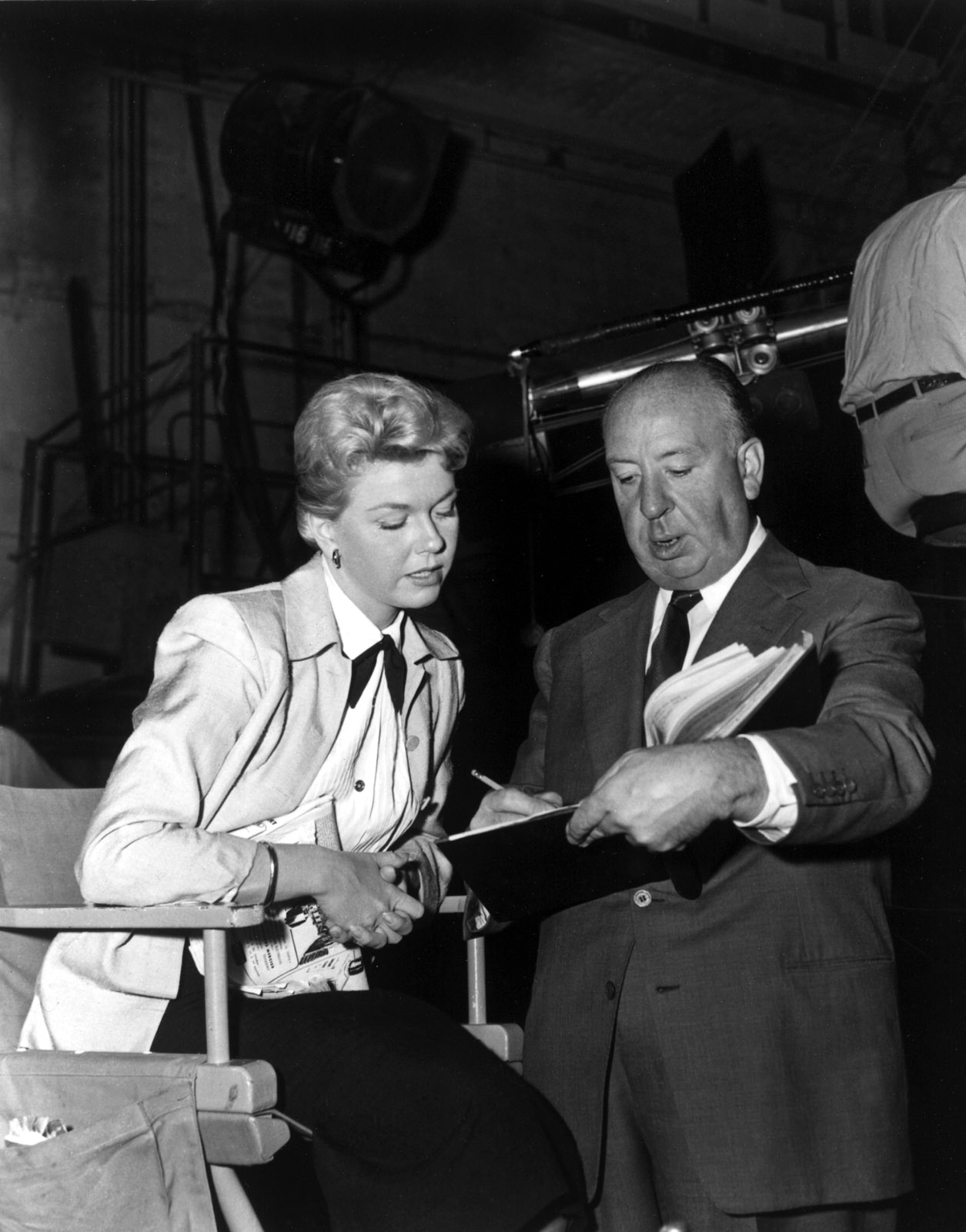
Doris Day, who turns 96 today, with director Alfred Hitchcock on the set of The Man Who Knew Too Much in 1955:

Actor in the Spotlight:

Christina Ricci’s career is put in focus by Fandor in this video chronicling her evolution from child star to the actress she is today:

[embedded content]

Movie Food of the Day:

The latest edition of Binging With Babish shows us how to make the creme brulee from Amelie:

[embedded content]

Video Essay of the Day:

The latest video essay from Rossatron looks at the simple action of the Brandon Lee martial arts movie Rapid Action:

[embedded content]

Classic Trailer of the Day:

Today is the 50th anniversary of the release of 2001: A Space Odyssey. Watch the original trailer for Stanley Kubrick’s classic sci-fi movie below.

[embedded content]

and

Let’s block ads! (Why?)


No Image

Trump Administration Identifies Chinese Tariff Targets

President Trump holds up a signed presidential memorandum aimed at what he calls Chinese economic aggression in the Roosevelt Room at the White House on March 22, 2018.

Mark Wilson/Getty Images

hide caption

toggle caption

Mark Wilson/Getty Images

Updated at 2 a.m. ET on Wednesday

The Trump administration published a list Tuesday of Chinese exports that could soon be subject to a steep 25 percent tariff.

The list covers some $50 billion worth of Chinese goods in sectors such as aerospace, robotics, IT and machinery.

President Trump directed his trade advisers to develop the list last month, as a way to punish China for what the White House calls unfair treatment of American intellectual property. Trump has also ordered his treasury secretary to weigh new limits on Chinese investment in the United States.

The list of tariff targets was made public after the market closed on Tuesday. News of retaliatory tariffs from China on $3 billion worth of U.S. goods contributed to sharp sell-off on Wall Street Monday.

The administration will solicit written comments on the proposed tariff targets through May 11 and hold a hearing on May 15. Supporters and opponents began weighing in as soon as the list was released.

China’s embassy in Washington, D.C., issued a statement early Wednesday saying Beijing “strongly condemns and firmly opposes” the proposed list and said it “gravely” violates the “fundamental principles and values of the WTO.”

“As the Chinese saying goes, it is only polite to reciprocate,” the statement continued. “The Chinese side will resort to the WTO dispute settlement mechanism and take corresponding measures of equal scale and strength against U.S. products in accordance with Chinese law.”

The U.S. Chamber of Commerce said it shares the president’s concern with China’s conduct but warned tariffs would simply raise prices on U.S. consumers and businesses.

“The administration is rightly focused on restoring equity and fairness in our trade relationship with China,” said Myron Brilliant, executive vice president and head of international affairs at the chamber. “However, imposing taxes on products used daily by American consumers and job creators is not the way to achieve those ends.”

The targeted items were chosen in an effort to minimize the impact on ordinary consumers. But that did little to mollify critics.

“While we are pleased that many everyday products such as clothing and shoes are not on the list, we remain concerned that other goods such as consumer electronics and home appliances are targets,” said Matthew Shay, president of the National Retail Federation. “As we’ve said all along, tariffs are taxes on consumers and a drag on the nation’s economy.”

The Alliance for American Manufacturing — a coalition made up of U.S. steel manufacturers and the steelworkers union — was more encouraging.

“If China doesn’t play by the rules, it should lose some of its access to the U.S. market,” said alliance president Scott Paul. “Otherwise, nothing will change and American jobs will continue to suffer at the hands of Beijing’s practices.”

The U.S. had a $337 billion trade deficit with China last year, 9 percent larger than the year before. Excluding services, where the U.S. enjoys a surplus, the trade deficit was $375 billion.

American businesses have long complained about being forced to partner with Chinese firms and share their technology as a price of doing business in the fast-growing Chinese market. China has pledged to halt such forced technology transfers. But similar promises in the past have gone unmet.

The tariffs on China are the latest in a series of protectionist moves announced by the administration in recent weeks. The White House also ordered tariffs on imported solar panels, washing machines and steel and aluminum, though it granted temporary exemptions from the steel and aluminum levies to some of the country’s biggest trading partners.

Experts say the glut of steel and aluminum on the world market is largely a product of over-production in China, although China is not a large, direct supplier of those metals to the U.S.

On Monday, China announced tariffs of its own on exports from the U.S. including pork, nuts and sparkling wine. Although the immediate impact of those tariffs was limited, they fueled concern about an escalating trade war.

Let’s block ads! (Why?)


No Image

Federal Efforts To Control Rare And Deadly Bacteria Working

The CDC is trying to stop E. coli and other bacteria that have become resistant to antibiotics because they can cause a deadly infection.

Science Photo Library/Getty Images/Science Photo Libra

hide caption

toggle caption

Science Photo Library/Getty Images/Science Photo Libra

Federal health officials say a network they set up last year to identify deadly “nightmare bacteria” is helping control these germs, but the system would be more effective if more hospitals and doctors participated.

A new study from the Centers for Disease Control and Prevention focuses on particularly odious germs that live primarily in the gut and cannot be killed with “antibiotics of last resort,” called carbapenems.

CDC Deputy Director Dr. Anne Schuchat calls them “nightmare bacteria” because “they are virtually untreatable.” As many as half of patients with these infections die, she says.

These bacteria are known as “enterobacteriaceae,” and can include E. coli, Klebsiella, and Enterobacter. They can cause urinary tract infections and sepsis. They normally respond to antibiotics unless they have taken up a trait that causes drug resistance.

The CDC identified more than 1,400 people who tested positive for these kinds of germs last year, including 221 who harbored newer, rare variants that have not yet spread across the country. They are most often found in people who have spent time in nursing homes and hospitals.

One form of resistance, known as KPC, has already spread widely throughout the U.S. since it was first isolated in North Carolina back in 2001. But the CDC is trying to prevent four other strains, which have cropped up in isolated pockets, from taking hold.

As part of that effort, in January 2017 the CDC established a nationwide network of labs to make it easier and faster to identify these killer bacteria. The CDC now reports that the first nine months of that effort were successful, though they turned up more of these rare germs than Schuchat expected.

“These rare resistance patterns were widespread,” she tells NPR. “Basically no age, race or gender was spared.”

But detecting these rare germs also presents an opportunity. Once a case is detected, the CDC, along with state and local health officials, can swoop in and reduce the chance that these germs will spread. Infection control measures in nursing homes and hospitals can be ramped up. Medical personnel and family members who have been in close contact with these patients can be tested rapidly to see if they are also carrying the dangerous bacteria.

“Because of the additional testing capacity that we have, we have found a lot of these scary bacteria around the country but we’ve found them in ones and twos and not everywhere,” Schuchat says. “So there’s a chance to keep them from becoming widespread.”

That effort appears to be working. The percentage of bacteria carrying these potentially deadly drug-resistance features is on the decline, according to the CDC’s new “Vital Signs” report in Morbidity and Mortality Weekly Report.

The CDC is publicizing these efforts in order to encourage more doctors and hospitals to send their samples along to state testing labs or one of the seven labs that the CDC has established to run these samples quickly.

And, despite gains in the United States, the problem is growing rapidly worse elsewhere in the world. The use – and misuse – of antibiotics is increasing quickly, especially in countries without the latest medical care.

“We have to be doing this not only in the U.S. but across the world because this problem is definitely worldwide,” says Dr. Jason Newland, a pediatrician at Washington University in St. Louis and a spokesman for the Infectious Diseases Society of America.

Indeed, at least some of the cases the CDC identified were among people who had surgery overseas and got ill once they returned home.

“So if you have had a healthcare procedure outside the country, you should tell your doctor that, if you’re sick,” Schuchat advises.

Let’s block ads! (Why?)


No Image

Today in Movie Culture: The Evolution of Rocky Balboa, Realism in Post-Apocalyptic Cinema and More

Here are a bunch of little bites to satisfy your hunger for movie culture:

Franchise in Focus:

As Creed II begins production this week, here’s Luis Azevedo with personal video for Fandor on the evolution of Rocky Balboa through the RockyCreed franchise:

[embedded content]

Easter Eggs of the Day:

Mr. Sunday Movies humorously tries his best to highlight all the Easter eggs, references and cameos in Ready Player One:

[embedded content]

Fan Build of the Day:

Learn how to make your own cheap DIY graboid creature from Tremors with this Backyard FX video from Indy Mogul:

[embedded content]

Cosplay of the Day:

For a more impressive custom fan build, check out this showcase of a K-2SO puppet cosplay inspired by the droid from Rogue One: A Star Wars Story care of Tested:

[embedded content]

Vintage Image of the Day:

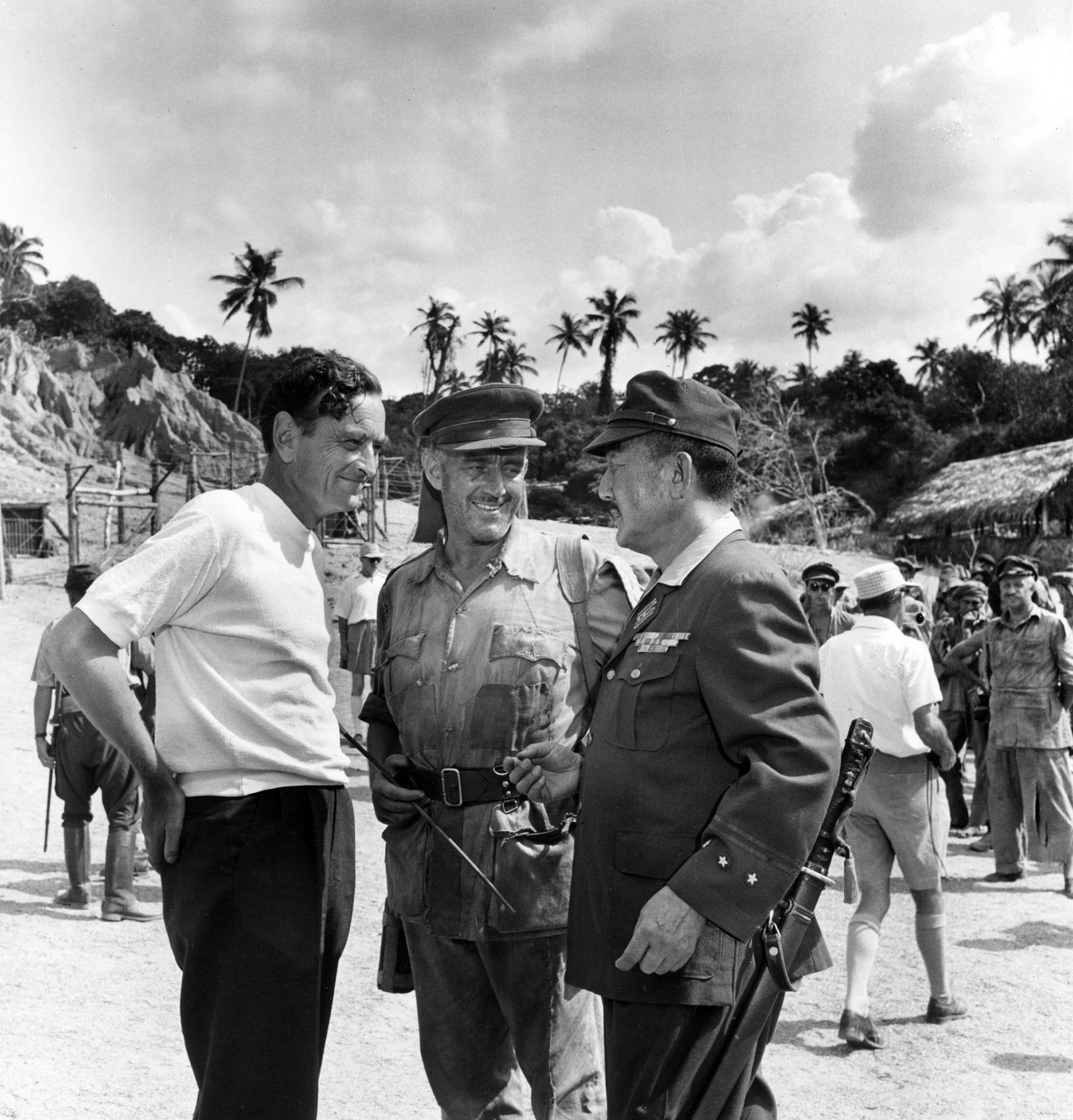
Sir Alec Guinness, who was born on this day in 1914, with co-star Sessue Hayakawa and director David Lean on the set of 1957’s The Bridge on the River Kwai:

Actor in the Spotlight:

For Vanity Fair, Jeff Goldblum breaks down his career and movie roles from Death Wish to Isle of Dogs:

[embedded content]

Movie Comparison of the Day:

This video essay from Like Stories of Old compares the dreamlike romances of Call Me By Your Name and Before Sunrise:

[embedded content]

Genre Showcase of the Day:

Supercut master Jacob T. Swinney mixes moments from post-apocalyptic movies with documentary footage in this video for Talkhouse about a dark but plausible future:

[embedded content]

Video Essay of the Day:

Rob Ager made a 67-minute video essay analyzing the character of Buffalo Bill in The Silence of the Lambs. Here’s an excerpt that will make you check out the full version for sure:

[embedded content]

Classic Trailer of the Day:

This week is the 20th anniversary of the release of Lost in Space, based on the classic TV series. Watch the original trailer for the movie below.

[embedded content]

and

Let’s block ads! (Why?)


No Image

Bench Player Carries Villanova To Second Title In Three Years Over Michigan

Donte DiVincenzo of the Villanova Wildcats drives to the basket Monday night against Isaiah Livers of the Michigan Wolverines in the first half during the 2018 NCAA Men’s Final Four National Championship game at the Alamodome in San Antonio. DiVincenzo came off the bench to score 18 points in the half and 31 in the game.

Pool/Getty Images

hide caption

toggle caption

Pool/Getty Images

Through the first seven minutes of Monday night’s men’s college basketball championship in San Antonio, the Michigan Wolverines were feeling good. They’d held Villanova’s vaunted, best-in-the-nation offense to eight points, running their shooters off the three-point line while pounding the ball inside to German giant Moe Wagner.

Then the Wildcats’ Donte DiVincenzo got up off the bench.

The sophomore guard dropped in 18 points on 8-10 shooting before halftime, providing nearly half of Villanova’s scoring as they went into the locker room up 37-28. Michigan never got close again and Villanova won its second title in three years, 79-62.

DiVincenzo finished with 31 points — a title game record — plus 5 rebounds and two emphatic blocked shots. Junior guard Mikal Bridges added another 19 points.

Wagner finished with 16 points and 7 rebounds for the Wolverines, struggling to find his rhythm again after Villanova switched defensive tactics against him in the first half, focusing on keeping the ball out of the junior forward’s hands. Senior guard Muhammad-Ali Abdur-Rahkman had 23 points.

The win marks the second athletic title in three months for the Philadelphia area, following the Eagles win over the New England Patriots in the Super Bowl. Just as the city did ahead of that game, the suburban school had light poles on campus greased to keep celebrating fans from doing anything too dangerous.

Let’s block ads! (Why?)


No Image

The Scarcity Trap: Why We Keep Digging When We're Stuck In A Hole

Scarcity can make it difficult for us to focus on anything other than the problem right in front of us.

Gary Waters /Getty Images/Ikon Images

Have you ever noticed that when something important is missing in your life, your brain can only seem to focus on that missing thing?

Two researchers have dubbed this phenomenon scarcity, and they say it touches on many aspects of our lives.

“It leads you to take certain behaviors that in the short term help you to manage scarcity, but in the long term only make matters worse,” says Sendhil Mullaianathan, an economics professor at Harvard University.

Several years ago, he and Eldar Shafir, a psychology professor at Princeton, started researching this idea. Their theory was this: When you’re really desperate for something, you can focus on it so obsessively there’s no room for anything else. The time-starved spend much of their mental energy juggling time. People with little money worry constantly about making ends meet.

Scarcity takes a huge toll. It robs people of insight. And it helps to explain why, when we’re in a hole, we sometimes dig ourselves even deeper.

This week on Hidden Brain, we’ll explore the concept of scarcity and how it affects people across the globe — from sugar cane farmers in India to time-starved physicians in the United States.

Hidden Brain is hosted by Shankar Vedantam and produced by Jennifer Schmidt, Rhaina Cohen, Parth Shah, and Laura Kwerel. Our supervising producer is Tara Boyle. You can follow us on Twitter @hiddenbrain, and listen for Hidden Brain stories each week on your local public radio station.

Let’s block ads! (Why?)


No Image

To Treat Pain, PTSD And Other Ills, Some Vets Try Tai Chi

Veterans in Murfreesboro, Tenn., enjoy a wheelchair tai chi class; other alternative health programs now commonly offered at VA hospitals in the U.S. include yoga, mindfulness training and art therapy.

Blake Farmer/Nashville Public Radio

hide caption

toggle caption

Blake Farmer/Nashville Public Radio

Every week in Murfreesboro, Tenn., Zibin Guo guides veterans in wheelchairs through slow-motion tai chi poses as a Bluetooth speaker plays soothing instrumental music.

“Cloudy hands to the right, cloudy hands to the left,” he tells them. “Now we’re going to open your arms, grab the wheels and 180-degree turn.”

The participants swivel about-face and continue to the next pose. Guo, a medical anthropologist at the University of Tennessee at Chattanooga, has modified his tai chi to work from a seated position. Even though many of the participants are not wheelchair-bound, using the mobile chairs makes it easier for them to get through a half-hour of movement.

The U.S. Department of Veterans Affairs has given $120,000 in grant money to Guo to spread his special wheelchair tai chi curriculum. He started in Chattanooga, and has expanded his class offerings to Murfreesboro.

This idea of going beyond prescriptions — and especially beyond opioids — in dealing with different sorts of pain and trauma has become a focus of the VA nationally.

In Tennessee, nearly a quarter of all VA patients with an active medical prescription were on opioids in 2012. That number is now down to 15 percent, but that’s still higher than in most other parts of the country.

According to a national survey from 2015, nearly every VA hospital now offers some kind of alternative health treatment — like yoga, mindfulness and art therapy.

Guo is teaching people in a half dozen VA hospitals in Florida, Texas, Utah and Arizona to use his version of tai chi. He believes the focus on breathing and mindfulness — paired with manageable physical activity — can help ease a variety of ailments.

“When you have a good amount of body harmony, people tend to engage in proactive life,” he says, “so that helps with all kinds of symptoms.”

In addition to making a vet feel better physically, the VA also hopes these alternative therapies might help ease symptoms of conditions like post-traumatic stress disorder.

Medical anthropologist Zibin Guo (center) adapted tai chi for people with limited mobility. Though there’s little research evidence confirming that tai chi eases drug cravings or symptoms of post-traumatic stress, the veterans in Guo’s class say the program helps them.

Blake Farmer/Nashville Public Radio

hide caption

toggle caption

Blake Farmer/Nashville Public Radio

Thomas Sales, of Nashville, Tenn., says his latest panic attack caught him by surprise. “Night before last, when we had the thunderstorm,” he says. “The thunder is a big trigger for some people.”

It’s been 25 years after Sales fought in the first Gulf War with the Navy Special Warfare Command, and he still has panic attacks regularly.

“You’ll find yourself flashing back to being out there with the fellas, and you’ll just kind of snap,” he says. “And I found myself, for some reason, thinking about doing the breathing techniques [from tai chi], and doing the ‘heaven and earth,’ and then breathing deep and slow.”

Sales says he knows it must look crazy to some people when he reaches to the sky and then sweeps his arms to the ground. There was a time when he would have agreed. Most of the patients in this class had some skepticism going into the tai chi program. But Vietnam veteran Jim Berry of Spring Hill, Tenn., says he’s now convinced of its value.

“My daughter sent me a t-shirt that sums it up,” he says. “Tai chi is more than old folks chasing trees.”

Berry credits meditation and tai chi with helping him quit smoking. “No cigarettes for three months now,” he says.

Zarita Croney, a veteran with the National Guard, says tai chi has helped her with chemical dependency. She now makes the nearly two-hour drive from Hopkinsville, Ky., to Murfreesboro each week, and has reduced her use of pills for pain.

“My whole life … revolved around, ‘Oh shoot, when can I take my next pill?’ ” Croney recalls. “I’ve gone from about 90 percent of my day being on my bed to being able to come out and be social.”

The VA has been aggressively trying to wean vets off high-powered opioids — using prescription data as a key measurement to judge how its hospitals across the country are doing with that goal.

The VA acknowledges that there’s little evidence at this point that tai chi or mindfulness therapy or acupuncture will ease PTSD or addiction, though recently there has been research into the quality of life benefits of tai chi among the elderly.

But physicians say they suspect many of the opioisa aren’t always helping veterans either, and the drugs carry more risks.

Aaron Grobengieser, who oversees alternative medicine at the VA hospital in Murfreesboro, says tai chi won’t replace medication. But it might help reduce prescriptions, and the agency plans to start measuring that.

“I believe this is going to be an avenue,” he says, “to really help address that group of folks [who are] looking for ways to manage those types of conditions without popping another pill.”

This story is part of NPR’s reporting partnership with Nashville Public Radio and Kaiser Health News.

Let’s block ads! (Why?)