
China Hits Back On Trade Dispute, Slapping Tariffs On 128 U.S. Products

Imported nuts from the United States are displayed for sale at a supermarket in Beijing, Monday, April 2, 2018. China raised import duties on U.S. pork, fruit and other products Monday.
Andy Wong/AP
hide caption
toggle caption
Andy Wong/AP
China announced late Sunday that it would retaliate for the Trump administration’s tariffs on steel and aluminum by imposing its own import charges on a list of 128 U.S. goods, including agricultural products ranging from fruit to frozen pork.
The new tariffs, which China’s Ministry of Finance says begin on Monday, add fuel to what many economists fear is a burgeoning trade war between the two economic superpowers.
Beijing said it was suspending its obligations to the World Trade Organization to reduce tariffs on U.S. goods and would instead impose a 15 percent tariff on 120 U.S. goods, including fruit.
On pork and seven other products, the duty would be 25 percent, the Ministry of Commerce said, according to Xinhua news agency.
Beijing had warned last month that it was considering the tariffs on a range of products. It seems to have followed that script. Other items include wine and nuts, as well as aluminum scrap.
The ministry said the U.S. had “seriously violated” the free-trade principles in the WTO rules.
“China’s suspension of some of its obligations to the United States is its legitimate right as a member of the World Trade Organization,” the Chinese finance ministry said in a statement, according to Reuters.
The differences between the two countries should be resolved through dialogue and negotiation, the statement added.
The salvo from China follows the U.S. imposition of tariffs of 25 percent on steel and 10 percent on aluminum that were initially applied to several trading partners. However, the European Union, Argentina, Australia, Brazil, Canada, Mexico and South Korea have all since been temporarily exempted, while the White House has threatened further tariffs on China.
Last month, President Trump set in motion a further $60 billion in tariffs on Chinese imports to punish Beijing over the “theft” of intellectual property.
The South China Morning Post writes:
“… Beijing has so far held fire against major agricultural products such as soybeans or major industries such as aerospace giant Boeing – items that state-run daily Global Times suggests should be targeted.
The nationalistic newspaper said in an editorial last week that China has ‘nearly completed its list of retaliatory tariffs on US products and will release it soon.’
‘The list will involve major Chinese imports from the US,’ the newspaper wrote, without saying which items were on the document.”
A Sampling Of Alt.Latino Gems

Alt.Latino has discovered some new musical gems and gives us a sampling.
KORVA COLEMAN, HOST:
Our friend Felix Contreras of NPR Music’s Alt.Latino visits us from time to time. And he usually tells us what he’s going to play. But every once in a while, he puts us hosts in the hot seat. And so he’s given me a bucket-load of songs where I get to choose my faves without telling me beforehand what they are. And Felix Contreras joins us now. Thank you for the music, Felix.
FELIX CONTRERAS, BYLINE: Good morning. You’re welcome. And this is so much fun.
COLEMAN: I’m happy to talk to you, Felix. How are you?
CONTRERAS: (Laughter) I’m doing well. This is going to be cool.
COLEMAN: I have to say this was really intriguing this week to hear all of this music that you had prepared and not really have any idea of what I was going to receive. So before we get into this, where did you find this music?
CONTRERAS: This is going to be on our next podcast/radio show – the 2018 spring new music extravaganza that we’ll have on the air this week. And I get it from all kinds of places – publicists, musicians, friends, the inter-webs. All kinds of stuff comes in from everywhere. And we select the music and put it on the air and share it.
COLEMAN: OK. Here’s my first pick. We must play absolutely everything with congas in it.
(SOUNDBITE OF SONG, “TANGA BUENA”)
TANGA: (Singing in Spanish).
CONTRERAS: OK. This is Latin music from Vancouver, OK?
COLEMAN: What?
CONTRERAS: This is a band – yeah. This is a band called Tanga. They’re Vancouver-based. They have three albums out. And it’s a mashup of, like, different types of stuff – funky grooves, dancehall, a little bit of cumbia. This is their third album. It’s called “Reencarnacion” – reincarnation. And this is a song called “Tanga Buena.” And it really does reflect just who they are or what they’re about – a little mashup of hip-hop and all-of-the-above really funky cool music. And I knew you would like this one.
(SOUNDBITE OF SONG, “TANGA BUENA”)
TANGA: (Singing in Spanish).
COLEMAN: All right. This next music pulled me in with its cheerfulness. And then I listen more closely. And it just about broke my heart – gorgeous music about life circumstances that may never change for somebody.
(SOUNDBITE OF SONG, “MURO”)
THE MEXICAN STANDOFF: (Singing) I was good at school. I never missed a day, played a lot of sports, got a lot of A’s, wanted to be a doctor someday. They say I can’t ’cause I’m illegal. Muro, muro – I was born south of the muro.
COLEMAN: Oh, Felix, this broke my heart. I love this.
CONTRERAS: OK. This is a song called “Muro” – the wall. And it’s by a group called Mexican Standoff. So the liveliness, the very energetic spirit you hear is Mexican son jarocho. And this group is called Mexican Standoff. And it’s a collective of son jarocho musicians in Southern California. And they get together to make songs that have a very direct political statement. And this is the most recent one, along with the video – very topical, very direct. And yeah, there are some circumstances in the song that reflect the reality of what’s going on right now.
(SOUNDBITE OF SONG, “MURO”)
THE MEXICN STANDOFF: (Singing) Muro, muro – I grew up north of the muro.
COLEMAN: Felix, this next song is one that I adored. In fact, it could be the one song out of all of them that you gave to me that I found the most attractive.
(SOUNDBITE OF SONG, “I’M LATE”)
KERA AND THE LESBIANS: (Singing) Darling, don’t go. It’s (unintelligible) so close and yet so far somehow. One thing I know – you and me and the world break free.
COLEMAN: Whoa. Who is this woman?
KERA AND THE LESBIANS: This is a band called Kera & The Lesbians, OK? And the curious thing is that the Lesbians are all guys, OK?
COLEMAN: OK (laughter).
CONTRERAS: It’s a tongue-in-cheek thing. But Kera is definitely a queer performer. And her music is so expressive. You immediately latch onto it and find things for yourself in it. And you obviously found something in it. I really like this track a lot.
COLEMAN: I do, too. OK, Felix. I have one more pick. Let’s listen to it.
(SOUNDBITE OF SONG, “CUANDO VOY A MI TRABAJO PIENSO EN TI”)
ELEANOR DUBINSKY: (Singing in Spanish).
CONTRERAS: This is an artist named Eleanor Dubinsky. And this is a song called “Cuando Voy A Mi Trabajo” – when I go to work, when I go to my job. Eleanor Dubinsky is a New York City-based musician who has sort of absorbed all these different cultures and all these different languages. And she said she wrote this song as an homage to the number of immigrants working in New York City, people who go to work and can’t share the day-to-day lives with their families because their families are left behind.
(SOUNDBITE OF SONG, “CUANDO VOY A MI TRABAJO PIENSO EN TI”)
DUBINSKY: (Singing in French).
COLEMAN: Felix Contreras is the host of NPR Music’s Alt.Latino, a podcast and radio show about Latino arts and culture. And he’ll feature these songs and more on his next show coming this week. Felix, thank you so much.
CONTRERAS: Thank you, Korva.
(SOUNDBITE OF SONG, “CUANDO VOY A MI TRABAJO PIENSO EN TI”)
DUBINSKY: (Singing) I’m working so hard for every dollar, sending money home to my love. Immigration – there’s no consolation. I’m working so hard for every dollar, sending money home to my love…
Copyright © 2018 NPR. All rights reserved. Visit our website terms of use and permissions pages at www.npr.org for further information.
NPR transcripts are created on a rush deadline by Verb8tm, Inc., an NPR contractor, and produced using a proprietary transcription process developed with NPR. This text may not be in its final form and may be updated or revised in the future. Accuracy and availability may vary. The authoritative record of NPR’s programming is the audio record.
What To Watch For In The NCAA Women's Basketball Championship
NPR’s Korva Coleman previews the NCAA women’s basketball championship game between Mississippi State and Notre Dame with ESPN’s Maria Taylor.
KORVA COLEMAN, HOST:
It’s Mississippi State versus Notre Dame in tonight’s NCAA Women’s College Basketball Championship. This comes after a dramatic upset Friday night when the undefeated UConn Huskies lost to Notre Dame in overtime. Mississippi State also needed overtime to beat Louisville to advance to the championship game. Maria Taylor is a college sports analyst and reporter for ESPN. She’s in Columbus, Ohio, for tonight’s game. Maria, welcome to the program.
MARIA TAYLOR: Thanks for having me. I’m glad to be here.
COLEMAN: What’s the mood like in Columbus ahead of tonight’s game?
TAYLOR: First of all, it’s been amazing. We’ve had great attendance. Our first game was a sell-out. And I think the mood is obviously interested to find out who this next national champion’s going to be. Mississippi State has never won a national championship. And obviously, Notre Dame – they are a staple in the Final Four. But it would be just their second national title.
COLEMAN: What can we expect tonight between Mississippi State and Notre Dame? What can we see?
TAYLOR: I think the biggest thing is – for Mississippi State – you’re going to see four seniors that when they showed up at Mississippi State, it wasn’t a common thing that they went to Final Fours. And now they’ve had back-to-back visits. And they’re high-scoring. They were averaging 80 plus points per game in the NCAA Tournament. And then they’ve got Teaira McCowan. That’s 6’7″. And she shoots at like, 60 percent in the paint and is just vicious. She set the rebounds record in an NCAA Tournament.
And then for Notre Dame, you’re going to see a team that has battled through so much adversity. They’ve had four players go down with ACL tears, but they’ve only had three losses on the season. And they’re powered by Arike Ogunbowale, who had 27 points in the Final Four, and big plays from Jackie Young, who’s only a sophomore. But she came in and had 32 points. So both of these teams are scrapping it out. Like, both have unfinished business. Mississippi State was here a season ago. And they said the goal was to get back. Now they’ve done it. And Notre Dame – no one believed they would be here. And they’re just here to prove everyone wrong again.
COLEMAN: There have been a lot of highlights in women’s collegiate basketball this year. Can you recap a few of them for us?
TAYLOR: Obviously, Connecticut – before this loss, they were 36-0. They had not lost since losing the game against Mississippi State a season ago in the national semifinals. And this is the first time that Connecticut has not made it to the national championship in back-to-back years since 2011 – the 2012 season. Another highlight is Notre Dame. They say the turnaround of their season was when they defeated Tennessee at home. They were down by as many as 23 points and basically completed one of the biggest swings we’ve ever seen in point differential to get the victory by double digits.
COLEMAN: How has women’s collegiate basketball grown or expanded its reach, Maria?
TAYLOR: Oh, I would say, like, even this season on ESPN, we decided to add a primetime Thursday night game that would be featured on ESPN, where in past seasons we only had Monday on ESPN2 where a women’s matchup would be featured. People are recognizing the name brands of these schools. If you come and see that Nationwide Arena in Columbus, Ohio, you’re going to see it full of Mississippi State fans, more pouring in from Starkville, Miss., and all over the place because they want to support these teams. And Mississippi State – they have set the record for college basketball attendance in men’s or women’s in the state.
COLEMAN: That’s Maria Taylor, college sports analyst and reporter for ESPN. She’s in Columbus, Ohio, covering tonight’s NCAA Women’s College Basketball Championship. Maria, thank you.
TAYLOR: Thank you so much for having me.
Copyright © 2018 NPR. All rights reserved. Visit our website terms of use and permissions pages at www.npr.org for further information.
NPR transcripts are created on a rush deadline by Verb8tm, Inc., an NPR contractor, and produced using a proprietary transcription process developed with NPR. This text may not be in its final form and may be updated or revised in the future. Accuracy and availability may vary. The authoritative record of NPR’s programming is the audio record.
Kentucky Lawmakers Limit Black Lung Claims Reviews Despite Epidemic

Radiologist Dr. Brandon Crum reviews an X-ray of the lungs of Mackie Branham, who suffers from advanced black lung disease. Dr. Crum is among the Kentucky radiologists now barred from assessing X-rays in state workers’ compensation cases filed by coal miners seeking black lung benefits.
Howard Berkes/NPR
hide caption
toggle caption
Howard Berkes/NPR
A measure signed into law in Kentucky this past week would prevent federally-certified radiologists from judging X-rays in state black lung compensation claims, leaving diagnoses of the disease mostly to physicians who typically work for coal companies.
The new law requires that only pulmonologists — doctors who specialize in the lungs and respiratory system — assess diagnostic black lung X-rays when state black lung claims are filed.
Up until now, radiologists, who work in evaluating all types of X-rays and other diagnostic images, had been allowed to diagnose the disease as well.
Just six pulmonologists in Kentucky have the federal certification to read black lung X-rays and four of them routinely are hired by coal companies or their insurers, according to an NPR review of federal black lung cases.
The two remaining pulmonologists have generally assessed X-rays on behalf of coal miners but one is semi-retired and his federal certification expires June 1.
Among the radiologists excluded by the law is Dr. Brandon Crum, who helped expose the biggest clusters ever documented of complicated black lung, the advanced stage of the fatal disease that strikes coal miners.
“I do believe the coal industry is writing this bill to exclude certain doctors that they don’t like,” said Phillip Wheeler, an attorney in Pikeville, Ky., who represents coal miners seeking state black lung benefits.
Experts in reading X-rays
The changes are part of sweeping reforms to Kentucky workers’ compensation law, known as House Bill 2. Workers’ comp provides medical and wage replacement benefits for miners suffering from black lung.
Dr. Crum is the most visible of the excluded radiologists. His clinic in Coal Run Village, Ky., was the focus of a 2016 study by epidemiologists from the National Institute for Occupational Safety and Health (NIOSH). They verified 60 cases of complicated black lung that had been diagnosed in a period of about 20 months in 2015 and 2016.
NIOSH had previously reported 99 cases nationwide over a five-year period.
At the same time, NPR and Ohio Valley ReSource reported nearly 1,000 cases across central Appalachia, prompting NIOSH epidemiologists to declare it the worst epidemic of complicated black lung they’d ever seen. Our ongoing survey of black lung clinics and law offices has the current count of advanced black lung diagnoses at more than 2,200 since 2010.
“Throughout the United States, I know of nowhere where radiologists are taken completely out of the evaluation for potential black lung disease,” Dr. Crum said. “That’s what we’re primarily trained in.”
Physicians who read chest X-rays for work-related diseases like black lung are known as “B readers” and are certified by NIOSH for both federal and state compensation claims. B readers do not specifically have to be pulmonologists or radiologists, though they can be both.
Radiologists, on the other hand, focus entirely on reading multiple types of X-rays and other diagnostic images.
The law also bars out-of-state radiologists who are both NIOSH-certified B readers and medically-licensed in Kentucky. That includes Dr. Kathleen DePonte, a radiologist in Norton, Va., who has read more than 100,000 black lung X-rays in the past 30 years.
“It is curious to me that the legislators feel that the pulmonologist is more qualified to interpret a chest radiograph than a radiologist is,” Dr. DePonte said.
“This is primarily what radiologists do. It is radiologists who receive all the special training in reading X-rays and other imaging.”
Dr. Edward Petsonk, a pulmonologist at West Virginia University with decades of experience and research focused on black lung, points to a 1999 report of pass-fail statistics for physicians taking the NIOSH B reader examination. Two-thirds of the radiologists passed, while the success rate for pulmonologists was 54 percent.

A comparison of a healthy lung and a lung ravaged by severe black lung disease on display at the National Institute for Occupational Safety and Health in Morgantown, W. Va.
Howard Berkes/NPR
hide caption
toggle caption
Howard Berkes/NPR
Relying on the expertise of industry
Radiologists, pulmonologists and other physicians don’t necessarily read X-rays the same way. Those who work for coal companies tend to be conservative in assessing black lung because the coal companies or their insurers pay black lung benefits. Those reading X-rays on behalf of coal miners are often accused of being too liberal in their assessments.
Judges often decide which assessments count most.
This seemed to frustrate Rep. Adam Koenig, a Republican from Erlanger and the primary sponsor of the changes in the law.
During the House floor debate on the measure, Koenig said one B reader finds black lung 41 percent of the time while another’s rate is 91 percent.
“Obviously we do not have a standardized process so we are trying to standardize it,” Koenig said. “No one here is trying to deny anyone who does that work from getting their black lung claims.”
That’s precisely what the new law will do, argued Rep. Angie Hatton, a Democrat from Whitesburg.
“When we’re finding increased amounts of this illness it seems to me that this is when they need us the most,” Hatton said. “Why are we making it tougher for them to prove their illness?”
In an interview with NPR, Koenig said he “relied on the expertise of those who understand the issue — the industry, coal companies and attorneys.”
He’d heard “anecdotal stories,” he said, about lung cancer being misdiagnosed as black lung.
Early stages of lung cancer and black lung can leave similar masses on lungs, according to West Virginia University’s Dr. Petsonk.
But Dr. Petsonk also noted that coal miners exposed to silica dust “are at an increased risk of lung cancer. They do get lung cancer. Silica is a carcinogen.”

Severe black lung disease deeply scarred the lung of a 61-year-old West Virginia coal miner, which was removed as part of a lung transplant.
Courtesy of NIOSH
hide caption
toggle caption
Courtesy of NIOSH
A miner reacts
Former coal miner William McCool believes he would have been denied state black lung benefits if the new law had been in place when he applied for compensation.
“It’d be pretty much impossible,” McCool said. “I’ve had lung doctors tell me I don’t have black lung.”
McCool said it took two years to win his state claim because the doctors working on behalf of a coal company were conservative in assessing his disease. But the 64-year-old from Letcher County ultimately prevailed and has been diagnosed with advanced disease.
The federal black lung compensation program continues to rely on all NIOSH-certified B readers, whether they are pulmonologists, radiologists or other physicians. But seeking federal benefits instead of state workers’ compensation is not necessarily an easy option.
Dueling assessments in the federal system mean that some miners have waited more than a decade for decisions on federal benefits. Some die before receiving them. State benefits have traditionally been quicker and more generous to miners.
That seems to be changing, said Evan Smith, an attorney at the Appalachian Citizens’ Law Center in Whitesburg.
Smith said the new state law “keeps Kentucky coal miners from using highly qualified and reliable experts to prove their state black lung claims [and] looks like just another step in the race to the bottom to gut worker protections.”
Koenig insisted that’s not the case.
“All we’re doing is making sure that qualified doctors are making these determinations,” Koenig said. “And if this process doesn’t work, I’ll be the first in line to figure out how to do it better.”
Saturday Sports: March Madness, Baseball Begins
Howard Bryant of ESPN talks with NPR’s Scott Simon about the biggest sports stories of the week: March Madness and baseball’s opening day.
SCOTT SIMON, HOST:
And I can’t wait for sports.
(SOUNDBITE OF MUSIC)
SIMON: Thrills, chills, OTs and a huge upset in the women’s Final Four. The men play, too, this weekend. Howard Bryant of ESPN joins us now. Morning, Howard.
HOWARD BRYANT: Good morning, Scott. How are you?
SIMON: Fine, thanks. You don’t get too more exciting games than what we saw last night in the women’s tourney. Mississippi State beat Louisville in overtime, the game that changed – the lead changed 15 times.
BRYANT: Fifteen times, yes. It’s supposed to. It’s an unbelievable tournament. This is what we love about it all. And last year, Mississippi State – who did they beat in the last seconds last year? They beat UConn. And now they’re going back to the championship to try to win the title they didn’t win last year against South Carolina. This is fantastic. And I think that everyone’s talking. Can we once and for all finally leave the women alone? Can we do this? This is two great years in a row that UConn has been defeated – the great UConn. They won one of their games in this tournament by 82 points. And they lost last night on a last-second jumper.
And so all of this conversation has been about whether UConn is bad for women’s basketball because they win all the time – because they were 11-0 in championships. But look at Notre Dame. Notre Dame had four players on their roster on the bench because they had torn ACLs. They played with six players. And they went out and beat the greatest women’s team of all time. This is why we watch the game. Every great team, every great – every sport in its growth years has had a dominant team.
The New York Yankees between 1921 and 1964, Scott – how many times do they go to the World Series? Twenty-nine times. And nobody said that it was – that the sport was imbalanced. Of course, it was. And now UConn – look at them. For all the talk, two years in a row, they haven’t gotten to the championship. The other teams are getting better. And this is exactly what the sport needs.
SIMON: Arike Ogunbowale of Milwaukee. Nothing but net in that last-second clutch. It was a great shot, wasn’t it?
BRYANT: One, it’s a beautiful shot, as well. You can see the confidence. She wanted to clear out. She’s like, I’m taking this, and I’m making it. And Kobe Bryant called her to say congratulations because she said she had the mamba mentality when she took that shot.
SIMON: Men are playing, too, as we note. Speaking of Loyola Chicago, (laughter) and I know there are three other teams. Can Sister Jean bring them home?
BRYANT: I think so. Michigan plays great defense, and Michigan is phenomenal.
SIMON: Loyola plays Michigan. Kansas plays Villanova.
BRYANT: Kansas plays Villanova. And Michigan plays outstanding defense. And you watch them play, and they can stretch out. And they’re going to make life difficult. But this is not a fluke because in any sort a tournament, you can win. This is why they – you love the short tournament. Can you win seven games in a row? If you can, you can be the champion. You don’t have to be great for eight months in the NCAA tournament. And they’re doing this. Loyola is doing this by – they get so many layups. They pressure the defense. They do – they are shooting 40 percent from three, and they are attacking every defense they play. And I think a little late, they look – the opposition is going, wait a minute. We’re not supposed to be losing to these guys. We’re losing to these guys. And then panic sets in, too.
SIMON: Yeah.
BRYANT: As for Villanova, Scott, I think – even as a Temple University guy, I think Villanova is going to be the best team. I think they’re gonna win the championship, even though Kansas is really, really good. Wouldn’t surprise me if Kansas won. But for some reason, there’s just something about Villanova and Jalen Brunson that I like.
SIMON: We’ll see. Howard Bryant of ESPN, thanks so much.
Copyright © 2018 NPR. All rights reserved. Visit our website terms of use and permissions pages at www.npr.org for further information.
NPR transcripts are created on a rush deadline by Verb8tm, Inc., an NPR contractor, and produced using a proprietary transcription process developed with NPR. This text may not be in its final form and may be updated or revised in the future. Accuracy and availability may vary. The authoritative record of NPR’s programming is the audio record.
The Week in Movie News: 'Captain Marvel' Reveals Resurrected Characters, 'Tintin' Sequel Still On and More

Need a quick recap on the past week in movie news? Here are the highlights:
BIG NEWS
Captain Marvel will resurrect villains of MCU past: Marvel’s Captain Marvel began production this week with Brie Larson starring as the cosmic superheroine. The movie will be a prequel, so it shouldn’t be a surprise, but three new characters just revealed include longtime MCU regular Agent Coulson (Clark Gregg) and Guardians of the Galaxy villains Ronan the Accuser (Lee Pace) and Korath the Pursuer (Djimon Hounsou), all of whom have died in past installments. Read more here.

GREAT NEWS
Sebastian Stan is headed for stardom: Speaking of MCU staples, Sebastian Stan is one of the most famous sidekicks and supporting players in the franchise, but it’s time for the man known as Bucky Barnes and the Winter Soldier to get a much deserved leading man gig with Beat the River. Read more here and check out our focus on Stan’s MCU character ahead of Avengers: Infinity War here.
SURPRISING NEWS
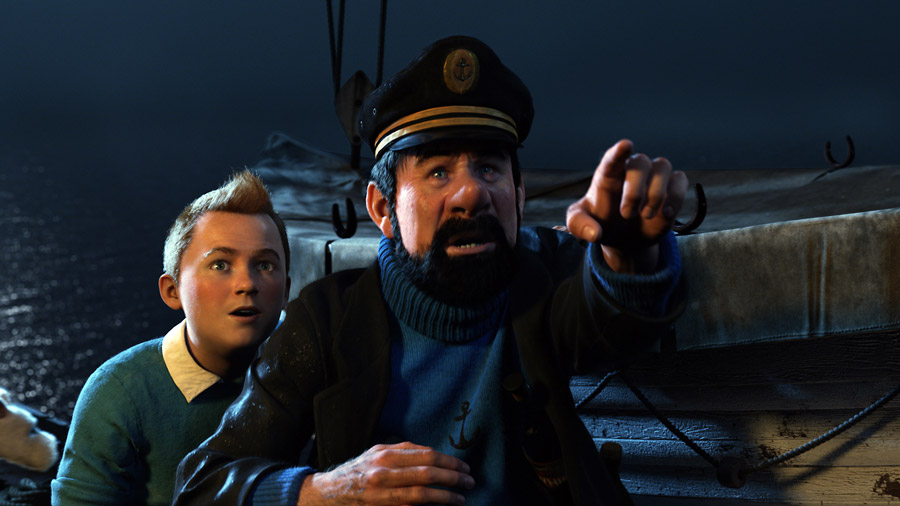
Peter Jackson is still making a Tintin sequel: Steven Spielberg gave an update on a sequel we figured wasn’t actually happening: apparently Peter Jackson is still set to helm a secondAdventures of Tintin movie, possibly for release early next decade. Read more here.
EXCLUSIVE BUZZ
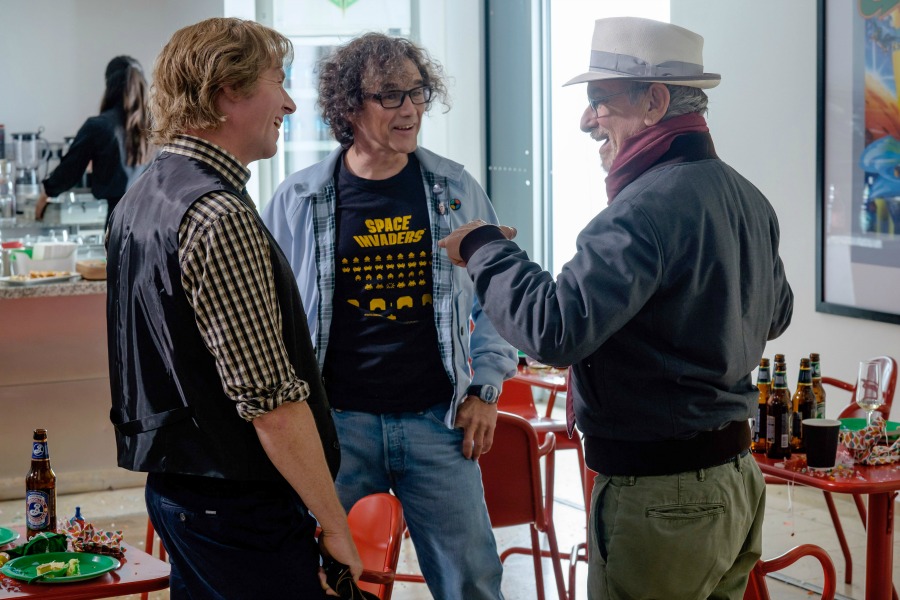
Steven Spielberg on the future of virtual reality: We talked to Ready Player One director Steven Spielberg about the new movie and where he sees VR heading in real life. Read the whole interview here.

COOL CULTURE
Avengers Franchise Recap: With one month to go before the release of Avengers: Infinity War, recaps of the many previous Marvel Cinematic Universe installments have arrived online. Watch one of the best of these supercut refreshers below.
[embedded content]
MUST-WATCH TRAILERS
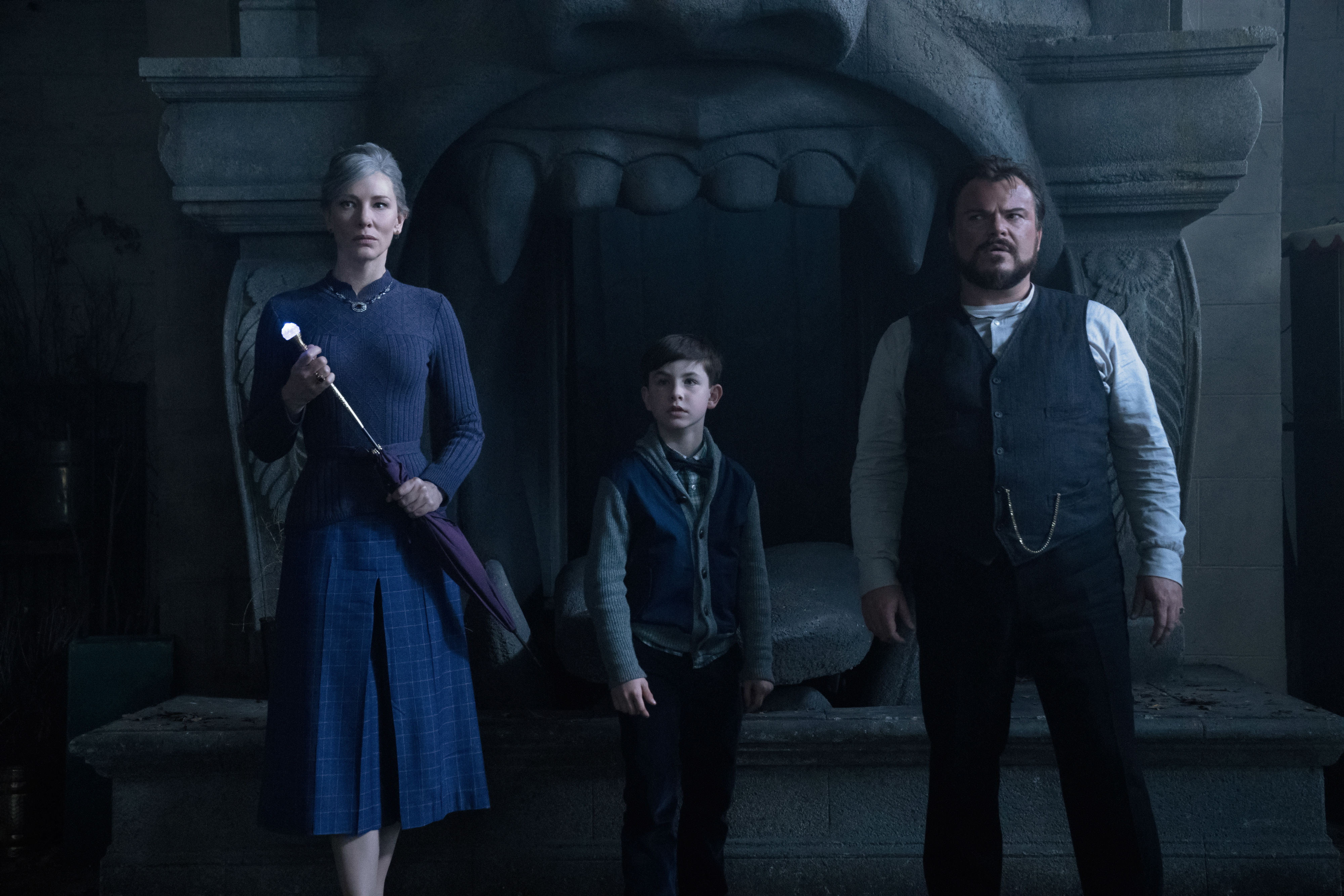
The House with a Clock in its Walls is a YA movie with a two-time Oscar winner in its cast: Eli Roth has directed a young adult horror fantasy film starring Cate Blanchett and Jack Black, and the first trailer makes it look just scary enough and also equally enchanting. Watch it below.
[embedded content]

Terminal teases a noir-tinged thriller: Speaking of Oscar-caliber actresses, recent nominee Margot Robbie leads the first trailer for the neo-noir assassin movie Terminal. Watch it below.
[embedded content]

First Reformed first trailer features Ethan Hawke as a grieving father: Ethan Hawke stars as a priest alongside Amanda Seyfried in the latest from Paul Schrader, First Reformed, which won an award at the Venice Film Festival last fall. Watch the first trailer here:
[embedded content]
and
Advertisers Pull Support From Laura Ingraham's Show After Tweet Mocking Parkland Teen
At least seven companies have pulled their ads from Laura Ingraham’s show on Fox News after Ingraham said David Hogg, a survivor of the Parkland, Fla., shooting, was whining about college application rejections. Ingraham has apologized for her remarks, but Hogg isn’t relenting.
AILSA CHANG, HOST:
The cable television host Laura Ingraham has had a bad 48 hours. It began when the Fox News personality called out David Hogg, a survivor of the Parkland shooting, on Twitter for, quote, “whining about being rejected from four colleges.” Ingraham was widely criticized for the tweet, but the object of her criticism, David Hogg, responded differently. He tweeted to Ingraham asking her to name her biggest advertisers. Numerous Twitter followers obliged, and in the ensuing hours, at least eight of those advertisers have pulled their sponsorship from her program, “The Ingram Angle.”
To talk more about what that means for Ingraham and Fox, we’re joined by NPR media correspondent David Folkenflik. Hey, David.
DAVID FOLKENFLIK, BYLINE: Hey, Ailsa.
CHANG: So can you just briefly walk us through some of the advertisers who’ve pulled their sponsorship as of now?
FOLKENFLIK: Sure. Well, let’s remember she’s a big primetime show for Fox News, the leading cable news channel. So there are some major folks there. Some of the advertisers that have confirmed that they’ve pulled ads are Johnson & Johnson, the home products store Wayfair, Liberty Mutual a little earlier this afternoon and Hulu. And one of the most surprising things about that – it’s a popular video streaming service, offers “Handmaid’s Tale” and others – is that Rupert Murdoch’s 21st Century Fox, which is the parent company of Fox News, itself pulled ads from Ingraham’s show. I think it’s a sign of the kind of pressure they felt themselves to be under both from their clients and from a lot of their producers in the creative community out in Hollywood.
CHANG: But Ingraham is known for being a brash, provocative voice. I mean, that’s her currency. So why has this tweet against this person touched such a nerve?
FOLKENFLIK: Well, let’s not overlook what he survived and what his classmates survived at Parkland – a massacre which took out so many young people filled with promise down there at that high school in Florida. And that – you know, it really weighs upon people as they think about it and think about what she criticized him for in this tweet. She repeated a conservative site’s claim that he was whining about being, in their words, dinged by UCLA with his grade point average. This is just sort of personal. It’s not just disdain. It’s contempt for a guy who’s only in the public eye for what he’s endured and what he’s decided to do about it.
CHANG: Is it surprising to you that a high school student was able to put a boycott like this in motion so easily, so quickly?
FOLKENFLIK: Well, you know, obviously the massacre itself – the nature of that has to take effect. But when we think about mass killings in this country of late, I think what’s singular about it is that they are young enough to be – these students – to be immediately embraceable by so much of the population, even those who may not politically be drawn to their cause. They’re old enough to be able to articulate their anger and pain in ways that perhaps the survivors of the Newtown massacre were not – those young schoolchildren. And they’re young enough to be masters of social media. And I think they’ve really conquered public rhetoric pretty quickly in a pretty amazing way.
CHANG: This isn’t the first time a Fox News host has had advertisers leave over controversy. I mean, I’m thinking of Bill O’Reilly. And he ultimately lost his program. How significant is this for Ingraham and Fox right now, you think?
FOLKENFLIK: Well, I know for a fact that Fox wanted her to address this. She did address it. She said, I apologize for any upset or hurt my tweet caused him or any of the brave victims of Parkland and then kind of went on to do a little bit of a promotion for her show in certain ways. You know, Bill O’Reilly wasn’t the only one. If you think of Glenn Beck’s departure from Fox News, that was predicated after significant public pressure…
CHANG: Right.
FOLKENFLIK: …On advertisers, many of whom peeled out. Sean Hannity – although he survived, his coverage of the Seth Rich case, making baseless accusations about DNC emails leaks to WikiLeaks – he survived that, but they took a financial hit over that. And, you know, they are concerned about this happening to Ingraham as well. I think we’re going to see how much traction this has.
CHANG: All right, that’s NPR’s David Folkenflik. Thanks, David.
FOLKENFLIK: You bet.
Copyright © 2018 NPR. All rights reserved. Visit our website terms of use and permissions pages at www.npr.org for further information.
NPR transcripts are created on a rush deadline by Verb8tm, Inc., an NPR contractor, and produced using a proprietary transcription process developed with NPR. This text may not be in its final form and may be updated or revised in the future. Accuracy and availability may vary. The authoritative record of NPR’s programming is the audio record.
How Loyola Chicago's Last Final Four Appearance Changed College Basketball
In a true Cinderella story, Loyola Chicago is in the NCAA Men’s basketball Final Four. The last time they were here, 1963, it wasn’t nearly as shocking, but it did help change the face of college basketball.
AILSA CHANG, HOST:
If you’re a college basketball fan and you are not rooting for Kansas, Villanova or Michigan this weekend, just admit it. You’re rooting for Loyola.
ARI SHAPIRO, HOST:
Loyola Chicago, an 11 seed, is everyone’s team now after its incredible run to this weekend’s Final Four in San Antonio.
(SOUNDBITE OF ARCHIVED RECORDING)
UNIDENTIFIED SPORTSCASTER #1: One timeout – they don’t take it.
(CHEERING)
UNIDENTIFIED SPORTSCASTER #1: And the Ramblers are moving on.
SHAPIRO: It also helps to have a team chaplain like 98-year-old Sister Jean, who makes adorable appearances on shows like “Good Morning America.”
(SOUNDBITE OF TV SHOW, “GOOD MORNING AMERICA”)
JEAN DOLORES SCHMIDT: It’s just brought so many happy memories to me, and I’m really happy to be saying good morning to all of America today because…
(LAUGHTER)
SCHMIDT: …All of you are going to be our fans.
UNIDENTIFIED SPORTSCASTER #2: She’s hired.
SHAPIRO: The Ramblers’ Final Four appearance is a big deal because it was such a surprise and hasn’t happened since 1963. And in that first appearance, it was a big deal for a different reason.
CHANG: There used to be an unwritten rule in college basketball. Coaches would not play more than one or two black players at a time. But Loyola coach George Ireland decided not to follow that.
SHAPIRO: For the tournament in 1963, he had four black starters. This was a problem for one of Loyola’s opponents. Mississippi State was an all-white team and wasn’t allowed to play integrated schools.
CHANG: Mississippi’s coach thought his Bulldogs had a shot at the title, though, so the school came up with a plan to sneak its players out of state to make the game against Loyola. Loyola won 61 to 51 in what became known as the Game of Change, opening the path for more integrated teams.
SHAPIRO: And the story doesn’t end there. Loyola made it to the title game to face two-time champion and heavy favorite Cincinnati. The game went to overtime. Here’s the frenzied finish and an ecstatic call by Loyola radio announcer Red Rush.
(SOUNDBITE OF ARCHIVED RECORDING)
RED RUSH: Harkness has got it. Here he goes. He jumps. He passes off to Hunter. Hunter shoots, hitting off the rim. Rouse tips it, scores. It’s over. It’s over. We won. We won. We won. We won the ball game. We won the ball game.
CHANG: Vic Rouse’s putback at the buzzer won the title for Loyola 60 to 58. It was an extraordinary game also because between Loyola and Cincinnati, there were more black players on the court than not.
SHAPIRO: Michael Lenehan as the author of “Ramblers: Loyola Chicago 1963 – The Team That Changed The Color Of College Basketball.”
MICHAEL LENEHAN: People saw that there were seven black players on the floor at the same time, and the world did not come to an end.
SHAPIRO: So no matter what happens for Loyola this weekend, it already has an unbeatable Final Four legacy.
Copyright © 2018 NPR. All rights reserved. Visit our website terms of use and permissions pages at www.npr.org for further information.
NPR transcripts are created on a rush deadline by Verb8tm, Inc., an NPR contractor, and produced using a proprietary transcription process developed with NPR. This text may not be in its final form and may be updated or revised in the future. Accuracy and availability may vary. The authoritative record of NPR’s programming is the audio record.
Time's Running Out For Many Frail, Older People In Puerto Rico

After a lifetime of agricultural work on the U.S. mainland, Ausberto Maldonado retired home to a suburb of San Juan, Puerto Rico. But he has diabetes, and especially since Hurricane Maria, has been struggling to get by.
Sarah Varney/Kaiser Health News
hide caption
toggle caption
Sarah Varney/Kaiser Health News
Straddled across Ausberto Maldonado’s backyard in Bayamon, Puerto Rico, a suburb of San Juan, is a nagging reminder of Hurricane Maria’s destructive power.
“See, that tree broke off that branch, which is as thick as a tree — and now it’s in my yard,” says Maldonado, a 65-year-old retiree.
Rats scurry from under the downed tree, preventing Maldonado from hanging his laundry. To get the tree removed, he must show up in person at a local government office. But the diabetic ulcers on his feet make it painful to walk.
After a lifetime of work on the U.S. mainland picking corn and asparagus and processing chickens in poultry plants, Maldonado returned to Puerto Rico a decade ago to help care for his ailing mother, who has since died. Today the retiree finds himself living day-to-day on the island. He receives $280 a month in Social Security and $89 a month in food stamps — or about $3 a day for food.
Six months after Hurricane Maria devastated Puerto Rico and its economy, the daily indignities are piling up, especially for people who are frail or elderly. Many are finding their current economic straits nearly as threatening as the storm.
The emergency government support that helped pay for some health care and medically related transportation needs of Puerto Ricans after Hurricane Maria is running out. Private donations of water and food have slowed. And it’s not clear who, if anyone, will carry on with that work.
Maldonado opens the cupboards in his tidy kitchen. There are a few cans of corned beef, SpaghettiOs and beans. When I ask him what he usually makes for himself, he sounds wistful.
“When I have enough food, when I do my groceries,” he says, “I have eggs and bread and coffee and juice for breakfast. I would make spaghettis or some sort of salad and maybe a little dessert.”

Though the light in Maldonado’s refrigerator still works, power outages during Hurricane Maria broke the mechanism that helps keep food — and the insulin he depends on — cold.
Sarah Varney/Kaiser Health News
hide caption
toggle caption
Sarah Varney/Kaiser Health News
But, in truth, the oven is unplugged, there is no juice or eggs or lettuce. It has been months since Maldonado has had fresh vegetables in the house.
“When there’s very little, then I kind of go on a diet,” he says.
It was hard enough for the retiree to fill his cupboards before the storm, but now, as many aid groups are winding down their donations, Maldonado needs to find money to buy clean, bottled water and to replace his refrigerator, which was ruined during the hurricane.
To buy groceries, he must wait two weeks for his next Social Security check.
“I’m waiting until the 10th so I can go do my grocery shopping again — if I can find a way to get there,” Maldonado says. “That’s when I would have food again, enough to make three meals — lunch, breakfast and dinner.”
Maintaining a decent diet isn’t simply about staving off hunger; diabetes is consuming Maldonado’s foot, and unless he eats healthy food and takes his insulin, doctors have warned him, his foot will need to be amputated.
Maldonado opens the door to his broken refrigerator and points to a vial that holds a few drops of insulin — the last of his supplies until he can afford the $3 copay for his refills and find a ride to the pharmacy.
“The pharmacist said it could be stored in a dark place [without refrigeration] for a couple of weeks,” he says.
Ideally, insulin should be kept cool, but broken refrigerators and a lack of power in many homes in Puerto Rico pose grim hazards for the island’s expanding population of people with diabetes.
A visiting nurse, Leslie Robles, shows up for her monthly visit to Maldonado’s home. She examines the 3-inch gaping wound on his foot. They sit at the kitchen table under a painting of The Last Supper and sift through piles of paperwork for Maldonado’s upcoming cataract surgery.
Robles tells him that the free medical transportation service that the government made available to large numbers of people after the storm is expiring soon, and he’ll no longer qualify for free rides.
What Robles does not say is that the visiting nurse program she works for, operated by VarMed, a health care management company whose services had been paid for by the government, is shutting down too.
VarMed has been helping to coordinate medical care, social services and housing for thousands of Puerto Ricans for four years. But, already, in recent weeks, the company has laid off more than 100 nurses and social workers across the island as the local government seeks to overhaul its Medicaid contract with insurance companies.
It is unclear how much longer Robles will be able help Maldonado and other patients like him who are on Medicaid and have complex medical needs — the so-called “high cost, high need” patients on the island.
The government wants Medicaid-contracted insurers to develop their own programs for these patients, but the earliest that would happen is this fall.
In the meantime, Maldonado says he has no one to help him grocery shop, fill prescriptions and get to doctor’s appointments; the volunteers who helped him survive Hurricane Maria are returning to their own lives. In many ways, he, too, is returning to the same spartan life he had before the storm. But with a weakened island safety net that continues to unravel, and with his own health increasingly tenuous, Maldonado feels alone.
Sarah Varney is a senior national correspondent at Kaiser Health News, a nonprofit health newsroom that is an editorially independent part of the Kaiser Family Foundation.
Today in Movie Culture: 'Star Wars: The Last Jedi' “Plot Holes” Explained, the Pioneers of Stop-Motion and More
Here are a bunch of little bites to satisfy your hunger for movie culture:
Movie Science of the Day:
In the latest installment of Because Science, Kyle Hill explains how many of the “plot holes” of Star Wars: The Last Jedi make sense:
[embedded content]
Reworked Trailer of the Day:
In Darth Blender’s redo of the latest Deadpool 2 trailer using animated series footage, Spider-Man becomes a significant character:
[embedded content]
Cosplay of the Day:
If you’re going to bring your dog to a fan convention like WonderCon, you better make sure he’s also cosplaying:
Loki takes many forms. #Thor#Cosplay#WonderCon#WCA2018#WCApic.twitter.com/7v8QNbGAAw
— Parks And Cons (@ParksAndCons) March 25, 2018
Movie Comparison of the Day:
Is Mac and Me truly a rip-off of E.T. the Extra-Terrestrial? Couch Tomato shows 24 ways it is similar to Steven Spielberg’s movie:
[embedded content]
Film History of the Day:
With Wes Anderson’s Isle of Dogs in theaters, Birth.Movies.Death. chronicles the history of stop-motion animation with focus on its pioneers:
[embedded content]
Vintage Image of the Day:
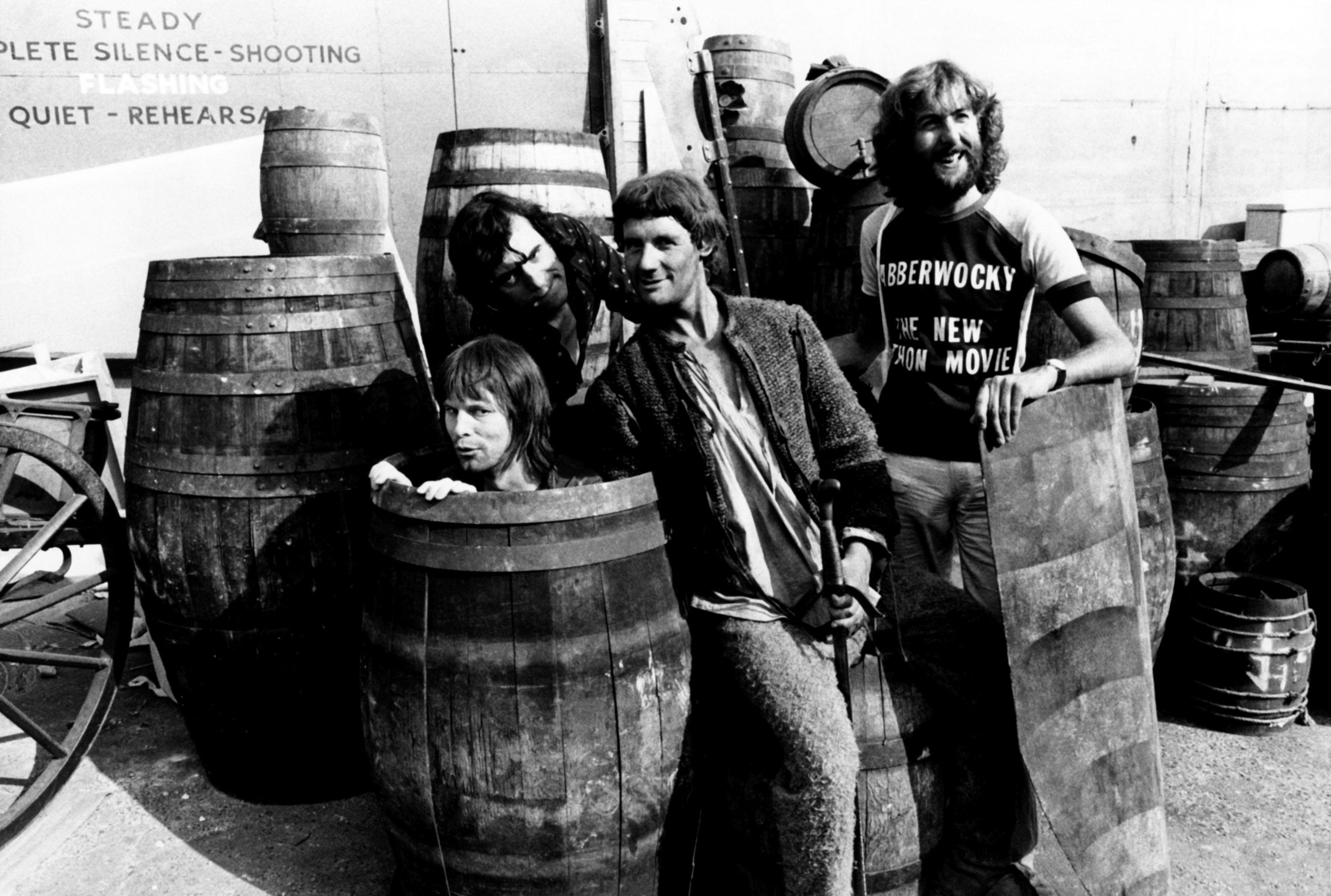
Eric Idle, who turns 75 today, with co-stars Michael Palin and Terry Jones and director Terry Gilliam goof off on the set of Jabberwocky in 1976:
Filmmaker in Focus:
Editor Igor Fernández looks at the films of Nicolas Winding Refn with emphasis on the filmmaker’s focus on hands:
[embedded content]
Video Essay of the Day:
The latest Film Radar video essay looks at David Fincher’s Zodiac and the strange but true story it depicts:
[embedded content]
Remixed Movie of the Day:
Raise your excitement for Incredibles 2 with Eclectic Method’s video turning the original’s sounds into a dance track:
[embedded content]
Classic Trailer of the Day:
This weekend is the 35th anniversary of the release of Monty Python’s The Meaning of Life. Watch the original trailer for the classic comedy (also starring birthday boy Eric Idle) below.
[embedded content]
and
