
Could You Fight Off Worms? Depends On Your Gut Microbes

A colored scanning electron micrograph of a parasitic tapeworm. The scolex (head) has suckers and a crown of hooklets that the worm uses to attach itself to the inside of the intestines of its host.
Power and Syred/Science Photo Library /Getty Images
hide caption
toggle caption
Power and Syred/Science Photo Library /Getty Images
Our tummies are teeming with trillions of bacteria — tiny microbes that help with little things, like digesting food, and big things, like warding off disease.
Those same microbes may have another purpose: waging war against worms.
Researchers at Washington University in St. Louis made the discovery after studying the microbiomes of individuals from Liberia and Indonesia. They found that the guts of individuals infected with parasites share common microbes — even if they live in completely different geographic locations. Similarly, healthy individuals whose bodies can clear out parasites without treatment seem to share a common gut bacteria.
This suggests the gut microbiome can be altered to protect people from becoming infected with parasitic worms, says Makedonka Mitreva, the lead researcher on the study and a specialist in infectious diseases and the microbiome.
“It may be wishful thinking, but maybe we could implement a control strategy after deworming where we strengthen or alter the microbiomes of individuals who are prone to infection,” Mitreva says.
Nearly 25 percent of the world’s population is currently infected with parasitic worms like hookworm, whipworm or roundworm, according to the World Health Organization. The worms are a disease of the developing world, for the most part. They spread when an infected individual defecates outside, leaving behind stool that’s contaminated with eggs. When the eggs hatch, wriggling microscopic worms can latch on to the ankles or bare feet of individuals who walk by.
Once on board, the worms burrow into skin and travel to the gut to feed on blood or other tissues. Symptoms can vary, depending on the number of worms inside a person. In cases of severe infection, people can experience anemia, nutritional deficiencies and impaired growth.
Despite decades of deworming efforts to rid the world of worms, people in developing countries get reinfected often, according to Mitreva.
“Even if the [drug] therapy works and the infection is cleared, the exposure to contaminated soil is so pervasive that new infections are extremely common,” she says.
Mitreva and her team recently analyzed hundreds of fecal samples from infected and uninfected people in Indonesia and Liberia. Samples were obtained once from some individuals, but other participants were followed long-term to see how their microbiome changed over time with or without drug treatment.
Participants’ fecal samples were first tested for the presence of parasites. Then they were studied for their microbes.
Twelve strains of bacteria were significantly associated with parasitic infection in both countries. These included Olsenella, a bacterium that has been shown to reduce gut inflammation when administered as a probiotic. It is also associated with lean versus obese individuals.
In worm-free individuals, the researchers identified a high presence of Lachnospiracae. The same genus was found in individuals that had parasites and were able to clear the infection naturally. Lachnospiracae has been associated with modulating gut inflammation during infections and has also been linked to obesity and protection from cancer.
What does it all mean?
“When the body is infected with worms, it tries to do worm expulsion with an inflammatory reaction,” Mitreva says. “Worms have to fight back to remain in the gut; that’s why worms are known to secrete anti-inflammatory molecules to reduce inflammation.”
Mitreva adds, “Our interpretation is that parasites need a healthy environment for long-term survival. Good bacteria may facilitate parasitic survival, so a bacterium like Olsenella that decreases gut inflammation is helpful.”
P’ng Loke, a parasitologist at New York University who was not involved in the study, says it’s especially interesting that the research found that Lachnospiracae is associated with individuals who can clear our worms naturally.
But that’s just it; it’s just an association, Loke says. The researchers now need to demonstrate that these bacteria actually hurt or help worms.
“Whether the bacterial associations that are identified really do directly affect worm colonization efficiency hasn’t been demonstrated yet,” he says.
Mitreva agrees that more work is needed, but she’s not giving up. In the future, she hopes to use fermented foods to plant worm-defending microbes inside of individuals to build their defense against worms.
That may be easier said than done.
“I don’t think anyone knows how to really alter the microbiome at the moment. That’s probably the ‘dream’ rather than a near-term possibility,” Loke says.
The Week in Movie News: What's Next for Steven Spielberg, Joaquin Phoenix Talks the Joker and More
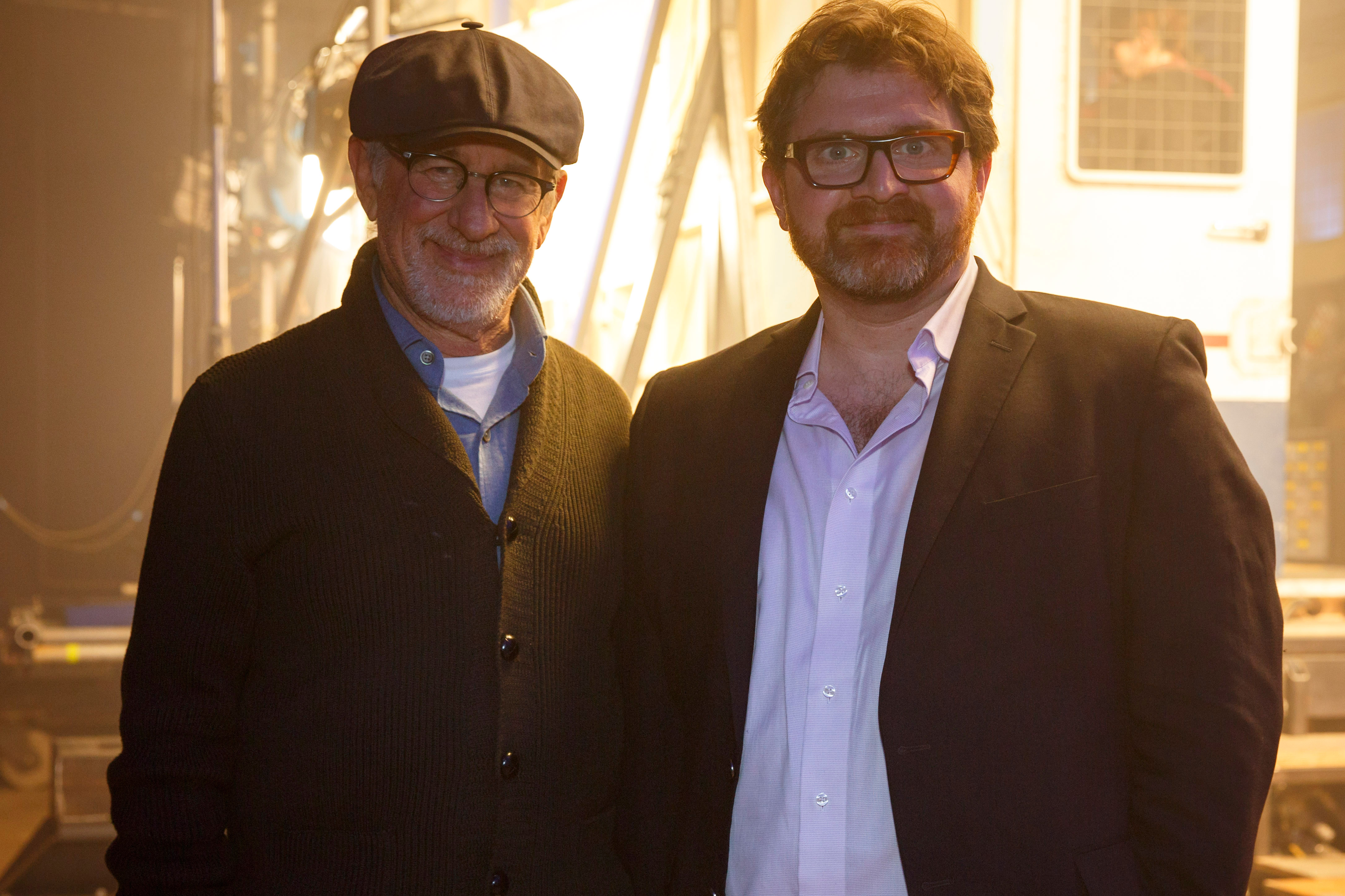
Need a quick recap on the past week in movie news? Here are the highlights:
BIG NEWS
Ready Player One author’s next movie moves forward: As Ready Player One dominates the box office, the next book by author Ernest Cline, Armada, has been put on a fast track to production by Universal. Read more here.
GREAT NEWS
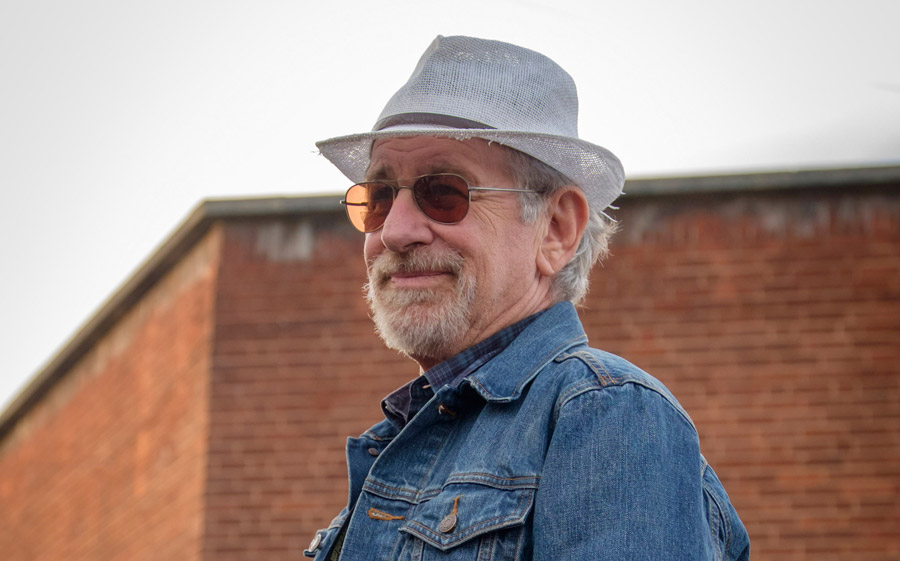
Steven Spielberg is finally going to make a Stephen King movie: Speaking of Ready Player One, director Steven Spielberg is certain he’ll make an adaptation of Stephen King and Peter Straub’s The Talisman. Read more about that here and about Spielberg’s other upcoming projects here.

SURPRISING NEWS
The Last Starfighter reboot is in development: Despite the fact that Universal is moving forward on the Last Starfighter-inspired Armada (see above), writers Gary Whitta and Jonathan R. Beutel are also working on an actual Last Starfighter movie. Read more here.

EXCLUSIVE BUZZ
Joaquin Phoenix talks his interest in playing the Joker: We talked to Joaquin Phoneix about his new movie, You Were Never Really Here, and his possible future role as DC villain the Joker. Read all about that here and our longer interview here.
COOL CULTURE
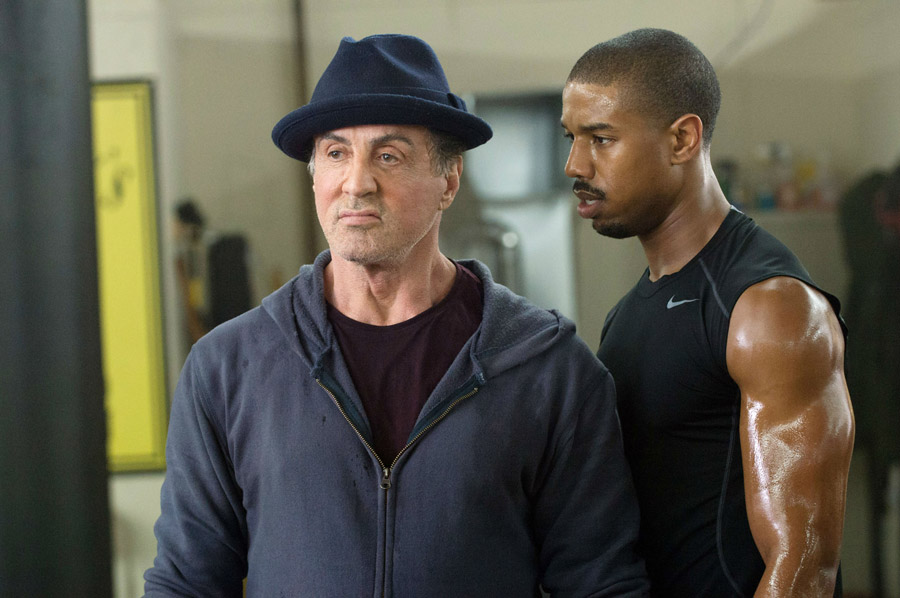
Sylvester Stallone shares Creed II production start: Creed II began filming in Philadelphia this week, and Sylvester Stallone posted a video to Instagram to kick things off from the set. Watch it below.

MUST-WATCH TRAILERS
Night School pits Kevin Hart against Tiffany Haddish: Rising star Tiffany Haddish is already stealing the spotlight from Kevin Hart in the trailer for his upcoming movie Night School, which also reunites Haddish with Girls Trip director Malcolm D. Lee. Watch it below.
[embedded content]
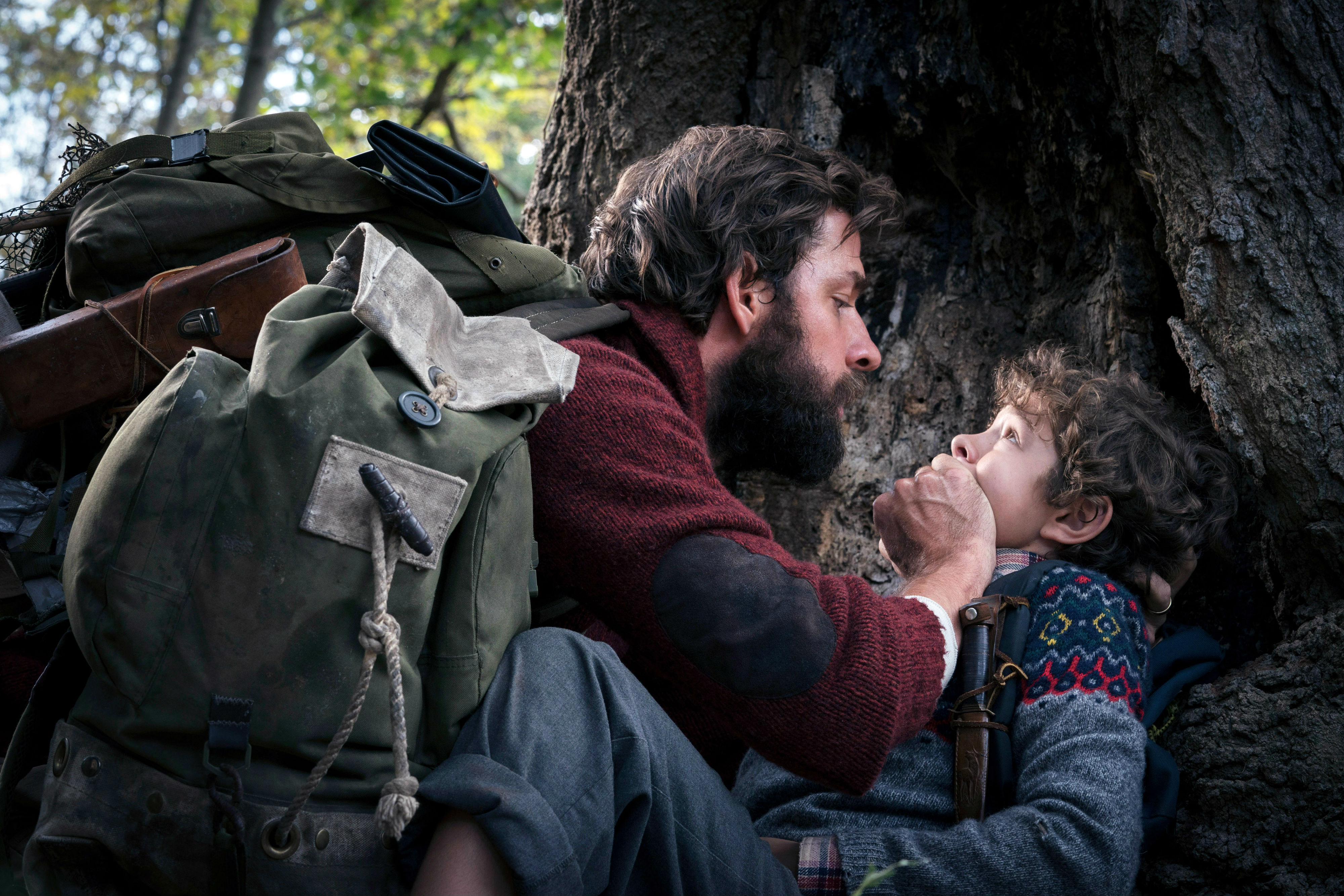
A Quiet Place seals the deal: As the acclaimed new horror movie A Quiet Place arrives in theaters, a final trailer arrived to make sure everyone is aware. Watch it below.
[embedded content]

Teen Titans Go! to the Movies sells superheroes to kids: The upcoming animated feature version of the Teen Titans Go! series dropped a new TV spot that makes it clear this movie is for kids. Watch it below.
[embedded content]
and
What It Takes For An American To Do Business In China

NPR’s Mary Louise Kelly speaks with Claire Reade from the Center for Strategic and International Studies about what the newest round of proposed tariffs mean for U.S.-China trade relations.
MARY LOUISE KELLY, HOST:
To talk more about this looming trade war, we turn to Claire Reade. As an assistant trade representative for the Obama administration, she was responsible for developing U.S. trade policy toward China. Claire Reade, thanks for being here.
CLAIRE READE: It’s my pleasure.
KELLY: So give me some perspective on what has been quite a week, the U.S. and China lobbing threats back and forth. What is your takeaway as we head home from the workweek?
READE: Well, I hope the United States expected the response that they got because any China watcher would tell you that China will not want to come to a negotiating table from a position of weakness. China would definitely respond with an immediate and clear message.
KELLY: The Chinese cannot respond in kind, though, because the U.S. doesn’t send $150 billion worth of goods to China, right?
READE: Correct, but the trade relationship is bigger than just the production and export of goods. There’s a whole services side to the trade, and it’s a number of things that you don’t necessarily think about. So it includes tourism, which is in the billions of dollars. It also includes education.
KELLY: Help me set the negotiating table here. If the U.S. and China are hoping to sit down, which remains the hope among most the people we’ve been interviewing this week, and maybe not come to this full-out trade war, what kind of leverage does the U.S. bring to that table?
READE: I think the U.S. brings without question a certain amount of leverage. My worry is that the U.S. may have an overestimate of its leverage because economists will tell you that if the U.S. blocked every single product made in China from the U.S. market, it would have an effect on China’s GDP of about 3 percent. So what that means in plain English is that the U.S. market is not absolutely critical to China’s survival.
KELLY: Let me ask you the flip side of that. I mean, stand up and walk around to the other side of the negotiating table with me. What leverage does China bring to the situation?
READE: Yes. It has an autocratic government that can bring all its people in line, and they can therefore tolerate a lot of pain in terms of, you know, loss of sales, loss of investment, et cetera, if the government tells them they need to. And China may be of the view that the combination of the pressure from a democracy and perhaps the volatility of the stock markets may cause the United States to want to come to the table and get a deal rather than live with those adverse consequences.
KELLY: And what about the goal here? One of the original rationales that was laid out for – when President Trump started talking about throwing tariffs at China was protecting intellectual property, protecting the intellectual property of U.S. business people and companies trying to do business in China. How big a problem is that?
READE: That is really a big problem.
KELLY: Are these sanctions that the U.S. has threatened this week the right approach?
READE: What the proposed sanctions do is give everyone a jolt. Nobody quite knows what we are facing, but everyone is paying attention, so the tariffs themselves are not the answer. They are the wakeup call.
KELLY: A wakeup call to what?
READE: I think a wakeup call to China to understand that it should probably try to come to the table with something that is not just a marginal shift in its economic behavior but is a bigger shift and a meaningful shift that can be measured and can be enforced.
KELLY: That’s Claire Reade, a former assistant U.S. trade representative, now at the Center for Strategic and International Studies. Claire Reade, thanks very much.
READE: My pleasure.
(SOUNDBITE OF CASHMERE CAT’S “MIRROR MARU”)
Copyright © 2018 NPR. All rights reserved. Visit our website terms of use and permissions pages at www.npr.org for further information.
NPR transcripts are created on a rush deadline by Verb8tm, Inc., an NPR contractor, and produced using a proprietary transcription process developed with NPR. This text may not be in its final form and may be updated or revised in the future. Accuracy and availability may vary. The authoritative record of NPR’s programming is the audio record.
For Chronic Pain, A Change In Habits Can Beat Opioids For Relief

Physical therapist Ingrid Peele coaches Kim Brown through strengthening exercises to help her with her chronic pain, at the OSF Central Illinois Pain Center in Peoria.
Kyle Travers/WFYI
hide caption
toggle caption
Kyle Travers/WFYI
It took several months and a team of half a dozen doctors, nurses and therapists to help Kim Brown taper off the opioid painkillers she’d been on for two years.
Brown, 57, had been taking the pills since a back injury in 2010. It wasn’t until she met Dr. Dennis McManus, a neurologist who specializes in managing pain without drugs, that she learned she had some control over her pain.
“That’s when life changed,” she said.
During a 12-week series of appointments at McManus’ clinic in Peoria, Ill., Brown learned new ways to prevent and cope with pain, as she gradually reduced her opioid doses.
Roughly a third of Americans live with chronic pain, and many of them become dependent on opioids prescribed to treat it. But there’s a growing consensus among pain specialists that a low-tech approach focused on lifestyle changes can be more effective.
This kind of treatment can be more expensive — and less convenient — than a bottle of pills. But pain experts say it can save money over the long term by helping patients get off addictive medications and improving their quality of life.
“It’s important to remember that the main treatments that are recommended for these pain conditions are not medication treatments,” said Dr. Erin Krebs, a primary care physician and researcher at the Minneapolis VA Health Care System.
Recently, Krebs published the first long-term randomized trial of opioids for treating chronic back pain and arthritis, and found that opioids are no better than nonopioid medications. She said drugs of any kind are the lesser choice for the vast majority of patients.
The gold standard for treatment, she said, is a combination of things like exercise, rehabilitation therapies, yoga and cognitive behavioral therapies.
This approach is consistent with the most recent guidelines from the Centers for Disease Control and Prevention for prescribing opioids for chronic pain. But it’s still uncommon.
Brown’s painkiller use started after she blew out a disk in her back.
“It was the simplest thing,” Brown said. “I picked up a bag of garbage with my right hand, and I immediately knew something was wrong.”
She was put on opioids, like so many others who see the doctor about pain. In a single year, health care providers write enough opioid prescriptions for every adult in the U.S. to have a bottle of pills.
Each time Brown came back, still in pain, another opioid was added to the list. She was eventually taking four different drugs — Percocet, Vicodin, morphine and Dilaudid — popping pills every two hours.
“I was just drugged constantly,” Brown said. “And even with that, it didn’t take care of the pain.”
Not only did the drugs not help with the pain, the side effects made it worse. Brown had such severe abdominal pain from constipation she could hardly walk.
“It kills your life. It totally robs you of every aspect,” she said. “I couldn’t do anything because of the pain. But I couldn’t do anything because of the pain meds. And I couldn’t talk to anyone about it, because it was so embarrassing.”
Brown tried to quit on her own. But after nine days of nausea and fainting from withdrawal, she was back on the medications.
“I finally went to my family doctor and said, ‘I need help, I’ve got to get off this stuff. I can’t live like this anymore,’ ” she said.
That’s when she was referred to McManus, director of the OSF Central Illinois Pain Center in Peoria. He specializes in helping chronic pain sufferers like Brown get off opioids.
“From my perspective, if you stabilize the dose and slowly taper off, these patients do remarkably well,” he said.

At the OSF Central Illinois Pain Center in Peoria, Kim Brown participated in a multidisciplinary treatment program that included cognitive behavioral therapy with psychologist Lisa McClure, who helped Brown address the psychological issues that can accompany pain.
Kyle Travers/WFYI
hide caption
toggle caption
Kyle Travers/WFYI
At the center, a team of providers works together to help patients make lifestyle changes that reduce pain during everyday activities.
The approach includes a combination of physical and occupational therapy, massage and nutrition counseling. Patients also participate in cognitive behavioral therapy to address the psychological issues that often accompany pain — such as overcoming fears of letting go of medications they’ve become dependent on. A nurse coordinator oversees all the moving parts and does follow-up assessments after the program is completed.
At the clinic, Brown met occupational therapist Gabe Stickling, who taught her things like how to properly lift heavy objects and how to safely keep exercising even when she feels a twinge of pain.
Stickling said people with chronic pain often avoid physical activity “because they’re afraid they’re going to injure themselves or damage their bodies.” But inactivity can make the pain worse.
McManus said some of his chronic pain patients can taper off opioids with a less intensive treatment. But for some of his patients, the multidisciplinary program is most effective — if they’re willing to commit to making change.
“Most people just really want to have the magic wand that will get them all better,” he said. “And I’m just trying to say, I don’t have a magic wand but I might have a way out of this jungle that you’re in.”
And because pain treatments that don’t rely on drugs are hands-on and time-intensive, it can be hard to find a clinic that offers them — and to get insurance to cover them.
This wasn’t always the case. Until the 1980s, the multidisciplinary approach was the go-to treatment for chronic pain, according to a 2016 review on the history of chronic pain management. Its popularity declined as reimbursement rates went down and hospitals began to emphasize more lucrative procedures. Gradually, opioid treatment became the predominant strategy for pain treatment strategy.
Today, McManus said his practice spends a lot of time fighting to get the treatments covered. “The pain program is not considered to be worthy of the price,” McManus said.
Costs vary but run to several thousand dollars for a program like the one Kim Brown went through.
“If you compare a fairly intensive multidisciplinary program to surgery and to drugs, the cost is not high,” said Steven Kamper, a public health researcher at the University of Sydney in Australia. He’s co-author of a 2014 meta-analysis that found modest benefits for multidisciplinary treatment programs for chronic low back pain.
Kamper said, the costs are reasonable especially if you consider the long-term effects of living in pain. Many chronic pain sufferers are unable to work and become eligible for disability insurance.
“The big costs of chronic pain are in productivity losses,” Kamper said.
Krebs is hopeful non-drug therapies will regain popularity, as communities recognize the hidden costs of opioids.
“It’s not just the price of the pills,” she said. “It’s also the price of the consequences when you over-rely on something.”
Krebs and Kamper agree more research into pain treatment is needed. But when choosing between an addictive medication with no evidence of benefit, and low-tech therapies with some evidence of benefits, McManus said the choice is clear.
“I did take an oath: First do no harm,” McManus said. “As a pain physician, I have a responsibility to use evidence-based medicine to manage my patients that have chronic pain.”
Brown is thankful that the multidisciplinary approach helped her taper off opioids and get her life back, even though it’s a different life than before her injury.
“There’s no such thing as a pain-free day for me,” Brown said. “It never, never fully goes away.”
She has just learned how to manage life with it.
This story was produced by Side Effects Public Media, a news collaborative covering public health. You can follow Christine Herman on Twitter: @CTHerman.
Today in Movie Culture: Dr. Evil Returns, How 'The Last Jedi' is Different From 'The Empire Strikes Back' and More

Here are a bunch of little bites to satisfy your hunger for movie culture:
Character Comeback of the Day:
Mike Myers reprised his role as Dr. Evil from the Austin Powers movies for a bit on The Tonight Show:
[embedded content]
Movie Comparison of the Day:
Many have pointed out how Star Wars: The Last Jedi mimics The Empire Strikes Back, but Couch Tomato shows how different they truly are:
[embedded content]
Movie Science of the Day:
The way to find the Hogwarts Express involves magic, but Kyle Hill scientifically explains whether us muggles could also run through the platform wall at King’s Cross Station:
[embedded content]
Easter Eggs of the Day:
Pixar made their own video showing all the Easter eggs and other secrets in and about their first animated feature, Toy Story:
[embedded content]
Vintage Image of the Day:
Bette Davis, who was born on this day in 1908, with director Robert Aldrich and crew on the set of What Ever Happened to Baby Jane? in 1962:
Filmmaker in Focus:
For Fandor, Luis Azevedo highlights the sounds of the movies of Andrei Tarkovsky:
[embedded content]
Remixed Movie of the Day:
Speaking of movie sounds, Eclectic Method has made a dance mix out of the sound effects, music and dialogue of Guillermo del Toro’s Best Picture-winning The Shape of Water:
[embedded content]
Video Essay of the Day:
The latest video essay from Renegade Cut looks at Edgar Wright’s Hot Fuzz and how it explores the theory of utiltarianism:
[embedded content]
Supercut of the Day:
Hazy Daze Media highlights 50 psychedelic moments in cinema, including clips from 2001: A Space Odyssey and Mulholland Drive:
[embedded content]
Classic Trailer of the Day:
This weekend is the 25th anniversary of the release of Indecent Proposal. Watch the original trailer for the classic drama below.
[embedded content]
and
Full Transcript: Facebook COO Sheryl Sandberg On Protecting User Data
Facebook has been under fire in recent weeks after it was revealed that Cambridge Analytica gained access to millions of users’ data while working for President Trump’s 2016 campaign. Facebook founder and CEO Mark Zuckerberg is expected to testify before Congress early next week.
In an interview Thursday, Sheryl Sandberg, the social network’s chief operating officer tells NPR’s Steve Inskeep about the company’s missteps, and what it’s doing to correct them, and the information being provided to affected users.
Inskeep: I know your time is short, so I’ll dive right in. Thanks for doing this, it’s great to meet you in person.
Sandberg: I’m really glad to have you.
I want people to know that you have been credited with being part of the reason that Facebook is so profitable. This is a story that’s told about you — that the company was popular before you came, that it became much more profitable afterward. Have the events of the last year or two, though, shown that the business model of this company is part of the problem?
I’m going to take a step back and talk about what the problem is, and then get to the business model, because you’re asking a really important question. We know that we did not do enough to protect people’s data. I’m really sorry for that, Mark’s really sorry for that. And what we’re doing now is taking really firm action.
Starting Monday we’re going to start rolling out to everyone in the world, right on the top of their news feed, a place where you can see all the apps you’ve shared your data with and a really easy way to delete them. We’re being much more restrictive, in the data apps are going to have access to. And just yesterday we announced further steps shutting down data access points in groups and events and pages, and search. And so we are in a process that is evaluating all the ways data is used.
It’s going to be long — it took us a long time to get here, it’s going to take a long time to find all of this — but it’s also going to be ongoing. Because safety and security is never done, it’s an arms race. You build something, someone tries to abuse it, you build something. And so the commitment we have is that we have a new approach to not just protecting sharing, but also on privacy.
Then you asked about the business model. And on the business model we have an ads-based business model, just like TV, just like radio. Our content’s available to anyone for free because it’s ad-supported. And that we feel really proud of, and we’re really — we think it’s really important. We’re trying to connect the whole world. Two billion people use our service; a lot of them would not be able to if they had to pay for the content itself.
And privacy and ads are not at odds. It’s a good opportunity to remind everyone what we say all the time, but we need to keep saying so people understand it — which is that we don’t sell data, period, and we don’t give any advertisers your personal information.
But let’s be clear: Part of the business is gathering enormous amounts of data about people, making use of it, and figuring out ways to monetize that. And that does make a lot of money and it may well serve a lot of people, but hasn’t it also led to some of the abuses we’ve seen in recent years.
Well the abuses we’ve been talking about have not been with ads — they’ve been with other products. But that doesn’t mean there haven’t been abuses in ads, and that doesn’t mean there won’t be, going forward.
So let’s talk kind of big-picture about what’s happened here. Right? Because the underlying question is, why are we where we are, why are we so slow, do we have control of this massive system? Those fair?
Go for it.
Those are fair questions, and I think those are real questions. So if you take a step back we had a very deep belief in what were social experiences that we would build — an ability for people all around the world to connect, and that people can have social experiences. [If] you and I are friends, we would know each other’s birthdays were, we were able to go to events together, we were able to share each other’s playlists, and a lot of good got done there.
But I think what we weren’t good enough at doing is thinking in advance about the ways misuse could happen on a platform. And when we found things — and we did find things — we shut down that thing. So the specific example in Cambridge Analytica, of friends-of-friends sharing, we shut down in 2015 that specific case.
But what’s different now is that we’re taking a much broader view and a much more proactive approach. A few weeks ago and the Cambridge Analytica thing happened, we made a commitment that we would go through and find data uses that were potentially too risky, or even ones we didn’t want to do. And we have been proactively bringing things to the surface, shutting things down, telling people and we’re going to continue to do that.
Let’s talk about what you discovered with Cambridge Analytica. Some people will know that you have disclosed this week that it was 87 million people whose information was shared. The overwhelming majority of them without having given explicit permission.
That’s not exactly right — let me let me explain. So in 2015 when Cambridge — when we received word that this researcher gave the data to Cambridge Analytica, they assured us it was deleted. We did not follow up and confirm, and that’s on us — and particularly once they were active in the election, we should have done that. And again that is on us.
What’s happening now is, we don’t know what if any data they still have or how much it was. We’re trying to do a forensic audit with them, but the UK government is doing theirs first and we had to stand down — they get priority. The 87 million is anyone who Cambridge Analytica might have accessed their data. We’re being super-conservative and careful. This is anyone who might have been connected, might have been connected to someone who connected to them
So you still don’t know what the number is.
We still don’t know.
Well let me ask if you know something else: Were there other firms, political or otherwise, who used data in the same way that Cambridge Analytica did?
We don’t know. What we announced when we talked about Cambridge Analytica, is we’re doing a thorough investigation and an audit. That is ongoing, and as we find those ,we’re going to notify people as we did with Cambridge Analytica. But we’re not just looking at apps — that would, you know, I think would have been what we would have done before — we have an app problem we look at apps. Now we’re looking much more broadly.
That’s why this week we shut down a number of use cases in other areas — in groups, in pages, in events — because those are other places where we haven’t necessarily found problems, but we think that we should be more protective of people’s data in a much more proactive way.
Talk to me as somebody who’s been on Facebook for more than a decade, though. I think about Cambridge Analytica, I think about the fact that this company that I had no idea about was gathering perhaps my data, or somebody that I know, and using it in ways I’d have no idea about. There’s an issue there with consent.
But even beyond consent, from the average person’s point of view, doesn’t Facebook and anybody who deals with Facebook essentially do the same thing Cambridge Analytica did? They gather lots of data about people and use them in ways that, whether we formally consent or not, we really don’t understand.
One of the things we’re very focused on is making sure you do understand how all of your information is used, and you do understand what information you’ve shared with Facebook.
We announced we’re rolling out privacy shortcuts. The controls have been there, and most have been there for a long time — but you’re right, they’re hard to understand and hard to find. So this is a very simple way to see where those controls, and control them, including ad preferences. We just updated something and made it easier — it’s been there for a long time — called “Download Your Information,” where you can look at every bit of information you’ve shared with Facebook.
And so you are right that the system’s been too hard for people to understand, and we’re taking very assertive steps to make it easier, simpler, clearer, so that the controls are in one place and people can take the steps they want to take.
But the business is still the same, right? You’re still going to have lots and lots of information about me, in ways that might make me uncomfortable.
Well we want you to know all the information we have about you, we want you to know all the controls we have, and we want to make sure you’re not uncomfortable.
So let’s talk about ads. On ads, we are able to show targeted ads to someone, which means something you might be interested in. We do that ourselves — and then we don’t pass any of your personal information to any advertiser, they just get aggregate reports. You can also opt out of different ways we use data. You can opt out of seeing ads from different advertisers through ads preferences.
And again, we do not sell data, ever.
One quick question then I want to move on a little bit here —
Can I? I just — I wanted to finish. This is important.
Please, please — go ahead.
One of the questions you might ask about the business models — why use data at all for ads? Why don’t we just show everyone in the U.S. the same ads? Then we could do it without any data
Oh, no, I understand why you do that.
But this is a really important thing — I think it’s really important for your listeners to understand, which is that, that’s why small businesses can participate in this. That if you just do big ads they go to everyone, only large advertisers can participate.
We have 6 million customers around the world — a lot in the U.S. Forty-two percent of the small businesses on Facebook in the U.S. are hiring because they’re growing on Facebook. And that’s creating the majority, small businesses create the majority of the job growth on Facebook. So the targeting — which we do in a privacy-safe way — is a big chunk of why small businesses are growing, and that’s why we think it’s so important. We can do it, and protect your privacy, but it’s part of what’s making small business — and our economy — grow.
One detail I want to check on then move on to a bigger thing: Regarding Cambridge Analytica, you said “we don’t know” if there were other political entities that used information in that way. Do you mean to say you do not at this time know of a single other company or firm that used data in that way?
We don’t even know what data they had or used. I don’t know what they did, so I don’t — we don’t know any others, because we don’t even know what they did.
I’m curious when you’re talking with Mark Zuckerberg or whoever else you may talk with around this company, have you had moments when you’ve asked the question, “are we as a company too powerful?”
It’s an important question — and people have that question about us and others, particularly as our size and scope. And we’ve had a lot of long and thoughtful conversations about what that means. We know that a lot of regulators have that question. We know that consumers around the world have that question —
Do you take it seriously or does it seem ridiculous to you?
Oh, we take it very seriously. We’ve always had a deep responsibility for people, but at our size and scope, with billions of people using our products, we have a very deep responsibility.
We’re having conversations with regulators around the world, but we’re not even waiting for regulation. The most likely regulation in the United States right now is the Honest Ads Act — which may or may not pass. We’re not waiting for it. We built a tool that shows every ad that any page is running on Facebook. It’s live in Canada. It will be live in the U.S. before the election.
And that’s really important because that law is about transparency. We’re not going to get dragged to doing it — we’re doing the transparency now, ahead of that law, whether or not it happens
Will your tool allow for something that some privacy advocates seem to want and advocate for, which is that people can simply opt out of having so much of their data saved and shared at all?
There are lots of ways to opt out of different data parts on Facebook — and again we are rolling up those controls putting them into privacy shortcuts. We’re also looking carefully at the GDPR legislation in Europe. And the majority of those controls and settings we are going to make available around the world — they’ll have slightly different formats because some of it’s specific to that law, but we are making those controls and settings available throughout the U.S. through this year as well.
We’ll make this clear: Europeans have different standards that in some ways would seem stronger than the United States’; you’re saying you’re going to follow them everywhere. Is that correct?
We’re gonna follow all the controls and settings. Not every exact one — I’ll give you one example where we wont: In Europe the age of consent is 16, here it’s 13. So that’s one difference. But the fundamental principle, and most of the controls — I can opt out of ads preferences, I can opt out of this form of ads targeting, I can opt out of using [third-party developers’ tool] Platform. Those we’re going to find a way, in a local way of people understand them, to roll out everywhere.
Given that the Federal Trade Commission reached a consent agreement with Facebook in 2011 to better protect people’s privacy, should you have taken these steps years ago?
Well we’re in constant conversation with the FTC, and that consent decree was important, and we’ve taken every step we know how to make sure we’re in accordance with it.
But the bigger answer is, should we have taken these steps years ago anyway? And the answer to that is yes. Like a very clear, a very firm, yes. We really believed in social experiences, we really believed in protecting privacy, but we were way too idealistic. We did not think enough about the abuse cases. And now we’re taking really firm steps across the board.
So let’s talk about another one that I’m sure is really important to the people listening: Let’s talk about election interference. Right? In 2016 the Russian Internet Research Association interfered in the election on our platform — and that was something we should have caught, we should have known about, we didn’t. Now we’ve learned.
Just this week we announced that we’ve taken down another 270 pages and accounts. They were in Russian, mostly, targeted at Russia. And our answer to that is, these are Russian troll farms, this is deception, and there’s no place for it on our platform or any other anywhere in the world. We’re not going show in Russia, we’re going to show the U.S. — and we’re looking for others. That was something we didn’t understand then, but we are focused on finding now.
Similarly in the recent Alabama election, the special Senate one, we found Macedonia scammers that looked to be financially motivated, that were going to put up what would have been fake information — and we got those down.
So we learn, we adjust, and we are very focused on making sure that we get this right going forward.
Are you prepared for the 2018 congressional elections, which are essentially upon us?
Yeah. We are doing everything we can to be prepared, and I can talk about some of those specific steps. Fake news — fake news is a really important part of what people are concerned about. We are really going after fake accounts. It turns out that a lot of people think of fake news as politically motivated, and a lot of it is — but even more of its financially motivated.
Sure.
People are trying to write outlandish headlines, right? Get you to click, make money. So we’ve made sure that we’ve taken them out of the ability to monetize on Facebook, taken them out of the ability to show ads and make money. That’s really important.
We’ve also done a lot more on fake news. We have a partnership now with the AP set up in all 50 states where we can quickly respond when something looks like it might be false. When something — we either find it which is new, we’re doing it proactively — looks false, or someone reports something to us as false, we’re relying on third-party fact-checkers.
And if they say it’s false we’re dramatically decreasing its distribution. We’re letting people know “this is false” right before they post it; if you already posted it, we’re going back and saying “you posted something our fact-checkers say is false, and we’re giving you alternative facts,” in the form of related articles right there.
We’re also asking people broadly, what news sources do you trust? And we’re going to show people more news from the news sources they trust as well as less news from others.
People say they trust The New York Times, they’ll get more New York Times, is that what you’re saying?
If people in the country broadly trust more The New York Times, they will see more from The New York Times.
Richard Blumenthal, Democratic senator, called upon Facebook to contact 126 million people who were believed to have been touched in some way by Russian disinformation, tell them how they were misinformed, and make sure that they know what’s going on. Have you done that?
That tool is up. I believe there is a place you can go and people can see if they might have seen some of that IRA context, so we have made that —
Privacy advocates feel like that’s not a very accessible tool. Can you actively reach out to people, and tell them “excuse me, I’d like to let you know that this is something that happened”?
Yeah, I mean…
If there’s a consumer watchdog, I might get a letter in the mail telling me that something happened, and I’m owed a rebate by an insurance company. You could actively reach out to users, couldn’t you?
Yes. And you know, we’re Facebook — we believe that in our interface, reaching out to people is a good way to do that, and you’re going to see that on Monday as well.
You’re going to see more of that.
Yeah, Monday it’s going to start rolling out.
But are you going to tell 126 million people who they were, and say “this is the thing that you were misinformed about”?
So we’re trying to reach people the most effective way possible. Some people say they want things in the mail, but some people would say “I’ve not looked at my mail in years.”
Let me make it clear. I don’t mean for you to send snail mail. What I mean for you is, are you going to reach out individually to these people? Which seems to be what the senator wants.
We are making sure the information is available in either QPs — so at the top of news feed — or in other ways that they can find it. We’re very focused on doing that.
What do you think your company’s role is as a publisher in this year’s election and in the presidential election that’s coming in a few years?
Well we certainly know that people want accurate information, not false news, on Facebook and we take that really seriously, and we just talked about some of the steps we’re taking. We also want to make sure that there’s no foreign interference.
We are also really taking very aggressive steps on ads transparency. I mentioned how you’re going to be able to see any ad a page is running; we’re also building an archive of political ads that will run forward and build for four years. So you’ll always have, once it builds up, four years of data. Or for any political ad, you’ll be able to say who ran it, who paid for it, how much they spent, and the demographics of who saw it. Again, industry-leading transparency.
Oh, so that these groups that track campaign financing can come to you and readily get lots and lots of information about how —
It’s going to be available online for anyone to see. Anyone’s going to be able to see it.
Because it’s clear to you that in 2016, it’s hard for anybody to know — or it was hard at the time for anybody to know — just how money was being spent, and by whom.
Well this hasn’t happened in our industry, and that’s why, again, we’re not waiting for the regulation to happen to do this, we’re doing it. Because we think that transparency is really important.
What scares you about your role in this democracy at the moment?
We have an important responsibility and we have a big role, because people use Facebook. And I think what really matters is that we learn from what’s happened; security is an ongoing game. You build something someone tries to get around it. This is going to keep happening, and we need to learn and iterate quickly.
I’m also very focused on keeping the good that happens on Facebook. I was in Houston earlier this week, and I met these two brothers, Nathan and Austin, and when Hurricane Harvey happened they jumped in their boat and they rescued people — including one elderly woman who an ambulance can’t get to, who they say might have died. Do you know how they found those people? Those people posted their information on Facebook. They said where they were publicly, to strangers.
Now I’m not saying every day is Hurricane Harvey, but the good that happens when people share all around the world — the small businesses, I visited many small businesses in Texas this week that are growing, and they’ll tell you, just because of Facebook. And so we’re focused on preserving the good that we believe in so deeply, while protecting people’s information.
But what scares you?
We have a big responsibility. We have to get it right. We didn’t foresee the interference in the 2018 election —
2016, you mean?
Sorry, 2016. Yeah, in 2016 when you thought about security for elections, what you thought about was hacking, and people stealing your e-mails and publishing them. This was a new form. We are now focused on that form, but we’re increasingly trying to see around the corner and make sure that we know the next form.
And I think it’s going to take all of us — were working much more closely with the other tech companies, we’re working closely with election commissions all around the world, which is really important. We’re going to have to figure out what the next form of the next IRA is and get ahead of it.
Is there something of a contradiction here? In that you want to have a community — or many, many many communities really — you want to be democratic, you want input from people, but no matter how much you talk like that, the reality is it’s a company and you make the rules. And it is hard to be democratic in that way when this company is so influential and so vast.
I think the decisions we make are important — and you’re right that they have major impacts, and that’s why we need to be held accountable to them. We’re working hard at explaining them better, at being much more transparent, and especially showing people what’s happening on Facebook.
So again to ads transparency: One of the big questions that happened in the [2016] election was who advertised to whom, because things are targeted to different people. That becomes completely open and transparent.
And it’s interesting — a lot of the things that journalists will find on our site, we built the tool for people to find them. And that’s good! That’s good. Because as we open up for more ads, people are going to find bad ads — they’re going to find ads that go against our policy, and that’s part of how we’re going to be able to get those down and get them down faster.
I want to mention that we’re in the middle of this corporate headquarters — Mark Zuckerberg strolled by a few minutes ago. I’m curious: Having known him as many years as you have, how has he changed as a leader and as an executive, since he hired you?
Well, Mark was 23 when he hired me, so he’s certainly changed a lot of personal levels — he’s gotten married, he’s had two children. And obviously this company has grown greatly. There are a lot of things that have changed.
We’ve learned a lot. We’ve learned a lot from the mistakes we’ve made, from the steps we need to take to be much more proactive — and much more suspicious of what can be done.
But there are things about Mark that haven’t changed at all that I deeply admire. Mark stands up and takes responsibility. You know he runs this company, and through this whole situation he has said “the buck stops here — I own it.” And all of us who work for him — because a lot of those mistakes were made by us — have deeply respected that. He cares about people connecting. When I got home from Houston the other night I called him and I told him about the brothers I met and the other people I met, and he cares.
You know the other day I met a woman named Natalie, she’s from Little Rock. She did one of our birthday fundraisers — brand new product we have — she raised $4000 for a local women’s shelter. And she volunteers at that shelter, and it takes them $1,500 to rescue a woman from an abusive home. And when I talked to Mark about that, Mark has the same belief he always believed, in that, there are really good things that happen when you bring people together. And that that kind of commitment I think is really admirable.
When you say he cares about people connecting, that is really great. And yet that’s one of the reasons that I wonder if what is great about Facebook is also the problem.
You probably know that there was a leaked memo from 2016 from a Facebook executive who said “we care so much about connecting people that even if we connected people who used our platforms to coordinate a terrorist attack, we’re fine with that, because we’re still just connecting people.” That was 2016. You still believe that?
We never believed that. The person who wrote it, named Boz, never believed it — he’s a provocative guy who was trying to spark debate. But Mark never believed it, I never believed it.
OK so maybe it was hyperbole that he was leaning in the way that he did believe, that maybe you cared too much about this, and too little about other things.
Let’s go to the example: There’s no place for terrorism on our platform. We’ve worked really hard on this — 99 percent of the ISIS content we’re able to take down now, we find before it’s even posted. We’ve worked very closely with law enforcement all across the world to make sure there is no terrorism content on our site. And that’s something we care about very deeply.
But what about the broader point? Essentially he was saying “the company’s values are out of whack — we’re interested in one really big, important thing,” perhaps to the exclusion of other things.
Again, that memo was wrong, and he said he didn’t mean it, and Mark and I certainly never agreed. We never only cared about one thing. We cared about social sharing, and we cared about privacy — that’s why we put the controls in place. I think the balance was off, because we didn’t foresee as many bad use cases — and that balance has shifted, and shifted hard now.
One or two other questions and then there will be a photograph and we’ll let you go. I have no idea at the time is … oh yeah, we’re getting to be about that time.
Let me just ask — yeah, a couple more minutes and then we’ll do this.
People in Silicon Valley talk so often about changing the world. Do you believe that this company has changed the world, and is there a way that it’s changed the world for the worse?
It’s such a good question. I believe we’ve done some really good things, and I believe we’ve made some really bad mistakes. I believe that every single day good things happen on this platform. And I believe that a bunch of bad things have happened on this platform that we need to do better getting off.
You know someone today is going to find their mother on Facebook, and someone today is gonna find a friend they were lost in touch with. And someone today is going to put up a piece of content that’s really hate content that we don’t want on there, and we have to find it and get it down fast. All of that’s true.
On that last one, are you comfortable being the censor? Which is effectively what you would have to be, wouldn’t it?
We’re trying to have very good community standards — we’re open about what those community standards all around the world, and we’re going to get increasingly open about this.
We want to make sure people understand — you know, there’s no place for terrorism, there’s no place for hate, there’s no place for bullying. We don’t sell your data ever, we don’t give your information to advertisers. You’re not allowed to put you know hate content on our site. With news, we rely on third parties — we don’t believe we can be the world’s fact-checkers — but that doesn’t mean we don’t have a big responsibility.
And I think in all of this, what we want to do is make the shift we need to make to be more proactive in the protection, so that we can protect something we really believe in and love, which is the sharing that happens on Facebook.
But I think you know what I’m asking you — you have people who want Facebook not to be allowing such manipulation. But at the same time there’s somewhere a libertarian listening to us who is saying “I don’t want a company to be Big Brother, because no matter how good they get at it sometime it’s going to be abused.”
And we try to be really careful about that. That’s why we do have a lot of free expression on Facebook. While we’ll take down things that are absolute hate, boy there’s a lot of stuff on Facebook that I don’t like. But someone said it, and if you believe in free expression you’ve got to let them say what they say.
The most important thing for accountability that we can do — because you’re right, we are a company — is we can publish those standards, make them open. As Mark said the other day, we’re working on a much more open appeals process so people can appeal those decisions. But we’re also going to make sure that people understand what those standards are and can see things transparently.
Sheryl Sandberg, thanks very much.
Thank you for being with me.
Hailu Mergia On World Cafe

- “Hari Meru Meru”
Every day I talk to artists about the winding and sometimes tricky roads they travel to make a career in music. But I’ve never heard a “how-I-got-here” story quite as remarkable as the one that belongs to today’s guest.
Hailu Mergia‘s journey began in the countryside in Ethiopia surrounded by sheep, goats and oxen. He was a shepherd when he was young. That’s before he became a member of one of Ethiopia’s most popular club bands in the 70s. After his band was invited to tour the United States in 1981, Hailu made the choice to stay rather than return to his home country, which was in the throes of the brutal and deadly Ethiopian Civil War at the time.
When he settled in Washington D.C., Hailu gave up playing music for a living, but he kept a keyboard in the back of the taxi cab he drove around the city and practiced between customers. Sometimes passengers would recognize the name and photo staring at them in the back seat of his cab.
A few years ago, a lover of African music from the U.S. named Brian Shimkovitz was in a small record shop in Ethiopia when he heard a piece of music and fell in love. He tracked down the creator — it was Hailu! And that discovery led to the rebirth of Hailu’s career, which includes a new album he’s just released called Lala Belu. Hailu performs live music in this session. Hear it all in the player.
Augusta National To Host Its First-Ever Women's Tournament
NPR’s Mary Louise Kelly speaks with sports writer Christine Brennan about the decision by Augusta National, one of golf’s most exclusive clubs, to establish a women’s tournament.
MARY LOUISE KELLY, HOST:
Augusta National Golf Club, home of the Masters, is known for lots of things – green jackets, blooming azaleas, names like Arnie, Jack, Tiger. What Augusta is not known for is its openness towards women. Augusta didn’t admit female members until 2012, so our ears perked up yesterday when Augusta National announced that next year, it will hold its first ever women’s tournament.
Sports columnist Christine Brennan joins us from Augusta. Welcome back to the program.
CHRISTINE BRENNAN: Well, thanks, Mary Louise – great to be with you.
KELLY: All right, so this is going to be an amateur tournament, first women’s tournament ever at Augusta. How big a deal is that?
BRENNAN: Oh, absolutely it’s a big deal. I mean, 15 years ago, I think a lot of people will remember the Hootie-Martha Masters, which was 2003, as contentious as it gets, really one of the low points, Mary Louise, in terms of women’s rights not just in our – in sports but in our culture. Augusta at that point did not have any women members. I wrote a lot about it.
Martha Burk read one of my columns. She came down and protested. And it was ugly, and it was messy, and it was nasty. And the Augusta National green jackets, all men, almost all of them white, dug in their heels and said no women ever. That was 15 years ago. The arc of these last 15 years is truly remarkable. And there are now four women members at Augusta – better than zero, not exactly a lot.
KELLY: Four out of what, a few hundred?
BRENNAN: About – yeah, about 300 or so – so a little bit more than 1 percent. But it’s still – for 2018, it’s stunning that Augusta National, a private club, very public face of golf with many members who are corporate executives who could never for one moment have these policies in their companies, and yet they were allowing it here for so long…
KELLY: So how did this come to pass? What changed?
BRENNAN: What changed is a new chairman, Fred Ridley – 65-year-old father of three daughters who care very much about this issue and that they’d be very pleased to hear the news about this tournament, which will be just one day on Augusta National next year – nonetheless, what a platform – the greatest platform for women’s golf ever. And I think that’s basically it. Ridley is from a little bit of a different era, has much more of an open-minded sense about the game and about growing the game. And I think the other huge factor here is that golf has been hemorrhaging participants. It costs too much money, takes too much time. Americans’ attention spans are shorter.
KELLY: So this is about potentially doubling the number of players and doubling the audience if you let women in.
BRENNAN: Yeah, right. Consider that – 51 percent of your population. And what’s the growth industry? What’s the untapped market for golf? Well, it’s women. And for generations, the golf industry has put out the stop sign and has basically told our daughters and granddaughters and nieces and the girls next door, don’t play this sport. And what a silly way to try to run a sport and sell products and sell golf clubs and rounds of golf. But they did this, and it really – sexism trumped capitalism for many decades, especially among the greatest capitalists in our country who are members of the club.
KELLY: I hear you celebrating this change. What has been the reaction from Augusta members?
BRENNAN: Oh, I think everyone is pretty much understanding (laughter) that it is the 21st century. Maybe it’s time to enter the 20th before too much more of the 21st goes by. I think they’re fine with it. I – a lot of these members now, Mary Louise, are younger men. When I say younger – 40s, 50s, 60s. And I think they understand that they have to get with the times.
KELLY: All right, thanks so much, Christine.
BRENNAN: Thank you, Mary Louise.
KELLY: That’s Christine Brennan, columnist for USA Today speaking to us from Augusta, Ga.
Copyright © 2018 NPR. All rights reserved. Visit our website terms of use and permissions pages at www.npr.org for further information.
NPR transcripts are created on a rush deadline by Verb8tm, Inc., an NPR contractor, and produced using a proprietary transcription process developed with NPR. This text may not be in its final form and may be updated or revised in the future. Accuracy and availability may vary. The authoritative record of NPR’s programming is the audio record.
Today in Movie Culture: Deadpool Goes Pink for Charity, 'Ready Player One' Video Game Easter Eggs and More
Here are a bunch of little bites to satisfy your hunger for movie culture:
Charity Promotion of the Day:
Deadpool, whose super powers keep his own cancer at bay, wears a pink version of his suit in a new NSFW promotion for Deadpool 2 and Omaze as he campaigns for his “F**K Cancer” fundraiser:
[embedded content]
Easter Eggs of the Day:
For Wired, author Ernest Cline personally explains every video game referenced in Ready Player One:
[embedded content]
Supercut of the Day:
This video essay from Thomas Flight spotlights the prominence and significance of cars in cinema and how they’re never just simple vehicles for transportation (via Live for Film):
[embedded content]
Bad Movie Analysis of the Day:
Find out the “hidden meaning” of the Stephen King adaptation It from an alien in the future:
[embedded content]
Vintage Image of the Day:
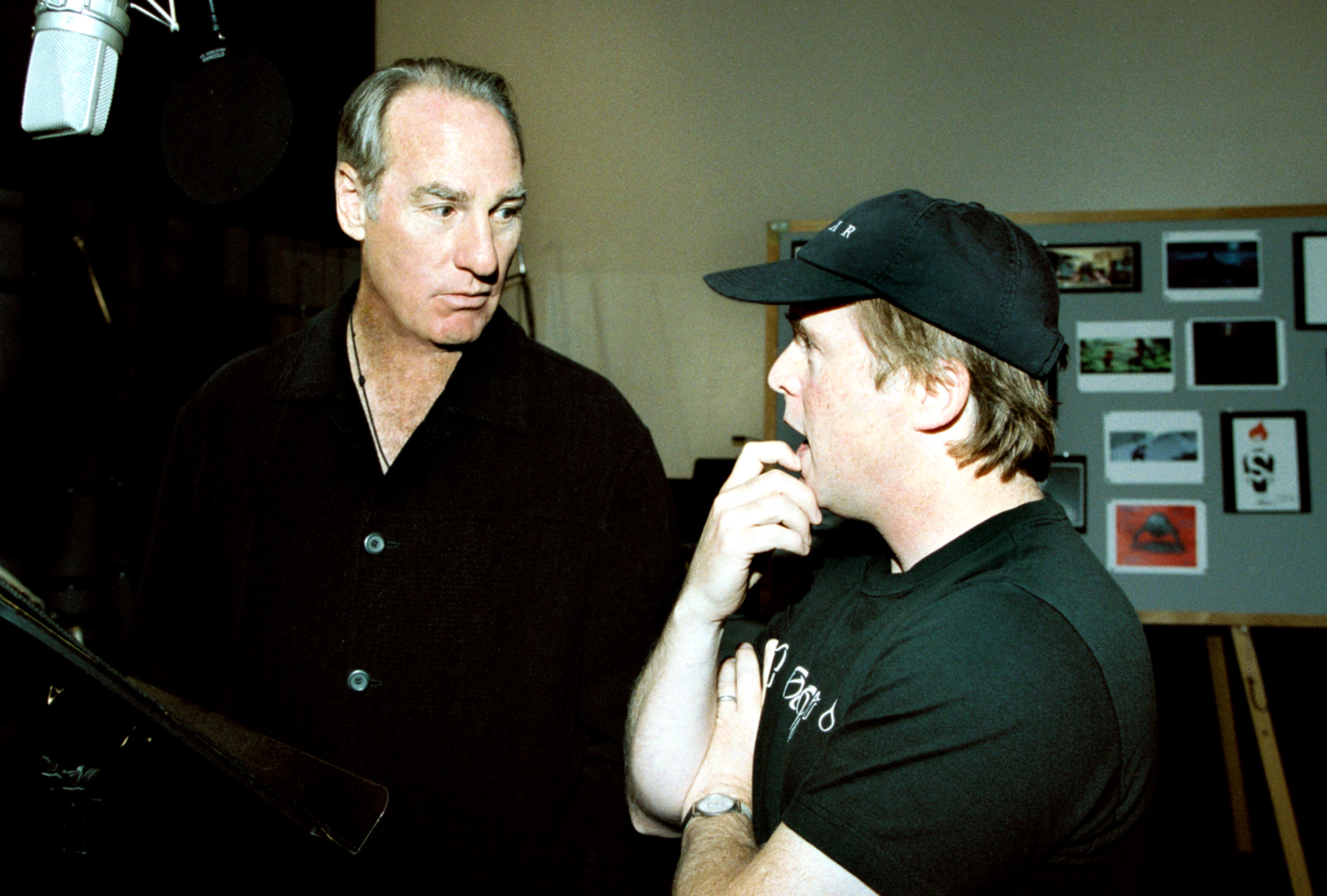
Craig T. Nelson, who turns 74 today, discusses his role as Mr. Incredible with director Brad Bird during the voice recording for Pixar’s The Incredibles in 2003:
Actor in the Spotlight:
Fandor celebrates the physical resilience of Ryan Gosling in this supercut of the actor getting hit in the face in various movies:
[embedded content]
Filmmaker in Focus:
For Little White Lies, Luis Azevedo and the dogs of Isle of Dogs look at other Wes Anderson movies and focus on how dogs die in many of them:
[embedded content]
Behind the Scenes Parody of the Day:
Nerdist made a very authentic-looking (but not real) making-of featurette about the creation of the Thala-Siren creature for Star Wars: The Last Jedi:
[embedded content]
Cosplay of the Day:
Speaking of Star Wars, there’s some good cosplay in this trailer for the upcoming Star Wars fandom series Looking for Leia, and that’s a good enough excuse to share it here:
Six episodes. A galaxy of stories. We’re about to fem-splain #StarWars fandom. Be part of the saga on @seedandspark: https://t.co/JWEqHBz9BP ??? pic.twitter.com/fxVnldhHKx
— Looking for Leia (@LookingForLeia) April 3, 2018
Classic Trailer of the Day:
Today is the 50th anniversary of the release of the Blake Edwards comedy The Party. Watch the original trailer for the Peter Sellers classic below.
[embedded content]
and
Surgeon General Urges More Americans To Carry Opioid Antidote

Surgeon General Jerome Adams is recommending that more Americans be prepared to save people from opioid overdoses.
Chip Somodevilla/Getty Images
hide caption
toggle caption
Chip Somodevilla/Getty Images
As opioid-related deaths have continued to climb, naloxone, a drug that can reverse overdoses, has become an important part of the public health response.
When people overdosing struggle to breathe, naloxone can restore normal breathing and save their lives. But the drug has to be given quickly.
On Thursday, U.S. Surgeon General Jerome Adams issued an advisory that encouraged more people to routinely carry naloxone.
“The call to action is to recognize if you’re at risk,” he tells Morning Edition‘s Rachel Martin. “And if you or a loved one are at risk, keep within reach, know how to use naloxone.”
Police officers and EMTs often have naloxone at the ready. Access to the drug for the general public has been eased in the past few years, too.
The medicine is now available at retail pharmacies in most states without a prescription. Between 2013 and 2015, researchers found a tenfold increase in naloxone sold by retail pharmacies in the U.S.
But prices have increased along with demand. Naloxone-filled syringes that used to cost $6 a piece now cost $30 and up. A two-pack of naloxone nasal spray can cost $135 or more. And a two-pack of automatic naloxone injectors runs more than $3,700.
And while it’s true that naloxone can prevent many opioid-related deaths, it doesn’t solve the root cause of the problem.
So where does this fit into an overall strategy for tackling the opioid crisis?
NPR’s Martin asked Surgeon General Adams about the advisory, and the administration’s broader plan for addressing the opioid epidemic.
Here are interview highlights that have been edited for length and clarity.
On keeping naloxone at home, and using it effectively
We should think of naloxone like an EpiPen or CPR. Unfortunately, over half of the overdoses that are occurring are occurring in homes, so we want everyone to be armed to respond.
We’re working with pharmacies, providers and medical associations to increase training on how to administer naloxone in homes. But overall — and I’m an anesthesiologist who’s administered naloxone many times myself — it’s very safe, easy to use, and 49 of 50 states have standing orders for people to be able to access and to use [naloxone] in the home setting.
On making sure someone treated with naloxone doesn’t overdose again in short order
When a person is having multiple overdoses, I see that as a system failure. We know addiction is a chronic disease, much like diabetes or hypertension, and we need to treat it the same way. We can’t have someone overdose and send them back out onto the streets at 2 a.m., because they’re going to run right back into the hands of the local drug dealer.
If you come in at 3 a.m., having been resuscitated from an overdose, we need to have either an immediate access to treatment available for you, or, what’s working well in many places is a peer recovery coach — someone who’s been through this before and who can speak to you in a language that will resonate, and basically can be with you until you’re in recovery. Those are the kind of systemic changes we need to make sure naloxone is a touch point that leads to recovery.
On pricing and availability of naloxone
President Trump has asked for, and Congress has approved, $6 billion in funding to respond to the opioid epidemic. There are different grants available for states to purchase naloxone, which they can give out for free.
We’re also working with insurers. Ninety-five percent of people with insurance coverage, including Medicare, Medicaid, Tricare and Veterans
Affairs are actually able to get naloxone with little or no copay, and we’re working with them to make that copay as small as possible.
We’re also working with Adapt Pharma and Kaleo [two makers of naloxone available in the U.S.] to try to keep costs low. From an economic point of view, unfortunately, there are so many people who need naloxone that drug companies are going to make their money one way or the other.
On the role of law enforcement in combating the opioid crisis
We are not going to solve this crisis without the involvement of law enforcement. I can also tell you, from visiting many communities, that folks are concerned about public safety aspects. One neighbor is concerned their son is overdosing while another other neighbor is worried their house is getting broken into.
I’m focused on meeting with the attorneys general and meeting with local law officials and making sure that if you’re dealing drugs, you’re going to go to jail. But if you have a substance use disorder, we’re going to give you an option to get treatment, and hopefully become a productive member of society again.
On where federal funding can help
This starts with naloxone — saving lives is one of the president’s key pillars — and then using it as a bridge for treatment. Fifty-million dollars in funding has been allocated specifically for naloxone, and states are eligible for $2 billion dollars in block grants that they can use however they like.
If we can spend money on prevention and more treatment options, making sure we’re providing wrap-around services, I think we’ll find ourselves in a good place. I continue to impress upon folks the importance of partnering, making sure that law enforcement is sitting down with health and education so they all put their money together on a local level. At the end of the day, unfortunately, there will never be enough money in the federal government to do everything that we want to do.
