
'Failing Patients': Baltimore Video Highlights Crisis Of Emergency Psychiatric Care

Cheryl Chandler says she happened to click on a viral video showing a woman wearing a hospital gown, not knowing it showed her 22-year-old daughter, Rebecca. She has mental health issues and was left outside a Baltimore hospital on a cold January night. The video recorded by a passer-by went viral.
Jared Soares for NPR
hide caption
toggle caption
Jared Soares for NPR
A viral video from Baltimore is drawing attention to a crisis that’s unfolding in emergency rooms across the country: Surging numbers of patients with psychiatric conditions aren’t receiving the care they need.
On a cold night in January, a man walking by a downtown Baltimore hospital saw something that shocked him. He started recordingthe incident on his phone.
Imamu Baraka’s video, which has been viewed more than 3 million times, shows security guards walking away from a bus stop next to the emergency room of University of Maryland Medical Center Midtown Campus.
One is pushing an empty wheelchair. The woman they left there is wearing a thin yellow hospital gown and socks.
“Wait, so you’re just going to leave this lady out here with no clothes on?” Baraka asks the guards. They continue walking away.
The woman, later identified as a 22-year-old named Rebecca, staggers near the bus stop. She appears distressed and confused. She moans and shouts.
“Are you OK, ma’am? Do you need me to call the police?” Baraka asks.
Nationwide, hospitals are struggling to provide services to people with psychiatric emergencies. Between 2006 and 2013, ER visits increased by more than 50 percentfor psychoses and bipolar disorders and depression, anxiety and stress reactions according to the Healthcare Cost and Utilization Project, which compiles health care data. Between those years the number of visits climbed from 3,448 visits to 5,330 per 100,000 U.S. patients ages 15 and older.
“We’re just failing patients with mental illness and it’s just getting worse as time goes on,” says Dr. John Rogers, president-elect of the American College of Emergency Physicians.

Imamu Baraka, the man who came to the aid of a woman discharged from a hospital wearing only a gown and socks on a cold winter’s night, stands outside the University of Maryland Medical Center Midtown Campus in Baltimore. He recorded the events on cellphone video, fearing no one would believe him if he reported a woman being left at a bus stop.
David McFadden/AP
hide caption
toggle caption
David McFadden/AP
In the viral video, Rebecca has a visible wound on her forehead, and her breath forms white clouds in the cold. Baraka calls for an ambulance, which brings her back to the hospital that just discharged her.
Rebecca’s mother, Cheryl Chandler, says she happened to click on the video, not knowing it showed her daughter. “Once he focused on her face I realized it was her. And I think I went into shock initially,” Chandler says.
That realizationset off a desperate search. The hospital wouldn’t tell her where she was. Chandler called the police. They found out that the hospital didn’t readmit Rebecca, even though according to a federal regulator’s report, Rebecca told workers in the ambulance, “I do not feel normal, and do not know what normal is.”

A screenshot shows Rebecca outside University of Maryland Medical Center Midtown Campus hospital in Baltimore in January.
Imamu Baraka/Reuters
hide caption
toggle caption
Imamu Baraka/Reuters
Hospital staff put her into a cab that took her to a nearby homeless shelter, where family members found her the next day. She’s been hospitalized on and off since the incident.
“She could have got hypothermia. She could have died. She could have been raped, she could have been killed,” Chandler says. “All she wanted was treatment and they had two opportunities to do it and denied it both times.”
Rebecca was clearly asking for medical care, her mother says, which ERs are legally required to provide.
“That, what I saw in the video, was my worst nightmare for Rebecca,” Chandler says. Several years ago, Rebecca was diagnosed with bipolar and schizoaffective disorders. Her mom adds that she’s a shy and lovable introvert who loves animals and making art.
Rebecca has insurance and had been in a residential home when she went missing, Chandler says.
The hospital has apologized and says it has already put in place measures to correct the issues.
Chandler says she hopes that means it won’t happen to other patients. But she adds that Rebecca will continue to suffer from the hospital’s decisions: “No part of Rebecca, because of this, is going to heal. No part. We can’t make the scars go away.”

Rebecca has been diagnosed with bipolar and schizoaffective disorders. Her mom says she’s a shy and lovable introvert who enjoys animals and making art.
Courtesy of Cheryl Chandler
hide caption
toggle caption
Courtesy of Cheryl Chandler
James E. Farmer, a lawyer for Rebecca’s family, says they’re investigating now and considering filing lawsuits. “It’s going to be difficult to determine the exact extent of harm to Rebecca,” he says. “I could not imagine the psychological damage and harm that was done as a result of this.”
The Centers for Medicare & Medicaid Services says the hospital failed to discharge the patient safely, among other breaches.
According to the federal regulator’s report, Rebecca was “resistant to discharge and refused to get dressed into street clothes when requested by nursing.” The hospital stated there was a “communication failure” which led to her discharge into the cold weather, though the report says it is not clear whether nursing or security staff made that decision.
Chandler says she’s heard from other families with similar stories: “The only difference is it wasn’t caught on video.“
“They told me to leave”
Here’s another story from Baltimore, about Laura Pogliano and her son Zaccaria. Zac, who had schizophrenia, died in 2015 of heart failure when he was 23.
Zac was sensitive and empathetic, and loved playing the piano, his mother says. He started to show symptoms of the disease when he was 16. He became paranoid, and started doing things like hiding kitchen implements out of fear that someone was trying to kill his family.

Laura Pogliano holds a photo of her son Zaccaria, who was diagnosed with schizophrenia. As part of his illness, Zac started to think that he had dramatic injuries. He made frequent trips to the emergency room but hospital staff would call her to pick him up.
Eslah Attar/NPR
hide caption
toggle caption
Eslah Attar/NPR
“His personality just drastically changed,” Pogliano says. “He had a thousand rituals around things so that he wasn’t harmed.”
Then, as part of his illness, Zac started to think that he actually did have dramatic injuries. Like a gunshot wound or a pulverized ankle. He’d call 911.
“He got to the point where he would pick up the phone at the drop of a hat and say, can someone come and help me, I’m having a heart attack,” Pogliano says.
This happened about 20 times in the two years before his death, she says. Often, ambulances took Zac to Good Samaritan Hospital, where Pogliano says the doctors would typically call her to let her know he arrived and would provide appropriate care for him. Later, hospital staff would call her to pick him up.
But one night after Zac went to the ER, Pogliano woke up hours later and got worried that she hadn’t received a call.
“I just got in the car and drove over there, and he was sitting outside. It was early spring but it was still wintery, probably 40 degrees out, 45 degrees out,” she says.

A framed photo of Laura Pogliano’s son Zaccaria. He died in 2015 of heart failure when he was 23. About a year before he died, Laura drove to the hospital to check on Zac, and she found him sitting outside in 40 degree weather in shorts, a hospital gown and no shoes. “They told me to leave,” he told his mom.
Eslah Attar/NPR
hide caption
toggle caption
Eslah Attar/NPR
“All he had on was what he wore to the hospital, which was a pair of white linen shorts. I know he didn’t have shoes on. … And a hospital gown and no shirt. I said to him, ‘Oh my gosh, what are you doing here?’ He said, ‘They told me to leave.’ “
A hospital spokeswoman acknowledged that Pogliano was a patient there but says she found no indication that he was ever inappropriately evaluated or mistreated. She says she couldn’t comment further because of federal privacy laws.
Emergency room doctors are frustrated at the growing gap in care for patients with psychiatric disabilities.
“We’re kind of tired of waiting for legislators and regulators to act and to meet their responsibility to these patients in the form of providing funding for resources,” says Rogers, the president-elect of the American College of Emergency Physicians.
Even as there is increasing demand, there are fewer resources to care for psychiatric patients. It can be difficult for doctors to find an inpatient bed — the numbers are have decreased dramatically over the decades. Rogers says there have been significant cuts to community and outpatient resources — so the emergency department is often the only place for psychiatric patients to go.
“Every emergency physician in the country knows this problem well and wants to do something about it,” Rogers says.
Often the ER is not properly equipped with staff that can offer treatment to psychiatric patients. The emergency room’s mission is to assess and stabilize, but the actual care they can provide psychiatric patients is fairly limited. A 2008 survey of ER doctors found that 62 percent of them said there were no psychiatric services provided while the patients were in the ER.

Cheryl Chandler says she’s heard from other families with stories like her daughter’s. “The only difference is it wasn’t caught on video,” Chandler says.
Jared Soares for NPR
hide caption
toggle caption
Jared Soares for NPR
“And the disparity between our ability to care for a patient with a medical problem and a patient with a psychiatric problem is growing, that gap is increasing,” Rogers says.
He says Rebecca’s case is an outlier. More common, he says, is that ERs will hold patients for too long before they can transfer them somewhere that can treat them. In a recent poll of emergency physicians, 84 percent said that psychiatric patients are “boarded” in their departments for hours or days. Rogers says he’s heard of patients being held for weeks.
And the options for where to transfer them are often limited. “And that’s where it starts breaking down,” he says. “The time that it takes to get someone transferred for something like that is just unacceptable….They wait, and wait, and wait.”
It’s a bad situation for everyone – for patients with psychiatric disabilities, and for other patients who have lengthy wait times because ERs are overwhelmed.
“They’re being asked to do way too much with way too few resources,” says Susan Stefan, a lawyer focusing on rights of people with psychiatric disabilities. ERs “have a specific mission, which is to provide emergency medical care, and they’re being turned into essentially 24-7 social service agencies.”
Stefan, who wrote a book about treating psychiatric patients in ERs, says it’s common for them to transfer people to homeless shelters because they are not equipped to find people stable housing.
And there’s another crucial point here: The ER is simply a bad place to treat severe mental illness, even as it is becoming increasingly central for those patients.

A video showing a patient wearing a hospital gown being dropped off at a bus stop near University of Maryland Medical Center Midtown Campus in downtown Baltimore this January went viral.
Emily Bogle/NPR
hide caption
toggle caption
Emily Bogle/NPR
“The emergency department is probably the worst place for somebody in psychiatric crisis,” Stefan says. “It’s loud, it’s chaotic and people don’t take a lot of time because they don’t have a lot of time.”
And it’s not straightforward to transform an ER into a place that is appropriate to provide treatment to people who are in the middle of psychiatric crises — although there are hospitals that are experimenting with new models to better serve these patients.
The Alameda Health System in Alameda County, Calif., is a model that both Stefan and Rogers point to. There, a doctor named Scott Zeller has set up a dedicated psychiatric emergency service — a department separate from the standard emergency room that can provide specialized evaluation and treatment for these patients.
The Alameda model reduced boarding times by 80 percent, according to a study published in the Western Journal of Emergency Medicine, and the fast, stabilizing treatment made it far less likely that the patient would need to be transferred to an inpatient bed.
If there were adequate services in place, most of the people coming to ERs for psychiatric crises wouldn’t need to come there at all, says Jennifer Mathis, the director of policy and legal advocacy at the Bazelon Center for Mental Health Law.
“And much as everybody loves to talk about the need for mental health services, that doesn’t translate into state policy and funding for community mental health services,” she says.
The problem here, Mathis says, is political will. There’s a big gap between politicians talking about mental health and actually making sure people are getting the services they need.
After Push From Activists, Chicago's South Side Gets An Adult Trauma Center

The Level 1 adult trauma center will officially launch on May 1.
Rob Hart/Courtesy of University of Chicago Medicine
hide caption
toggle caption
In 2010, 18-year-old Damian Turner was shot in the South Side of Chicago, just a few blocks away from the world-class University of Chicago hospital. But the ambulance that arrived to help him couldn’t take him there, because the hospital didn’t have an Level 1 adult trauma center.
Instead, it drove the gravely injured Turner nine miles to Northwestern University hospital, where he died from his wounds.
Turner’s death mobilized South Side young black activists. For years, they demanded that the University of Chicago reopen an adult trauma center that had closed in 1988 after losing millions of dollars each year treating patients without health insurance.
After years of resistance, the university is reopening its adult trauma center on May 1 — a decision that will provide the South Side with more accessible trauma care.
“There are a lot of trauma-related deaths because gun violence is such a prevalent issue on the South Side. It was then it is now. It has been for decades,” said activist Veronica Morris-Moore.“A lack of a trauma center was a severe indication of the institutional racism that existed on the South Side. And the reason it was worth our time as young people was because we were losing friends.”

Veronica Morris-Moore stands outside the adult emergency room at the University of Chicago Medical Center in Feb. 2013. Morris-Moore was one of many activists pressuring the medical center to reopen an adult trauma center it closed in the 1980s.
Charles Rex Arbogast/AP
hide caption
toggle caption
Charles Rex Arbogast/AP
Research backs Morris-Moore up: If you are shot more than five miles from a trauma center in Chicago, your likelihood of dying is 21 percent greater.
The university’s effort to reopen the center received a boost in 2015 when it made a bid for the Obama Presidential Center. That year, in an about face, the university said it would again open a trauma center.
Trauma care is costly complex web of care treatment lots of specially trained surgeons and nurses who treat penetrating wounds — from car crashes, stabbings to serious falls to gunshots. New staff have been hired, a new emergency room in the hospital opened in December and the state public health department approved trauma care earlier this month.
The new center’s head, Dr. Selwyn Rogers, said he will also work with local groups on social services centered around violence in addition to providing care.
“We bring together the resources of the university, medical center and community partners so that we can be better able to address health disparities and the public health epidemic of intentional violence,” Rogers said.
One of those community partners is Julian DeShazier, the pastor of University Church, which is not affiliated with the university. Activists used this church as a meeting space when they were planning strategy.
“Once we got on board it took on another dimension. We began to talk about it from different angles in terms of faith, and use our resources and access to try to help their voices be heard more,” DeShazier said. “We were able to help mediate conversations between medical center executives and the organizers on the ground doing that work. That’s the kind of work churches can do when they’re really rooted inside of a community.”
The hospital estimates the trauma care will cost $48 million a year. While trauma injuries are unpredictable, officials say the new trauma unit could treat up to 4,000 patients yearly starting next Tuesday.
Saturday Sports: LeBron, Golden State Warriors And Condoleezza Rice

ESPN’s Howard Bryant joins Scott Simon to talk about the biggest sports stories of the week.
SCOTT SIMON, HOST:
Time for sports.
(SOUNDBITE OF MUSIC)
SIMON: Condoleezza Rice. That’s not a name we usually hear against this music. Condoleezza Rice tries to clean up college basketball. The Indiana Pacers clean the clock on the Cavaliers as the NBA playoffs go on and on, still just in the opening round. ESPN’s Howard Bryant joins us. Good morning, Howard.
HOWARD BRYANT: Hey, Scott. Good morning.
SIMON: I wanted to spend all our time talking about the Browns’ great clutch shot for all the time today, but let’s note the Pacers defeated the Cavs last night by 34 points – yow (ph). Game 7 tomorrow. What do you foresee?
BRYANT: Well, I foresee a very difficult game for the Cavaliers. I think that we take LeBron James for granted because there are some people, Scott, who are simply so good that you don’t really appreciate how good they are. Look at what he’s done with a team that’s not very good. Let’s not forget that this team wasn’t even the team they started the season with.
They expected to start the season with Kyrie Irving, and he ended up in Boston. And then they ended up making a huge trade in midseason, and so to still be in a seventh game – he’s been to the finals seven straight years. He’s trying to go eight years in a row. No one’s ever done that. Bill Russell went 10 years in a row. He’s the only one to ever do anything even close to this. And so LeBron James is just such a phenomenal player.
And even last night’s game, for example, with Utah in Oklahoma City. You saw what happened with the Utah Jazz eliminating Oklahoma City, and so they’re out.
They tried to do this three-headed monster with Carmelo Anthony and Russell Westbrook and Paul George, and to duplicate the same thing that LeBron did with Dwyane Wade in Miami with Chris Bosh, and it just shows you how difficult it is to get those superstars on the same page. They couldn’t do it. And yet, LeBron takes everybody – any team LeBron plays on is a championship contender, no matter how good or bad they are.
SIMON: Yeah. I just want to take a moment to contemplate on his blocked shot and 3-point shot at the buzzer on Wednesday. OK, we’ve done it. Golden State – can’t take the Pelicans for granted, can they?
BRYANT: No, they can’t because you’ve got Anthony Davis, who’s a terrific player. And once again, Golden State – they’ve been able to turn it on whenever they’ve wanted to. They’ve been the best team the last three seasons. And going for another championship – I still think they’re the best team. I still will believe somebody can beat them four times when I actually see it. But let’s not forget, they’re a very good team, New Orleans, and also Houston as well. Let’s not forget them.
SIMON: What do you take away from the recommendations the Condoleezza Rice Commission made about college basketball?
BRYANT: I think that they need a plow to clean up college basketball, and they – and this was a dust broom. It really was. It’s not nearly enough. They talked about some of the one-and-done rules. They talked about recommendations.
You’ve got an economic problem here – that the players need to be compensated at some level. They did not even address that in any way because that would completely upset the apple cart, so they have a long way to go. But unless you’re going to deal with compensating these players, you’re not really going to get anything done.
SIMON: Howard Bryant, thanks so much.
BRYANT: Thank you.
(SOUNDBITE OF MUSIC)
Copyright © 2018 NPR. All rights reserved. Visit our website terms of use and permissions pages at www.npr.org for further information.
NPR transcripts are created on a rush deadline by Verb8tm, Inc., an NPR contractor, and produced using a proprietary transcription process developed with NPR. This text may not be in its final form and may be updated or revised in the future. Accuracy and availability may vary. The authoritative record of NPR’s programming is the audio record.
The Week in Movie News: What's Next for the Marvel Cinematic Universe, a Full 'Venom' Trailer and More

Need a quick recap on the past week in movie news? Here are the highlights:
BIG NEWS
Marvel teased the future of the MCU: While promoting Avengers: Infinity War at a press junket this week, Marvel Studios boss Kevin Feige shared the latest on the next Spider-Man and Black Panther movies and hinted at possible Eternals, Nova and Moon Knight movies. Read more here and check out our own interview with Feige here.

GREAT NEWS
More Han Solo movies are possible: In a new interview, Alden Ehrenreich confirmed he has signed on for three Star Wars movies, meaning if Solo: A Star Wars Story is a big enough hit, we might see more of him as young Han Solo. Read more here.

SURPRISING NEWS
Star Trek 4 to be helmed by a woman director: A great surprise for fans of progress (as any Star Trek lover should be), S.J. Clarkson was named as the first woman to direct a Star Trek movie, with the next installment. Read more here.

COOL CULTURE
Avengers: Infinity War guides: In anticipation of the release of Avengers: Infinity War this week, many YouTubers have shared guides to the MCU and other set ups for the latest installment. Below is a funny sketch explaining what the different Infinity Stones do. Find more parodies, recaps and more here, here, here and here.
[embedded content]
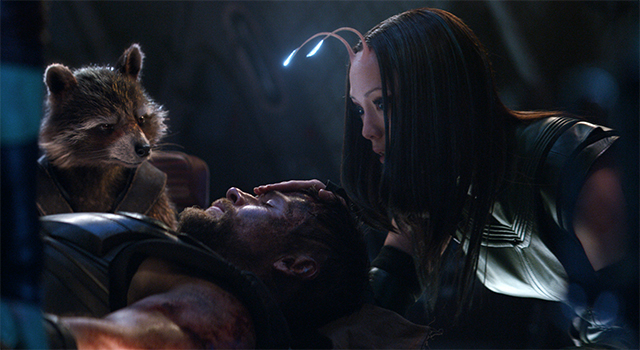
EXCLUSIVE REVIEW
An expert take on Avengers: Infinity War: Our resident Marvel expert reviewed Avengers: Infinity War, calling it “a triumph of superhero filmmaking.” Read the whole take here.

MUST-WATCH TRAILERS
Venom reveals Venom: The first full trailer does better than the teaser and shows us the title character in all his maniacal glory, as in the suit, not just Tom Hardy being Tom Hardy. Watch it below.
[embedded content]

Crazy Rich Asians looks like a trip: The best-selling book is now a movie, and Crazy Rich Asians looks like it could be a surprise hit this summer, if only for the scene-stealing Awkafina. Watch the movie’s first trailer below.
[embedded content]

Woman Walks Ahead paints an appealing picture: The first trailer for the Jessica Chastain-led biopic of artist Catherine Weldon arrived with a beautiful period-piece look to it. Watch it below.
[embedded content]
and
'I Used To Be A Dreamer': To Change The World, Souad Massi Starts With Herself

Souad Massi.
Jean-Baptiste Millot/Courtesy of the artist
hide caption
toggle caption
Jean-Baptiste Millot/Courtesy of the artist
Over the past 20 years, Souad Massi has sung provocative songs challenging authority and weaving stories in Arabic, French, and Kabyle, languages from her native Algeria. She’s never been afraid to take risks through her music. “You want to know all my secrets?” Massi asks. The Algerian artist laughs and says she has only the best.
While on tour in the United States, Massi spoke to NPR’s Ari Shapiro from KUOW in Seattle and performed three of her most powerful songs.
“I used to be a dreamer. I wanted to change the world. I was so shy and reserved. I didn’t know how to talk to people,” she explains. So instead, Massi found her outlet through music. She was 17 years old when she wrote her first song, 2001’s “Raoui.” The title means “Storyteller” in Arabic. Massi says she wrote it to forget her troubles and “just to fly away.”
Now, Massi is a celebrated international artist. In her 20s, she joined the political rock band Atokar — a rarity for a woman at the time — and eventually left Algeria for France due to government pressure. On her fifth album, 2015’s El Mutakallimun — “Masters of the Word” — Massi pays homage to the works of important Arab thinkers and poets stretching from the ancient past to present day. She hopes her music will not only bring peace and healing to Arabs, but all people.
“I was very sad to see and to hear what the media shows from the Muslim and Arabic world,” Massi says of the album’s mission. “We have very intelligent people who have a real gift for humanity. ”
Iraqi poet Ahmed Matar is one of Massi’s chosen poets. Matar spent much of his life in prison for supporting democracy in Kuwait, and now lives in exile in England. Massi says she wants to give a voice to Matar’s revolutionary poetry in “Ayna (The Visitor).”
The song describes an “enlightened leader” arriving before a large crowd and and asking them to tell him their grievances without fear. The song’s narrator describes “my friend Hassan” asking the leader about living conditions and then mysteriously disappearing. One year later, the leader reappears before the crowd. The narrator sings:
No one dared, and so I said:
“Where’s the bread and where’s the milk
And the guaranteed housing?
Where’s the employment for all
And the free healthcare?
And pardon me, O Excellency,
Where is my friend Hassan?”
Massi could have turned these words into a mournful tune, but instead the song almost sounds like a satire. She says that it’s common in African culture to give sad lyrics a buoyant melody. “We can make a song very… groovy,” she laughs.
Massi is no stranger to the pain and suffering that plagues the modern world. Though she is not the 17-year-old dreamer she once was, she finds hope when she sees people from all over the world at her shows.
“It is very hard to change the world,” Massi says. “We have to begin from ourselves to correct what is not good in us. And after that, we can help other people and we can try.”
NPR’s Linah Mohammad contributed to this report.
The Homeless Count

The homeless population in most of the country has been declining for years, thanks to a strong economy and a low unemployment rate. But in Los Angeles County, the homeless population has been rising fast—nearly 25% in the last year.
A team from USC set out to figure out what was going on. They launched a big survey to ask people how they had ended up on the street. They found that the new homeless population has changed. A lot of homeless people are educated, have jobs, and many are elderly.
Half of them had become homeless for the first time in just the last 30 days.
Music by Drop Electric. Find us: Twitter/ Facebook.
Subscribe to our show on Apple Podcasts, PocketCasts and NPR One.
Golfer Removes His Pants (For A Legitimate Reason)
Golfer Justin Rose was playing at a golf tournament in Louisiana and his ball went into the water. He took off his pants and shoes and stepped into the water to hit it out.
STEVE INSKEEP, HOST:
Good morning. I’m Steve Inskeep. Generally, it’s not a good idea to remove your pants at a sporting event. But Justin Rose had his reasons. The pro golfer was playing at the Zurich Classic in New Orleans when his ball landed in shallow water. You may try to hit a ball out of the water. And he did after removing his shoes, socks and pants. With one bare foot out of the water and one foot in, he then took a swing. The ball emerged from the splash and landed right on the green. You’re listening to MORNING EDITION.
Copyright © 2018 NPR. All rights reserved. Visit our website terms of use and permissions pages at www.npr.org for further information.
NPR transcripts are created on a rush deadline by Verb8tm, Inc., an NPR contractor, and produced using a proprietary transcription process developed with NPR. This text may not be in its final form and may be updated or revised in the future. Accuracy and availability may vary. The authoritative record of NPR’s programming is the audio record.
Renaissance Fair Health Care
Many people who work at Renaissance fairs don’t have health insurance. So workers developed a system to help out.
RACHEL MARTIN, HOST:
Navigating the American health care system can feel like being put through a medieval torture device, especially on the financial side. So perhaps it is fitting that the people who work at Renaissance fairs have come up with a workaround. Dan Weissman from our Planet Money team has the story.
DAN WEISSMAN, BYLINE: About 35 miles east of Austin, Texas, I’m standing in a kind of open-air pub at the Sherwood Forest Faire. Most people here are dressed like extras from “Game Of Thrones.”
UNIDENTIFIED PERSON #1: Have you gotten the chance to speak with Robin Hood yet? Robin, come forward.
WEISSMAN: Robin Hood does that thing they all do at Renaissance fairs where they pretend to be amazed by modern technology like, you know, my microphone.
UNIDENTIFIED PERSON #2: (As Robin Hood) That’s a very strange device you have there, sir.
WEISSMAN: Another newfangled invention they don’t all have? Health insurance. You know, it’s all fun and games till someone gets run through with a jousting lance. There’s a lot that can go wrong back in the Middle Ages. Danielle Dupont performs as a washing well wench, dragging spectators into her show.
DANIELLE DUPONT: (As Washing Well Wench) Do you want to see him do something dangerous?
UNIDENTIFIED CHILDREN: Yeah.
DUPONT: (As Washing Well Wench) Disgusting?
UNIDENTIFIED CHILDREN: Yeah.
DUPONT: (As Washing Well Wench) Me, too.
WEISSMAN: Years ago, she fell off a stage and twisted her ankle. Good news. By the time she got back from the ER, her fellow performers had passed the jangly hat and raised like $2,000 for her. She was touched. But later, she found out that not everybody got the same charity. There was another family whose daughter got sick, and no one had stepped up to help them.
DUPONT: Because I was popular. I was 22. I was cute. I had a stage show. People came up with money for me. And yet this artist and family didn’t get any money and had to leave. It was not fair.
WEISSMAN: So the Rennies, as they call themselves, took their informal spirit of charity and made it official. They call it RESCU Foundation, a way to raise money and give it to whoever needs it the most at Renaissance fairs around the country. The fundraisers turned out to be the easy part. Rennies have a ton of imagination, and they came up with a clever way to use it. Carol Black is one of RESCU’s founders. She says they would pick up worthless items at a thrift store and then auction them off with a story.
CAROL BLACK: We auctioned off a broken wooden dish strainer as the Gutenberg paper dryer, and it went for $150 because of the story.
WEISSMAN: Giving away the money and making sure it went where it was needed most was harder. In order to make it work, they had to embrace a concept that practically defines modernity – bureaucracy. Carol says they started like any good health care organization with paperwork.
BLACK: Which is really hard for people, especially people in this type of industry.
WEISSMAN: Rennies who need help paying for health care have to fill out a form, prove they’ve worked at a fair as an elf or a juggler or a minstrel or a big burly dude who sells turkey legs, doesn’t matter. There’s a committee that reviews everything. And those that get approved can get a little money. And more importantly, they can get help navigating the health care system. Kaelyn Globig used to sell belly-dancing outfits. Now, she works as RESCU’s case manager.
KAELYN GLOBIG: There are roads to take when you’re uninsured, it’s just that people don’t know how to do it. And they won’t necessarily tell you.
WEISSMAN: Kaelyn walks Rennies through the process of advocating for themselves. She teaches them the magic words to slay the health care dragon – application, charity care, financial aid. In the past five years, the RESCU Foundation says it has spent about a half a million bucks toward medical bills and gotten more than $2 million in price breaks. For NPR News, I’m Dan Weissman in Austin, Texas.
(SOUNDBITE OF OLA KVERNBERG’S “MECHANICAL FAIR”)
Copyright © 2018 NPR. All rights reserved. Visit our website terms of use and permissions pages at www.npr.org for further information.
NPR transcripts are created on a rush deadline by Verb8tm, Inc., an NPR contractor, and produced using a proprietary transcription process developed with NPR. This text may not be in its final form and may be updated or revised in the future. Accuracy and availability may vary. The authoritative record of NPR’s programming is the audio record.
Former NBC Correspondent Accuses Tom Brokaw Of Sexual Misconduct

Journalist Tom Brokaw is introduced before being awarded the Presidential Medal of Freedom during a ceremony in the East Room of the White House in Washington, in 2014.
Pablo Martinez Monsivais/AP
hide caption
toggle caption
Pablo Martinez Monsivais/AP
A woman who worked as an NBC correspondent says long-time network anchor Tom Brokaw made unwanted advances toward her some two decades ago, groping her and trying forcibly to kiss her.
Linda Vester, who covered the Middle East and Africa for NBC and later joined Fox News, was in her 20s at the time she alleges Brokaw made the advances, Variety magazine reports.
Vester produced contemporaneous journals that corroborated her story, the magazine says.
Brokaw, now 78, responded through an NBC spokesman. “I met with Linda Vester on two occasions, both at her request, 23 years ago because she wanted advice with respect to her career at NBC,” he said. “The meetings were brief, cordial and appropriate, and despite Linda’s allegations, I made no romantic overtures towards her at that time or any other.”
Vester says that in August 1993, she was in Denver to cover the visit of Pope John Paul II. “While I was standing there in the Denver bureau with my back to the door, from behind me, out of nowhere, Tom Brokaw walked up, put his hands on my waist and tickled me all up and down my waist,” she said.
“It was physically unpleasant and humiliating,” Vester told Variety. “I jumped a foot [and] looked the editor of Nightly News in the eye. He looked back at me and his jaw dropped.”
“No one did a thing,” she said. “And, there was nothing I could really do or say because I was so low on the totem pole.”
She described another incident in New York when Brokaw insisted on visiting her in her hotel room and then twice tried to kiss her.
“I felt trapped, because it wasn’t a request, it was more like an order,” she said.
“I barely knew him and I didn’t work for his broadcast,” she said. “But when the most powerful man at the network sends you a computer message, you answer him.”
Vester, who was hired by NBC in 1989, left in 1999 to join Fox News, where she remained until 2006.
According to Variety: “She’s speaking out now, because she believes her story sheds light on the culture at NBC News, where she believes male bosses treated their female colleagues as objects. After Today co-host Matt Lauer was fired for inappropriate conduct involving an NBC employee last November, NBC launched an internal review of its practices but didn’t bring in an outside firm to investigate — a step Vester believes is necessary to fix NBC’s culture.”
Brokaw is one of several prominent media figures accused of sexual misconduct in recent months at various news organizations, including NPR.
Today in Movie Culture: 'Avengers' Stars Parody 'The Brady Bunch,' Why Marvel is Better Than DC and More
Here are a bunch of little bites to satisfy your hunger for movie culture:
Movie Song of the Day:
To promote Avengers: Infinity War, a number of its stars sang a Marvel-themed parody of the Brady Bunch theme song for The Tonight Show:
[embedded content]
Movie Parody of the Day:
The amount of characters in Avengers: Infinity War is lampooned in this animated video from College Humor:
[embedded content]
Reworked Trailer of the Day:
Aldo Jones is back with another surreal reworking of an Avengers: Infinity War trailer, this time with extra Deadpool:
[embedded content]
Movie Science of the Day:
Also ahead of the release of Infinity War, Kyle Hill scientifically explains how Thanos throws a moon in the movie:
[embedded content]
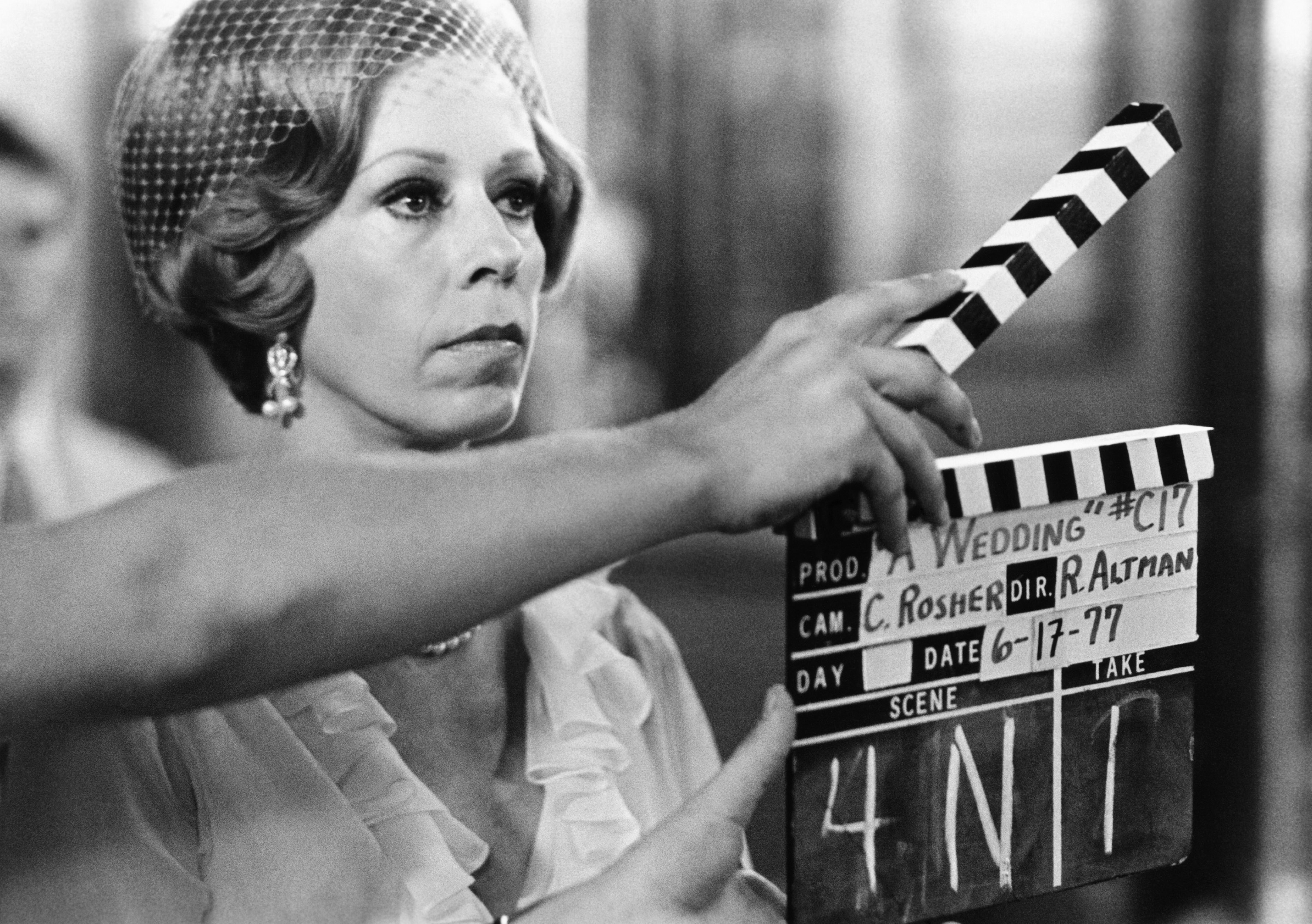
Vintage Image of the Day:
Carol Burnett, who turns 85 today, about to shoot a scene for Robert Altman’s A Wedding in 1977:
Movie Comparison of the Day:
In honor of the latest MCU movie, Couch Tomato shows 24 reasons why Thor: Ragnarok is basically a remake of Flash Gordon:
[embedded content]
Franchise Comparison of the Day:
For Fandor, Jacob T. Swinney explains why the Marvel Cinematic Universe is better than the DC Extended Universe:
[embedded content]
Remixed Movie Franchise of the Day:
Eclectic Method takes the sounds of Star Wars movies old and new and turns them into house music:
[embedded content]
Easter Eggs of the Day:
Mr. Sunday Movies breaks down the new Venom trailer and highlights the Easter eggs and other things you might have missed:
[embedded content]
Classic Trailer of the Day:
Today is the 40th anniversary of the release of Martin Scorsese’s The Last Waltz. Watch the original trailer for the classic concert film below.
[embedded content]
and
