
Fancy An American Football Match? NFL Owner Bids For London's Wembley Stadium

Manchester United players warm up in London’s Wembley Stadium prior the FA Cup semifinal match against Tottenham Hotspur on Saturday. American billionaire Shahid Khan has made a bid to buy the stadium.
Catherine Ivill/Getty Images
hide caption
toggle caption
Catherine Ivill/Getty Images
Updated at 9:25 p.m. ET
Wembley, London’s iconic national stadium, could soon be owned by an American.
The Football Association of England, which owns the stadium, said it had received an offer from Shahid Khan, the billionaire owner of the NFL’s Jacksonville Jaguars. Wembley is home to England’s national football team.
In what The Guardiancalled “an extraordinary deal,” Khan reportedly offered the FA a lump sum of nearly $835 million, and offered to allow the association to retain some of the revenue generated, valued at an additional $417 million.
Khan, who was born in Pakistan, also owns Fulham which plays in the Championship League, the second tier of English soccer. In a statement posted to Fulham’s website, Khan explained that his bid was an effort to “protect the Jaguars’ position in London at a time when other NFL teams are understandably becoming more interested in this great city.”
The businessman, who made his money in auto parts, seemed to recognize that his bid might be unpopular with both Fulham fans and English soccer supporters generally:
“I trust many if not most of you are also supporters of the England national teams, so I hope you welcome the potential of this becoming a reality. Always know Wembley would be home to the England national teams, and that we would strive every day of the year to be the best possible steward for a venue that is iconic and beloved here and throughout the world.
“No matter what the outcome of our offer may be, I want to emphatically state to you that none of this will have any effect on my commitment to your Club.”
“If the takeover gets the go ahead more American football games are likely to be played at Wembley and it could even pave the way for an NFL franchise to be permanently based in London,” the Evening Standardreported. The newspaper said that the deal would likely mean fewer of England’s international soccer matches would be hosted at the stadium, but “would not threaten Wembley’s status as the England team’s home for all major fixtures.”
The NFL said having stadium options in London has been “critical” and Khan’s purchase of Wembley would allow greater flexibility in scheduling NFL games there. The Jaguars already play one game per season at the stadium.
“We are very happy for Shad Khan and the Jacksonville Jaguars,” the league said in a statement, according to ESPN. “The potential purchase of Wembley Stadium is a further powerful sign of their commitment to the UK and their vision to help us grow the sport.”
As the largest stadium in the U.K., Wembley plays host to many of the country’s biggest sporting events. This season it has also been the home of Tottenham Hotspur as the team’s stadium is under construction.
The original Wembley opened in 1923 as the centerpiece of the British Empire Exhibition. The old stadium was demolished in the early 2000s, and the new stadium opened on the same site in 2007.
“Wembley is a historic place in English football, it holds a very special place in the heart of fans up and down the country and I’m sure the FA will want to strongly consider the views of these supporters before deciding what to do next,” the prime minister’s spokesman said, according to the Guardian.
Benzodiazepines: America's 'Other Prescription Drug Problem'

Nicole Xu for NPR
Drew was in his early 30s. His medical history included alcohol abuse, but he had been sober for several months when he became my patient.
His previous doctor had given him a prescription for Ativan, or lorazepam, which is frequently used to allay tremors and seizures from alcohol withdrawal.
My first inclination was to wean him off the medication by lowering the dose and telling him to take it less frequently. But inertia is strong in medical care, and Drew prevailed upon me to continue providing lorazepam at his regular dose for another month while he solidified his situation with a new job.
The next time I heard about him was a couple of weeks later when a colleague read me Drew’s obituary in the local paper. There was no cause of death listed. But I knew he could have run into serious trouble if he had mixed alcohol or other drugs with his lorazepam.
Lorazepam is a benzodiazepine, a class of medicines known as sedative-hypnotics. They’re used frequently in the U.S. to treat anxiety and insomnia. Other drugs in the same category include Valium and Xanax.
The problem with benzos, as they’re also known, is that they’re highly addictive medications, both physically and psychologically. Abruptly stopping them can lead to withdrawal symptoms like the ones Drew hoped to avoid when he kicked alcohol.
Moreover, with long-term use, our metabolism adjusts to benzos. We need higher doses to achieve the same effects.
When taken regularly, benzos can have the unintended effect of impairing your ability to sleep without them. When used for anxiety, their disruption or withdrawal can lead to a wicked return of the symptoms they are intended to treat.
Because of their addictive potential, benzos are controlled substances, whose use is regulated and monitored by the Drug Enforcement Administration.
With so much of our attention now understandably directed at the nation’s insatiable appetite for those other controlled substances — opioids — it’s no wonder that the dangers of benzodiazepine overuse haven’t drawn as much scrutiny.
But that is starting to change.
A recent essay in the New England Journal of Medicine titled “Our Other Prescription Drug Problem” highlights massive growth in the use and abuse of benzos in the U.S., including the fact that the number of deaths attributed to benzodiazepine overdose has risen sevenfold over the past two decades.
That’s not altogether surprising when you consider that the number of prescriptions written for benzodiazepines increased 67 percent to 13.5 million per year in 2013 from 8.1 million in 1999.
While death rates and prescriptions for opioids still substantially outnumber those for benzos, it’s combinations of the two types of drugs that are particularly fatal.
Three-quarters of deaths attributed to benzodiazepines also involve an opioid, resulting in a stern warning from the Food and Drug Administration in 2016 about the danger of combining the medicines.
Stanford psychiatrist Anna Lembke, lead author of the New England Journal of Medicine essay, calls our overprescribing and overconsumption of benzos a “hidden epidemic,” because it remains underpublicized in the glare of the opioid crisis. “Even if we get the opioid problem under control, the benzodiazepines will still be there,” she told me in an interview.
Her essay also mentions the growing problem of synthetic benzos manufactured in clandestine laboratories and sold on the Internet without FDA approval, doctors’ prescriptions or pharmacy oversight.
One such designer drug is called clonazolam: a chemical combination of clonazepam (brand name Klonopin) and alprazolam (brand name Xanax).
Clonazolam serves no medical purpose. It’s a chemical devised for recreational use and profit. But it’s a hundred to a thousand times more potent than our standard array of benzos, according to Lembke. This means its potential for overdose is substantially higher, too.
In another recent piece about benzos, author Maia Szalavitz points out that these medicines have exhibited explosive growth in use even without the marketing that brought opioids to the fore in the 1990s and early 2000s. Most benzos were already available as generics then and still are today — yet the numbers of prescriptions continue to grow.
Journalist Paula Span, who writes regularly about aging for The New York Times, published a recent feature about the widespread use and risks of benzos in the elderly, for whom they pose a particular danger.
The American Geriatrics Society lists benzos as “inappropriate” for use in the elderly, because of their potential for adverse drug interactions. In older people, benzos also heighten the risk of falls and can hamper memory.
Unfortunately, since the quality of sleep diminishes as we age, many Americans are prescribed benzos to help them doze.
As with Drew, I’ve had many other patients come to me already taking benzos prescribed by another doctor.
With the growing awareness of our nation’s opioid problem, many patients ask me to help them taper off opioids or not to start them in the first place.
I wish the same could be said for benzodiazepines.
John Henning Schumann is an internal medicine doctor and serves as president of the University of Oklahoma’s Tulsa campus. He also hosts Studio Tulsa: Medical Monday on KWGS Public Radio Tulsa, and is on Twitter @GlassHospital.
Today in Movie Culture: 'Venom' as an Animated Feature, the Idiot's Guide to the Infinity Stones and More

Here are a bunch of little bites to satisfy your hunger for movie culture:
Remade Trailer of the Day:
If the new Venom trailer was too scary for you, Darth Blender redid it using footage from old cartoons:
[embedded content]
Franchise Recap of the Day:
We’re so close to the release of Avengers: Infinity War, so here’s yet another recap of the MCU so far, in just 130 seconds:
[embedded content]
MacGuffin Parody of the Day:
Need more set up for Avengers: Infinity War? Here’s a funny guide to the infinity stones from Sneaky Zebra:
[embedded content]
Cosplay of the Day:
She’s not likely in Avengers: Infinity War, so here’s some Captain Marvel cosplay to make up for her continued delay:
??Beautiful Cosplay ?? pic.twitter.com/dQYUomYKZZ
— Reggie Anderson ?????????? (@RegAndy76) April 23, 2018
Character in Close-Up:
For IMDb, Patrick Epino of National Film Society profiles Marvel’s Loki, the first in his series of Awesome Bad Guys:
[embedded content]
Vintage Image of the Day:
Al Pacino, who turns 78 today, with director Francis Ford Coppola and co-star Marlon Brando on the set of The Godfather in 1971:
Actor in the Spotlight:
In honor of Westworld back on this week, IMDb’s No Small Parts looks at the film and TV career of Jimmi Simpson:
[embedded content]
Director Commentary of the Day:
For Vanity Fair, Grease director Randal Kleiser breaks down the “You’re the One That I Want” musical number from the movie:
[embedded content]
Fan Theory of the Day:
Screen Rant looks into the idea that Pixar movies are connected to The Shining with six bits of evidence:
[embedded content]
Classic Trailer of the Day:
Today is the 15th anniversary of the release of Baby Mama starring Tina Fey and Amy Poehler. Watch the original trailer for the modern classic comedy below.
[embedded content]
and
The Consumer Complaints Database That Could Disappear From View
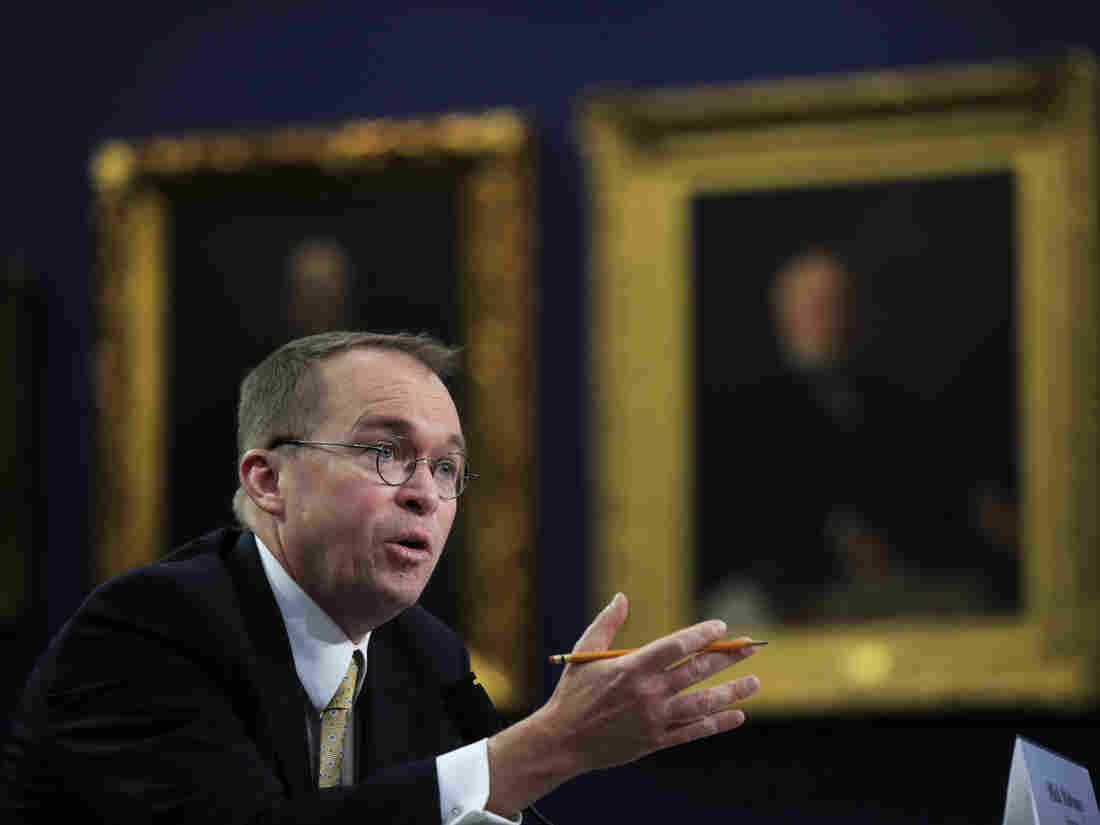
Mick Mulvaney, acting director of the CFPB, testifies at a House hearing. Mulvaney says he doesn’t need to run “a Yelp for financial services sponsored by the federal government.”
Manuel Balce Ceneta/AP
hide caption
toggle caption
Manuel Balce Ceneta/AP
When a consumer has a complaint about a bank, whether it’s dealing with a mortgage or a credit card, right now there’s a place to lodge that complaint online.
It’s easy to click around and search for other similar complaints. And it’s a tool consumers can use when trying to weigh whether to do business with a particular bank or other kind of financial firm. Investigators like this database as well, because when thousands of similar complaints pop up, it could be a red flag that there’s a problem at a bank that they need to dig into.
The Trump administration’s Mick Mulvaney was in the news again this week because he said he wanted to shut down public access to this popular government database at the Consumer Financial Protection Bureau.
The industry likes this idea and has long complained about the database, because it says the complaints aren’t vetted enough. Consumer groups say that keeping the public from seeing the database is a move that panders to companies the consumer regulator is supposed to be policing.
The CFPB is a powerful watchdog regulator set up after the financial crisis. It’s currently being run by Mulvaney, who once sponsored legislation to abolish the bureau when he was in Congress. He has often called the bureau too powerful and aggressive.
Mulvaney has made a series of moves that have drawn sharp criticism from consumer groups. On Tuesday, he spoke to a group of bankers and suggested he might take the CFPB’s online database and hide the complaints from public view.
In looking at the law that created the CFPB, he told the room full of lobbyists and bankers at an American Bankers Association conference, “I don’t see anything [that says] I have to run a Yelp for financial services sponsored by the federal government.
“I am thinking I could make the case,” Mulvaney continued, “that having a database that is publicly facing, but is not completely vetted, is probably not consistent with our overall mission.”
The database was designed to hold financial firms accountable. For example, if someone refinances their house and has a bad experience with a bank, they can go online and file a complaint that is added to the database.
So far, Americans have filed more than a million of these complaints. And regulators can use that data to decide whether to investigate financial firms.

Consumer Financial Protection Bureau chief Mick Mulvaney has said he would like to end public access to the agency’s consumer complaint database.
Consumer Financial Protection Bureau
hide caption
toggle caption
For years, the financial industry has said that people can post complaints that aren’t true, which introduces “unreliable and misleading information into the market.”
Kim Gustafson, an executive with Fortis Private Bank in Denver, says, “There are a lot of comments on [the database] that are just people’s feelings about something without any substantiated facts or actual complaints around a specific issue.”
The CFPB does give companies a chance to determine whether the person is in fact a customer and also to file a written response to a complaint before any of the information is posted on the database.
Consumer protection advocates are not happy about the direction the bureau is heading or this latest revelation that Mulvaney may move to hide complaints in the database from the public.
“Daylight is a great disinfectant and the American people have a right to know when tens of thousands of their fellow citizens are complaining about a financial institution,” says Karl Frisch, the executive director of the consumer advocacy group Allied Progress. “The CFPB received tens of thousands complaints about Wells Fargo and that issue is now being resolved.”
Frisch opposes closing the database to the public in part because he says academics, journalists, consumer groups like his should be able to have access to the information.
University Of Notre Dame President Reacts To College Basketball Recommendations

NPR’s Ari Shapiro talks to Rev. John Jenkins, president of the University of Notre Dame, about the college basketball commission that issued recommendations Tuesday that would toughen penalties for NCAA rules-violations.
Today in Movie Culture: 'Back to the Future' vs. 'Mad Max: Fury Road,' 'Guardians of the Galaxy' Lego Recap and More
Here are a bunch of little bites to satisfy your hunger for movie culture.
Mashup of the Day:
Short but sweet, watch Marty McFly and his Delorean time machine being chased by the epic convoy from Mad Max: Fury Road (via Geekologie):
[embedded content]
Cosplay of the Day:
In honor of this week’s release of Avengers: Infinity War, here are cats cosplaying as Doctor Strange and the Winter Soldier:
“Well… That escalated quickly.”
*Predicted Dialogue from #AvengersInfinityWar *#DoctorStrange#BuckyBarnespic.twitter.com/Ksnx7o2buG
— Cat Cosplay (@Cat_Cosplay) April 23, 2018
Movie Recap of the Day:
Ahead of the release of Infinity War, revisit much of Guardians of the Galaxy Vol. 2 in Lego form care of Huxley Berg Studios:
[embedded content]
Truthful Marketing of the Day:
Also in honor of Infinity War‘s impending release, Honest Trailers takes on the black sheep of the franchise, The Incredible Hulk:
[embedded content]
Video Essay of the Day:
This video from Like Stories of Old explores the significance of the magician archetype in movies, including Star Wars and The Lord of the Rings:
[embedded content]
Vintage Image of the Day:
Shirley MacLaine, who turns 84 today, with director Billy Wilder on the set of the 1960 Best Picture winner The Apartment:
Actor in the Spotlight:
Jeff Goldblum is also in the Marvel Cinematic Universe, and he has a wonderful laugh, which is celebrated in this supercut from Owenergy Studios:
[embedded content]
Filmmaker in Focus:
For Fandor, Luis Azevedo highlights the sounds of the movies of Claire Denis:
[embedded content]
Movie Food of the Day:
Learn how to make the chicken paprikash seen in Captain America: Civil War in the latest edition of Binging With Babish:
[embedded content]
Classic Trailer of the Day:
With Avengers: Infinity War arriving this weekend, let’s revisit the original trailer for 2012’s The Avengers:
[embedded content]
and
When China's Ships Come In

The Port of Long Beach is one of the biggest ports in the country. It and its neighbor, the Port of Los Angeles, handle 390 billion dollars worth of goods every year.
And business has boomed as the economy has improved. U.S. consumers bought more stuff; ships started getting bigger to meet demand; the Port of Long Beach invested billions.
Seventy percent of the ships that dock at the port come from China. So talk of a trade war has everybody’s attention down on the docks.
Music by Drop Electric. Find us: Twitter/ Facebook.
Subscribe to our show on Apple Podcasts, PocketCasts and NPR One.
Today in Movie Culture: 'Avengers: Infinity War' With Extra Disney Icons, Lessons of 'The Big Lebowski' and More

Here are a bunch of little bites to satisfy your hunger for movie culture:
Mashup of the Day:
If all the Marvel characters in one movie isn’t enough, Nerdist adds more Disney characters, including the Muppets, Captain Jack Sparrow, the Mighty Ducks, the Rocketeer and a bunch from Star Wars, to Avengers: Infinity War:
[embedded content]
Movie Parody of the Day:
The latest episode of the animated series Villain Pub takes on the question of which Avengers wiill be dying in Infinity War:
[embedded content]
Cosplay of the Day:
If you’re not as ready for Avengers: Infinity War as this Spider-Man cosplayer, you need to something about that:
Today’s spidey post!!!
Are YOU ready for Infinity War?!?
I KNOW I AM!! ????????#cosplay#cosplayers#SpiderMan#spidermancosplay#spider#spidey#spideycosplay#thwippic.twitter.com/uCRQcNyJpR
— Ben Reilly (@El_Cabron_87) April 23, 2018
Director Commentary of the Day:
For the New York Times, Rampage director Brad Peyton breaks down the thrilling plane crash sequence:
[embedded content]
Movie Philosophy of the Day:
WhatCulture explores the philsophical lessons of the The Big Lebowski:
[embedded content]
Vintage Image of the Day:
Shirley Temple, who was born on this day 90 years ago, receives a cake from Fox chief Nick Janios on the set of Our Little Girl on set in 1935:
Actor in the Spotlight:
In honor of the season premiere of Westworld last night, IMDb’s No Small Parts looked at the movie and TV career of James Marsden:
[embedded content]
Filmmaker in Focus:
Fandor’s Women in Film video series showcases the career of The Piano director Jane Campion:
[embedded content]
Misunderstood Movie of the Day:
Learn the incorrect “hidden meaning” of The Room from an alien in the future in the latest edition of Earthling Cinema:
[embedded content]
Classic Trailer of the Day:
Today is the 60th anniversary of the release of Orson Welles’s Touch of Evil. Watch the original trailer for the film noir classic below.
[embedded content]
and
Redesigning Maternal Care: Ob-Gyns Are Urged to See New Mothers Sooner And More Often

Under sweeping new recommendations from the American College of Obstetricians and Gynecologists, doctors would see new mothers sooner and more frequently, and insurers would cover the increased visits.
FatCamera/Getty Images
hide caption
toggle caption
FatCamera/Getty Images
This story was co-published with ProPublica.
Doctors would see new mothers sooner and more frequently, and insurers would cover the increased visits, under sweeping new recommendations from the organization that sets standards of care for obstetrician-gynecologists in the U.S.
The 11-page “committee opinion” on “Optimizing Postpartum Care,” released today by the American College of Obstetricians and Gynecologists (ACOG), represents a fundamental re-imagining of how providers, insurers and patients can work together to improve care for women after giving birth.
“To optimize the health of women and infants, postpartum care should become an ongoing process, rather than a single encounter, with services and support tailored to each woman’s individual needs,” the committee opinion states.
While an ACOG task force began rethinking its approach several years ago, the guidelines arrive at a moment of mounting concern about rising rates of pregnancy-related deaths and near-deaths in the U.S. As ProPublica and NPR have reported, more than 700 women die every year in this country from causes related to pregnancy and childbirth and more than 50,000 suffer life-threatening complications, among the worst records for maternal health in the industrialized world. The death rate for black mothers is three to four times that of white women.
The days and weeks after childbirth can be a time of particular vulnerability for new moms, with physical and emotional risks that include pain and infection, hypertension and stroke, heart problems, blood clots, anxiety and depression. More than half of maternal deaths occur after the baby is born, according to a new CDC Foundation report.
Yet for many women in the U.S., the ACOG committee opinion notes, the postpartum period is “devoid of formal or informal maternal support.” This reflects a troubling tendency in the medical system — and throughout American society — to focus on the health and safety of the fetus or baby more than that of the mother. “The baby is the candy, the mom is the wrapper,” said Alison Stuebe, who teaches in the department of obstetrics and gynecology at the University of North Carolina School of Medicine and heads the task force that drafted the guidelines. “And once the candy is out of the wrapper, the wrapper is cast aside.”
The way that providers currently care for pregnant women and infants versus new mothers exemplifies this difference. During the prenatal period, a woman may see her ob-gyn a dozen or more times, including at least two checkups during her ninth month. Her baby’s first pediatric visit usually occurs a few days after birth. But the mother may not have a follow-up appointment with her own doctor until four to six weeks after delivery — and in many cases, insurance only covers one visit. “As soon as that baby comes out, [the mom] is kind of an afterthought,” said Tamika Auguste, associate medical director of the MedStar Health Simulation Training & Education Lab in Washington, D.C., and a coauthor of the ACOG opinion.
For working mothers, having to wait four to six weeks makes it harder to arrange a check-up.
Some 23 percent of mothers employed outside the home are back on the job within 10 days of giving birth, a 2014 report for the U.S. Department of Labor found; another 22 percent return to work within 40 days. Lack of childcare and transportation can also present significant hurdles to accessing care. According to ACOG, as many as 40 percent of women skip their postpartum visit; for low-income women of color, the rates are even higher.
“You may have a woman that has asthma, is having problems lactating, and is obese, and when they come to see you at six weeks, we have missed the boat here,” Auguste said.
Nor is a single visit enough time to address a new mother’s questions and concerns, especially if she had a complicated pregnancy or is suffering from chronic conditions such as hypertension, diabetes or a mood disorder. “We’re trying to address all of the issues that women are dealing with after having a baby in one 20-minute encounter,” Stuebe said. “And that’s really hard to do.”
Under the new ACOG guidelines, women would see their providers much earlier — from within three days postpartum if they have suffered from severe hypertension to no later than three weeks if their pregnancies and deliveries were normal— and would return as often as needed. Depending on a woman’s symptoms and history, the final postpartum visit could take place as late as 12 weeks after delivery and ideally would include “a full assessment of physical, social, and psychological well-being,” from pain to weight loss to sexuality to management of chronic diseases, ACOG says.
In another significant change, ACOG is urging providers to emphasize in conversations with patients the long-term health risks associated with pregnancy complications such as preterm delivery, preeclampsia and gestational diabetes. “These risk factors are emerging as an important predictor of future [cardiovascular disease],” the recommendations state. “…[B]ut because these conditions often resolve postpartum, the increased cardiovascular disease risk is not consistently communicated to women.”
Earlier, more frequent and more individualized care could be a step toward addressing the stark racial disparities in maternal and infant health, said ACOG’s outgoing president, Haywood Brown, who has made reforming postpartum care one of the main initiatives of his term. Black mothers are at higher risk for many childbirth complications, including preeclampsia, heart failure and blood clots, and they’re more likely to suffer long-lasting health consequences. They also have higher rates of postpartum depression but are less likely to receive treatment. Regardless of race, for women whose pregnancies are covered by Medicaid, the postpartum period may be their best opportunity to get help with chronic conditions before they lose insurance coverage.
The new guidelines urge doctors to take a proactive approach, helping patients develop a postpartum care plan while still pregnant, including a team of family and friends to provide social and other support. According to ACOG, one in four new mothers surveyed recently said they didn’t even have a phone number of a health care provider to contact with concerns about themselves or their babies.
ACOG isn’t the only organization calling for a reinvention of postpartum care; patient-safety groups, researchers, nurses and midwives have also tackled the issue, recasting the three months after birth as akin to a “fourth trimester.”
“The postpartum period has become a priority,” said Debra Bingham, a professor of nursing at the University of Maryland and executive director of the Institute for Perinatal Quality Improvement who has participated in many of these initiatives.
Some providers, including Brown, who is affiliated with Duke University, are already incorporating some of ACOG’s ideas. Still, putting the reforms into common practice may take years. One of the biggest impediments is insurance reimbursement. Currently, payment for prenatal care, delivery and a single post-birth visit is bundled together into one global fee, creating a disincentive for doctors to see patients more than once, Auguste said.
The disincentives are greater for women on Medicaid, which pays for about half of U.S. births. What’s more, in many states Medicaid coverage ends at two months postpartum. The ACOG opinion didn’t estimate the cost of implementing its recommendations.
Brown agreed that revamping how postpartum care is reimbursed is critical, and insurance representatives — along with members of other medical specialties — were on the ACOG task force that drafted the new guidelines. “I want to make sure that I get some employee health plans and some health systems to adopt this nationally,” Brown said.
Although the guidelines are aimed at ob-gyns, they would require changes throughout the maternal care system. That’s what ACOG is hoping for. “It’s really a societal call to action,” Stuebe said.
Lucibela Channels The Joy Of Cape Verde On 'Laço Umbilical'

Lucibela’s debut album is a joyful celebration of her native Cape Verde, a country grappling with historical hardships.
N’Krumah Lawson Daku/Courtesy of the artist
hide caption
toggle caption
N’Krumah Lawson Daku/Courtesy of the artist
The islands of the Cape Verde are notoriously barren, yet they’ve produced some of West Africa’s most enchanting singers. Ever since the death of diva Cesária Évora in 2011, fans have been waiting for another Cape Verdean singer with sublime poise and emotional power. We may have found her in Lucibela, a 32-year-old singer with a truly magnificent voice, liquid and effortless across a wide vocal range. Lucibela’s debut album Laço Umbilical is a joyful celebration of her homeland.
Some songs on the album, like “Chica di Nha Maninha” for example, are mornas; distinctly Cape Verdean ballads with the melancholy of Portuguese fado and a gentle lilt more akin to Brazilian or Afro-Caribbean music. Longing and sorrowful — sodade, as the locals call it — is a fact of life on these beautiful islands, where droughts and scarcity have forced so many to seek fortunes far away.
For all the separation and hardship they’ve endured, Cape Verdeans are ardent dancers and celebrators, evidenced in coladera, the other bright, buoyant local music showcased on Lucibela’s album.
The charm of Cape Verdean music is this alluring alchemy of joy and wistfulness. Lucibela knows this all too well. When she was just out of high school, Lucibela’s widowed mother died and she made her living singing in tourist hotels. Before she turned to mornas and coladeras, Lucibela sang jazz, rock and Brazilian bossa nova. Lucibela even incorporated bossa nova into her debut.
These days, Lucibela lives in Lisbon, Portugal — yet another Cape Verdean lured away from her beloved home. But as her album title, Laço Umbilical, suggests, there’s an umbilical cord that keeps her connected to her home country and it’s evident in every note on this gorgeous debut.
