Articles by admin

No Image

Saturday Sports: Basketball, Football and Golf

Scott Simon talks with NPR Sports Correspondent Tom Goldman about basketball, football, and golf.


SCOTT SIMON, HOST:

Brexit, shmexit (ph). It’s time for sports.

(SOUNDBITE OF MUSIC)

SIMON: The Warriors snap a losing streak, but there’s still a cold chill in the locker room and on the bench. And are Da Bears b-back (ph)? NPR’s Tom Goldman joins us now from – are you in your brother-in-law’s wood shop in Eugene, Ore., Tom? Is that true?

TOM GOLDMAN, BYLINE: I have turned off the skill saw for a few moments, Scott, where I’ve been working on a full-life sculpture of you.

SIMON: (Laughter).

GOLDMAN: Similar to the David, although clothed.

SIMON: Oh, oh. Well, thank you.

GOLDMAN: I’m here. I’m here for the holidays. And what better place to talk sports than a wood shop? So let’s do it.

SIMON: Right, efficient and all that stuff. Listen; that match play, or whatever you call it, last night between Tiger Woods and Phil Mickelson, which Phil Mickelson won in extra holes, or however you say it – two of them went home with $9 million between them. Is this a real sports event?

GOLDMAN: No. It’s pretty made up, Scott. The golf, apparently, wasn’t that good either. And I say apparently because I didn’t interrupt a second of my Black Friday to watch. And I say that as a golf lover and a golf watcher…

SIMON: Yeah.

GOLDMAN: …But not this one.

SIMON: And a great golfer, yeah.

GOLDMAN: Yeah, right. Well, thank you – hardly that. Let’s clarify the money, though. It was winner-take-all. So Phil made off with the 9 million.

SIMON: Oh.

GOLDMAN: He did donate part of it to charity, including a fund for children who lost a parent in last year’s Las Vegas mass shooting. This event was in Las Vegas, so some good came out of a silly event. Bah humbug. Wrong holiday, but bah humbug.

SIMON: Well, it’s coming up to the right holiday.

Golden State Warriors ended a losing streak last night. But prior to that, they’d lost four games in a row, unprecedented since the great Steve Kerr became head coach. He’s the smartest, most decent man in sports, if not the country at this point. But does mediating this undiplomatic dispute between Draymond Green and Kevin Durant need a Gandhi?

GOLDMAN: There’s an image for you. I think it might need a little something extra. You know, we’ve learned what, reportedly, was at the heart of the recent spat that led to Draymond Green’s suspension – the spat with Kevin Durant. It appears to be something more than just creative tension between two very creative basketball players.

Green reportedly made a comment in reference to Durant’s anticipated free agency at the end of the season and his possible departure from Golden State. According to Chris Haynes, respected NBA writer, Green said something like, we don’t need you. We won without you. Leave.

You know, Scott, that’s the kind of comment that can linger and poison the chemistry on a team. But if any coaching staff can deal with this, though, you have to think it’s the Warriors’, and especially Kerr, as you say, a very bright man who really understands the psychology of uniting a group of very talented athletes who have very huge egos.

SIMON: Yeah. He has more championship rings than he has fingers, if I’m not mistaken, between the six with the Chicago Bulls and the five in…

GOLDMAN: That’s right, yeah.

SIMON: Yeah, no, unless he’s grown extra fingers, and I wouldn’t put that past Steve Kerr.

Listen; have you noticed the Chicago Bears won their fifth consecutive game, albeit it was only against the Lions? But they are now 8-3 despite having a highly uninspiring quarterback who is out, and they had to go with a lackluster substitute. But, boy, that defense. (Growls) They even scored the winning point.

GOLDMAN: Yeah. (Imitating Scott Simon growling).

SIMON: And it’s against everything that football is supposed to be. What? Yes? They have me on the bench sometimes to inspire players. I just go. They come back after the play, and I go (growls).

GOLDMAN: You sound like…

SIMON: Yeah? Sorry.

GOLDMAN: You’re a Monster of the Midway. You are that, Scott.

You know, this defense is for real, ranked in the top 10 in the NFL and anchored by the very active and fearsome pass rusher Khalil Mack. Offensively, the Bears are not in the same class as the Saints or the Chiefs or the Rams – those three teams are kind of defining this new NFL surge in offensive play.

Still, the Bears, as you say, are 8-3. They’re leading the NFC North division. It’s looking – they’re looking to finish with a winning record for the first time since 2012, and perhaps the playoffs for the first time since 2010. Looks like Chicagoans won’t have to spend the winter just waiting for the Cubs to come back in the spring.

SIMON: Tom Goldman, thanks so much.

GOLDMAN: You’re welcome.

Copyright © 2018 NPR. All rights reserved. Visit our website terms of use and permissions pages at www.npr.org for further information.

NPR transcripts are created on a rush deadline by Verb8tm, Inc., an NPR contractor, and produced using a proprietary transcription process developed with NPR. This text may not be in its final form and may be updated or revised in the future. Accuracy and availability may vary. The authoritative record of NPR’s programming is the audio record.

Let’s block ads! (Why?)


No Image

The Week in Movie News: How 'Mary Poppins' is Returning in Style, First 'The Lion King' Teaser and More

Need a quick recap of the past week in movie news? Here are the highlights:

BEHIND-THE-SCENES REPORT

The gorgeous costumes of Mary Poppins Returns: We talked to Oscar-winning costume designer Sandy Powell about her incredible work on Disney’s upcoming movie Mary Poppins Returns, and we’ve broken down this behind-the-scenes exclusive. Read our guide to the Mary Poppins sequel’s costumes here.

EXCLUSIVE BUZZ

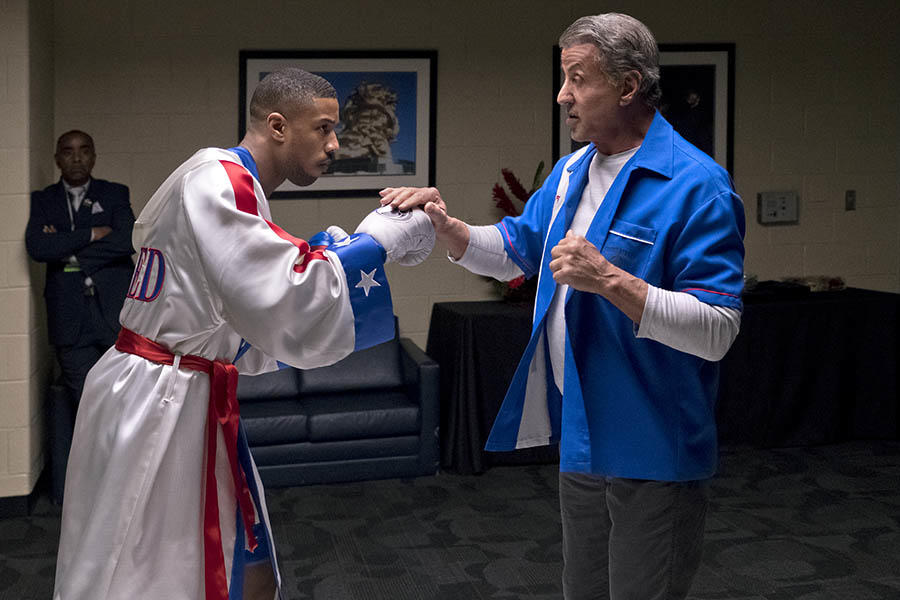
Steven Caple Jr. on the future of the Creed franchise: We talked to Creed II director Steven Caple Jr. about the new sequel and the possibility of further installments of the Rocky spinoff series starring Michael B. Jordan and Sylvester Stallone. Read our whole interview here.

COOL CULTURE

Creed II Easter eggs: Speaking of Creed II, Matt Singer of ScreenCrush spotted a bunch of Easter eggs and references to other past installments of the Rocky and Creed franchise, because it’s not a tribute to just Rocky IV. Watch the video below.

[embedded content]

MUST-WATCH TRAILERS

The Lion King has been reimagined to perfection: The nostalgic first teaser trailer for Disney’s spot-on live-action reimagining of The Liong King arrived, and it looks amazing. Watch the trailer, which re-creates a good chunk of the beginning of the 1994 animated classic, below.

[embedded content]

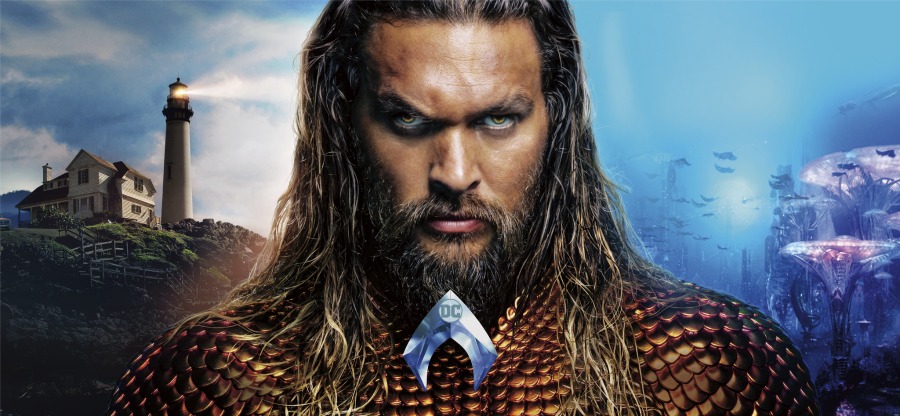
Aquaman is going to be epic: The final trailer for DC’s Aquaman arrived this week as tickets for the upcoming superhero movie went on sale, and if you weren’t already sold you will be now. Watch the trailer below and get your tickets here.

[embedded content]

The Lego Movie 2 looks very funny: The first full trailer for The Lego Movie 2: The Second Part revealed a lot more jokes for the sequel, including a hilarious new character also voiced by Chris Pratt. Watch the trailer below and read everything we know about the movie here.

[embedded content]

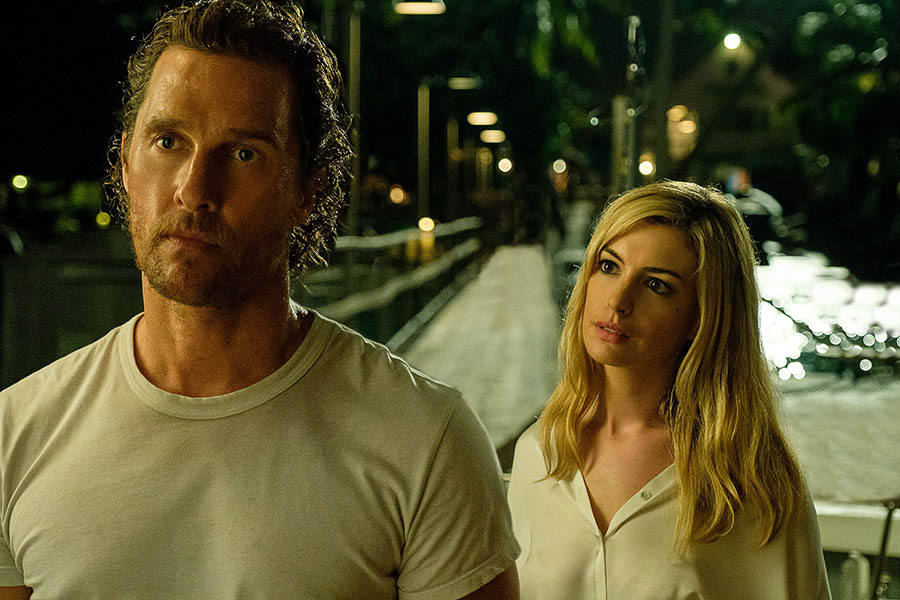
Serenity promises a steamy thriller for grown-ups: Oscar winners Matthew McConaughey and Anne Hathaway star in the second trailer for Serenity, a neo-noir with a plot teased as not exactly being what it seems. Watch the trailer below and read everything we know about the movie here.

[embedded content]

and

Let’s block ads! (Why?)


No Image

Samsung Apologizes To Ill Workers, Promises To Compensate Them

Kinam Kim, president and CEO of Samsung’s Device Solutions division, bowed in apology at a Friday news conference in Seoul, South Korea.

Lee Jin-man/AP


hide caption

toggle caption

Lee Jin-man/AP

Samsung Electronics has issued a formal apology to its workers who were stricken with serious illnesses after working at its factories. It also promised to compensate them.

At a press conference, Kinam Kim, president and CEO of the company’s Device Solutions Division, gave a low bow as part of the apology.

“Beloved colleagues and families have suffered for a long time, but Samsung Electronics failed to take care of the matter earlier,” Kim said, according to Yonhap News Agency. “Samsung Electronics also did not fully and completely manage potential health risks at our chip and liquid-crystal display production lines.”

This apology and promise of compensation is more than a decade in the making. As NPR’s Anthony Kuhn reported from Seoul, “Dozens of workers have reportedly developed cancer, leukemia and other afflictions at the world’s largest chip-maker.”

However, Kuhn reports, it’s worth noting that “Kim stopped short, though, of admitting that the workplace was the direct cause of the workers’ illnesses.”

One of the instigators of the push was Hwang Sang-gi, whose daughter Yu-mi contracted leukemia and died after working at a Samsung factory.

“No apology would be enough when considering the deception and humiliation we experienced (from Samsung) over the past 11 years, the pain of suffering from occupational diseases, the pain of losing loved ones,” Hwang said at the news conference, according to The Associated Press. But he added that he views the apology as a vow to improve safety conditions.

Hwang is one of the founders of the activist group SHARPS, which stands for “Supporters for the Health And Rights of People in the Semiconductor industry.” The group has criticized the semiconductor industry, which they say exposes workers to dangerous, toxic chemicals.

According to Yale Environment 360, a year after Yu-mi died, a woman who operated from the same workstation also died of leukemia. It highlights other cases:

“In March 2010, a 23-year-old woman named Park Ji-Yeon, who had worked at Samsung’s On-Yang semiconductor plant since 2004, also died of leukemia, three years after her diagnosis. In 2005, a 27-year old woman named Han Hae-kyoung, who had worked in a Samsung LCD plant since 1995, was diagnosed with a brain tumor and is now seriously disabled. Another woman, Lee Yoon-jeong, who worked for Samsung in semiconductor production between 1997 and 2003, was diagnosed with brain cancer in 2010 at age 30.”

Kim promised compensation for workers who had gotten sick at chip and liquid crystal display factories, Kuhn reported, “including parents who had miscarriages, or children with congenital diseases.”

According to Reuters, “Samsung will pay up to 150 million won ($132,649.45 USD) for each former and current employee suffering from work-related diseases if they are found to be caused by exposure to harmful chemicals.” Compensation is available to people who worked at these facilities for more than a year, dating back to 1984, the wire service added.

There’s no official tally of precisely how many people have gotten sick and even died after working at the plants. The BBC reported that SHARPS “said it had found 319 other victims, 117 of whom had died, as of June this year.”

The compensation will be administered by a law firm, Yonhap reported, and people can apply for compensation until at least 2028.

Let’s block ads! (Why?)


No Image

First Teaser for New 'Lion King' Looks Amazing; Here's Everything We Know

The Lion King

After the monster success of Jon Favreau’s The Jungle Book in 2016, Disney announced that the director would take the helm of another “reimagining” of an animated classic, The Lion King. A string of casting announcements followed as we eagerly awaited a peek at footage.

Now the first teaser has been released and it looks amazing. It’s a new version of the opening scene of the original animated classic, featuring the voice of James Earl Jones. Here’s everything we know about the movie so far; watch the teaser trailer below.

Will this be live-action, animated, or a combination of the two?

We’ve heard that the movie will combine live-action footage with cutting-edge technology, much like the new version of The Jungle Book.

Is this a straight remake? Or will other story elements be added?

Here’s the official synopsis: “From Disney Live Action, director Jon Favreau’s all-new The Lion King journeys to the African savanna where a future king must overcome betrayal and tragedy to assume his rightful place on Pride Rock.”

That sounds similar, of course, to the original film, so we’ll have to wait to see what surprises the filmmakers may have conjured up, story-wise.

Who is in the cast?

Donald Glover and James Earl Jones were the first cast members announced, with Glover set as the lead character, Simba, and Jones reprising his role as Mufasa. Beyonce Knowles-Carter will play the role of Nala, Simba’s longtime friend and companion.

Seth Rogen, Chiwetel Ejiofor, Billy Eichner and John Oliver also star. In the original, a pack of three hyenas was led by Whoopi Goldberg as Shenzi. Florence Kasumba (Black Panther) will voice that role in the new version.

See the new cast image below.

#TheLionKing. 2019. ???? pic.twitter.com/rSDPkE6nWk

— Walt Disney Studios (@DisneyStudios) November 1, 2017

When can we see it?

Disney will release The Lion King in theaters on July 19, 2019.

Watch the first teaser below.

[embedded content]

Take your place. #TheLionKing pic.twitter.com/CSvlfe6DSc

— Walt Disney Studios (@DisneyStudios) November 22, 2018

Let’s block ads! (Why?)


No Image

Bus Overturns Carrying University Of Washington Marching Band

Dozens of members of the University of Washington marching band, shown here in 2017, were transported to hospitals after a bus overturned on Thursday.

Christopher Mast/Icon Sportswire/Getty Images


hide caption

toggle caption

Christopher Mast/Icon Sportswire/Getty Images

Dozens of people have been hospitalized after a charter bus transporting members of the University of Washington marching band rolled on a Washington interstate Thursday, according to Washington State Patrol.

Trooper John Bryant said “40-45 plus” people were transported to hospitals but that none of the injuries were serious. He said there were 56 people total on the bus.

“The injuries reported were cuts, complaints of general pain and back pain, but the injuries are not believed to be critical,” UW spokesperson Victor Balta said in a statement. “The University is doing everything it can to ensure the health and safety of our students and staff, and to get them back on their journey to Pullman.”

The Husky Marching Band was headed to Eastern Washington to perform at Friday’s Apple Cup football game between Washington and Washington State.

#Update: Again, No Serious Injuries. About 20-25 student (UW Band Members) transported to local hospitals as a precaution. The other students & staff were sent on the other charter buses to George Elementary school. They will also be checked out by medics. 56 total on the bus. pic.twitter.com/bTOtFcCo4U

— Trooper John Bryant (@wspd6pio) November 23, 2018

According to Bryant, the bus rolled at about 5:30 p.m. local time and was one of six carrying UW band members.

It wasn’t immediately clear why the bus rolled over, though Bryant warned incoming media members to drive carefully because the road was icy. He shared photos from the scene of the overturned bus, with the bumper partially ripped off and misshapen front window frames.

Bryant initially said 20 to 25 band members were transported to hospitals, but raised that number about two hours later.

The band members who were uninjured regrouped at an elementary school in the small town of George, Wash., where they received a warm welcome from the local community. One member of the band group said in a post on Twitter, “families left their thanksgiving dinners to bring us leftovers and hot food.”

Husky band bus rolled on the way to Pullman. We’re fine, but shaken up and holed up in an elementary school to regroup. A radio station put out a call and the town of George answered: families left their thanksgiving dinners to bring us leftovers and hot food. pic.twitter.com/Dko6bW7hQa

— Patrick (@patstant) November 23, 2018

The people in George rallying to help the band even included fans of their rivals from Washington State University, according to a tweet from UW Cheer.

Thank you to the local community from around George, WA for rallying behind our band and cheer members tonight by bringing them Thanksgiving dinner. A special shoutout to all of the @WSUCougars fans who keep coming in and bringing food! ?

— UW Cheer (@UW_Spirit) November 23, 2018

The band has not officially said whether they plan to perform at the Friday evening game. But if they do, the opposing WSU Marching Band is asking their own fans to give the band a warm welcome.

“If the wonderful @huskyband is able to come down tomorrow after tonight’s accident, DO NOT boo those kids,” WSU Marching Band said in a tweet. “Applaud their efforts and sacrifice to be here supporting their team and university.”

Let’s block ads! (Why?)


No Image

Many Who Buy ACA Health Plans For 2019 Find Lower Prices And More Choice

More than half of all counties in the 39 states that rely on the federal HealthCare.gov exchange for ACA health insurance are experiencing a 10 percent price decrease, on average, for their cheapest plan for 2019.

Patrick Sison/AP


hide caption

toggle caption

Patrick Sison/AP

In recent years, some cities, including Memphis and Phoenix, withered into health insurance wastelands, as insurers fled and premiums skyrocketed in the insurance marketplaces that were set up under the Affordable Care Act.

But today, as in many parts of the U.S., these two cities are experiencing something unprecedented: Insurance premiums are sinking and choices are sprouting.

In the newly competitive market in Memphis, for example, the cheapest midlevel “silver” plan for 2019 health coverage will cost $498 a month for a 40-year-old — a 17 percent decrease compared to last year.

Please Tell Us What You Think About Shots

Help us make Shots more relevant for you by completing an NPR research survey. Click here to start the questionnaire.

And four insurers are now selling ACA policies in Phoenix. That’s the same market that then-presidential candidate Donald Trump highlighted in 2016 because all but one insurer had left the region — he called it proof of “the madness of Obamacare.”

Janice Johnson, a 63-year-old retiree in Arizona’s Maricopa County, which includes Phoenix, said her monthly premium for a high-deductible bronze plan will be $207 for 2019, instead of $270, because she is switching carriers.

“When you’re on a fixed income, that makes a difference,” said Johnson, who receives a government subsidy to help cover her premium. “I’ll know more in a year from now if I’m going to stick with this company. But I’m going to give them a chance, and I’m pretty excited by that.”

Looking across all 50 states, the premiums for the average “benchmark” silver plan, which the government uses to set subsidies, are dropping nearly 1 percent. And more than half of the counties in the 39 states that rely on the federal HealthCare.gov exchange are experiencing a 10 percent price decrease, on average, for their cheapest plan.

Loading…

In most places, the declines are not enough to erase the price hikes that have accrued since the creation of the health care exchanges in 2014.

Instead, next year’s price cuts help to correct the huge increases that jittery insurers set for 2018 to protect themselves from anticipated Republican assaults on the markets. While Congress came up one vote shy of repealing the federal health law in the summer of 2017, Trump and Republicans in Congress did manage to strip away many of the structural underpinnings that induced people to buy plans and helped insurers pay for some of their low-income customers’ copayments and deductibles. Insurers responded with a 32 percent increase, on average, for 2018 plans.

“Insurers overshot last year,” said Chris Sloan, a director at Avalere, a health care consulting company in Washington, D.C. “We are nowhere close to erasing that increase. This is still a really expensive market with poor benefits when it comes to deductibles and cost.”

For 2019, the average premium for the benchmark silver plan will be 75 percent higher than it was in 2014, according to data from the Kaiser Family Foundation. (Kaiser Health News is an editorially independent program of the foundation.)

When Republicans failed to kill the health law last year, they inadvertently may have made it stronger. Insurers banked hefty profits in 2018, and that attracted new companies to most ACA markets.

All these factors were especially influential in Tennessee, where the average benchmark premium is dropping 26 percent, according to an analysis by the federal government. That’s a bigger drop than in any other state.

Seventy-eight of 95 Tennessee counties had just one insurer for 2018. That monopoly allowed the insurer to set the prices of its plans without fear of competition, said David Anderson, a researcher at the Duke-Margolis Center for Health Policy in Durham, N.C. “They were massively overpriced,” Anderson said of all available policies.

But for the coming year, 49 Tennessee counties will have more than one insurer, with a few — like Shelby County, where Memphis is located — having four companies competing. There, Cigna dropped the price of its lowest-cost silver plan by 15 percent. Even then, Cigna was underbid by Ambetter of Tennessee, a company owned by the managed-care insurer Centene Corp.

“We’re finally at the point where the market is stabilized,” said Bobby Huffaker, the CEO of American Exchange, an insurance brokerage firm based in Tennessee. “From the beginning, every underwriter — [and] the people who were the architects — they knew it would take several years for the market to mature.”

Still, the cheapest Memphis silver premium is nearly three times what it was in 2014, the first year of the marketplaces. A family of four, headed by 40-year-old parents, will be paying $19,119 for all of next year unless they qualify for a government subsidy.

“The unsubsidized are leaving,” said Sabrina Corlette, a professor at Georgetown University’s Health Policy Institute. “They are finding these premiums unaffordable.”

The landscape in Phoenix is greatly improved from when Trump visited after the federal government announced a 116 percent premium increase for 2017; the number of insurers at that time had dropped from eight to one.

Now, three new insurers are entering Maricopa County. Meanwhile, Ambetter, the only insurer that offered plans for 2018, reduced its lowest price for a silver plan for next year by 12 percent — and it offers the cheapest such plan in the market.

Still, Ambetter’s plan is 114 percent above the least expensive silver plan offered there in the first year of the exchanges. And neither Ambetter nor any of the insurers coming into the market for 2019 offer as broad and flexible a choice of doctors and hospitals as consumers had back then, according to Michael Malasnik, a local broker.

Since the start of the exchanges, Malasnik said, insurers have “raised their rates by multiples, and they’ve figured out you have to be a very narrow network.”

Each plan in Phoenix for 2019 contains trade-offs, he said. Only Bright Health’s plan includes Phoenix Children’s Hospital. Ambetter’s plan includes the most popular hospital and doctor groups, Malasnik said. But those providers are not as conveniently located for people living in the southeastern corner of the county, and that makes other insurers’ plans more appealing for some customers.

“Geography is the name of the game this year,” Malasnik said.

Theresa Flood, a preschool teacher who lives outside Phoenix, said none of the provider networks of the plans she considered included her doctors, such as the specialist who treats her spine problems. She has had four surgeries, and a neurologist who monitors a cyst and benign tumor in her brain is also outside the network she ended up choosing.

“I have to establish care with a whole new spine doctor and establish care with a whole new neurologist if I want to follow up on these things,” said Flood, who is 59. “You’re going from ‘established care’ to ‘who in the heck am I going to see?’ “

The plan Flood ultimately chose would have been too expensive, except that she and her husband John, who is a minister, qualified for a $1,263-a-month subsidy that will drop the cost to $207 a month. That bronze plan from Ambetter carries a $6,550-per-person deductible; so Flood expects she’ll still have to pay out-of-pocket for her treatments and doctor visits unless she needs extensive medical attention.

“It’s gone from being able to have a plan that you could sort of afford and got some benefit from, to putting up with what you can afford and hoping nothing happens that you actually have to use your insurance,” she said. “At this point, I’ll take what I can get.”

Kaiser Health News, a nonprofit news service, is an editorially independent program of the Kaiser Family Foundation, and is not affiliated with Kaiser Permanente.

Let’s block ads! (Why?)


No Image

Atlanta Falcons Cut The Prices For Their Stadium Food, But Is It Working Out?

Sports fans have gotten used to exorbitant prices for food and drinks at stadiums. They know they’re a captive market. But could the stadiums be missing out by charging too much?


ARI SHAPIRO, HOST:

It’s so inevitable that it almost feels like a law of physics; the price of hotdogs and beer at stadiums goes in one direction, up – except, maybe, in one place – Atlanta. Last season, the Atlanta Falcons brought the prices of food and drinks way down. Nick Fountain from our Planet Money podcast went to a game to find how that’s working out for them.

NICK FOUNTAIN, BYLINE: The first question I have is, have people even noticed? So I ask the first person I meet, Zena Smarr (ph), tailgater.

Can I talk to the grill master real quick?

ZENA SMARR: (Laughter).

FOUNTAIN: I asked Smarr, have you noticed that the food is cheaper? And she’s, like, oh, yeah.

SMARR: Much cheaper.

FOUNTAIN: But she’s not buying more inside.

SMARR: Old-time tailgaters, you know, we’ve got to tailgate. So by the time we go in the game, really, we’re full.

FOUNTAIN: Stadiums, like airports and movie theaters, are captive markets, places where one seller has a monopoly and no one can undercut them, which leads to high prices and also some workarounds.

Did people use to sneak in more food?

SMARR: I don’t know about the food.

FOUNTAIN: Like – oh.

SMARR: Now, the alcohol (laughter).

FOUNTAIN: If you’re like me, you probably thought the reason stadium food prices are so high is because the teams just want to wring every penny out of fans. But that’s only half true. I head up to the front office to meet Rich McKay, the president of the Falcons. And he tells me the way stadium food usually works is teams hire a food company to do everything and then have almost no say after that.

Could you complain about – I don’t know – warm beer?

RICH MCKAY: Yes, you can complain. That’s all you do is complain. You don’t – it’s – nothing happens as a result of it.

SHAPIRO: The reason is big multinational companies compete for these contracts. And the bidding gets intense. The company that wins usually ponies up millions, sometimes tens of millions of dollars upfront and then splits the revenues from the sales with the team. And so, according to Greg Beadles, the COO of the Falcons, before a single Bud Light is even poured, those companies have dug themselves into a big hole.

GREG BEADLES: So for them to get their money back, there’s only two sides of the balloon left to squeeze. And it’s food quality; let’s buy the cheapest food that we can. And let’s charge as much as we can. And maybe, like, you know, a third is labor; let’s have as few people as possible to make all of this happen.

FOUNTAIN: That’s why it takes so long to get a hot dog. That’s why the hot dog costs so much, and that’s why it might be cold.

BEADLES: That’s right, exactly right.

FOUNTAIN: Not too long ago, the Falcons were building a new stadium. And they were rethinking everything, including ticket prices, which they raised. And they thought, why don’t we rethink food a little bit? And so they got rid of the whole revenue-share model. Now they get to control food and beverage – the quality, the number of cooks and the prices. And they’ve dropped prices a lot. Like, they sell $2 hotdogs, $5 beers and $2 sodas with unlimited free refills.

UNIDENTIFIED FANS: (Cheering) ATL.

FOUNTAIN: How’s it working out? I head up to the nosebleeds past this guy…

UNIDENTIFIED VENDOR: I got the cold beer. You tell everybody, I’ve got the cold…

FOUNTAIN: …And meet David Collins, plate full of snacks.

DAVID COLLINS: Hopefully, we can pull it out. But the defense, man – we got to get better on defense. Oh. And as I say that, we got a pick – yes. Woo. (Clapping). Woo. That’s why I love these guys, man. That’s why I came here, to watch this.

FOUNTAIN: Collins came all the way from New Jersey for the game. He’s a big Falcons fan, sees them when they play in Philly.

COLLINS: My brother’s an Eagles fan. They suck. I go to the games with him. And last time they played in Philly, it was ridiculous. Like, I paid, like, almost $40.

FOUNTAIN: On what?

COLLINS: On just beer, a burger and, like, popcorn. It was ridiculous.

FOUNTAIN: And today you have – what? – a burger, fries and a soda – a big soda?

COLLINS: This is the second time I actually bought food. Like, I’ve never bought more than food one time at a stadium. I love it. I love it.

FOUNTAIN: The Falcons have blown through their sales expectations. They’re selling 53 percent more product than at the old stadium. And other teams have noticed – big teams, like the Ravens and the Lions. They’re dropping prices, too. The one regret the Falcons might have is the free refills on soda thing, as evidenced by Collins.

How many refills did you do today?

COLLINS: This is the second one.

FOUNTAIN: The second one and there’s still a lot of game to go. Falcons fans are refilling their sodas, on average, 3.7 times. The Falcons say that, at that rate, they’d be happy if they’re even breaking even on soda.

Nick Fountain, NPR News, Atlanta.

(SOUNDBITE OF LOUIS LOGIC’S “STREET SMARTS”)

Copyright © 2018 NPR. All rights reserved. Visit our website terms of use and permissions pages at www.npr.org for further information.

NPR transcripts are created on a rush deadline by Verb8tm, Inc., an NPR contractor, and produced using a proprietary transcription process developed with NPR. This text may not be in its final form and may be updated or revised in the future. Accuracy and availability may vary. The authoritative record of NPR’s programming is the audio record.
Let’s block ads! (Why?)


No Image

Atlanta Falcons Cut The Prices For Their Stadium Food, But Is It Working Out?

Sports fans have gotten used to exorbitant prices for food and drinks at stadiums. They know they’re a captive market. But could the stadiums be missing out by charging too much?


ARI SHAPIRO, HOST:

It’s so inevitable that it almost feels like a law of physics; the price of hotdogs and beer at stadiums goes in one direction, up – except, maybe, in one place – Atlanta. Last season, the Atlanta Falcons brought the prices of food and drinks way down. Nick Fountain from our Planet Money podcast went to a game to find how that’s working out for them.

NICK FOUNTAIN, BYLINE: The first question I have is, have people even noticed? So I ask the first person I meet, Zena Smarr (ph), tailgater.

Can I talk to the grill master real quick?

ZENA SMARR: (Laughter).

FOUNTAIN: I asked Smarr, have you noticed that the food is cheaper? And she’s, like, oh, yeah.

SMARR: Much cheaper.

FOUNTAIN: But she’s not buying more inside.

SMARR: Old-time tailgaters, you know, we’ve got to tailgate. So by the time we go in the game, really, we’re full.

FOUNTAIN: Stadiums, like airports and movie theaters, are captive markets, places where one seller has a monopoly and no one can undercut them, which leads to high prices and also some workarounds.

Did people use to sneak in more food?

SMARR: I don’t know about the food.

FOUNTAIN: Like – oh.

SMARR: Now, the alcohol (laughter).

FOUNTAIN: If you’re like me, you probably thought the reason stadium food prices are so high is because the teams just want to wring every penny out of fans. But that’s only half true. I head up to the front office to meet Rich McKay, the president of the Falcons. And he tells me the way stadium food usually works is teams hire a food company to do everything and then have almost no say after that.

Could you complain about – I don’t know – warm beer?

RICH MCKAY: Yes, you can complain. That’s all you do is complain. You don’t – it’s – nothing happens as a result of it.

SHAPIRO: The reason is big multinational companies compete for these contracts. And the bidding gets intense. The company that wins usually ponies up millions, sometimes tens of millions of dollars upfront and then splits the revenues from the sales with the team. And so, according to Greg Beadles, the COO of the Falcons, before a single Bud Light is even poured, those companies have dug themselves into a big hole.

GREG BEADLES: So for them to get their money back, there’s only two sides of the balloon left to squeeze. And it’s food quality; let’s buy the cheapest food that we can. And let’s charge as much as we can. And maybe, like, you know, a third is labor; let’s have as few people as possible to make all of this happen.

FOUNTAIN: That’s why it takes so long to get a hot dog. That’s why the hot dog costs so much, and that’s why it might be cold.

BEADLES: That’s right, exactly right.

FOUNTAIN: Not too long ago, the Falcons were building a new stadium. And they were rethinking everything, including ticket prices, which they raised. And they thought, why don’t we rethink food a little bit? And so they got rid of the whole revenue-share model. Now they get to control food and beverage – the quality, the number of cooks and the prices. And they’ve dropped prices a lot. Like, they sell $2 hotdogs, $5 beers and $2 sodas with unlimited free refills.

UNIDENTIFIED FANS: (Cheering) ATL.

FOUNTAIN: How’s it working out? I head up to the nosebleeds past this guy…

UNIDENTIFIED VENDOR: I got the cold beer. You tell everybody, I’ve got the cold…

FOUNTAIN: …And meet David Collins, plate full of snacks.

DAVID COLLINS: Hopefully, we can pull it out. But the defense, man – we got to get better on defense. Oh. And as I say that, we got a pick – yes. Woo. (Clapping). Woo. That’s why I love these guys, man. That’s why I came here, to watch this.

FOUNTAIN: Collins came all the way from New Jersey for the game. He’s a big Falcons fan, sees them when they play in Philly.

COLLINS: My brother’s an Eagles fan. They suck. I go to the games with him. And last time they played in Philly, it was ridiculous. Like, I paid, like, almost $40.

FOUNTAIN: On what?

COLLINS: On just beer, a burger and, like, popcorn. It was ridiculous.

FOUNTAIN: And today you have – what? – a burger, fries and a soda – a big soda?

COLLINS: This is the second time I actually bought food. Like, I’ve never bought more than food one time at a stadium. I love it. I love it.

FOUNTAIN: The Falcons have blown through their sales expectations. They’re selling 53 percent more product than at the old stadium. And other teams have noticed – big teams, like the Ravens and the Lions. They’re dropping prices, too. The one regret the Falcons might have is the free refills on soda thing, as evidenced by Collins.

How many refills did you do today?

COLLINS: This is the second one.

FOUNTAIN: The second one and there’s still a lot of game to go. Falcons fans are refilling their sodas, on average, 3.7 times. The Falcons say that, at that rate, they’d be happy if they’re even breaking even on soda.

Nick Fountain, NPR News, Atlanta.

(SOUNDBITE OF LOUIS LOGIC’S “STREET SMARTS”)

Copyright © 2018 NPR. All rights reserved. Visit our website terms of use and permissions pages at www.npr.org for further information.

NPR transcripts are created on a rush deadline by Verb8tm, Inc., an NPR contractor, and produced using a proprietary transcription process developed with NPR. This text may not be in its final form and may be updated or revised in the future. Accuracy and availability may vary. The authoritative record of NPR’s programming is the audio record.

Let’s block ads! (Why?)


No Image

Moldova To Minnesota: Man Allegedly Faked Death For $2 Million Insurance Payout

Igor Vorotinov, 54, was arrested in Moldova on Nov. 14 and extradited to the U.S. on Saturday. He made his first appearance in court on Monday.

Sherburne County Jail


hide caption

toggle caption

Sherburne County Jail

In 2011, police in central Moldova responded to a call reporting a dead body.

They found a passport, hotel cards and contact phone numbers belonging to a Minnesota man named Igor Vorotinov.

Vorotinov’s ex-wife, Irina, was notified and traveled to the small Eastern European nation to identify the body. She returned to the U.S. with a death certificate and an urn of ashes.

The urn was then placed in a mausoleum at the Lakewood Cemetery in Minneapolis — the same city where, on Monday, Igor Vorotinov made his first appearance before United States Magistrate Judge Kate Menendez.

The 54-year-old has been implicated in a family scheme to cheat an insurance company out of a large sum of money by faking his death, according to a statement from the District of Minnesota U.S. Attorney’s Office released Tuesday.

U.S. Attorney Erica MacDonald announced that Vorotinov had been arrested in Moldova last week on a single charge of mail fraud. He was turned over to the FBI and extradited to the U.S. from Moldova on Saturday by the Justice Department’s Office of International Affairs.

Vorotinov’s alleged con, which has already produced two guilty pleas from the accused’s ex-wife and their son, began to take shape over eight years ago, according to authorities.

In March 2010, just over a year after filing for divorce, Vorotinov took out a $2 million life insurance policy on himself from the Mutual of Omaha Insurance Company. He listed Irina Vorotinov as the primary beneficiary and in 2012, a year after identifying his her ex-husband’s body, she received a check for the entire amount.

According to court documents, “Between March 29, 2012 and January 2015, more than $1.5 million of the life insurance proceeds were transferred to accounts located in Switzerland and Moldova.”

In 2016, Irina was sentenced to 37 months in prison after pleading guilty to both mail fraud and engaging in a monetary transaction in criminally derived property. In the same year, the couple’s son, Alkon Vorotinov, was sentenced to jointly pay, along with his mother, $2,056,554 in restitution after pleading guilty to concealing a felony.

A majority of the policy’s payout was had been transferred to a U.S. bank account baring Alkon’s name. While the 28-year-old avoided jail time for his involvement, it was his 2013 slip-up that, in part, led to the unraveling of the family’s story.

According to the Minnesota Star Tribune, “A tipster in Moldova told an FBI agent in June 2013 that Igor Vorotinov had staged his death and was living in Ukraine under a new identity.”

Later that year, the son was returning to the U.S. from a trip to Moldova and was stopped in Detroit by Customs and Border Protection. Agents seized his computer, where they found images of his father taken in April and May 2013, almost two years after his supposed death.

In June 2015, authorities removed the urn from the Lakewood Cemetery mausoleum and determined that the ashes were not those of Igor Vorotinov. Also, early that year, Alkon admitted to federal authorities that his father was alive and had been using the assumed name of Nikolai Patoka, the Star Tribune reported.

As reported by the Star Tribune, the son’s defense attorney said his client was originally ignorant of the scheme. He was led by his mother — who, as noted by the prosecution in her case, staged “a widely attended sham funeral” — to believe his father was dead for more than a year.

“Can you imagine, your own mother, and she brings an urn back?” attorney Matthew Mankey said, according to the newspaper. “Then dad shows up [alive]. What kind of people are these?”

Igor Vorotinov, who is being held at Sherburne County Jail, is expected in court next week.

Let’s block ads! (Why?)