Business

No Image

'Big Chicken': The Medical Mystery That Traced Back To Slaughterhouse Workers

In the 1950s, the poultry industry began dunking birds in antibiotic baths. It was supposed to keep meat fresher and healthier. That’s not what happened, as Maryn McKenna recounts in her new book.

Express/Getty Images

hide caption

toggle caption

Express/Getty Images

Editor’s note: In the 1950s, the U.S. poultry industry began adopting a new process: Acronizing. Ads that ran in women’s magazines pictured crisp-skinned whole chicken that tasted “fresh,” “wholesome” and “country sweet” thanks to a “revolutionary process which helps maintain freshness in perishables” like chicken. In reality, Acronizing referred to the use of antibiotics. Birds were doused in a diluted solution of antibiotics while they were being butchered. The goal was to keep the meat from spoiling, allowing birds to be sold not just days, but weeks after slaughter.

But as Acronizing became widespread, so too did its misuse. Slaughterhouse workers didn’t always get training on how to use the antibiotics properly, and even those who did sometimes used way more of the drugs in their solutions than the manufacturers called for. That meant some birds might be getting far more antibiotics than could be denatured through the heat of cooking.

As Maryn McKenna writes in her new book, Big Chicken: The Incredible Story of How Antibiotics Created Modern Agriculture and Changed the Way the World Eats, which examines the use of antibiotics in modern agriculture, “it was possible that housewives were unwittingly feeding their families tetracycline-laced fish and chicken. And doctors would soon discover that the people responsible for getting those proteins to dinner tables were being exposed to antibiotics in a manner that no one had accounted for.”

Below is an excerpt from Chapter 4 of the book.


The outbreak looked like a mystery, one that required a detective. Fortunately, Ravenholt was one. He was a graduate of the Epidemic Intelligence Service, an elite training program for epidemiologists—disease detectives—maintained by the CDC. Ravenholt was one of the first graduates of the two-year program, which was designed to create a rapid-reaction force that could deploy across the country. It had begun in 1951, and Ravenholt entered the next year. When Seattle-area doctors began calling him in 1956, fewer than 100 people in the United States had been schooled, as he had been, in what the CDC called “shoe-leather epidemiology”: sleuthing the details of disease outbreaks by leaving the office to meet victims, wherever they happened to be.

Thanks to that training, Ravenholt was equipped to recognize the pattern of an outbreak, even though everything that was known about staph indicated that an outbreak with no hospital connection ought not to exist. The 31-year-old physician called the doctors who had seen the men, pored over the medical records, tracked down the patients, and interviewed them all. It did not take long to discover that they were in fact connected. They had not gone to the same hospital — or any hospital, for that matter — but they did share another institution, one that they visited every day: their workplace. They were slaughter workers at a single poultry processing plant.

Ravenholt called the plant’s owners. He half-expected that they would refuse to talk to him and was surprised when they said he could come by. When he got there, they told him why they allowed the visit: They were struggling with poor-quality poultry, sold to them by local farms, that showed the same problems processors would complain about to Congress later that year. They wanted it known that they were doing what they could to get out a clean, quality product, and they felt they were being undermined.

They showed him what they were dealing with. Birds that looked healthy turned out, once killed and defeathered, to be riddled with hidden abscesses, pockets of pus layered in their breast muscles. Ravenholt took some of the pus and cultured bacteria from it. The lesions were caused by staph. He told the owners the bacteria in the abscesses were leaking out when the birds were cut apart, contaminating the ice bath where the just-killed chickens were chilled, and getting into nicks and cuts that the knife-wielding workers naturally accumulated over the course of a workday. Well, that was frustrating, the owners said back to him. They had spent a lot of money and invested a lot of time to add a hygienic new process, called Acronizing, that was supposed to prevent bacterial contamination. They had only installed it in May.

May was when the workers’ doctors had started calling.

Ravenholt had never heard of Acronizing before, but he instantly perceived the contradiction. If the point of the antibiotic soak was to kill bacteria that cause spoilage, it also should have killed the staph bacteria that were oozing from the meat and infecting the workers. He asked the plant owners for the names of all the farmers who raised the birds that were killed at the slaughterhouse. There were 21 farms, and he wrote letters to all of them, asking them whether there had been disease outbreaks in any of their poultry. Fifteen wrote back, and all of them assured him that their flocks showed no visible signs of illness. Thirteen of the 15 said they were shocked to hear of the problems, because they were taking special steps to keep their poultry healthy. They were dosing their chickens with Aureomycin to prevent them from developing any disease.

The lab tools that were available in 1956 were much cruder than the ones that exist today; it was more difficult and time-consuming then to distinguish between staph strains or demonstrate that a cluster of cases of illness came from a single source. Ravenholt could not prove in a lab that the antibiotic doses, the chickens’ lesions, the antibiotic soaks, and the workers’ health problems were linked. But he was confident that what happened had proceeded like this: Drugs in the feed had affected bacteria in the birds, habituating them to antibiotics, and the low dose of the same antibiotics in the chilling bath had eliminated all the bacteria except for the ones that had become resistant. Those had survived to infect the workers who were plunging their hands and arms into the contaminated water.

Ravenholt is in his 90s now and still lives in Seattle. More than 60 years later, his memory of his conclusions then is sharp.

“Instead of the old tried-and-true preventatives of contamination, they had switched to these miraculous new drugs that they thought did everything,” he told me. “Instead of preventing a problem, it was like putting kerosene on a blaze.”

By the time he was done investigating, the problem had spread from one slaughterhouse to several, and fully half the workers in the plants had the same hot, painful abscesses and boils. Even without lab evidence, that was enough to demonstrate that Acronizing was creating a problem. Ravenholt was able to persuade the slaughter plant owners to cease using the antibiotic dunks, and when they stopped, the outbreak did too.

With the outbreak over and other diseases clamoring for his attention, Ravenholt had no reason to keep poking at the issue of the plant workers’ illnesses. But the episode nagged at him, and periodically he looped back to the problem of how the men became infected, scrutinizing any blip that suggested farms and slaughterhouses might be conducting illnesses into the city undetected. He conducted a survey of meat cutters in processing plants, asking about lacerations and boils and hospitalizations. The workers he interviewed all told the same story: of skin eruptions that hurt and ached, gave them fevers, kept them away from work, and recurred for years. They believed their problems originated in the meat and fish they were handling. The illnesses had names on the cutting floors, they told him. They were called “pork infection” and “fish poisoning.”

Ravenholt thought back to the terrible 1955 hospital outbreak in mothers and babies. He had assumed at the time that the staph ravaging mothers and newborns in Seattle’s hospitals had arisen there first and then leaked into the outside world. Now it occurred to him that the bacterial traffic might have gone the other way. Perhaps the virulent staph originated in the meat trade, affected by the antibiotics that the animals consumed while they were living and that they soaked in after they died. Meat cutters were overwhelmingly men, but maybe one of them had brought the bacteria home on his bloody clothing or his soaked boots or in the cuts on his injured hands. Maybe he had passed the bacterium without knowing it to his pregnant wife or girlfriend, and she had carried it innocently into a hospital and sparked an explosion of disease.

It was years later and there was no way to know. And there was not even a ripple of concern yet in the wider world about the possibility of resistant bacteria arising from antibiotic use in food animals. But at the CDC, Ravenholt had learned that diseases could echo in odd ways down the decades of a career; an outbreak that seemed mysterious at the time might eventually be explained by a discovery years later. So he noted his concerns, in case they might be useful in the future. In 1961 he wrote:

The outbreak of boils among workers in a poultry-processing plant … is the only such outbreak in this community in at least the last 15 years … That outbreak coincided in time and place with the use of the chlortetracycline process, which was discontinued shortly thereafter …

These findings suggest that the use of tetracycline in the processing of poultry somehow caused the outbreak … And if so, that possibly hospital outbreaks … are in some way, not yet defined, related to the use of tetracycline.

THE OUTBREAK THAT Ravenholt unraveled was a small one, even by the standards of the 1950s, and until he published his description in 1961, it received no attention outside Seattle. But elsewhere in the United States, the problem of disease organisms in food and food workers, and the ways in which antibiotic use might be affecting them, was gathering attention.

The first sign of trouble surfaced in cheese — or rather, in milk that was supposed to become cheese but would not coagulate. The reason was penicillin. Automatic milking machines had recently come on the market, replacing the laborious hand milking that dairy farmers had done for millennia. The suction generated by the machines was tough on cows’ udders, bruising them and causing infections. Injecting large doses of penicillin into the teats cured the problem, but the antibiotic lingered in the udder and could contaminate the cow’s milk for a while. To prevent any of that penicillin from being consumed accidentally, the FDA required dairymen to throw away any milk that was collected in the first few days after the drugs were injected. (The British government had a similar but looser rule that hinged on how advanced a cow’s infection was.) Yet some farmers must have objected to sacrificing that small amount of profit lost in that discarded milk — because starting in the mid-1950s, penicillin allergies in both countries suddenly became much more common.

This was strange timing, because penicillin had just been made prescription only, precisely because enthusiastic buyers of the drug had sensitized themselves into becoming allergic when it was sold over the counter. With the introduction of prescription penicillin, allergies to the drug should have been decreasing. They were not. Doctors reported adults and, even more, children — who drink more milk than adults — breaking out in the kinds of rashes that previously had affected nurses who handled raw penicillin in the early days. In 1956, the FDA tested milk that it bought in supermarkets across the United States and found that more than 11 percent of the samples contained penicillin; some contained so much that the milk could have been administered as a drug. By 1963, the situation was serious enough for the World Health Organization to flag it in a special report.

Other foods were getting close examination as disease vehicles rather than resistance risks. In March 1964, the CDC summoned physicians, epidemiologists, and federal planners to its headquarters in Atlanta to discuss an urgent trend: Salmonella infections in the United States had increased 20-fold in 20 years. Eggs seemed to be to blame. In the largest single outbreak, liquid eggs — ones that are broken open, combined, frozen while still raw, and sold to food service companies — sickened more than 800 ill and fragile patients in 22 hospitals. Dr. Alexander Langmuir, the founder of the Epidemic Intelligence Service, who had trained Ravenholt, complained: “It certainly piques our pride that in these days of heart surgery, artificial kidneys and organ transplants, we cannot take dominance over a minuscule little bacillus … that gets into our hospitals, causes no end of trouble, and has us stumped.”

Foodborne illness outbreaks in institutions — hospitals, prisons, schools — were usually assumed to be the fault of whoever was in the kitchen. The CDC’s investigation established that this was wrong. There was no way that identical outbreaks could have happened in so many hospital kitchens at the same time, caused by the same food, and yet be unconnected. Salmonella was not a kitchen problem; it was a food system one. That shift in emphasis enraged the egg industry, in a way that would echo through every foodborne outbreak thereafter, pitting the suffering of the victims against companies’ lost sales. After the egg outbreaks were publicized, “There was probably an egg price depression of somewhere near a cent a dozen,” Dr. Wade Smith, Jr., a veterinarian with the Tennessee egg producer Blanton-Smith, fumed during the CDC meeting. “A cent a dozen does not sound like very much to those of us who buy a dozen eggs a week. But a cent a dozen for six months is approximately half a bird’s production.”

The concern for foodborne outbreaks and the new worries over resistant foodborne bacteria forced a reexamination of Acronizing. At the USDA, several scientists who had been monitoring poultry plants — watching how much drug they used in the chilling bath and how long they soaked the birds — went back to their federal laboratory to try to recreate the process. Their results, once they replicated what slaughterhouses were doing, confirmed Ravenholt’s suspicions from years before. Acronizing treatment changed the mix of bacteria on the surface of meat, encouraging resistant bacteria to develop and multiply — resistant bacteria that were present only on pieces of meat that had been Acronized.

Everyday shoppers were probably not reading the scientific publications where those results were made public. Nevertheless, in supermarkets and home kitchens, a cultural shift was occur ring: Consumers were scrutinizing food additives and losing trust in food production. “We have felt for a long time that something was wrong with the poultry we buy,” “A Consumer” wrote to the editor of the Pottstown, Pennsylvania, Mercury. “It does not have the good flavor that it had in the past, regardless of how it is pre pared. We would like to see a ban on the use of all dyes and preservatives in the food we buy, including the acronizing of chicken.” Lois Reed of Twin Falls, Idaho, wrote to the Montana Standard-Post: “How about the acronizing of chickens? When you purchase one such chicken you are completely in the dark as to the time it was prepared for market — two days ago — six months ago — who knows? …We are doing ourselves and our children a great injustice by being indifferent to these various practices. Our very lives depend upon action now!” “Non-Acronized” began to appear in grocery-store advertisements across the country — including in the Helena, Montana, Independent Record; the Bend, Oregon, Bulletin; and the Eau Claire, Wisconsin, Daily Telegram — as prominently displayed as “Acronized” had been just a few years before. “Even your children can tell the difference,” Capuchino Foods promised in the San Mateo, California, Post. Colorado and then Massachusetts banned Acronized birds from being sold within their borders.

The weight of negative opinion changed the FDA’s mind. In September 1966, the agency canceled the licenses it had granted a decade earlier for Acronizing and the rival process, Biostat [from Pfizer]. Antibiotics could no longer be added to food as it was packaged. But the agency did nothing about antibiotics fed to animals before they were slaughtered and became food. That was not yet on the public’s agenda, and only a few scientists were concerned. One was Marie E. Coates, a scientist at England’s National Institute for Research in Dairying, who studied poultry nutrition. In 1962, at a conference on antibiotics and agriculture that was held periodically at the University of Nottingham, she worried aloud:

Widespread use of antibiotic feed supplements may induce the establishment of strains of organisms resistant to their action. The least harmful result would be the loss of efficiency of antibiotics as growth promoters. A more disastrous consequence might be the development of resistance in pathogens against which antibiotics are at present the only means of defense.

Coates was prescient. Just a few years later, a little more than a hundred miles away, a tragic outbreak would demonstrate that she was right to be afraid.


Excerpted from Big Chickenby Maryn McKenna; published by National Geographic Partners on Sept. 12.

Let’s block ads! (Why?)


No Image

As Irma Approaches Miami, Twin Brothers Serve Up Last-Minute Coffee And Croissants

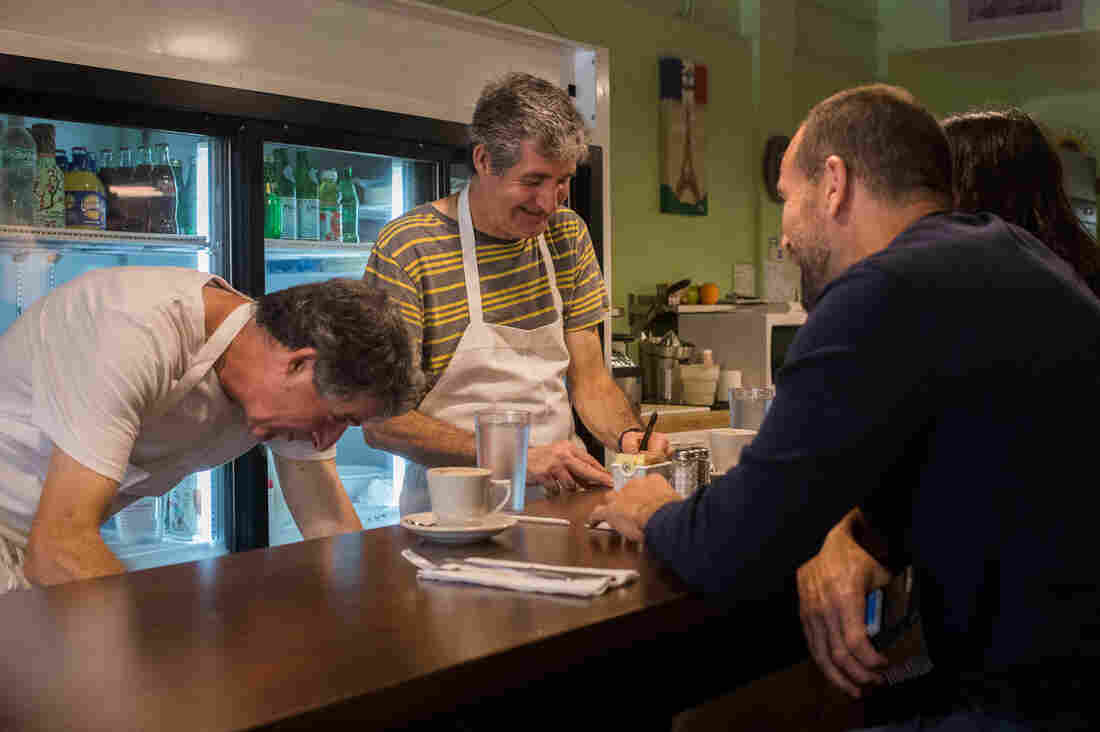
Top: Customers at Café Croissant peek through the front window ahead of the arrival of Hurricane Irma in Miami, Fla., on Saturday. Bottom: Co-owner Pascal Vedel prepares a box of croissants.

Cassi Alexandra for NPR

hide caption

toggle caption

Cassi Alexandra for NPR

Hurricane Irma is expected to bring high winds and heavy rains across Florida as a Category 3 storm, and has been projected to strengthen again before hitting the state. While many people stocked up on supplies and boarded up their windows, a few businesses remained open in Miami on Saturday.

Café Croissant had its bright “open” sign lit, welcoming customers in from the rain. Pascal Vedel, who co-owns the cafe with his twin brother Didier, greets each patron with a smile and offers them coffee. The brothers are originally from Montpellier, in southern France.

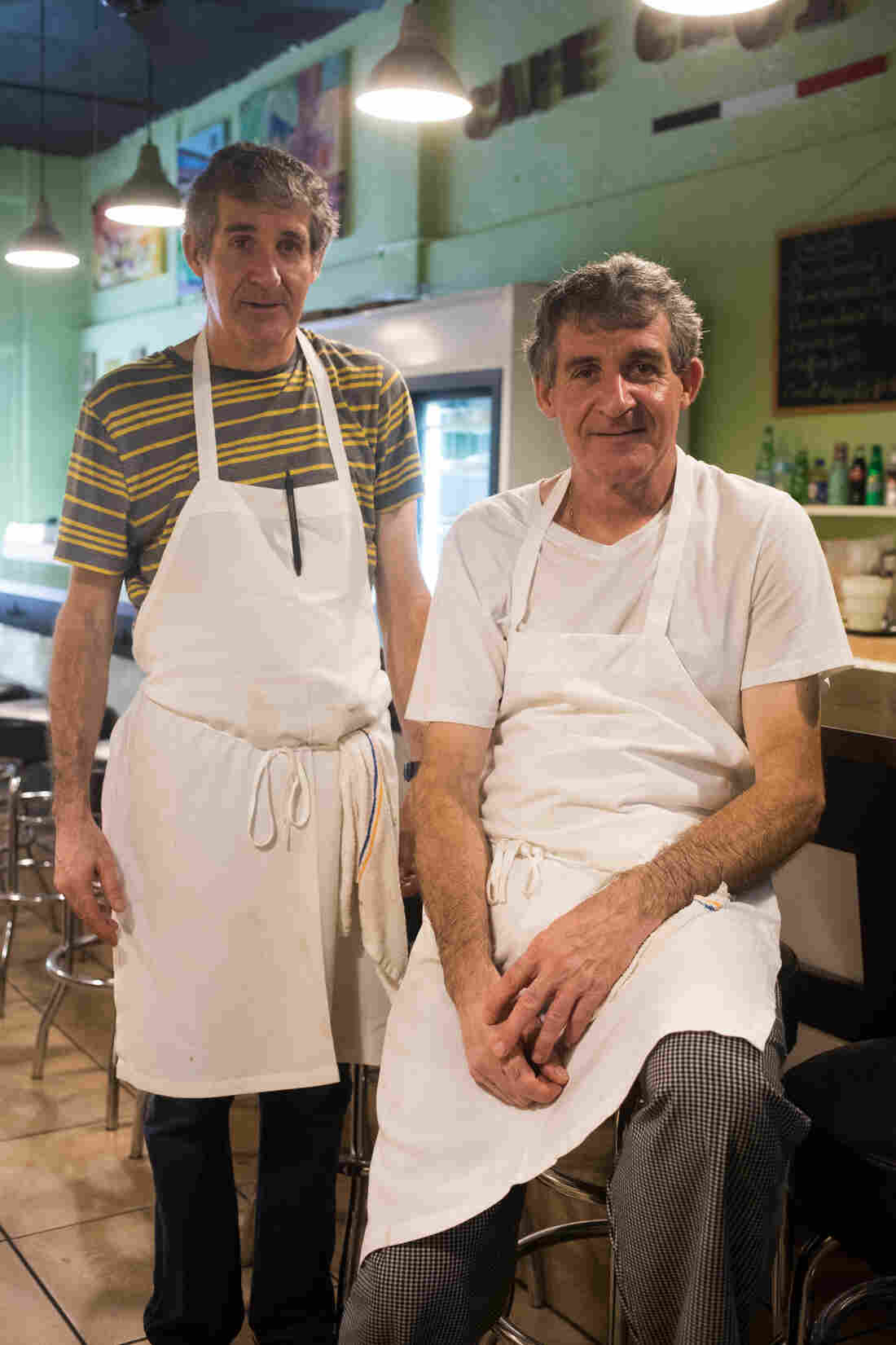
Café Croissant owners and twin brothers Didier (left) and Pascal Vedel serve customers in Miami on Saturday. They opened their doors Saturday morning at 7 a.m. with the plan to stay open until noon unless the weather encouraged them to close earlier.

Cassi Alexandra for NPR

hide caption

toggle caption

Cassi Alexandra for NPR

Didier, who looks nearly identical to Pascal, steps out of the kitchen with a warm plate of food. After visiting Miami 20 years ago, they decided to move to the city because they loved the mix of people.

Hurricane Irma is the strongest storm the twins have experienced while living here.

Hurricane Irma approaches the Miami skyline seen on Saturday morning.

Cassi Alexandra for NPR

hide caption

toggle caption

Cassi Alexandra for NPR

“We have to pray for the best,” Pascal says. “There is going to be a [storm] all the way from Key West to Jacksonville.”

Patron after patron walks through the doors and gushes about the hardworking brothers. They’re especially happy to enjoy their delicious food on such a stormy day.

One of the customers is Elias Smith, 21, a student at University of Miami. He also lives in an apartment above the cafe.

Elias Smith, 21, and Rachel Grunert, 21, are students from The University of Miami. Smith lives above the café and Grunert will be staying with him since her dorm was evacuated.

Cassi Alexandra for NPR

hide caption

toggle caption

Cassi Alexandra for NPR

“There is a magic to this city that no other city I’ve been to has,” Smith says.

Smith stopped in to pick up some food along with Rachel Grunert, 21, a friend from school who’s staying with Smith after she was evacuated from her campus dorm.

“I think people that live in Miami are very strong mindset type of people,” Grunert says. “My hope is that everyone rallies after, to rebuild if necessary.”

Pascal (left) and Didier Vedel are originally from Montpellier in the south of France. Pascal says he and his brother decided to move to Miami after vacationing here 20 years earlier.

Cassi Alexandra for NPR

hide caption

toggle caption

Cassi Alexandra for NPR

Pascal and Didier opened at 7 a.m., and closed around noon so they could get home before the curfew issued by Miami Mayor Tomas Regalado.

“Have a good day! Be safe,” Pascal says as a customer walks out the door.

Enlarge this image

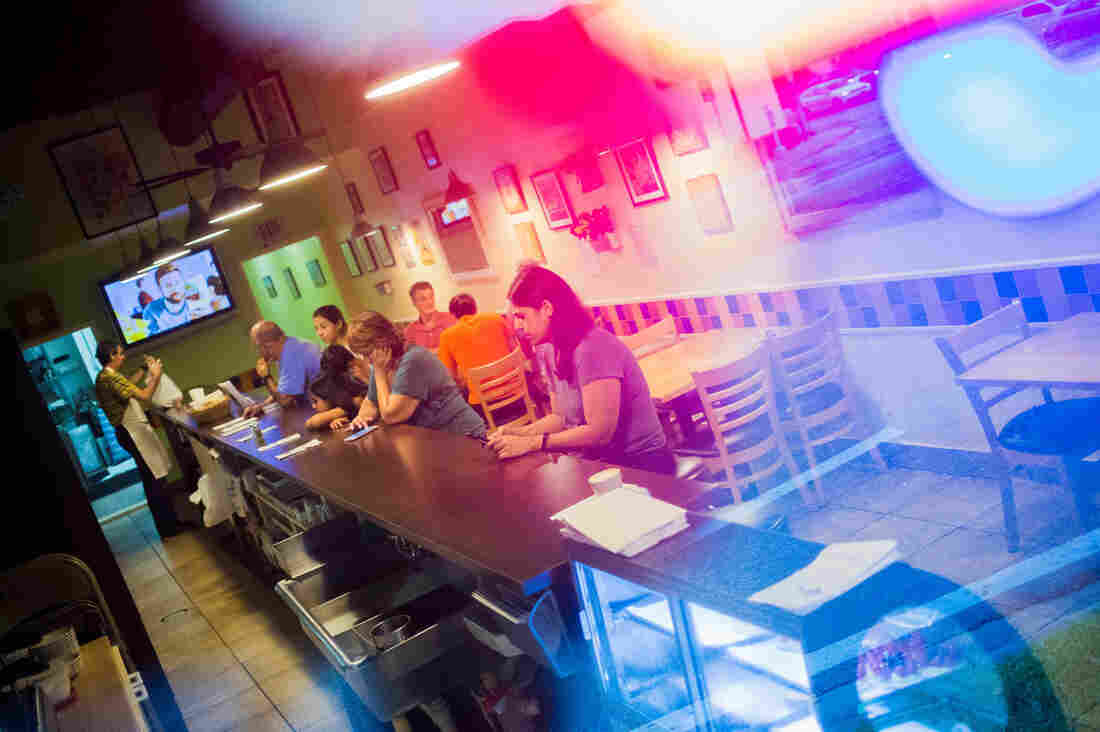
Patrons of Café Croissant enjoy a meal at one of the few restaurants open in Miami ahead of the arrival of Hurricane Irma on Saturday.

Cassi Alexandra for NPR

hide caption

toggle caption

Cassi Alexandra for NPR

Cassi Alexandra is an independent photographer who splits her time between Orlando, Fla., and Brooklyn, N.Y.

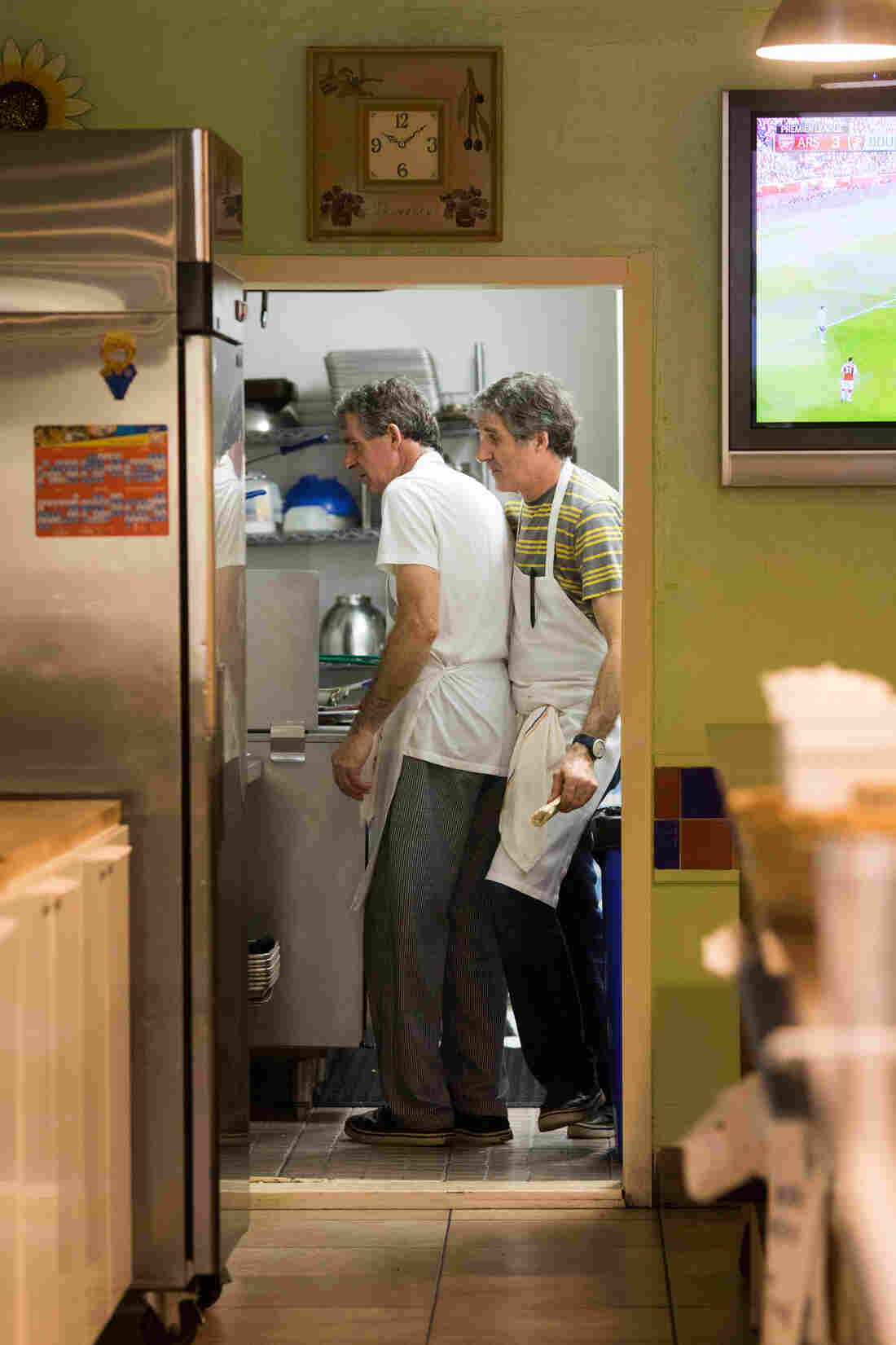
Café Croissant owners and twin brothers Didier (left) and Pascal Vedel prepare food in their kitchen. This is the strongest storm they have experienced while living in Miami.

Cassi Alexandra for NPR

hide caption

toggle caption

Cassi Alexandra for NPR

Let’s block ads! (Why?)


No Image

Episode 793: This Week in Time Bombs

This week, for Congress, time is running out. It's like the TV show 24...but with sub-committee hearings and continuing budget resolutions.
Enlarge this image

Renee Klahr, NPR

We returned from vacation this week and it felt like the world as we know it was about to end.

We’re not talking about nuclear war or natural disasters. (Although there is that, too.) We’re talking about the approaching economic abyss. Amid the hustle and bustle of the summer, Congress has somehow neglected to perform the basic job of passing essential legislation that keeps the U.S. economy going.

For instance, the fiscal year for the United States of America ends this month, and somebody (we’re looking at you, Congress) has not yet written a new budget.

Here’s something else they didn’t do: Our government needs to raise the debt ceiling to pay the bills that it has promised to pay, or else… the entire world economy will suffer. No joke. Nobody took care of that, either. And then there’s the DACA program—Deferred Action for Childhood Arrivals. For years, it’s fate has been uncertain because then-President Obama went around Congress to implement it. Now President Trump is rescinding DACA, but he’s giving Congress six months to come up with a replacement. That’s another ticking time bomb.

On today’s show, three time bombs: The debt ceiling, the federal budget, and DACA. All of these ticking clocks are of Congress’s making, and if any of them blows up, it could cause suffering around the nation and the world. The clock is ticking. But that might be just what Congress needs.

Music: “Bout That Live,” “Tik Tok,” and “Funeral Crown.” Find us: Twitter/ Facebook.

Let’s block ads! (Why?)


No Image

Hackers Accessed The Personal Data Of 143 Million People, Equifax Says

Enlarge this image

Equifax announced Thursday that its systems were hacked in May, exposing 143 million consumers’ personal information.

Mike Stewart/AP

hide caption

toggle caption

Mike Stewart/AP

Equifax, an international credit reporting agency, has announced that a cybersecurity breach exposed the personal information of 143 million U.S. consumers. In a statement released Thursday, the Atlanta-based agency acknowledged that “criminals exploited a U.S. website application vulnerability to gain access to certain files.”

Those files include data such as Social Security numbers, birthdates and addresses — and, Equifax adds, “in some instances, driver’s license numbers.”

For a span of roughly two months — from mid-May through July 29, when Equifax says it uncovered the breach — hackers had access to this information, as well as the credit card numbers of about 209,000 consumers and “certain dispute documents with personal identifying information” of about 182,000.

All told, the number of American consumers affected constitutes about 44 percent of the U.S. population.

Equifax did not explain why more than two months passed before it discovered the hack, which also affected an unspecified number of consumers from Canada and the U.K.

However, the agency is careful to note, it “has found no evidence of unauthorized activity on Equifax’s core consumer or commercial credit reporting databases.”

[embedded content]
YouTube

“This is clearly a disappointing event for our company, and one that strikes at the heart of who we are and what we do. I apologize to consumers and our business customers for the concern and frustration this causes,” said Chairman and CEO Richard F. Smith said in a statement.

Equifax handles the data of more than 820 million people and more than 91 million businesses worldwide, the agency says on its website, to transform “knowledge into insights that help make more informed business decisions.”

As gargantuan as the numbers may be, The New York Times points out this is not the largest data breach in history. That dubious distinction goes to Yahoo, which nearly a year ago announced that the personal information of at least 500 million people had been stolen. Just months later, the company said hackers stole data associated with more than 1 billion user accounts.

Equifax, for its part, says it has been in touch with law enforcement and that it has set up a website for consumers to determine whether they have been affected by the breach announced Thursday. It has also set up a call center at 866-447-7559 for the same purpose.

Let’s block ads! (Why?)


No Image

Episode 628: This Ad's For You

Enlarge this image

Tom Burrell, ad man.

Courtesy of Tom Burrell

hide caption

toggle caption

Courtesy of Tom Burrell

Note: This show originally ran in 2015.

In the early 1960s, the ad world had a one-size-fits-all philosophy. Black people, white people—they all saw the same ads. And while that sounds egalitarian in theory, it often led to hilariously inappropriate ad copy, like: “1842. It was a very good year for beer drinkers.”As Tom Burrell points out, it wasn’t really a good year for black people in the U.S., many of whom were still enslaved.

Tom Burrell was the first black man in Chicago advertising. He realized that this sort of one-size-fits-all marketing wasn’t just tone-deaf, but that it just wouldn’t work as well as it could. He thought there had to be a different way.

Nowadays, marketing is precisely targeted. The targeting is so laser-specific that the ads you see on your Facebook feed practically have an audience of one: You. Tom Burrell started that shift.

Today on the show, the story of the man who transformed the way people think about advertising and how advertisers think about us.

Music: “Low Slung” and “Private Number.” Find us: Twitter/ Facebook.

Let’s block ads! (Why?)


No Image

New CEO Richard Anderson Outlines His Vision For Amtrak

NPR’s Robert Siegel interviews Richard Anderson, former head of Delta Airlines, who has been recruited to lead Amtrak during a period of major renovations.

ROBERT SIEGEL, HOST:

When we heard here in the past from Richard Anderson, he was CEO of a venerable and very successful American company, Delta Airlines. His new employer is a little different. He is now co-CEO. And next year, he’ll become the sole CEO of Amtrak, a company that is often modified by words like ailing and troubled. Richard Anderson joins us from, appropriately, Penn Station on Manhattan’s West Side. Thanks for joining us once again.

RICHARD ANDERSON: Thank you, Robert. It’s nice to speak with you again.

SIEGEL: When we say Amtrak is ailing, we mean the infrastructure is old. It doesn’t have the high-speed rail lines that other industrialized countries have. Is Amtrak fixable at its current size and with a billion dollars of annual net loss?

ANDERSON: First it’s not a completely fair characterization to say that Amtrak is broken because it’s really not. It provides very reliable service to over 30 million people a year. Now, it is true we do not, except for Acela, to have high-speed rail. That’s a choice we’ve made in the United States, a choice that’s been different in some of the European countries and countries like Japan and China.

SIEGEL: Was that really a good decision, or was it just an inability to make a decision in favor of high-speed rail?

ANDERSON: Well, we have made the decision with respect to the Acela service between Washington, D.C., New York and Boston. And Amtrak is soon to operate 20 next-gen, high-speed trains in the corridor.

SIEGEL: Although, I think I can hear some listeners hearing you say, wait a minute. I’ve been on some fast trains in France or Japan. And the Acela might be able to go fast, but it only knocks about a quarter of an hour off the ride between Washington and New York. It just doesn’t seem to be comparable to what other countries have done.

ANDERSON: Well, it isn’t. But that doesn’t mean we can’t take the infrastructure that we have and improve our track speeds, where we offer a product that’s competitive with cars and buses because that’s really, in some sense, what we compete against.

SIEGEL: I’m curious about your transition from Delta to Amtrak. When you were at the airline, you were CEO of a company that did very well. You made some very interesting strategic decisions. Does being CEO of Amtrak provide an opportunity for executive decisions like those, or is it more about day-to-day management and persuading the government to do more to continue support of the system?

ANDERSON: It’s really all of the above. It’s the opportunity to make decisions that will improve the accessibility for urban areas around the U.S.

SIEGEL: You’ve spoken of serving cities and urban areas. I mean, are you saying, in effect – perhaps this is – the deed’s been done already – that real, long-range intercity train travel is finished. We’re talking about much shorter-range train trips.

ANDERSON: Well, when you say long range, Amtrak long range means over 750 miles. And where we see the most growth over the last couple of decades has been in routes under 750 miles, like Milwaukee to Chicago, Detroit to Chicago, San Francisco to Los Angeles down the coast. When you think about infrastructure in the U.S., we have become a very urbanized society – less reliance on automobiles, more reliance on public transportation. There’s an important role for Amtrak to play. And that’s actually been one of the fastest-growing parts of this business and represents over half of Amtrak’s passenger traffic annually.

SIEGEL: You know, Mr. Anderson, finally, I realize I have the opportunity to put this to the CEO of Amtrak, which has been bugging me now for for years and years and years. When I take the train from Washington to New York and back, in Washington, it tells me what gate the train is leaving at. I go there. I sit. And then I get in line. And we board the train in an orderly fashion.

When I come back from New York, the track that the train will be on is only announced moments before boarding. And there’s a mass scramble of dozens, if not hundreds of people, to get in front of the right stairs at Penn Station, where you’re speaking to us. Can Amtrak fix the way people board their trains in Penn Station one of these days?

ANDERSON: I have my assignment from you, Robert.

SIEGEL: (Laughter). I’ll hold you to it.

ANDERSON: OK.

SIEGEL: Richard Anderson – for now, co-CEO of Amtrak. Thanks for talking with us.

ANDERSON: Thanks.

Copyright © 2017 NPR. All rights reserved. Visit our website terms of use and permissions pages at www.npr.org for further information.

NPR transcripts are created on a rush deadline by Verb8tm, Inc., an NPR contractor, and produced using a proprietary transcription process developed with NPR. This text may not be in its final form and may be updated or revised in the future. Accuracy and availability may vary. The authoritative record of NPR’s programming is the audio record.

Let’s block ads! (Why?)


No Image

In Texas, Concerns About Damage To Flooded Toxic Waste Sites

Enlarge this image

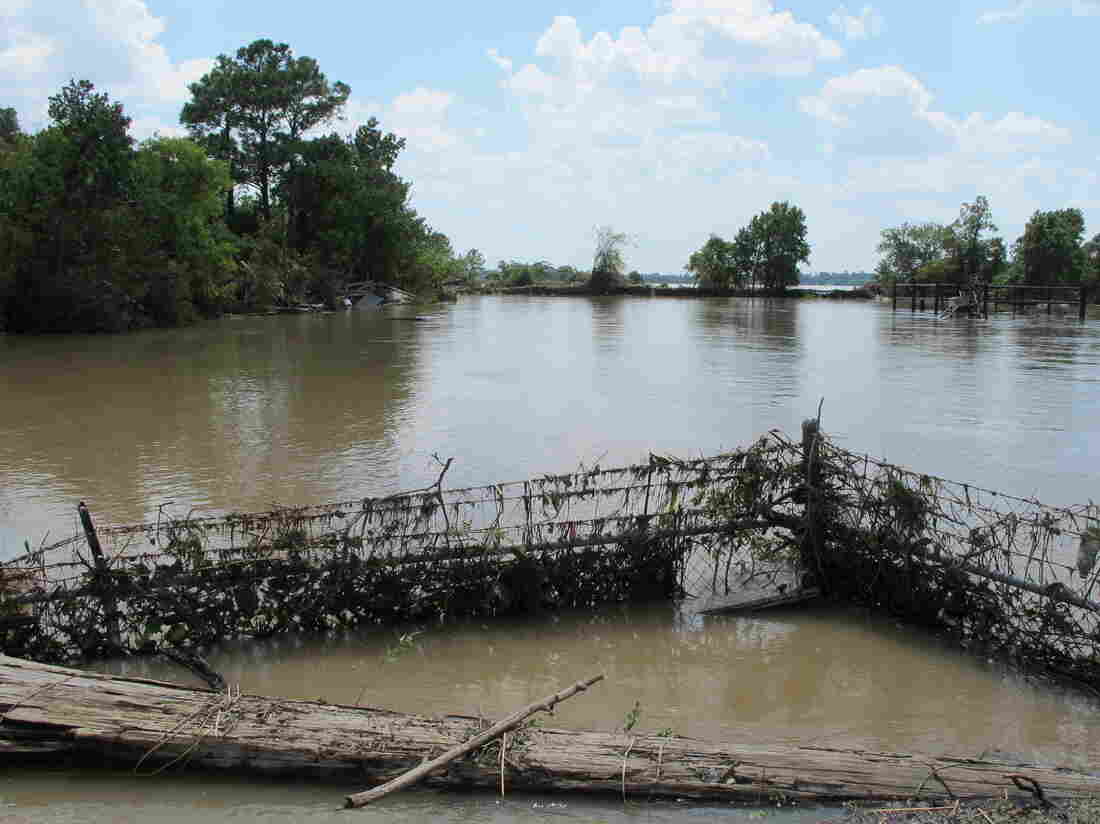
Floodwater from last week’s storm ripped apart fences and flooded I-10. The San Jacinto Waste Pits Superfund site is just on the other side of the road.

Rebecca Hersher/NPR

hide caption

toggle caption

Rebecca Hersher/NPR

Updated at 8:15 p.m. ET

Officials are still trying to confirm whether Texas floodwaters have spread contamination from decades-old toxic waste sites, as water recedes and residents return to homes that, in some cases, were flooded with water that passed over known contaminated areas.

The Environmental Protection Agency says 13 Superfund sites were flooded and potentially damaged by Hurricane Harvey. In addition to two sites determined to be undamaged over the weekend, the EPA said Monday that personnel had inspected the Highland Acid Pit, U.S. Oil Recovery and the San Jacinto Waste Pits, but did not announce results of those inspections.

The agency said earlier in the day it had not been able to inspect eight other sites yet: Bailey Waste Disposal, French LTD, Geneva Industries/Fuhrmann Energy, Gulfco Marine Maintenance, Malone Services, Patrick Bayou, Petro-Chemical Systems and Triangle Chemical.

EPA spokesperson Liz Bowman wrote in a statement on Monday, “EPA teams are in place to investigate possible damage to these sites as soon flood waters recede, and personnel are able to safely access the sites.” NPR found little or no water left around three of the remaining sites on Sunday.

In a separate statement, the EPA also said it had done initial aerial assessments of 41 Superfund sites.

Enlarge this image

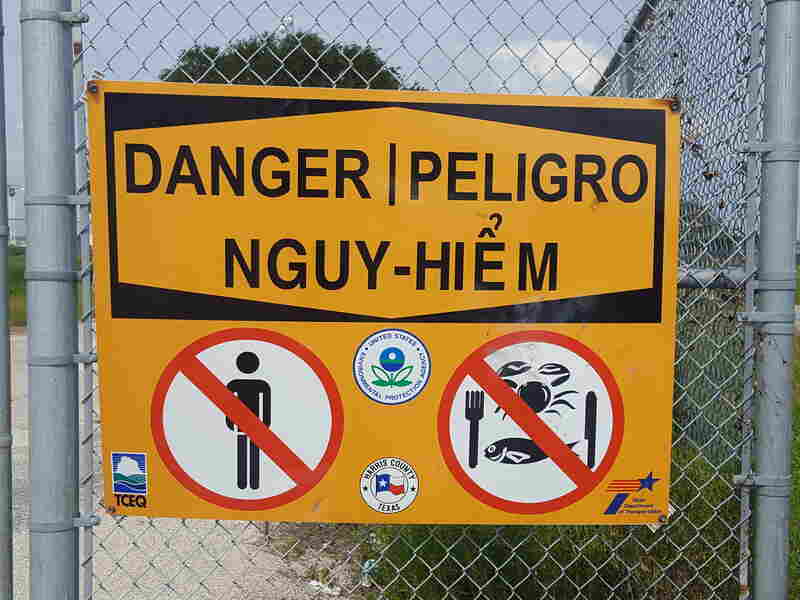
A sign along the San Jacinto River warns against eating fish or shellfish from the river. A nearby site that has been a source of toxins was flooded by Hurricane Harvey.

Rebecca Hersher/NPR

hide caption

toggle caption

Rebecca Hersher/NPR

‘That site started sinking into the river’

The San Jacinto Waste Pits are located in the middle of the San Jacinto River about 20 minutes from downtown Houston, adjacent to Interstate 10. It is made up of two main pits, was used as a dumping area for toxic waste from a paper mill in the 1960s, and is heavily contaminated with chemicals called dioxins, according to the EPA.

“This was just an open pit on the edge of the San Jacinto River,” says Scott Jones of the Galveston Bay Foundation, a nonprofit group that works with state and federal agencies on waterway cleanup efforts in the region. He says a bad location for waste disposal was made worse by groundwater pumping over the years. “That site started sinking into the river, so probably since the mid-’70s about half that pit has been permanently underwater. So all those years that dioxin can get out into the water.”

The site was added to the National Priorities List of Superfund sites in 2008, after the EPA found the area around the pits was contaminated with both dioxins and furans. The Texas Parks and Wildlife Department warns people should not eat fish and crabs from the area because the animals may be contaminated.

Jones, who used to work for the Texas Commission on Environmental Quality, says he’s been generally happy with the EPA’s handling of the site, but wishes the entire process moved more quickly, given the dangers to wildlife and humans who live in the area.

“With all of our government agencies, whether it’s federal or state, we don’t put enough money into [them],” he says. The Texas Commission on Environmental Quality did not return requests for comment.

In 2011, the pits full of toxic soil and sand were temporarily capped with a liner held in place with large rocks, and last year the EPA announced it was taking public comments on a proposed plan to remove 152,000 cubic yards of contaminated material from the site. The agency was still reviewing those comments when last week’s storm hit.

‘I don’t trust it’

Enlarge this image

The Highlands Acid Pit Superfund site remained flooded on August 31. The water has since receded, and some residents are concerned that toxins from the site could have spread into the nearby neighborhood.

Jason Dearen/AP

hide caption

toggle caption

Jason Dearen/AP

Residents who live near multiple Superfund sites in the Houston area say they haven’t heard from EPA or TCEQ officials, and some are concerned that the mud left behind by flooding could be dangerous.

Barbara and Ellen Luke grew up a few blocks from the Highland Acid Pit, which was contaminated with industrial sludge thought to contain sulfuric acid in the 1950s.

“We always walked down there and messed around,” says Barbara. Her 73-year-old mother still lives in the family home, which had 2 feet of water in it at the height of the floods last week. On Sunday, the sisters set fire in the front yard to whatever waterlogged belongings would burn. Both women said they are skeptical of any official who tells them the area is safe.

“I don’t trust it,” says Barbara. “I mean that is probably something that will forever affect the environment. I don’t see how you can get rid of that.”

Up the street, Adolfo Peralta says the water was 12 feet high in his yard. His home, he says, is destroyed. He’d like to repair it, but his wife would like them to move, in part because she’s concerned about contamination. He’s hoping someone from the government will be able to tell him definitively that the water and soil on his property are safe in the coming weeks.

Another neighbor, Dwight Chandler, is repairing a home that’s been in his family since 1942. “I grew up in that acid pit,” he says. “Played in it my whole life. That’s my cousin. He was raised here, played in it. Ain’t affected us, you know?” His cousin nods in agreement from across the room.

It’s always difficult to tie any particular health outcome to contamination, or lack of it. Studies have found significantly higher rates of cancer and respiratory illness among those living along the Houston Ship Channel and San Jacinto River.

Chandler says he welcomes testing for toxins in the neighborhood. It can’t hurt. But he’s not waiting for it; he’s rebuilding now.

Let’s block ads! (Why?)


No Image

On Capitol Hill, 'See You in September' Is A Refrain Without Romance

[embedded content]
NPR via YouTube

Some years back a hit song filled the summertime airwaves with its chorus of “See You In September.”

It was meant to be a lover’s promise of joyful reunion at summer’s end.

But to use those words in Washington, D.C., right now sounds more like a warning … or even a threat.

That’s because when Congress returns after Labor Day and official business resumes, the agenda will be heavy, the deadlines tight and the atmosphere fraught with potential fiscal disaster.

The end of the fiscal year comes on Sept. 30. That’s the deadline for the spending bills for the new fiscal year. And that homework didn’t get done before Congress left on its August recess.

Those spending bills really matter because without them the government starts to shut down on Oct. 1. We have seen this happen as recently as 2013, with substantial consequences and overwhelmingly negative public reaction.

Polls show the public is in no mood for a replay. Those polls held after President Trump in August said he wanted his Mexican border wall to be funded even if it triggered a shutdown crisis. Trump vowed that his signature issue, the wall, will be financed somewhere in the welter of legislation awaiting action this month and said he was willing to have a shutdown rather than see the wall abandoned. Since that threat was issued in late August, some reports have suggested he would not make good on it. But White House press secretary Sarah Huckabee Sanders insisted on Friday that Trump still meant the wall-or-shutdown ultimatum as stated.

But this is not just a crisis about future spending. It’s also about 200 years of accumulated debt to pay for past spending. The federal government has reached (and breached) the ceiling Congress most recently placed on its authority to borrow money — the number people call the “debt limit.”

The debt limit matters because in a few weeks the Department of Treasury will exhaust its delaying tactics and be unable to issue new debt. Without new debt to pay off old bonds and other obligations coming due, Treasury says it would have to default.

What would happen then? The U.S. has never defaulted, so we don’t know for certain. But the general consensus among economists and investors is that bad things would happen. Very bad things. More about this in a moment.

First, we should note that Congress also has other urgent items to attend to in September. By far the most pressing will be the emergency measures to help the people of Houston and East Texas who have been devastated by Harvey, a historic storm.

The Trump administration has asked for nearly $8 billion in emergency funding, a down payment on an aid package that many expect to reach $100 billion or more. That will be a lot for fiscal conservatives to swallow, especially if no offsetting cuts to other kinds of spending can be enacted.

The September Congress also has a deadline looming for the reauthorizing of the Federal Aviation Administration, one of those pillars of government service people take for granted most of the time.

Congress has been delaying this particular chore because of deep disagreements about the mix of private and public authority involved in American air travel. Not all of that conflict will be resolved in the coming days, but deals must be struck to keep the nation’s commercial air traffic in the air.

But back to the fiscal collision one White House official has called “brutal.” What do we really have to worry about in all this? Can’t Congress just get down to business and get this stuff done?

Everyone wants to move on to President Trump’s grander wish list, including an infrastructure bill (jobs and projects galore) and the rewriting of the tax laws (which is assumed to include some sweet tax cuts for businesses and individuals alike).

But right now those issues look like dessert. First, Congress has to clean its plate.

The first forkful should probably be a budget resolution. This is useful not only to guide the spending process, but to set up the debate on taxes. Without a budget resolution, Senate Republican leaders would not be able to rule out filibusters when they got around to considering a tax overhaul. That means they would need 60 votes instead of 50 to prevail. (And on health care recently, they could not even get 50.)

How hard is it to pass a dozen spending bills for programs people generally want to have funded? Harder than you think. Parts of Congress have been working on just this problem all year without making much headway.

The House did manage to pass four of its 12 spending bills before going on August recess. But the Senate has neither taken up these four House offerings, nor passed any of its own. Zero.

So let’s do the math. We need eight more spending measures from the House and a dozen from the Senate. Then all those bills would need to be mashed up in conference committees between the two chambers. The results would still need to pass both chambers and be signed by President Trump.

Sure, deadlines make a difference. But they don’t make disagreements and partisan blood feuds disappear. So…happen overnight… this will not.

You might take solace in the fact that Congress still has almost a month to get all this done. Except that leadership has only scheduled a dozen legislative working days in September. So, right now it seems a safe bet we will need that old reliable tool from the days of divided government. It’s known as a “continuing resolution,” and it will keep the government operating past Oct. 1. We will probably need more than one CR before it all gets done.

That would at least forestall the prospect of a shutdown over spending. But the greater threat at this point might be coming from that other problem: the debt limit and the specter of default.

Default is different from shutdown. We have survived shutdowns several times, in part by exempting such essentials as the military, emergency relief such as for Harvey, air traffic control and meat inspection.

But default is unknown territory. It’s never happened. That may make some people say: “Let’s try it.” But those might not be the people you want to trust with your life savings.

If Treasury defaults on U.S. obligations, the reliance on the dollar and on U.S. debt instruments as the ultimate safe haven for creditors and investors all over the world would be at risk. Credit markets would absorb the worst shock since the crisis of 2008 that triggered the worst recession since the 1930s.

At a minimum, the cost of borrowing more money in the future would go up. Probably by a lot. And those higher interest costs would add more to the annual deficit, and the national debt.

That is why default is usually not even discussed and why the debt limit must be raised.

Congress first imposed the debt limit 100 years ago to mollify anti-debt (and anti-war) elements among its members as the U.S. entered World War I. The idea was to tell Uncle Sam he could go a billion into debt to defeat the enemy, but no more.

That amount seems laughable now. The limit has been lifted many times since, by ever escalating amounts. The current U.S. debt stands at about $20 trillion. Even in the current low-interest rate environment, paying the interest on the debt is one of the larger items in the federal budget — after things like defense and security, Social Security, the major federal health insurance programs and safety net programs.

And of course, many Republicans in Congress have campaigned on slashing federal spending and reducing the federal debt without raising taxes. Many have said they will not vote for a debt limit increase ever. Others say they won’t support one without deep spending cuts attached.

Yet the debt limit must be raised. House Speaker Paul Ryan, R-Wis., and Senate Majority Leader Mitch McConnell, R-Ky., have said they will do so, knowing they cannot make good on their pledge without Democratic help. In the House, especially, Ryan will probably need quite a few Democratic votes to make up for the defections in GOP ranks. Will the Democrats do it? Yes, but at a price steep enough to make the Republicans blanch.

Can Ryan find the sweet spot where he cuts enough spending to get enough Republicans but not so much as to sacrifice his slice of the Democrats?

The Trump administration has called for a clean debt limit bill, meaning a substantial increase in the debt limit with no changes to spending or taxes or anything else. Some may want Trump to attach his border wall to the debt limit. But the inner circle of his financial and economic advisers — such as Wall Street alumni Steve Mnuchin and Gary Cohn — regard this as anathema.

Will they prevail? Will the votes be there? If not, as Treasury’s cash flow peters out, one solution could be to shut down parts of the government.

Some conservatives have argued that a partial shutdown would save enough money to enable the Treasury to meet obligations coming due — rather than default. But Treasury officials see it differently. They say the day is coming when default will be real.

Which is one more big reason why “see you in September” now means that a day of reckoning has arrived.

Let’s block ads! (Why?)

No Image

The Reason Behind The Recent Spike In Gas Prices

Motorists are finding that the average price of a gallon of gasoline is 20 cents more than it was a month ago — the highest it’s been in two years. The reasons have a lot to do with Hurricane Harvey.

MICHEL MARTIN, HOST:

We’ll be checking in throughout the hour with people who’ve been affected by this storm in all kinds of ways. And even if you don’t live in the Southeast or have family there, you might be one of them if you plan to hit the road this Labor Day weekend. Motorists are finding that the average price of a gallon of gasoline is 20 cents higher than it was a month ago. It’s the highest it’s been in two years, and the reasons have a lot to do with Hurricane Harvey. NPR’s Jim Zarroli is here to explain this. Jim, thanks so much.

JIM ZARROLI, BYLINE: Hi.

MARTIN: So you were telling us that Harvey is affecting the energy markets profoundly. Why is that?

ZARROLI: Well, the problem is the refineries. I mean, there are a lot of them along the coast of Texas and Louisiana. The biggest refining facility is in Port Arthur, Texas. And it’s not so much that there was damage to these refineries, but when the storm was approaching, some of them had to be shut down. And just because of the way they are technologically – they’re complex facilities – they can’t be sort of restarted on a dime. So we’ve lost, you know, nearly 17 percent of total U.S. refining capacity.

And in the meantime, you’re seeing long lines at gas stations. And some gas stations are even running out of gas altogether. Yesterday, the governor of Texas, Greg Abbott, assured his state that it still has plenty of gasoline and it’s not going to run out. But there are shortages right now.

MARTIN: Now, the refineries are in the Gulf of Mexico. How does that affect the rest of the country?

ZARROLI: The infrastructure in the Gulf serves the rest of the country. I mean, the oil in places like Port Arthur is refined into gasoline that’s used in the Midwest and in the Northeast. There’s also been a problem with pipelines. Some of them have had to be shut down, like the Colonial Pipeline goes from Houston to North Carolina. Part of that had to be shut down. And that just means less gasoline in places like Chicago and New York.

Then also you had, you know, you’ve had less oil being imported because shipping has been interrupted. And when you have this major disruption, oil companies shift production around a lot. That’s another thing. They want to make sure it goes where it’s most needed. So this is really felt all over the place.

MARTIN: So is the government taking any steps to address these supply problems that we’re seeing? Is there anything the government can do?

ZARROLI: The Department of Energy has taken some temporary steps. It’s waived some of the clean air requirements on gasoline. It says that should help get supplies moving faster. It’s also released some oil from the strategic petroleum reserves into a big refinery in Lake Charles, La., that was having some trouble getting the crude it needed. Of course, the company that owns it is going to have to, you know, make up for that later on by returning some oil to the reserves.

MARTIN: So how long before supplies return to normal levels?

ZARROLI: You know, it’s going to be a few weeks, maybe the end of the month. The companies are still assessing how much damage, if any, their facilities have have sustained. We’re starting to see some recovery already. The port of Corpus Christi, you know, has reopened its shipping channel. That means the refineries there can start to get back on line as early as this weekend. But in the meantime, you know, we could see prices going up for a while. We don’t know how much, but they should go up – continue to go up.

MARTIN: That’s NPR’s Jim Zarroli. Jim, thank you.

ZARROLI: You’re welcome.

(SOUNDBITE OF STEVIE RAY VAUGHAN AND DOUBLE TROUBLE’S “TEXAS FLOOD”)

Copyright © 2017 NPR. All rights reserved. Visit our website terms of use and permissions pages at www.npr.org for further information.

NPR transcripts are created on a rush deadline by Verb8tm, Inc., an NPR contractor, and produced using a proprietary transcription process developed with NPR. This text may not be in its final form and may be updated or revised in the future. Accuracy and availability may vary. The authoritative record of NPR’s programming is the audio record.

Let’s block ads! (Why?)


No Image

Hurricane Harvey Sends Gasoline Prices Up

Enlarge this image

A customer walks out of an Exxon station in Bedford, Texas, Thursday. Refinery shutdowns have sent prices up all over the country.

Tony Gutierrez/AP

hide caption

toggle caption

Tony Gutierrez/AP

Drivers who plan to hit the road over Labor Day weekend will face higher gasoline prices because of the impact of Hurricane Harvey on the nation’s refineries and pipelines.

After several days of heavy rain and flooding, gas prices reached an average of nearly $2.51 a gallon, up 20 cents since two weeks ago and nearly 30 cents since this time last year, although they fell back a bit Friday.

Refineries throughout the Gulf Coast shut down or reduced production a week ago in anticipation of the high winds and heavy flooding from Harvey.

“Hurricane Harvey has significantly impacted the entire Texas gulf coast with the petroleum refining centers of Corpus Christi, Houston, Port Arthur, Beaumont, and Lake Charles, La., either completely shutdown or [having] significantly scaled back operations,” according to a statement released by the Port of Corpus Christi.

As of Thursday afternoon, 10 refineries representing 16.6 percent of daily U.S. refining capacity were shut down, according to the Department of Energy.

The nation’s largest refinery, in Port Arthur, Texas, is expected to be closed for at least two weeks, Reuters reported.

All told about 4.4 million barrels of daily oil production have been suspended.

With less fuel being produced, several major pipelines supplying the Midwest and the East Coast have plans to shut down, or have already done so.

Colonial Pipeline said Thursday it was temporarily suspending lines that originate in Houston and feed the East Coast.

“Deliveries will be intermittent and dependent on terminal and refinery supply,” it said.

With supplies growing tight, the Department of Energy announced it was taking 1,000,000 barrels of crude oil from the nation’s Strategic Petroleum Reserve to send to a Phillips 66 refinery in Lake Charles on an emergency basis. The company will have to replace the crude later.

At a Friday news conference, Texas Gov. Greg Abbott sought to calm fears about fuel shortages. “There’s plenty of gasoline in the state of Texas,” he said. “Don’t worry. We will not run out.”

Bloomberg reported that European refiners are rushing to fill the gap opened by Harvey:

“At least 20 tankers were booked to load European fuels for the U.S. since Harvey made landfall, a rate nearly double the average for August, shipping data compiled by Bloomberg show. Shipbrokers said cargo flows to New York are expected to be the highest since November, when an explosion on Colonial Pipeline cut off supplies.”

The gasoline supply issues could reduce inventories on the East Coast, causing prices to rise further, Zachary Rogers, a refining and oil products analyst at Wood Mackenzie Ltd., told Bloomberg.

Still, conditions are returning to normal around the Port of Corpus Christi, where flooding was minimal. The port’s shipping channel has reopened and refineries in the area are expected to resume production within a few days.

Higher gasoline prices could affect consumer spending nationally, but the impact “should be small and temporary as production and refining come back on line,” according to Ryan Sweet of Moody’s Analytics.

Let’s block ads! (Why?)