
New Congresswoman Will Pay Her Interns $15 An Hour. Is That A Big Deal?

Democratic Rep.-elect Alexandria Ocasio-Cortez of New York (left) has pledged to pay her interns $15 an hour. She is seen here with Democratic Rep.-elect Deb Haaland of New Mexico.
Tom Williams/CQ-Roll Call Inc.
hide caption
toggle caption
Tom Williams/CQ-Roll Call Inc.
When Alexandria Ocasio-Cortez takes office next month, representing New York’s 14th District, she will be a part of the “blue wave” of new Democrats in the House. But the 29-year-old may end up being a part of a different kind of wave, too: a bipartisan effort for members of Congress to pay the interns they employ.
“Time to walk the walk,” she tweeted on Tuesday. “Very few members of Congress actually pay their interns. We will be one of them.” And she pledged more than just a stipend: Her interns will make $15 an hour.
Last year, two former unpaid House interns, Carlos Mark Vera and Guillermo Creamer, founded an organization called Pay Our Interns. They collected data about who pays what on Capitol Hill, and they found that about 90 percent of House offices don’t pay their interns at all — a figure that Creamer called “abysmal.”
The numbers are a bit better on the Senate side: Half of Senate Democrats pay their interns at least a stipend, while 55 percent of Senate Republicans do.
As for the $15 hourly wage, only three members of Congress currently pay their interns so well, Creamer tells NPR: Sen. Bernie Sanders, I-Vt., Doug Jones, D-Ala., and Rep. Adam Smith, a Democrat from Washington state.
In the for-profit world, the Department of Labor’s rules on paying interns have been clarified in recent years to state that that an intern must be the “primary beneficiary” of the internship, rather than the company. If the company is the primary beneficiary, then that intern is really an employee, and employees are entitled to minimum wage and overtime.
But those laws exempt internships at nonprofits and in the public sector. Thus congressional offices are not obligated to pay interns, and often, they don’t.
The House and Senate both passed bills earlier this year appropriating money for intern pay. The House approved $8.8 million, giving each member’s office $20,000 per year to pay interns. The Senate version includes $5 million, to be allocated according to a state’s population, providing an average of $50,000 per office.
Despite those new pools of money, most members haven’t started to advertise paid internships, Creamer says, because they’re waiting for new guidelines about using the funds. And that’s an issue, because the congressional offices are accepting applications for the January class of interns right now.
He points out that Ocasio-Cortez isn’t waiting for guidelines: “Her intention was to pretty much pay her interns regardless, and that’s because they allocated that in their budget.”
Whether an internship pays has a profound effect on who is able to apply for and accept it. Young people without wealthy parents or a university footing their expenses may find themselves juggling second or third jobs in the evenings after their internship.
But a congressional internship can be an important step toward future opportunities in government or elsewhere. If such positions are open only to children of the wealthy, then the wealthy will very likely continue to be overrepresented as public officeholders.
As Congress prepares for the next session, Creamer urged its members to start making plans for paying their interns — something his organization is more than happy to assist with.
“They know the money’s there; they know the money is coming,” he said. “Why not try and start structuring it now?”
Chapter 11 Bankruptcy Paperwork Filed For USA Gymnastics

USA Gymnastics has filed for bankruptcy. It’s the latest move for the beleaguered organization following a wide-ranging sexual abuse scandal involving athletes and a former team doctor.
RACHEL MARTIN, HOST:
USA Gymnastics has filed for bankruptcy. The organization that oversees gymnastics in this country has struggled to recover ever since Larry Nassar, the former team doctor, was convicted of molesting seven gymnasts in his care and accused of abusing hundreds more. Since then, the organization has cycled through three CEOs, major sponsors pulled away and more than 300 plaintiffs filed suit. For more on this, we are joined by reporter Alexandra Starr from our studios in New York.
Alexandra, thanks for being here.
ALEXANDRA STARR, BYLINE: No problem. Good to talk with you.
MARTIN: You have been covering this story really since the beginning. So can you tell us – was this kind of the inevitable that USA Gymnastics would have to file for bankruptcy?
STARR: People have been talking about this now for months, so it’s not a surprise. And as you said in the introduction, it’s sort of, like, the latest debacle for the organization.
MARTIN: What does this mean? I mean, when we think about USA Gymnastics, its role in cultivating gymnasts from the U.S. to compete in the Olympics – I mean, we’re – the next Olympics is coming up in Tokyo in 2020, right? What does it mean for those games?
STARR: So the United States will definitely field a team in 2020, whether USA Gymnastics is the organization that facilitates all of that is in question. But certainly, the U.S. is going to be present there. And Simone Biles, who, you know, people regard as the best gymnast in history, will be there. So we have to remember there’s a difference between USA Gymnastics and the team that it’s been fielding. The women, in particular, have been extraordinary. They’re the world champions. And everyone is pretty certain that the U.S. will dominate at the podium again there.
MARTIN: It’ll just happen under different auspices. It just won’t be USA Gymnastics.
STARR: Well, we can’t be sure. But what we can be sure is that Team USA will be represented.
MARTIN: You and I have touched on this before in covering this story. When USA Gymnastics has been grappling with all this, trying to come to grips with the crimes committed by Larry Nassar, how does it affect parents who are trying to decide whether or not to get their kids into this sport?
STARR: That’s an excellent question, Rachel. And it’s something I’ve been thinking a lot about. You know, one way this bankruptcy proceeding could affect gymnastics in the United States – I don’t think it’s going to affect the very elite, the Simone Biles, you know, the team that is going to go to the Olympics.
MARTIN: Right.
STARR: But in terms of the pipeline and development, I wonder if some parents will elect not to put their children into this sport. And also, are there going to be kind of the regional competitions, the national camps that have worked over the years to develop that nascent talent? Is that going to proceed with this organization filing for bankruptcy? That’s an open question.
MARTIN: Yeah, what does this bankruptcy mean for the victims who filed suit against the organization?
STARR: So what it does is it puts a hold on those lawsuits. So at this point, they were in the process. All of these gymnasts who have filed suit, they were in the course of filing these suits and it going to trial. They were getting depositions. They were getting emails and documents. All of that comes to a halt. So we’ll have to see what happens.
MARTIN: We don’t know if they’re going to get the money that they’re filing suit for, the damages.
STARR: Or their day in court.
MARTIN: Right.
STARR: When is that going to happen?
MARTIN: OK. Reporter Alexander Starr, she covers USA Gymnastics.
Thank you so much. We appreciate it.
STARR: Thank you.
(SOUNDBITE OF LRKR’S “POPS”)
Copyright © 2018 NPR. All rights reserved. Visit our website terms of use and permissions pages at www.npr.org for further information.
NPR transcripts are created on a rush deadline by Verb8tm, Inc., an NPR contractor, and produced using a proprietary transcription process developed with NPR. This text may not be in its final form and may be updated or revised in the future. Accuracy and availability may vary. The authoritative record of NPR’s programming is the audio record.
Today in Movie Culture: Imagining Emma Stone as Cruella de Vil, 'Black Panther' VFX Breakdown and More
Here are a bunch of little bites to satisfy your hunger for movie culture:
Casting Rendering of the Day:
With Emma Stone’s Cruella de Vil movie back in the news, BossLogic shows us what she could look like as the Disney Villain:
?? #Cruella @Disney pic.twitter.com/wAc2qpgTUj
— BossLogic (@Bosslogic) December 5, 2018
VFX Breakdown of the Day:
Industrial Light & Magic shared this look at their digital effects work for Marvel’s Black Panther:
[embedded content]
Remade Trailer of the Day:
Speaking of Marvel movies, here’s a sweded redo of the first (not newest) Captain Marvel trailer:
[embedded content]
Snow Art of the Day:
These giant snow sculptures of a Totoro and the Catbus from My Neighbor Totoro are spectacular:
Snowtoro (and friends)! ? #StudioGhibli ? pic.twitter.com/ND7gVrzgIv
— Marshall Julius?? (@MarshallJulius) December 5, 2018
Video Essay of the Day:
This Nerdwriter video looks into how rare smartphones are in major blockbusters and why:
[embedded content]
Vintage Image of the Day:
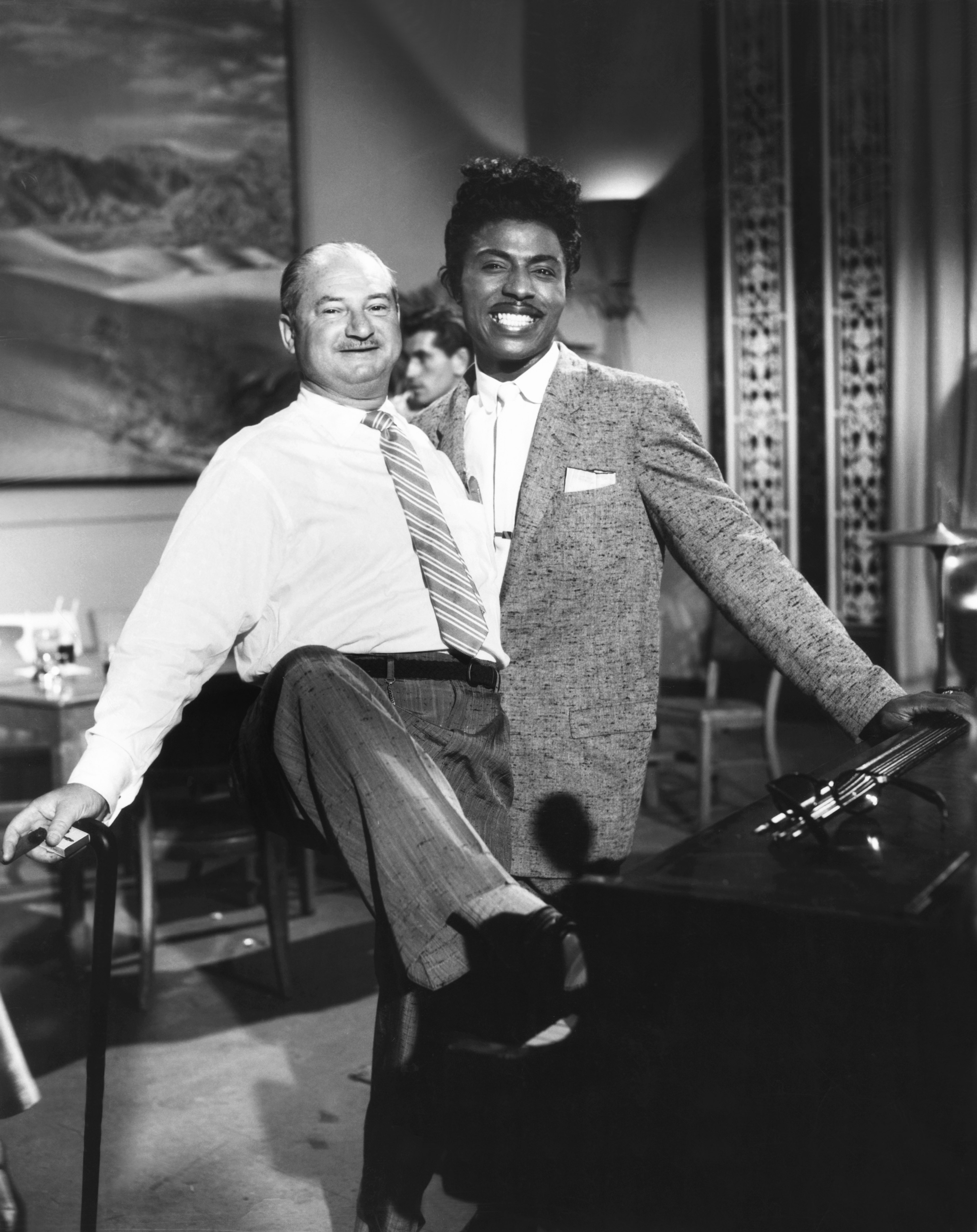
Pop music icon Little Richard, who turns 86 today, goofs around with producer Sam Katzman on the set of the 1956 movie Don’t Knock the Rock:
Filmmaker in Focus:
For Fandor, Luis Azevedo highlights the “otherworldly” sounds of the movies of Terrence Malick:
[embedded content]
Filmmaking Lesson of the Day:
This new video from This Guy Edits looks at the new movie Searching for a lesson on how to cut a thriller:
[embedded content]
Cosplay of the Day:
Here are some fans cosplaying as characters from Mars Attacks!, Deadpool and Bumblebee. Click the link to see more.
The very best cosplay of Tokyo Comic Con 2018:https://t.co/Zx8ZpuZItC pic.twitter.com/3hL222owdx
— Kotaku (@Kotaku) December 6, 2018
Classic Movie Trailer of the Day:
Today is the 15th anniversary of the release of The Last Samurai. Watch the original trailer for the Tom Cruise movie below.
[embedded content]
and
USA Gymnastics Voluntarily Files For Bankruptcy
USA Gymnastics filed for bankruptcy Wednesday. The organization has been under withering criticism for how its handling of scores of sexual abuse reports by former team doctor Larry Nassar.
AILSA CHANG, HOST:
USA Gymnastics filed for federal bankruptcy protection today. It’s a major development for the embattled organization that oversees gymnastics in the U.S. The governing body has struggled to recover from a wide-ranging sexual abuse scandal after former team doctor Larry Nassar abused hundreds of athletes. Since then, USA Gymnastics has cycled through three CEOs and faced increased scrutiny by the U.S. Olympic Committee. We’re joined now by reporter Alexandra Starr with the latest. Welcome.
ALEXANDRA STARR, BYLINE: Hi. Thanks for having me.
CHANG: So USA Gymnastics was on its way to losing its status as the governing body over the sport. I remember talking to you on this show about that. Was this bankruptcy filing a surprise?
STARR: No, it wasn’t. People have talked about it, and it’s been expected. Also let’s specify the fact that they filed doesn’t necessarily mean that they cease to exist as an organization.
CHANG: Right.
STARR: I also think it’s very important to differentiate between USA Gymnastics and the athletes. The organization is in a freefall. The elite athletes are literally the reigning world champions. They’re extraordinary. And arguably the best athlete of all time, Simone Biles, she’s expected to compete in the next Olympics in 2020. And she just won more medals than any American gymnast has in history at the world championships earlier this year. So there’s a real disconnect between the organization and the talent that it’s field – that fields.
CHANG: Absolutely. That said, does this bankruptcy in any way affect the athletes who are competing now?
STARR: Well, the U.S. will absolutely field a team in 2020 at the Olympics. Whether it’s USA Gymnastics fielding the team is in doubt. But, you know, they’re certainly going to be there. I think the real impact could be felt in the pipeline. And what I mean by that is the development of the youngest athletes. USA Gymnastics runs the national team camps. That’s where coaches scope out talent. It’s where judges grade performances and give feedback. That provides the opportunity, too, for promising young athletes to be fielded in international competitions. The question is now, are those opportunities going to remain?
CHANG: Right. Well, let’s also talk about, you know, there’s been dozens of lawsuits that have been filed against USA Gymnastics after the Larry Nassar scandal. What does this bankruptcy mean for the victims and the families who filed suit against the organization?
STARR: That’s a great question. And it’s going to make it tougher for them.
CHANG: How so?
STARR: Well, this is what the filing means. While this bankruptcy case moves through the courts, it basically puts a halt on those lawsuits. And as you know, the courts don’t move quickly. That process could take years. So it’s worth noting that these lawsuits were beginning to unearth information. The lawsuit that Aly Raisman, the star gymnast, had filed was supposed to go to court – go to trial early next year. So that’s ending. And so she and all these other athletes are going to be left without a resolution.
CHANG: That’s Alexandra Starr, who covers USA Gymnastics for NPR. Thank you.
STARR: Thank you.
(SOUNDBITE OF RUN RIVER NORTH’S “INTRO (FUNERAL) PARADE”)
Copyright © 2018 NPR. All rights reserved. Visit our website terms of use and permissions pages at www.npr.org for further information.
NPR transcripts are created on a rush deadline by Verb8tm, Inc., an NPR contractor, and produced using a proprietary transcription process developed with NPR. This text may not be in its final form and may be updated or revised in the future. Accuracy and availability may vary. The authoritative record of NPR’s programming is the audio record.
USA Gymnastics Files For Chapter 11 Bankruptcy

USA Gymnastics says filing for bankruptcy gives it “the opportunity to reorganize.”
PhotoAlto/Odilon Dimier/Getty Images
hide caption
toggle caption
PhotoAlto/Odilon Dimier/Getty Images
Updated at 5:58 p.m. ET
USA Gymnastics, the sport’s national governing body, said today that it had voluntarily filed for Chapter 11 bankruptcy.
Board of Directors Chair Kathryn Carson, who joined the newly restructured board in June, said in a statement that bankruptcy will allow USA Gymnastics to “expedite resolution of claims” against it from survivors of sexual abuse by former team doctor Larry Nassar. She said the organization will continue to operate normally and that it is not having trouble paying its bills.
But while USA Gymnastics says bankruptcy gives it “the opportunity to reorganize,” it’s not clear how the filing is helpful to the victims and other athletes.
In an online post about the bankruptcy filing, USA Gymnastics said that survivors’ claims against the organization are covered by insurance that was previously purchased and that the amount of that insurance is unaffected by the filing. “We believe that the Bankruptcy Court is the best forum in which to implement appropriate procedures to equitably resolve claims and allocate the insurance proceeds among claimants, allowing resolution more quickly than litigation filed in courts around the country,” it said.
But as The Wall Street Journal explained, the filing “will put an automatic stop—perhaps permanently—to depositions and discovery related to USA Gymnastics in lawsuits filed by Mr. Nassar’s victims.”
The U.S. women’s team, led by superstar Simone Biles, was dominant at the recent World Championships. (The men’s team took fourth.) But the 2020 Summer Olympics in Tokyo are fast approaching, and the organization’s leadership has been in persistent disarray since Nassar was arrested in 2016.
USA Gymnastics has cycled through three CEOs in less than two years; one of them, Steve Penny, was arrested in October over allegations that he tampered with evidence related to a Nassar investigation.
Last month, the U.S. Olympic Committee took preliminary steps to revoke USA Gymnastics’ status as the sport’s governing body.
USA Gymnastics stated that the bankruptcy filing puts that decertification process “on hold,” but the USOC said that is not the case.
“While we fully understand that USAG believes this restructuring will begin to solve deficiencies we’ve identified, the filing does not impact our Section 8 complaint and that process will move forward,” USOC spokesman Patrick Sandusky told the Associated Press.
Attorney John Manly, who represents many of the women who have brought suits against USA Gymnastics, told ESPN that the filing is the “inevitable result of the inability of this organization to meet its core responsibility of protecting its athlete members from abuse.”
Federal Legislation Seeks Ban On Shackling Of Pregnant Inmates
As Congress prepares to adjourn for the holidays, one piece of legislation that’s still on the table is a bipartisan criminal justice bill known as the First Step Act.
It aims to improve federal prison conditions and reduce some prison sentences, a sticking point for some lawmakers. But the bill also contains a less controversial provision: a ban on shackling pregnant women.
Incarcerated people outside prison walls are considered potential flight risks. That label applies even to pregnant women when they leave prisons for medical care or to give birth.
These women are often restrained with handcuffs, ankle chains or shackles. Roughly two dozen states ban the practice of restraining incarcerated pregnant women during childbirth, but the First Step Act would apply to federal facilities.
The American Civil Liberties Union says shackling incarcerated pregnant women is “dangerous” and “inhumane.” The American College of Obstetricians and Gynecologists says it puts the health of the mother and baby at risk.
Carolyn Sufrin, a medical anthropologist and OB-GYN at Johns Hopkins School of Medicine, works with incarcerated pregnant women. She says that the U.S. correctional system was designed with men in mind.
“When you have something as gender-specific as pregnancy, it reminds you of how flawed the system is and how ill-prepared it is to take care of pregnant people and the reproductive health needs of women in general,” Sufrin says. “They’re, if at all, an afterthought.”
NPR’s Ailsa Chang spoke with Sufrin about the practice of shackling incarcerated women. The interview has been edited for length and clarity.
Interview Highlights
On why incarcerated pregnant women are shackled
The rationale behind shackling is not something that I understand. When taken off-site all incarcerated persons are presumed to be dangerous and a potential flight risk. A pregnant person needs to be taken off-site for medical attention and for childbirth.
So when she’s in a public space, the presumption is that she must be a flight risk and a public safety risk. Because of this default assumption, she needs to be restrained.
On delivering the baby of a shackled woman
When I was a first-year OB-GYN resident in training in Pennsylvania, I delivered the baby of a woman who was shackled to the bed. It made me more nervous and afraid and overwhelmed and also sort of confused me about my own role and my own complicity in this violence of shackling a pregnant woman in labor.
I had no idea that this was even possible and I didn’t know if I was authorized to ask the guard to unshackle her. I just kept worrying about what I would do if there was an emergency. Luckily, the birth itself went fine.
This was a deeply troubling moment for me, of course much more so for the woman herself, but it’s a pretty harrowing experience to have to practice medicine with someone who is in chains.
On the medical risks of shackling pregnant women
In labor, emergencies arise unexpectedly. We might need to do an emergency C-section if there are signs of distress or the baby’s shoulder could get stuck in the birth canal. When one of these emergencies arises, as a health care professional, we need to focus on our patient, not on asking a guard to unshackle her.
And there are dangers throughout pregnancy, not just in labor and childbirth. If a pregnant woman falls, she could have a dangerous condition where the placenta separates and she could hemorrhage. Shackles can increase her risk of falling and also prevent her from being able to break a fall.
But on top of these medical risks, it’s just common sense. The chances that a woman in the middle of labor, or even not in labor, can outrun someone and be a flight risk are just ludicrous.
I just gave birth six months ago and I can tell you that the thought of running off and escaping and outrunning anybody else is just ludicrous to me.
On the variability of medical care for incarcerated pregnant women
There are no mandatory standards that every prison and jail across the country has to follow when it comes to health services delivery. That means that every prison and jail has its own rules that it follows for pregnant people and the care they receive, including the use or nonuse of restraints.
But the issue really extends even much further than the use of restraints. It has to do with the entire health care for a pregnant person. There’s tremendous variability and you can have some places that provide excellent, comprehensive prenatal care and other places where it’s abysmal and even dangerous.
On why there’s still work to do to ensure proper care for incarcerated pregnant women
This bill would only pertain to women incarcerated in federal facilities and under the jurisdiction of the U.S. Marshals Service, so it would not pertain to people incarcerated in state prisons, which is where the majority of women are incarcerated. It would also not pertain to women housed in local jails. And on top of that, it only addresses the issue of shackling pregnant women. That is an important step to take, but it is only the tip of the iceberg when it comes to the care of pregnant and postpartum women in custody.
Rachel D. Cohen is an intern on NPR’s Science Desk.
Andrea Hsu and Jessica Smith produced and edited this conversation for broadcast.
U. Of Maryland Hires Michael Locksley To Lead Football Team In Time Of Tumult

Michael Locksley, seen here in 2015 during a previous stint with the Maryland Terrapins, has been hired as head coach of the university’s football team. He replaces DJ Durkin, whose tenure ended in controversy over a player’s death earlier this year.
Alex Goodlett/Getty Images
hide caption
toggle caption
Alex Goodlett/Getty Images
Just over a month since the University of Maryland fired DJ Durkin, dismissing the football coach amid a months-long controversy over a player’s death, the school has named the man set to replace him: Alabama Offensive Coordinator Michael Locksley.
“As we narrowed the search for the individual best suited to lead our program, Michael not only stood out for his talent as a coach,” Maryland’s director of athletics, Damon Evans, said in Tuesday’s announcement, “but most importantly for the role he has played as a mentor to student-athletes throughout his career and his deep commitment to helping them grow into leaders on and off the field.”
It will not be Locksley’s first stop on campus in College Park, Md. Locksley, whose work with Alabama just earned him the 2018 Broyles Award as college football’s top assistant coach, has already served two stints as an assistant at Maryland. After then-coach Randy Edsall was fired, Locksley also acted as the Terrapins’ interim head coach for part of the 2015 season — before leaving to join the Crimson Tide the next year.
We’re proud to announce 2018’s WINNER of the 23rd annual @BroylesAward.
?Michael Locksley, @AlabamaFTBL. pic.twitter.com/BvwEGkNkFd
— BROYLES AWARD (@BroylesAward) December 4, 2018
This time around, however, Locksley can expect to find a significantly more difficult situation awaiting his return.
The University of Maryland’s football program has been wracked by tumult since Jordan McNair’s death in June. The 19-year-old offensive lineman collapsed from heat stroke after an offseason workout and died two weeks later.
The blame for the deadly incident spread widely in the months that followed. First laid with medical personnel, which “misdiagnosed” McNair’s ailments — according to university President Wallace Loh — the blame soon also fell on Durkin for allegedly fostering a toxic culture of intimidation and verbal abuse.
But the buck did not stop with Durkin.
The controversy reached as high as the University System of Maryland’s Board of Regents, which briefly decided to keep the head coach after concluding its investigation — only to promptly do an about-face and fire him one day later, after a groundswell of outrage at the decision. Just another day after that, the board’s chairman, James Brady announced he was stepping down.
President Loh, too, has announced plans to retire next year.
On Tuesday evening, Locksley acknowledged the turmoil that awaits him at Maryland — but expressed his excitement at returning to the Terrapins, nevertheless.
“I have been tremendously impressed at how the team came together through a difficult season and honored their fallen teammate, Jordan,” he said in a statement issued by the school. “We are all in this together, and I look forward to rejoining the Maryland family.”
That said, he arrives in Maryland without a spotless record. Before returning for his second stint at Maryland, Locksley was fired from his head coaching job at the University of New Mexico, where he amassed a putrid total record of 2-26 and found himself dogged by controversy — including allegations of creating a toxic environment of his own.
As The Washington Post notes, his tenure there was marred by an age and sex discrimination complaint against him, which was later withdrawn, and a lawsuit alleging that he choked and punched an assistant coach, which was later settled.
In its announcement Tuesday, the University of Maryland largely kept to the warmer, more recent memories of Locksley’s time with the Terrapins and Crimson Tide.
“On the field, Michael orchestrated one of the country’s most prolific offenses at the University of Alabama and has long been regarded for his recruiting prowess,” Evans said. “Today he was recognized as the nation’s top assistant coach in the country, and I’m excited for him to be leading our program.”
Behind The Curve

Yesterday, a part of the yield curve inverted. The interest rate on 5-year treasuries fell slightly below the interest rate on three-year treasuries. This has spooked some people, because an inversion in the yield curve is sometimes regarded as the harbinger of a recession.
So, are we headed for a recession?
Campbell Harvey says no. He’s a finance professor at Duke, and the man who first demonstrated that the yield curve can act as a recession predictor. Today on the Indicator, he tells us why there’s no need to panic about a recession — or at least not yet.
Music by Drop Electric. Find us: Twitter/ Facebook.
Subscribe to our show on Apple Podcasts, PocketCasts and NPR One.
A Push For Diversity In Medical School Is Slowly Paying Off

Currently students of color are underrepresented in medical schools, but their numbers are slowly growing.
Getty Images
hide caption
toggle caption
Getty Images
In 2009, the body that accredits medical schools issued a new requirement: All medical schools must implement policies that help them attract and retain more diverse students. Failure to do so can lead to citations from this body, the Liaison Committee on Medical Education, and can affect their status as accredited institutions.
This effort appears to be working. In a research letter published today in JAMA, researchers examine the changing demographics of medical students from 2002 to 2017. They found an increase in diversity in enrollment, especially since 2012, which the researchers think may be the first year new standards could be expected to have an effect.
But the rate of change, some medical educators say, is too slow. Medical student bodies were still 58.9 percent white in 2017.
“We see the trend going up, but it’s going up very slowly,” says Dr. Dowin Boatright, an assistant professor of emergency medicine at Yale University and coauthor of the study. “If we’re trying to get some degree of representation that matches the proportion of black people in the population as a whole … We’re talking 20 to 50 years.”
The pattern of change over the period studied is noteworthy, Boatright says. Between 2002 and 2012, the proportion of female and black students decreased each year.
In that same time period, the percentage of Latino and Asian students increased. White students were the majority of medical school enrollees throughout that time period.
In 2012, the percentage of female and black students starting medical school began a steady, albeit slow, increase.
Loading…
Don’t see the graphic above? Click here.
By 2017, 7.3 percent of new medical students identified as black, up from 6.8 percent in 2002. Students identifying as female made up 50.4 of matriculants, up from 49 percent in 2002.
Hispanics represented 8.9 percent of students, up from 5.4 percent in 2002 and Asian students were 24.6 percent of students, up from 20.8 percent.
Boatright hypothesizes that the improved numbers reflect that the new requirement that schools have formal programs to attract diverse students.
“I think there’s a strong incentive now to have at least some kind of benchmark to promote diversity,” Boatright says. “Programs actually are being held accountable.”
Many medical schools have hired dean-level administrators who focus on attracting and retaining minority students.
“When you tell people they should do something, they’re like, ‘Oh, we don’t have to do something,’ ” says Dr. John Paul Sanchez, the associate dean for diversity and inclusion at Rutgers New Jersey Medical School. “It makes people think differently when you say you must do something … People have more concrete direction.”
The Liaison Committee on Medical Education also requires that medical schools develop programs to improve the “pipeline” of minority applicants, which usually take the form of science education and mentorship programs for minority college and high school students.
Representatives of the Liaison Committee on Medical Education don’t interpret the data the same way Sanchez and Boatright do. The organization’s co-secretary, Dr. Veronica M. Catanese, said in a written statement that the organization has explicitly promoted diversity in its standards for “more than two decades” and while the organization’s expectations may encourage medical schools to pay attention to diversity, “it likely does not account for the correlation suggested by the authors of the letter.”
This trend the study identified is confirmed by the latest medical school enrollment data also released today by the Association of American Medical Colleges.
In 2018, 8.6 percent of first-year medical students are black, and more women than men started medical school: 51.7 percent identified as female.
The number of black men enrolling in medical school in 2018 — a group that has been significantly underrepresented compared to the general population — increased by 7.3 percent in 2018. Black men made up about 3.4 percent of first-year medical students this year.
This latest data differs from the data the JAMA study authors presented. To assess the effect of the new accreditation requirement, the authors excluded historically Black medical schools and all schools in Puerto Rico because they felt felt the new diversity standards would not affect them in the same way as predominantly white schools.
Sanchez says he thinks the accreditation standards are important, and encourage medical schools to devote money and time to supporting minority students. Still, he says, there’s a difference between meeting the standards and developing long-lasting programs that help minority students feel welcome in medical school.
“That takes decades to build. You can’t train someone to be passionate,” Sanchez says. “But you can hire them and bring them together to serve as faculty at the medical school.”
Mara Gordon is a family physician in Washington, D.C., and a health and media fellow at NPR and Georgetown University School of Medicine.
'Captain Marvel' Promises to End the War in New Trailer; Here's Everything We Know So Far
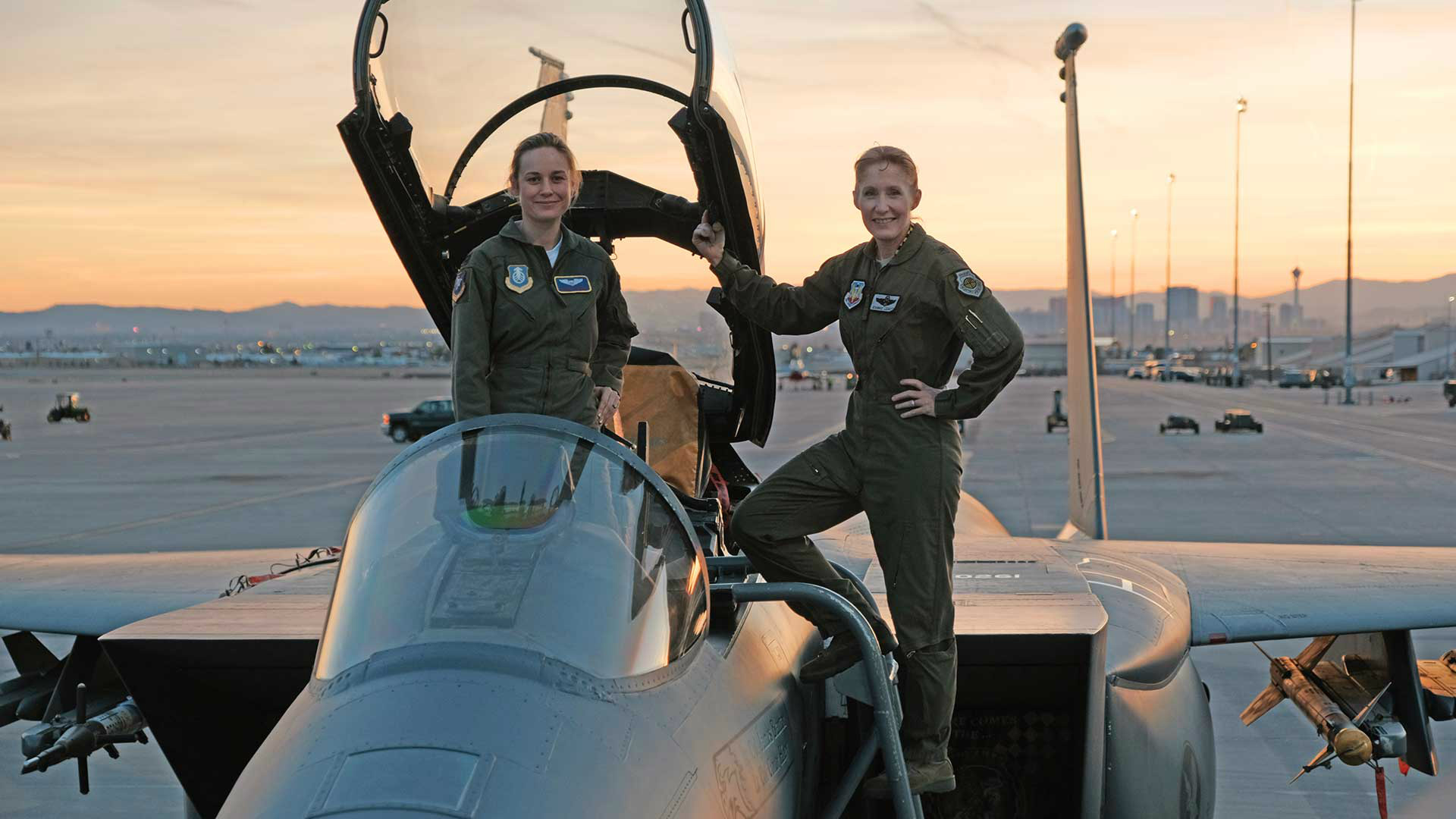
Captain Marvel, the 21st entry in the Marvel Cinematic Universe, will mark the mega-franchise’s first movie focused on a single female superhero. And the first to be co-directed by a female filmmaker and scored by a woman composer. The highly anticipated film, which will take place more than 10 years before the MCU began, has been in development since 2013 and finally flies into theaters in early 2019.
The second trailer for Captain Marvel has just premiered, and it fleshes out more of the plot, shows off some Skrulls, including the evil old lady we saw in the first trailer, and depicts young Nick Fury as a cat-loving agent who’s not yet become the tough-guy Avengers Initiative leader we know him as. Brie Larson appears even more badass in this new spot, declaring, “I’m not gonna fight your war. I’m gonna end it.” Read everything we know about Marvel’s Captain Marvel and then watch the new trailer below.
Who is Captain Marvel?
Captain Marvel has actually been the alter ego for many characters in Marvel Comics over the years. However, this film will be based on the character Carol Danvers, created by writer Roy Thomas and artist Gene Colan. Danvers first appeared as a United States Air Force officer in Marvel Super-Heroes #13, published in March 1968. A decade later she became the first incarnation of Ms. Marvel. She’s a human/Kree hybrid boasting superhuman traits, including flying and energy projection.
What is the plot?
“The story follows Carol Danvers as she becomes one of the universe’s most powerful heroes when Earth is caught in the middle of a galactic war between two alien races. Set in the 1990s, Captain Marvel is an all-new adventure from a previously unseen period in the history of the Marvel Cinematic Universe.”
Who is starring?
Oscar-winning actress Brie Larson. Best known for her widely-awarded performance in Room, Larson also starred in Short Term 12, The Glass Castle and Kong: Skull Island. She was announced as Captain Marvel at the 2016 San Diego Comic-Con.
In speaking with Vanity Fair, Larson had this to say about accepting the biggest role of her blossoming career: “Ultimately, I couldn’t deny the fact that this movie is everything I care about, everything that’s progressive and important and meaningful and a symbol I wished I would’ve had growing up. I really, really feel like it’s worth it if it can bring understanding and confidence to young women—I’ll do it.”

Who else is in the film?
Samuel L. Jackson will be reprising his role as Nick Fury, whom we last saw at the end of Avengers: Infinity War. We’ll also get to see Clark Gregg on the big screen as Agent Phil Coulson once again. The familiar characters continue with Lee Pace as Ronan the Accuser and Djimon Hounsou as Korath, both of whom appeared in Guardians of the Galaxy.
It’s not just a reunion, however. Jude Law joins the MCU as Mar-Vell, who was actually the first Captain Marvel in the comics. Ben Mendelsohn (Rogue One: A Star Wars Story) also stars as the leader of the villainous shapeshifter aliens the Skrulls, while Crazy Rich Asians actress Gemma Chan plays one of Captain Marvel’s allies, Minn-Erva, a sniper member of the Kree military unit known as Starforce.
Annette Bening (20th Century Women) also joined the cast of Captain Marvel, marking the first time she has appeared in a superhero project. Her specific role was not revealed, though THR states: “Scientist is said to be in her job description.” Lashana Lynch rounds out the main cast as Danvers’ friend and fellow Air Force pilot Maria Rambeau.
Meet #Marvel‘s newest star! ???? Get your first look at exclusive images from @CaptainMarvel: https://t.co/BQdswjEYhe #CaptainMarvel pic.twitter.com/liTv5aEBjZ
— Entertainment Weekly (@EW) September 8, 2018
Who is directing Captain Marvel?
Anna Boden and Ryan Fleck, the writing/directing team behind such films as Half Nelson and Mississippi Grind. This is certainly not the first time Marvel has plucked indie filmmakers to helm one of their big-budget spectacles, but it strikes me as one of the most intriguing choices to date. Boden and Fleck, who are also listed as writers on the film, have primarily made dramas up to this point. I look forward to what they’ll bring to the MCU formula and the superhero genre as a whole.
Who else worked on the screenplay?
Captain Marvel has had a number of writers over the years, most of them women. In addition to Boden and Fleck, there’s been input from Oscar nominee Meg LeFauve (Inside Out), Nicole Perlman (Guardians of the Galaxy), Geneva Robertson-Dworet (Tomb Raider) and Carly Mensch and Liz Flahive, the co-creators of the Netflix series GLOW.
Who is scoring the movie?
Pinar Toprak announced that she will be composing the musical score for Captain Marvel, becoming the first woman to score a major superhero movie. Her recent credits include TV’s Krypton and the extremely popular video game Fortnite. See her announcement below.
When does Captain Marvel come out?
March 8, 2019.
Watch the first two trailers:
[embedded content]
[embedded content]
