Articles by admin

No Image

Laraaji: Tiny Desk Concert

Prepare to be calmed.

It begins with a small bell, a set of tiny wind chimes and a plucked, angelic zither sounding much like a harp. Laraaji and his musical partner Arji “OceAnanda” Cakouros came to NPR draped in loose-fitted, saffron-tinted clothes, with a table draped in a similar orange fabric — almost the tones of a setting sun with all the beauty that implies. As I watched, I could feel my breath letting go; my muscles were less tense. Then Laraaji began to laugh. I smiled. (His laugh is infectious). Then more of us in the office smiled as he brushed rhythms on his zither and processed the sounds to add delay and intensify the hypnotic pulse.

I first discovered the music of Laraaji almost 40 years ago when Brian Eno produced an ambient album of his music called Ambient 3: Day of Radiance as part of a series of ambient records from Eno that began with 1978’s Ambient 1: Music for Airports. Edward Larry Gordon, now known as Laraaji, was a comedian as well as a musician. I suppose that explains the laughter as part of his meditative and therapeutic music. Laraaji is now in his mid-70s, has released over 50 recordings as well as an abundance of sound-healing sessions. His concert in the NPR offices was proof of the atmospheric, altering power of the music he makes along with Arji. Maybe you’ll find yourself enjoying a musical sunset plopped down right in the middle of your day.

SET LIST

  • “12345678…”

MUSICIANS

Laraaji: electric autoharp/zither, vocals; Arji “OceAnanda” Cakouros: mbira, iPad synth, shakers, chimes

CREDITS

Producers: Bob Boilen, Morgan Noelle Smith; Creative Director: Bob Boilen; Audio Engineer: Josh Rogosin; Videographers: Morgan Noelle Smith, Beck Harlan; Associate Producer: Bobby Carter; Production Assistant: Adelaide Sandstrom; Photo: Amr Alfiky/NPR

Let’s block ads! (Why?)


No Image

Olympic Champion Caster Semenya Loses Case To Compete Without Hormone Suppressants

The Court of Arbitration for Sport ruled Wednesday that two-time Olympic champion Caster Semenya, and female runners like her, must take medications to suppress testosterone output.


AILSA CHANG, HOST:

An organization referred to as the supreme court of international sports has ruled against the controversial female track athlete Caster Semenya. The Court of Arbitration for Sport says Semenya, a two-time Olympic champion from South Africa, has to take medication to reduce her testosterone levels if she wants to keep competing in her preferred running events.

Semenya has been at the forefront of a debate about gender and sport. NPR’s Tom Goldman reports.

TOM GOLDMAN, BYLINE: Caster Semenya exploded on the track and field scene with a dominating 800-meters win at the 2009 World Championships. Since then, her athletic career has been clouded by questions about her power and speed and her gender.

Her lopsided victories, muscular build and deep voice led track and field’s international governing body, the IAAF, to ask her to take a sex test. The official results were never revealed, but leaked information said she had what’s called an intersex condition, where she has much higher testosterone levels than most women.

Semenya has been a lightning rod on the issue of sex-gender in sport. She’s been the subject of humiliating criticism. And last year, an IAAF decision threatened her future as an athlete.

(SOUNDBITE OF ARCHIVED RECORDING)

UNIDENTIFIED REPORTER: The athletics world body controversially ruled that the testosterone levels of female middle-distance runners should be restricted. The rule will apply to women in track events from the 400-meters up to a mile.

GOLDMAN: Semenya appealed the rule, and now the Court of Arbitration for Sport, or CAS, has rejected her appeal. CAS fully admits the testosterone restrictions discriminate against one group of women to protect another group and that discrimination is necessary. The IAAF says it’s grateful for the decision and says it’ll preserve the integrity of female athletics in the events covered by the rule.

Among those upset by the decision, Professor Roger Pielke.

ROGER PIELKE: Clearly, scientific integrity was a loser in this case.

GOLDMAN: Pielke directs the Sports Governance Center at the University of Colorado in Boulder. He describes himself as a scholar who studies the use and misuse of science in decision-making. Last year, his center published a paper criticizing the testosterone regulations.

Prior to coming up with the rule, IAAF was asked to show the performance advantage female athletes with higher levels of testosterone had over female athletes with lower levels. Pielke says the data he reviewed was, in his words, garbage.

PIELKE: Didn’t match up to performances. There was repeated data, phantom data. And in any data set where you have that many flawed data points, it’s enormously problematic for coming up with a robust conclusion.

GOLDMAN: Semenya’s lawyers reportedly are mulling another appeal. In a statement, Semenya said the CAS ruling won’t slow her down but will make her stronger. Over the years, Semenya hasn’t said much publicly about the controversy. After she won the 800-meters at the 2016 Olympics, she alluded to it as she spoke about the unifying power of sport.

(SOUNDBITE OF ARCHIVED RECORDING)

CASTER SEMENYA: It’s all about loving one another. It’s not about discriminating people. It’s not about looking at people – how they look, how they speak. You know, it’s not about being muscular. It’s all about sport.

GOLDMAN: Now the 28-year-old track star has to decide what her future is in sports – whether to comply with the rule and start taking medication to reduce her testosterone level or perhaps competing in a running event not covered by the rule. And while she mulls her decision, the debate surrounding her dominating and controversial career is unlikely to end anytime soon. Tom Goldman, NPR News.

(SOUNDBITE OF ULRICH SCHNAUSS’ “KNUDDELMAUS”)

Copyright © 2019 NPR. All rights reserved. Visit our website terms of use and permissions pages at www.npr.org for further information.

NPR transcripts are created on a rush deadline by Verb8tm, Inc., an NPR contractor, and produced using a proprietary transcription process developed with NPR. This text may not be in its final form and may be updated or revised in the future. Accuracy and availability may vary. The authoritative record of NPR’s programming is the audio record.

Let’s block ads! (Why?)


No Image

Alabama Lawmakers Move To Outlaw Abortion In Challenge To Roe V. Wade

A view of the state capitol in Montgomery, Ala. A sweeping abortion bill passed the state House Tuesday, and is expected to win final passage in the Republican majority Senate.

Brendan Smialowski/AFP/Getty Images


hide caption

toggle caption

Brendan Smialowski/AFP/Getty Images

In what would likely become the most restrictive abortion ban in the country, the Alabama House Tuesday passed a bill that would make it a crime for doctors to perform abortions at any stage of a pregnancy, unless a woman’s life is threatened. The legislation is part of a broader anti-abortion strategy to prompt the U.S. Supreme Court to reconsider the right to abortion.

Republican state Rep. Terri Collins of Decatur, Ala. defended her “Human Life Protection Act” during, at times, contentious debate on the House floor.

“This bill is focused on that baby that’s in the womb that is a person,” Collins said. “That baby, I believe, would choose life.”

Democratic lawmakers walked out in protest before the final 74 to 3 vote. During debate, they questioned the motive for an abortion ban in a state that’s refused to expand Medicaid. “I do support life, but there are some people that just support birth they don’t support life,” said Democratic Rep. Merika Coleman of Birmingham, Ala. “Because after a child is born there are some things that need to happen. We need to make sure that child has adequate health care,” Coleman said.

The Unite for Reproductive and Gender Equity coalition demonstrated outside the Alabama statehouse last month.

Debbie Elliott/NPR


hide caption

toggle caption

Debbie Elliott/NPR

Other states, including neighboring Georgia and Mississippi, have passed laws that prohibit abortion once a fetal heartbeat can be detected. But Alabama’s ban would apply even earlier.

“When a woman is pregnant, an abortion is no longer legal,” says Collins, explaining the bill.

The bill criminalizes abortion, meaning doctors would face felony jail time up to 99 years if convicted. The only exceptions are for a serious health risk to the pregnant woman, or a lethal anomaly of the fetus. There are no exceptions for cases of rape or incest. A woman would not be held criminally liable for having an abortion.

Collins says the bill follows a constitutional amendment approved by Alabama voters last year that recognizes the “rights of unborn children.” It defies the U.S. Supreme Court’s landmark decision that protects a woman’s right to abortion.

“This bill is simply about Roe v. Wade,” says Collins. “The decision that was made back in 1973 would not be the same decision that was decided upon today if you relooked at the issue.”

Her bill cites abolition, the civil rights movement and women’s suffrage as justification for establishing the human rights of a fetus. Alabama is one of more than two dozen states seeking to restrict abortion rights this year, testing federal legal precedent that prevents states from banning abortion before the point at which a fetus could survive outside the womb.

Alabama Pro-Life Coalition President Eric Johnston says there’s a reason there’s so much activity now.”The dynamic has changed,” Johnston says. “The judges have changed, a lot of changes over that time, and so I think we’re at the point where we need to take a bigger and a bolder step.” The bold move to outlaw nearly all abortions is drawing protests from abortion rights advocates.

A coalition called Unite for Reproductive and Gender Equity demonstrated outside the Alabama statehouse last month.

“This bill is an awful piece of grandstanding,” said Amanda Reyes of Tuscaloosa, Ala. She’s president of the Yellowhammer Fund, a group that helps women pay for abortions. “If you make abortion illegal somewhere that doesn’t mean that abortion goes away,” says Reyes. “It just becomes more difficult and more dangerous to access.”

The bill is expected to win final passage in the Republican majority Alabama Senate. The ACLU of Alabama says it will sue if the abortion ban becomes law.

Executive Director Randall Marshall says the bill is unconstitutional. “There is simply nothing that Alabama can do to interfere with the right of access to abortion,” Marshall says. “That is a federal right and the Federal Constitution clearly trumps all state law.” With two Trump appointees now on the U.S. Supreme Court, anti-abortion forces are optimistic that judicial interpretation could be reversed.

Let’s block ads! (Why?)


No Image

VIDEOS: Planet Money Shorts


No Image

What’s New on Home Video in May 2019

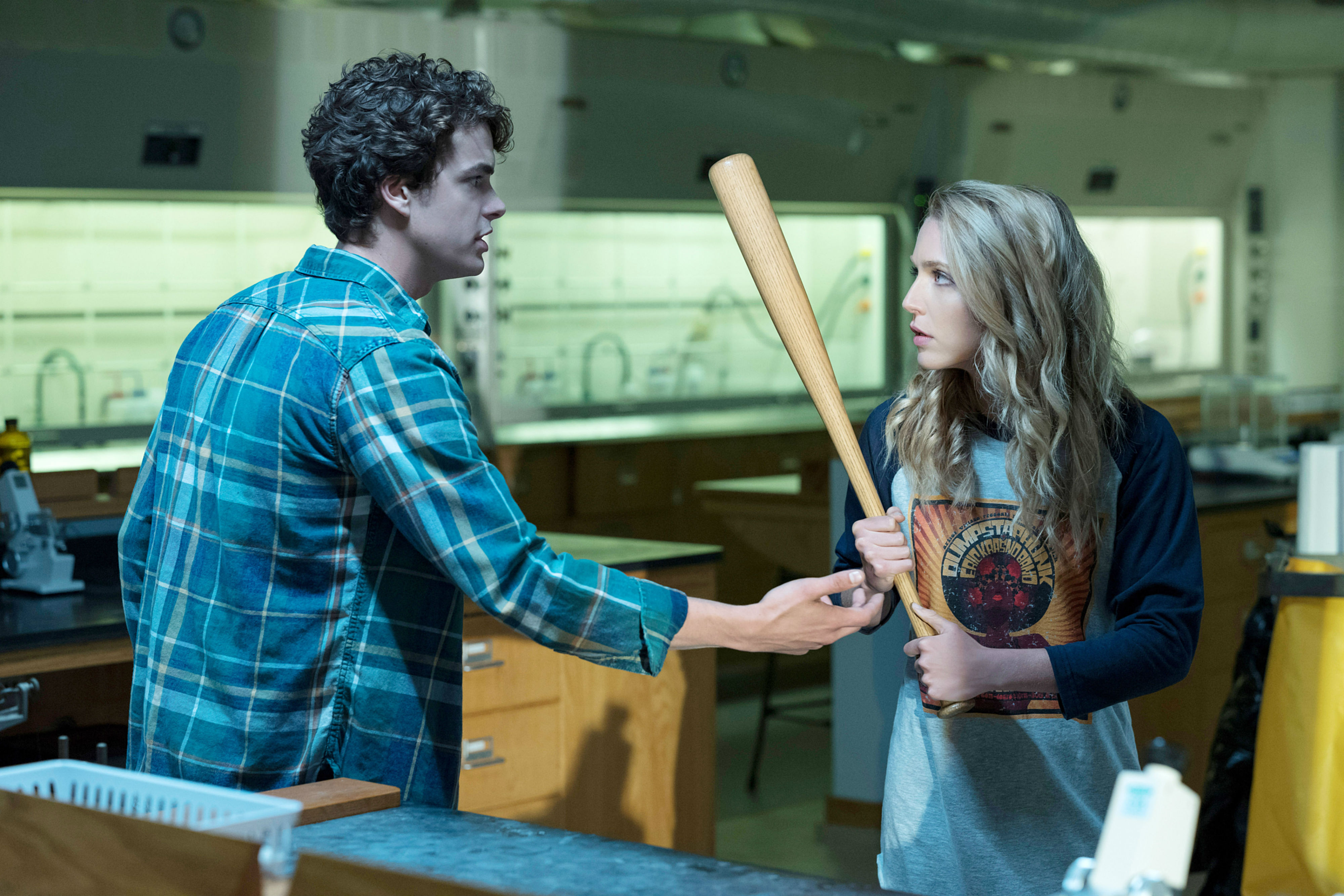
Happy Death Day 2U

Summer blockbuster season started early this year with the arrival of Avengers: Endgame. So let’s start a day early with our guide to notable movies that are coming to home video in May 2019!

Here are all the major titles arriving on home video in the new few weeks, complete with links to more information and how to buy and/or rent on FandangoNow.

April 30

Happy Death Day 2U

Director Christopher Landon’s sequel to his own popular original dishes out more comedy, horror, romance and thrills in unexpected doses and from a slightly different and refreshing perspective. Jessica Rothe’s starring role also continues to pay delightly diabolical dividends.

[embedded content]

Buy and/or Rent on FandangoNow.

April 30

Fighting With My Family

Based on a true story, the comedy-drama revolves around Saraya, who grew up in a British wrestling family and then finds herself struggling to reach her goals i America. Florence Pugh gives an absolutely winning performance as Saraya; Lena Headey, Nick Frost, Vince Vaughn and Dwayne Johnson also star.

[embedded content]

Buy and/or Rent on FandangoNow.

April 30

Isn’t It Romantic

Young New York architect Rebel Wilson has yet to fulfill her career goals, losing herself instead in romantic comedies. Imagine her surprise when she wakes up in a literal, if unbelievable, romantic comedy! Liam Hemsworth, Adam Devine and Priyanka Chopra also star in the sprightly movie.

[embedded content]

Buy and/or Rent on FandangoNow.

April 30

How to Train Your Dragon: The Hidden World

Young Hiccup has matured greatly astride his faithful dragon companion, Toothless, which makes him ever more sensitive to the needs of his people when a new threat arises, prompting a desperate search for a new, safe home. Jay Baruchel and America Ferrera voice starring roles in the all-new animated adventure.

[embedded content]

Buy and/or Rent on FandangoNow.

May 3

Cold Pursuit

When tragedy strikes his son, Liam Neeson springs into action in a winterbound suspense thriller. Laura Dern also stars.

[embedded content]

Buy and/or Rent on FandangoNow.

May 7

Everybody Knows

Javier Bardem and Penelope Cruz star in a stirring drama that uncovers family secrets and looks at the emotional mayhem that can result. Watch this movie with someone you love.

[embedded content]

Buy and/or Rent on FandangoNow.

May 14

The Upside

Still trying to rebuild his life after a prison, Kevin Hart accepts a position that he thinks will only be temporary, working for the wealthy Bryan Cranston. Through their shared sense of humor, the two men somehow make a deeper connection than they ever could have anticipated. Nicole Kidman also stars.

[embedded content]

Buy and/or Rent on FandangoNow.

May 14

Greta

Chloe Grace Moretz returns a lost purse to its owner (the great Isabelle Huppert) and soon discovers that her simple act of kindness will lead her to all kinds of havoc. Neil Jordan directed the fiendish thriller, which also stars Maika Monroe.

[embedded content]

Buy and/or Rent on FandangoNow.

Also in May

Avengement

Scott Adkins seeks revenge against his fellow prisoners, who treated him horribly while he was locked up and caused him to lose his soul. Let us simply say: bad-guy behinds will be kicked in this ferocious action picture.

[embedded content]

Buy and/or Rent on FandangoNow.

Let’s block ads! (Why?)


No Image

President Trump’s Foxconn Promise, So Far Unfulfilled

President Trump participates in a groundbreaking for the Foxconn campus in Mount Pleasant, Wis., in June 2018. With him are Christopher “Tank” Murdock (from left), the first Wisconsin Foxconn employee; former Gov. Scott Walker, Foxconn Chairman Terry Gou and former Speaker of the House Paul Ryan.

Brendan Smialowski/AFP/Getty Images


hide caption

toggle caption

Brendan Smialowski/AFP/Getty Images

Nearly two years ago, President Trump stood in the East Room of the White House and announced that Taiwan-based Foxconn — a major supplier of Apple technology — was going to build its first U.S. manufacturing facility, outside Milwaukee.

“This is a great day for American workers, and manufacturers, and for everyone who believes in the concept, and the label, ‘Made in the USA,’ ” the president boasted.

But last summer, the agreement with Foxconn started to crack. The company first said it would reduce the size of the LCD display screens it would make, meaning fewer promised manufacturing jobs. And Wisconsin’s Republican Gov. Scott Walker, who had enticed the company with up to $3 billion in state tax credits, lost his reelection bid.

Then, over the winter, another shocker — the company said it might not build a manufacturing plant after all. Trump hurriedly intervened, and within days he got Foxconn to recommit to building the facility, he says.

The company says it is in early phases of construction of the advanced manufacturing plant. But the project has gone through so many changes that nearly everyone involved with it has more questions than answers. Wisconsin’s new Democratic governor, Tony Evers, says he doubts Foxconn will ever create the 13,000 jobs that were promised by 2032.

“I truly believe that they believe at some point in time they’ll have 13,000 employees here. I’m not sure about that. It’s a smaller footprint. It’s a different type of job,” Evers told news reporters in Milwaukee last week. “But we’ll see. I mean, if they create 1,000 jobs, that’s 1,000 jobs we didn’t have.” He added that Foxconn now wants to change its agreement with the state.

That same day, Foxconn’s U.S. director of strategic initiatives, Alan Yeung, tweeted that people should “Calm down” about the job target. At a Milwaukee awards ceremony for innovative technology, he stressed that the company is still committed to making Wisconsin a global technology hub.

Calm down. Probably fake news ? Who has the crystal ball ? to predict if 13,000 jobs will be created by the year 2032?
Esp in April ‘19 ? ??? https://t.co/P94H9V6Kw6

— Alan S. Yeung (@alansyeung) April 25, 2019

“So, I think we need to take a deep breath and say tax credits are important. But we don’t make decision solely based on tax credits,” Yeung told reporters.

There are unconfirmed reports that Terry Gou, the Foxconn chief, is heading to the White House for meetings this week. Foxconn officials also say they are ramping up building the manufacturing plant in Racine County.

An existing Foxconn building on the new manufacturing property outside Milwaukee.

Chuck Quirmbach/WUWM


hide caption

toggle caption

Chuck Quirmbach/WUWM

From the edge of the 1,200-acre Foxconn manufacturing property, an observer can see that the farms once on this land are gone. A lot of the ground is bare. Foxconn has put up only one building, what it calls a multipurpose structure. Earth movers, sometimes in groups of three or four, are hauling around piles of dirt.

Around the perimeter of the property, roads are being widened. Racine County Executive Jonathan Delagrave says he is happy with the pace of construction. “Look, you can see the transformation happening. And, it’s really … I think a great thing for us, ” he said.

But some residents here remain skeptical that the jobs will ever come. Recently, Gou said he is scaling back his company duties as he runs for Taiwan’s presidency. Resident Jeff Loken says that could be a problem. “He was the main pipeline for President Trump to get this agreement. So what happens now? Terry Gou isn’t going to be in charge. Someone else is, presumably. Is he going to go along with the same thing?” Loken asked.

There’s even uncertainty among Wisconsin business leaders who have supported Foxconn, like Tim Sheehy, the Metropolitan Milwaukee Association of Commerce president. Sheehy says it’s time for some real benchmarks to be met. “That at some point this summer, the [manufacturing] building starts to go up, the capital equipment comes in and the jobs start to flow. Up until that point, everybody will be at some point of unease,” he said.

It’s that unease that has surrounded this ambitious plan from the very beginning.

Over the weekend, as Trump held a rally in Wisconsin, his campaign press secretary told the Milwaukee Journal Sentinel that she doesn’t know why the state’s governor isn’t more “optimistic and hopeful” that Foxconn will bring the promised 13,000 jobs to the state. She encouraged him to work with the president and company to “make sure those jobs come here.”

But with up to $3 billion in state tax credits on the table, officials and residents across Wisconsin are still looking for the jobs that money was supposed to lure.

Let’s block ads! (Why?)


No Image

As Artificial Intelligence Moves Into Medicine, The Human Touch Could Be A Casualty

Will computers alienate us from the healing touch?

Credit: Chris Nickels for NPR

When Kim Hilliard shows up at the clinic at the New Orleans University Medical Center, she’s not there simply for an eye exam. The human touches she gets along the way help her navigate her complicated medical conditions.

In addition to diabetes, the 56-year-old has high blood pressure. She has also had back surgery and has undergone bariatric surgery to help her control her weight.

Hilliard is also at risk of blindness, which can result from a condition called diabetic retinopathy. And on this day in February, her vision will be evaluated by a new practitioner: a piece of software.

Automation like this is starting to infiltrate medical care. Depending on how it’s deployed, it could help reduce medical errors and potentially reduce the cost of care.

It could also create a gulf between health caregivers and people of more modest means.

“My fear is we will end up with what I’ve been calling a ‘health care apartheid,’ ” says Sonoo Thadaney Israni, at the Stanford University medical school. “If we create algorithmic care and ‘kiosk’ it in some fashion — focusing on efficiency and throughput — the people who will end up having access and using it will be the ones who already lack privileges of various kinds.”

We are far from that dystopian world at the moment, but are we moving in that direction? That possibility concerns her.

Hilliard’s experience at the clinic underscores the importance of human contact. She’s here for an annual eye exam to look for signs of blindness that can arise in people with diabetes.

“I got the full diabetes when I made 40,” she says. It’s a challenge for her to stay on top of all her medical conditions. “I go to so many doctor’s appointments I get tired,” she says.

The software to identify early signs of diabetic retinopathy, called IDxDR, can do that job without expert intervention, but skilled medical personnel at this clinic are, for the moment at least, still playing a hands-on role.

After Hilliard finishes the exam, nurse practitioner Chevelle Parker shows her images of her eye.

“If we zoom in here, we can see some little fat deposits here, OK?” Parker says. Hilliard leans in and studies the image of her retina.

“That can be from the foods you’re eating,” Parker says. “Think of some of the fatty foods you’re eating — sausage, bacon.”

Hilliard says she stopped eating those foods last fall, after her gastric bypass surgery.

“Well, when you were eating those, the deposits were being placed on the eye,” Parker explains. “That’s why we talk to you about your diet. And now that you know you can’t have that, this is the reason why, OK?”

Parker goes on to reinforce the dietary recommendations for diabetes. Hilliard should eat breakfast within an hour or so of waking up, and she should be sure to have some protein, rather than carbohydrates, at the end of the day.

Hilliard gratefully accepts the advice, along with a referral to an ophthalmologist, who will need to get a closer look at the signs of damage in her eye.

“I do what I can do to keep from going blind,” Hilliard says. “So whatever they tell me to do that’s what I do. At least I try.”

Hilliard’s experience is a stark reminder that health care is more than a simple transaction. Six in 10 adults in the United States have a chronic disease, and 4 in 10 have two or more, according to the Centers for Disease Control and Prevention.

This is the real world, in which computer algorithms are starting to take off in medicine.

“I think for too long we’ve had this assumption that any new technology is good, more is better,” says Abraham Verghese, a physician who works in partnership with Thadaney at a Stanford center that focuses on the human aspects of medical care.

“New is not always better,” he says as the three of us sit together in their office.

Medical care, like so much of our society, creates haves and have-nots, Thadaney says. “We need to make sure that technology doesn’t further exacerbate the issues of equity and inclusion.”

“Just to carry that thought forward,” Verghese says, “AI algorithms we already know are causing inequities in bail bonding, inequities in real estate,” as well as in policing. Unconscious racism and other biases get baked in, without the developers even being aware of it. “That same kind of algorithmic approach can easily infect medicine and probably does,” Verghese says.

These technologies are driven by companies interested in turning a profit, and that doesn’t necessarily lead to better care. In fact, the cost-savings these technologies promise could be the result of reducing the time an individual spends face-to-face with a doctor or nurse.

“One thing that I think is unchanged since antiquity is that when you’re seriously ill, you feel bad,” says Verghese. “And amongst all the other things you need, you also want someone to care for you — not just your family member but someone with the scientific knowledge to also express care.”

Thadaney says a member of her household recently brought that point home. He had been injured in a bicycle accident. Treatment involved a complicated trek through two hospitals and a rehabilitation facility. Thadaney was able to advocate for him. “I was able to call friends who are physicians,” she says. “I was able to, you know, call into the leadership of those organizations and request for something different.”

That intervention alone provided an edge to her family member, but she says what really helped him was a visit with Verghese. The doctor “didn’t tell him anything different than he already knew,” she says, but he provided comfort and reassurance, “and I think it hastened his healing.”

Verghese says he was recently reading Walt Whitman’s accounts of his time caring for the wounded in Civil War medical tents on the Mall in Washington, D.C.

“He did what those young men most needed,” Verghese says. “They were so far from home. They needed someone to read to them, to hold their hands and to write letters for them and take care of their every task. And it was the most elemental kind of care. Nothing’s changed. You know we’re still the same human beings.”

Verghese is hopeful that technology, such as artificial intelligence, can improve medical care, but only if it isn’t done at the expense of human contact. AI has the potential to free up clinicians to spend more time with their patients, depending on how it ends up being deployed. In principle, AI could also help the most challenging tasks.

“We don’t need another image recognition [system],” he says. “They’re all nice great and very tidy.”

But where the technology can do the most good is to help sort through the clues gathered during medical treatment. “Medicine is messy,” he says. “Help us out.”

Some of the nuts-and-bolts improvements that AI can bring have their place, Thadaney says. “Yes, the patient wants you to make sure that you have efficiencies in your system so they don’t get 19 bills with the same stupid thing.”

But patients also want to get better. To help accomplish that, doctors and nurses can’t simply be adjuncts to machines. Her mantra to the young doctors she advises is this: “In the end, be present. That matters a great deal.”

In March, Stanford inaugurated a new institute to focus on the human dimensions of artificial intelligence.

Dr. Russ Altman, a professor of bioengineering and genetics at Stanford and an associate director of the new institute, says it is important to have best practices in place as technology and medicine commingle. “It’s unfair and unrealistic to expect that technologists to be experts at all this.”

He shares the concerns of Verghese and Thadaney that machines could degrade the human relationship at the core of medicine.

“Medicine is a combination of art and science,” which will be augmented by AI, Altman says. “But the act of laying your hands on a patient, showing that you really care about what is there, what their problem is [and] assuring them that you’re going to be with them through an odyssey — that might take a while,” he says. “That is very difficult to imagine being replaced by computers.”

You can contact NPR Science Correspondent Richard Harris at rharris@npr.org.

Let’s block ads! (Why?)


No Image

Boeing CEO Defends 737 MAX Jets Against Angry Shareholders

Boeing executives gave an update on their 737 MAX jetliners Monday. The planes have remained grounded since the company’s second crash.


AUDIE CORNISH, HOST:

Boeing CEO Dennis Muilenburg was in the hot seat today. He defended the 737 Max aircraft at the company’s annual shareholders meeting in Chicago. The 737 Max remains grounded worldwide after crashes in Indonesia and Ethiopia killed a total of 346 people. Muilenburg faced tough questions about the plane’s design and whether it was rushed into production. NPR’s Russell Lewis has more.

RUSSELL LEWIS, BYLINE: Normally, a company’s shareholder meeting isn’t filled with tension, anger and frustration. But even before Boeing executives took to the stage today, protesters were outside in a cold, driving rainstorm. They stood, quietly clutching pictures of people who died in last month’s Ethiopian Airlines crash. Among the protesters was Tarek Milleron from California. His 24-year-old niece, Samya Stumo, worked for a global health nonprofit. He’s mad at Boeing.

TAREK MILLERON: They’re not going to get away with this ridiculous notion that they’re super-safety conscious and now they’re going to be ultra-safety conscious. That just doesn’t fly.

(SOUNDBITE OF ARCHIVED RECORDING)

GRANT DIXTON: Good morning. And welcome to the Boeing Company’s 2019 annual meeting of shareholders. My name is Grant Dixton, and I’m the company’s corporate secretary.

LEWIS: At the meeting, Boeing’s CEO, Dennis Muilenburg, opened with a moment of silence and expressed regret for the 346 deaths. In both accidents, a sensor fed erroneous data into the jet’s flight computers. Pilots lost control after takeoff when the nose of each plane pitched down uncontrollably. But Muilenburg is standing by the process to get the system fixed.

(SOUNDBITE OF ARCHIVED RECORDING)

DENNIS MUILENBURG: With a certified software update implemented, the 737 Max will be one of the safest airplanes ever to fly.

LEWIS: As Muilenburg guides the aerospace giant through this crisis, saying Boeing owns the responsibility, there are other questions, including, why was the 737 MAX initially certified as safe, and why wasn’t the plane grounded after the first accident in Indonesia? Muilenburg survived a shareholder vote today that would have split his CEO and chairman roles. But in a testy news conference afterwards, he was asked if he’d thought about resigning.

(SOUNDBITE OF ARCHIVED RECORDING)

MUILENBURG: It’s important that, as a company, we have those clear priorities, that we’re taking the right actions, that we have the right culture. I am strongly vested in that. And my clear intent is to continue to lead on the front of safety and quality and integrity.

LEWIS: Muilenburg also defended Boeing and the 737 Max. He said the plane’s design is not the problem, even though that’s the very thing the company is fixing.

(SOUNDBITE OF ARCHIVED RECORDING)

MUILENBURG: We’ve confirmed that it was designed per our standards, certified per our standards. And we’re confident in that process.

LEWIS: Muilenburg wouldn’t answer if the original design was flawed. He took only a handful of questions and walked out as reporters shouted for him to stay. Boeing is the subject of several congressional investigations, whistleblower complaints and lawsuits filed by family members killed in the accidents. Muilenburg gave no timeline when the 737 Max might be flying again. But whenever that happens, Boeing will need to rebuild the trust of a jittery public and aviation industry, says Dennis stager. He’s a 737 captain for American and a union representative.

DENNIS TAJER: Just like in any relationship repair, you kind of have to go through the past to understand how to get to the future. Sometimes the past is very uncomfortable and painful, but we’re doing that now.

LEWIS: The 737 Max is key to Boeing’s financial future. It is the company’s bestselling plane, with pending orders of 5,000, putting more pressure on Boeing to get the planes fixed and soon. Russell Lewis, NPR News, Chicago.

Copyright © 2019 NPR. All rights reserved. Visit our website terms of use and permissions pages at www.npr.org for further information.

NPR transcripts are created on a rush deadline by Verb8tm, Inc., an NPR contractor, and produced using a proprietary transcription process developed with NPR. This text may not be in its final form and may be updated or revised in the future. Accuracy and availability may vary. The authoritative record of NPR’s programming is the audio record.

Let’s block ads! (Why?)


No Image

Measles Cases In The U.S. Reach Highest Count In 25 Years

Federal health officials released the latest national measles count Monday. Measles has been reported in 22 states.


AILSA CHANG, HOST:

Federal health officials are increasingly alarmed about the spread of measles around the country. They’re urging parents to vaccinate their kids in the face of record-setting outbreaks. NPR health correspondent Rob Stein has the details.

ROB STEIN, BYLINE: At least 704 cases of measles have now been reported in 22 states. And Health and Human Services Secretary Alex Azar says that’s the most measles in the United States in 25 years.

(SOUNDBITE OF ARCHIVED RECORDING)

ALEX AZAR: We are very concerned about the recent troubling rise in cases of measles, which was declared eliminated from our country in 2000. Vaccine-preventable diseases belong in the history books, not our emergency rooms.

STEIN: Most of the measles cases are from outbreaks in Washington state and New York. The Washington outbreak has subsided. But measles is still spreading in two outbreaks in New York, one in Brooklyn and the other about an hour north of Manhattan. Those are the largest and longest measles outbreaks since the disease was eliminated in 2000. And hundreds of college students have been quarantined because of measles in California. Why is measles back like this?

(SOUNDBITE OF ARCHIVED RECORDING)

AZAR: While most parents are getting their children vaccinated, the vast majority of these cases involve children who have not been vaccinated.

STEIN: And have gotten exposed to measles by people who caught the virus in countries like Ukraine, Israel and the Philippines, where big outbreaks are underway and have brought the highly contagious measles virus into communities with lots of unvaccinated kids. Here’s CDC Director Robert Redfield.

ROBERT REDFIELD: Measles is incredibly contagious. A person who has measles can make other people sick four days before they get a rash. If an infected person enters a room of 10 unvaccinated people, nine of them will get measles.

STEIN: Most will recover. But there’s no way to treat measles, and it can cause severe complications. So far this year, about 3% of people with measles have ended up with pneumonia; 9% have been hospitalized. No one has died. But Health and Human Services Secretary Azar says that could happen.

(SOUNDBITE OF ARCHIVED RECORDING)

AZAR: Most of us have never seen the deadly consequences that vaccine-preventable diseases can have on a child, family or a community, and that’s the way we want to keep it.

STEIN: So federal, state and local health officials are racing to counter misinformation that’s apparently being targeted at some communities about the measles vaccine. Nancy Messonnier directs the CDC’s National Center for Immunization and Respiratory Diseases. She says the measles vaccine is highly effective and safe.

NANCY MESSONNIER: We have definitely seen misinformation and myths about vaccines being sent to communities susceptible to that misinformation. And these vulnerable communities are the communities in which we’re seeing these outbreaks right now.

STEIN: Like Orthodox Jewish communities in New York. Messonnier worries that if the outbreaks aren’t brought under control soon, it could have longterm implications for the country.

MESSONNIER: The longer these outbreaks continue, the greater the chance that measles will again get a foothold in the United States.

STEIN: So officials are trying to counter the misinformation, and some lawmakers are calling for the elimination of rules that allow parents to opt out of getting their kids vaccinated. Rob Stein, NPR News.

(SOUNDBITE OF NICK BOX’S “THOUGHTS”)

Copyright © 2019 NPR. All rights reserved. Visit our website terms of use and permissions pages at www.npr.org for further information.

NPR transcripts are created on a rush deadline by Verb8tm, Inc., an NPR contractor, and produced using a proprietary transcription process developed with NPR. This text may not be in its final form and may be updated or revised in the future. Accuracy and availability may vary. The authoritative record of NPR’s programming is the audio record.

Let’s block ads! (Why?)