Articles by admin

No Image

Today in Movie Culture: Jena Malone In Costume as Batgirl, Stan Lee vs. Jim Henson vs. Walt Disney and More

Here are a bunch of little bites to satisfy your hunger for movie culture:

Supercut of the Day:

In honor of Mission: Impossible – Rogue Nation, Cinema Blend has compiled every mask removal from the M:I franchise:

[embedded content]

Movie Character Super Karaoke of the Day:

Let’s be thankful that there are people with so much extra time on their hands that we can have videos where movies are cut together so their characters help sing a cover of “Uptown Funk.” The best part is actually the use of dance scenes from Napoleon Dynamite, Mac and Me and others for the instrumental moments.

[embedded content]

Celebrity Good Deed of the Day:

The cast of the new Ghostbusters movie — Melissa McCarthy, Kristen Wiig, Leslie Jones and Kate McKinnon — paid a visit to a children’s hospital in their new costumes:

Creator Clash of the Day:

Who is responsible for more of your favorite movie characters, Stan Lee, Jim Henson or Walt Disney (all of them now a part of Disney, of course)? Root for your pick as the icons go up against each other in a rap battle:

[embedded content]

Fan Art of the Day:

Quickly after news came of Jena Malone‘s role as Barbara Gordon, aka Batgirl, in Batman v Superman: Dawn of Justice, artist BossLogic made this piece depicting the portrayal (via Heroic Hollywood):

Movie Mashup of the Day:

For a new series titled “Soundtrack Swap,” Sean Blevins of House By the Video Store mashed up It Follows and Psycho, exchanging their scores (via The Playlist):

[embedded content]

Vintage Image of the Day:

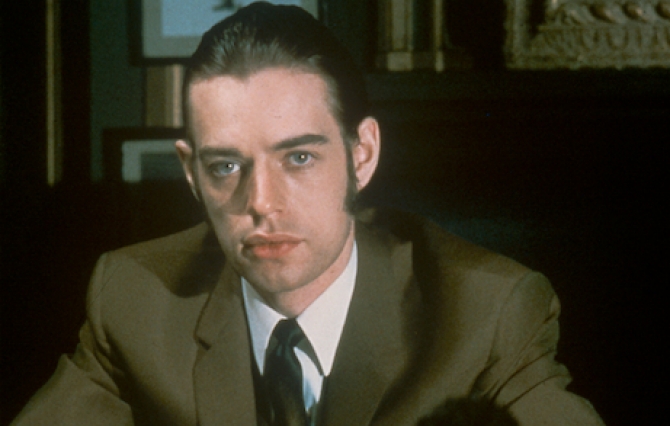
Would you know this clean cut gentleman is Mick Jagger if we didn’t tell you? It’s a publicity shot from his performance in Donald Cammell and Nicolas Roeg‘s Performance, which turns 45 today.

Classic Cartoon of the Day:

Mickey Mouse, Donald Duck and Goofy star together as fire fighters in Mickey’s Fire Brigade, which hit theaters on this date 80 years ago. Watch it below.

[embedded content]

Cosplay of the Day:

It’s not Halloween yet, but here’s an early reminder that you can make any character and costume into a “sexy” version. Here’s a cosplayer as a “sexy” No Face from Hayao Miyazaki‘s Spirited Away (via Fashionably Geek):

Classic Trailer of the Day:

On this day 60 years ago, Alfred Hitchcock‘s To Catch a Thief, starring Cary Grant and Grace Kelly, had its world premiere in Los Angeles. Watch the original trailer for the movie below.

[embedded content]

Send tips or follow us via Twitter:

and

This entry passed through the Full-Text RSS service – if this is your content and you’re reading it on someone else’s site, please read the FAQ at fivefilters.org/content-only/faq.php#publishers.


No Image

Wanted: More Bulls With No Horns

One of the hornless Holsteins at Steve Maddox's California dairy farm. Maddox is beginning to breed hornless cattle into his herd, but it's slow going.

One of the hornless Holsteins at Steve Maddox’s California dairy farm. Maddox is beginning to breed hornless cattle into his herd, but it’s slow going. Abbie Fentress Swanson for NPR hide caption

itoggle caption Abbie Fentress Swanson for NPR

The next time you’re in the dairy aisle at the supermarket, take a moment to imagine the animals that produced all that milk. Do these cows have horns? Chances are they do, or at least they did at birth.

About 85 percent of milk sold in the United States comes from Holstein cows born with horns. But it’s standard practice for farms to remove horns from cattle to prevent injuries to workers, veterinarians and other cows in the herd.

“Horned cattle: You get them on the truck, you get twice as many bruises when you get to the slaughterhouses. Bruises have to be cut out and thrown away,” says Colorado State University professor and well-known animal advocate Temple Grandin. “In the dairy industry, removing horns improves safety for the stock people and the farmworkers.”

But not everyone agrees with the practice of dehorning cattle. In recent years, animal welfare groups including The Humane Society and People for the Ethical Treatment of Animals (PETA) have called for an end to horn removal in cattle.

Their research shows it causes animals significant pain and stress, and that painkillers are rarely used during these procedures.

In the United States, there are no national rules regarding how farms should remove horns from cattle. Many farms follow the guidelines of the American Veterinary Medical Association and the National Milk Producers Federation, which recommend a practice called disbudding. Disbudding halts the growth of horn tissue in very young calves before pointy horns start to grow. Other dehorning techniques, like excising developing horns with metal scoops, are arguably harder on the cows and the workers.

Grandin is in favor of disbudding, as long as it’s done quickly and with pain relief. “It’s just like the dentist — you’ve got to wait for the drugs to take effect,” she says.

But PETA and The Humane Society are pushing for a different approach. They want dairy farms to breed more hornless, or polled, animals into their herds. Thanks to advances in genomic selection and DNA testing, farmers can more easily find animals that carry naturally occurring hornless genes and breed the best of these animals with horned cattle. To be clear, this isn’t genetic modification but breeding, since the polled gene occurs naturally in cattle.

“What’s really exciting is that the polled gene is a dominant gene. Right away you get at least 50 percent of offspring born without the horn gene. Right off the bat, 50 percent of animals are spared from this cruel procedure,” says PETA spokesman Dave Byer.

Until recently, selecting for the hornless gene hasn’t been a top priority for the dairy industry, which is more interested in traits like superior milk production, cow health and fertility.

“In the past, there weren’t very many polled bulls for farmers to choose from, so the ability to find one with good genetics for milk production and all the other traits was low,” says Virginia Tech genetics professor Ben Dorshorst. That’s changed now: “It is easier to find a good one, and that gets even more farmers interested in using polled genetics,” he says.

Dorshorst recently conducted an analysis that revealed there are now twice as many polled dairy bulls for farmers to buy semen from than there were two years ago.

Bryan Quanbury, whose company, DairyBullsOnline, specializes in polled dairy breeding, says he’s seen that uptick in demand firsthand. “Five years ago, people hardly knew polled dairy cattle existed. Today farmers are asking for polled bulls,” he says. “With increased awareness, there is increased demand.”

Aurora Organic Dairy, which milks 19,000 cows in Colorado and Texas, began using polled genetics in its herd more than three years ago. Now nearly 70 percent of the farm’s newborn calves are hornless.

“The main reason that we do a lot of these things at Aurora is because cow care, animal wellbeing, is our no. 1 priority. And we share what we’re doing with our customers, and they love it,” says Aurora’s vice president, Juan Velez.

Most of the milk sold in the US comes from Holstein dairy cows that are born with horns. To protect animals and workers, it's standard practice for farms to remove horns from calves soon after they're born.

Most of the milk sold in the US comes from Holstein dairy cows that are born with horns. To protect animals and workers, it’s standard practice for farms to remove horns from calves soon after they’re born. Abbie Fentress Swanson for NPR hide caption

itoggle caption Abbie Fentress Swanson for NPR

Responding to calls from PETA, the Humane Society and concerned customers, many food manufacturers, retailers and restaurants are asking their suppliers to integrate more polled cattle into their herds. In July, the nation’s largest supermarket, Kroger, became the latest retailer to get on board. Other companies with animal welfare policies that address dehorning and polled genetics in the supply chain include Starbucks, Sodexo, Dannon, Aramark, Nestlé, General Mills, Chipotle, Dunkin’ Brands and Wal-Mart.

But these companies aren’t requiring suppliers to act, and farms aren’t exactly chomping at the bit to make their herds 100 percent polled. Fair Oaks Farms milks 15,000 cows in Indiana and is one of Kroger’s largest milk suppliers.

“We use very little polled breeding,” says Fair Oaks president Mike McCloskey, because there aren’t enough polled dairy bulls that carry the most desirable Holstein traits.

“As soon as bulls start catching up, you’ll see dairy producers across the country using polled breeding, because we all would like to eliminate the process of dehorning,” he says.

There’s also the question of cost. A recent study from Purdue University and the U.S. Department of Agriculture found adopting polled genetics and phasing out dehorning may save farmers money in labor and veterinary costs. But polled genetics could also cost farmers lost profits if their hornless cattle produce less milk. Farmers may also have to pay a premium for hornless bull semen – a concern that keeps many farmers from making the jump to polled bulls, says Mark Kerndt, an analyst with the cattle reproduction company Select Sires.

Even if all of America’s dairy farms adopt polled genetics, it will be a while before all the milk we buy comes from cows born without horns. Since polled genes in Holsteins occur at a relatively low frequency, farmers and breeders fear inbreeding if they move too quickly.

Steve Maddox, who has 3,200 milking cows on his California dairy, is working hard to identify genetically polled animals in his herd. But he says it’s slow going.

“We’re trying to stay away from inbreeding, and we’re trying to maintain the genetic levels we’re at,” Maddox says. “You don’t want to do it overnight, and you don’t want to go back in genetics 20 or 30 years.”


Abbie Fentress Swanson is a journalist based in Los Angeles. She covers agriculture, food production, science, health and the environment.

This entry passed through the Full-Text RSS service – if this is your content and you’re reading it on someone else’s site, please read the FAQ at fivefilters.org/content-only/faq.php#publishers.


No Image

Ultimate Frisbee Recognized By Olympic Committee

1:54

Download

The official recognition by the International Olympic Committee means that disc sports are now eligible for future Olympic Games.

Transcript

AUDIE CORNISH, HOST:

The International Olympic Committee has formally recognized the World Flying Disc Federation. Translation – Ultimate Frisbee is one step closer to being included in the Olympics at some point in the future. Here’s NPR’s Brakkton Booker.

BRAKKTON BOOKER, BYLINE: This is what Ultimate Frisbee sounds like at the highest level.

(SOUNDBITE OF ARCHIVED RECORDING)

UNIDENTIFIED ANNOUNCER: Deep huck down the field. With a step, it’s LaRouche, and she’ll make the catch. Good grab, and here comes Fierry on the attack.

BOOKER: This is from ESPN’s broadcast of the women’s U.S. Open Ultimate Championship semifinal earlier this year. Nob Rauch is the president of the World Flying Disc Federation, or WFDF, and he says the Olympic governing body recognizing disc sports is an incredible milestone.

NOB RAUCH: It’s very exciting. It’s something we’ve been working on for the last four years or so.

BOOKER: Rauch says he believes his organization was selected as one of the sports federations to receive official recognition because the Olympics wants to attract younger audiences.

RAUCH: So I think they’re setting the stage to be able to introduce new sports that are youth-oriented, gaining in popularity, exhibiting gender equality and the like. And so we’re pretty excited about prospects over the next decade or two.

BOOKER: Ultimate Frisbee, or simply Ultimate to those who play, combine aspects of football, soccer and basketball. Tom Crawford heads USA Ultimate, the national governing body for Ultimate Frisbee.

TOM CRAWFORD: So the goal, just like in football, is you score by catching the disk in the end zone.

BOOKER: Nob Rauch of the World Flying Disc Federation says while the U.S. is a major contender in Ultimate, it has lots of competition. But when could we see Ultimate Frisbee make its Olympic debut?

RAUCH: At this point in time, 2024.

BOOKER: Ultimate Frisbee organizers say one of the things that will be popular about the game is that teams will be made up of men and women. Brakkton Booker, NPR News.

Copyright © 2015 NPR. All rights reserved. Visit our website terms of use and permissions pages at www.npr.org for further information.

NPR transcripts are created on a rush deadline by a contractor for NPR, and accuracy and availability may vary. This text may not be in its final form and may be updated or revised in the future. Please be aware that the authoritative record of NPR’s programming is the audio.

This entry passed through the Full-Text RSS service – if this is your content and you’re reading it on someone else’s site, please read the FAQ at fivefilters.org/content-only/faq.php#publishers.


No Image

Calls To Cut Off Planned Parenthood Are Nothing New

Protesters rally on the steps of the Texas state capitol on July 28 to condemn the use of fetal tissue for medical research.

Protesters rally on the steps of the Texas state capitol on July 28 to condemn the use of fetal tissue for medical research. Eric Gay/AP hide caption

itoggle caption Eric Gay/AP

Updated at 6:52 p.m. ET

Republican calls to defund Planned Parenthood over its alleged handling of fetal tissue for research are louder than ever. But they are just the latest in a decades-long drive to halt federal support for the group.

This round aims squarely at the collection of fetal tissue, an issue that had been mostly settled — with broad bipartisan support — in the early 1990s. Among those who voted then to allow federal funding for fetal tissue research was now-Senate Majority Leader Mitch McConnell, R-Ky.

McConnell made no mention of his previous position when he announced that the Senate would take up a bill to cut off Planned Parenthood’s access to federal funds before leaving for its summer break. The Senate blocked the legislation from moving forward Monday night, but the issue may come back with spending bills in the fall.

Videos shot by members of an anti-abortion group posing as fetal tissue middlemen “absolutely shock the conscience,” McConnell said at a news conference last week. Those videos purport to show Planned Parenthood officials discussing the sale of tissue from aborted fetuses in strikingly casual terms. It is illegal to profit from the sale of fetal tissue, though not illegal for expenses involved in its collection to be reimbursed.

Senate Majority Leader Mitch McConnell, R-Ky., has voted in support of fetal tissue research in the past.

Senate Majority Leader Mitch McConnell, R-Ky., has voted in support of fetal tissue research in the past. Susan Walsh/AP hide caption

itoggle caption Susan Walsh/AP

Planned Parenthood says the videos are heavily edited and take discussions out of context.

“These videos are hard for anyone to defend and hit at the moral fabric of our society,” said the bill’s lead sponsor, Sen. Joni Ernst, R-Iowa. “Planned Parenthood is harvesting the body parts of unborn babies.”

Ernst’s bill would have not only made Planned Parenthood ineligible for federal grant programs like the federal family planning program, but also would have banned it from receiving reimbursement from Medicaid for other health services it performs for eligible men and women, such as testing and treatment for sexually transmitted diseases.

According to the group’s most recent annual report, 41 percent of the $1.3 billion received by the national group and its affiliates came from government sources. Under a series of laws including the Hyde amendment, none of the federal funds can be used for abortions, which account for 3 percent of the services Planned Parenthood provides.

Yet even though abortion is a small part of what Planned Parenthood does, the group’s enormous size makes it the nation’s largest single provider of the procedure.

The debate is in fact all about abortion, according to Dawn Laguens, executive vice president of Planned Parenthood. “They don’t care about fetal tissue research,” she says of the groups targeting the organization. “It is just an angle to go after safe, legal abortion.”

Asked if the goal was to eliminate funding for Planned Parenthood, fetal tissue research or both, David Daleiden, the head of the Center for Medical Progress, the group that took the videos, said in a statement: “The goal of our investigation is to reveal the truth about Planned Parenthood’s trafficking and sale of aborted baby body parts for profit, which is illegal and unethical. Taxpayers should not be paying for these atrocities against humanity.”

But while the tie to fetal tissue is new, the fight to separate Planned Parenthood from its federal funding is, in fact, older than the 26-year-old Daleiden.

In 1982, when Ronald Reagan was president, his administration issued the so-called squeal rule, which sought to require family planning providers, including Planned Parenthood, to notify parents when providing contraceptives to minors or lose their funding. Planned Parenthood sued and won in federal court, where the rule was found to be a violation of patient privacy.

In 1987, the Reagan administration issued what came to be known as the “gag rule,” which barred recipients of federal family planning funds from counseling or referring patients for abortion, and which required physical and financial separation between contraceptive and abortion services.

Planned Parenthood and others sued again, and the case eventually went to the Supreme Court. This time the government won, but the rules remained mired in lower courts and were never fully implemented. President Bill Clinton erased them on his first day in office in 1993 by executive order.

Planned Parenthood was back on the hot seat in the 2000s, as new “direct action” groups decided to take the fight in a different direction.

In 2011, the anti-abortion group Live Action released a series of videos charging that Planned Parenthood was failing to act in apparent cases of sexual abuse leading to abortion in minors. Republicans in the House helped use those videos (which were later found to have been edited to make them misleading) to pass an amendment to defund Planned Parenthood. The Democratic-led Senate never acted on the measure.

But even those inclined to support Planned Parenthood say the allegations around the sale of fetal tissue may represent a turning point.

“The imagery is terrible,” said Alta Charo, a professor of law and bioethics at the University of Wisconsin.

This is also ironic, she says, because there has been a fairly broad bipartisan consensus in favor of using tissue from aborted fetuses in research for many years.

A panel appointed during the Reagan administration in 1988 voted overwhelmingly that such research was ethical.

“They went through all of the arguments, like ‘Does it make you complicit and evil if you take advantage of what had been a legally aborted fetus and you think that abortion was evil?’ And the answer was, ‘Well no, because we have transplants of organs of homicide victims all the time,’ ” Charo said. “So even if you call it a homicide, we take advantage of it.”

Meanwhile, groups looking for possible cures for devastating diseases, and seeing potential breakthroughs in other countries, urged Congress to cancel a federal funding ban on fetal tissue research imposed by Reagan and continued under President George H.W. Bush.

That support was demonstrated in a bill to update programs at the National Institutes of Health. Among the Republicans who joined the overwhelming support for the measure in 1992 were not only McConnell, but also Sens. Charles Grassley, R-Iowa, and John McCain, R-Ariz.

Bush vetoed that bill, as promised, and while the Senate voted almost as overwhelmingly to override the veto, the House fell 10 votes short of the two-thirds majority needed.

President Bill Clinton overturned the ban by executive order in 1993, and federal funding for fetal tissue research was formally authorized in a similar NIH bill passed later that year.

This entry passed through the Full-Text RSS service – if this is your content and you’re reading it on someone else’s site, please read the FAQ at fivefilters.org/content-only/faq.php#publishers.


No Image

'Who Am I Without My Sport?' Greg Louganis On Life After Olympics

The documentary Back On Board follows the career of four-time Olympic champion Greg Louganis.
6:22

Download

The documentary Back On Board follows the career of four-time Olympic champion Greg Louganis. HBO hide caption

itoggle caption HBO

Greg Louganis is the best diver of his generation — perhaps the best the world has ever seen. The four-time gold medalist is the only man to ever sweep the diving events in consecutive Olympics.

The new documentary Back on Board, by director Cheryl Furjanic and producer Will Sweeney, contrasts that success with the inner turmoil Louganis experienced rising to stardom at such a young age.

Much of the film, which premieres Tuesday on HBO, focuses on one of the most pivotal moments of Greg Louganis’s career. At the Seoul Olympics in 1988, he was going for his third gold medal when he hit his head on the springboard.

Louganis won 5 Olympic medals, 5 World Championship titles, and 47 national titles.

Louganis won 5 Olympic medals, 5 World Championship titles, and 47 national titles. HBO hide caption

itoggle caption HBO

“The first emotion I felt, I was embarrassed — because this is the Olympic games! I’m supposed to be a pretty good diver,” Louganis tells NPR’s Arun Rath. “Pretty good divers don’t do that.”

He talks with Rath about getting back into the competition after that experience, as well as coming out as a gay and HIV-positive athlete.


Interview Highlights

On deciding to continue to competing after hitting his head on the springboard

They sewed up my head and I made that decision with my coach Ron O’Brien that I was going to continue. He was just saying “Well, hockey players they get 20 stitches and they get back on the ice. You got five stitches. It’s nothing!” And we were laughing about the whole thing.

But when I got up on the board and they announced the dive and it was in the same direction that I hit my head on the board. I could hear an audible gasp from the audience. So I took a deep breath and I patted my chest. And then the people around who saw that started chuckling and I started laughing to myself, thinking, “Oh my God, I’m not the only one who’s scared. I don’t know what’s gonna happen.”

As it turned out, it was the highest scoring dive, I think, of that Olympic games.

On being HIV-positive while he achieved his Olympic success

Six months prior to the Olympic Games in Seoul, Korea in 1988, I was diagnosed HIV-positive. And I was training in Florida at the time, and I was gonna pack my bags, come back to California, lock myself in my house, and wait to die because we thought of HIV/AIDS as a death sentence. And talking with my doctor he said, “The healthiest thing for you is to continue training.” And so it was much easier for me to focus on the diving rather than the HIV, you know.

After decades out of the diving scene, Louganis is now a mentor for the U.S. Olympic diving team.

After decades out of the diving scene, Louganis is now a mentor for the U.S. Olympic diving team. HBO hide caption

itoggle caption HBO

When I hit my head on the board, I was paralyzed by fear. I didn’t know what my responsibility was, because really the people who were at risk were the two doctors that were sewing up my head — that was a concern. But I was also competing in a country had they known my HIV status, I wouldn’t have been allowed into the country to be able to compete at that Olympic Games.

On the anger directed at him after he came out as gay and HIV-positive

There was a lot of debate going on around the country … but the thing is, it got people talking about it. I mean, my first interview was with Barbara Walters, and then on Friday on 20/20, and then on Monday I’m talking to Oprah. So what I told Barbara when we did our interview, I said, “Well, all of those people who cheered for me through my Olympic career can no longer say that they have not been touched by HIV/AIDS.”

It was important to learn how you got HIV, but it was also important how you’re not gonna get HIV — and you’re not gonna get HIV through a chlorinated pool.

On returning to the diving world to mentor current Olympic hopefuls

It’s great to share those experiences. I’m most concerned with aftercare because as an elite athlete you finish your career and then you’re pretty young. When you retire from your sport then it’s almost like you lose a part of yourself. You lose your identity … I retired at 28 … You know, making that transition is not always easy. It’s like, “OK, now who am I? Who am I without my sport?”

On how gay rights and attitudes towards homosexuality have changed since the ’80s

It really is shocking to me because where we are today, being legally married in the state of California, having the Supreme Court ruling. You know, during the ceremony when my husband and I got married … we kinda smiled at each other and said our parents are looking down on us and smiling on us today.

This entry passed through the Full-Text RSS service – if this is your content and you’re reading it on someone else’s site, please read the FAQ at fivefilters.org/content-only/faq.php#publishers.


No Image

GXG Markets: Is this Corporate Bully Finally Dead?

Associated News (AN) The Channel Islands Securities Exchange (CISE) announced yesterday July 31, 2015, that they would not be acquiring the GXG Markets after all. (http://www.cisx.com/content.php?pageid=736). This comes only days after my latest article in…


No Image

After Devastating Injury, Austrian Pole Vaulter Is Breathing On Her Own

Kira Grunberg, seen here competing last summer, was severely injured in a training accident this week. Doctors say she is now a paraplegic.

Kira Grunberg, seen here competing last summer, was severely injured in a training accident this week. Doctors say she is now a paraplegic. Ian Walton/Getty Images hide caption

itoggle caption Ian Walton/Getty Images

Kira Grunberg, Austria’s top women’s pole vaulter who suffered a horrible injury during training Thursday, is breathing on her own and could soon leave intensive care. The 21-year-old underwent emergency surgery after fracturing at least one of her cervical vertebrae.

Doctors say the fall has left Grunberg a paraplegic — a development that shocked the sporting world in Europe and brought offers of emotional and financial support for the young athlete who holds Austria’s record for the women’s pole vault.

Grunberg’s parents were present at Thursday’s training session, in which she fell and hit her head after attempting what her manager said was a normal practice jump. She was rushed to a hospital in Innsbruck, where surgeons worked to preserve her vital functions.

Doctors say that Grunberg could be transferred to the general ward, reports Austrian media outlet ORF.

The site adds that the Austrian Association of Athletics Federations has announced that it is providing a 10,000 euro emergency fund for Grunberg, and that the Tyrolean Athletics Federation has set up a donation account in he name.

On the athlete’s Facebook page, her family and management are thanking her friends and supporters for their solidarity, saying that the accident not only ended her athletic career, but also began a new life for Grunberg.

Thoughts are with our best track and field athlete, Kira Grünberg! Paraplegic from what she loved most… #teamaut pic.twitter.com/13Ap5oPPm5

— Tamara Adler (@tamara_adler) July 31, 2015

This entry passed through the Full-Text RSS service – if this is your content and you’re reading it on someone else’s site, please read the FAQ at fivefilters.org/content-only/faq.php#publishers.


No Image

Winds Of Change? Rhode Island Hopes For First Offshore Wind Farm

The first foundation jacket installed by Deepwater Wind in the nation's first offshore wind farm construction project is seen next to a construction crane on Monday, on the waters of the Atlantic Ocean off Block Island, R.I.
3:51

Download

The first foundation jacket installed by Deepwater Wind in the nation’s first offshore wind farm construction project is seen next to a construction crane on Monday, on the waters of the Atlantic Ocean off Block Island, R.I. Stephan Savoia/AP hide caption

itoggle caption Stephan Savoia/AP

Aboard a ferry off the coast of Rhode Island, state and federal officials take a close look at a steel structure poking out of the ocean. It’s the first foundation affixed to the seafloor for a five-turbine wind farm off the state’s coast.

It’s a contrast to what’s happening off the coast of Massachusetts. Developer Cape Wind has spent more than 10 years and millions of dollars there on a massive wind farm that it may never build.

Rhode Island’s project, Deepwater Wind, has sailed through by comparison, in part because of its great location, explains Chief Executive Officer Jeff Grybowski. The wind farm will sit three miles off the coast of Block Island, about 12 miles away from the mainland.

“The location off the southeast corner of Block Island has incredibly strong wind and it is quite far from the mainland,” Grybowski says.

The nearly 600-foot-tall turbines are far enough from the mainland that most people won’t be able to see them from shore. As Grybowski points out, the state of Rhode Island wanted to pioneer this project and chose where to build it.

“That was based on many years of research and public discussion,” Grybowski says.

Deepwater Wind underwent far more extensive impact studies than Cape Wind, and the company spent more time engaging important stakeholders. Not everyone in Rhode Island loved the project from the start, but unlike Cape Cod, Block Island wants to replace its expensive source of energy.

“We are one of the highest rates in the country,” says David Milner, general manager for the Block Island Power Company, which supplies all of the island’s electricity by importing a million gallons of diesel oil every year.

“We got up over 50 cents per kilowatt-hour, which is a huge burden on the businesses out here and the individuals,” Milner says.

In New England, the average rate is 16 cents per kilowatt-hour for all sectors.

Year-round Block Island resident Peter Baute stands on the iconic Mohegan Bluffs, which boasts panoramic views of the Atlantic Ocean.

“That’s interesting there’s two platforms out there. Let’s just take a look,” Baute says.

Baute narrows his eyes as he lifts up binoculars to check out the construction of the offshore wind farm. It promises to reduce electricity costs by 40 percent. He says that will go a long way for an island whose economy relies on summer tourists, because it’s home to only about a thousand people for the rest of the year.

“You’ve got to work hard to make a living in June, July, August and maybe part of September. You’ve got four months max to break even,” Baute says.

When the turbines aren’t spinning, the island will draw energy from the mainland through an underwater transmission cable that’s part of the wind project. That cable could also bring high-speed internet to the island — another selling point.

Still, a vocal minority of island residents are skeptical about the anticipated benefits of the offshore wind farm. Edith Blane doesn’t think it’s worth trading in ocean views.

“So that the beauty, and the calm, and the stillness and the loveliness of a summer night — it’s never going to be the same again,” she says.

With construction underway, Deepwater Wind is on track to build the nation’s first offshore wind farm. It has everything Cape Wind doesn’t — a utility company buying all of its power and bank loans.

The federal government has auctioned off nine leases for more offshore wind farms. That means all eyes are on Rhode Island to see how it works.

This entry passed through the Full-Text RSS service – if this is your content and you’re reading it on someone else’s site, please read the FAQ at fivefilters.org/content-only/faq.php#publishers.


No Image

Best of the Week: More Tom Cruise Movie Sequels, Fall Film Festival Guide and More

The Important News

Franchise Fever: Tom Cruise said he won’t do Top Gun 2 with CGI jets. Tom Cruise is also working on Edge of Tomorrow 2. Christopher McQuarrie revealed a big stunt idea for Mission: Impossible 6. Ivan Reitman claimed there is only one Ghostbusters movie in the works.

Casting Net: Rachel McAdams confirmed she’s in talks for Doctor Strange. Chris Pine signed on to play Wonder Woman’s love interest. Tommy Lee Jones is joining the next Bourne movie. Jake Gyllenhaal is joining the Boston Marathon bombing movie Stronger.

Remake Report: Shaft is being rebooted again as a comedy.

New Directors/New Films: Christopher Nolan’s next film is a short documentary on the Quay brothers. Richard Linklater might direct Jennifer Lawrence in The Rosie Project.

First Looks: Kristen Stewart and Nicholas Hoult in Equals.

Box Office: Ant-Man defended the top spot against Pixels.

The Videos and Geek Stuff

New Movie Trailers: 13 Hours: The Secret Soldiers of Benghazi, Room, The Night Before, American Ultra, Black Mass, Spotlight, The 33, We Are Your Friends, The Diabolical and Tremors 5: Bloodline.

Movie Clips: Fantastic Four.

Watch: The Fantastic Four reboot trailer redone with footage from the 1994 version. And the Ant-Man trailer redone homemade by fans.

See: New images from Deadpool, Batman v Superman and the next Wolverine.

Watch: Kevin James learns that his Smurf-killing scene in Pixels was given to Michelle Monaghan.

See: The most dedicated movie-loving parents in the world.

Learn: How a horror movie led police to locate a wanted fugitive.

Watch: The endings of Halloween and Star Wars accompanied by audio of 1970s audiences watching them.

See: Tom Cruise re-create a scene from Top Gun on The Tonight Show. And a supercut of all his intense stares in his movies. And his craziest stunts in the Mission: Impossible movies.

Watch: Simon Pegg describes Mission: Impossible – Rogue Nation using only emojis. And an honest trailer for the Mission: Impossible movies.

Learn: 50 things you might not know about the Mission: Impossible movies.

See: How Inside Out should have ended.

Read: The original Vacation short story by John Hughes.

Watch: A parrot sing “Everything Is Awesome” from The Lego Movie.

Learn: How J.J. Abrams broke his back making Star Wars: The Force Awakens.

See: This week’s best new movie posters.

Our Features

Fall Film Fest Guide: Proof that 2015 has too many exciting movies.

Geek Movie Guide: 100 geeky movies everyone should see.

Comic Book Movie Guide: Ranking Marvel’s Phase Two movies.

Unmade Movie Guide: The poisonous power of great unmade movies.

Discussion: Your top-three summer camp movies.

Home Viewing: Here’s our guide to everything hitting VOD this week. And here’s your guide to everything hitting DVD and Blu-ray this week. And here’s our guide to everything hitting Netflix Watch Instantly in August.

and

MORE FROM AROUND THE WEB:

This entry passed through the Full-Text RSS service – if this is your content and you’re reading it on someone else’s site, please read the FAQ at fivefilters.org/content-only/faq.php#publishers.


No Image

Pacific Trade Pact In Limbo As Talks End Without A Deal

In a setback for the Obama administration, talks aimed at setting up a major free-trade zone among 12 Pacific Rim countries — the so-called Trans-Pacific Partnership — have ended without success.

Although U.S. Trade Representative Michael Froman said “significant progress” had been made at this week’s talks in Maui, Hawaii, and officials promised to reconvene at some future date, big differences remain among the participating countries.

They involve such issues as how long the copyright for biologic drugs should last (a big concern for the U.S. pharmaceutical industry), New Zealand’s access to foreign dairy markets, and how to define the country of origin for auto manufacturers.

Because no agreement has been reached, it’s unlikely that Congress will be able to vote on the trade pact this year. That will push a vote into 2016 — when the presidential election is in full swing, and when President Obama will be less than a year from leaving office.

This entry passed through the Full-Text RSS service – if this is your content and you’re reading it on someone else’s site, please read the FAQ at fivefilters.org/content-only/faq.php#publishers.