Articles by admin

No Image

Pennsylvania Schools Short On Funds As Budget Stalemate Continues

3:53

Download

The governor and legislators can’t agree how to fix the deficit or how much money schools should get. Meanwhile, districts are taking out loans and racking up interest costs to keep the lights on.

Transcript

ARI SHAPIRO, HOST:

Pennsylvania’s Democratic governor is fighting over the state budget with the Republican-controlled legislature. At this point, this year’s budget is almost four months overdue. Schools that rely on state funding are feeling it. Solvejg Wastvedt sent this report.

SOLVEJG WASTVEDT, BYLINE: Fifth period just ended at Carbondale Area High School in northeastern Pennsylvania. Superintendent Joe Gorham stands in a patch of sun from a hallway skylight handing out hellos. He moves to the side as students rush by. Gorham says, the fishies are swimming.

JOE GORHAM: You don’t go against the stream, you follow the fishies. It’s much safer that way.

WASTVEDT: Despite the jokes, there are creases of worry on Gorham’s forehead and his voice is strained. Carbondale has big financial problems looming because of Pennsylvania’s late budget. The small district always has tight finances. Over half its students qualify for free or reduced-price lunches. Now they’re missing over half their $22 million budget because they haven’t received any state aid yet. Gorham says they took out almost a million dollars in loans back in June and that money is nearly gone.

GORHAM: We just had to authorize going after probably another $2.3 million.

WASTVEDT: The extra loan would just cover salaries and health care costs. Gorham rattles off a list of day-to-day expenses that it wouldn’t touch.

GORHAM: You have heating. You have lighting. You have the copier machines. You have technology. You have phone services.

WASTVEDT: Carbondale senior Sydney Toy says she hasn’t noticed changes at school yet, but she’s losing patience with her elected officials. The Democratic governor and Republican legislative leaders can’t agree on how to fix Pennsylvania’s big deficit. Toy says school findings should come ahead of all that political maneuvering.

SYDNEY TOY: We can’t just sit around and wait and keep putting it off, and putting it off and putting it off. I feel like this is something that needs to come first before anything else.

(SOUNDBITE OF ARCHIVED RECORDING)

TOM WOLF: The math has to actually work. We have to be honest about our budgeting.

WASTVEDT: That’s Governor Tom Wolf in a recent address. He insists that the state needs tax increases to balance its books, and he hasn’t budged yet. Earlier this fall, he vetoed a temporary funding bill. Instead, his administration offers to guarantee loans for school districts.

JAY BADAMS: We don’t see that as a good option.

WASTVEDT: Jay Badams leads the Erie School District. It’s much bigger than Carbondale and also has high levels of poverty. It depends on the state for 70 percent of its $178 million budget. The district hasn’t paid any of its vendors since July, and soon it won’t be able to pay teachers. But Badams bristles at interest costs that make loans expensive in the long run. His district arranged a loan that it hasn’t closed on yet. It would get them through mid-January and cost more than $100,000 in interest.

BADAMS: That would be the equivalent of two teacher salaries, a thousand textbooks, hundreds of computers.

WASTVEDT: Instead, Erie asked for an advance on its state funding, but the state treasury and the governor said no. Last month, the school board authorized Badams to consider temporarily shutting down the district if needed. So far he hasn’t taken that option.

Joe Gorham at Carbondale has thought about similarly drastic measures – taking three-day weekends to save on heating costs. But both superintendents hesitate because high numbers of their students get free or reduced-price meals at school. For Gorham, it’s a last resort and it depends how long the stalemate lasts.

GORHAM: We laughed back in June when they said, look, this budget’s not going to be realized until frost is on the pumpkins.

WASTVEDT: Now he worries it may not get done before February. For NPR News, I’m Solvejg Wastvedt.

Copyright © 2015 NPR. All rights reserved. Visit our website terms of use and permissions pages at www.npr.org for further information.

NPR transcripts are created on a rush deadline by a contractor for NPR, and accuracy and availability may vary. This text may not be in its final form and may be updated or revised in the future. Please be aware that the authoritative record of NPR’s programming is the audio.

This entry passed through the Full-Text RSS service – if this is your content and you’re reading it on someone else’s site, please read the FAQ at fivefilters.org/content-only/faq.php#publishers.


No Image

Songs We Love: Auntie Flo Feat. Poppy Ackroyd & Richard Thair, 'For Mihaly'

Auntie Flo's Theory Of Flo comes out Nov. 6.
8:00

Auntie Flo’s Theory Of Flo comes out Nov. 6. Courtesy of the artist hide caption

itoggle caption Courtesy of the artist

Auntie Flo, Theory of Flo (Huntleys & Palmers)

Courtesy of the artist

“For Mihaly,” the final song on Auntie Flo‘s second album Theory Of Flo, is a wonderfully (and somewhat unexpectedly) plaintive last piece for a collection dominated by euphoric, globally minded dance music. With Poppy Ackroyd‘s violin supplying the song’s melancholy central tenet, it’s like a Yiddish postscript to an excellent party: more than enough rhythm to keep the dance going (bonus beats c/o former Red Snapper drummer Richard Thair), but also enough thoughtful reservation to make sure the party isn’t all hollow calories and forgotten escapades.

Once out of Glasgow but increasingly London-based, Auntie Flo makes music that’s anything but calorie-free, with the steady objective of exploring the world’s cultures through the dance floor. Originally the solo musical outlet of Brian D’Souza, it’s now a duo (D’Souza and Cape Town-to-U.K. transplant Esa) with a long roster of supporting vocal and instrumentalist collaborators engaging a planet of rhythm under the flag of house music. Their own singles, as well as the Highlife World Series the pair curates and engineers in various African countries, feature some of the funkiest and most ecstatic global grooves being released in the West.

It’s the kind of ecstasy that’s also at the heart of the “theory of flow,” which gives the album its name and was originally espoused by Hungarian psychologist Mihaly Csikszentmihalyi, for whom this track is named. “Flow” is a state of mind, full immersion in the moment, the kind that most clubbers would recognize as familiar, being that the zenith of a dance-floor experience is a similar loss of self. And yet “For Mihaly” marries one of Csikszentmihalyi’s spoken-word recordings not to a raging hands-in-the-air beat, but to an ancient melody played on an instrument with a long history in social memory. Auntie Flo is clearly well aware that there’s more than one way to reach a peak.

Theory Of Flow is out Nov. 6 on Huntleys & Palmers.

This entry passed through the Full-Text RSS service – if this is your content and you’re reading it on someone else’s site, please read the FAQ at fivefilters.org/content-only/faq.php#publishers.


No Image

Community Health Workers Reach Some Patients That Doctors Can't

Dr. Janina Morrison, right, speaks with patient Jorge Colorado and his daughter Margarita Lopez about Colorado's diabetes at the Los Angeles County-USC Medical Center.

Dr. Janina Morrison, right, speaks with patient Jorge Colorado and his daughter Margarita Lopez about Colorado’s diabetes at the Los Angeles County-USC Medical Center. Heidi de Marco/Kaiser Health News hide caption

itoggle caption Heidi de Marco/Kaiser Health News

Month after month, Natalia Pedroza showed up at the doctor’s office with uncontrolled diabetes and high blood pressure. Her medications never seemed to work, and she kept returning to the emergency room in crisis.

Walfred Lopez, a Los Angeles County community health worker, was determined to figure out why.

Lopez spoke to her in her native Spanish and, little by little, gained her trust. Pedroza, a street vendor living in downtown Los Angeles, shared with him that she was depressed. She didn’t have immigration papers, she told him, and her children still lived in Mexico.

Then she mentioned something she hadn’t told her doctors: She was nearly blind.

Pedroza’s physician, Dr. Janina Morrison, was stunned. For years, Morrison said, “people have been changing her medications and changing her insulin doses, not really realizing that she can’t read the bottles.”

Health officials across the country face a vexing quandary — how do you help the sickest and neediest patients get healthier and prevent their costly visits to emergency rooms? Los Angeles County is testing whether community health workers like Lopez may be one part of the answer.

Lopez is among 25 workers employed by the county to do everything they can to remove obstacles standing in the way of patients’ health. That may mean coaching patients about their diseases, ensuring they take their medications or scheduling their medical appointments. The aid can extend beyond the clinic, too, to such things as helping them find housing or get food stamps.

These workers don’t necessarily have a medical background. They get several months of county-sponsored training, which includes instruction on different diseases and medications, as well as tips on how to help patients change behavior. They are chosen for their ability to relate to both patients and providers. Many have been doing this job for friends and family for years – just without pay.

“By being from the community, by speaking their language, by having these shared life experiences, they are able to break through and engage patients in ways that we, as providers, often can’t,” said Dr. Clemens Hong, who is heading the program for the county. “That helps break down barriers.”

For now, they work with about 150 patients, many of whom have mental health issues, substance abuse problems and multiple chronic diseases. The patients haven’t always had the best experience with the county’s massive health care system.

“They tell us, ‘I am just a number on this list,'” Lopez said. “When you call them by name and when you know them one on one … they receive that message that I care for you. You are not a number.”

The Los Angeles County-USC Medical Center is the county's biggest and busiest public hospital. Walfred Lopez, a community health worker at the center, looks over a patient's health record.

The Los Angeles County-USC Medical Center is the county’s biggest and busiest public hospital. Walfred Lopez, a community health worker at the center, looks over a patient’s health record. Heidi de Marco/Kaiser Health News hide caption

itoggle caption Heidi de Marco/Kaiser Health News

By spring, Hong said, he hopes to have hundreds more patients in the program.

Community health workers have been used for decades in the U.S. and even longer in other countries. But now officials in various counties and other states — including Massachusetts, Pennsylvania and Oregon — are relying on them more, as pressure grows to improve health outcomes and reduce Medicaid and other public costs.

“They are finding a resurgence because of the Affordable Care Act, and because health care providers are being held financially accountable for factors that occur outside the clinical walls,” said Dr. Shreya Kangovi, an internist and pediatrician at the University of Pennsylvania and director of the Penn Center for Community Health Workers.

Kangovi said community health worker programs, however, are likely to fail if they don’t hire the right people, focus too narrowly on certain diseases or operate outside of the medical system. Also, she says, it’s important that such programs to be guided by the best scientific evidence on what works.

“A lot of people think they can sort of make it up as they go along,” Kangovi said. “But the reality is that it is really hard.”

Hong, who designed the program based on lessons learned from other models, said Los Angeles County is taking a rigorous approach. It is conducting a study comparing the costs and outcomes of patients in the program against similar patients who don’t have community workers assigned to them.

The patients are chosen based on their illnesses, how often they end up in the hospital and whether doctors believe they would benefit.

Lopez says that, for him, the work is personal. A former accountant from Guatemala, Lopez has a genetic condition that led to a kidney transplant. Like some of his patients, including Pedroza, he is now on dialysis.

He tries to use his experience and education to get what patients need. But even he runs into snags, he said. One time, he had to argue with a clerk who turned away his patient at an appointment because she didn’t have identification.

“The hardest part is the system,” Lopez said. “Trying to navigate it is sometimes even hard for us.”

Lopez and his fellow community health worker, Jessie Cho, sit in small cubicles in the clinic at Los Angeles County-USC Medical Center, the county’s biggest and busiest public hospital. Throughout the day, they accompany patients to visits and meet with them before and after the doctor does. They also visit patients at home and in the hospital, and give out their cell phone numbers so patients can reach them quickly.

Cho said the patients often can’t believe that somebody is willing to listen to them. “Nobody else on the medical team has it as their job to provide empathy and compassion,” she said.

Morrison, the clinic physician, said both workers have become an essential part of the health team.

“There is just a limited amount I can accomplish in 15 or 20 minutes,” Morrison said. “There are all these mysteries of my patients’ lives that I know are getting in the way of taking care of their chronic medical problems. I either don’t have time to get to the bottom of it or they are never going to really feel that comfortable talking to me about it.”

Natalia Pedroza, who wears a colorful scarf around her head and speaks only Spanish, is a perfect example. Before Lopez came on board, Morrison says, “I wasn’t getting anywhere with her.”

Initially, Lopez had a hard time helping Pedroza overcome her distrust of the system. And Pedroza was confused about her medical condition; she thought the dialysis that kept her kidneys functioning was the cause of her health problems.

But Pedroza listened, explained, and helped her — by making her appointments, for instance, and helping arrange for Pedroza to get prepackaged medications so she wouldn’t have to read the directions. Now Pedroza sees Lopez as an ally.

On a recent afternoon, Lopez sat down with Pedroza before her medical appointment.

“How are you feeling?” he asked in Spanish.

Her hair was still falling out, Pedroza told him, and she still felt sick. She also said she hadn’t been checking her blood sugar because she didn’t know how to use the machine. Lopez showed her how the machine worked, and then the two spent several minutes chatting about her job and her neighborhood.

Lopez said he believes he has a made a difference for other patients as well. On a recent Sunday, a 43-year-old patient with chronic pain who initially refused Lopez’s help texted that he planned to go to the emergency room because of a headache. Lopez reached Morrison, who agreed to squeeze him into her clinic schedule a few days later. And the patient didn’t go to the ER.

Lopez persuaded yet another patient, a 56-year-old woman, to take her blood pressure medication before her appointments so that when she arrived, the doctors wouldn’t get worried about her numbers and send her to the hospital.

In one case, his ability to bond with a patient almost undermined his goal of getting the man the help he needed. The patient, who was depressed, said he didn’t want to go see a mental health counselor because he was more comfortable talking to Lopez.

“It was touching,” Lopez said. “I was about to cry.”

This story comes to us from NPR’s partners at Kaiser Health News, and KQED’s blog State of Health.

This entry passed through the Full-Text RSS service – if this is your content and you’re reading it on someone else’s site, please read the FAQ at fivefilters.org/content-only/faq.php#publishers.


No Image

Today in Movie Culture: Michael Bay and Kristen Wiig's Oscar Bait, 'Ghostbusters' the Sitcom and More

Here are a bunch of little bites to satisfy your hunger for movie culture:

Fake Oscar Bait of the Day:

Kirsten Wiig went on Jimmy Kimmel Live and debuted the trailer for her new (fake) Oscar contender, the Michael Bay-helmed Crying in a Sweater:

[embedded content]

Supercut of the Day:

With SPECTRE hitting theaters soon, here comes a wave of James Bond movie supercuts. This one is just of Bond villains laughing (via Cinematic Montage Creators):

[embedded content]

Fake TV Series Based on a Movie of the Day:

IFC is having fun promoting its broadcast of Ghostbusters and Ghostbusters II this month with this fake Ghostbusters sitcom opening (via /Film):

[embedded content]

Toys of the Day:

They don’t come out for another month, but you can now pre-order these and more explicit talking Pulp Fiction action figures:

Star Wars of the Day:

The original Star Wars trilogy gets a fan-made trailer in the style of the new Star Wars: The Force Awakens spot. Not just featuring the latter’s audio, either.

[embedded content]

Classic Cartoon of the Day:

Today is the 60th anniversary of the classic Tex Avery animated short Deputy Droopy, starring Droopy Dog. Watch the cartoon in full below.

Cosplay of the Day:

If you’re having trouble choosing which Inside Out emotion to go as for Halloween, take inspiration from 5 year old Penny Restauro of Catonsville, Maryland, who is going as all of them. Thanks to her mom/photographer, Allison Restauro, for giving permission to showcase this clever costume.

Movie Takedown of the Day:

Speaking of Inside Out, Honest Trailers tried to rip it inside out but their lighter emotions got the better of them:

[embedded content]

Movie Location Recreation of the Day:

Speaking of Pixar movies, here’s a piece of a bedroom completely recreated in the image of Andy’s room in Toy Story 3. See more photos of project, which is part of a live-action remake of the sequel at Geek Tyrant.

Classic Trailer of the Day:

With Halloween approaching, it’s worth noting the strange decision to release Hocus Pocus in the middle of the summer. Watch the original trailer for the beloved 1993 movie below.

[embedded content]

Send tips or follow us via Twitter:

and

This entry passed through the Full-Text RSS service – if this is your content and you’re reading it on someone else’s site, please read the FAQ at fivefilters.org/content-only/faq.php#publishers.


No Image

Uber Surge Price? Research Says Walk A Few Blocks, Wait A Few Minutes

This map, created by Christo Wilson of Northeastern University, shows Uber surge price areas in Boston.

This map, created by Christo Wilson of Northeastern University, shows Uber surge price areas in Boston. Courtesy of Christo Wilson hide caption

itoggle caption Courtesy of Christo Wilson

Uber prices vary in these sections of the Bay Area, as shown on a map created by Christo Wilson. He found differences in surge frequencies by cities, with San Francisco Uber prices surging 57 percent of the time.

Uber prices vary in these sections of the Bay Area, as shown on a map created by Christo Wilson. He found differences in surge frequencies by cities, with San Francisco Uber prices surging 57 percent of the time. Courtesy of Christo Wilson hide caption

itoggle caption Courtesy of Christo Wilson

Christo Wilson has created this map to show Uber surge areas in Manhattan, where he says prices surge 14 percent of the time.

Christo Wilson has created this map to show Uber surge areas in Manhattan, where he says prices surge 14 percent of the time. Courtesy of Christo Wilson hide caption

itoggle caption Courtesy of Christo Wilson

Uber has shaken up what it takes to get from point A to point B in cities across the country with a simple premise: If you need a ride, a driver nearby could pick you up within minutes.

Behind that idea is an algorithm, which promises to keep supply and demand in constant balance, encouraging drivers toward busy areas and tempering customer requests by increasing the price of each ride. It’s called surge pricing.

Those who have used Uber know what surge pricing is a temperamental beast. It changes quickly, varies seemingly unpredictably and has gotten heat from consumers, regulators and even drivers themselves. Uber says without surge pricing, the whole premise of a ride in minutes falls apart when there’s a crush of demand.

But how exactly does Uber’s algorithm work? The company doesn’t say. A team of researchers at Northeastern University decided to find out by doing what they call algorythmic auditing.

They found that for customers, it pays to be patient — or to walk a few blocks to a less crowded area.

“If you go on eBay or Amazon, you can see, these are all the people who are selling the product, these are all different prices,” says Christo Wilson, one of those researchers. “But Uber is different. They have this algorithm and they say it changes prices based on supply and demand, but it’s a black box. You have to trust that it’s working correctly, because you can’t verify. You don’t know how many customers there are, you don’t know how many other drivers there are.”

Here’s what Wilson and his colleagues, Le Chen and Alan Mislove, did. In simplest terms, they created 43 Uber accounts and wrote a script that logged into those accounts, pinged Uber’s servers every 5 seconds (as a regular account would) and recorded the information about Uber drivers in Manhattan and San Francisco.

The team tested their tracking methodology on a public database of New York taxis to make sure they could extrapolate information about the vast majority of cars in the fleet. Then they studied Uber cars’ comings and goings, and eventually combined that research with Uber’s publicly available tools and information to analyze how they correlated with surge prices.

In their paper, presented Thursday at the Internet Measurement Conference in Tokyo, they share what comes down to a few big takeaways:

  • Surge prices do temper demand.
  • Sometimes they do entice more drivers to go to busy areas and sometimes they don’t.
  • They vary not only by city but also by sections of the city with what appear to be manually created boundaries of each surge area.
  • They most commonly last less than 10 minutes and often less than 5 minutes (and prices are updated every 5 minutes).

“[Surge pricing] is working in a sense that it is responding to supply and demand, but I would argue that it’s not working as intended,” says Wilson, who is an assistant professor in the College of Computer and Information Science.

“What we see is that demand drops precipitously, cars stop getting booked and drivers are just sitting there. And actually there’s a lot of drivers who drive away from surges … . If the incentive was working the way it should, you would expect there always to be an incentive for [drivers] to always move in. But in this case, the result is mixed.”

With that, comes advice to Uber users: When prices are surging, waiting a few minutes or walking a few blocks to a different area may result in a cheaper ride.

Uber doesn’t dispute the existence of pre-defined surge areas and the super-fast turnaround of surges, and says both allow the app to quickly calibrate supply and demand.

Wilson suggests that it’s the short lifespan of a surge price that may create the mixed response from drivers, not giving drivers enough time to respond to the price surges that effectively reflect the demand from five minutes earlier.

Uber spokeswoman Molly Spaeth tells All Tech that the company has heard its drivers’ calls for better ways to make use of the surge prices — to make them work as they are intended.

Uber earlier this month revealed a redesigned app for its drivers. One of the elements is meant to help drivers predict where the next wave of customers will be located on an even more granular level than the surge area maps that Wilson’s team has figured out, which you can see on this page.

“People love Uber because they can push a button and get a ride quickly and reliably—wherever they are in a city. And dynamic or surge pricing helps make that possible,” Spaeth says in a statement.

“It encourages drivers to go to the neighborhoods with the highest demand, ensuring there’s always a ride available within minutes. Contrary to the findings in this report—which is based on extremely limited, public data—we’ve seen this work in practice day in day out, in cities all around the world.”

This entry passed through the Full-Text RSS service – if this is your content and you’re reading it on someone else’s site, please read the FAQ at fivefilters.org/content-only/faq.php#publishers.


No Image

Cueto's Complete Domination: World Series Game 2 In Numbers And Images

Johnny Cueto of the Kansas City Royals throws a pitch in the third inning Wednesday night against the New York Mets in Game Two of the 2015 World Series in Kansas City.

Johnny Cueto of the Kansas City Royals throws a pitch in the third inning Wednesday night against the New York Mets in Game Two of the 2015 World Series in Kansas City. Jamie Squire/Getty Images hide caption

itoggle caption Jamie Squire/Getty Images

7-1

Final score in Game 2 as the Kansas City Royals beat the New York Mets, taking a 2-0 lead in the World Series.

9, 5

Number of innings pitched and base runners allowed by winning pitcher Johnny Cueto on Wednesday night. In his disastrous prior outing in the American League Championship Series, he gave up eight runs in two innings.

Minnesota Twins pitcher Jack Morris tosses confetti from his pickup truck during a parade celebrating the team's 1991 World Series championship.

Minnesota Twins pitcher Jack Morris tosses confetti from his pickup truck during a parade celebrating the team’s 1991 World Series championship. Bill Waugh/AP hide caption

itoggle caption Bill Waugh/AP

1991

The last time an American League starter pitched a complete game in the World Series, which Jack Morris of the Minnesota Twins did it.

4, 0

Innings pitched by the Mets and Royals bullpens, which each had to go a long 8 innings in Game 1. Mets relievers gave up three runs in the eighth inning.

135

Number of minutes shorter Game 2 was than Game 1.

Alcides Escobar of the Royals scores a run on a two-run RBI single hit by Eric Hosmer in the fifth inning of Game Two of the World Series.

Alcides Escobar of the Royals scores a run on a two-run RBI single hit by Eric Hosmer in the fifth inning of Game Two of the World Series. Doug Pensinger/Getty Images hide caption

itoggle caption Doug Pensinger/Getty Images

4

Total runs-batted-in in the series by Royals first-baseman Eric Hosmer, who knocked in the winning runs in both World Series games. He has 27 RBI in 28 total career post-season games.

3

Number of runs the Royals batted in with two outs.

0

Hits for Mets post-season star Daniel Murphy. He did walk twice.

83

Percentage teams with 2-0 leads in seven-game MLB series that win those series, according to ESPN.

10/30

The series resumes Friday at 8:00 p.m. ET in New York, broadcast on Fox.

Miami Marlins fan Laurence Leavy, rear right, is shown wearing a bright orange Marlins jersey Oct. 22 during a playoff game in Kansas City. Leavy's orange Marlins jersey made him easy to spot amid a sea of Kansas City Royals blue. He said that a Royals official approached him offering to move him to the team owner's suite, but that he declined.

Miami Marlins fan Laurence Leavy, rear right, is shown wearing a bright orange Marlins jersey Oct. 22 during a playoff game in Kansas City. Leavy’s orange Marlins jersey made him easy to spot amid a sea of Kansas City Royals blue. He said that a Royals official approached him offering to move him to the team owner’s suite, but that he declined. Charlie Riedel/AP hide caption

itoggle caption Charlie Riedel/AP

1

Fan in a bright orange jacket directly behind home plate for the second straight game. Get to know Laurence Leavy, aka Marlins Man.

This entry passed through the Full-Text RSS service – if this is your content and you’re reading it on someone else’s site, please read the FAQ at fivefilters.org/content-only/faq.php#publishers.


No Image

Latitudes: Our Favorite Global Music In October

Moroccan-German singer Namika.

Moroccan-German singer Namika. Hannes Caspar/Courtesy of the artist hide caption

itoggle caption Hannes Caspar/Courtesy of the artist

Born Hanan Hamdi, Namika is a German singer from a Tamazight (Berber) Moroccan family. Her debut single, “Lieblingsmensch” (Favorite Person), went to No. 1 in Germany last month with its catchy tune and lighthearted feel.

Among the compliments Namika ladles on her guy is one that’s endearing in any language: “With you, the dishwater from the gas station / tastes like coffee in Hawaii, yeah.” And Namika’s video for “Lieblingsmensch,” which was shot in Morocco, is just as breezy and warm as her song.

[embedded content]
Namika Vevo YouTube

Another bright and bubbly earworm that’s got me hooked this month is a tune from Sakanaction, a Japanese art-rock band from Sapporo. Their tune “Shin Takarajima” (New Treasure Island) is the theme song for the movie Bakuman, which in turn is based on the Bakuman manga series and was released in Japan earlier this month.

Not only is the song super-hooky, but I love the visual style of Sakanaction’s video — especially the band’s gray-swathed deadpan in the midst of a squad of sunny cheerleaders.

Speaking of music for the silver screen: A massive costume drama is coming from Bollywood this December. Bajirao Mastani is based on the true story of an 18th-century Marathi warrior-turned-prime minister, and the woman who became his second wife, a dancer named Mastani.

The golden-hued video for the song “Deewani Mastani” gives a glimpse of director Sanjay Leela Bhansali’s lush visual style for this film. The song itself, featuring lead vocalist Shreya Ghoshal (with actress Deepika Padukone as Mastani), includes certain historical nods, including elements of classical courtly traditions borrowed from Persia and a qawwali-style chorus.

[embedded content]
Eros Now YouTube

Meanwhile, I’m really digging the retro surf guitar roots in a new song from the smoky-voiced Turkish artist Gökçe K?l?nçer, who splits her time between London and Istanbul. The video is very simple — just K?l?nçer taking a nighttime walk through London — but the groove is definitely deep.

[embedded content]
DokuzSekiz Müzik YouTube

Finally, I’ve got a track that you may have already heard in a Samsung Galaxy commercial that was rolled out last month: Lady Leshurr’s “Queen’s Speech, Episode 4.” She’s a rapper from a town near Birmingham, England, whose parents came from the Caribbean island of St. Kitts.

Her wordplay comes fast and furious, and her lines are just as razor-sharp as her self-awareness as a female hip-hop artist. She told The Guardian a couple of years ago that she turned down a deal with Atlantic Records in the U.S. because she didn’t like the way they planned to pit her against Nicki Minaj. But after all that, it’s the Galaxy spot that may open the doors to America for Lady Leshurr — and her meticulously maintained smile.

[embedded content]
Lady Leshurr YouTube

This entry passed through the Full-Text RSS service – if this is your content and you’re reading it on someone else’s site, please read the FAQ at fivefilters.org/content-only/faq.php#publishers.


No Image

Today in Movie Culture: James Bond vs. James Bond, 'Star Trek: The Force Awakens' and More

Here are a bunch of little bites to satisfy your hunger for movie culture:

Double Agent of the Day:

Who would win in a card game between James Bond and himself? This 007 mashup featuring Pierce Brosnan vs. Daniel Craig shows us (via Live for Films):

[embedded content]

Cosplay of the Day:

This week we’re seeing a lot of great Halloween costumes that we’re going to pretend are technically cosplay. Here’s one of an adorable mini Imperator Furiosa from Mad Max: Fury Road. See more photos, including some with her brother as Max at Toyland.

Supercut of the Day:

With Halloween approaching, here’s a timely supercut of scary houses (and hotels) from the movies:

[embedded content]

Video Essay of the Day:

Here’s a really neat video showing scenes that inspired or were used for their movies’ posters (via Devour):

[embedded content]

Vintage Image of the Day:

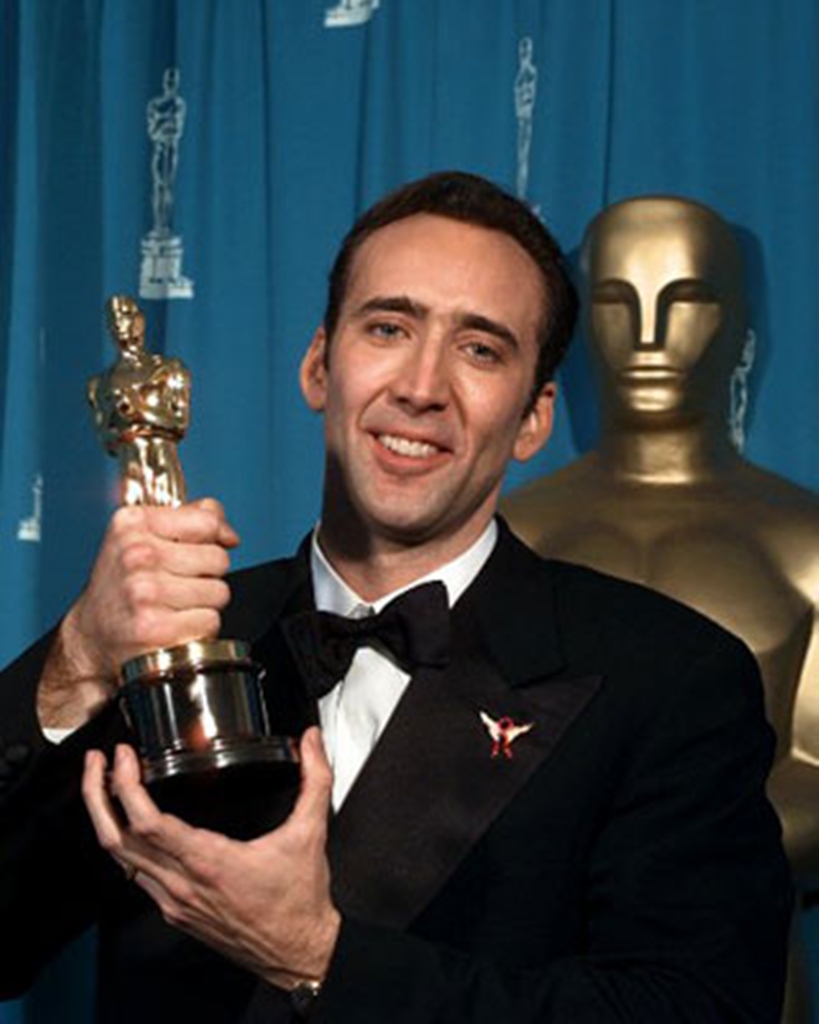
Your reminder that Nicolas Cage has an Oscar, which he won for Leaving Las Vegas, which opened 20 years ago today.

Movie Comparison of the Day:

Couch Tomato shows us 30 reasons Toy Story 3 is the same movie as Child’s Play 2:

[embedded content]

Movie Mashup of the Day:

Here’s what you get when combine the audio from the new Star Wars: The Force Awakens trailer and footage from J.J. Abrams‘s Star Trek movies:

[embedded content]

Toy of the Day:

Spaceballs may have had a tie-in flamethrower (in the movie anyway), but these Star Wars: The Force Awakens-based flamethrower-wielding Stormtrooper figures from Hot Toys are almost as cool. And they might be more expensive (via Toyland):

Costumed Crime of the Day:

Speaking of Star Wars, a Ukrainian man dressed as Chewbacca was arrested while trying to vote in a local election. See the video of the Wookie being apprehended by many men below and photos of him and his friends dressed as Darth Vader and Stormtroopers at BuzzFeed.

[embedded content]

Classic Trailer of the Day:

This is the 60th anniversary of the theatrical release of Rebel Without a Cause. Watch the original trailer for the iconic movie, one of the few to star James Dean, below.

[embedded content]

Send tips or follow us via Twitter:

and

This entry passed through the Full-Text RSS service – if this is your content and you’re reading it on someone else’s site, please read the FAQ at fivefilters.org/content-only/faq.php#publishers.


No Image

A Long Night In Kansas City: World Series Game 1 In Numbers And Images

Alex Gordon and Eric Hosmer (center) of the Kansas City Royals celebrate defeating the New York Mets 5-4 in Game One of the 2015 World Series on Tuesday night in Kansas City.

Alex Gordon and Eric Hosmer (center) of the Kansas City Royals celebrate defeating the New York Mets 5-4 in Game One of the 2015 World Series on Tuesday night in Kansas City. Doug Pensinger/Getty Images hide caption

itoggle caption Doug Pensinger/Getty Images

5-4

Final score in favor of the Kansas City Royals, who beat the New York Mets.

14

Number of innings, tied for the longest World Series game ever. One of two other games that went that long was won by Babe Ruth — then a pitcher for the Boston Red Sox — in 1916, ESPN Stats reported.

17

Total number of strikeouts thrown by both teams’ relief pitchers — 12 for the Royals, five for the Mets — in the last eight innings of the game. Wade Davis of the Royals struck out the side in the 10th inning, and teammate Chris Young — normally a starter — did the same in the 12th inning.

2

Total fielding errors the Royals have had in this entire postseason. A missed grounder by Eric Hosmer in the eighth inning Tuesday night briefly gave the Mets the lead. Hosmer redeemed himself in the 14th inning when he knocked in the winning run.

Alex Gordon of the Kansas City Royals runs the bases after hitting a solo home run in the ninth inning Tuesday night, tying the game.

Alex Gordon of the Kansas City Royals runs the bases after hitting a solo home run in the ninth inning Tuesday night, tying the game. Jamie Squire/Getty Images hide caption

itoggle caption Jamie Squire/Getty Images

2

Career post-season home runs by Alex Gordon, who hit one over the fence in the bottom of the ninth inning to send the game into extra innings. His previous home run came in the 2014 American League Championship Series, which game the Royals a 10th-inning lead against the Baltimore Orioles.

Alcides Escobar of the Kansas City Royals sprints around the bases during an inside-the-park home run in the first inning Tuesday night.

Alcides Escobar of the Kansas City Royals sprints around the bases during an inside-the-park home run in the first inning Tuesday night. Christian Petersen/Getty Images hide caption

itoggle caption Christian Petersen/Getty Images

15

Number of seconds it took the Royals’ Alcides Escobar to run the 110 meters around the bases on his inside-the-park home run in the first inning. Fast, but not quite Usain Bolt speed (9.58-second 100-meter record). Then again, Bolt gets to run in a straight line.

1929

The last year an inside-the-park home run has happened in the World Series.

Matt Harvey throws a pitch in the first inning against the Kansas City Royals. Harvey gave up three runs and struck out two in six innings.

Matt Harvey throws a pitch in the first inning against the Kansas City Royals. Harvey gave up three runs and struck out two in six innings. Jamie Squire/Getty Images hide caption

itoggle caption Jamie Squire/Getty Images

9

Number of days off Mets starting pitcher Matt Harvey had before Game 1, about double the typical break.

Daniel Murphy of the New York Mets reacts after striking out in the first inning during Game 1 of the World Series at Kauffman Stadium in Kansas City.

Daniel Murphy of the New York Mets reacts after striking out in the first inning during Game 1 of the World Series at Kauffman Stadium in Kansas City. Sean M. Haffey/Getty Images hide caption

itoggle caption Sean M. Haffey/Getty Images

0

Number of home runs hit by Daniel Murphy of the Mets, breaking a six-game streak. He did get two hits and score a run, putting his post-season batting average at .400 — up from .281 in the regular season.

2

The number of times the Fox broadcast had to cut to the studio because of a loss of power to the network’s production compound. The blackout also affected replay capabilities within the stadium, which stopped the game for a few minutes.

8

As in p.m. — the time (ET) of tonight’s Game 2 of the World Series, broadcast on Fox.

This entry passed through the Full-Text RSS service – if this is your content and you’re reading it on someone else’s site, please read the FAQ at fivefilters.org/content-only/faq.php#publishers.


No Image

Walgreens To Buy Drugstore Competitor Rite Aid For $9.4 Billion

On Tuesday, Walgreens confirmed that it plans to acquire drugstore competitor Rite Aid for $9.4 billion.

As The Wall Street Journal first reported, the move “would create a drugstore giant at a time when companies in nearly every corner of the health-care industry are seeking to gain advantage from bulking up.”

NPR’s Sonari Glinton reports for the Newscast unit:

“Walgreens buying the Rite Aid chain gives the company more than just stores, though it will get a lot of those.

“Walgreens is currently the largest drug store retailer and Rite Aid is No. 3. The combined company would have 18,000 stores worldwide.

“In addition to getting a retail presence that’s bigger by 50 percent, Walgreens is getting more leverage as a buyer of pharmaceuticals.

“The combination of the two companies would need the approval of the Federal Trade Commission, which studies retail mergers, to make sure they comply with antitrust law.

“Rite Aid is expected to keep its name after the deal closes.”

This entry passed through the Full-Text RSS service – if this is your content and you’re reading it on someone else’s site, please read the FAQ at fivefilters.org/content-only/faq.php#publishers.