
Articles by admin

No Image

Drug Cocktails Fuel Massachusetts' Overdose Crisis

A "speedball" mix of heroin and cocaine has caused overdose deaths for decades. Today, high-risk blends may alternatively include heroin or opioid pain pills plus Klonopin, Clonidine, or Fentanyl.
4:10

Download

A “speedball” mix of heroin and cocaine has caused overdose deaths for decades. Today, high-risk blends may alternatively include heroin or opioid pain pills plus Klonopin, Clonidine, or Fentanyl. Marianne Williams Photography/Flickr RM/Getty Images hide caption

toggle caption Marianne Williams Photography/Flickr RM/Getty Images

In a brick plaza next to the Chelsea, Massachusetts city hall, Anthony, a bald but still-youthful man in grey sweats, tells me he spent the previous night in the hospital for what he says was his twelfth overdose.

Anthony and other users of illegal drugs agreed to speak to NPR for this story on the condition that we use only their first names. He blames his overdose on what his dealer told him was a particularly strong bag of heroin laced with the anesthesia drug fentanyl — or something like it.

“He told me how strong it was,” Anthony says, “but everyone says that to sell their dope. The potency now is so inconsistent, you don’t know. So you’ll eat a bunch of Klonopins and do a shot of heroin, and then you’re dead.”

Among 501 overdose deaths assessed by the Office of the Chief Medical Examiner in Massachusetts in the first six months of 2014, and analyzed by the Harvard T.H. Chan School of Public Health, the vast majority were caused by heroin or a prescription opioid taken in combination with some other drug or alcohol. Fentanyl, a synthetic opiate that’s many times more powerful than heroin, was present in about 37 percent of the deaths, the researchers found. Klonopin, Xanax and other anti-anxiety benzodiazepines showed up in 13 percent of the Massachusetts overdose deaths.

Anthony says many users figure the risk from taking one of these multi-drug “cocktails” is worth the extra $2, or so, per additional pill.

“It intensifies the heroin high, and keeps you high longer,” he says.

On the street, there’s a hot market for lots of different prescription medications.

Using heroin in combination with other drugs is certainly not new. The speedball mix of heroin and cocaine that is present in some of the overdose deaths has been a popular high-risk choice for decades. Patients on methadone describe another popular cocktail taken after their daily dose of methadone treatment: gabapentin (anti-seizure medication), Klonopin, clonidine (treats high blood pressure and attention deficit hyperactivity disorder) and an over-the-counter allergy medicine.

“Little do you know that they all take a toll on your heart and on your breathing,” says Nicole, another drug user, who says she’s on methadone treatment for her heroin addiction.

Some heroin users pill-shop, she says, knowing which symptoms to mention so their doctor will prescribe something for anxiety or depression. And patients who have a legitimate need for these medications, who take them as prescribed, sometimes also experience an overdose.

“You trust your doctor,” Nicole says. “You think, ‘Oh, my doctor’s giving this to me, so it’s fine. Nothing’s going to happen to me — like I’m prescribed to take it.’ “

But many other people take the mixture with the aim of getting high, she says. “I think that the cocktail’s a more common thing than heroin is now. Or, most people that take heroin take the cocktail as well.”

Doctors who treat patients in recovery face difficult choices. Patients often describe increased anxiety, depression or trouble sleeping. But methadone and benzodiazepines can both suppress breathing; for someone who is on methadone, using benzodiazepines to calm anxiety can trigger a serious adverse reaction.

Even physicians who specialize in addiction medicine have trouble figuring out what to prescribe for anxiety or depression when a heroin patient is the doctor’s office begging for help, says Dr. Kavita Babu, a toxicologist at the University of Massachusetts Medical School.

“Not only is it difficult to put our knowledge of pharmacology into play,” she says, “but sometimes, [when] managing patient expectations about how their pain or anxiety should be treated, our clinical knowledge falls apart at the bedside.”

Now, with the revelation that most overdose deaths in Massachusetts stem from a toxic mix of heroin or prescription pain medicine with alcohol, cocaine or fentanyl, leading physicians and officials are urging all doctors to be more careful in their prescribing habits. They’ve pledged to update a state database where doctors are supposed to input the drugs they prescribe for each of their patients.

Mixing these drugs in toxic ways is “a big problem,” says Dr. Jim O’Connell, president of the Boston Health Care for the Homeless Program. “We’ve just been scratching the surface on it.” O’Connell says he asks patients which pills are big sellers on the streets and tries to avoid prescribing them.

“We, as doctors, don’t really have a good sense of what we should be prescribing, what we shouldn’t,” O’Connell says. “It’s really the combination of other drugs that is going to be the battle down the line.”

Many addiction specialists say society also needs to pay more attention to the emotional pain at the root of addiction.

In Chelsea, Anthony shows me the park bench where’s he’s overdosed a dozen times.

“There’s times when I really do want to die,” he says.

I ask him why, and Anthony’s face crumples in silent sobs.

“The more I do, the more guilt I feel and the more I want to kill myself,” he says. He struggles with “the guilt and the pain and shame” for the repeated relapses.

Anthony clutches his hospital discharge notes in one hand. The notes say he should call his doctor and psychiatrist, and schedule follow-up appointments. Anthony doesn’t have a phone. When I offer him mine to make the call, he gets the answering service. He doesn’t leave a number.

This story is part of NPR’s reporting partnership with WBUR and Kaiser Health News.

This entry passed through the Full-Text RSS service – if this is your content and you’re reading it on someone else’s site, please read the FAQ at fivefilters.org/content-only/faq.php#publishers.


No Image

Today in Movie Culture: Rekindling the Flame for 'Star Wars,' How to Live Like a Hobbit and More

Here are a bunch of little bites to satisfy your hunger for movie culture:

Star Wars Parody of the Day:

You’re giving Star Wars another shot after it broke your heart in the past? The following video spoofs our cultural forgiveness with the franchise using film language:

[embedded content]

Cosplay of the Day:

Jar Jar Binks might not be in Star Wars: The Force Awakens, but nobody has confirmed if Olaf from Frozen isn’t indeed one of the new Stormtroopers (via Edgar Wright):

Fan Build of the Day:

The DIY Prop Shop shows us how to make our own X-Wing Helmet, just in time to wear it to screenings of Star Wars: The Force Awakens:

[embedded content]

Classic Cartoon of the Day:

Today is the 70th anniversary of the Disney animated classic Canine Patrol, featuring Pluto as a member of the Coast Guard. Watch it in full below.

[embedded content]

Fan Art of the Day:

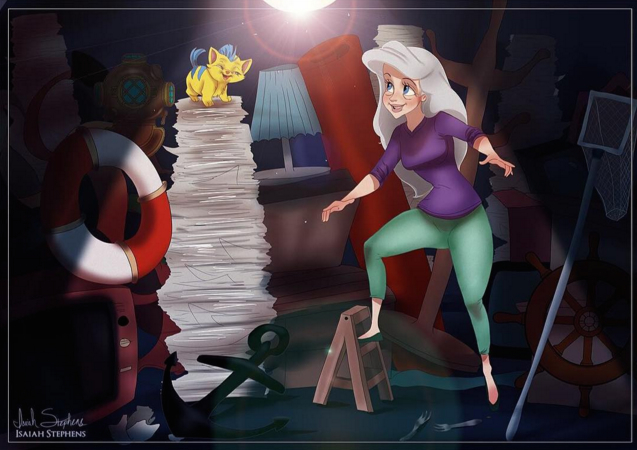
Artist Isaiah K. Stephens likes to depict Disney Princesses in their old age, and he’s probably right about elderly Ariel from The Little Mermaid becoming a hoarder. See others at Design Taxi.

1980s Movies Tribute of the Day:

The gang from It’s Always Sunny in Philadelphia pay homage to wild ’80s ski comedies in this promo for their 11th season:

[embedded content]

Vintage Image of the Day:

Tom Hanks looks less lonely on his desert island in this photo of Robert Zemeckis giving direction from the set of Cast Away. The movie had its Hollywood premiere on this day 15 years ago.

Filmmaker in Focus:

Channel Criswell has a new essay on the films of Japanese master Yasujiro Ozu, spotlighting his symbolism-fueled style:

[embedded content]

Fan Dwelling of the Day:

Fans of the Lord of the Rings movies can now live like a Hobbit thanks to special pre-fabricated homes (via Geekologie):

Classic Trailer of the Day:

Today is the 25th anniversary of the release of Tim Burton‘s Edward Scissorhands. Watch the original trailer for the movie, which stars Johnny Depp and Winona Ryder, below.

[embedded content]

Send tips or follow us via Twitter:

and

This entry passed through the Full-Text RSS service – if this is your content and you’re reading it on someone else’s site, please read the FAQ at fivefilters.org/content-only/faq.php#publishers.


No Image

U.S. Women's Soccer Team Cancels Game Over Poor Field Conditions

Abby Wambach of the U.S. women's national soccer team (right) stands with teammates during a practice in October. The team canceled a friendly match against Trinidad and Tobago on Sunday because of the poor state of the artificial turf.

Abby Wambach of the U.S. women’s national soccer team (right) stands with teammates during a practice in October. The team canceled a friendly match against Trinidad and Tobago on Sunday because of the poor state of the artificial turf. Elaine Thompson/AP hide caption

toggle caption Elaine Thompson/AP

The World Cup-winning U.S. women’s national soccer team abruptly canceled a friendly soccer game against Trinidad and Tobago, scheduled for Sunday, because of poor field conditions.

The players and coaches, along with the U.S. Soccer Federation, decided to call off Sunday’s game in Hawaii after inspecting the artificial turf field, parts of which were peeling away from the ground.

“There were sharp rocks ingrained all over the field. They were everywhere. The artificial turf was actually pulling up out of the ground, and the turf itself was both low-grade and aging. This was a playing surface that looked like it hadn’t been replaced in years,” the team wrote in The Players Tribune.

Former U.S. soccer star Julie Foudy tweeted a photo of the turf being lifted away from the ground.

One of the reasons @ussoccer canceled today’s game in Hawaii. #USWNT pic.twitter.com/uKJUMmOCA5

— Julie Foudy (@JulieFoudy) December 6, 2015

The cancellation of the game, which would have been the seventh on the team’s 10-game World Cup victory tour, is the latest in a series of events that highlight the disparities between men’s and women’s soccer in the U.S.

Players have protested playing on artificial turf fields for years, citing bad ball bounces, painful turf burn and delayed recovery time for injuries. The complaints have been especially loud since it was announced last year that the women’s World Cup would be played on artificial surfaces instead of natural grass, prompting some international female players to file a lawsuit against FIFA, alleging gender discrimination. The men’s World Cup is played on grass.

Though the players eventually dropped the suit, they continued to be outspoken about the disadvantages of artificial turf. U.S. captain Abby Wambach called playing on it “a nightmare.”

The U.S. women’s team went on to win the World Cup, despite playing only on artificial surfaces, and shattered TV ratings for soccer in the U.S. in the process. The triumph did little to change protocol regarding field conditions for the women’s team, though; eight of the 10 victory-tour games were scheduled for artificial turf. And, according to Foudy, the field at Aloha stadium in Honolulu wasn’t inspected before the match.

That field should have been vetted months ago. And now players have to act to protect their careers and livelihood. Shaking my head. #uswnt

— Julie Foudy (@JulieFoudy) December 6, 2015

Being told @ussoccer is working w the team & coaches to get a protocol in place similar to men’s. How not already in place is beyond me.

— Julie Foudy (@JulieFoudy) December 6, 2015

In explaining their decision to sit out Sunday’s game, the players wrote: “Soccer is our job. Our bodies are our jobs. And nothing should ever be put in competition with our protection and safety as players.”

“Player safety is our number one priority at all times and after a thorough inspection throughout the day, we determined it was in the best interest for both teams to not play the match,” U.S. Soccer spokesman Neil Buethe said in a statement. “We regret not being able to play in front of our fantastic, loyal fans.”

The statement also said the federation would refund all tickets.

This entry passed through the Full-Text RSS service – if this is your content and you’re reading it on someone else’s site, please read the FAQ at fivefilters.org/content-only/faq.php#publishers.


No Image

FTC Sues To Block The Merger Of Office Depot And Staples

The planned merger by Staples and Office Depot faces opposition from federal regulators, who say it would hurt competition for businesses buying office supplies.

The planned merger by Staples and Office Depot faces opposition from federal regulators, who say it would hurt competition for businesses buying office supplies. Steven Senne/AP hide caption

toggle caption Steven Senne/AP

The Federal Trade Commission has taken the first step toward blocking the proposed $6.3 billion merger of Staples and Office Depot, saying the deal would hurt competition in the market for office supplies sold to large corporations.

The commission filed an administrative complaint charging that the merger between Massachusetts-based Staples, the world’s largest seller of office supplies, and Florida-based Office Depot would violate antitrust laws.

“The Commission has reason to believe that the proposed merger between Staples and Office Depot is likely to eliminate beneficial competition that large companies rely on to reduce the costs of office supplies,” said FTC Chairwoman Edith Ramirez.

Many large business customers buy office supplies by contract, the FTC said. That provides them with a wide range of office supplies at competitive prices, fast and reliable nationwide delivery, dedicated customer service and customized online catalogs, among other things, it said.

“That business-to-business market is distinct from the more competitive retail markets for office supplies sold to consumers,” Ramirez said.

The FTC blocked a merger between the companies in 1997, but the companies were hoping the changes in the market since then would persuade regulators to see this deal differently. Big-box stores and Internet retailers play a much bigger part in the business.

Staples and Office Depot issued a joint statement saying the FTC’s vision of the office supply market is outmoded and “based on a flawed analysis and misunderstanding of the intensely competitive landscape in which Staples and Office Depot operate”:

“The FTC underestimates the disruptive effect of new competitors in the digital economy. It also ignores the vigorous existing and expanding competition Staples and Office Depot face from numerous strong competitors, including office products dealers supported by large national wholesalers, manufacturers selling office supplies directly to business customers, dealers in adjacent categories, cooperatives of regional players, Internet resellers, big-box chains, and club stores.”

In addition to the administrative complaint, the FTC has authorized its staff to seek an injunction against the merger. An administrative trial will begin on the FTC’s complaint on May 10, 2016.

The FTC conducted its investigation with the Canadian Competition Bureau, which has also sued to block the merger.

This entry passed through the Full-Text RSS service – if this is your content and you’re reading it on someone else’s site, please read the FAQ at fivefilters.org/content-only/faq.php#publishers.


No Image

Marijuana Extract May Help Some Children With Epilepsy, Study Finds

A strain of high-cannabidiol marijuana is used to create extracts used in experimental epilepsy treatments.

A strain of high-cannabidiol marijuana is used to create extracts used in experimental epilepsy treatments. GW Pharmaceuticals hide caption

toggle caption GW Pharmaceuticals

Parents of children with severe epilepsy have reported incredible recoveries when their children were given cannabidiol, a derivative of marijuana. The drug, a non-psychoactive compound that occurs naturally in cannabis, has been marketed with epithets like Charlotte’s Web and Haleigh’s Hope.

But those parents were taking a risk; there has been no clinical data on cannabidiol’s safety of efficacy as an anti-epileptic. This week, doctors are presenting the first studies trying to figure out if cannabidiol actually works. They say the studies’ results are promising, but with a grain of salt.

The largest study being presented at the American Epilepsy Society meeting in Philadelphia this week was started in 2014 with 313 children from 16 different epilepsy centers around the country. Over the course of the three-month trial, 16 percent of the participants withdrew because the cannabidiol was either ineffective or had adverse side-effects, says Dr. Orrin Devinsky, a neurologist at the New York University Langone Medical Center and lead author on the study.

But for the 261 patients that continued taking cannabidiol, the number of convulsive seizures, called grand mal or tonic-clonic seizures, went down by about half on average. Devinsky says that some children continued to experience benefits on cannabidiol after the trial ended. “In the subsequent periods, which are very encouraging, 9 percent of all patients and 13 percent of those with Dravet Syndrome epilepsy were seizure-free. Many have never been seizure-free before,” he says. It’s one of several [at least four. checking] papers on cannabidiol being presented this week at the American Epilepsy Society meeting in Philadelphia.

Twenty-five of those patients were followed for a yearlong study also presented at the meeting. Some of those patients did better, but one ended up doing worse. “A drug can induce an increase in seizures,” says Dr. Maria Roberta Cilio, a pediatric neurologist at UCSF Benioff Children’s Hospital who led that study. This happened with one of her patients. “For one particular child, the more the dose of [cannabidiol] was increasing, that increase was paralleled with an increase in seizure frequency,” she says.

Some patients in Devinsky’s trial also did worse while on cannabidiol, but he thinks there’s no way to tell if it was because of the drug or something else. He says we won’t know until a full clinical trial has run its course. Without that, the perceived effects of the drug might be a placebo effect or it could be some other confounding factor that hasn’t been caught in the study. What’s more, a few hundred patients isn’t a lot of patients, and doctors still need to see what will happen when a patient is on cannabidiol for more than a few months.

Epilepsy can be one of the most difficult syndromes to treat. About a third of patients have an intractable form of epilepsy. It’s common for children and adults with treatment-resistant epilepsy to exhaust the list of anti-seizure medications to little or no effect.

Jaren Hansen is a 7-year-old boy with Lennox-Gastaut Syndrome, a form of treatment-resistant epilepsy. When he was 2, he started having seizures. His doctors diagnosed him with epilepsy and started him on one anti-seizure medication. Then they added another, and then another.

Jaren Hansen, here with his mother, Nicole Hansen, has had seizures since he was 2.

Jaren Hansen, here with his mother, Nicole Hansen, has had seizures since he was 2. Courtesy of Nicole Hansen hide caption

toggle caption Courtesy of Nicole Hansen

None of them seemed to be working. “He tail spun again and had a tonic-clonic seizure every day. At that point, he was on three seizure medications, and we weren’t seeing any control. Things were just tumbling downward,” says his mother, Nicole Hansen from Necedah, Wisc. “At one point, blood levels of Depakote [an anti-epileptic medication] were toxically high. We needed to try something else. We were scared for his long-term health based on just the side effects of the medicine.”

Hansen, who works as a cranberry grower in Wisconsin, started researching her son’s illness. She found an online chat group with other parents who were discussing medical cannabis, and decided to try one of the commercially available cannabidiol products. But it was difficult. States like Wisconsin do allow the shipment of cannabidiol supplements and oils that don’t contain tetrahydrocannabinol or THC, the psychoactive compound in marijuana, but most doctors won’t touch it. “They won’t even prescribe it because there are too many loopholes and too much work,” Hansen says.

Lack of physician input often leaves parents on their own, Hansen says. That presents more challenges. “You have to make sure the company can replicate the same product over and over. A small change in the ratio of THC to cannabidiol can cause the child’s seizures to increase or come back. You have to make sure there are no microbial issues like molds or funguses or pesticides.”

That people are treating themselves or their children with cannabis products is troubling to physicians. “It’s a very worrisome time. People go off and do their own thing, if things go wrong, you don’t know why. You want data, and you don’t have it, and all the families are just trying things,” says Dr. Brenda Porter, a pediatric neurologist at Stanford University School of Medicine who was not involved in the study.

Devinsky says parents either have to purchase the cannabidiol from an artisanal distributor of hemp products or compound the drug themselves. Either way, “the consistency from batch to batch is quite uncertain,” he says.

And people sometimes try different formulations from several companies in the hope one will work. “As a practitioner, I have had families move to Colorado, and many tried multiple different products,” Devinsky says. That makes it really difficult to tell what is or isn’t working. “As a doctor, I often don’t feel like I know which of many factors is contributing to a patient doing better or worse. We absolutely need rigorous, scientific data on this,” he says.

Even though the results presented at the American Epilepsy Society meeting look encouraging, researchers caution that there’s no promise cannabidiol is really going to work for many of these treatment resistant epilepsy syndromes. Until there is a full clinical trial done with a placebo-controlled element, Devinsky and others say it’s impossible to tell if cannabidiol is having a real effect on epilepsy. That takes time and puts parents in a difficult position, he says. “Parents are desperate and they feel the medical community has failed them, which is true in many cases.”

Hansen agrees with Devinsky; she feels that the clinical trials need to be finished as fast as possible. “There are parents out there doing whatever they can and experimenting with cannabis. We need the medical professionals so they can help make the proper recommendations,” she says. “But I can’t blame them for trying. When you are seeing your child dying, and knowing that you could do something to help them, how can you not do something as a parent?”

After Hansen put her son on cannabidiol he continued to have seizures, but the number of convulsive seizures went down. Then he caught a stomach flu, and things spiraled out of control. The tonic-clonic seizures came back, violently, and he nearly died. “They put him into am medically induced coma in hopes that it would reset his brain.” she says. “By God’s grace, truly, and by a miracle it did.”

Jaren is not on cannabidiol anymore. He’s on three different medications now, including a benzodiazepine and a barbiturate. “Both in the long-term can cause brain atrophy,” Hansen says. “At some point, we have to start weaning him off, and nothing else has worked. And he needs more than just cannabidiol.” She’s hopeful that cannabis research will bring the science to a point where doctors can begin looking into mixtures of cannabidiol and THC together.

Full on, randomized clinical trials testing cannabidiol for epilepsy are already underway, but it will still be some time until the results are out. Until then, Devinsky says, “Wait.”

This entry passed through the Full-Text RSS service – if this is your content and you’re reading it on someone else’s site, please read the FAQ at fivefilters.org/content-only/faq.php#publishers.


No Image

In Gaza, Kids With Cancer Have 'Virtually No Care.' One Group Hopes To Help

An interior view of the plans for the Gaza children's cancer treatment center.
3:51

Download

An interior view of the plans for the Gaza children’s cancer treatment center. Courtesy of CEP Consultants hide caption

toggle caption Courtesy of CEP Consultants

The ongoing conflict in the Gaza Strip has damaged hospitals, clinics and other medical facilities, leaving major gaps in health care.

Children with cancer, in particular, struggle to get the proper treatment they need. They often have to travel to Israel or much farther.

So one American nonprofit — called the Palestine Children’s Relief Fund — aims to change that. The PCRF is building a large new pediatric cancer center in Gaza.

“We found a significant gap in the services that are available in pediatric oncology and hematology. Our organization wants to address those, because children who are suffering from cancer have virtually no care at all in the Gaza Strip,” Steve Sosebee, co-founder and CEO of the group, tells NPR’s Lynn Neary.

“As you can imagine … the most basic chemotherapy, pain management, palliative care and so on being unavailable in Gaza is just a huge burden on the health care system, on the families and most importantly, on the patients.”


Interview Highlights

On the challenges children and their parents grapple with in Gaza

The problem facing children in Gaza far exceeds just the issue of cancer. Children in Gaza face food issues, face educational issues, face health care issues on a much larger scale than just cancer. And our organization addresses those issues.

On what kids with cancer in Gaza must do for treatment under current circumstances

Most of the kids are referred outside, if they’re able to get outside. There is no free access in and out of the Gaza Strip. You must have a permit from the Israeli army to leave the Gaza Strip.

Now, Israel does issue permits for humanitarian cases to leave and to go to Israeli hospitals for specialized oncological care. It’s an extremely long and bureaucratic process, and it’s also a very challenging one for the patients and for their families, because now, a new order just came down that children cannot travel with anyone under the age of 55. So it’s a big burden for the families. You can imagine that means the grandmother has to go.

On the challenges of building the center, given the political situation

Let me first give you a little bit of background. We built the first and only public pediatric cancer department in the West Bank, in Bethlehem, about two years ago. The problem is that those children in Gaza are unable to get out on a regular basis, therefore we need to build services for them in the Gaza Strip. About half of the population of Gaza are children. So it’s a very poor and impoverished land.

The challenges that we face are extreme. The political challenges are that getting equipment in is under the regulation and control of the Israeli military. The government in Gaza is run by Hamas, which the U.S. government deems as a terrorist organization, so there’s no contact with them. And getting things like cement in, getting drugs in is very challenging and extremely difficult.

On how far along in the construction process they are

We just finished the initial stages of the design being finalized, choosing a contractor, and we’ll start building before the end of this month. …

We hope, in the best-case scenario, that it will be done within one year. But unfortunately the circumstances now on the ground throughout the occupied territories is extremely volatile, and we do hope that the situation in Gaza will not deteriorate.

All we can do is try to provide services based on the needs of the people and not prevent the realities of working on the ground there to stop us from doing what our role and responsibility is, as a humanitarian organization — which is to look beyond politics, look beyond the religion and look strictly at the needs of the children there and try to serve those needs to the best of our ability.

This entry passed through the Full-Text RSS service – if this is your content and you’re reading it on someone else’s site, please read the FAQ at fivefilters.org/content-only/faq.php#publishers.


No Image

How Tech Billionaires Are Bypassing Charities To Target Their Philanthropy

3:28

Download

You may hear the words “impact investing” this week. It’s fast becoming the way a new generation of wealthy are choosing to invest in society. Chronicle of Philanthropy editor Stacy Palmer explains.

Transcript

LYNN NEARY, HOST:

It’s time once again for our regular segment, Words You’ll Hear. That’s where we try to understand stories we’ll be hearing about by parsing some of the words associated with those stories. This time, we’re looking at a phrase you’ll be hearing more about in the coming months – impact investing. That’s a new twist on philanthropy for the next generation of wealthy, including Facebook CEO Mark Zuckerberg. Here to talk about it is Stacy Palmer, she’s the editor of The Chronicle of Philanthropy. Welcome to the show, Stacy.

STACY PALMER: Happy to join you.

NEARY: So what exactly is this impact investing, and how is Facebook CEO Mark Zuckerberg using it?

PALMER: Impact investing is exactly what it sounds like. It’s investing, and the impact part is to say can we get some social good out of our investments?

NEARY: All right. And how is that different from what we think of as charitable giving or traditional charitable giving?

PALMER: It used to be that wealthy people would set up a foundation and most of the money would come out in grants. And because of federal law, they would end up giving about 5 percent of their assets every year to charities and 95 percent of their assets would be invested in anything that maximized returns. Now people started saying that 95 percent of money that’s being invested might not be invested in very good things, so let’s focus there, and let’s look at how we make sure that our investments are doing good.

NEARY: In reading about this, I came across some other, I thought, very intriguing descriptions of the way young entrepreneurs are approaching charitable giving – hacker philanthropy was one and philanthrocapitalism was another. Is there a real sea change going on?

PALMER: There’s an important change happening. And one of the things that’s been part of this conversation is how can we use the market to better advantage, and does it make sense to have nonprofits so separate from the market? Now, there are people who don’t think this is a great idea and are very concerned about it because they said the whole reason philanthropy and nonprofits exist is to correct what the market does wrong. But it’s for sure changing the way philanthropy works and thinks.

NEARY: And there are a lot of tax implications here too. What’s the IRS take on this?

PALMER: The IRS told foundations that we understand that there’s this big change going on. And it had a very strict standard that you really had to maximize your financial investments. So that IRS ruling saying we’re not going to take this strict stance was seen as a really big deal.

NEARY: And there are also critics who are saying that this is a way to protect wealth, and that if it is protected from taxation, there’s less money for government programs. Is there truth to that or?

PALMER: Absolutely. That’s a big concern that people have when they saw this Zuckerberg money that it just means less taxes. But it’s not necessarily sure that’s the case. A lot of it is going to be how it plays out and how it’s structured. It could well be that they pay traditional taxes. And as a matter of fact, they made a statement saying that they would be paying taxes just like everybody else.

NEARY: Are there any other examples of some of the nation’s most wealthy people who are doing similar kinds of philanthropic giving?

PALMER: Very much so. Pierre Omidyar is considered sort of the father of this idea, and he’s the founder of eBay. Laurene Powell Jobs is using her money this way. So it’s really become a very popular area. And all of us will be able to put our money into impact investments as well because a lot of financial companies are developing products that will be affordable for people to get with as little as $20 in an investment. So we’re all going to be hearing about impact investing for a long time.

NEARY: That was Stacy Palmer. She’s the editor of The Chronicle of Philanthropy. Thanks so much for joining us, Stacy.

PALMER: Happy to be here.

Copyright © 2015 NPR. All rights reserved. Visit our website terms of use and permissions pages at www.npr.org for further information.

NPR transcripts are created on a rush deadline by a contractor for NPR, and accuracy and availability may vary. This text may not be in its final form and may be updated or revised in the future. Please be aware that the authoritative record of NPR’s programming is the audio.

This entry passed through the Full-Text RSS service – if this is your content and you’re reading it on someone else’s site, please read the FAQ at fivefilters.org/content-only/faq.php#publishers.


No Image

This Week In Football

4:43

Download

Rachel Martin talks to Mike Pesca, host of Slate’s The Gist podcast, about football’s Carolina Panthers. They’ve had an eventful year on and off the field.

Transcript

RACHEL MARTIN, HOST:

Time now for sports.

(SOUNDBITE OF MUSIC)

MARTIN: The Carolina Panthers are on fire. They take on the New Orleans Saints this afternoon. And the Panthers are the favorite with a perfect record in this season, 11 and 0. Now, my question is how did this team that is only as old as the Backstreet Boys get to this place? Mike Pesca is the host of The Gist. He’s here to explain. Hey, Mike.

MIKE PESCA, BYLINE: The Backstreet Boys are older than 20.

MARTIN: (Laughter).

PESCA: Maybe they’re as old as when the Backstreet Boys got popular, you know?

MARTIN: OK, fine. What are you with the facts? I mean, come on.

PESCA: They’re five years older than Adele, OK?

MARTIN: Oh, that would have been good.

PESCA: They’re as old as Google, at least.

MARTIN: OK, fine. Point taken. How are we here? How are we here?

PESCA: I will tell you.

MARTIN: How are the Panthers at this place?

PESCA: Yeah, I will tell you. But first I want to note, if you represent NPR’s youth movement, we are really in trouble.

MARTIN: Can you lay off?

(LAUGHTER)

PESCA: So the Panthers have a great defense. They have a really great pass defense. The NFL these days is all about passing. And they have a good run defense. Other than the truly excellent Denver Broncos in the other conference, best defense in football. And then on offense, they don’t have much. But the one thing they have is Cam Newton. Maybe you’ve heard of him. Maybe you’ve seen him in yogurt commercials.

MARTIN: I dig him.

PESCA: And I kind of love Cam Newton.

MARTIN: Me too.

PESCA: Statistically, I don’t know that he rises above a lot of NFL quarterbacks. But I think he’s particularly suited to do what the Panthers need him to do.

MARTIN: He also just looks like he’s having so much fun every time he’s on – that’s what I pay attention to. I mean, yeah, throw passes…

PESCA: Yes, no, I think – well, listen…

MARTIN: There’s joy, Mike, there’s joy.

PESCA: There is a joie de Cam.

MARTIN: (Laughter).

PESCA: And I think that maybe we could look at that as a something like leadership or something like confidence because, you know, he’s a great running quarterback. And the trend in the NFL was to – for years and years – just passing. And then a bunch of quarterbacks who could hurt the other team with their legs came in. But guess what? Those guys also tended to get hurt more often ’cause they put themselves in harm’s way. And so you have quarterbacks like Robert Griffin III not even playing this year and Colin Kaepernick also cut. So that trend of these hybrid quarterbacks sort of went away, except for Cam Newton. He’s so big. He’s so strong. Also, by necessity, he has to do it. His running is great. And the thing I want to point out is Cam – with Cam is that even though his passing statistically isn’t good, I watch a lot of his games. He throws the ball extremely accurately. And his receivers – I don’t know if they’re listening to Snoop Dogg or what, but they drop it like it’s hot. They have guys like Ted Ginn Jr., who almost lead the league in drops. And he has almost no one to throw to. So how do you – he has a good tight end, Greg Olsen – but among his receivers, they’re bad. His two offensive tackles are bad, so Cam’s always having to run around, getting away from coverage. That guy is more important to his team than any player, and I include Tom Brady in that assessment.

MARTIN: Whoa.

PESCA: Cam Newton – without Cam Newton, they would not be close to 11 and 0. They might not even be a winning team.

MARTIN: OK, can we see a Panthers-Pats Super Bowl?

PESCA: You know what’s interesting? Both of those two teams – Carolina and New England – are not named after cities or states. Interesting. That would be a cool Super Bowl. I think that the – actually the Patriots have a better chance to get there. They’re just a better team. The thing that the Panthers have going for them is their conference is sort of weak, especially related to the AFC. So I would say right now, the Panthers are the most likely in their conference to make the Super Bowl. But I still don’t know if I would say, quote, unquote, “likely.” I wouldn’t say they’re the odds-on favorite.

MARTIN: OK, you got a curveball?

PESCA: Sure. Let’s go to the world of luge.

MARTIN: Let’s.

PESCA: Now, I don’t have to tell you this is the – this is a sport that we only pay attention to once a quadrennial. And let’s face it, do we really pay attention? Well, we pay attention, in the United States, if our players – if our athletes do well. And in the World Championship of luge, the American women swept the podium. I will read you the three names of the medalists – Erin Hamlin, Emily Sweeney and Summer Britcher, which I think is a kind of odd but funny name for a luge/winter athlete. But way to go, USA.

MARTIN: Go ladies.

PESCA: Exactly.

MARTIN: Go USA. Mike Pesca, the host of The Gist on slate.com. Thanks, Mike.

PESCA: You’re welcome.

Copyright © 2015 NPR. All rights reserved. Visit our website terms of use and permissions pages at www.npr.org for further information.

NPR transcripts are created on a rush deadline by a contractor for NPR, and accuracy and availability may vary. This text may not be in its final form and may be updated or revised in the future. Please be aware that the authoritative record of NPR’s programming is the audio.

This entry passed through the Full-Text RSS service – if this is your content and you’re reading it on someone else’s site, please read the FAQ at fivefilters.org/content-only/faq.php#publishers.


No Image

Sports: Woods' Milestone; A Farewell Fit For Fame?

4:40

Download

NPR’s Scott Simon and Howard Bryant of ESPN.com and ESPN the magazine talk about college football championships, how Tiger Wood parents in the public eye, and Kobe Bryant’s retirement.

Transcript

SCOTT SIMON, HOST:

And now it’s time for sports.

(SOUNDBITE OF MUSIC)

SIMON: And we have news this week from coin toss to the finish. Two teams face off for the Big Ten title, one of basketball’s biggest stars announces his long goodbye and a former champion says, this is 40 and have I got a challenge. Howard Bryant of espn.com and ESPN the magazine joins us. Howard, thanks so much for being with us.

HOWARD BRYANT, BYLINE: Good morning, Scott. How are you?

SIMON: I’m fine, thank you. Iowa Hawkeyes, Michigan State Spartans, tonight, Big Ten championship. Iowa was 12 and 0 this year, so why are they underdogs?

BRYANT: Well, because I think there’s something magical also about Michigan State having beaten Ohio State. They’ve played – Iowa – I’m not going to take anything away from any of them – but the unbeaten against the magic – you know, against the magical team. But I think that Michigan State’s played tougher games. But it wouldn’t surprise me if either team won. Totally great even matchup, winner goes to the playoff and the loser – don’t lose at the wrong time, Iowa, because they’re unbeaten right now. Not the time you want to lose a game.

SIMON: I want to ask you about Tiger Woods, and it’s not ’cause he’s in the hunt for a tournament, obviously. He turns 40 this month. He’s had lots of injuries. I don’t know what number he is in the list now, but he’s way down there. Obviously a lot of attention to his personal life – the scandal in 2009. He gave an interview to Time Magazine this week where he talked about his struggles as an athlete. But I was touched by what he said about his family life and his children especially.

BRYANT: No question. It’s a really candid interview where he talks about having to explain to his 6- and his 8-year-old children about the scandal with his – in his personal life about why his marriage collapsed and answering the question, in his words, to answer the question why are mommy and daddy not together before they get on the Internet, before they become Internet children who are flipping through all kinds of different stuff and reading about their families. He says, I want my kids to hear it from me. And I think that was a very powerful interview. And it’s very hard. I think one of the things that we don’t do enough is to talk about how public the public life is. I mean, half of the country gets divorced. But very few people have to talk about everything that took place between parents in the public eye. Imagine…

SIMON: And this is a lot to talk about, too. This isn’t just two people falling out of love.

BRYANT: Exactly. This is a lot to talk about, exactly right. However, I thought that as the twilight of the athlete is always very poignant, I thought the other thing is that Tiger Woods is just a young man. He’s going to be 40 years old. He’s got lots of life left and a lot of relationships to happen with this kids. And so this is going to be a very interesting challenge to also have to do it in the public eye for all those millions of dollars and billions of dollars that he’s generated, not necessarily something that you would wish on anyone.

SIMON: Kobe Bryant has announced he’ll retire at the end of this season. First round Hall of Famer, I should think, for sure.

BRYANT: No question.

SIMON: How will people, though, weigh the rape accusation against him in 2003, which was dismissed with an out-of-court settlement?

BRYANT: Well, I think that’s going to be there for him always, the same way – and I think it should be, in some ways, simply because this is part of the – this is part of his journey as a public figure. I think that, to me, obviously these are very, very difficult conversations to have. I think that you always have to take a life if you’re going to do criticism, as we do, to these public people. And the price of their fame is to look at their lives and careers in totality. And I think that that’s the challenge. If you are a basketball fan, obviously you have probably forgotten everything that happened 11 years ago. If you’re a less casual fan, you remember this because this was where he sort of came to public notoriety, unfortunately. I think, for me, I take it more as him – I look more of it as the public, as to how the public reacted then and now. Let’s not forget the death threats and all the different allegations against the accuser. I would like to think that today, knowing what we know a little bit more now, that accusers wouldn’t have to go through what she went through. I’m not sure that’s the case, but I’d like to think so.

SIMON: Howard Bryant of ESPN. Thanks so much for being with us.

BRYANT: Thank you, Scott.

Copyright © 2015 NPR. All rights reserved. Visit our website terms of use and permissions pages at www.npr.org for further information.

NPR transcripts are created on a rush deadline by a contractor for NPR, and accuracy and availability may vary. This text may not be in its final form and may be updated or revised in the future. Please be aware that the authoritative record of NPR’s programming is the audio.

This entry passed through the Full-Text RSS service – if this is your content and you’re reading it on someone else’s site, please read the FAQ at fivefilters.org/content-only/faq.php#publishers.


No Image

More Jobs, Cheaper Gas And Rising Stocks Help The Economy Look Up

Prices for both gasoline and natural gas have fallen this year. An AT&T employee fills up his company van in San Diego last month.

Prices for both gasoline and natural gas have fallen this year. An AT&T employee fills up his company van in San Diego last month. Mike Blake/Reuters/Landov hide caption

toggle caption Mike Blake/Reuters/Landov

No question, this was a traumatic, sad week because of the mass shooting in San Bernardino, Calif. It’s not easy to turn to good news.

But putting grief aside for a moment, there were indeed positive developments for the country in recent days. With cheaper energy, more jobs and higher stock prices, most Americans have been seeing their financial situations improve. Here are some of this week’s highlights:

  • JOBS: Employers added 211,000 jobs in November, the Labor Department said on Friday. That’s a healthy pace. Except for the manufacturing sector, the U.S. economy is now “much more vibrant,” said economist Bernard Baumohl of The Economic Outlook Group.
  • STOCKS: Share prices surged after investors shrugged off worries about a looming uptick in interest rates. The Dow Jones Industrial Average closed at 17,848, up 370 points, to end the week with a gain.
  • CONSTRUCTION: The Labor Department said that last month, construction companies hired 46,000 workers, mostly to build homes. The housing sector has very low inventories, so this fall’s construction hiring suggests there could be a burst of residential sales in the spring.
  • WAGES: Average hourly earnings continued their upswing, rising nearly 0.2 percent last month, for a 12-month gain of 2.3 percent.
  • ENERGY: Gasoline prices kept slipping, down to a national average of $2.047 for a gallon of regular gas, compared with $2.728 last year, according to AAA. And the government reported record inventories of natural gas. Amid the natural gas glut, many utility companies are cutting the prices they charge residential customers.
  • EUROPE: On Friday, European Central Bank President Mario Draghi said he would support more stimulus efforts to keep the European economy growing enough to hold off deflation.
  • CONGRESS: Both the House and Senate gave final approval to a $305 billion, five-year highway bill. The package, which was signed by President Obama, will provide more jobs and stimulus as transportation infrastructure projects move forward.

Sure, there’s bad economic news out there, too. Exports are being hurt by the strong U.S. dollar. That is depressing factory hiring. And many other countries are still underperforming, especially China. Energy companies are having to lay off a lot of people amid surging supplies and slumping prices.

So yes, the U.S. economy is never perfect. But this week, it did see a lot of reassuring signs. And with a week like this, Americans could use some good news.

This entry passed through the Full-Text RSS service – if this is your content and you’re reading it on someone else’s site, please read the FAQ at fivefilters.org/content-only/faq.php#publishers.