Articles by admin

No Image

Barbershop: The New 'Birth Of A Nation,' Cam Newton And Beyonce

10:22

Download

Blogger and writer Kara Brown, radio host Farajii Muhammad and The Root’s Danielle Belton talk about the new film The Birth of a Nation, Cam Newton, and Beyonce and Chris Martin’s new music video.

Transcript

MICHEL MARTIN, HOST:

Now it’s time for our trip to the Barbershop. That’s where we gather a group of interesting folks to talk about what’s in the news and what’s on our minds. Sitting in the chairs for a shapeup this weekend are Kara Brown. She’s a blogger and writer and joins us from NPR’s Culver City studios at NPR West. Hi, Kara.

KARA BROWN: Hi.

MARTIN: And here with me in Washington, D.C., Farajii Muhammad. He’s the host of the radio show Listen Up! in Baltimore. Welcome back, Farajii.

FARAJII MUHAMMAD, BYLINE: Thank you.

MARTIN: Also with us, Danielle Belton, an editor at The Root. Good to have you back, too, Danielle.

DANIELLE BELTON: It’s always good to be here.

MARTIN: And especially because after the storm, we all have cabin fever, right?

(LAUGHTER)

BELTON: I got me out of the house.

MARTIN: Got out of the house, thank you. All right, so big news out of the Sundance Film Festival this week – the film “The Birth Of A Nation” – we’re not talking about that old 1951 that glorified the KKK. This is a new movie by the actor and the filmmaker Nate Parker. It’s about Nat Turner’s 1831 slave rebellion. The film made history this week for being the biggest Sundance deal of all time. It was sold to Fox Searchlight for $17.5 million. Now, most of us aren’t going to be able to see it for many months. But just that dollar figure has gotten a lot of people anticipating the release. And Kara, you know I’m going to start with you…

BROWN: Yeah (laughter).

MARTIN: …Because you wrote this use for Jezebel that got a lot of people talking.

BROWN: Yeah.

MARTIN: And the title is “I’m So Damn Tired Of Slave Movies.”

BROWN: Yeah.

MARTIN: So why, and does that mean you’re not going to see it?

BROWN: No, I am definitely going to see “The Birth Of A Nation.” And, you know, I want to preface, I’m really happy for Nate Parker. I’m really glad that this film is getting made and that it’s getting the attention that I’m sure it deserves. The thing that I find just sort of exhausting is that almost every time you have a film with mostly black people that’s lauded sort of by a more general – i.e. white – audience, it oftentimes is a movie about slavery or the civil rights movement. And so it’s not that I don’t want those films to be made, but I do think that there’s a problem when those are the types of films with black people that are considered, quote, unquote “important” or “good.” And, you know, I’m very excited for this film, but I would also be happy with perhaps giving other stories a chance to shine and to get the audiences that this film I’m sure we’ll get.

MARTIN: But OK, let me just push on this for just a second, Kara, because, you know, you make the point that part of it is so disturbing. Why is it that what – you know, an important film has to be kind of founded on black people being brutalized.

BROWN: Yeah.

MARTIN: Isn’t that kind of what a serious film is?

BROWN: I don’t think so. And I think when you look at the breadth of movies with white people, they don’t all fall in that category. Jennifer Lawrence won for “Silver Linings Playbook,” which is about two people ballroom dancing. Generally, white people get a wider representation of who they are and their lives and things that they’re interested in and things that they’ve gone through than black people do on film, in particular with these films that sort of go down in film canon as being important movies.

MARTIN: Let’s hear from some other folks on this. Danielle, what do you think about this? Because I was thinking about this, have there really been that many slave movies?

BELTON: Well, I don’t think there actually has been that many. I mean, if you’re talking about it just in recent years, you have “Django Unchained,” which was like a complete fantasy. You know, it was like a Western. It was a cartoon, practically. And then you had “12 Years A Slave,” which was very serious. I think the real issue is – is that there are just so few black movies that come out. I mean, there’s more Tyler Perry movies than slavery movies, and people get equally sick of those because there just isn’t enough variety. There isn’t just enough wide a scope of black films looking at every different facet of black life in the same way you see films about white life.

MARTIN: Are you going to go?

BELTON: Oh, I’m totally going to go see it.

MARTIN: Yeah? Farajii, what do you think?

MUHAMMAD: Definitely going to go see it. But here’s the thing – you know, I feel like some of these movies – you know, I understand that there is this kind of, like, exhausting feel with it. But these movies are necessary because they continue to keep the conversation out there, especially a movie about Nat Turner, I mean, who was a rebellion leader. You know, when you have a black man producing…

MARTIN: And vilified – vilified throughout history…

MUHAMMAD: Exactly. So that’s going to really change the conversation for a lot of black children I think and certainly for black people because one of the things is that our context of race is slowly diminishing. We – you know, the Black Lives Matter movement and all of the things that we see with social justice, it seems as if that this is still – race in America is still something that we want to kind of whitewash away. And when I think of, like, “Birth Of A Nation,” I mean, juxtapose that to, you know, there’s this larger cry for confederate statues and all of these other symbols of what has happened in America in the past to be removed. And – you know, and if it’s not present, if it’s not in your face, it’s going to be forgotten.

MARTIN: Can I ask you about Kara’s other point though in her piece, which I think was that, you know, there’s something traumatic about this, about having to experience this. And there’s this – it’s traumatic for the actors. It’s traumatic for the audience. And does it really – does it really actually accomplish, Farajii, what you’re suggesting that it does, which is helping really people understand this and put it in its proper context?

MUHAMMAD: I think so. I mean, I think that if it’s not traumatic – you know, what made “12 Years A Slave” such a major film was the fact that it was brutal. It was traumatic. It was in your face, and it constantly showed that look, these things truly happened. And I think – you know, I saw – I read Kara’s piece, and I enjoyed it. And I feel, like, you know, I understand, but at the end of the day, we need to constantly put pieces out like this. And it’s going to be very important to see – or at it’s going to be interesting to see how Nate Parker’s take on it is going to be.

MARTIN: All right, hang on, wait to see when it comes out, maybe we’ll revisit this and see whether people feel differently…

MUHAMMAD: Definitely.

MARTIN: …Once people have a chance to see the movie. So Kara, thanks for writing that piece and kind of raising this issue, but let’s move on. The next week – next weekend is the Super Bowl, the matchup this year between the Denver Broncos and the Carolina Panthers. But it turns out that there are people having feelings about Panthers quarterback Cam Newton. You might remember that earlier this year, there was this mom who wrote this open letter complaining about his…

BELTON: She was so scandalized.

MARTIN: …Touchdown dance.

MUHAMMAD: Oh, my God, come on.

MARTIN: And it turns out – it seems like – you know, his personality seems to rub some people the wrong way. And he is suggesting that this is because he’s an African-American quarterback. Now, he’s certainly not the first. He’s – what? – the sixth…

MUHAMMAD: The sixth in NFL history.

MARTIN: But what do you think about that, Farajii?

MUHAMMAD: I think that, you know, when the game came down to the Panthers and the Broncos, I automatically knew it was going to be, like, old-school versus new school.

MARTIN: So you don’t think this is race?

MUHAMMAD: Now, this is race because this is, like, the “King Kong” effect. They’re creating this view of Cam Newton as they see this big scary black creature that’s going to just demolish or take advantage of this humble meek Peyton Manning. You know, retired player Brian Urlacher said that Cam Newton needed to be a little bit more humble like Peyton. Man, shut up, get out of here. Be for real. Like, this is football. It’s bold. It’s in your face. It’s loud.

MARTIN: I sure hope we can get Farajii to come out of his shell some day…

BELTON: I know…

MARTIN: …Tell us how he really feels. I just – I just feel like if we could just loosen him up a little bit, it would be so helpful. Kara, do you want to weigh in on this? What do you think?

BROWN: Yeah. Well, you know, speaking of the Seahawks, I’m a Seahawks fan. I’m from Seattle, and it really reminds me of a few years ago with Richard Sherman, where…

MUHAMMAD: Right.

BROWN: …You had very similar criticism, very similar language that was leveled against him. And there was an interview with him recently, I think, where he was asked about Cam Newton. And he said something like this is a game. And I just thought…

MUHAMMAD: Thank you.

BROWN: …That was so perfect. This is a game. These are grown men playing a game. And to act like there’s some sort of gentlemanly decorum that is necessary at all times is just silly. Like, let him celebrate. He won a game.

MARTIN: I always think that’s so funny. Like, people are mad at him for dancing in the end zone. But it’s OK when you knock somebody unconscious – that’s, like, OK.

BELTON: Right.

BROWN: (Laughter).

MARTIN: Final thing I wanted to run by all of you is that speaking of the Super Bowl, if you’re not tuning in for the game, then you’ll surely tune in for the halftime show. And this year, it’s going to feature Coldplay and Beyonce. And this week, the duo released a music video called “Hymn For The Weekend.” I’ll just play a little bit of it.

(SOUNDBITE OF SONG, “HYMN FOR THE WEEKEND”)

COLDPLAY FT. BEYONCE: (Singing) Put your wings on me, wings on me when I was so heavy. Soaring in symphony when I am low, low, low, low. I, oh I, oh I. got me feeling drunk and high. So high, so high…

MARTIN: OK, so what you can’t tell from our playing it for you is that the video is set in India, and it features Chris Martin, the Coldplay frontman, singing through lots of scenes – you know, he’s in a cab in Mumbai, he’s watching kids cannonball into the Ganges. He’s running through clouds of colored powder. And then Beyonce has a separate kind of location. She sings the hook, but she’s kind of dressed in this lavish Bollywood-inspired gown and headdress. And people were loving it. But then it seemed like there was this – as it percolated onto the Internet, there was this whole issue around cultural appropriation. And so I wanted to ask, you know, what you all think about that. Danielle, you want to start that one?

BELTON: Well, the thing that kind of kills me about the video, it hits, like, every note of, like, this is a video about India. Look, there’s color, there’s spirituality, look – you know, they hit all these, like, very stereotypical notes. The only thing that was missing was an elephant.

MARTIN: Kara, what do you think?

BROWN: Yeah, you know, I saw – definitely when I first that, I was like ooh, not a good look, Beyonce. That was definitely the first thing I thought. I would want to defer to someone who’s actually Indian. And I saw some people tweeting, some Indian women. And they were saying something similar, where they said, you know, this is definitely a conversation to be had about what Beyonce’s doing. They – a few of them that I saw said that they don’t feel the same impact as when they see maybe a white person doing it. So I would want to differ to that.

MARTIN: But why wouldn’t you just not watch it? You see, that’s the question I have.

MUHAMMAD: Because it’s Beyonce.

BROWN: It’s hard to not watch to a Beyonce…

MUHAMMAD: It’s Beyonce.

BROWN: How do you not watch a Beyonce video? Come on.

MARTIN: She’s the only thing watchable about that, as far as I’m concerned.

MUHAMMAD: Right, it’s visually appealing.

MARTIN: Yeah, it’s a beautiful video.

MUHAMMAD: The song is just not as strong.

BROWN: It’s Coldplay, so there’s, you know…

BELTON: The song’s kind of weak. She did all she could to help that song.

MUHAMMAD: Right, right.

BROWN: Yeah.

MARTIN: All right, well, I – you’ve given us a lot to think about. That’s all the time we have for the Barbershop this week with Farajii Muhammad, Kara Brown and Danielle Belton. Thank you all so much for joining us.

BROWN: Thank you.

BELTON: Oh, it’s no problem.

MUHAMMAD: Thank you.

BELTON: Thank you for having me.

Copyright © 2016 NPR. All rights reserved. Visit our website terms of use and permissions pages at www.npr.org for further information.

NPR transcripts are created on a rush deadline by a contractor for NPR, and accuracy and availability may vary. This text may not be in its final form and may be updated or revised in the future. Please be aware that the authoritative record of NPR’s programming is the audio.

This entry passed through the Full-Text RSS service – if this is your content and you’re reading it on someone else’s site, please read the FAQ at fivefilters.org/content-only/faq.php#publishers.


No Image

Feds Hopeful Hispanics Will Respond As Open Enrollment Comes To A Close

Iris Galvez, a health insurance navigator (right) helps Mary Soliz of Houston, Texas, sign up for her first health plan through the Affordable Care Act on January 28, 2015 at a Houston community center.
3:48

Download

Iris Galvez, a health insurance navigator (right) helps Mary Soliz of Houston, Texas, sign up for her first health plan through the Affordable Care Act on January 28, 2015 at a Houston community center. Courtesy of Iris Galvez hide caption

toggle caption Courtesy of Iris Galvez

There’s football season, hunting season, and the holiday season. Overlapping all of these is something decidedly less fun and sexy: open enrollment season for health insurance.

“We’ve been busy this past month,” says Iris Galvez, a health insurance navigator with the Houston social services agency Change Happens!

Galvez helps people navigate the Healthcare.gov website and enroll in health plans offered through the Affordable Care Act marketplace.

“It’s the holidays, that makes it hard. Because people are like ‘Well, we’ll just put it off,’ ” Galvez says with a laugh. “But now we’re getting very busy.”

Earlier this month, Galvez helped Elisia and Cipriano Saenz, a couple from north Houston, select a plan with Molina.

“You’ll have to pay this much per month to Molina,” Galvez explains in Spanish, before handing over a summary sheet listing the couple’s monthly premium payment ($363), the federal subsidy ($691), deductible ($2,000), and copays ($20 for the primary care doctor, $55 for a specialist).

“They’re pretty good, reasonable,” Saenz says of the amounts. “We’ll be able to afford it.”

Elisia Saenz thanks Galvez for her assistance.

“You made our day,” she says. “Because we were having a hard time getting in to it.”

Last year, her husband Cipriano Saenz did try to sign the couple up, but he was confused, and then suspicious when a government worker requested more paperwork and asked him to confirm his Social Security number.

“Sometimes we have to be careful who we talk to, give our Social Security, ID number,” Saenz explains. “He told them ‘I’m very sorry. I can’t give my information to you all through phone.’ “

Elisia Saenz says he never followed up, and the insurance lapsed.

“Something had gone wrong, or maybe he didn’t understand,” she says.

Signing up can be a chore. You need to gather financial documents and set aside money for the monthly premium. Not only that, it’s just unpleasant to think about risk and injury and disease.

Galvez noted that some of her returning clients were angry this year because the insurance networks had become narrower. Almost all the coverage plans on the exchange in Houston are now HMOs.

“This year they have taken away the PPO. So a lot of people are not pleased with that,” Galvez said.

That means they have fewer choices of doctors and hospitals. Still, she tries to focus on the positives – not only avoiding the federal tax penalty for not being covered (which is either $695 for each adult without coverage or 2.5% of household income), but also the peace of mind that insurance will bring.

“You never know, you know? You fall and slip and break your leg, that’s a big bill from the hospital,” she says.

Elisia Saenz is 56 and Cipriano Saenz is 62. They work as janitors at a charter school, where Elisia also works in the kitchen. She says they can’t afford the insurance offered at the school.

“It’s been years that I haven’t been to a doctor,” Elisia says. “Thank God that I haven’t gotten sick. Now I can just go and get a whole physical, and he can do the same. So we’re happy that we got this.”

The Obama administration has increased its outreach this year to Hispanics, running special ads and targeting cities like Houston, Miami and Dallas with big Hispanic populations.

Across the country, 20.9 percent of Hispanics are uninsured in the U.S., compared to 12.7 percent of blacks and 9.1 percent of whites, according to the Kaiser Family Foundation.

There are lots of reasons why. Hispanics are more likely to work in jobs that don’t offer health benefits. Many are ineligible for the Affordable Care Act, or just don’t know about the options available.

Of the three states with the biggest Hispanic populations, only one, California, has chosen to expand Medicaid to low-income, uninsured adults. Florida and Texas have not expanded Medicaid, and that’s affected many low-income Hispanic adults.

In surveys, Hispanics explain the main reason they are uninsured is cost. Health coverage just seems too expensive to fit into a budget.

“They don’t make enough money where they work, or they work self-employed, cutting yards and stuff,” says Elisia Saenz, describing some of her neighbors.

“Sometimes they can barely, probably make it to pay the rent, feed their kids, clothe them. I know it’s kind of hard for them, if it’s just one person working in the household.”

Federal officials counter that’s an outdated perception for some Hispanics – because under the new law, many would qualify for subsidies to buy insurance, just like the Saenzs did.

Enrollment in most states for 2016 ends Sunday.

This story is part of a reporting partnership with NPR, Houston Public Media and Kaiser Health News.

This entry passed through the Full-Text RSS service – if this is your content and you’re reading it on someone else’s site, please read the FAQ at fivefilters.org/content-only/faq.php#publishers.


No Image

New Jersey Steps In To Turn Around Atlantic City 's Luck

4:32

Download

The once-great gambling town has made a deal with New Jersey to turn it’s finances around. Christian Hetrick, who’s been following the story for the Press in Atlantic City updates Scott Simon.

Transcript

SCOTT SIMON, HOST:

Atlantic City has been in decline for decades. And now the state of New Jersey has made a deal with the city to take over its finances and try to turn the formerly high-rolling town around.

(SOUNDBITE OF ARCHIVED RECORDING)

CHRIS CHRISTIE: We wanted to give Atlantic City a five-year opportunity to have some of these problems worked out on their own. They didn’t. And so now we need to take those stronger steps to intervene and to work as partners with the mayor going forward.

SIMON: Governor Chris Christie of course. We visited Atlantic City just over a year ago. It didn’t seem like a place to go for a good time. Downtown looked abandoned. Four of the main casinos were closed. Seven thousand people had just lost their jobs. But Mayor Don Guardian – a Republican – said he had to see the setbacks as new opportunities for investors and his city.

(SOUNDBITE OF ARCHIVED RECORDING)

DON GUARDIAN: We are Filene’s Basement. You’re not going to find a better bargain than coming to Atlantic City. Two billion two hundred million dollars property at Revel you’re going to pick up for about $100 million. Four hundred million dollar casino that closed, other than Revel, you’re going to pick up for $25 million.

SIMON: So far, there have been few takers. Those four casinos remain closed. What had been the Showboat was just recently purchased. We’re joined now by Christian Hetrick of the Press of Atlantic City whose beat has been covering the city’s recovery and local politics. Mr. Hetrick, thanks very much for being with us.

CHRISTIAN HETRICK: Hey, thanks for having me on.

SIMON: From your experience and reporting, Mr. Hetrick, what can the state of New Jersey do that Atlantic City, as a municipality, couldn’t to try and turn things around?

HETRICK: Sure. Well, it’s really big things. The state has really been public about wanting the water company to be either sold to the county, which does have its own utilities authority, or possibly privatized, run by a company like, you know, American Water, United Water, because it’s, you know, been estimated that it could be worth $100 million or even more than that.

SIMON: What an opportunity.

HETRICK: Yeah, yeah, and, you know, what’s interesting now with this, you know, takeover talk, you know, a lot of people at the last council meeting have been invoking Flint, Mich., for obvious reasons ’cause in that case it was an emergency manager who, you know, recommended changes to that water supply. And – well, I know it wasn’t privatized. It was kind of rerouted, but still, people see similarities and are obviously naturally scared.

SIMON: Yeah. I suspect, Mr. Hetrick, a lot of people listening in the rest of America might be saying, look, Atlantic City is a place where people go to, you know, throw away their money. Why can’t they make a go of that?

HETRICK: Well, the gambling industry is still very, very big compared to other gambling industries across the country, but it’s really half of what it used to be. The casinos collectively, there’s eight left. They’ve brought in $2.7 billion in casino winnings this year. To compare that, they had $5.2 billion in 2006, so it’s really been cut in half. And then…

SIMON: And is that because of the other places that have opened up and down the…

HETRICK: Sure, sure, yeah, casinos have sprouted up in Pennsylvania, New York, Connecticut. You know, if you’re in North Jersey, why go an hour and a half south when you can probably just hop over the New York State border and maybe go somewhere closer? And so you kind of have, like, this one-two punch where, you know, the casinos are making less money and closing, and in turn that makes it difficult in terms of the city collecting taxes.

SIMON: What about those big old empty casinos? Any activity going on there?

HETRICK: Well, two of them, yes. The Revel casino does have a new owner. It ended up selling for $88 million, and then the Showboat as well just recently sold. And then the other two properties, though, are still – not too much movement on them.

SIMON: Why not just declare bankruptcy and pay off a few pennies on the dollar?

HETRICK: You know, there are pros and cons to it. You know, the city has $240 million in bonded debt. So, you know, through bankruptcy, you would shed that debt. You could toss out some collective bargaining agreements with the police and the fire. But there’s cons as well. You know, it’s obviously bad PR for a destination resort to be bankrupt. And then it also – bankruptcy doesn’t solve the annual budget deficits. So Atlantic City had $100 million budget shortfall they had to fill in 2015. And it’s estimated that the budget shortfall in 2016 is going be about $60 million. It solves a debt problem, but it doesn’t solve the spending and revenue problems.

SIMON: Christian Hetrick of the Press of Atlantic City, thanks so much.

HETRICK: Thank you for having me.

Copyright © 2016 NPR. All rights reserved. Visit our website terms of use and permissions pages at www.npr.org for further information.

NPR transcripts are created on a rush deadline by a contractor for NPR, and accuracy and availability may vary. This text may not be in its final form and may be updated or revised in the future. Please be aware that the authoritative record of NPR’s programming is the audio.

This entry passed through the Full-Text RSS service – if this is your content and you’re reading it on someone else’s site, please read the FAQ at fivefilters.org/content-only/faq.php#publishers.


No Image

Best of the Week: Sundance Reviews, Marvel and 'Star Wars' Movies Forever and More

The Important News

Franchise Fever:: Disney announced they’ll make Marvel and Star Wars movies forever.

Star Wars Mania: Harrison Ford will host the unveiling of Star Wars Disney theme park plans. Colin Trevorrow plans to shoot Episode IX on film.

Marvel Madness: The next Spider-Man movie will be released in IMAX 3D.

Remake Report: Sam Raimi will direct the remake of A Prophet. The Little House on the Prairie movie will now be made by Paramount. Labyrinth is getting a reboot (or sequel).

Casting Net: Saoirse Ronan will star in Greta Gerwig’s directorial debut. Uma Thurman might star in Marjane Satrapi’s next movie. Joseph Fiennes will play Michael Jackson in a 9/11 movie. Kim Basinger will co-star in Fifty Shades Darker.

New Directors/New Films: Kathryn Bigelow will direct a Detroit riot movie scripted by Mark Boal.

Reel TV: The Exorcist is being redone as a TV series. Miley Cyrus will star in Woody Allen’s Amazon series.

Box Office: Appropriately, The Revenant won the weekend of the big blizzard.

Fandom Planet: Back to the Future fans will be able to buy a brand new DeLorean next year.

Awards: The Big Short won the top PGA Award.

The Videos and Geek Stuff

New Movie Trailers: The Angry Birds Movie, Trolls, Nine Lives, The Bronze, The Secret Life of Pets and Kubo and the Two Strings.

TV Spots: Warcraft, The Witch and Batman v Superman: Dawn of Justice.

Behind the Scenes: Bridge of Spies.

Watch: New Star Wars character meet old Star Wars counterparts. And a new theory about Rey’s father.

See: Cool Star Wars goodies to buy your loved one for Valentine’s Day.

Watch: Gareth Evans made a bloodless samurai short film.

See: Deadpool did a PSA about testicular cancer.

Watch: The Shining remixed as The Chickening.

See: Disney’s Alice in Wonderland as a horror film. And a report on a problem with Disney princess movies.

Watch: The Martian visual effects reel.

See: How all Adam Sandler movies are interconnected.

Watch: Free documentaries from Kartemquin Films for their 50th birthday.

See: The 10-hour single-shot movie made in protest of movie ratings.

Watch: A montage of every black Oscar winner for acting. And a video essay on the 2016 supporting actress nominees.

See: This week’s best new movie posters.

Our Features

Sundance Film Festival Reviews: Manchester by the Sea and Swiss Army Man, Sing Street, The Birth of a Nation and Sleight.

Film Festival Guide: All the movies that have been bought at Sundance so far.

Sci-Fi Movie Guide: Reboots and adaptations we’d like to see.

Comic Book Movie Guide: 5 Wolverine stories we’d like to see made into movies.

Home Viewing: Here’s our guide to everything hitting VOD this week. And here’s our guide to everything hitting HBO Now next month. And here’s everything coming to Netflix next month.

and

MORE FROM AROUND THE WEB:

This entry passed through the Full-Text RSS service – if this is your content and you’re reading it on someone else’s site, please read the FAQ at fivefilters.org/content-only/faq.php#publishers.


No Image

NFL Report: Concussion Diagnoses Increased 32 Percent

Minnesota Vikings quarterback Teddy Bridgewater lies unconscious after sustaining a particularly nasty hit to the head during a game against the St. Louis Rams in 2015. The NFL reports there were 271 diagnosed concussions last year.

Minnesota Vikings quarterback Teddy Bridgewater lies unconscious after sustaining a particularly nasty hit to the head during a game against the St. Louis Rams in 2015. The NFL reports there were 271 diagnosed concussions last year. Jeff Haynes/AP hide caption

toggle caption Jeff Haynes/AP

The National Football League released a new injury report Friday that said the number of concussions diagnosed in 2015 had increased by 32 percent from the previous year.

The NFL said 271 concussions were diagnosed in 2015, up from 206 in 2014. The league reported 229 concussions in 2013; it said there were 261 in 2012.

As the medical community continues to find evidence linking concussions in football to CTE, a degenerative brain disease, and former NFL players like the Steelers’ Antwaan Randle El are speaking out against playing football, the NFL is under more pressure than ever to cut down on players’ head injuries.

It has taken steps to limit the number and mitigate the effects of concussions. From penalizing helmet-to-helmet hits and fining egregious instances of “targeting” to assigning impartial spotters to remove concussed players from play, and increasing education and awareness about head trauma, the league is trying to make the game safer.

But is it working?

Perhaps paradoxically, league officials point to the higher number of diagnosed concussions as progress.

“I see culture change,” said Richard Ellenbogen, co-chairman of the NFL’s Head, Neck and Spine Committee and chairman of the Department of Neurological Surgery at the University of Washington, according to the Chicago Tribune.

“Being on the sideline as an unaffiliated neurotrauma consultant, the culture has changed. I see coaches report players and pull them out of the game. I see players report themselves,” he said, according to the newspaper. “I see players report each other. That’s certainly new and different.”

This rosy assessment may sound promising, but it’s also almost exactly what league officials said more than five years ago, when diagnosed concussions increased 21 percent from the first half of the 2009 season to the first half of the 2010 season. Based on NFL data obtained, The Associated Press wrote this in 2010:

“Dr. Hunt Batjer, co-chairman of the NFL’s head, neck and spine medical committee, calls the numbers ‘a great sign’ because they show ‘the culture is changed.’

“‘Based on the opinions of the trainers and the team physicians and everyone we communicate with, it appears to be a cultural change,’ Batjer told the AP.”

So changing the culture is possible; the harder part will be changing the game to reduce concussions. In 10 or 15 years, if concussion diagnoses are still increasing every season, will league officials still be praising the efficacy of concussion education and awareness in football? When does culture change result in less concussions?

This entry passed through the Full-Text RSS service – if this is your content and you’re reading it on someone else’s site, please read the FAQ at fivefilters.org/content-only/faq.php#publishers.

No Image

Obama Announces New Rule Requiring Employers To Disclose Pay Data

2:30

Download

The government is proposing to require employers to report pay data by race, gender and ethnicity. The president is using executive power to make the rule change, which is set to take effect in 2017.

Transcript

ROBERT SIEGEL, HOST:

President Obama has announced that, for the first time, employers will have to disclose data about what they pay their employees. This is along with information that’s already provided about race, gender and ethnicity. The administration says this will enable regulators to crack down on pay discrimination. NPR’s Yuki Noguchi reports.

YUKI NOGUCHI, BYLINE: The president made the announcement at an event celebrating the seventh anniversary of the Lilly Ledbetter Fair Pay Act. The law extended the period in which a pay discrimination suit can be filed. But he says that’s only part of the equation.

(SOUNDBITE OF ARCHIVED RECORDING)

BARACK OBAMA: The typical woman who works full-time still earns 79 cents per every dollar that the typical man does. The gap’s even wider for women of color.

NOGUCHI: Equal Employment Opportunity Commission will collect data from employers with more than 100 workers. That will help determine where and which industries the pay gap persists. EEOC chairman Jenny Yang says that will also help her agency and the Labor Department enforce equal pay laws.

(SOUNDBITE OF ARCHIVED RECORDING)

JENNY YANG: Our agencies will use this data to more effectively focus investigations, assess complaints of discrimination and identify existing pay disparities that warrant further examination.

NOGUCHI: Yang also says she hopes the act of collecting and reporting the data will help companies self-correct. That was the case for Marc Benioff, CEO of salesforce.com. He says his team identified a pay gap he didn’t know existed.

(SOUNDBITE OF ARCHIVED RECORDING)

MARC BENIOFF: They said, hey, Mark, we may be paying women less at Salesforce. I go, that’s not possible. Well, guess what? We were – $3 million less.

NOGUCHI: The U.S. Chamber of Commerce criticized the new requirement, calling it burdensome. Other business groups say they’re reviewing the new rules. Sarah Moore is an attorney at Fisher and Phillips who represents employers. She says discussing pay used to be taboo in the office, but that’s rapidly giving way to transparency.

SARAH MOORE: It’s really key for companies to embrace the spirit of today’s announcement and begin to proactively prepare for the annual reporting of pay data to the EEOC.

NOGUCHI: Research suggests discrimination is only one reason for the pay gap. The president says he’ll also continue pushing to get more women in higher-paying jobs in science and technology, as well as fighting pregnancy discrimination and mandating paid family and sick leave. The new pay data rule is open for public comment and will take effect in September of next year. Yuki Noguchi, NPR News, Washington.

Copyright © 2016 NPR. All rights reserved. Visit our website terms of use and permissions pages at www.npr.org for further information.

NPR transcripts are created on a rush deadline by a contractor for NPR, and accuracy and availability may vary. This text may not be in its final form and may be updated or revised in the future. Please be aware that the authoritative record of NPR’s programming is the audio.

This entry passed through the Full-Text RSS service – if this is your content and you’re reading it on someone else’s site, please read the FAQ at fivefilters.org/content-only/faq.php#publishers.


No Image

The Doctor's Computer Will Email You Now

After knee surgery, David Larson, 66, of Huntington Beach, Calif., experienced pain in a calf muscle. His answer to an automated email from the doctor led to the diagnosis and treatment of a potentially dangerous blood clot.

After knee surgery, David Larson, 66, of Huntington Beach, Calif., experienced pain in a calf muscle. His answer to an automated email from the doctor led to the diagnosis and treatment of a potentially dangerous blood clot. Heidi de Marco/Kaiser Health News hide caption

toggle caption Heidi de Marco/Kaiser Health News

A health care startup made a wild pitch to Cara Waller, CEO of the Newport Orthopedic Institute. The company said it could get patients more engaged with their care by automating physician empathy.

It “almost made me nauseous,” she said. How can you automate something as deeply personal as empathy?

But Waller needed help. Her physicians in Orange County, Calif., perform as many as 500 surgeries a year, managing large numbers of patients at various stages of treatment and recovery. The doctors needed a better way to communicate with patients and track their progress.

The California startup, HealthLoop, told Waller its messaging technology would improve patient satisfaction and help keep them out of the hospital. High satisfaction scores and low readmission rates mean higher reimbursements from Medicare. Waller was intrigued and decided to give the technology a try.

So far, she’s been surprised at patients’ enthusiasm for the personalized — but automated — daily emails they receive from their doctors.

“There’s a limited number of resources in health care. If you do 500 joint replacements in a year, how do you follow up all of those patients every day?” Waller said. The technology “allows you to direct your energy to people who need the hand-holding.”

Though it may sound like an oxymoron, “automating empathy” is becoming a catchphrase in health care. The goal is to help doctors stay in touch with patients cheaply and with minimal effort.

Automated empathy is a powerful draw for hospitals and other health care providers scrambling to adjust to sweeping changes in how they’re paid.

When empathy is automated, it looks like this.

When empathy is automated, it looks like this. HealthLoop hide caption

toggle caption HealthLoop

Whether the emails actually trigger an empathetic connection or not, the idea of tailoring regular electronic communications to patients counts as an innovation in health care — one that has the potential to save money and improve quality.

Companies like HealthLoop are promising that their technologies will help patients stick to treatment and recovery regimens, avoid repeat hospital stays and be more satisfied with their care. Similar companies that aim to improve patient engagement include Wellframe, Curaspan and Infield Health.

HealthLoop’s technology is being tested at medical centers that include the Cleveland Clinic, Kaiser Permanente-Southern California and the University of California, San Francisco.

How does it work? Doctors can send daily emails with information timed to milestones in surgery prep and recovery. The emails can ask patients or caregivers for feedback on specific issues that come up during recovery.

The doctors may write their own email scripts, as Newport Orthopedics’ physicians did, or use the company’s suggestions. An online dashboard helps doctors and administrators keep track of which patients are doing well and who might need more follow-up care.

A patient might see this message: “How are you? Let me know so I can make sure you’re OK. I have four questions for you today.” The answers to those questions can trigger a call from the doctor’s office.

One of those calls may have been a lifesaver for David Larson, a Huntington Beach retiree. After Larson responded “yes” to an email that asked if he had calf pain after knee surgery, he got a call from his doctor’s office telling him to come in immediately. An ultrasound confirmed he had a blood clot that could have landed him in the hospital — or worse. With treatment, the blood clot dissolved.

“There were times when it was like, ‘Oh brother, they’re contacting me again,’ but none of this would have been caught if it wasn’t for the email,” said Larson, 66. “So it was more than worth it to me. Now I’m back to walking the dog, surfing, riding a bike.”

How to keep patients like Larson from being readmitted to the hospital because of avoidable complications after a hospital stay has long been a vexing and expensive challenge.

Almost 1 in 5 Medicare patients discharged from a hospital — approximately 2.6 million seniors a year — must be readmitted within 30 days, at an annual cost of more than $26 billion, according to the Centers for Medicare and Medicaid Services.

For decades, hospitals had no financial incentive to keep patients out of the hospital after they were discharged. But under the Affordable Care Act, penalties were established for hospitals with readmission rates higher than the national average for certain conditions.

Also under the ACA, hospitals are financially rewarded for high scores on patient satisfaction scores and good performance on other quality measures.

The sea change is affecting doctors’ groups, either because they are part-owners in hospitals, as Newport Orthopedics is with Hoag Hospital in Newport Beach, Calif., or because they participate in risk-sharing financial partnerships with them.

With money on the line, hospitals and other health care providers may be willing to pay for programs like HealthLoop, if the tryouts prove successful. And you could see your own relationship with your physician change as a result, whether you’re on Medicare or not: HealthLoop is aimed at all patients, whatever the payment source.

Some experts worry that health care providers will come to rely too heavily on electronic communication as a cheap substitute for the hard work of improving the doctor-patient relationship and the quality of care that patients get.

“Automating personalized messages isn’t a terrible thing; we all get some of that in our everyday lives,” said Michael Millenson, a health industry consultant. “The real question is whether this kind of automated messaging is in conjunction with a cultural change in how doctors think about their patients or not.”

Health care providers have experimented, with varying success, with ways to prevent complications that can lead to readmissions, said Kristin Carman, vice president of health policy research at the American Institutes for Research.

Robocalls reminding you to take your medicine, for example, don’t seem to be very effective. And the new technologies don’t always address demographic, cultural and language barriers that can prevent patients from communicating with their doctors. For now, HealthLoop is available in English only.

Dr. Jordan Shlain, a San Francisco internist, said he founded HealthLoop because he wanted a simple way to keep track of his patients’ progress after a hospital visit or procedure.

“Every human has the same kind of trajectory of concerns and anxieties with regard to medical situations,” Shlain said. “You know your doctor can’t email you every day; you know your doctor usually will not call you. Now you’re in a world where your doctor says I’d like to use this system to stay in touch with you and guide you through your recovery.”

Dr. Thomas Vail, professor and chairman of the department of orthopedic surgery at the University of California, San Francisco would agree — up to a point.

With his UCSF colleagues, Vail is testing HealthLoop’s system with his patients, and the university will be evaluating whether patients who use it experience fewer problems.

UCSF helped create some of the language for the automated emails and has a financial relationship with the company, said Dr. Aenor Sawyer, who directs UCSF’s Skeletal Health Service and is a leader at the university’s Center for Digital Health Innovation.

While Vail thinks HealthLoop is potentially promising, he’s cautious about its role in his practice. “I don’t think it substitutes for face-to-face communication,” Vail said, “but it does help us collectively to not overlook something that might be important.”

This story was produced by Kaiser Health News, which publishes California Healthline, a service of the California HealthCare Foundation.

This entry passed through the Full-Text RSS service – if this is your content and you’re reading it on someone else’s site, please read the FAQ at fivefilters.org/content-only/faq.php#publishers.


No Image

Today in Movie Culture: The Adam Sandler Shared Universe, 'Jurassic Park' Parkour and More

Here are a bunch of little bites to satisfy your hunger for movie culture:

Fan Theory of the Day:

Watch a crazy fan show how all Adam Sandler movies take place in the same universe (via Live for Films):

[embedded content]

Cosplay of the Day:

Watch a guy dressed as the T.rex from Jurassic Park doing some “Jurassic Parkour” (via Geekologie):

[embedded content]

Fan Art of the Day:

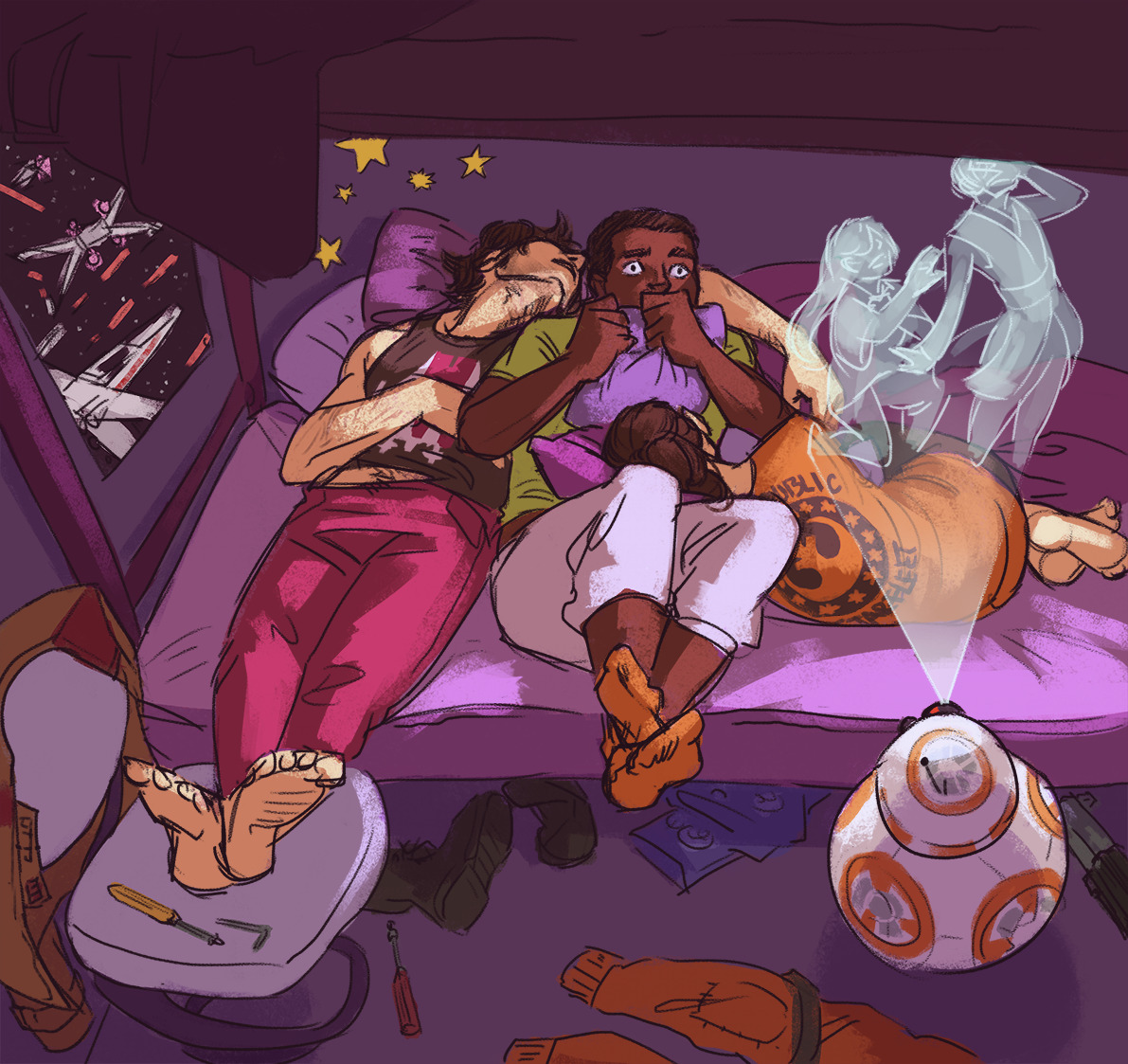
See Finn, Rey and Poe from Star Wars: The Force Awakens use the streaming power of BB-8 for a little hologram and chill in this great art by Cal-Cla (via Live for Films):

Supercut of the Day:

Semih Okmn collected shots of villains smiling for a wonderful montage that will make you happy about evil (via Cinematic Montage Creators):

[embedded content]

Video Essay of the Day:

Kevin B. Lee’s latest video essay on this year’s Oscar nominees showcases the roles of women in movies and real life (via Fandor Keyframe):

[embedded content]

Vintage Image of the Day:

Roscoe ‘Fatty’ Arbuckle and Betty Ross Clarke in the lost second version of Brewster’s Millions, which opened 95 years ago today:

Actor in the Spotlight:

This supercut titled “The Leonardo DiCapriOlympics” showcases the mightiest movie moments of Leonardo DiCaprio (via Fandor Keyframe):

[embedded content]

Filmmaker in Focus:

The second part of The Directors Series’ focus on the work of Paul Thomas Anderson covers Boogie Nights, Magnolia and his late ’90s music videos:

[embedded content]

Recut Trailers of the Day:

The below recuts of trailers for The Lord of the Rings and Batman v Superman: Dawn of Justice show that any movie can look more appealing set to “Bohemian Rhapsody” Suicide Squad style:

[embedded content]

[embedded content]

Classic Trailer of the Day:

This weekend is the 35th anniversary of the release of The Incredible Shrinking Woman. Watch the original trailer for the comedy, which stars Lili Tomlin and Charles Grodin, below.

[embedded content]

and

This entry passed through the Full-Text RSS service – if this is your content and you’re reading it on someone else’s site, please read the FAQ at fivefilters.org/content-only/faq.php#publishers.


No Image

Texas Tries To Repair Damage Wreaked Upon Family Planning Clinics

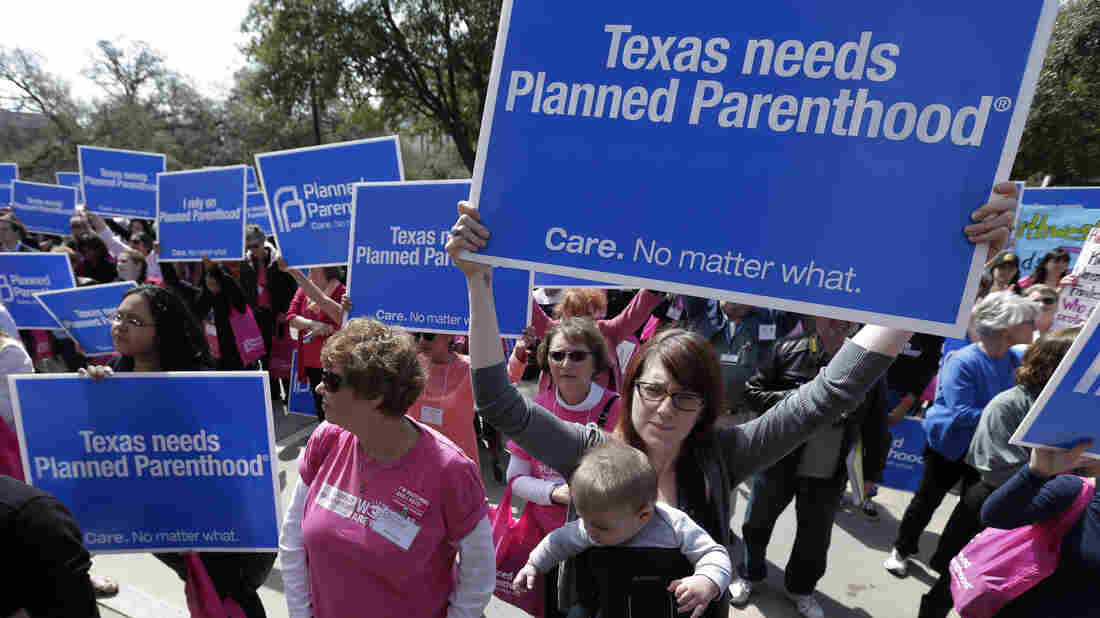
Five-month-old Ronan Amador rides in a carrier with his mother, Elizabeth Mahoney, during a Planned Parenthood rally on the steps of the Texas Capitol on March 7, 2013, in Austin.
8:12

Download

Five-month-old Ronan Amador rides in a carrier with his mother, Elizabeth Mahoney, during a Planned Parenthood rally on the steps of the Texas Capitol on March 7, 2013, in Austin. Eric Gay/AP hide caption

toggle caption Eric Gay/AP

For the past five years, the Texas Legislature has done everything in its power to defund Planned Parenthood. But it’s not so easy to target that organization without hurting family planning clinics around the state generally.

Of the 82 clinics that have closed, only a third were Planned Parenthood.

Midland Community Healthcare Services Clinic in West Texas is open, and every day it’s three lines deep as women file in for treatment. The clinic’s 15 examination rooms go full throttle all day but can’t come close to satisfying demand. The numbers are harsh. In Texas, just 22 percent of childbearing-age women who qualify for subsidized preventive health care treatment actually get it.

The latest family planning predicament began in 2011 when the Republican-dominated Legislature decided it was done once and for all funding Planned Parenthood. It eliminated funding for any clinic associated with an abortion provider even if the clinic itself didn’t perform abortions. In the process, the Legislature ended up slashing the state’s family planning budget by two-thirds.

“And that turned everything on its head,” says Dr. Moss Hampton, a district chairman for the American Congress of Obstetricians and Gynecologists and a professor at the University Health Sciences Center in Midland.

Hampton says the Legislature’s target was abortion, but the unintended consequence was that family planning clinics that had nothing to do with abortion, especially rural clinics, ran out of money.

“So you had programs that would help patients pay for physician visits, obstetrical care, gynecological care, Pap smears. When all of that funding was removed and cut, a large number of women didn’t have the means to pay for access to those services,” Hampton says.

The Effects Of Closing Clinics

By 2014, 82 family planning clinics across the state had closed. The consequence was calamitous. In Midland, for example, when the Planned Parenthood clinic closed, there were two aftereffects: 8,000 well-women appointments a year vanished, and so did the last place a woman could get an abortion between Fort Worth and El Paso.

The University of Texas’ Texas Policy Evaluation Project has been investigating the statewide effects of the Legislature’s family planning cuts.

“Teens obviously, when they lose access, they don’t have a lot of financial resources to go elsewhere for care so they may go without,” says Kari White, one of the lead researchers. “Women who are not legal residents are in disadvantaged positions in multiple ways, and even women who are making just a little bit over the cutoff for the women’s health program, $50 is still a lot of money out of your budget.”

The researchers found that two years after the cuts, Texas’ women’s health program managed to serve fewer than half the number of women it had before. The Legislature’s own researchers predicted that more than 20,000 resulting unplanned births would cost taxpayers more than a quarter of a billion dollars in federal and state Medicaid support. White says that as the state has worked to rebuild its shattered network, the new providers don’t necessarily have the same capacity to do cancer screenings and IUD insertions and birth control implants.

“A lot of the funding that has been allocated has gone to organizations that do not necessarily have the expertise or the necessary training to provide the types of family planning, contraceptive, preventive reproductive health care that the Planned Parenthood clinics provided,” White says.

The political backlash to the funding cuts was stout. So in 2013, the Legislature essentially restored the money. But finding new providers, especially in the countryside, has been slow and difficult.

“The Legislature wanted to make sure that … even if [women] were accustomed to going to a certain provider that was no longer a part of the state plan, that there was another provider that was willing and able to take and serve women. So that’s never an overnight process,” says Lesley French, the Texas Health and Human Services commissioner, who runs the women’s health services program.

French says the state program is approaching the number of providers it had back in 2010. But in many regions of the state, there’s been little or no decrease in the level of unserved need. Texas continues to grow vigorously, and a statewide doctor shortage compounds the problem. It’s not like already inundated medical practices are champing at the bit to take on thousands of orphaned Medicaid patients. French says they’re doing the best they can under the circumstances.

“I’m very cognizant [that] the needs [of] one area of the state are not what the needs are in another area of the state. So what works in Houston, what works in Dallas, doesn’t work for Midland,” French says. “I’m really trying to recruit providers who can meet the people that we’re trying to serve.”

Aubrey’s Story

The state’s newest rendition of its women’s health program debuts July 1. In the meantime, rural Texans still scramble to find family planning services — and not just poor women. Aubrey, a student at Texas Tech, doesn’t want her last name used for reasons we’ll explain in a moment. But last year, her senior year, her life changed.

“Yes, I’d met a boy. I decided to go and seek out getting on birth control,” she says.

About to become sexually active for the first time, Aubrey did not want her birth control showing up on her parents’ insurance, so she went to the student health clinic. But the doctor there was difficult.

“I just wanted to talk to her and get some ideas on what would be best for me. And she was telling me that I needed to get on a certain one because that was my only option,” she says. “It didn’t really make sense. There wasn’t a health issue, and it was kind of odd she was fighting me on this.”

The doctor told Aubrey it would take several weeks before she could get her birth control. When the young woman asked why, the doctor suggested Aubrey was lacking in moral fiber.

“She actually asked me if I was in that big of a hurry to become sexually active,” she says.

Furious and humiliated, Aubrey left. And she says this is where things got difficult. The Planned Parenthood clinics in Lubbock had recently closed. When she telephoned the county clinic, she discovered the next available appointment was in April. It was January. Determined, she next called Fort Worth, 4 1/2 hours away.

“Planned Parenthood really changed my life. Quite honestly, I don’t know where I’d be right now, if I hadn’t been able to get in at Fort Worth,” she says. “And so I’m glad I have the peace of mind now that I don’t have to worry about getting pregnant when I’m not ready.”

And this is why Aubrey doesn’t want her last name used — because she’s a Planned Parenthood supporter living in West Texas. It hadn’t been a problem until three months ago when a gunman attacked a Planned Parenthood clinic in Colorado Springs, Colo., a few hours to the northwest. A police officer and two Planned Parenthood clients were killed.

In Texas, the Legislature seems determined that its robust anti-abortion politics will not further damage the state’s women’s health programs. But its battle against Planned Parenthood continues unabated. The state has ousted the organization from its cancer screening program, stripped it of state Medicaid money and is ending HIV-prevention subsidies. Texas is becoming the model for other conservative states that would like to defund all family planning clinics associated with abortion providers.

This entry passed through the Full-Text RSS service – if this is your content and you’re reading it on someone else’s site, please read the FAQ at fivefilters.org/content-only/faq.php#publishers.


No Image

Why Cheap Gas Might Not Be Good For The U.S. Economy

Consumers have been benefiting from lower gas prices. Here, prices dip below $2 per gallon at an Exxon station in Woodbridge, Va., on Jan. 5.
3:49

Download

Consumers have been benefiting from lower gas prices. Here, prices dip below $2 per gallon at an Exxon station in Woodbridge, Va., on Jan. 5. Saul Loeb/AFP/Getty Images hide caption

toggle caption Saul Loeb/AFP/Getty Images

Happy times are here again at the gas pump. The price of oil keeps falling, and Americans are filling their tanks for less than $2 a gallon. The government says cheaper gasoline put an extra $100 billion into drivers’ wallets last year alone.

That seems like it would be good for the economy. Turns out, it might not be.

“Is it possible that lower oil prices could actually hurt the U.S. economy?” asks Vipin Arora, an economist with the U.S. Energy Information Administration. “I think the answer could be yes.”

Arora’s findings are based on his own research, so this isn’t the government’s official word on the matter. But his research suggests that cheap gas might be bad for America.

Of course drivers like cheap gas. But people “sitting on the oil rig in Texas” don’t like cheap gas — nor do the truck drivers and businesses supplying the oilfields and hotels and restaurants that have set up shop to serve oil workers.

An oil pumpjack works at dawn Jan. 20 in the oil town of Andrews, Texas.

An oil pumpjack works at dawn Jan. 20 in the oil town of Andrews, Texas. Spencer Platt/Getty Images hide caption

toggle caption Spencer Platt/Getty Images

Arora analyzed government data, and found that what’s changed is that the oil and gas industry as a share of GDP has about doubled in the past decade. Now it has grown so large that it’s changed the basic equation of whether cheap gas is a good thing overall.

“The benefits to consumers could be around $140 billion from gasoline savings,” Arora says. “But the losses on the other side due to lower production, less investment, less build-out of infrastructure could be around that amount. So we’re kind of at a wash.”

This might help to explain why the economy still isn’t exactly charging forward even with the stimulus of cheap energy. But Arora himself notes that the question needs more study.

Meanwhile, analysis by the research firm Moody’s Analytics finds that cheap oil and gas are still a net positive. And plenty of experts remain in that camp.

“The bottom line is the United States economy is much better off with low-price energy than it would be with high-price energy,” says Philip Verleger, an economist and consultant who tracks energy markets.

The government says the average household saved $700 last year on cheaper gas. But the Commerce Department also says 2015 had the weakest retail sales growth in six years.

So why hasn’t there been more of a boost from that extra spending money?

“I think the mistake everybody makes when they say that there’s been no impact from the low price of energy is to fail to understand that the economy would be much worse off right now had we not had this decline in the price of oil,” Verleger says.

And then there’s the question of what caused the drop in oil prices.

Jim Bianco, president of Bianco Research in Chicago, evokes an old adage: “The day that the price of oil falls, you might not like the reason.”

He says a slowdown in China and elsewhere around the world is driving down the price of oil along with other commodities such as copper, aluminum and zinc.

So at least part of the reason oil prices have crashed, Bianco says, goes beyond the oil market itself and the boom in production of oil in the U.S. It’s part of a larger global slowdown. And some investors are worried that slowdown will hurt the U.S., too.

“The fear is it’s part of a larger whole,” Bianco says. “You cannot look at it in a vacuum.”

So far, there isn’t a lot of evidence that the U.S. is getting dragged down by all the trouble abroad. Job growth remains pretty solid. The economic recovery is continuing. And some analysts think we might see a bigger boost from cheaper energy later this year.

This entry passed through the Full-Text RSS service – if this is your content and you’re reading it on someone else’s site, please read the FAQ at fivefilters.org/content-only/faq.php#publishers.