
Articles by admin

No Image

2016 Academy Award Winners: 'Spotlight' Nabs Best Picture; 'Mad Max' Also Wins Big
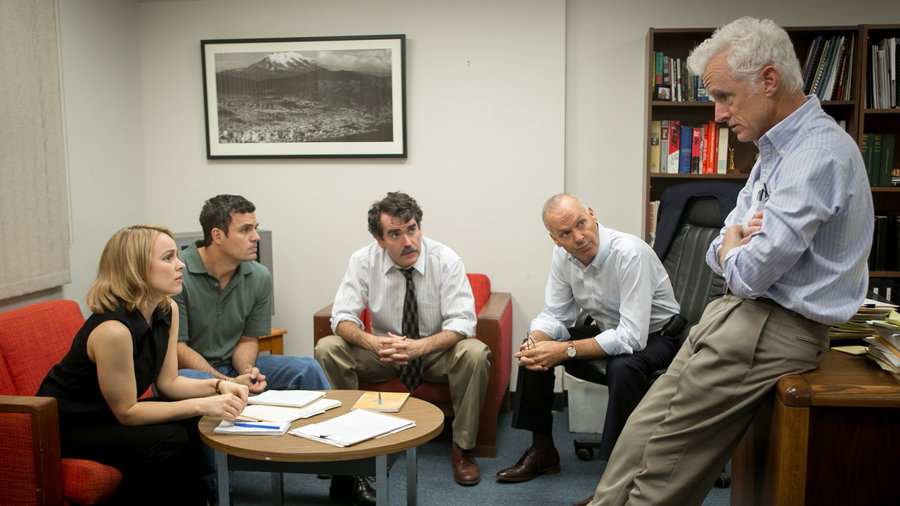
With six Oscars, Mad Max: Fury Road collected the most amount of Academy Awards on Hollywood’s biggest night, but it was Spotlight that snuck away with Best Picture and not the heavily predicted The Revenant. The latter film did collect awards for Best Director (Alejandro González Iñárritu), Best Actor (Leonardo DiCaprio, who won his first Oscar) and Best Cinematograpy (Emmanuel Lubezki), but that was it.

The night’s other major awards went to Brie Larson (Best Actress for Room), Alicia Vikander (Best Supporting Actress for The Danish Girl) and Mark Rylance (Best Supporting Actor, Bridge of Spies), who may be responsible for this year’s biggest snub, as Sylvester Stallone (Creed) missed out. (Yo Adrian… I didn’t do it!)

Our favorite moments?

Overall Favorite Moment: Chris Rock’s opening monologue

Not only did host Chris Rock come right out and confront the controversial lack of diversity among this year’s nominees, but he did so with hilarity and poignancy — and he wasn’t afraid to go right at the realities of Hollywood — going so far as to point out the fact that Leonardo DiCaprio gets great roles every year — while also making a point to say it’s not about boycotting anything, it’s about simply wanting more opportunity.

Favorite Friend Moment: Arnold Schwarzenegger’s message to Sylvester Stallone

When Sly lost the Oscar, his pal Arnold was quick to post this sweet video championing, well, the champ.

.@TheSlyStallone To me, you’re the best, no matter what they say. pic.twitter.com/zs4ZLl1nhY

— Arnold (@Schwarzenegger) February 29, 2016

Favorite Surprise Moment: Ex Machina winning Best Visual Effects

And how about the little sci-fi movie that could snagging a major Oscar from big-budget competition like Star Wars: The Force Awakens and Mad Max: Fury Road.

Most Powerful Moment: Lady Gaga’s performance of “‘Til It Happens To You” from The Hunting Ground.

Gaga’s powerful performance ended with he singer flanked by rape survivors. The entire crowd was on their feet, wiping away tears. Brie Larson even took the time to hug each and every survivor as they exited the stage.

Brie Larson hugged every survivor from @ladygaga‘s #Oscars performance (via @chrissGardner)pic.twitter.com/zCSvYs0XCK

— Mic (@micnews) February 29, 2016

Favorite Record Set: At 87 years of age, Ennio Morricone — who took home an Oscar for scoring The Hateful Eight — becomes the oldest winner of a competitive Oscar ever.

Biggest Record Set — With his Best Director win, Alejandro González Iñárritu becomes the first to win back-to-back directing Oscars in 65 years — and only the third person to ever accomplish that feat.

Favorite side story: Margaret Sixel, George Miller’s wife, wins Best Editing for Mad Max: Fury Road. She had never edited an action movie before. Well done, mate!

And the Oscar goes to…

Best Picture
The Big Short
Bridge Of Spies
Brooklyn
Mad Max: Fury Road
The Martian
The Revenant
Room
Spotlight — WINNER

Best Director
Alejandro Gonzalez Inarritu – The Revenant — WINNER
Adam McKay – The Big Short
George Miller – Mad Max Fury Road
Lenny Abrahamson – Room
Tom McCarthy – Spotlight

Best Actress
Cate Blanchett – Carol
Brie Larson – Room — WINNER
Jennifer Lawrence – Joy
Charlotte Rampling – 45 Years
Saoirse Ronan – Brooklyn

Best Actor
Bryan Cranston – Trumbo
Matt Damon – The Martian
Leonardo DiCaprio – The Revenant — WINNER
Michael Fassbender – Steve Jobs
Eddie Redmayne – The Danish Girl

Best Supporting Actor
Christian Bale – The Big Short
Tom Hardy – The Revenant
Mark Ruffalo – Spotlight
Mark Rylance – Bridge Of Spies — WINNER
Sylvester Stallone – Creed

Best Supporting Actress

Jennifer Jason Leigh – The Hateful Eight
Rooney Mara – Carol
Rachel McAdams – Spotlight
Alicia Vikander – The Danish Girl — WINNER
Kate Winslet – Steve Jobs

Best Original Screenplay
Matt Charman, Joel Coen, Ethan Coen – Bridge Of Spies
Alex Garland – Ex Machina
Josh Cooley, Pete Docter, Meg LeFauve – Inside Out
Tom McCarthy & Josh Singer – Spotlight — WINNER
Jonathan Herman, Andrea Berloff, S. Leigh Savage – Straight Outta Compton

Best Adapted Screenplay

Drew Goddard – The Martian
Nick Hornby – Brooklyn
Adam McKay & Charles Randolph – The Big Short — WINNER
Phyllis Nagy – Carol
Emma Donoghue – Room

Best Cinematography
Roger Deakins – Sicario
Edward Lachman – Carol
Emmanuel Lubezki – The Revenant — WINNER
Robert Richardson – The Hateful Eight
John Seale – Mad Max: Fury Road

Best Animated Feature
Anomalisa
Boy And The World
Inside Out — WINNER
Shaun The Sheep Movie
When Marnie Was There

Best Documentary Feature
Amy – WINNER
Cartel Land
The Look Of Silence
What Happened Miss Simone
Winter On Fire: Ukraine’s Fight For Freedom

Best Film Editing
Hank Corwin – The Big Short
Margaret Sixel – Mad Max: Fury Road — WINNER
Tom McArdle – Spotlight
Stephen Mirrione – The Revenant
Star Wars: The Force Awakens

Best Score
Carter Burwell – Carol
Ennio Morricone – The Hateful Eight — WINNER
Thomas Newman – Bridge Of Spies
Johann Johannson – Sicario
John Williams – Star Wars: The Force Awakens

Best Foreign Language Feature
Embrace Of The Serpent
Mustang
Son Of Saul — WINNER
Theeb
A War

Best Production Design
Bridge Of Spies
The Danish Girl
Mad Max: Fury Road — WINNER
The Martian
The Revenant

Best Visual Effects
Ex Machina — WINNER
Mad Max: Fury Road
The Martian
The Revenant
Star Wars: The Force Awakens

Best Animated Short Film
Bear Story — WINNER
Prologue
Sanjay’s Super Team
We Can’t Live Without Cosmos
World Of Tomorrow

Best Documentary Short Film
Body Team 12
Chau, Beyond The Lines
Claude Lanzmann: Spectres OF The Shoah
A Girl In The River — WINNER
Last Day Of Freedom

Best Live-Action Short Film
Ave Maria
Day One
Everything Will Be Okay
Shok
Stutterer — WINNER

Best Song
“Earned It” from Fifty Shades Of Grey
“Manta Ray from Racing Extinction
“Til It Happens To You” from The Hunting Ground
“Simple Song 3” from Youth
“Writing’s On The Wall” from Spectre — WINNER

Best Costume Design
Carol
Cinderella
The Danish Girl
Mad Max: Fury Road — WINNER
The Revenant

Best Sound Editing
Mad Max: Fury Road — WINNER
The Martian
The Revenant
Sicario
Star Wars: The Force Awakens

Best Sound Mixing
Bride Of Spies
Mad Max: Fury Road — WINNER
The Martian
The Revenant
Star Wars: The Force Awakens

Best Makeup & Hairstyling
Mad Max: Fury Road — WINNER
The 100-Year-Old Man Who Climbed Out THe Window And Disappeared
The Revenant

This entry passed through the Full-Text RSS service – if this is your content and you’re reading it on someone else’s site, please read the FAQ at fivefilters.org/content-only/faq.php#publishers.


No Image

MLB Aims To Speed Up Baseball With New Rules

2:21

Download

When spring training kicks off this week, baseball will be played with new rules. Most are designed to speed up the game. But one might slow things down.

Transcript

ERIC WESTERVELT, HOST:

Play ball – spring training starts in just two days. And Major League Baseball will continue its efforts to speed up the game with several new rules. NPR’s Eyder Peralta reports.

EYDER PERALTA, BYLINE: Here’s how David Lennon, a sports columnist for New York Newsday, describes plays around second base.

DAVID LENNON: I would say it’s always been part ballet and part, you know, UFC. You know, I think that’s what play around second base has been.

PERALTA: That cage match metaphor was fitting for a play during last season’s playoffs.

(SOUNDBITE OF 2015 NATIONAL LEAGUE DIVISION SERIES)

ERNIE JOHNSON, JR.: Up the middle, gloved by Murphy. Wow, did Chase Utley go in hard at second as the tying run scores.

PERALTA: The Dodgers’ Chase Utley stops a double play, but the Mets shortstop, Ruben Tejada, ends up writhing on the diamond with a broken leg. A new rule makes it illegal for a runner to try to break up a double play without sliding. It also forces a fielder to actually touch second base to make an out. In the past, an umpire could give a player the benefit of the doubt if they shuffled past the base to get out of the way from a charging runner. David Lennon says coaches and players are not sure the new rule will make the game safer.

LENNON: Is baseball making a shortstop or a second baseman more vulnerable now by making him spend more time around the base and be more of a target?

PERALTA: But Lennon believes the big difference will be in the pace of the game. Those plays at second base can now be challenged.

LENNON: What the fan will see is that there could be some more dead time.

PERALTA: At the same time, the other two new rules are meant to make games shorter.

(SOUNDBITE OF BASEBALL GAME)

UNIDENTIFIED ANNOUNCER #1: And now pitching coach Brent Strom comes out to the mound.

PERALTA: One of them limits visits to the mound to 30 seconds. Managers are known to buy time for relief pitchers by taking leisurely trips to the mound. In a game last year, Astros pitching coach Brent Strom comes out to talk to his pitcher. And he takes a good 40 seconds waiting for the umpire to come break it up. And then he gets tossed for mouthing off.

(SOUNDBITE OF BASEBALL GAME)

UNIDENTIFIED ANNOUNCER #2: And that’s why a pitching coach or a manager may stay at the mound sometimes, just wait until the home-plate umpire comes out there.

PERALTA: The other rule cuts commercial breaks between innings. Here’s David Lennon again.

LENNON: Here and there, they’re trying to snip and save some seconds. But yeah, that’s always going to be working in balance with the instant replay and the technology that’s being brought into the game.

PERALTA: In other words, the new rules might just lead to the same old game. Eyder Peralta, NPR News.

Copyright © 2016 NPR. All rights reserved. Visit our website terms of use and permissions pages at www.npr.org for further information.

NPR transcripts are created on a rush deadline by a contractor for NPR, and accuracy and availability may vary. This text may not be in its final form and may be updated or revised in the future. Please be aware that the authoritative record of NPR’s programming is the audio.

This entry passed through the Full-Text RSS service – if this is your content and you’re reading it on someone else’s site, please read the FAQ at fivefilters.org/content-only/faq.php#publishers.


No Image

Being Black In The Tech Industry

4:56

Download

Professor, author and CEO of Clearly Innovative, Aaron Saunders talks about the challenges of being African-American in the tech industry.

Transcript

ERIC WESTERVELT, HOST:

Today, we’re going to dig into the challenges people of color face when it comes to navigating the tech industry. For African-Americans, rising through the ranks of the tech world is challenging on its own. Aaron Saunders is taking what he’s learned and using it to prepare young black programmers-in-training for the tough realities of a career where almost everyone is white. As part of our Black History Month series called BlackAnd, where we bring you stories of people navigating more than one identity, today we’re going to talk about being black in the tech industry. Aaron Saunders is CEO of Clearly Innovative, a tech company here in Washington, D.C., that builds a range of digital products. He joins us in our studio in Washington. Aaron, welcome to the program.

AARON SAUNDERS: Thank you very much.

WESTERVELT: So tell us your story. You’re in your 50s. Growing up, did you have a mentor that guided you toward tech, or did you find it on your own?

SAUNDERS: Actually, it is a funny story. I found tech on my own in school. I was small, got picked up quite frequently. And so I chose to stay in the library during lunch time. There was a large box sitting in the corner which happened to be a Commodore 64 that the librarians did not really understand what to do with it. So I said hey, can I open it up? So I opened up the box, read the manuals, taught myself how to program in BASIC. And that’s kind of where it all started. And that was in sixth grade.

WESTERVELT: Started schooling the librarians a little bit…

SAUNDERS: Yeah.

WESTERVELT: …On how to use their computer?

SAUNDERS: (Laughter) Yes, yes.

WESTERVELT: In your early years starting out, how common was it to run into other African-Americans in the tech field?

SAUNDERS: It was nonexistent. In the early years and even after – you know, when I was working in New York in the ’80s, I was a consultant for IBM. And I would go into meetings, and they were literally no other people of color in the room on either side of the table in most cases. I was senior-level architect. I would lead teams; I would lead projects and I spent a lot of time doing client-facing work. I would usually go into meetings and sit down and far too often, the client assumed that the person next to me was Aaron Saunders and that I was not Aaron Saunders the architect. And the person next to me was not African-American. It was very frustrating because especially in the consulting business, you’re basically selling yourself, right? You’re walking in a room; you’re telling the client hey, we’re going to get this done for you. Please pay us a lot of money to do this before you even do any work. And I think for African-Americans it’s a huge challenge because people come to the table with preconceived notions about our capabilities and what we can do. So you have to try even harder to get that point across that yes, I can get this done for you, yes, I am capable, yes, I belong here.

WESTERVELT: Silicon Valley tech companies have pledged to do more to create a more diverse workforce. Why do you think it’s taking so long and it’s so hard for them?

SAUNDERS: Because there aren’t any black people there. I mean, you’re – you know what I mean? It’s real simple. As well-intentioned as they are, right, it’s still challenging for a room full of nondiverse people to figure out how to address diversity, right? I know there’s a big push right now to address the lack of diversity in tech through HBCUs.

WESTERVELT: Historically black colleges and universities.

SAUNDERS: Yes. The bulk of the HBCUs are on the East Coast. The bulk of the tech companies are on the West Coast. You’re not going to solve this problem by just dropping in for a weekend or for a job fair. It’s going to take a committed kind of – for lack of a better word, you know, on-the-ground war.

WESTERVELT: When you meet tech companies there and talk about diversity, do you feel like you’re coming at it from really different places?

SAUNDERS: I think as an African-American when I discuss tech and tech diversity, I definitely am coming from a different place than most of the people that I’m talking to because you’re discussing things with them that they simply can’t wrap their head around. For example, take a person of color who’s grown up in a black community, went to high school in a prominent black community, probably went to a predominantly-black college. And even if they got that job at that great tech company now, it’s a complete culture shock. Beyond even what they’re capable of doing technically, they now need to kind of handled this, you know, this dualism of who they are and who they believe they need to be to be successful in the workplace.

WESTERVELT: It’s not just as simple as hiring? It’s…

SAUNDERS: It’s not just as simple as hiring.

WESTERVELT: You’re also teaching in Howard University’s computer science department. How do you approach preparing young students of color not just technically but in a tech world that’s still not inclusive?

SAUNDERS: So one of the things that I do when I first start my class is I ask my students how much programming experience they have. And the very first semester that I taught, what I found interesting was that some of my students had never programmed before they’d got to college. And I clearly articulated to them that if you want a job in the Valley, the people that you’re competing with for those jobs, a lot them probably started programming sixth, seventh, eighth grade and have been doing it for years. And so it’s a focus on making that extra effort and that extra commitment to kind of get back on track to be successful and be competitive.

WESTERVELT: Aaron Saunders is CEO of Clearly Innovative. He joined us in our Washington, D.C. studios. Aaron’s story BlackAnd in tech is the final part of our Black History Month series BlackAnd, which features different voices of those balancing multiple identities. To look back on the series, you can search for #BlackAnd on Twitter as well as on npr.org. Aaron, thanks for coming in.

SAUNDERS: Thank you very much.

Copyright © 2016 NPR. All rights reserved. Visit our website terms of use and permissions pages at www.npr.org for further information.

NPR transcripts are created on a rush deadline by a contractor for NPR, and accuracy and availability may vary. This text may not be in its final form and may be updated or revised in the future. Please be aware that the authoritative record of NPR’s programming is the audio.

This entry passed through the Full-Text RSS service – if this is your content and you’re reading it on someone else’s site, please read the FAQ at fivefilters.org/content-only/faq.php#publishers.

No Image

Healthcare.gov Marketplace Looks To More Selective California Model

3:49

Download

Healthcare.gov accepts any insurance plan on its marketplace that complies with minimum standards. It’s now considering strengthening those standards, and it’s looking to California to see how.

This entry passed through the Full-Text RSS service – if this is your content and you’re reading it on someone else’s site, please read the FAQ at fivefilters.org/content-only/faq.php#publishers.


No Image

Best of the Week: Getting Ready for the Oscars, First Look at the New 'Pete's Dragon' and More

The Important News

Star Wars Mania: Disney released more concept art and other details on Star Wars Land. Star Wars: Episode VIII is fighting off set spies with drones. Star Wars: The Force Awakens will hit iTunes next month.

Marvel Madness: Crossbones made an official debut in new images from Captain America: Civil War. Finn Jones is Marvel’s Iron Fist for Netflix.

DC Delirium: Justice League – Part 1 received a shooting start date. Batman v Superman: Dawn of Justice will have an R-rated version available on video. Batman v Superman: Dawn of Justice might have received rewrites from Ben Affleck.

Franchise Fever: Demian Bichir joined the cast of Alien: Covenant.

Sequelitis: Pacific Rim 2 will move ahead with director Steven S. DeKnight. Brant Daugherty will play Anastasia’s bodyguard in Fifty Shades Freed. Lin-Manuel Miranda may co-star in the Mary Poppins sequel. Both Crouching Tiger, Hidden Dragon 3 and Cloverfield 3 might happen.

Remake Report: Michael B. Jordan will star in a new version of The Thomas Crown Affair. James Mangold will direct a prequel reboot of a new 20,000 Leagues Under the Sea.

Casting Net: Emily Ratajkowski will co-star in In Darkness. Jon Bernthal joined the cast of Baby Driver. Tyler Sheridan will star in Steven Spielberg’s Ready Player One.

Reel TV: Amy Adams will star in the TV adapation of Gillian Flynn’s Sharp Objects. Jean-Claude Van Damme will star in a comedy series for Amazon.

New Directors/New Films: Joe Wright will direct the supernatural thriller The Ruins. Ava DuVernay will direct Disney’s adaptation of A Wrinkle in Time. Chris Weitz will helm a movie about infamous Nazi Adolf Eichmann.

Writers Block: Dan and Kevin Hageman are now writing Guillermo del Toro’s Scary Stories.

First Look: Zac Efron’s enlarged muscles made a big splash in a new Baywatch image.

Box Office: Deadpool broke more records last weekend. And it became the biggest X-Men movie.

Celebrating the Classics: FerrisFest, honoring Ferris Bueller’s Day Off, will be held in Chicago in May.

Tie-in Time: Morgan Freeman’s voice is now available for your GPS system. Fake tie-in product Slusho will return in 10 Cloverfield Lane.

Awards Season: Moviegoers chose The Revenant as the favorite to win Best Picture.

The Videos and Geek Stuff

New Movie Trailers: Pete’s Dragon, Alice Through Looking Glass, Kill Your Friends, Precious Cargo, I Am Wrath and The Light Between Oceans.

Clip: Rise of the Legend.

Behind the Scenes: The makers of The Big Short explain how to make sense of financial nonsense.

See: Deadpool‘s last-minute Oscar campaign ad.

Watch: Deadpool answers fans questions.

See: Mysterious Spaceballs sequel ads posted in NYC subways.

Watch: J.J. Abrams fixes more franchises in a parody video.

See: Best Picture nominees aligned with which presidential candidate. And Best Picture nominees told as emojis. And kids explain what they think the Best Picture nominees are about.

Watch: Parodies of Best Picture nominees The Martian and Mad Max: Fury Road. And a parody of Spotlight.

See: Every Leonardo DiCaprio movie in one supercut.

Watch: An in-depth profile of character actor Crispin Glover.

See: A first look at the new Universal Studios ride based on Kong: Skull Island.

Watch: A celebration of the Coen Brothers and a comparison between the Fargo movie and show.

See: This week’s best new movie posters.

Our Features

Oscar Nominee Guide: Where and when you can find this year’s Oscar nominees On Demand. Geeky recommendations for old movies starring current Oscar nominees.

Sci-Fi Movie Guide: Revisiting Star Wars: the Force Awakens at the end of its theatrical run.

Comic Book Movie Guide: About that R-rated Batman v Superman cut.

Filmmaker Guide: An appreciation of Triple 9 director John Hillcoat.

Foreign Film Guide: Why you need to know about Stephen Chow’s The Mermaid.

Home Viewing: Here’s our guide to everything hitting VOD this week. And here’s our guide to everything hitting HBO Now next month. And here’s our guide to everything hitting Netflix next month.

and

MORE FROM AROUND THE WEB:

This entry passed through the Full-Text RSS service – if this is your content and you’re reading it on someone else’s site, please read the FAQ at fivefilters.org/content-only/faq.php#publishers.


No Image

Do Big Cash Denominations Help Organized Crime?

4:05

Download

The European Central Bank is considering abandoning the 500 euro note. Harvard University’s Peter Sands explains why the 500 euro note is the currency of choice for organized crime and terrorists.

Transcript

ERIC WESTERVELT, HOST:

Ever thought of getting rid of the $100 bill? What about the 500-euro note? The European Central Bank right now is talking about getting rid of the big note, which is a controversial move for some countries tied to the euro, especially Germany. Critics of the 500-euro note saying it’s the currency of choice for organized crime groups looking to use cash for drug trafficking, corruption, money laundering, even for terrorist activities. Some even call the 500 euro the bin Laden. Meanwhile, supporters of the 500 note fear the move is a step toward getting rid of all cash transactions. Peter Sands is a former bank executive who’s now a senior fellow at Harvard’s Kennedy School of Government. He wrote a report on why such high-dollar currency should be eliminated to make it tougher for criminals to transfer funds. And Peter Sands joins us now. Thanks for being with us.

PETER SANDS: Hi.

WESTERVELT: What’s your evidence that these big bills do in fact fuel criminality and corruption and even terrorism? Do we have hard evidence of that?

SANDS: I don’t think it’s right to say they necessarily fuel or encourage them. What high-denomination notes are doing is making it easier for the criminals to do what they want to do. And by taking them away, you’re simply making their lives harder. People underestimate how sort of heavy cash is. If you want to move a million dollars in $20 bills, it weighs 110 pounds. It’s actually pretty hard for a single individual to carry surreptitiously 110 pounds. In 500-euro notes, that’s less than 4 pounds.

WESTERVELT: There’s been some strong pushback, especially from Germany. Why are the Germans been so strong in support of the big note?

SANDS: It’s funny that high-denomination notes in almost every currency carry symbolism to people. And I think that is certainly true in Germany. You know, Germany’s history with currency has had its up and downs from the sort of terrible disaster the Weimar Republic to the Deutsche mark being very much a symbol of the resurgence of Germany in the postwar era.

WESTERVELT: One of the main arguments is that restricting cash could force that money back into banks, which is as we’ve seen in the past not always as reliable or 100 percent reliable.

SANDS: Well, for all the mistakes and gaps in the scrutiny and surveillance systems the bank have, at least they have some. The reality is we have no idea what’s happening in the criminal flows of cash because cash is completely anonymous and leaves no transaction record.

WESTERVELT: And aren’t there legitimate reasons for carrying 500-euro notes?

SANDS: Look, there are some legitimate reasons. People like high-denomination notes for giving gifts. They like it as emergency money when they’re traveling. But you’ve got to trade that off against the fact that when we do seizures of drug trafficking or human traffickers or you’re looking at the way that terrorist organizations finance themselves, you will find that a very large percentage of what is going on is being driven by high-denomination notes.

WESTERVELT: What about here in the U.S.? Is the Ben Franklin in any danger?

SANDS: I think there should be a debate as to the level of issuance and the role of the hundred-dollar bill. There are about 30 hundred-dollar bills for every U.S. citizen, yet the role they play in everyday life is extremely small. Around 5 percent of American adults have a hundred-dollar bill in their pocket at any one time. Yet somebody is holding those bills. And if you look at the data on seizures of drug cash, say, crossing the U.S.-Mexican border, the stuff that gets seized is almost invariably in hundred-dollar bills.

WESTERVELT: That’s former banker Peter Sands. He’s now a senior fellow at Harvard’s Kennedy School of Government. Peter, thanks for speak with us.

SANDS: Thank you, Eric.

Copyright © 2016 NPR. All rights reserved. Visit our website terms of use and permissions pages at www.npr.org for further information.

NPR transcripts are created on a rush deadline by a contractor for NPR, and accuracy and availability may vary. This text may not be in its final form and may be updated or revised in the future. Please be aware that the authoritative record of NPR’s programming is the audio.

This entry passed through the Full-Text RSS service – if this is your content and you’re reading it on someone else’s site, please read the FAQ at fivefilters.org/content-only/faq.php#publishers.


No Image

FIFA Elects New Leader To Replace Blatter

4:07

Download

Gianni Infantino is the new leader of FIFA, replacing the disgraced Sepp Blatter. NPR’s Lourdes Garcia-Navarro speaks to ESPN’s Howard Bryant about whether soccer will see any real changes.

Transcript

LOURDES GARCIA-NAVARRO, HOST:

It’s time for sports.

(SOUNDBITE OF MUSIC)

GARCIA-NAVARRO: Yesterday, the world’s soccer organization, FIFA, elected a new president, but a new face might not be enough to salvage FIFA’s image following last year’s scandal that brought down many in the governing body. ESPN’s Howard Bryant joins us now to talk all things football. Hi, Howard.

HOWARD BRYANT: Good morning, how are you?

GARCIA-NAVARRO: I’m all. So Gianni Infantino replaces Sepp Blatter as the leader of FIFA. Who is he, what can we expect of him, is he a reformer?

BRYANT: Well, that’s a great question. Those are all great questions, though, but we know who he is. He’s a Swiss – the second Swiss to head FIFA, following Sepp Blattter, who is now facing or in the middle of an eight-year ban. I think that’s a great question as to whether or not he’s going to be a reformer. One of the big questions obviously with the scandal that has rocked this entire – the largest sport governing body in the world has been whether or not this organization can turn the corner.

And the one thing that Infantino has said is that he wants to move FIFA forward, whatever that means. And transparency was one of the big questions and that was of course the big – the first fail…

GARCIA-NAVARRO: Right.

BRYANT: …Which the body promised transparency. And what did we get? We got a secret ballot, which led to his presidency. So that’s the first fail, but the next thing, too, is there’s a big difference between change and reform. The FBI and the investigation that rocked FIFA created change, but when you change from within, you wonder if it’s going to be more of the same. And he is an insider, so he’s got a lot of work to do to convince people that he’s different.

GARCIA-NAVARRO: Yeah, he’s the ultimate insider. And the whiff of scandal is still strong. Is there anything the new president could do to restore the governing body’s reputation?

BRYANT: Well, he’s got a 90-day plan. That was one of the things that he was running on was his 90-day reform plan. I think that they should go much, much bigger than the small reforms. I think that one of the things, if you are a casual fan, or even if you’re a big fan of the World Cup, one of the big questions that led to all of this was how on Earth did a nation the size of my hand, Qatar, get the World Cup for 2022? And I think that maybe one of the things that they should do is really look at that, get the World Cup out of Qatar, put it in the United States, put in a place – or Europe someplace – where it would show that they were actually aware and convinced that this was pure corruption and it was time to try some thing different. I think that would send a huge message to me.

GARCIA-NAVARRO: Well, let’s turn now to the Olympics, another big mega-event, which opens in Brazil in August. Yesterday, the CDC issued its first explicit warning saying pregnant women or women and their partners who are considering becoming pregnant should avoid traveling to Brazil because of the Zika virus.

BRYANT: Yeah. This is gigantic and this is huge because we already have, on the women’s side in the United States, the best team in the world – the women’s national soccer team. Hope Solo, the goaltender, had already said that she had been concerned about going and really didn’t know if she wanted to go until there was some sort of feeling that this was a problem that had been solved, and clearly it hasn’t been. And I think it’s a huge issue, one, because the Olympics are very, very close. You’re not going to be able to change the venue. And it’s going to be a huge issue for the athletes that don’t go because this is not the NBA or it’s not baseball where you’ve got a game tomorrow. You work four years to get here, and so if you miss this you’re not going to be having – you’re not going to have a chance to do this again for another four years. And so the sacrifice would be pretty big, but then again, also, do you really want to go down there with this sort of risk?

GARCIA-NAVARRO: Yeah, briefly, 200,000 Americans were also expected to travel to Brazil for the games.

BRYANT: Exactly.

GARCIA-NAVARRO: Yeah, this could potentially be a big damper on already depressed ticket sales there.

BRYANT: There’s no question about it. And let’s face it. Rio as well – the infrastructure after the World Cup, as well, they could use a success, and this is not helping.

GARCIA-NAVARRO: All right, Howard Bryant of espn.com and ESPN the Magazine, thanks so much.

BRYANT: My pleasure.

Copyright © 2016 NPR. All rights reserved. Visit our website terms of use and permissions pages at www.npr.org for further information.

NPR transcripts are created on a rush deadline by a contractor for NPR, and accuracy and availability may vary. This text may not be in its final form and may be updated or revised in the future. Please be aware that the authoritative record of NPR’s programming is the audio.

This entry passed through the Full-Text RSS service – if this is your content and you’re reading it on someone else’s site, please read the FAQ at fivefilters.org/content-only/faq.php#publishers.


No Image

Keeping Up With The Joneses' Latest Medical Procedure

Katherine Streeter for NPR

Katherine Streeter for NPR

My father is approaching his 78th birthday, blessed with health good enough to still be an avid golfer and tennis player.

His regular group of tennis buddies changes from time to time. The lineup depends on how they’re feeling.

I remember when one of the gents renowned for his fitness and fastidious diet underwent a quadruple-bypass heart operation. The other guys were in shock. If Mr. Fit had a bum ticker, they all figured they better get to their doctors pronto.

“Don’t I need an operation or something to clean out my arteries?” Dad asked me.

It doesn’t work like that, I explained. We don’t recommend [they are done, let’s be honest] preventive heart surgeries, though many people make that assumption because of our culture’s worship of the latest, greatest medicine and technology.

Heart surgery should be considered disaster relief, I told him, not part of a regular tune-up or a solution for unhealthful habits.

When my father saw his own doctor a few weeks later and got his usual clean bill of health, Dad wasn’t satisfied. There must be some danger brewing somewhere inside him, he told me, despite reassurances from me and his doctor.

His concern faded after a while, but then several months later one of his cronies underwent a knee replacement. Dad’s first reaction: “When should I get my knee replaced?”

I tried to talk him through it. “Do you have pain with every step you take?” I asked. Clearly not, I thought, since he’s still playing tennis three times a week. He admitted that his pain is only intermittent. But as he has aged, he’s grown concerned that his balance has become wobbly.

I can’t fault my dad. He’s a child of the 1950s and has an unshakable belief in American ingenuity and medical progress. Newer is always better. For patients like him, more medical care equals more health.

If there’s one thing he and I have battled over (and as his doctor-son I’m sure I’ve disappointed him in this regard), it’s my insistence that quite the opposite is usually true: less is more in medicine and health care.

In the last decade a whole science has arisen to examine medical overuse — a big contributor to our country’s world-leading health care costs.

These talks with Dad got me thinking about his way of looking at things. I’ve even coined a name for his impulses. I call it, “medical me-tooism.” It reminds me of a millennial’s fear of missing out (FOMO!), but for the geriatric set.

One thing’s for sure, my father’s not alone. In clinical practice, I see medical me-tooism frequently.

Take my patient Jack. He’s 89, and he only stopped playing tennis when he moved to town from Las Vegas a year or so ago to be closer to his son.

Jack was awarded a Purple Heart in World War II, and he sees every day as a gift. But at a recent visit, he told me that out of a group of 13 childhood friends from his original neighborhood, only he and one other remain.

“Isn’t there some pill I can have,” Jack asked, only half-jokingly, “to keep me in good health?” He does take a few medicines, one for blood pressure and another for heartburn. Medically speaking, I think Jack is happier to do less, but his anxiety persists about his good fortune. It’s a form of survivor’s guilt.

Classically, survivor’s guilt is reaction to war, trauma, or natural disaster: Why did I live when others perished?

But it exists in the medical realm, too, especially for cancer survivors who see many of their afflicted compadres succumb to illness, suffering and death.

When I approached my father for permission to write about him, he and I wound up having a heart-to-heart talk about the indignities of our aging bodies, life and its natural end.

He didn’t entirely buy my view that he suffers from medical me-tooism when it comes to his tennis buddies. But he agreed conceptually that medical me-tooism is really a form of survivor’s guilt.

Having reached the average life expectancy for an American male, my father is acutely aware of life’s limits. Sadly, many of his friends have dropped from the tennis group, never to return. Some have died while others became too feeble to continue playing.

Still, compared with their peers, the tennis elders seem to be enjoying life and living longer than their spectating counterparts.

The observation is anecdotal, to be sure, but I’m convinced it speaks to the value of moving around and socializing.

Those are two things my father and I fully agree on.

John Henning Schumann is a writer and doctor in Tulsa, Okla. He serves as president of the University of Oklahoma, Tulsa. He also hosts Public Radio Tulsa’s Medical Matters. He’s on Twitter: @GlassHospital

This entry passed through the Full-Text RSS service – if this is your content and you’re reading it on someone else’s site, please read the FAQ at fivefilters.org/content-only/faq.php#publishers.


No Image

Today in Movie Culture: Lego Versions of Oscar Nominees, How to Kill Deadpool and More

Here are a bunch of little bites to satisfy your hunger for movie culture:

Oscar Montage of the Day:

Today’s supercut of this year’s Best Picture nominees involves Lego versions of Room, The Revenant, Mad Max: Fury Road and the rest:

[embedded content]

Best Picture Parody of the Day:

Gooky Gak! From the brilliant minds at Funny or Die, here’s a horse carcass sleeping bag based on Best Picture nominee The Revenant, plus a bonus gag involving action figures based on the movie’s production:

Rest up for Sunday’s Oscars in The Revenant Horse Sleeping Bag! Kids love it.https://t.co/PPhVlYSxam

— Funny Or Die (@funnyordie) February 25, 2016

Fake Toy of the Day:

There are plenty of fans of The Witch who would totally buy this talking Black Phillip toy if it was real (via Midnight Marauder):

Custom Toy of the Day:

Check out the fan-created Lego set for a genuinely rolling BB-8 from Star Wars: The Force Awakens (via Gizmodo):

[embedded content]

Vintage Image of the Day:

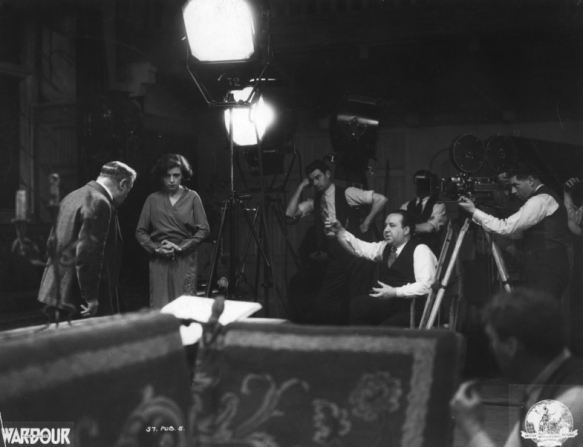
A youngish Alfred Hitchcock directs a scene from one of his early pre-Hollywood films, The Skin Game, which was released in the UK on this day 85 years ago:

Re-release Trailer of the Day:

Here is a new trailer for the 4K restoration of Akira Kurosawa‘s Ran, which opens in NYC today (via The Playlist):

[embedded content]

Fan Theory of the Day:

The Film Theorists explore ideas how Deadpool can actually be killed. Not that Fox would have any interest in him dying anytime soon:

[embedded content]

Mashup of the Day:

Speaking of Deadpool, Batman isn’t very happy about the guy and his R-rated record-breaking box office success. Watch:

[embedded content]

Roundtable Parody of the Day:

“Unknown” actress and comedian Molly Hawkey inserted herself into the 2014 THR Actress Roundtable, taking over Reese Witherspoon‘s spot next to Julianne Moore, Laura Dern, Patricia Arquette, Hilary Swank, Amy Adams and Felicity Jones and it’s kind of awkward (via The Film Stage):

[embedded content]

Classic Trailer of the Day:

This weekend is the 30th anniversary of the theatrical release of Pretty in Pink. Watch the original trailer for the teen movie classic below:

[embedded content]

and

This entry passed through the Full-Text RSS service – if this is your content and you’re reading it on someone else’s site, please read the FAQ at fivefilters.org/content-only/faq.php#publishers.


No Image

Economists On Candidates' Proposals: Mostly Bad

Presidential candidates are making a slew of promises on the campaign trail.

We took a sample of the most economically novel proposals and asked a panel of economists: Are they good or bad?

Our panel includes 22 economists from across the political spectrum. They identified themselves as left, right and center. And some couldn’t categorize themselves.

We based our list of economists on the University of Chicago Booth School of Business’s IGM Economic Experts Panel, which does regular surveys like this.

Thanks to all the economists who responded: Daron Acemo?lu, Alan Auerbach, Katherine Baicker, Abhijit Banerjee, David Cutler, Darrell Duffie, Aaron Edlin, Oliver Hart, Hilary Hoynes, Kenneth Judd, Steve Kaplan, Pete Klenow, Eric Maskin, Bill Nordhaus, Larry Samuelson, José Scheinkman, Richard Schmalensee, Carl Shapiro, James Stock, Nancy L. Stokey, Richard Thaler and Christopher Udry.

This entry passed through the Full-Text RSS service – if this is your content and you’re reading it on someone else’s site, please read the FAQ at fivefilters.org/content-only/faq.php#publishers.