Articles by admin

No Image

Episode 692: The Secret Life Of Line 24

U.S. Department of the Treasury Internal Revenue Service 1040 Individual Income Tax forms for the 2015 tax year.
21:10

Download

U.S. Department of the Treasury Internal Revenue Service 1040 Individual Income Tax forms for the 2015 tax year. Michael Nagle/Bloomberg via Getty Images hide caption

toggle caption Michael Nagle/Bloomberg via Getty Images

A lot of the stuff on IRS form 1040 — the basic tax form — is straightforward enough. But there are a few lines that you look at and say: What is that? And how did it get on my tax form?

Music: “Starlight.” Find us: Twitter/ Facebook

Let’s block ads! (Why?)


No Image

Soccer Wins Over New Generation Of Fans In Cuba

3:12

Download

President Obama took in a baseball game during his trip to Havana this week, but soccer is encroaching on Cuba’s national pastime, especially with young people.

Transcript

AUDIE CORNISH, HOST:

Before President Obama’s trip to Argentina this week, he capped off his historic visit to Cuba by taking in the island’s national sport, baseball. It was a matchup between two former foes – Cuba’s national team and the Tampa Bay Rays. Baseball might be as Cuban as cigars and rum, but the game is losing popularity. Soccer is winning-over new fans and exposing a generation gap, as NPR’s Carrie Kahn reports.

CARRIE KAHN, BYLINE: On the outskirts of Havana, two teams are locked in a hard-fought game on a weathered baseball field.

UNIDENTIFIED MAN #1: (Foreign language spoken).

KAHN: All the action, though, is in left and center field, which is now host to a soccer game. Move over, baseball – soccer has come to Cuba in a big way. In recent years at local parks and plazas, you see less and less of the pelota – or, baseball – as the national sport is affectionately called.

UNIDENTIFIED MAN #2: (Foreign language spoken).

KAHN: As a coach puts these under-10 soccer players through a series of drills on the field, a few dads look on.

UNIDENTIFIED MAN #2: (Foreign language spoken).

KAHN: One of them, Jorge Luis Obret, says soccer is booming in Cuba. When he was a kid, it was all baseball. But with one soccer ball, he says, 15 to 20 guys can play. In baseball, you need a lot more.

JORGE LUIS OBRET: (Foreign language spoken).

KAHN: “You need bats, gloves, a lot of stuff. It’s cheaper to play soccer,” he says. And a slew of deflections of Cuban stars has depleted the national baseball team. Twenty-eight Cuban-born players now fill the 2016 major league baseball roster. Adding to the soccer fervor, Cuban TV now plays soccer matches. T-shirts of Real, Madrid, Barcelona, and other soccer clubs are seen all over the island, something unheard of just five years ago. Conrado Dimsa Aguayis sports a blue-and-white jersey of the Argentine national team while out strolling in Havana with his girlfriend.

CONRADO DIMSA AGUAYIS: (Foreign language spoken).

KAHN: He says he’d rather play baseball but it’s easier to find a soccer game to join. Younger Cubans are only interested in soccer, he adds. Like 14-year-old Miguel Marzocintra, who’s at a Havana pickup game.

MIGUEL MARZOCINTRA: (Foreign language spoken).

UNIDENTIFIED BOY: (Foreign language spoken).

MIGUEL: (Foreign language spoken).

KAHN: Soccer is more active. He says, “in baseball, you just stand around and it’s boring.” This generation gap isn’t just in sports. Tonight the Rolling Stones give a free concert in Havana. While older Cubans know the British legends well, younger Cubans like these soccer-happy teens are clueless.

Los Rolling Stones?

And give that ubiquitous teenage shoulder shrug no when pressed. But amidst Cuba’s changing times, The Stones and baseball still bring satisfaction to many of the island’s old-timers.

(SOUNDBITE OF SONG, “I CAN’T GET NO SATISFACTION”)

THE ROLLING STONES: (Singing) I can’t get no satisfaction.

KAHN: Carrie Kahn, NPR News, Havana.

(SOUNDBITE OF SONG, “I CAN’T GET NO SATISFACTION”)

THE ROLLING STONES: (Singing) I can’t get no satisfaction ’cause I try, and I try, and I try and I try. I can’t get no, I can’t get no…

Copyright © 2016 NPR. All rights reserved. Visit our website terms of use and permissions pages at www.npr.org for further information.

NPR transcripts are created on a rush deadline by a contractor for NPR, and accuracy and availability may vary. This text may not be in its final form and may be updated or revised in the future. Please be aware that the authoritative record of NPR’s programming is the audio.

Let’s block ads! (Why?)


No Image

Watch Bombino Perform At SXSW

Bombino performs at SXSW 2016 on the Radio Day Stage

Bombino performs at SXSW 2016 on the Radio Day Stage Hope Helmuth/WXPN hide caption

toggle caption Hope Helmuth/WXPN

After traveling all the way from West Africa, Bombino added some international psychedelic rock ‘n’ roll flavor to the SXSW Radio Day Stage in Austin last week. The incredible guitarist has found a worldwide audience thanks to albums like 2013’s Dan Auerbach-produced Nomad.

At SXSW, Bombino and his desert-blues rock band performed songs from their new album, Azel, out April 1. Watch Bombino weave his hypnotic magic in “Akhar Zaman (This Moment)” and “Emé” below via VuHaus.

“Akhar Zaman (This Moment)”
[embedded content]
“Emé”
[embedded content]

Let’s block ads! (Why?)


No Image

Tiny Opioid Patients Need Help Easing Into Life

Doctors are trying to slowly wean Lexi from her dependence on methadone. She's just 2 weeks old. Under a doctor's advice, her mom took methadone while pregnant, to help kick a heroin habit.

Doctors are trying to slowly wean Lexi from her dependence on methadone. She’s just 2 weeks old. Under a doctor’s advice, her mom took methadone while pregnant, to help kick a heroin habit. Kristin Espeland Gourlay/RIPR hide caption

toggle caption Kristin Espeland Gourlay/RIPR

This story is first in our four-part series Treating the Tiniest Opioid Patients, a collaboration produced by NPR’s National & Science Desks, local member stations and Kaiser Health News.

Swaddled in soft hospital blankets, Lexi is 2 weeks old and weighs 6 pounds. She’s been at Women and Infants Hospital in Providence, R.I., since she was born, and is experiencing symptoms of opioid withdrawal. Her mother took methadone to wean herself from heroin when she got pregnant, just as doctors advised. But now the hospital team has to wean newborn Lexi from the methadone.

As rates of opioid addiction have continued to climb in the U.S., the number of babies born with neonatal abstinence syndrome has gone up, too — by five-fold from 2000 to 2012, according to the National Institute of Drug Abuse.

It can be a painful way to enter the world, abruptly cut off from the powerful drug in the mother’s system. The baby is usually born with some level of circulating opioids. As drug levels decline in the first 72 hours, various withdrawal symptoms may appear — such as trembling, vomiting, diarrhea or seizures.

At some point, if symptoms mount in number or severity, doctors will begin giving medication to help ease them. The idea is to give the baby just enough opioid to reduce those symptoms, and then slowly, over days or weeks, decrease that dose to zero.

A doctor comes to check on Lexi and her mother, Carrie. To protect her family’s privacy, Carrie asked us not to use the family name.

“So, hi, Peanut!” the doctor says to the baby. “Any concerns?” she asks Carrie.

“Coming down has been catching up with her,” says Carrie.

“Do you feel like she’s jittery?” the doctor asks.

Cindy Robin, a registered nurse at Women and Infants Hospital in Providence, R.I., helps newborns through symptoms of withdrawal.

Cindy Robin, a registered nurse at Women and Infants Hospital in Providence, R.I., helps newborns through symptoms of withdrawal. Kristin Espeland Gourlay/RIPR hide caption

toggle caption Kristin Espeland Gourlay/RIPR

“She didn’t want to be put down last night — like [she had] the shakes,” Carrie says.

Lexi has neonatal abstinence syndrome, and has been getting methadone treatments for it. She is getting better — most babies do — but even with treatment, she’s had tremors, diarrhea, and she’s cried and cried. Her little arms and legs tighten up, her fingers and toes clenched. She’s been feverish, her mother says.

“I know what she’s feeling,” Carrie says. “And that is the worst part.”

Carrie was addicted to heroin herself and knows withdrawal is miserable. She’s been off heroin — with help from methadone — since she found out she was pregnant, she says. The small dose of methadone keeps a low level of opioid in her system so she doesn’t go into withdrawal, but it doesn’t get her high. For Carrie and thousands like her, methadone is a lifesaver — helping them quit a heroin or oxycodone or other opioid habit for good.

But getting pregnant posed a dilemma: If Carrie stopped taking opioids altogether, she risked relapse or miscarriage. Yet, if she continued to take any opioid — including methadone — there would be a 60 to 80 percent chance that her baby would be born with neonatal abstinence syndrome, the doctors told her.

“It’s hard to watch, as her mother,” Carrie says, “because you’re helpless and there’s really nothing you can do. You are a lot of the reason why she’s going through what she’s going through.”

Babies going through withdrawal spend weeks — even months — in hospital nurseries like this one.

“Their cry is very different,” says Cindy Robin, a registered nurse at the Providence hospital, who has been caring for mothers and newborns for more than 30 years. “It’s a more distressed cry,” she says, “and it really pulls at your heartstrings to have to listen to them.”

Robin says babies with mild symptoms of the withdrawal syndrome will sneeze and sniffle. They have trouble settling down. Babies who have a more severe case can have seizures and dangerously high fevers. Robin says nurses have to dim the lights, and swaddle the newborns tightly to help keep them calm.

“They just need to be held in a nice, quiet spot,” she says. “We have nice quiet music playing, and try to keep them as comfortable as possible.”

Nurses with special training check on the babies every couple of hours.

“So these are the things that we look for … and what we teach the parents,” she says: “Is the baby crying excessively? Is it a high pitched cry? Is it just a continuous cry? How do they sleep after they eat?”

Medication, which is gradually decreased, can help ease this constellation of symptoms.

“The American Academy of Pediatrics and others recommend an opioid for the babies, because you’re giving them back what they’re withdrawing from,” explains Dr. Jonathan Davis, a neonatologist and chief of newborn medicine at Tufts’ Medical Center. “Morphine and methadone are the two most common.”

But Davis says no one’s really done the research to figure out which drug works better for babies, and doctors are left to figure that out by trial and error, case by case. Though the Food and Drug Administration hasn’t officially approved morphine or methadone for use in newborns, doctors prescribe these drugs to the children anyway, in smaller doses than they give adults.

“As I spoke to people around the country, everyone would have their own approach and a very different way of treating these babies,” Davis says. “And we thought that quite odd.”

So he and a colleague, Brown University developmental psychologist Barry Lester, have launched a major study to sort out what works best. The two are hoping to enroll 180 babies in their double-blind, randomized, controlled trial — no one will know which newborns are getting methadone, and which are getting morphine, for example, until the study’s end. And they’re taking the research further: No study yet has looked at the long-term effects of the drugs, so Davis and Lester will continue to follow-up with measures of cognitive and physical development until the children are 18 months old.

“It may be,” Davis says, “that one agent is safer short-term, but when we look longer-term it may actually be more dangerous.” Teasing out long-term effects of a drug isn’t easy, Lester says; many factors can influence a baby’s development.

“If you’re drug-exposed and you’re growing up in an inadequate environment — which may not be poverty, it may be inadequate parenting — that’s a double whammy,” he says. “Those are going to be your worst case scenarios.”

Despite many remaining unknowns, doctors have consistently found that treatment with morphine or methadone enables most babies to get through withdrawal in about six to eight weeks.

“It can be heartbreaking,” says Robin, who has helped shepherd many kids through dark days. “But at the end, it is also rewarding,” she says, “because you see them get better and you see them go home.”

Let’s block ads! (Why?)


No Image

Today in Movie Culture: 'Batman v Superman' Parody, Superman Film History and More

Here are a bunch of little bites to satisfy your hunger for movie culture:

Movie Parody of the Day:

Batman v Superman: Dawn of Justice kinda sounds like a legal drama, so here’s a courtroom version of the conflict between the Man of Steel and the Caped Crusader:

[embedded content]

Mashup Trailer of the Day:

Also in anticipation of Batman v Superman, here’s a cut of the trailer with well-matched audio from Captain America: Civil War:

[embedded content]

Theme Song Battle of the Day:

Also in anticipation of Batman v Superman, watch Batman playing his old theme song on a ukelele in a musical battle against a unicycle-riding Superman playing his movie’s them on the bagpipes (via Geekologie):

[embedded content]

Movie Science of the Day:

Here are 12 ways Superman could kill Batman in an instant according to scientist Kyle Hill:

[embedded content]

Character History of the Day:

We already saw Burger Fiction’s Batman history. Now they show us the evolution of Superman in movies and TV:

[embedded content]

Vintage Image of the Day:

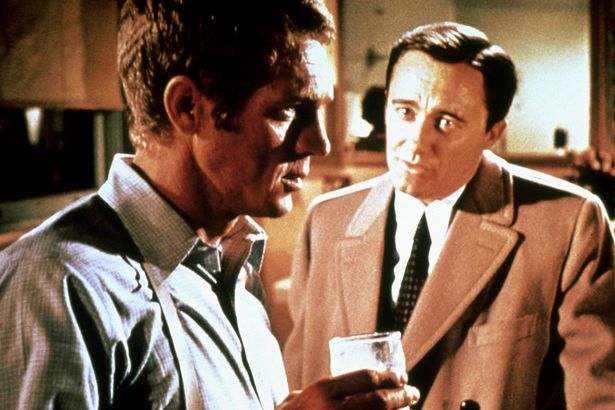
Steve McQueen, who was born on this day in 1930, was considered for the lead in Superman. Here he is with occasional co-star Robert Vaughn, who would go on to be the villain in Superman III, in a scene from Bullitt:

Alternate Ending of the Day:

The Coalition for the Prevention of Paradoxes After They Happen show us how Back to the Future would have really gone in this funny PSA (via Geek Tyrant):

[embedded content]

Movie Comparison of the Day:

If you think Dredd and The Raid are too similar, Couch Tomato shows us 24 reasons they’re different:

[embedded content]

Filmmaker in Focus:

Think you know Quentin Tarantino? Screen Crush pays tribute to the filmmaker with this video of trivia:

[embedded content]

Classic Trailer of the Day:

Today is the 10th anniversary of the release of Spike Lee‘s Inside Man. Watch the original trailer for the movie, which stars Denzel Washington and Clive Owen, below.

[embedded content]

and

Let’s block ads! (Why?)


No Image

Vacuum Cleaner Manufacturer Dyson Could Be Developing An Electric Car

Founder James Dyson speaks at a launch event in 2013 for the Dyson Airblade, a high-power hand dryer found in public bathrooms. The Dyson company may be branching out into electric cars.

Founder James Dyson speaks at a launch event in 2013 for the Dyson Airblade, a high-power hand dryer found in public bathrooms. The Dyson company may be branching out into electric cars. Mark Von Holden/AP Images for Dyson hide caption

toggle caption Mark Von Holden/AP Images for Dyson

Dyson, the U.K.-based manufacturer known for its cutting-edge, bagless vacuums, bladeless fans and wheelless wheelbarrows (“ballbarrows”) could be working on an electric car, according to government documents titled “National Infrastructure Delivery Plan 2016-2021.”

The Guardian reported Wednesday that the U.K. government says it will spend £174 million, nearly $250 million,€” to help Dyson develop “a new battery electric vehicle at their headquarters in Malmesbury, Wiltshire.”

On Thursday, the documents cited by The Guardian said that “the government is providing a grant of up to £16m to Dyson to support research and development for battery technology at their site in Malmesbury.”

The newspaper also wrote:

“Dyson recently reported profits up 20% in 2015, driven by strong growth in China, and said it plans to invest £1bn in battery technology over the next five years. Last October, Dyson bought solid-state battery company, Sakti3, for $90m, which founder Sir James Dyson said had ‘developed a breakthrough in battery technology.’

“Asked if the company was, as the government suggested, developing an electric car, a Dyson spokesman said: ‘We never comment on products that are in development.’ “

Last year, however, Dyson CEO Max Conze said he was “ruling nothing out” when asked about making electric cars, the Independent reported.

According to Business Insider, “big name automakers like Tesla, BMW and others have invested significant resources into the research and development of EVs that can go faster and farther. And as a result, the market share of EVs continues to grow.”

According to the article, the number of electric vehicles registered in the U.K. grew by 392 percent from 2014 to 2015.

Let’s block ads! (Why?)


No Image

'Fastball' Documentary Explores Classic Showdown Between Pitcher And Batter

8:02

Download

The new documentary Fastball explores the classic showdown between pitcher and batter. NPR’s Robert Siegel talks with director Jonathan Hock about his film, and with David Price, a left-handed pitcher for the Boston Red Sox.

Transcript

ROBERT SIEGEL, HOST:

In September 2010, Aroldis Chapman, a rookie relief pitcher with the Cincinnati Reds, made history. A fastball he threw in the eighth inning of a game in San Diego was clocked at 105.1 miles per hour. It was the fastest pitch ever recorded in the major leagues, and it added to a century of lore and legend about the fastball.

(SOUNDBITE OF DOCUMENTARY, “FASTBALL”)

TIMOTHY VERSTYNEN: The pitcher is pushing the limits of how fast a ball can go. And that limit is coming close to the limit of how fast a hitter can make a decision. And so you have these two extremes of human performance doing this kind of dance right at the edge of where their biology is constraining them.

SIEGEL: That’s psychologist Timothy Verstynen of Carnegie Mellon University. The science, history and sheer marvel of the game’s fastest pitch are explored in a new documentary called “Fastball.” Jonathan Hock wrote and directed the film and joins us from New York. Welcome to the program, Jonathan.

JONATHAN HOCK: Thank you, Robert.

SIEGEL: And the film features scientists like Verstynen and several players, including left-handed pitcher David Price of the Boston Red Sox who joins us from Fort Meyers, Fla., where his team spends spring training. Welcome to you, David Price.

DAVID PRICE: Thank you very much.

SIEGEL: Let’s start, Jonathan, with you. How fast is a great fastball?

HOCK: You know, there are a lot of guys throwing 98, a hundred now, and that used to be blinding speed, and now it’s kind of typical of what’s coming out of the bullpen. But there’s a lot more to it than just speed – release point, movement, late movement, especially

SIEGEL: David Price, there’s a moment in the documentary where we see you striking out a man and throwing a ball, according to the speed gun, 100 miles per hour. What was that like?

PRICE: That was a first for me. I remember that moment very clearly, you know? I was in the bottom of the fifth. You know, my pitch count was at a hundred or higher, so I knew this was – you know, it was probably my last hitter.

I think it was a two-two count, and you know, just threw a good fastball up in the leg. He swung through it. And I just remember walking off the field to the first-base dugout. And I looked up ’cause they had a radar gun reading right there and in Detroit above our dugout, and I saw 100. But that was special.

SIEGEL: When you threw that pitch, could you feel that there was something different about this fastball from a fastball that might be clocked in at 97 miles per hour?

PRICE: No, I didn’t feel any different. You know, I like to kind of play it to golf. You know, a lot of the golfers on the – on tour, you know, they’re not – they’re never swinger a hundred percent. You know, very rarely will they ever really go at a golf ball unless they really need to.

And you know, less is more. And I feel like if I can keep my mechanics in line and just get on top of that baseball, you know, I can still throw the baseball just as hard as if I was to hump up and try and really get after it.

SIEGEL: I want to play a couple of clips from “Fastball,” from the film, that address the question of, say, the difference between a 92-mile-per-hour fastball and a 100-mile-per-hour fastball. First, at one point, the narrator, Kevin Costner, delivers a scientific comparison.

(SOUNDBITE OF DOCUMENTARY, “FASTBALL”)

KEVIN COSTNER: If the two pitches were thrown together, when the 100-mile-an-hour pitch reaches home plate, the 92-mile-an-hour pitch would still have 4-and-a-half feet left to travel.

SIEGEL: So that’s the result of serious calculations. Brandon Phillips, the second baseman of the Cincinnati Reds, describes being a batter and looking at the difference between a 92-mile-per-hour pitch and a hundred-mile-per-hour pitch. He describes it a little bit differently.

(SOUNDBITE OF DOCUMENTARY, “FASTBALL”)

BRANDON PHILLIPS: When you’re thrown a 92, you can read the Major League logo on the ball. You can see the seams. You can see all that. But when the guy throwing a hundred…

(CHEERING)

PHILLIPS: …It look like a golf ball.

SIEGEL: (Laughter) It looks like a golf ball, David Price – back to golf.

PRICE: (Laughter) That definitely makes sense. You know, whenever you see a guy throwing, you know, upper-90s, a lot of people say that the baseball looks about the size of a bb, so I definitely get what he’s saying there.

SIEGEL: One of the questions that you address – the big question that you address in “Fastball,” Jonathan, is who actually threw the fastest fastball. And I was very surprised to learn how different the methods have been for measuring the speed of a fastball. Nowadays we have this radar gun that’s measuring it. But before that, it was a much more random kind of science.

HOCK: Yeah. We sort of took it for granted when we began the project that the, you know, the current timings were just sort of the same as anything that had ever been timed before and when Aroldis Chapman hit 105.1, that was it.

But what we discovered with the help of the scientists from Carnegie Mellon – that the method they used over the years to scientifically time some pitchers, which hadn’t happened that often before the radar gun – but it did happen, and the methods they did use were accurate. But the way they set it up was a little bit lacking.

SIEGEL: In 1939, as the movie shows us, Bob Feller, the great pitcher for the Cleveland Indians, wanted to be timed.

HOCK: Bob Feller was the first pitcher who really wanted to know how fast his fastball went. And he tried many ways of measuring this. And the first one and the most amusing one to watch is – he literally races his fastball against a police motorcycle. They filmed this. It was in Chicago. And you see this cop racing in on a motorcycle, going 86 miles an hour.

And just as he passes Feller, Feller, with his eye on the cop, winds up and lets go of the ball. And Feller’s fastball hits the target before the cop going 86 miles an hour. And then Feller was in his street clothes, you know, with hard-soled shoes, pitching on the street without a mound.

SIEGEL: (Laughter) There’s a scientific consensus in this film that a fastball cannot rise.

HOCK: Yeah. The idea is that when we’re tracking an object in motion, we’re not actually looking directly at the object. We’re looking slightly ahead of it – a tenth, two-tenths of a second ahead of where it goes, and our brain then fills in the missing frames. And when we anticipate a ball going the normal speed – say, 90, 92 – our eye, as a batter, races to the spot where a 92-mile-an-hour pitch will cross home plate, and we swing there.

The hundred-mile-an-hour pitch thrown as a four-seamer, as David describes in the film, with backspin is going to create what they call Magnus force, which creates a slight lift on the ball. It doesn’t actually lift the ball, but the ball won’t fall. So it crosses the plate higher than the batter expects it to, and so his – he’s literally seeing the ball rise because whatever part of his brain is interpreting what his eyes are seeing is actually making the ball rise.

SIEGEL: David, are you persuaded by what Jonathan just said, explaining the – what he would say is the illusion of the rising fastball?

PRICE: I really don’t think the baseball can rise, but if there’s anybody in baseball that could do that, it would be Darren O’Day just from, you know, his arm spot of where he throws and then him still being able to generate, you know, 87, you know, to 90 mile an hour that gives that look of that.

SIEGEL: We’re on the eve of a new Major League Baseball season. Jonathan Hock, David Price, how exciting is that for the two of you?

PRICE: This time of year, you know, before the season gets going is always exciting. And then to be throwing with a new team and a new organization – that’s always exciting as well.

HOCK: For me, the – baseball is the soundtrack of my summers for 50 years now. And there are two kinds of life we live every year. The six months where every night we can turn on the radio and put a ballgame on in the background is – that’s the half of life I prefer.

SIEGEL: Filmmaker Jonathan Hock, whose new document is called “Fastball,” and David Price, whose new team is the Boston Red Sox, thanks to both of you for talking with us.

HOCK: Thank you, Robert.

PRICE: Not a problem, thank you.

(SOUNDBITE OF MUSIC)

SIEGEL: The documentary “Fastball” opens nationwide this weekend, and it’s available On Demand.

Copyright © 2016 NPR. All rights reserved. Visit our website terms of use and permissions pages at www.npr.org for further information.

NPR transcripts are created on a rush deadline by a contractor for NPR, and accuracy and availability may vary. This text may not be in its final form and may be updated or revised in the future. Please be aware that the authoritative record of NPR’s programming is the audio.

Let’s block ads! (Why?)


No Image

First Listen: Bombino, 'Azel'

Bombino's new album, Azel, comes out April 1.
46:53

Bombino’s new album, Azel, comes out April 1. Marije Kuiper/Courtesy of the artist hide caption

toggle caption Marije Kuiper/Courtesy of the artist

At this point, Bombino — a.k.a. Omara Moctar, a Tuareg guitarist and singer-songwriter from northern Niger — is an old hand on the international scene. It was more than a decade ago that cassettes of his music circulated in the Tuareg communities clustered around the Sahara Desert. Ten years ago, he traveled to the U.S. to record a session (with The Rolling Stones’ Keith Richards and Charlie Watts, no less) and then start touring these shores as a sideman with a Tuareg band. But his career in the U.S. and Europe as a solo artist has been in full force for a while now; it was five years ago that NPR Music presented him in a full concert from New York’s (Le) Poisson Rouge.

Over that time, Bombino has more than found his groove, perfectly balanced between mastery and ease. Out of a well-documented generation of talented Tuareg rockers, he’s emerged as the most virtuosic and melodically innovative, as he’s layered his voice over sparkling guitar riffs. He hasn’t uprooted himself: He continues to sing in his native Tamashek about Tuareg issues, and in his tunes you can still hear the feedback loop between West African sounds and music of the Americas, from rock, blues and R&B to Caribbean dancehall and reggae.

But he’s also found room for experimentation over the course of three studio albums, from his first solo project, 2011’s Agadez, to the buzzed-out garage vibe of 2013’s Nomad, produced by Dan Auerbach of The Black Keys. Now comes Azel, with Dave Longstreth of Dirty Projectors as producer; according to Bombino, Longstreth let him take the sonic lead, which was apparently not so much the case with Auerbach.

On Azel, the details of Bombino’s extraordinary guitar playing come back into sharp focus — and that’s this album’s greatest pleasure, track to track. Other experiments emerge, too: Bombino and Longstreth intercut the loping rhythms of Tamashek tradition with the one-drop of reggae in “Timtar” (Memories). (Lest that seem strange: Bob Marley has been as much a hero among generations of Tuareg musicians as Jimi Hendrix, Bob Dylan and Dire Straits.)

But it’s in songs like the lilting “Naqqim Dagh Timshar” (We Are Left In This Abandoned Place) that Bombino’s artistry is on its brightest display. (Having spent a bit of time in the Sahara with Tuareg musicians from across their diaspora, I can say that that sort of slow burn feels exactly right.) The guitar is front-and-center. Bombino sings with passion, in that signature honey-and-sand voice, about the currents of Tuareg identity and politics, as well as his people’s precarious position at this very moment: “Everyone has left us / The world has evolved / And we’ve been abandoned,” he sings. “The whole world has evolved / Why haven’t we?”

Bombino may be prodding others there, because no one can say that he’s content to rest with his prodigious gifts. Musically, he’s always moving on to some new destination.

Bombino, ‘Azel’

Iwaranagh (We Must)

  • Artist: Bombino
  • From: Azel
  • Add to Playlist
  • Embed
    <iframe src="https://www.npr.org/player/embed/471603450/471620846" width="100%" height="290" frameborder="0" scrolling="no" title="NPR embedded audio player">
  • Purchase Music

Timtar (Memories)

  • Artist: Bombino
  • From: Azel
  • Add to Playlist
  • Embed
    <iframe src="https://www.npr.org/player/embed/471603450/471621661" width="100%" height="290" frameborder="0" scrolling="no" title="NPR embedded audio player">
  • Purchase Music

Let’s block ads! (Why?)


No Image

Feds Grant Some Early Switches When Medicare Advantage Networks Change

Eliza Catchings worried when she got a letter from her Medicare Advantage plan saying she would have to pick a new doctor because of changes to the network.

Eliza Catchings worried when she got a letter from her Medicare Advantage plan saying she would have to pick a new doctor because of changes to the network. Courtesy of Jen Tayabji/Champaign County Health Care Consumers hide caption

toggle caption Courtesy of Jen Tayabji/Champaign County Health Care Consumers

Eliza Catchings has been seeing doctors at the Christie Clinic in central Illinois since 1957. But just after receiving this year’s WellCare Medicare Advantage member card, the insurer told her the clinic was leaving WellCare’s provider network and she would have to choose new doctors.

“I was terrified,” said Catchings, 79, who gets care for diabetes and heart problems. But she was helped by a little-noticed change in federal policy.

Medicare Advantage plans sold by private insurers are an alternative to traditional Medicare, but they cover services only from doctors, hospitals and other providers that are in the insurer’s network. Although providers are allowed to drop out of the plans anytime, members usually can change only during the annual sign-up period in the fall. There are exceptions, but until recently losing a provider was not among them.

After insurers dropped hundreds of providers in 2013, the Centers for Medicare and Medicaid Services issued rules giving people a “special enrollment period” to change plans or join regular Medicare if there was a “significant” change in their provider network. The policy took effect in 2015 and applies only to Medicare Advantage members, not to the plans CMS oversees in the health law’s marketplaces.

Yet officials didn’t explain what they considered significant or what would trigger the option.

In the past eight months, Medicare officials have quietly granted the special enrollment periods to more than 15,000 Medicare Advantage members in seven states, the District of Columbia and Puerto Rico based on provider cuts. These decisions offer important details about how members can get permission to follow their doctors who leave their plans.

The number of beneficiaries affected has ranged from 344 members who lost access to 125 physicians and hospitals (3 percent of the network) in a New West Health Services plan in southwestern Montana to 7,830 members of MMM Healthcare and PMC Medicare Choice, which dropped 268 providers (about 5 percent) in Puerto Rico. Richard Shinto, president and CEO of InnovaCare, which runs both Puerto Rican plans, said poorly performing doctors were dropped so that the plans could improve their star ratings from CMS.

Those insurers notified CMS about the changes, as required by the government, to make sure the smaller network met minimum standards and members’ needs.

But Medicare Deputy Administrator Sean Cavanaugh said beneficiaries can also call the government’s help line (800-633-4227) to request permission to leave their plans because they lost their doctors. In rare situations, Cavanaugh said, individual beneficiaries have been allowed to switch plans.

“What we’re looking for is whether their selection of a plan was based on a network and the presence of certain physicians and that their selection would’ve been different” without those physicians, he said.

Yet Medicare doesn’t publicize the option, and few beneficiaries may know about it. Representatives who answered calls to Medicare’s toll-free number earlier in March said nothing could be done.

Catchings sought help from Jen Tayabji of the Champaign County Health Care Consumers advocacy group, who then contacted Erin Weir at Age Options, the Area Agency on Aging in suburban Chicago.

They took examples of five Wellcare members who could not find new doctors to CMS, which then granted a special enrollment period to several hundred Christie Clinic patients and told WellCare to send them letters.

Miguel Torres, WellCare’s senior director for Illinois field sales and marketing, said Christie Clinic terminated its WellCare contract in three rural counties and the company is still trying to replace the 100 doctors the insurer lost. Creating “a competitive network” is a constant focus, he said, “to ensure that our members get the care closest to their homes.”

Now Catchings can stay with her longtime doctors at the Christie Clinic. “Everything’s the same,” she said, except one thing — she has a Medicare Advantage plan from Coventry.

KHN’s coverage of aging and long-term-care issues is supported in part by a grant from The SCAN Foundation.

Let’s block ads! (Why?)


No Image

Today in Movie Culture: Ben Affleck's Batman v Ben Affleck's Superman, 'Guardians of the Galaxy Vol. 2' Set Tour and More

Here are a bunch of little bites to satisfy your hunger for movie culture:

Mashup of the Day:

In honor of Batman v Superman: Dawn of Justice coming out this week, here’s a version where Ben Affleck plays both title characters, thanks to some footage from Hollywoodland (via Live for Films):

[embedded content]

Movie Trivia of the Day:

Also in anticipation of Batman v Superman, here are seven things you probably didn’t know about either Superman or Batman on film:

[embedded content]

DIY Build of the Day:

One more thing related to Batman v Superman, here’s the first part of a tutorial from the Hacksmith on how make your own Batman grappling hook. See part two at Geek Tyrant.

[embedded content]

Cosplay of the Day:

Will Batman v Superman make as much money as Jurassic World? Will any Batman v Superman cosplay be as precious as this family’s combination of Jurassic Park and Jurassic World roles (via Fashionably Geek)?

Movie Set Tour of the Day:

Speaking of Chris Pratt movies, here’s a video of Pratt showing us around the set of Guardians of the Galaxy Vol. 2 for an Omaze sweepstakes:

[embedded content]

Vintage Images of the Day:

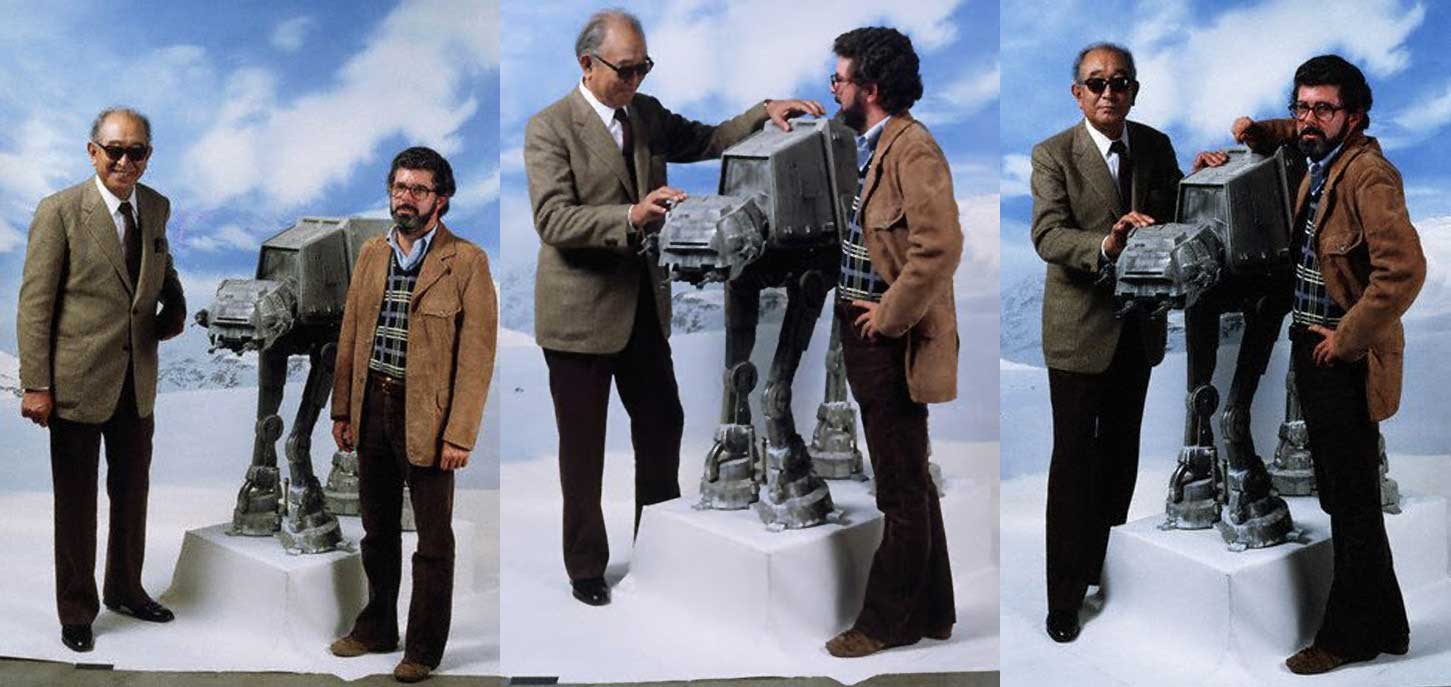
Akira Kurosawa, born on this day in 1910, visited the set of The Empire Strikes Back. Here he is with George Lucas and an AT-AT Walker:

Filmmaker in Focus:

Another great filmmaker, Alfred Hitchcock, is the focus of this video essay on the brilliance of the director’s blocking in Vertigo:

[embedded content]

Homages of the Day:

See 28 times TV shows paid homage to the movies in this video from Vox (via Geek Tyrant):

[embedded content]

Video Essay of the Day:

We don’t talk about Amelie enough, and while there’s no talking in this video it does say and show a lot about the film’s symmetry and camera movement (via Cinematic Montage Creators):

[embedded content]

Classic Trailer of the Day:

This week marks the 25th anniversary of Teenage Mutant Ninja Turtles II: The Secret of the Ooze. Watch the original trailer for the sequel below.

[embedded content]

and

Let’s block ads! (Why?)