Articles by admin

No Image

White House Says It Will Cut Ebola Funding To Address Zika

People in Pinar del Rio, Cuba, make their way through a fumigation fog that's meant to kill the mosquito that transmits the Zika virus.

People in Pinar del Rio, Cuba, make their way through a fumigation fog that’s meant to kill the mosquito that transmits the Zika virus. Ramon Espinosa/AP hide caption

toggle caption Ramon Espinosa/AP

Top officials with the Obama administration said Wednesday that they’ll redirect $589 million toward the Zika virus response. Most of that money was to be used to deal with Ebola virus.

Almost two months ago, the Obama administration requested $1.9 billion from Congress to respond to the Zika threat.

“But Congress has yet to act,” Shaun Donovan, director of the Office of Management and Budget, said in a news conference. “In the absence of congressional action, we must scale up Zika preparedness and response activities right now.”

Over 600 people with Zika, including 64 pregnant women, have been reported in U.S. states and territories. In most cases, people contracted the virus while traveling.

But Sylvia Burwell, secretary of the U.S. Department of Health and Human Services, says she expects to see local Zika virus transmission in the continental U.S. in coming months.

The redirected funds will go to mosquito control and surveillance; education about how to prevent transmission; supporting states and territories in their own Zika virus responses; and developing vaccines and better diagnostic tests.

Burwell and Donovan reiterated that the administration’s earlier request for supplemental funding from Congress remains in place. And, they say, the administration will also ask for funds to replenish the amount currently being moved from the Ebola response to the Zika response.

Without the full supplemental funding, Burwell says, a number of crucial activities would be impacted.

“Mosquito control and surveillance might need to be delayed or stopped. Our ability to move to a subsequent phase of vaccine development could be jeopardized. And without more funding, the development of faster and more accurate diagnostics could be impaired,” says Burwell.

One reason for the haste is that public health officials want to get mosquito control and surveillance underway before the peak summer mosquito season in the U.S., and before the rainy season in Central America and the Caribbean.

Most of the redirected funding — $510 million — is coming from the Ebola response. That’s concerning, because while the public panic over Ebola has faded, the virus continues to flare up.

“We face two real global health challenges — Ebola and Zika — and we don’t have an option to set one aside in the name of the other,” says Burwell.

Last week, a woman in Liberia died of Ebola. And though Guinea was declared Ebola-free in December, last month World Health Organization officials put more than 1,000 people under medical watch because they may have come into contact with eight people who contracted Ebola.

It’s those kind of activities that could be shortchanged by diverting funds away from Ebola and toward Zika, administration officials say.

Let’s block ads! (Why?)


No Image

It's Time To Celebrate The UConn Women's Basketball Team

The team trounced Syracuse 82-51 to win a record fourth straight NCAA championship. Commentator Frank Deford has an appreciation of the team, along with its coach and star player Breanna Stewart.

Transcript

RENEE MONTAGNE, HOST:

Last night, the University of Connecticut women’s basketball team trounced Syracuse 82 to 51 to win a record fourth straight NCAA championship. Commentator Frank Deford says the team’s spectacular accomplishments deserve to be celebrated.

FRANK DEFORD, BYLINE: I wish all those political pollsters out there had paused long enough to study how much the sporting public appreciated the UConn basketball team. My guess is that there would be a plurality of negative opinions. UConn is just too darned good for its sport. And here we go again, an unprecedented fourth consecutive championship – 11 since 1995, 75 wins in a row – those mean girls in sneakers. This is not altogether an original phenomenon. We have a tendency to cuddle up to great players much more than to great teams. Good grief, at his peak, Roger Federer resided with the angels. We exalted that Michael Phelps-consecrated water. Rose petals were strewn in Peyton Manning’s path when he retired. But hey, that’s natural. As we should, we admire those in any craft, no less so in sports, who appear out of nowhere to achieve remarkable feats.

On the other hand, teams – sports fans have allegiances to their teams so that when somebody else’s team dominates, we get annoyed. By golly, it’s just not fair. Give somebody else a chance. This current UConn juggernaut has been perhaps even more put down because not only is it led by the finest college basketball player ever, the divine Breanna Stewart, who makes everything look so easy, but because its coach, Geno Auriemma, who can be something of a caustic wiseguy, has now eclipsed the record of the sainted John Wooden, who coached UCLA to 10 championships. Never mind that Auriemma, like Wooden, is an absolutely brilliant coach. He is denigrated for merely coaching women and beating up on a lot of rinky-dink teams. Actually, in their own way, Wooden’s teams had it easier too. UCLA played in a weak conference. It almost always only had to play just four games to win the national title. It drove coaches in the rest of the country crazy that UCLA had what they considered such an easy path to the Final Four.

No, please, the point is not to diminish Wooden’s incredible record. It’s just to emphasize that every great accomplishment is a product of its time and some luck, too. Don’t dismiss Auriemma and UConn just because their excellence shines on the female side of the coin. In fact, it’s too bad more fans haven’t paid attention to Breanna Stewart and her team these past few years. Majesty is a thing of beauty to behold whatever the particular enterprise.

MONTAGNE: Commentator Frank Deford – he joins us the first Wednesday of every month.

Copyright © 2016 NPR. All rights reserved. Visit our website terms of use and permissions pages at www.npr.org for further information.

NPR transcripts are created on a rush deadline by a contractor for NPR, and accuracy and availability may vary. This text may not be in its final form and may be updated or revised in the future. Please be aware that the authoritative record of NPR’s programming is the audio.

Let’s block ads! (Why?)


No Image

Today in Movie Culture: Honest 'The Force Awakens' Trailer, Harry Potter Done 'Hardcore Henry' Style and More

Here are a bunch of little bites to satisfy your hunger for movie culture:

Movie Takedown of the Day:

This Honest Trailer for Star Wars: The Force Awakens is full of conflicting thoughts and gets really weird at the end:

[embedded content]

Fake Commercial of the Day:

Watch Rey, Finn and BB-8 try to get their hands on copies of the The Force Awakens Blu-ray in this funny video (via Twitter):

I didn’t pre-order #StarWarsTheForceAwakens. Got a feeling this will be me today… pic.twitter.com/S7ldEKocWM

— Darren Brazil (@darrenbraz) April 5, 2016

Alternate Blu-ray Covers of the Day:

You can print out these custom-designed Ralph McQuarrie art Blu-ray cover jackets for your copies of Star Wars, The Empire Strikes Back and Return of the Jedi (via /Film):

Mashup of the Day:

Here’s what Harry Potter and the Sorcerer’s Stone would look like in the first-person style, a la Hardcore Henry (via Geek Tyrant):

[embedded content]

Vintage Image of the Day:

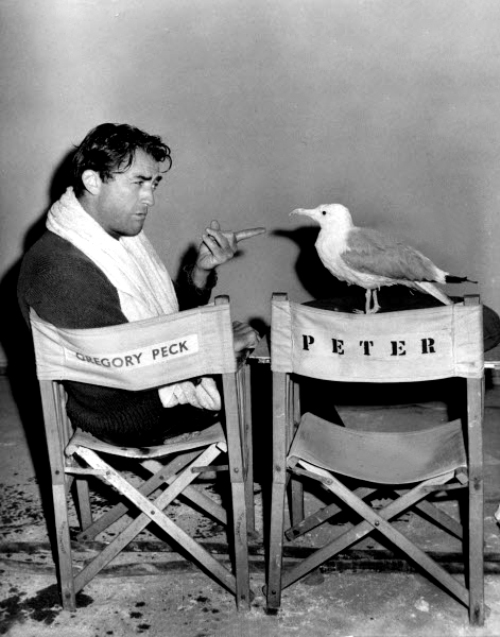
Today is the centennial of Gregory Peck‘s birth, so here’s a funny photo from the set of The Guns of Navarone:

Real Robot of the Day:

The Hong Kong man who built a robot that looks exactly like Scarlett Johansson won’t admit that’s who it’s modeled after. But it’s eerily obvious:

[embedded content]

Cosplay of the Day:

Here’s something a little different, a drawing of Jessica Rabbit cosplaying as Margot Robbie‘s Harley Quinn from Suicide Squad. See her dressed as Princess Leia, Wonder Woman and many more at Geek Tyrant.

Film School Lesson of the Day:

True crime documentaries like Making a Murderer are all the rage right now, so here’s a video essay on how to make a good one:

[embedded content]

Fan Art of the Day:

Artist Mike Orduna designed some amazing Four Horesman pieces, including the one below of Michael Fassbender as Magneto, in anticipation of X-Men: Apocalypse. See the other three on Twitter.

Classic Trailer of the Day:

Today is the 40th anniversary of the release of Ingmar Bergman‘s Face to Face. Watch the U.S. trailer for the film, which earned Oscar nominations for Best Director and Best Actress (Liv Ullman), below.

[embedded content]

and

Let’s block ads! (Why?)


No Image

UConn Powers To Historic NCAA Championship Win Over Syracuse

UConn celebrates after defeating Syracuse in the women's Division I NCAA championship game in Indianapolis.

UConn celebrates after defeating Syracuse in the women’s Division I NCAA championship game in Indianapolis. Darron Cummings/AP hide caption

toggle caption Darron Cummings/AP

On Tuesday night in Indianapolis, top-seeded Connecticut made history, beating No. 4 Syracuse 82 to 51 to become the first NCAA Division I women’s team to win four consecutive NCAA basketball championships.

The win also marked the 11th national championship for UConn head coach Geno Auriemma who surpassed coach John Wooden on the all-time championship win list — for both college and pro basketball. Auriemma is now tied with coach Phil Jackson for basketball championship wins.

UConn jumped out to a 9-0 lead thanks in part to a couple of three-pointers from senior guard Moriah Jefferson and from Breanna Stewart, UConn’s towering 6-foot-4-inch senior forward who’s widely expected to be taken No. 1 in the WNBA draft.

Syracuse's Cornelia Fondren, (center) and Connecticut's Napheesa Collier (right) battle for a loose ball as UConn's Breanna Stewart goes airborne, preparing to block a shot in the first half of the NCAA championship game.

Syracuse’s Cornelia Fondren, (center) and Connecticut’s Napheesa Collier (right) battle for a loose ball as UConn’s Breanna Stewart goes airborne, preparing to block a shot in the first half of the NCAA championship game. AJ Mast/AP hide caption

toggle caption AJ Mast/AP

Syracuse junior guard Brittney Sykes momentarily stemmed the tide with a smooth underhand layup to get on the scoreboard, but UConn, as they’ve done all season, upped their game.

At the end of the first quarter, UConn led 28-13. By the end of the first half, the Huskies were up 50-23. Jefferson and Stewart alone outscored Syracuse 25-23 in the first half.

Even casual basketball fans knew the UConn team was all but unstoppable (in fact some people even said its dominance was bad for women’s basketball), but the team’s seamless passes, impenetrable defense and superb shooting left some viewers in awe.

Really have to appreciate what we are witnessing with this UCONN team. One of the best dynasties in sports history. Lead 50-23 at the half

— Brad Huber (@brhuber90) April 6, 2016

The UCONN girls are crazy talented

— Sabrina Whitehouse (@sabrinaew1123) April 6, 2016

UConn is on pace to win 112-52

— SI College Hoops (@si_ncaabb) April 6, 2016

I already knew UConn was gon dominate… No one knows how to game plan against them

— EL FOOSAY (@SheHatesJacoby) April 6, 2016

At the half, Sykes told ESPN’s Holly Rowe that Syracuse was focused on every possession; they were going to play in four-minute segments so as to chip away at UConn’s lead. That they did, stringing together an impressive 16-0 run in the third quarter, forcing Auriemma to call a defensive timeout. But the Orange still trailed by 17, and couldn’t loosen the Huskies’ grip on the lead.

UConn stepped on the gas, blotting out Syracuse’s glimmer of hope.

With just under two minutes left to play and the score at 80-51, Auriemma called a timeout to sub out Stewart, Jefferson and fellow Huskies senior Morgan Tuck, the three of whom made up the core of the team. UConn’s other senior, Briana Pulido, came on in the final minutes. To the delight of her teammates and the fans, she drained a shot in the game’s waning seconds, and the primarily pro-UConn arena erupted in cheers.

“It was perfect,” Stewart said after the game. “To play with these guys is unbelievable.”

Let’s block ads! (Why?)


No Image

Before Hollywood, The Oil Industry Made LA

The Mesa oil field in Santa Barbara, Calif., in 1935. Edward Doheny discovered oil under a private residence in 1892. His find set off an oil-drilling spree.

The Mesa oil field in Santa Barbara, Calif., in 1935. Edward Doheny discovered oil under a private residence in 1892. His find set off an oil-drilling spree. AP hide caption

toggle caption AP

Ever watch The Beverly Hillbillies and wonder why Jed Clampett moved to Beverly Hills and not Texas or some town that we more closely associate with oil?

Even Angelenos forget sometimes that the Clampetts came first, then the swimming pools and movie stars. Think J. Paul Getty or Edward Doheny, men who made their fortunes on oil and then made LA.

Los Angeles is a world center for transportation, fashion, manufacturing and — above all — entertainment. In the heart of this metropolis, oil is hidden in plain sight. If you go on a walk to clear your head at NPR’s Culver City studios, cross the street and you’re in one of the largest producing urban oil fields in America.

“When you think about Los Angeles, you tend to think of big skyscrapers and beaches. You don’t generally tend to think of oil wells,” says Lars Perner, a professor at the Marshall School of Business at the University of Southern California.

“This is fairly valuable real estate, with some rather expensive homes close by,” he says of the Inglewood oil field. Perner points to the Baldwin Hills and View Park neighborhoods that are considered the “Black Beverly Hills” for former residents such as Tina Turner, Ray Charles and Nancy Wilson. “This oil is clearly very valuable to justify using that space for those oil pumps,” Perner says.

He says that as iconic as the Hollywood sign or the movie studios are, it’s the oil wells that made modern life in LA possible. The LA Basin is very isolated and vast. That makes getting goods into the area difficult, and it made transporting goods around the region very tough. That is until the invention of the automobile and the discovery of oil.

“Back in those days there weren’t really a lot of regulations as to how you could drill, so a lot of people got very entrepreneurial. And they were trying to get pumps onto their property before their neighbors could,” Perner says.

Oil rigs extract petroleum in Culver City, Calif., on May 16, 2008.

Oil rigs extract petroleum in Culver City, Calif., on May 16, 2008. Gabriel Bouys/AFP/Getty Images hide caption

toggle caption Gabriel Bouys/AFP/Getty Images

You can find oil wells hidden all over Los Angeles. Beverly Hills High School has multiple oil wells on its campus. (The school’s wells were the subject of a class action suit brought by Erin Brockovich). Edward Doheny, for whom the major thoroughfare in Beverly Hills is named, discovered oil under a private residence in 1892. His find set off an oil-drilling spree. The battle over the rights to that oil could fill several history books and many films. As J. Paul Getty once said, “The meek shall inherit the earth, but not its mineral rights.”

Part of what made Los Angeles oil so attractive, Perner says, was that the oil was close to the surface and easy to extract. Add to that the newly invented automobile, incredible weather and a port, and that’s a recipe for exponential expansion.

But Perner suggests that without oil there would be no modern LA. “Well, the petroleum industry of course made it possible to have Hollywood.” And he says it made it made it possible to build an infrastructure to transport agricultural produce from other areas to help support the growth of a relatively large city very quickly.

“Los Angeles was a sleepy pueblo that became LA, and Hollywood and the studios all popped up and people got wealthy because of oil,” says David Slater, chief operating officer of Signal Hill Petroleum. In 1921, oil was discovered on Signal Hill, a city near the Port of Long Beach. These two discoveries are what made Los Angeles one of the world’s major petroleum fields.

It’s difficult to overstate just how much oil was being produced in LA back in the 1920s.

“The production from here made Los Angeles the equivalent of Saudi Arabia today,” Slater says.

Today, the city of Signal Hill is one of the largest urban producers of oil in the U.S. But the steep drop in oil prices has had a big impact on smaller oil companies like Signal Hill Petroleum.

“The painful part, though, is when prices go down, contracting our business and eliminating jobs is never ever a fun thing to go through,” says Slater. His company has shrunk from 150 employees to 85.

As he looked out over the bay of Long Beach, where supertankers line the horizon, Slater said he wished he could drill more. He joked that cheap gas wasn’t completely bad, as he drove us down Signal Hill in his white Escalade.

Let’s block ads! (Why?)


No Image

UVA Study Links Disparities In Pain Management To Racial Bias

NPR’s Audie Cornish speaks to Kelly Hoffman, a doctoral student in social psychology at the University of Virginia. Hoffman recently published a paper that links disparities in pain management to racial bias.

Transcript

AUDIE CORNISH, BYLINE: Numerous studies have shown that black patients are less likely than their white counterparts to receive pain medicine for the same injury. Now, new research from the University of Virginia suggests a reason why. It found that a substantial number of white medical students and residents believe black people are less sensitive to pain. Now, here to talk about the findings is UVA researcher Kelly Hoffman. Welcome to the program.

KELLY HOFFMAN: Thank you for having me.

CORNISH: First, explain how you go about even trying to measure something like this. What did this project look like?

HOFFMAN: So we measured white medical students and residents as well as white lay people’s beliefs about biological differences between blacks and whites. So we gave them a survey with items and asked them to rate the extent to which various items are true or untrue.

And we also asked them to report how much pain they thought a black patient and a white patient would feel across two scenarios. And then we asked them to tell us what pain medication they would recommend to treat each of the patient’s pain.

CORNISH: And what were some of the true and false beliefs you put in front of these participants that they had to make the call on?

HOFFMAN: So some of the true beliefs we had are things like whites are less susceptible to heart disease than blacks. Blacks are less likely to contract spinal cord diseases. And then some of the false ones and the ones that were endorsed more so were things like blacks’ blood coagulates more quickly than white people’s blood, their skin is thicker than white people’s, they have a stronger immune system than white people, and things like that.

CORNISH: What was the difference in performance between laypeople and medical students, and especially more experienced medical students, given, say, some of those false (laughter) biological beliefs that you were describing?

HOFFMAN: So what we can do is we can look at how many people essentially endorse these things as true versus untrue. And so among white laypersons, about 73 percent of the sample said that at least one of the false items was possibly, probably or definitely true whereas among the medical sample the number was around 50 percent.

CORNISH: But were you surprised, I mean, especially when it came to the medical students? I mean, don’t medical schools essentially teach students to be aware of racial biases or at least – I don’t know – some biology (laughter) that would counter some of these ideas?

HOFFMAN: Right. So what’s striking is that these beliefs seem to operate kind of independently of individual prejudice. So, I mean, it’s not the case that these particular medical students and residents are just more racially biased. It’s just these are very common beliefs that are very pervasive across our society.

CORNISH: So how does that work?

HOFFMAN: So some people think that black athletes have an extra muscle in their leg and that’s why they can jump higher and run faster, these beliefs that somehow the black body is biologically and fundamentally different, it’s stronger, it’s less impervious to pain and injury…

CORNISH: But do you see why I’m asking? I mean, some people might believe that I would hope a doctor wouldn’t.

HOFFMAN: Right. We would hope so too. And so we will need to test whether practicing physicians also hold these beliefs and whether they impact treatment in real medical context, so that’s an important question.

CORNISH: Kelly Hoffman is a researcher at UVA. Thank you so much for speaking with us.

HOFFMAN: Thank you for having me.

Copyright © 2016 NPR. All rights reserved. Visit our website terms of use and permissions pages at www.npr.org for further information.

NPR transcripts are created on a rush deadline by a contractor for NPR, and accuracy and availability may vary. This text may not be in its final form and may be updated or revised in the future. Please be aware that the authoritative record of NPR’s programming is the audio.

Let’s block ads! (Why?)


No Image

Fire Closes IRS Headquarters But Won't Affect Tax Return Processing

The IRS headquarters in Washington, D.C.

J. David Ake/AP

A small fire forced the evacuation of the IRS headquarters in Washington, D.C., on Monday.

Spokesman Terry Lemons told The Associated Press that the fire that started in the basement around 3:30 p.m., and created a lot of smoke — forcing the building to be evacuated.

The Washington Post reports:

The building closed about 2:45 p.m. Monday, before the fire started, “due to electrical issues with the air-conditioning system,” an IRS spokesman said. He said that about 2,000 people work there and that “a few hundred” were still in the building when the fire broke out.

There were no injuries and the cause is being investigated.

The building will be closed on Tuesday because it doesn’t have full electricity.

The fire will not affect processing of tax returns, which is done elsewhere, officials told The Post.

The tax return filing deadline is usually April 15, but this year taxpayers get a little more time to finish up — or in some cases get started.

Due to the Washington D.C. Emancipation Day holiday being observed on April 15 instead of April 16, 2016, Tax Day is on the following Monday, April 18.

But there are two exceptions: In Maine and Massachusetts, April 18 is Patriot’s Day, so taxpayers there have until April 19.

Let’s block ads! (Why?)


No Image

See What Doomsday Almost Looked Like in 'Batman v Superman: Dawn of Justice'

They came, they saw… they kicked some apocalyptic butt. But as Batman, Wonder Woman and Superman prepare to move on to the next battle in 2017’s Justice League (and the solo Wonder Woman movie that arrives a few months earlier), we’ve got some extra time to obsess over Batman v Superman: Dawn of Justice….

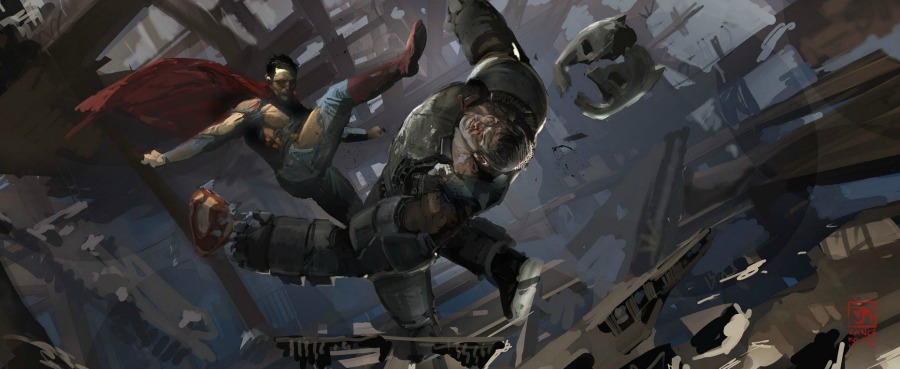
… especially this pretty spectacular concept art featuring alternate versions of the film’s other-worldly villain, Doomsday.

Artist Vance Kovacs has posted some of his conceptual work on Batman v Superman, which is all Doomsday-centric, revealing a few different looks at the iconic monster and his showdown with Batman, Superman and Wonder Woman.

First, here’s what Doomsday looked like in the finished film.

Here is a version of what Doomsday looks like in the comics

Here’s some early Doomsday concept art that show his evolution from a more god-like figure to a more monstrous-looking beast.

As a bonus, here is some of Kovacs’ concept art depicting the battle between Superman and Batman.

Let’s block ads! (Why?)


No Image

Villanova Beats North Carolina 77-74 On Buzzer Beater To Win Hoops Title

Villanova's Kris Jenkins is mobbed by teammates after hitting the game-winning three-pointer to defeat the North Carolina Tar Heels 77-74 in the NCAA title game Monday night.

Villanova’s Kris Jenkins is mobbed by teammates after hitting the game-winning three-pointer to defeat the North Carolina Tar Heels 77-74 in the NCAA title game Monday night. Streeter Lecka/Getty Images hide caption

toggle caption Streeter Lecka/Getty Images

The Villanova Wildcats’ vaunted defense locked down the North Carolina Tar Heels in the second half, and the school won its second national championship Monday night, 77-74. But not before an exchange of three-pointers in the closing seconds.

North Carolina’s Marcus Paige hit a seemingly impossible double-pump three pointer with just five seconds to go to tie the game, but Villanova’s Kris Jenkins answered at the buzzer.

The national championship game had the greatest ending in NCAA Tournament history: https://t.co/QNUUheoC48 https://t.co/7txKyoNxeW

— SB Nation (@SBNation) April 5, 2016

Villanova used a 19-5 run over nearly 10 minutes to take control of the game in the second half as the Tar Heels shot 3-14 and committed five turnovers. The Wildcats built a 10-point lead with less than six minutes to go, but seven straight points brought UNC back in striking range and set up the tense end of the game.

Villanova was led in scoring by two guards, sophomore Phil Booth with 20 and senior Ryan Arcidiacono — who was named the tournament’s most outstanding player — with 16.

Josh Hart of the Villanova Wildcats races the ball upcourt Monday in the first half against the North Carolina Tar Heels during the NCAA championship game in Houston.

Josh Hart of the Villanova Wildcats races the ball upcourt Monday in the first half against the North Carolina Tar Heels during the NCAA championship game in Houston. Ronald Martinez/Getty Images hide caption

toggle caption Ronald Martinez/Getty Images

Arcidiacono made the pass that led to the winning points, the Associated Press reported:

“Every kid dreams about that shot,” said Arcidiacono, who finished with 16 points and two assists, one more memorable than the other. “I wanted that shot, but I just had confidence in my teammates, and Kris was able to knock down that shot.”

The Tar Heels finished the first half with a 39-34 lead thanks to 7-9 shooting from three-point range and 15 points from sophomore Joel Berry II. But Berry had just 5 points in the second half as the Tar Heels were flustered by Villanova’s defense. Senior Marcus Paige led UNC with 21 points.

Joel Berry II of the North Carolina Tar Heels shoots in the first half Monday against the Villanova Wildcats during the NCAA championship game in Houston. Berry's 15 first-half points pushed the Tar Heels out to a 39-34 lead.

Joel Berry II of the North Carolina Tar Heels shoots in the first half Monday against the Villanova Wildcats during the NCAA championship game in Houston. Berry’s 15 first-half points pushed the Tar Heels out to a 39-34 lead. Pool/Getty Images hide caption

toggle caption Pool/Getty Images

As in their semifinal win over Oklahoma, when six players had 10 or more points, Villanova used balanced scoring to stay in striking distance in the first half.

Villanova, making its first NCAA championship game appearance since its surprise title as an eight-seed in 1985, were dominant in their path toward the title game, winning by an average of 24 points. That included a victory over No. 1 overall seed Kansas to reach the Final Four, and a 95-51 domination of Oklahoma in the national semifinal.

North Carolina was making its 10th NCAA title game appearance, while the Tar Heels’ coach, Roy Williams, was making his fifth appearance after going 2-2 across 28 seasons at North Carolina and Kansas.

Let’s block ads! (Why?)


No Image

Patients Miss Out On Savings When Doctors Fail To Talk About Costs

Along with the diagnosis, patients often want to talk about how much treatment will cost.

Along with the diagnosis, patients often want to talk about how much treatment will cost. Tetra Images RF/Getty Images hide caption

toggle caption Tetra Images RF/Getty Images

Talking about money is never easy. But when doctors are reluctant to talk about medical costs, patients’ health can be undermined.

A study published Monday in the journal Health Affairs explores the opportunities that are often missed in the exam room.

Patients are increasingly responsible for more of their own health costs. In theory, financial incentives are supposed to make them sharper consumers and empower them to trim unnecessary health spending. But previous work has shown it often leads them to skimp on both valuable preventive care and superfluous testing.

Doctors could play a role in helping patients find appropriate and affordable care by talking with them about out-of-pocket costs.

But, a range of physician behaviors currently stand in the way, according to the study. “We need to prepare physicians to hold more productive conversations about health care expenses with their patients,” said Peter Ubel, a physician and behavioral scientist at Duke University.

The researchers analyzed transcripts of almost 2,000 physician-patient conversations regarding breast cancer, rheumatoid arthritis and depression treatment. They identified instances in which patients suggested the cost of care might be difficult for them to bear and assessed how doctors responded.

Overall, researchers noted two ways in which doctors dismissed patients’ financial concerns. They either didn’t acknowledge them or only addressed them halfway.

For instance, if a patient commented on how expensive a drug was, the doctor might ignore the comment entirely, or might suggest a temporary solution – like a free trial – without exploring long-term strategies to address the issue.

Without a long-term plan, patients may eventually stop taking the medication, or take it irregularly. Either way, a patient would get less benefit from treatment and could getter sicker, perhaps even winding up in the hospital.

The study doesn’t measure how often doctors dismissed patient concerns – because, the researchers wrote, they didn’t know how often those dismissals led to people actually forgoing needed treatments.

Still, Ubel said, it’s clear doctors aren’t talking to patients about these expenses. He pointed to a separate analysis of those same conversations, which found that doctors discussed medical costs with patients about 30 percent of the time. And only in a minority of those discussions did doctors and patients brainstorm about ways to make medication more affordable.

“A majority of [physicians] – they don’t talk about costs,” he said. “When they do talk about it, they don’t talk about it productively.”

Why do physicians hesitate? For one thing, they aren’t used to discussing cost barriers, and many think it’s inappropriate to bring up money at all, Ubel said. When he lectures on the subject, he always encounters people who worry that discussing finances will “contaminate the doctor-patient relationship.”

Plus, doctors haven’t been taught to listen for patients’ pocketbook concerns. If a patient comes in with heartburn and indigestion, a good internist will start probing for signs of coronary disease, Ubel said. By contrast, physicians aren’t primed to pick up on cues that patients may face financial strains.

“If we had that on our list to be aware of, we’d pick up the cues. If we don’t, it’ll be right in front of our eyes, and we’ll miss it,” he added.

The idea of patients acting as consumers – weighing cost and shopping for the best health care deal – is still relatively new, the study notes. As it becomes more commonplace, patients may push doctors for more help in making cost-based decisions, Ubel said.

That said, navigating a patient’s financial circumstances and medical needs in the course of a 15-minute visit is tricky, said Jonathan Kolstad, an assistant professor of economic analysis and policy at the University of California, Berkeley. Kolstad wasn’t involved in the Health Affairs study but has researched how medical costs affect people’s decision-making.

“It’s not as though, ‘Oh, it’s just consumers can’t figure it out.’ Doctors don’t know,” he said. When it comes to figuring out what a drug will cost, doctors are in the same boat.”

Kaiser Health News is an editorially independent news service that is part of the nonpartisan Henry J. Kaiser Family Foundation. Shefali Luthra is on Twitter: @shefalil.

Let’s block ads! (Why?)