Articles by admin

No Image

DVD Obscura: The New Indie and International Movies You Need to Watch
New Indie:

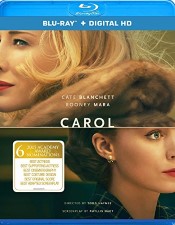
One of the most sophisticated, intelligent, and gorgeous-looking of all the Academy Award–nominated films of the past year just became available for home viewing. Yes, I know, you already watched Mad Max: Fury Road. I’m talking about Carol (Anchor Bay/Weinstein), the latest journey into the interior lives of women from Todd Haynes. Cate Blanchett is astounding as a well-to-do housewife in the 1950s whose affair with young, naïve shopgirl Therèse (Rooney Mara) threatens to destroy everything else she values. You won’t find a more precisely made, deeply emotional love story this month than this one. And for production design fanatics, the period colors and settings are impeccable. It’s the kind of world you might want to live in yourself, minus all that vintage repression and unhappiness.

Also available: More of last year’s Oscar nominees are here, so you can finally catch up and see what that fuss was about: Eddie Redmayne plays pioneering transgender artist Lili Elbe in The Danish Girl (Universal Pictures Home Entertainment); homesick Saoirse Ronan will make you cry like a baby in the mid-century romance Brooklyn (20th Century Fox Home Entertainment); meanwhile, Oscar winner Brie Larson fights for her son’s life in the claustrophobia-making Room (Lionsgate Home Entertainment).

The Oscars ignored the sweetly moving friendship drama Miss You Already (Lionsgate Home Entertainment), which stars Drew Barrymore and Toni Collette dealing with the effects of the latter’s breast cancer diagnosis; father-son team Donald and Kiefer Sutherland join up with Demi Moore in the underrated western Forsaken (Momentum Picture); Robert Pattinson and Dane DeHaan star as photographer Dennis Stock and screen legend James Dean, respectively, in acclaimed director Anton Corbijn’s latest, Life (Cinedigm).

For a dose of low-brow awesomeness, there’s Dudes & Dragons (Momentum), a comedy-fantasy epic about the two things in its it title; You’re Killing Me (Wolfe Video) features more dudes, in this witty gay slasher comedy about friends who ignore the fact that the hot guy in their midst is a serial killer.

New Foreign:

Okay, this one is from Canada, but filmmaker Guy Maddin is so outside the mainstream of English-language cinema that his films may seem beamed in from another planet, much less another country. And that’s what makes them incredible. Borrowing from film history and jolting the past to present life with wild imagination, he’s like no one else working in movies today. His latest (with co-director Evan Johnson), The Forbidden Room (Kino Lorber), is what happens when doomed sailors on a submarine eat pancakes to survive (they have air pockets, see), when lumberjacks team up for a rescue mission, when a psychiatrist and her uncontrollable patient embark on a journey by train, when a gang of female skeletons commits the crimes of kidnapping and insurance fraud, and when mustaches come to loving life. Sorry if reading that plot synopsis doesn’t make sense. Just watch the film, starring Udo Kier, Charlotte Rampling, Mathieu Amalric, and Geraldine Chaplin, and it’ll all become dazzlingly clear. Or not. Either way, you’re never going to forget it.

Also available: The controversial Ukranian hit The Tribe (Drafthouse Films) from director Myroslav Slaboshpytskiy, follows a group of violent, deaf teenagers in a boarding school that serves as a microcosm of a world at war; supernatural Thai drama The Blue Hour (Strand Releasing) tells the story of two teenage boys whose romance blooms at a haunted swimming pool; Spain’s entry to the 2015 Academy Awards is the Basque-language Flowers (Music Box Films), Jon Garaña and Jose Mari Goenaga’s moving drama about a woman who receives mysterious bouquets from a secret admirer; Jafar Panahi’s Taxi (Kino Lorber) is the latest from Iran’s most famous dissident filmmaker who mounts a camera to the dashboard of a cab and drives it around, picking up real people and actors, as they discuss life, film, and the trouble of trying to create meaningful examples of both.

New Doc:
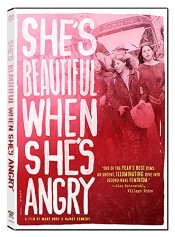
One complaint about She’s Beautiful When She’s Angry (Music Box Films): it’s too short. At 90 minutes, this information-packed documentary from Mary Dore is still a complete experience, a look at the women’s movement in the 1960s and early ’70s. And yet the sheer number of brave women who fill every frame – some well known, others not, all of them fascinating – really demand a really deep dive into the subject, of the 10-part miniseries variety, the kind Ken Burns is allowed to do for subjects like baseball and jazz music. As it stands, though, this is a totally entertaining, sometimes shocking look (plenty of archival footage of vintage misogyny in action) at a story that’s still unfolding 50 years later. If it leaves the history-hungry wanting more of everything, then that just means more films on the subject are in order.

Also available: Because there aren’t enough movies about this guy, Steve Jobs: The Man in the Machine (Magnolia Home Entertainment) gives you Oscar-winning director Alex Gibney’s take on the Apple co-founder; the Steve Jobs of food (ok, maybe nobody calls him that, but whatever) is chef Rene Redzepi, the man behind NOMA, the Copenhagen-based dining establishment named “The Best Restaurant in the World” in 2010, 2011, 2012, and 2014, and in NOMA: My Perfect Storm (Magnolia Home Entertainment), you get to watch him forage for stylish ingredients, and it will make you very, very hungry.

Sunshine Superman (Magnolia Home Entertainment) introduces us to legendary skydiver Carl Boenish, a pioneer of BASE jumping and all things extreme; Censored Voices: The Six Day War, Uncut (Music Box Films) provides a rare glimpse of the testimonies of soldiers returning from that pivotal event in modern Israeli history, and it’s not exactly what you might be expecting; We Come as Friends (BBC Worldwide) explores the terrifying, heartbreaking world of fractured Sudan, as the battle for that nation’s population and resources tears everything to pieces.

Rhythm ‘n Bayous: A Road Map to Louisiana Music (MVD Visual) is the kind of movie they invented the word “rollicking” to describe, a joyful, satisfying celebration of regional music by its most dedicated practitioners; the wild style of Children of the Stars (MVD Entertainment) involves a group of UFO contactees who tell the stories of their lives on other planets by making their own sci-fi films, which is almost as far-out as the work of contemporary artist Matthew Barney, he of the car-crashing, Masonic Temple-referencing, petroleum jelly-filled Cremaster cycle. In Matthew Barney: No Restraint (Kino Lorber), we’re treated to a portrait of the enigmatic man as he follows his own private obsessions.

New Grindhouse:
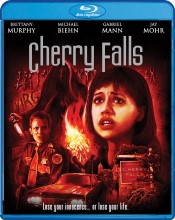
When we remember the late Brittany Murphy, we think of Clueless, of course, and Girl Interrupted, and Freeway. But Cherry Falls (Scream Factory), the little-seen horror freak-out that sat on the shelf for a long time, is a strange but welcome addition to her too-brief life and film career. Turning the sexual politics of most slasher films upside down, it’s the story of a town full of virgin teenagers who’re being killed off one by one. To survive, the only answer is to do “it” ASAP, so the kids in town plan a “Pop Your Cherry” party. But Miss Murphy has other plans to catch the killer. It’s a shocking, funny, sometimes troubling look at the way sex and sexuality is exploited in the horror genre, and if you’ve ignored it until now, this new Blu-ray offers a chance to lose your innocence.

Also available: You’ll bask in the vintage power and glory of Pam Grier as she escapes from women’s prison shackled to another inmate in Black Mama, White Mama (MVD Visual); Sho Kosugi keeps it full-tilt ninja in 1987’s Rage of Honor (MVD Visual); the evil downside of legalizing all drugs (corporations ruin everything cool, duh) is fully exploited in the sci-fi thriller Narcopolis (IFC Midnight/Scream Factory).

It’s a Natasha Henstridge-palooza when Scream Factory breaks out Species II as well as Species III & Species: The Awakening; don’t get too confused by The Boy (Scream Factory) even though it shares a title with the 2016 film about a murderous doll – this one is about a murderous flesh-and-blood kid; Kill or Be Killed (RLJ Entertainment), the spaghetti western with lots of murder, arrives just in time to capitalizes on any and all residual goodwill you might feel for Hateful 8.

It’s vintage American International Pictures double-feature time with the two-fer of Edgar Allen Poe’s Murders in the Rue Morgue and H.P. Lovecraft’s The Dunwich Horror (Scream Factory); long before Chuck Norris became an infomercial spokesman for exercise equipment and celebrity endorser of weird Republican candidates, he killed lots of bad guys in very cool ways in 80s schlock like Invasion U.S.A. and Braddock: Missing in Action III (both from Shout Factory); and long before Katie Holmes married and divorced Tom Cruise, she appeared in the oh-so-’90s teen thriller Disturbing Behavior (Scream Factory), which makes her just as much an American hero as Chuck Norris.

Early 1970s giallo films Death Walks in High Heels and Death Walks at Midnight get the box set treatment with Death Walks Twice: Two Films by Luciano Ercoli (MVD Visual); the double-feature disc of Private Resort & Hardbodies (Mill Creek Entertainment) has a lot of ’80s nudity, and at least one of those movies has Johnny Depp, before he became a live-action cartoon character; All Hell Breaks Loose (Wild Eye Releasing), which feels like the ’80s but isn’t, involves bikers and Satanism and lots of gore.

New Classic:

Acclaimed French New Wave filmmaker Jacques Rivette spent the early part of his career as a film critic. During that time he spent three years making 1960’s Paris Belongs to Us (The Criterion Collection), one of the most important films of that moment. It’s a mystery of sorts, about a group of actors rehearsing a Shakespeare play for performance that never materializes. But most importantly, it’s a formally innovative look into the post-WWII disillusionment of France’s young, creative population as they begin shaking up the 1960s, and features cameos from Rivette’s peers Jean-Luc Godard, Claude Chabrol, and Jacques Demy. Your nouvelle vague history lesson begins right here.

Also available: Bogie and Bacall leave indelible noir impressions in Howard Hawks’ The Big Sleep (Warner Archive Collection), and this new Blu-ray contains an alternate cut; The Sicilian (Shout Factory) delivers a hi-def edition of acclaimed director Michael Cimino’s 1987 biopic of Italian bandit Salvatore Giuliano (Christopher Lambert); Ray Milland stars in the atomic bomb–themed, Cold War nightmare Panic in Year Zero (Kino Lorber), making its Blu-ray debut.

Jane B. par Agnès V. & Kung-Fu Master! (Cinelicious Pics/Cine-Tamaris) package together two idiosyncratic films by French New Wave director Agnes Varda, both of which feature ’60s icon Jane Birkin; The Decline of Western Civilization and The Decline of Western Civilization Part II: The Metal Years (both Shout Factory) are essential documents, with Decline focusing its stare on early 80s Los Angeles punk rock, featuring bands like Black Flag and X, while Decline II covers the hedonistic, mid-80s, Sunset Strip metal scene; the late Hong Kong star Leslie Cheung stars in 1994’s Victor/Victoria–esque rom-com He’s a Woman, She’s a Man (Warner Archive Collection).

The Red House (The Film Detective) is psych-noir at its darkest and stars Edward G. Robinson; familial estrangement becomes a challenge to survival in David Gordon Green’s underrated rural drama, Undertow (Olive Films), starring Jamie Bell and Josh Lucas; Chantal Akerman: Four Films (Icarus Films) packages a handful of the late art film director’s works — From the East, South, From the Other Side, Down There – all of which were fairly difficult to locate before as well as a bonus doc, Chantal Akerman, From Here; fans of the bizarrely erratic, Chuck Barris–created talent competition series of the mid-’70s will finally get a chance to witness the evidence that somebody in Hollywood thought it would be a good idea to turn it into a theatrical experience, birthing 1980’s The Gong Show Movie (Shout Factory) for better or… okay, worse.

New TV:
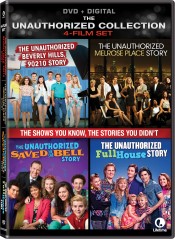
The Unauthorized Collection 4-Film Set (Lionsgate Home Entertainment) features a quartet of highly-rated, made-for-Lifetime movies: The Unauthorized Beverly Hills, 90210 Story, The Unauthorized Melrose Place Story, The Unauthorized Saved by the Bell Story, The Unauthorized Full House Story. Sure, they’re nonsense, possibly irresponsible, but utterly addictive, the TV movie equivalent of eating four big bags of store-brand potato chips. And you’re not above that, either, are you? Take a dive into the Uncanny Valley.

Also available: Another MST3K box set means you’re probably going to need to go to IKEA and just get more shelving. You know who you are. This one, Mystery Science Theater 3000: Vol. XXXV (Shout Factory), packages Teenage Cave Man, Being from Another Planet, 12 to the Moon, and Deathstalker and the Warriors from Hell. In Defense of Food: An Eater’s Manifesto (PBS) can be boiled down to, essentially, the following, in Michael Pollan’s own words: “Eat food, not too much, mostly plants.” Of course, there’s more to it than that, which is why you’ll want to watch it; hey, fans of Humans (RLJ/Acorn), this here is the uncut UK edition with extra footage; and hey, fans of swinging anti-hero Bob Crane and the saddening biopic Auto Focus, here’s Hogan’s Heroes (CBS/Paramount). ALL OF IT AT ONCE. You’re welcome.

The blunt instrument that is Strike Back delivers Season 4 (HBO Home Entertainment); Soviet espionage cult favorite The Americans: The Complete Season Three (20th Century Fox Home Entertainment) keeps the Reagan-era thrills coming, while Archer: The Complete Season Six (20th Century Fox Home Entertainment/FX) takes a much sillier look at spycraft; Community: The Complete Sixth Season (Sony Pictures Home Entertainment), Drunk History: Season 3 (Comedy Central Home Entertainment), and the fourth season of Maude (Shout Factory) are all spiritually compatible if you think about it, and should appeal to pretty much the same audience.

Vintage TV drama enthusiasts of a certain age will remember Death Valley Days, which ran from 1952 until 1970, and 1969’s The Bold Ones: The New Doctors. Shout Factory releases the complete series of the latter, and Season 1 of the former (with, presumably, 17 more installments to follow). Fifty Shades of Grey star Jamie Dornan and Hannibal‘s Gillian Anderson’s acclaimed UK series, The Fall, returns with Series 2 (RLJ/Acorn); American slavery drama The North Star (RLJ Entertainment), an original Urban Movie Channel film, makes it physical media debut.

In case you missed The Spoils of Babylon (Anchor Bay Entertainment), it’s not a Bible story, but rather a parody of 1980s mini-series, starring Kristen Wiig; if you want Bible stories, check out Shout Factory’s The Bible Stories, including In the Beginning, Abraham, and Moses with stars like Ben Kingsley, Sean Bean, and Christopher Lee; The Nanny: The Final Season (Shout Factory) promises to imprint Fran Drescher’s one-of-a-kind voice into your consciousness forever; Fear the Walking Dead: The Complete First Season (Anchor Bay) is a “Special Edition” with bonus content and commentaries; featuring James Franco, Seth Rogen, Linda Cardellini and scads of other before-they-were-famous actors, Freaks and Geeks: The Complete Series (Shout Factory) makes it Blu-ray bow on Shout Factory with an elaborate box set that includes a staggering amount of bonus footage and commentary; When Calls the Heart: It Begins with Heart (Shout Factory) is about… hang on… well, I’m not sure what it’s about, but it was on the Hallmark Channel… and so… okay, yes, got it, it’s about love. And that’s lovely.

Let’s block ads! (Why?)


No Image

The Golden State Warriors Are On The Brink Of History — Will They Go For It?

Golden State Warriors' Stephen Curry drives to the hoop during Thursday's game against the San Antonio Spurs. The Warriors won 112-101.

Golden State Warriors’ Stephen Curry drives to the hoop during Thursday’s game against the San Antonio Spurs. The Warriors won 112-101. Marcio Jose Sanchez/AP hide caption

toggle caption Marcio Jose Sanchez/AP

Only three wins separate the Golden State Warriors and NBA history.

On Thursday night, the Warriors beat the San Antonio Spurs to become only the second in league history to win 70 games in a season. If they win all three of their remaining regular season games, they’ll break the record for most wins in a season (72) held by the 1995-96 Chicago Bulls.

But now that Golden State has clinched the No. 1 spot in the Western Conference, head coach Steve Kerr says he’s “inclined” to rest his best players, potentially forgoing the glory in exchange for physically fresher players in the playoffs.

Kerr has said that the team — which started the season 24-0 and has lost only nine games total — isn’t pushing for the record, telling USA TODAY Sports earlier in the week, “We’d like to get it, but we’re still resting people and trying to get us set up for the playoffs.”

But after Thursday’s win, with the record inching ever closer, Kerr said he was going to speak with his players about pushing for a place in the history books.

“We are going to talk about it tomorrow,” Kerr said, according to ESPN. “We’ve been putting it off for as long as we were able to, which was until we got the 1-seed. Now that we have that, I’m inclined to give some guys some rest if they need it, but I’ve sort of made a pact with the guys that if they are not banged up and they are not tired and if they want to go for this record or whatever then — so we got to talk.”

Golden State plays the Memphis Grizzlies on Saturday in Memphis, the Spurs on Sunday in San Antonio and the Grizzlies again on Wednesday in Oakland. In the teams’ first two meetings this season, the Warriors beat the Grizzlies by 50 points and 16 points, respectively, so a loss in either of those games seems unlikely. According to FiveThirtyEight, the Warriors have an 80.5 percent chance to beat the Grizzlies on Saturday and a 92.4 percent chance to beat them on Wednesday.

The Spurs, however, present a challenge. Not only are they second in the Western Conference, last month they beat the Warriors in San Antonio.

Plus, the Spurs are playing for their own record. If they beat the Warriors on Sunday, the team will be one win away from going undefeated on their home court this season. Fox Sports writes that the 1986 Boston Celtics went 40-1 in Boston; the Bulls went 39-2 in 1996 and 1997; and the Cleveland Cavaliers went 39-2 in 2009. If the Spurs can win on Sunday and beat the Oklahoma City Thunder on Tuesday, they would be the first team in the history of the NBA to win every home game in a season. (FiveThirtyEight gives the Warriors a 29.2 percent chance to beat the Spurs).

So, it’s record pitted against record; No. 1 versus No. 2. And one team, at least, is nonchalant about its history-making opportunity.

The San Antonio Spurs are just two home wins away from being the first NBA team to go undefeated on its home court in a season.

The San Antonio Spurs are just two home wins away from being the first NBA team to go undefeated on its home court in a season. Marcio Jose Sanchez/AP hide caption

toggle caption Marcio Jose Sanchez/AP

“We don’t talk about it or talk about the streak or the record or anything like that,” Spurs forward Kyle Anderson told Sirius XM NBA Radio on Wednesday. “We just want to be playing the type of basketball we’re playing when it comes close to playoff time. We don’t talk about it or think about it.”

The Warriors’ players are definitely thinking about it.

“I’m only 26. When I’m 36, I’ll be looking to rest more,” guard Klay Thompson told reporters after Thursday’s win.

Forward Harrison Barnes agreed, according to ESPN: “I’m 23, so I’ve got no problem playing the rest of these games, and we’ll go from there.”

Warriors’ guard and NBA superstar Stephen Curry was on board as well.

“We wanted to take care of tonight and clinch home court for the playoffs, [which] was a goal of ours,” Curry told reporters on Thursday. “With three games left and 73 still there, it’s obviously a lot to play for.”

Let’s block ads! (Why?)


No Image

Episode 694: The Gun That Wouldn't Shoot

Not a smart gun.

Not a smart gun. LA Johnson/NPR hide caption

toggle caption LA Johnson/NPR

Colt is an iconic American gun company. It has a proud history of invention. It perfected the revolver before the Civil War. One advertising slogan went, “God created man, Sam Colt made them equal.” Big words for a big leap for the gun industry. The company also manufactured the famous M16 rifle for the U.S. military during the Vietnam War. The Colt .45 name even inspired a malt liquor.

Stephen Sliwa, then president of Colt, holds a prototype of the company’s “smart gun” at the Colt plant in West Hartford, Conn., in 1998. BOB CHILD/ASSOCIATED PRESS hide caption

toggle caption BOB CHILD/ASSOCIATED PRESS

But by the 1990s, Colt had fallen on hard times. Gun-control activists were on the march. Lawsuits were threatening gun company profits. Colt was facing bankruptcy.

And in 1994, an unlikely savior entered the Colt story. Donald Zilkha had a plan to revive the company by doubling down on Colt’s history of invention. He was going to build the next great leap forward in firearms: a safer gun. He imagined a smart gun that would only fire for an authorized user.

It did not go as he planned.

And nearly two decades later, his story explains why we can have a smartphone that only unlocks with its owner’s fingerprints, but we can’t have a gun that does the same.

Music: “Food Court Epiphanies.” Find us: Twitter/ Facebook.

Let’s block ads! (Why?)


No Image

Baltimore Sees Hospitals As Key To Breaking A Cycle Of Violence

Seven years ago, Johns Hopkins Hospital collaborated with Baltimore's Safe Streets program to bring violence prevention workers into the hospital to meet with the injured and settle conflicts. Now, the health department in Baltimore is trying to revive the program.

Seven years ago, Johns Hopkins Hospital collaborated with Baltimore’s Safe Streets program to bring violence prevention workers into the hospital to meet with the injured and settle conflicts. Now, the health department in Baltimore is trying to revive the program. Patrick Semansky/AP hide caption

toggle caption Patrick Semansky/AP

Every year, U.S. hospitals treat hundreds of thousands of violent injuries. Often, the injured are patched up and sent home, right back to the troubles that landed them in the hospital in the first place.

Now, as these institutions of healing are facing pressure under the Affordable Care Act to keep readmissions down, a growing number of hospitals are looking at ways to prevent violence. In Baltimore, health department workers have pitched hospitals an idea they want to take citywide.

The idea builds on the city’s Safe Streets program, which hires ex-offenders to intervene in conflicts before someone gets hurt. They’re called “violence interrupters,” and they use their street credibility and deep social ties to settle fights.

Now the health department is asking Baltimore hospitals to give the staff of Safe Streets access to patients who have been shot, stabbed or beaten up. The idea comes from Chicago, where the group CeaseFire is already working in four hospitals.

Seven years ago, Baltimore piloted such a program at Johns Hopkins Hospital. Dante Barksdale, now the outreach coordinator for Safe Streets, was one of a handful of violence interrupters trained to respond to these hospital calls.

“We had Johns Hopkins IDs,” Barksdale says. “I would walk through the hospital like I was an employee.”

When someone from the neighborhood turned up at Johns Hopkins with a violent injury, one of the hospital’s social workers would call Barksdale. He’d head over and try to talk to the patient, sometimes just as the patient was coming out of surgery, or just waking up.

The first aim, Barksdale says, is “to get him to buy into talking to me. Most of the time, people know who shot them. They know if they wronged somebody. I’m trying to get information so I can be calling out to my outreach workers.”

Barksdale’s co-workers in the neighborhood would then head out to find others who were involved, to try to prevent a retaliatory attack.

One big reason why Safe Streets is able to get people talking is because they do not work with the police. That’s earned them a certain code of honor on the street, Barksdale says.

He says that after being shot, people almost always talk.

“That right there has them vulnerable, ready to talk,” he says. “And then they see a familiar face. ‘Oh, that’s one of them Safe Street dudes. I can relate to him,’ as opposed to the chaplain, the doctor, the people who don’t know nothing about their world.”

Safe Streets outreach coordinator Dante Barksdale says right after a shooting, the injured almost always talk. “Some of them want revenge, right then and there,” he says. “Some of them are afraid. They’re thinking about their brother or their homeboy. ‘Is my man all right? He was with me!’ They’re real vulnerable. They got questions.” Patrick Semansky/AP hide caption

toggle caption Patrick Semansky/AP

“We don’t live in the neighborhood,” says Carol Stansbury, director of social work at Johns Hopkins Hospital. She says the Safe Streets workers “brought the love of their neighborhood and the love of their community that we could not bring.”

The Safe Streets program as a whole has run into trouble a few times in Baltimore; most recently in the summer of 2015, when two staffers were arrested on gun and drug charges.

Stansbury says she never had reservations about giving hospital access to the violence interrupters, almost all of whom have criminal histories.

“It makes sense to me, as a social worker, to have people that have walked the walk,” she says, “who certainly understand what the issues are, and the troubles, barriers and obstacles people face. They only help me do my job better.”

For a variety of reasons, Hopkins’ collaboration with Safe Streets was short-lived. Some of the violence interrupters who were trained as hospital responders left their jobs. The work was never funded, and the responders working in the hospital were actually needed on the streets.

But the Baltimore health department found the hospital responders program valuable, and is working to revive the concept, in a bigger way. The idea is to get six or seven hospitals on board, with hopes that at some point the hospitals will pay for it — to the tune of roughly $100,000 annually per institution. That would pay for two violence interrupters per hospital, plus someone to oversee the whole program.

The health department would also like each hospital to dedicate a social worker to the program, to help patients with follow up treatment and social services.

Several dozen hospitals around the country have violence prevention programs, but most are not staffed around-the-clock. Funding remains a challenge, with the vast majority paid for with grants or in-kind contributions.

This year, the National Network of Hospital-based Violence Intervention Programs successfully pushed to have violence prevention workers recognized as health care providers, which is a key first step to getting reimbursed by Medicaid and other insurers for services rendered.

There is a growing body of evidence that this type of public health intervention can stop the cycle of neighborhood violence that sends people repeatedly to the ER. The studies to date are small, proponents of these programs admit, but all the findings point in the same direction.

There is plenty of evidence for the need to intervene. A study out of Detroit’s Henry Ford Hospital in the 1980s is today seen as a landmark paper. Researchers tracked victims of violent crimes for five years, and found that, within that period, 44 percent suffered at least one more violent injury, and 20 percent died. A majority of these victims of violence abused alcohol or drugs, and most were unemployed.

The study concluded, “Such data suggest that efforts to reduce urban violence might fruitfully be focused on the victims of violence.”

Dr. William Jaquis, chief of emergency medicine at Baltimore’s Sinai Hospital, notes that hospitals are already spending a great deal of money on the treatment of violent injuries.

“We can look at the people who are victims of violence, and we can treat them four to six times, and obviously it’s got a tremendous cost to us,” he says. “The first time may be a blunt injury, a strike to the head. The next time may be a knife, and the next time may be a gunshot wound. I think what we find is we spend the resources anyway. And so it’s starting to look at how we spend them.”

In fact, his hospital already has informal ties to the Safe Streets operation in the nearby neighborhood of Park Heights; hospital staffers call Safe Streets when someone from the neighborhood turns up in Sinai’s ER.

Albert Brown, violence prevention coordinator for Safe Streets Park Heights, takes many of those calls. Recently, he headed to the hospital to talk with a patient who had been stabbed. After meeting with the man, he sent his colleague out to get the perpetrator’s side of the story, which he wanted to relay back to the guy in the hospital. Intervening quickly is crucial.

“He should be released any day,” Brown explains. “So the best thing to do is to hurry up and try to get on top of it, before he gets home and any retaliation or anything like that happens.”

Brown’s goal is to get the two men to sit down in a room and talk. The sooner, he says, the better.

Let’s block ads! (Why?)


No Image

The Last Sci-Fi Blog: The Amazing Science Fiction Kernel at the Center of 'Hardcore Henry'

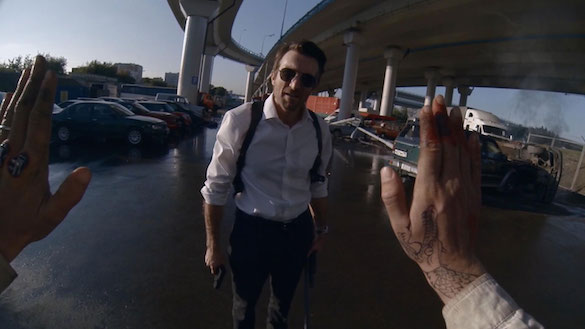
Hardcore Henry is, first and foremost, an action movie. More specifically, it is an action movie shot from the first person perspective, putting the audience directly in the shoes of its title character. The result is a movie that borrows borrows video game language. Above everything else, Hardcore Henry is what we get when filmmakers who grew up with gaming controllers in their hand get the chance to strut their stuff with an actual budget and a crew and stunt performers willing to do insane things in the name of truly crazy action. I didn’t love Hardcore Henry, but I admire the hell out of it. This movie sets a goal and it reaches it. For a certain kind of audience, it’s going to be a big deal and I can’t begrudge anyone for digging it.

However, there is one aspect of the film I unabashedly love. When Hardcore Henry isn’t being a nutty first person POV action movie full of guns and mayhem, it’s actually a science fiction movie. After all, the movie begins with Henry waking up in a laboratory, resurrected from beyond the grave and missing a few limbs. Soon, he gets himself some robotic replacements. He’s a cyborg, capable of incredible feats of strength and endurance. This is not what I love about Hardcore Henry, but it helps set the stage for later revelations, which take a wild left turn into a slightly harder and more imaginative science fiction.

Slight spoilers for Hardcore Henry begin here.

Early on, Henry encounters Jimmy, a seemingly capable gentlemen dressed for business and ready for battle. He’s played by Sharlto Copley, so we instantly recognize him. And then, moments after he’s introduced, he’s brutally killed. Then, a few minutes later, Jimmy shows up again, now dressed as a homeless person. Once again, he’s brutally taken apart by the villains in pursuit of Henry. The pattern repeats. Various forms of Jimmy, all in various states of dress and all representing a variety of lifestyles, continue to aid Henry on his mission. Most of the Jimmys die, but there are always more where that came from. Eventually, Henry is led to an isolated compound where he learns the truth about his mysteries allies: they are all robotic avatars created by the real Jimmy, who was paralyzed by the film’s main villain some years before. Now, he plots his revenge by wirelessly plugging into and controlling his small army of synthetic selves, who give him an opportunity to blend into various environments and live out aspects of life that he never experiences when he was healthy.

It’s a very cool revelation and a story point that could have been the complete focus of entire movie. A scientist who did evil work now has a second chance. He can be a soldier and a punk rocker and a coke snorting buffoon. He can be everything he wants to be and everything he dares to be. But in the end, he’s still confined to a wheelchair and still alone in his secret lab, plotting vengeance against the man who took his health.

Hardcore Henry gleefully recycles many familiar video game and action movie tropes, filtering them through a big action movie lens, but the character of Jimmy is the only area where the movie actually comments on the film’s unique presentation. “We” are Henry in the same way that Jimmy is his avatars — he fights and he bleeds and he suffers, but it’s all secondhand. It’s all a game. It’s all so detached. Another movie may have taken time to ponder whether or not Jimmy feels responsible for the violence and mayhem he causes while in control of a virtual self (and maybe implicate the audience in enjoying “being” Henry while he rampages), but Hardcore Henry is only eager to get to the next big action scene. The film dips its toe into this concept rather than take a plunge.

And this is why Hardcore Henry is a curiosity more than a must-see film. In Jimmy, I find a character I’m deeply fascinated by, living a life that I want to know more about. But he’s not the focus of the story. He’s just another stop along the way for Henry. And that’s a shame.

[embedded content]

Let’s block ads! (Why?)


No Image

Unable To Compete On Price, Nuclear Power On The Decline In The U.S.

The Vermont Yankee nuclear power plant sits along the banks of the Connecticut River in Vernon, Vt. It began operations in 1972 and was shut down at the end of 2014, the victim of competition from plants powered by abundant and cheap natural gas.

The Vermont Yankee nuclear power plant sits along the banks of the Connecticut River in Vernon, Vt. It began operations in 1972 and was shut down at the end of 2014, the victim of competition from plants powered by abundant and cheap natural gas. Toby Talbot/AP hide caption

toggle caption Toby Talbot/AP

Renewable energy and new technologies that are making low-carbon power more reliable are growing rapidly in the U.S. Renewables are so cheap in some parts of the country that they’re undercutting the price of older sources of electricity such as nuclear power.

The impact has been significant on the nuclear industry, and a growing number of unprofitable reactors are shutting down.

When the first nuclear power plants went online 60 years ago, nuclear energy seemed like the next big thing.

There are 100 commercial nuclear reactors licensed to operate. Link to a full list. U.S. Nuclear Regulatory Commission hide caption

toggle caption U.S. Nuclear Regulatory Commission

In many ways, it lived up to that promise. It turned out to be remarkably safe and reliable and clean. It’s carbon-free and is the source of about 20 percent of the country’s electricity.

But right from the start, people in the nuclear industry struggled with a big problem: cost. Making nuclear power cheap was the Holy Grail.

It never panned out. Nuclear plants keep coming in over-budget. And after the Fukushima disaster in Japan in 2011 — when three nuclear reactors melted down after an earthquake and tsunami hit — companies were forced to spend millions of dollars more on safety equipment to keep older plants operating.

“It would be very difficult for any company to make a decision to try to build a new nuclear plant,” says Mike Twomey, a spokesman for Entergy Nuclear, which runs nuclear power plants.

Entergy has already taken one unprofitable reactor offline in Vermont and plans to close two more plants that are losing money in upstate New York and Massachusetts.

In all, 19 nuclear reactors are undergoing decommissioning, of which five have been shut down in the past decade, according to the U.S. Nuclear Regulatory Commission.

The Nuclear Regulatory Commission is overseeing the decommissioning of 19 nuclear power reactors. Link to the full list.

The Nuclear Regulatory Commission is overseeing the decommissioning of 19 nuclear power reactors. Link to the full list. U.S. Nuclear Regulatory Commission hide caption

toggle caption U.S. Nuclear Regulatory Commission

The main reason behind the wave of closures is a new generation of cheap, gas-fired power plants that has pushed the wholesale price of electricity into the basement.

But Mycle Schneider, a nuclear industry analyst, says nuclear also faces growing price pressure from wind and solar. Renewable energy is so cheap in some parts of the U.S. that it’s even undercutting coal and natural gas.

“We are seeing really a radical shift in the competitive markets which leave nuclear power pretty much out in the rain,” Schneider says.

Over the past decade, no new nuclear power plants have begun commercial operations in the U.S.; the last reactor to start up in the U.S. was in Tennessee in 1996 (another unit at the same plant is expected to come online sometime later this year).

There are a handful of new nuclear reactors under construction in the South, where energy markets are still highly regulated. Big power authorities there don’t face the kind of head-to-head competition that has revolutionized energy markets in other parts of the country.

But even within the nuclear industry itself, a growing number of experts agree that the U.S. has reached a pivot point, where new nuclear power plants are just too expensive.

“We think that the costs of new nuclear right now are not competitive with other zero-carbon technologies, renewables and storage that we see in the marketplace,” says Joe Dominguez, executive vice president for governmental and regulatory affairs and public policy at Exelon, a nuclear power company that has announced plans to close one of its existing reactors in New Jersey.

Three other plants that are losing money in Illinois and upstate New York are also being reviewed for possible closure, Dominguez says.

“Right now we just don’t have any plans on the board to build any new reactors,” he says.

Companies like Exelon and Entergy hope state governments will agree to subsidize their existing reactors, paying a premium for low-carbon nuclear power in the same way they now subsidize wind and solar.

The companies say the steady power generated by nuclear still pays an important role stabilizing the nation’s energy grid.

But America’s reactors are aging. The average is now 35 years old. With the new investment going to natural gas and increasingly to wind and solar, the old energy of the future may soon be eclipsed by the new energy of the future.

Let’s block ads! (Why?)


No Image

Private Investors Eagerly Enter Addiction Treatment Business

The cry for more substance abuse treatment beds has not missed the ears of some private investors. They’re eager to get in on the estimated $35 billion treatment business.

Transcript

ARI SHAPIRO, HOST:

Some private equity investors are getting into the business of substance abuse treatment. They’re putting big money into building treatment centers, promising to fundamentally change the industry. It’s estimated that 22 million Americans need help with substance abuse. Deborah Becker member station WBUR reports on the huge private equity investment behind eight new facilities in the Northeast.

DEBORAH BECKER, BYLINE: The newly formed for-profit company Recovery Centers of America, or RCA, says it plans to become the nation’s largest addiction treatment provider. Its first steps toward that involve building these eight new centers, the largest of which is under construction in Danvers, a town just north of Boston.

BRAD GREENSTEIN: I’m Brad Greenstein, CEO of Recovery Centers of America Danvers facility.

BECKER: So right now we’re walking through a building that’s really been completely gutted.

GREENSTEIN: We demolished 140,000 square feet of interior, and we’re starting from scratch.

BECKER: Greenstein says this center will resemble a boutique hotel and will provide inpatient and outpatient treatment, medication-assisted treatment and will follow its patients through the initial stages of recovery. Although RCA eventually plans to build other facilities that will accept those using public insurance, this center will accept only privately insured patients or those who pay out-of-pocket, a population Greenstein says is now underserved.

GREENSTEIN: What we found not just in Massachusetts but nationwide is this lack of availability for just your average, everyday individual who’s been dutifully paying their insurance premium – are those are the ones that are generally having a hard time accessing care.

BECKER: Much of the funding for these centers comes from what some say is the largest private equity investment ever in addiction treatment – a $231 million commitment from the New York private equity firm Deerfield Management. Leslie Henshaw, a partner at Deerfield, says treatment is generating investor interest for several reasons, namely laws requiring insurers to pay for it and the Affordable Care Act allowing young people to stay on their parents’ health insurance until age 26. Henshaw says more investment will ultimately result in better care.

LESLIE HENSHAW: It’s an industry that, to date, has had very little accountability with regard to delivering on effective outcomes. And so, you know, we see both an enormous need and an imperative to change the model in which care is delivered.

BECKER: Barbara Herbert is president of the Massachusetts chapter of the American Society for Addiction Medicine.

BARBARA HERBERT: I sort of have that sense of vultures overhead who see a great opportunity to make money but not necessarily in the best interest of my patients.

BECKER: She also says that right now there are no agreed-upon minimum standards for what treatment should be. But Herbert says the metrics that investors use to measure success are often based on profits, which could mean that the more people there are in treatment, the more it’s considered a success.

HERBERT: I think the biggest metric that you need if you open a new facility is having it full and paid for. I’m not saying people are that cynical, but I’m not saying that outcomes necessarily drive investment in this circumstance.

BECKER: But some longtime Massachusetts treatment providers say if someone has the insurance or the money, they should use it, and that could free up beds for more patients. Boston University public health professor David Rosenbloom says this new growth in treatment may not only improve care with more oversight, but it could reduce the often long waits to get into treatment.

DAVID ROSENBLOOM: If this is a step toward increasing both the size and the quality and the accountability of the system, then it’s a step we have to take.

BECKER: National statistics suggest some 25 million Americans have a substance use disorder, and only about 10 percent of those who need treatment actually get it. For NPR News, I’m Deborah Becker in Boston.

Copyright © 2016 NPR. All rights reserved. Visit our website terms of use and permissions pages at www.npr.org for further information.

NPR transcripts are created on a rush deadline by a contractor for NPR, and accuracy and availability may vary. This text may not be in its final form and may be updated or revised in the future. Please be aware that the authoritative record of NPR’s programming is the audio.

Let’s block ads! (Why?)


No Image

Some Fat-Burning Supplements Contain Banned Stimulant Drug

Asafa Powell of Jamaica was barred from competition after testing positive for the stimulant oxilofrine.

Asafa Powell of Jamaica was barred from competition after testing positive for the stimulant oxilofrine. Streeter Lecka/Getty Images hide caption

toggle caption Streeter Lecka/Getty Images

If you’re taking sports supplements that claim to burn fat or improve your workout, you might want to check the label.

Some of those supplements contain a stimulant drug that hasn’t been approved in the U.S., is banned by the World Anti-Doping Agency and may pose health risks, according to research published Thursday. The paper comes just days after the FDA sent warning letters to seven manufacturers, saying the substance shouldn’t be in their dietary supplements.

Oxilofrine, also known as methylsynephrine or p-hydroxyephedrine, can stimulate the heart and is useful in some medical situations, such as enhancing heart function in patients under anesthesia, says Pieter Cohen, a general internist with the Cambridge Health Alliance, assistant professor at Harvard Medical School, and an author of the study. But it’s not supposed to be in dietary supplements, which are sold over the counter and which by law are supposed to consist of “dietary ingredients.”

Cohen, who frequently conducts research on supplements, started looking into oxilofrine after several high-profile athletes tested positive for the drug. Asafa Powell, a Jamaican sprinter, blamed a supplement for a positive test that led to him withdrawing from the 2013 World Championships.

Cohen found that methylsynephrine was openly listed on some supplement labels. “It’s sold as a pre-workout supplement, to get pumped up and have better workouts,” he says. It’s also marketed for speeding fat loss.

When Cohen and his colleagues ran lab tests on 27 supplement brands with methylsynephrine on the labels, they found oxilofrine in 14 of them. Some had a small amount of the drug, but six contained pharmaceutical or higher doses. One contained more than twice the usual adult dose and three times the usual adolescent dose, the study found. The health effects of that kind of dose aren’t known, but research on lower doses suggests users might experience adverse effects including heart palpitations, arrhythmias and increased blood pressure, the study says.

The FDA, meantime, has received 47 reports of adverse events associated with oxilofrine-containing supplements, though it can’t say whether or not the supplements caused harm, says Steven Tave, acting director of the FDA’s Office of Dietary Supplement Programs. The agency doesn’t review supplements for safety and efficacy before they come to market, the way it does with drugs.

The FDA took action against manufacturers because oxilofrine doesn’t meet the definition of a dietary ingredient.

U.S. law “defines a dietary ingredient as a vitamin; mineral; herb or other botanical; amino acid; dietary substance for use by man to supplement the diet by increasing the total dietary intake; or a concentrate, metabolite, constituent, extract, or combination of the preceding substances,” the FDA said in announcing the warning letters. “Methylsynephrine does not fit under any of these categories, rendering misbranded any dietary supplements that declare methylsynephrine as a dietary ingredient.”

Cohen’s research turned up no evidence that the ingredient has been detected in a plant or botanical. (It shouldn’t be confused with synephrine, which is a constituent of bitter orange and is a legal supplement ingredient, he says.)

Since the lab tested one sample of each supplement, this should be considered a “snapshot;” the amount of the drug may vary in other batches of the same brand, says Cohen. In addition, researchers tested only for oxilofrine, and not for other stimulants that might be in the supplement.

“If it’s not something that’s in the diet, folks shouldn’t be selling it,” says Daniel Fabricant, executive director and CEO of the Natural Products Association. His group represents supplement makers, but he says the companies warned by the FDA are not members of his association. He suggests that consumers always ask themselves why they’re taking a supplement. “If you’re looking for something to act like a drug, don’t take a supplement,” he says.

The study appears in the journal Drug Testing and Analysis.

Katherine Hobson is a freelance health and science writer based in Brooklyn, N.Y. She’s on Twitter: @katherinehobson

Let’s block ads! (Why?)


No Image

Today in Movie Culture: New 'Doctor Strange' Image, a Dark Theory About 'Zootopia' and More

Here are a bunch of little bites to satisfy your hunger for movie culture:

New Movie Still of the Day:

Benedict Cumberbatch looks magically splendiferous in this new image from Marvel‘s Doctor Strange:

Movie Parody of the Day:

What if Hardcore Henry was just about an average guy? Watch the fake trailer for Frost Bros’ first-person POV parody Softcore Henry:

[embedded content]

Character Showcase of the Day:

See how J.J. Abrams frames Rey in Star Wars: The Force Awakens to emphasize her isolation and loneliness in a video essay by Kasper Moller Jensen (via Live for Films):

[embedded content]

Mashup of the Day:

The Sam Kwok Workshop does it again with this custom figure mashing up Iron Man and Toy Story‘s Buzz Lightyear (via Geek Tyrant):

Fan Theory of the Day:

Is Disney‘s Zootopia really about the 1980s crack epidemic? The Film Theorists make the case:

[embedded content]

Classic Cartoon of the Day:

Today is the 110th anniversary of Humorous Phases of Funny Faces, which is considered the first animated film. Watch it in full below.

[embedded content]

Geeky Idea of the Week:

Dave’s Geeky Ideas suggests Ghostbusters fans should turn their home fuse boxes into Ecto Containment Units (via Nerd Approved):

Alternate Ending of the Day:

See what really happens at the end of Christopher Nolan‘s Interstellar after the credits go up in this animated parody:

[embedded content]

Moviegoing Parody of the Day:

This movie theater etiquette sketch from Reverse Cowboys exaggerates just how bad the moviegoing experience can be, but only slightly exaggerated:

[embedded content]

Classic Trailer of the Day:

This week is the 40th anniversary of The Bad News Bears. Watch the original (rather NSFW for a PG movie) trailer for the classic baseball comedy below.

[embedded content]

and

Let’s block ads! (Why?)


No Image

Judge Dismisses Kesha's Hate-Crime Claims Against Producer Dr. Luke

On Wednesday, a New York judge threw out Kesha's hate-crime and human rights claims against producer Dr. Luke.

On Wednesday, a New York judge threw out Kesha’s hate-crime and human rights claims against producer Dr. Luke. Mary Altaffer/AP hide caption

toggle caption Mary Altaffer/AP

A New York judge has thrown out pop star Kesha’s hate-crime and human rights claims against producer Dr. Luke, who she says sexually and emotionally abused her for years.

Manhattan state Supreme Court Justice Shirley Werner Kornreich cited the facts that the alleged abuses happened “outside New York and beyond the legal time limit” as reasons for why the claims can’t move forward, The Associated Press reports.

The judge also said “every rape is not a gender-motivated hate crime,” according to the news service.

This is the latest development in a legal battle that began in 2014 when Kesha sued Dr. Luke and business partner Sony, alleging that Dr. Luke drugged and raped her. The singer asked that she be let out of her contract with Kemosabe, a subsidiary of Sony. Dr. Luke denied the allegations and countersued Kesha for defamation.

In regard to her contract, the court sided with Dr. Luke (real name Lukasz Gottwald) and Sony, which has said Kesha can continue to make music for the label without Dr. Luke’s involvement. But as Fortune reported, that promise may not be as straightforward as it seems:

“Sony Music Entertainment has maintained that Kesha is allowed under her contract to record music with the company without Gottwald’s involvement, though Kesha lawyer Mark Geragos has referred to that claim as an ‘illusory promise.’ The singer argued that the recording company might not fully promote any new music she records due to the nasty legal fight, though Gottwald’s lawyer, Christine Lepera, has countered that Sony Music has already spent roughly $11 million promoting the singer’s music.”

Sony said Kesha was still under contract to make four more albums for Kemosabe. As NPR reported in February, Kesha said she wanted to do that without Dr. Luke.

“Kesha wants to record new music. Specifically, she wants to record it while the lawsuit against her producer, Dr. Luke, is going on. And, she wants to record it without the involvement of Dr. Luke or his label, Kemosabe, a Sony subsidiary. Dr. Luke has written and produced dozens of hits over the past decade and has worked with Kesha since her first big song, Flo Rida’s 2009 No. 1 single ‘Right Round.’ “

That ruling against Kesha prompted an outpouring of support for the singer from her fans and fellow artists using the hashtag FreeKesha. Taylor Swift even sent her a check for $250,000.

One part of Kesha’s claims, involving contract issues, is still in play, the AP reports.

Let’s block ads! (Why?)