Articles by admin

No Image

New Polio Vaccine Rolled Out In Massive Synchronized Worldwide Switch

A Pakistani health worker gives a polio vaccine to students in Peshawar, Pakistan, in March. Polio remains endemic in Pakistan after the Taliban banned vaccinations, attacks targeted medical staffers and suspicions lingered about the inoculations.

A Pakistani health worker gives a polio vaccine to students in Peshawar, Pakistan, in March. Polio remains endemic in Pakistan after the Taliban banned vaccinations, attacks targeted medical staffers and suspicions lingered about the inoculations. Mohammad Sajjad/AP hide caption

toggle caption Mohammad Sajjad/AP

Starting today, 155 countries and territories will start switching to a different polio vaccine.

The shift, which is expected to be completed by May 1, is the “largest and fastest globally coordinated rollout of a vaccine into routine immunization programs in history,” according to the Global Polio Eradication Initiative.

“We’re closer than ever to ending polio worldwide, which is why we are able to move forward with the largest and fastest globally synchronized switch ever,” Michel Zaffran, Director of Polio Eradication at the World Health Organization, said in a press release.

According to The New York Times, it’s the “first worldwide vaccine change ever attempted.”

The progress towards complete eradicating polio shows in the numbers. Last year, 74 cases of wild poliovirus were reported, exclusively in Pakistan and Afghanistan, according to the initiative. In 2016, 10 cases have been reported so far — also in those two countries. By comparison, when the initiative started its work in 1988, “more than 350,000 children were paralyzed every year.”

As health officials strategize about how to rid the world of the disease, which can cause paralysis, “one important step is to gradually withdraw the oral polio vaccine, starting with the type 2 component,” Jackie Fournier-Caruana from the initiative explains.

The old oral vaccine (tOPV) protected against three strains of poliovirus, while the new oral vaccine (bOPV) protects against two of the strains. According to the initiative, the transition is possible “because type 2 wild polio has been eradicated.”

It stresses the importance of closely synchronizing this transition globally: “if some countries continue to use tOPV it could increase the risk of the spread of type 2 poliovirus to those no longer using tOPV.”

This “massive undertaking” will involve deploying thousands of monitors to make sure tOPV is no longer in use.

The New York Times details the disposal methods during the switch:

“Approved disposal methods include incineration, boiling, autoclaving, bleaching or burying in concrete-sealed containers. Each has drawbacks, like the possibility that glass vials will explode.

“Adding to the possibility of confusion, the old and new vials and boxes are almost identical. Warehouse managers are supposed to mark the old vaccine with an “X” and bag it for disposal.”

Dr. Walter Orenstein, who is the associated director of the vaccine center at Emory University School of Medicine, tells the Times, “This is going to be hard. …For a long time, we’ve driven people to think of vaccine as valuable. Now we’re asking them to destroy it.”

The initiative says there’s a global stockpile of type 2 vaccines, ready to be used in the unlikely case of an outbreak. Type 2 was last detected in the wild in 1999, according to the initiative.

Let’s block ads! (Why?)


No Image

For Sale: One Used Internet Company Called Yahoo

Potential buyers are due to submit bids for Yahoo's core Internet business on Monday.

Noah Berger/Bloomberg/Getty Images

Yahoo goes on sale Monday. At least some of you reading this are thinking, “Yahoo? Are they still around?”

Yes, this company founded in 1994, is ancient by Internet standards, but, according to the measurement company comScore, Yahoo sites are the third-most trafficked on the Internet. Among its properties are Yahoo Finance, News, Search, Mail, Tumblr and Flickr.

Why is Yahoo on sale? Despite having a billion monthly unique visitors — as the company claimed in its 2014 report — Yahoo just hasn’t been able to make its investors happy.

Over the last decade, six different CEOs have passed through its doors. The latest, Marissa Mayer, is a talented computer scientist who was one of Google’s earliest employees and played a crucial role in its success. But Yahoo is a puzzle that, after nearly four years, even Mayer can’t solve.

“It’s not like Yahoo doesn’t have revenue coming in, they do,” says analyst Rob Enderle. “They just don’t have enough revenue coming in to cover the costs.”

When Yahoo was founded, the Internet ad business was small and Yahoo was popular. It seemed like it could be a big player as the Internet grew up. But now, Facebook and Google have eclipsed Yahoo, with sophisticated algorithms that target the ads to the most-interested eyeballs.

Yahoo, for its part, is expected to capture more than $2.6 billion in worldwide digital ad revenues, according to eMarketer. But that’s only 1.5 percent of the online ad market. Google and Facebook control 40 percent.

Though CEO Mayer has made some high-profile content acquisitions, such as the blog site Tumblr and talent like David Pogue and Katie Couric, she and her predecessors have spent a lot of time trying to make Yahoo search better.

Yahoo may be the number three search engine in the United States, but that only amounts to less than 13 percent of the market share. Google has nearly 65 percent and Bing has the rest.

Enderle thinks Yahoo instead should have tried to be a social site more like Facebook. “Facebook is incredibly profitable,” Enderle says. “They should have focused more on making the communities their center of power than the information.”

We asked some Yahoo users what has kept them loyal to the company. Yahoo Finance, for example, has garnered praise from many people who like its tools for learning about stocks and companies.

Many of the people who responded to the NPR inquiry said they stay on certain Yahoo sites because they’ve been there for a long time.

“Yahoo itself has never been anyone’s favorite,” says Jen DeMayo, who co-founded a listserv for parents in the Washington, D.C., area with 6,500 subscribers. “It’s just sort of the platform where it started and no one’s moved it anywhere.”

There’s been debate over which companies are going to bid for Yahoo. The sale is not expected to include Yahoo’s most valuable assets, namely its share in the Chinese online retailer Alibaba and Yahoo Japan.

Potential buyers of Yahoo’s other properties include Verizon, AT&T and Comcast. These companies have a way to reach people over the Internet, but ownership of Yahoo might give them a better relationship with consumers and a lot of that precious stuff called “user data” which will help them further understand tastes and demographics.

What will the sale mean for those tens of millions of people who still use Yahoo products? It’s not clear. Whoever buys Yahoo may try hard to keep its users — or not. Or it could mean the end of the Yahoo brand and with it, an era of Internet history.

Let’s block ads! (Why?)


No Image

Best of the Week: 'Doctor Strange' Trailer Released, Spider-Man Got a New Movie Title and Villain and More

The Important News

Marvel Madness: Spider-Man: Homecoming was announced as the superhero’s next movie title. Michael Keaton may play Spider-Man’s next foe. Tessa Thompson will be a super hero and love interest in Thor: Ragnarok. Inhumans is being delayed again.

Star Wars Mania: Alden Ehrenreich is the frontrunner to play young Han Solo. Star Wars: The Force Awakens won big at the MTV Movie Awards. The original trilogy is returning to theaters this summer.

X-Men X-Citement: Boyd Holbrook will play the villain in the next Wolverine movie. Deadpool 2 has confirmed development.

DC Delirium: Ben Affleck was confirmed to be directing a solo Batman movie. Batman: The Killing Joke received an R rating.

Sequelitis: Avatar is now getting four sequels over four years. Scott Eastwood joined Fast & Furious 8. Disney announced The Jungle Book 2. Channing Tatum joined Kingsman: The Golden Circle. Elton John might, too.

New Directors, New Films: Steven Spielberg will direct The Kidnapping of Edgardo Mortara.

Casting Net: Mark Rylance joined Spielberg’s Ready Player One. Jason Statham will star in Meg. Jackie Earle Haley might join The Dark Tower.

Remake Report: Benedict Cumberbatch will voice the Grinch in a new animated version of the story. David Lowery will direct Disney’s live-action Peter Pan remake.

Box Office: The Boss took down Batman v Superman.

First Look: Paramount released an image of Scarlett Johansson in Ghost in the Shell. Fox Searchlight released an image of Emma Stone and Steve Carell in Battle of the Sexes.

Cinematters: AMC got a lot of criticism this week for thinking of allowing texting in theaters.

The Videos and Geek Stuff

New Movie Trailers: Doctor Strange, Suicide Squad, The Neon Demon, The Birth of a Nation, Teenage Mutant Ninja Turtles II: Out of the Shadows, The Angry Birds Movie, When the Bough Breaks, Almost Christmas, The Family Fang, Godzilla Resurgence and A Monster Calls.

Clips: Captain America: Civil War.

Behind the Scenes: Kong: Skull Island.

Watch: Marvel Cinematic Universe Phase Two recap.

See: The Doctor Strange trailer mashed up with Inception. And the Rogue One trailer mashed with Mission: Impossible.

Watch: A visual effects breakdown of Batman v Superman: Dawn of Justice.

See: Another alternate ending to Star Wars: The Force Awakens. And a Force Awakens VFX breakdown.

Watch: An honest trailer for The Jungle Book.

See: A fake deleted scene from Unfriended.

Learn: How Finding Dory found its cast via television.

Watch: 100 best after-the-kill one-liners.

See: The Koyaanisqatsi trailer remade with stock footage.

Learn: How to make a real Sharknado.

See: This week’s best new posters.

Our Features

CinemaCon Movie Buzz: Story of Your Life could be the year’s sci-fi breakout. And more CinemaCon highlights.

CinemaCon Interview: Samuel L. Jackson on when Nick Fury will be back in the MCU.

CinemaCon Interview: Kevin Feige on the sweeping story of Black Panther.

CinemaCon Interview: Suicide Squad director and cast on how much Batman we’ll see. And on which villains he captures.

CinemaCon Interview: David Ayer on possible Suicide Squad sequels.

CinemaCon Interview: Jeff Goldblum on the possibility of him returning to the Jurassic Park series.

Horror Movie Guide: All the latest in horror news and trailers.

Comic Book Movie Guide: 5 Spider-Man villains Michael Keaton could play.

Comic Book Movie Guide: Is Ben Affleck’s Batman the Nick Fury of the DC Movies?

Home Viewing: Here’s our guide to everything hitting VOD this week.

and

MORE FROM AROUND THE WEB:

Let’s block ads! (Why?)


No Image

Not My Job: NASCAR Driver Matt Kenseth Gets Quizzed On Golf Carts

Driver Matt Kenseth poses for a portrait during NASCAR Media Day at Daytona International Speedway on Feb. 16, 2016 in Daytona Beach, Fla.

Jared C. Tilton/Getty Images

We’re recording in Milwaukee this week, so we’ve invited champion NASCAR driver Matt Kenseth — a Wisconsin native — to the show. Since he specializes in driving things that go very, very fast, we’ve invited him to play a game called “Get a move on, pal!” Three questions about golf carts.

Transcript

PETER SAGAL, HOST:

And it’s now the game where we ask interesting people about uninteresting things. It’s called Not My Job. So NASCAR champion driver Matt Kenseth, whose name autocorrect constantly corrects to Kenneth – was born in Cambridge, Wis., where his first job was sizing mink furs at a mink farm. He became a racer when he said to himself how fast do I have to drive to get out of here? Matt Kenseth joins us now from North Carolina. Matt Kenseth, welcome to WAIT WAIT… DON’T TELL ME.

MATT KENSETH: Great, thank you.

(APPLAUSE)

SAGAL: Now, Matt, first up, I did not associate Wisconsin with stock-car racing. But it turns out I am wrong, right, that you grew up racing here?

KENSETH: Yeah, there’s actually a lot of stock-car racing up in Wisconsin. When I grew up racing around the area, there was probably five nights a week, six nights a week I guess you could race. So yeah, a lot of good racing around there. I had a lot of fun.

SAGAL: Right. And how young were you when you knew that’s what you wanted to do, to race cars?

KENSETH: (Laughter) Well, I’ve always been interested in racing and mechanics. And I think the thing that really opened my eyes to racing was probably the first day that I drove somebody else’s car and me and my dad didn’t have to pay for the tires and the pit passes…

SAGAL: Oh, that’s great.

(LAUGHTER)

KENSETH: I actually got paid a little bit to drive a race car. I thought that was the greatest thing ever. So once that happened once, I was like I’ve got to figure how to do this more.

SAGAL: Right. So now you’re on the NASCAR circuit. You’re a sponsored and very successful driver. You’ve won a bunch of championships. In fact, you won – I read this – you won the Daytona 500 in 2009 because it was cut short by rain?

KENSETH: Well, we didn’t win it because it was cut short by rain.

(LAUGHTER)

SAGAL: I want you to know – just in case it wasn’t clear, I don’t know what I’m talking about. I…

(LAUGHTER)

SAGAL: I don’t know enough to insult you. I’m just dumb, so…

(Laughter)

MO ROCCA: But doesn’t your car have windshield wipers?

(LAUGHTER)

KENSETH: No windshield wipers, and we don’t have any tread on our tires, so I think it’d make a big mess.

LUKE BURBANK: That sounds dangerous. You guys should get them tread.

ROXANNE ROBERTS: Yeah, going like a…

SAGAL: Very fast.

ROBERTS: …Fast – high speeds…

ROCCA: I know – I know about the fourth turn at Charlotte. I know all about it.

SAGAL: I’ve heard that driving a NASCAR – a race car – even though you’re technically sitting still is actually one of the most physically-difficult things that athletes do. Would you agree with that?

KENSETH: No, that’s a lie.

(LAUGHTER, APPLAUSE)

BURBANK: Wonderful.

SAGAL: Oh (laughter). I’ve heard stories of, like, you know, trained athletes getting into a NASCAR car, doing a few laughs with a driver driving and staggering out because their body can’t take it. And you’re like nah, we’re just sitting there, listening to the radio? Is that…

(LAUGHTER)

KENSETH: (Laughter) Well, I will say it’s different, you know? It takes – you know, it’s really hot in the car. You’re in there for a really long time. It obviously takes a lot of mental focus. But I wouldn’t say that it’s nearly as physically demanding as most other sports.

ROCCA: Have you ever taken a right turn?

(LAUGHTER)

KENSETH: As a matter of fact, I have.

SAGAL: Really?

ROCCA: Well, but when you’re – I’m serious though, when you’re going around, you’re turning left and you’re turning left, does that mean that – is your body, like, everything shoved to the right?

(LAUGHTER)

SAGAL: Do you have to spin around in left-handed circles to unwind…

ROCCA: Yeah.

SAGAL: …After a race? Is that what you’re asking?

KENSETH: Yeah. I mean, – I mean, right now I’m trying to figure out if any of those questions is really serious or not.

(LAUGHTER)

ROBERTS: All right…

SAGAL: Yeah, so are the listeners.

ROBERTS: OK, I have…

KENSETH: But I will say…

SAGAL: Yeah.

KENSETH: …I was working out of about a month ago with my trainer over here. And, like, my left side of, like, my abs and my core is, like, twice as strong as my right side. So there is a little bit there, actually…

ROCCA: That’s what I meant. That’s what I meant.

KENSETH: Believe it or not.

ROBERTS: What kind of driver are you when you’re not working?

KENSETH: (Laughter) You know, I’m a – I am fairly – fairly cautious. I don’t like getting pulled over. I don’t like speeding tickets. I don’t really drive that fast on the road. I’m usually, honestly, on the highway I’m a set-your-cruise guy. That’s about it; I’m fairly cautious.

SAGAL: I have – I wonder if – again, about this skill thing. Let’s say you were in a Prius and I was in a Porsche…

(LAUGHTER)

SAGAL: …And stipulating that I don’t know what I’m doing, who would win?

KENSETH: Well, since I – since Toyota is one of our biggest sponsors and you’re putting me (unintelligible) I’m going to win.

(LAUGHTER)

SAGAL: Well done, sir.

(APPLAUSE)

SAGAL: Well, Matt Kenseth, it is a pleasure to talk to you from your home state. But we have asked you here to play game we’re calling…

BILL KURTIS: Get A Move On, Pal.

SAGAL: Since you drive very fast for a living, we thought we’d ask you about vehicles that go very slowly, namely golf carts. Answer three of these questions about golf carts correctly, you’ll win our prize for one of our listeners – Carl Kasell’s voice on their voicemail. Bill, who is NASCAR champion Matt Kenseth playing for?

KURTIS: Thomas Paul from Milwaukee, Wis.

SAGAL: All right.

(APPLAUSE)

SAGAL: So you ready to play here, Matt?

KENSETH: I – not really but I’ll try.

SAGAL: OK.

(LAUGHTER)

SAGAL: First question, lawbreaking in golf carts is pretty common, as you might imagine. Which of these really happened? A, a midnight golf cart drag racing club in the Villages retirement complex was broken up when a cop car easily caught up with the fleeing racers…

(LAUGHTER)

SAGAL: …B, a Florida golf club member was thrown off the course for mistaking her Chrysler LeBaron convertible for a golf cart and driving it up the fairway, or C, a bank robber in LA got out with $75,000, jumped into a waiting golf cart and was arrested 400 feet later.

(LAUGHTER)

KENSETH: Yeah, you know, I’m going to go with B. I could see some old lady drinking too much on the golf course and getting in her car and driving down the fairway. I could totally see it.

(LAUGHTER)

SAGAL: It is frightening how accurate you are ’cause that’s exactly what happened.

(SOUNDBITE OF BELL)

ROCCA: Oh, really? Wow.

(APPLAUSE)

SAGAL: Notice – I want to you notice…

(APPLAUSE)

SAGAL: …That I did not mention the drinking part, but Matt here figured that out that that had to play a role. And it did – she likes to drink, this particular golf club member and she – especially before a round of golf. And she just mistook her Chrysler for the golf cart and went tearing up the fairway. All right, two more questions. You did pretty well with that one. Golf carts are getting passe. Hip golfers are using new alternatives to the golf cart, such as which of these? A, the golf horse cart, which is environmentally friendly and it fertilizers the grass…

(LAUGHTER)

SAGAL: …B, golf drones, which use four motorized drones to carry your clubs as you walk, or C, the GolfBoard, a motorized surfboard that lets you carve the hills and fairways as you play?

KENSETH: Oh, it’s got to be the surfboard.

SAGAL: Yes, it is, Matt. You’re right again.

(SOUNDBITE OF BELL, APPLAUSE)

SAGAL: The only – it is the GolfBoard – it’s the only way science has yet found to make golfers look even sillier.

(LAUGHTER)

KENSETH: So do you guys want me to get this last one wrong so you don’t actually have to call that guy’s voicemail?

SAGAL: No, no…

(LAUGHTER, APPLAUSE)

SAGAL: You are…

(APPLAUSE)

SAGAL: You are a master of race strategy. It’s amazing.

BURBANK: I find it unsettling, Matt, how quickly you’ll throw a competition. It’s a little…

(LAUGHTER)

SAGAL: Oh, look, it’s starting to rain. Let’s call it. You’ve won.

(LAUGHTER)

KENSETH: That’s right.

SAGAL: No, no, no, no, no, no, we’re excited.

(BOOING)

SAGAL: Oh, they are punishing me. We’re going to play this out. Here we go…

(LAUGHTER)

SAGAL: It turns out, golf carts – not just for playing golf, as in which of these instances? A, certain Saudi billionaires use them to travel the interior hallways of their mansions, B, the Indian army once bought 22 of them to use as, quote, “silent reconnaissance vehicles…”

(LAUGHTER)

SAGAL: …Or C, Donald Trump has a small golf cart done up to look like a car so he can sit in it and it makes his hands look bigger.

(LAUGHTER, APPLAUSE)

KENSETH: You know, as much as I’d like to go with C, we’re going to have to say A.

SAGAL: You’re going to go with A, the Saudi billionaires?

KENSETH: Yeah, they’ve got to be cruising down their halls.

SAGAL: They might be, but as far as we know we made that up. It was actually the Indian army – silent…

KENSETH: Yeah.

SAGAL: …Reconnaissance vehicles.

KENSETH: I knew that. I just didn’t want to have him make that phone call that…

(LAUGHTER)

SAGAL: Bill, how did – how did Matt Kenseth do on our show?

KURTIS: He got 2 out of 3. And for that we say you’re a winner.

SAGAL: It’s true. You won anyway.

KENSETH: All right.

(APPLAUSE)

SAGAL: Matt Kenseth is one of NASCAR’s biggest stars. You can see him racing the number 20 car at the Food City 500 this Sunday. Matt Kenseth, thank you so much for joining us. It was lots of fun.

KENSETH: Thank you for having me.

SAGAL: Bye-bye.

(SOUNDBITE OF SONG, “THE RACE IS ON”)

GEORGE JONES: (Singing) Now the race is on and here comes pride up the back stretch. Heartaches are going to the inside. My tears are holding back. They’re trying not to fall. My hearts out of the running. True love’s scratched for another’s sake. The race is on and it looks like heartaches, and the winner loses all.

SAGAL: In just a minute, Bill shows the shorties some love in the Listener Limerick Challenge. Call 1-888-WAIT-WAIT to join us on the air. We’ll be back in a minute with more WAIT WAIT… DON’T TELL ME from NPR.

Copyright © 2016 NPR. All rights reserved. Visit our website terms of use and permissions pages at www.npr.org for further information.

NPR transcripts are created on a rush deadline by Verb8tm, Inc., an NPR contractor, and produced using a proprietary transcription process developed with NPR. This text may not be in its final form and may be updated or revised in the future. Accuracy and availability may vary. The authoritative record of NPR’s programming is the audio record.

Let’s block ads! (Why?)


No Image

Texas Power Players Sit Out Political Opposition To Clean Power Plan

Natural gas is flared off at a plant outside of the town of Cuero, Texas. The Clean Power Plan reinforces the state's trend away from coal, due to Texas-based companies that are big on cheaper, cleaner natural gas.

Natural gas is flared off at a plant outside of the town of Cuero, Texas. The Clean Power Plan reinforces the state’s trend away from coal, due to Texas-based companies that are big on cheaper, cleaner natural gas. Spencer Platt/Getty Images hide caption

toggle caption Spencer Platt/Getty Images

Twenty-four states are suing to block the Obama administration from implementing its new clean power regulations — the cornerstone of a promise that the United States will reduce greenhouse gas emissions to limit global warming. Those rules come out of the Paris Climate Accord, which Secretary of State John Kerry plans to sign on Friday.

Texas is one of the states leading the fight against the Clean Power Plan. If you ask almost any statewide office holder they’ll tell you the plan is bad for the economy. Before Texas Attorney General Ken Paxton spoke publicly in October for example, his wife Angela introduced him with a song: “I’m a Pistol-Packin’ Mama And My Husband Sues Obama.”

These days, Paxton is facing his own legal troubles on SEC fraud charges. But when it’s him suing the federal government, it’s often over EPA regulation.

It may come as a surprise then, that energy companies here are not as unanimous in their opposition. That’s because Texas’ energy sector is transforming rapidly.

Austin, a city with a strong environmental bent, is trying to get away from coal and move toward wind solar and natural gas to reduce its carbon emissions. Gas generation produces less carbon dioxide than coal.

John Wester works for Austin Energy, the city-owned utility that runs the Sand Hill natural gas plant outside of Austin.

“Our long-term plans are to go as much toward renewables as possible, but there’s going to be natural gas for a while,” Wester says.

The move away from coal is part of meeting the city’s environmental goals. But it also follows the direction of the market. This month, even the historic coal company Peabody filed for bankruptcy. One of the causes of coal’s woes is cheap natural gas — something Texas has in abundance.

“We really see what we are promoting as a very Texas way to do this,” says Brett Kerr, a lobbyist and spokesperson for Houston-based Calpine Energy, the largest independent power producer in the country. Kerr says Calpine consumes 15 percent of the gas produced in Texas.

Last November, both Calpine and Austin Energy filed legal briefs supporting the Clean Power Plan.

“To be clear, we are not a public policy shop, and while we value environmental stewardship and that’s one of our core principals, we also think it makes a lot of business sense for us,” Kerr says.

Because Calpine is so big in natural gas, Kerr says if the Clean Power Plan reinforces the trend away from coal, that’s a huge national business opportunity for Calpine and other energy companies like it.

“The Clean Power Plan is in the best interest of Calpine,” Kerr says. “We believe it’s also in the best interest of some of these other companies.”

Then what do we make of all that pistol-packin’ rhetoric opposing the plan?

“It’s a contradiction,” says David Spence, a professor of energy regulation at UT Austin. “It seems as though political ideology is driving a lot of the positions being taken by states and state institutions … because clearly Texas will sell a lot of natural gas to a lot of power plants all over the country, who will be generating more often because of the Clean Power Plan, yet we are opposing the Clean Power Plan.”

If the plan is struck down, he says Texas and some other states will likely hold onto more coal power, but the long-term trends will stay the same. With more electricity coming from wind solar and natural gas in the future.

Let’s block ads! (Why?)


No Image

Today in Movie Culture: Marvel Phase Two Recap, 'The Force Awakens' Jakku Escape FX Breakdown and More

Here are a bunch of little bites to satisfy your hunger for movie culture:

Franchise Recap of the Day:

With Captain America: Civil War coming out soon, get a reminder of what’s happened in Phase Two of the Marvel Cinematic Universe in this retrospective (via Live for Films):

[embedded content]

Cosplay Reality of the Day:

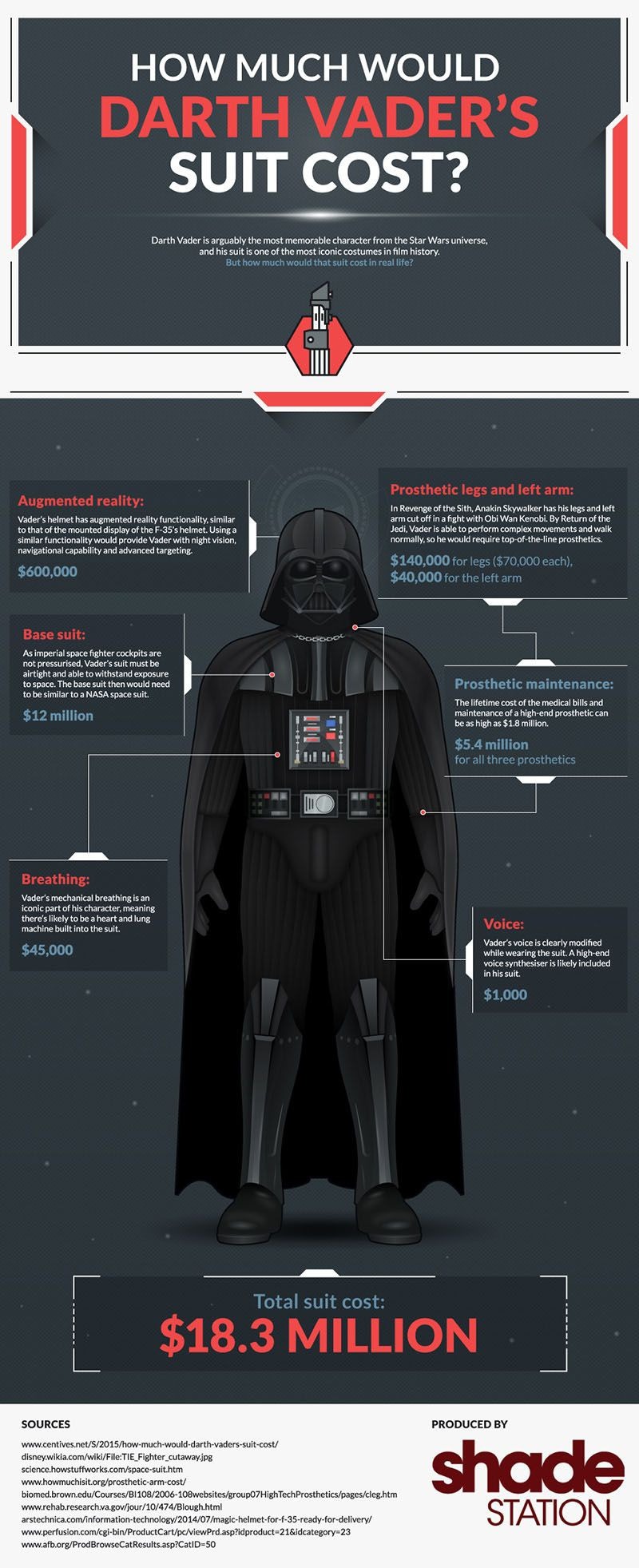
Want to have the best, most spot-on Darth Vader cosplay? This infogram indicates that might be a bit pricey (via Fashionably Geek):

VFX Reel of the Day:

Watch a breakdown of the visual effects of the Jakku escape from Star Wars: The Force Awakens (via Devour):

[embedded content]

Studio Showcase of the Day:

The revolutionary studio A24 is celebrated in this supercut of their films, all of them interesting releases that most distributors wouldn’t touch (via Film School Rejects):

[embedded content]

Cinematographer in Focus:

Check out some of the greatest shots from the lens of Roger Deakins in this supercut showcase (via Cinematic Montage Creators):

[embedded content]

Actor in the Spotlight:

Jeffrey Dean Morgan, who currently can be seen briefly in Batman v Superman: Dawn of Justice, is the focus of the latest episode of No Small Parts:

[embedded content]

Vintage Image of the Day:

Emma Watson, born on this day in 1990, with Rupert Grint and Daniel Radcliffe during the making of Harry Potter and the Sorcerer’s Stone about 15 years ago:

Supercut of the Day:

In this “Color Theory” video, see the best shots in movies representing each color of the rainbow (via Cinematic Montage Creators):

[embedded content]

Movie Science of the Day:

The Film Theorists looks into the scientific possibility of the titular storm from Sharknado:

[embedded content]

Classic Trailer of the Day:

With the live-action remake now in theaters, here’s the original trailer for Disney’s 1967 animated feature The Jungle Book:

[embedded content]

and

Let’s block ads! (Why?)


No Image

Obama Urges Opening Cable TV Boxes To Competition

President Obama said he supports making it easier for viewers to buy cable TV boxes instead of renting them.

iStockphoto

President Obama is throwing his weight behind a plan that would lead to competition in the market for set-top cable and satellite TV boxes. Most viewers now rent the boxes from their TV providers. The Federal Communications Commission wants to make it easier for viewers to buy the devices.

The FCC estimates it costs subscribers $231 a year on average to rent the bulky boxes that enable them to watch cable or satellite TV. Earlier this year the agency proposed a way to make it easier for viewers to buy the boxes outright.

In essence it would require TV channels to sell their content to third-party groups, like Google and others who would sell their own devices. In an interview with Yahoo News, President Obama says a little competition is a good idea:

“The cable or satellite box is just one example of an area where because it’s been tied to the provider and you rent it and consumers spend billions of dollars on this every single year, there hasn’t been much innovation. And so the FCC is looking, independently of anything we do here at the White House, at whether it makes sense to open that up to competition.”

The president’s backing of the FCC proposal is part of a broader White House initiative to spur competition. In the Yahoo News interview, Obama compared the cable box issue to earlier moves by the government to open up the telephone system in the 1980s.

“Across the board, if we have more players who can potentially participate, fewer barriers to entry, the rules aren’t rigged, then you get more people trying to get your business and you get better products at cheaper prices,” Obama said.

The cable TV industry denounced the president’s endorsement of the FCC action. Former FCC Chairman Michael Powell now heads the National Cable and Telecommunications Association. In a blog post, he accused the White House of injecting “politics and inflammatory rhetoric into a regulatory proceeding by what is supposed to be an independent agency.”

The FCC’s final decision on the matter could come later this year.

Let’s block ads! (Why?)


No Image

New York Legalizes Professional Mixed Martial Arts Fights

Gov. Andrew Cuomo (center) signed into law a measure that will allow professional mixed martial arts in New York. Behind him are UFC athletes Chris Weidman (left) and Ronda Rousey.

Gov. Andrew Cuomo (center) signed into law a measure that will allow professional mixed martial arts in New York. Behind him are UFC athletes Chris Weidman (left) and Ronda Rousey. Mark Lennihan/AP hide caption

toggle caption Mark Lennihan/AP

New York has ended its ban on professional mixed martial arts — the last state in the U.S. to do so — and the Ultimate Fighting Championship wasted no time in announcing a match at Madison Square Garden.

The league said it will host a major pay-per-view event at the storied venue on Nov. 12.

“Our commitment to bringing incredible live events to New York starts immediately,” UFC Chairman and CEO Lorenzo Fertitta said at Thursday’s bill-signing event with New York Gov. Andrew Cuomo.

The governor echoed that sentiment.

“It’s time to bring mixed martial arts competitions to the New York stage. With venues like Madison Square Garden, New York truly is the international icon for great sporting events, and we’re excited to begin a new chapter of MMA in the Empire State,” Cuomo said in a statement.

Hey @TheGarden: Let’s do this ? pic.twitter.com/SnbB82PzqZ

— UFC (@ufc) April 14, 2016

Ending the 1997 ban on pro MMA fights will also “close a statutory loophole under which unregulated and unsupervised ‘amateur’ mixed martial arts competitions had been occurring in New York State,” the statement read.

With mixed martial arts contests newly under the purview of the New York State Athletic Commission, the governor’s office touts that the industry will bring in $137 million, once it is operating at “full programming capacity.”

The law also ensures the athletes’ safety — at least to the extent that a sport where competitors kick and punch each other into submission can be safe.

In New York’s semiregulated amateur MMA circuit, fighters were allowed to compete without being tested for blood-borne illnesses like HIV or hepatitis C, as Deadspin wrote when it reported on the MMA legalization bill in 2014.

In a sport where blood is nearly as inevitable as winning and losing, not testing athletes for such illnesses is a concern.

Deadspin wrote:

“The problem is that while these fights are nominally regulated by private organizations, some of them are, in practice, not regulated at all. That’s why fighters can compete in New York with HIV, hepatitis C, and other conditions that would prevent them from getting in a cage anywhere else in the United States.”

It also noted that some of the amateur events did not have doctors on scene, instead relying “on paramedics, acupuncturists, or calls to 911 operators.”

After citing the number of jobs MMA will create and the revenue dollars it will draw, Senate Majority Leader John Flanagan said in the statement from the governor’s office: “More than that, this bill will help safeguard the health and welfare of these professional athletes.”

Let’s block ads! (Why?)


No Image

Doctors Unsure About How To Talk With Patients About End-Of-Life Care

Talking about end-of-life care may be difficult, but the stakes make the conversations worth the effort.

Talking about end-of-life care may be difficult, but the stakes make the conversations worth the effort. Sam Edwards/Getty Images/Caiaimage hide caption

toggle caption Sam Edwards/Getty Images/Caiaimage

Doctors know it’s important to talk with their patients about end-of-life care.

But they’re finding it tough to start those conversations. When they do, they’re not sure what to say, according to a national poll released Thursday.

Such discussions are becoming more important as baby boomers reach their golden years. By 2030, an estimated 72 million Americans will be 65 or over, nearly one-fifth of the U.S. population.

Medicare now reimburses doctors $86 to discuss end-of-life care in an office visit that covers topics such as hospice, living wills and do-not-resuscitate orders. Known as “advance care planning,” the conversations can also be held in a hospital.

Payment for such discussions was initially included in the Affordable Care Act, but removed because of the controversy over so-called death panels. Medicare ultimately changed its policy, independently of Obamacare, to allow reimbursement for the end-of-life planning sessions.

The poll of 736 primary care doctors and specialists, including 202 in California, examined their views on advance care planning and end-of-life conversations with patients. Among the findings:

  • While 75 percent of doctors said Medicare reimbursement makes it more likely they’d have advance care planning discussions, only about 14 percent said they had actually billed Medicare for those visits.
  • Three quarters also believe it’s their responsibility to initiate end-of-life conversations.
  • Fewer than one-third reported any formal training on end-of-life discussions with patients and their families.
  • More than half said they had not discussed end-of-life care with their own physicians.

The survey was commissioned by The John A. Hartford Foundation, the California Health Care Foundation and Cambia Health Foundation. (California Healthline is an editorially independent publication of the California Health Care Foundation.)

The general survey has a margin of sampling error of plus or minus 3.6 percentage points. For the internist/primary care provider sample, margin is plus or minus 4.5 percentage points. For specialists, plus or minus 6.0 points.

Patients and their families increasingly want to talk about end-of-life care with their physicians well before facing a terminal illness, studies have shown. Most also want to die at home rather than in a hospital, although cultural differences influence end-of-life preferences.

Policy analysts are urging more end-of-life conversations not just to accommodate patients’ desires, but to save money on aggressive medical interventions that patients and their families don’t want and that won’t prolong life.

A recent study found nearly 40 percent of American patients dying with cancer received at least one chemotherapy treatment in the six months before they died, more than in six other countries studied. An average of about $18,500 was spent on U.S. hospital costs for patients in their last six months.

Nearly a quarter of the physicians in the national poll said that the electronic health records they’re required to use don’t have a place to include patients’ end-of-life preferences. Even when electronic health records signaled that a patient had an advance care directive, nearly a third of doctors reported they couldn’t access its actual contents.

And doctors who received their medical training years ago say they rarely focused on how to talk to patients about end-of-life care, although medical education is improving in that regard.

Physicians in large medical systems may find more support than those in private practice. At Kaiser Permanente in Northern California, physicians receive training in end-of-life discussions and have time to carry them out, said Dr. Ruma Kumar, the HMO’s regional medical director of supportive care services.

Kaiser Permanente looks to nurse practitioners, registered nurses and social workers to work with patients on various stages of what the HMO calls “life care planning.” The HMO also offers a website to guide people through the process.

Kumar said Kaiser encourages both doctors and patients to think of end-of-life planning “as a routine part of care, just like you’d get a mammogram or colon cancer screening.”

This story was produced by Kaiser Health News, which publishes California Healthline, a service of the California Health Care Foundation. Follow Barbara Feder Ostrov on Twitter: @barbfederostrov.

Let’s block ads! (Why?)


No Image

Today in Movie Culture: 'Rogue One' Meets 'Mission: Impossible,' Fake 'Unfriended' Deleted Scene and More

Here are a bunch of little bites to satisfy your hunger for movie culture:

Mashup Trailer of the Day:

Rogue One: A Star Wars Story sounds like Mission: Impossible in space, so obviously someone did the trailer mashup for that:

[embedded content]

Mashup Poster of the Day:

If you love both Star Wars: The Force Awakens and Sicario, you might want a poster for the former that looks like this (via Live for Films):

Supercut of the Day:

Burger Fiction follows their video of before the kill one-liners with this list of the 100 greatest after the kill one-liners. Plenty of Arnold Schwarzenegger in this one, too:

[embedded content]

Vintage Image of the Day:

Anthony Michael Hall, who was born on this day in 1968, with Molly Ringwald and a puppy during a break from filming The Breakfast Club:

Fake Deleted Scene of the Day:

This fake deleted scene from Unfriended should really be in the movie since it’s the most realistic way people mess with each other on the Internet (via Geek Tyrant):

[embedded content]

Fan-Made Poster of the Day:

Thanks to Pee-wee Herman himself for tweeting the below fan art inspired by Pee-wee’s Big Holiday:

Movie Science of the Day:

How is the blood of the Xenomorphs in the Alien movies so acidic? Kyle Hill of Because Science explains:

[embedded content]

Film History of the Day:

For the Tribeca Film Festival, Jacob T. Swinney gives spotlights 100 years/100 shots, as in the best shot per year for a whole century of cinema:

[embedded content]

Video Essay of the Day:

For Mubi, A. Martin & C. Álvarez López look at the “intervals (or distances) between people, things, and the camera” in John Cassavetes‘s Gloria. Click on the image below to watch the video.

Classic Trailer of the Day:

This weekend marks the 20th annivesary of Jean-Pierre Jeunet‘s Delicatessen. Watch the original trailer for the French film below.

[embedded content]

and

Let’s block ads! (Why?)