Articles by admin

No Image

ESPN Fires Curt Schilling For 'Unacceptable' Conduct

On Wednesday, ESPN fired former Boston Red Sox pitcher Curt Schilling from his job as a baseball analyst.

On Wednesday, ESPN fired former Boston Red Sox pitcher Curt Schilling from his job as a baseball analyst. Tony Gutierrez/AP hide caption

toggle caption Tony Gutierrez/AP

Curt Schilling, the MLB pitcher-turned-analyst for ESPN, was fired by the network after sharing a post on Facebook that appeared to comment on North Carolina’s law that bars transgender people from using the bathroom that corresponds with their gender identity.

In a now-deleted Facebook post (captured by Out Sports) he wrote: “A man is a man no matter what they call themselves. I don’t care what they are, who they sleep with, men’s room was designed for the penis, women’s not so much. Now you need laws telling us differently? Pathetic.”

Schilling also shared a a photo of a man wearing a blonde wig, a skirt and a t-shirt with holes cut in it to show his nipples. The words accompanying the image say: “LET HIM IN! to the restroom with your daughter or else you’re a narrow-minded, judgmental, unloving racist bigot who needs to die.”

The backlash to the posts was immediate, and Schilling took to his personal blog on Tuesday to defend his actions, writing, “Let’s make one thing clear right up front. If you get offended by ANYTHING in this post, that’s your fault, all yours.” He also wrote: “This latest brew ha ha is beyond hilarious. I didn’t post that ugly looking picture. I made a comment about the basic functionality of mens and womens restrooms, period.”

ESPN released a statement Wednesday announcing Schilling had been fired.

“ESPN is an inclusive company. Curt Schilling has been advised that his conduct was unacceptable and his employment with ESPN has been terminated,” the statement read in its entirety.

This was not the first time Schilling had gotten into trouble on social media. Last year he was suspended by ESPN for sharing an image that made a comparison between Muslims and Nazis.

And as The New York Times adds:

“Last month, [Schilling] waded into politics on a Kansas City radio station when he suggested that Hillary Clinton ‘should be buried under a jail somewhere’ if she gave ‘classified information on hundreds if not thousands of emails on a public server, after what happened to General Petraeus.’

Last year, former CIA Director and retired Gen. David Petraeus, was accused of providing classified data to his mistress.

Let’s block ads! (Why?)


No Image

ESPN Fires Curt Schilling For 'Unacceptable' Conduct

On Wednesday, ESPN fired former Boston Red Sox pitcher Curt Schilling from his job as a baseball analyst.

On Wednesday, ESPN fired former Boston Red Sox pitcher Curt Schilling from his job as a baseball analyst. Tony Gutierrez/AP hide caption

toggle caption Tony Gutierrez/AP

Curt Schilling, the MLB pitcher-turned-analyst for ESPN, was fired by the network after sharing a post on Facebook that appeared to comment on North Carolina’s law that bars transgender people from using the bathroom that corresponds with their gender identity.

In a now-deleted Facebook post (captured by Out Sports) he wrote: “A man is a man no matter what they call themselves. I don’t care what they are, who they sleep with, men’s room was designed for the penis, women’s not so much. Now you need laws telling us differently? Pathetic.”

Schilling also shared a a photo of a man wearing a blonde wig, a skirt and a t-shirt with holes cut in it to show his nipples. The words accompanying the image say: “LET HIM IN! to the restroom with your daughter or else you’re a narrow-minded, judgmental, unloving racist bigot who needs to die.”

The backlash to the posts was immediate, and Schilling took to his personal blog on Tuesday to defend his actions, writing, “Let’s make one thing clear right up front. If you get offended by ANYTHING in this post, that’s your fault, all yours.” He also wrote: “This latest brew ha ha is beyond hilarious. I didn’t post that ugly looking picture. I made a comment about the basic functionality of mens and womens restrooms, period.”

ESPN released a statement Wednesday announcing Schilling had been fired.

“ESPN is an inclusive company. Curt Schilling has been advised that his conduct was unacceptable and his employment with ESPN has been terminated,” the statement read in its entirety.

This was not the first time Schilling had gotten into trouble on social media. Last year he was suspended by ESPN for sharing an image that made a comparison between Muslims and Nazis.

And as The New York Times adds:

“Last month, [Schilling] waded into politics on a Kansas City radio station when he suggested that Hillary Clinton ‘should be buried under a jail somewhere’ if she gave ‘classified information on hundreds if not thousands of emails on a public server, after what happened to General Petraeus.’

Last year, former CIA Director and retired Gen. David Petraeus, was accused of providing classified data to his mistress.

Let’s block ads! (Why?)


No Image

Some Firms Save Money By Offering Employees Free Surgery

Employees at all Lowe's home improvement stores, including this one in South San Francisco, Calif., are eligible to have certain surgeries paid for by the company at selected hospitals.

Employees at all Lowe’s home improvement stores, including this one in South San Francisco, Calif., are eligible to have certain surgeries paid for by the company at selected hospitals. Justin Sullivan/Getty Images hide caption

toggle caption Justin Sullivan/Getty Images

Lowe’s home improvement company, like a growing number of large companies nationwide, offers its employees an eye-catching benefit: Certain major surgeries at prestigious hospitals are free.

How do these firms do it? With a way of paying that’s gaining steam across the health care industry, and that Medicare is now adopting for hip and knee replacements in 67 metropolitan areas, including New York, Miami and Denver.

Here’s how the program works: Lowe’s and other employers pay one flat rate for a particular procedure from any of a number of hospitals they’ve selected for its quality. And, under the agreement, the hospital handles all the treatment within a certain time frame — the surgery, the physical therapy and any complications that arise — all for that one price.

It was Bob Ihrie, senior vice president for compensation and benefits at Lowe’s, who came up with the idea in 2010. When he told managers at other companies about it, he says, “The first question was always, ‘Oh, this is just for executives, right?’ And I said no, absolutely not, this is for any Lowe’s employee in the Lowe’s health care plans.”

The program is optional for employees. They can still use their local surgeon, if they prefer, and pay out of pocket whatever their insurance doesn’t cover. But more than 700 Lowe’s employees have taken the company up on its offer, Ihrie says.

It’s a great deal for patients, he says, and for his company.

“We were able to get a bundled price, which actually enables us to save money on every single operation,” Ihrie says.

The Pacific Business Group on Health negotiates that price for Lowe’s, Walmart and a number of other large employers. Associate director Olivia Ross oversees these deals, and says her team is able to negotiate rates that are 20 to 30 percent below what the companies used to pay for the procedures.

“We’re seeing savings at the front end,” she says, because Lowe’s pays less for the surgery. And, because the hospital is responsible for all that care, the institution has a strong incentive to be careful and thorough, Ross says.

That means “huge savings on the back end,” she says, “from things like reduced re-admissions, reduced return to the O.R. and lower rates of blood clots. Those are hugely expensive, preventable complications.”

Lowe’s comes out ahead, even after paying for the patient’s travel, Ihrie confirms.

Participating hospitals win, too, by attracting more patients, says Trisha Frick, who handles such negotiations on behalf of Johns Hopkins Medicine in Baltimore.

“It’s new business for us,” Frick says. “And, for the most part, the reimbursement is acceptable; we believe that we can provide that, within that amount of money.”

Medicare, the health insurance program for people 65 and older, started using bundled rates for hip and knee replacements this month in Miami, Los Angeles and 65 other metro areas. Medicare had some early evidence from pilot programs that “the model works well,” according to Rob Lazerow, a health care consultant with The Advisory Board Company.

“Medicare is saving something like $4,000 on orthopedic cases,” he says.

Medicare’s deal is somewhat different from the one at Lowe’s. Patients may pay something out of pocket, depending on the type of Medicare policy that insures them. And while the few hospitals selected in Lowe’s program can bank on increasing their revenue and the number of surgeries they’ll get, the rates established by Medicare’s bundled payment system hold for every hospital in a participating market.

“Entire markets are selected for participating,” Lazerow explains. “If you’re in the San Francisco market or you’re in the New York market, all of the hospitals are actually participating in the program.”

But there are similarities, too, and Medicare may learn some lessons from Lowe’s experience. Lowe’s initially had trouble wrangling all a patient’s medical records from local doctors. And the company found that patients who had questions weeks or months after an operation sometimes had trouble following up with the out-of-town doctor who had performed the surgery.

“You have some setbacks, and things happen, and you just have questions,” Ihrie says. “So what we give every patient now is a little card with the doctor’s name and direct phone line and the nurse’s name and direct phone line. And all of a sudden, things were a lot better.”

Another lesson was startling, Ross says. In addition to cutting the cost of procedures, another chunk of savings to the companies came from avoiding surgeries that probably shouldn’t happen in the first place.

“We’re seeing up to 30 percent — close to 30 percent of cases — who should not be moving forward with the joint replacement,” Ross says.

What typically happens in these cases, she says, is that employees get a recommendation from a local doctor that they should have surgery, only to have physicians at the selected hospitals deem the operation inappropriate.

In some cases that may be because the employee hasn’t first tried less invasive treatments, such as physical therapy, Ross says. Or the employee may need to lose weight first, to make the surgery safer.

Ihrie says what heartens him most about his company’s program is that Lowe’s employees are now taking a more active role in decisions about their care.

“What treatment you receive is not always very black and white,” he says. “The mere fact that people now think about what they’re doing helps us control costs across the board.”

This story is part of NPR’s partnership with WFAE and Kaiser Health News.

Let’s block ads! (Why?)


No Image

Today in Movie Culture: Tim Burton's 'Game of Thrones,' a 'Star Wars: The Force Awakens' Reunion and More

Here are a bunch of little bites to satisfy your hunger for movie culture:

Fan Art of the Day:

Artist Xenia Rassalova shows us what a Game of Thrones (animated?) movie might look like as designed by Tim Burton. See more character drawings at Geek Tyrant:

Charitable Contest of the Day:

See Star Wars: The Force Awakens buddies Poe (Oscar Isaac) and BB-8 reunited in a short video promoting Star Wars: Force for Change:

[embedded content]

Cosplay of the Day:

Beauty and the Beast is mashed with Star Wars for these cosplayers dressed as Belle and Chewbacca (via Fashionably Geek):

Movie Comparison of the Day:

Little White Lies shows how Jeff Nichols‘s Midnight Special evokes John Carpenter‘s Starman:

[embedded content]

Alternate Poster of the Day:

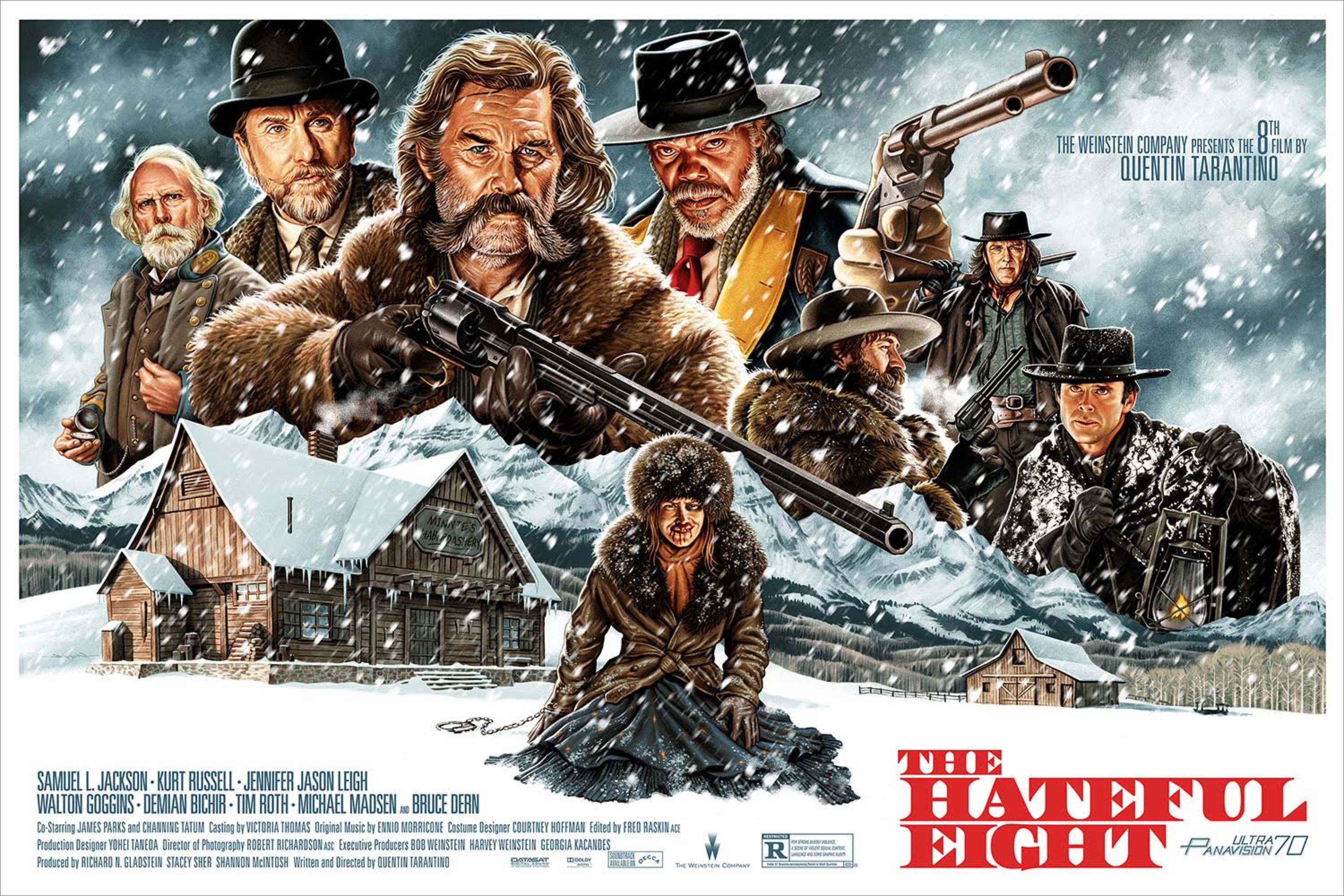
It’s slightly more conventional in design than the official posters for The Hateful Eight but that doesn’t make this Mondo print by Jason Edmiston any less desirable (via /Film):

Movie Takedown of the Day:

In an election for the fans, Superman Returns was chosen to be pummeled in the latest Honest Trailer:

[embedded content]

Mashup of the Day:

Batman and The Iron Giant are crossed in this latest Photoshop piece by BossLogic:

Vintage Image of the Day:

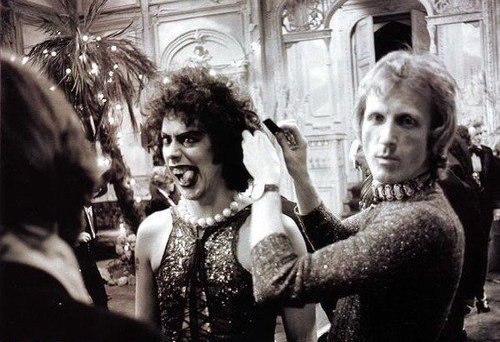
Tim Curry, who turns 70 today, gets his hair done on the set of The Rocky Horror Picture Show in 1974:

Filmmaker in Focus:

This supercut celebrates Guillermo del Toro‘s uses of color in his movies for emotional emphasis (via Cinematica Montage Creators):

[embedded content]

Classic Trailer of the Day:

This weekend marks the 30th anniversary of the release of “Crocodile” Dundee. Watch the original trailer for the Oscar-nominated comedy below.

[embedded content]

and

Let’s block ads! (Why?)


No Image

Life Expectancy Drops For White Women, Increases For Black Men

Demographers can use average life expectancy of a population as a clue to underlying changes in health and culture.

Daniel Fung/iStockphoto

White women are dying at a slightly younger age than they used to. That’s according to a report released Wednesday by the Centers for Disease Control and Prevention’s National Center for Health Statistics.

The life expectancy for non-Hispanic white women in the United States declined by one month — from 81.2 years to 81.1 years — from 2013 to 2014. Though just one month may not seem like much, demographers worry — it’s the first time since the government began keeping records that white women saw their life expectancy decline, according to the report.

The numbers don’t include cause of death, but demographer Elizabeth Arias, who wrote the analysis, decided to dig deeper. She looked at cause of death among white people in the U.S. over the last 15 years. And the changes she found troubled her.

“For the age group 25 to 54, suicide went up,” she says. ” ‘Unintentional poisonings,’ which is mainly alcohol and drug poisoning, and chronic liver disease — those went up by quite a bit.”

Those underlying factors affected men and women, Arias says, but affected women more. The life expectancy of white men over the same time period did not change.

Many other causes of death declined, she says — including heart disease, cancer and stroke. But those health improvements were offset by the increases in drug overdose, suicide and chronic liver disease.

The report comes just a few months after a separate study by Princeton economists Anne Case and Angus Deaton showed that middle-age mortality among white people is on the rise. The authors of that study also said the increase in deaths was likely due to suicides, drug overdoses and alcoholism.

Ellen Meara, a professor at Dartmouth’s Institute for Health Policy and Clinical Practice, said the numbers are surprising because mortality has been in decline for so long.

“There are people for whom life expectancy is falling — and that’s happening at a time where everywhere else and for every other group we’re seeing all these amazing gains in survival,” Meara says.

The NCHS report does have some good news: The average life expectancy for non-Hispanic black men increased by about a half year — from 71.8 years to 72.2 in that same time period. Arias says that improvement seems linked to declines in cancer deaths, homicides and heart disease.

Let’s block ads! (Why?)


No Image

Court Upholds Snowboarding Ban At Utah Ski Resort

A skier gets ready to plunge down Alta Ski Area's extreme run, Eddie's High Nowhere. The resort has banned snowboarding since the sport was invented.

A skier gets ready to plunge down Alta Ski Area’s extreme run, Eddie’s High Nowhere. The resort has banned snowboarding since the sport was invented. Kirk Siegler hide caption

toggle caption Kirk Siegler

In Utah, the Alta Ski Area gets to keep its slogan “Alta is for Skiers.”

A federal appeals court has upheld the resort’s long-standing snowboarding ban in a legal challenge brought by a group of local snowboarders.

The case touched on a sensitive topic in the ski industry and especially in the West, where most resorts depend on leasing land from the U.S. Forest Service for their operations. Does a ski area have the right to prohibit or single out a certain type of user’s access to federal public land that’s supposed to be open to everyone?

A nonprofit organization calling itself Wasatch Equality argued it didn’t. The group, which includes professional snowboarder Bjorn Leines, filed suit in 2014 alleging the ban violated the Equal Protection Clause of the U.S. Constitution.

But the 10th Circuit Court of Appeals, in upholding a lower court ruling, concluded that Alta had a right to enforce its policy because the U.S. Forest Service didn’t influence the decision and therefore it wasn’t a blanket “state action” that could have amounted to discrimination.

There’s long been friction between skiers and snowboarders. And Alta, east of Salt Lake City, has prided — and marketed — itself as a snowboarder-free destination. Slogans boast this all over the mountain, including at lift ticket windows and near an entrance gate that connects Alta with the adjacent Snowbird Resort, where snowboarding is allowed.

The case was closely watched because a ruling in favor of the snowboarders could have called into question the legality of the few remaining snowboarding bans at ski resorts in the U.S.

Only Alta, Deer Valley in Utah, and Vermont’s Mad River Glen still ban snowboarders. Taos Ski Valley Resort in New Mexico lifted its ban several years ago.

Let’s block ads! (Why?)


No Image

Today in Movie Culture: Incredible Indian Versions of 'Star Wars' Music, 'E.T.' is Barbecued and More

Here are a bunch of little bites to satisfy your hunger for movie culture:

Re-Arranged Movie Score of the Day:

Watch and hear music producer Tushar Lall perform his Indianized versions of Star Wars music, including the score from The Force Awakens (via Reddit):

[embedded content]

Movie Parody of the Day:

Saturday Night Live takes on the God’s Not Dead franchise and controversial religious freedom laws in this fake trailer:

[embedded content]

Movie-Themed Cookout of the Day:

Some vegans made a life-size, meatless replica of E.T. and roasted him on a spit and then ate him to protest “the needs of eaters who seek a surrogate for the sacrificial and ritual aspects of convivial, meat-based, barbecues.” See more photos of the disturbing event at Geekologie.

Animated Franchise Recap of the Day:

Curious what the deal was with the three Hobbit movies but don’t have to watch them? Mashable animates the whole trilogy in less than three minutes:

[embedded content]

Vintage Image of the Day:

Veronica Lake and Alan Ladd in a publicity photo for the Oscar-nominated film noir The Blue Dahlia, which opened 70 years ago today:

Fan Theory of the Day:

Is Joy really the villain of Pixar‘s Inside Out? This video makes the case that she at least does more harm than good:

[embedded content]

Cosplay of the Day:

There’s no Captain Marvel movie yet, but when there is one can it be as adorable as this cosplay photo (via Live for Films)?

Reimagined Movie of the Day:

Mashable cut a trailer for Lincoln, inserting some clips from Abraham Lincoln: Vampire Hunter, to make it look like an old English language-dubbed kung fu movie:

[embedded content]

Filmmaker in Focus:

In anticipation of The Neon Demon coming out this summer, here’s a (NSFW) video on Nicolas Winding Refn‘s use of color, particularly red, blue and yellow, in his films (via Cinematic Montage Creators):

[embedded content]

Classic Trailer of the Day:

Today is the 20th anniversary of the release of Mystery Science Theater 3000: The Movie. Watch the original trailer for the movie, in which the gang watches This Island Earth, below.

[embedded content]

and

Let’s block ads! (Why?)


No Image

Seeking A Warmer Welcome, Gun Factory Moves Down South

A worker assembles a handgun at the new Beretta plant in Gallatin, Tenn. The Italian gun maker has cited Tennessee's support for gun rights in moving its production from its plant in Maryland.

A worker assembles a handgun at the new Beretta plant in Gallatin, Tenn. The Italian gun maker has cited Tennessee’s support for gun rights in moving its production from its plant in Maryland. Erik Schelzig/AP hide caption

toggle caption Erik Schelzig/AP

When companies uproot, executives usually point to factors like lower government taxes or fewer unions.

But one gun maker, Beretta, blames something entirely different — a law passed in Maryland to try to curb mass shootings.

The company recently moved its factory to Nashville, Tenn., because it says the law in Maryland threatened its business. The opening day was celebrated with shooting demonstrations and a warm welcome from state officials.

The Italian gun maker says it’s being driven out of its longtime U.S. home on the outskirts of Washington, D.C. The political culture there has grown hostile to guns and to the people who make them, the company says.

The view couldn’t be more different in the city of Gallatin.

“They do what the people who live here really appreciate and respect and enjoy,” says Mayor Paige Brown. “And so it’s been a real pride thing for us.”

The state of Tennessee spent more than $10 million to woo Beretta. Gallatin has also thrown in a $2 million property tax break and 100 acres for free.

Gov. Bill Haslam says the plant has made him the envy of his Republican colleagues.

“I literally had the governors of Texas and Georgia and North Carolina and South Carolina and I’m sure a few others walk up and go, ‘Dang, Haslam, that’s one we really wanted,’ ” he says.

That the governor would even attend the opening shows just how different the climate is for gun makers in Tennessee, says Jeff Reh of Beretta.

“Beretta USA was the second-largest private employer in Southern Maryland,” Reh says. “In the history of the state, we never had a governor visit the facility.”

A History Of Tension In Maryland

The company’s history in Maryland goes back to the late 1970s.

In the decades since then, Beretta has clashed periodically with state officials. In 2013, in response to the Newtown, Conn., school shootings, then Maryland Gov. Martin O’Malley led a clampdown on ownership of high-powered weaponry.

Some proposals would have made it illegal for Beretta to import some of its own products — even for sale to the military, Reh says. The exceptions the company managed to get written into the law were not enough.

“But after that experience, we realized how close we had come to being forced out of business by the state government,” Reh says. “And that’s when we started thinking about moving the entire factory to a gun-friendly state.”

One of Beretta’s competitors, Remington, is also relocating jobs, from a plant in New York to Alabama. It also cites gun laws passed after Newtown as a reason for the move.

Beretta will spend about $45 million on the first phase of its Tennessee plant. Although the ceremonial opening was last week, the factory has operated since December.

The new plant is expected to create 300 jobs, the company says, and most workers have been hired locally. One exception is Kevin Lancto, a quality manager.

He has worked for firearm companies throughout the Northeast and taken some cold shoulders through the years.

“Even people in my own family,” Lancto says. “You know, when you know people, some people have different ideas about things.”

Lancto says even his own thinking about guns has changed. He was once an avid shooter. Now he’s more interested in the weapons’ technical aspects.

Still, Lancto says he appreciates working in a part of the country where gun making is more often a source of pride than controversy.

Let’s block ads! (Why?)


No Image

New Polio Vaccine Rollout Comes With A Big Risk

This week the world is attempting a first — the largest, quickest rollout of a vaccine in history. The goal is to make the polio vaccine safer, but it comes with a big risk.

Transcript

ROBERT SIEGEL, HOST:

This week, health workers all over the world are attempting a first, to pull off the largest and quickest rollout ever of a new vaccine. It’s for polio. The goal is to replace the existing vaccine with a safer one. And as NPR’s Michaeleen Doucleff reports, this extraordinary effort comes with a risk.

MICHAELEEN DOUCLEFF, BYLINE: The world uses nearly 2 billion doses of polio vaccine each year. They’re all stored in little vials at clinics and hospitals across the globe. Now every single vial has to be destroyed and switched out with a new one, and it all has to get done in two weeks.

WALTER ORENSTEIN: This is a tremendous amount of difficult logistics.

DOUCLEFF: That’s Walter Orenstein. He’s the associate director of the Emory Vaccine Center. He says countries have been training for this switch for months. Health workers have been taught to destroy the old vaccine by boiling it, incinerating it, even burying it in the ground.

ORENSTEIN: And what’s being done is to go out and have independent monitors visit these sites to make sure the vaccine has been collected and destroyed.

DOUCLEFF: Do you know how many sites there are, like just scale wise?

ORENSTEIN: That I don’t know, but it’s huge. It’s mind-boggling.

DOUCLEFF: Thousands of monitors are visiting thousands and thousands of sites. But Orenstein says it’s all being done for a really good reason, to get the world closer to eradicating polio. Robin Nandy is the chief of immunization at UNICEF, which is helping with the vaccine switch out. He says the vaccine used in most countries contains a live virus. Now, the virus has been weakened, so it doesn’t make people sick but…

ROBIN NANDY: In very rare instances, the live vaccine virus can mutate and cause polio.

DOUCLEFF: Last year, the world recorded about 100 cases of polio. About 30 of them were caused by mutant strains from the old vaccine. The new vaccine also has a live virus in it, but it mutates much less often. So in the long run, it should cause about 90 percent fewer cases.

But there’s one big catch. You see, the new vaccine doesn’t protect against one type of polio, a type that the world eradicated 15 years ago. And that’s why it’s so important that all those vials of the old vaccine are completely destroyed. If some aren’t, some of that virus could leak out into the world, and we could have outbreaks of a type of polio we haven’t seen since 1999.

NANDY: We do expect this and we have put in place measures to detect this very quickly and respond to this.

DOUCLEFF: And Nandy says it’s all worth the risk because if the world is ever going to wipe out polio, we have to first make sure the vaccine isn’t causing it. Michaeleen Doucleff, NPR News.

Copyright © 2016 NPR. All rights reserved. Visit our website terms of use and permissions pages at www.npr.org for further information.

NPR transcripts are created on a rush deadline by Verb8tm, Inc., an NPR contractor, and produced using a proprietary transcription process developed with NPR. This text may not be in its final form and may be updated or revised in the future. Accuracy and availability may vary. The authoritative record of NPR’s programming is the audio record.

Let’s block ads! (Why?)


No Image

Boston Marathon Results: Ethiopian Runners Shut Kenyans Out Of Top Spots

Boston Marathon women's winner Atsede Baysa and men's winner Lemi Berhanu Hayle, led a dominant group of Ethiopian runners in Monday's race.

Boston Marathon women’s winner Atsede Baysa and men’s winner Lemi Berhanu Hayle, led a dominant group of Ethiopian runners in Monday’s race. Boston Globe via Getty Images hide caption

toggle caption Boston Globe via Getty Images

Two Ethiopian runners wore the golden laurels denoting winners of the Boston Marathon Monday, marking the first time in the race’s 120 years that Ethiopian racers won both the men’s and women’s divisions.

For the men, it was newcomer Lemi Berhanu Hayle, 21; for the women, it was Atsede Baysa, 29, whose career includes wins in Paris and Chicago.

Runners from Kenya, who had for years been considered the best of the best in the world, were nearly shut out of the podium entirely. As the AP reports, “Joyce Chepkirui was third in the women’s race, the lone Kenyan to medal in a race that had been dominated by her countrymen for decades.”

From Boston, NPR’s Tovia Smith reports for our Newscast unit:

“21-year-old Lemi Berhanu Hayle did a little skip-jump as he took the men’s race at 2 hours, 12 minutes, 45 seconds. He beat defending champion Lelisa Desisa.

“On the women’s side, Atsede Baysa, 29, crossed the finish line in an unofficial time of 2:29:19. She got a hug from her coach on the other side and sent up a quick prayer of thanks. Baysa had been almost 40 seconds behind just a few miles back, but she made up the time to take the lead, and then some. Defending women’s champion Caroline Rotich dropped out in the first 5 miles.

“Also running in the race this year: two survivors of the 2013 bombing who each lost a leg in the blast, Adriana Haslett and Patrick Downes.”

The men’s wheelchair race provided the closest finish of the day, with Marcel Hug of Switzerland breaking the tape at the 1:24:06 mark – just ahead of Ernst Van Dyk of South Africa (second) and Kurt Fearnley of Australia, who were nose-and-nose in Hug’s wake.

Tatyana McFadden of the U.S. won the women’s wheelchair race, earning her fourth consecutive victory in Boston with a time of 1:42:16.

Like many runners in today’s race, McFadden competed in honor of Martin Richard, who was eight years old when he was killed in the 2013 attacks. On social media and at the race, runners showed their support for the Martin Richard Foundation (goal: to invest in education, athletics, and community) by using the hashtag MR8 — the boy’s initials and his sports number. Dozens of athletes wore jerseys featuring MR8 today.

Let’s block ads! (Why?)