Articles by admin

No Image

ESPN Hopes 'Undefeated' Will Elevate Discussions On Race, Sports And Culture

Before the launch of ESPN’s digital site The Undefeated, which will focus on minorities and sport, Editor-in-Chief Kevin Merida explains why the cross section of sports, culture and race is important.

Transcript

RENEE MONTAGNE, HOST:

After some early false starts and a change in management, a long anticipated branch of espn.com will finally launch next week, called The Undefeated. It’s not your average sports site. This one explores the intersection of race, culture and sport. Its editor-in-chief, Kevin Merida, gave us a preview of what it’s all about.

KEVIN MERIDA: Let’s take Cam Newton’s terrific run as the Most Valuable Player in the National Football League.

(SOUNDBITE OF ARCHIVED RECORDING)

JOE BUCK: His great year continues. Second and nine. (Shouting) Newton – end zone – touchdown, Cotchery.

MERIDA: You know, there were lots of discussions about him as a black quarterback – his image, his dancing in the end zone.

(SOUNDBITE OF ARCHIVED RECORDING)

UNIDENTIFIED MAN #1: …To just get in the end zone, and then go celebrate with your team.

(SOUNDBITE OF ARCHIVED RECORDING)

UNIDENTIFIED MAN #2: He’s arrogant. He’s showing up the opposition.

(SOUNDBITE OF ARCHIVED RECORDING)

UNIDENTIFIED MAN #3: There’s a virtue, and it’s called humility.

(SOUNDBITE OF ARCHIVED RECORDING)

UNIDENTIFIED MAN #4: A spoiled brat…

MERIDA: But what always accompanied the dance was him going to the end zone and handing the ball to some kid.

(SOUNDBITE OF ARCHIVED RECORDING)

UNIDENTIFIED ANNOUNCER: You see Cam Newton. He wants that ball. He’s going to go give it to one young kid here in the stands.

MERIDA: That’s the other part of that. When you’re at the top of your profession, whatever profession it is, you know, you often, if you’re African-American, sometimes feel the weight of the entire race on your shoulders. And I think that is oftentimes not handled very well. I think that one of the things that The Undefeated can do is really take black athletes and really show the complexity of their lives. You know, we all want to be understood in multiple dimensions.

(SOUNDBITE OF MUSIC)

MERIDA: We’re at a time in the country where we need more understanding. It’s a very diverse country now. It’s becoming more and more diverse. And we need to find ways to understand each other – to bring more light than heat.

(SOUNDBITE OF MUSIC)

MERIDA: I think that race has always been a subject that has, you know, both confounded us and pained us. I think we have an opportunity through the realm of sports and culture to really help push the conversation along and to really lead.

(SOUNDBITE OF MUSIC)

MONTAGNE: That’s Kevin Merida. He’s editor-in-chief of the new ESPN digital publication The Undefeated, which launches next Tuesday.

(SOUNDBITE OF MUSIC)

Copyright © 2016 NPR. All rights reserved. Visit our website terms of use and permissions pages at www.npr.org for further information.

NPR transcripts are created on a rush deadline by Verb8tm, Inc., an NPR contractor, and produced using a proprietary transcription process developed with NPR. This text may not be in its final form and may be updated or revised in the future. Accuracy and availability may vary. The authoritative record of NPR’s programming is the audio record.


Let’s block ads! (Why?)


No Image

Today in Movie Culture: 'X-Men: Apocalypse' Lego Trailer, 'Deadpool' Versus 'Spawn' and More

Here are a bunch of little bites to satisfy your hunger for movie culture:

Movie Set Dance Party of the Day:

Nicholas Hoult tweeted this Dubsmash video of him and fellow X-Men: Apocalypse cast members letting loose on the set:

Very important announcement courtesy of @georgeashwell and the Xmen squad- #Apocalypse #behindthescenes pic.twitter.com/G6lQAtGi7U

— Nicholas Hoult (@NicholasHoult) May 12, 2016

Trailer Remake of the Day:

The obligatory Lego version of the X-Men: Apocalypse trailer is here:

[embedded content]

Movie Comparison of the Day:

Did Deadpool give you a sense of deja vu? Couch Tomato shows us 24 reasons why it’s the same movie as Spawn:

[embedded content]

Dream Concept Art of the Day:

Fans want Superman to have a beard and black suit when he returns in Justice League: Part One, so BossLogic shows us what that could look like:

Movie Science of the Day:

Kyle Hill explains how real spider silk would be even better for swinging than Spider-Man’s synthetic version:

[embedded content]

Supercut of the Day:

With The Angry Birds Movie coming out soon, Burger Fiction compiled a video highlighting the best birds in movies:

[embedded content]

Vintage Image of the Day:

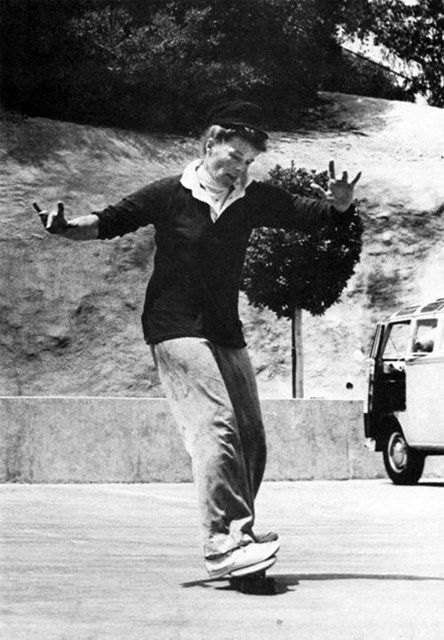
Katharine Hepburn, who was born on this day in 1907, on a skateboard in 1967 while spending time with her nephew, Jack Grant:

Actor in the Spotlight:

Matthew McConaughey is like a wild animal, proven by this supercut of the sounds he’s made in his movies (via Devour):

[embedded content]

Filmmaker in Focus:

The latest episode of the auteur series Cinemasters profiles the work of Sam Peckinpah (via Cinematic Montage Creators):

[embedded content]

Classic Trailer of the Day:

Today is the 30th anniversary of the Cannes premiere of The Adventures of Milo and Otis, then just a Japanese film titled The Adventures of Chatran. Watch the original trailer for American version released in 1989 below.

[embedded content]

and

Let’s block ads! (Why?)


No Image

Amid Allegations of Bias, Facebook Explains How 'Trending Topics' Works

Facing an uproar from conservatives and even calls for a congressional inquiry from a prominent lawmaker, Facebook is going to great lengths to explain how it decides what shows up on its trending news notifications.

On Thursday, the company released a 28-page internal document that details the instructions to the humans who shepherd the “Trending Topics” feature. It’s the news section you – and Facebook’s 1.6 billion users world-wide — see at the top right-hand corner of Facebook on desktop or when you do a search on mobile.

What we now know is that trending topics are driven in part by an algorithm and in part by humans. A Gizmodo article this week cited anonymous former contractors from the Trending Topics team, saying that human curators sometimes passed up conservative-leaning topics in favor of more liberal ones.

The release of the internal document represents Facebook’s continued pushback against bias allegations. The document was made public for the first time after being shared with The Guardian. As Trending Topics’ chief said on Monday, the guidelines do not allow or advise some kind of systematic discrimination against sources with particular ideologies.

What the document shows is how people are involved in the process, sometimes “injecting” newsworthy stories and sometimes “blacklisting” stories, for example for not being a “real-world world” event or for being duplicative. This kind of role of human curators has drawn suggestions that Facebook was becoming more of a publisher — in a traditional sense, like the mainstream news media — than a perfectly neutral platform.

Facebook says it hasn’t found any evidence of intentional manipulations of the Trending Topics section to suppress conservative stories, the New York Times reports. The paper outlines some big takeaways from the guidelines:

“For instance, after algorithms detect early signs of popular stories on the network, editors are asked to cross-reference potential trending topics with a list of 10 major news publications, including CNN, Fox News, The Guardian and The New York Times.

While algorithms determine the exact mix of topics displayed to each person, based on that user’s past actions on Facebook, a team of people is largely responsible for the overall mix of which topics should — and more important, should not — be shown in Trending Topics.”

The document did not detail the inner workings of the algorithm behind the Trending Topics, nor did it touch upon the way that the company determines what posts are deemed worthwhile to show up in someone’s main feature, Newsfeed.

Let’s block ads! (Why?)


No Image

Fact Checking Hillary Clinton's Medicare Buy-In Proposal

iStockphoto

iStockphoto

Hillary Clinton is floating a proposal to let people over the age of 50 “buy in” to Medicare, the federal government’s health insurance for those 65 and older.

The Democratic presidential contender mentioned the idea earlier this week at a campaign event in Stone Ridge, Va. She was responding to a woman who said her health insurance premiums – which she bought on the individual market — rose more than $500 last year.

“What you’re saying is one of the real worries that we’re facing with the cost of health insurance,” Clinton said. “The costs are going up in many markets.”

Clinton suggested that removing older people from the market would lower costs. And their own costs wouldn’t necessarily go up, she said, because they’d be part of such a big group.

“If you were able to let people 55 or 50 [years old] and up who are the biggest users of health care into the Medicare program – they would have to buy in but they would be buying into such a big program that the costs would be more distributed,” Clinton said.

Clinton’s campaign hasn’t offered any more details.

But the mention has raised the possibility that Clinton may use the idea of a Medicare buy-in to rekindle the debate over the so-called public option – having a government health insurance plan compete with private companies.

The idea could help control health care spending, advocates say.

Jacob Hacker, director of the Institution for Social and Policy Studies at Yale University, says Clinton’s idea could slow down health care inflation because Medicare is very efficient.

“While Medicare is often criticized as not being effective enough at cost control, in fact Medicare has done a better job than private plans in restraining prices,” Hacker says.

Hacker became known as the “father of the public option” during the 2010 debate over the Affordable Care Act because he was an early proponent of the idea. He says Medicare, or another government plan, is in the best position to lower overall costs because the government can best negotiate lower payments for doctor visits, tests and medications.

“Dealing with our health care costs crisis, and it is a crisis, it’s the number one threat to our budget, is going to require putting significant pressure on the medical industrial complex,” he says.

The public option died in 2010 when Republicans and some Democrats opposed the idea of having the government compete with the medical insurance industry.

But Clinton, in her campaign materials, says she wants to bring it back.

Letting people buy in to Medicare could be a first step, Hacker says.

“If you go into the health insurance exchange, you could conceivably choose between a range of private plans and the Medicare program,” he says.

Reaching Out To Sanders Supporters

Clinton may also be broaching the idea to appeal to Bernie Sanders supporters who like his proposal to offer a government health insurance plan to everyone – which he calls Medicare for All.

Sanders’ plan has been criticized because of its potential cost. He says the plan will cost about $1.38 trillion a year and would be paid for by tax increases on individuals and employers.

Many economists dispute his estimates. A new analysis by the Urban Institute says it would cost more than twice that amount.

Linda Blumberg, a senior fellow in the Health Policy Center at the Urban Institute, says a Medicare buy-in may not be as simple as it sounds.

Putting people ages 50 to 65 in a pool with the elderly could end up costing them more because they’re associated with the biggest and most expensive health care consumers.

And Medicare is more fragmented than regular insurance, with separate programs to pay for hospitals, doctors and prescriptions. So Clinton would have to decide whether to leave Medicare as is or create something more like traditional insurance for these younger customers.

“If we’re going to provide something that looks like a cohesive package for the non-elderly through Medicare then I think we need to be thinking about why we’re not doing that for the elderly as well,” Blumberg says.

Tom Miller, a resident fellow at the American Enterprise Institute, also sees unintended consequences in moving people from private insurance into Medicare.

Doctors and hospitals charge private insurers more to make up for the low payments from Medicare, he says, and Clinton’s idea just moves more of the costs from one group to another.

“It’s like saying, ‘Let’s move this pothole over to another place where you’re not driving and someone else will run into it,'” Miller says. “You can’t hide the problem, you can move it around to a different set of pockets.”

Miller says health care for people over 50 just costs a lot of money. If Clinton wants to reduce those costs, he suspects people will end up with fewer benefits, or taxpayers will end up subsidizing their insurance even more.

Let’s block ads! (Why?)


No Image

Want To Be Wicket Smart? Now There's An App For Cricket's Many Rules

Stuart Broad of Nottinghamshire bowls at Nick Gubbins of Middlesex during a match at Lords Cricket Ground in London.

Stuart Broad of Nottinghamshire bowls at Nick Gubbins of Middlesex during a match at Lords Cricket Ground in London. Mitchell Gunn/Getty Images hide caption

toggle caption Mitchell Gunn/Getty Images

The rules of cricket are famously, almost comically, complicated.

Take this subsection of Law 42.6.1 in the International Cricket Council’s rules and regulations on Standard Test Match Playing Conditions:

“In the event of a bowler bowling more than two fast short-pitched deliveries in an over as defined in Clause 42.6.1 (b) above, the umpire at the bowlers end shall call and signal no ball on each occasion. A differential signal shall be used to signify a fast short pitched delivery. The umpire shall call and signal ‘no ball’ and then tap the head with the other hand.”

Helpfully, for those not steeped in the finer points of the game, the Marylebone Cricket Club has released what it calls the “first ever Laws of Cricket app.” The app, which users of iOS and Android devices can download for free, uses videos, quizzes and animations narrated by actor and writer Stephen Fry to explain the mechanics.

MCC says it has maintained custodianship of the laws of cricket since the club’s founding in 1787. Its website states: “Although the International Cricket Council is the global Governing Body for cricket, it still relies on MCC to write and interpret the Laws of Cricket, which are applicable from the village green to the Test arena.”

There are 42 such laws. And on the videos, Fry acknowledges their density with affection:

“Of course, this being cricket, there are further delightful complications … but never fear, all mental anguish will clear with a little quiet meditation and reference to law 29 in the blue book.” That’s during a lesson on when a batsman or woman is out of his ground. The answer is “a bit of a headache,” the narrator cheerfully explains.

The app is meant to bring new fans to the game. “As Guardians of the Laws and Spirit of Cricket, it is vital that MCC embraces the new audiences that the sport has gained in recent years and makes the Laws of the game even more accessible,” the club’s chief executive, Derek Brewer, says in a statement.

The app also features videos of 18 different umpire signals. For example, here’s the sign for “Leg Bye,” meaning the ball has hit the person of the batsman or woman so any runs completed are counted as “leg byes.”

[embedded content]
YouTube

And here’s how an umpire signals a fielding restriction known as a “Power Play.”

[embedded content]
YouTube

Still confused? You have plenty of company, including this blogger. This is how one teatowel — apparently a common sight in the U.K. — explains cricket to a foreign visitor, according to ESPN:

“You have two sides, one out in the field and one in. Each man that’s in the side that’s in goes out, and when he’s out he comes in and the next man goes in until he’s out. When they are all out, the side that’s out comes in and the side that’s been in goes out and tries to get those coming in, out. Sometimes you get men still in and not out.

“When a man goes out to go in, the men who are out try to get him out, and when he is out he goes in and the next man in goes out and goes in. There are two men called umpires who stay all out all the time and they decide when the men who are in are out.

“When both sides have been in and all the men have out, and both sides have been out twice after all the men have been in, including those who are not out, that is the end of the game!”

Let’s block ads! (Why?)


No Image

Today in Movie Culture: 8-Bit 'Captain America: Civl War,' 'Star Wars' Meets 'Top Gun' and More

Here are a bunch of little bites to satisfy your hunger for movie culture:

Trailer Remake of the Day:

Watch the Captain America: Civil War trailer redone with 8-bit video game graphics in this video from JoBlo.com:

[embedded content]

Fan Art of the Day:

Little Rey just wants to be friends, but young Kylo Ren is too jealous of her attention in this Star Wars fan art by Jenny Dolfen (via Geek Tyrant):

Mashup of the Day:

The iconic cropduster scene from North by Northwest with a TIE Fighter from Star Wars instead of the plane. Plus C-3PO, R2-D2 and Cary Grant in space (via Cinematic Montage Creators):

[embedded content]

Rescored Movie of the Day:

Star Wars dogfight and other space combat scenes are a lot cooler when set to Kenny Loggins‘s “Danger Zone” from Top Gun (via THR):

[embedded content]

Vintage Image of the Day:

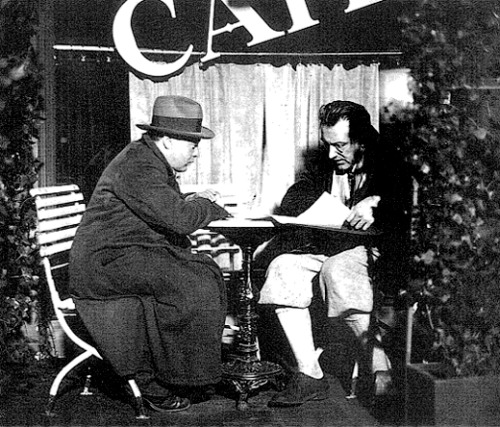
Director Fritz Lang and actor Peter Lorre compare notes on the set of M, which made its theatrical debut in Germany on this day in 1931:

Movie Score Performance of the Day:

Watch John Carpenter and friends perform the Escape from New York score live in the studio to promote the new Classic Themes Redux EP:

[embedded content]

Alternate Movie Poster of the Day:

Matt Ferguson makes us believe a man can fly again with this cool poster for Superman: The Movie (via Live for Films):

Filmmaker in Focus:

The Nerdwriter shows us how David Lynch manipulates us, specifically in Mulholland Drive:

[embedded content]

Fandom of the Day:

Two Harry Potter fans married each other and had the most awesome Harry Potter-themed wedding. See more photos at Fashionably Geek.

Classic Trailer of the Day:

This week marks the 25th anniversary of the release of Madonna: Truth or Dare, one of the most successful documentaries of all time. Watch the original trailer for the music film below.

[embedded content]

and

Let’s block ads! (Why?)


No Image

Rokia Traore On World Cafe

Rokia Traoré.

Rokia Traoré. Danny Willems/Courtesy of the artst hide caption

toggle caption Danny Willems/Courtesy of the artst

  • “Obiké”
  • “Ilé”
  • “Strange Fruit”

Rokia Traoré wasn’t supposed to be a musician at all; it was discouraged among the noble caste of Mali’s Bambara ethnic group, into which she was born. But, like musicians everywhere, she was also born with the drive to create. Against tradition, she started playing in college and was noticed by the revered Malian guitarist Ali Farka Touré, who helped her immensely in the early 2000s.

Today, Traoré has a new album called Né So, which means “home.” In this session, she explains that, as a diplomat’s daughter, she has had many homes and has often been lonely, which she thinks fuels her songwriting. Hear her perform live in the World Cafe studio in the audio above.

Let’s block ads! (Why?)


No Image

Public Health Professor: Because Of Zika, Rio Olympics 'Must Not Proceed'

The Olympic flame gets a lift from former Brazilian volleyball player Leila Barros, who took part in this month's torch relay. The games are set to begin on Aug. 5.

The Olympic flame gets a lift from former Brazilian volleyball player Leila Barros, who took part in this month’s torch relay. The games are set to begin on Aug. 5. Getty Images hide caption

toggle caption Getty Images

Amir Attaran, a professor in the School of Public Health and the School of Law at the University of Ottawa, isn’t afraid to take a bold stand.

He has written a commentary for the Harvard Public Health Review, published this week, with the headline, “Why Public Health Concerns for Global Spread of Zika Virus Means that Rio de Janeiro’s 2016 Olympic Games Must Not Proceed.”

The World Health Organization is soon expected to release a statement with guidance on travel to the Olympics.

NPR’s Robert Siegel spoke to Attaran about his controversial position. Attaran’s comments have been edited for length and clarity.

You are calling for the Summer Games to either be postponed or moved to other countries — London, Beijing, Sydney. Why?

The risk of [accelerating the spread] of Zika is simply too great to bear.

What we know from Brazil’s devastating outbreak is that it began with a single infected person who brought the virus to South America. Does it really make sense to send a half-million [Olympic tourists] into Rio, which is, to be very clear, not the fringes of the outbreak. It’s the heart of the outbreak. Rio de Janeiro state has more Zika cases than anywhere else in the country. Doesn’t make sense.

So are you saying the games should be canceled?

No one is saying cancel the games. But is it at the end of the day sensible to run the risk of a global epidemic of, let’s face it, brain-damaged babies, when that could be avoided by simply postponing the games or moving them elsewhere?

This is not a question of worrying about whether individual athletes get sick or individual tourists. For any of those individuals, the risk is quite low. But when you multiply by 500,000, the odds are extremely high that somebody will take the disease elsewhere and seed a new outbreak.

Wouldn’t it also be logical from your perspective that no one should travel to Rio de Janeiro?

We can’t fall into the trap of being extremist. It would be completely inappropriate, totalitarian even, to say nobody should enter or exit. But do we need to accelerate the entry and exit by a half-million people for [the Olympic] games?

We speak of the Summer Games, but actually in the Southern Hemisphere where they’re taking place, it’ll be winter. And some people say mosquitoes won’t be that much of a problem because it’s not their season.

There’s no doubt that mosquitoes will decline in Rio’s winter, but they’re not going to decline to point that the disease vanishes. Other mosquito-transmitted diseases like dengue fever persist through the winter in Rio, and Zika will too because it’s transmitted by the same mosquito. But here’s the bigger problem: in Rio this year, insect-transmitted disease is up 600 percent over the same period last year. Why did it go up 600 percent when there are mosquito control efforts? That proves the efforts aren’t working as well as one would have liked. And even if the mosquito-borne diseases do go down over winter, they’re coming down from a level that’s six times higher than normal.

Let’s block ads! (Why?)


No Image

Google To Ban Payday Loan Ads

Google says it will ban all payday loan ads from its site. Consumer advocates say the lending practice hurts the poor and vulnerable.

Transcript

ARI SHAPIRO, HOST:

Google did something today that has made a lot of advocates for the poor very happy. The company announced in a blog post that it will stop permitting ads from payday loan companies. NPR’s Laura Sydell reports.

LAURA SYDELL, BYLINE: Payday loans target people who are shot on cash, and typically they’re due on the day the borrower gets paid. That’s not necessarily a bad thing, but the companies charge such high interest rates that they can be extremely difficult to pay off. Alvaro Bedoya, the director of the Center on Privacy and Technology at Georgetown University Law School says the interest rates go as high as 1000 percent.

ALVARO BEDOYA: And to put that in context, Al Capone is said to have charged somewhere between 100 and 250 percent.

SYDELL: And Capone was a notorious criminal. In a blog post, a Google official wrote that the company will no longer allow ads for loans where repayment is due within 60 days and for loans with rates higher than 36 percent. Georgetown’s Bedoya says this won’t close down all these lenders, but search is often a point of entry for desperate people.

BEDOYA: So for example, if you go broke and you do a search for, need money for rent or, need money for heating bill, payday lenders have paid to have their ads show up at the top of these search results.

SYDELL: The payday lending industry itself is calling Google’s ban on these ads unfair. A trade group, the Community Financial Services Association of America, said Google and others are making a blanket assessment about the payday lending industry rather than discerning the good actors from the bad. The industry is also critical of Facebook, which has a ban on payday loan ads. But Bedoya and other advocates for the poor are hoping that Microsoft’s Bing and Yahoo Search will also ban the ads. Laura Sydell, NPR News.

Copyright © 2016 NPR. All rights reserved. Visit our website terms of use and permissions pages at www.npr.org for further information.

NPR transcripts are created on a rush deadline by Verb8tm, Inc., an NPR contractor, and produced using a proprietary transcription process developed with NPR. This text may not be in its final form and may be updated or revised in the future. Accuracy and availability may vary. The authoritative record of NPR’s programming is the audio record.
Let’s block ads! (Why?)


No Image

Presidential Candidates Confront Obstacles To Opioid Addiction Treatment

Presidential candidates have been confronted by voters over the crisis of opioid abuse and heroin addiction. One major problem is accessing treatment when someone who needs it is ready to receive it.

Transcript

ARI SHAPIRO, HOST:

People who want help with their drug problems are dying while they’re on waitlists for treatment. We’ve been looking at how campaign issues are affecting people in real life. And today, we want to focus in on one particular challenge – getting help for people struggling with opioid abuse and heroin addiction at the moment they need it. NPR’s Tamara Keith is here and has been following both the campaign and the opioid issue. And, Tam, tell us what you found.

TAMARA KEITH, BYLINE: There is no safe use of heroin. Your next dose could kill you. And again and again, I heard from people that simply there is not enough capacity in treatment programs and that insurance, at times, doesn’t cover the treatment that people want or need.

SHAPIRO: You spent some time in New Hampshire, and I understand you brought back some personal stories that really reflect on these challenges.

KEITH: Yes. First, I want to tell you about Courtney Griffin. She was 20 years old, addicted to heroin, ready to get help. Her mom, Pamela Griffin, thought that she had found that help at an inpatient treatment center about an hour from where they lived. And she told me about that night.

PAMELA GRIFFIN: I told Courtney, we have an appointment finally. Pack your bag because you’re going. I mean, I thought she was going to be admitted right in there.

KEITH: Pamela waited in the lobby while Courtney went in to fill out her paperwork. And about 90 minutes later, she tells me, Courtney was back, shaking her head. Their insurance had been declined. This is the explanation she says they got.

P. GRIFFIN: They declined, saying that it wasn’t a matter of life and death. And Courtney said, this drug is going to kill me. She knew. She knew. And I sat there and I thought, are you kidding? And it was all about $12,000. They woman said, you know, can you call your dad? $12,000 – we really have the perfect program for you that will help you. We just need the money.

SHAPIRO: We’re hearing there from Courtney’s mother, Pamela. What happened to Courtney?

KEITH: She was devastated. They left that facility completely devastated. She got on a wait list for another program, and then her dad, Doug Griffin, says he got a call.

DOUG GRIFFIN: When you’re a parent of an addict, you’re always afraid of the call. You know, you always know that the call is going to come.

KEITH: And it did. It was about two months after she had been turned away from that first facility. Courtney was alone and overdosed.

SHAPIRO: At age 20.

KEITH: At age 20.

SHAPIRO: How common is it for people to get turned away because their insurance won’t cover the treatment that they say they need?

KEITH: There’s no good real-time tracking of either treatment availability or statistics about insurance denials. But one recent study found that only about 20 percent of people who have either moderate or severe drug use disorder receive treatment. And if you talk to family members like the Griffins, you hear this constantly. There are just countless completely wrenching stories just like theirs.

SHAPIRO: You also said that, even when insurance will cover treatment, there’s often not the capacity for the people who need it. How big is that problem?

KEITH: One issue is that when people think of treatment, they think of a residential program, 28 days, abstinence, 12 steps. And there simply aren’t enough beds available to help all the people that want that kind of treatment, and many folks don’t realize that there are other options, like medication-assisted treatment -methadone, other drugs like that. But there aren’t enough doctors that do that, so there are waitlists for all kinds of treatment. I want to tell you about another person whose story really brings that home – the issue of these waitlists. His name is Dean Lemire. And in 2012, he had been using heroin for about eighteen months when he decided he just needed to stop.

DEAN LEMIRE: The heroin wasn’t doing what I wanted it to. And when I wasn’t high, I was suicidal.

KEITH: So he went to a state-funded treatment center, and he said he was put on a waiting list.

LEMIRE: And I had to call every day, three times a day for three weeks. You know, by the end of two and a half weeks, I gave up.

SHAPIRO: So what happened?

KEITH: He downed a fifth of cheap Canadian whiskey in a plastic bottle and got in his car looking for heroin.

LEMIRE: And I got in three car accidents, totaled my car and another, woke up in a jail cell. And when I finally got back home, I called the rehab, and I guess they deemed me serious enough to require their services, so they bumped me up and got me and.

SHAPIRO: And was that enough to solve the problem?

KEITH: Yes. He’s doing really well now. He’s in long-term recovery. He’s married with a young child. And he’s now working as a substance misuse educator at Goodwin Community Health in New Hampshire. He’s working to help other people like him. But here’s the thing – he says the situation hasn’t actually improved.

LEMIRE: That wait period has not gotten better. It’s actually gotten worse.

SHAPIRO: All right, Tam, the problems are really clear. We’re calling this series Politics in Real Life, so where does politics come in? What are elected leaders actually doing to fix these problems?

KEITH: States are holding special legislative sessions. The U.S. Senate has already passed a bipartisan package of bills to deal with the opioid crisis. And the House this week is taking up 18 different bills related to opioids.

SHAPIRO: But when you say related to opioids or to deal with the opioid crisis, is this actually going to get rid of waitlists? Is this actually going to force insurance companies to cover the treatment that, right now, they’re not always covering?

KEITH: Yes and no. There are bills that would expand treatment options. The CDC just came out with new guidelines for doctors that prescribe opioids to try to reduce abuse. There’s a White House task force on insurance coverage. Their results are due in about six months.

SHAPIRO: You actually talked to the new White House drug czar about this.

KEITH: Indeed. I spoke to him yesterday. His name is Michael Botticelli. His official title – he doesn’t really like drug czar – is the director of national drug control policy.

MICHAEL BOTTICELLI: It’s really tragic that people aren’t able to get care and are often dying when they’re on waiting lists. You know, every other disease, you get treatment on demand. And that’s what we want.

KEITH: He’s hopeful that the things that are being worked on right now will make a difference. But this is moving in inches, not in miles at this point.

SHAPIRO: In that case, it’s likely to fall to the next president. And what have the candidates said about this?

KEITH: The candidates were surprised. The candidates, when they started going into New Hampshire to campaign because that’s what you do when you’re running for president, they were hit over the head with this. They encountered family members like Doug Griffin. And even a makeup artist who was doing makeup for the candidates at debates had lost her daughter to an overdose and was talking to them about it. So they were confronted with this issue, and they rapidly started including in their stump speeches mentions of the crisis, talking about friends and family members who they knew who had been affected in some way.

SHAPIRO: And it’s not a partisan divide. Republicans and Democrats both see this as a problem, and they roughly, more or less, agree on the solutions.

KEITH: Broadly – very broadly speaking. Everyone is basically now saying this isn’t a war on drugs. This is not a law enforcement issue as much as it is a public health crisis. And that’s a huge shift. But in terms of the specifics, Hillary Clinton has come out with a pretty detailed plan. A lot of what she’s talking about is now part of what Congress and the White House are doing because there’s sort of a limited universe of options. Bernie Sanders has been less specific about what he would do, but his Medicare-for-all plan would, in theory, cover all of this treatment for everyone. Donald Trump does the Trump thing. And he says his wall – his wall along the border – will help keep drugs out of the U.S.

SHAPIRO: Prescription painkillers?

KEITH: No, just heroin. The prescription painkillers is another thing. But he says he does want to get help for everyone. He doesn’t exactly say how. And of course, he has said that he wants to repeal the Affordable Care Act. However, he does say he would replace it with something tremendous.

SHAPIRO: That’s NPR’s Tamara Keith with the latest in our look at politics in real life. Tell us the issues you want to see candidates address. Join the conversation on social media with the hashtag #politicsirl.

Copyright © 2016 NPR. All rights reserved. Visit our website terms of use and permissions pages at www.npr.org for further information.

NPR transcripts are created on a rush deadline by Verb8tm, Inc., an NPR contractor, and produced using a proprietary transcription process developed with NPR. This text may not be in its final form and may be updated or revised in the future. Accuracy and availability may vary. The authoritative record of NPR’s programming is the audio record.

Let’s block ads! (Why?)