Articles by admin

No Image

Supreme Court Sends Obamacare Contraception Case Back To Lower Courts

The Supreme Court Monday punted on the constitutional merits of a religious freedom challenge to the Affordable Care Act. The court said it was feasible to satisfy religious groups and women seeking contraception and sent the case back to the lower courts.

Transcript

AUDIE CORNISH, HOST:

Today the U.S. Supreme Court avoided making a decision on birth control coverage for employees. This is the coverage guaranteed under the Affordable Care Act. Instead of resolving a clash between religious objectors and the law, the Court said there’s the possibility of a compromise, so it unanimously booted the case back down to the lower courts. The justices gave instructions to take sufficient time for the two sides to work it out.

To talk through what happened, NPR legal affairs correspondent Nina Totenberg is in the studio. And Nina, if you had to write a headline for this story, what would it be?

NINA TOTENBERG, BYLINE: The justices punted. You know, Audie, I don’t want to be flip about this, but they said to the parties, you folks negotiate for now, and the appeals courts below can deal with this problem for now; and then you can come back here later – much later.

CORNISH: So give us a little more detail. What was this case all about?

TOTENBERG: Well, the Affordable Care Act, among other things, seeks to deal with one of the major health care costs for women – birth control. It requires all employers who provide health insurance to include free contraception coverage for their employees. Religiously affiliated nonprofits like universities, hospitals and charitable organizations can opt out by notifying either the government or their insurer of their objections. The government then works with the insurer to provide the coverage independently.

The opt-out provision was added to the health care law as an attempt to accommodate the objections of some religious nonprofits, but it didn’t go far enough for them. They contended that notifying the government or the insurer of their objections would make them enablers of birth control via a different route. They want to be completely exempt, to be treated the same way that houses of worship are treated, meaning that their employees and, in the case of universities, their students would have no birth control coverage.

CORNISH: So those religious nonprofits that rejected this go to the court, and they lost in most places, right?

TOTENBERG: They lost in 8 out of 9 appeals courts. But one ruled in their favor, so there was a conflict. And the Supreme Court agreed to resolve the issue. After the death of Justice Antonin Scalia, however, that turned out to be very difficult, and the court looked as though it might be headed for a 4 to 4 tie.

Less than a week after the oral argument in the case, the justices floated a compromise idea – no written notification and a package of free birth control coverage from the same insurer. The court asked the two sides to file briefs responding to its suggestions.

What it got back was less than totally enthusiastic, especially from the government which warned of important practical problems. Nevertheless, today, in an unsigned unanimous opinion, the court chose to treat those responses in the rosiest of fashions. The court then sent all the birth-control cases – and I think there are now 17 of them – back to the lower courts with the instruction to look for a way to better reconcile religious objections with the need to provide free birth control coverage for women who work at religiously affiliated universities, hospitals, charities…

CORNISH: Wow.

TOTENBERG: …Et cetera.

CORNISH: Sounds like a tall order.

TOTENBERG: Uh-huh.

CORNISH: So is there another agenda here?

TOTENBERG: Well, probably there are many agendas. First is the court’s desire to avoid a 4 to 4 tie which lets stand the judgment of the lower court, meaning that in this case, for instance, there would not have been one legal rule for the whole country.

Another is Justice Anthony Kennedy, who would’ve been a fifth vote if he sided with the court’s liberals in this case or, if he went the other way, a fourth vote for a tie. And he seemed very torn at oral argument. And third, this is an eight-justice court with a big, fat vacancy. And today’s action ensures that nothing will be decided by the time of the election.

CORNISH: Wait, so what does that mean – that really nothing will be decided before the election?

TOTENBERG: Well, in the starkest terms, if Donald Trump wins, he says he’ll fill the ninth seat with a conservative, and the court likely would strike down the birth control mandate as a violation of religious rights. If, on the other hand, the Democratic nominee wins, then the pendulum swings to women’s reproductive rights and the government’s right to legislate to protect women’s health.

CORNISH: So what did the court actually decide today?

TOTENBERG: It was extremely explicit about that. It said it was deciding nothing. And in the meantime, the coverage continues as it is today.

CORNISH: That’s NPR’s Nina Totenberg. Nina, thanks so much.

TOTENBERG: Thank you, Audie.

Copyright © 2016 NPR. All rights reserved. Visit our website terms of use and permissions pages at www.npr.org for further information.

NPR transcripts are created on a rush deadline by Verb8tm, Inc., an NPR contractor, and produced using a proprietary transcription process developed with NPR. This text may not be in its final form and may be updated or revised in the future. Accuracy and availability may vary. The authoritative record of NPR’s programming is the audio record.


Let’s block ads! (Why?)


No Image

ESPN Site 'The Undefeated' To Explore Intersection Of Sports And Race

ESPN is set Tuesday to launch “The Undefeated,” a digital site and news team focused on the intersection of race, sports, politics and culture. NPR profiles “The Undefeated” and its new editor, former Washington Post managing editor Kevin Merida.

Transcript

KELLY MCEVERS, HOST:

A new ESPN website goes live tomorrow. It’s called The Undefeated, and it’s dedicated to the intersection of sports, race, culture and politics. The small staff carries big aspirations, and lots of swagger. But as NPR’s David Folkenflik reports, The Undefeated almost lost the game before it started.

DAVID FOLKENFLIK, BYLINE: Kevin Merida works these days in an abandoned suite of radio offices of the Washington Bureau of ESPN’s corporate sibling ABC News. Merida was previously managing editor of The Washington Post, which he announced in October he would be leaving after 22 years.

KEVIN MERIDA: There wasn’t a whole lot to lose, right? I mean, I felt like I had done a lot. And so I had either reported on or supervised, you know, seven presidential campaigns, so this would have been the eighth.

FOLKENFLIK: Merida’s now editor-in-chief of The Undefeated. Some of his newspaper colleagues were incredulous. But Merida, a sports fan, proved open to a very different path.

MERIDA: When I began to think about this and I took the job, it was like my brain’s on fire, you know? I’m thinking of all kinds of things, different ideas and different things to create.

FOLKENFLIK: As one example, Merida points to the threat of a boycott by black football players at the University of Missouri that toppled their campus’ president.

MERIDA: It’s certainly a story that African-Americans in this country know very well. The history of struggle is one of just incredible overcoming of obstacles and people doubting you and thinking you’re not as smart as you are, as special as you are.

FOLKENFLIK: In recent years, ESPN has encouraged a lot of reporting that deviates from pure sports coverage. The Undefeated’s newsroom now includes a former White House reporter for The Washington Post, a former BuzzFeed editor to cover entertainment, a fashion and style writer, too. The death of Prince – yeah, that would be a story for The Undefeated or this…

MERIDA: The discussion around Serena Williams. Amazingly, there’s more discussion about her body, and she’s the greatest tennis player in the history of the world and one of the greatest athletes. She would have an argument to be the greatest athlete in the history of the world.

FOLKENFLIK: Initially, the site’s name could’ve been the Vanquished. The Undefeated had been the brainchild of the fiery former ESPN commentator Jason Whitlock. Whitlock had never managed a newsroom. Staff rebelled. He was ultimately fired last summer.

RAINA KELLEY: I didn’t want to do it.

FOLKENFLIK: Raina Kelley had a job she liked. She was, until recently, senior editor at ESPN The Magazine. As an an African-American journalist, Kelley watched The Undefeated closely, but kept her distance.

KELLEY: Everything was in a black box, so there was no real information about what the future was going to be.

FOLKENFLIK: Kelley is now managing editor at The Undefeated, and when she speaks of her aspirations, she’s unvarnished, thanks in large part to the hiring of Merida.

KELLEY: We get along so well. We thought so similarly about what we wanted the project to be that I knew we were going to be able to do it and kick it’s [expletive].

(SOUNDBITE OF SONG, “THE UNDEFEATED”)

DEE-1: (Rapping) Black is beautiful. Beauty is black. Our blemishes apparent, but the beauty intact.

FOLKENFLIK: The site has its own anthem by the New Orleans rapper Dee-1.

(SOUNDBITE OF SONG, “THE UNDEFEATED”)

DEE-1: (Rapping) Sports, music, struggle, it’s all in the black experience.

FOLKENFLIK: ESPN’s television shows have a disproportionately large African-American following compared to the population at large. It’s black digital leadership by contrast is disproportionately small, according to the network. Senior executives say ESPN is especially pursuing male African-American readers between 18 and 34 years old.

As Merida and I talk, he glances through a studio window at Aaron Dotson, a new African-American colleague at the outset of his career.

MERIDA: And we have some young people that are really just in the beginning. And to help them develop, you know, I often get emotional about that just, you know, kind of seeing the young people.

FOLKENFLIK: You’re getting emotional right now.

MERIDA: Yeah because whether it’s him or Justin Tinsley or…

FOLKENFLIK: Here, Merida is weeping unabashedly. I ask him why this project means so much to him.

MERIDA: It’s run by journalists of color, you know? And to be able to do that that hasn’t happened a lot – right? – in big places. People really think about that. And hey, you know, I’m just, you know – particularly when you’re looking at people who – they still have so much of their career ahead of them, so you want to, you know, be part of helping them achieve what they want to achieve.

FOLKENFLIK: Merida’s not so secret hope is to land an exit interview with the nation’s first black president, like Merida, an ESPN fan. David Folkenflik, NPR News, Washington, D.C.

Copyright © 2016 NPR. All rights reserved. Visit our website terms of use and permissions pages at www.npr.org for further information.

NPR transcripts are created on a rush deadline by Verb8tm, Inc., an NPR contractor, and produced using a proprietary transcription process developed with NPR. This text may not be in its final form and may be updated or revised in the future. Accuracy and availability may vary. The authoritative record of NPR’s programming is the audio record.

Let’s block ads! (Why?)


No Image

'Lifelike' Suspicious Item At Manchester United Stadium Was A Training Device

A sniffer dog works on the side of the pitch following the evacuation of Old Trafford stadium in Manchester, U.K., on Sunday. The match between Manchester United and Bournemouth was postponed after a suspicious package was discovered at the stadium.

A sniffer dog works on the side of the pitch following the evacuation of Old Trafford stadium in Manchester, U.K., on Sunday. The match between Manchester United and Bournemouth was postponed after a suspicious package was discovered at the stadium. Oli Scarff/AFP/Getty Images hide caption

toggle caption Oli Scarff/AFP/Getty Images

Before the final match of the season could even get underway Sunday, Manchester United’s fans were leaving the team’s stadium in droves. Local police oversaw the mass evacuation of the soccer team’s Old Trafford stadium, prompted by reports of a suspicious package found in the stands.

Now, Greater Manchester Police say that item — which had been described as an “incredibly realistic-looking explosive device” — was in fact just a training device.

Suspicious item found at Old Trafford today, which required controlled explosion, was a training device https://t.co/55n06zNwU3

— G M Police (@gmpolice) May 15, 2016

“We have since found out that the item was a training device which had accidentally been left by a private company following a training exercise involving explosive search dogs,” announced John O’Hare, assistant chief constable from Greater Manchester Police.

The announcement brings a cheerful — if somewhat curious — conclusion to a day that began with tension and disappointment as fans filtered out of the stadium. Postponement of the match with Bournemouth came just about 20 minutes before kickoff, as players were still warming up on the pitch.

“Police evacuated the stadium, Old Trafford, and brought in sniffer dogs,” NPR’s Lauren Frayer reported for our NewsCast unit earlier Sunday.

Hours passed as the sniffer dogs combed the stadium’s stands and bomb disposal experts sought to safely destroy the package. A bomb squad carried out a controlled explosion at the stadium; shortly afterward, officials released a statement that the exploded device was not viable.

They expanded on that assessment Sunday evening.

“While this item did not turn out to be a viable explosive, on appearance this device was as real as could be, and the decision to evacuate the stadium was the right thing to do, until we could be sure that people were not at risk,” O’Hare explained.

The English Premier League announced the match has been rescheduled for Tuesday night, when Manchester United and Bournemouth players will take the field once more — presumably with better results this time around.

That said, it’s looking likely that Man U fans will still come away disappointed: As The Associated Press reports, “United has to win the match by a 19-goal margin or more to have any hope of finishing in fourth place and above crosstown rival Manchester City for a Champions League spot.”

Let’s block ads! (Why?)


No Image

Which TV Shows Will Be Back Next Year?

It’s that time of year when TV networks decide which shows to cancel and which to renew for the 2016-2017 season. NPR TV critic Eric Deggans gives an update on the new and canceled shows.

Transcript

MICHEL MARTIN, HOST:

Now let’s talk television. If this were a show, you would the cue the sad music or maybe an explosion. In any case, you could call it a TV massacre. The big broadcast networks canceled at least a dozen shows last week, and more cuts are expected to be announced this week, including the last version of “CSI” left on the air, “CSI: Cyber.”

(SOUNDBITE OF “CSI: CYBER” THEME SONG)

MARTIN: The moves came a week before an event known as the TV upfronts, where the broadcast networks announce their schedules for the fall to advertisers in New York. We wanted to talk about just what these cancellations might mean, so we’ve called NPR’s TV critic Eric Deggans. Hi Eric.

ERIC DEGGANS, BYLINE: I’m still banging my head to that Who theme of “Cyber.” Excuse me…

MARTIN: Is that what was?

DEGGANS: …Noise.

MARTIN: Yeah.

DEGGANS: Yeah, that’s what it was. Yeah.

MARTIN: So what other big shows got canceled? And does the list give you any sense of what the networks have planned?

DEGGANS: Well, one of the big cancellations I think was a show called “Castle” on ABC. It’d been on the air for, like, eight seasons. And there was a lot of behind-the-scenes negotiation to try and bring it back, but ABC decided they weren’t interested. They didn’t even get a farewell season to say goodbye to the fans. And some of the fans were upset anyway because the female lead on the show was written out of the show. And so the show was kind of in a controversial place anyway, and they didn’t bring it back. ABC actually got rid of a lot of shows. They got rid of six shows last week, including “Nashville,” which, you know, it was a nice little soap opera about the music business. But it only had a small following. Shows like Marvel’s “Agent Carter” and the musical “Galavant.” And then, of course, “The Muppets,” right? So they tried to revive “The Muppets” as a sort of modern take on these characters that we all love. And unfortunately, it didn’t work so well. And I think we actually have a clip.

(SOUNDBITE OF TV SHOW, “THE MUPPETS”)

ERIC JACOBSON: (As Miss Piggy) Can I get a hot towel, please and a calzone?

STEVE WHITMIRE: (As Kermit the Frog) Somebody call for a calzone?

JACOBSON: (As Miss Piggy) Kermit, what are you doing here?

WHITMIRE: (As Kermit the Frog) Well, I’m here, Piggy, because – because I know – I know it’s risky, and I know I want to try anyway. And on top of all of that, I know that this airline does not serve pre-flight calzones.

DEGGANS: (Laughter).

MARTIN: Yeah, you’re right.

DEGGANS: Didn’t work.

MARTIN: Yeah, I kind of see your point there, yeah.

DEGGANS: Yeah, so they changed the show-runner on the show. They tried to sort of revamp it and relaunch in the middle of the season. And it just did not take. People did not want to see these characters that they love sort of recast as these contemporary sad-sack kind of figures.

MARTIN: You know, we mentioned earlier that CBS is cancelling “CSI.” This is the first time in many years that a “CSI” show is not on the air. Do you think there’s any conclusion to be drawn from that?

DEGGANS: Even the longest-running franchises kind of have a shelf life. So this is going to be the first time in 16 years that we have not had a “CSI” series on CBS. And that’s quite a run. Now, if you look over on NBC, of course, there’s still “Law & Order” over there, which has been on the air in one form or another since 1990, if you can believe it. And at CBS…

MARTIN: I know, it’s like a member of the family. Like, you know…

DEGGANS: Exactly, that show is probably older than the children in a lot of households that watch it. But this new “CSI” show, I don’t think it really caught on with viewers and with fans. And I think the concept itself had kind of gotten exhausted. I mean, we had “CSI,” “CSI: New York” and “CSI: Miami,” and all of those are off the air. There’s no sign that TV is totally done with franchises. You know, NBC’s got the “Chicago Med,” “Chicago PD,” Chicago Fire” thing going on. But “CSI” definitely ran its course, and it is headed off to that great rerun in the sky.

MARTIN: Anything you’re particularly happy that was saved?

DEGGANS: Oh well, yes, I have to say “American Crime,” which I thought, you know, started out promising in its first season but really blossomed its second season on ABC, from former NPR contributor John Ridley. We have to say that.

MARTIN: Oscar-winning.

DEGGANS: Exactly. It got renewed. And so it was good to see ABC continue its commitment to diversity because it’s a diverse show. And John Ridley is one of the rare African-American show-runners and show creators in network television. But it also was a great show. And I think when the Emmys roll around, we’re going to see some more nominations for “American Crime” because they upped their game this year.

MARTIN: That’s NPR TV critic Eric Deggans. Eric, thank you.

DEGGANS: Always a pleasure.

Copyright © 2016 NPR. All rights reserved. Visit our website terms of use and permissions pages at www.npr.org for further information.

NPR transcripts are created on a rush deadline by Verb8tm, Inc., an NPR contractor, and produced using a proprietary transcription process developed with NPR. This text may not be in its final form and may be updated or revised in the future. Accuracy and availability may vary. The authoritative record of NPR’s programming is the audio record.

Let’s block ads! (Why?)


No Image

Mrs. Obama Saves The Cardigan: 'The Obama Effect' In Fashion

First Lady Michelle Obama wears her signature cardigan while dancing with performers from the television show So You Can Dance during the annual White House Easter Egg Roll on April 6, 2015.

First Lady Michelle Obama wears her signature cardigan while dancing with performers from the television show So You Can Dance during the annual White House Easter Egg Roll on April 6, 2015. Mark Wilson/Getty Images hide caption

toggle caption Mark Wilson/Getty Images

Ah, the cardigan: your granny’s cozy go-to used to be available year-round, but in limited quantities and colors. It was considered the sartorial equivalent of flossing: necessary, but not glamorous.

“The cardigan used to be something to keep you warm in the work place,” explains Teri Agins, who covered the fashion industry for the Wall Street Journal for years. “It was not really an accessory you left on—unless you wore it as part of a twin set.”

That look, sweater upon sweater, was considered too prim for a lot of young women. It was their mother’s look.

Enter Michelle Obama, and the game changed.

  • President Obama and First Lady Michelle Obama walk along the Colonnade of the White House on Sept. 21, 2010. Michelle's fashion choices have influenced designers' profits.
    Hide caption

    President Obama and First Lady Michelle Obama walk along the Colonnade of the White House on Sept. 21, 2010. Michelle’s fashion choices have influenced designers’ profits.
    Pete Souza/White House
  • Michelle poses with the co-hosts of The View on June 18, 2008. Her dress from White House/Black Market sold out completely after her appearance on the show.
    Hide caption

    Michelle poses with the co-hosts of The View on June 18, 2008. Her dress from White House/Black Market sold out completely after her appearance on the show.
    Steve Fenn/ABC via Getty Images
  • The Obamas hug after on day four of the Democratic National Convention in Denver on Aug. 28, 2008.
    Hide caption

    The Obamas hug after on day four of the Democratic National Convention in Denver on Aug. 28, 2008.
    Mark Wilson/Getty Images
  • Michelle poses with Sarah Brown, the wife of British Prime Minister Gordon Brown, at 10 Downing Street, in London, on April 1, 2009. Her sweater sold out later that day.
    Hide caption

    Michelle poses with Sarah Brown, the wife of British Prime Minister Gordon Brown, at 10 Downing Street, in London, on April 1, 2009. Her sweater sold out later that day.
    Mandel Ngan/AFP/Getty Images
  • The First Lady and fashion designer Jason Wu stand next to the gown she wore to the inaugural balls at the Smithsonian Museum of American History on March 9, 2010 in Washington, D.C. Mrs. Obama continues a long tradition of first ladies who have donated their inaugural gown to be on display at the Smithsonian.
    Hide caption

    The First Lady and fashion designer Jason Wu stand next to the gown she wore to the inaugural balls at the Smithsonian Museum of American History on March 9, 2010 in Washington, D.C. Mrs. Obama continues a long tradition of first ladies who have donated their inaugural gown to be on display at the Smithsonian.
    Mark Wilson/Getty Images
  • Michelle Obama takes the stage during the Democratic National Convention on Sept. 4, 2012 in Charlotte, N.C.
    Hide caption

    Michelle Obama takes the stage during the Democratic National Convention on Sept. 4, 2012 in Charlotte, N.C.
    Win McNamee/Getty Images

“She wore cardigans with her sleeveless dresses, wore a lot of print dresses with solid cardigans,” Agins says. She even sometimes belted her sweaters to show off her trim waistline.

And she didn’t just wear the sweaters behind closed doors at 1600 Pennsylvania. For a March 2009 Vogue interview about her new job, she wore a papaya cashmere cardigan with a soft ruffled blouse. When the Obamas made their first official trip to England, she donned a jeweled cream silk cardigan over a pale green pencil skirt when she visited 10 Downing Street. The London-based international press noticed. IDTV described the effect this way: “Her upbeat ensemble stood out alongside the British Prime Minister’s wife’s navy outfit.”

That sweater, from mid-market retailer J. Crew, sold out within hours the same day photos of Mrs. O were released. The total cost of the sweater and skirt (also J. Crew) was $400.

Kim Kardashian’s every outfit may be chronicled by photographers, too, but you don’t see sales of her cut-down-to-there dresses or super-shredded jeans selling out after those photos are published. Kardashian is a celebrity, but she does not move markets in the same way. Most celebrities don’t.

Michelle Obama does, and it’s often her more casual clothes that cause bottom lines and stocks to soar. There are even numbers that prove it: David Yermack, a professor of finance at NYU’s Stern School of Business actually tracked Mrs. O’s looks for about a year in a study that was published in the Harvard Business Review. How This First Lady Moves Markets looked at 189 outfits Mrs. O wore to public events from November 2008 through December 2009 and eyeballed 30 publicly traded stocks from the businesses whose brands the first lady wore. Yermack says the findings surprised even him:

“It was truly remarkable how much more effect Mrs. Obama had on the commercial fashion industry that almost any other celebrity you could find in any other commercial setting,” Yermack says. And it wasn’t just a freak blip on the graph: “This would be a very permanent thing,” Yermack emphasized. “The stocks would not go down the next day. So to put a number on it for just a generic company at a routine event, it was worth about $38 million to have Mrs. Obama wear your clothes.”

Hel-lo.

The brands tracked in the Yermack study yielded $2.7 billion in the cumulative appreciation of stock prices. While J. Crew had some of the biggest gains, clothes from Target, The Gap and Liz Claiborne also did well when Mrs. Obama wore them. As did high-end clothes from companies like LVMH—which owns Louis Vuitton and Givenchy, among others— and Saks Fifth Ave.

Markets can go up or down, professional fashion observers can praise or pan her, but Mrs. Obama herself has always downplayed her fashion savvy. She told ABC’s Robin Roberts in 2008 she felt there was some pressure to represent, since her clothes (like many first ladies’) were so closely scrutinized. “It’s hard,” she admitted to Roberts. “I’m kind of a tomboy-jock at heart—but I like to look nice.”

She has been widely praised for using clothes to reflect her personality and the occasion, but she hasn’t been perfect. Some people thought the red-and black Narcisco Rodriguez dress she wore in election night in Chicago was a risk that didn’t work. And there was a slight misstep on vacation the first year, when the Obamas visited a national park during a heat wave and the first lady exited Air Force One in shorts. (Sensible, but an apparent protocol no-no.) And some people, including the late Oscar de la Renta, thought a sweater — even, apparently, a very expensive one by Azzedine Alaia — was a little too casual to wear for drinks with Queen Elizabeth. He told Women’s Wear Daily, “You don’t … go to Buckingham Palace in a sweater.” He was also critical of her decision to wear an Alexander McQueen gown to a state dinner in 2011. (De la Renta later softened his stance on Michelle Obama’s choices, saying, “she’s a great example to American women today.”)

But when FLOTUS got it right, she really got it right: the full-skirted dresses in bright prints she’s worn since day one. The simple sheaths in jewel tones. The sleeveless dresses and blouses. The flats. Those looks translated into sales.

And the cardigan:

“The sweater business traditionally would not be doing well in a time like this,” says Marshall Cohen, who analyzes retail fashion for the market research firm NPD. “However, there are certain styles within the category that are doing well.”

And it’s probably not coincidental that Michelle Obama has glamorized this once-mundane staple. Her way of dressing has resonated with American women, says Robin Givhan, the Pulitzer Prize-winning fashion critic for the Washington Post.

“One of the really vital things that Michelle Obama has done, is she’s wearing real fashion,” says Givhan, who covered the first lady for her first year in the White House. Mrs. Obama’s decision to wear consciously un-corporate looks, Givhan says, “was her own use of fashion as a way of defining who she was going to be in the White House.”

Mrs. Obama was going to continue being what she had been—a working wife and mother, wearing what she liked, what was comfortable and what worked for her. In doing that, Givhan says, the first lady was not so much initiating change as reflecting how women around the country already had begun to change their own look—dresses instead of suits, sweaters instead of jackets, bare legs instead of pantyhose. Those choices struck a plangent note.

“When Michelle Obama came along and made all these these things a matter of course,” Givhan says, “I think it validated a lot of things they were doing, and also validated things that they wanted to do but often felt they weren’t allowed to.”

Unlike style, fashion used to be restricted to a fairly small group: the young, the thin, the wealthy … and the white. Michelle Obama broadened the serious fashionista membership, says Teri Agins. And not just in dress size and economic status.

Besides Oprah, “we haven’t seen many middle-aged, brown-skinned women who have been celebrated for their beauty and style.”

And for decades, we haven’t seen women of any race or age who have been able to make cash registers ring simply by stepping out the front door.

Safe to say the fashion industry is going to miss this Obama Effect.

Let’s block ads! (Why?)


No Image

The Week In Sports: Olympic Athletes And Doping

NPR’s Scott Simon talks with NPR’s Tom Goldman about doping among Olympic athletes. They also remember a young athlete who died this week.

Transcript

SCOTT SIMON, HOST:

And it’s time now for sports but no band this weekend. We’re going to pass over the NBA playoffs and baseball to talk about a couple of urgent issues and to mark a young life lost too soon. NPR sports correspondent Tom Goldman joins us. Tom, thanks for being with us.

TOM GOLDMAN, BYLINE: Hi, Scott, how are you?

SIMON: Fine, thanks. Let’s – let’s begin with doping. Reports this weekend of widespread doping by Russian athletes at the Olympics a couple of years ago in Sochi. What do we know?

GOLDMAN: We know that doping is the gift that keeps giving (laughter). We know that Russian athletes and officials are angrily denying these allegations that were laid out in a New York Times article this week. The Russian doctor, now living in the U.S. who ran the Olympic lab in Sochi, he detailed elaborate doping schemes, including mixing banned drugs with alcohol to help athletes absorb steriods faster. The men got whiskey; the women, vermouth. Urine sample bottles are supposed to be tamperproof, but allegedly they were opened. And urine with drugs was replaced with urine without. Allegedly dozens of athletes were involved, including at least 15 Olympic medal winners.

SIMON: You know – and what do you say to people who say it’s the Russian – it’s the Russian Olympic team? Of course they’re doping. This is a long tradition.

GOLDMAN: Yeah. It is a long tradition, a long history of sport in doping and even recent history. The Russian track and field athletes that are currently banned from international competition because of alleged state-sponsored doping – we’re going to find out soon whether that ban will extend to the Rio Olympics. And certainly the Sochi story doesn’t help their case.

SIMON: What about the Kenyan – the team of Kenyan runners? ‘Cause this was – this was a team – has been team with a lot of charisma and international appeal.

GOLDMAN: Yeah. Kenya’s been a dominant power in distance running for so many years but also it’s estimated about 40 Kenyan athletes have failed drug tests in the last five years. This week, the World Anti-Doping Agency declared Kenya is out of compliance with its anti-doping efforts. Still, yesterday, track and field’s international governing body announced it will not ban Kenya from the Rio Olympics. The IOC has a final say on Kenya’s participation.

SIMON: And, Tom, let me ask you about a young athlete, Donovan Hill, who died in Los Angeles this week at the age of 18 – an important story.

GOLDMAN: Yeah. A young man from southern California, paralyzed from the neck down playing football when he was 13, died this week after he went in for what was supposed to be minor surgery related to his condition. His story was important, Scott, because after his injury, caused by a headfirst tackle, he and his mom sued the youth football organization, Pop Warner, and Donovan’s coaches because the coaches allegedly didn’t teach proper tackling.

And when Donovan and his teammates said they were worried about tackling leading with the head, which is prohibited at all levels of football, the coaches allegedly told the players to stop complaining. The lawsuit was recently settled. Terms weren’t disclosed, but apparently an award was in the millions of dollars. And in fact, Donovan and his mom were going to start getting money just this week, the week he died. And they needed it. They didn’t have an accessible apartment, even an accessible bathroom. His mom would have to carry him.

SIMON: Tom, do you see for parents of youngsters who want to join a team or play a sport a lesson here that we ought to abstract?

GOLDMAN: I think so. Not all coaches, youth coaches, are certified or trained properly. Donovan’s coaches admitted they weren’t. Pop Warner offers training for coaches. But according to ESPN’s “Outside The Lines,” which ran a number of stories about Donovan, the national Pop Warner offices didn’t check whether or not coaches complete any training. Part of this young man’s legacy is for parents and players. Make sure an organization or a team or coaches who promise safety actually deliver on that promise.

SIMON: NPR sports correspondent Tom Goldman, thanks so much.

GOLDMAN: You’re welcome, Scott.

Copyright © 2016 NPR. All rights reserved. Visit our website terms of use and permissions pages at www.npr.org for further information.

NPR transcripts are created on a rush deadline by Verb8tm, Inc., an NPR contractor, and produced using a proprietary transcription process developed with NPR. This text may not be in its final form and may be updated or revised in the future. Accuracy and availability may vary. The authoritative record of NPR’s programming is the audio record.

Let’s block ads! (Why?)


No Image

Reviving Memory With An Electrical Current

DBS for Alzheimers

Credit: Lily Padula for NPR

Last year, in an operating room at the University of Toronto, a 63-year-old women with Alzheimer’s disease experienced something she hadn’t for 55 years: a memory of her 8-year-old self playing with her siblings on their family farm in Scotland.

The woman is a patient of Dr. Andres Lozano, a neurosurgeon who is among a growing number of researchers studying the potential of deep brain stimulation to treat Alzheimer’s and other forms of dementia. If the approach pans out, it could provide options for patients with fading cognition and retrieve vanished memories.

Right now, deep brain stimulation is used primarily to treat Parkinson’s disease and tremor, for which it’s approved by the Food and Drug Administration. DBS involves delivering electrical impulses to specific areas of the brain through implanted electrodes. The technique is also approved for obsessive-compulsive disorder and is being looked at for a number of other brain disorders, including depression, chronic pain and, as in Lozano’s work, dementia.

In 2008, Lozano’s group published a study in which an obese patient was treated with deep brain stimulation of the hypothalamus. Though no bigger than a pea, the hypothalamus is a crucial bit of brain involved in appetite regulation and other bodily essentials such as temperature control, sleep and circadian rhythms. It seemed like a reasonable target in trying to suppress excessive hunger. To the researcher’s surprise, following stimulation the patient reported a sensation of deja vu. He also perceived feeling 20 years younger and recalled a memory of being in a park with friends, including an old girlfriend. With increasing voltages, his memories became more vivid, including remembering their clothes.

Using a 3-dimensional brain mapping technique called standardized low-resolution brain electromagnetic tomography, or sLORETA, Lozano’s group uncovered an explanation for the unexpected findings. They found that stimulating the hypothalamus was in turn driving increased brain activity in the hippocampus, a key cog in the brain’s memory circuitry. As Alzheimer’s progresses, not only does the hypothalamus atrophy, but electrical communication between neurons in the region also gradually becomes impaired.

That our memories — so entwined with our personalities and senses of self — might be so vulnerable to a brown out is, existentially speaking, rather alarming. There’s something palpably dehumanizing about reducing our past selves to the exchange of electricity between neurons, and also about retrieving memories by hot-wiring the brain.

Yet the prospect of the latter is undeniably intriguing. Given that Alzheimer’s affects 1 in 9 people over the age of 65 and that current therapies are in many patients dismally ineffective, Lozano felt all but obligated to dig further. His group launched a test in six patients and published the results in the Annals of Neurology in 2010.

The study included patients with mild and severe disease who received stimulation in the fornix continuously for 1 year. “The fornix is like the highway leading into the hippocampus,” explains Lozano. “It’s easier to stimulate than the hippocampus itself and crucial to memory function.” As expected those with more severe disease continued to mentally deteriorate, however it appeared that in those with mild disease, cognitive decline slowed with stimulation.

Next, Lozano launched a randomized trial involving 42 patients from the US and Canada, all of whom had electrodes implanted in the fornix on both sides of the brain. In half the patients the stimulation was turned on right away. In the other half the stimulation wasn’t turned on for a year, though they didn’t know it.

Preliminary results, published in December 2015 in the Journal of Neurosurgery, were mixed but encouraging.

Given that so few people have had electrical stimulation applied to memory circuits, perhaps the most significant finding was that both the surgery itself and DBS of the fornix appear safe. No serious long-term neurological side effects were seen in either patient group, supporting future research in the field.

In terms of efficacy, however, after one year there were no significant differences in cognition between the groups, as measured by two scales commonly used to measure Alzheimer’s disease symptoms, the ADAS-Cog and CDR-SB. Alzheimer’s tends to progress slowly and reversing or slowing the neurodegeneration associated with condition may take time to become noticeable. Lozano’s final results won’t be reported until four years out.

More intriguing for now were comparisons of glucose utilization. Glucose is our brains’ primary fuel. The degree to which glucose is burned is a commonly used measure of brain activity. Patients with Alzheimer’s typically have reduced glucose activity in their brains, as well as, again, shrinking memory circuits. The older patients in Lozano’s study who had stimulation turned on exhibited markedly increased glucose use in the brain’s memory regions. Not only that, the hippocampus of some study patients who received DBS actually increased in size.

Reversing withering hippocampi by encouraging the growth of new neurons is seen as a holy grail in Alzheimer’s research, and Lozano’s finding is supported by a recent animal study demonstrating that DBS in rats causes the release of growth factors that induce neuronal growth in the hippocampus.

Lozano acknowledges that retrieving childhood memories, which he says has occurred in about one-third of his patents — requires lofty voltages that he would be uncomfortable sending patients home on. Yet he’s encouraged by the early findings that suggest the procedure is safe. “We also know that in patients who receive stimulation there is an increase in glucose utilization in memory areas of the brain,” he says, a finding that could mean there’s a way to overcome some of the damage from Alzheimer’s.

Evidence supporting DBS in dementia is emerging from other research groups as well. A 2012 study published in the New England Journal of Medicine reported that in seven patients receiving DBS to a brain region called the entorhinal cortex, spatial memory improved – meaning they could more easily remember the locations of newly learned landmarks. The entorhinal cortex works in concert with the hippocampus to solidify memories.

A group at the University of Cologne in Germany is instead focusing on delivering DBS to a part of the brain called the nucleus basalis of Meynert, another region in which impaired neuron function is thought to contribute to Alzheimer’s. Last year they published a study in Molecular Psychiatry in which four of six patients either remained cognitively stable or improved in response to DBS, as measured by the ADAS-cog. Like in Lozano’s study no serious side effects were seen.

Despite the mounting evidence for DBS, not everyone is convinced.

Referring to Lozano’s second clinical study, Dr. Nader Pouratian, a neurosurgeon and DBS researcher at UCLA, comments, “The recent deep brain stimulation trial for Alzheimer’s disease clearly demonstrates the safety of this approach for trying to treat the progression of disease. Unfortunately, [the findings] suggest that the therapy may not be as robust as initially proposed.”

However he acknowledges Lozano’s results suggest that DBS to the fornix might be promising for a subgroup of patients, those being older people with less severe disease.

“The most promising areas are likely the fornix or the entorhinal area,” he says. “But I believe further studies are necessary to better elucidate the efficacy of this treatment before proceeding to a larger scale randomized trial.”

In a 2008 episode of the medical television drama House, the show’s main character Dr. Gregory House survives a bus crash that leaves his memory murky. In an attempt to remember the medical history of a fellow collision victim – and inspired by Lozano’s initial paper — House voluntarily undergoes deep brain stimulation. Following the procedure the grouchy TV doctor’s memory returns. As is customary on the show, he cracks the case.

DBS for treatment of Alzheimer’s and other dementias is a field in its infancy. Unlike on TV, in all likelihood it won’t be widely used anytime soon to retrieve specific memories. “Even though House did this, we’re not doing it yet,” cautions Lozano.

Yet the fact that the therapy can in some people rescue recollections – albeit random ones – and possibly induce new neuron growth in memory regions of the brain seems reason enough to pursue it further.

“We’re hoping to use electricity to drive activity in areas of the brain involved in memory and cognition,” says Lozano. “We want to turn these brain networks back on.”

Bret Stetka is a writer based in New York and an editorial director at Medscape. His work has appeared in Wired, Scientific American and on The Atlantic.com. He graduated from University of Virginia School of Medicine in 2005. He’s also on Twitter: @BretStetka.

Let’s block ads! (Why?)


No Image

Best of the Week: 'Captain America: Civil War' Kicked Off the Summer, 'Assassin's Creed' Trailer Dropped and More

The Important News

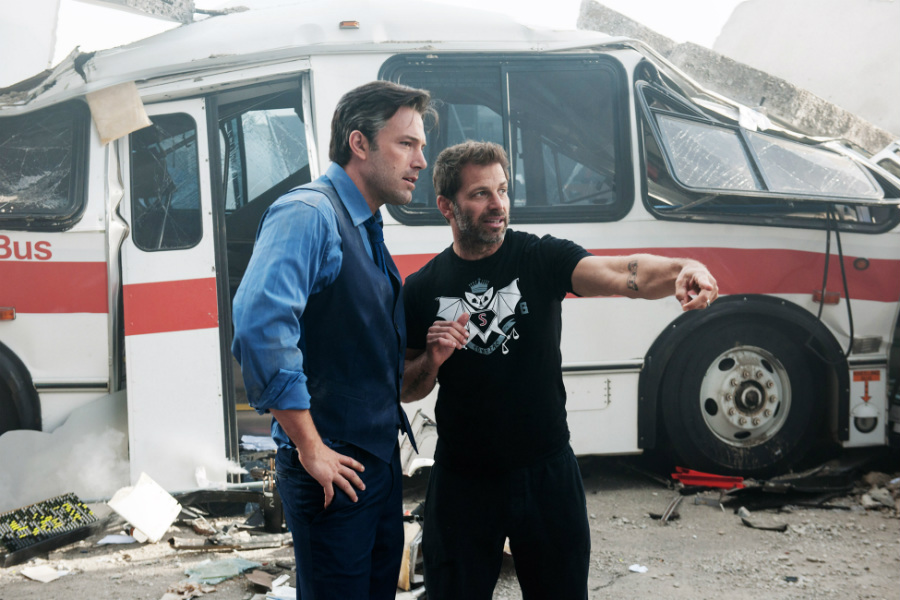
DC Delierium: Ben Affleck will serve as executive producer on Justice League Part One. Steppenwolf will be that movie’s villain. Greg Berlanti will likely direct Booster Gold.

Marvel Madness: Michael B. Jordan joined Black Panther.

Box Office: Captain America: Civil War had a massive opening weekend.

X-Citement: The next X-Men movie will be set in the 1990s. Professor X will appear in New Mutants.

Casting Net: Michael Shannon will star in the next Guillermo del Toro movie. Dylan O’Brien will star in American Assassin. Antonio Banderas is getting his own Taken style thriller.

New Directors, New Films: Ridley Scott will direct the Western Wraiths of the Broken Land.

Remake Report: Gael Garcia Bernal is the new Zorro. Jack Black joined the Jumanji remake.

Sequelitis: King Kong 2 has been pushed back to 2019. And Gareth Edwards dropped out of directing it.

Life Imitates Art: Costume designer Jose Fernandez is making real spacesuits for Space X.

The Videos and Geek Stuff

New Movie Trailers: Assassin’s Creed, Billy Lynn’s Long Halftime Walk, The Accountant, Cafe Society, Inferno, Hell or High Water, The Woods, Swiss Army Man, Ice Age: Collision Course, Don’t Breathe, Queen of Katwe, Yoga Hosers, Nerve, Ma Ma and Tickled.

Clip: Kung Fu Panda 3.

Behind the Scenes: Jason Bourne and Regression.

See: Jean-Claude Van Damme’s daughter in the Paranormal Activity Security Squad trailer.

See: The X-Men Apocalypse trailer redone in Lego. And with footage from X-Men: The Animated Series.

Watch: Deadpool stars in his own Honest Trailer. And James McAvoy shaves his head for X-Men: Apocalypse.

See: Evidence that Deadpool is a remake of Spawn.

Learn: Why Psylocke was added to X-Men: Apocalypse at the last minute.

See: How many people Iron Man has killed in the movies. And the Captain America: Civil War trailer with 8-bit graphics.

Learn: What Captain America can teach us about science. And why Zemo doesn’t have his pink hood in Captain America: Civil War.

Watch: A James Bond type credits sequence for The Empire Strikes Back. And Star Wars dogfight scenes rescored to “Danger Zone.”

See: New photos from Assassin’s Creed.

Watch: Justin Timberlake and Anna Kendrick perform “True Colors” from Trolls.

See: The best new movie posters of the week.

Learn: How one becomes a creature performer.

Our Features

Horror Movie Guide: The horror movies of summer 2016.

Horror Movie Guide: A look back at the Friday the 13th franchise.

Home Viewing: Here’s our guide to everything hitting VOD this week.

and

MORE FROM AROUND THE WEB:

Let’s block ads! (Why?)


No Image

Pfizer To Stop Selling Drugs For Use In Lethal Injections

Pfizer's corporate headquarters in midtown Manhattan.

Pfizer’s corporate headquarters in midtown Manhattan. Spencer Platt/Getty Images hide caption

toggle caption Spencer Platt/Getty Images

The pharmaceutical company Pfizer said Friday it will move to prevent its drugs from being used in lethal injections.

Pfizer was the “last remaining open-market source of drugs used in executions,” The New York Times reported. More than 20 other U.S. and European drugmakers had already blocked their drugs from being used in executions.

“Pfizer makes its products to enhance and save the lives of the patients we serve,” Pfizer said in a statement. “Pfizer strongly objects to the use of its products as lethal injections for capital punishment.”

The company said it will begin restricting distribution of certain drugs that some states use in lethal injections. The newly restricted drugs are pancuronium bromide, potassium chloride, propofol, midazolam, hydromorphone, rocuronium bromide and vecuronium bromide.

“Pfizer’s distribution restriction limits the sale of these seven products to a select group of wholesalers, distributors, and direct purchasers under the condition that they will not resell these products to correctional institutions for use in lethal injections. Government purchasing entities must certify that products they purchase or otherwise acquire are used only for medically prescribed patient care and not for any penal purposes. Pfizer further requires that these Government purchasers certify that the product is for ‘own use’ and will not resell or otherwise provide the restricted products to any other party.”

For years, states have had difficulty obtaining drugs to use in executions because pharmaceutical companies don’t want their name to be associated with killing people.

As NPR’s Wade Goodwyn reported last year, “this has forced states to seek new formulas using untested doses and find new compounding pharmacies to make their execution drugs.”

These tests, however, don’t always go smoothly, and in 2014, there were four botched executions. Wade reported on one such case:

“Michael Kiefer, a veteran reporter for the Arizona Republic, has over the years been witness to five Arizona executions. Last July, Kiefer was observing the execution of double murderer Joseph Wood. For Wood’s execution, the Arizona Department of Corrections was using a different drug formula for the first time.”

Kiefer says that with those drugs it usually took about five to 10 minutes for an inmate to die. But in this case, something unexpected happened at the six-minute mark.

” ‘Suddenly he opened his mouth,’ Kiefer says. ‘His mouth sort of made this funny round shape, and you could see this expulsion of air, and we all jumped. This was something different.’

“Wood had begun fighting for his life, taking large intermittent breaths.”

Despite attempts from the executioner to reassure the distressed crowd that everything was OK, Wood continued to struggle. Two hours and 15 lethal injection doses later, Wood died.

Recently, executions have been delayed over concerns about the efficacy of the lethal injection drugs. And last year in Utah, the state passed a law bringing back the firing squad as a backup method of execution if there is a shortage of lethal injection drugs.

The New York Times reports that “a majority of the 32 states with the death penalty have imposed secrecy around their drug sources, saying that suppliers would face severe reprisals or even violence from death penalty opponents.”

It adds:

“But others, noting the evidence that states are making covert drug purchases, see a different motive. ‘The secrecy is not designed to protect the manufacturers, it is designed to keep the manufacturers in the dark about misuse of their products,’ said Robert Dunham, executive director of the Death Penalty Information Center, a research group in Washington.

“Georgia, Missouri and Texas have obtained pentobarbital from compounding pharmacies, which operate without normal F.D.A. oversight and are intended to help patients meet needs for otherwise unavailable medications.”

Let’s block ads! (Why?)


No Image

Oncologists Break Old Rules With Precision Cancer Treatments

NPR’s Robert Siegel talks to physician and author Siddhartha Mukherjee about how the fight against cancer has changed so dramatically in this era of precisely targeted treatments.

Transcript

ROBERT SIEGEL, HOST:

When two people catch the flu in the same flu season, odds are they’ve been infected by the same virus with nearly the same genetic mutations. And that’s one reason it makes sense for millions of us to get the same flu shot. But when two women, say, have breast cancer, the genetic mutations present in one patient can be vastly different from those in the other. And that goes for other kinds of cancer, too.

The oncologist, Siddhartha Mukherjee, writes in this Sunday’s New York Times Magazine about a trend in fighting cancer that’s based on that fact, precisely targeted treatment that breaks some old rules. Siddhartha Mukherjee who wrote the Pulitzer Prize-winning book the “Emperor of All Maladies: A Biography of Cancer,” joins us now. Welcome to the program.

SIDDHARTHA MUKHERJEE: Thank you, Robert.

SIEGEL: How do these advances change the way that you deal with your patients?

MUKHERJEE: They’ve changed my interactions with patients dramatically. Ten years ago, there was something formulaic about treating cancer patients. You know, you’d have a patient with lymphoma and we treat them with, you know, a classical culmination chemotherapy.

These days, I take a very different look. I think to myself, well, OK, here’s a patient with cancer, how much information can I glean from this individual patient’s tumor? Can I understand something about its biology? Can I understand something about its particular behavior, its gene mutations? And now can I cleverly tailor some therapy? It’s far, far from where we want to be because I have only a few tools, but I try to use them in the most effective manner possible.

SIEGEL: You acknowledge that when therapies are in fact tailored to the individual patient and to, say, medications are used in novel ways or off-label ways, we’re talking about not only extremely expensive medicine but medicine that might not be reimbursed by insurers because it is novel and it’s not standard.

MUKHERJEE: Absolutely, this has become a new battle. You know, it’s we – on one hand, doctors are battling cancer, but on the other hand, they’re also battling a relatively old system of reimbursement and understanding disease, which is not personalized. And there are costs associated.

I’ll give you a very concrete example. There’s a patient of mine who I was convinced would respond to immunological therapy, new immunological therapy, except – this was several months ago – it was not still indicated for that particular cancer. And ultimately, this resulted in a very complicated battle across the insurance companies, the individual patient’s, et. cetera. These battles are common.

SIEGEL: Because I’ve read your work, because I’m familiar with the public TV series that’s been based on it, I trust your instincts about creative experimentation using the medications off-label, say, or doing procedures in novel ways. But isn’t there a risk in that kind of medicine of a lot of quackery and much snake oil being sold in the name of idiosyncrasy by people whom I shouldn’t trust as much as I trust you?

MUKHERJEE: Absolutely, and, you know, I clearly point that out in the piece that, you know, medicine needs standards and guidelines. We need standardized medicines. I mean, we’ve seen this. You know, you go to a website and someone is offering some snake oil for something or the other in cancer. It’s a very important thing to remain within guidelines, but it also needs some freedoms, some creative freedoms. And if you don’t fall appropriately in those creative freedoms, I think we’ll be badly stuck.

SIEGEL: Do newly-minted oncologists who are finishing their residencies in this era, do they know a lot more than oncologists in the same situations 15 years new?

MUKHERJEE: Absolutely, they know – I mean, I was in rounds this morning with a fellow, and I was just remarking how much the stable landscape has changed. One of the most incredible things is that these newly-minted oncologists know so much more about cancer.

They talk about genes, they talk about genetic mutations, targeted therapies, immune therapies, words that, you know, barely were in the vocabulary, at least in the hospital. It was certainly in the vocabulary of science forever, but they were not in the vocabulary in the hospital. And all of a sudden they are part of the vocabulary of the hospital. And the way they evaluate patients, the way they evaluate a kind of journey has changed. It’s quite remarkable.

SIEGEL: Even though you and other oncologists now understand tumors and cancer cells much better than people did even 10 or 15 years ago, it hasn’t yet hugely altered the chances of survival. Do you feel fairly hopeful about that? That is, does it seem to you that the trajectory is going towards still greater understanding of the disease and ultimately some kind of cure?

MUKHERJEE: I feel absolutely hopeful. And part of the reason I wrote this piece was that it began to restore my hope as I, as an oncologist, began to see these dreams about, you know, unique fingerprints of cancer, immune therapies, targeted therapies. As I began to see these dreams move from the scientific literature publications into the clinical literature, it almost restored my faith in my own discipline.

I describe this in my book, “The Emperor of All Maladies” – I describe a moment about 10 years ago, when I felt very despondent about what was happening in cancer care. It seemed to be stuck. I just – quite the opposite now, it feel it kind of – it feels like the blood is flowing. And sometimes the blood flows in wrong directions, but it’s still flowing, and there’s a kind of new energy that one feels in cancer wards.

SIEGEL: That was oncologist Siddhartha Mukherjee, talking about this Sunday’s New York Times Magazine article on improvising ways to treat cancer. He also has a new book out this month called, “The Gene: An Intimate History.” Siddhartha Mukherjee, thanks for talking with us.

MUKHERJEE: Thank you very much.

Copyright © 2016 NPR. All rights reserved. Visit our website terms of use and permissions pages at www.npr.org for further information.

NPR transcripts are created on a rush deadline by Verb8tm, Inc., an NPR contractor, and produced using a proprietary transcription process developed with NPR. This text may not be in its final form and may be updated or revised in the future. Accuracy and availability may vary. The authoritative record of NPR’s programming is the audio record.

Let’s block ads! (Why?)