Articles by admin

No Image

Tampa Bay Rays Honor Orlando Victims, Draw Biggest Regular-Season Crowd In 10 Years

Tampa Bay Rays players wear "We Are Orlando" T-shirts, to honor the victims of the Orlando mass shooting, as they warm up before a baseball game against the San Francisco Giants last Friday.

Tampa Bay Rays players wear “We Are Orlando” T-shirts, to honor the victims of the Orlando mass shooting, as they warm up before a baseball game against the San Francisco Giants last Friday. Chris O’Meara/AP hide caption

toggle caption Chris O’Meara/AP

Tampa Bay Rays may have been beaten 5-1 by the San Francisco Giants, but Friday night was nonetheless a winning one for the Florida-based team, which celebrated its annual Pride Night, dedicating it to the victims of Sunday’s mass shooting at Orlando’s Pulse nightclub.

Pride Night saw the biggest regular-season crowd at Tropicana Field in a decade. According to the Associated Press, “the announced attendance of 40,135 was the first regular-season turnout to surpass 40,000 at the Rays’ ballpark since opening day in 2006 against Baltimore.” That crowd was 40,199.

Prior to the night’s game, the Rays were averaging 16,037 in home attendance this season, second-lowest in the majors.

“The crowd was big, that’s for sure,” Tampa Bay manager Kevin Cash said.

Tonight’s pregame presentation included this memorial to the Pulse Victims. #WeAreOrlandohttps://t.co/66hPKSDlAX

— #VoteRays (@RaysBaseball) June 17, 2016

The Rays had priced all available tickets for Friday night at $5, and all proceeds will benefit Pulse Victims Fund. They also promised game attendees “We Are Orlando” T-shirts on entering the gates.

The team raised more than $300,000.

“I saw we raised so much money. That’s great for all of the tragedy that’s taken place over there over the last week,” manager Cash said.

Members of the Rays wore “We are Orlando” T-shirts during batting practice and for the game, donned special-ordered throwback hats — a “reprise” of the old minor league Orlando Rays’ look.

Major League Baseball’s Vice President of Social Responsibility & Inclusion Billy Bean threw the ceremonial first pitch.

“I think today will be just a great moment if baseball can make everybody smile, enjoy a great baseball game, feel a little closer to one another,” he said of the event. “It’s not specific to one person or another, or race or gender or color or sexual orientation or gender identity. It’s about people feeling connected and supportive.”

The event also featured a moment of silence and a pregame tribute video to the victims from both teams played on the scoreboard.

Let’s block ads! (Why?)


No Image

Today in Movie Culture: The Evolution of Pixar, 'Star Wars' Drunk Driving PSA and More

Here are a bunch of little bites to satisfy your hunger for movie culture:

Movie Review of the Day:

You won’t find a more amusing take on the new Pixar sequel Finding Dory than this review for The Onion:

[embedded content]

Reimagined Movie of the Day:

Regardless of whether or not the George R.R. Martin thing makes sense, this bloody, scarier version of Finding Dory is pretty well done (via Reddit):

[embedded content]

Limited Edition Poster of the Day:

Check out Andy Fairhurst’s latest beautiful Disney movie art, this one for Finding Dory, for a special Regal Cinemas giveaway (via Geek Tyrant):

Studio History of the Day:

In honor of the release of Finding Dory, Burger Fiction presents the evolution of Pixar:

[embedded content]

Video Essay of the Day:

Also in honor of Finding Dory, Frame by Frame explores the formula to how Disney “gives us all the feels”:

[embedded content]

Cosplay of the Day:

The following tweet featuring Ghostbusters director Paul Feig and star Melissa McCarthy says it all but doesn’t quite show them all (via Paul Feig):

.@paulfeig & @melissamccarthy posed with the largest number of people dressed as ghosts in Singapore. #Ghostbusters pic.twitter.com/QhPRFTdgkQ

— Empire Movies (@Empire_Movies) June 16, 2016

PSA of the Day:

An old anti drunk driving PSA gets brilliantly reworked with footage from the Star Wars movies (via Geekologie):

[embedded content]

Vintage Image of the Day:

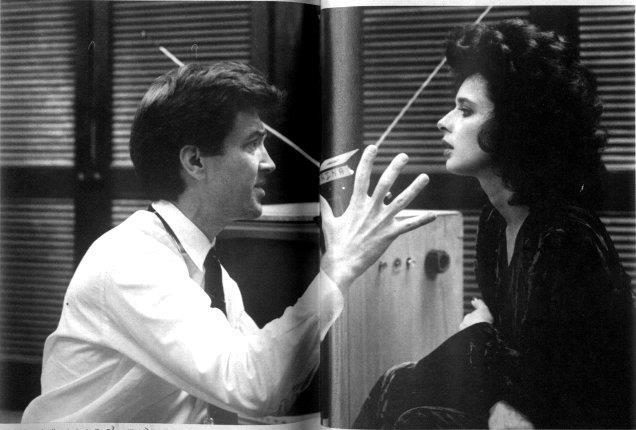
David Lynch directs Isabella Rossellini, who turns 64 today, for a scene in Blue Velvet in 1985:

Supercut of the Day:

We close out the week with another necessary video tribute to LGBT cinema, this one from ScreenCrush:

[embedded content]

Classic Trailer of the Day:

This weekend marks the 30th anniversary of the release of The Karate Kid, Part II. Watch the original trailer for the sequel below.

[embedded content]

and

Let’s block ads! (Why?)


No Image

Canada Legalizes Physician-Assisted Dying

Canadian Prime Minister Justin Trudeau, shown here in Japan last month, has publicly backed legislation on physician-assisted suicide.

Canadian Prime Minister Justin Trudeau, shown here in Japan last month, has publicly backed legislation on physician-assisted suicide. Koji Ueda/AP hide caption

toggle caption Koji Ueda/AP

After weeks of debate, Canadian lawmakers have passed legislation to legalize physician-assisted death.

That makes Canada “one of the few nations where doctors can legally help sick people die,” as Reuters reports.

The new law “limits the option to the incurably ill, requires medical approval and mandates a 15-day waiting period,” as The Two-Way has reported.

The Canadian government introduced the bill in April and it passed a final Senate vote Friday. It includes strict criteria that patients must meet to obtain a doctor’s help in dying. As we have reported, a patient must:

  • “Be eligible for government-funded health care (a requirement limiting assisted suicides to Canadians and permanent residents, to prevent suicide tourism).”
  • “Be a mentally competent adult 18 or older.”
  • “Have a serious and incurable disease, illness or disability.”
  • “Be in an ‘advanced state of irreversible decline,’ with enduring and intolerable suffering.”

As a safeguard, the law also requires that two independent witnesses be present when the patient signs a request for a doctor-assisted death.

A headed debate emerged over whether to require patients to prove that their “natural death has become reasonably foreseeable,” as the law reads.

Some lawmakers wanted to broader eligibility criteria that would include degenerative diseases, Reuters reports. “The key amendment that senators had been pushing for was to broaden the criteria for who qualifies for assisted dying,” reporter Dan Karpenchuk tells our Newscast unit. “They had insisted that it includes suffering Canadians who are not close to death.”

Ultimately, the senators dropped the amendment and adopted the bill with the more restrictive language – but Dan says the law will likely be challenged in courts. He adds:

“Some senators say [the law] is immoral, adding that there could be people facing years of excruciating suffering, but not yet close to death. And in launching expensive legal challenges many who are desperately ill and their families could go broke from court cases to determine if they have the right to an assisted death.”

Justice Minister Jody Wilson-Raybould had opposed the broader criteria, arguing that it would mean that patients with “any serious medical condition, whether it be a soldier with PTSD, a young person with a spinal cord injury, or a survivor whose memory is haunted with memories of sexual abuse” could be eligible for a physician-assisted death, as CBC reports.

After the legislation was passed, Wilson-Raybould said in a statement with the Attorney General and Minister of Health that it “strikes the right balance between personal autonomy for those seeking access to medically assisted dying and protecting the vulnerable.”

Canada’s Prime Minister Justin Trudeau had backed the legislation, which was introduced after Canada’s Supreme Court struck down a ban on doctor-assisted suicide last year.

Let’s block ads! (Why?)


No Image

As Led Zeppelin Faces Copyright Charges, The Line Between Plagiarism And Homage

Led Zeppelin’s Robert Plant and Jimmy Page were in court this week answering charges of copyright infringement. Forensic musicologist Joe Bennett and NPR’s Scott Simon discuss.

Transcript

SCOTT SIMON, HOST:

“Stairway To Heaven,” 1971 – you don’t need to hear it again – one of the most recognizable songs in rock history. And this week, a court in California’s been hearing a copyright infringement lawsuit that claims the song is more than just inspired by a previous song called “Taurus” that was released three years earlier by the band Spirit. Now, this lawsuit is brought by a trust that’s acting in behalf of the late Randy Wolfe. He was a founding member of Spirit. They played on the same bill as Led Zeppelin in 1968. We’re going to go now to Joe Bennett, a forensic musicologist and vice president of academic affairs at the Boston Conservatory. And he joins us over Skype. Mr. Bennett, thanks so much for being with us.

JOE BENNETT: Good to speak with you.

SIMON: So how’s that sound to you?

BENNETT: Well, there are certainly some objective factual similarities. The thing that’s been most discussed in recent days is that chromatic descending bass line. So just to recap, here’s “Stairway” that everybody knows.

(SOUNDBITE OF LED ZEPPELIN SONG, “STAIRWAY TO HEAVEN”)

BENNETT: So underneath those high arpeggios, you’ve got this descending note line.

(SOUNDBITE OF LED ZEPPELIN SONG, “STAIRWAY TO HEAVEN”)

BENNETT: So five notes. And then you hear those five notes in the context of “Taurus,” and they sound like this.

(SOUNDBITE OF SPIRIT SONG, “TAURUS”)

BENNETT: So the question becomes how original is that idea?

(SOUNDBITE OF SPIRIT SONG, “TAURUS”)

SIMON: Yeah, well, that’s why we’re calling you (laughter).

BENNETT: Indeed (laughter).

SIMON: You’re a musicologist, right? Does it – did – is – did those notes first get revealed to the world in 1968 or what?

BENNETT: Well, there’s quite a lot of evidence that they appeared substantially before that. Some people suggest that they were composed as early as the 1600s by a composer called Giovanni Battista Granata. There’s a melody that emerges about 30 seconds into one of his works that actually sounds more similar to “Stairway To Heaven” than to “Taurus.”

(SOUNDBITE OF GIOVANNI BATTISTA GRANATA PIECE “SONATA DI CHITTARRA”

BENNETT: We can certainly say that they appear in “My Funny Valentine” in 1937. So if I played that song in A minor, so same key, (singing) my funny valentine, sweet comic valentine, you make me smile. So you got that same idea going on, that chromatic descending bass line with a minor chord on top.

SIMON: Are these things theft or inspiration? Are they a homages?

BENNETT: This is why each case is different and why there is always a discussion to be had. And in popular music, there are so many ideas that are very commonly used. These ideas can be freely copied between songwriters. They’re not considered plagiarism. An obvious example would be chord loops. So one of the most famous chord loops is C, G, A minor and F.

(SOUNDBITE OF GUITAR MUSIC)

BENNETT: There’s so many songs that could be. 1987, U2’s “With Or Without You.” (Singing) With or without you. With or without you, oh. And so on. Or John Denver, 1971. (Singing) Take me home, country roads, to the place I belong. And there’s…

SIMON: Excuse me, there is nothing funnier than a British man singing – take me home to West Virginia.

BENNETT: Country roads. West Virginia, mountain mama (laughter).

SIMON: I think – this has got nothing to do with what we’re talking about – you do a really wonderful version of “Funny Valentine.” Could we go out on that?

BENNETT: Sure (laughter). It might be quite fun to try and play “Stairway To Heaven” under “My Funny Valentine” melody.

SIMON: Sure.

BENNETT: (Singing) Oh, funny valentine, sweet, comic valentine, you make me smile with my heart.

SIMON: Chet Baker couldn’t have done better than that.

BENNETT: That’s great to hear. Thank you very much.

SIMON: Joe Bennett, forensic musicologist at the Boston Conservatory. Thanks so much for being with us.

BENNETT: Thank you. It’s a pleasure.

(SOUNDBITE OF SONG, “MY FUNNY VALENTINE”)

CHET BAKER: (Singing) My funny valentine, sweet, comic valentine.

SIMON: Maybe Chet Baker’s a little better. You’re listening to WEEKEND EDITION from NPR News. I’m Scott Simon.

Copyright © 2016 NPR. All rights reserved. Visit our website terms of use and permissions pages at www.npr.org for further information.

NPR transcripts are created on a rush deadline by Verb8tm, Inc., an NPR contractor, and produced using a proprietary transcription process developed with NPR. This text may not be in its final form and may be updated or revised in the future. Accuracy and availability may vary. The authoritative record of NPR’s programming is the audio record.

Let’s block ads! (Why?)


No Image

Best of the Week: Donald Glover in 'Spider-Man,' New 'Jack Reacher' Sequel Trailer and More

The Important News

Marvel Madness: Donald Glover joined Spider-Man: Homecoming. Martin Starr and Logan Marshall-Green have also joined the Spidey reboot.

DC Delirium: Suicide Squad revealed a hot full soundtrack song list.

Star Wars Mania: Mads Mikkelsen is doing reshoots for Rogue One. Lucasfilm is working on some kind of Star Wars hologram entertainment.

Sequelitis: Eddie Murphy is officially making a new Beverly Hills Cop movie. Helen Mirren joined Fast 8. Steven Spielberg promises he’s not killing Indiana Jones.

Franchise Fever: Elizabeth Banks is joining Ocean’s Eight. The Conjuring 2 will spin off The Nun.

Remake Report: Angelina Jolie may star in the new Murder on the Orient Express. Lady Gaga may star in the new A Star is Born.

New Directors, New Films: Doug Liman will direct Chaos Walking.

Casting Net: Sylvester Stallone will star in a thriller directed by Jim Mickle.

Biopic Bonanza: Steven Spielberg will produce a movie about Walter Cronkite. Zac Efron joined the P.T. Barnum biopic The Greatest Showman on Earth.

Box Office: The Conjuring 2 is one of the most successful sequels of the year.

Settling the Score: John Williams will score Indiana Jones 5.

Release Date Details: Sing Street is hitting Blu-ray next month.

Vox Populi: Star Wars topped a poll of movies fathers want to watch with their kids.

Reel TV: James Wan will direct a new pilot for a reboot of MacGyver.

The Videos and Geek Stuff

New Movie Trailers: Pete’s Dragon, Jack Reacher: Never Go Back, Moana, Storks, Outlaws and Angels, Ben-Hur, Hard Target 2, Almost Christmas, Kevin Hart: What Now? and Life, Animated.

Clips: First look at Pixar’s Piper.

Behind the Scenes: Whiskey Tango Foxtrot featurette.

Watch: An honest trailer for Finding Nemo.

Watch: Trailers for new Spider-Man and Batman video games.

See: What iconic movie locations look like today.

Watch: Lego reenactment parodies of classic Ghostbusters scenes.

Learn: How Colin Trevorrow almost didn’t get the Jurassic World gig. And why Charlie Cox didn’t get the young Han Solo gig.

See: A limited edition Iron Man 3 couch toy.

Watch: A beautiful tribute to LGBT cinema.

Learn: Origin stories about the production of Die Hard.

See: The drug lord Instragram photos that may have influenced Jared Leto’s Joker.

Learn: What movie franchise is helping LeBron James during the playoffs.

Our Features

Marvel Movie Guide: Why Donald Glover in Spider-Man: Homecoming is a big deal.

Sci-Fi Movie Guide: The latest sci-fi movie news.

Interviews: Dwayne Johnson and Kevin Hart share embarrassing high school stories. And Taika Waititi on We’re Wolves and Thor.

Home Viewing: Here’s our guide to everything hitting VOD this week. And here’s your guide to all the best new indie and foreign film DVD releases.

and

MORE FROM AROUND THE WEB:

Let’s block ads! (Why?)


No Image

Justice Department Drops Charge That FedEx Shipped For Illegal Pharmacies

A federal judge has agreed to end a trial of FedEx which started Monday in San Francisco. The firm had been accused of shipping packages from illegal online pharmacies. Prosecutors did not specify why they abruptly moved to drop the case.

A federal judge has agreed to end a trial of FedEx which started Monday in San Francisco. The firm had been accused of shipping packages from illegal online pharmacies. Prosecutors did not specify why they abruptly moved to drop the case. Seth Perlman/AP hide caption

toggle caption Seth Perlman/AP

The Department of Justice asked a federal judge to end an ongoing trial of FedEx in San Francisco, but didn’t specify a reason. The Associated Press reports the judge halted the trial which began on Monday. A grand jury indicted the company in 2014, for allegedly shipping packages from illegal online pharmacies.

NPR’s Carrie Johnson reported in 2014 that FedEx was, “accused of conspiring to distribute prescription drugs to people who never met with doctors — a violation of the Controlled Substances Act.”

FedEx has maintained its innocence, and in a statement after the charges were dropped, spokesman Patrick Fitzgerald said:

“FedEx is and has always been innocent. The case should never have been brought. The government should take a very hard look at how they made the tremendously poor decision to file these charges. Many companies would not have had the courage or the resources to defend themselves against false charges. The power of the government was greatly misused when the case was initiated, but the government’s integrity was redeemed by the decision to dismiss the charges today.”

Prosecutors had alleged that the shipping company knew such pharmacies were sending packages through FedEx, and said it had evidence that FedEx took steps to protect itself from losing money if the police shut down the pharmacy sites, according to USA Today.

The AP reports:

“In court on Friday, [U.S. District Court Judge Charles] Breyer said FedEx was ‘factually innocent.’ He said the company repeatedly asked the U.S. Drug Enforcement Administration to give it the name of a customer that was shipping illegal drugs so it could stop working with the person, but the agency was either unwilling or unable to do so.

” ‘The dismissal is an act, in the court’s view, entirely consistent with the government’s overarching obligation to seek justice even at the expense of some embarrassment,’ he said, according to a transcript of the hearing.”

This is not the first legal scuffle between the federal government and companies that ship online purchases. NPR’s Yuki Noguchi reports that in 2013, UPS paid a $40 million fine to settle similar charges.

Let’s block ads! (Why?)


No Image

A Surgeon's Bloodstained Shoes Have Become A Symbol Of Orlando's Defiance

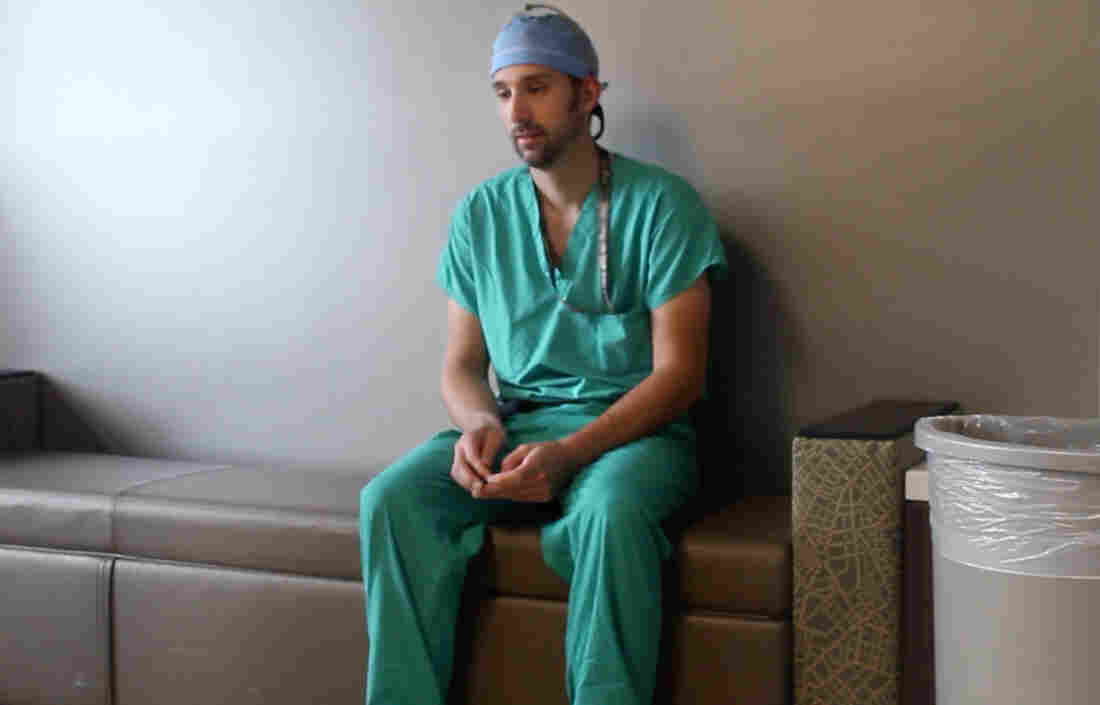
Dr. Joshua Corsa, a senior surgical resident at the Orlando Regional Medical Center, operated on victims of the Orlando gay nightclub shooting.

Dr. Joshua Corsa, a senior surgical resident at the Orlando Regional Medical Center, operated on victims of the Orlando gay nightclub shooting. Abe Aboraya/WMFE hide caption

toggle caption Abe Aboraya/WMFE

A pair of bloodstained shoes has become a symbol of Orlando’s defiance in the face of extraordinary trauma.

The shoes belong to Joshua Corsa, a senior surgical resident at the Orlando Regional Medical Center. They were almost brand new when the hospital received scores of victims of the mass shooting attack on a gay nightclub Sunday morning that left 49 people dead.

Corsa tells reporter Abe Aboraya of member station WMFE that he worked in packed operating rooms for some 30 hours. He finally got a chance to try to sleep — unsuccessfully, he says — and returned to work on Monday morning.

There to meet him were his bloodstained shoes from the previous day — and “that’s when a lot of the enormity of it kind of struck me … that tangible reminder,” he says.

Corsa posted this image of his bloodstained shoes on Facebook Monday morning after hours of caring for Orlando shooting victims.

Corsa posted this image of his bloodstained shoes on Facebook Monday morning after hours of caring for Orlando shooting victims. Courtesy of Joshua Corsa hide caption

toggle caption Courtesy of Joshua Corsa

Corsa then sat down and wrote a Facebook post reflecting on the events, which was shared hundreds of thousands of times:

“These are my work shoes from Saturday night. They are brand new, not even a week old. I came to work this morning and saw these in the corner [of] my call room, next to the pile of dirty scrubs.

“I had forgotten about them until now. On these shoes, soaked between its fibers, is the blood of 54 innocent human beings. I don’t know which were straight, which were gay, which were black, or which were Hispanic.

“What I do know is that they came to us in wave upon wave of suffering, screaming, and death. And somehow, in that chaos, doctors, nurses, technicians, police, paramedics, and others, performed super-human feats of compassion and care.

“This blood, which poured out of those patients and soaked through my scrubs and shoes, will stain me forever. In these Rorschach patterns of red I will forever see their faces and the faces of those that gave everything they had in those dark hours.

“There is still an enormous amount of work to be done. Some of that work will never end. And while I work I will continue to wear these shoes. And when the last patient leaves our hospital, I will take them off, and I will keep them in my office.

“I want to see them in front of me every time I go to work.

“For on June 12, after the worst of humanity reared its evil head, I saw the best of humanity … come fighting right back. I never want to forget that night.”

The powerful post has since been made private. You can listen to Corsa read it here:

He says he is still wearing the shoes — now wrapped in shoe covers, because of the blood.

To him, they serve as a reminder, “not of the terrible things that happened, but of the good that came from them … how the city came together, how the hospital came together.”

He adds: “These patients are some of the nicest people I’ve ever met and I think it’s good to have a tangible reminder to look at every day, remind yourself that there’s still good out there even in the face of this.”

Corsa started his medical training as an Army medic, an experience that he says “helped me to stay somewhat calm” as he treated the victims of the deadly attack.

He adds that he hasn’t had time to process the events. “You almost enjoy the work in that it keeps you from having to sit down and deal with it,” he says. “You’re able to focus on the patients, which is what’s truly important.”

Corsa says that the situation at the hospital is becoming calmer. “We finally started a turnaround where it’s less damage control and more starting to think long term, down the road,” he says.

And five days after he posted the viral photo, he is still vowing to continue wearing the shoes until the last victim of the Pulse nightclub shooting is discharged.

Let’s block ads! (Why?)


No Image

Russian Track And Field Athletes Banned From Rio Olympics

The IAAF upheld the ban on Russia’s track and field team ahead of the Summer Olympics in Rio. Russian athletes were barred from competition in the wake of a wide-ranging doping scandal.

Transcript

ARI SHAPIRO, HOST:

One of the world’s most powerful track and field teams has effectively been banned from competing in the Rio Olympics. The body that governs international track and field events said today that Russia has failed to meet the conditions that would allow it to overcome a growing scandal over sports doping. NPR’s Corey Flintoff reports from Moscow.

COREY FLINTOFF, BYLINE: The unanimous decision was announced in Vienna by Sebastian Coe, the head of the International Association of Athletic Federations, the IAAF. Coe said the group found that…

(SOUNDBITE OF ARCHIVED RECORDING)

SEBASTIAN COE: Russian athletes could not credibly return to international competition without undermining the confidence of their competitors and the public.

FLINTOFF: Rune Andersen, the head of a task force set up to monitor Russia’s progress, said that country’s athletic federation, RUSAF, had not done enough to clean up its doping problems.

(SOUNDBITE OF ARCHIVED RECORDING)

RUNE ANDERSEN: In particular, the deep-seated culture of tolerance, or worse, for doping that got RUSAF suspended in the first place appears not to have been changed materially to date.

FLINTOFF: Andersen said the head coach of Russia’s track and field team and many of his athletes appear to be unwilling to acknowledge that there was a serious problem. One prominent Russian athlete pole vaulter, Yevgenia Isinbaeva, responded angrily, saying she’d take her case to the European Court of Human Rights. Isinbaeva’s been a strong advocate for the argument that drug-free Russian athletes shouldn’t be punished for the actions of a few cheaters.

(SOUNDBITE OF ARCHIVED RECORDING)

YEVGENIA ISINBAEVA: (Speaking Russian).

FLINTOFF: Speaking on a recent Russian talk show, the Olympic gold-medal winner said, why should I abandon my right that I earned throughout my entire professional career? If there are no complaints against me, why should I sit at home and not perform? Russian President Vladimir Putin’s been making the same case.

(SOUNDBITE OF ARCHIVED RECORDING)

VLADIMIR PUTIN: (Speaking Russian).

FLINTOFF: At a news conference today, Putin said there’s a concept in law that responsibility can only be individual, so a whole team can’t be held responsible for the violations of a few. But the international track and field officials maintain that the doping problem in Russia goes far beyond some individual misdeeds. They referred to an ongoing investigation into allegations of state-sponsored doping – allegations that first surfaced in The New York Times. The head of the task force, Rune Andersen, pointed to information that Russia’s sports ministry told the Russian anti-doping laboratory not to report positive drug tests.

(SOUNDBITE OF ARCHIVED RECORDING)

ANDERSEN: And this was a collaboration between the ministry and the laboratory.

FLINTOFF: If this proves true, it would point to a high-level conspiracy in the Russian government to promote doping by athletes and cover up the results. Today’s decision may not be the final word on Russia’s participation in the Rio Olympics. The International Olympic Committee is scheduled to meet next Tuesday to consider the situation. Some IOC members have indicated that they have sympathy for the Russian argument that clean athletes should be allowed to compete. Corey Flintoff, NPR News, Moscow.

Copyright © 2016 NPR. All rights reserved. Visit our website terms of use and permissions pages at www.npr.org for further information.

NPR transcripts are created on a rush deadline by Verb8tm, Inc., an NPR contractor, and produced using a proprietary transcription process developed with NPR. This text may not be in its final form and may be updated or revised in the future. Accuracy and availability may vary. The authoritative record of NPR’s programming is the audio record.

Let’s block ads! (Why?)


No Image

'Shakespearean Drama' At Viacom As 5 Board Members Are Ousted

Sumner Redstone attends a film premiere in Los Angeles in 2012.

Sumner Redstone attends a film premiere in Los Angeles in 2012. Matt Sayles/AP hide caption

toggle caption Matt Sayles/AP

Media mogul Sumner Redstone has moved to replace five board members of Viacom Inc., including the chairman and CEO whom he has considered a surrogate son.

A statement from Redstone’s National Amusements, Inc. – Viacom’s parent company – said simply that the five were “removed” and replaced with five others who have “deep experience in corporate governance of public companies.”

But in an interview with All Things Considered, NPR media correspondent David Folkenflik compared the Viacom shakeup to a “Shakespearean drama.” David explains:

“You’ve got Sumner Redstone, he’s now 93 years old… he’s the figure who assembled Viacom and also the CBS corporation. His protégé, his lawyer for many years, his advisor and counselor for three decades — kind of a surrogate son — Philippe Dauman, is the CEO and chairman of Viacom. And he’s tossed him off, not only now off the Viacom board but also National Amusements, which is Redstone’s holding company through which he controls both Viacom and CBS.

“This is a battle that’s pitted Dauman, in a sense, against the daughter, the long-estranged daughter of Sumner Redstone, who has in recent years reconciled with the media mogul. And so you see a surrogate son and a once-estranged daughter battling for control of the future of this media empire.”

Folkenflik says the two may be at odds because of “the desire of Shari Redstone to control the future of this company, and Dauman clearly doesn’t want any part of that.”

But at the same time, Dauman’s leadership has come under fire in recent months. Former Viacom CEO Tom Freston called for new leadership in an interview with David earlier this month: “It went from really being No. 1 in its class, as a cable networker and as a creative enterprise, to pretty much the bottom of the barrel.”

Dauman “has been criticized by analysts and investors alike for failing to keep up with changes wrought by the internet on Viacom’s TV networks like Comedy Central, MTV and Nickelodeon,” as The Associated Press reports.

National Amusements is privately held by the Redstone family and owns nearly 80 percent of the voting shares of Viacom, according to corporate statements.

National Amusements said it had filed papers with the Delaware Court of Chancery to affirm the changes on the board. In its statement, it says it asked the court to maintain the existing board until it affirms the changes. Dauman remains CEO, the company says. But as Reuters reports, Thursday’s move “could be a prelude to the 93-year-old media mogul forcing Dauman out of the company entirely.”

Likewise, one of the ousted board members has filed a lawsuit in an effort to stop his ouster, All Things Considered reported.

Redstone is also fighting accusations in a Massachusetts probate court that he is “not mentally competent … and was in effect being manipulated by his daughter Shari,” David added.

In summary: “What you have here is a corporation whose upper management and currently-elected board is at open war with the family that ultimately controls the fate of this company. And it’s very hard to see a clean resolution for the current leadership of Viacom, even if they managed to find a way to prevail,” David said.

Redstone stepped down as executive chairman of the CBS board of directors in February, as The Two-Way reported.

Let’s block ads! (Why?)


No Image

Will Genetic Advances Make Sex Obsolete?

The creation of eggs from skin cells and genetic screening of embryos could transform in vitro fertilization for the masses.

The creation of eggs from skin cells and genetic screening of embryos could transform in vitro fertilization for the masses. Ted Horowitz/Getty Images hide caption

toggle caption Ted Horowitz/Getty Images

Stanford law professor and bioethicist Hank Greely predicts that in the future most people in developed countries won’t have sex to make babies. Instead they’ll choose to control their child’s genetics by making embryos in a lab.

On KQED’s Forum program, Michael Krasny spoke with Greely about his new book, The End of Sex and the Future of Human Reproduction. Greely highlights the ethical and legal questions that might arise in the future’s reproductive paradigm.

This conversation has been edited for length and clarity.

Krasny: There are a lot of new advances, technology and so forth. We reached the point where you get some sperm donor and a little piece of skin and you’re in business because of stem cells.

Greely: My book argues that two different biomedical innovations coming from different directions and not really propelled by reproduction are going to combine here. One is whole-genome sequencing, and the other is what I call easy PGD, preimplantation genetic diagnosis, [that] is, getting rid of egg harvest … which is unpleasant, dangerous and really expensive.

This ties in with in vitro fertilization also being not as onerous as it has been in the past.

What I think is going to happen, we’ll be able to take some skin cells from anyone and turn them into any cell type. Make these into eggs or sperm and that is going to make IVF much easier, cheaper and less dangerous.

You [can] decide, “Well, I want these traits,” and it becomes a selective process.

Yes, I think we will see an increased and broad use of embryo selection. I would be careful to set the time frame at 20-40 years. I think we’ll actually see a world where most babies born to people with good health coverage will be conceived in the lab. People will make about a hundred embryos, each will have its whole genome tested, and the parents will be [asked … “Tell] us what you want to know and then tell us what embryo you want.”

This could bring down health care costs, and it is also good for same-sex couples, isn’t it?

Well, yes and maybe. I think it should bring down health care costs, and, in fact, one of the advantages to it is that it would be so beneficial for public health care costs that I think it would be provided for free. If it costs say, $10,000 to start a baby this way, 100 babies is a million dollars. If you avoid the birth of one baby with a serious genetic disease, you’ve saved $3 [million to] $5 million. The same-sex issue, I think that’s going to work, but that’s another jump. That would be taking a skin cell … from a woman and turning it into a sperm. I think [it’s] probable, but that hasn’t been done yet.

This is not the end of sex — because recreational sex will always be with us — it’s the end of sex as a way of procreating.

I think it will not be the complete end. I think people will still get pregnant the old-fashioned way, right, sometimes for religious reasons, sometimes for philosophical reasons, sometimes for romantic reasons, sometimes because they are teenagers and the back seat of the car is there.

A lot of people talk about playing God, but before we get into that, there’s the rubric of consumer eugenics. And there is a eugenics fear when we start talking about selection.

There certainly is. Eugenics is a slippery word; it means many things to different people. To some, it’s state-enforced reproductive control. To some … what we had was state-enforced sterilization. To some, it’s any kind of reproductive choices, but those are different things. For me, I think the coercion is much more important than the issues of selection. The concern about the state or the insurance company or someone else, forcing you to pick particular babies, worries me a lot more than having parents make choices, though that raises its own set of questions.

What do you see as the biggest question here?

I worry about the dilemma of Republican legislators in very conservative states. They want to spend as little money as possible on Medicaid. I could imagine a state saying, “We’re not going to pay for this via Medicaid,” which would mean that the roughly 40-50 percent of babies born in that state who are paid for by Medicaid wouldn’t get to go through this, and although they are not “superbabies,” adding another 10-20 percent health advantage to the babies of the rich over the babies of the poor is a bad thing.

Listen to the full interview here. Greely shares his thoughts on cost, socioeconomics, gene editing and the ethics of designer babies.

This story was produced by KQED’s daily health and technology blog, Future of You. The blog’s host and editor is Jon Brooks.

Let’s block ads! (Why?)