Articles by admin

No Image

Mashrou' Leila: Tiny Desk Concert

June 24, 20169:00 AM ET

When we invited the band Mashrou’ Leila to come play at the Tiny Desk, we couldn’t have foreseen the timing.

The group arrived at our office the morning after the horrific June 12 shootings in Orlando at the gay nightclub Pulse. We were all collectively reeling from the news, and for this rock band from Beirut, Lebanon, the attack hung very heavily.

Mashrou’ Leila is fronted by singer and lyricist Hamed Sinno, along with violinist Haig Papazian, keyboardist and guitarist Firas Abou Fakher, Ibrahim Badr on bass and drummer Carl Gerges: five young Beirutis whose family backgrounds reflect Lebanon’s religious diversity.

Sinno is openly gay, and Mashrou’ Leila is well acquainted with the targeting of LGBT people. The band has faced condemnation, bans and threats in its home region, including some from both Christian and Muslim sources, for what it calls “our political and religious beliefs and endorsement of gender equality and sexual freedom.” And yet, when Mashrou’ Leila performs in the U.S., its members are often tasked with representing the Middle East as a whole, being still one of the few Arab rock bands to book a North American tour.

After the attack on Pulse, the members of Mashrou’ Leila decided to open their Tiny Desk set with “Maghawir” (Commandos), a song Sinno wrote in response to two nightclub shootings in Beirut — a tragic parallel to what happened in Orlando. In the Beirut incidents, which took place within a week of each other, two of the young victims were out celebrating their respective birthdays. “Maghawir” is a checklist of sorts about how to spend a birthday clubbing in the band’s home city, but also a running commentary about machismo and the idea that big guns make big men.

“All the boys become men / Soldiers in the capital of the night,” Sinno sings. “Shoop, shoop, shot you down … We were just all together, painting the town / Where’d you disappear?” It was a terrible, and terribly fitting, response to the Florida shootings.

In all of its songs, Mashrou’ Leila creates densely knotted wordplay; even the band’s name has layers of meaning and resonance. The most common translation of “Mashrou’ Leila” is “The Night Project,” which tips to the group’s beginnings back in 2008 in sessions at the American University of Beirut. But Leila is also the name of the protagonist in one of Arabic literature’s most famous tales, the tragic love story of Leila and Majnun, a couple somewhat akin to Romeo and Juliet. Considering Mashrou’ Leila’s hyper-literary bent, it’s hard not to hear that evocation.

In the second song, “Kalaam” (S/He), Sinno dives deep into the relationships between language and gender, and how language shapes perception and identity: “They wrote the country’s borders upon my body, upon your body / In flesh-ligatured word / My word upon your word, as my body upon your body / Flesh-conjugated words.” (The band has posted its own full English translations of these songs online.)

The title of the third song in Mashrou’ Leila’s set, “Djin,” is a perfect distillation of that linguistic playfulness. In pre-Islamic Arabia and later in Islamic theology and texts, a djin (or jinn) is a supernatural creature; but here, Sinno also means gin, as in the alcoholic drink. “Liver baptized in gin,” Sinno sings, “I dance to ward off the djin.”

But you don’t have to speak a word of Arabic, or get Mashrou’ Leila’s cerebral references, to appreciate its songs: deeply layered, darkly textured and sonically innovative. And sometimes, as Sinno says, the band’s songs “are just about getting really messed up at a bar.”

Ibn El Leil (Son Of The Night) is available now. (iTunes) (Amazon)

Set List

  • “Maghawir” (Commandos)
  • “Kalaam” (S/He)
  • “Djin”

Credits

Producers: Anastasia Tsioulcas, Niki Walker; Audio Engineer: Josh Rogosin; Videographers: Niki Walker, Claire Hannah Collins, Kara Frame; Production Assistant: Sophie Kemp; Photo: Ruby Wallau/NPR.

For more Tiny Desk concerts, subscribe to our podcast.

Let’s block ads! (Why?)


No Image

Today in Movie Culture: Jeff Goldblum's 'Independence Day' For Kids, 'Suicide Squad' Music Video and More

Here are a bunch of little bites to satisfy your hunger for movie culture:

Adaptation of the Day:

To catch kids up with what happened in the first Independence Day before the sequel arrives, Jeff Goldblum reads from his own rhyming children’s book version of the 1996 “documentary”:

[embedded content]

If Movies Were Real:

Speaking of Independence Day, College Humor shows us what it would be like if President Whitmore gave his famous speech in real life now with the media and internet what it is today:

[embedded content]

Funny Movie Review of the Day:

Independence Day: Resurgence didn’t screen for critics, but somehow the Onion was able to review the sequel, humorously:

[embedded content]

Music Video of the Day:

See new Suicide Squad footage in the official music video for the soundtrack tune “Heathens” by Twenty One Pilots:

[embedded content]

DIY Superhero of the Day:

Watch as a guy turns himself into a real-life Iceman from X-Men in this DIY video:

[embedded content]

Vintage Image of the Day:

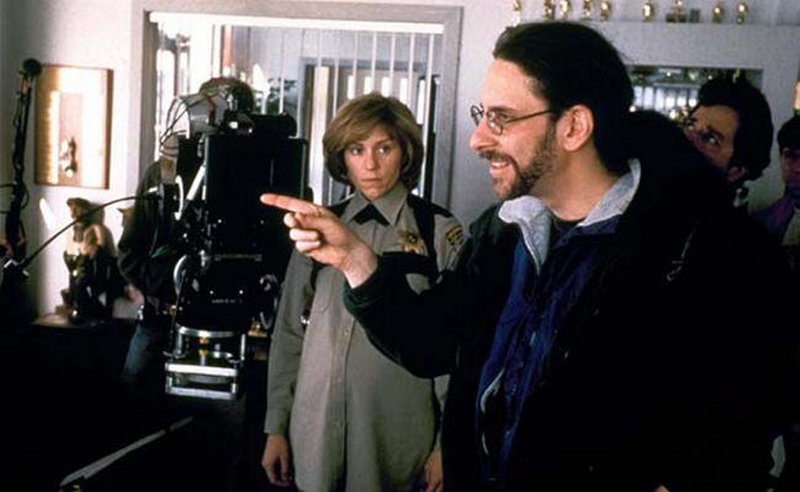
Frances McDormand, who turns 59 today, directed by husband Joel Coen on the set of Fargo in 1995:

Filmmaking Tip of the Day:

RocketJump Film School showcases the use of off-screen sound when telling stories in the visual medium of movies:

[embedded content]

Film History Lesson of the Day:

For Fandor Keyframe, Jacob T. Swinney chronicles the history of Oscar nominations for actors playing LGBTQ characters, noting which of those actors are themselves LGBTQ:

[embedded content]

Supercut of the Day:

Phil Parma spotlights movies evoking an atmosphere of menace in the following supercut:

[embedded content]

Classic Trailer of the Day:

Today is the 40th anniversary of Logan’s Run. Watch the original trailer for the sci-fi classic below.

[embedded content]

and

Let’s block ads! (Why?)


No Image

VW And Regulators Reportedly Near Emissions Scandal Deal

Volkswagen reportedly is near a deal with U.S. regulators to settle charges that it used cheating software to manipulate emissions test results on its diesel cars.

Volkswagen reportedly is near a deal with U.S. regulators to settle charges that it used cheating software to manipulate emissions test results on its diesel cars. Alexander Koerner/Getty Images hide caption

toggle caption Alexander Koerner/Getty Images

Details are beginning to emerge of a proposed deal between Volkswagen and U.S. regulators over the company’s diesel emissions scandal. June 28 is the deadline set by a federal judge for lawyers for the company and several U.S.-agency plaintiffs to come up with a deal.

VW has admitted to knowingly installing devices to deceive regulators about emissions from its cars’ diesel engines. According to publications including Bloomberg, the Wall Street Journal and the Associated Press, the company will agree to pay $10 billion to compensate customers. In addition, it is expected to pay $4 billion for environmental remediation and to develop cleaner vehicles. A Volkswagen spokesman refused comment, citing confidentiality agreements.

Both General Motors and Toyota have been forced to pay billions for their emissions and sudden acceleration recall scandals. With a market capitalization of $73 billion, the reported $14 billion price tag doesn’t pose an existential threat to Volkswagen. While VW is a very minor player in the U.S. market, worldwide it’s locked in a battle with Toyota for global automotive supremacy. And the company didn’t experience the U.S. economic crisis in the same way American companies did. And Germany’s economy allowed Volkswagen to acquire (and keep) rich assets that could go on sale on now. Porsche, Audi, Bugatti, Bentley, and the Czech car brand Skoda are all under the VW tent.

Critics are calling for more than financial penalties. “It shouldn’t require a federal judge to rule for Volkswagen to do right by its customers,” Democratic Sens. Ed Markey of Massachusetts and Richard Blumenthal of Connecticut, both members of the Senate Committee On Commerce, Science, & Transportation said in a joint statement. The senators add, “we continue to call on the Department of Justice to vigorously pursue its criminal investigation against VW executives who knowingly and intentionally deceived regulators.”

Clarence Ditlow heads the Center for Auto Safety says the car companies like Volkswagen shouldn’t be allowed to write a check when they’re caught in wrongdoing: “The only thing that will really change corporate behavior in the auto industry is sending auto industry executives to jail not letting them write bigger checks.”

Let’s block ads! (Why?)


No Image

'If It Were Easy, It Wouldn't Be Interesting,' Say 'Ninja Warrior' Producers

Intelligence officer Tory Garcia, who has a background in gymnastics and diving, works through the obstacle course on American Ninja Warrior, which airs on NBC and Esquire Network.

Intelligence officer Tory Garcia, who has a background in gymnastics and diving, works through the obstacle course on American Ninja Warrior, which airs on NBC and Esquire Network. Brandon Hickman/NBC hide caption

toggle caption Brandon Hickman/NBC

Arthur Smith, executive producer for American Ninja Warrior, knows the show’s obstacle course is really, really hard. “We want to see extraordinary feats …” he tells NPR’s Audie Cornish. “If it were easy, it wouldn’t be interesting.”

But the course is so tough that no one managed to actually win on the show until the seventh season. And that’s OK with Smith.

“It’s not about winning. …” he says. “The show is kind of anti-American in a way. … The athletes root for each other and when something amazing happens on the course … I always love the reaction shots of the other competitors just marveling at it.”

The NBC show was adapted from the Japanese obstacle course competition show Sasuke. The American version has spawned eight seasons of drama and athleticism as a diverse group of competitors scramble and hurl themselves through obstacles with names like the Jumping Spider, Ring Jump, Devil Steps and the Warped Wall.

Anthony Storm, also an executive producer of the show, says that they often look to playgrounds for inspiration. They take a familiar concept, like say, the monkey bars, and then “we try to grow it into something that’s going to challenge you,” he says. Really challenge you.

Smith and Storm talk with Cornish about how they create and test the obstacles, and share some of their most memorable Ninja moments.


Interview Highlights

On the kind of strength you need to compete on American Ninja Warrior

Arthur Smith: Upper body strength is definitely crucial but … the mental part of it — every great athlete has a great mental approach to the game — and you have to have that. … The ideal athlete for Ninja Warrior is probably someone who is 5’9″, kind of lanky, 140, and that’s pretty much it. But then again, a few years ago there was a woman who vaulted Ninja Warrior more into pop culture … Kacy Catanzaro who was only five feet and 98 pounds. … She became the first woman to climb the Warped Wall. And it really broadened the show even more. [You can see Catanzaro work her way through the course in the video below.]

[embedded content]
YouTube

On the way they test the obstacles

Anthony Storm: We bring in people of all types because our athletes come from all realms. We bring in gymnasts and stunt people, we bring in athletes from different sports, and we bring in rock climbers because they tend to have a very specific skill set — they have a grip strength that’s unfamiliar to a lot of our athletes. It’s really important to us that our testers be representative of the cross section of athletes that we get on the show.

On the way the show feels reminiscent of the Olympics

Smith: Ever since the beginning of the show we decided that we were going to take an Olympic approach — that we were going to tell great stories, that we were going to make people care. And we’ve had some remarkable things happen, and remarkable background stories — people who are overcoming cancer and people who are running for their sick wife, or just people who have lost a few hundred pounds and they want to prove something.

On Kevin Bull, the walk-on who completed Cannonball Alley

We always leave a number of spots for walk-ons. This year we had 70,000 applicants for Ninja Warrior — under 1,000 of them actually get to run the course. But in every city that we go to, we always make sure there’s 20 to 25 walk-on spots. And people will sleep out two and three weeks before to get a spot.

And Kevin Bull, on that one night, waited, waited, waited, waited, and got his time and there was this one obstacle … Cannonball Alley, and everybody had failed at Cannon Ball Alley … 15 consecutive failures, no one could get past it. … Everybody was trying to do it the same way and they were using their hands and trying to use their grip strength to do it and none of them were successful.

And then Kevin Bull, this walk-on comes on and he starts with the hand [approach] and then he flips his legs around one of them … inverted, upside down, and flips over and completes the obstacle. … [You can seek Kevin Bull complete Cannonball Alley in the video below, starting at 2:35]

[embedded content]
YouTube

I love the moment because when we cut to the fellow ninjas … who had failed, they were cheering, they were so excited in what this walk-on could do. And that to me, in that moment, it summed up American Ninja Warrior.

On why Ninja Warrior appeals in our current fitness culture

Storm: I think it’s about self-improvement and I think it’s about people’s desire to improve themselves, in a way where they can see the actual tangible achievement …

Smith: It’s fighting your own personal obstacles. It’s fighting your own challenges.

Let’s block ads! (Why?)


No Image

The Challenge Of Taking Health Apps Beyond The Well-Heeled

The Text4Baby app sends free, periodic text messages in Spanish or English to pregnant women and new moms about prenatal care, labor and delivery, breastfeeding, developmental milestones and immunizations.

The Text4Baby app sends free, periodic text messages in Spanish or English to pregnant women and new moms about prenatal care, labor and delivery, breastfeeding, developmental milestones and immunizations. Kristin Adair/NPR hide caption

toggle caption Kristin Adair/NPR

When you hear the phrase “digital health,” you might think about a Fitbit, the healthy eating app on your smartphone, or maybe a new way to email the doctor.

But Fitbits aren’t particularly useful if you’re homeless, and the nutrition app won’t mean much to someone who struggles to pay for groceries. Same for emailing your doctor if you don’t have a doctor or reliable Internet access.

“There is a disconnect between the problems of those who need the most help and the tech solutions they are being offered,” said Veenu Aulakh, executive director of the Center for Care Innovations, an Oakland, Calif.-based nonprofit that works to improve health care for underserved patients.

At most digital health “pitchfests,” it’s pretty much white millennials hawking their technology to potential investors. “It’s about the shiny new object that really is targeted at solving problems for wealthy individuals, the ‘quantified-self’ people who already track their health,” Aulakh said. “Yet ….What if we could harness the energy of the larger innovation sector for some of these really critical issues facing vulnerable populations in this country?”

A small but growing effort is underway to do just that. It’s aimed at using digital technologies – particularly cellphones – to improve the health of Americans who live on the margins. They may be poor, homeless or have trouble getting or paying for medical care even when they have insurance.

The initiatives are gaining traction partly because of the growing use of mobile phones, particularly by lower-income people who may have little other access to the Internet.

The Affordable Care Act and the expansion of Medicaid have added millions of previously uninsured people to the nation’s health care system, including community health clinics that serve poor and largely minority populations, according to a California Health Care Foundation report. (California Healthline is an editorially independent publication of the California Health Care Foundation.)

In California alone, the number of people on Medi-Cal, the state’s version of the Medicaid program for the poor, rose from 7.5 million in 2010 to 12.4 million by early 2015. Many Americans remain uninsured, however, because they live in states that have declined to expand Medicaid eligibility.

Health advocates say it’s important to tailor digital health technologies to lower-income people not only to be fair, but because they’re more likely to have chronic illnesses, like diabetes, that are expensive to treat.

Health-care providers have incentives as well. They are being rewarded financially under the Affordable Care Act, Medicare and Medicaid for keeping patients healthy, and this goes beyond simply performing medical procedures and prescribing drugs.

For now, experiments targeting low-income people are a tiny part of the digital health industry, which racked up an estimated $4.5 billion in venture funding in 2015 alone. Entrepreneurs are still trying to figure out how they’re going to get paid by serving this population, and government health programs like Medicaid and Medicare are taking a while to figure out how they’re going to pay providers for approaches that don’t involve a doctors’ visit.

But Jane Sarasohn-Kahn, author of the California Health Care Foundation report, says investors are getting more interested in digital health initiatives for low-income patients simply because there are so many of them.

Investors are eyeing the “fortune at the bottom of the pyramid,” she said, much as Walmart profits from selling low-priced items to millions.

“It’s now sexy to scale,” she says. “If you can have impact [on many people], inexpensively, you can make a lot of money. If we get it right, we can do well and do good.”

Some initiatives are simple and cheap, like Text4Baby. The free text-messaging service for pregnant women and new moms offers information in English and Spanish about prenatal care, labor and delivery, breastfeeding, developmental milestones, and immunizations. The specific texts are timed to the baby’s due date.

Operated by the nonprofit ZERO TO THREE and the mobile health company Voxiva, Inc., Text4Baby has reached nearly 1 million women since starting in 2010. In one survey, more than half of them reported yearly incomes of less than $16,000.

Other experiments are far more elaborate. In California and Washington state, San Francisco-based Omada Health is testing a version of Prevent, a diabetes and heart disease prevention program that’s been modified for “underserved” populations – basically people on Medicaid or who are uninsured. The free program offers patients a digital scale as well as behavior counseling and education, access to a personal health coach and an online peer network.

To adapt the program, the company made it available in Spanish and English and lowered its reading level from ninth grade to fifth grade. Bilingual health coaches were hired, and the educational materials now acknowledge potential food access, neighborhood safety and economic issues that participants may face, said Eliza Gibson, Omada’s director of Medicaid and safety-net commercial development.

The scale doesn’t require a wireless connection, and the patient just needs to be able to access the Internet for one hour each week, Gibson said.

Omada is enrolling 300 community clinic patients in Southern California and rural Washington in a year-long clinical trial of Prevent, in hopes that the program can demonstrably slow the progress of diabetes.

Patients at other community clinics in California will try out the program but won’t be included in the clinical trial, Gibson said. Omada Health is also offering a version called Prevent for Underserved Populations that specifically targets low-income community clinic patients.

Among the people trying out the program is Susy Navarro, an elementary school substitute teacher who lives in the Spring Valley community east of San Diego. After being diagnosed with prediabetes, Navarro, 28, set an ambitious goal to lose 100 pounds. In the meantime, she is taking medication to stave off Type 2 diabetes.

“You name it, I’ve probably tried it – Weight Watchers, low-fat, low carb, pills, injections, acupuncture,” Navarro said. “The first time I try things it goes very well, I feel like I’m very successful, then I wean off and I’m not successful. This program focuses more on life choices that are going to help us out long-term, not just for a little bit.”

Navarro described the scale she was given as “sophisticated looking – all black, flat, digital.” It has been programmed to her weight profile (she is considered obese), and transmits her weight every morning to the program’s counselors.

The program, with its daily weigh-ins, helps her pay attention to what she eats, and her blood sugar levels are declining, Navarro said. She also appreciates the ability to connect online with fellow patients on her “team.” “It’s very awesome – you get to know the other members and feel like it’s a team effort.”

As they continue to explore digital health possibilities for underserved patients, developers are learning more about what works and what doesn’t, says Sarasohn-Kahn. For example, apps chew up a lot of cellphone data, so many community clinic patients prefer lower-cost text messaging.

At the Petaluma Health Center, a network of community clinics in Sonoma County, Calif., staffers offered free, simplified “loaner” digital devices to patients after a hospital stay to help them avoid complications that could land them back in the hospital.

They first offered an Android tablet to allow for a video visit with a health professional, but patients were reluctant to take it, saying it was hard to hide and could be stolen, said Dr. Danielle Oryn, the network’s chief medical information officer.

Then they tried iPhones, in which everything was locked down except the ability to call 911 and a single button triggering the video visit. Those were more acceptable. Still, there were challenges. Would patients, some recuperating at homeless shelters, have access to electricity to charge their phones? Oryn said they had to learn by trial and error. She was surprised and pleased to see seniors accepting the technology. Every loaner iPhone was returned to the clinic.

Oryn’s advice to the captains of the digital health industry?

They should “not necessarily come in with too many assumptions. They should come with an open mind and a willingness to listen,” Oryn said. “Safety-net people are very excited to have these companies interested in them and to share their experiences.”

This story was produced by Kaiser Health News, which publishes California Healthline, a service of the California Health Care Foundation. Follow Barbara Feder Ostrov on Twitter: @barbfederostrov.

Let’s block ads! (Why?)


No Image

Today in Movie Culture: Luke Skywalker's Secret Back Story, Bryan Cranston as Zordon and More

Here are a bunch of little bites to satisfy your hunger for movie culture:

Character Back Story of the Day:

Find out what Luke Skywalker was doing all alone on that island for years before Rey arrived in this animated Star Wars parody (via Geek Tyrant):

[embedded content]

Casting Rendering of the Day:

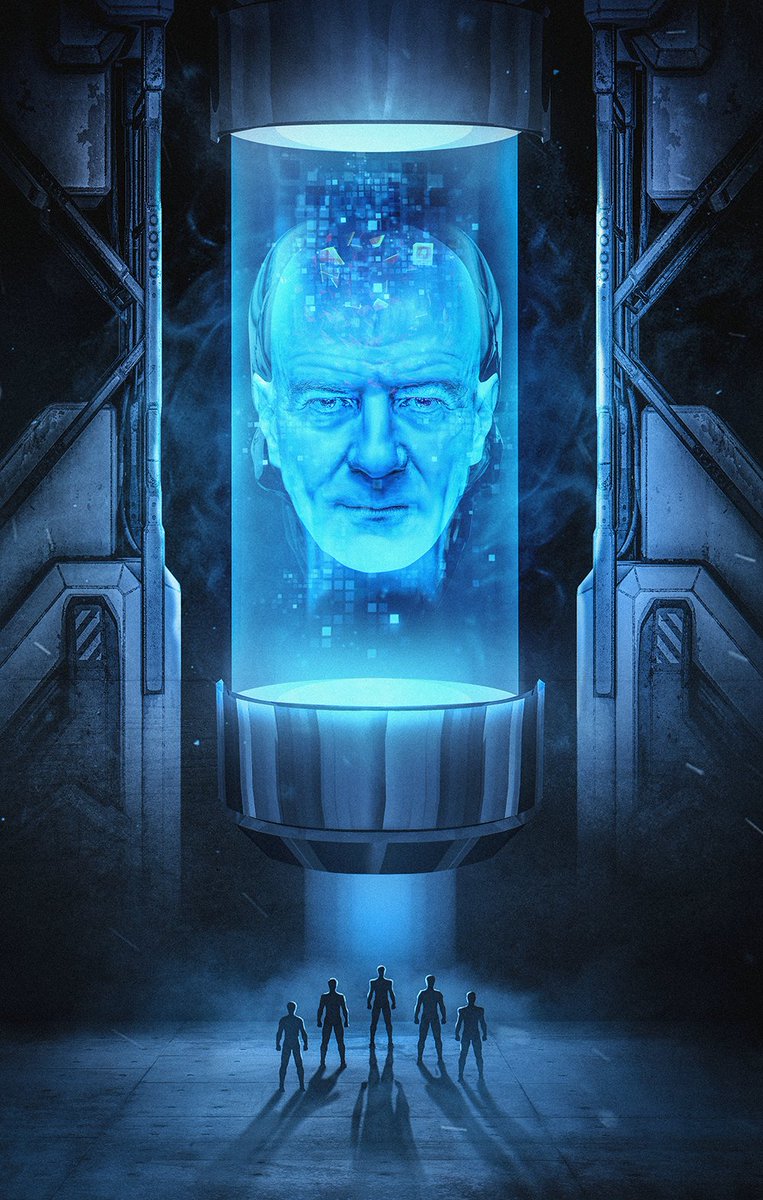
With Bryan Cranston cast as Zordon in Power Rangers, Boss Logic shows us what that might look like (via Twitter):

Film Studies Lesson of the Day:

With Independence Day: Resurgence out this week, the script for the original Independence Day is examined and appreciated by Lessons From the Screenplay:

[embedded content]

Movie Comparison of the Day:

Speaking of Independence Day, here is Couch Tomato with 24 reasons Pacific Rim is the same movie:

[embedded content]

Vintage Image of the Day:

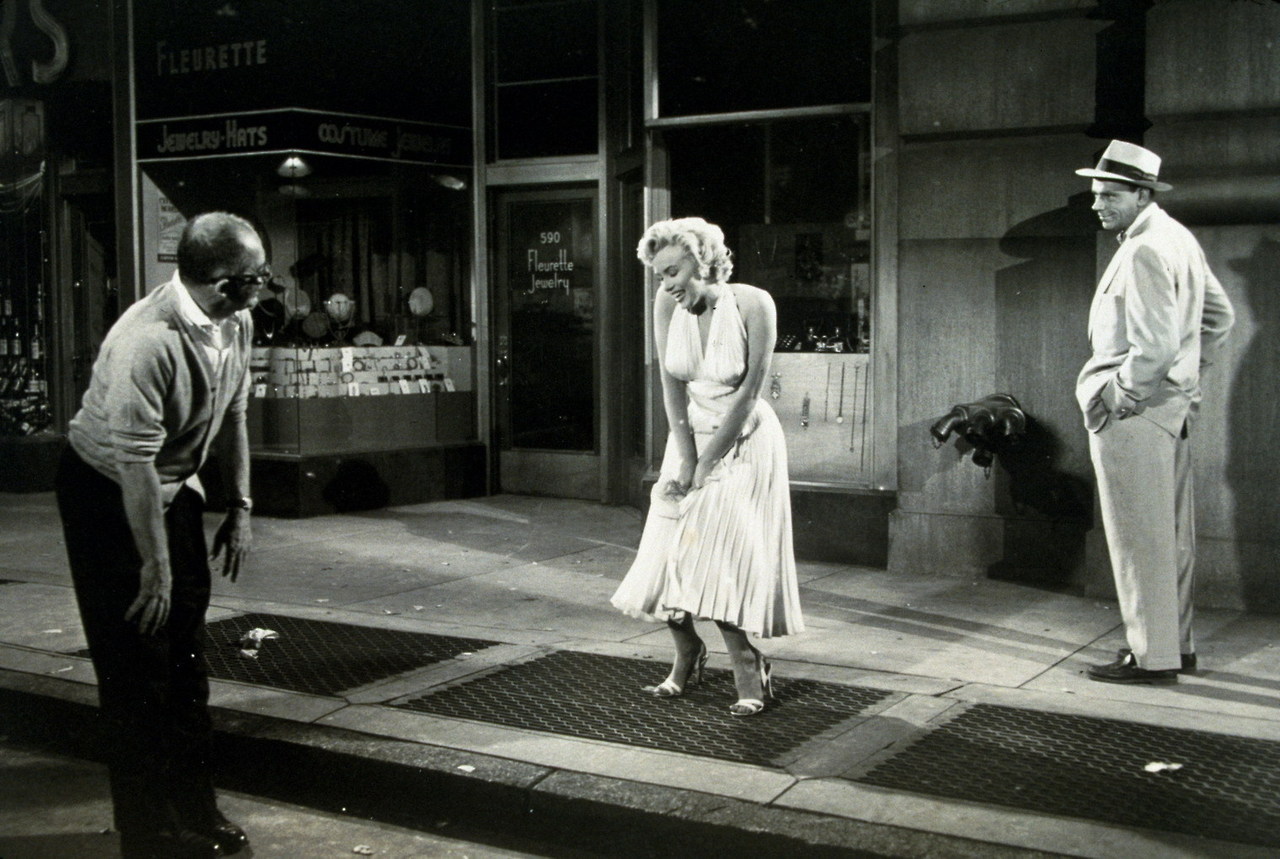
Billy Wilder, who was born on this day in 1906, directs Marilyn Monroe in her iconic pose from 1955’s The Seven Year Itch:

Film History Lesson of the Day:

The Glowing Screen spotlights Die Hard‘s place in the history of cinema and how it changed Hollywood:

[embedded content]

Classic Cartoon of the Day:

Today is the 70th anniversary of the Merrie Melodies animated short Hollywood Daffy. Watch the movie fan’s delight in full below.

Make-Up Transformation of the Day:

What you see here is animation on a person’s body and face, in tribute to Hayao Miyazaki’s My Neighbor Totoro. See more and a making-of video at Fashionably Geek.

Filmmaker in Focus:

Room 237 presents a supercut of scenes in Christopher Nolan films featuring characters in backlight (via Cinematic Montage Creators):

[embedded content]

Classic Trailer of the Day:

Today is the 50th anniversary of the release of Who’s Afraid of Virginia Woolf. Watch the original trailer for the movie, which stars famous couple Elizabeth Taylor and Richard Burton, below.

[embedded content]

and

Let’s block ads! (Why?)


No Image

NBA Champion Cavaliers Parade Through Cleveland

Cleveland celebrated its first pro sports title in 52 years. A massive crowd turned out for LeBron James and the Cleveland Cavaliers on parade.

Transcript

AUDIE CORNISH, HOST:

Finally this hour, here’s the sound of 1.3 million people joyously exhaling for the first time in 52 years.

(SOUNDBITE OF ARCHIVED RECORDING)

UNIDENTIFIED CROWD: (Chanting) Let’s go Cavs. Let’s go Cavs. Let’s go Cavs.

CORNISH: Thousands upon thousands upon thousands of happy Clevelanders came out to see the newly minted NBA champion Cavaliers on parade.

KELLY MCEVERS, HOST:

It’s the city’s first pro sports title since the Browns won the NFL championship game back in 1964. And, yes, that’s the NFL championship game. The Super Bowl didn’t even exist at the time.

CORNISH: 1964 is also when Francine Goldberg was born. The Cleveland native was among the throng today, and she was ecstatic.

FRANCINE GOLDBERG: You know, we’re a city full of grit and determination and to see all of these people from all of these diverse backgrounds from really all over the city, all over Northeast Ohio and maybe all over the country and to see this coming together in celebration of the Cavs and of this championship, you got to love it. And the return of LeBron James – there’s nothing better.

MCEVERS: Marylin Anderson of Chagrin Falls is a Cavs season ticket-holder, and she says she has never seen anything like it.

MARYLIN ANDERSON: On the way here, I felt like we were going to, you know, like the Lady of Fatima in Portugal or, you know – it was just a pilgrimage. It was crazy.

CORNISH: That craziness dragged out the festivities an extra couple of hours. The players on their floats made slow progress because fans kept clogging the route. Eventually, the procession complete with the Ohio State Marching Band made its way to the Cleveland Convention Center for a rally.

(SOUNDBITE OF ARCHIVED RECORDING)

UNIDENTIFIED MAN: You’re in Cleveland.

(SOUNDBITE OF SONG, “WE ARE THE CHAMPIONS”)

QUEEN: (Singing) And we ain’t going to lose.

MCEVERS: Sure, the fans were happy to see game seven hero point guard Kyrie Irving.

(SOUNDBITE OF ARCHIVED RECORDING)

KYRIE IRVING: So from the bottom of heart, man, this was a very, very special year. I wouldn’t trade it for the world, man. I love all you all, man – real talk.

(APPLAUSE)

MCEVERS: But really we all know they were there for finals MVP and unofficial high ruler of Ohio, LeBron James – spread the love to his coaches his teammates and everyone.

(SOUNDBITE OF ARCHIVED RECORDING)

LEBRON JAMES: I’m nothing without this group behind me, man. I’m nothing without the coach’s staff. I’m nothing without the city. You guys are unbelievable, and these guys told me I got to turn around. So I’m nothing without you all. I’m nothing without you all. I love all of you all. I love all of you all, and let’s get ready for next year.

CORNISH: So the city that could never win has finally won. Now Mike Peters who drove two days from North Carolina wants even more.

MIKE PETERS: I’ll say I’ll be back for the Indians World Series.

CORNISH: OK. An NBA title for the Cavaliers is one thing, but a World Series victory for the Indians? That’s crazy talk.

(SOUNDBITE OF MIKLOS ROZSA SONG, “CIRCUS PARADE”)

Copyright © 2016 NPR. All rights reserved. Visit our website terms of use and permissions pages at www.npr.org for further information.

NPR transcripts are created on a rush deadline by Verb8tm, Inc., an NPR contractor, and produced using a proprietary transcription process developed with NPR. This text may not be in its final form and may be updated or revised in the future. Accuracy and availability may vary. The authoritative record of NPR’s programming is the audio record.

Let’s block ads! (Why?)


No Image

House Speaker Paul Ryan Reveals GOP Health Care Plan

House Speaker Paul Ryan unveiled the health care component of congressional Republicans’ policy agenda Wednesday, a long-awaited alternative to the Affordable Care Act.

Transcript

AUDIE CORNISH, HOST:

Today House Republicans offered up an outline of what America’s health care system might look like under a future Republican president. Their plan calls for more options for health insurance policies and the possibility of lower cost. It also includes fewer safeguards for people who get sick. NPR’s Scott Horsley reports.

SCOTT HORSLEY, BYLINE: Ever since Democrats in Congress passed Obamacare more than six years ago, Republicans have been vowing to repeal it. But for the most part, they have not said what they want to replace it with until now.

(SOUNDBITE OF ARCHIVED RECORDING)

PAUL RYAN: Here it is, a real plan in black and white right here.

HORSLEY: House Speaker Paul Ryan unveiled the Republican health care plan this afternoon at a conservative think tank here in Washington. He says it represents not just a change in policy from Obamacare, but a whole different philosophy.

(SOUNDBITE OF ARCHIVED RECORDING)

RYAN: Either we have the government forcing us and telling us what we have to do, where we have to do it and how much we have to pay for it or we put ourselves in charge – we as consumers, as patients.

HORSLEY: The GOP plan would do away with the regulated exchanges in Obamacare and replace them with a more wide-open insurance market. Health policy expert Joseph Antos of the conservative American Enterprise Institute says customers would have more freedom to buy stripped down policies across state lines if they want to. And companies could offer a wider range of prices depending on a patient’s age.

JOSEPH ANTOS: If you want younger healthier people to sign on – you’ve got to – you have to mark it up so that young people will in fact be attracted to those policies.

HORSLEY: Customers would get a tax credit to help defray the cost of insurance. Though, the GOP is not saying by how much. The plan would also limit federal spending on Medicaid for poor patients, and it would eventually overhaul Medicare, so future retirees get a fixed subsidy they could use to help buy private insurance. Congressman Ryan’s been pushing that idea for years now. Though, Antos admits it’s a political hot potato.

ANTOS: It is a brave move. The intention is to give it a shot in the arm for the health sector to find more efficient and more effective ways of providing health care.

HORSLEY: The Republican plan preserves some of the more popular elements of Obamacare like letting young adults stay on their parents’ insurance, but it doesn’t guarantee coverage to those with pre-existing medical conditions if they allow their insurance to lapse. Sarah Collins of the Commonwealth Fund, which works to promote health access says that could put tens of millions of people at risk of losing coverage.

SARA COLLINS: It is very possible that people would have difficulty maintaining continuous coverage over their lifetime just based on past experiences.

HORSLEY: The plan calls for subsidized high-risk pools to insure those with especially costly medical conditions. Collins is skeptical about the Republicans’ plan. She says Obamacare has already pushed the number of uninsured Americans to a record low, even as health care costs have grown at a slower than expected rate.

COLLINS: Overall, the law has worked well to insure millions of people and also provide cost protection and some better access to care.

HORSLEY: Speaker Ryan conceded today the GOP plan is just an outline, and he’s not aiming to pass any legislation until a new Republican president is in office.

GOP White House hopeful Donald Trump has embraced some elements of the Republican plan, though not the Medicare overhaul. If nothing else, the plan gives Ryan and his colleagues a way to change the subject any time they’re asked about Trump.

(SOUNDBITE OF ARCHIVED RECORDING)

RYAN: Next question. I got nothing for you today, man. Nice try.

HORSLEY: Scott Horsley, NPR News.

Copyright © 2016 NPR. All rights reserved. Visit our website terms of use and permissions pages at www.npr.org for further information.

NPR transcripts are created on a rush deadline by Verb8tm, Inc., an NPR contractor, and produced using a proprietary transcription process developed with NPR. This text may not be in its final form and may be updated or revised in the future. Accuracy and availability may vary. The authoritative record of NPR’s programming is the audio record.

Let’s block ads! (Why?)


No Image

Ticketmaster Issues Free Ticket Vouchers In Lawsuit Settlement

Ticketmaster is now making discounts and free tickets available as part of its settlement in a class-action lawsuit over fees. NPR checks in on how well that’s working.

Transcript

KELLY MCEVERS, HOST:

Remember, like, 20 years ago when you would buy concert tickets online and pay a lot of fees, like, to process your order or get your ticket mailed to your house? Even if you don’t remember it, Ticketmaster does. In 2013, the company settled a class action lawsuit about those fees. And now people who are eligible can access their piece of the settlement. NPR’s Rose Friedman reports on how that’s going.

ROSE FRIEDMAN, BYLINE: Free tickets – that was the buzz online this week. But how to redeem them and for what shows – it’s a little unclear.

CANDACE ARMSTRONG KOMAN: They are just really making this so hard for us.

FRIEDMAN: Candace Armstrong Koman of Washington, D.C., is eligible. So she went online to look at the list of shows available.

KOMAN: Some of them were things I might have interest in. Like, there were some artists on there that I like, but they were in cities that I don’t live in.

FRIEDMAN: And she found the system clunky. There are three forms of reimbursement. Two are discounts, which you can use the next time you buy concert tickets. There are also some vouchers for free tickets. Candace had both free tickets and a bunch of those little discount codes for $2.25.

KOMAN: And I was like, they couldn’t have made life easier for us and given us, like, one, like, $20-coupon or something like that? Like you have to enter these codes individually.

STEVEN BLONDER: Well, but hold on a second.

FRIEDMAN: Steven Blonder argued the case against Ticketmaster. He says those little amounts are not insignificant.

BLONDER: This person who gets $2.50, their whole claim may have been worth less than that. So they’re getting real value for their claim.

FRIEDMAN: And Ticketmaster hopes people will see it that way too. According to the settlement, the company has to pay out $42 million over the next four years. They’re actually supposed to do it through those little discounts. Remember, the whole lawsuit was over fees, which people paid in small amounts.

So if you’re someone who bought concert tickets online between October 1999 and February 2013, go on the Ticketmaster website. You might have discounts or even ticket vouchers in your account. Tickets are available on a first-come, first-serve basis to Steely Dan, Pitbull, Blink-182, Gwen Stefani, Weezer, Snoop Dogg and others, including the Barenaked Ladies, which means if you act fast, this…

(SOUNDBITE OF SONG, “ONE WEEK”)

BARENAKED LADIES: (Singing) It’s been one week since you looked at me…

FRIEDMAN: …Might be in your future.

(SOUNDBITE OF SONG, “ONE WEEK”)

BARENAKED LADIES: (Singing) Cocked your head to the side and said I’m angry. Five days since you laughed me, saying get back together, come back and see me.

FRIEDMAN: Rose Friedman, NPR News.

(SOUNDBITE OF SONG, “ONE WEEK”)

BARENAKED LADIES: (Singing) I realized it’s all my fault but couldn’t tell you. Yesterday you’d forgiven me, but it’ll still be two days ’til I say I’m sorry.

Copyright © 2016 NPR. All rights reserved. Visit our website terms of use and permissions pages at www.npr.org for further information.

NPR transcripts are created on a rush deadline by Verb8tm, Inc., an NPR contractor, and produced using a proprietary transcription process developed with NPR. This text may not be in its final form and may be updated or revised in the future. Accuracy and availability may vary. The authoritative record of NPR’s programming is the audio record.

Let’s block ads! (Why?)


No Image

Tesla's SolarCity Bid Would Create One-Stop Shop For Clean Energy

Electric car maker Tesla Motors is offering to buy solar panel maker SolarCity for up to $2.8 billion in an attempt to create a one-stop shop for cleaner energy as consumers become more concerned about fossil fuels hurting the environment.

The all-stock deal announced Tuesday values SolarCity Corp. at $26.50 to $28.50 per share, depending on a review of the company’s books.

SolarCity’s stock surged $3.60, or 17 percent, to $24.79 while Tesla’s shares sank $25.61, or 12 percent, to $194.

The deal still requires shareholder approval.

That process could be complicated by Tesla CEO Elon Musk’s position as SolarCity’s chairman and largest individual shareholder.

SolarCity’s CEO, Lyndon Rive, is also Musk’s cousin.

Tesla is pursuing SolarCity 14 months after introducing a home battery system that stores solar energy.

Let’s block ads! (Why?)