Articles by admin

No Image

'We Apologize' To Rio And Brazil, U.S. Olympic Committee Chief Says

Announcing that two swimmers have now flown out of a Rio airport after being detained by police, U.S. Olympic Committee CEO Scott Blackmun is apologizing for how the pair and two other swimmers behaved in Brazil.

“The behavior of these athletes is not acceptable,” Blackmun said, referring to swimmers Ryan Lochte, James Feigen, Gunnar Bentz and Jack Conger.

Bentz and Conger – who were taken off a plane at Tom Jobim International Airport Wednesday and whose passports were seized by police who wanted answers about a reported robbery – gave statements to the authorities and have now been allowed to leave Rio, Blackmun said late Thursday.

Saying that the U.S.O.C. had worked with the U.S. Consulate in Rio to coordinate the swimmers’ release, Blackmun said:

“On behalf of the United States Olympic Committee, we apologize to our hosts in Rio and the people of Brazil for this distracting ordeal in the midst of what should rightly be a celebration of excellence.”

Blackmun said that while U.S. officials haven’t seen the formal statements made by Bentz and Conger, who were with swimming star Ryan Lochte last weekend when Lochte claimed they were robbed at gunpoint after a late-night party, he understands that Bentz and Conger’s account matches what Rio police said earlier Thursday: that the robbery story was a fabrication.

Here’s the version of events Blackmun relayed:

“As we understand it, the four athletes (Bentz, Conger, [James] Feigen and Ryan Lochte) left France House early in the morning of August 14 in a taxi headed to the Olympic Village. They stopped at a gas station to use the restroom, where one of the athletes committed an act of vandalism. An argument ensued between the athletes and two armed gas station security staff, who displayed their weapons, ordered the athletes from their vehicle and demanded the athletes provide a monetary payment. Once the security officials received money from the athletes, the athletes were allowed to leave.”

That account is similar to what the chief of Rio’s Civil Police laid out Thursday, when he said, “There was no robbery.”

USA Swimming Executive Director Chuck Wielgus issued his own statement tonight, in which he said, “The last five days have been difficult for our USA Swimming and United States Olympic families.”

Saying that he doesn’t condone the conduct or judgment of the athletes, Wielgus added, “That this is drawing attention away from Team USA’s incredible accomplishments in the water and by other athletes across the Olympic Games is upsetting. The athletes and their remarkable stories should be the focus.”

Saying that the athletes’ behavior runs contrary to the values of Team USA, Blackmun said, “We will further review the matter, and any potential consequences for the athletes, when we return to the United States.”

Let’s block ads! (Why?)


No Image

Where Insurers' Exits Are Hurting Obamacare Exchanges — And Where They Aren't

Alina Nurieva (right) sat with Gabriela Cisneros, an insurance agent from Sunshine Life and Health Advisors, and picked an insurance plan at the Mall of the Americas in Miami last November.

Alina Nurieva (right) sat with Gabriela Cisneros, an insurance agent from Sunshine Life and Health Advisors, and picked an insurance plan at the Mall of the Americas in Miami last November. Joe Raedle/Getty Images hide caption

toggle caption Joe Raedle/Getty Images

Some of the Affordable Care Act’s insurance marketplaces are in turmoil as the fourth open enrollment season approaches this fall. What’s ahead for consumers depends very much on where they live.

Competition on some exchanges will be diminished next year when three of the nation’s largest health insurers — Aetna, UnitedHealthcare and Humana — will sell individual plans in many fewer markets. The departure of several Blue Cross and Blue Shield plans in various states will also hurt. These pullbacks also come on top of the closure of 16 nonprofit co-ops, another coverage option, since January 2015.

Aetna’s exit announcement Monday that blamed financial losses on its marketplace plans gave Obamacare opponents who have from the start predicted the health law’s failure a fresh chance to proclaim, “I told you so.”

That story line got more complicated Wednesday after the Huffington Post reported Aetna CEO Mark Bertolini sent a letter to the Justice Department on July 5 threatening to withdraw from the Obamacare marketplaces if the government sued to block his company’s planned merger with Humana. The Justice Department did just that a couple weeks later.

Still, most marketplace consumers won’t see any ill effects from insurers’ withdrawals, say the health law’s advocates and independent analysts.

“The effect on consumers is going to be mixed around the country,” said Katherine Hempstead, a senior adviser at the Robert Wood Johnson Foundation. “Most of these marketplaces are not dependent on” the large national carriers.

Also, the big insurers’ announcements apply generally only to the individual market. The much larger market of employer-sponsored insurance is not part of the health law exchanges.

Many major metropolitan areas, such as those in California, New York and Texas, will still have several insurers for individual health insurance consumers to choose from. In Texas, all major metro areas — including Austin, Dallas, Houston and San Antonio — will have at least three insurers after Aetna and UnitedHealthcare exit.

That’s true also for most urban exchange customers living in the Northwest, the Midwest and New England.

Most hurt will be marketplace consumers in Arizona, North and South Carolina, Georgia and parts of Florida, where only one or two insurers will be left when open enrollment season begins Nov. 1.

Remaining insurers might raise their monthly premiums as a result, but more than 8 in 10 consumers on the marketplaces who get government subsidies would be insulated. Subsidies increase as premiums rise.

One concern is that with less competition, insurers may tighten their provider networks and give these consumers fewer choices of hospitals and doctors. That trend started several years ago, and some states have responded with regulations requiring insurers to provide customers with reasonable access to doctors and hospitals in each county where they sell plans.

Nearly 13 million people signed up for Obamacare marketplace policies for 2016. Aetna, UnitedHealthcare and Humana have 2 million members in total, but their exit from certain states is predicted to affect between 1 million and 1.5 million people who will have to choose new carriers.

While changing plans can force people to find new doctors, it’s also the best way for consumers get the best deals on coverage.

Aetna will exit 11 of 15 states where it sells plans on the exchanges. UnitedHealthcare has said it will quit 22 of 34 states, and Humana will leave four of the 15 states where it operates.

In late May, the Kaiser Family Foundation estimated the number of rural counties at risk of having one insurer on the exchanges would triple in 2017. That was before Humana and Aetna detailed their plans. (Kaiser Health News is an editorially independent project of the foundation.)

“We could be looking at about 1 in 4 counties in the U.S. with just one exchange insurer next year, though this could change between now and open enrollment in November,” said Cynthia Cox, associate director for the Kaiser Family Foundation Program for the Study of Health Reform and Private Insurance.

Overshadowed by the big insurers’ withdrawals is the prospect that other carriers will enter markets the three giants are leaving. Smaller insurers Molina and Centene have said they’re doing fine on the exchanges. And Cigna, a larger insurer, has said it will move into some North Carolina counties for 2017.

North Carolina will be left with just one or two plans in most of the state after it loses UnitedHealthcare and Aetna plans. Health insurance analysts say three insurers are needed for a healthy competitive market.

“We’ve had a very robust enrollment under the ACA and hope consumers will still see benefits of having coverage even if they have fewer options,” said Ciara Zachary, health policy analyst for the North Carolina Justice Center’s Health Access Coalition.

Rural Americans had few health insurers to choose from even before Obamacare, but some suburban and urban parts of the Southeast will be in the same fix next year. In southeast Florida, consumers in counties near Naples and Fort Myers will have only one marketplace insurer — Florida Blue — next year, unless other insurers step in.

“There are some headwinds, but it’s not a question of whether the market will stabilize but how quickly and how well,” said Hempstead.

Strong winds are already blowing with hurricane force toward Arizona’s Pinal County, southeast of Phoenix, health care advocates say. Nearly 10,000 people enrolled in Obamacare marketplace policies this year and about 85 percent received a federal subsidy.

In 2017, Pinal stands to lose its only two insurers — UnitedHealthcare and Blue Cross and Blue Shield of Arizona. “Clearly this is a big concern for consumers,” said Allen Gjersvig, director of navigator and enrollment services for the Arizona Alliance for Community Health Centers. He said he is hopeful another insurer will step in, but not confident.

Neighboring Maricopa County, which includes Phoenix, is expected to have just two relatively small insurers in the area left on its marketplace next year. Gjersvig questions whether those two — Cigna and Phoenix Health Plan — will have enough doctors and hospitals under contract to handle their new members after larger rival Blue Cross and Blue Shield of Arizona gives up its 40,000 customers.

At least a dozen other counties in Arizona will be left with just one health insurer, he said.

Arizona had eight insurers operating in various parts of the state this year, but four are leaving entirely — Aetna, UnitedHealthcare, Humana and Health Choice. Two more, Blue Cross Blue Shield and Health Net, are scaling back their participation.

Despite the problems with the marketplaces, Gjersvig said thousands of people have gained coverage through them and he is confident they will survive. “We do not see this as a death knell for the marketplace,” he said.

Tammie King, an insurance agent in Columbia, S.C., is less sure how insurer departures will affect consumers in the Palmetto State. The pullouts by UnitedHealthcare and Aetna mean there will be only one carrier in the state in 2017 — Blue Cross and Blue Shield of South Carolina.

That’s a particular concern in Columbia, she said, because the Blue Cross plan does not include one of the biggest hospitals, Lexington Medical Center, and its affiliated physicians. “People will be left unable to see the doctors they are now using,” King said.

King said she worried the Blue Cross plan will use its monopoly power to further reduce the number of doctors and hospitals in its network and limit its choice of prescription drugs. “You can’t blame them because … they have to do something to control costs,” she said.

Kaiser Health News is an editorially independent news service supported by the nonpartisan Kaiser Family Foundation.You can follow Phil Galewitz on Twitter: @PhilGalewitz.

Let’s block ads! (Why?)


No Image

Today in Movie Culture: An Animated 'Firefly' Series, Jason Momoa as The Crow and More

Here are a bunch of little bites to satisfy your hunger for movie culture:

Studio Tribute of the Day:

With Kubo and the Two Strings out this weekend, here’s a celebratory look at Laika Animation’s great filmography so far via Fandango:

[embedded content]

Casting Interpretation of the Day:

With Jason Mamoa maybe starring in the reboot of The Crow, BossLogic shows us what that could look like (via ComicBook.com):

Fake Cartoon of the Day:

There are no plans for a Firefly/Serenity animated series, but there should be now that Stephen Byrne has created an intro for the nonexistent The Animated Adventures of Firefly (via One Perfect Shot):

[embedded content]

Short Film of the Day:

Today is the 30th anniversary of the debut of Pixar’s iconic short film Luxo Jr. You can rent it elsewhere, and you should, but here’s the pencil test for the classic:

[embedded content]

Vintage Image of the Day:

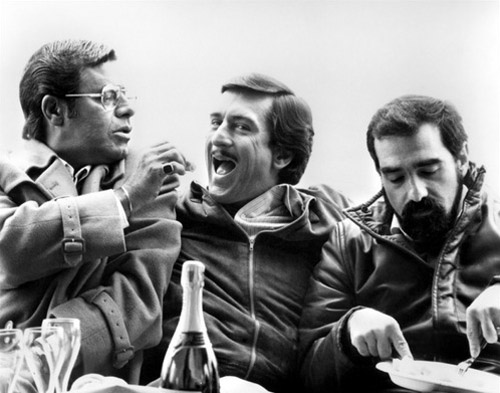
Robert De Niro, who turns 73 today, is fed by Jerry Lewis with director Martin Scorsese eating to the side on the set of The King of Comedy in 1981:

Reworked Movie of the Day:

You love The Shawshank Redemption as a prison drama, but here’s what it would look like as an upbeat romance via CineFix:

[embedded content]

Cosplay of the Day:

It’s not easy to get a costume that looks like the T-800 from The Terminator, so sometimes you just have to do it with body paint (via Geek Tyrant):

[embedded content]

Movie Trivia of the Day:

You may have already forgotten all about Thor: The Dark World, but you should still check out this crop of trivia about the Marvel sequel:

[embedded content]

Video Essay of the Day:

Kaptain Kristian shows us why the effects of Jurassic Park hold up toda better than most modern movies in a new video essay (via /Film):

[embedded content]

Classic Trailer of the Day:

Today is only the fourth anniversary of the release of ParaNorman, but with a new Laika movie out in theaters this weekend, let’s revisit its original trailer:

[embedded content]

and

Let’s block ads! (Why?)


No Image

Rio Police Remove U.S. Swimmers From Flight To Ask About Reported Robbery

U.S. swimmers Jack Conger, left, and Gunnar Bentz.

U.S. swimmers Jack Conger, left, and Gunnar Bentz. John Amis/AP, Tom Pennington/Getty Images hide caption

toggle caption John Amis/AP, Tom Pennington/Getty Images

Gunnar Bentz and Jack Conger, American swimmers who were with Ryan Lochte last weekend when their group reportedly suffered a robbery, were pulled off their flight home from Rio’s Summer Olympics Wednesday by police seeking answers about the reported robbery.

Bentz and Conger have now been released, U.S. officials say — but the two athletes are going to keep talking with police in Rio. They were detained hours after officers attempted to seize the passports of both Lochte and another swimmer: Jimmy Feigen, whose whereabouts remain a matter of speculation, but who U.S. officials now say is also cooperating with police in Rio.

Police stopped Bentz and Conger at Rio’s Tom Jobim International Airport, taking them off their flight back home in order to question them.

Early Thursday, U.S. Olympic Committee spokesman Patrick Sandusky released the following statement:

“Jack Conger and Gunnar Bentz were detained Wednesday night shortly before their flight was scheduled to depart from Rio. They were released by local authorities with the understanding that they would continue their discussions about the incident on Thursday. James Feigen is also communicating with local authorities and intends to make further statements regarding the incident on Thursday as well. We will continue to provide updated information as it is appropriate.”

The newspaper O Globo reports that Bentz, 20, and Conger, 21, were taken to the Galeão civil police station – which, like the airport, is on Governador Island.

It’s the latest development in a strange case that has left many puzzled — and has led to accusations in Brazil that the American swimmers fabricated their account.

News of the two Americans’ questioning comes more than 12 hours after police visited the Athletes Village Wednesday morning, in an attempt to speak with Lochte and another swimmer, James Feigen, about the account that they had given police under oath. But Lochte had already left for the U.S., and his attorney told NPR earlier today that he had not received any official requests to speak wih the decorated Olympic swimmer.

A central question right now regards the whereabouts of Feigen, 26; earlier today, we saw reports that he, like Lochte, had returned back home in the U.S. But tonight, we’re seeing reports that Feigen may have checked in for the same flight as Bentz and Conger but was not detained by police.

On Sunday, the swimmers described being robbed after a late-night party, with Lochte saying armed men took his wallet. But the story has raised questions here in Brazil, particularly after surveillance video emerged that purportedly shows the athletes returning to the Athletes Village on the morning in question, still in possession of their cellphones, watches, and other items that are often targeted by thieves.

The video, which was first published by The Daily Mail, also seems to show the athletes in a relaxed mood, with Lochte swinging his credential at one of his friends.

Bentz and Conger were part of the team that won a gold medal in the 4x200m freestyle relay; they raced in the earlier heats that put the team into the final. Both of them are in college: Bentz attends the University of Georgia and Conger the University of Texas.

Feigen swam in the 4x100m freestyle relay; he lives in Charlotte, N.C., according to his official Olympics biography.

Let’s block ads! (Why?)


No Image

Ford Looks To A Fleet Of Driverless Cars

The race for who will come to the market with an auto-piloted car is heating up again. Ford has announced that it will have a fleet of autonomous cars on the road by 2021. The driverless vehicles will be available for ride sharing.

It’s an ambitious goal. The company said it will more than double its team devoted to developing autonomous driving, and invest even more money in its Silicon Valley campus. Ford’s CEO Mark Fields has said that the company will triple its investment in the technology which includes currently available help with parking and avoiding traffic jams.

The program that Ford announced is not quite a self-driving car in every garage. The announcement is for vehicles that have Society of Automotive Engineers Level-Four driving automation. SAE Level Four is when the car is self-controlled in all but a few environments such as severe weather. These Level-Four cars would likely be in closed systems or fixed routes. Karl Brauer with Kelly Blue Book says, “The time frame for privately owned, fully autonomous vehicles, capable of operating anywhere and anytime, remains at least seven to 10 years away.”

Fields says he’s not closing the door on potential partnerships. Ford and Baidu Inc., the Chinese Internet behemoth, announced that both companies jointly invested $150 million in Velodyne, a Silicon Valley company that specializes in sensors. Already Silicon Valley and the auto industry have been in a dating frenzy looking for long-term partners to help develop the technology behind a self-driving car. Volkswagen spent $300 million to get a piece of ride-hailing company Uber’s European rival Gett. General Motors spent $1 billion to purchase Cruise Automation, as well as investing in ride-hire service Lyft. Meanwhile, Toyota invested in Uber.

Randy Visintainer, the head of Ford’s autonomous vehicle program, says the company is ready to meet the challenge of putting a driverless car on the road. “Our mission is to make transportation affordable, efficient and safe,” Visintainer said in an interview with NPR. “The Model T delivered in its time and autonomous vehicles have the potential to do that in the 21st Century.” Visintainer shrugged at the idea that Ford is in a space race of sorts to put an autonomous vehicle on the road. He says that the team had “enough confidence in our development of the technology, the understanding of how to make the vehicles in volume that we would make this claim.”

Ford’s engineers may be confident, but are riders? The announced plan would have cars without not only drivers but obvious vehicle controls. Visintainer says he understands the public’s uneasiness about autonomy. He says the company is looking for ways to convince the public that self-driving cars can be safe. “It’s going to be an education and a journey, being transparent and open about the progress we’re making, and how we’re doing is a key part of that.”

Analysts say discussing the technology is a move to placate the concerns of Wall Street. General Motors, Google and some of Ford’s other competitors have spent the year making announcements and investments in advanced technology. Michelle Krebs with autotrader.com says GM has been grabbing all the headlines recently “and Ford can’t be happy about that, especially as some Wall Street analysts have wondered if Ford is falling behind in future mobility.” Ford’s Mark Fields has said Ford has been setting the pace.

Let’s block ads! (Why?)


No Image

Aetna CEO To Justice Department: Block Our Deal And We'll Drop Out Of Obamacare

Mark Bertolini, CEO of Aetna, told the Justice Department in July that the insurer would walk away from many health exchanges if the government opposed the company's proposed deal for Humana. On Tuesday, Aetna followed through.

Mark Bertolini, CEO of Aetna, told the Justice Department in July that the insurer would walk away from many health exchanges if the government opposed the company’s proposed deal for Humana. On Tuesday, Aetna followed through. Andrew Harrer/Bloomberg via Getty Images hide caption

toggle caption Andrew Harrer/Bloomberg via Getty Images

It’s not often in the midst of an antitrust fight that the public gets a look at the gamesmanship that’s happening behind the scenes.

But thanks to the Huffington Post’s Jonathan Cohn and Jeff Young, we got a glimpse at how health insurer Aetna is making its case to acquire rival Humana — and new insight into Aetna’s decision announced Tuesday to pull out of Obamcare exchanges in 11 states.

The reporters obtained a copy of a letter from Aetna CEO Mark Bertolini to the Justice Department on July 5. The letter was written while the government was still deciding whether to oppose the insurance companies’ merger on the grounds that it (and another proposed deal between Anthem and Cigna) would hurt consumers and reduce competition.

The Bertolini letter was in answer to a Department of Justice request for information about how a decision on the Humana deal would affect Aetna’s participation in the health insurance exchanges created by the Affordable Care Act.

The letter is pretty direct: If the government moved to block the merger, then Aetna would begin to pull out of the health insurance exchanges.

Here’s the key paragraph (emphasis added):

“Our analysis to date makes clear that if the deal were challenged and/or blocked we would need to take immediate actions to mitigate public exchange and ACA small group losses. Specifically, if the DOJ sues to enjoin the transaction, we will immediately take action to reduce our 2017 exchange footprint. We currently plan, as part of our strategy following the acquisition, to expand from 15 states in 2016 to 20 states in 2017. However, if we are in the midst of litigation over the Humana transaction, given the risks described above, we will not be able to expand to the five additional states. In addition, we would also withdraw from at least five additional states where generating a market return would take too long for us to justify, given the costs associated with a potential breakup of the transaction. In other words, instead of expanding to 20 states next year, we would reduce our presence to no more than 10 states. We also would not be in a position to provide assistance to failing cooperative exchanges as we did in Iowa recently.”

The Huffington Post reporters calls the letter “a clear threat.”

A little more than two weeks later, on July 21, the Justice Department said it would sue to block the Aetna-Humana deal and the other proposed megamerger between Anthem and Cigna.

On Tuesday, Aetna said it would dramatically scale back its participation on the insurance exchanges in 2017. The company move would take it out of 546 counties in 11 states, leaving it active in 242 counties in four states: Delaware, Iowa, Nebraska and Virginia.

Aetna said the pullback was a business decision stemming from a loss in the second quarter on individual plans and uncertainty about the policy outlook for the exchanges.

In the company’s statement, Bertolini said, “As a strong supporter of public exchanges as a means to meet the needs of the uninsured, we regret having to make this decision.”

The statement made no mention of the company’s pending offer for Humana nor its recent correspondence with the government about how Aetna would likely respond if the feds moved to block the deal. Aetna didn’t immediately respond to a request for comment on how to reconcile Tuesday’s announcement with the July 5 letter made public by Huffington Post on Wednesday.

The change in tack for Aetna is also noteworthy because Bertolini was talking up the business potential of the exchanges as recently as April, when he said during a call with analysts and investors that the exchanges were “a good investment,” despite the losses incurred.

At the time, Bertolini said that Aetna was “committed to working constructively with the administration and lawmakers to find solutions that can improve this program, stabilize the risk pool, and expand product flexibility, all with the goal of creating a sustainable program that makes health care more affordable and accessible for all consumers.”

Now, the company appears to be taking its ball and going home.

Let’s block ads! (Why?)


No Image

Today in Movie Culture: Pennywise Clown Costume for 'It' Revealed, Superman Returns in 'Arrival' and More

Here are a bunch of little bites to satisfy your hunger for movie culture:

Costume Reveal of the Day:

Entertainment Weekly debuted a new full shot of Bill Skarsgard as Pennywise in It revealing his creepy clown costume:

Trailer Parody of the Day:

How It Should Have Ended hilariously reworked the new trailer fo Arrival so Superman is the alien visitor:

[embedded content]

Casting Interpretation of the Day:

Mackenzie Davis has been rumored for the role of Domino in Deadpool 2, so BossLogic shows us what that could look like (via Twitter):

Movie Comparison of the Day:

Couch Tomato shows 24 reasons why Batman Begins is basically the same movie as Richie Rich:

[embedded content]

Musical Performance of the Day:

Ninety year old Dick Van Dyke and his singing partners in The Vantastix broke into song, specifically the title tune from his classic movie Chitty Chitty Bang Bang at a Denny’s (via Geek Tyrant):

[embedded content]

Cosplay of the Day:

This cosplayer does a better Merida from Pixar’s Brave than any of the professionals at Disneyland. See more pictures at Fashionably Geek.

Movie Takedown of the Day:

With a new sword and sandals epic remake out this weekend, Honest Trailers entertains us by cutting down Gladiator:

[embedded content]

Vintage Image of the Day:

James Cameron, who turns 62 today, directs Leonardo DiCaprio and Kate Winslet for a major scene in 1997’s Titanic:

Actor in the Spotlight:

Darren of Must See Films shares his love for actor and martial arts legend Bruce Lee:

[embedded content]

Classic Trailer of the Day:

This week marks the 30th anniversary of Michael Mann’s Manhunter. Watch the original trailer for the original Hannibal Lecter movie below.

[embedded content]

and

Let’s block ads! (Why?)


No Image

Rio Highlights: Brazilians Upset U.S. In Beach Volleyball; Biles Takes 4th Gold

April Ross (left), watches her U.S. teammate Kerri Walsh Jennings try to reach the ball during a women's beach volleyball semifinal match early Wednesday. The Americans lost in straight sets to the Brazilians, 22-20 and 21-18, ending Walsh Jennings' quest for a fourth straight gold.

April Ross (left), watches her U.S. teammate Kerri Walsh Jennings try to reach the ball during a women’s beach volleyball semifinal match early Wednesday. The Americans lost in straight sets to the Brazilians, 22-20 and 21-18, ending Walsh Jennings’ quest for a fourth straight gold. Petr David Josek/AP hide caption

toggle caption Petr David Josek/AP

Kerri Walsh Jennings’ quest for a fourth straight gold medal in beach volleyball was derailed as she and her fellow American April Ross were beaten in straight sets by Brazil early Wednesday.

Walsh Jennings won three golds with her previous partner Misty May-Treanor, who retired after the London Games in 2012. Walsh Jennings, 38, then joined forces with Ross and the top-ranked Americans were cruising through the tournament until they ran into second-ranked Brazilians Agatha Bednarczuk and Barbara Seixas.

Before a raucous crowd on Copacabana Beach, the first set was marked by repeated ties and lead changes. But the Americans, who had overpowered several opponents, met their match in Brazil.

Bednarczuk and Seixas made repeated diving saves on spikes by the Americans, extending rallies that the Brazilians often won with touch shots. With the score tied 20-20, the Brazilians took the next two points for a 22-20 first set win.

In the second set, the Brazilians jumped to a 5-2 lead and the Americans could never even the score. The Brazilians won 21-18 in a match that ended around 1 a.m., and the mostly Brazilian crowd exploded with joy.

The Brazilians will play Germany for the gold.

Here are the other highlights from Tuesday:

Simone Biles finishes with fourth gold

In this multiple exposure photo, Simone Biles performs in the floor exercise, where she won gold in Rio on Tuesday. Biles won four golds and a bronze overall, the best Olympic performance ever by an American gymnast.

In this multiple exposure photo, Simone Biles performs in the floor exercise, where she won gold in Rio on Tuesday. Biles won four golds and a bronze overall, the best Olympic performance ever by an American gymnast. Julio Cortez/AP hide caption

toggle caption Julio Cortez/AP

Biles’ spectacular run at the games concluded just as they began — with a sterling performance, a dazzling smile, and a gold medal dangling from her neck.

Biles won the floor exercise, giving her a fourth gold to go with one bronze out of the six available medal events in women’s gymnastics (She didn’t compete in the sixth, the individual uneven bars).

The 19-year-old became the first women gymnast to win four gold medals since Romania’s Ecaterina Szabo did it in 1984.

“I’m a little bit relieved because it’s been a long journey,” Biles said after her victory.

Aly Raisman, who won gold in London four years ago in the floor, took the silver. Raisman was overshadowed by Biles in Rio, just as she was by Gabby Douglas in London. Yet Tuesday’s medal gave Raisman three medals in these games, to go with three in London, making her one of the most decorated gymnasts in U.S. history.

On the men’s side, American Danell Leyva took two silver medals Tuesday, one in the parallel bars, the other on the high bar. Combined, the U.S. men and women will return home with 12 medals, their best showing ever.

Our full gymnastics story is here.

Jamaicans rule the sprints, Kenyans dominate distance races

Jamaica's Omar McLeod (center), wins the 110-meter hurdles in Rio on Tuesday night. This was the third Jamaican sprint title already and they are favored in more later this week.

Jamaica’s Omar McLeod (center), wins the 110-meter hurdles in Rio on Tuesday night. This was the third Jamaican sprint title already and they are favored in more later this week. Martin Meissner/AP hide caption

toggle caption Martin Meissner/AP

There’s a clear trend in track at the Rio Games: The Jamaicans have won three sprints in recent days and the Kenyans have done the same in the distances, with both countries poised to claim more.

Omar McLeod gave Jamaica its first gold in the 110-meter hurdles in 13:05, while the Americans got shut out from the medals for the first time ever. Devon Allen was the top U.S. finisher in fifth.

Jamaica’s Usain Bolt, who won the 100 meters on Sunday night, easily won his heat in the 200 meters on Tuesday, coasting the last 50 meters or so, finishing in 20.29. The final for that event is Thursday.

Jamaica’s Elaine Thompson, who captured the women’s 100 meters on Saturday night, advanced Tuesday to the finals of the 200 meters, where’s she’s also expected to be a medal contender.

One of the perennial duels at the Olympics is between the Jamaican and American sprinters, consistently the two best teams in the world. So far, the Jamaicans have dominated.

A similar rivalry exists in the distances between the Kenyans and the Ethiopians, and so far the Kenyans have the upper hand.

Kenya's Faith Kipyegon crosses the line to win the women's 1,500 meters. Kenya has won three distance races in the past three days.

Kenya’s Faith Kipyegon crosses the line to win the women’s 1,500 meters. Kenya has won three distance races in the past three days. David J. Phillip/AP hide caption

toggle caption David J. Phillip/AP

In the women’s 1,500 meters, Kenya’s Faith Kipyegon pulled away from the reigning world champion, Ethiopia’s Genzebe Dibaba of Ethiopia to win the Olympic women’s 1,500 meters in a time of 4:08:92. Jenny Simpson of the U.S. took the bronze, the first time an American woman has ever medaled in the event.

One night earlier, Kenya’s David Rudisha ran away from the field in the 800 meters, defending his title from London in a time of 1:42:15. And on Sunday, Kenya’s Jemima Sumgong won the women’s marathon in 2 hours, 24:04 minutes.

Ethiopia’s one moment of glory so far was Almaz Ayana’s win in the 10,000 meters, where she shattered the world record by 14 seconds.

American Will Claye climbs back to the track after proposing to his girlfriend in the stands. He went into the crowd to propose right after he won the silver medal in the triple jump on Tuesday.

American Will Claye climbs back to the track after proposing to his girlfriend in the stands. He went into the crowd to propose right after he won the silver medal in the triple jump on Tuesday. Matt Slocum/AP hide caption

toggle caption Matt Slocum/AP

Rio romance

American Christian Taylor successfully defended his triple jump crown on Tuesday, but most of the media attention was directed toward runner-up Will Claye, who repeated his second-place finish in London.

After Claye hopped, skipped and jumped his way to silver, he leaped into the stands and proposed to his girlfriend Queen Harrison, who said ‘yes.’

This is clearly a trend in Rio. On Sunday, Chinese diver He Zi won a silver medal, and immediately received a proposal from her boyfriend, Chinese diver Qin Kai, who had earlier won a bronze.

And last week, Marjorie Enya, the girlfriend of Brazilian rugby player Isadora Cerullo, asked Cerullo to marry her after a match. And British racewalker Tom Bosworth proposed to his boyfriend on Copacabana Beach.

Mutual support in the woman’s 5,000

It was just one of the heats of the women’s 5,000 meters, but it produced a memorable act of sportsmanship.

Near the back of a tight pack of runners, New Zealand’s Nikki Hamblin fell, and trailing right behind, U.S. runner Abbey D’Agostino tripped over her.

But rather than carry on, D’Agostino turned to Hamblin and encouraged her to get up. She did, and as they resumed running, far behind everyone else, D’Agostino’s right knee gave way and she collapsed to the track.

This time Hamblin stopped and turned to D’Agostino and urged her on. But D’Agostino couldn’t immediately carry on.

Hamblin then made her way to the finish, and D’Agostino limped along behind her to the line. She then collapsed again, and was then taken off in a wheelchair.

Because they both fell, they will be allowed to compete in the final, though it was not clear whether D’Agostino will be able to compete.

Let’s block ads! (Why?)


No Image

California Court Helps Kids By Healing Parents' Addictions

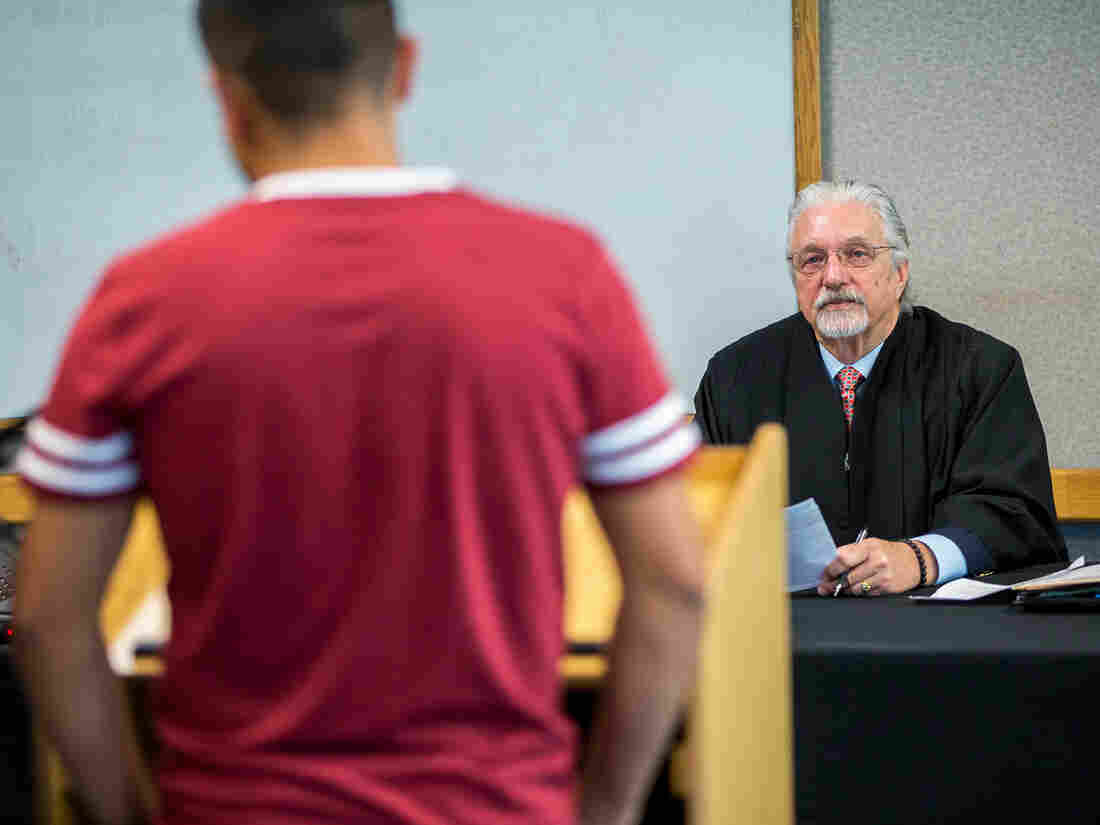
Hearing Officer Jim Teal presides over a session of Early Intervention Family Drug Court in Sacramento, Calif., in March. The county program helps keep families together — and saves taxpayers $7 million annually, Sacramento County officials say.

Hearing Officer Jim Teal presides over a session of Early Intervention Family Drug Court in Sacramento, Calif., in March. The county program helps keep families together — and saves taxpayers $7 million annually, Sacramento County officials say. Robert Durell for Kaiser Health News hide caption

toggle caption Robert Durell for Kaiser Health News

At 10 a.m. on a recent Wednesday morning, a line of parents pushing strollers filed into a conference room at the Sacramento County Courthouse in California. They sat at rows of narrow plastic tables, shushing their babies and looking up at a man in a black robe.

Hearing Officer Jim Teal sounded his gavel. “This is the time and place set for Early Intervention Family Drug Court,” he began, gazing sternly at the parents who sat before him. “Graduation from this court is considered a critical factor in determination that the children of participants will be safe from any further exposure to the danger and destructive impact of parental substance abuse.”

There has been a surge recently, across the U.S., in the number of children entering the foster care system after years of decline. Nationally, roughly 265,000 kids entered foster care in 2015 — the highest number since 2008, according to a recent government report.

Substance abuse is a factor in up to 80 percent of cases where a child is removed from a home. And there are signs that the opioid epidemic may be to blame.

Parents who receive addiction treatment are much more likely to get their kids back, but 4 in 5 parents fail to complete their treatment regimen.

The Early Intervention Family Drug Court aims to change that by helping parents with substance abuse problems to complete treatment before their children enter the foster care system. If the parents fail, they’ll be sent to a formal family drug court, where their children are taken away and given attorneys of their own.

But before that, the parents get this opportunity to enter recovery, through a mix of support, medication-assisted treatment and tough love.

Many parents participating in the early intervention drug court entered the system after having babies born dependent on opioids or other drugs. Others were reported to Child Protective Services by friends or family. All are at risk of losing custody of their children because of their drug abuse.

Emma, 20, a striking woman with long blond hair, approached Teal’s podium holding a baby. NPR is withholding her last name because her case is active with Child Protective Services.

“Good morning,” Teal said. “Who do you have with you there?”

“My daughter, Cailynn,” Emma answered proudly, bouncing the cooing child on her hip.

Emma started using drugs when she was 16. At first it was methamphetamines, she said, but she quickly transitioned to heroin. Then she got pregnant.

Her daughter Cailynn tested positive for opioids at birth. Child Protective Services came to the hospital and took the baby into custody.

“I regret every moment of it,” Emma said. “It’s hard. But I’ve got to keep my head up and keep going.” From the start, she wanted her daughter back.

A court booklet give parents inspiration to stay off drugs. They paste a photo of their child on the front and then write about their experiences inside.

A court booklet give parents inspiration to stay off drugs. They paste a photo of their child on the front and then write about their experiences inside. Robert Durell for Kaiser Health News hide caption

toggle caption Robert Durell for Kaiser Health News

Usually, Sacramento County has a three-month wait for people who need substance abuse treatment. But by volunteering to participate in the drug court, Emma was able to get treatment right away and her baby back.

“So Emma, it says here you’re 63 days compliant,” Teal said that day in court. “And 63 days in the program, so you’ve been good. You’ve been doing what you’re told. Congratulations.”

The other parents in the room burst into applause — this is a major accomplishment. The six-month program is rigorous. In addition to monthly sessions at the court, the parents must attend almost daily group meetings, submit to random drug tests and take parenting classes. Many, like Emma, go to inpatient rehab. Medication-assisted therapy for opioids is also available. And once or twice a week, they get a home visit from their social worker.

Emma attributed much of her success in the program so far to social worker Matthew Takamoto, whom she called “amazing.”

Takamoto has been a social worker for 20 years and has been part of the EIFDC since the program began six years ago. The program, he said, is an important change in way the county handles addiction.

“In the olden days, we were quicker to send them to court,” he said. Their approach was “more ‘blaming the addict,’ versus giving them the tools they need.”

In the afternoon following the court meeting, Takamoto drove to the inpatient residential facility where Emma lives with her daughter. In the back is a grassy yard with a small jungle gym, where several mothers sat, watching their children play. Emma was there, too, holding Cailynn in her lap.

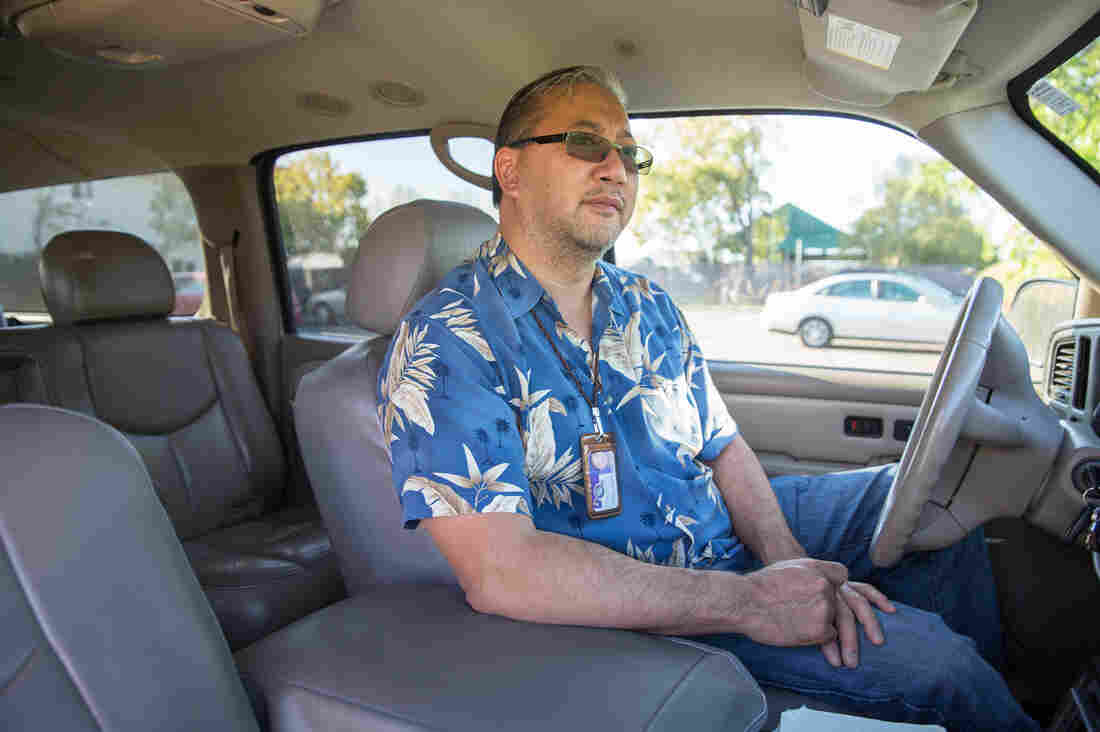
Matthew Takamoto has been been a social worker with the early intervention program in Sacramento County from its start, and is pleased with its success. The hardest part, he says, is realizing that not every parent will be be able to quit drugs for good.

Matthew Takamoto has been been a social worker with the early intervention program in Sacramento County from its start, and is pleased with its success. The hardest part, he says, is realizing that not every parent will be be able to quit drugs for good. Robert Durell for Kaiser Health News hide caption

toggle caption Robert Durell for Kaiser Health News

Takamoto seemed happy with Emma’s progress. “You take these clients from the very beginning, where they’re broken and it’s the worst day of their life,” he said. “And to see them slowly get back up as they have days of clean time — it’s been incredible.”

The hardest part of his job, he said, is realizing that not all the parents are going to make it. In fact, just a third end up graduating from the county’s program.

“If these parents aren’t successful, it’s the kids [who] pay the price,” Takamoto said. “The parents are doing what they want to do, but the kids don’t have a choice.”

Just 5 to 10 percent of families in the United States who could use family drug courts have access to them, according to Children and Family Futures, an organization that advises and evaluates family drug courts. Sacramento’s program is one of about 350 in the country; most of the rest work with families after their children have entered the foster system.

Sherri Z. Heller, director of Sacramento’s Health and Human Services Department, described family drug courts as a success story.

“People can overcome addiction if the motivation is strong enough, and this is the most effective motivation I have ever seen,” Heller said.

Just 10 percent of kids with families in the program end up being removed from their home, compared to 30 percent of children in families who do not participate. That represents a major savings to the county — about $21,000 dollars a year for every kid who doesn’t have go into the court and foster system, for an annual total savings of $7 million.

“The rush that comes with getting high is pretty spectacular,” Heller said. “And it’s very hard physically, once the addiction happens, to overcome. But if there is one thing that matters to people more than the thrill of getting high, it’s the thrill of doing the right thing for your children and keeping your family intact.”

Kaiser Health News is a national health policy news service. It is an editorially independent program of the Henry J. Kaiser Family Foundation. You can follow Jenny Gold on Twitter: @JennyAGold.

Let’s block ads! (Why?)


No Image

Aetna Joins Other Major Insurers In Pulling Back From Obamacare

Aetna is the latest big health insurer to retreat from the exchanges established under the Affordable Care Act.

Aetna is the latest big health insurer to retreat from the exchanges established under the Affordable Care Act. Jessica Hill/AP hide caption

toggle caption Jessica Hill/AP

Insurance giant Aetna will stop selling health insurance through most of the exchanges created by the Affordable Care Act in 2017 because the company said it is losing money in many of those markets.

On Monday, Aetna said it will sell individual insurance policies in only 242 counties in four states, down almost 70 percent from the 778 counties in 15 states where the company markets Obamacare plans this year.

The decision is a blow to President Obama’s signature health care law. Most insurers selling plans through the exchanges have been losing money because the people getting insurance under Obamacare have been sicker than forecast.

But Aetna, which lost $430 million on the Obamacare plans in the first half of the year, said it may re-enter the markets in the future.

“We will continue to evaluate our participation in individual public exchanges while gaining additional insight from the counties where we will maintain our presence, and may expand our footprint in the future should there be meaningful exchange-related policy improvements,” CEO Mark Bertolini said in a statement.

Aetna, which covers about 900,000 people through the exchanges, is the third major insurer to pull back from the Obamacare marketplaces. UnitedHealth Group said in April it planned to pull out of ACA marketplaces in most states, and just last month Humana, which covers about 800,000 people, said it will cut back its offerings to just a handful of counties.

All the companies said they are losing money on the plans. The Department of Health and Human Services has argued that companies have themselves to blame because they set premiums too low. The companies will be able to adjust the premiums in the future.

“Aetna’s decision to alter its Marketplace participation does not change the fundamental fact that the Health Insurance Marketplace will continue to bring quality coverage to millions of Americans next year and every year after that,” said Kevin Counihan, CEO of HealthCare.gov, the federal insurance exchange.

In all, about 11 million people have bought insurance through the exchanges.

A spokesman for HHS said Aetna’s decision was an about-face from its earlier statements about the Obamacare exchanges.

In April, Bertolini called the marketplace plans “a good investment” because it would have cost the company far more than $430 million to try to attract that many customers.

“If we were to build out 15 markets, it would cost us somewhere between $600 million to $750 million to enter those markets and build out the capabilities necessary to grow that membership,” he said on the company’s April earnings conference call with analysts.

Aetna’s announcement comes less than a month after the Justice Department sued to stop the company’s planned merger with Humana, arguing that the combination would hurt competition. At the same time, the government also sued to block Anthem from purchasing Cigna.

Sen. Elizabeth Warren, a Massachusetts Democrat, suggested Aetna’s change of heart was in response to the Justice Department’s action. In a post on her Facebook page last week, Warren questioned the company’s motives after it first hinted that it was considering cutting its participation in Obamacare.

“The health of the American people should not be used as a bargaining chip to force the government to bend to one giant company’s will,” she said.

Aetna spokesman T.J. Crawford didn’t immediately respond to a request for comment on Warren’s statement.

HHS said last week that the per-member health care costs for people covered through the exchanges remained stable from 2014-2015. If that trend continues, insurers should be able to set premiums that better reflect the actual costs of covering people under Obamacare.

“The next ACA open enrollment is key,” tweeted Larry Levitt, a senior vice president at the Kaiser Family Foundation. If insurance sign-ups increase, then deeper concerns about Obamacare will fade. “If not, expect a debate about fixes to the law,” he wrote.

Let’s block ads! (Why?)