Articles by admin

No Image

George Curry, Legendary Political And Civil Rights Journalist, Dies At 69

In a 2005 photo, George Curry sits in a classroom at Howard University in Washington.

In a 2005 photo, George Curry sits in a classroom at Howard University in Washington. Kevin Wolf/AP hide caption

toggle caption Kevin Wolf/AP

George Curry, the legendary columnist, commentator and champion of black journalists, died of sudden heart failure on Saturday. He was 69.

Curry grew up in Tuscaloosa, Ala., where he was childhood friends with Bernard Lafayette, the current chairman of the Southern Christian Leadership Conference. “This is a tragic loss to the movement because George Curry was a journalist who paid special attention to civil rights because he lived it and loved it,” Lafayette told Trice Edney News Wire.

Curry began his career as reporter for Sports Illustrated and The St. Louis Dispatch. In the 1990s, he was the editor of Emerge, an edgy political and cultural publication with the tag line “Black America’s Newsmagazine.” In 1993, the cover depicted Supreme Court nominee Clarence Thomas wearing an Aunt Jemima-style handkerchief next to the word “BETRAYED.”

Curry was the first African-American to be elected president of the American Society of Magazine Editors.

After Emerge folded in 2000, Curry led the news service for the National Newspaper Publishers Association for nine years. He wrote a syndicated column that was published in black newspapers all over the country, and he frequently appeared as a commentator on television and radio news programs.

NPR’s Karen Grigsby Bates interviewed Curry on numerous occasions. In 2012, she spoke to him about how the media approached the murder of Trayvon Martin, an unarmed black teenager who was shot to death by a white man in Florida.

Bates reported:

“Syndicated columnist George Curry says the black media have a long history of highlighting anti-black violence, which mainstream media often picks up on later.

” ‘The black press plays a unique role, because they know right away and can recognize these kinds of stories and the value of them,’ Curry says.

Curry thinks part of the lag between when black and mainstream media began covering the Martin shooting can be accounted for by the communities’ different interaction with law enforcement.

‘I think that stems from the fact that whites have a different experience with the police than blacks and Latinos,” he says. “To whites, he’s Mr. Friendly. To blacks and Latinos, he’s Mr. Unfriendly.’ “

In 2014, Curry told Bates “there is no event in my life that has been more transforming than the murder of Emmett Till,” adding that another major black magazine, Jet, had been crucial to his understanding of the murder as a young man.

In an obituary, the current editors of Jet wrote, “Curry was largely thought of as an unapologetic steward and champion for the Black press and frequently expressed the need for it in the civil rights narrative.”

Let’s block ads! (Why?)


No Image

Ryan Lochte To NBC's Matt Lauer On Rio Incident: 'I Was Immature'

U.S. Swimmer Ryan Lochte sits down with NBC’s Today show host Matt Lauer in an exclusive interview Saturday night to address the “robbery,” at a gas station that Rio police later discredited as a fabricated story. NBC News/YouTube hide caption

toggle caption NBC News/YouTube

In portions of a full interview with NBC’s Matt Lauer Saturday night, U.S. swimmer Ryan Lochte attempted to clarify his role in the early morning episode at a Rio de Janeiro gas station last weekend.

One day after apologizing on social media, Ryan Lochte appeared remorseful and emotional, sporting a fresh comb over instead of his silver hair as he took “full responsibility” for his exaggerated version of the events and his “immature behavior.”

Lochte,32, initially said that he and three of his teammates — James Feigen, Gunnar Bentz and Jack Conger — were victims of a robbery, held at gunpoint by armed men posing as police after a night of celebrating.

His claims were later refuted by Brazilian police, who cited surveillance video and witness testimonies. Rio’s Civil Police said Thursday, “There was no robbery.”

This video below is a portion of a news segment originally broadcast on Brazil’s O Globo, commenting on the incident involving U.S. swimmers at a gas station, as captured on surveillance video.
[embedded content]

Lauer pressed Lochte on why he maintained his statement to police and to the media, including NBC, that they were “victims.”

Lochte could not pointedly answer that question, but admitted, “I over-exaggerated that story.”

“I can’t answer that. ‘Cause I was intoxicated. All I know is that there was a gun was pointed at us and we were demanded to give money,” Lochte responded. “Whether you call it a robbery, whether you call it extortion, or us paying just for the damages, like, we don’t know. All we know is that there was a gun pointed in our direction, and we were demanded to give money.”

The 12-time Olympic medalist got particularly teary-eyed when responding how he felt being back in the U.S., while Brazil police interrogated his teammates.

“I let my team down,” Lochte said.

In his questions, Matt Lauer sidestepped some key details about that night’s events. He didn’t directly ask about the damage done by Lochte, according to Rio police, who called the swimmers “vandals,” nor did Lochte touch on that key point as to why he pulled down what he referred to as framed metal advertisement.

The Today show host also didn’t ask why Lochte went to the police to report the false story in the first place, but questions along these lines may come in the full interview, set to air on Monday.

Let’s block ads! (Why?)


No Image

For Parents Who Have Lost A Baby, Some Aid In Their Grapple With Grief

Lydia Joy Ziel, whose crib is pictured here, was diagnosed a serious disease while still in the womb. Miscarriage and stillbirth are common, but often parents feel they're walking through the experience alone. A trained group called Baby Loss Family Advisors seeks to help.

Lydia Joy Ziel, whose crib is pictured here, was diagnosed a serious disease while still in the womb. Miscarriage and stillbirth are common, but often parents feel they’re walking through the experience alone. A trained group called Baby Loss Family Advisors seeks to help. Stina Sieg hide caption

toggle caption Stina Sieg

Stephen Ziel still carries around a recording of his daughter’s heartbeat on his phone. It sounded strong the whole time she was in the womb.

“And the heartbeat’s not supposed to be that strong,” he says.

Not for babies like her. Lydia Joy Ziel was diagnosed with a rare genetic disorder called Trisomy 18 — also known as Edwards syndrome — a few months after Stephen and his wife, Melissa, found out she was pregnant.

“That was probably the moment where it felt like the world kind of shattered on us,” Melissa says.

Most babies with the disorder are either miscarried or stillborn, or die shortly after birth. Melissa and Stephen didn’t know how long they would have with their baby, so they tried to make every moment of the pregnancy count. They picked out a name and started a little book documenting her first experiences.

They captured moments like “Lydia’s first snowfall, Lydia’s first Thanksgiving, Lydia’s first Christmas,” Melissa says. And every night, they read a picture book and a Bible story to Melissa’s growing belly.

The couple also read everything they could find on how to deal with their grief. That included a book by Sherokee Ilse, who personally knows the pain of losing a baby.

“It’s important to grieve and mourn these little ones, to recognize that our lives are different,” Ilse says.

That’s been Ilse’s mission ever since her son Brennan was stillborn decades ago. Ilse briefly held him, but other than that, she feels she and her husband did everything wrong.

“No pictures, no mementos of any kind,” she says. “We literally left with empty arms. I have nothing that he touched.”

Ilse says such deep regret is still the norm for grieving parents. And many feel as if they’re going through it alone, she says, even though this kind of loss is actually common. Roughly 1 in 5 pregnancies ends in miscarriage in the U.S., and every year thousands of babies are stillborn.

So, in the years since her son’s death, Ilse has tried to change our culture’s relationship to infant death. She’s written books, trained hospital staff and most recently co-founded Baby Loss Family Advisors. It’s a certification program that trains professional doulas and others to help people through the death of their babies.

That’s what Ilse did for Melissa and Stephen Ziel. Melissa says she helped them have those difficult conversations that needed to happen.

“Because I think it is hard to talk about what happens if your baby does die,” Melissa says. “It’s not something, I think, as you get married and talk about having kids and a family, that [you think] is going to happen or you’re going to have to think in this direction.”

As the due date got closer, the couple spoke with Ilse many times over the phone and in person, since they all live within miles of one another in Tucson, Ariz. She helped them plan for the birth, even embrace it.

As Melissa puts it: “Being able to say hello and goodbye at the same time.”

Melissa Ziel holds up Lydia's christening gown. Lydia's room is still completely in place, with stuffed animals and pink everywhere. Melissa and Stephen Ziel say they feel at peace when they walk in. They both say losing Lydia hasn't scared them away from having more children in the future.

Melissa Ziel holds up Lydia’s christening gown. Lydia’s room is still completely in place, with stuffed animals and pink everywhere. Melissa and Stephen Ziel say they feel at peace when they walk in. They both say losing Lydia hasn’t scared them away from having more children in the future. Stina Sieg hide caption

toggle caption Stina Sieg

When Melissa’s water broke, she and Stephen say they felt prepared. Almost a day later, Lydia was delivered. Melissa remembers listening for her baby’s cry — and hearing nothing.

“It almost felt you were holding your breath, waiting to figure out what was going on, what was happening,” she says.

Stephen remembers asking the nurse to check for a heartbeat “multiple times,” he says, “because I thought, ‘Well, maybe it just took a minute.’ “

Lydia was stillborn. But she was still their baby. So with Sherokee Ilse’s help, they started making all the memories they could, as quickly as they could. They got footprints and handprints, took professional photographs, introduced her to their families.

Melissa and Stephen spent hours and hours with Lydia, trying to memorize every little part of her, just as Ilse had suggested.

“You know, look at her eyes, see if she has any birthmarks, who does she look most like? And we all agreed she looked more like Steve,” Melissa says, smiling.

“She looked pretty good,” Stephen says, as he and Melissa laugh together.

They’re able to be happy now when they talk about Lydia, because they say they have no regrets.

“There can be blessings. There can be peace. There can be joy in the midst of difficult circumstances,” Melissa says, “and those are things to, no matter how hard they are, they’re also things to be able celebrate.”

Melissa and Stephen Ziel say having someone to help guide their grief made that celebration possible.

Let’s block ads! (Why?)


No Image

Amid Industry Downturn, Global Shipping Sees Record-Low Growth

After its maiden voyage from China, the largest container ship to ever make port in North America, unloads its cargo in the Port of Los Angeles on Dec. 26, 2015. The major shipping companies in Europe and Asia began ordering the state-of-the-art, supersized ships back in 2011, when times were better.

After its maiden voyage from China, the largest container ship to ever make port in North America, unloads its cargo in the Port of Los Angeles on Dec. 26, 2015. The major shipping companies in Europe and Asia began ordering the state-of-the-art, supersized ships back in 2011, when times were better. Scott Varley/AP hide caption

toggle caption Scott Varley/AP

The massive container ships that ply the high seas bring us pineapples and mangoes in winter, and computers and cheap t-shirts all year round. But the shipping industry is a volatile, cyclical and ferociously competitive business. There are good years and bad years.

And then there’s this year.

“This is likely to be one of the worst years ever in terms of losses,” says Janet Porter, editor-in-chief of containers at Lloyd’s List, a shipping industry news provider. She says over the years, global shipping companies got used to growth of 6, 7 or 8 percent. This year it’ll be close to zero.

“It is a very simple supply-and-demand imbalance — too many ships and not enough cargo,” she says.

Container ships are vital cogs in the global economy. Jonathan Roach, a container market analyst at Braemar ACM shipbroking in London, says slowing economies in Europe and China are hitting the industry hard.

Indian shipbreakers work at the Sosiya-Alang Ship Recycling yard on March 4, 2013. Many ships are heading to scrap heaps, like this one, the world's largest, to help reduce the number competing for market share.

Indian shipbreakers work at the Sosiya-Alang Ship Recycling yard on March 4, 2013. Many ships are heading to scrap heaps, like this one, the world’s largest, to help reduce the number competing for market share. SAM PANTHAKY/AFP/Getty Images hide caption

toggle caption SAM PANTHAKY/AFP/Getty Images

“China is a big factor in the container industry — where China is really the factory of the world and when the advanced economies slow, we’re seeing less exports coming out of China,” he says.

The economic slowdown comes as fleets of huge, new ships are coming online. The major shipping companies in Europe and Asia began ordering the state of the art, super-sized ships back in 2011, when times were better.

Porter says this is partly a self-inflicted crisis because many of the companies are over-ordering.

“There’s a little bit of ‘boys and their toys’ in the shipping lines,” she says. “One line will order so the next one does and the next one does, and now all these ships are starting to be delivered.”

Now, orders for new vessels have dried up. William Bennett, a senior analyst at VesselsValue in London, which follows the cargo markets, says companies ordered about 1,500 new vessels in 2015.

In contrast, “What we’ve had in the first half of this year, we’re looking at 293 vessels ordered,” he says. “There’s just no appetite for ordering at the moment.”

Bennett says the shipping crisis will have little impact on consumers. He says shelves in your favorite shops will remain stocked.

It’s the ship owners bearing the brunt, he says — they’re hemorrhaging money at the moment.

A truck carries a container past a ship at the port in Qingdao, in China's Shandong province on Feb. 15, 2016. China's sagging economy has hurt the shipping industry this year.

A truck carries a container past a ship at the port in Qingdao, in China’s Shandong province on Feb. 15, 2016. China’s sagging economy has hurt the shipping industry this year. STR/AFP/Getty Images hide caption

toggle caption STR/AFP/Getty Images

Because of the glut of ships, freight rates have plummeted over the past year, cutting deeply into profits, says Nils Haupt, the communications director for Hapag-Lloyd, the world’s fourth largest container shipping line.

“I can just tell you that the costs for shipping are enormously low,” he says, adding that transportation costs for manufacturers are at rock-bottom.

“A t-shirt, just for shipping transportation, this is like one or two U.S. cents… a pair of sneakers which is $100 in the shop…ocean transport cost per pair approximately between 20 to 25 U.S. cents. So this is a ridiculous amount of money,” he says.

For oil tankers, the situation is even more dire. Earnings at the turn of the year were around $50,000 to $60,000 per day. Bennett, with VesselsValue, says they’re now looking at $1,000 a day. “So you can see the situation has gone incredibly sour,” he says.

Bennett says shipping lines are looking to be more efficient and cut costs. He says mergers and acquisitions are happening at a record rate. And many ships are heading to scrap heaps, like the one in Alang, India — the world’s largest — to help reduce the number competing for market share.

“We need 1,000 ships to be scrapped in order for a market recovery,” he says.

At least that will be good news for the scrapyards.

Let’s block ads! (Why?)


No Image

Best of the Week: Lin-Manuel Miranda Continued to Conquer Disney, 'Spider-Man' Spoiled a Secret Identity and More

The Important News

Disney: Lin-Manuel Miranda is co-writing new music for the live-action The Little Mermaid remake. Ben Whishaw and Meryl Streep are joining Mary Poppins Returns.

DC: Cyborg will appear in The Flash. 1960s Batman and Robin are back for an animated movie.

Marvel: Zendaya’s secret Spider-Man: Homecoming role was revealed. Natalie Portman is done with Thor movies.

Star Wars: John Williams confirmed he’s scoring Star Wars Episode VIII. Hollywood is getting a Mos Eisley Cantina-themed bar.

X-Men: Kyle Chandler and Mackenzie Davis might be joining Deadpool 2 as Cable and Domino.

Musicals: Lady Gaga was cast in Bradley Cooper’s A Star is Born remake.

Mysteries: Will Ferrell and John C. Reilly are re-teaming for Holmes & Watson.

Sci-Fi: Jared Leto joined Blade Runner 2.

Remakes: John Turturro is remaking Going Places as a Big Lebowski spinoff. Clue is getting a remake with a wider scope.

Box Office: Sausage Party is a surprise record-breaking hit.

Moviegoing: The Alamo Drafthouse is turning next month into SeptemBURTON.

Reel TV: Robert Downey Jr. could star in a new Perry Mason series. Marvel’s The Runaways is headed to Hulu. The Lost Boys is going to be a TV show.

R.I.P.: Star Wars actor Kenny Baker died at age 81. Director Arthur Hiller died at age 92.

The Videos and Geek Stuff

New Movie Trailers: Rogue One: A Star Wars Story, Arrival, Hidden Figures, American Honey, Sully, End of a Gun, War on Everyone and The Good Neighbor.

TV Spot: Snowden.

Watch: A Popstar: Never Stop Never Stopping deleted scene.

See: Kylo Ren reacts to the latest Rogue One trailer. And a fake Obi-Wan Kenobi solo spinoff movie.

Watch: A mashup of The Phantom Menace and Ben-Hur.

See: The full look at Pennywise in his clown suit in the new It.

Watch: A fake Firefly animated series intro.

See: What Kyle Chandler could look like as Cable in Deadpool 2. And what Mackenzie Davis could look like as Domino.

Watch: A mashup of The Arrival and Man of Steel.

See: What movies are most popular with Twitter users. And what are the most popular party school movies.

Watch: The Shawshank Redemption redone as an upbeat romance.

See: This week’s best new movie posters.

Watch: A mashup of Goodfellas and Super Mario Bros.

Our Features

Interview: Suicide Squad co-creator John Ostrander on DC’s current movie franchise. And specifically on Suicide Squad.

New Movie Guide: All you need to know about the story behind War Dogs.

Geek Movie Guide: Why you should be reading the new Star Wars books.

Horror Movie Guide: All the latest horror news and trailers and more.

Comic Book Movie Guide: Where is the X-Men movie franchise going?

Home Viewing: Our guide to everything hitting VOD this week.

and

MORE FROM AROUND THE WEB:

Let’s block ads! (Why?)


No Image

'It's Weird': Tyson Gay On Latest Drama Over U.S. Men's Relay Race

Men's 4x100m relay teammates Tyson Gay, Justin Gatlin and Michael Rodgers react after being disqualified from the race at the Olympic Stadium in Rio de Janeiro Friday.

Men’s 4x100m relay teammates Tyson Gay, Justin Gatlin and Michael Rodgers react after being disqualified from the race at the Olympic Stadium in Rio de Janeiro Friday. Pedro Ugarte/AFP/Getty Images hide caption

toggle caption Pedro Ugarte/AFP/Getty Images

It’s a story that might sound familiar: A promising U.S. men’s 4x100m relay team was disqualified from a marquee race because of a bad baton exchange. Team member Tyson Gay calls it both weird and bad luck.

In fact, in a post-race interview that lasted less than 3 minutes, Gay used the word “weird” no less than seven times to describe how this race went for the Americans.

In the initial results, Jamaica won the race at Rio’s Olympic Stadium, followed by Japan and the U.S. — but after the teams finished their victory lap and were about to speak to the media, the Americans were shocked to see a “DQ” tag had been placed next to their ranking.

Officials “ruled that one of their baton exchanges was outside the legal zone,” as Greg wrote in his initial post about the race.

The U.S. team of Mike Rodgers, Justin Gatlin, Gay and Trayvon Bromell had turned in a time of 37.62 seconds, .35 seconds behind Jamaica’s winning time of 37.27. But that result didn’t stand.

After the race, Gray told reporters he was shocked by the outcome, which USA Track and Field has now appealed (a result may come by the morning).

If it stands, the disqualification will echo (and likely drown out) the men’s nightmare in the Beijing 2008 Summer Games, when they dropped the baton and didn’t reach the final.

But the team’s troubles extend past that. The U.S. squad’s silver medal finish in the London 2012 Olympics was voided last year, over the doping suspensions that have hit both Gay and Gatlin. And tonight Gay recalled another disqualification, in 2009, he said, for a bad handoff. Then there was last year’s world championship, where a horrible baton exchange slowed the Americans.

Here’s Gay talking about the latest setback:

“It has to be the worst luck for this country ever. It’s always something weird; stupid; simple — mistakes that always cost us. And I don’t understand. We had great sticks in practice, great chemistry, great everything, and then something so simple. I can’t think of nothing else to say but bad luck. I mean, it’s, weird. “

Gay said that officials told the team that Justin Gatlin received the baton too early, resulting in a disqualification. He added that it was similar to one they’d incurred in 2009 — but that in this case, the runners involved in the exchange believe it was clean.

With the Americans’ result now thrown out, Canada gets the bronze medal, Gay said, adding, “It’s so weird, man.”

We don’t mean to poke fun at Gay — if anything, his repeated use of the word “weird” is the perfect illustration of the current status of a team that’s seen dropped batons and other problems, but one that had seemingly gotten past those issues.

He added, “I mean, I couldn’t even shed a tear, I was so shocked. It was so shocking to the point where I couldn’t even cry. Because it’s almost to the point of like, ‘Damn, bad luck again.’

“You know? It’s weird. I don’t get it. It’s… I don’t get it.”

“We always have bad luck,” Gay said.

He spoke to the media shortly before Team USA filed a appeal of the disqualification — but Gay was sure that step would be taken.

Let’s block ads! (Why?)


No Image

On The Demise Of Gawker.com: Unsparing, Satiric And Brutal

A screenshot of Gawker.com's homepage.

Screenshot by NPR

For Gawker Media’s websites to live, Gawker.com, the actual namesake website, has to die. It will be shut down next week by its new owner, a victim of its own poisoned legacy.

Any obituary should start by acknowledging the good the subject rendered to the world. There’s no reason not to do that here, other than the extent to which that impulse might appall some of Gawker’s own writers were it a piece about the demise of another publication.

Gawker itself was born of the insight of founder Nick Denton, who quite rightly concluded that what journalists told one another over drinks was invariably more interesting than what actually appeared in print, online or on the air. He set out to correct that in 2003, with a publication that knit together news analysis and gossip in the same stories. It was, as former Gawker editor Max Read recently wrote, “an endlessly scrolling, eternally accessible record of prattle and wit and venom.”

Its offerings were often brutally satiric and unsparing in their conclusions.

Gawker’s reports that its reporter had viewed video of Toronto’s then-Mayor Rob Ford smoking crack rightly made his rampant substance abuse a topic fit for wider media scrutiny. The site also bird-dogged the powerful who bullied other people with less stature or fewer resources. Gawker was rarely in better form than when, say, writer John Cook showed how Fox News’ Bill O’Reilly used his influence with senior police officials and organizations on Long Island, N.Y., to start an investigation of his estranged (and now ex-) wife’s boyfriend, who was on the force. It proved to be an instance in which a celebrity’s private acts proved newsworthy.

Gawker was built on a cadre of young and often poorly paid writers made to work long hours with little or no access to the people they were writing about or the glamorous worlds they inhabited. It meant they had no fear of offending the subjects of their stories or their layers of publicists intent on steering entertainment writers for established publications to safer topics, with the threat of withholding their presence when the next wave of interviews hit to promote the next big project. At its best, Gawker felt like a corrective to the airbrushed reality fed to readers in glossy magazines or highly curated social media accounts.

From a business perspective, Denton showed a way to profitability for a midsize digital media company, one built on clear voices and identity. He experimented with verticals, adding one here, dropping another there, but catered successfully to the appetites of his young urbanite audiences with sister sites on such topics as gender, tech, cars, lifestyle and sports.

Unbound by the niceties of convention, however, Gawker blurred the lines between public and private, and cast aside such journalistic luxuries as figuring out whether something is actually appropriate to publish. It seemed fixated on the dating lives of celebrities (and the less famous), especially those in the media, and on the question of unarticulated sexual orientation. (CNN’s Anderson Cooper, who later publicly attested that he was gay, was a frequent topic of gossip and mockery.) Gawker’s targets often felt small-bore, its grievances petty.

In 2010, Deadspin, Gawker’s sports blog, posted video of a college student having sex in the bathroom of a bar. She asked A.J. Daulerio, Deadspin’s editor, to take the video down: “I am the girl in it and it was stolen from me and put up without my permission.” His initial response: “Blah, blah, blah.” He later conceded that what the video showed could be “possibly rape.”

The site’s judgment reached another low point last summer when it published the saga of a male New York media executive who, despite being married to his wife for years, was said to have arranged for a weekend in Chicago with a male escort. The story read very much the product of the escort’s inability to extort money from the executive.

Gawker’s corporate leadership had the posting pulled after widespread outcry. Writers fought back, some over the process and others on the merits. A young writer for Gawker’s sister site, Jezebel, tweeted, “Stories don’t need an upside. Not everyone has to feel good about the truth. If it’s true, you publish.”

The tweet betrayed a nihilistic impulse that had been part of the site’s DNA. Denton, the genetic parent, publicly promised a Gawker that would be 20 percent nicer.

He had reason to do so. In 2012, Gawker had published a brief excerpt of a tape of former wrestler Hulk Hogan having consensual sex with the wife of a then-friend who was a shock jock. Hogan (né Terry Bollea) appeared unaware he was being videotaped and sued. The shock was the point — yes, it was brief, and yes, we all think of Hogan/Bollea as a human cartoon rather than a human being — but as it turns out, Hogan proved just as capable as any other human being in getting legal representation.

“We told a real story that cleared a lot up about what was out there,” Gawker’s general counsel and president, Heather Dietrick, told Fortune magazine in defending the decision to post the video. “Hogan himself was out there talking in color detail about his sex life again and again.” She said that public sharing of the video excerpt was necessary to prevent Hogan from denying its contents.

The Florida jury’s verdict totaling $140 million against Gawker Media and Denton forced both to go into bankruptcy and the company to be put up for sale at a court-overseen auction.

Bollea’s case was underwritten by the Silicon Valley billionaire investor Peter Thiel, whom Gawker had outed as gay in 2007 very much against his will. Denton has said Thiel promised revenge for disclosing his sexual orientation. Thiel acknowledged he had subsidized other lawsuits against Gawker and would do so indefinitely.

The Spanish-language broadcasting giant Univision bought Gawker Media this week for $135 million. Univision had first explored buying Gawker last year, according to a person knowledgeable about those discussions, while Bollea’s suit was in the courts but well before the jury verdict in June. Univision wanted the company, including Gawker.com, to round out its suite of digital offerings for English-speaking millennials, which include The Root, The Onion and Fusion. But Univision will instead shut down Gawker.com, a site whose brand is too toxic to touch. The case remains on appeal, but Univision’s executives are trying to insulate their company from any liability that could potentially extend to the new owners.

Thiel’s crusade comes off as a vendetta, and one with ugly implications for press freedom in light of adversaries with nearly infinite resources. Yet Gawker’s demise was almost foreordained by its origin. It proved to be a mix of the irresistible with the indefensible.

Let’s block ads! (Why?)


No Image

Insurance Alone Isn't Enough To Make Sure Kids Get Eye Exams

Timely eye exams for kids can help prevent lifelong vision problems.

Timely eye exams for kids can help prevent lifelong vision problems. Portra Images/Getty Images hide caption

toggle caption Portra Images/Getty Images

Kids from less affluent homes, even when they have health insurance, aren’t as likely as others to get vision screenings that can identify conditions like lazy eye before the damage becomes irreversible.

Researchers at the University of Michigan examined commercial health insurance claims data between 2001 and 2014 for nearly 900,000 children from birth to age 14. They tracked how often kids at different family income levels visited ophthalmologists and optometrists and the diagnosis rates for strabismus (crossed eyes) and amblyopia (lazy eye).

The two conditions are relatively common, serious eye disorders in children. Because the eyes are seeing different things, the brain suppresses the vision in one eye. If not corrected by age 10, either condition can result in permanent vision loss. Treatment generally involves glasses, surgery, eyedrops or patches, or some combination.

Children in families with the lowest net worth (less than $25,000 a year) had 16 percent fewer eye care visits than those in the middle-income category ($150,000 to $250,000 a year), the study found. Meanwhile, kids from families with the highest net worth ($500,000 or more annually) had 19 percent more visits to eye care professionals than those in the middle-income group.

Lower-income kids were also less likely to be diagnosed with strabismus or amblyopia than were children from higher-income families. By age 10, an estimated 3.6 percent of children in the lowest-income category were diagnosed with strabismus, and 2 percent were diagnosed with amblyopia, the study found. For kids in the highest-income bracket, the estimated diagnoses were 5.9 percent for strabismus and 3.1 percent for amblyopia.

“We think that affluence is driving the eye care visit and the visit is driving the diagnosis of eye disease,” said Dr. Joshua D. Stein, the study’s lead author and an associate professor of ophthalmology and visual sciences at the University of Michigan’s medical school. The findings were published in the August issue of the journal Health Affairs.

The researchers estimate that the lack of eye care visits by lower-income children resulted in 12,800 missed cases of strabismus and 5,400 missed cases of amblyopia.

Many children receive vision screening in schools, which wouldn’t appear in the claims data that were analyzed. Children who fail a school vision screening, however, should be referred to an optometrist or ophthalmologist for further testing, and that visit would show up in the claims data.

Less affluent parents may have more difficulty taking time off from work or face transportation challenges getting a child to an eye care provider, said Stein, and there may be fewer eye care providers available in less affluent areas.

Under the health law, services recommended by the U.S. Preventive Services Task Force, an independent panel of medical experts, are covered by insurance without requiring most people to pay anything out of pocket. The task force recommends that children between the ages of 3 and 5 receive at least one vision screening to check for amblyopia. That recommendation is being updated.

Please contact Kaiser Health News to send comments or ideas for future topics concerning health insurance.

Let’s block ads! (Why?)


No Image

Today in Movie Culture: Obi-Wan Kenobi's 'Star Wars' Spinoff, Martin Scorsese's 'Super Mario Bros.' and More

Here are a bunch of little bites to satisfy your hunger for movie culture:

Fake Movie of the Day:

Obi-Wan Kenobi gets his own solo Star Wars spinoff movie in this fan-made trailer featuring a lot of footage of Ewan McGregor as Jesus in Last Days in the Desert (via /Film):

[embedded content]

Movie Parody of the Day:

“Goodplumbas” mashes Goodfellas with Super Mario Bros. in this short comedy film by Nick Gregorio (via Geek Tyrant):

[embedded content]

Vintage Image of the Day:

Robert Redford, who turns 80 today, with Paul Newman and an unidentified ping pong player on the set of Butch Cassidy and the Sundance Kid in 1968:

Goofs of the Day:

Stranger Things is a TV show, but this College Humor parody of criticisms about its anachronisms applies to movies, too:

[embedded content]

Reworked Scene of the Day:

Peter Parker’s sidewalk strut and dance in Spider-Man 3 is even more awkward without the music (via Geek Tyrant):

[embedded content]

Limited Edition Movie Art of the Day:

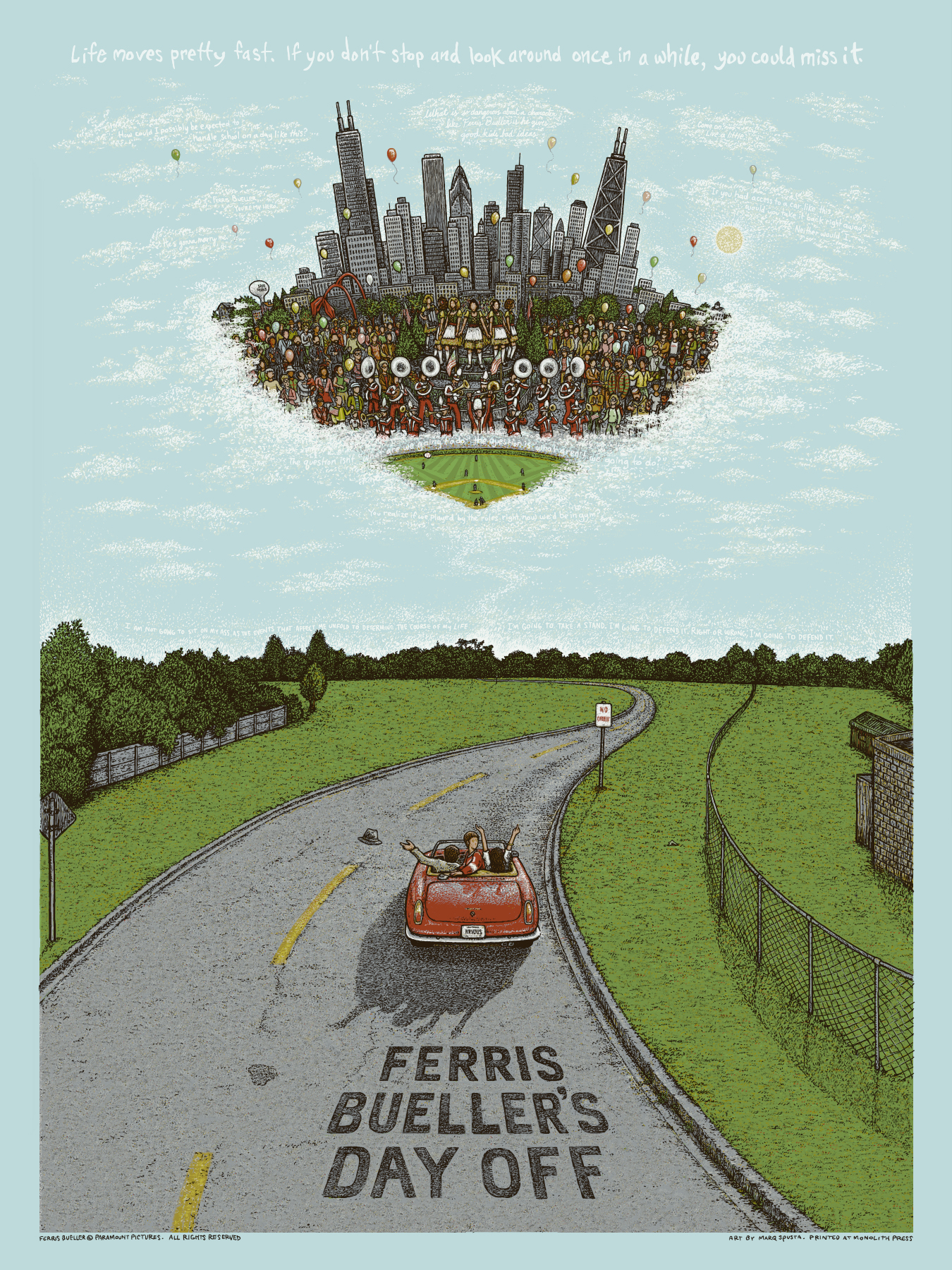
This beautiful Ferris Bueller’s Day Off print is by artist Marq Spusta for Dark Hall Mansion:

Video Essay of the Day:

Filmmaker Kentucker Audley made a video essay parody focused on “Tim Burton’s Powder,” and it’s a sick burn to all other video essayists (via The Talkhouse):

[embedded content]

Cosplay of the Day:

Speaking of Tim Burton movies about strange guys with white faces, here is a double shot from CineFix on how to do a proper costume and makeup for Edward Scissorhands cosplay:

[embedded content]

[embedded content]

Fake Food of the Day:

If Ben & Jerry’s made an ice cream based on The Shining, it might look like the flavor below. See more funny horror-themed pints at Geek Tyrant.

Classic Trailer of the Day:

Today is the 10th anniversary of the release of Snakes On a Plane. Watch the original trailer for the goofy horror movie below.

[embedded content]

and

Let’s block ads! (Why?)


No Image

Viacom CEO Out As Redstone Family Reasserts Control

Sumner Redstone, seen in 2012, has ousted Philippe Daumon, the executive chairman, president and CEO of Redstone's family media conglomerate Viacom.

Sumner Redstone, seen in 2012, has ousted Philippe Daumon, the executive chairman, president and CEO of Redstone’s family media conglomerate Viacom. Matt Sayles/AP hide caption

toggle caption Matt Sayles/AP

Sumner Redstone and his daughter Shari reasserted their control of Viacom Thursday night, resolving a crisis gripping the media conglomerate by arranging the departure of their renegade executive chairman, president and CEO Philippe Dauman in exchange for a $72 million payout.

The Redstones’ holding company, National Amusements, approved the proposed deal earlier in the week and it was passed by Viacom’s corporate board on Thursday evening. The resolution settles a series of legal proceedings gracing courtrooms in three different states in which Dauman and Viacom were wrestling the Redstones for the right to determine the fate of the company that owns MTV, Comedy Central, Nickelodeon and Paramount Pictures, among other properties.

The deal, which had not been formally announced by late Thursday evening, was described to NPR in separate interviews by two people well versed in its details. They spoke on condition they not be identified.

Veteran Viacom executive Thomas Dooley, currently the company’s chief operating officer, will become its interim CEO and president until Sept. 30, the final day in the company’s fiscal year. Dauman will continue on as corporate board executive chairman until Sept. 13 and will have the chance to present his proposal to the Viacom board to sell a major stake of Paramount to a Chinese investor.

The board, which will soon have five additional Redstone-approved members, is expected to reject Dauman’s Paramount proposal. Five others with ties to Dauman will resign or cycle off as their terms expire. Though Viacom is publicly traded, National Amusements owns 10 percent of Viacom’s equity and 80 percent of its voting shares. National Amusements has already kicked Dauman off its board.

Dauman was for years a trusted lawyer, adviser and chief protege of Sumner Redstone. Dauman cited what he said was Redstone’s support in proposing to sell the stake in Paramount; Redstone’s representatives said he actually opposed the sale, and Dauman later said he had misunderstood.

Redstone also objected to the precipitous drop in Viacom’s stock price: it has lost about 40 percent of its value in the past three years. Additionally, Dauman’s critics inside and outside the company say it has experienced a brain drain among the executive ranks and an astonishing loss of creative talent. Exhibit A: Comedy Central, where the loss of Jon Stewart, John Oliver, Stephen Colbert, Samantha Bee, Jason Jones and Key & Peele sting (even, or especially, in the case of Colbert, now a marquee name at CBS, which is also controlled by National Amusements).

Former Viacom CEO Tom Freston, who was himself fired by Redstone a decade ago next month, told NPR in June that the story of the company was one of decline. “It went from really being number one in its class, as a cable networker and as a creative enterprise, to pretty much the bottom of the barrel,” Freston said.

Dauman had defended the mental capabilities of Redstone, now 93, as recently as last year when it was an issue in a lawsuit filed by an ex-girlfriend of the media mogul. Once that was dismissed, however, Dauman challenged his former mentor’s capacities. This week’s settlement will allow Sumner Redstone to avoid disclosures in court about mental competence, physical frailties and personal peccadillos, as well as the potential loss of control of much of the media empire he assembled.

Shari Redstone, Sumner’s 62-year-old daughter by his first marriage, had long been estranged from her father. The settlement allows her to avoid inconvenient questions about the timing of their reconciliation, which neatly dovetailed with her ability to help take control of Viacom and CBS through National Amusements.

For Viacom, the agreement allows the company’s leadership the chance to unite to take arms against a sea of troubles. Despite Dauman’s lucrative departure, Viacom does not yet pretend to have the answer for them.

Let’s block ads! (Why?)