Articles by admin

No Image

Paralympic Games Set To Begin In Rio After Brazilian Government Bailout

Thanks to a Brazilian government bailout the Paralympic Games will begin Wednesday in Rio de Janeiro. NPR’s Audie Cornish talks with Craig Spence, spokesman for the International Paralympic Committee, and Stephanie Nolen, Latin America correspondent for The Globe and Mail.

Transcript

AUDIE CORNISH, HOST:

Thanks to a Brazilian government bailout, the Paralympics will go on. They begin tomorrow. They were in trouble after the real Olympic organizing committee admitted to running out of money.

ARI SHAPIRO, HOST:

After weeks of legal wrangling and a search for more sponsorships, the Brazilian government and the city of Rio came up with a combined total of about $80 million to help make up the shortfall. So the games are set to get underway, albeit scaled back. Craig Spence is the spokesman for the International Paralympic Committee, and he told us via Skype from Rio what that means.

CRAIG SPENCE: We’ve had to reduce some of the venue capacities. So for example, our swimming venue originally takes 17,000 seats. Part of the cuts that have been made here to balance the budget is that Rio 2016 has reduced its workforce significantly. Because of that, we can’t fill all 17,000 seats safely, because there isn’t enough staff there to look after the spectators. So the swimming venue is now a 9,000-seat-capacity venue. And thankfully, we’ve sold out every single evening session of swimming for these games.

CORNISH: We know some 4,300 athletes are scheduled to participate. And we understand at one point, the budget problems actually threatened the travel grants that would help poorer countries. I know that some of those grants have come through, but have any countries or athletes had to drop out because of this?

SPENCE: Well, the travel grants have yet to be paid. The money should be received today by the International Paralympic Committee, and then we will pay the nations immediately. We did have 10 countries who we thought might struggle to get to the games because of these late grant payments. The IPC has worked with them to either secure a short-term loan from their governments or the IPC themselves have lent them the money.

CORNISH: Now, your boss, Philip Craven, the president of the International Paralympic Committee, has called this, quote, “the worst situation that we’ve ever found ourselves in at Paralympic movement.” Can you expand on that? I mean, how bad is it?

SPENCE: Well, I think he said it was inprecedented (ph) circumstances in the 56-year history of the games as well. And what we’ve done since then, though, is we’ve worked hard with the organizing committee, who basically have no money to organize the Paralympic Games. We’ve…

CORNISH: …Well, they had money. They ran out of money, right? I mean, the accusation is that they’d spent all the money on the Olympics and didn’t have enough left for the Paralympics.

SPENCE: Well, they had received a lot of money from the Olympics, including $1.5 billion from the IOC, but that money wasn’t there ready for the Paralympics. So what we’ve had to do is make the most of what we’ve got.

CORNISH: Going forward, does this feel like what happened with Rio is a kind of fluke or particular to Rio and its economic circumstances? Or is there anything that the International Paralympic Committee can do going forward to make sure they don’t end up in this situation again?

SPENCE: Well, there’s various things here that are key learnings for us. I mean, you’ve got to admit that Brazil is facing its worst economic crisis probably in its history, and it’s had some political uncertainty in recent years as well. In terms of the budget, yes, maybe the organizing committee could’ve brought in more Paralympic sponsors in the same way that in London 2012 you could only become a sponsor of the Olympic Games if you also sponsored the Paralympics. So that’s a key learning that we’ll take forward to Tokyo, who’s already following the London model.

CORNISH: That’s Craig Spence. He’s a spokesman for the International Paralympic Committee. Thank you for speaking with us.

SPENCE: You’re welcome. Thank you.

CORNISH: Stephanie Nolen has been trying to follow the missing money. She’s South America bureau chief for The Globe and Mail. And she says while organizers are trying to stay upbeat, there are still many challenges.

STEPHANIE NOLEN: Off the record, people are complaining about terrible catering services, about bad transport or the total absence of transport. I think we won’t know if it’s bad – and if so, how bad – until things really start to happen.

CORNISH: Heading into this, British Paralympic sprinter Jonnie Peacock was very critical of the treatment of athletes going into these games, saying that he felt disrespected by the way these budget issues went down. Is that something that’s being felt or expressed by other athletes?

NOLEN: I haven’t heard it from athletes. I have heard it from other people in the Paralympic movement who you can tell are at pains to not come right out and say, you know, we should not be the tacked-on little sibling event. There was supposed to be a budget for this. Where did our money go? I think there is, and quite legitimately, the feeling among everybody associated with the Paralympics that they have really been given short shrift here.

CORNISH: Is there any sense of who’s to blame here? Are we any closer to understanding just what happened to this money?

NOLEN: We’re not. I spent a lot of time today having new versions of that conversation with people associated with Rio 2016. At this point, they are blaming the whole budget shortfall on the fact that ticket sales were very, very slow and indeed only started to pick up in the last week or so, and also on the fact that sponsorship money was very late to come because of Brazil’s economic crisis.

You know, the problem with that explanation, of course, is that the travel grants, for example – that’s been a budgeted cost since 2009, when Rio won the right to host these games. They knew they were going to have to pay for that all along. So where was that money? The most recent explanation that I got today from Rio 2016 is that the transfer of that money got interrupted with the political crisis in Brazil and the change in presidents and administrations and their commitment of what they would pay, which, again, doesn’t really make sense to me because, you know, they knew this was coming.

Regardless of who the president was, they were going to have 161 national delegations to fly here. Regrettably, Rio 2016 is not obliged to be transparent about any of this. And still, we don’t know how big the deficit is and what else they don’t have money for. But that may become clear in the next two weeks.

CORNISH: Stephanie Nolen is the South America bureau chief for The Globe and Mail. We reached her by Skype in Rio. Thanks for speaking with us.

NOLEN: It’s a pleasure.

Copyright © 2016 NPR. All rights reserved. Visit our website terms of use and permissions pages at www.npr.org for further information.

NPR transcripts are created on a rush deadline by Verb8tm, Inc., an NPR contractor, and produced using a proprietary transcription process developed with NPR. This text may not be in its final form and may be updated or revised in the future. Accuracy and availability may vary. The authoritative record of NPR’s programming is the audio record.

Let’s block ads! (Why?)


No Image

Pediatricians Recommend Flu Vaccination, Just Not With The Spray

Fourth-grader Jasmine Johnson got a FluMist spray at her Annapolis, Md., elementary school in 2007. This year, the nasal spray vaccine isn’t recommended. Susan Biddle/Washington Post/Getty Images hide caption

toggle caption Susan Biddle/Washington Post/Getty Images

Sorry, kids. Your pediatrician will probably give you the flu vaccine in the form of a shot this year.

The American Academy of Pediatrics said Tuesday that it doesn’t recommend using the flu vaccine that comes as a nasal spray. That’s because the federal Centers for Disease Control and Prevention looked at its performance last year and concluded it wasn’t up to snuff.

The CDC’s Advisory Committee on Immunization Practices found that FluMist was only 3 percent effective in children aged 2 through 17 during the previous flu season. “This 3 percent estimate means no protective benefit could be measured,” the committee reported. In comparison, injected flu vaccines protected about two-thirds of the children in this age group.

The CDC officially accepted that committee’s recommendation on August 26, but didn’t go out of its way to announce the policy. It posted its recommendation on a website.

The American Academy of Pediatrics is now following suit, with recommendations that go out to doctors who tend to the nation’s youngsters. “The AAP recommends annual seasonal influenza immunization for everyone 6 months and older, including children and adolescents,” the statement reads.

The group notes that 85 children died from the flu in the United States during the recent season, based on CDC figures. Most had not been vaccinated.

The American Academy of Pediatrics says most children will need a single shot. But children new to flu vaccinations will need two doses, four weeks apart. So a double sorry to you.

The pediatricians also recommend flu vaccination for all health care workers and women who are pregnant, considering pregnancy or breastfeeding during the flu season.

The nasal spray vaccine has more fans than the inoculation that comes in a syringe, for obvious reasons. So this turn of events is not simply a disappointment to the manufacturer, AstraZeneca. In fact, the manufacturer took issue with the CDC committee’s recommendation, to no avail.

In a statement emailed to Shots, AstraZeneca said it expects limited demand for FluMist in the U.S. but will make sure the vaccine is available in case some doctors request it.

Let’s block ads! (Why?)


No Image

Titans Linebacker Derrick Morgan To NFL: Consider The Benefits Of Marijuana

Tennessee Titans outside linebacker Derrick Morgan warms up before the first half of an NFL preseason football game between the Tennessee Titans and the San Diego Chargers, Saturday, Aug. 13, 2016. Mark Zaleski/AP hide caption

toggle caption Mark Zaleski/AP

The hard line against marijuana is softening all across the country.

Twenty-five states and the District of Columbia allow some form of marijuana use, mostly for medicinal purposes, though a few allow recreational use. And more states could decriminalize marijuana this year. But if you play in the NFL and you use weed it could cost you your job.

Tennessee Titans linebacker Derrick Morgan would like to change that; he would at least like the NFL to look into the health benefits of marijuana in a profession where injuries and ongoing pain is normal.

Morgan is not the first NFL player to speak publicly on the matter. Former Baltimore Ravens offensive lineman Eugene Monroe has also been an outspoken advocate for marijuana research. In announcing his retirement from football in July, he said in a statement:

“The last 18 years have been full of traumatic injuries to both my head and my body. I’m not complaining, just stating a fact. Has the damage to my brain already been done? Do I have CTE? I hope I don’t, but over 90% of the brains of former NFL players that have been examined showed signs of the disease. I am terrified.”

NPR’s Michel Martin recently spoke with Morgan from member station WPLN in Nashville. The NFL player spoke about Monroe and both of their stances on the use of marijuana in the NFL.


Interview Highlights

On how he got involved in the issue

Maybe about a year and a half ago, all the CTE [chronic traumatic encephalopathy] and the traumatic brain injury stuff was hitting in the news. And to me that was very alarming, so I really started exploring what my options were. And there really weren’t any [options] just readily available to you for protecting your brain, protecting [your] health from the trauma you experience playing football.

I actually was watching the CNN documentary on weed and I’d seen this little girl named Charlotte, she had epilepsy, hundreds of seizures a week. And they started giving her this cannabis oil and it was a significant reduction in her seizures almost overnight.

So I started looking into it, starting researching and educating myself, reached out to Eugene Monroe [former offensive tackle for the Baltimore Ravens] because I’ve seen him publicly advocating for it. [I] reached out to him and he just started extending his pool of resources and just kind of share[d] with me his story and his journey on it. And the more and more I researched it, the more and more I got comfortable about talking about it.

On what other players have told him privately

I’ve talked to several players about it; they have a lot of interest in it. Guys are concerned about their health and want to know what their options are. So I’ve gotten a lot of support and players reaching out who’ve been curious about it. So I’ve just been really trying to share all the information I have with them — connecting them to the right people and resources.

For me, I wish it didn’t have to be cannabis that I had to come out publicly and talk about it. But the more and more I research this, I’m like: Wow, this is something that, it shows to be very promising. You know, a lot of people are benefiting from it. … I’ve got to spread the awareness, I’ve got to get people talking about this.

On how the NFL has responded

I really haven’t had too much conversation with the NFL. I think where it starts is the delegation of resources to researching it. I’m not going sit here and say, “Hey, look, we need to take this off the banned substance list and let guys use it freely.”

What I’m asking for is just a thorough look into it — research into it. There’s a lot of anecdotal evidence out there of people benefiting from it. But I think we need some clinical research into it in order to make some progress.

On if he wants marijuana research to be used for pain management or thinks it could offer positive benefits in ameliorating the effects of CTE

Yes, I think so — both of those different things. Pain management — obviously we have an opioid epidemic in our country, the NFL is not immune to that. So definitely as an alternative to the prescription painkillers and then also as a protectant for your brain.

We’re banging heads every play. So to have something that could possibly be a neuroprotectant, I think that’s definitely worth looking into — when there really aren’t any options for us to be proactive about, you know, that aspect of our health. So on both of those fronts: pain management and protecting your brain from trauma.

Let’s block ads! (Why?)


No Image

Best of the Week: Marvel's 'Thor' Mockumentary, Ben Affleck's Deathstroke Reveal and More

The Important News

DC Extended Universe: Ben Affleck revealed Deathstroke will be the villain in his Batman movie. The Rogues might be the villains in The Flash.

Marvel Cinematic Universe: Marvel is making a New Warriors TV series with Squirrel Girl. Jon Favreau joined Spider-Man: Homecoming as Happy Hogan.

Star Wars: Rogue One: A Star Wars Story will feature an all-black R2-D2 lookalike.

Harry Potter: Daniel Radcliffe is wanted to return for Harry Potter and the Cursed Child.

Transformers: Liam Garrigan will play King Arthur in Transformers: The Last Knight.

Sequels: Zombieland 2 is officially in development. Maze Runner: The Death Cure will resume production in February. Richard Linklater is making a sequel to The Last Detail. Trish Sie will direct PItch Perfect 3.

Festival Buzz: La La Land, Arrival and Nocturnal Animals are getting rave reviews.

Awards: Jackie Chan, Frederick Wiseman, Anne V. Coates and Lynn Stalmaster are this year’s Honorary Oscar winners.

Ways of Seeing: Blazing Saddles and Willy Wonka & the Chococlate Factory are back in theaters this weekend.

Box Office: Don’t Breathe continued the hit streak for horror this year.

Reel TV: The Let the Right One In series is moving forward on TNT. Stranger Things hinted at movies it will reference in Season Two.

R.I.P.: Gene Wilder died at age 83.

The Videos and Geek Stuff

New Movie Trailers: Max Steel, Elle and Shut In.

TV Spots: Blair Witch and Ouija: Origin of Evil.

Clips: Beaty and the Beast and Storks.

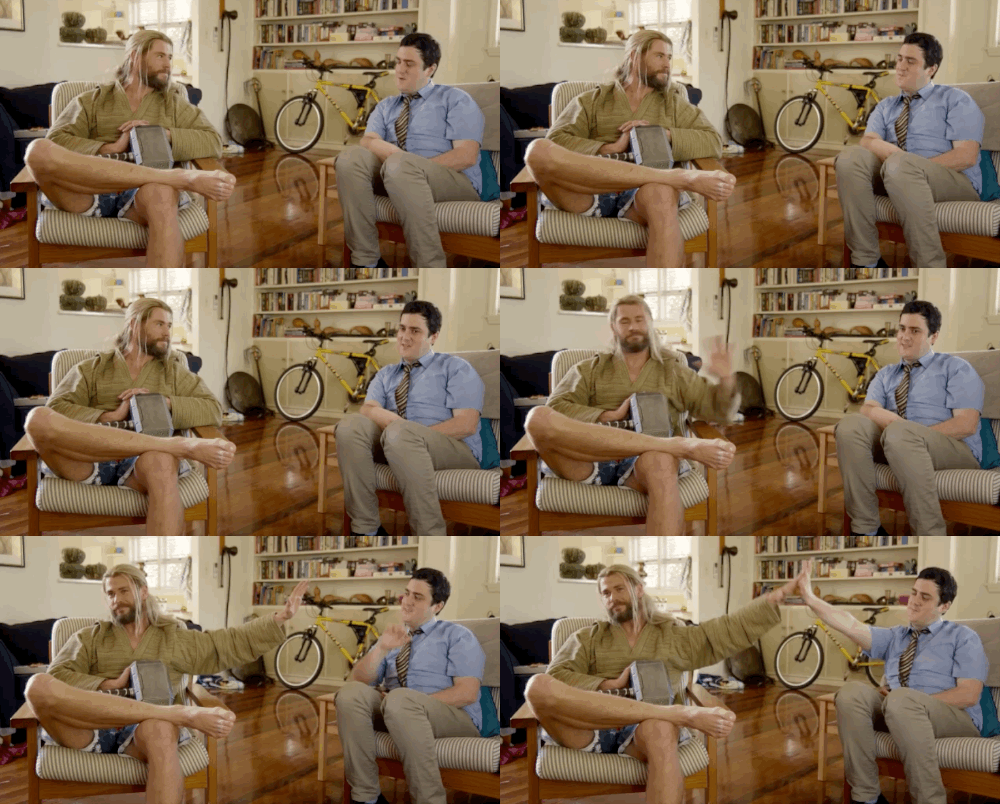
Watch: A mockumentary showing what Thor was up to during Captain America: Civil War. And a behind the scenes featurette for Doctor Strange.

See: What Bucky could look like as Captain America. And a fake trailer for a Stan Lee as The Watcher movie.

Watch: A fake teaser for The Batman. And a very weird trailer remix for Justice League.

See: What Joe Manganiello could look like as Deathstroke. And a VFX shot breakdowns for Suicide Squad.

Watch: A VFX breakdown for the Ghostbusters remake.

See: A new Jurassic World museum exhibit coming to America.

Watch: A mashup of Rogue One: A Star Wars Story and The Magnificent Seven.

See: New images from Rogue One: A Star Wars Story. And new images from Woody Allen’s Crisis in Six Scenes series.

Watch: A trailer for Morgan created by an AI. And a Zootopia trailer recut to look like a thriller.

Learn: A secret revealed about John Carpenter’s The Thing.

See: There’s a cookbook inspired by Brad Pitt eating in movies.

Watch: Spike Jonze’s new dance-ilicious short film/ad My Mutant Brain.

See: This week’s best new movie posters.

Watch: Arnold Schwarzenegger’s kid re-create a scene from Terminator 2: Judgment Day.

Our Features

Movie Calendar: See our guide to new movies and anniversaries for September above.

DC Movie Guide: How The Batman can handle Deatstroke and many more villains.

Marvel Movie Guides: What it means for the MCU that Steve Rogers isn’t Captain America. And 5 Spider-Man villains we want to see in the MCU.

Interview: The Russo Brothers on why there’s no Captain America/Black Widow fight in Captain America: Civil War.

In Memoriam: Remembering the reel-important people we lost in August.

Home Viewing: Our guide to everything hitting VOD this week. And our guide to what’s new on Netflix this month.

and

MORE FROM AROUND THE WEB:

Let’s block ads! (Why?)


No Image

Hawaii Fishermen Raise Concerns About Expansion Of National Monument

NPR’s Ari Shapiro speaks with Michael Goto, manager of the United Fishing Agency and a member of the Hawaii Longline Association, about how the expansion of the Papahanaumokuakea National Monument will affect his business and the economy of Hawaii.

Transcript

ARI SHAPIRO, HOST:

In Honolulu this week, President Obama talked about his decision to quadruple the size of a marine preserve off Hawaii’s coast that was first established under President George W. Bush.

(SOUNDBITE OF ARCHIVED RECORDING)

BARACK OBAMA: This is an area twice the size of Texas that’s going to be protected and allows us to save and study the fragile ecosystem threatened by climate change.

SHAPIRO: Conservationists celebrated that move, and we heard from one of them on this program last week. Now we’re going to hear from someone who is concerned about this expansion. Michael Goto is in Hawaii’s fish auction business. He joins us via Skype. Welcome.

MICHAEL GOTO: Thank you for having me, Ari.

SHAPIRO: First, describe the role that fishing plays in Hawaii.

GOTO: Well, fish in the state of Hawaii is really a cultural staple that really traces back to our Asian heritage, back to Japan, about raw fish consumption, whether it was the original sashimi raw ahi consumption or the ever-growing and popular poke market coming out.

SHAPIRO: Poke, of course, is the dish of chopped fish tossed with soy sauce and other delicious things. How do you expect the expansion of this marine preserve to change local fishing practices?

GOTO: Well, it’s definitely going to restrict it even further than what it already is restricted. We are under very taut management regime for U.S. fisheries. And now to lose more fishing grounds, specifically U.S. fishing grounds, in our Hawaii exclusive economic zone is going to further push the fishing fleet out into the open ocean, to the high seas, to actually directly compete with foreign fisheries in the same area, so…

SHAPIRO: You refer to the Hawaii exclusive economic zone. This is an area that right now only American fishermen are allowed to fish that will now…

GOTO: Right.

SHAPIRO: …Be closed off to fishing. So you’re saying you’ll have to compete with foreign fishermen.

GOTO: Correct.

SHAPIRO: You also raise the concern that foreign fishermen will enter this preserve and illegally harvest fish because it’s just going to be too big to patrol.

GOTO: Well, it is a possibility, Ari. You know, it can be patrolled by the Coast Guard, by National Marine Fisheries Service enforcement, but basically the biggest watchdogs in the area were always the U.S. fishermen themselves. Without them now to really relay the information, there’s virtually no enforcement that could occur in an area for a majority of the year.

SHAPIRO: I’d like to play you something that marine biologist Douglas McCauley of UC Santa Barbara said on this program last week. Let’s listen.

(SOUNDBITE OF ARCHIVED BROADCAST)

DOUGLAS MCCAULEY: In the long run, these are real assets for the fishing community. A protected area essentially sets up a safe zone for fish communities to expand, become more abundant, to grow and mature. And then there’s spillover outside of these protected areas that benefits everyone, benefits the fishermen that are catching fish just on the border of these zones.

SHAPIRO: So he’s arguing that this will be a good thing for fishermen. How do you respond to that?

GOTO: Well, you know, the science on specifically the bigeye tuna, you know, is still being discovered. You know, it’s still a virtual unknown where the breeding grounds are, where the spawning areas are for these fish. So to claim that this particular area is going to enhance breeding spots, you know, it’s still conjecture I think.

SHAPIRO: It seems like, ultimately, nobody wants fish populations to collapse. Fishermen and conservationists both want fish populations to expand. That would be good for everyone. Is this just a disagreement over the best way to reach those goals?

GOTO: Well, potentially, Ari. Fishery management is a very complex beast, and there’s a lot of different opinions on what the best practice is. Really, I think this is not a piece of that puzzle. I think this is more a legacy builder, unfortunately. Best available science and exploring all avenues – it really hasn’t taken place. And coming from the fishing community and the fishing industry, we feel really shortchanged due to that process.

SHAPIRO: I know President Obama is very popular in Hawaii. People there consider him a sort of native son. As you say, this is now part of his legacy. As somebody who doesn’t support this move, do you find yourself a bit conflicted?

GOTO: I do, Ari. And, you know, it’s actually even more personal for me specifically because on one hand, the president did appoint me to help manage U.S. fisheries. On the other hand, the entire process of the Antiquities Act deserves more time, more discussion – really have to engage the stakeholders directly rather than the stakeholders having to formulate their own coalition in itself to have their voice heard. And I think the more appreciation that the president could have of what the industry is and what it means to the community of Hawaii, you know, he’d have a – if anything, a much bigger understanding of that and kind of preserving it for the future.

SHAPIRO: Michael Goto is a manager of the United Fishing Agency and he’s a member of the Hawaii Longline Association. Thanks for joining us.

GOTO: Thank you, Ari.

Copyright © 2016 NPR. All rights reserved. Visit our website terms of use and permissions pages at www.npr.org for further information.

NPR transcripts are created on a rush deadline by Verb8tm, Inc., an NPR contractor, and produced using a proprietary transcription process developed with NPR. This text may not be in its final form and may be updated or revised in the future. Accuracy and availability may vary. The authoritative record of NPR’s programming is the audio record.

Let’s block ads! (Why?)


No Image

Colorado Gun Shops Work Together To Prevent Suicides

Jacquelyn Clark, co-owner of Bristlecone Shooting, Training and Retail Center in Lakewood, Colo., holds a list of gun safety rules. One recommendation: Consider “off-site storage if a family member may be suicidal.” John Daley/Colorado Public Radio hide caption

toggle caption John Daley/Colorado Public Radio

It’s ladies night at the Centennial Gun Club in a suburb of Denver. More than 80 women are here for safety instruction and target practice.

Tonight the club is offering more than shooting, though. The women rotate through the firing range, and in another large room, they hear a sobering presentation from emergency room doctor Emmy Betz. She’s part of a collaboration between gun shops and public health leaders in the state to help prevent suicide.

“If you’ve been touched by suicide somehow, if you could, raise your hand,” she asks. About half the hands go up.

Colorado has the nation’s seventh-highest suicide rate. In a typical year, more than half involve guns. Research suggests suicide is often an impulsive act, Betz says, and attempts are much more likely to be lethal when a firearm is used. If people survive a suicide attempt, they are far less likely to eventually die from suicide.

“Unfortunately, with firearms typically there’s not that second chance,” she says.

Dr. Emmy Betz works in the Emergency Department at the University of Colorado Hospital and also is part of the Colorado Gun Shop Project. John Daley/Colorado Public Radio hide caption

toggle caption John Daley/Colorado Public Radio

There’s a new push in the national conversation about gun violence that is attempting to sidestep the political rancor, to find common ground on one thing — guns and suicide. The campaign in Colorado is called the Colorado Gun Shop Project.

Centennial Gun Club is one of 46 on board. The project formally started in the summer of 2014, modeled after a similar one by the New Hampshire Firearm Safety Coalition.

During Betz’s talk, organizers hand out Life Savers candies to drive home the message. Gun owner Lily Richardson says she thinks the information could do just that: save lives. “I think those who are aware and taking the initiative to talk about it can help make the difference,” she says.

Nancy Dibiaggio, a new gun owner, agrees. “It’s a big issue, and I think it’s great Colorado is jumping on the wagon with this.”

Dick Abramson, Centennial’s owner, says he welcomes the opportunity to facilitate the discussion. “The difficulty is that it’s not a topic people want to just bring up and talk about over the cocktail table, right?”

He says workers at his store have refused to sell a gun to someone they’re concerned about or feel is having an especially bad day. “My honest feeling is this is a nonpartisan issue,” he says. “This is something that everybody can get behind. It should be a universal concern of everyone.”

Shooters take aim on Monday Night Bowling Pin Shoot at the firing range of the Bristlecone Shooting, Training and Retail Center in Lakewood, Colo. John Daley/Colorado Public Radio hide caption

toggle caption John Daley/Colorado Public Radio

In another Denver suburb, the Bristlecone Shooting, Training and Retail Center is also part of the project. At its range, shooters take target practice at bowling pins lined up on the far wall.

In the shop’s showroom, store owner Jacquelyn Clark shows off literature on display “that talks about suicide prevention and what to do if somebody you know or you yourself are in crisis,” she says.

A poster reads, Gun Owners Can Help! Under a photo of a lone elk in the mountains, it lists signs someone may be suicidal and a phone number for the National Suicide Prevention Lifeline.

Clark says there’s now an 11th commandment on gun safety rules: Consider off-site storage — family, friends, some shooting clubs, police departments or gun shops — if a family member may be suicidal. Clark says most people don’t realize that the majority of gun deaths are not homicides but suicide.

A survey of hospital emergency rooms by the Centers for Disease Control and Prevention in 2011 found an estimated 21,175 suicides involving firearms compared with 11,208 homicides involving guns.

“The gun community itself is more at risk than the regular community, not because gun owners tend to have more mental health issues but just because they have more access [to firearms],” Clark says.

Jarrod Hindman, director of the Suicide Prevention Resource Center in Colorado, says he appreciates that local gun advocates are taking the lead. “This is their project,” he says. “We’re just helping to facilitate the process.”

More than 500 Coloradans took their own lives with a firearm in 2014, says Hindman, but talking about the role of guns is hard.

“Obviously this is a very contentious topic, and we’ve found a way to find middle ground in a topic where we didn’t think there was a middle ground,” he says.

And now, a large trade association for the firearms industry, the National Shooting Sports Foundation, is teaming up with the American Foundation for Suicide Prevention to develop a suicide prevention campaign for the gun group’s 13,000 members. Their goal is to reduce the annual suicide rate by 20 percent in the next decade.

This story is part of a reporting partnership with NPR, Colorado Public Radio and Kaiser Health News.

Let’s block ads! (Why?)


No Image

Kareem Abdul-Jabbar Calls Colin Kaepernick's Concerns 'Very Admirable'

Colin Kaepernick, quarterback of the San Francisco 49ers, kneels during the national anthem before Thursday night’s game in San Diego. Chris Carlson/AP hide caption

toggle caption Chris Carlson/AP

San Francisco 49ers quarterback Colin Kaepernick dropped to one knee rather than stand during the national anthem at a preseason football game Thursday night. It’s an extension of the protest Kaepernick began last week when he sat as the anthem played before an earlier game, declaring, “I am not going to show pride in a flag for a country that oppresses black people and people of color.”

Prominent athletes have used their celebrity to call attention to social issues before. Basketball legend Kareem Abdul-Jabbar started using his fame to confront racial injustice as a college player, then over the course of his 20-season NBA career, and he continues now in retirement. In his recent book, Writings on the Wall: Searching for a New Equality Beyond Black and White, Abdul-Jabbar probes issues of race, political correctness and social activism in a series of analytical essays.

Abdul-Jabbar sat down with NPR’s Steve Inskeep to talk about Kaepernick, the broader role that athletes and celebrities play in shaping social movements and more.


Kareem Abdul-Jabbar presents a tribute to Muhammad Ali at the ESPY Awards at the Microsoft Theater in Los Angeles in July. Chris Pizzello/Invision/AP hide caption

toggle caption Chris Pizzello/Invision/AP

Interview Highlights

On Colin Kaepernick’s activism

Mr. Kaepernick is trying to get people to understand that he is concerned about a very important issue, which is the unnecessary killings of so many young black men. He’s really concerned about that and he went to a great length in order to call attention to that issue. … There are a lot of people who don’t like his tone, or maybe the venue that he chose to make his statement. But the fact that he is concerned about a real issue I think is a very admirable thing, and I hope that he will continue to find ways to bring this message across to people in a positive way.

I remember when a lot of Vietnam vets came back, they burned the flag. And it was not to denigrate America, but to protest the fact that we were fighting an unjust war and people were dying unnecessarily. And that requires a very dramatic statement. And they used their opportunity to make that statement that way.

On the role of athletes in the political sphere

That timing [of an athlete] making a statement or not making it really has to do with the opinion and the insight of the individual involved. Some individuals see this as an important issue and have made statements about it, and some people have decided not to engage. The fact that Mr. Kaepernick is willing to engage, and willing to risk so much in order to bring attention to the issue, I think we have to admire him for that and respect his need to make the statement that he’s making …

I didn’t make any statements the way Mr. Kaepernick is doing, but I was involved in, let’s say, right after the assassination of Dr. King, I was involved in a demonstration on the UCLA campus, in 1968. We just stood along Bruin Walk, and I had people criticize me for standing out there. People felt like the fact that I had the opportunity to play in the NBA, I should be very grateful for that and not rock the boat. But the assassination of Dr. King was a tragedy for our country, and I wanted to demonstrate my concern for what was going on. And I took the opportunity to do that.

On the criticism that comes with speaking out

I knew that I would get criticized. I was on a show with Joe Garagiola where he suggested that I leave the country because I said at times America is not living up to its responsibilities to all of its citizens. And he said, “Well maybe you should go someplace else.” But I choose to stay here and try to work to make America a better place. I think that is my patriotic duty, and I try to do it in that way, with that intention. With that motivation.

On Donald Trump’s suggestion that Kaepernick “find a country that works better for him”

You know, that’s his opinion. I notice that he wasn’t very eager to go over to Vietnam. So I don’t think he can throw any stones here in this instance.

On his critique of pushing nonvoters to the polls

Ignorance is not something that really lends itself to a meaningful discussion. So some of these people really shouldn’t vote, because they don’t know what the issues are. And I think people that are voting in the blind are doing a disservice to our country by not being better informed. … I hope that everybody understands the issues and votes their conscience according to a well-informed effort on their part.

By knowing what the issues are and how things can proceed, given what the issues are, I think we get a lot more done when we have the electorate being well informed. And it is my fervent hope that a well-informed electorate is the result of all this. … Some [people] definitely aren’t prepared to vote. And that’s unfortunate, but it’s a fact.

Let’s block ads! (Why?)


No Image

Today in Movie Culture: 'Rogue One' Meets 'The Magnificent Seven,' 'Zootopia' as a Thriller and More

Here are a bunch of little bites to satisfy your hunger for movie culture:

Mashup of the Day:

The audio from the trailer for The Magnificent Seven fits very well with the visuals from the trailer for Rogue One: A Star Wars Story (via Live for Films):

[embedded content]

Reworked Movie of the Day:

Disney’s Zootopia looks very intense in this recut trailer that makes it out to be more of a crime thriller than fun family flick (via Geek Tyrant):

[embedded content]

Studio Infomercial of the Day:

In 1990, a young Pixar Studios put out the following marketing video to promote its technology as available to brands for advertising purposes (via /Film):

[embedded content]

Vintage Image of the Day:

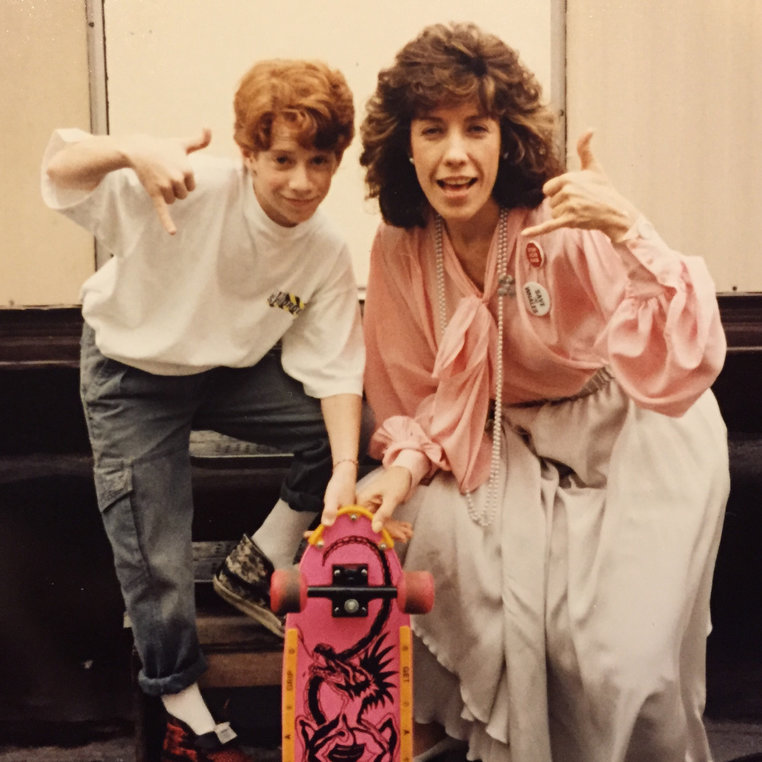
Lily Tomlin, whose birthday is today, being cool with a young Seth Green and a skateboard on the set of Big Business in 1987:

Filmmaking Lesson of the Day:

Rocket Jump Film School offers a lesson in editing using a special feature from the Die Hard 5 Star Collection DVD:

[embedded content]

Cosplay of the Day:

In Japan, prominent filmmakers apparently cosplay in support of movies they like — or at least horror director Yoshi Nishimura did for the release of the Ghostbusters remake (via Paul Feig):

Character Evolution of the Day:

Kaptain Kristian looks at the origins of Bugs Bunny, one of the most iconic cartoon characters of all time:

[embedded content]

Actor in the Spotlight:

Vox celebrates the late Gene Wilder and how his greatest quality was comedic generosity:

[embedded content]

Filmmaker in Focus:

Another nice video essay celebrating the work of Steven Spielberg, this one focuses on the idea of chaos in the suburbs (via Cinematic Montage Creators):

[embedded content]

Classic Trailer of the Day:

Today is the 10th anniversary of the release of Idiocracy. Watch the original trailer for the prophetic sci-fi comedy below.

[embedded content]

and

Let’s block ads! (Why?)


No Image

Organic Gatorade: It's Still Loaded With Sugar, Folks

Organic Gatorade? The artificial colors may be gone, but it’s still loaded with sugar. Gatorade hide caption

toggle caption Gatorade

Top brass at PepsiCo has talked for months about the introduction of an organic line. And now, according to Bloomberg, the company is rolling out G Organic — yep, an organic version of the famously technicolored sports drink Gatorade. (Think crimson red, electric blue and neon green shades.)

“Gatorade really dominates the [sports drink] market right now,” says Beth Bloom, senior food and drink analyst at the market research firm Mintel. Gatorade commands 77 percent of sports drink sales in the U.S.

“I think the [organic line] will broaden the appeal,” says Bloom. G Organic will be “one additional offering in their line that may [offer] a little bit of a better health profile.”

Bloom says health is definitely a driver in the purchase of organic products: “We’re seeing that about half of consumers who purchase organic products do so because they think they’re healthier than non-organic products.”

But is this new line of organic Gatorade really any better for you?

I put the question to Haemi Choi, a sports medicine doctor at Loyola University Medical Center.

She says some consumers like to see artificial colors and flavors removed from products. “It’s more natural,” Choi says. “But I don’t think it’s healthier per se. It’s pretty similar,” she says.

Take, for instance, the sugar content. Even though Gatorade seems to have switched to an organic cane sugar for its new organic line, Choi says that, nutritionally, this makes little difference. (We asked Gatorade to confirm the ingredient list of the new organic line, but did not hear back in time for press.)

Overall, Choi says the new organic line seems to contain about the same amount of sugar — about 20 grams per 12-ounce bottle.

At a time we’re told to cut back on sugar, she notes that many of us are already getting too much in our diet. “The average American consumes about 350 added calories from sugar [each day].”

For instance, women are told to limit consumption to somewhere between 25 and 37 grams of sugar per day, total. “So, drinking a bottle of [sports drink] is already getting you close to what you should get in one day,” Choi says.

Choi says unless you’re exercising vigorously for an hour or longer and sweating a lot, you don’t need to drink any kind of sports drinks — organic or not. If you’re out for a casual jog or bike ride, you don’t need electrolyte replacement, either.

So, what does Choi recommend for quenching thirst? “I say, drink water,” she says.

Lots of dieticians agree. “Sugar is sugar, so no matter if it’s organic or not, it’s still going to have the same effect on your body,” says Lisa Cimperman, a clinical dietician and spokesperson for the Academy of Nutrition and Dietetics.

If you consume too much, it may have negative effects on your waistline and can increase blood-sugar levels. And as we’ve reported, excess sugar is also linked to a higher risk of heart disease.

Cimperman says the new organic label may lead consumers to think organic Gatorade is healthier for them. “I think it’s a marketing ploy to apply this organic health halo to this product,” Cimperman says.

And that halo will likely cost you more. Bloomberg reports that G Organic will cost about an extra 50 cents per 16.9 ounce bottle, compared to the non-organic options of the same size, such as Gatorade Thirst Quencher.

Let’s block ads! (Why?)


No Image

FDA Fees On Industry Haven't Fixed Delays In Generic Drug Approvals

Where are the generic alternatives to EpiPen and other expensive drugs that have lost patent protection? Victor J. Blue/Bloomberg via Getty Images hide caption

toggle caption Victor J. Blue/Bloomberg via Getty Images

Consumers and lawmakers pushing for cheaper alternatives to the EpiPen, an antidote for life-threatening allergic reactions, and other high-priced drugs are seeking answers about a stubborn backlog of generic drug applications at the Food and Drug Administration.

Even after the agency started levying user fees on drugmakers in 2012 to pay for more people to review the medicines, the backlog of decisions still stretches almost four years.

As of July 1, the FDA had 4,036 generic drug applications awaiting approval, and the median time it takes for the FDA to approve a generic is now 47 months, according to the Generic Pharmaceutical Association, a trade group. The FDA has approved more generics in the past few years, but a flood of applications has added to the problem.

By comparison, the European Medicines Agency, Europe’s version of the FDA, has just 24 generics, including biologically based biosimilars awaiting approval. The FDA’s generic count doesn’t include biosimilars, which are more complicated medicines to review. The EMA along with the European Commission, which handles approval of marketing materials, are approving generics and brand-name drugs in about a year on average, according to the EMA.

Critics say getting generic alternatives to the U.S. market for products like EpiPen is still taking far too long. Other off-patent drugs with rising prices and no generic competition have also drawn scrutiny, including Turing Pharmaceuticals’ Daraprim, for toxoplasmosis, and Valeant’s cardiovascular drugs Isuprel and Nitropress.

Congress asks why generic version of EpiPens aren’t available

“We are concerned that Mylan (maker of the EpiPen) has not faced much competition for its product,” five U.S. senators wrote Aug. 24 to FDA Commissioner Dr. Robert Califf, adding that one of EpiPen’s nongeneric competitors, Auvi-Q, was recalled in October, granting Mylan a near monopoly. “News reports indicate that generic versions of the EpiPen have been subject to additional questioning by the FDA and have yet to be approved.”

On Monday, three members of the House Committee on Energy and Commerce wrote a similar letter to the FDA, seeking information about the EpiPen generic applications it has received and how they’ve been prioritized.

When asked whether the FDA bears any responsibility for the lack of EpiPen competition, FDA spokesman Kristofer Baumgartner said he couldn’t comment on pending applications or confirm their existence, citing confidentiality rules. But he stressed that the FDA pushes pending applications for drugs with no current generics to the front of the line and approved 580 generics in 2015, a record for the agency and 40 percent more than in 2014.

“The FDA is confident that the overall trend in actions on generic drug applications will be one of continuing improvement,” Baumgartner said.

In March, generics giant Teva Pharmaceuticals told investors that its generic version of EpiPen was rejected by the FDA, and that it wouldn’t be able to launch the generic until at least 2017. Adamis Pharmaceuticals reported a similar rejection from the FDA for its EpiPen generic in June.

Mylan has said it will offer a $300 generic in the coming weeks. Because Mylan also makes the brand-name product, it won’t have to wait in line behind other pending generics.

Dr. James Baker, the CEO and chief medical officer of the advocacy group Food Allergy and Research Education, said Mylan’s move may deter other generic manufacturers from seeking approval. Adrenaclick is the only other epinephrine auto-injector on the market, but it isn’t an exact generic of EpiPen and can’t be swapped automatically at the pharmacy if a doctor has written a prescription for EpiPen.

Adrenaclick also isn’t widely available. “You call up 100 pharmacies, and maybe 10 have the device, from what we gather,” Baker said of Adrenaclick.

He said several factors have allowed EpiPen’s price tag to swell over the years. Many patients were in the dark about EpiPen price increases until insurers started shifting more of the cost onto consumers a few years ago, and getting approval for a generic that’s both a drug and a device is more complicated than getting approval for a drug alone, he said.

Meanwhile, Mylan has aggressively marketed its product and raised doubts about alternatives.

And documents show that Mylan submitted a citizen petition to the FDA arguing that people trained to use EpiPens wouldn’t be able to use Teva’s pending generic epinephrine auto-injector because of design differences.

“Is Mylan doing anything illegal? No,” Baker said. “It’s taking advantage of all these things to take the market and basically push it to an extreme.”

User fees levied to speed up the approval process

The FDA’s generic backlog isn’t a new problem. In 2012, it was so large that it prompted the government to start charging user fees to generic manufacturers to provide the funds for the FDA to speed the process. The fees built on the 20-year-old Prescription Drug User Fee Act, which required brand-name drugmakers to pay fees to expand FDA’s capacity to review applications for those medicines. In the first three years, the FDA collected $1 billion from generic drug manufacturers.

The fees were used to hire an additional 1,000 employees, and put the Office of Generic Drugs on par with the Office of New Drugs by reorganizing it and moving it from four outlying buildings to the FDA’s main campus in Silver Spring, Md.

The funds were also used to upgrade the office’s information technology. The FDA says on its website: “Additional resources will enable the Agency to reduce a current backlog of pending applications, cut the average time required to review generic drug applications for safety, and increase risk-based inspections.”

In October 2012, there was a backlog of 2,868 generic drugs awaiting approval, and the FDA said it would take a “first action” on 90 percent of these drugs by 2017. This summer, the agency met its goal a year early, but a first action isn’t an approval. Instead, it stops the review clock and puts the applications back in industry’s court.

Only 1,551 generics have been approved since the fees on drugmakers were initiated, and that total includes some extra applications that weren’t considered part of the official backlog. So, all told, the agency has only approved about half of the backlogged generics that were awaiting approval in 2012.

“Most applications from the backlog will need to come back to FDA for additional review due to deficiencies in the submissions, before approval is possible,” the agency said in a statement in responses to questions.

David Gaugh, senior vice president for science and regulatory affairs at the Generic Pharmaceuticals Association, said standards used to compile generic applications when they were submitted three or four years ago have changed while the applications were sitting in the backlog. So when the FDA got back to those companies, it said the applications were of “poor quality.”

The applications for generic drugs have continued to pile up even as the FDA approved a record number of generics in 2015 and again in the first seven months of 2016. The number of generic drug applications tripled from 2002 to 2012, according to January congressional testimony from Janet Woodcock, who directs the FDA’s Center for Drug Evaluation and Research.

Still, some see signs the agency is on the right track.

“I think that it is an optimistic picture overall … at the FDA, there’s been a lot of progress, and I think there is more to be made,” said Dr. Aaron Kesselheim, an interdisciplinary drug researcher at Harvard Medical School and Brigham and Women’s Hospital. “This is not something that people should think has been solved at this point. It’s totally an ongoing process.”

Kaiser Health News is an editorially independent news service that is part of the nonpartisan Henry J. Kaiser Family Foundation. Follow Sydney Lupkin on Twitter: @slupkin.

Let’s block ads! (Why?)