Articles by admin

No Image

Skipping Meals, Joining Gangs: How Teens Cope With Food Insecurity

Many kids rely on school for food their families can’t afford. Two reports suggest one group is falling through the cracks: teens. Dogged by hunger, teens may try a wide range of strategies to get by. Meriel Jane Waissman/Getty Images hide caption

toggle caption Meriel Jane Waissman/Getty Images

When Lanarion Norwood Jr. was 9 years old, he opened his family’s refrigerator to find it almost empty. His grandmother, unemployed because of disability, had run out of food for the month. So Norwood did what many young children adamantly resist: He went to bed early. Sleeping, he reasoned, would help him suppress hunger, and he knew the next day he could eat at his Atlanta school.

That memory is one of Norwood’s earliest recollections of being hungry, but not his last. As a teenager, his food concerns grew with his appetite. “I would plan out my meal[s],” Norwood says, now a freshman at Morehouse College in Atlanta. “I knew I could eat breakfast and lunch at school and I could eat again later at [an afterschool mentoring program].”

Lots of kids like Norwood rely on schools for food their families can’t afford. Federal programs like the National School Lunch Program offer free or discounted meals to children from low-income families. But two reports out this month from the Urban Institute and Feeding America suggest one group is falling through the cracks: teenagers. Roughly 7 million children in the U.S. aged 10-17 struggle with hunger, according to one report, which examines teenage access to food. Dogged by hunger, teenagers may try a wide range of solutions, from asking friends for meals to bartering sex for food.

To learn about teen hunger, the researchers partnered with food banks and, with funding from Conagra, conducted 20 focus groups across the country with adolescents from low-income families. The researchers found two challenges to feeding teens in need: First, some of the charitable programs that target young children — like backpack programs that allow kids to take food home over the weekend — aren’t always offered to teenagers. And second, even when programs are available, teenagers feel more self-conscious about accepting free food or may not realize that they are eligible for the assistance.

Lead researcher Susan Popkin of the Urban Institute explains why the challenges facing teenagers are unique: “It’s easier to get to little kids. They’re all in school. They’re certainly more cooperative. Teens are often seen as the problem. Not as part of the solution.”

Teens, Popkin explains, are more aware of the stigma associated with a free lunch than younger children. They’re also at an age where fitting in is paramount. So many teens will forego official programs and try to get meals from other places – by going to a friend’s house with a well-stocked pantry, for example.

Norwood says pride is a major hurdle. “Why should I have to go through a program just to eat when I’m almost grown?” he says, describing the attitude of some of his peers.

Even adolescents who do opt to take advantage of school programs may not get a good meal, according to Popkin, because they often receive the same portion sizes as elementary school children. What’s more, teens often squirrel the meal away for younger siblings.

“They feel the pressure that their parents are under,” she says. “They’re old enough to be aware of it and they want to help. They go hungry along with their parents.”

Teenagers cope with hunger in other ways too, the researchers found. Teenagers try to get jobs, but often struggle against the competition of adults with more experience and more flexible hours. The jobs they can get — like cutting hair or mowing grass — often don’t pay well enough to bridge the gap in the family’s food budget.

Sometimes teenagers turn to less benign methods to get money or food. Teenagers in the focus groups cited petty theft and even gang membership as methods adolescents used to put money and food on the table.

Most surprising to Popkin was that some teenagers, girls in particular, date older men with more disposable money in order to get food. Thirteen of the 20 focus groups talked about trading sex for a meal.

What can be done to improve the plight of food-insecure teenagers? Popkin says simply extending elementary meal programs to teenagers could be a start, as well as increasing portions with age.

Emily Engelhard, managing director of research and evaluation for Feeding America, says teens came up with other ideas as well, like tying free food to another less stigmatized activity – like movie night or a basketball game. She says an important takeaway from the research is “just how incredible and resilient these teens are.”

Better and more accessible grocery stores in low-income neighborhoods would also help, says Norwood. He says many people in Atlanta have to take a bus or train to reach a grocery store with fresh produce and can’t afford the time or fare, to say nothing of lugging the groceries home.

He sums up the importance of teen hunger simply: “It is real. It is serious. And it should be addressed. It affects the mind, it affects the body, and it affects the soul. Without that, what do you have?”


Let’s block ads! (Why?)


No Image

Radio Play-By-Play Announcer Describes Game Disruption

Kevin Harlan of Westwood One was broadcasting during Monday Night Football when someone ran onto the field. Harlan described him as a “goofball in a hat” and more. Police eventually tacked the man.

(SOUNDBITE OF MUSIC)

STEVE INSKEEP, HOST:

Good morning. I’m Steve Inskeep. Years ago, I worked as a radio sportscaster and admired those who did it well. Westwood One’s Kevin Harlan did on Monday when a pro football game was disrupted.

(SOUNDBITE OF RADIO BROADCAST)

KEVIN HARLAN: Hey, somebody has run out on the field – some goofball in a hat and a red shirt. Now he takes off the shirt. He’s running down the middle by the 50. He’s at the 30. He’s bare-chested and banging his chest. Now he runs the opposite way.

INSKEEP: TV didn’t show the action, but Harlan gave the facts until police tackled the man. It’s MORNING EDITION.

Copyright © 2016 NPR. All rights reserved. Visit our website terms of use and permissions pages at www.npr.org for further information.

NPR transcripts are created on a rush deadline by Verb8tm, Inc., an NPR contractor, and produced using a proprietary transcription process developed with NPR. This text may not be in its final form and may be updated or revised in the future. Accuracy and availability may vary. The authoritative record of NPR’s programming is the audio record.

Let’s block ads! (Why?)


No Image

Today in Movie Culture: 'Captain America: Civil War' Meets 'Marvel vs. Capcom,' Horror Themed Oreos and More

Here are a bunch of little bites to satisfy your hunger for movie culture:

Alternate Sound Effects Edit of the Day:

An animator called Frobman redid the sound for the big fight scenes in Captain America: Civil War so they sound like the video game Marvel vs. Capcom (via Geek Tyrant):

A little bit of editing fun.
Was I the only person who thought then when watching Captain America Civil War? pic.twitter.com/2HT7ecrImb

— Frobman (@TisDaFrobman) September 11, 2016

Redone Trailer of the Day:

Speaking of mashups of superhero movies and video games, here’s the Justice League trailer redone in 8-bit animation:

[embedded content]

Bonus Feature of the Day:

From the upcoming DVD and Blu-ray of X-Men: Apocalypse, here’s a retro-style orientation video for Xavier’s School for Gifted Youngsters (via /Film):

[embedded content]

Fake Movie Tie-In of the Day:

These The Exorcist themed Oreo cookies would be a hot item if the cream wasn’t actually pea soup flavored. See more fake horror movie Oreo tie-ins at Dread Central.

Fan Theory of the Day:

Netflx provides animated evidence of how the Back to the Future trilogy follows the Lockard Theory of the chiasmus:

[embedded content]

Movie Truth of the Day:

Slate shows how much it costs to live in a Nancy Meyers movie, and clearly her characters are richer than rich:

[embedded content]

Vintage Image of the Day:

Sam Neill, who turns 69 today, is the only one not studying his Jurassic Park script in this set photo from 1992:

Character Study of the Day:

Speaking of “giant lizard” movies, Kyle of Frame by Frame looks into how Godzilla changed monster movies:

[embedded content]

Filmmaker in Focus:

Stanley Kubrick gets another video essay, this one by Channel Criswell on the cinematic experience of his films:

[embedded content]

Classic Trailer of the Day:

This weekend marks the 80th anniversary of the theatrical release of My Man Godfrey. Watch the original trailer for the classic comedy below.

[embedded content]

and

Let’s block ads! (Why?)


No Image

The Troubled Galaxy Note 7 Leaves Some Samsung Customers Frustrated

Samsung’s Galaxy Note 7 is demonstrated in New York on July 28. All owners of the new smartphone have been urged to exchange the device after reports of phones’ exploding or catching fire. Richard Drew/AP hide caption

toggle caption Richard Drew/AP

Samantha Cannariato has been trying to return her Samsung Galaxy Note 7 for more than a week. All owners have been urged to exchange the device after reports of phones exploding or catching fire. After hours in calls and five trips to the store, Cannariato still can’t get rid of the phone.

Her story — like that of many other U.S. users trying to take part in Samsung’s unofficial recall — winds through a network of stores, interchanging sales reps, bureaucratic intricacies and unclear guidelines. As the world’s largest smartphone maker pushes to reclaim some 2.5 million potentially hazardous units shipped globally, it is facing an enormous-scale process and growing concerns about the recall’s lasting impact.

Cannariato’s Galaxy Note 7 is less than a month old. Its purchase was well-weighed — she calls it her first “fancy phone.” And it is: Waterproof, with curved display, top-rated camera and a practical stylus, Samsung’s latest smartphone is a crown jewel, the company’s “best,” an anticipated rival to Apple’s new iPhone. “A really great phone,” in Cannariato’s words.

But then came several dozen reports that the phones overheated and flared up, particularly while being charged. Samsung Electronics traced the problem to a flaw in the phone’s lithium-ion battery — such batteries have afflicted other devices before, setting ablaze “hoverboard” scooters, electric cars, airplanes and iPods.

“There was a tiny problem in the manufacturing process, so it was very difficult to figure out,” Dongjin Koh, president of Samsung’s mobile business, told reporters on Sept. 2.

The company launched a global recall. “It will cost us so much it makes my heart ache,” Koh said. But “what is most important is customer safety,” he said.

Dongjin Koh, president of Samsung Electronics’ mobile business, speaks at a news conference in Seoul on Sept. 2. Kim Hong-ji/AP hide caption

toggle caption Kim Hong-ji/AP

Cannariato, who works in logistics in Port Wentworth, Ga., heard the news a day or two later. First came a Facebook post from a friend who had helped her pick the phone. Then came a message from her carrier, AT&T.

She hurried over to the AT&T authorized retailer where she had bought the device. The clerk asked her whether she was experiencing problems with the phone (she wasn’t) and declined to accept it. Cannariato decided to give it time; the directions might not have trickled down, she thought. When she returned later that week, another clerk referred her to an official AT&T store.

As part of the recall, Samsung is offering to switch U.S. consumers to another Galaxy phone or get a loaner phone until the new, safer Galaxy Note 7 becomes available, plus a gift of $25. Major carriers, including AT&T, have expanded the offer to exchange the recalled Samsung phones for any other phone in the store.

However, AT&T representatives referred Cannariato back to the retailer that had sold her the phone — they couldn’t find her in the system. There, she faced another, almost gleeful, rejection from another clerk, she says.

Then the system was down. The store didn’t pick up the phone. On the fifth visit, a manager said Cannariato couldn’t exchange her phone because it was attached to a business account, not in her name but in her mother’s. Later, she was referred back to the original retailer.

Meanwhile, she continues to use her Galaxy Note 7. “When I use the charger, I put it in a metal loaf pan,” she says, “and leave it there with nothing around that could catch fire.”

Altogether, Cannariato estimates the exchange has subsumed more than 10 hours. “I’ve been in the store, on the phone, waited, been online. I have texted, I have tweeted, I have Facebooked,” Cannariato says. “There’s no one way to do this. There are a million different avenues and it’s easy for each avenue to push the problem to someone else.”

Such complications, to varying degrees, are faced by other customers. Alongside stories of completely smooth transactions floating on Twitter, reddit and Samsung forums are posts about lengthy customer service calls, unnecessary store visits, demands of original boxes or accessories and other hiccups.

“That’s really on Samsung,” says Avi Greengart, consumer devices analyst at market research firm Current Analysis. “They have not been very clear in their communications, in terms of what specifically is a problem, how it will be resolved and what’s the time frame.”

In its announcements so far, Samsung Electronics America refers to the fire-hazard problem vaguely as a “battery cell issue” and to the recall as “a product exchange program.” The company says consumers will be able to get a new version of the Note 7, but its approval is pending without a clear release date.

In a statement, the company says it is working with the Consumer Product Safety Commission and “carrier partners to develop and evaluate solutions that are best for US Note 7 owners. No action will be taken without the approval of the CPSC. Customer safety remains our top priority.”

And the CPSC’s involvement is, in fact, part of the challenge. That is the agency that facilitates product recalls.

Traditionally, companies voluntarily work with the government to operate the recall process, providing the details of a problem. That prompts a formal recall notice, which legally halts all sales of the faulty product and creates a central location for consumers to report incidents, learn about remedies and find proper channels to pursue them.

This has yet to happen for the Galaxy Note 7. A week after Koh’s press conference, the CPSC issued a warning to consumers to power down Note 7s and stop charging or using them. Samsung and the CPSC have yet to announce a formal recall. Technically, it’s still completely legal to keep selling the Galaxy Note 7 — and some do remain on sale online.

“This is going to hammer Samsung earnings, but it doesn’t have to permanently damage Samsung’s brand if they react swiftly and clearly,” Greengart says. And so far, he says, “they’ve undercommunicated, rather than overcommunicated.”

Samsung’s shares regained some strength in Wednesday’s trading after taking a nosedive on the news of the recall, which erased billions of dollars in company value.

Let’s block ads! (Why?)


No Image

NFL Pledges Another $100 Million For Study Of Head Injuries, Safety In Football

“While we can never completely eliminate the risk of injury, we are always striving to make the game safer,” NFL Commissioner Roger Goodell says. Bob Leverone/AP hide caption

toggle caption Bob Leverone/AP

Saying it wants to make football safer for current and future athletes, the NFL is pledging to spend $100 million for “independent medical research and engineering advancements.” A main goal will be to prevent and treat head injuries.

Announcing the pledge Wednesday, NFL Commissioner Roger Goodell said it is in addition to the $100 million the league already committed toward medical research of brain injuries and chronic traumatic encephalopathy, the progressive degenerative disease that has been found in football players.

The $100 million figure represents 1 percent of the roughly $10 billion in annual income that the league and its teams have been reported to make — including back in 2014, when an outside tax counsel for the NFL named that figure in an interview with NPR.

While he laid out new elements of a plan to make football safer, Goodell also acknowledged the game’s physical nature:

“Our game, of course, is a contact sport. Fans love to see the action on the field, including the big hits. While we can never completely eliminate the risk of injury, we are always striving to make the game safer — for our professional athletes down to young athletes first learning how to play.”

The new program comes as the league has dealt both with injuries on the field and with a large lawsuit by former players that was settled back in April for $1 billion. It requires the NFL to make different payments to players who have sustained varying levels of debilitating injury.

And in March, an NFL executive made waves for becoming the first league official to publicly state that football has been linked to chronic traumatic encephalopathy.

Announcing the new program, dubbed Play Smart, Play Safe, Goodell mentioned that the NFL had recently hired a full-time chief medical officer to coordinate best practices and information between the medical staff of teams and the NFL and the NFL Players Association.

In addition, Goodell said, the NFL is “establishing an independent, scientific advisory board comprising leading doctors, scientists and clinicians to engage in a clear process to identify and support the most compelling proposals for scientific research into concussions, head injuries and their long-term effects.”

Goodell also noted that one result of the increased emphasis on preventing head injuries is that “there may be an increase in reported concussions, as happened last season.”

While no one wants concussion numbers to rise, he said, the increase in self-reporting, screening and data collection will make preventive measures more reliable in the long run.

“This is an important culture change for all of us,” Goodell said.

Let’s block ads! (Why?)


No Image

Trump Shares Medical Information And Affinity For Fast Food With 'Dr. Oz'

Republican presidential nominee Donald Trump released his medical records during a taping of The Dr. Oz Show with host Dr. Mehmet Oz, set to air Thursday. Sony Pictures Television hide caption

toggle caption Sony Pictures Television

Donald Trump sat down with controversial TV host Dr. Mehmet Oz on his show, set to air Thursday, to discuss his personal health and medical history.

The Republican presidential nominee’s campaign had said earlier Wednesday he wouldn’t be releasing on The Dr. Oz Show the results of a physical the 70-year-old candidate underwent last week. But a press release from the show said the two did discuss the recent physical along with his personal health, his views on health care policy and his recent proposal for child care and maternity leave:

“Mr. Trump shared with Dr. Oz the results of his physical examination performed last week by Dr. Harold Bornstein, M.D. of Lenox Hill Hospital, whom has been Mr. Trump’s personal physician for many years,” the statement read, also noting that Dr. Oz “took Mr. Trump through a full review of systems” including his nervous system, bladder and prostate health, cardiovascular health, gastrointestinal health, family medical history and more.

Bornstein released a letter last December declaring that Trump would “be the healthiest individual ever elected to the presidency” and called his health “astonishingly excellent.” NBC News reported last month that Bornstein had written the letter in five minutes while a limo sent by Trump waited outside his office.

Wednesday’s taping was closed to the press, but NBC’s Katy Tur reported that a source inside the studio said Dr. Oz read the full report of his physical and “said he was very healthy and that he would be happy if any of his patients had similar results.” His blood pressure was reportedly good as was his cholesterol, though he is on cholesterol medication. He weighs 267 pounds (though other reports have said the number was 230 pounds) and Dr. Oz said Trump was “slightly overweight.” Trump also said “never has a need to go to a hospital because he’s too healthy.”

According to a CNN interview with an audience member, Trump also said he wants to lose about 15 pounds.

Trump also reportedly had some surprising comments about his exercise regimen and eating habits, per NBC’s Jesse Rodriguez.

From Dr. Oz taping: Trump said his campaigning was his exercise. That him “moving his hands around when he was speaking” was a work out.

— Jesse Rodriguez (@JesseRodriguez) September 14, 2016

Per an audience member at Dr. Oz taping with Trump, he said he likes fast food because “at least you know what they are putting in it.”

— Jesse Rodriguez (@JesseRodriguez) September 14, 2016

Both candidates have been under pressure to release more of their medical history. Democratic nominee Hillary Clinton, 68, is set to return to the campaign trail on Thursday after falling ill with pneumonia.

The choice to reveal medical results on a TV talk show is an unusual one for a presidential candidate, but one that is certainly in line with the former reality TV star’s unconventional campaign. Oz, a cardiothoracic surgeon by training, developed a loyal following after appearing on The Oprah Winfrey Show through the years. But the celebrity doctor has also come under scrutiny for hawking products that have no scientific validity, particularly weight-loss supplements. Oz also said on Tuesday he wasn’t going to ask Trump “questions he doesn’t want to have answered.”

Let’s block ads! (Why?)


No Image

Today in Movie Culture: Honest 'Captain America: Civil War' Trailer, a Spider-Man Thriller and More

Here are a bunch of little bites to satisfy your hunger for movie culture:

Movie Takedown of the Day:

Only Honest Trailers could make an argument for how Captain America: Civil War is almost as bad as Batman v Superman: Dawn of Justice:

[embedded content]

Movie Recap of the Day:

Speaking of Captain America: Civil War, here’s a recap of the movie in rap song form:

[embedded content]

Alternate Ending of the Day:

And, hey, how did Iron Man get home at the end of Captain America: Civil War? Here’s how the movie should have ended:

[embedded content]

Reworked Movie of the Day:

And speaking of Marvel superheroes, here’s The Amazing Spider-Man redone as a stalker thriller:

[embedded content]

Vintage Image of the Day:

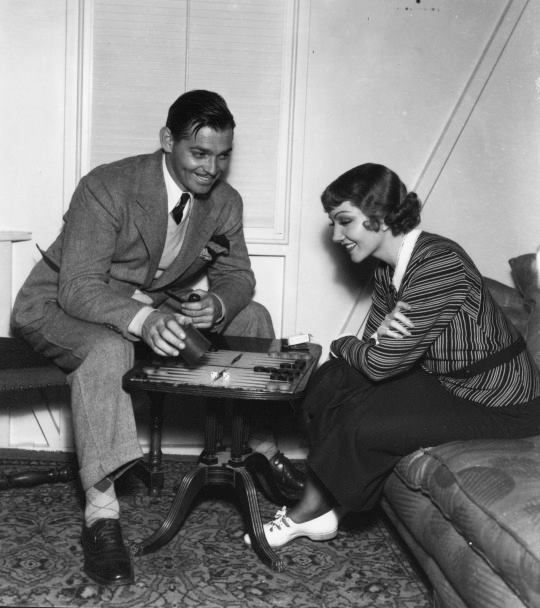
Claudette Colbert, who was born on this day in 1903, plays a game with Clark Gable during down time on the set of It Happened One Night in 1933:

Remake of the Day:

Remaking movie scenes with kids is often enjoyable, but this lengthy Big Lebowski-inspired short is something special (via Geek Tyrant):

[embedded content]

Cosplay of the Day:

The Alamo Drafthouse is the kind of movie theater where you can feel comfortable seeing movies in crazy Beetlejuice cosplay. Probably for a screening of Beetlejuice (via Fashionably Geek):

Movie Score Comparison of the Day:

Supplementary to a video essay featured yesterday, here are a bunch of movies whose scores sound a lot like other scores:

[embedded content]

Supercut of the Day:

With the Emmys coming up this weekend, the small screen deserves some love here. Somewhat movie-related, here’s a video by Fernando Andres showcasing HBO and the rise of TV as Film (via One Perfect Shot):

[embedded content]

Classic Trailer of the Day:

Today is the 25th anniversary of the now incorrectly titled Freddy’s Dead: The Final Nightmare. Watch the original trailer for the horror sequel below.

[embedded content]

and

Let’s block ads! (Why?)


No Image

Wells Fargo Unit's Leader Departs With $125 Million After Bank Incurs Record Fine

A Wells Fargo executive’s departure with large stock and options holdings has sparked questions, after the division she ran incurred $185 million in penalties. Joe Raedle/Getty Images hide caption

toggle caption Joe Raedle/Getty Images

A federal agency used her Wells Fargo unit as a cautionary tale, imposing the largest fine it’s ever levied. Her bank fired some 5,300 employees for acting “counter to our values.” But questions are now circulating about the unit’s leader, Carrie Tolstedt, who’s set to depart her post with $124.6 million in stock and options, and whose compensation for the five years targeted by the Consumer Financial Protection Bureau included a yearly incentive bonus of $5.5 million in stock, to go along with her base pay and other bonuses.

Many of those questions were raised in a Fortune story Monday that wondered whether the situation was ripe for Wells Fargo to try to “claw back” some of the stock options it had awarded Tolstedt, who exits after years of heading Wells Fargo’s huge community banking division.

If you’re catching up to this story, here’s how NPR’s Yuki Noguchi reported it today for our Newscast unit:

“When Carrie Tolstedt’s retirement was announced in July, Wells Fargo CEO John Stumpf called her a ‘dear friend,’ ‘role model,’ and ‘standard-bearer for our culture.’

“Less than two months later, the bank agreed to pay the largest penalty ever imposed by the Consumer Financial Protection Bureau — $185 million — for creating more than 2 million unauthorized customer accounts over five years. Wells Fargo says Tolstedt’s retirement was a personal decision, and that her stock holdings were earned over her 27-year tenure.”

The Fortune article seemed to hit a nerve: one day later, Wells Fargo announced it will eliminate all product sales goals in retail banking, as of the start of 2017.

That drastic change was announced just two months after Wells Fargo said Tolstedt would retire at the end of 2016. Weeks after that announcement, Tolstedt handed off her duties to another executive.

When we contacted Wells Fargo to ask about the situation Tuesday, senior vice president Mark Folk said Tolstedt is remaining with the company through December to help the transition process.

Folk says Tolstedt’s $124.6 million comes from “stock that she either owns outright” or in the form of options.

As for the size of Tolstedt’s holdings, Folk noted that she was at the company for nearly 30 years. When we asked about a potential “claw back” of millions in compensation for Tolstedt, Folk said Wells Fargo isn’t talking about that today.

Wells Fargo saw a number of changes during Tolstedt’s tenure — particularly at the end of it. Consider that in 2014, around the middle of the roughly five-year period reviewed by the CFPB, Wells Fargo set a record in reporting net income of $23.1 billion, on revenue of $84.3 billion. Tolstedt’s unit accounted for around $14 billion of that year’s net income.

In that year, as in every year in the 2011-2016 period that the CFPB covered in its consent order, Tolstedt collected $5,500,000 in stock as her portion of the performance share award that’s split among Wells Fargo’s top executives, according to the bank’s proxy reports. That stock normally takes a three-year period to vest fully.

As the Fortune piece notes, Tolstedt wasn’t singled out in the CFPB’s actions, and it’s not clear what if any involvement she had with her unit’s use of the tactic of creating fake accounts to trigger incentive bonuses. But the magazine also spoke to a banking reform advocate who asked about claw-back policies, “If they don’t apply here, when will they apply?”

Let’s block ads! (Why?)


No Image

North Carolina GOP Blasts NCAA's Decision To Pull Championships

The NCAA penalized the state of North Carolina for its new law that removed some protections for lesbian, gay, bisexual and transgender people. The NCAA pulled tournament games out of the state for the next academic year.

AUDIE CORNISH, HOST:

There’s been a ton of reaction in North Carolina after the NCAA yanked all post-season tournaments out of the state. The college governing board is relocating a series of sporting events due to a controversial state law known as House Bill 2. It limits protections for the lesbian, gay, bisexual and transgender community. Jeff Tiberii of member station WUNC reports on the latest economic blow to North Carolina since the law took effect.

JEFF TIBERII, BYLINE: College basketball is ingrained in the culture down here. Many adults can recall teachers rolling televisions into classrooms to watch March Madness games during their childhood. It seems just about everyone has a passionate interest.

(SOUNDBITE OF ARCHIVED RECORDING)

WOODY DURHAM: It’s all over. The Tar Heels are the Atlantic Coast Conference champions. Carolina has beaten Duke.

TIBERII: Now for the first time since 1985, no post-season collegiate men’s basketball will take place in North Carolina.

HENRI FOURRIER: A kick in the gut.

TIBERII: That’s Henri Fourrier. He’s president of the Greensboro Area Convention and Visitors Bureau.

FOURRIER: Think we all knew this was coming, but somehow I found myself in denial and hopeful that it wasn’t going to happen.

TIBERII: What good economically has come out of House Bill 2?

FOURRIER: Nothing that I can put my arms around.

TIBERII: According to the Visitors Bureau, the removal of these games is an economic loss of $14-and-a-half million adding to a growing statewide tally in excess of several hundred million dollars. Greensboro Mayor Nancy Vaughan says it goes beyond money.

NANCY VAUGHAN: Marketing like that when you see these events on television – you can’t buy that type of advertising. It is a source of pride to our community. It is part of our culture, and it would be a shame for that to be taken away for the next few years.

TIBERII: The NCAA has kept sports championships out of states before. It had a long ban on events being held in South Carolina because the Confederate flag used to fly on the state capitol grounds. The NCAA cited the discriminatory nature of House Bill 2 which requires people to use the bathroom corresponding to the sex listed on their birth certificate as to why it relocated all post-season events from North Carolina in the next year.

The NCAA and Governor Pat McCrory did not return phone calls for comment, but in a statement, Governor McCrory said this is an issue for the courts to decide, not the NCAA.

Republican Lieutenant Governor Dan Forest defended the law today. He says the economic impact is a concern, but the bigger issues are safety and partisan bickering which the NCAA shouldn’t be involved in.

(SOUNDBITE OF ARCHIVED RECORDING)

DAN FOREST: So this is kind of the way politics works, you know? If it wasn’t this, it would be another issue. So certainly the frustration, if there is any, would be on getting the truth out.

TIBERII: Since the law took effect, several businesses, including Pay-Pal, have scaled back large expansion plans. Bruce Springsteen canceled a concert, and the NBA took its All-Star Game to New Orleans. Now the Atlantic Coast Conference has to decide if it will hold future tournaments in its home state. And for many in this basketball-crazed region, the loss of college hoops could sting the most. For NPR News, I’m Jeff Tiberii in Durham, N.C.

Copyright © 2016 NPR. All rights reserved. Visit our website terms of use and permissions pages at www.npr.org for further information.

NPR transcripts are created on a rush deadline by Verb8tm, Inc., an NPR contractor, and produced using a proprietary transcription process developed with NPR. This text may not be in its final form and may be updated or revised in the future. Accuracy and availability may vary. The authoritative record of NPR’s programming is the audio record.

Let’s block ads! (Why?)


No Image

Doctors Test Drones To Speed Up Delivery Of Lab Tests

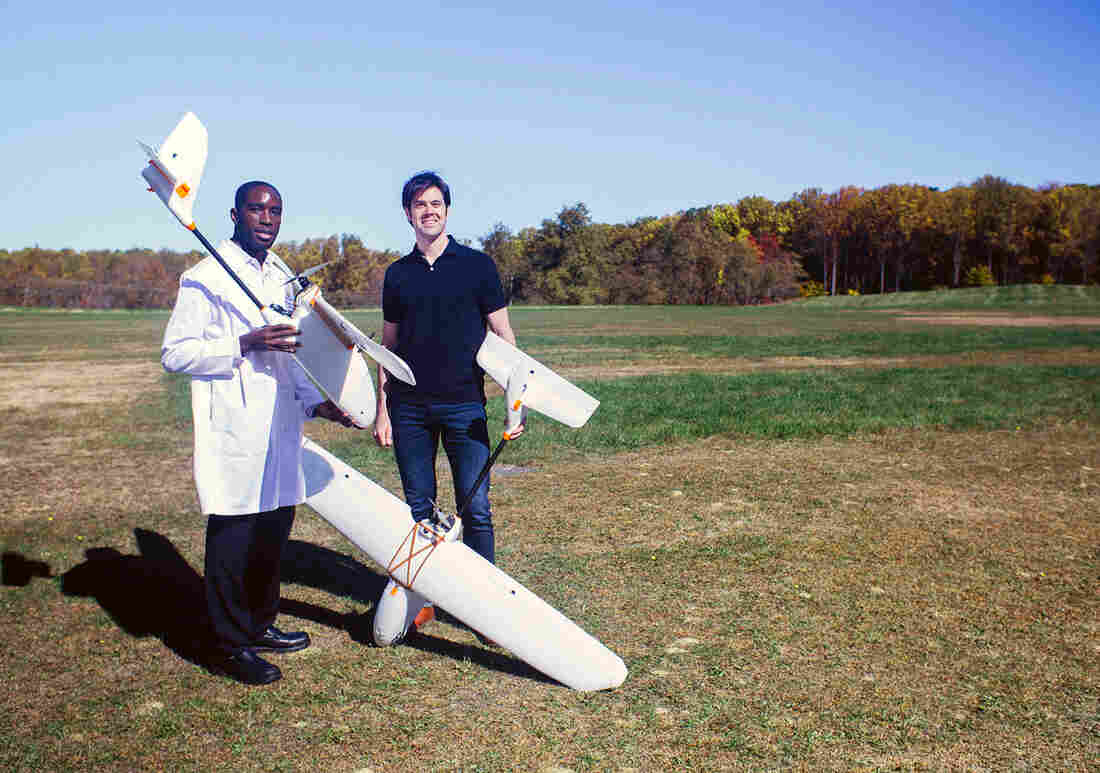
Timothy Amukele, an assistant professor of pathology at Johns Hopkins Medical School in Baltimore, and systems engineer Jeff Street are trying to figure out how to use drones to deliver blood samples. Johns Hopkins School of Medicine hide caption

toggle caption Johns Hopkins School of Medicine

Three years ago, Geoff Baird bought a drone. The Seattle dad and hobby plane enthusiast used the 2.5-pound quadcopter to photograph the Hawaiian coastline and film his son’s soccer and baseball games.

But his big hope is that drones will soon fly tubes of blood and other specimens to Harborview Medical Center, where he works as a clinical pathologist running the hospital’s chemistry and toxicology labs. In the near future, Baird and others say, drones could transform health care — not only in rural areas by bringing critical supplies into hard-to-reach places, but also in crowded cities where hospitals pay hefty fees to get medical samples across town during rush hour. By providing a faster, cheaper way to move test specimens, drones could speed diagnoses and save lives. “It’s superexciting to me,” Baird says.

The technology seems to be there. Drones are delivering pizza in New Zealand and taking condoms to parts of Ghana that lack reliable roads or access to birth control. Tech giants and big retailers, including Amazon and Wal-Mart, are testing drones for deliveries and pickups.

However, “blood specimens are not like a book or a shoe,” Timothy Amukele, an assistant professor of pathology at Johns Hopkins School of Medicine, said in a TED talk earlier this year. No one knew whether bumpy flights would hurt cells or otherwise make biological samples unsuitable for lab tests.

Amukele and his colleagues transport donated blood samples by drone in this video. The drones climbed to over 328 feet above ground and circled the field for six to 38 minutes.

[embedded content]

So Amukele and co-workers conducted several experiments to find out. In their first study, published in PLOS ONE last July, the team collected several hundred blood samples from healthy volunteers. They drove the samples to a flight field an hour northwest of Baltimore, packed half of them into foam containers and flew them around in a drone for up to 40 minutes. The other samples sat. All specimens went back to the lab for 33 routine tests. The results were the same for each group, suggesting samples stay intact during drone flights.

In follow-up analyses, drone transport also seemed safe for samples containing microbes and for donated blood. The microbial study was published in August in the Journal of Clinical Microbiology; a manuscript on the blood products study is under review. (Videos of each experiment can be found here.)

“The results don’t surprise me,” says Bill Remillard, chief technical officer at TriCore Reference Laboratories in Albuquerque, N.M. “But until you do the science, you just don’t know.”

TriCore handles nearly three-quarters of New Mexico’s clinical lab testing. And in a sparsely populated state, moving samples over large distances is expensive. TriCore spends $3.5 million per year. So after Remillard heard the results of Amukele’s first drone experiment at a meeting last summer, the two started discussing a possible pilot study using drones to transport lab samples in New Mexico.

While Amukele’s experiments show it’s feasible to move lab specimens with drones, pilot studies in real clinical settings are still needed to work out logistics. Questions include how to request a drone, where it would land, who would pick up the samples and how often a drone would need new batteries.

Safety is another concern. Some drones drop cargo with parachutes or other release mechanisms, making it harder for people to tamper with the vehicles. But as far as how safe drones are, “those data don’t yet exist,” Amukele says. Though millions of drones have been sold worldwide, “we don’t know how many crashes happen and how many are due to operator error,” he says. The Federal Aviation Administration is starting to collect this data.

It’s a promising development for an industry where legislation has lagged behind the fast-advancing technology. For years, the FAA had imposed a near-ban on commercial drones, only allowing them to fly if businesses applied for an exemption. But in June the agency announced a set of rules for companies to operate drones in the United States, and on Aug. 29 those regulations took effect. The FAA expects the number of registered commercial drones to jump 30-fold, from 20,000 to 600,000, within months.

“The rules had not been well defined. This is an attempt to define them,” says Lawrence Williams, who heads business development at Zipline, a Silicon Valley startup making drones for medical applications. Zipline is focusing much of its effort in Rwanda, where less crowded skies, relative to the U.S., make it easier to negotiate drone delivery of blood samples.

Another drone startup, Vayu, whose CEO is a co-author on the PLOS ONE drone study, is also dipping into the international arena. In July, the Michigan-based company did a demo flight in Madagascar, carrying specimens from a remote village to a lab for testing. Vayu makes a quadricopter plane capable of vertical takeoff — an appealing feature for hospitals with limited landing space.

While it’s easy to see how drones could improve health care in poor countries, Amukele thinks medical drone delivery could make a bigger splash in the U.S. Compared to Africa and developing countries, the U.S. does much more testing per person, he says, and many of the country’s 200,000 medical labs are collection-only sites that rely on central labs for testing. So “there are likely to be more [medical drone users] in the U.S. than anywhere else,” Amukele says.

As Zipline prepares to launch blood delivery drones in Rwanda, the company is also seeking regulatory approval for three projects using drones to bring medical supplies to underserved communities in the U.S.

One project would integrate drone delivery of medications with telemedicine appointments at a small clinic in rural Maryland. Another would use Zipline drones to link a large health care distribution center to hospitals and tribal clinics around Reno, Nev. And for the third project, the company would partner with a regional blood bank in Washington state, creating a plan to distribute blood to various hospitals and clinics in the event of earthquakes and other natural disasters.

Johns Hopkins was initially skeptical of Amukele’s experiments — the review board thought his first proposal was a joke — but now the university is giving the pathologist space and funds to hire a drone engineer and continue researching medical delivery drones.

In Seattle, Baird is working with Amukele and aeronautical engineers at the University of Washington on their own drone proposal. Ideally their test flights would take samples from Seattle Children’s to Harborview, a bustling facility that runs thousands of tests each day. However, that flight path would violate the FAA rule requiring drones to stay within the pilot’s line of sight. So the initial plan is to run 2-mile line-of-sight flights between the children’s hospital and UW Medical Center, Baird says.

Drones could be a huge help in poison emergencies, Baird says. In a typical scenario, a child gets rushed to the emergency room after accidentally swallowing some pills. Though routine tests can rule out some things, clinics often send samples to a centralized toxicology lab for confirmation and further testing. This can take hours. A drone could zip samples downtown in five to 10 minutes, Baird says, helping a child get diagnosed and receive medications more quickly.

He also envisions drones collecting samples from patients’ homes and taking them to the hospital. You could prick your finger and rub the blood onto a card that a drone could fly back to the lab for testing, Baird says.

In the meantime, though, Zipline’s U.S. projects remain on hold, awaiting the regulatory go-ahead, and the Seattle team continues studying maps and sketching flight routes for the small drone test it hopes to launch. The team has presented the plan to grant agencies and gotten positive responses — but no funding yet.

Like other technological advances, Baird suspects drones for medicine will “wait, wait, wait and then go very quickly.”

Esther Landhuis is a freelance science journalist in the San Francisco Bay Area. Follow her at @elandhuis.

Let’s block ads! (Why?)