Articles by admin

No Image

Doctor Confesses: I Lied To Protect Colleague In Malpractice Suit

Dr. Lars Aanning, seen at his home outside Yankton, S.D., said he lied to protect a colleague in a malpractice case. Now, Aanning is a patient safety advocate. Jay Pickthorn/AP for ProPublica hide caption

toggle caption Jay Pickthorn/AP for ProPublica

Almost two decades ago, Dr. Lars Aanning sat on the witness stand in a medical malpractice trial and faced a dilemma.

The South Dakota surgeon had been called to vouch for the expertise of one of his partners whose patient had suffered a stroke and permanent disability after an operation. The problem was that Aanning had, in his own mind, questioned his colleague’s skill. His partner’s patients had suffered injuries related to his procedures. But Aanning understood why his partner’s attorney had called him as a witness: Doctors don’t squeal on doctors.

The attorney asked the key question: Did Aanning know of any time his partner’s work had been substandard?

“No, never,” Aanning said.

Now, Aanning, in a stunning admission for a medical professional, has a blunter answer: “I lied.”

While it’s impossible to know to what extent Aanning’s testimony influenced the outcome, the jury sided in favor of his colleague — and, ever since, Aanning said, he has felt haunted by his decision.

Now, 77 and retired, he decided to write about his choice and why he made it in a recent column for his local newspaper, The Yankton County Observer. He also posted the article in the ProPublica Patient Safety Facebook group. Aanning, who is a member, called it “A Surgeon’s Belated Confession.”

“From that very moment I knew I had lied — lied under oath — and violated all my pledges of professionalism that came with the Doctor of Medicine degree and membership in the [American Medical Association],” Aanning wrote.

Aanning, who has become an outspoken patient advocate, now assists the medical malpractice attorney who represented the patient in the case in which he lied for his partner.

There’s no way to tell how often doctors lie to protect their colleagues, but ProPublica has found that patients frequently aren’t told the truth when they are harmed. Studies also show that many physicians do not have a favorable view of informing patients about mistakes and that health care workers are afraid to speak up if things don’t seem right. Many doctors and nurses have told ProPublica that they fear retaliation if they speak out about patient safety problems.

ProPublica spoke to Aanning about his unusual column and why he decided to confess all these years later. The interview has been edited for clarity and length.

Why did you tell the lie?

I did it as a matter of course. And I did it because there was a cultural attitude I was immersed in: You viewed all attorneys as a threat, and anything that you did was OK to thwart their efforts to sue your colleagues. I just accepted that as normal. It wasn’t like, “I’m going to lie.” It was, “I’m going to support my colleague.”

Did you feel pressure from your peers to never criticize a colleague?

Pressure is the prevailing attitude of the medical profession. The professional societies like the AMA and the American College of Surgeons say you should be a patient advocate at all times. But that goes out the window because here you are, banding together with your peers. Because if you don’t, you’ll be like a man without a country.

Why are you telling the truth now?

I’m retired now. The big benefit is they can’t hurt me, but I can’t go to the clinic for any help. All my doctors are out of town. I came to America from Norway in ’47 and grew up in New York. I’ve always been a rabble-rouser. This testifying falsely at this trial was not like me, so it stands out. It’s not how I do stuff.

I also told the truth about my lie because I have been helping some of these plaintiffs’ lawyers with their cases. It seems that the courtroom is not the arena for adjudication of medical right or wrong. I shared my story to give an explicit example of why you can’t always rely on physician testimony in court. I think that’s the big reason. There’s got to be a different way to help people who have been medically harmed. Looking to the legal system is like mixing oil and water.

Do you feel like it’s your fault the patient lost the case?

I haven’t touched on that question. It would make it painful for me. I would be moved to tears if that whole case revolved around just my testimony. I was on the stand so briefly. But cumulatively between what I said and the other testimony — it was never a level playing field for the plaintiff. People don’t recognize it. How the judges don’t recognize it and the system doesn’t recognize it is beyond me. It’s something I’m coming to grips with.

Have you thought about talking to the patient’s family?

The attorney said something about meeting the patient’s widow in his office, or something like that. I worry about whether my testimony weighed on the final verdict or not. It’s something that you just have to face up to. It’s too late to deflect it.

Do you feel any better or worse now that you’ve gone public with your moral failure?

I’m not altruistic. I’m not a crusader. I got into writing this column accidentally, so I just kind of find myself in this position. I get a great satisfaction out of defining what I see and writing about it. I hope nobody’s going to come back at me and accuse me of bad conduct. Although that’s what it was. I felt bad about it.

ProPublica is interested in hearing from patients who have been harmed while undergoing medical care, through its Patient Harm Questionnaire and Patient Safety Facebook Group. You can follow Marshall Allen on Twitter: @marshall_allen.

Let’s block ads! (Why?)


No Image

Harvard Endowment Investment Declines 2 Percent

Harvard University’s nation-leading $35.7 billion endowment suffered a 2 percent loss in 2016. Katarzyna Baumann#125911/Moment Editorial/Getty Images hide caption

toggle caption Katarzyna Baumann#125911/Moment Editorial/Getty Images

Harvard University reported that its endowment fund suffered a loss of 2 percent, or $1.9 billion, for fiscal 2016. It’s the single largest annual decline since the financial crisis. The news comes after several years of poor returns calling into question the fund’s investment strategy.

The university’s endowment, totaling $35.7 billion, is still the largest in the nation. (The University of Texas and Yale fill out the top three university endowments.) But it is down from a record $37.6 billion in 2015 when the portfolio earned 5.8 percent.

“This has been a challenging year for endowments and clearly these are disappointing results,” Paul Finnegan, chair of the Harvard Management Co. board, said in a statement. (The 2016 Annual Endowment Report can be found here.)

The medium-to-long-term performance trends show the endowment underperforming key benchmarks.

As the Boston Globe reports:

“For the 12 months ended in June, Harvard’s 2 percent loss compared with a 2.3 percent gain in a hypothetical portfolio of 60 percent global stocks and 40 percent global bonds. If the money had been invested just in the US stock market, it would have gained 5 percent…

For 10 years, Harvard reported a 5.7 percent annualized gain, compared with 6.9 percent for a 60/40 portfolio of domestic stocks and bonds.

Over five years the difference is even bigger, with Harvard at 5.9 percent and the US markets delivering an annualized gain of 8.9 percent.”

Harvard Management Co. has been hampered by leadership turnover. It is searching for a CEO after Stephen Blythe, a former Deutsche Bank bond trader, resigned in July after only 17 months on the job, as the Globe reports. HMC has had three investment chiefs in the past 11 years.

One of the questions facing Blythe’s successor will be whether the university maintains its approach of managing its money internally, rather than farming out the job to the best managers it can find on the outside as its Ivy League rival Yale does.

Harvard appears sobered by its portfolio’s past performance. In his closing remarks in the Annual Report, interim chief executive Robert A. Ettl writes,

“As we enter fiscal year 2017, the investment landscape continues to be full of uncertainty. With a backdrop of slowing growth and rich valuations, endowment returns could be muted for some time to come.”

Let’s block ads! (Why?)


No Image

Yahoo Reveals Massive Data Breach; Internet Fixates On Fantasy Football

A laptop screen displays the new Yahoo Sports Daily Fantasy contest during a product launch in 2015.

Eric Risberg/AP

Yahoo has revealed that it suffered a massive cyber breach in late 2014, which the company believes resulted in theft of information about the accounts of at least 500 million users.

The Internet responded in stride — as it has to all recent Yahoo-related news — with the regular tide of jokes about Yahoo’s dinosaur status.

Me from 2004 is in a panic https://t.co/DpykfjUjVI

— WASHED MONEY (@old__slang) September 22, 2016

Yahoo has 500M users? ??? That’s more shocking than the data breach. https://t.co/fQ2h5CkEn9

— Tiffany Gimbel (@riskyfizz) September 22, 2016

the perfect crime, we now know what everyone’s username, password and flash game preferences were in 1999 https://t.co/NWOEAaLvXN

— Bill P (@Bill_TPA) September 22, 2016

But the reactions, spreading fast through Twitter, also revealed which Yahoo asset is most valuable to this social media demographic: fantasy sports.

Luckily 499 million are accounts people just made for their office fantasy league https://t.co/zWZ4eQJkMN

— Bobby Big Wheel (@BobbyBigWheel) September 22, 2016

Dang. I wasn’t worried about this Yahoo breach until I just realized I have a Yahoo account for fantasy football https://t.co/0WIaspziF9

— Sarah Rabil (@srabil) September 22, 2016

OK, here are some facts.

Yahoo is an Internet giant, with more than 1 billion monthly active users. It sprawls through a variety of services, including blogging site Tumblr, photo site Flickr and a series of themed sites like Yahoo Finance and Yahoo Sports, which includes fantasy sports.

For the uninitiated, it’s the wildly popular digital expression of fandom — and a multibillion-dollar industry — where people draft virtual teams of actual players and compete based on the players’ success in real games. Yahoo is one of several places to play fantasy sports, and its offerings include football, baseball, basketball, hockey, car racing and golf.

Hopefully whoever hacked into my Yahoo account had better luck with my fantasy football team than I did.

— Matt Goldich (@MattGoldich) September 22, 2016

At least you will have the Yahoo security breach to blame for your crappy fantasy football season

— Nick Sickler (@nasickler) September 22, 2016

Hackers can have all my yahoo info they want, but if they change my fantasy football lineup it’s war

— Naes Tteweh (@FunnyFarmNFL) September 22, 2016

Of course, this is all fun and games — perhaps a reflection of the growing familiarity of this plot, a constant presence of hacks in the news.

But this breach is one of the largest we’ve seen revealed, and it is of a service that for many users may interlink with their entire digital presence.

Yahoo says a “state-sponsored actor” — as in, a foreign government hacker — got into Yahoo’s network and stole information that “may have included names, email addresses, telephone numbers, dates of birth, hashed passwords.” All this took place in late 2014.

Yahoo says it is notifying all the affected users and taking other steps to beef up security to block any authorized access to any accounts. But also: “We are recommending that all users who haven’t changed their passwords since 2014 do so.”

Even if there was good timing to reveal a big hack, for Yahoo this wouldn’t be it.

The Internet company is on the verge of closing a $4.8 billion merger with Verizon. The telecom giant says it “will evaluate” the ongoing investigation and currently has “limited information and understanding of the impact” as Yahoo only informed Verizon of the security incident “within the last two days.”

we can’t have nice things or even yahoo https://t.co/J0Qod9DEzc

— Travis (@travismartini) September 22, 2016

Let’s block ads! (Why?)


No Image

U.S. Approves Export Of Boeing And Airbus Planes To Iran

An Iran Air Boeing 747 passenger plane sits on the tarmac of the domestic Mehrabad airport in the Iranian capital Tehran in 2013. Behrouz Mehri /AFP/Getty Images hide caption

toggle caption Behrouz Mehri /AFP/Getty Images

The U.S. Treasury Department has granted permission to Boeing and Airbus to export commercial planes to Iran, a Treasury spokesperson told NPR. The government has approved a deal — not yet finalized — for Boeing to sell IranAir 80 commercial passenger aircraft.

Thumbs-up from the Treasury is a major step forward on a key portion of last year’s deal between Iran and six world powers including the U.S., in which Iran agreed to curb its nuclear program in exchange for relief from decades-long sanctions. That relief officially started in January, as we reported.

“These licenses contain strict conditions to ensure that the planes will be used exclusively for commercial passenger use and cannot be resold or transferred to a designated entity,” the Treasury spokesperson said.

Boeing and Iran reached a $20 billion provisional agreement in late June for 80 aircraft, as NPR’s Jackie Northam reported.

Since then, the Treasury has “spent months scrutinizing the deal to see what technology will be used on the planes, and whether anyone remaining on a U.S. sanctions list is involved in the deal,” Jackie said.

She added that this marks the first time that Boeing has sold planes to Iran since its 1979 revolution. Jackie reports, “There is ferocious competition between Boeing and Airbus, and a good chance Boeing would be locked out of the Iranian market for decades if it didn’t get this approval.”

The new aircraft are a major step toward modernizing and expanding “the country’s elderly fleet, held together by smuggled or improvised parts after years of sanctions,” as Reuters reported.

The Treasury also granted Boeing’s competitor Airbus a license to sell 17 aircraft to IranAir, as Jackie reported. “Even though Airbus is based in Europe, it needs U.S. approval because its planes contain sophisticated technological equipment made in America. That includes the computers and navigational equipment.”

Both companies received the green light to sell a mix of wide-body and single aisle jets, Jackie said.

She has reported that this deal is seen as an important test case for doing business with Iran, including big questions on financing:

“Commercial aircraft are one of the very few products U.S. companies are allowed to sell to Iran. Even so, a deal has to be done without using American dollars or the U.S. financial system. This creates a problem even for international companies wanting to sell to Iran because most foreign banks have partnerships with American banks.

“[Former Treasury official Elizabeth] Rosenberg says that’s why all eyes are on Boeing to see if it can find innovative ways to pick through this financial minefield.”

The deals are also likely to “test conservative opposition” to the nuclear agreement in both the U.S. and Iran, as Reuters reported. In the U.S., many Republican lawmakers are against selling Iran planes, as are some conservatives in Iran.

Let’s block ads! (Why?)


No Image

Mylan CEO Claims EpiPens Aren't As Profitable As Everyone Thinks

Heather Bresch, CEO of Mylan Pharmacueticals, will face lawmakers’ questions Wednesday about the company’s steep price hikes for the company’s life-saving EpiPen auto-injector. Dale Sparks/AP hide caption

toggle caption Dale Sparks/AP

The drug company that makes the EpiPen says it isn’t nearly as profitable as many people assume it is.

At least that’s the message Mylan NV CEO Heather Bresch will try to deliver to members of Congress today.

Bresch, who is scheduled to testify before the House Oversight and Government Reform Committee, is expected to tell lawmakers that the company earns $100 profit on each two-pack of EpiPen auto-injectors, even though they carry a $600 price tag.

“The misconception about our profits is understandable, and at least partly due to the complex environment in which pharmaceutical prices are determined,” Bresch says in prepared testimony. “The pricing of a pharmaceutical product is opaque and frustrating, especially for patients.”

Bresch says it costs the company about $69 to make two EpiPens, and after rebates and fees, Mylan receives $274 per EpiPen pack. She says other, unnamed costs absorb an additional $105, leaving $100 in profit for the company.

While the company apparently is looking to use the analysis to downplay its profits, analysts say the margin is still quite high.

Ronny Gal, a pharmaceutical industry analyst at the investment firm Sanford Bernstein, says Bresch’s numbers mean Mylan makes a 40 percent profit margin on the device.

The EpiPen is a long, plastic tube that automatically injects a dose of epinephrine — or adrenaline — into a person’s thigh to stop an allergic reaction. It’s easy to use and portable.

Mylan bought rights to the EpiPen in 2008 and launched an aggressive marketing and awareness campaign. That effort has made the so-called auto-injector a must-have for anyone with a serious allergy — perhaps to bee stings or tree nuts — that may trigger anaphylaxis, a life-threatening reaction in which the airways swell and close.

The company has come under fire in recent months, however, because it raised the price of the device, which has been available for decades, more than 500 percent.

The wholesale price of a single pen was about $47 in 2007, and it rose to $284 this summer, according to Richard Evans, a health care analyst at SSR. But consumers can no longer buy a single pen, so the retail price to fill a prescription today at Walgreens is about $634, according to GoodRX.

Mylan has tried to quell the criticism first by offering customers a coupon worth up to $300 to offset the price of the device, and then announcing it would bring a generic version of the EpiPen to market for half the retail price.

In addition to the investigation by the House Oversight committee, at least three senators have also called for investigations into Mylan’s pricing practices. Sens. Charles Grassley, R-Iowa, and Richard Blumenthal, D-Conn., have sent letters to Mylan demanding an explanation for the increase.

Mylan responded with a letter that Grassley, in a press release, said was “incomplete.”

Sen. Amy Klobuchar, D-Minn., has asked the Federal Trade Commission to investigate whether Mylan has violated antitrust laws in its marketing of the EpiPen.

And the Senate Finance Committee is reviewing the rebates that Mylan offered to the Center for Medicare and Medicaid Services.

In her testimony, Bresch says the company did not intend for its price hikes to hurt patients.

“Looking back, I wish we had better anticipated the magnitude and acceleration of the rising financial issues for a growing minority of patients who may have ended up paying the full [Wholesale Acquisition Cost] price or more,” she says. “We never intended this.”

Let’s block ads! (Why?)


No Image

Today in Movie Culture: Disney/Pixar Crossover, Grindhouse 'Green Room' Trailer and More

Here are a bunch of little bites to satisfy your hunger for movie culture:

Crossovers of the Day:

Since Ellen DeGeneres is the voice of Dory from Disney/Pixar’s Finding Nemo and Finding Dory, when she has a guest from another Disney animated film on her talk show, she likes to create crossovers. Here’s one with Kristen Bell as Anna from Frozen and then one with Tom Hanks as Woody from Toy Story (via /Film):

[embedded content]

[embedded content]

Mashup of the Day:

Let’s call this crazy scene of people in T.rex cosplay beating each other up for your entertainment a mashup of Jurassic Park, Fight Club and Mad Max Beyond the Thunderdome (via Fashionably Geek):

[embedded content]

Reworked Trailer of the Day:

If Green Room was a 1970s Grindhouse picture, here’s what its trailer might have looked like:

[embedded content]

Trailer Parody of the Day:

The latest parody of Justice League redoes the trailer in Archer-style animation (via Geek Tyrant):

[embedded content]

Poster Parody of the Day:

This week Documentary Now! spoofs Jiro Dreams of Sushi, so it’s a great time for this parody poster for another spoof idea involving actor Jim Belushi (via Twitter):

Movie Takedown of the Day:

See how non-tubular Teenage Mutant Ninja Turtles: Out of the Shadows is in the latest Honest Trailer beatdown:

[embedded content]

F/X Breakdown of the Day:

Watch how the visual effects were done for Pete’s Dragon with this breakdown for Wired magazine (via Geek Tyrant):

[embedded content]

Vintage Image of the Day:

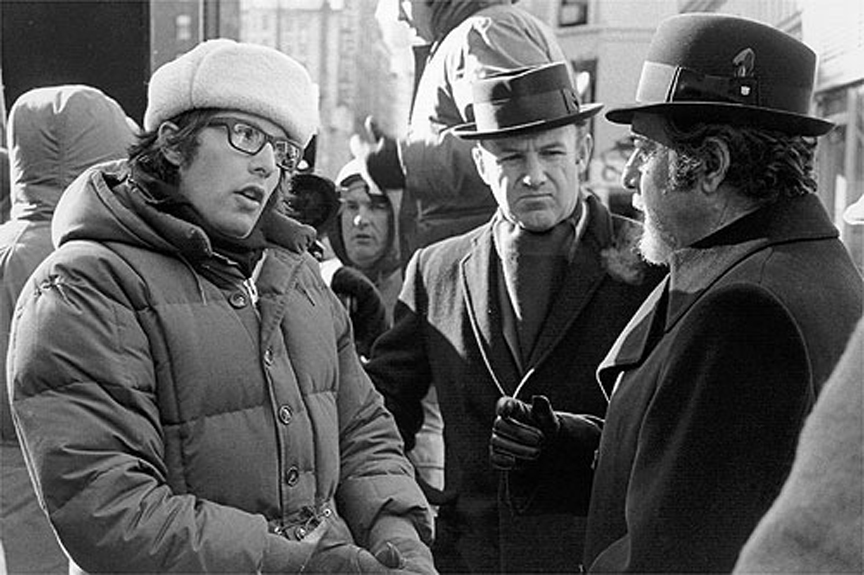
Fernando Rey, who was born on this day in 1917, with co-star Gene Hackman and director William Friedkin on the set of 1971’s The French Connection:

Supercut of the Day:

Learn how to speak like the characters from Fargo in this Fandor Keyframe video condensing the film into just “yah” and “jeez” lines (via Geek Tyrant):

[embedded content]

Classic Trailer of the Day:

Today is the 20th anniversary of the release of The First Wives Club. Watch the original trailer for the comedy below.

[embedded content]

and

Let’s block ads! (Why?)


No Image

Regulating Self-Driving Cars For Safety Even Before They're Built

Self-driving Uber vehicles are lined up to take journalists on rides during a media preview at the company’s Advanced Technologies Center in Pittsburgh earlier this month. Gene J. Puskar/AP hide caption

toggle caption Gene J. Puskar/AP

The U.S. government wants to help you take your hands off the wheel.

The Department of Transportation on Tuesday issued its Federal Automated Vehicle Policy, which outlines how manufacturers and developers can ensure safe design of driverless vehicles, tells states what responsibilities they will have and points out potential new tools for ensuring safety.

Regulators say they want to prepare for the transition to self-driving vehicles, which they say will save money, time and lives. Transportation Secretary Anthony Foxx tells NPR’s Robert Siegel he hopes these guidelines will ensure that safety is a priority as the technology continues to be developed.

Asked to predict how soon self-driving vehicles will represent, say, 25 percent of the cars on the road, Foxx says, “I don’t know about percentages, but it’s very clear that there is a growing interest in the marketplace to bring these vehicles into the lives of Americans. And it’s incumbent upon us to get ahead of it and to make sure that safety is part of the thought process at the very beginning, and that’s part of what our policy will set forth.”


Interview Highlights

On why self-driving cars need federal regulation in the early stages

Well, I would say that there’s not really a conflict between innovation and safety. That you can actually have innovation, you can have safety, and you can innovate in the safety arena if you take the right approach.

Secretary Of Transportation: ‘I See The Future’ When I’m In A Self-Driving Car

  • Download
  • <iframe src="https://www.npr.org/player/embed/494765472/494778125" width="100%" height="290" frameborder="0" scrolling="no" title="NPR embedded audio player">

We did not have the National Highway Traffic Safety Administration back when the Model T was put on the assembly line, and if we had, we probably would have saved untold numbers of lives by having that kind of vigilance at the beginning. We have that opportunity today. This is a once-in-a-hundred-year moment to capture a technology while it’s in its early stages and build a culture of safety within it, and that’s what we intend to do.

On whether the guidelines require manufacturers to share research

We’ve had good experience with data sharing among highly competitive cohort of industry. I would say the Federal Aviation Administration is our best example of this, where data is shared anonymously, but it has helped us in many ways predict safety challenges and avert safety challenges within the industry.

We think this model could be used in the auto industry, particularly with a driverless environment where there is going to be so much more data available than we currently have today. We certainly want to encourage collaboration within the industry.

On the issue of liability with self-driving cars

I think that’s a question that’s going to need further conversation, and in the guidance we’ve laid out we expect the states to be engaged in that discussion as well. …

The policy recognizes there are areas that we have deep knowledge today and can develop policy around, and there are areas that need to be discussed over a longer time frame and that’s one of them.

On whether U.S. infrastructure is ready for self-driving vehicles

Well, I have questions about whether our streets are in a condition for human drivers today. That’s why I went and argued so strenuously for a long-term surface bill. Obviously, our infrastructure needs to be kept at a good state of repair.

I also believe that over the next decade or so we’re going to start integrating more technological capability into the infrastructure itself — much more sophisticated street signal alignment. The street lights networks that we have today actually communicating with cars, and turning off when there are no cars on the road, and turning on when there are. I think you’re going to see a lot of that technology take root, and you’re going to see it at the municipal level, at the state level.

Let’s block ads! (Why?)


No Image

Doctors Who Treat Opioid Addiction Often See Very Few Patients

Health care providers have to have permission from the federal government to provide medication-assisted treatment for opioid addiction. The Washington Post/Getty Images hide caption

toggle caption The Washington Post/Getty Images

Many people struggling with opioid addiction can’t find a doctor to provide medication-assisted treatment, even though it’s highly effective. One reason could be that doctors who are qualified to prescribe the medication typically treat just a handful of patients.

Researchers at the RAND Corporation looked at pharmacy records from the seven states with the most doctors approved to prescribe buprenorphine, which helps people manage cravings and avoid withdrawal. They found 3,234 doctors who had prescribed the drug, also known as Suboxone, to new patients from 2010 to 2013. The median number of patients by a doctor treated each month was 13. About half of the doctors treated 4 to 30 patients; 22 percent treated less than 4; 20 percent treated 31 to 75.

“We were really surprised,” says Dr. Bradley Stein, a psychiatrist and lead author of the study, which was published Tuesday in JAMA, the journal of the American Medical Association. “We found that only about 10 percent of doctors were what we would call heavy prescribers, with more than 75 patients a month.”

Only a fraction of the 4 million people thought to abuse prescription painkillers or heroin in the U.S. are getting medication-assisted treatment.

There’s been a big push to make it easier for doctors to prescribe buprenorphine, including new rules announced by the Obama administration in July that raised the number of patients a doctor can treat from 100 to 275. But this data suggests that those limits aren’t the only barrier to getting treatment to more people.

The researchers also were surprised to find that most patients weren’t prescribed buprenorphine for very long, even though it can be used long term. The mean length of prescribing was 53 days per patient.

“This really brought home for us the need for multiple approaches, so doctors are willing and able to prescribe buprenorphine,” Stein says.

Urban areas have typically been better equipped to provide treatment for opioid addiction, whether with methadone clinics or with buprenorphine, which people can take at home and doesn’t require people a daily clinic visit. But many people struggling with opioid addiction live in smaller cities or rural areas where physicians have little experience with treating addiction to heroin and prescription opioids.

That includes towns like Bridgton, Maine, where family physicians shied away from treating addicts until they realized that their own patients were the ones overdosing and dying.

Just taking an online course on how to prescribe buprenorphine won’t be enough for many providers, Stein says, especially since many patients with opioid addiction also have other problems that need care. “We really need to think about providing mentorship, providing consultation, providing clinical support,” Stein says.

Medication-assisted treatment is supposed to include counseling, and that can be hard to find, especially in rural areas. “So we may need to think about telehealth or online counseling,” Stein says. “We may need to be creative to have people receive effective treatment, no matter where they live.”

Treatment can work, “People can recover. They go on to live incredibly productive lives. And we want to have the high-quality treatment to get them there.”

Let’s block ads! (Why?)


No Image

Vin Scully, 88, Will Retire Soon As LA Dodgers' Announcer

One of the greatest sports play-by-play announcers of all times, Vin Scully, is set to retire after 67 years calling plays for the Los Angeles Dodgers. He talks to David Greene about his career.

DAVID GREENE, HOST:

You are about to hear one of the most famous voices in America. Vin Scully has been the play-by-play announcer for the Dodgers for 67 years. When he started, the Dodgers played baseball in Brooklyn. They moved to Los Angeles in 1958. Scully’s voice, as baseball fans know, is like no other, and the memorable moments are countless.

(SOUNDBITE OF ARCHIVED RECORDING)

VIN SCULLY: And look who’s coming up.

GREENE: This was 1988, World Series, Game 1. Injured Dodgers slugger Kirk Gibson limps to the plate.

(SOUNDBITE OF ARCHIVED RECORDING)

SCULLY: High fly ball into right field – she is gone.

GREENE: Gibson’s ninth inning home run helped send the underdog Dodgers to a championship over the Oakland A’s. Vin Scully – he’s now 88 years old, and he is going to be calling his final Dodgers game in a couple weeks. When I reached him by phone, he talked about, well, this sound that you’re hearing.

(CHEERING)

GREENE: This drew him to sports in 1935. He was 8 years old. He would crawl under his family’s four-legged radio to listen to college football, waiting for the roar of the crowd.

SCULLY: When that roar would come, it was like water coming out of a shower head. It would just seem to pour all over me, and I would get goose bumps. And originally, I thought, gee, I would love to be there.

GREENE: Well, this is an amazing thing because you often hear about your belief in the art of silence and sometimes just as a broadcaster stepping back and allowing the roar of that crowd to just sit there with all of us. And I guess I now understand why listening to you talk about that.

SCULLY: Yes. In fact, it’s just come to me second nature. I would try to call the play as accurately and quickly as possible, and then I would shut up and sit there listening to the roar. And for a brief moment, I was 8 years old again, you know.

GREENE: Well, you know, one moment when you really let the roar of that crowd stand – 1974 and Henry Hank Aaron breaking Babe Ruth’s home run record. I mean, can you take me to that moment?

SCULLY: It was an incredible moment. In fact, it was the most important home run I’ve ever called.

(SOUNDBITE OF ARCHIVED RECORDING)

SCULLY: One ball and no strikes, Aaron waiting, the outfield deep and straightaway – fastball, it’s a high fly to the deep left center field. Buster goes back to the fence. It is gone.

(CHEERING)

SCULLY: The first thing I did was shut up because that place went bananas, and his family was coming out onto the field, and firecrackers were going off. So there were no words for me to express at all. And I got up from the table and went to the back of the room and let them roar.

(CHEERING)

SCULLY: And I think I poured a little glass of water and took a sip. And all of a sudden, while I was standing there, luxuriating with the roar of the crowd, it suddenly hit me. And that minute or however long shut up gave me that thought, which I then expressed.

(SOUNDBITE OF ARCHIVED RECORDING)

SCULLY: What a marvelous moment for baseball. What a marvelous moment for Atlanta and the state of Georgia. What a marvelous moment for the country and the world…

That a black man in the Deep South was being honored for breaking the record of a white icon.

(SOUNDBITE OF ARCHIVED RECORDING)

SCULLY: The record of an all-time baseball idol. And it is a great moment for all of us and particularly for Henry Aaron.

That really, through the grace of God, summed up the moment I think very well.

GREENE: It sure did. And, you know, I wondered if you, thinking that that could happen, had written some of those notes down…

SCULLY: Oh, no.

GREENE: …Because it was so poetic – no.

SCULLY: In all honesty, David, I have never, ever prepared to say something about an event that might occur because I might be so interested in displaying my pearls of wisdom that I might do it prematurely, and it doesn’t work. So that would be terrifying. So no, it was a very honest moment for me completely.

GREENE: You know, your final game is going to be calling a Dodgers-Giants game, you know, once rival franchises in New York now transplanted like you to California. How special is that?

SCULLY: It’s extremely special, David. And if you don’t mind, I’ll tell you one little story.

GREENE: Please.

SCULLY: I was about not quite 9 years old, and it was 1936. It was – the World Series was on, and it was October the 2. And I was walking home from school, and I went by a Chinese laundry, and there was the line score of that World Series game. And I stopped to look at it, and the score was 18 to 4 in favor of the Yankees. And my first reaction as a child was, oh, the poor Giants. And because of that, I became A, a baseball nut and two, a rabid Giants fan. Well, it makes it kind of interesting my last game will be a Giants-Dodgers game in San Francisco, October the 2, 2016.

GREENE: Yeah.

SCULLY: It will be exactly 80 years to the day when I first discovered baseball.

GREENE: That’s amazing. Being a rabid Giants fan as a youngster, are you pulling for the Giants even though you’re a – you’re the Dodgers broadcaster?

SCULLY: No. In all honesty, once you become a professional, number one, you’re no longer a fan. I don’t root for the Dodgers really. I just try to do the game as best I can. And the winning and the losing will take care of itself.

GREENE: Why retire now? How did you know this was the moment?

SCULLY: Well, you know, in November, I’m going to be 89, and I’ve been able to do just about everything that I ever wanted to do. I didn’t feel that it would be right that I would try to continue broadcasting when I’m going to be 90 – God willing – next year. And then I also thought that I’ve had so many yesterdays, I’m not sure how many tomorrows I’m going to have. I have a wife I adore, 16 grandchildren, three great-grandchildren. So the only reason that I would want to do baseball would be for some selfish reason, and I don’t want to do that. So no, I will spend my tomorrows where I should be – with my family.

GREENE: Vin Scully, real pleasure and honor talking to you, and enjoy these final games you’ll be calling and just thank you – thank you so much.

SCULLY: Thank you very much, David.

(SOUNDBITE OF UNIDENTIFIED SONG)

UNIDENTIFIED SINGERS: (Singing) Your Dodger blue, your Dodger blue (ph).

GREENE: Dodger Blue. Vin Scully has been the voice of the LA Dodgers – well, they were the Brooklyn Dodgers when he started. He’s been doing it for an astonishing 67 seasons.

Copyright © 2016 NPR. All rights reserved. Visit our website terms of use and permissions pages at www.npr.org for further information.

NPR transcripts are created on a rush deadline by Verb8tm, Inc., an NPR contractor, and produced using a proprietary transcription process developed with NPR. This text may not be in its final form and may be updated or revised in the future. Accuracy and availability may vary. The authoritative record of NPR’s programming is the audio record.

Let’s block ads! (Why?)


No Image

Today in Movie Culture: 'Star Wars' Meets Nintendo, 'Blood Simple' Criterion Bonus Feature and More

Here are a bunch of little bites to satisfy your hunger for movie culture:

Mashup of the Day:

Nintendo characters and gameplay are employed in this first part of a retelling of the plot of Star Wars: The Force Awakens (via Geek Tyrant):

[embedded content]

Scene Remake of the Day:

In this video from Free Dad Videos, a 3-year-old girl takes the place of Luke Skywalker during the Death Star trench battle and it’s soooo cute (via Design Taxi):

[embedded content]

Bonus Feature of the Day:

Ahead of the release of their new Blood Simple Blu-ray, the Criterion Collection shares a bonus feature on the film’s storyboards, with commentary from Joel and Ethan Coen, Barry Sonnenfeld and Frances McDormand:

[embedded content]

Music Performance of the Day:

Watch Angela Lansbury sing “Beauty and the Beast” with piano accompaniment by Alan Menken at a special 25th anniversary screening of Disney’s animated feature (via /Film):

Cosplay of the Day:

Dragon Con is one of the best places to see awesome cosplay, and Sneaky Zebra makes the best cosplay montages, so this video is a total delight:

[embedded content]

Vintage Image of the Day:

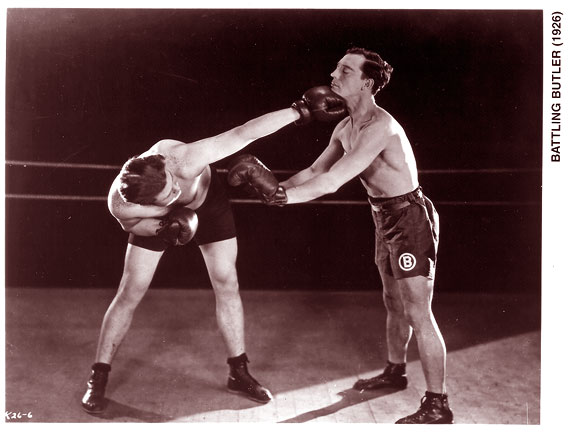
Buster Keaton and Francis McDonald in a promotional photo for the Keaton-directed Battling Butler, which debuted in theaters 90 years ago today:

Reworked Movie of the Day:

Here’s what Monty Python and the Holy Grail would look like if it was a serious, not silly, take on the Arthurian legend:

[embedded content]

Bad Analysis of the Day:

Learn the hidden meaning of Shrek from an alien from the future who totally misundertands the animated comedy:

[embedded content]

Filmmaker in Focus:

Michael Mann’s use of windows in his movies is showcased in this video tribute by Matt Adams (via Cinematic Montage Creators):

[embedded content]

Classic Trailer of the Day:

Today is the 30th anniversary of the theatrical release of David Lynch’s Blue Velvet. Watch the original trailer for the film below.

[embedded content]

and

Let’s block ads! (Why?)